
Energy and Resource Conversion of Fish Waste: Current Status and Future Prospects

 ,
,  and
and 
Abstract
1. Introduction
Fish Waste Heterogeneity as a Determinant of Process Selection
2. Fish Waste to Biogas
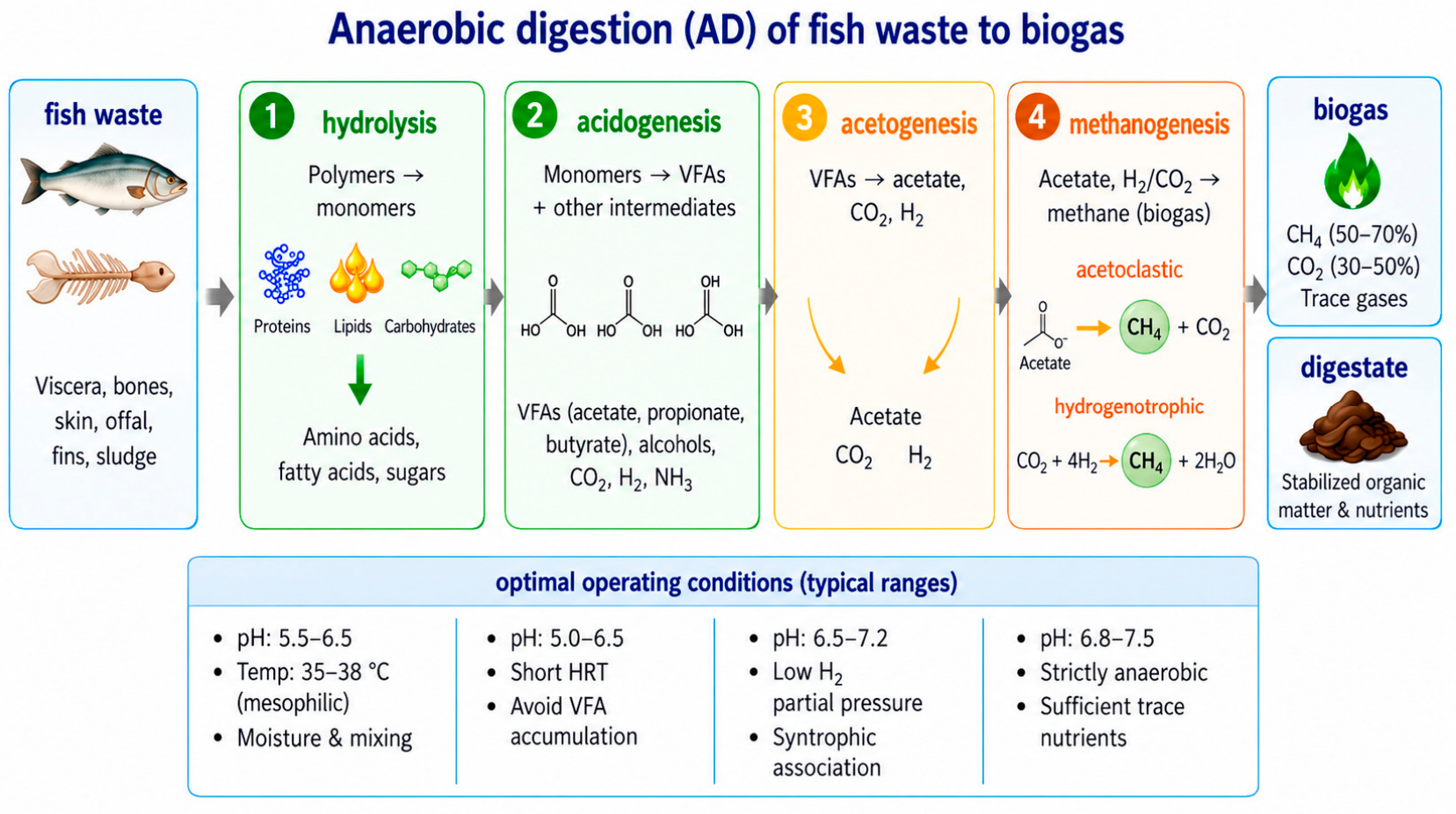
2.1. Fundamentals and Four-Stage Metabolic Pathway
2.2. Key Inhibitory Challenges: Ammonia, Lipids, and Process Instability
2.3. Mitigation Strategies for Anaerobic Digestion Inhibition
2.4. Microbial Dynamics, Reactor Scale-Up, and Economic Outlook
3. Fish Waste to Fertilizer
3.1. Nutrient Composition and Agronomic Value of Fish Waste
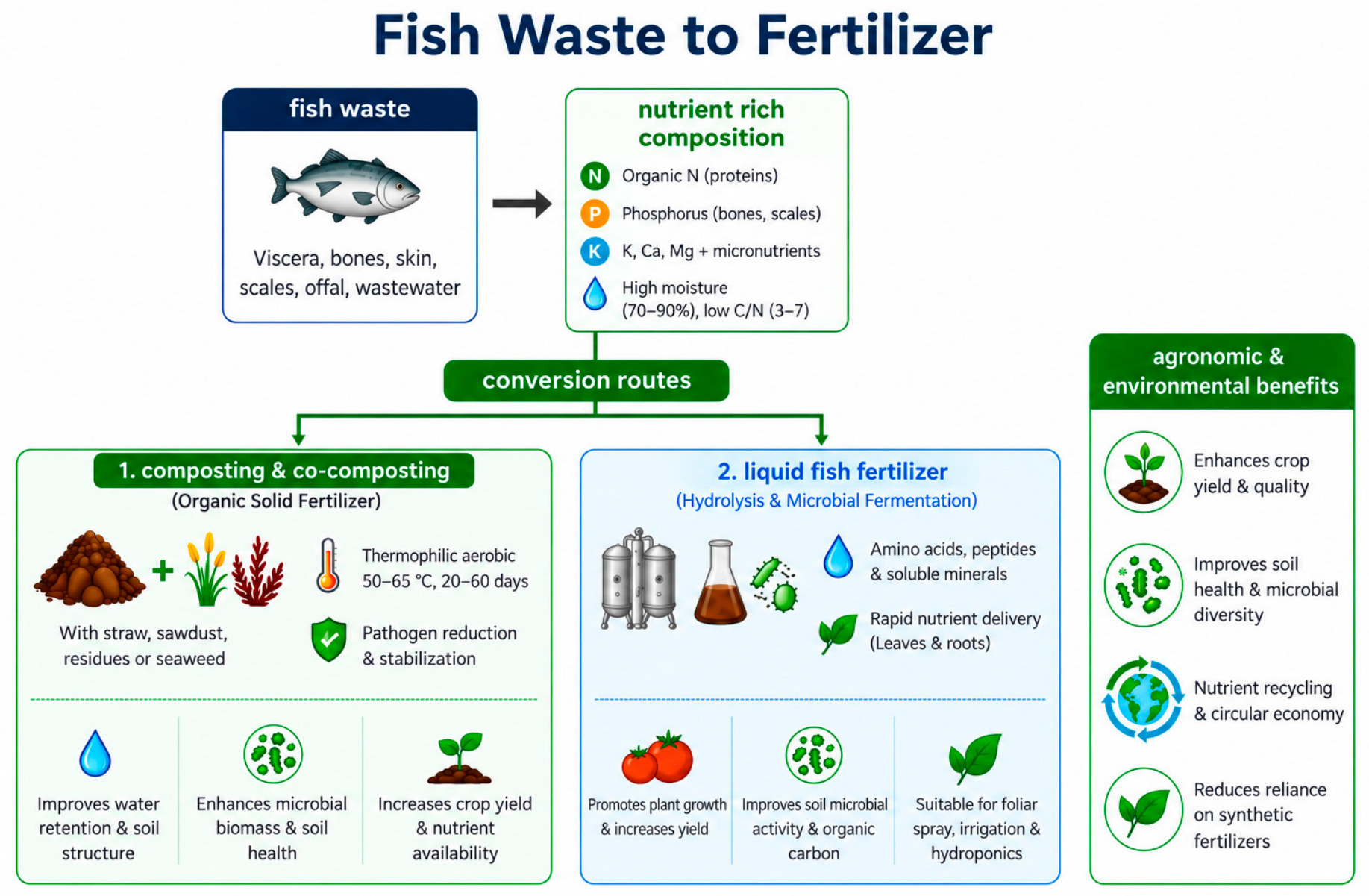
3.2. Composting and Co-Composting: The Dominant Pathway
3.3. Liquid Fish Fertilizers: Rapid Nutrient Delivery
3.4. Fish Bone Phosphorus as Fertilizer: Closing the P Cycle
4. Fish Waste to Biochar
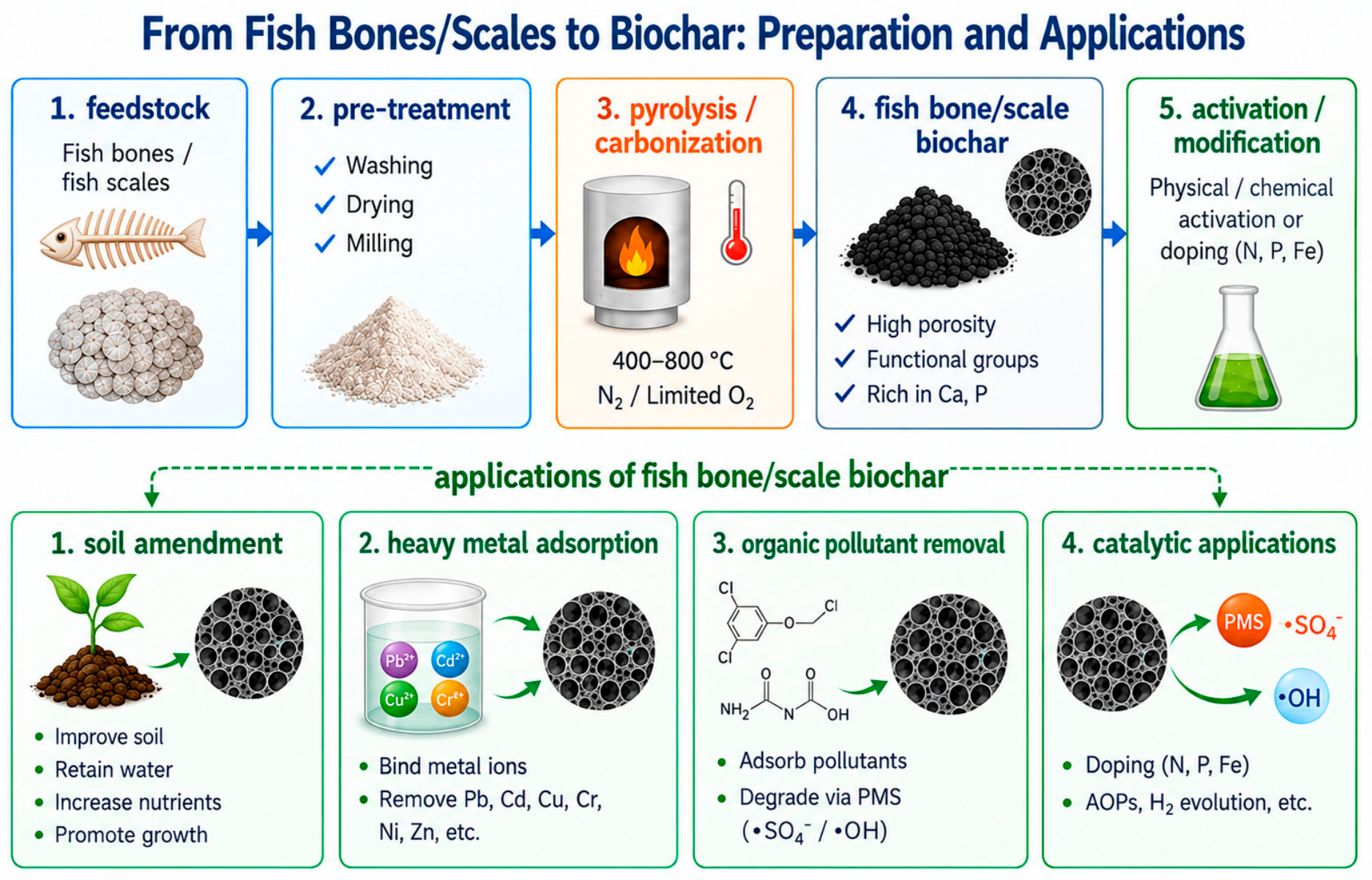
4.1. Production and Unique Physicochemical Characteristics
4.2. Soil Amendment and Phosphorus Delivery
4.3. Environmental Remediation: Heavy Metal and Organic Pollutant Removal
4.4. Catalytic Applications in Advanced Oxidation Processes
5. Fish Waste to Biodiesel
5.1. Feedstock Characteristics and Oil Extraction
5.2. Transesterification Routes: Three Process Pathways
- (1)
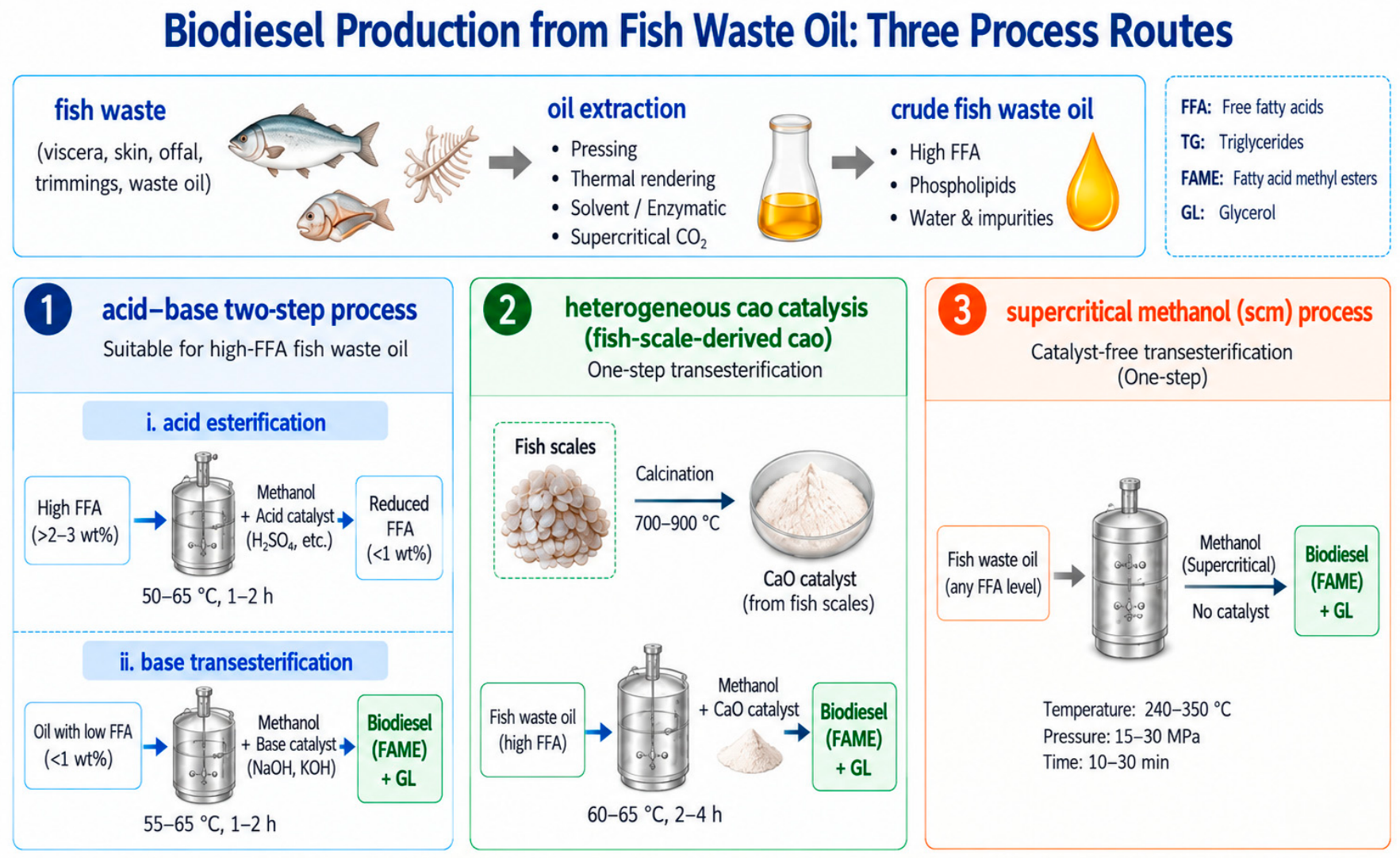
- Acid–base two-step process is the most established route for high-FFA fish waste oil. Acid esterification with H2SO4 reduces FFA to <1 wt% (50–65 °C, 1–2 h), followed by alkaline transesterification with NaOH/KOH to produce high-purity FAME and glycerol [74]. While technically mature and scalable, this approach generates acidic wastewater and requires neutralization steps.
- (2)
- Heterogeneous catalysis eliminates the need for liquid catalysts and simplifies separation. A particularly innovative strategy is the use of calcined fish scales (CaO) as a low-cost, waste-derived solid catalyst. Fish scales are rich in calcium phosphate; calcination at 700–900 °C converts them into active CaO, which catalyzes one-step transesterification at 60–65 °C with easy recovery and reusability [8]. This approach exemplifies true circularity: the waste material itself becomes the catalyst for fuel production. Nano-magnetic catalysts (e.g., CaO/Fe3O4) have also been developed, enabling magnetic separation and high yields (~94%) at moderate temperatures [75].
- (3)
- Supercritical methanol (SCM) process operates at 240–350 °C and 15–30 MPa without any catalyst, achieving rapid conversion (10–30 min) regardless of FFA or water content [76]. This route eliminates catalyst costs and separation steps but demands higher energy input and pressurized equipment. The pyrogenic transformation of oil-bearing biomass into biodiesel without lipid extraction represents a related thermal approach that could be adapted for fish waste [77].
5.3. Fuel Properties and Emission Performance
6. Fish Waste as Feed
6.1. Nutritional Potential and Value of Fish Waste as Feedstock
6.2. Fish Silage: Preservation, Processing, and Nutritional Quality
6.3. Fish Protein Hydrolysate and Functional Feed Applications
7. Fish Waste to Other High-Value Products
7.1. Collagen, Gelatin and Bioactive Peptides
7.2. Chitin, Enzymes and Marine Bioactive Compounds
7.3. Advanced Materials and Non-Traditional Applications
8. Cross-Pathway Comparison, Route Selection, and Sustainability Trade-Offs
8.1. Feedstock-Driven Route Selection and Critical Comparison
8.2. Environmental and Economic Considerations: From Technical Yield to LCA and TEA
9. Challenges and Future Prospects
10. Conclusions
Author Contributions
Funding
Institutional Review Board Statement
Informed Consent Statement
Data Availability Statement
Acknowledgments
Conflicts of Interest
References
- FAO. The State of World Fisheries and Aquaculture 2024; FAO: Rome, Italy, 2024. [Google Scholar]
- Nelluri, P.; Kumar Rout, R.; Tammineni, D.K.; Joshi, T.J.; Sivaranjani, S. Technologies for management of fish waste & value addition. Food Humanit. 2024, 2, 100228. [Google Scholar] [CrossRef] [Scilit]
- Zhang, J.; Akyol, C.; Meers, E. Nutrient recovery and recycling from fishery waste and by-products. J. Environ. Manag. 2023, 348, 119266. [Google Scholar] [CrossRef] [Scilit] [PubMed]
- Saravanan, A.; Yuvaraj, D.; Senthil Kumar, P.; Karishma, S.; Rangasamy, G. Fish processing discards: A plausible resource for valorization to renewable fuels production, optimization, byproducts and challenges. Fuel 2023, 335, 127081. [Google Scholar] [CrossRef] [Scilit]
- Bücker, F.; Marder, M.; Peiter, M.R.; Lehn, D.N.; Esquerdo, V.M.; de Almeida Pinto, L.A.; Konrad, O. Fish waste: An efficient alternative to biogas and methane production in an anaerobic mono-digestion system. Renew. Energy 2020, 147, 798–805. [Google Scholar] [CrossRef] [Scilit]
- Ahuja, I.; Dauksas, E.; Remme, J.F.; Richardsen, R.; Loes, A.K. Fish and fish waste-based fertilizers in organic farming—With status in Norway: A review. Waste Manag. 2020, 115, 95–112. [Google Scholar] [CrossRef] [Scilit] [PubMed]
- Tan, C.; Zhang, X.; Liao, C.; Huang, Y.; Zheng, J.; Chen, H.; He, H. Optimization of fishbone biochar preparation process based on adsorption performance. Sustain. Chem. Pharm. 2023, 32, 101015. [Google Scholar] [CrossRef] [Scilit]
- Jung, J.M.; Oh, J.I.; Park, Y.K.; Lee, J.; Kwon, E.E. Biodiesel synthesis from fish waste via thermally-induced transesterification using clay as porous material. J. Hazard Mater. 2019, 371, 27–32. [Google Scholar] [CrossRef] [Scilit] [PubMed]
- Maksimenko, A.; Belyi, L.; Podvolotskaya, A.; Son, O.; Tekutyeva, L. Exploring Sustainable Aquafeed Alternatives with a Specific Focus on the Ensilaging Technology of Fish Waste. Fermentation 2024, 10, 258. [Google Scholar] [CrossRef] [Scilit]
- Venupriya, V.; Krishnaveni, V.; Ramya, M. Effect of acidic and alkaline pretreatment on functional, structural and thermal properties of gelatin from waste fish scales. Polym. Bull. 2022, 80, 10533–10567. [Google Scholar] [CrossRef] [Scilit]
- Gill, J.M.; Hussain, S.M.; Ali, S.; Ghafoor, A.; Adrees, M.; Nazish, N.; Naeem, A.; Naeem, E.; Alshehri, M.A.; Rashid, E. Fish waste biorefinery: A novel approach to promote industrial sustainability. Bioresour. Technol. 2025, 419, 132050. [Google Scholar] [CrossRef] [Scilit] [PubMed]
- Pedullà, A.; Bonaccorsi, L.M.; Limonti, C.; Paone, E.; Siciliano, A.; Calabrò, P.S. Advancing the circular economy: A zero-waste valorisation approach for the de-oiled fish waste through anaerobic co-digestion and fertilisers production. J. Environ. Chem. Eng. 2025, 13, 117322. [Google Scholar] [CrossRef] [Scilit]
- Umesh, M.; Kumar, V.; Priyanka, K.; Kathirvel, P.; Suresh, S.; Santhosh, A.S. Fish waste valorisation through production of biodiesel and biopolymers for sustainable development: A mini review. Bioresour. Technol. Rep. 2025, 29, 102045. [Google Scholar] [CrossRef] [Scilit]
- Jannat, M.A.H.; Hwang, S. Bioaugmentation to improve anaerobic digestion of fish waste: Feed-to-microbes ratio, augmentation dosage and kinetic analysis. Bioresour. Technol. 2026, 441, 133604. [Google Scholar] [CrossRef] [Scilit] [PubMed]
- Álvez-Medina, C.M.; Nogales-Delgado, S.; Cano, B.L.; Montes-Jiménez, V.; Román Suero, S. Hydrothermal Carbonization of Fish Waste: A Sustainable Pathway for Valorization and Resource Recovery. Clean Technol. 2026, 8, 4. [Google Scholar] [CrossRef] [Scilit]
- Gosławski, S.; Borowski, S. Valorization of Fish Waste via Anaerobic Digestion: A Systematic Literature Review and Future Research Agenda. Energies 2026, 19, 4077. [Google Scholar] [CrossRef] [Scilit]
- Rayhan, M.S.; Mukut, A.N.M.M.I.; Nabi, M.N. A comprehensive review of the production of biodiesel from fish waste—Challenges and opportunities. Renew. Sustain. Energy Rev. 2026, 238, 117106. [Google Scholar] [CrossRef] [Scilit]
- Ivanovs, K.; Spalvins, K.; Blumberga, D. Approach for modelling anaerobic digestion processes of fish waste. Energy Procedia 2018, 147, 390–396. [Google Scholar] [CrossRef] [Scilit]
- Yang, Z.; Wang, W.; He, Y.; Zhang, R.; Liu, G. Effect of ammonia on methane production, methanogenesis pathway, microbial community and reactor performance under mesophilic and thermophilic conditions. Renew. Energy 2018, 125, 915–925. [Google Scholar] [CrossRef] [Scilit]
- Eiroa, M.; Costa, J.C.; Alves, M.M.; Kennes, C.; Veiga, M.C. Evaluation of the biomethane potential of solid fish waste. Waste Manag. 2012, 32, 1347–1352. [Google Scholar] [CrossRef] [Scilit] [PubMed]
- Sanjaya, E.H.; Cheng, H.; Li, Y.Y. Mesophilic methane fermentation performance and ammonia inhibition of fish processing wastewater treatment using a self-agitated anaerobic baffled reactor. Bioresour. Technol. 2020, 313, 123644. [Google Scholar] [CrossRef] [Scilit] [PubMed]
- Picos-Benítez, A.R.; Peralta-Hernández, J.M.; López-Hincapié, J.D.; Rodríguez-García, A. Biogas production from saline wastewater of the evisceration process of the fish processing industry. J. Water Process Eng. 2019, 32, 100933. [Google Scholar] [CrossRef] [Scilit]
- Neshat, S.A.; Mohammadi, M.; Najafpour, G.D.; Lahijani, P. Anaerobic co-digestion of animal manures and lignocellulosic residues as a potent approach for sustainable biogas production. Renew. Sustain. Energy Rev. 2017, 79, 308–322. [Google Scholar] [CrossRef] [Scilit]
- Nahar, G.; Koley, A.; Garai, S.; Balachandran, S.; Ross, A.B. Enhancing biogas production through the co-digestion of fish waste (FW) and water hyacinth (WH) using cow dung as an inoculum: Effect of FW/WH ratio. Appl. Sci. 2024, 14, 9880. [Google Scholar] [CrossRef] [Scilit]
- Wu, Y.; Song, K. Anaerobic co-digestion of waste activated sludge and fish waste: Methane production performance and mechanism analysis. J. Clean. Prod. 2021, 279, 123678. [Google Scholar] [CrossRef] [Scilit]
- Vivekanand, V.; Mulat, D.G.; Eijsink, V.G.H.; Horn, S.J. Synergistic effects of anaerobic co-digestion of whey, manure and fish ensilage. Bioresour. Technol. 2018, 249, 35–41. [Google Scholar] [CrossRef] [Scilit] [PubMed]
- Xu, J.; Mustafa, A.M.; Sheng, K. Effects of inoculum to substrate ratio and co-digestion with bagasse on biogas production of fish waste. Environ. Technol. 2017, 38, 2517–2522. [Google Scholar] [CrossRef] [Scilit] [PubMed]
- Serrano, A.; Siles, J.A.; Gutierrez, M.C.; Martin, M.A. Optimization of anaerobic co-digestion of strawberry and fish waste. Appl. Biochem. Biotechnol. 2014, 173, 1391–1404. [Google Scholar] [CrossRef] [Scilit] [PubMed]
- Bermúdez-Penabad, N.; Rodríguez-Montes, A.; Alves, M.; Kennes, C.; Veiga, M.C. Optimization of methane production from solid tuna waste: Thermal pretreatment and co-digestion. Waste Manag. 2024, 177, 203–210. [Google Scholar] [CrossRef] [Scilit] [PubMed]
- Choe, U.; Mustafa, A.M.; Lin, H.; Xu, J.; Sheng, K. Effect of bamboo hydrochar on anaerobic digestion of fish processing waste for biogas production. Bioresour. Technol. 2019, 283, 340–349. [Google Scholar] [CrossRef] [Scilit] [PubMed]
- Choe, U.; Mustafa, A.M.; Lin, H.; Choe, U.; Sheng, K. Anaerobic co-digestion of fish processing waste with a liquid fraction of hydrothermal carbonization of bamboo residue. Bioresour. Technol. 2020, 297, 122542. [Google Scholar] [CrossRef] [Scilit] [PubMed]
- Liu, L.; Zhang, T.; Wan, H.; Chen, Y.; Wang, X.; Yang, G.; Ren, G. Anaerobic co-digestion of animal manure and wheat straw for optimized biogas production by the addition of magnetite and zeolite. Energy Convers. Manag. 2015, 97, 132–139. [Google Scholar] [CrossRef] [Scilit]
- Jannat, M.A.H.; Park, S.H.; Chairattanawat, C.; Yulisa, A.; Hwang, S. Effect of different microbial seeds on batch anaerobic digestion of fish waste. Bioresour. Technol. 2022, 349, 126834. [Google Scholar] [CrossRef] [Scilit] [PubMed]
- Yulisa, A.; Park, S.H.; Chairattanawat, C.; Hwang, S. Effect of feeding strategies on the start-up of anaerobic digestion of fish waste. Energy 2023, 280, 128199. [Google Scholar] [CrossRef] [Scilit]
- Callaghan, F.; Wase, D.; Thayanithy, K.; Forster, C. An examination of the continuous anaerobic co-digestion of cattle slurry and fish offal. Process Saf. Environ. Prot. 1998, 76, 224–228. [Google Scholar] [CrossRef] [Scilit]
- Cadavid-Rodríguez, L.; Vargas-Muñoz, M.; Plácido, J. Biomethane from fish waste as a source of renewable energy for artisanal fishing communities. Sustain. Energy Technol. Assess. 2019, 34, 110–115. [Google Scholar] [CrossRef] [Scilit]
- Kratky, L.; Zamazal, P. Economic feasibility and sensitivity analysis of fish waste processing biorefinery. J. Clean. Prod. 2020, 243, 118677. [Google Scholar] [CrossRef] [Scilit]
- Solli, L.; Bergersen, O.; Sorheim, R.; Briseid, T. Effects of a gradually increased load of fish waste silage in co-digestion with cow manure on methane production. Waste Manag. 2014, 34, 1553–1559. [Google Scholar] [CrossRef] [Scilit] [PubMed]
- Radziemska, M.; Vaverková, M.D.; Adamcová, D.; Brtnický, M.; Mazur, Z. Valorization of Fish Waste Compost as a Fertilizer for Agricultural Use. Waste Biomass Valorization 2018, 10, 2537–2545. [Google Scholar] [CrossRef] [Scilit]
- Illera-Vives, M.; Seoane Labandeira, S.; López-Mosquera, M.E. Production of compost from marine waste: Evaluation of the product for use in ecological agriculture. J. Appl. Phycol. 2013, 25, 1395–1403. [Google Scholar] [CrossRef] [Scilit]
- Yuan, P.; Wang, J.; Pan, Y.; Shen, B.; Wu, C. Review of biochar for the management of contaminated soil: Preparation, application and prospect. Sci. Total Environ. 2019, 659, 473–490. [Google Scholar] [CrossRef] [Scilit] [PubMed]
- Illera-Vives, M.; Seoane Labandeira, S.; Brito, L.M.; López-Fabal, A.; López-Mosquera, M.E. Evaluation of compost from seaweed and fish waste as a fertilizer for horticultural use. Sci. Hortic. 2015, 186, 101–107. [Google Scholar] [CrossRef] [Scilit]
- Illera-Vives, M.; Seoane Labandeira, S.; Iglesias Loureiro, L.; López-Mosquera, M.E. Agronomic assessment of a compost consisting of seaweed and fish waste as an organic fertilizer for organic potato crops. J. Appl. Phycol. 2017, 29, 1663–1671. [Google Scholar] [CrossRef] [Scilit]
- Busato, J.G.; de Carvalho, C.M.; Zandonadi, D.B.; Sodre, F.F.; Mol, A.R.; de Oliveira, A.L.; Navarro, R.D. Recycling of wastes from fish beneficiation by composting: Chemical characteristics of the compost and efficiency of their humic acids in stimulating the growth of lettuce. Environ. Sci. Pollut. Res. Int. 2018, 25, 35811–35820. [Google Scholar] [CrossRef] [Scilit] [PubMed]
- Laos, F.; Mazzarino, M.J.; Walter, I.; Roselli, L.; Satti, P.; Moyano, S. Composting of fish offal and biosolids in northwestern Patagonia. Bioresour. Technol. 2002, 81, 179–186. [Google Scholar] [CrossRef] [Scilit] [PubMed]
- Suliman, W.; Harsh, J.B.; Abu-Lail, N.I.; Fortuna, A.-M.; Dallmeyer, I.; Garcia-Perez, M. Influence of feedstock source and pyrolysis temperature on biochar bulk and surface properties. Biomass Bioenergy 2016, 84, 37–48. [Google Scholar] [CrossRef] [Scilit]
- Dao, V.T.; Kim, J.K. Scaled-up bioconversion of fish waste to liquid fertilizer using a 5 L ribbon-type reactor. J. Environ. Manag. 2011, 92, 2441–2446. [Google Scholar] [CrossRef] [Scilit] [PubMed]
- Kim, J.K.; Dao, V.T.; Kong, I.S.; Lee, H.H. Identification and characterization of microorganisms from earthworm viscera for the conversion of fish wastes into liquid fertilizer. Bioresour. Technol. 2010, 101, 5131–5136. [Google Scholar] [CrossRef] [Scilit] [PubMed]
- Aranganathan, L.; Rajasree, R.S.R. Bioconversion of marine trash fish (MTF) to organic liquid fertilizer for effective solid waste management and its efficacy on Tomato growth. Manag. Environ. Qual. Int. J. 2016, 27, 93–103. [Google Scholar] [CrossRef] [Scilit]
- Lema, A.; Degebassa, A. Comparison of chemical fertilizer, fish offal’s fertilizer and manure applied to tomato and onion. Afr. J. Agric. Res. 2013, 8, 274–278. [Google Scholar]
- Balraj, T.H.; Palani, S.; Arumugam, G. Influence of Gunapaselam, a liquid fermented fish waste on the growth characteristics of Solanum melongena. J. Chem. Pharm. Res. 2014, 6, 58–66. [Google Scholar]
- Carella, F.; Seck, M.; Esposti, L.D.; Diadiou, H.; Maienza, A.; Baronti, S.; Vignaroli, P.; Vaccari, F.P.; Iafisco, M.; Adamiano, A. Thermal conversion of fish bones into fertilizers and biostimulants for plant growth—A low tech valorization process for the development of circular economy in least developed countries. J. Environ. Chem. Eng. 2021, 9, 104815. [Google Scholar] [CrossRef] [Scilit]
- Brod, E.; Ogaard, A.F. Closing global P cycles: The effect of dewatered fish sludge and manure solids as P fertiliser. Waste Manag. 2021, 135, 190–198. [Google Scholar] [CrossRef] [Scilit] [PubMed]
- Mohd Yusof, N.I.F.; Shamsuddin, N.A.; Zakaria, H.A.; Munajat, N.F. Exploring the potential of fish waste (Sardinella fimbriata) through pyrolysis: A study of kinetics and thermodynamics using isoconversional methods. Mater. Sci. Energy Technol. 2023, 6, 460–471. [Google Scholar] [CrossRef] [Scilit]
- Patra, B.R.; Mukherjee, A.; Nanda, S.; Dalai, A.K. Biochar production, activation and adsorptive applications: A review. Environ. Chem. Lett. 2021, 19, 2237–2259. [Google Scholar] [CrossRef] [Scilit]
- Meng, J.; Tao, M.; Wang, L.; Liu, X.; Xu, J. Changes in heavy metal bioavailability and speciation from a Pb-Zn mining soil amended with biochars from co-pyrolysis of rice straw and swine manure. Sci. Total Environ. 2018, 633, 300–307. [Google Scholar] [CrossRef] [Scilit] [PubMed]
- Pei, N.; Luo, W.; Huang, Q.; Sun, Y. Adsorption Properties of Fishbone and Fishbone-Derived Biochar for Cadmium in Aqueous Solution. Agronomy 2024, 14, 2717. [Google Scholar] [CrossRef] [Scilit]
- Kumari, N.; Marandi, S.; Pandey, S. Fluoride removal from groundwater using fish scales derived biochar. Mater. Today Proc. 2024, 124, 68–75. [Google Scholar] [CrossRef] [Scilit]
- Xia, D.; Liu, Y.; Cheng, X.; Gu, P.; Chen, Q.; Zhang, Z. Temperature-tuned fish-scale biochar with two-dimensional homogeneous porous structure: A promising uranium extractant. Appl. Surf. Sci. 2022, 591, 153136. [Google Scholar] [CrossRef] [Scilit]
- Chen, Q.; Cheng, X.; Liu, S.; Xia, D.; Liu, Y.; Zhang, Z.; Gu, P. Multi-heteroatom self-doped microporous biochar derived from fish scale for boosting uranium immobilization performance. Diam. Relat. Mater. 2023, 136, 110052. [Google Scholar] [CrossRef] [Scilit]
- Módenes, A.N.; Bazarin, G.; Borba, C.E.; Locatelli, P.P.P.; Borsato, F.P.; Pagno, V.; Pedrini, R.; Trigueros, D.E.G.; Espinoza-Quiñones, F.R.; Scheufele, F.B. Tetracycline adsorption by tilapia fish bone-based biochar: Mass transfer assessment and fixed-bed data prediction by hybrid statistical-phenomenological modeling. J. Clean. Prod. 2021, 279, 123775. [Google Scholar] [CrossRef] [Scilit]
- Xie, J.; Liu, M.; He, M.; Liu, Y.; Li, J.; Yu, F.; Lv, Y.; Lin, C.; Ye, X. Ultra-efficient adsorption of diclofenac sodium on fish-scale biochar functionalized with H3PO4 via synergistic mechanisms. Environ. Pollut. 2023, 322, 121226. [Google Scholar] [CrossRef] [Scilit] [PubMed]
- Dou, S.; Ke, X.X.; Shao, Z.D.; Zhong, L.B.; Zhao, Q.B.; Zheng, Y.M. Fish scale-based biochar with defined pore size and ultrahigh specific surface area for highly efficient adsorption of ciprofloxacin. Chemosphere 2022, 287, 131962. [Google Scholar] [CrossRef] [Scilit] [PubMed]
- Ren, X.; Wang, J.; Yu, J.; Song, B.; Feng, H.; Shen, M.; Zhang, H.; Zou, J.; Zeng, G.; Tang, L.; et al. Waste valorization: Transforming the fishbone biowaste into biochar as an efficient persulfate catalyst for degradation of organic pollutant. J. Clean. Prod. 2021, 291, 125225. [Google Scholar] [CrossRef] [Scilit]
- He, Q.; Zhao, C.; Tang, L.; Liu, Z.; Shao, B.; Liang, Q.; Wu, T.; Pan, Y.; Wang, J.; Liu, Y.; et al. Peroxymonosulfate and peroxydisulfate activation by fish scales biochar for antibiotics removal: Synergism of N, P-codoped biochar. Chemosphere 2023, 326, 138326. [Google Scholar] [CrossRef] [Scilit] [PubMed]
- Dong, C.-D.; Huang, C.-P.; Chen, C.-W.; Hung, C.-M. Advanced sustainable processes via functionalized Fe–N co-doped fishbone biochar for the remediation of plasticizer di-(2-ethylhexyl) phthalate-contaminated marine sediment. Environ. Pollut. 2024, 348, 123861. [Google Scholar] [CrossRef] [Scilit] [PubMed]
- Piccirillo, C.; Moreira, I.S.; Novais, R.M.; Fernandes, A.J.S.; Pullar, R.C.; Castro, P.M.L. Biphasic apatite-carbon materials derived from pyrolysed fish bones for effective adsorption of persistent pollutants and heavy metals. J. Environ. Chem. Eng. 2017, 5, 4884–4894. [Google Scholar] [CrossRef] [Scilit]
- Karkal, S.S.; Kudre, T.G. Valorization of fish discards for the sustainable production of renewable fuels. J. Clean. Prod. 2020, 275, 122985. [Google Scholar] [CrossRef] [Scilit]
- Yahyaee, R.; Ghobadian, B.; Najafi, G. Waste fish oil biodiesel as a source of renewable fuel in Iran. Renew. Sustain. Energy Rev. 2013, 17, 312–319. [Google Scholar] [CrossRef] [Scilit]
- Dave, D.; Ramakrishnan, V.V.; Trenholm, S.; Manuel, H.; Pohling, J.; Murphy, W. Marine oils as potential feedstock for biodiesel production: Physicochemical characterization. J. Bioprocess. Biotech. 2014, 4, 168. [Google Scholar] [CrossRef]
- Shalfoh, E.; Ahmad, M.I.; Binhweel, F.; Shaah, M.A.; Senusi, W.; Hossain, M.S.; Alsaadi, S. Fish waste oil extraction using supercritical CO2 extraction for biodiesel production: Mathematical, and kinetic modeling. Renew. Energy 2024, 220, 119659. [Google Scholar] [CrossRef] [Scilit]
- Maghami, M.; Sadrameli, S.; Ghobadian, B. Production of biodiesel from fishmeal plant waste oil using ultrasonic and conventional methods. Appl. Therm. Eng. 2015, 75, 575–579. [Google Scholar] [CrossRef] [Scilit]
- Fadhil, A.B.; Al-Tikrity, E.T.B.; Albadree, M.A. Biodiesel production from mixed non-edible oils, castor seed oil and waste fish oil. Fuel 2017, 210, 721–728. [Google Scholar] [CrossRef] [Scilit]
- Kudre, T.G.; Bhaskar, N.; Sakhare, P.Z. Optimization and characterization of biodiesel production from rohu (Labeo rohita) processing waste. Renew. Energy 2017, 113, 1408–1418. [Google Scholar] [CrossRef] [Scilit]
- Smaisim, G.F.; Prabu, N.M.; Senthil Kumar, A.P.; Abed, A.M. Synthesis of biodiesel from fish processing waste by nano magnetic catalyst and its thermodynamic analysis. Case Stud. Therm. Eng. 2022, 35, 102115. [Google Scholar] [CrossRef] [Scilit]
- Espootin, S.; Sameti, M.; Zaker, S. Biodiesel from fish waste oil: Synthesis via supercritical methanol and thermodynamic optimization. Clean Energy 2021, 5, 187–195, Correction in Clean Energy 2024, 8, 280. [Google Scholar] [CrossRef] [Scilit]
- Lee, J.; Kim, J.; Kim, K.-H.; Kwon, E.E. Pyrogenic transformation of oil-bearing biomass into biodiesel without lipid extraction. Energy Convers. Manag. 2016, 123, 317–323. [Google Scholar] [CrossRef] [Scilit]
- Kim, S.-K.; Mendis, E. Bioactive compounds from marine processing byproducts—A review. Food Res. Int. 2006, 39, 383–393. [Google Scholar] [CrossRef] [Scilit]
- Goosen, N.J.; de Wet, L.F.; Görgens, J.F. Rainbow trout silage oil as immunity enhancing feed ingredient in formulated diets for South African abalone Haliotis midae. Aquaculture 2014, 430, 28–33. [Google Scholar] [CrossRef] [Scilit]
- Faid, M.; Zouiten, A.; Elmarrakchi, A.; Achkari-Begdouri, A. Biotransformation of fish waste into a stable feed ingredient. Food Chem. 1997, 60, 13–18. [Google Scholar] [CrossRef] [Scilit]
- Arruda, L.F.D.; Borghesi, R.; Oetterer, M. Use of fish waste as silage: A review. Braz. Arch. Biol. Technol. 2007, 50, 879–886. [Google Scholar] [CrossRef] [Scilit]
- Toppe, J.; Olsen, R.L.; Peñarubia, O.R.; James, D.G. Production and Utilization of Fish Silage; FAO: Rome, Italy, 2018. [Google Scholar]
- Palkar, N.D. Preparation of Co-Dried Fish Silage by Using Fish Market Waste and Its Comparative Study. Int. J. Pure Appl. Biosci. 2018, 6, 1567–1577. [Google Scholar] [CrossRef] [Scilit]
- Raeesi, R.; Shabanpour, B.; Pourashouri, P. Use of fish waste to silage preparation and its application in animal nutrition. Online J. Anim. Feed Res. 2023, 13, 79–88. [Google Scholar] [CrossRef] [Scilit]
- Kuley, E.; Ozyurt, G.; Ozogul, I.; Boga, M.; Akyol, I.; Rocha, J.M.; Özogul, F. The Role of Selected Lactic Acid Bacteria on Organic Acid Accumulation during Wet and Spray-Dried Fish-based Silages. Contributions to the Winning Combination of Microbial Food Safety and Environmental Sustainability. Microorganisms 2020, 8, 172. [Google Scholar] [CrossRef] [Scilit] [PubMed]
- Fagbenro, O.; Jauncey, K. Chemical and nutritional quality of dried fermented fish silages and their nutritive value for tilapia (Oreochromis niloticus). Anim. Feed Sci. Technol. 1994, 45, 167–176. [Google Scholar] [CrossRef] [Scilit]
- Mousavi, S.L.; Mohammadi, G.; Khodadadi, M.; Keysami, M.A. Silage production from fish waste in cannery factories of Bushehr city using mineral acid, organic acid, and biological method. Int. J. Agric. Crop Sci. 2013, 6, 610. [Google Scholar]
- Liang, M.; Wang, J.; Chang, Q.; Mai, K. Effects of different levels of fish protein hydrolysate in the diet on the nonspecific immunity of Japanese sea bass, Lateolabrax japonicus (Cuvieret Valenciennes, 1828). Aquac. Res. 2006, 37, 102–106. [Google Scholar] [CrossRef] [Scilit]
- Siddik, M.A.; Howieson, J.; Ilham, I.; Fotedar, R. Growth, biochemical response and liver health of juvenile barramundi (Lates calcarifer) fed fermented and non-fermented tuna hydrolysate as fishmeal protein replacement ingredients. PeerJ. 2018, 6, e4870. [Google Scholar] [CrossRef] [Scilit] [PubMed]
- Davies, S.-J.; Guroy, D.; Hassaan, M.S.; El-Ajnaf, S.; El-Haroun, E. Evaluation of co-fermented apple-pomace, molasses and formic acid generated sardine based fish silages as fishmeal substitutes in diets for juvenile European sea bass (Dicentrachus labrax) production. Aquaculture 2020, 521, 735087. [Google Scholar] [CrossRef] [Scilit]
- Santana, T.M.; Dantas, F.D.M.; Monteiro Dos Santos, D.K.; Kojima, J.T.; Pastrana, Y.M.; De Jesus, R.S.; Gonçalves, L.U. Fish viscera silage: Production, characterization, and digestibility of nutrients and energy for tambaqui juveniles. Fishes 2023, 8, 111. [Google Scholar] [CrossRef] [Scilit]
- Goosen, N.J.; de Wet, L.F.; Goergens, J.F. Rainbow trout silage as immune stimulant and feed ingredient in diets for Mozambique tilapia (Oreochromis mossambicus). Aquac. Res. 2014, 47, 329–340. [Google Scholar] [CrossRef] [Scilit]
- Shabani, A.; Boldaji, F.; Dastar, B.; Ghoorchi, T.; Zerehdaran, S.; Ashayerizadeh, A. Evaluation of increasing concentrations of fish waste silage in diets on growth performance, gastrointestinal microbial population, and intestinal morphology of broiler chickens. Anim. Feed Sci. Technol. 2021, 275, 114874. [Google Scholar] [CrossRef] [Scilit]
- Santana-Delgado, H.; Avila, E.; Sotelo, A. Preparation of silage from Spanish mackerel (Scomberomorus maculatus) and its evaluation in broiler diets. Anim. Feed Sci. Technol. 2008, 141, 129–140. [Google Scholar] [CrossRef] [Scilit]
- Nørgaard, J.V.; Petersen, J.K.; Tørring, D.B.; Jørgensen, H.; Lærke, H.N. Chemical composition and standardized ileal digestibility of protein and amino acids from blue mussel, starfish, and fish silage in pigs. Anim. Feed Sci. Technol. 2015, 205, 90–97. [Google Scholar] [CrossRef] [Scilit]
- Al-Abri, A.S.; Mahgoub, O.; Kadim, I.T.; Al-Marzooqi, W.; Goddard, S.J.; Al-Farsi, M. Processing and evaluation of nutritive value of fish silage for feeding Omani sheep. J. Appl. Anim. Res. 2014, 42, 406–413. [Google Scholar] [CrossRef] [Scilit]
- Panda, S.; Babu, L.K.; Panda, A.K.; Mohanty, A.; Panigrahy, K.K.; Samal, P. Effect of dietary supplementation of fermented fish silage on serum biochemical parameters of broiler Japanese quails (Coturnix coturnix japonica). Vet. World 2017, 10, 380–385. [Google Scholar] [CrossRef] [Scilit] [PubMed]
- Shao, J.; Wang, L.; Shao, X.; Liu, M. Dietary Different Replacement Levels of Fishmeal by Fish Silage Could Influence Growth of Litopenaeus vannamei by Regulating mTOR at Transcriptional Level. Front. Physiol. 2020, 11, 359. [Google Scholar] [CrossRef] [Scilit] [PubMed]
- Achmad, H.; Chaklader, M.R.; Fotedar, R.; Foysal, M.J. From waste to feed: Microbial fermented abalone waste improves the digestibility, gut health, and immunity in marron, Cherax cainii. Fish. Shellfish Immunol. 2023, 137, 108748. [Google Scholar] [CrossRef] [Scilit] [PubMed]
- Alves, A.L.; Marques, A.L.; Martins, E.; Silva, T.H.; Reis, R.L. Cosmetic potential of marine fish skin collagen. Cosmetics 2017, 4, 39. [Google Scholar] [CrossRef] [Scilit]
- Vazquez, J.A.; Hermida-Merino, C.; Hermida-Merino, D.; Pineiro, M.M.; Johansen, J.; Sotelo, C.G.; Pérez-Martín, R.I.; Valcarcel, J. Characterization of Gelatin and Hydrolysates from Valorization of Farmed Salmon Skin By-Products. Polymers 2021, 13, 2828. [Google Scholar] [CrossRef] [Scilit] [PubMed]
- Chen, T.; Hou, H.; Lu, J.; Zhang, K.; Li, B. Protective effect of gelatin and gelatin hydrolysate from salmon skin on UV irradiation-induced photoaging of mice skin. J. Ocean Univ. China 2016, 15, 711–718. [Google Scholar] [CrossRef] [Scilit]
- Harnedy, P.A.; Parthsarathy, V.; McLaughlin, C.M.; O’Keeffe, M.B.; Allsopp, P.J.; McSorley, E.M.; O’HArte, F.P.; FitzGerald, R.J. Atlantic salmon (Salmo salar) co-product-derived protein hydrolysates: A source of antidiabetic peptides. Food Res. Int. 2018, 106, 598–606. [Google Scholar] [CrossRef] [Scilit] [PubMed]
- Hsieh, C.; Wang, T.; Hung, C.; Chen, M.; Hsu, K. Improvement of glycemic control in streptozotocin-induced diabetic rats by Atlantic salmon skin gelatin hydrolysate as the dipeptidyl-peptidase IV inhibitor. Food Funct. 2015, 6, 1887–1892. [Google Scholar] [CrossRef] [Scilit] [PubMed]
- Haq, M.; Ali, M.S.; Park, J.S.; Kim, J.W.; Zhang, W.; Chun, B.S. Atlantic salmon (Salmo salar) waste as a unique source of biofunctional protein hydrolysates: Emerging productions, promising applications, and challenges mitigation. Food Chem. 2025, 462, 141017. [Google Scholar] [CrossRef] [Scilit] [PubMed]
- Vazquez, J.A.; Sotelo, C.G.; Sanz, N.; Perez-Martin, R.I.; Rodriguez-Amado, I.; Valcarcel, J. Valorization of Aquaculture By-Products of Salmonids to Produce Enzymatic Hydrolysates: Process Optimization, Chemical Characterization and Evaluation of Bioactives. Mar. Drugs 2019, 17, 676. [Google Scholar] [CrossRef] [Scilit] [PubMed]
- Harikrishna, N.; Mahalakshmi, S.; Kiran Kumar, K.; Reddy, G. Fish Scales as Potential Substrate for Production of Alkaline Protease and Amino Acid Rich Aqua Hydrolyzate by Bacillus altitudinis GVC11. Indian J. Microbiol. 2017, 57, 339–343. [Google Scholar] [CrossRef] [Scilit] [PubMed]
- Fagbenro, O.A. Preparation, properties and preservation of lactic acid fermented shrimp heads. Food Res. Int. 1996, 29, 595–599. [Google Scholar] [CrossRef] [Scilit]
- Lv, S.; Hu, L.; Xia, C.; Cabrera, M.B.; Guo, Y.; Liu, C.; You, L. Recycling fish scale powder in improving the performance of asphalt: A sustainable utilization of fish scale waste in asphalt. J. Clean. Prod. 2021, 288, 125682. [Google Scholar] [CrossRef] [Scilit]
- Zabihi, O.; Ahmadi, M.; Li, Q.; Ferdowsi, M.R.G.; Mahmoodi, R.; Kalali, E.N.; Wang, D.-Y.; Naebe, M. A sustainable approach to scalable production of a graphene based flame retardant using waste fish deoxyribonucleic acid. J. Clean. Prod. 2020, 247, 119150. [Google Scholar] [CrossRef] [Scilit]
- Li, J.; Wang, X.; Zhang, T.; Wang, C.; Huang, Z.; Luo, X.; Deng, Y. A review on phospholipids and their main applications in drug delivery systems. Asian J. Pharm. Sci. 2015, 10, 81–98. [Google Scholar] [CrossRef] [Scilit]
- Nes, W.R. Role of sterols in membranes. Lipids 1974, 9, 596–612. [Google Scholar] [CrossRef] [Scilit] [PubMed]
- Sathish, A.; Smith, B.R.; Sims, R.C. Effect of moisture on in situ transesterification of microalgae for biodiesel production. J. Chem. Technol. Biotechnol. 2014, 89, 137–142. [Google Scholar] [CrossRef] [Scilit]
- Salam, K.A.; Velasquez-Orta, S.B.; Harvey, A.P. A sustainable integrated in situ transesterification of microalgae for biodiesel production and associated co-product—A review. Renew. Sustain. Energy Rev. 2016, 65, 1179–1198. [Google Scholar] [CrossRef] [Scilit]
- Dong, T.; Knoshaug, E.P.; Pienkos, P.T.; Laurens, L.M.L. Lipid recovery from wet oleaginous microbial biomass for biofuel production: A critical review. Appl. Energy 2016, 177, 879–895. [Google Scholar] [CrossRef] [Scilit]



| Product | Production Method | Key Nutrients | Target Application | Reported Agronomic Effect | Reference |
|---|---|---|---|---|---|
| Fish waste compost | Thermophilic aerobic composting (20–60 d, 50–65 °C) with straw/seaweed | N (2.5–4%), P (0.5–1.5%), humic acids | Soil amendment, organic potato, lettuce, horticulture | Improved tuber yield, root elongation, soil microbial biomass | [31,32] |
| Seaweed-fish co-compost | Co-composting with seaweed (K, Mg, polysaccharides) | N-P-K plus micronutrients, soil structure improvers | Horticulture, organic agriculture | Enhanced water retention, synergistic yield increase | [33] |
| Liquid fish fertilizer | Microbial fermentation/hydrolysis (5 L-pilot scale) | Amino acids, peptides, soluble minerals | Foliar spray, fertigation, hydroponics | Tomato: increased plant height, leaf area, fruit yield; improved soil microbial activity | [34] |
| Traditional fermented fish waste (Gunapaselam) | Indigenous fermentation | Organic N, P, microbial metabolites | Vegetable crops (eggplant, tomato) | Enhanced vegetative growth, flowering, comparable to chemical fertilizer | [35] |
| Fish bone-derived P fertilizer | Calcination/low-temp pyrolysis of clean bones | P (5–12% as hydroxyapatite), Ca | P-deficient soils, slow-release P | Agronomic effectiveness comparable to triple superphosphate | [36] |
| Fish bone biochar | Pyrolysis (400–700 °C, N2 atmosphere) | P (slow-release), Ca, porous carbon matrix | Acidic soils, soil amendment, carbon sequestration | Resists P fixation, improves water retention, enhances microbial habitat | [37,38] |
| Feedstock | Pyrolysis Temp. (°C) | Yield (%) | Surface Area (m2/g) | Pore Volume (cm3/g) | Major Minerals | Key Application | Reference |
|---|---|---|---|---|---|---|---|
| Fish bone | 400–600 | 35–50 | 50–200 | 0.05–0.20 | Ca5(PO4)3OH, CaCO3 | Phosphorus fertilizer, soil amendment | [46] |
| Fish scale | 300–700 | 30–55 | 100–800 | 0.10–0.50 | Hydroxyapatite, collagen-derived C | Heavy metal adsorption, catalysis | [6] |
| Fish waste (mixed) | 350–550 | 25–45 | 20–150 | 0.03–0.15 | Ca, P, Mg, K | General adsorbent, soil amendment | [40] |
| Tilapia bone | 500–700 | 40–60 | 80–250 | 0.08–0.25 | Ca-P complexes | Tetracycline adsorption | [42] |
| Feedstock Source | Oil Content (%) | Catalyst | Methanol/Oil Ratio | Temp. (°C) | Yield (%) | Reference |
|---|---|---|---|---|---|---|
| Rohu processing waste | 12–18 | H2SO4/NaOH | 9:01 | 60 | 92.5 | [64] |
| Fishmeal plant waste | 8–15 | KOH | 6:01 | 65 | 89.3 | [65] |
| Mixed non-edible + fish oil | 10–20 | KOH | 12:01 | 55 | 95.2 | [64] |
| Fish waste (transesterification) | 15–25 | Clay (heterogeneous) | 15:01 | 350 | 85.6 | [7] |
| Fish waste oil | 18–22 | Nano-magnetic | 9:01 | 60 | 94.1 | [66] |
| Fish waste oil (supercritical) | 20–30 | None | 40:01:00 | 280 | 91.8 | [67] |
| Product | Production Method | Key Nutrients | Target Species | Inclusion Level/Effect | Reference |
|---|---|---|---|---|---|
| Acid-preserved fish silage | Mineral/organic acid (pH 3.5–4.5) | Protein (15–20%), lipids | Tilapia, catfish | Up to 50% fishmeal replacement without growth loss | [84] |
| LAB-fermented fish silage | Lactic acid bacteria + carbohydrate | Protein, organic acids, peptides | Shrimp, broilers | Enhanced growth, gut health, feed conversion | [85] |
| Fish protein hydrolysate | Enzymatic/acid hydrolysis | Peptides, free amino acids | Sea bass, barramundi | Improved immunity, non-specific disease resistance | [86] |
| Fish silage oil | Oil extraction from acid silage | Omega-3 (EPA/DHA) | Tilapia, abalone | Alternative to fish oil; enhances immunity | [76] |
| Co-dried fish silage | Mixing with absorbent + drying | Protein, minerals | General aquaculture | Extended shelf life, reduced moisture, easy handling | [87] |
| Product Category | Source (Fish Waste Fraction) | Production Method | Key Properties | Target Applications | Reference |
|---|---|---|---|---|---|
| Collagen/Gelatin | Skin, scales, bones | Acid/alkaline extraction, enzymatic hydrolysis | Low immunogenicity, high biocompatibility | Cosmetics, wound healing, food packaging | [99] |
| Bioactive peptides | Skin, muscle residues | Enzymatic hydrolysis, fermentation | DPP-IV inhibition, antioxidant, antimicrobial | Functional foods, nutraceuticals, pharmaceuticals | [103] |
| Chitin/Chitosan | Scales, crustacean shells | Deproteinization, demineralization, deacetylation | Biocompatibility, antimicrobial, film-forming | Water treatment, biomedical scaffolds, food packaging | [75] |
| Industrial enzymes | Viscera, scales | Microbial fermentation | Protease, lipase, chitinase activity | Detergent, leather, food processing | [105] |
| Asphalt modifier | Scales | Milling, powdering | Organic-inorganic composite, thermal stability | Road construction, pavement engineering | [107] |
| Flame retardant | DNA from waste tissue | Pyrolysis, carbonization | N-P co-doped carbon, intumescent char | Polymer additives, construction materials | [108] |
| Phospholipids/Sterols | Oil fraction | Solvent extraction, supercritical CO2 | Liposome formation, membrane stability | Drug delivery, functional foods | [109] |
Disclaimer/Publisher’s Note: The statements, opinions and data contained in all publications are solely those of the individual author(s) and contributor(s) and not of MDPI and/or the editor(s). MDPI and/or the editor(s) disclaim responsibility for any injury to people or property resulting from any ideas, methods, instructions or products referred to in the content. |
© 2026 by the authors. Licensee MDPI, Basel, Switzerland. This article is an open access article distributed under the terms and conditions of the Creative Commons Attribution (CC BY) license.
Share and Cite
Zhu, Y.; Dar, R.A.; Mei, X.; Fang, N.; Sun, C.; Cao, W.; Liu, R.; Smoliński, A.; Zhang, L. Energy and Resource Conversion of Fish Waste: Current Status and Future Prospects. Fermentation 2026, 12, 440. https://doi.org/10.3390/fermentation12090440
Zhu Y, Dar RA, Mei X, Fang N, Sun C, Cao W, Liu R, Smoliński A, Zhang L. Energy and Resource Conversion of Fish Waste: Current Status and Future Prospects. Fermentation. 2026; 12(9):440. https://doi.org/10.3390/fermentation12090440
Chicago/Turabian StyleZhu, Yaling, Rouf Ahmad Dar, Xiaojie Mei, Ning Fang, Chen Sun, Weixing Cao, Ronghou Liu, Adam Smoliński, and Le Zhang. 2026. "Energy and Resource Conversion of Fish Waste: Current Status and Future Prospects" Fermentation 12, no. 9: 440. https://doi.org/10.3390/fermentation12090440
APA StyleZhu, Y., Dar, R. A., Mei, X., Fang, N., Sun, C., Cao, W., Liu, R., Smoliński, A., & Zhang, L. (2026). Energy and Resource Conversion of Fish Waste: Current Status and Future Prospects. Fermentation, 12(9), 440. https://doi.org/10.3390/fermentation12090440