Review

Research Progress and Applications of Microbial Deodorization Technology

College of Biotechnology and Pharmaceutical Engineering, Nanjing Tech University, Nanjing 211816, China
*
Author to whom correspondence should be addressed.
These authors contributed equally to the article.
Fermentation 2026, 12(8), 361; https://doi.org/10.3390/fermentation12080361
Submission received: 6 July 2026 / Revised: 27 July 2026 / Accepted: 30 July 2026 / Published: 2 August 2026
(This article belongs to the Special Issue Feature Papers in Fermentation Process Design)

Abstract

The emission of odorous gases has become a critical environmental challenge in livestock and poultry farming, organic solid waste treatment, and wastewater and sludge management, with typical pollutants including NH3, H2S, and various volatile organic compounds (VOCs). Conventional physicochemical deodorization methods are limited by complex equipment, high energy consumption, and secondary pollution, whereas microbial deodorization has attracted increasing attention because of its low energy demand, environmental friendliness, and environmentally safe end products. At present, comprehensive reviews of microbial deodorization technology remain limited, particularly those addressing the differences in microbial removal mechanisms for odorous gases and their components originating from different sources. The major components, characteristics, and emission patterns of odorous gases from different sources are summarized in this paper. Recent advances in the screening and consortium construction of highly efficient deodorizing microorganisms, together with their practical applications in odor treatment, are further summarized. Furthermore, emerging metabolic engineering strategies based on genetic modification, enzyme regulation, and metabolic pathway reconstruction are discussed, highlighting their potential for enhancing microbial degradation capacity and facilitating the rational design of next-generation deodorization systems. Future research directions are also proposed to address existing challenges, thereby providing insights for the rational design and engineering application of microbial deodorization systems.

1. Introduction

Odorous gases are generated from daily human activities as well as agricultural and industrial production processes, including livestock and poultry farming (e.g., animal housing and manure storage facilities), organic solid waste treatment (e.g., municipal solid waste composting plants and sanitary landfills), and wastewater and sludge treatment (e.g., anaerobic digesters, biogas upgrading scrubbers, and sludge dewatering and composting units), all of which represent key scenarios requiring effective odor-control solutions. Common odorous compounds include NH3, H2S, and volatile organic compounds (VOCs). Prolonged exposure to these odorous gases has been associated with adverse health effects, ranging from psychological distress, such as anxiety, uneasiness, and depression, to physical symptoms including eye irritation, headache, respiratory disorders, nausea, and vomiting [1]. Odorous gases also exert adverse environmental impacts. The emission of NH3 results in nitrogen loss [2], atmospheric H2S contributes to the formation of photochemical smog and acid rain [3,4], and VOCs are implicated in global warming and a range of other environmental problems [5]. Therefore, the control and mitigation of odorous gas emissions have become important research priorities.
At present, physical, chemical, and biological approaches are the principal technologies used for odorous gas treatment. Physical methods include adsorption, dilution, and neutralization. Chemical methods mainly include combustion, oxidation, and absorption. Microbial deodorization, which emerged in the 1950s, is an innovative technology in which odorous compounds are degraded through the metabolic activities of microorganisms [6]. Microorganisms are characterized by rapid growth, short reproductive cycles, and strong adaptability to complex environments, enabling the production of specific enzymes for the degradation of different pollutants. Compared with physical and chemical methods, microbial deodorization offers higher removal efficiency, lower operational costs, simpler operation, and reduced secondary pollution, and has therefore been widely applied for the treatment of various odorous gases. However, reviews focusing on microbial deodorization technology remain limited, particularly those addressing the differences in microbial treatment mechanisms for odorous gases and their components from different sources.
In this review, the major sources and compositions of odorous gases are summarized, and odor emission standards in different countries and regions are compared. The mechanisms and influencing factors of microbial deodorization are comprehensively reviewed, and recent advances in the screening and consortium construction of highly efficient deodorizing microorganisms are discussed. Furthermore, the development and practical applications of microbial deodorization technologies are summarized to provide theoretical and practical guidance for the efficient and targeted treatment of odorous gases using microbial technologies.

2. Methods

The literature reviewed in this study were retrieved through a systematic search of the Web of Science and Scopus databases, using Boolean search strings combining core terminology relevant to microbial deodorization, such as “bio* AND odor* AND remov*”, “biofilter* AND hydrogen sulfide”, and “ammonia AND microbial AND treatment”. The search results were subsequently refined by applying inclusion criteria limited to peer-reviewed original research articles and reviews published in English, with studies unrelated to biological odor control or lacking microbial characterization data excluded. Following title and abstract screening, the retained articles were subject to full-text review, and the ultimately incorporated literature were analyzed and categorized according to the following parameters: target odorants, bioreactor configuration, dominant functional microorganisms, key metabolic enzymes, removal efficiency, and operational conditions.

3. Composition and Emission Standards of Odorous Gases from Different Sources

NH3, H2S, and volatile organic compounds (VOCs) are generated during livestock and poultry farming, organic solid waste treatment, and wastewater and sludge treatment, among which NH3 and H2S are commonly used as the primary indicators for odor assessment. The major components and emission pathways of odorous gases vary depending on their sources (Table 1). Odorous gases from livestock and poultry production are primarily generated during manure handling and are mainly composed of NH3, H2S, and VOCs such as naphthalene and acetaldehyde [7]. NH3 is predominantly derived from the enzymatic hydrolysis of urea in animal urine by urease-producing microorganisms, as well as from the microbial decomposition of nitrogenous organic matter in feces [8]. H2S is mainly generated through the anaerobic microbial reduction of sulfate and the degradation of sulfur-containing amino acids (e.g., cysteine and methionine) under anaerobic conditions in manure pits and slurry storage facilities [9]. Among these, NH3 exhibits the highest emission level [10], whereas H2S emissions vary with season and livestock production type [11,12,13,14]. During organic solid waste treatment, odorous gases are mainly released during the pretreatment and composting stages [15]. Halogenated compounds account for approximately 33% of the emitted gases, followed by NH3 (21%) and reduced sulfur compounds (14%). Higher concentrations of H2S are more likely to be emitted during the composting of food waste [16,17,18]. Odorous emissions from wastewater and sludge treatment are mainly generated during the dewatering and composting processes [19]. The composition of the emitted gases changes with treatment stage, with H2S predominating in the initial stage, VOCs (e.g., α-pinene) being dominant during the thermophilic stage, and NH3 becoming the major component in the later stage [20,21,22].
Odor emission standards vary considerably among countries in terms of regulatory stringency and the range of controlled odorants. As the first country to establish odor-control legislation, Japan has continuously revised its Offensive Odor Control Law, under which 22 designated odorous substances are currently regulated, with separate boundary concentration limits specified for industrial and non-industrial areas [24]. This regulatory framework is characterized by refined management, while its stringent limit values impose high requirements on the stability and efficiency of odor-control technologies. Subsequently, South Korea also established a comprehensive regulatory system for odorous pollutant emissions [25]. In contrast, the current Chinese Emission Standard for Odor Pollutants (GB 14554-93) specifies boundary emission limits for only eight odorous pollutants [26]. The comparison of threshold values for major indicators indicates that Chinese standards set relatively lenient limits, while gaps remain in pollutant coverage and differentiated regulatory requirements for different industries (Table 2).

4. Mechanisms and Influencing Factors of Microbial Deodorization

4.1. Mechanisms of Microbial Deodorization

Microbial deodorization is essentially a biological process in which odorous compounds (NH3, H2S, and VOCs) are utilized by microorganisms as energy, carbon, or nitrogen sources and are subsequently oxidized or transformed into harmless products through a series of complex biochemical reactions. This process involves a cascade of reactions, including gas-phase mass transfer, transformation at the cell surface, and intracellular metabolism. Elucidation of these underlying mechanisms is essential for the selection of efficient microbial strains and the optimization of deodorization processes.

4.1.1. NH3 Removal: Conventional Nitrification–Denitrification and Simultaneous Heterotrophic Nitrification–Aerobic Denitrification Pathways

Microbial conversion of NH3 is a typical biological nitrogen cycling process and has traditionally been considered to rely on sequential nitrification and denitrification, in which the coordinated activities of multiple functional microorganisms and key enzymes play essential roles [28]. This pathway is accomplished through three sequential steps involving two groups of aerobic autotrophs and anaerobic denitrifying bacteria. Ammonia-oxidizing bacteria (AOB), such as Nitrosomonas, catalyze the oxidation of NH3 to hydroxylamine (NH2OH) through the membrane-bound ammonia monooxygenase (AMO), which functions as the rate-limiting enzyme and can be inhibited by high NH3 concentrations [29]. Hydroxylamine is subsequently oxidized to nitrite (NO2) by hydroxylamine oxidoreductase (HAO). Nitrite-oxidizing bacteria (NOB), such as Nitrobacter, further oxidize NO2 to nitrate (NO3) via periplasmic nitrite oxidoreductase (NXR) [30]. Under oxygen-limited conditions, denitrifying bacteria (DNB) sequentially reduce nitrate to nitrogen gas (N2) through the catalytic actions of nitrate reductase (Nar), nitrite reductase (Nir), nitric oxide reductase (Nor), and nitrous oxide reductase (Nos) (Figure 1) [30]. Beyond this classical framework, two additional autotrophic pathways have been identified. Anaerobic ammonium oxidation (anammox), carried out by Planctomycetes such as Candidatus Brocadia and Candidatus Kuenenia, directly converts NH4+ and NO2 to N2 under strictly anaerobic conditions without any carbon source requirement [31]. Complete ammonia oxidation (comammox), first described in certain Nitrospira strains, enables a single organism to independently accomplish the full NH4+-to-NO3 conversion previously assumed to require the coordinated activities of both AOB and NOB [32]. Although both pathways have been detected in biofilters and compost matrices, their contributions to NH3 attenuation in odor-control scenarios remain limited compared with conventional nitrification–denitrification, and their ecological roles in deodorization systems warrant further investigation. Therefore, efficient NH3 removal depends on the establishment of alternating or spatially separated aerobic and anoxic environments that support the activities of AOB, NOB, and DNB [33].
Recent studies have demonstrated that many heterotrophic microorganisms, such as Paracoccus and Halomonas, possess genes encoding the above key enzymes and are capable of simultaneous heterotrophic nitrification and aerobic denitrification (HN-AD). Under fully aerobic conditions, NH3 can be directly converted into gaseous end products (N2 or N2O), with little or no accumulation of hydroxylamine or nitrite intermediates. The nitrogen metabolic pathway of HN-AD bacteria has not yet been fully elucidated, and two putative pathways have been proposed [34]: (i) NH4+ → NH2OH → NO2 → NO → N2O → N2, in which transient accumulation of NO2 and NO3 has been observed before their subsequent reduction; (ii) NH4+ → NH2OH → NO → N2O → N2, in which the hydroxylamine produced from NH4+-N oxidation is directly converted into N2 through the denitrification pathway (Figure 1) [35]. The isolation and screening of broad-spectrum HN-AD microorganisms from complex environments will remain a key research priority for future biological NH3 removal.

4.1.2. Removal of H2S and Sulfur-Containing VOCs: Sulfur Oxidation Pathways and Sulfur Fate

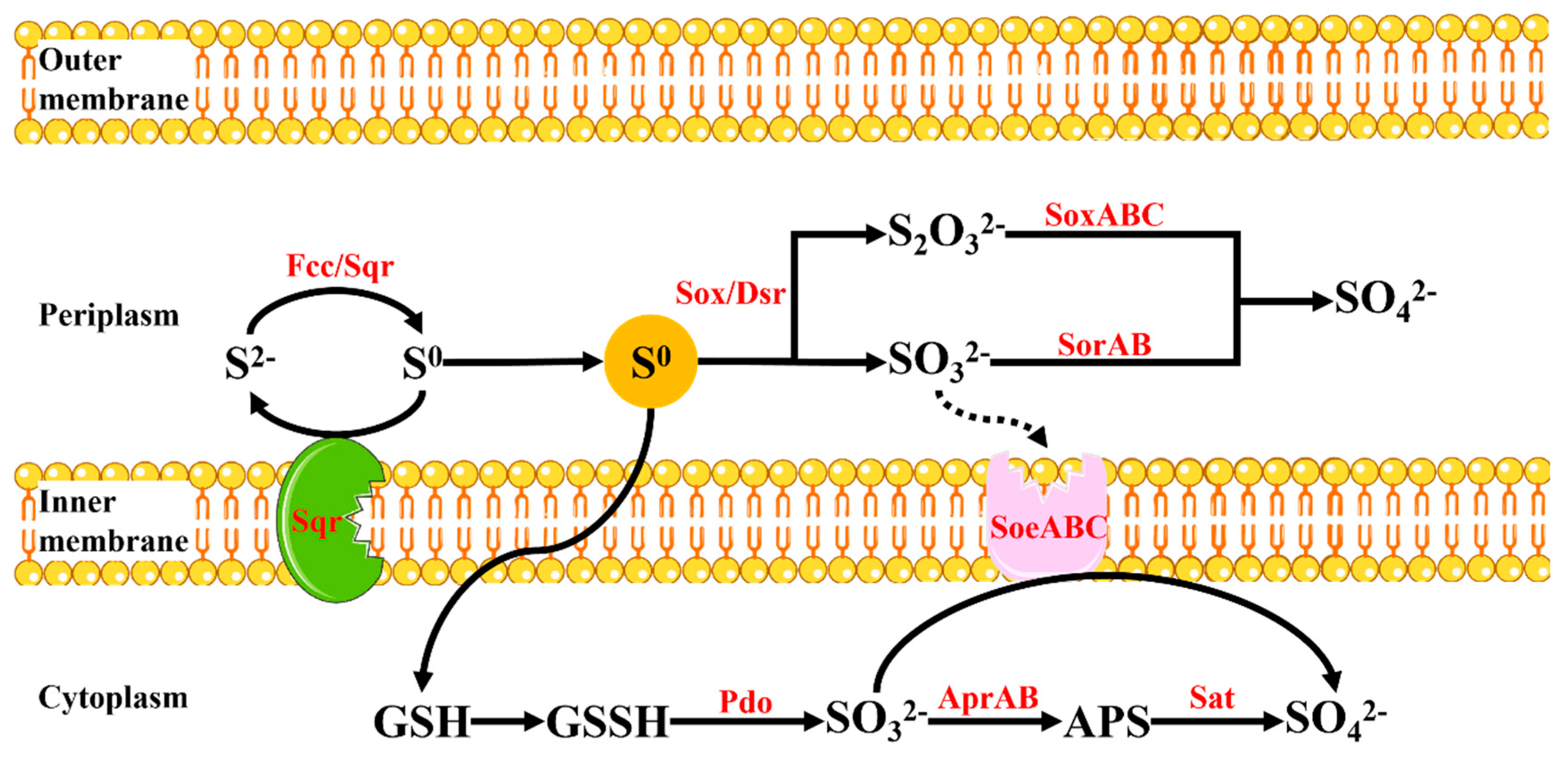
The biological oxidation of sulfur-containing odorous compounds is primarily mediated by sulfur-oxidizing enzyme systems, which catalyze the sequential oxidation of sulfide to elemental sulfur, elemental sulfur to sulfite, sulfite to sulfate, and thiosulfate to sulfate (Figure 2). The key enzymes involved include sulfide:quinone oxidoreductase (Sqr), flavocytochrome c sulfide dehydrogenase (Fcc), dissimilatory sulfite reductase (Dsr), sulfur dioxygenase (Sdo), sulfite:cytochrome c oxidoreductase (SorAB), sulfite:quinone oxidoreductase (SoeABC), adenosine-5′-phosphosulfate reductase (Apr), and persulfide dioxygenase (Pdo) [36]. The oxidation of H2S is initiated by membrane-bound Sqr, which catalyzes the two-electron oxidation of H2S and drives the deposition of the resulting sulfane sulfur as solid-phase elemental sulfur (S0). During this process, electrons are transferred through the quinone pool to the respiratory chain, where metabolic energy is generated [37]. A glutathione (GSH)-based sulfur transport and detoxification system is also widely present in microbial cells. Reactive sulfur generated by Sqr is rapidly conjugated with GSH to form glutathione persulfide (GSSH). This process not only maintains intracellular sulfur homeostasis but also converts inorganic sulfur into a transferable organic form. As a reactive sulfur donor, GSSH facilitates the directed transfer of sulfur among different intracellular enzyme systems and promotes its subsequent oxidation [38]. The generated S0 may accumulate extracellularly or intracellularly, such as in the sulfur globules of Acidithiobacillus. This step is critical for mitigating shock loads caused by high H2S concentrations and offers the potential for elemental sulfur recovery [39]. When H2S concentrations are relatively low or complete oxidation is required, H2S can be directly oxidized to sulfate (SO42−) by the sulfur oxidation (Sox) system, such as the SoxXYZAB complex in Arcobacter butzleri, without the accumulation of detectable intermediates [40]. In some microorganisms, including Thiobacillus spp. and certain Proteobacteria, the Sox system is functionally coupled with the adenosine-5′-phosphosulfate (APS) metabolic network. In these organisms, sulfur oxidation does not completely bypass metabolic intermediates; instead, sulfate is first activated to form APS, which serves as a key metabolic intermediate before being enzymatically converted to the final sulfate product [36]. Therefore, for processes primarily targeting H2S removal, strains possessing highly active Sqr, such as Acidithiobacillus thiooxidans, should be selected to achieve rapid H2S removal and elemental sulfur recovery. In contrast, advanced treatment processes aimed at controlling total sulfur concentrations require microorganisms harboring a complete Sox system, such as Paracoccus pantotrophus, to accomplish complete oxidation to sulfate.
The biodegradation of sulfur-containing VOCs, such as methanethiol (CH3SH) and dimethyl disulfide (CH3SSCH3), generally involves an initial activation and bond-cleavage step. Extracellular enzymes, such as methanethiol oxidase secreted by microorganisms including Hyphomicrobium, catalyze cleavage of the C-S bond to produce H2S or other low-molecular-weight sulfur compounds. These inorganic sulfur species are subsequently oxidized through the Sqr/Sox-mediated pathways described above [41]. This mechanism explains the transient increase in H2S concentration that is frequently observed in the outlet gas of biotrickling filters treating sulfur-containing VOCs. Accordingly, the construction of microbial consortia comprising specialized VOC-degrading microorganisms capable of C-S bond cleavage and highly efficient sulfur-oxidizing bacteria responsible for H2S removal represents an effective strategy for the complete and stable elimination of sulfur-containing VOCs, such as Acidithiobacillus thiooxidans and Thiobacillus thioparus [42].

4.1.3. Removal of Non-Sulfur VOCs: Assimilatory and Dissimilatory Metabolism as Carbon Sources

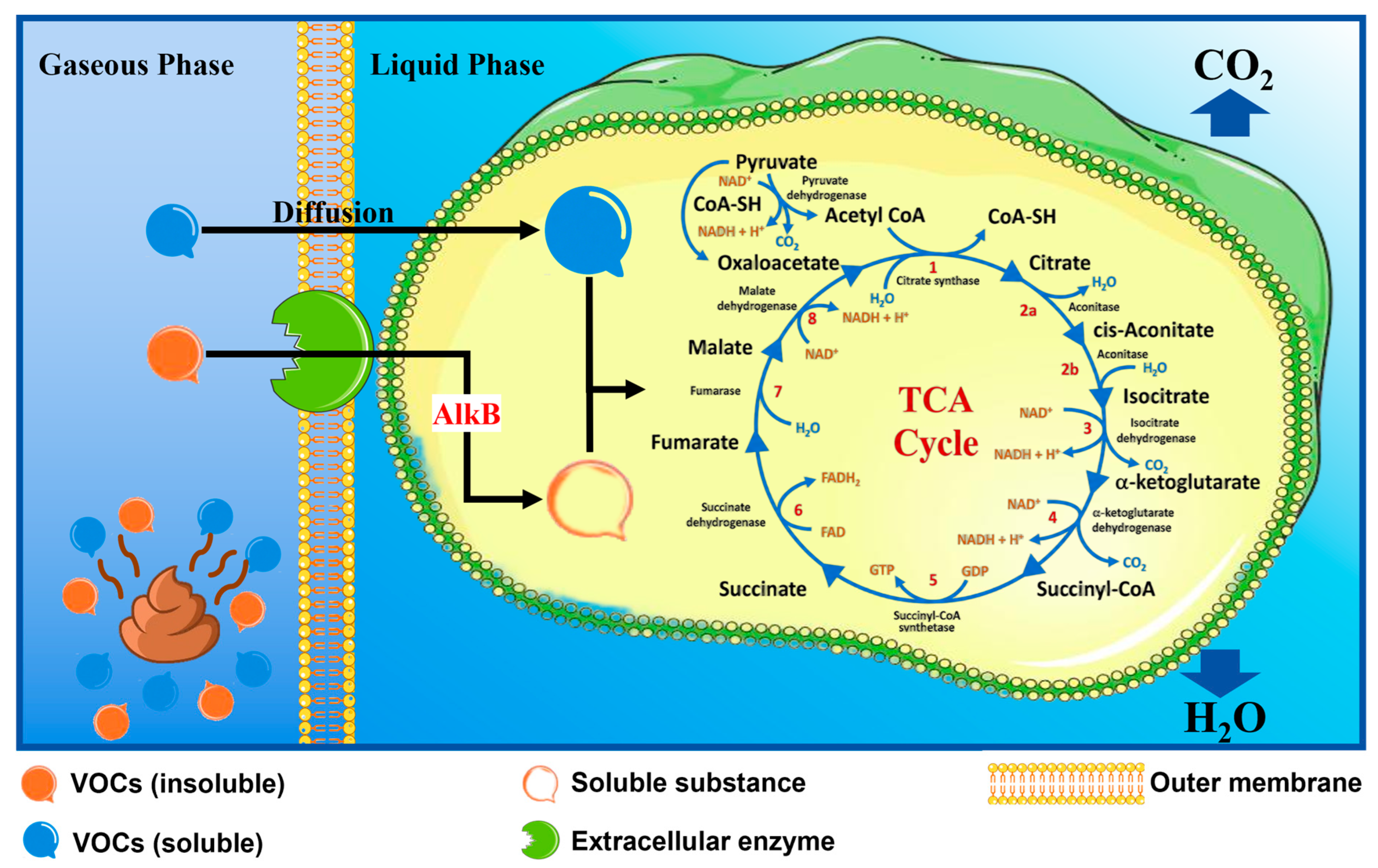
Non-sulfur VOCs, such as benzene, toluene, and styrene, serve as carbon and energy sources for microorganisms, and their degradation efficiency depends on the coupling between mass transfer and initial oxidation reactions. For aromatic compounds, dioxygenases can simultaneously incorporate two oxygen atoms into the benzene ring, resulting in ring cleavage and the formation of cis,cis-muconic acid, whereas monooxygenases introduce one oxygen atom per catalytic cycle, producing phenolic or alcohol intermediates [43]. These initial products subsequently enter central metabolic pathways, such as the tricarboxylic acid (TCA) cycle, where they are completely mineralized to CO2 and H2O [44]. For alkanes, degradation begins with terminal hydroxylation, in which alkane hydroxylase (AlkB) serves as the rate-limiting enzyme initiating the process by oxidizing alkanes to alcohols (Figure 3). Alcohol dehydrogenase (ADH) and aldehyde dehydrogenase (ALDH) then sequentially convert alcohols to aldehydes and carboxylic acids, which are ultimately funneled into central metabolic pathways [45]. The intrinsic hydrophobicity of pollutants, which determines gas–liquid mass transfer rates, and their molecular structural complexity, which affects the catalytic accessibility of oxygenases, together constitute the rate-limiting factors in the degradation process [46]. Therefore, both fundamental research and practical applications are required. On one hand, strains capable of producing efficient broad-spectrum oxygenases should be screened and engineered. These enzymes possess broad substrate spectra and can catalyze the oxidation of structurally diverse VOCs, rather than acting on merely one substrate. For example, the toluene dioxygenase (TDO) encoded by the todC1C2BA operon in Pseudomonas putida F1 can oxidize not only toluene but also benzene, ethylbenzene, naphthalene, and several chlorinated aromatic compounds, making it a representative broad-spectrum oxygenase applicable to mixed aromatic VOC treatment scenarios [47]. On the other hand, mass transfer should be enhanced by adding hydrophobic packing materials (e.g., activated carbon and diatomite) or surfactants, and co-metabolism strategies using easily degradable substrates (e.g., glucose) should be explored to initiate the transformation of recalcitrant VOCs such as trichloroethylene [48].

4.2. Influencing Factors of Microbial Deodorization

The efficiency of microbial deodorization systems is jointly regulated by key environmental parameters, including temperature, pH, moisture content, and aeration rate. These parameters influence microbial community structure, metabolic activity, and mass transfer processes, thereby collectively determining the overall removal efficiency of odorous compounds [49]. Temperature is a key variable governing microbial metabolic activity. The biodegradation of NH3, H2S, and VOCs generally exhibits high activity within the mesophilic range of 20–45 °C, whereas excessively high temperatures (>45–50 °C) significantly inhibit the activity of most mesophilic microorganisms, resulting in reduced deodorization efficiency [50,51,52]. System pH affects the bioavailability of odorous compounds by altering their ionic forms and enzymatic activity [53]. Although near-neutral conditions (pH 7–8) generally favor the synergistic metabolism of mixed microbial consortia, NH3 degradation may be more efficient under mildly acidic conditions, whereas H2S removal typically exhibits higher mass transfer efficiency under alkaline conditions. Fungi-dominated systems also show unique advantages for VOC degradation under acidic conditions [53,54,55]. Aeration rate not only supplies oxygen required for aerobic microorganisms but also serves as a carrier for heat dissipation and volatile compound removal [56]. Moderate or intermittent aeration has been shown to effectively reduce NH3 and H2S emissions by creating favorable microenvironments. However, excessive aeration, while beneficial for controlling certain VOCs, may negatively affect overall system performance by altering microbial community structure and the moisture balance within the reactor [57,58,59,60]. In addition, moisture content is a fundamental parameter influencing the physical structure of composting systems and microbial activity, as it directly affects oxygen diffusion efficiency and microbial mobility. In solid-phase composting systems treating organic substrates such as animal manure, municipal solid waste, and sewage sludge, a moisture content of 50–70% is generally considered optimal for microbial degradation activity, as it simultaneously satisfies the requirements for substrate solubilization, microbial mobility, and adequate oxygen diffusion through the porous matrix [61]. For liquid-phase bioreactor systems such as bioscrubbers and biotrickling filters, moisture is non-limiting by design [62]. Instead, other parameters including pH, dissolved oxygen, and nutrient concentrations become the primary controlling factors [63]. Deviations from the optimal moisture range in solid-phase systems may inhibit specific metabolic pathways, including nitrification and sulfate reduction, thereby promoting the accumulation and release of odorous compounds such as NH3 and H2S [64,65,66,67].

5. Screening and Consortium Construction of Deodorizing Microorganisms

5.1. Screening of Deodorizing Microorganisms

5.1.1. Screening of NH3-Removing Strains

For NH3 control, research has shifted from separately screening nitrifying and denitrifying bacteria to the selection of HN-AD strains. Compared with conventional nitrification–denitrification, HN-AD provides advantages in oxygen efficiency and reactor simplification, making it particularly suitable for odor treatment systems characterized by fluctuating ammonia loads. Currently identified model strains are mainly distributed among the genera Pseudomonas, Bacillus, and Acinetobacter, with some studies also involving fungi [68]. As shown in Table 3, reported HN-AD strains generally achieve nitrogen removal efficiencies of 85~99% under initial ammonium nitrogen concentrations of 50–500 mg/L. HN-AD strains overcome the strict dissolved oxygen limitations of conventional nitrogen removal processes and enable simultaneous nitrogen removal within a single reactor. Related studies have advanced to the molecular level, focusing on the expression and activity of AMO, HAO, and periplasmic nitrate reductase (NAP) [69]. Studies have shown that optimizing the C/N ratio (typically 8–12) can significantly upregulate the expression of amoA and napA genes, thereby enhancing metabolic rates under high ammonia loading conditions [70].

5.1.2. Screening of H2S-Removing Strains

The dominant microbial groups for H2S removal include acidophilic Acidithiobacillus spp. and neutrophilic Thiobacillus spp. (Table 4). Because H2S oxidation leads to environmental acidification, recent studies have focused on screening acid-tolerant strains. These microorganisms can maintain H2S removal efficiencies above 95% even under extreme conditions (pH 2.0–4.0), and their metabolism primarily involves the Sox multienzyme complex (SoxXYZAB), which is responsible for the complete oxidation of sulfur species with different oxidation states [54]. Screening strains with high expression of key genes such as sqr, dsrA, and soxB can effectively prevent excessive accumulation of elemental sulfur on biofilm surfaces, thereby avoiding packing material clogging [76].

5.1.3. Screening of VOC-Degrading Strains

VOCs are highly diverse and are often associated with high toxicity. Efficient degrading strains typically possess diverse and highly active core enzyme systems, as well as strong stress resistance and tolerance mechanisms (Table 5). For hydrophilic VOCs (e.g., methanol, ethanol, and acetone), the dominant screened genera are methylotrophic bacteria such as Rhodococcus. For more hydrophobic VOCs, fungi (e.g., Candida and Fusarium) are more effective due to their hyphal structures and hydrophobic proteins in the cell wall, which enhance adsorption and degradation of such pollutants. Compared with bacteria, fungi possess a larger specific surface area and stronger resistance to desiccation and acidic conditions. Their extracellular enzymes (e.g., lignin peroxidase and laccase) exhibit strong nonspecific oxidative capabilities, enabling the degradation of structurally complex aromatic compounds. In addition, fungal mycelia can enhance the mass transfer efficiency of hydrophobic VOCs in biofiltration systems [81]. Studies have shown that, for hydrophobic gases such as toluene and xylene, fungal biofilters typically achieve 20–40% higher removal loading rate than bacterial systems. However, fungal emissions may cause secondary pollution due to odor release [82]. In addition, many strains have evolved tolerance to harsh environmental conditions such as high salinity, extreme pH, or high temperature, enabling them to survive and function under the severe conditions of real contaminated sites [83,84].

5.2. Construction of Deodorizing Microbial Consortia

In recent years, in response to the complex coexistence of NH3, H2S, and VOCs under real operating conditions, microbial deodorization technology has shifted from the screening of single-function strains toward the construction and engineering application of multifunctional microbial consortia. In this process, early composite microbial systems represented by Effective Microorganisms (EM) were the first to achieve industrial application. These systems integrate lactic acid bacteria, yeasts, and photosynthetic bacteria to inhibit organic matter decay and reduce the formation of odor precursors [88,89].
On this basis, currently commercialized microbial deodorization products exhibit clear characteristics of multi-consortia synergy and functional complementarity. Their core compositions typically include Lactobacillus, Bacillus, yeasts and actinomycetes (Table 6), while some products further incorporate sulfur-oxidizing bacteria (SOB) or functional enzyme preparations to enhance targeted conversion of NH3 and H2S [90]. For example, certain commercial formulations achieve NH3 removal efficiencies above 90% and H2S removal efficiencies of 85–95% in landfill and wastewater treatment applications, demonstrating relatively stable engineering applicability. However, such commercial microbial agents are often marketed as “consortia” or “probiotic consortia”, while their specific strain composition is rarely disclosed. This lack of transparency hampers comparative evaluation among commercial products.
From an engineering perspective, current commercial microbial deodorization agents still exhibit three common limitations: (i) large variations in functional microbial composition among products, with no unified screening standards or performance evaluation systems, resulting in strong dependence of treatment efficiency on application scenarios and operational conditions; (ii) poor long-term colonization ability and functional stability due to competition with indigenous microbial communities and environmental stresses under open or high-load conditions; and (iii) optimization primarily targeting single odor indicators (e.g., NH3 or H2S), with insufficient capability for synergistic degradation of multi-component VOCs and control of intermediate metabolites.
To address these issues, future research and industrial development should focus on several directions. First, standardized functional microbial community databases should be established based on metagenomics and metabolic network analysis to enable rational design of microbial consortia. Second, synthetic microbial consortia and directed domestication strategies should be developed to enhance ecological competitiveness and functional stability in complex environments. In addition, an integrated “inoculum-carrier material-reactor system” design concept should be promoted to improve overall deodorization efficiency through microenvironment regulation and enhanced mass transfer. Finally, a unified evaluation system and engineering application standards for commercial microbial agents should be established to improve comparability and engineering compatibility across products.
With the further development of microbiome engineering and environmental biotechnology, commercial deodorizing microbial agents are expected to gradually shift from empirically developed products to rationally designed biological formulations, enabling precise regulation and long-term stable control of complex odor pollution systems.

5.3. Metabolic Engineering Strategies for Enhancing Microbial Deodorization

Metabolic engineering in microbial deodorization remains at a transitional stage, progressing from target identification and enzyme function validation toward the development and application of engineered strains and microbial consortia. Current molecular engineering studies have primarily focused on the overexpression of individual functional enzymes and heterologous validation of key metabolic modules, whereas comprehensive pathway reconstruction strategies that simultaneously integrate multi-component odor degradation, environmental robustness, genetic stability, and biosafety considerations remain relatively limited.
For the transformation of nitrogen-containing odor compounds, AMO represents the most direct potential engineering target. However, the complete AMO complex is a structurally and assembly-wise complex membrane-bound copper-containing monooxygenase, and overexpression of amoA alone is generally insufficient to reconstruct functional ammonia oxidation activity. Previous studies have introduced the heterotrophic nitrification gene cluster from Paracoccus denitrificans into Pseudomonas putida, resulting in functional heterologous expression of AMO activity. These studies further demonstrated that continuous ammonia oxidation requires the coordinated expression of AMO and hydroxylamine oxidation-related functional modules within the introduced genetic region [97]. This study indicates that rational metabolic engineering of NH3 conversion should target the reconstruction of the entire functional pathway comprising catalytic subunits, accessory components, and downstream hydroxylamine detoxification modules, rather than simply enhancing the expression of amoA alone. Recent structural studies have further revealed the complexity of AMO complex composition, membrane assembly, and electron transfer processes. The heterologous expression of the complete CuMMO system remains substantially constrained by challenges associated with protein folding, copper homeostasis, and the cytotoxicity of hydroxylamine (NH2OH) [98,99]. Therefore, future metabolic engineering strategies for NH3 removal should simultaneously consider the coordinated regulation of amoCAB expression, metal cofactor supply, downstream hydroxylamine oxidation, and by-product control, rather than simply equating increased functional gene abundance with enhanced ammonia oxidation performance.
Compared with ammonia oxidation systems, sulfur oxidation pathways have demonstrated more established examples of metabolic engineering applications. Jung et al. [100] cloned and constitutively overexpressed two sulfide:quinone oxidoreductase genes, AFE_0267 and AFE_1792, in Acidithiobacillus ferrooxidans. Both recombinant enzymes exhibited SQR activity, and AFE_1792 retained functional activity under aerobic conditions. The engineered strains not only showed improved growth on sulfur substrates and enhanced sulfur oxidation capacity but also exhibited reduced cellular toxicity caused by H2S exposure. Although this study was conducted in a bioleaching system rather than an odor-control bioreactor, it demonstrated that enhancing the expression of the initial H2S oxidation enzyme can effectively redirect sulfur metabolic flux, representing one of the most relevant molecular engineering examples for microbial deodorization applications to date. For heterologous expression, Han et al. [101] introduced three homologous sqr genes from Sulfurimonas denitrificans individually into the Rhodobacter capsulatus Δsqr mutant strain, and all three recombinant proteins restored detectable SQR activity. These results demonstrate that sulfide oxidation enzyme modules possess the potential for cross-host transfer. However, the introduction of complete Sox gene clusters into industrial chassis microorganisms for H2S gas treatment has not yet been achieved. Further efforts are required to address key challenges, including membrane localization, compatibility with host quinone pools, electron acceptor availability, and the regulation of sulfur product distribution between S0 and SO42−.
For benzene derivatives and other VOCs, the primary strategy involves the introduction of heterologous degradation modules, chromosomal integration of functional gene clusters, and coordinated reconstruction of multiple metabolic pathways to expand the substrate spectrum of chassis microorganisms and enhance the continuous mineralization capacity toward complex organic pollutants. Su et al. [84] employed iterative natural transformation technology to integrate five synthetic gene clusters, comprising a total of 43 kb of exogenous genetic elements, into the chromosome of the fast-growing marine chassis microorganism Vibrio natriegens. The engineered strain VCOD-15 exhibited the capability to simultaneously degrade toluene, phenol, naphthalene, biphenyl, and dibenzofuran, achieving over 90% pollutant removal efficiency in high-salinity industrial wastewater. These findings demonstrate that the coordinated assembly of multiple gene clusters can effectively establish interconnected metabolic pathways encompassing the initial oxidation, aromatic ring cleavage, and downstream central metabolism of aromatic compounds. Although the validation scenario of this study involved industrial wastewater rather than odor-containing gas treatment, gaseous pollutants such as toluene undergo gas–liquid mass transfer before entering biofilms, after which their intracellular transformation relies on the same oxidative enzymes, ring-cleavage enzymes, and central metabolic networks. Therefore, immobilization of such broad-spectrum engineered strains in biological deodorization reactors may enhance the simultaneous degradation capacity of multiple VOC components after their transfer into the liquid phase of biofilms. However, pollutant removal efficiency in liquid systems cannot be directly extrapolated to gas-phase removal performance. Further investigations are required to specifically evaluate the impacts of gas–liquid mass transfer limitations, biofilm colonization stability, metabolic gene expression under low-concentration gaseous substrates, and the accumulation or release of intermediate metabolites in gas-phase bioremediation systems.

6. Microbial Deodorization Technologies and Their Applications

Microbial deodorization technologies have primarily evolved into in situ treatment technologies focused on source control and ex situ bioreactor technologies oriented toward end-of-pipe treatment, depending on the treatment stage and spatial dimension of pollutant management.

6.1. In Situ Treatment Technologies

In situ treatment technologies are designed to achieve the on-site conversion of odorous compounds through direct intervention in the biological metabolic processes of pollution sources, offering relatively low infrastructure costs and high operational convenience [102].

6.1.1. Feed Additives

In this approach, probiotic consortia, such as lactic acid bacteria and Bacillus spp., are strategically incorporated into livestock and poultry feed to reshape the intestinal microecosystem and suppress the proliferation of pathogenic putrefactive microorganisms, thereby significantly reducing the generation of odor precursors at the physiological and metabolic levels [103,104]. The major advantage of this technology lies in shifting odor control to the source while simultaneously improving animal production performance. However, its deodorization efficiency may be substantially influenced by physiological heterogeneity among animals, and dispersed odors released into the atmosphere cannot be effectively captured. Therefore, this technology is particularly suitable for intensive livestock operations with highly enclosed environments and concurrent demands for animal health improvement. In a commercial broiler farm, the inclusion of Bacillus subtilis in the diet was found to reduce the NH3 emission flux from the cecum by approximately 30% [104]. From an economic perspective, although microbial additives increase feed costs by approximately 2–5%, the additional benefits derived from improved feed conversion efficiency and reduced disease incidence can largely offset the treatment costs, demonstrating considerable application potential.

6.1.2. Direct Inoculation and Spraying of Microbial Agents

This technology relies on the targeted application of highly efficient microbial degraders to manure piles or landfill surfaces, where their strong metabolic activity is utilized to accelerate the mineralization of odorous compounds. It has been widely applied for the rapid treatment of odor emissions from organic solid waste composting facilities, landfill sites, and temporary odor outbreak hotspots [105]. A major advantage of this approach is its high specificity, as functional microbial consortia can be tailored according to the characteristics of target pollutants under different application scenarios. However, its practical application is constrained by limited environmental robustness, and challenges remain in maintaining microbial activity and competitive colonization within complex field environments. Zhang et al. [106] reported that the inoculation of thermophilic functional bacteria during the initial stage of thermophilic composting not only significantly accelerated compost maturation but also reduced the cumulative emissions of NH3 and H2S by 25.06% and 25.05%, respectively. By enhancing nitrogen retention within the composting material, this technology not only improves the surrounding atmospheric environment but also increases the fertilizer value of the final product, thereby providing substantial environmental and societal benefits.

6.2. Ex Situ Treatment Technologies

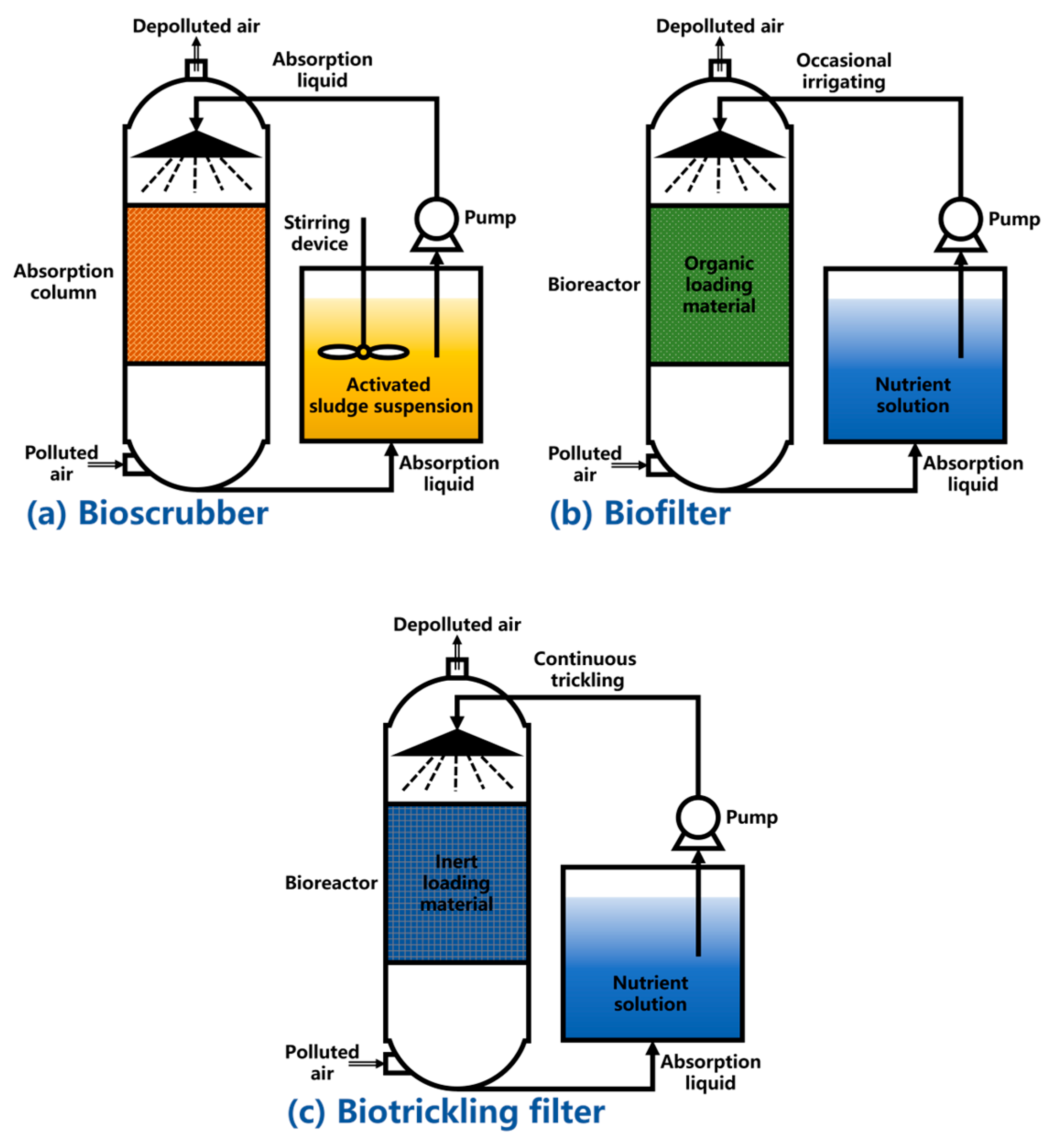
Ex situ treatment technologies involve the systematic collection of odorous gases and their transfer to dedicated bioreactors, where pollutant degradation is enhanced by highly concentrated microbial communities. These technologies are particularly suitable for the treatment of continuous industrial exhaust streams with high gas flow rates (Figure 4).

6.2.1. Bioscrubber

In bioscrubbing systems, odorous gases are first absorbed into a liquid phase within a scrubbing column and are subsequently degraded in a separate bioreactor by suspended activated sludge. The main advantages of this system include precise controllability of operational parameters (e.g., pH and nutrient concentration) and high process stability. However, relatively low removal efficiencies for hydrophobic organic compounds have been reported. In addition, long start-up periods and a relatively high risk of secondary pollution associated with wastewater treatment have been identified. This technology is mainly applied to high-concentration industrial waste gases with complex compositions, particularly those containing sulfur or ammonia compounds. Castagnoli et al. [107] evaluated the performance and cost of conventional chemical scrubbing and bioscrubbing for treating sulfur-containing exhaust gases from a sulfur-based pigment factory. It was found that bioscrubbing achieved better treatment performance than chemical scrubbing. Moreover, bioscrubbing reduced SO42−/SO32− concentrations in the scrubber effluent by 98.88% and enabled biological sulfur recovery. Although the initial capital investment of this system is relatively high, its high degree of automation and large treatment capacity make it indispensable in large-scale industrial emission control applications.

6.2.2. Biofilter

This technology employs moist active filter media (e.g., wood chips and biochar) as carriers, through which odorous gases pass across a microbially colonized packed bed, where pollutants are directly degraded by immobilized biofilms. A key advantage of this technology is its simplified operational and maintenance procedures, as no frequent chemical dosing is required, resulting in highly competitive operating costs. However, limitations include a large footprint, as well as acidification, compaction, and clogging of the packing material during long-term operation [108]. Billones et al. [109] developed a biofilter using a composite packing material of durian husk and chicken manure for NH3 treatment, achieving an average removal efficiency of 91.53%. By using low-cost waste materials as packing media, this technology maintains high deodorization efficiency while significantly reducing construction costs.

6.2.3. Biotrickling Filter

Biotrickling filters are similar to biofilters, but a nutrient solution is continuously trickled over the packing material, resulting in the formation of a flowing biofilm, which facilitates pH control and nutrient supplementation. The main advantages of this system include a compact configuration and high space utilization efficiency. Biomass accumulation can be effectively controlled by adjusting the composition of the irrigation liquid. Therefore, this technology is particularly suitable for urban wastewater treatment plants and industrial workshops with limited land availability and strict deodorization requirements. However, high-precision management of circulation pumps and spraying systems is required, and continuous treatment of waste liquid remains a key challenge. Huan et al. [110] applied a biotrickling filter packed with bamboo charcoal for NH3 treatment. A maximum removal loading rate exceeding 150 g/(m3·h) and a removal efficiency of up to 96.52% were achieved. Zhang et al. [111] introduced a photocatalysis-coupled microbial fuel cell (MFC) system. At an aniline concentration of 790 mg/m3, a removal capacity of 18.97 g/(m3·h) was achieved. Meanwhile, electricity generation was also realized, with a maximum power density of 172.9 mW/m3.
Typical cases are summarized in Table 7.

7. Conclusions and Perspectives

Microbial deodorization technologies have become an important approach for odor control in livestock farming, organic solid waste treatment, and sewage sludge management due to their environmentally friendly, efficient, and low-cost characteristics. However, their long-term and stable application under complex real-world conditions is still constrained by multiple factors, and insufficient adaptability has been further revealed in engineering and commercialization practices. First, most currently available high-efficiency deodorizing strains are obtained through laboratory screening, and their performance is typically evaluated under single-pollutant and idealized conditions. However, real odor systems are characterized by multi-component coexistence, fluctuating concentrations, and high salinity, which can reduce microbial colonization and metabolic stability in engineering environments. Second, although various commercial composite microbial deodorization agents are available on the market, their microbial compositions and mechanisms of action lack transparency, and no unified evaluation standards exist among different products, resulting in application outcomes that are highly dependent on specific operating conditions, with insufficient stability and reproducibility. In addition, existing studies have mainly focused on the removal mechanisms of NH3, H2S, or individual VOCs, while the synergistic metabolism and interactions of microbial communities in multi-pollutant systems remain insufficiently understood. Meanwhile, composite microbial agents are prone to functional decline during long-term operation due to environmental stress and community succession, and bioreactors commonly suffer from engineering issues such as packing clogging, acidification-induced deactivation, and biofilm aging, all of which collectively limit large-scale application.
Therefore, future research should focus on the following aspects: (1) strengthening multi-omics-based (genomic, transcriptomic, and metabolomic) analyses of functional microbial communities, elucidating the response mechanisms of key functional genes and metabolic networks in complex odor systems, and establishing correlations among “pollutants-functional microbiota-metabolic pathways”; (2) under complex conditions such as high ammonia, high sulfur, high salinity, and mixed VOCs, screening stress-resistant functional microorganisms with broad metabolic capabilities, and constructing stable synergistic microbial consortia using synthetic biology and directed domestication approaches; (3) developing novel packing materials with adsorption, buffering, and microbial immobilization functions to enhance mass transfer efficiency and biofilm stability, thereby improving long-term reactor performance; (4) promoting the deep integration of microbial deodorization with artificial intelligence monitoring, online sensing, and digital control technologies to enable dynamic regulation of operational parameters and real-time optimization of treatment performance; (5) establishing unified standards for strain screening, reactor performance evaluation, and engineering application, providing a basis for technology selection and performance assessment across different odor-control scenarios.
With the development of multi-omics technologies, synthetic microbial community construction, and intelligent bioreactors, microbial deodorization research is expected to shift from experience-driven approaches to rational design, and from single-pollutant treatment to coordinated control of complex odor systems, thereby providing more efficient and sustainable technical support for precise odor management and waste resource utilization.

Author Contributions

Y.L.: Conceptualization, Literature search, Data curation, Writing—Original Draft Preparation, Writing—Review and Editing. W.Z.: Literature Search, Data Curation, Writing—Review and Editing. M.S.: Literature Search and Data Curation. X.X.: Literature Search and Data Curation. J.G.: Literature Search and Data Curation. W.D.: Conceptualization, Resources, Supervision, Project Administration, Funding Acquisition, Writing—Review and Editing. X.W.: Conceptualization, Methodology, Resources, Supervision, Project Administration, Funding Acquisition, Writing—Review and Editing. All authors have read and agreed to the published version of the manuscript.

Funding

This work was financially supported by the National Key Research and Development Program of China (2021YFA0910400), the Natural Science Foundation of Jiangsu Province of China for Distinguished Young Scholars (BK20250030), the National Natural Science Foundation of China (22478184), Jiangsu Basic Research Center for Synthetic Biology (BK20233003), the Jiangsu Synegetic Innovation Center for Advanced Bio-Manufacture (XTD2209), and the Provincial Students’ Platform for Innovation and Entrepreneurship Training Program (X2026102910811, X2026102911408).

Institutional Review Board Statement

Not applicable.

Informed Consent Statement

Not applicable.

Data Availability Statement

No new data were created or analyzed in this study. Data sharing is not applicable to this article.

Conflicts of Interest

The authors declare no conflicts of interest.

References

  1. Sironi, S.; Capelli, L.; Céntola, P.; Del Rosso, R.; Pierucci, S. Odour impact assessment by means of dynamic olfactometry, dispersion modelling and social participation. Atmos. Environ. 2010, 44, 354–360. [Google Scholar] [CrossRef]
  2. Zhang, N.; Bai, Z.; Ledgard, S.; Luo, J.; Ma, L. Ammonia mitigation effects from the cow housing and manure storage chain on the nitrogen and carbon footprints of a typical dairy farm system on the North China Plain. J. Clean. Prod. 2021, 280, 124465. [Google Scholar] [CrossRef]
  3. Li, Y.; Li, L.; Liu, M.; Zheng, Z.; Hao, J.; Liu, S.; Wang, Y. Exploring the influence of different fillers on the removal process of ammonia and hydrogen sulfide during aerobic composting by establishing deodorization models. J. Clean. Prod. 2025, 491, 144790. [Google Scholar] [CrossRef]
  4. Larssen, T.; Lydersen, E.; Tang, D.; He, Y.; Gao, J.; Liu, H.; Duan, L.; Seip, H.M.; Vogt, R.D.; Mulder, J.; et al. Acid Rain in China. Environ. Sci. Technol. 2006, 40, 418–425. [Google Scholar] [CrossRef]
  5. David, E.; Niculescu, V.-C. Volatile organic compounds (VOCs) as environmental pollutants: Occurrence and mitigation using nanomaterials. Int. J. Environ. Res. Public Health 2021, 18, 13147. [Google Scholar] [CrossRef] [PubMed]
  6. Marycz, M.; Brillowska-Dąbrowska, A.; Muñoz, R.; Gębicki, J. A state of the art review on the use of fungi in biofiltration to remove volatile hydrophobic pollutants. Rev. Environ. Sci. Bio Technol. 2022, 21, 225–246. [Google Scholar] [CrossRef]
  7. Kurnikova, N.V.; Nazarova, A.V.; Molodkina, N.R.; Sergienko, O.I.; Kuznetsova, K.G. Potentials for biological treatment of odorous gaseous emissions from poultry farming facility in Russia. IOP Conf. Ser. Earth Environ. Sci. 2021, 864, 012015. [Google Scholar] [CrossRef]
  8. Dai, X.; Karring, H. A determination and comparison of urease activity in feces and fresh manure from pig and cattle in relation to ammonia production and pH changes. PLoS ONE 2014, 9, e110402. [Google Scholar] [CrossRef] [PubMed]
  9. Saksrithai, K.; King, A. Controlling hydrogen sulfide emissions during poultry productions. J. Anim. Res. Nutr. 2018, 3, 2. [Google Scholar] [CrossRef]
  10. Dai, X.; Saha, C.K.; Ni, J.; Heber, A.J.; Blanes-Vidal, V.; Dunn, J.L. Characteristics of pollutant gas releases from swine, dairy, beef, and layer manure, and municipal wastewater. Water Res. 2015, 76, 110–119. [Google Scholar] [CrossRef] [PubMed]
  11. Huang, C.; Xu, W.; Ning, J.; Li, L.; Jian, Y.; Liu, Z. Characterization, health risks, ozone and secondary organic aerosol formation, and odor-causing analysis of gaseous pollutants from pig houses. Air Qual. Atmos. Health 2024, 17, 401–415. [Google Scholar]
  12. Hassouna, M.; van der Weerden, T.J.; Beltran, I.; Amon, B.; Alfaro, M.A.; Anestis, V.; Cinar, G.; Dragoni, F.; Hutchings, N.J.; Leytem, A.; et al. DATAMAN: A global database of methane, nitrous oxide, and ammonia emission factors for livestock housing and outdoor storage of manure. J. Environ. Qual. 2023, 52, 207–223. [Google Scholar] [PubMed]
  13. Nie, E.; Wang, W.; Duan, H.; Zhang, H.; He, P.; Lü, F. Emission of odor pollutants and variation in microbial community during the initial decomposition stage of municipal biowaste. Sci. Total Environ. 2023, 861, 160612. [Google Scholar] [CrossRef] [PubMed]
  14. Park, J.; Kang, T.; Heo, Y.; Lee, K.; Kim, K.; Lee, K.; Yoon, C. Evaluation of Short-Term Exposure Levels on Ammonia and Hydrogen Sulfide During Manure-Handling Processes at Livestock Farms. Saf. Health Work 2020, 11, 109–117. [Google Scholar] [CrossRef] [PubMed]
  15. González, D.; Barrena, R.; Moral-Vico, J.; Irigoyen, I.; Sánchez, A. Addressing the gaseous and odour emissions gap in decentralised biowaste community composting. Waste Manag. 2024, 178, 231–238. [Google Scholar] [CrossRef] [PubMed]
  16. Arman, F.; Mohseni Bandpey, A.; Shahsavani, A.; Saadani, M.; Saeedi, R.; Abtahi, M. Characterization, source identification, and health risk assessment of odorous compounds in solid waste management facility of Tehran. Air Qual. Atmos. Health 2022, 15, 1609–1621. [Google Scholar] [CrossRef]
  17. Rincón, C.A.; De Guardia, A.; Couvert, A.; Le Roux, S.; Soutrel, I.; Daumoin, M.; Benoist, J.C. Chemical and odor characterization of gas emissions released during composting of solid wastes and digestates. J. Environ. Manag. 2019, 233, 39–53. [Google Scholar] [CrossRef] [PubMed]
  18. Liu, Y.; Lu, W.; Wang, H.; Huang, Q.; Gao, X. Odor impact assessment of trace sulfur compounds from working faces of landfills in Beijing, China. J. Environ. Manag. 2018, 220, 136–141. [Google Scholar] [CrossRef] [PubMed]
  19. Lee, J.; Lee, S.; Lin, K.; Jung, S.; Kwon, E. Abatement of odor emissions from wastewater treatment plants using biochar. Environ. Pollut. 2023, 336, 122426. [Google Scholar] [CrossRef] [PubMed]
  20. Zhao, S.; Yang, X.; Zhang, W.; Chang, J.; Wang, D. Volatile sulfide compounds (VSCs) and ammonia emission characteristics and odor contribution in the process of municipal sludge composting. J. Air Waste Manag. Assoc. 2019, 69, 1368–1376. [Google Scholar] [CrossRef] [PubMed]
  21. Shen, Y.; Chen, T.B.; Gao, D.; Zheng, G.; Liu, H.; Yang, Q. Online monitoring of volatile organic compound production and emission during sewage sludge composting. Bioresour. Technol. 2012, 123, 463–470. [Google Scholar] [CrossRef] [PubMed]
  22. González, D.; Guerra, N.; Colón, J.; Gabriel, D.; Ponsá, S.; Sánchez, A. Characterization of the Gaseous and Odour Emissions from the Composting of Conventional Sewage Sludge. Atmosphere 2020, 11, 211. [Google Scholar] [CrossRef]
  23. Toledo, M.; Muñoz, R. Odour prevention strategies in wastewater treatment and composting plants: A review. J. Environ. Manag. 2025, 375, 124402. [Google Scholar] [CrossRef] [PubMed]
  24. Hoshika, Y.; Imamura, T.; Muto, G.; Vangemert, L.J.; Don, J.A.; Walpot, J.I. International Comparison of Odor Threshold Values of Several Odorants in Japan and in the Netherlands. Environ. Res. 1993, 61, 78–83. [Google Scholar] [CrossRef] [PubMed]
  25. Korea Ministry of Environment. Annual Report of Ambient Air Quality in Korea; Korea Ministry of Environment: Sejong, Republic of Korea, 2010.
  26. GB 14554-93; Emission Standards for Odor Pollutants. State Environmental Protection Administration of China: Beijing, China, 1993.
  27. Ministry of the Environment, Government of Japan. Offensive Odor Control Act (Akushu Boushi Hou). Available online: https://www.env.go.jp/en/laws/air/odor/index.html (accessed on 25 June 2026).
  28. Zheng, X.; Wang, Y.; Jiang, Y.; Li, M.; Mao, W.; Guan, Y. Nitrogen removal and microbial metabolic pathways in a pyrite-mediated denitrification-Anammox integrated system: Emphasizing the impact of organic matter under oxygen-limited conditions. Chem. Eng. J. 2025, 518, 164450. [Google Scholar] [CrossRef]
  29. Latos, M.; Karageorgos, P.; Kalogerakis, N.; Lazaridis, M. Dispersion of Odorous Gaseous Compounds Emitted from Wastewater Treatment Plants. Water Air Soil Pollut. 2011, 215, 667–677. [Google Scholar]
  30. Roothans, N.; Pabst, M.; van Diemen, M.; Herrera Mexicano, C.; Zandvoort, M.; Abeel, T.; van Loosdrecht, M.C.; Laureni, M. Long-term multi-meta-omics resolves the ecophysiological controls of seasonal N2O emissions during wastewater treatment. Nat. Water 2025, 3, 590–604. [Google Scholar] [CrossRef] [PubMed]
  31. Malewski, T.; Borowik, P.; Golińska, P.; Okorski, A.; Olejarski, I.; Oszako, T. Organic inputs positively alter the bacteriome of post-agricultural soils. Forests 2023, 14, 1711. [Google Scholar] [CrossRef]
  32. Liu, H.; Tao, Z.; Liu, H.; Xu, W.; Qin, Y.; Nie, Z.; Tan, W. Soil pH and phosphorus drive the canonical nitrifiers and comammox Nitrospira communities in citrus orchards with different cultivation ages. Soil Ecol. Lett. 2024, 6, 230199. [Google Scholar] [CrossRef]
  33. Shiu, N.; Guo, H.; Kim, Y. Heated Aeration for Nitrite-Oxidizing Bacteria (NOB) Control in Anammox-Integrated Membrane-Aerated Biofilm Reactors (MABR). Environments 2024, 11, 155. [Google Scholar] [CrossRef]
  34. Ren, J.; Bai, X.; Liu, Y.; Huang, X. Simultaneous nitrification and aerobic denitrification by a novel isolated Ochrobactrum anthropi HND19. Bioresour. Technol. 2021, 340, 125582. [Google Scholar] [CrossRef] [PubMed]
  35. Huang, M.; Cui, Y.; Yang, H.; Xu, M.; Cui, Y.; Chen, Z. A halophilic aerobic-heterotrophic strain Halomonas venusta SND-01: Nitrogen removal by ammonium assimilation and heterotrophic nitrification-aerobic denitrification. Bioresour. Technol. 2023, 374, 128758. [Google Scholar] [CrossRef] [PubMed]
  36. Twible, L.E.; Whaley-Martin, K.; Chen, L.; Colenbrander Nelson, T.; Arrey, J.L.S.; Jarolimek, C.V.; King, J.J.; Ramilo, L.; Sonnenberg, H.; Banfield, J.F.; et al. pH and thiosulfate dependent microbial sulfur oxidation strategies across diverse environments. Front. Microbiol. 2024, 15, 1426584. [Google Scholar] [CrossRef] [PubMed]
  37. Pagella, C.; Perego, P.; Zilli, M. Biotechnological H2S gas treatment with Thiobacillus ferrooxidans. Chem. Eng. Technol. 1996, 19, 79–88. [Google Scholar] [CrossRef]
  38. Hou, Y.; Lv, B.; Du, J.; Ye, M.; Jin, H.; Yi, Y.; Huang, Y. Sulfide regulation and catabolism in health and disease. Signal Transduct. Target. Ther. 2025, 10, 174. [Google Scholar] [CrossRef] [PubMed]
  39. Yang, L.; Zhao, D.; Yang, J.; Wang, W.; Chen, P.; Zhang, S.; Yan, L. Acidithiobacillus thiooxidans and its potential application. Appl. Microbiol. Biotechnol. 2019, 103, 7819–7833. [Google Scholar] [CrossRef] [PubMed]
  40. Miller, W.G.; Parker, C.T.; Rubenfield, M.; Mendz, G.L.; Wösten, M.M.; Ussery, D.W.; Stolz, J.F.; Binnewies, T.T.; Hallin, P.F.; Wang, G. The complete genome sequence and analysis of the epsilonproteobacterium Arcobacter butzleri. PLoS ONE 2007, 2, e1358. [Google Scholar] [CrossRef] [PubMed]
  41. Sun, Y.; Qiu, J.; Chen, D.; Ye, J.; Chen, J. Characterization of the novel dimethyl sulfide-degrading bacterium Alcaligenes sp. SY1 and its biochemical degradation pathway. J. Hazard. Mater. 2016, 304, 543–552. [Google Scholar] [CrossRef] [PubMed]
  42. Ramírez, M.; Fernández, M.; Granada, C.; Le Borgne, S.; Gómez, J.M.; Cantero, D. Biofiltration of reduced sulphur compounds and community analysis of sulphur-oxidizing bacteria. Bioresour. Technol. 2011, 102, 4047–4053. [Google Scholar] [CrossRef] [PubMed]
  43. Lin, H.; Fang, S.; Gao, H.; Qin, Z.; Fan, D.; Li, N.; Wu, Z.; Chen, H. Mechanistic Insights into Enantiocontrolling of Styrene Monooxygenase-Catalyzed Epoxidation of Olefins. ACS Catal. 2024, 14, 2246–2251. [Google Scholar] [CrossRef]
  44. Baskaran, D.; Dhamodharan, D.; Behera, U.S.; Byun, H.-S. A comprehensive review and perspective research in technology integration for the treatment of gaseous volatile organic compounds. Environ. Res. 2024, 251, 118472. [Google Scholar] [CrossRef] [PubMed]
  45. Zhou, G.; Hu, L.; Wang, Z.; Shi, C.; Yao, J.; Veiga, M.C.; Kennes, C.; Chen, J. Simultaneous removal of N, N-Dimethylacetamide and n-hexane in rotating drum biofilters: Enhancement of functional microorganisms. Sustain. Chem. Pharm. 2024, 39, 101623. [Google Scholar] [CrossRef]
  46. Wantz, E.; Kane, A.; Lhuissier, M.; Amrane, A.; Audic, J.-L.; Couvert, A. A mathematical model for VOCs removal in a treatment process coupling absorption and biodegradation. Chem. Eng. J. 2021, 423, 130106. [Google Scholar] [CrossRef]
  47. Bygd, M.D.; Aukema, K.G.; Richman, J.E.; Wackett, L.P. Unexpected mechanism of biodegradation and defluorination of 2, 2-difluoro-1, 3-benzodioxole by Pseudomonas putida F1. mBio 2021, 12, e03001-21. [Google Scholar] [CrossRef] [PubMed]
  48. Widhalm, B.; Rieder-Gradinger, C.; Kuncinger, T.; Srebotnik, E. Biotechnological approach for α-pinene, β-pinene, and Δ3-carene degradation in pine wood for reduced terpene emissions from Oriented Strand Boards. Int. Biodeterior. Biodegrad. 2018, 134, 103–109. [Google Scholar] [CrossRef]
  49. Bernal, M.P.; Alburquerque, J.A.; Moral, R. Composting of animal manures and chemical criteria for compost maturity assessment. A Review. Bioresour. Technol. 2009, 100, 5444–5453. [Google Scholar] [CrossRef] [PubMed]
  50. de Rink, R.; Klok, J.B.M.; van Heeringen, G.J.; Keesman, K.J.; Janssen, A.J.H.; ter Heijne, A.; Buisman, C.J.N. Biologically enhanced hydrogen sulfide absorption from sour gas under haloalkaline conditions. J. Hazard. Mater. 2020, 383, 121104. [Google Scholar] [CrossRef] [PubMed]
  51. Hu, L.; Zeng, G.; Chen, G.; Dong, H.; Liu, Y.; Wan, J.; Chen, A.; Guo, Z.; Yan, M.; Wu, H.; et al. Treatment of landfill leachate using immobilized Phanerochaete chrysosporium loaded with nitrogen-doped TiO2 nanoparticles. J. Hazard. Mater. 2016, 301, 106–118. [Google Scholar] [CrossRef] [PubMed]
  52. Davarpanah, M.; Rahmani, K.; Kamravaei, S.; Hashisho, Z.; Crompton, D.; Anderson, J.E. Modeling the effect of humidity and temperature on VOC removal efficiency in a multistage fluidized bed adsorber. Chem. Eng. J. 2022, 431, 133991. [Google Scholar] [CrossRef]
  53. Jia, T.; Zhang, L.; Zhao, Q.; Peng, Y. The effect of biofilm growth on the sulfur oxidation pathway and the synergy of microorganisms in desulfurization reactors under different pH conditions. J. Hazard. Mater. 2022, 432, 128638. [Google Scholar] [CrossRef] [PubMed]
  54. Nguyen, P.M.; Do, P.T.; Pham, Y.B.; Doan, T.O.; Nguyen, X.C.; Lee, W.K.; Nguyen, D.D.; Vadiveloo, A.; Um, M.-J.; Ngo, H.H. Roles, mechanism of action, and potential applications of sulfur-oxidizing bacteria for environmental bioremediation. Sci. Total Environ. 2022, 852, 158203. [Google Scholar] [CrossRef] [PubMed]
  55. Gu, X.; Li, H.; Shi, Y.; Sun, C.; Li, J.; Li, S. Magnesium modified biochar facilitates favorable nitrogen conversion to mitigate ammonia and nitrous oxide emissions during pig manure composting. Chem. Eng. J. 2025, 504, 159073. [Google Scholar] [CrossRef]
  56. Peng, L.; Tang, R.; Wang, G.; Ma, R.; Li, Y.; Li, G.; Yuan, J. Effect of aeration rate, aeration pattern, and turning frequency on maturity and gaseous emissions during kitchen waste composting. Environ. Technol. Innov. 2023, 29, 102997. [Google Scholar] [CrossRef]
  57. Arellano-García, L.; Le Borgne, S.; Revah, S. Simultaneous treatment of dimethyl disulfide and hydrogen sulfide in an alkaline biotrickling filter. Chemosphere 2018, 191, 809–816. [Google Scholar] [CrossRef] [PubMed]
  58. Tilahun, E.; Bayrakdar, A.; Sahinkaya, E.; Çalli, B. Performance of polydimethylsiloxane membrane contactor process for selective hydrogen sulfide removal from biogas. Waste Manag. 2017, 61, 250–257. [Google Scholar] [CrossRef] [PubMed]
  59. Gu, Y.; Li, Y.; Yuan, F.; Yang, Q. Optimization and control strategies of aeration in WWTPs: A review. J. Clean. Prod. 2023, 418, 138008. [Google Scholar] [CrossRef]
  60. Ma, Q.; Li, Y.; Xue, J.; Cheng, D.; Li, Z. Effects of Turning Frequency on Ammonia Emission during the Composting of Chicken Manure and Soybean Straw. Molecules 2022, 27, 472. [Google Scholar] [CrossRef] [PubMed]
  61. Neczaj, E.; Grosser, A.; Grobelak, A.; Celary, P.; Singh, B.R. Conversion of sewage sludge and other biodegradable waste into high-value soil amendment within a circular bioeconomy perspective. Energies 2021, 14, 6953. [Google Scholar] [CrossRef]
  62. Liu, S.; Gao, P.; Li, S.; Fu, H.; Wang, L.; Dai, Y.; Fu, M. A review of the recent progress in biotrickling filters: Packing materials, gases, micro-organisms, and CFD. Environ. Sci. Pollut. Res. 2023, 30, 125398–125416. [Google Scholar] [CrossRef] [PubMed]
  63. Ibrahim, R.; El Hassni, A.; Navaee-Ardeh, S.; Cabana, H. Biological elimination of a high concentration of hydrogen sulfide from landfill biogas. Environ. Sci. Pollut. Res. 2022, 29, 431–443. [Google Scholar] [CrossRef] [PubMed]
  64. Rincón, C.A.; De Guardia, A.; Couvert, A.; Soutrel, I.; Guezel, S.; Le Serrec, C. Odor generation patterns during different operational composting stages of anaerobically digested sewage sludge. Waste Manag. 2019, 95, 661–673. [Google Scholar] [CrossRef] [PubMed]
  65. Wang, Y.; Qiu, H.; Li, M.; Ghanney, P. Influence of Aeration Method on Gaseous Emissions and the Losses of the Carbon and Nitrogen during Cow Manure Composting. Appl. Sci. 2021, 11, 11639. [Google Scholar] [CrossRef]
  66. Tang, R.; Liu, Y.; Ma, R.; Zhang, L.; Li, Y.; Li, G.; Dingmei, W.; Lin, J.; Li, Q.; Yuan, J. Effect of moisture content, aeration rate, and C/N on maturity and gaseous emissions during kitchen waste rapid composting. J. Environ. Manag. 2023, 326, 116662. [Google Scholar] [CrossRef] [PubMed]
  67. Yin, J.; Xie, M.; Yu, X.; Feng, H.; Wang, M.; Zhang, Y.; Chen, T. A review of the definition, influencing factors, and mechanisms of rapid composting of organic waste. Environ. Pollut. 2024, 342, 123125. [Google Scholar] [CrossRef] [PubMed]
  68. Huang, K.; Bai, H.; Meng, C.; Kashif, M.; Wei, Z.; Tang, Z.; He, S.; Wu, S.; He, S.; Jiang, C. Deciphering the ammonia transformation mechanism of a novel marine multi-stress-tolerant yeast, Pichia kudriavzevii HJ2, as revealed by integrated omics analysis. Appl. Environ. Microbiol. 2025, 91, e02211-24. [Google Scholar] [CrossRef] [PubMed]
  69. Huang, M.; Cui, Y.; Huang, J.; Sun, F.; Chen, S. A novel Pseudomonas aeruginosa strain performs simultaneous heterotrophic nitrification-aerobic denitrification and aerobic phosphate removal. Water Res. 2022, 221, 118823. [Google Scholar] [CrossRef] [PubMed]
  70. Yang, Y.; Chen, L.; Liu, T.; Wang, E.; Tan, Z.; Li, Z. Efficient ammonia oxidation by Pseudomonas citronellolis strain YN-21 under strongly acidic conditions: Performance and mechanism. Bioresour. Technol. 2025, 417, 131887. [Google Scholar] [CrossRef] [PubMed]
  71. Liu, Y.; Hu, T.; Song, Y.; Chen, H.; Lv, Y. Heterotrophic nitrogen removal by Acinetobacter sp. Y1 isolated from coke plant wastewater. J. Biosci. Bioeng. 2015, 120, 549–554. [Google Scholar] [CrossRef] [PubMed]
  72. Zhang, Q.; Wang, Y.; Zhang, Z.; Yu, Y.; Wang, C.; Liao, M.; Rong, X.; Zhang, Z.; Li, B.; Ge, J. The nitrogen removal characterization and ecological risk assessment of Bacillus sp. Isol. Maric. Syst. China Spatiotemporal Difference. PLoS ONE 2025, 20, e0319344. [Google Scholar] [CrossRef] [PubMed]
  73. Liu, T.; Wang, B.; Liu, M.; Jiang, K.; Wang, L. Stutzerimonas frequens strain TF18 with superior heterotrophic nitrification-aerobic denitrification ability for the treatment of aquaculture effluent. Process Biochem. 2023, 130, 156–165. [Google Scholar] [CrossRef]
  74. Liu, X.; Zhang, Q.; Yang, X.; Wu, D.; Li, Y.; Di, H. Isolation and characteristics of two heterotrophic nitrifying and aerobic denitrifying bacteria, Achromobacter sp. strain HNDS-1 and Enterobacter sp. strain HNDS-6. Environ. Res. 2023, 220, 115240. [Google Scholar] [CrossRef] [PubMed]
  75. Zhang, Y.; Dai, Z.; Zhou, Z.; Yin, H.; Zhang, M.; Zhang, H.; Liu, Y.; Li, Q.; Nan, X.; Liu, X.; et al. Development of the yeast and lactic acid bacteria co-culture agent for atmospheric ammonia removing: Genomic features and on-site applications. Ecotoxicol. Environ. Saf. 2021, 218, 112287. [Google Scholar] [CrossRef] [PubMed]
  76. Sutarut, P.; Cheirsilp, B.; Boonsawang, P. Biodesulfurization of Consortia Immobilized on Oil Palm Frond Biochar in Biotrickling Filters under Anoxic Conditions. Fermentation 2023, 9, 664. [Google Scholar] [CrossRef]
  77. Wu, X.; Wan, J.; Wang, Q.; Liu, Z.; Xia, Y.; Xun, L.; Liu, H. Using the sulfide-oxidizing bacterium Geobacillus thermodenitrificans to restrict H2S release during chicken manure composting. J. Environ. Manag. 2024, 354, 120416. [Google Scholar] [CrossRef] [PubMed]
  78. Choi, D.; Lee, S.; Park, H.; Kim, J.; Park, W.; Jung, J. Odor reduction using hydrogen sulfide-removing bacteria in sludge filtration systems: Ferrous-oxidizing bacteria and sulfur-oxidizing bacteria. J. Biosci. Bioeng. 2023, 135, 395–401. [Google Scholar] [CrossRef] [PubMed]
  79. Tombuloglu, H.; Aga, O.; Boudellioua, I.; Anil, I.; Yaman, C.; Qureshi, A. Removal of hydrogen sulfide (H2S) with Thiobacillus denitrificans biofilter: Study of the microbial community conducted through 16S rRNA sequencing analysis. 3 Biotech. 2025, 15, 344. [Google Scholar] [CrossRef] [PubMed]
  80. Chen, X.; Huang, X.; Wang, X.; Zhong, S.; Liang, T.; Yu, W.; Lv, Q.; Li, Y.; Huang, X.; Huang, C.; et al. Immobilization-biotrickling filter for the removal of hydrogen sulfide: Optimal conditions and biodegradation mechanisms. J. Environ. Chem. Eng. 2025, 13, 117278. [Google Scholar] [CrossRef]
  81. Wu, X.; Lin, Y.; Wang, Y.; Wu, S.; Yang, C. Volatile organic compound removal via biofiltration: Influences, challenges, and strategies. Chem. Eng. J. 2023, 471, 144420. [Google Scholar] [CrossRef]
  82. Marycz, M.; Brillowska-Dąbrowska, A.; Cantera, S.; Gębicki, J.; Muñoz, R. Fungal co-culture improves the biodegradation of hydrophobic VOCs gas mixtures in conventional biofilters and biotrickling filters. Chemosphere 2023, 313, 137609. [Google Scholar] [CrossRef] [PubMed]
  83. Murali, S.; Hu, G.; Kreitler, D.F.; Carriedo, A.A.; Lewis, L.C.; Fosu, S.A.; Weaver, O.G.; Buzas, E.M.; Byerly, K.M.; Yoshikuni, Y.; et al. Architecture, catalysis and regulation of methylthio-alkane reductase for bacterial sulfur acquisition from volatile organic compounds. Nat. Catal. 2025, 8, 1072–1085. [Google Scholar] [CrossRef]
  84. Su, C.; Cui, H.; Wang, W.; Liu, Y.; Cheng, Z.; Wang, C.; Yang, M.; Qu, L.; Li, Y.; Cai, Y. Bioremediation of complex organic pollutants by engineered Vibrio natriegens. Nature 2025, 642, 1024–1033. [Google Scholar] [CrossRef] [PubMed]
  85. Shi, C.; Wang, Z.; Hu, S.; Yao, J.; Li, N.; Hrynsphan, D.; Savitskaya, T.; Chen, J. Metabolic and enzymatic insights into n-hexane biodegradation by Rhodococcus qingshengii strain SCJ-1. J. Environ. Chem. Eng. 2025, 13, 117553. [Google Scholar] [CrossRef]
  86. Chebbi, A.; Mhiri, N.; Rezgui, F.; Ammar, N.; Maalej, A.; Sayadi, S.; Chamkha, M. Biodegradation of malodorous thiols by a Brevibacillus sp. Strain Isol. A Tunis. Phosphate Factory. FEMS Microbiol. Lett. 2015, 362, fnv097. [Google Scholar] [PubMed]
  87. Zheng, X.; Li, Y.; Xu, J.; Zhang, Q.; Zhang, Y. Characterization of three novel dimethyl disulfide degrading bacteria and their potential degradation pathways. Bioresour. Technol. 2025, 417, 131833. [Google Scholar] [CrossRef] [PubMed]
  88. Higa, T. Effective Microorganisms: A New Dimension for Nature Farming. In Proceedings of the Second International Conference on Kyusei Nature Farming; US Department of Agriculture: Washington, DC, USA, 1994; pp. 20–22. [Google Scholar]
  89. EM Research Organization Inc. What is EM. Available online: https://emrojapan.com/em/what/ (accessed on 25 June 2026).
  90. Su, Q.; Dai, D.; Liao, Y.; Han, H.; Wu, J.; Ren, Z. Synthetic microbial consortia to enhance the biodegradation of compost odor by biotrickling filter. Bioresour. Technol. 2023, 387, 129698. [Google Scholar] [CrossRef] [PubMed]
  91. Suzhou Industrial Park AirSafer Environmental Technology Co. Ltd. Bio-Enzymatic Odor Eliminator | Precision Odor Control Product. Available online: https://airsafer.net/products/precision-odor-control/bio-enzymatic-odor-eliminator/ (accessed on 25 June 2026).
  92. Genesis Biosciences. Evogen Odour Neutraliser Powder. Available online: https://genesisbiosciences.com/uk/products/evogen-odour-neutraliser-powder/ (accessed on 25 June 2026).
  93. Yixing Bluwat Chemicals Co. Ltd. New Generation Microbial Deodorant and Odor Remover. Available online: https://www.bluwat.com.cn/newsinfo/831591.html (accessed on 25 June 2026).
  94. BioWorld USA. BioWorld USA: Natural Biotechnological Products for Odor Control and Wastewater Remediation. Available online: https://bioworldusa.com (accessed on 25 June 2026).
  95. Ecological Laboratories. MICROBE-LIFT OC Liquid Microbial Odor Control Deodorant. Available online: https://www.microbelift.ph/microbe-lift-oc (accessed on 25 June 2026).
  96. Lallemand Inc. A Slurry Conditioner: OMNIFERM SLURRY. Available online: https://www.lallemandanimalnutrition.com/en/europe/products/omniferm-slurry/ (accessed on 25 June 2026).
  97. Crossman, L.C.; Moir, J.W.; Enticknap, J.J.; Richardson, D.J.; Spiro, S. Heterologous expression of heterotrophic nitrification genes. Microbiology 1997, 143, 3775–3783. [Google Scholar] [CrossRef] [PubMed][Green Version]
  98. Hodgskiss, L.H.; Melcher, M.; Kerou, M.; Chen, W.; Ponce-Toledo, R.I.; Savvides, S.N.; Wienkoop, S.; Hartl, M.; Schleper, C. Unexpected complexity of the ammonia monooxygenase in archaea. ISME J. 2023, 17, 588–599. [Google Scholar] [CrossRef] [PubMed]
  99. Arndt, T.C.; Laughlin, A.L.; Lancaster, K.M. Ammonia monooxygenase: A work in progress. Chem. Sci. 2026, 17, 8934–8958. [Google Scholar] [CrossRef] [PubMed]
  100. Jung, H.; Inaba, Y.; Banta, S. Overexpression of sulfide:quinone reductase (SQR) in Acidithiobacillus ferrooxidans enhances sulfur, pyrite, and pyrrhotite oxidation. Appl. Environ. Microbiol. 2025, 91, e00170-00125. [Google Scholar] [CrossRef] [PubMed]
  101. Han, Y.; Perner, M. Sulfide consumption in Sulfurimonas denitrificans and heterologous expression of its three sulfide-quinone reductase homologs. J. Bacteriol. 2016, 198, 1260–1267. [Google Scholar] [CrossRef] [PubMed]
  102. Lin, S.H.; Wu, C.L. Electrochemical removal of nitrite and ammonia for aquaculture. Water Res. 1996, 30, 715–721. [Google Scholar] [CrossRef]
  103. Park, M.; Hwang, T.; Kim, W.; Jo, Y.; Park, Y.; Kim, M.; Son, H.; Seo, D.; Shin, J. Probiotic Feed Additives Mitigate Odor Emission in Cattle Farms through Microbial Community Changes. Fermentation 2024, 10, 473. [Google Scholar] [CrossRef]
  104. Liu, X.; Cao, G.; Qiu, K.; Dong, Y.; Hu, C. Lactobacillus plantarum Decreased Ammonia Emissions through Modulating Cecal Microbiotain Broilers Challenged with Ammonia. Animals 2023, 13, 2739. [Google Scholar] [CrossRef] [PubMed]
  105. Hwang, O.; Yun, Y.-M.; Trabue, S. Impact of Bacillus subtilis on manure solids, odor, and microbiome. J. Environ. Manag. 2023, 333, 117390. [Google Scholar] [CrossRef] [PubMed]
  106. Zhang, J.; Kong, Y.; Yang, Y.; Ma, R.; Li, G.; Wang, J.; Cui, Z.; Yuan, J. Effects of thermophilic bacteria inoculation on maturity, gaseous emission and bacterial community succession in hyperthermophilic composting. Sci. Total Environ. 2024, 927, 172304. [Google Scholar] [CrossRef] [PubMed]
  107. Castagnoli, A.; Valdés, E.; Pasciucco, F.; Pecorini, I.; González Alé, D.; Munz, G.; Gabriel, D. Assessing the Feasibility of Bioscrubbing for Flue Gas Treatment and Sulfur Recovery: A Comparative Study Using Mathematical Modeling, Life Cycle Analysis, and Life Cycle Costing. ACS Environ. Au 2025, 6, 247–260. [Google Scholar] [CrossRef] [PubMed]
  108. Zhou, C.; Xu, Z.; Ai, W.; Li, Y.; Chang, R. Composting feasibility of organic solid waste ratio of CELSS and associated microbial enhancement effects. J. Environ. Chem. Eng. 2024, 12, 114672. [Google Scholar] [CrossRef]
  109. Billones, L.A.R.; Competente, L.J.L.; Aguilar, J.C.S.; Rosalia, J.J.; Lawagon, C.P. Lignocellulosic wastes-based biofilter for the deodorization of nanofertilizer from biogas digestate. Bioresour. Technol. Rep. 2025, 29, 102068. [Google Scholar] [CrossRef]
  110. Huan, C.; Wang, J.; He, Y.; Liu, Y.; Tian, X.; Lyu, Q.; Wang, Z.; Ji, G.; Yan, Z. Efficient strategy for employing HN-AD bacterium enhanced biofilter reactors to remove NH3 and reduce secondary pollution. J. Hazard. Mater. 2024, 480, 135802. [Google Scholar] [CrossRef] [PubMed]
  111. Zhang, Z.; Yin, Z.; Li, S.; Liu, L.; Yin, C.; Yin, Z. Combining a photocatalytic biotrickling filter with a microbial fuel cell for the removal of aniline wastewater and exhaust gases with electricity generation. Chem. Eng. J. 2025, 507, 160755. [Google Scholar] [CrossRef]
  112. Haosagul, S.; Prommeenate, P.; Hobbs, G.; Pisutpaisal, N. Sulfide-oxidizing bacteria community in full-scale bioscrubber treating H2S in biogas from swine anaerobic digester. Renew. Energy 2020, 150, 973–980. [Google Scholar] [CrossRef]
  113. Ghiasvand, S.; Moussavi, G.; Mohseni, M. Boosting biodegradation and mineralization efficiencies of chlorinated VOCs: The synergy of H2O2 and biotrickling filtration. Chemosphere 2025, 377, 144309. [Google Scholar] [CrossRef] [PubMed]
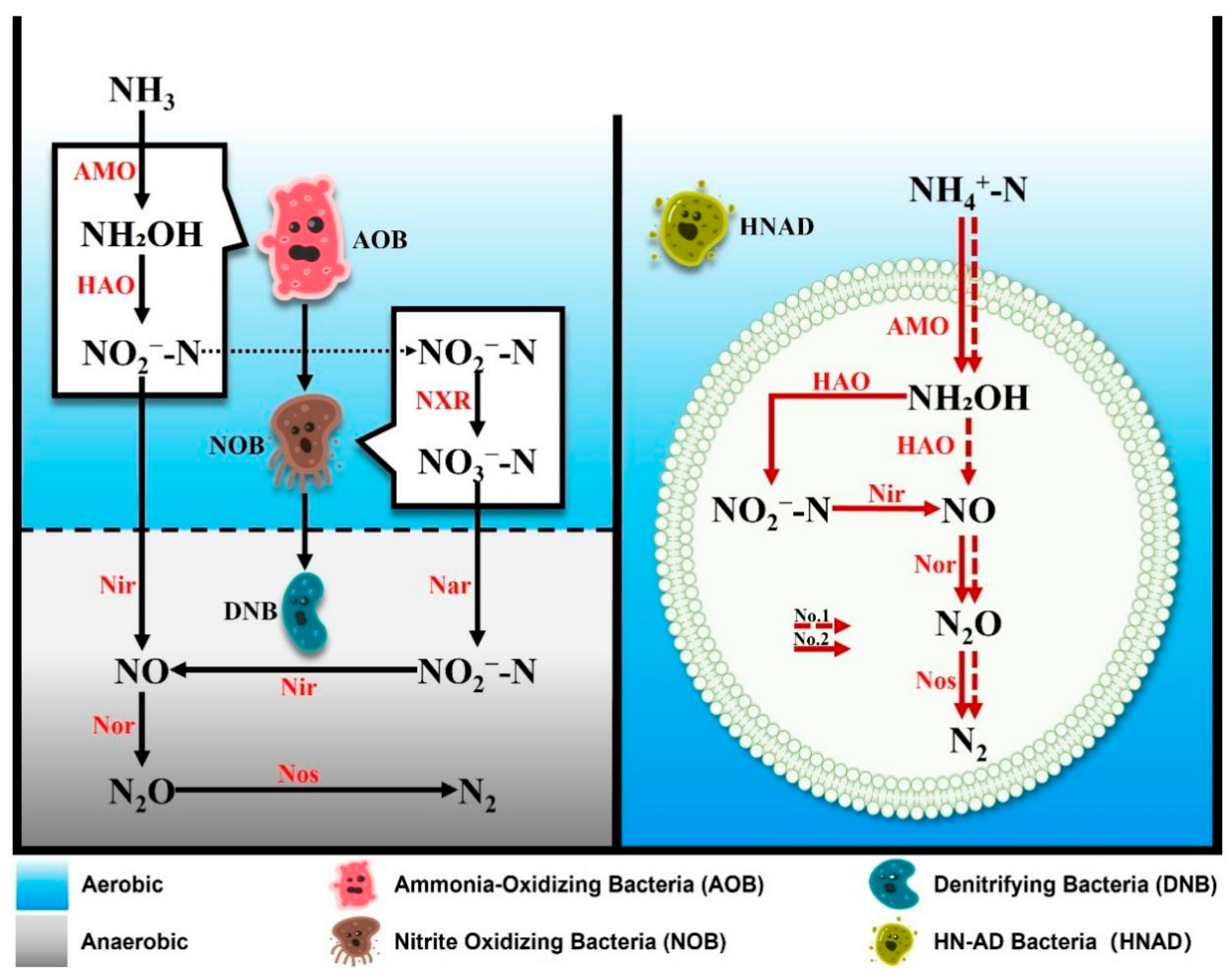
Figure 1. Removal mechanism of NH3.
Fermentation 12 00361 g001
Figure 2. Removal mechanisms of H2S and sulfur-containing VOCs.
Fermentation 12 00361 g002
Figure 3. Removal mechanism of sulfur-free VOCs.
Fermentation 12 00361 g003
Figure 4. Schematic diagram of deodorization bioreactor.
Fermentation 12 00361 g004
Table 1. Major components and emission pathways of odorous gases from different sources [23].
Odor SourceMajor ComponentsEmission Pathways
Livestock and poultry farmingNH3, H2S, and VOCs (naphthalene, acetaldehyde, carbon disulfide, and dimethyl disulfide)
NH3 accounts for the highest proportion of emissions, whereas H2S is emitted at the lowest level.
Decomposition of poultry manure mixed with feces, urine, feathers, bedding materials, and dust, as well as the composting of livestock and poultry manure
Organic solid waste treatment (e.g., municipal solid waste)NH3, H2S, and VOCs (ethanol, limonene, p-diethylbenzene, dimethyl sulfide, methanethiol, and ethanethiol)
NH3 accounts for approximately 21% of the emissions, whereas reduced sulfur compounds account for approximately 14%.
Waste pretreatment processes (including conveying, shredding, and screening), anaerobic digestion, and composting
Wastewater and sludge treatmentNH3, H2S, and VOCs (dimethyl disulfide, eucalyptol, α-pinene, methanethiol, dimethyl sulfide, styrene, and xylene)
During sludge composting, H2S is predominantly emitted during the initial stage, VOCs are mainly released during the thermophilic stage, and NH3 becomes the dominant emission during the late thermophilic and maturation stages.
Sludge dewatering and sludge composting processes
Table 2. Comparison of odorous substance emission standards between China and Japan [26,27].
No.Odorous SubstanceBoundary Concentration Limit (mg/m3)
JapanChina
Class IClass IIClass IIIGrade IGrade IIGrade III
1Ammonia0.761.523.801.01.54.0
2Methanethiol0.00430.00860.02150.0040.0070.02
3Hydrogen sulfide0.0300.0910.3040.030.060.32
4Dimethyl sulfide0.0280.1390.5550.030.070.15
5Dimethyl disulfide0.0380.1260.4210.030.060.13
6Trimethylamine0.0130.0530.1850.050.080.15
7Carbon disulfide0.0340.1020.2042.03.08.0
8Styrene1.863.729.303.05.08.0
9Acetaldehyde0.0980.1970.983
10Propionaldehyde0.1300.2591.30
11n-Butyraldehyde0.0290.0640.258
12Isobutyraldehyde0.0640.2250.644
13n-Valeraldehyde0.0350.0770.192
14Isovaleraldehyde0.0120.0230.038
15Isobutanol2.986.6216.5
16Ethyl acetate11.819.778.7
17Methyl isobutyl ketone4.478.9426.8
18Toluene41.1123247
19Xylene4.749.4823.7
20Propionic acid0.0990.2310.661
21n-Butyric acid0.00390.00790.0236
22n-Valeric acid0.00410.00910.0182
23Isovaleric acid0.00460.01370.0182
Table 3. Representative ammonia-removing microorganisms and their deodorization performance.
StrainDomainSourceDegradation ConditionFunctional TypeKey
Enzymes/Genes
References
Acinetobacter sp. Y1BacteriaActivated sludge99% NH4+-N removal (100 mg/L, 20 h)HN-ADHAO, Nar, Nir[71]
Pseudomonas aeruginosa SNDPR-01BacteriaActivated sludge99% NH4+-N removal (100 mg/L, 24 h)HN-ADAMO, HAO, NAP, Nir, nitrous oxide reductase (nosZ)[69]
Bacillus subtilis B24 BacteriaSeawater92% NH4+-N removal (simulated wastewater, 15 mg/L, 5 d)HN-ADHAO, NAR, NIR, AMO[72]
Stutzerimonas frequens TF18BacteriaSeawater98.98% NH4+-N removal (20 mg/L, 48 h)Autotrophic nitrification–denitrificationNir, NAP, NAR[73]
Achromobacter sp. HNDS-1BacteriaSoil93.31% NH4+-N removal (150 mg/L, 72 h)HN-ADAMO[74]
Pichia kudriavzevii
HJ2
FungiMarine environment73.56% NH4+-N removal (600 mg/L, 36 h)Ammonia assimilationGlutamate dehydrogenase (GDH) and aspartate aminotransferase (GOT)[68]
Lactobacillus paracasei B1BacteriaLandfill leachate78.93% NH4+-N removalAmmonia assimilation and indirect acidification effect[75]
Table 4. Representative sulfur-oxidizing microorganisms and their H2S removal performance.
StrainDomainSourcePerformanceFunctional TypeKey
Enzymes/Genes
References
Geobacillus thermodenitrificans DSM465BacteriaBeet juice extraction system27.5% H2S emission reduction (35 d composting); +34.4% sulfate in compost (vs. control)Sulfide oxidation, sulfite oxidationSQR, PDO[77]
Acidithiobacillus thiooxidans (KCTC8928P)BacteriaSoil99–100% H2S removal (300 ppm inlet, 5 d post-inoculation)Sulfide oxidation[78]
Thiobacillus denitrificans DSM 807BacteriaSeawater and sediments99% H2S removal (8 mg/d loading, 7 d)Sulfide oxidation[79]
ThiomonasBacteriaSludge95.01% max H2S removal increase (70 min residence time, 30 °C, vs. control)Sulfide oxidationFcc[80]
Table 5. Representative VOCs-degrading microorganisms and their VOCs removal performance.
StrainDomainSourcePerformanceKey Enzymes/GenesReferences
Rhodococcus qingshengii strain SCJ-1BacteriaActivated sludge78.5% n-hexane removal (200 mg/L, 48 h, pH 7, 30 °C)AlkB, ADH[85]
Brevibacillus CAT37BacteriaWastewater~37% methanethiol removal[86]
Candida subhashiiFungiPeat24–44% mixed VOCs removal (EBRT = 30 s; n-hexane, TCE, toluene, α-pinene) trichloroethylene, toluene, and α-pinene)[82]
Fusarium solaniFungiPurchased from culture collection center
Alcaligenes SY1BacteriaActivated sludge~99% dimethyl disulfide removal (30 h)Dimethylsulfoniopropionate (DMSP) lyase[41]
Acinetobacter lwoffii strain pJ15; Pseudomonas mendocina strain C41BacteriaCanteen food waste from Shanxi University61.02% dimethyl disulfide removal (1:2 consortium, 3 d)Dimethyl disulfide reductase (DDR), trimethylamine monooxygenase (Tmm), dimethyl sulfone monooxygenase (DMSMO)[87]
Table 6. Performance of typical commercial microbial deodorization consortia.
Product NameMicrobial
Formulation/Community
Application ScenariosReported PerformanceCompanyReferences
EM consortiumTypically contains lactic acid bacteria, yeasts, and photosynthetic bacteriaComposting, livestock housing, landfill leachateExhibits deodorization effects and reduces COD, BOD, and suspended solids (SS) in wastewaterEM Research Organization Inc. (Okinawa, Japan)[89]
Bio-Enzymatic OdorEliminatorLactobacillus, Yeast, BacillusLandfills, farms, wastewater treatmentMetabolizes odor precursors and biodegrades NH3, benzene, and total VOCs (TVOCs)Airsafer Environmental Technology Co., Ltd. (Suzhou, China)[91]
Evogen Odour Neutraliser PowderBacillus consortium, specific strains not disclosedAgricultural facilities, landfills, municipal wastewater, compostingAchieves >84% NH3 removal in environments with high levels of putrefactive bacteriaGenesis Biosciences Ltd. (Cardiff, UK)[92]
Microbial DeodorantProbiotics, lactic acid bacteria, actinomycetes, and other microorganismsWastewater plants, landfills, livestock operations96% NH3 removal and 90% H2S removalBluwat Chemicals Co., Ltd. (Yixing, China)[93]
Odor control microbial blendBacillus subtilis, Bacillus amyloliquefaciens, etc.Waste transfer stations, wastewater treatment, livestock farming70–90% reduction in NH3/H2S emissionsBioWorld USA Inc. (Visalia, CA, USA)[94]
Microbe-Lift INDPurple sulfur bacteria and other aerobic, anaerobic, and facultative anaerobic microorganisms (not fully specified)Solid waste, animal manure, wastewater systems, landfills, transfer stations96% NH3 removal and 85% H2S removalINAVET Nutrition Technologies Inc. (Quezon City, Philippines)[95]
OMNIFERM SLURRYLactobacillus, Saccharomyces cerevisiae, and BacillusFeed additives, source odor control in livestock manure, composting process regulation30–70% reduction in NH3 and inhibition of putrefactive microbial growthLallemand Inc. (Montréal, QC, Canada)[96]
Table 7. Comparison of typical biological odor-control reactors.
Biological ReactorsApplication ScenariosAdvantagesDisadvantagesPerformanceReferences
BioscrubberHighly soluble odorous gases or industrial processes requiring strict operational control (e.g., chemical exhaust gases)High efficiency for highly soluble compounds, precise operational control, and capability to handle high loading ratesHigh energy consumption, wastewater generation, and complex maintenance99.3% H2S removal (inlet 2200–2500 ppm; outlet 20 ppm)[112]
BiofilterLow-concentration odorous gases (e.g., composting, agriculture, and low-load zones of wastewater treatment plants)Simple operation, low capital and operating costs, no chemical consumption, and suitability for high gas flow ratesLarge footprint, prone to clogging, difficult control of pH and humidity, and low efficiency for hydrophobic compounds100% toluene removal (loading 32 g/(m3·h), EBRT 60 s)[81]
Biotrickling filterHigh-concentration H2S or VOCs (e.g., wastewater treatment headworks and industrial exhaust gases)High removal efficiency, easy control of pH and nutrients, compact size, and suitability for acidic gasesRequires pumps and liquid circulation, potential acid accumulation, and moderate operating costs71% degradation and 52% mineralization of tetrachloroethyle-ne (50 ppm, EBRT 30 s, liquid recirculation 2 m3/(m2·h))[113]
Disclaimer/Publisher’s Note: The statements, opinions and data contained in all publications are solely those of the individual author(s) and contributor(s) and not of MDPI and/or the editor(s). MDPI and/or the editor(s) disclaim responsibility for any injury to people or property resulting from any ideas, methods, instructions or products referred to in the content.