
From Gene to Protein: Advances and Challenges in Microbial Production of Immunoglobulins

 , , , and
Abstract
1. Introduction
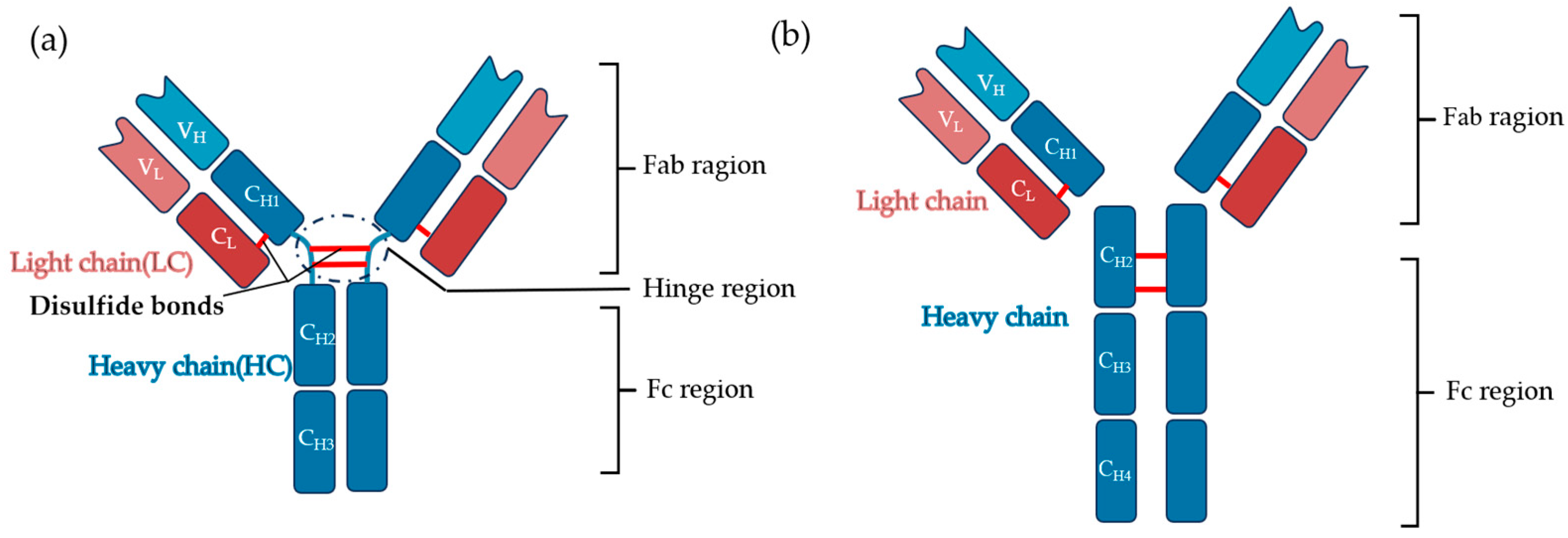
2. Immunoglobulin Structure
3. Microbial Heterologous Expression System for Immunoglobulin
3.1. Yeast Expression System
3.2. Escherichia coli Expression System
3.3. Bacillus Subtilis Expression System
3.4. Aspergillus Expression System
3.5. Lactic Acid Bacteria Expression System
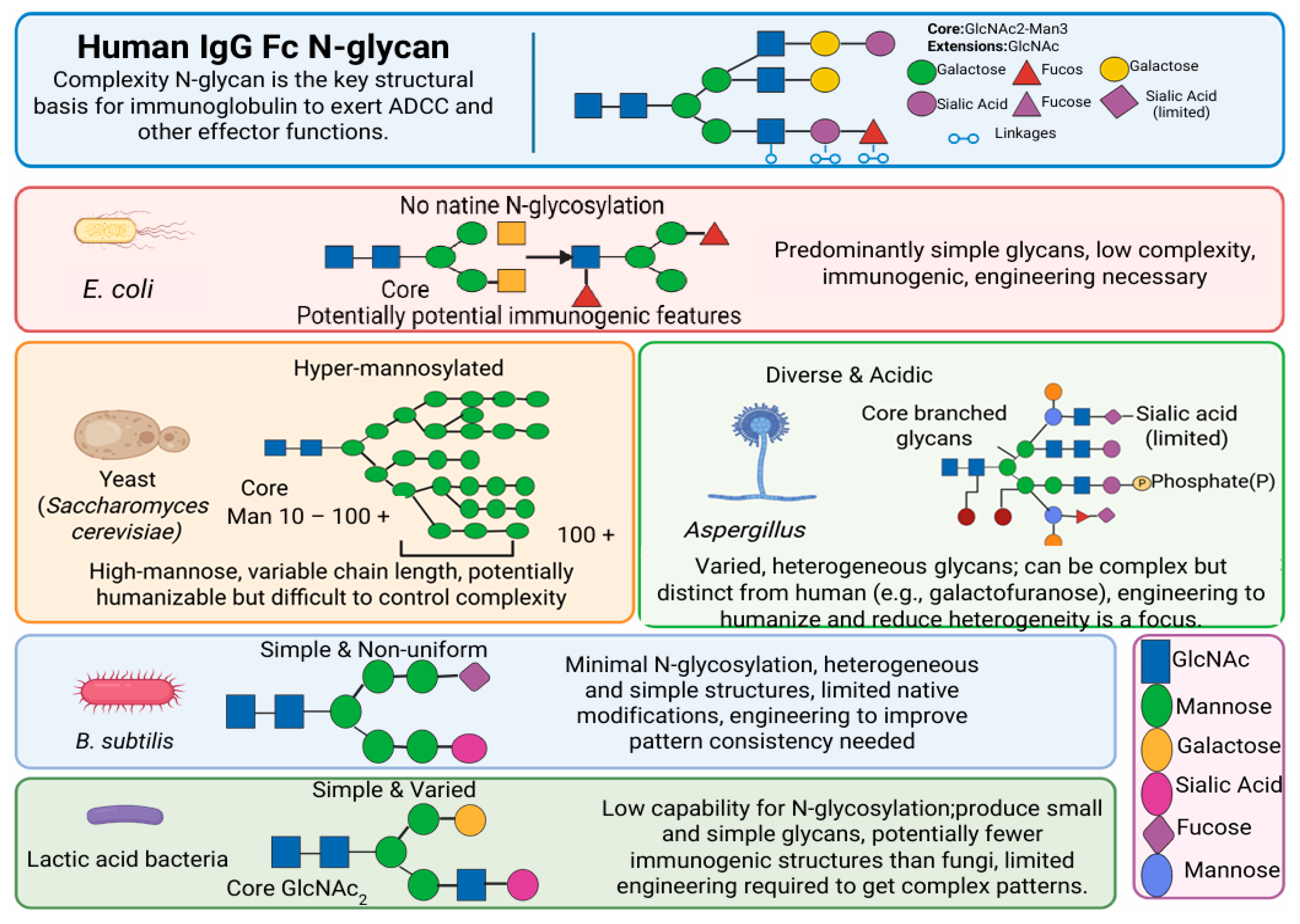
3.6. Comparative Summary of Microbial Expression Systems
4. Bottlenecks in the Heterologous Expression of Immunoglobulins in Microbial Systems
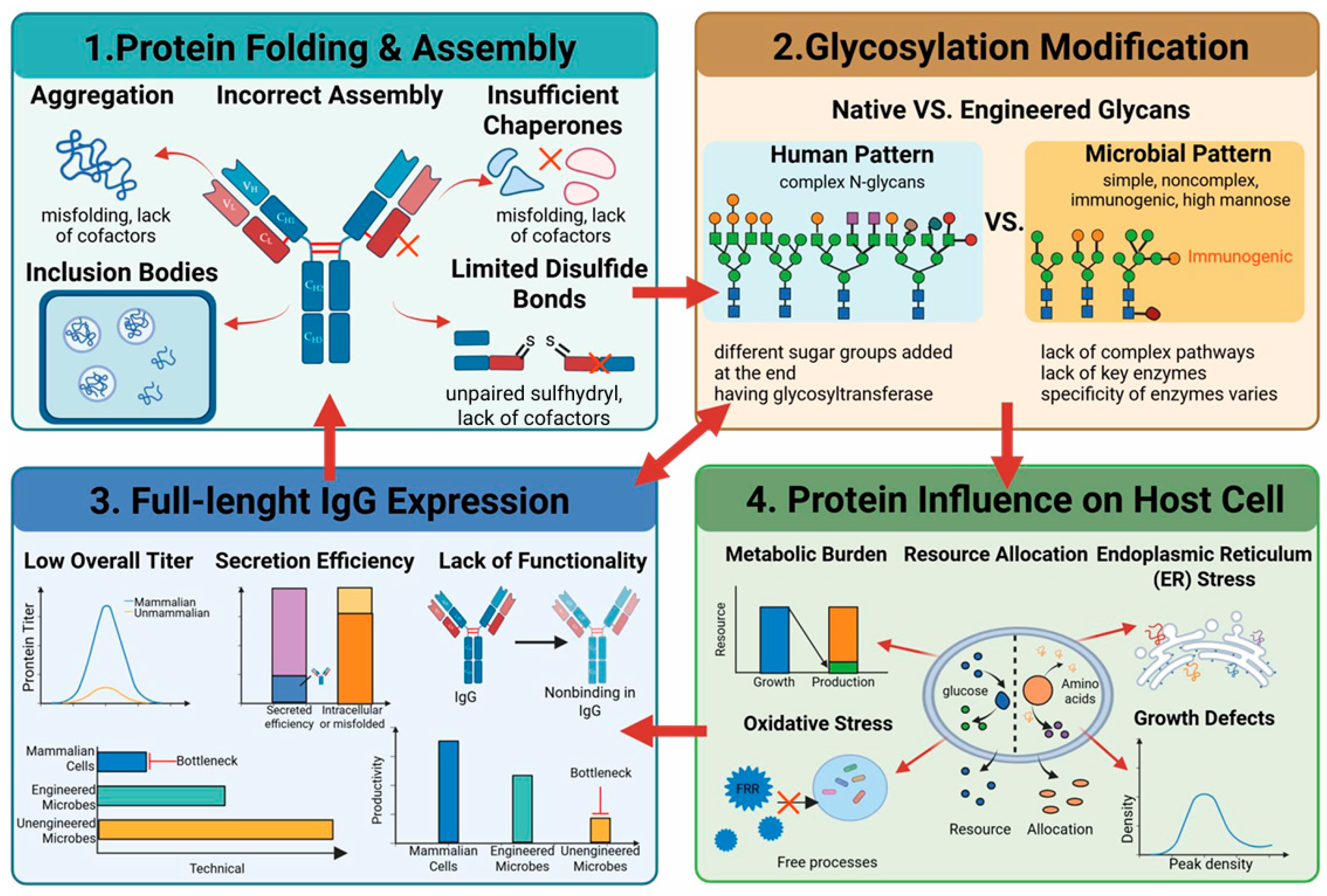
4.1. Protein Folding and Assembly
4.2. Glycosylation Modification
4.3. Secretion and Production of Intact Antibodies
4.4. Effects of Protein Expression on Host Cells
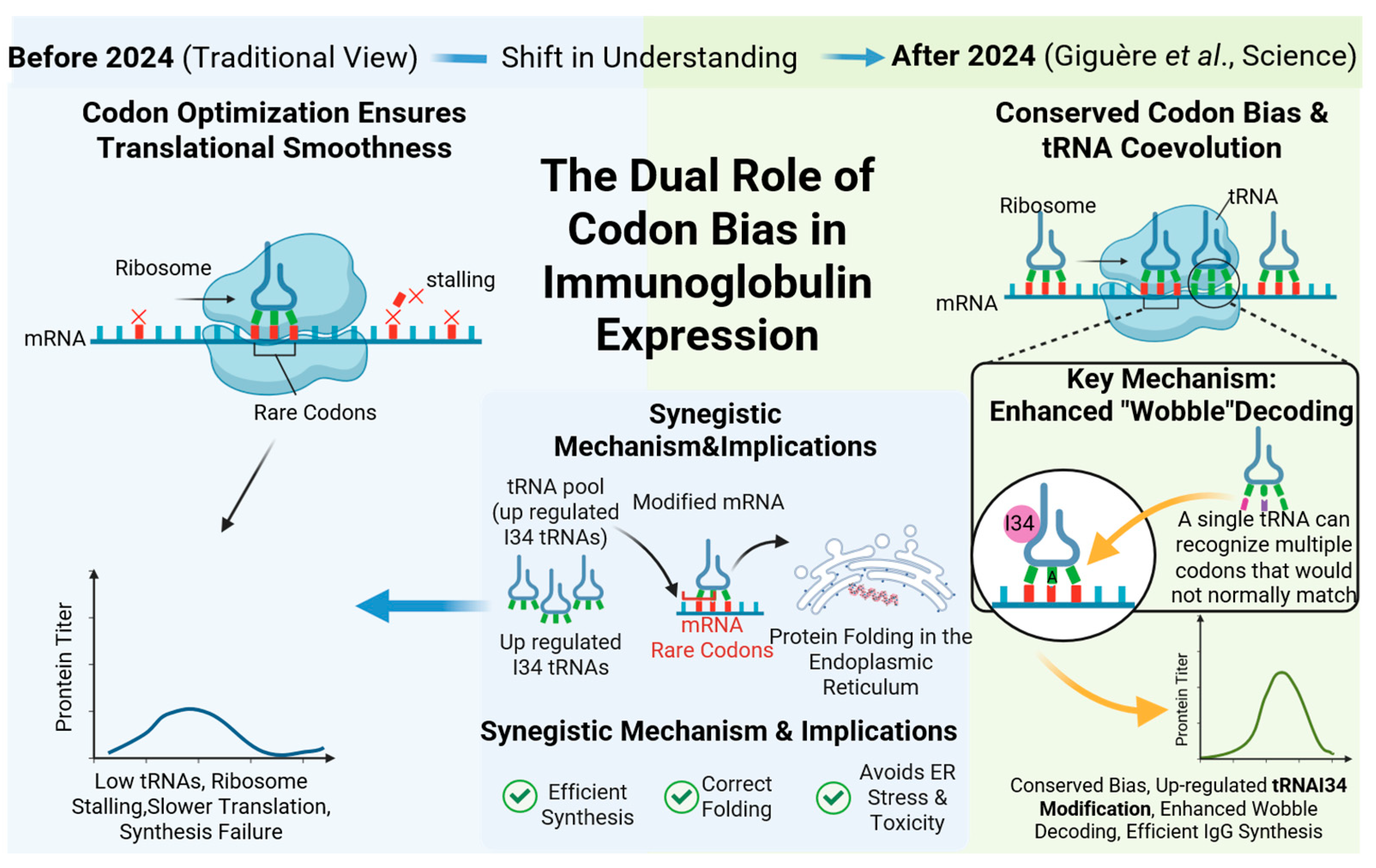
4.5. Translation Barriers Caused by Codon Preferences
5. Impact of Bioreactors on the Heterologous Expression of Immunoglobulins in Microorganisms
5.1. Effects of Fermentation Process Parameters on Immunoglobulin Yield
5.2. Bottlenecks and Challenges of High Density Fermentation
6. Summary and Outlook
Author Contributions
Funding
Institutional Review Board Statement
Informed Consent Statement
Data Availability Statement
Conflicts of Interest
Abbreviations
| Igs | Immunoglobulins |
| FDA | Food and Drug Administration |
| IgG | Immunoglobulin G |
| LC | Light chains |
| HC | Heavy chains |
| GRAS | Generally Recognized as Safe |
| ADCC | Antibody-dependent cell-mediated cytotoxicity |
| OST | Oligosaccharyltransferase |
References
- Crescioli, S.; Kaplon, H.; Chenoweth, A.; Hsu, Y.S.; Pinto, K.; Kapoor, V.; Reichert, J.M. Antibodies to watch in 2026. In Mabs; Taylor & Francis: Oxfordshire, UK, 2026; Volume 18, p. 2614669. [Google Scholar]
- Lu, R.M.; Chiang, H.L.; Yuan, J.P.; Wang, H.H.; Chen, C.Y.; Panda, S.S.; Liang, K.H.; Peng, H.P.; Ko, S.H.; Hsu, H.J.; et al. Technological advancements in antibody-based therapeutics for treatment of diseases. J. Biomed. Sci. 2025, 32, 98. [Google Scholar] [CrossRef] [PubMed]
- Walsh, G.; Walsh, E. Biopharmaceutical benchmarks 2022. Nat. Biotechnol. 2022, 40, 1722–1760. [Google Scholar] [CrossRef] [PubMed]
- Krishna, S.; Jung, S.T.; Lee, E.Y. Escherichia coli and Pichia pastoris: Microbial cell-factory platform for -full-length IgG production. Crit. Rev. Biotechnol. 2025, 45, 191–213. [Google Scholar] [PubMed]
- Kulkarni, N.A.; Das, P.K.; P, A.; Veeranki, V.D. Molecular chaperones: A revolutionary approach for increased solubility of recombinant mAbs from bacterial and yeast systems. Protein Expr. Purif. 2025, 234, 106764. [Google Scholar] [CrossRef] [PubMed]
- Zhang, D.; Liu, H.; Zhong, Y. Monoclonal antibodies production in microbial systems: Current status, challenges and perspectives. New Biotechnol. 2025, 90, 163–173. [Google Scholar] [CrossRef] [PubMed]
- Saleem, M.Z.; Jahangir, G.Z.; Saleem, A.; Zulfiqar, A.; Khan, K.A.; Ercisli, S.; Ali, B.; Saleem, M.H.; Saleem, A. Production Technologies for Recombinant Antibodies: Insights into Eukaryotic, Prokaryotic, and Transgenic Expression Systems. Biochem. Genet. 2024, 63, 3928–3967. [Google Scholar] [CrossRef] [PubMed]
- Schur, P.H. IgG subclasses. A historical perspective. Monogr. Allergy 1988, 23, 1–11. [Google Scholar] [PubMed]
- Schroeder, H.W., Jr.; Cavacini, L. Structure and function of immunoglobulins. J. Allergy Clin. Immunol. 2010, 125, S41–S52. [Google Scholar] [CrossRef] [PubMed]
- Chiu, M.L.; Goulet, D.R.; Teplyakov, A.; Gilliland, G.L. Antibody Structure and Function: The Basis for Engineering Therapeutics. Antibodies 2019, 8, 55. [Google Scholar] [CrossRef] [PubMed]
- Vidarsson, G.; Dekkers, G.; Rispens, T. IgG subclasses and allotypes: From structure to effector functions. Front. Immunol. 2014, 5, 520. [Google Scholar] [CrossRef] [PubMed]
- Torres, M.; May, R.; Scharff, M.D.; Casadevall, A. Variable-region-identical antibodies differing in isotype demonstrate differences in fine specificity and idiotype. J. Immunol. 2005, 174, 2132–2142. [Google Scholar] [PubMed]
- Pyzik, M.; Rath, T.; Lencer, W.I.; Baker, K.; Blumberg, R.S. FcRn: The Architect Behind the Immune and Nonimmune Functions of IgG and Albumin. J. Immunol. 2015, 194, 4595–4603. [Google Scholar] [CrossRef] [PubMed]
- Grilo, A.L.; Mantalaris, A. The Increasingly Human and Profitable Monoclonal Antibody Market. Trends Biotechnol. 2019, 37, 9–16. [Google Scholar] [CrossRef] [PubMed]
- Nikolova, G.; Georgieva, Y.; Atanasova, A.; Radulova, G.; Kapogianni, A.; Tsacheva, I. Autoinduction as Means for Optimization of the Heterologous Expression of Recombinant Single-Chain Fv (scFv) Antibodies. Mol. Biotechnol. 2021, 63, 1049–1056. [Google Scholar] [CrossRef] [PubMed]
- Matsuzaki, Y.; Kajiwara, K.; Aoki, W.; Ueda, M. Production of Single-Domain Antibodies in Pichia pastoris. Methods Mol. Biol. 2022, 2446, 181–203. [Google Scholar] [CrossRef] [PubMed]
- Sheng, Y.; Qiu, S.; Deng, Y.; Zeng, B. Recent Advances in Heterologous Protein Expression and Natural Product Synthesis by Aspergillus. J. Fungi 2025, 11, 534. [Google Scholar] [CrossRef] [PubMed]
- del Rio, B.; Redruello, B.; Fernandez, M.; Martin, M.C.; Ladero, V.; Alvarez, M.A. Lactic Acid Bacteria as a Live Delivery System for the in situ Production of Nanobodies in the Human Gastrointestinal Tract. Front. Microbiol. 2019, 9, 3179. [Google Scholar] [CrossRef]
- Gasser, B.; Mattanovich, D. Antibody production with yeasts and filamentous fungi: On the road to large scale? Biotechnol. Lett. 2007, 29, 201–212. [Google Scholar] [PubMed]
- Tir, N.; Heistinger, L.; Grünwald-Gruber, C.; Jakob, L.A.; Dickgiesser, S.; Rasche, N.; Mattanovich, D. From strain engineering to process development: Monoclonal antibody production with an unnatural amino acid in Pichia pastoris. Microb. Cell Factories 2022, 21, 157. [Google Scholar] [CrossRef] [PubMed]
- Gasser, B.; Maurer, M.; Gach, J.; Kunert, R.; Mattanovich, D. Engineering of Pichia pastoris for improved production of antibody fragments. Biotechnol. Bioeng. 2006, 94, 353–361. [Google Scholar] [CrossRef] [PubMed]
- Zheng, Y.; Li, B.; Zhao, S.; Liu, J.; Li, D. A Universal Strategy for the Efficient Expression of Nanobodies in Pichia pastoris. Fermentation 2024, 10, 37. [Google Scholar] [CrossRef]
- Wildt, S.; Gerngross, T.U. The humanization of N-glycosylation pathways in yeast. Nat. Rev. Microbiol. 2005, 3, 119–128. [Google Scholar] [CrossRef] [PubMed]
- Parsaie Nasab, F.; Aebi, M.; Bernhard, G.; Frey, A.D. A combined system for engineering glycosylation efficiency and glycan structure in Saccharomyces cerevisiae. Appl. Environ. Microbiol. 2013, 79, 997–1007. [Google Scholar] [CrossRef] [PubMed]
- Sandomenico, A.; Sivaccumar, J.P.; Ruvo, M. Evolution of Escherichia coli Expression System in Producing Antibody Recombinant Fragments. Int. J. Mol. Sci. 2020, 21, 6324. [Google Scholar] [CrossRef] [PubMed]
- Ukkonen, K.; Veijola, J.; Vasala, A.; Neubauer, P. Effect of culture medium, host strain and oxygen transfer on recombinant Fab antibody fragment yield and leakage to medium in shaken E. coli cultures. Microb. Cell Factories 2013, 12, 73. [Google Scholar] [CrossRef] [PubMed]
- Chao, S.; Liu, Y.; Ding, N.; Lin, Y.; Wang, Q.; Tan, J.; Li, W.; Zheng, Y.; Hu, X.; Li, J. Highly Expressed Soluble Recombinant Anti-GFP VHHs in Escherichia coli via Optimized Signal Peptides, Strains, and Inducers. Front. Mol. Biosci. 2022, 9, 848829. [Google Scholar] [CrossRef] [PubMed]
- Hoang, T.A.; Nakano, H.; Ojima-Kato, T. A strategy for scalable antibody production: The combination of Escherichia coli expression, translation-enhancing peptide and automated refolding system. Biosci. Biotechnol. Biochem. 2026, 90, 429–437. [Google Scholar] [PubMed]
- Anton, B.P.; Fomenkov, A.; Raleigh, E.A.; Berkmen, M. Complete Genome Sequence of the Engineered Escherichia coli SHuffle Strains and Their Wild-Type Parents. Genome Announc. 2016, 4, e00230-16. [Google Scholar] [CrossRef] [PubMed]
- Wang, C.; Luo, L.; Dai, Z.; Zhang, W.; Ma, Y.; Wang, J. Construction of probiotic Escherichia coli Nissle 1917 as a next-generation expression platform and its application in therapeutic protein production. J. Biol. Eng. 2025, 20, 18. [Google Scholar] [CrossRef] [PubMed]
- Ferrando, J.; Miñana-Galbis, D.; Picart, P. The Construction of an Environmentally Friendly Super-Secreting Strain of Bacillus subtilis through Systematic Modulation of Its Secretory Pathway Using the CRISPR-Cas9 System. Int. J. Mol. Sci. 2024, 25, 6957. [Google Scholar] [CrossRef] [PubMed]
- Schilling, T.; Biedendieck, R.; Moran-Torres, R.; Saaranen, M.J.; Ruddock, L.W.; Daniel, R.; van Dijl, J.M. Toward Antibody Production in Genome-Minimized Bacillus subtilis Strains. ACS Synth. Biol. 2025, 14, 740–755. [Google Scholar] [CrossRef] [PubMed]
- Wu, S.C.; Yeung, J.C.; Duan, Y.; Ye, R.; Szarka, S.J.; Habibi, H.R.; Wong, S.L. Functional production and characterization of a fibrin-specific single-chain antibody fragment from Bacillus subtilis: Effects of molecular chaperones and a wall-bound protease on antibody fragment production. Appl. Environ. Microbiol. 2002, 68, 3261–3269. [Google Scholar] [CrossRef] [PubMed]
- Huynh, H.H.; Morita, N.; Sakamoto, T.; Katayama, T.; Miyakawa, T.; Tanokura, M.; Chiba, Y.; Shinkura, R.; Maruyama, J.-i. Functional production of human antibody by the filamentous fungus Aspergillus oryzae. Fungal Biol. Biotechnol. 2020, 7, 7. [Google Scholar] [CrossRef] [PubMed]
- Okazaki, F.; Aoki, J.-i.; Tabuchi, S.; Tanaka, T.; Ogino, C.; Kondo, A. Efficient heterologous expression and secretion in Aspergillus oryzae of a llama variable heavy-chain antibody fragment VHH against EGFR. Appl. Microbiol. Biotechnol. 2012, 96, 81–88. [Google Scholar] [CrossRef] [PubMed]
- Wang, K.; Wu, Y.; Shang, J.; Bu, L.; Hu, D.; He, H.; Wang, R.; Mao, J.; Yan, Y.; Guan, J.; et al. Genetic Code Expansion in Probiotics Enables the Secretion of Covalent Protein Drugs in Mice. J. Am. Chem. Soc. 2026, 148, 1397–1405. [Google Scholar] [CrossRef] [PubMed]
- Murakami, A.; Ikeda, H.; Yoda, M.; Namai, F.; Sato, T.; Shimosato, T. Construction of genetically modified lactic acid bacteria producing an Anti-Interleukin-31 receptor A Single-chain variable fragment. Mol. Biol. Rep. 2025, 53, 81. [Google Scholar] [CrossRef] [PubMed]
- Plavec, T.V.; Kuchař, M.; Benko, A.; Lišková, V.; Černý, J.; Berlec, A.; Malý, P. Engineered Lactococcus lactis Secreting IL-23 Receptor-Targeted REX Protein Blockers for Modulation of IL-23/Th17-Mediated Inflammation. Microorganisms 2019, 7, 152. [Google Scholar] [CrossRef] [PubMed]
- Allain, T.; Mansour, N.M.; Bahr, M.M.; Martin, R.; Florent, I.; Langella, P.; Bermúdez-Humarán, L.G. A new lactobacilli in vivo expression system for the production and delivery of heterologous proteins at mucosal surfaces. FEMS Microbiol. Lett. 2016, 363, fnw117. [Google Scholar] [CrossRef] [PubMed]
- Lee, Y.J.; Lee, D.H.; Jeong, K.J. Enhanced production of human full-length immunoglobulin G1 in the periplasm of Escherichia coli. Appl. Microbiol. Biotechnol. 2014, 98, 1237–1246. [Google Scholar] [PubMed]
- Reilly, D.E.; Yansura, D.G. Production of Antibodies and Antibody Fragments in Escherichia coli. In Antibody Engineering; Kontermann, R., Dübel, S., Eds.; Springer: Berlin/Heidelberg, Germany, 2010; pp. 331–344. [Google Scholar]
- Kwong, K.Y.; Rader, C.E. coli expression and purification of Fab antibody fragments. Curr. Protoc. Protein Sci. 2009, 55, 6–10. [Google Scholar] [CrossRef] [PubMed]
- Guimarães, M.; Carvalho, R.V.; Luz, D.; Guilherme, A.P.B.; de Campos, C.B.L.; Piazza, R.M.F.; da Cruz Pradella, J.G. Targeted optimization of single-chain variable fragment (scFv) expression in E. coli using a design-of-experiment approach. Int. J. Biol. Macromol. 2025, 329, 147881. [Google Scholar] [CrossRef] [PubMed]
- Basafa, M.; Behravan, A.; Vahidi, H.; Hashemi, A. Enhanced anti-EpCAM ScFv production and reduced acetate overflow in a BW25113-derived E. coli strain with ArcA and Pka deletions. Microb. Cell Factories 2025, 25, 26. [Google Scholar] [CrossRef] [PubMed]
- Berdichevsky, M.; d’Anjou, M.; Mallem, M.R.; Shaikh, S.S.; Potgieter, T.I. Improved production of monoclonal antibodies through oxygen-limited cultivation of glycoengineered yeast. J. Biotechnol. 2011, 155, 217–224. [Google Scholar] [CrossRef] [PubMed]
- Gómez-Ramírez, I.V.; Corrales-García, L.L.; Possani, L.D.; Riaño-Umbarila, L.; Becerril, B. Expression in Pichia pastoris of human antibody fragments that neutralize venoms of Mexican scorpions. Toxicon Off. J. Int. Soc. Toxinol. 2023, 223, 107012. [Google Scholar] [CrossRef] [PubMed]
- Damasceno, L.M.; Anderson, K.A.; Ritter, G.; Cregg, J.M.; Old, L.J.; Batt, C.A. Cooverexpression of chaperones for enhanced secretion of a single-chain antibody fragment in Pichia pastoris. Appl. Microbiol. Biotechnol. 2007, 74, 381–389. [Google Scholar] [CrossRef] [PubMed]
- Rakestraw, J.A.; Sazinsky, S.L.; Piatesi, A.; Antipov, E.; Wittrup, K.D. Directed evolution of a secretory leader for the improved expression of heterologous proteins and full-length antibodies in Saccharomyces cerevisiae. Biotechnol. Bioeng. 2009, 103, 1192–1201. [Google Scholar] [PubMed]
- Niemelä, L.R.K.; Kirjavainen, L.M.; Kozlowski, H.C.J.; Salminen, H.; Frey, A.D. An integrated cell and medium engineering approach for production of a nanobody fusion in Saccharomyces cerevisiae. Appl. Microbiol. Biotechnol. 2026, 110, 46. [Google Scholar] [CrossRef] [PubMed]
- Lakowitz, A.; Krull, R.; Biedendieck, R. Recombinant production of the antibody fragment D1.3 scFv with different Bacillus strains. Microb. Cell Factories 2017, 16, 14. [Google Scholar] [CrossRef] [PubMed]
- Namai, F.; Shigemori, S.; Ogita, T.; Sato, T.; Shimosato, T. Construction of genetically modified Lactococcus lactis that produces bioactive anti-interleukin-4 single-chain fragment variable. Mol. Biol. Rep. 2020, 47, 7039–7047. [Google Scholar] [CrossRef] [PubMed]
- Oshima, S.; Namai, F.; Sato, T.; Shimosato, T. Development of a Single-Chain Fragment Variable that Binds to the SARS-CoV-2 Spike Protein Produced by Genetically Modified Lactic Acid Bacteria. Mol. Biotechnol. 2024, 66, 151–160. [Google Scholar] [PubMed]
- Gialama, D.; Kostelidou, K.; Michou, M.; Delivoria, D.C.; Kolisis, F.N.; Skretas, G. Development of Escherichia coli Strains That Withstand Membrane Protein-Induced Toxicity and Achieve High-Level Recombinant Membrane Protein Production. ACS Synth. Biol. 2017, 6, 284–300. [Google Scholar] [PubMed]
- Quax, T.E.; Claassens, N.J.; Söll, D.; van der Oost, J. Codon Bias as a Means to Fine-Tune Gene Expression. Mol. Cell 2015, 59, 149–161. [Google Scholar] [CrossRef] [PubMed]
- Paerhati, P.; Jakos, T.; Bai, S.-Y.; Zhu, J.; Yuan, Y. Strategies and Applications of Antigen-Binding Fragment (Fab) Production in Escherichia coli. Pharm. Front. 2021, 3, 39–49. [Google Scholar]
- Alexander, E.; Leong, K.W. Discovery of nanobodies: A comprehensive review of their applications and potential over the past five years. J. Nanobiotechnol. 2024, 22, 661. [Google Scholar] [CrossRef] [PubMed]
- Kong, A.; Chen, S.; Huang, W.; Xie, X.; Xie, Q.; Xiong, S. Rational design based on translation pausing theory significantly enhances the soluble expression and activity of multidomain anti-CD20 fab antibody sequences. Biochem. Eng. J. 2025, 218, 109704. [Google Scholar] [CrossRef]
- Li, X.; Shen, J.; Chen, X.; Chen, L.; Wan, S.; Qiu, X.; Chen, K.; Chen, C.; Tan, H. Humanization of Yeasts for Glycan-Type End-Products. Front. Microbiol. 2022, 13, 930658. [Google Scholar] [CrossRef] [PubMed]
- Sotomayor, B.; Donahue, T.C.; Mahajan, S.P.; Taw, M.N.; Hulbert, S.W.; Bidstrup, E.J.; Owitipana, D.N.; Pang, A.; Yang, X.; Ghosal, S.; et al. Discovery of a single-subunit oligosaccharyltransferase that enables glycosylation of full-length IgG antibodies in bacteria. Nat. Commun. 2025, 16, 6152. [Google Scholar] [CrossRef] [PubMed]
- Zou, G.-Q.; Li, K.; Yan, C.; Li, Y.-Q.; Xian, M.-Y.; Hu, X.; Luo, R.; Liu, Z. Aluminum hydroxide and immunostimulatory glycolipid adjuvant combination for enhanced COVID-19 subunit vaccine immunogenicity. Vaccine 2024, 42, 126145. [Google Scholar] [CrossRef] [PubMed]
- Kuppam, C.; Rosa Anna, N.; Alugunulla Venkata, N.; Ambati Ranga, R.; Meenakshi, S.; Ampasani, C. Microbial Cell Factory Engineering for Scalable Production of Bio-Commodities: Emphasis on Robustness. J. Biochem. Technol. 2025, 16, 19–29. [Google Scholar] [CrossRef]
- Gong, X.; Ye, K.; Xu, M.; Qian, Z.; Liu, Q.; Wang, X.; Zhou, X.; Liu, H.; Cai, M. Heavy chain variants affect light and heavy chains assembly of monoclonal antibody expressed by Pichia pastoris. Prep. Biochem. Biotechnol. 2025, 55, 1009–1016. [Google Scholar] [CrossRef] [PubMed]
- Sletta, H.; Nedal, A.; Aune, T.E.; Hellebust, H.; Hakvåg, S.; Aune, R.; Ellingsen, T.E.; Valla, S.; Brautaset, T. Broad-host-range plasmid pJB658 can be used for industrial-level production of a secreted host-toxic single-chain antibody fragment in Escherichia coli. Appl. Environ. Microbiol. 2004, 70, 7033–7039. [Google Scholar] [CrossRef] [PubMed]
- Restrepo-Pineda, S.; Bando-Campos, C.G.; Valdez-Cruz, N.A.; Trujillo-Roldán, M.A. Recombinant production of ESAT-6 antigen in thermoinducible Escherichia coli: The role of culture scale and temperature on metabolic response, expression of chaperones, and architecture of inclusion bodies. Cell Stress Chaperones 2019, 24, 777–792. [Google Scholar] [CrossRef] [PubMed]
- Young, C.L.; Yuraszeck, T.; Robinson, A.S. Decreased secretion and unfolded protein response upregulation. Methods Enzymol. 2011, 491, 235–260. [Google Scholar] [CrossRef] [PubMed]
- Strachan, G.; Williams, S.; Moyle, S.P.; Harris, W.J.; Porter, A.J. Reduced toxicity of expression, in Escherichia coli, of antipollutant antibody fragments and their use as sensitive diagnostic molecules. J. Appl. Microbiol. 1999, 87, 410–417. [Google Scholar] [CrossRef] [PubMed]
- Zhao, L.Q.; Yang, X.Q.; Niu, Q.; Feng, X.; Zhang, H.D.; Ye, S.Y.; Jiang, L.J.; Yu, F.; Ye, H.; Ma, W.L. MDA5 protein mediating persistent ER stress/unfolded protein response contributes to endothelial-mesenchymal-transition of lung microvascular endothelial cell in dermatomyositis. Cell Commun. Signal. 2025, 23, 149. [Google Scholar] [CrossRef] [PubMed]
- Li, Z.; Geffers, R.; Jain, G.; Klawonn, F.; Kökpinar, Ö.; Nimtz, M.; Schmidt-Heck, W.; Rinas, U. Transcriptional network analysis identifies key elements governing the recombinant protein production provoked reprogramming of carbon and energy metabolism in Escherichia coli BL21 (DE3). Eng. Rep. 2021, 3, e12393. [Google Scholar] [CrossRef]
- Demissie, E.A.; Park, S.Y.; Moon, J.H.; Lee, D.Y. Comparative Analysis of Codon Optimization Tools: Advancing toward a Multi-Criteria Framework for Synthetic Gene Design. J. Microbiol. Biotechnol. 2025, 35, e2411066. [Google Scholar] [CrossRef] [PubMed]
- Sejour, R.; Leatherwood, J.; Yurovsky, A.; Futcher, B. Enrichment of rare codons at 5’ ends of genes is a spandrel caused by evolutionary sequence turnover and does not improve translation. eLife 2024, 12, RP89656. [Google Scholar] [CrossRef]
- Giguère, S.; Wang, X.; Huber, S.; Xu, L.; Warner, J.; Weldon, S.R.; Hu, J.; Phan, Q.A.; Tumang, K.; Prum, T.; et al. Antibody production relies on the tRNA inosine wobble modification to meet biased codon demand. Science 2024, 383, 205–211. [Google Scholar] [CrossRef] [PubMed]
- Zhang, J.; Zhao, Y.; Cao, Y.; Yu, Z.; Wang, G.; Li, Y.; Ye, X.; Li, C.; Lin, X.; Song, H. sRNA-Based Screening Chromosomal Gene Targets and Modular Designing Escherichia coli for High-Titer Production of Aglycosylated Immunoglobulin G. ACS Synth. Biol. 2020, 9, 1385–1394. [Google Scholar] [CrossRef] [PubMed]
- Tepap Zemnou, C.; Anissi, J.; Bounou, S. Recent strategies to achieve high production yield of recombinant protein: A review. J. Cell. Biotechnol. 2023, 9, 1–13. [Google Scholar] [CrossRef]
- Hellwig, S.; Emde, F.; Raven, N.P.G.; Henke, M.; van der Logt, P.; Fischer, R. Analysis of single-chain antibody production in Pichia pastoris using on-line methanol control in fed-batch and mixed-feed fermentations. Biotechnol. Bioeng. 2001, 74, 344–352. [Google Scholar] [CrossRef]
- Castañeda-Casimiro, J.; Vallejo-Castillo, L.; Peregrino, E.S.; Hernández-Solis, A.; Vázquez-Flores, L.; Chacón-Salinas, R.; Wong-Baeza, I.; Serafín-López, J. N-Glycosylation of Antibodies: Biological Effects During Infections and Therapeutic Applications. Antibodies 2025, 14, 93. [Google Scholar] [CrossRef] [PubMed]
- Weis, R. High-Throughput Screening and Selection of Pichia pastoris Strains. In Recombinant Protein Production in Yeast; Gasser, B., Mattanovich, D., Eds.; Springer: New York, NY, USA, 2019; pp. 169–185. [Google Scholar]
- Frenzel, A.; Hust, M.; Schirrmann, T. Expression of recombinant antibodies. Front. Immunol. 2013, 4, 217. [Google Scholar] [CrossRef] [PubMed]
- Zahrl, R.J.; Prielhofer, R.; Burgard, J.; Mattanovich, D.; Gasser, B. Synthetic activation of yeast stress response improves secretion of recombinant proteins. New Biotechnol. 2023, 73, 19–28. [Google Scholar] [CrossRef] [PubMed]
- Li, Z.; Rinas, U. Recombinant protein production-associated metabolic burden reflects anabolic constraints and reveals similarities to a carbon overfeeding response. Biotechnol. Bioeng. 2021, 118, 94–105. [Google Scholar] [PubMed]
- Zhang, Z.-X.; Nong, F.-T.; Wang, Y.-Z.; Yan, C.-X.; Gu, Y.; Song, P.; Sun, X.-M. Strategies for efficient production of recombinant proteins in Escherichia coli: Alleviating the host burden and enhancing protein activity. Microb. Cell Factories 2022, 21, 191. [Google Scholar] [CrossRef] [PubMed]
- Kasli, I.M.; Thomas, O.R.T.; Overton, T.W. Use of a design of experiments approach to optimise production of a recombinant antibody fragment in the periplasm of Escherichia coli: Selection of signal peptide and optimal growth conditions. AMB Express 2019, 9, 5. [Google Scholar] [CrossRef] [PubMed]
- Marsalek, L.; Puxbaum, V.; Buchetics, M.; Mattanovich, D.; Gasser, B. Disruption of vacuolar protein sorting components of the HOPS complex leads to enhanced secretion of recombinant proteins in Pichia pastoris. Microb. Cell Factories 2019, 18, 119. [Google Scholar] [CrossRef] [PubMed]
- Hu, J.; Guo, L.; Xu, X.; Kuang, H.; Xu, L.; Liu, L.; Xu, C.; Zhang, H.; Sun, M. Colloidal gold-based immunochromatographic assay for β-lactoglobulin variants A and B in dairy products and insights into antibody recognition mechanisms. Food Chem. 2026, 498, 147097. [Google Scholar] [PubMed]
- Chen, W.; Guo, Q.; Li, H.; Chi, X.; Ma, X.; Tang, Y.; Liang, Q.; Liu, Z.; Liu, Y.; Li, J. Engineered Probiotics Mitigate Gut Barrier Dysfunction Induced by Nanoplastics. Adv. Sci. 2025, 12, e2417283. [Google Scholar] [CrossRef] [PubMed]




| Expression System | Antibody Format | Engineering Strategies | Production (mg/L) | Reference |
|---|---|---|---|---|
| E. coli | IgG | Selection of an appropriate expression host; 5′ UTR engineering to optimize translation initiation efficiency; co-expression of molecular chaperones (e.g., DsbC). | 362 | [40] |
| IgG | Random mutagenesis of the translation initiation region (TIR) sequence to select for optimal protein synthesis efficiency; co-expression of molecular chaperones (DsbC and DsbA). | 1050 | [41] | |
| Fab | Fusion of signal peptides (OmpA, PelB) to the N-terminus; optimization of culture temperature and induction conditions. | 1000 | [42] | |
| scFv | Strain selection (BL21(DE3) pLysS, ArcticExpress(DE3)); Plackett-Burman design for optimization of induction conditions (IPTG, 2xYT, lactose combination). | 34 | [43] | |
| scFv | Engineered strain RV04 (BW25113 Δpka ΔarcA); knockout of pka and arcA to eliminate acetate accumulation and promote growth. | 462 | [44] | |
| P. pastoris | IgG | High-throughput screening to obtain glycoengineered strains; combination with oxygen-limited culture strategies to enhance antibody yield. | 1900 | [45] |
| scFv | Utilization of the eukaryotic modification system of yeast to obtain soluble, correctly folded products. | - | [46] | |
| scFv | Overexpression of endoplasmic reticulum chaperones; upregulation of endogenous protein disulfide isomerase (PDI) expression. | 4000 | [47] | |
| S. cerevisiae | IgG | Directed evolution of the α-mating factor leader peptide to screen for mutants that significantly enhance secretion efficiency. | 0.1 | [48] |
| VHH-Fc | Knockout of protease genes (VPS30, PEP1, ALG3); medium optimization (arginine, 4-phenylbutyric acid, Tween-20). | 2.5 | [49] | |
| B. subtilis | scFv | Fusion of LipA signal peptide sequence of B. megaterium before scFv; using fermentation tanks for high-density cultivation. | 130 | [50] |
| scFv | Genome streamlining of B. subtilis combined with knockout of the protease genes aprE and nprE. | 6 | [32] | |
| Aspergillus | IgG | Fusion of A. oryzae secretory proteins to the LCs and HCs of the immunoglobulin, respectively; knockout of the Aooch1 gene in A. oryzae. | 39.7 | [34] |
| VHH | Fusion of nanobodies with two secretory guiding elements; cultivation using Sakaguchi flasks. | 73.8 | [35] | |
| L. lactis | scFv | Codon optimization of the immunoglobulin gene sequence; optimization of nisin induction concentration. | - | [51] |
| scFv | Codon optimization of the immunoglobulin gene sequence; fusion of an appropriate signal peptide; optimization of nisin induction concentration and culture conditions. | - | [52] |
Disclaimer/Publisher’s Note: The statements, opinions and data contained in all publications are solely those of the individual author(s) and contributor(s) and not of MDPI and/or the editor(s). MDPI and/or the editor(s) disclaim responsibility for any injury to people or property resulting from any ideas, methods, instructions or products referred to in the content. |
© 2026 by the authors. Licensee MDPI, Basel, Switzerland. This article is an open access article distributed under the terms and conditions of the Creative Commons Attribution (CC BY) license.
Share and Cite
Pang, X.; Song, X.; Xia, Y.; Wang, G.; Liu, X.; Xiong, Z.; Ai, L. From Gene to Protein: Advances and Challenges in Microbial Production of Immunoglobulins. Fermentation 2026, 12, 296. https://doi.org/10.3390/fermentation12060296
Pang X, Song X, Xia Y, Wang G, Liu X, Xiong Z, Ai L. From Gene to Protein: Advances and Challenges in Microbial Production of Immunoglobulins. Fermentation. 2026; 12(6):296. https://doi.org/10.3390/fermentation12060296
Chicago/Turabian StylePang, Xinhui, Xin Song, Yongjun Xia, Guangqiang Wang, Xinxin Liu, Zhiqiang Xiong, and Lianzhong Ai. 2026. "From Gene to Protein: Advances and Challenges in Microbial Production of Immunoglobulins" Fermentation 12, no. 6: 296. https://doi.org/10.3390/fermentation12060296
APA StylePang, X., Song, X., Xia, Y., Wang, G., Liu, X., Xiong, Z., & Ai, L. (2026). From Gene to Protein: Advances and Challenges in Microbial Production of Immunoglobulins. Fermentation, 12(6), 296. https://doi.org/10.3390/fermentation12060296