
Monolaurin in the Diet of Feedlot Finishing Cattle: Effects on Performance, Metabolism, Ruminal Environment, and Meat Fatty Acid Profile

 ,
,  , , , ,
Abstract
1. Introduction
2. Materials and Methods
2.1. Additive
2.2. Animals and Housing
2.3. Experimental Design and Diet
2.4. Data and Sample Collection
2.5. Laboratory Analysis
2.5.1. Feed Chemical Analysis
2.5.2. Hematological Analysis
2.5.3. Serum Biochemical and Oxidative Status
2.5.4. Ruminal Protozoa Counts and Volatile Fatty Acids (With References)
2.5.5. Fatty Acid Profile in Meat
2.5.6. Ruminal Microbiota
2.6. Statistical Analysis
3. Results
3.1. Growth Performance
3.2. Hematological and Serum Biochemical Variables
3.3. Oxidative Status
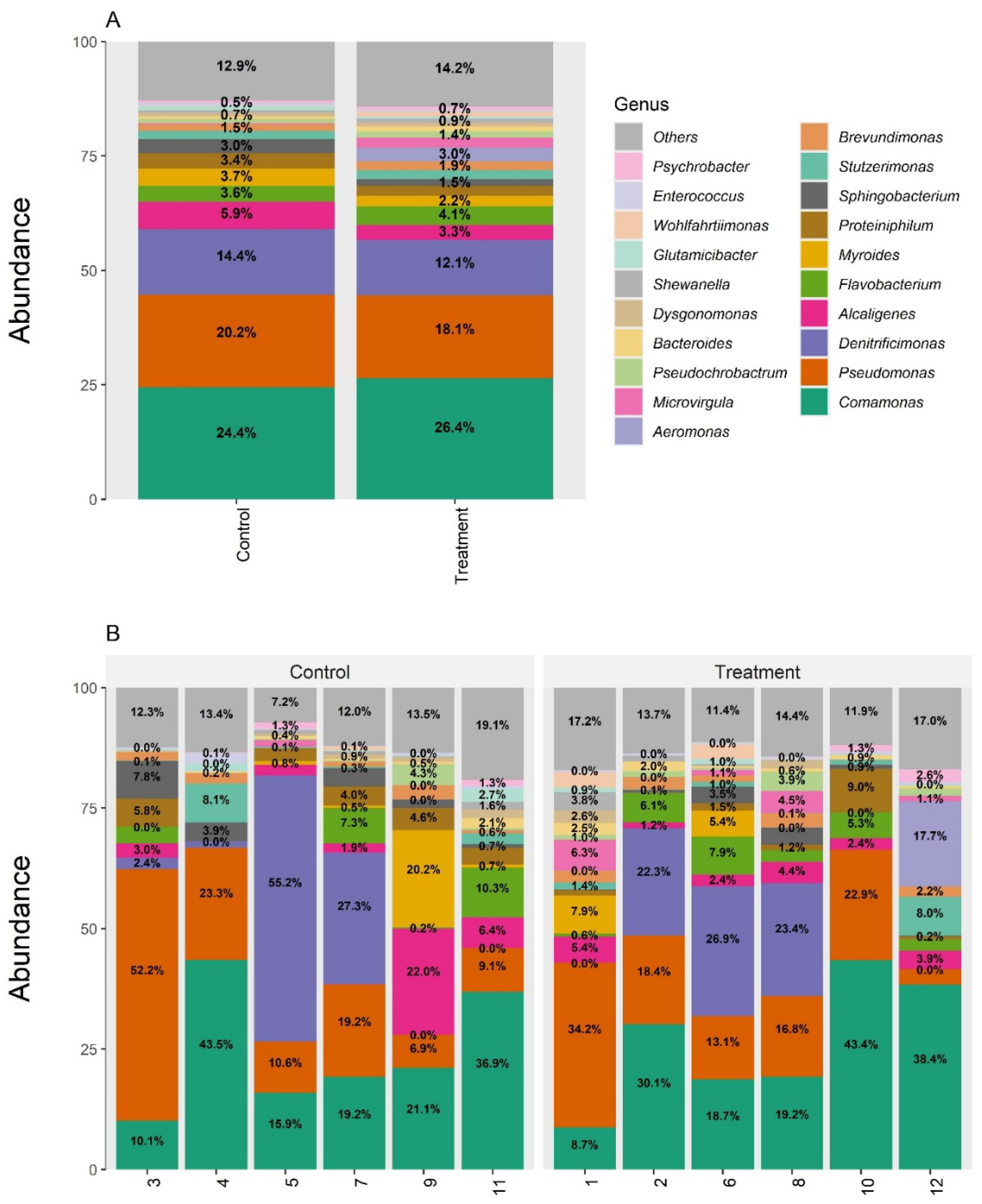
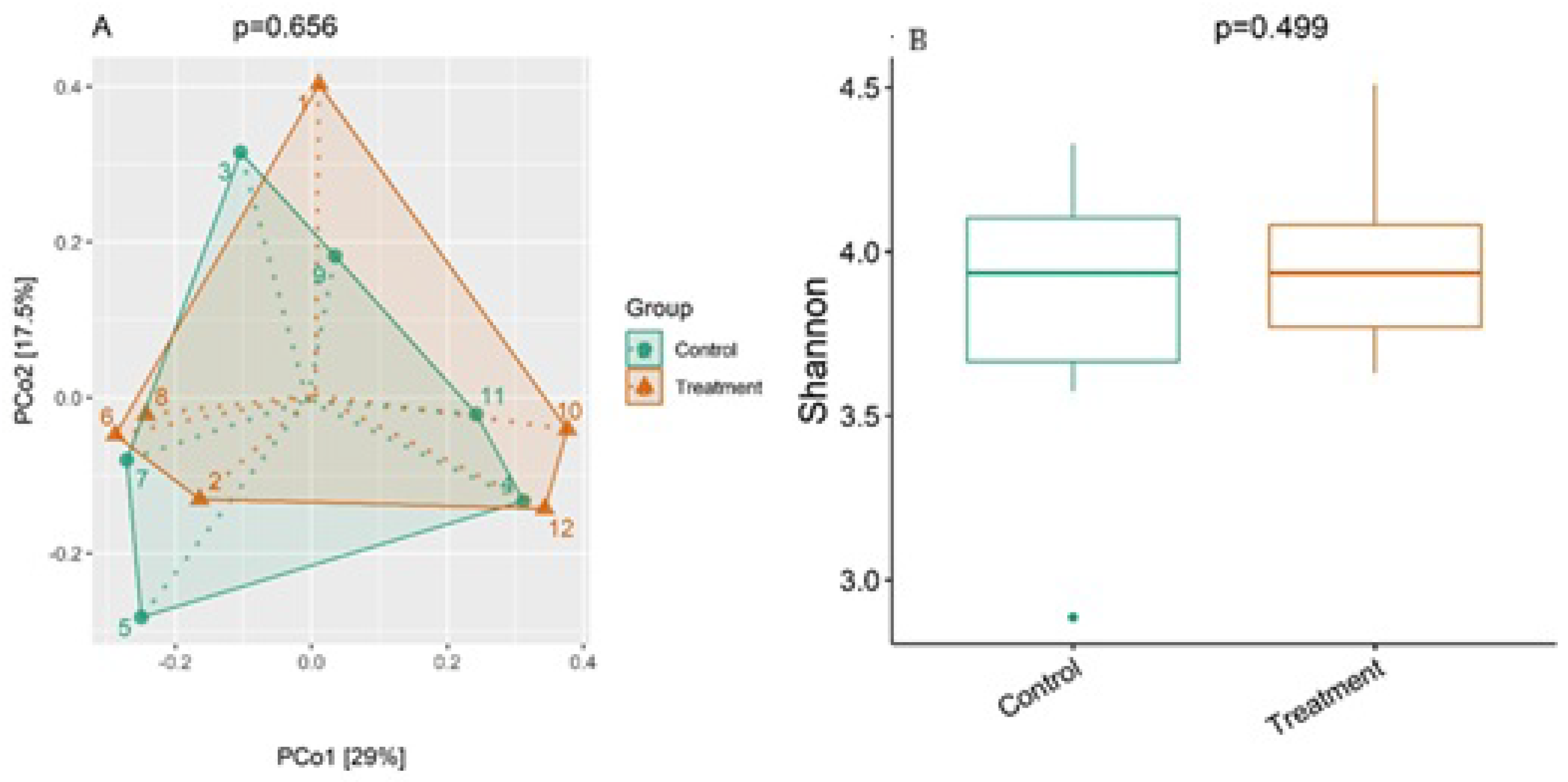
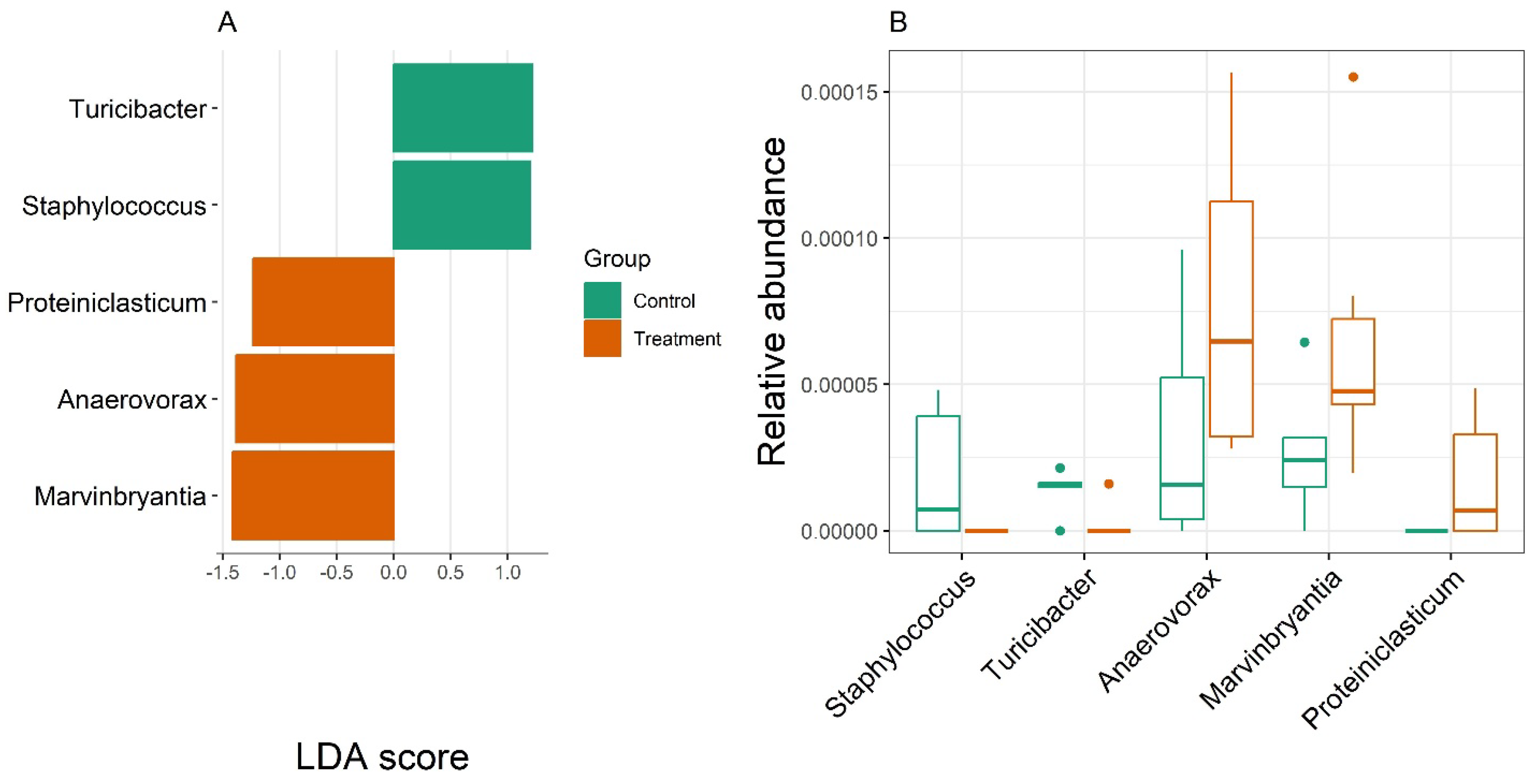
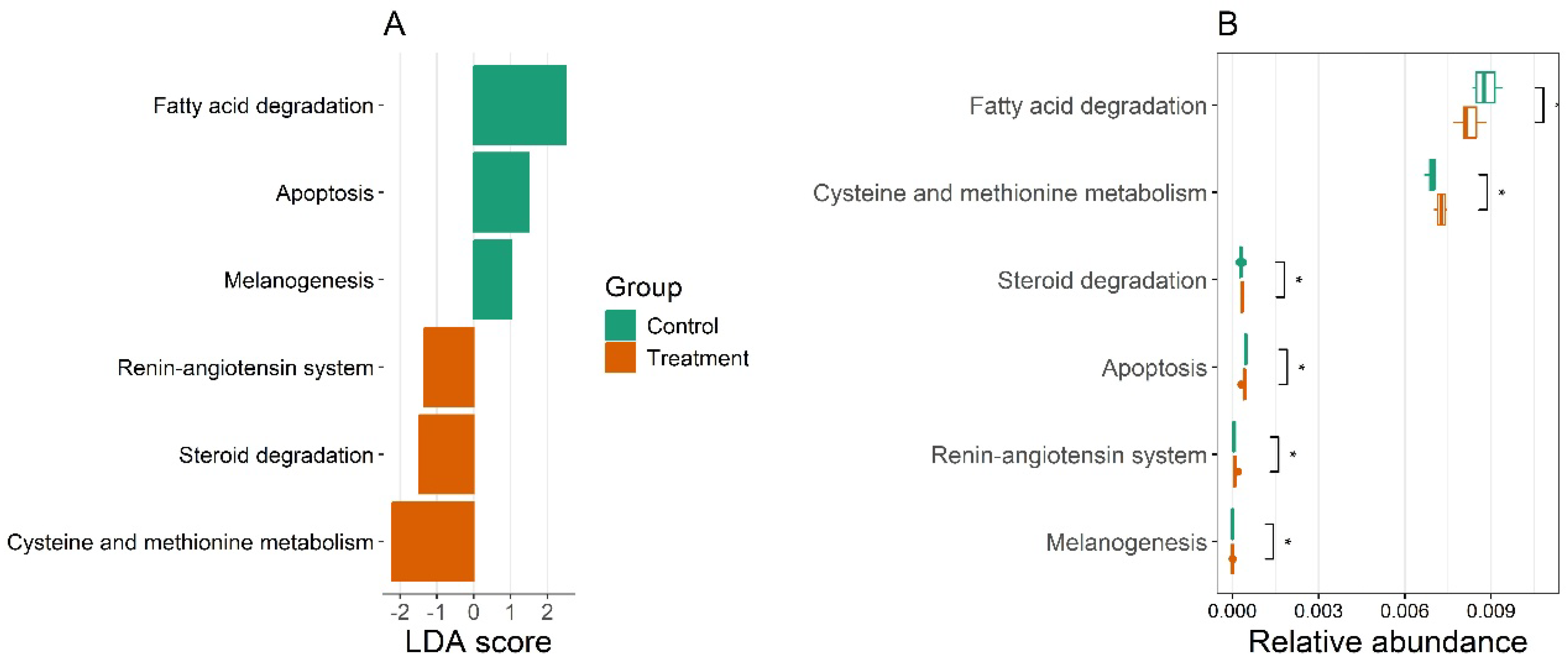
3.4. Ruminal Fluid: Protozoa, Microbiota, and Volatile Fatty Acids
3.5. Fatty Acid Profile in Meat
4. Discussion
5. Conclusions
Supplementary Materials
Author Contributions
Funding
Institutional Review Board Statement
Informed Consent Statement
Data Availability Statement
Acknowledgments
Conflicts of Interest
References
- Tedeschi, L.O.; Muir, J.P.; Naumann, H.D.; Norris, A.B.; Ramírez-Restrepo, C.A. Nutritional aspects of ecologically relevant phytochemicals in ruminant production. Front. Vet. Sci. 2021, 8, 628445. [Google Scholar] [CrossRef] [PubMed]
- Capper, J.L. The environmental impact of beef production in the United States: 1977 compared with 2007. J. Anim. Sci. 2011, 89, 4249–4261. [Google Scholar] [CrossRef] [PubMed]
- Russell, J.B.; Houlihan, A.J. Ionophore resistance of ruminal bacteria and its potential impact on human health. FEMS Microbiol. Rev. 2003, 27, 65–74. [Google Scholar] [CrossRef] [PubMed]
- WHO. Guidelines on Use of Medically Important Antimicrobials in Food-Producing Animals; WHO: Geneva, Switzerland, 2017. [Google Scholar]
- Van Boeckel, T.P.; Glennon, E.E.; Chen, D.; Gilbert, M.; Robinson, T.P.; Grenfell, B.T.; Levin, S.A.; Bonhoeffer, S.; Laxminarayan, R. Reducing antimicrobial use in food animals. Science 2019, 357, 1350–1352. [Google Scholar]
- Schlievert, P.M.; Kilgore, S.H.; Seo, K.S.; Leung, D.Y.M. Glycerol monolaurate contributes to the antimicrobial and anti-inflammatory activity of human milk. Sci. Rep. 2019, 9, 14550. [Google Scholar] [CrossRef] [PubMed]
- Xu, S.; Chang, X.; Xu, H.; Xie, Y.; Ge, S.; Xu, Y.; Ding, S. Decoding a novel green and effective antimicrobial agent: Glycerol monolaurate stable in nanosystem. Food Control 2024, 160, 110371. [Google Scholar] [CrossRef]
- Liu, T.; Chen, H.; Bai, Y.; Wu, J.; Cheng, S.; He, B.; Casper, D.P. Calf starter containing a blend of essential oils and prebiotics affects the growth performance of Holstein calves. J. Dairy Sci. 2020, 103, 2315–2323. [Google Scholar] [CrossRef] [PubMed]
- Flint, H.J.; Bayer, E.A.; Rincon, M.T.; Lamed, R.; White, B.A. Polysaccharide utilization by gut bacteria. Nat. Rev. Microbiol. 2008, 6, 121–131. [Google Scholar] [CrossRef] [PubMed]
- Jami, E.; Mizrahi, I. Composition and similarity of bovine rumen microbiota across animals. PLoS ONE 2012, 7, e33306. [Google Scholar] [CrossRef] [PubMed]
- Jenkins, T.C.; Wallace, R.J.; Moate, P.J.; Mosley, E.E. Board-invited review: Recent advances in biohydrogenation of unsaturated fatty acids within the rumen microbial ecosystem. J. Anim. Sci. 2008, 86, 397–412. [Google Scholar] [CrossRef] [PubMed]
- Lourenço, M.; Ramos-Morales, E.; Wallace, R.J. The role of microbes in rumen lipolysis and biohydrogenation and their manipulation. Animal 2010, 4, 1008–1023. [Google Scholar] [CrossRef] [PubMed]
- Celi, P.; Gabai, G. Oxidant/antioxidant balance in animal nutrition and health: The role of protein oxidation. Front. Vet. Sci. 2015, 2, 48. [Google Scholar] [CrossRef] [PubMed]
- Yanza, Y.R.; Szumacher-Strabel, M.; Jayanegara, A.; Kasenta, A.M.; Gao, M.; Huang, H.; Patra, A.K.; Warzych, E.; Cieślak, A. The effects of dietary medium-chain fatty acids on ruminal methanogenesis and fermentation in vitro and in vivo: A meta-analysis. J. Anim. Physiol. Anim. Nutr. 2020, 104, 1305–1321. [Google Scholar]
- Hassan Abd El-Ghany, S.S.; Azmy, A.F.; Osama El-Gendy, A.; Abd El-Baky, R.M.; Mustafa, A.; Abourehab, M.A.S.; El-Beeh, M.E.; Ibrahem, R.A. Antimicrobial and Antibiofilm Activity of Monolaurin against Methicillin-Resistant Staphylococcus aureus Isolated from Wound Infections. Int. J. Microbiol. 2024, 2024, 7518368. [Google Scholar] [CrossRef] [PubMed]
- Klevenhusen, F.; Meile, L.; Kreuzer, M.; Soliva, C.R. Effects of monolaurin on ruminal methanogens and selected bacterial species from cattle, as determined with the rumen simulation technique. Anaerobe 2011, 17, 232–238. [Google Scholar] [CrossRef] [PubMed]
- Li, Y.; Wang, H.; Zhang, Y.; Li, X.; Jiang, X.; Ding, H. Effects of Dietary Supplementation with Glycerol Monolaurate (GML) or the Combination of GML and Tributyrin on Growth Performance and Rumen Microbiome of Weaned Lambs. Animals 2022, 12, 1309. [Google Scholar] [CrossRef] [PubMed]
- Kim, E.J.; Huws, S.A.; Lee, M.R.F.; Scollan, N.D. Dietary transformation of lipid in the rumen microbial ecosystem. Asian-Australas. J. Anim. Sci. 2009, 22, 1341–1350. [Google Scholar] [CrossRef]
- Li, D.; Wang, J.Q.; Bu, D.P. Ruminal microbe of biohydrogenation of trans-vaccenic acid to stearic acid in vitro. BMC Res. Notes 2012, 5, 97. [Google Scholar] [CrossRef] [PubMed]
- Maia, M.R.G.; Chaudhary, L.C.; Figueres, L.; Wallace, R.J. Metabolism of polyunsaturated fatty acids and their toxicity to the microflora of the rumen. Antonie Leeuwenhoek 2007, 91, 303–314. [Google Scholar] [PubMed]
- Dohme, F.; Machmüller, A.; Wasserfallen, A.; Kreuzer, M. Comparative efficiency of various fats rich in medium-chain fatty acids to suppress ruminal methanogenesis as measured with RUSITEC. Can. J. Anim. Sci. 2000, 80, 473–482. [Google Scholar] [CrossRef]
- Valadares Filho, S.C.; Silva, L.F.C.; Gionbelli, M.P.; Rotta, P.P.; Marcondes, M.I.; Chizzotti, M.L.; Prados, L.F. BR-CORTE 3.0: Nutrient Requirements of Zebu and Crossbred Cattle; Suprema Gráfica Ltda.: Viçosa, Brazil, 2016. [Google Scholar]
- AOAC International. Official Methods of Analysis of AOAC International, 21st ed.; AOAC International: Gaithersburg, MD, USA, 2019. [Google Scholar]
- Van Soest, P.J.; Robertson, J.B.; Lewis, B.A. Methods for dietary fiber, neutral detergent fiber, and nonstarch polysaccharides in relation to animal nutrition. J. Dairy Sci. 1991, 74, 3583–3597. [Google Scholar] [CrossRef] [PubMed]
- Hall, M.B. Determination of starch, including maltooligosaccharides, in animal feeds: Comparison of methods and a recommended method for AOAC collaborative study. J. AOAC Int. 2009, 92, 42–49. [Google Scholar] [CrossRef]
- LeBel, C.P.; Ischiropoulos, H.; Bondy, S.C. Evaluation of the probe 2′,7′-dichlorofluorescin as an indicator of reactive oxygen species formation and oxidative stress. Chem. Res. Toxicol. 1992, 5, 227–231. [Google Scholar] [CrossRef] [PubMed]
- Buege, J.A.; Aust, S.D. Microsomal lipid peroxidation. Methods Enzymol. 1978, 52, 302–310. [Google Scholar] [CrossRef] [PubMed]
- Misra, H.P.; Fridovich, I. A simple assay for superoxide dismutase. J. Biol. Chem. 1972, 247, 3170–3175. [Google Scholar] [CrossRef]
- Dehority, B.A. Evaluation of subsampling and fixation procedures used for counting rumen protozoa. Appl. Environ. Microbiol. 1984, 48, 182–185. [Google Scholar] [CrossRef] [PubMed]
- Williams, A.G.; Coleman, G.S. The Rumen Protozoa; Springer: Berlin/Heidelberg, Germany, 1992. [Google Scholar]
- Erwin, E.S.; Marco, G.J.; Emery, E.M. Volatile fatty acid analyses of blood and rumen fluid by gas chromatography. J. Dairy Sci. 1961, 44, 1768–1771. [Google Scholar] [CrossRef]
- Playne, M.J. Determination of ethanol, volatile fatty acids, lactic and succinic acids in fermentation liquids by gas chromatography. J. Sci. Food Agric. 1985, 36, 638–644. [Google Scholar] [CrossRef]
- Brunetto, A.L.R.; dos Santos, A.L.F.; Zago, I.; Deolino, G.L.; Nora, L.; Molosse, V.L.; Lago, R.V.P.; de C. Machado, A.; Wagner, R.; Nauderer, J.N.; et al. Intake of Condensed Tannins (Acacia mearnsii) by Lambs in Confinement and Its Impact on Growth Performance, Rumen Environment, and Meat. Fermentation 2024, 10, 630. [Google Scholar] [CrossRef]
- Folch, J.; Lees, M.; Stanley, G.S. A simple method for the isolation and purification of total lipides from animal tissues. J. Biol. Chem. 1957, 226, 497–509. [Google Scholar] [CrossRef]
- Lago, R.V.P.; Wolschick, G.J.; Signor, M.H.; Giraldi, G.C.; Molosse, V.L.; Deolindo, G.L.; Cecere, B.G.O.; Brunetto, A.L.R.; Cucco, D.C.; Benedeti, P.D.B.; et al. A mixture of free and microencapsulated essential oils combined with turmeric and tannin in the diet of cattle in the growing and finishing phase: A new tool to enhance productivity. Anim. Feed. Sci. Technol. 2024, 315, 116033. [Google Scholar] [CrossRef]
- Schloss, P.D.; Westcott, S.L.; Ryabin, T.; Hall, J.R.; Hartmann, M.; Hollister, E.B.; Lesniewski, R.A.; Oakley, B.B.; Parks, D.H.; Robinson, C.J.; et al. Introducing mothur: Open-Source, Platform-Independent, Community-Supported Software for Describing and Comparing Microbial Communities. Appl. Environ. Microbiol. 2009, 75, 7537–7541. [Google Scholar] [CrossRef] [PubMed]
- Kozich, J.J.; Westcott, S.L.; Baxter, N.T.; Highlander, S.K.; Schloss, P.D. Development of a dual-index sequencing strategy and curation pipeline for analyzing amplicon sequence data on the MiSeq Illumina sequencing platform. Appl. Environ. Microbiol. 2013, 79, 5112–5120. [Google Scholar] [CrossRef] [PubMed]
- Quast, C.; Pruesse, E.; Yilmaz, P.; Gerken, J.; Schweer, T.; Yarza, P.; Peplies, J.; Glöckner, F.O. The SILVA ribosomal RNA gene database project: Improved data processing and web-based tools. Nucleic Acids Res. 2012, 41, D590–D596. [Google Scholar] [CrossRef] [PubMed]
- McMurdie, P.J.; Holmes, S. Phyloseq: An R package for reproducible interactive analysis and graphics of microbiome census data. PLoS ONE 2013, 8, e61217. [Google Scholar] [CrossRef] [PubMed]
- Liu, C.; Cui, Y.; Li, X.; Yao, M. microeco: An R package for data mining in microbial community ecology. FEMS Microbiol. Ecol. 2021, 97, fiaa255. [Google Scholar] [PubMed]
- Segata, N.; Izard, J.; Waldron, L.; Gevers, D.; Miropolsky, L.; Garrett, W.S.; Huttenhower, C. Metagenomic biomarker discovery and explanation. Genome Biol. 2011, 12, R60. [Google Scholar] [CrossRef] [PubMed]
- Wemheuer, F.; Taylor, J.A.; Daniel, R.; Johnston, E.L.; Meinicke, P.; Thomas, T.; Wemheuer, B. Tax4Fun2: Pre-diction of habitat-specific functional profiles and functional redundancy based on 16S rRNA gene sequences. Environ. Microbiome 2020, 15, 11. [Google Scholar] [CrossRef] [PubMed]
- Wickham, H. ggplot2: Elegant Graphics for Data Analysis; Springer: Berlin/Heidelberg, Germany, 2016. [Google Scholar]
- Jenkins, T.C. Lipid metabolism in the rumen. J. Dairy Sci. 1993, 76, 3851–3863. [Google Scholar] [CrossRef] [PubMed]
- Patra, A.K. Effects of Essential Oils on Rumen Fermentation, Microbial Ecology and Ruminant Production. Asian J. Anim. Vet. Adv. 2011, 6, 416–428. [Google Scholar] [CrossRef]
- Schlievert, P.M.; Deringer, J.R.; Kim, M.H.; Projan, S.J.; Novick, R.P. Effect of glycerol monolaurate on bacterial growth and toxin production. Antimicrob. Agents Chemother. 1992, 36, 626–631. [Google Scholar] [CrossRef] [PubMed]
- Machmüller, A. Medium-chain fatty acids and their potential to reduce methanogenesis in domestic ruminants. Agric. Ecosyst. Environ. 2006, 112, 107–114. [Google Scholar] [CrossRef]
- Russell, J.B.; Rychlik, J.L. Factors that alter rumen microbial ecology. Science 2001, 292, 1119–1122. [Google Scholar] [CrossRef] [PubMed]
- Jouany, J.P.; Morgavi, D.P. Use of natural products as alternatives to antibiotic feed additives in ruminant production. Animal 2007, 1, 1443–1466. [Google Scholar] [CrossRef] [PubMed]
- Newbold, C.J.; de la Fuente, G.; Belanche, A.; Ramos-Morales, E.; McEwan, N.R. The role of ciliate protozoa in the rumen. Front. Microbiol. 2015, 6, 1313. [Google Scholar] [CrossRef] [PubMed]
- Hook, S.E.; Wright, A.D.G.; McBride, B.W. Methanogens: Methane producers of the rumen and mitigation strategies. Archaea 2010, 2010, 945785. [Google Scholar] [CrossRef] [PubMed]
- Wood, J.D.; Richardson, R.I.; Nute, G.R.; Fisher, A.V.; Campo, M.M.; Kasapidou, E.; Sheard, P.R.; Enser, M. Effects of fatty acids on meat quality: A review. Meat Sci. 2004, 66, 21–32. [Google Scholar] [CrossRef] [PubMed]
- Daley, C.A.; Abbott, A.; Doyle, P.S.; Nader, G.A.; Larson, S. A review of fatty acid profiles and antioxidant content in grass-fed and grain-fed beef. Nutr. J. 2010, 9, 10. [Google Scholar] [CrossRef] [PubMed]
- Bach, A.C.; Babayan, V.K. Medium-chain triglycerides: An update. Am. J. Clin. Nutr. 1982, 36, 950–962. [Google Scholar] [CrossRef] [PubMed]
- Mensink, R.P.; Zock, P.L.; Kester, A.D.M.; Katan, M.B. Effects of dietary fatty acids and carbohydrates on serum lipids. Am. J. Clin. Nutr. 2003, 77, 1146–1155. [Google Scholar] [CrossRef] [PubMed]
- Jami, E.; Israel, A.; Kotser, A.; Mizrahi, I. Exploring the bovine rumen bacterial community from birth to adulthood. ISME J. 2013, 7, 1069–1079. [Google Scholar] [CrossRef] [PubMed]
- Flint, H.J.; Scott, K.P.; Duncan, S.H.; Louis, P.; Forano, E. Microbial degradation of complex carbohydrates in the gut. Gut Microbes 2012, 3, 289–306. [Google Scholar] [CrossRef] [PubMed]
- Kabara, J.J.; Swieczkowski, D.M.; Conley, A.J.; Truant, J.P. Fatty acids and derivatives as antimicrobial agents. Antimicrob. Agents Chemother. 1972, 2, 23–28. [Google Scholar] [CrossRef] [PubMed]
- Patel, K.; Godden, S.M.; Royster, E.E.; Crooker, B.A.; Johnson, T.J.; Smith, E.A.; Sreevatsan, S. Prevalence, antibiotic resistance, virulence and genetic diversity of Staphylococcus aureus isolated from bulk tank milk samples of U.S. dairy herds. BMC Genom. 2021, 22, 367. [Google Scholar] [CrossRef] [PubMed]
- Lynch, J.B.; Gonzalez, E.L.; Choy, K.; Faull, K.F.; Jewell, T.; Arellano, A.; Liang, J.; Yu, K.B.; Paramo, J.; Hsiao, E.Y. Gut microbiota Turicibacter strains differentially modify bile acids and host lipids. Nat. Commun. 2023, 14, 3669. [Google Scholar] [CrossRef] [PubMed]
- Matthies, C.; Evers, S.; Ludwig, W.; Schink, B. Anaerovorax odorimutans gen. nov., sp. nov. Int. J. Syst. Evol. Microbiol. 2000, 50, 1591–1594. [Google Scholar] [CrossRef] [PubMed]
- Zhang, K.; Song, L.; Dong, X. Proteiniclasticum ruminis gen. nov., sp. nov, a strictly anaerobic proteolytic bacterium isolated from yak rumen. Int. J. Syst. Evol. Microbiol. 2010, 60, 2221–2225. [Google Scholar] [CrossRef] [PubMed]
- Wallace, R.J.; Onodera, R.; Cotta, M.A. Metabolism of nitrogen-containing compounds. In The Rumen Microbial Ecosystem, 2nd ed.; Blackie Academic & Professional: London, UK, 1997. [Google Scholar]
- Biddle, A.; Stewart, L.; Blanchard, J.; Leschine, S. Untangling the Genetic Basis of Fibrolytic Specialization by Lachnospiraceae and Ruminococcaceae in Diverse Gut Communities. Diversity 2013, 5, 627–640. [Google Scholar] [CrossRef]
- Huws, S.A.; Creevey, C.J.; Oyama, L.B.; Mizrahi, I.; Denman, S.E.; Popova, M.; Muñoz-Tamayo, R.; Forano, E.; Waters, S.M.; Hess, M.; et al. Addressing global ruminant agricultural challenges through understanding the rumen microbiome: Past, present, and future. Front. Microbiol. 2018, 9, 2161. [Google Scholar] [CrossRef] [PubMed]
- Jiang, B.; Qin, C.; Xu, Y.; Song, X.; Fu, Y.; Li, R.; Liu, Q.; Shi, D. Multi-omics reveals the mechanism of rumen microbiome and its metabolome together with host metabolome participating in the regulation of milk production traits in dairy buffaloes. Front. Microbiol. 2024, 15, 1301292. [Google Scholar] [CrossRef] [PubMed]
- Weimer, P.J.; Stevenson, D.M.; Mantovani, H.C.; Man, S.L. Host specificity of the ruminal bacterial community in the dairy cow following near-total exchange of ruminal contents. J. Dairy Sci. 2010, 93, 5902–5912. [Google Scholar] [CrossRef] [PubMed]
- Henderson, G.; Cox, F.; Ganesh, S.; Jonker, A.; Young, W.; Global Rumen Census Collaborators; Janssen, P.H. Rumen microbial community composition varies with diet and host, but a core microbiome is found across a wide geographical range. Sci. Rep. 2015, 5, 14567. [Google Scholar] [CrossRef] [PubMed]
- Xue, M.Y.; Sun, H.Z.; Wu, X.H.; Liu, J.X.; Guan, L.L. Multi-omics reveals that the rumen microbiome and its metabolome together with the host metabolome contribute to individualized dairy cow performance. Microbiome 2020, 8, 64. [Google Scholar] [CrossRef] [PubMed]
- Jain, N.C. Essentials of Veterinary Hematology; Lea & Febiger: Philadelphia, PA, USA, 1993. [Google Scholar]
- Roland, L.; Drillich, M.; Iwersen, M. Hematology as a diagnostic tool in bovine medicine. J. Vet. Diagn. Investig. 2014, 26, 592–598. [Google Scholar] [CrossRef] [PubMed]
- Plaizier, J.C.; Krause, D.O.; Gozho, G.N.; McBride, B.W. Subacute ruminal acidosis in dairy cows. Vet. J. 2008, 176, 21–31. [Google Scholar] [CrossRef] [PubMed]
- Sprong, R.C.; Hulstein, M.F.E.; Van der Meer, R. Bactericidal activities of milk lipids. Antimicrob. Agents Chemother. 2001, 45, 1298–1301. [Google Scholar] [CrossRef] [PubMed]
- Calder, P.C. Functional Roles of Fatty Acids and Their Effects on Human Health. JPEN J. Parenter. Enter. Nutr. 2015, 39, 18S–32S. [Google Scholar] [CrossRef] [PubMed]
- Kaneko, J.J.; Harvey, J.W.; Bruss, M.L. Clinical Biochemistry of Domestic Animals, 6th ed.; Academic Press: San Diego, CA, USA, 2008. [Google Scholar]
- Sordillo, L.M.; Aitken, S.L. Impact of oxidative stress on dairy cattle. Vet. Immunol. Immunopathol. 2009, 128, 104–109. [Google Scholar] [CrossRef] [PubMed]
- Celi, P. Biomarkers of oxidative stress in ruminant medicine. Immunopharmacol. Immunotoxicol. 2011, 33, 233–240. [Google Scholar] [PubMed]
- Machmüller, A.; Soliva, C.R.; Kreuzer, M. Methane-suppressing effect of myristic acid in sheep as affected by dietary calcium and forage proportion. Br. J. Nutr. 2003, 90, 529–540. [Google Scholar] [CrossRef] [PubMed]
- Klevenhusen, F.; Bernasconi, S.M.; Hofstetter, T.B.; Bolotin, J.; Kunz, C.; Soliva, C.R. Efficiency of monolaurin in mitigating ruminal methanogenesis and modifying C-isotope fractionation when incubating diets composed of either C3 or C4 plants in a rumen simulation technique (Rusitec) system. Br. J. Nutr. 2009, 102, 1308–1317. [Google Scholar] [CrossRef] [PubMed]
- Culbertson, R.L.; Uzun, P.; Seneviratne, N.; Portela Fontoura, A.B.; Davis, A.N.; McFadden, J.W. Effects of dietary glycerol monolaurate supplementation on milk production and methane emissions in Holstein dairy cows. JDS Commun. 2025, 6, 287–292. [Google Scholar] [CrossRef] [PubMed]



| Ingredients | TMR, % of Dry Matter |
|---|---|
| Corn silage | 35.42 |
| Cornmeal | 30.16 |
| Soybean meal | 2.85 |
| Wheat bran | 9.48 |
| Soybean hulls | 12.45 |
| Dried distillers grains with solubles | 7.78 |
| Common salt | 0.21 |
| Limestone | 0.64 |
| Cattle premix 1 | 0.32 |
| Livestock urea | 0.68 |
| Chemistry composition | |
| Dry matter | 57.3 |
| Crude protein | 14.1 |
| Starch | 34.5 |
| Ether extract | 3.30 |
| Neutral Detergent Fiber—NDF | 36.4 |
| Total digestible nutrients—TDN | 70.8 |
| Variables | Control | Monolaurin | SEM 2 | P-Treat 1 |
|---|---|---|---|---|
| Initial body weight, kg | 388 | 387 | 8.64 | 0.96 |
| Final body weight, kg | 495 | 500 | 7.62 | 0.51 |
| Weight gain, kg | 107 b | 113 a | 1.33 | 0.05 |
| ADG 2, kg | 1.64 b | 1.73 a | 0.02 | 0.05 |
| DMI, kg DM 2 | 8.97 | 8.71 | 0.12 | 0.29 |
| Feed efficiency, kg/kg | 0.182 b | 0.198 a | 0.009 | 0.03 |
| Variables | Control | Monolaurin | SEM 3 | P-Treat 1 | P-Treat × Day 2 |
|---|---|---|---|---|---|
| Hemogram | |||||
| Leukocyte (×103 µL) | 0.05 | 0.05 | |||
| d14 | 9.72 a | 7.75 b | 0.43 | ||
| d45 | 7.59 | 6.97 | 0.42 | ||
| d79 | 10.1 a | 8.73 b | 0.51 | ||
| Mean 1 | 9.16 a | 7.82 b | 0.47 | ||
| Lymphocyte (×103 µL) | 4.91 | 4.32 | 0.31 | 0.46 | 0.54 |
| Granulocyte (×103 µL) | 3.07 | 2.54 | 0.23 | 0.12 | 0.33 |
| Monocyte (×103 µL) | 1.17 | 0.96 | 0.07 | 0.42 | 0.30 |
| Erythrocytes (×106 µL) | 6.94 | 7.48 | 0.24 | 0.78 | 0.87 |
| Hemoglobin (mg/dL) | 10.1 | 10.3 | 0.20 | 0.91 | 0.94 |
| Hematocrit (%) | 28.9 | 30.9 | 0.90 | 0.66 | 0.71 |
| Platelets (×103 µL) | 286 | 346 | 38.3 | 0.41 | 0.29 |
| Serum biochemistry | |||||
| Albumin (g/dL) | 2.80 | 2.81 | 0.04 | 0.96 | 0.97 |
| Globulin (g/dL) | 3.70 | 3.81 | 0.14 | 0.91 | 0.86 |
| Total protein (g/dL) | 6.50 | 6.62 | 0.13 | 0.92 | 0.88 |
| Cholesterol (mg/dL) | 84.1 | 79.3 | 3.19 | 0.65 | 0.54 |
| Fructosamine (mg/dL | 237 | 237 | 5.71 | 0.92 | 0.96 |
| Glucose (mg/dL) | 91.0 | 87.5 | 2.89 | 0.83 | 0.87 |
| Urea (mg/dL) | 17.6 | 18.5 | 1.00 | 0.77 | 0.68 |
| Variables | Control | Monolaurin | SEM 3 | P-Treat 1 | P-Treat × Day 2 |
|---|---|---|---|---|---|
| TBARS (nmol/mL) | 10.2 | 9.87 | 0.97 | 0.92 | 0.87 |
| ROS (Flu) | 0.021 | 0.001 | |||
| d14 | 118 a | 102 b | 3.47 | ||
| d45 | 111 a | 95.3 b | 3.28 | ||
| d79 | 108 a | 92.4 b | 3.35 | ||
| Mean 1 | 112 a | 96.5 b | 3.36 | ||
| SOD (U/mg of protein) | 0.05 | 0.034 | |||
| d14 | 1.74 a | 1.52 b | 0.05 | ||
| d45 | 1.63 | 1.53 | 0.05 | ||
| d79 | 1.56 | 1.48 | 0.04 | ||
| Mean 1 | 1.64 a | 1.51 b | 0.04 |
| Variables | Control | Monolaurin | SEM 3 | P-Treat 1 | P-Treat × Day 2 |
|---|---|---|---|---|---|
| Acetic acid (mmol/L) | 0.76 | 0.01 | |||
| d14 | 48.3 a | 41.2 b | 1.87 | ||
| d79 | 37.8 | 39.3 | 1.65 | ||
| Propionic acid (mmol/L) | 0.65 | 0.05 | |||
| d14 | 12.1 a | 10.4 b | 0.44 | ||
| d79 | 8.75 | 9.05 | 0.47 | ||
| Isobutyric acid (mmol/L) | 0.95 | 0.92 | |||
| d14 | 1.19 | 1.16 | 0.02 | ||
| d79 | 0.94 | 0.93 | 0.02 | ||
| Butyric acid (mmol/L) | 0.43 | 0.21 | |||
| d14 | 7.73 | 7.31 | 0.25 | ||
| d79 | 6.37 | 6.12 | 0.24 | ||
| Isovaleric acid (mmol/L) | 0.39 | 0.27 | |||
| d14 | 1.85 | 1.68 | 0.06 | ||
| d79 | 1.29 | 1.25 | 0.04 | ||
| Valeric acid (mmol/L) | 0.55 | 0.05 | |||
| d14 | 0.85 a | 0.67 b | 0.03 | ||
| d79 | 0.57 | 0.56 | 0.03 | ||
| Total SCFA (mmol/L) | 0.68 | 0.01 | |||
| d14 | 72.2 a | 62.5 b | 2.43 | ||
| d79 | 55.7 | 57.2 | 2.39 | ||
| Protozoa number (×108/L) | 0.51 | 0.04 | |||
| d14 | 10.5 b | 13.9 a | 0.85 | ||
| d79 | 12.4 | 12.9 | 0.82 |
| Variables (%) | Control | Monolaurin | SEM 3 | P-Treat 1 |
|---|---|---|---|---|
| Total lipids | 2.28 | 2.37 | 0.050 | 0.591 |
| C4:0 (Butyric) | 0.16 | 0.15 | 0.002 | 0.989 |
| C11:0 (Undecanoic) | 0.01 | 0.01 | 0.001 | 0.997 |
| C12:0 (Lauric) | 0.00b | 0.30a | 0.002 | 0.018 |
| C13:0 (Tridecanoic) | 0.04 | 0.04 | 0.002 | 0.996 |
| C14:0 (Myristic) | 0.22 | 0.27 | 0.006 | 0.242 |
| C14:1 (Myristoleic) | 0.09 | 0.09 | 0.003 | 0.991 |
| C15:0 (Pentadecanoic) | 0.12 | 0.12 | 0.000 | 0.995 |
| C16:0 (Palmitic) | 25.50a | 23.14b | 0.134 | 0.003 |
| C16:1 (Palmitoleic) | 2.29 | 1.99 | 0.830 | 0.568 |
| C17:0 (Heptadecanoic) | 3.23a | 2.11b | 0.040 | 0.013 |
| C18:0 (Stearic) | 20.70 | 20.41 | 0.103 | 0.965 |
| C18:1n9t (Elaidic) | 1.61 | 1.60 | 0.001 | 0.987 |
| C18:1n9c (Oleic) | 35.23 | 36.08 | 0.301 | 0.432 |
| C18:2n6c (Linoleic) | 8.62b | 10.50a | 0.117 | 0.050 |
| C20:0 (Arachidic) | 0.12 | 0.13 | 0.005 | 0.986 |
| C18:3n6 (?-Linolenic) | 0.04 | 0.05 | 0.003 | 0.993 |
| C20:1n9 (cis-11-Eicosenoic) | 0.08 | 0.09 | 0.004 | 0.980 |
| C18:3n3 (a-Linolenic) | 0.17 | 0.17 | 0.001 | 0.995 |
| C21:0 (Henicosanoic) | 0.24 | 0.24 | 0.002 | 0.989 |
| C20:2 (cis-11,14-Eicosadienoic) | 0.12 | 0.13 | 0.002 | 0.982 |
| C22:0 (Behenic) | 0.02 | 0.03 | 0.001 | 0.947 |
| C20:3n6 (cis-8,11,14-Eicosatrienoic) | 0.48 | 0.52 | 0.013 | 0.798 |
| C20:4n6 (Arachidonic) | 0.73b | 1.93a | 0.014 | 0.011 |
| C22:2 (cis-13,16-Docosadienoic) | 0.02 | 0.02 | 0.000 | 0.993 |
| C24:0 (Lignoceric) | 0.06 | 0.06 | 0.001 | 0.987 |
| C20:5n3 (cis-5,8,11,14,17-Eicosapentaenoic) | 0.05 | 0.06 | 0.003 | 0.971 |
| C24:1n9 (Nervonic) | 0.03 | 0.04 | 0.001 | 0.990 |
| C22:6n3 (cis-4,7,10,13,16,19-Docosahexaenoic) | 0.02 | 0.02 | 0.003 | 0.985 |
| ∑ SFA 2 | 50.41a | 47.01b | 0.365 | 0.026 |
| ∑ MUFA 2 | 39.34 | 39.89 | 0.414 | 0.954 |
| ∑ PUFA 2 | 10.25b | 13.40a | 0.287 | 0.001 |
Disclaimer/Publisher’s Note: The statements, opinions and data contained in all publications are solely those of the individual author(s) and contributor(s) and not of MDPI and/or the editor(s). MDPI and/or the editor(s) disclaim responsibility for any injury to people or property resulting from any ideas, methods, instructions or products referred to in the content. |
© 2026 by the authors. Licensee MDPI, Basel, Switzerland. This article is an open access article distributed under the terms and conditions of the Creative Commons Attribution (CC BY) license.
Share and Cite
Magri, J.J.; Brunetto, A.L.R.; Silva, M.W.; Marangoni, T.; Jesus, R.S.d.; Bajay, M.M.; Silva, L.E.L.e.; Wagner, R.; da Silva, G.B.; Manica, D.; et al. Monolaurin in the Diet of Feedlot Finishing Cattle: Effects on Performance, Metabolism, Ruminal Environment, and Meat Fatty Acid Profile. Fermentation 2026, 12, 295. https://doi.org/10.3390/fermentation12060295
Magri JJ, Brunetto ALR, Silva MW, Marangoni T, Jesus RSd, Bajay MM, Silva LELe, Wagner R, da Silva GB, Manica D, et al. Monolaurin in the Diet of Feedlot Finishing Cattle: Effects on Performance, Metabolism, Ruminal Environment, and Meat Fatty Acid Profile. Fermentation. 2026; 12(6):295. https://doi.org/10.3390/fermentation12060295
Chicago/Turabian StyleMagri, Julivan Junior, Andrei Lucas Rebelatto Brunetto, Matheus Wroblescki Silva, Thiago Marangoni, Renato Santos de Jesus, Miklos Maximiliano Bajay, Luiz Eduardo Lobo e Silva, Roger Wagner, Gilnei Bruno da Silva, Daiane Manica, and et al. 2026. "Monolaurin in the Diet of Feedlot Finishing Cattle: Effects on Performance, Metabolism, Ruminal Environment, and Meat Fatty Acid Profile" Fermentation 12, no. 6: 295. https://doi.org/10.3390/fermentation12060295
APA StyleMagri, J. J., Brunetto, A. L. R., Silva, M. W., Marangoni, T., Jesus, R. S. d., Bajay, M. M., Silva, L. E. L. e., Wagner, R., da Silva, G. B., Manica, D., Bagatini, M. D., & Silva, A. S. d. (2026). Monolaurin in the Diet of Feedlot Finishing Cattle: Effects on Performance, Metabolism, Ruminal Environment, and Meat Fatty Acid Profile. Fermentation, 12(6), 295. https://doi.org/10.3390/fermentation12060295