1. Introduction
Traditional Chinese distilled liquor,
Baijiu, can be classified into four major aroma types: strong aroma, sauce aroma, light aroma, and rice aroma. Among these, strong-aroma
Baijiu accounts for approximately 70% of total
Baijiu production [
1].
Baijiu is typically produced from cereal grains, such as sorghum, through a multistep process involving steaming, cooling, inoculation with fermentation starter, anaerobic pit fermentation, and distillation. The development of characteristic
Baijiu flavor depends on the synergistic activities of a complex microbial consortium inhabiting the fermented mash [
2].
The diversity, composition, and assembly processes of microbial communities directly influence flavor formation during
Baijiu fermentation [
3,
4]. As the ecological basis of the fermentation system, microbial community structure plays a pivotal role in maintaining fermentation stability and determining flavor quality [
5]. The mash microbiota is primarily composed of lactic acid bacteria, acetic acid bacteria,
Bacillus spp., yeasts, and molds. These microbial groups interact metabolically to form an integrated network that enables efficient substrate conversion and flavor compound production [
6].
Yeasts are regarded as core functional microorganisms in
Baijiu fermentation [
7], where they contribute to microbial succession, interspecies interactions, and flavor generation [
8]. Li et al. reported that yeasts account for 60% of the fungal sequences detected in
Baijiu mash, with
Issatchenkia representing the predominant fungal genus [
9]. The non-Saccharomyces yeast
Issatchenkia orientalis, which is widely distributed in Daqu and fermented mash, exhibits strong tolerance to acid, heat, and ethanol stress [
10,
11]. This species is capable of producing ethanol, higher alcohols, and ester compounds such as ethyl acetate. In synergy with Saccharomyces cerevisiae and functional bacteria, it can enhance the overall complexity of the final aroma profile [
12]. Although previous studies have described the stress tolerance, aroma-producing capacity, and regulatory characteristics of Issatchenkia, it remains unclear how the specific strain
I. orientalis Y1 influences microbial community structure, community assembly processes, physicochemical-factor associations, and predicted functional profiles in
Baijiu mash.
Microbial community composition is jointly governed by deterministic and stochastic assembly processes [
13,
14]. Deterministic processes favor the selection of specific taxa and functional traits, including environmental selection, interspecific competition, and cooperative interactions. In contrast, stochastic processes shape community structure through probabilistic ecological events, such as dispersal limitation and ecological drift. Together, these processes regulate the assembly and succession of microbial communities [
15].
For example, interactions between
Issatchenkia,
lactic acid
bacteria, and
Clostridium spp. have been shown to optimize community structure and enhance the production of key ester precursors and flavor compounds associated with strong-aroma
Baijiu, including hexanoate and butyrate [
11]. As an important functional microorganism in strong-aroma
Baijiu fermentation, elucidating the effects of
Issatchenkia orientalis on microbial community structure and function during fermentation will deepen our understanding of the ecological roles of functional microorganisms in
Baijiu mash.
In this study, a temperature-variable fermentation system for strong-aroma Baijiu was established, and the mash-isolated strain I. orientalis Y1 was inoculated into this system. This study aimed to evaluate the effects of I. orientalis Y1 on microbial community diversity, community structure, predicted functional profiles, and community assembly processes. In addition, we investigated the associations between microbial community shifts and physicochemical factors, particularly ethanol accumulation, to clarify the potential environmental selection mechanisms underlying Y1-mediated community succession. The findings provide a clearer understanding of the strain-level ecological role of I. orientalis Y1 in shaping microbial communities and predicted functional potential during strong-aroma Baijiu fermentation.
3. Results and Discussion
3.1. Effect of Issatchenkia orientalis Y1 on the Microbial Diversity of the Baijiu Mash
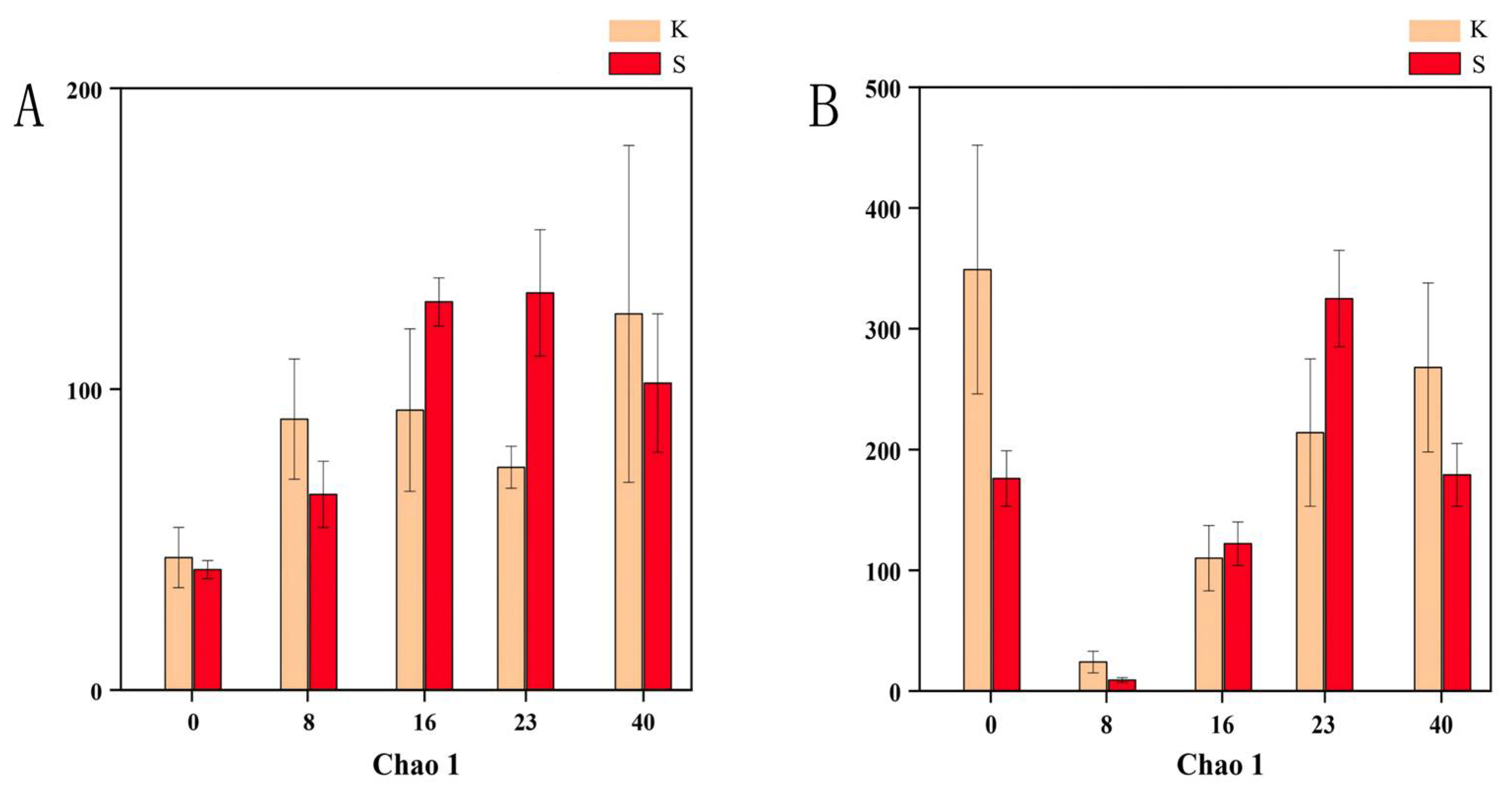
Figure 1 shows the effects of
I. orientalis Y1 inoculation on the microbial diversity of the fermentation system. Chao1, a measure of community richness, was found to initially decrease and then increase over the first 23 days of fermentation in both the control and experimental groups, and was lowest at day 8, indicating stage-specific changes in species richness. On days 16 and 23, the experimental group exhibited significantly higher Chao1 values than the control group, suggesting that inoculation with
I. orientalis Y1 markedly affected the bacterial community at these stages. A similar significant effect was observed for the fungal community on the same days. The introduction of functional microorganisms can increase species richness, enhance the complexity of interspecific interaction networks, and improve the stability of community structure and ecological functions [
22]. In this study, inoculation with
I. orientalis Y1 significantly reshaped the microbial community in
Baijiu mash, strengthened interspecific interactions, increased network complexity and stability, and led to marked changes in microbial diversity during fermentation.
3.2. Effect of Issatchenkia orientalis Y1 on the Microbial Community Structure of the Baijiu Mash
High-throughput sequencing was performed on
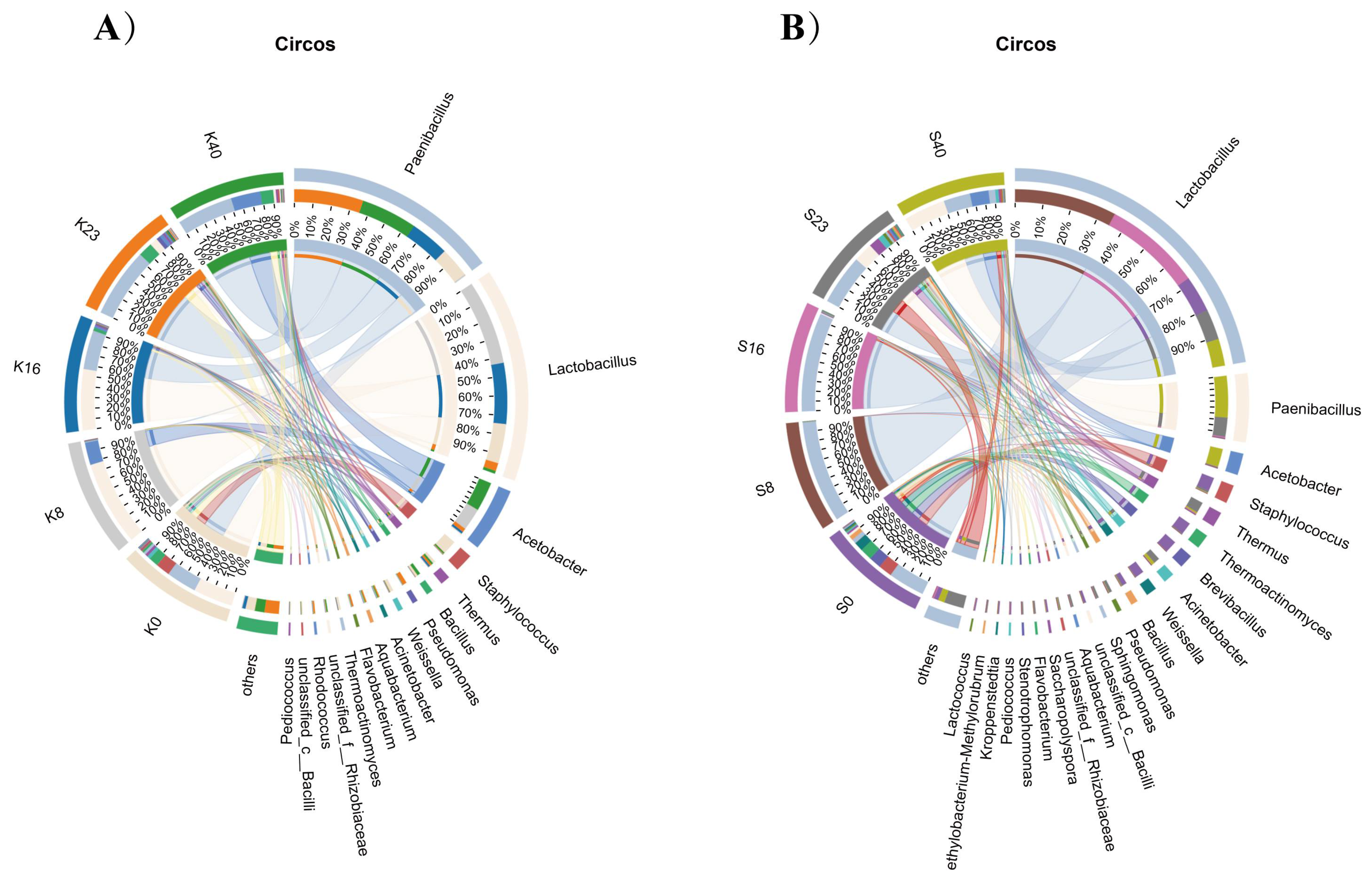
Baijiu mash samples from both experimental and control groups to characterize bacterial community composition at the genus level. Genera with relative abundances below 1% across all samples were classified as “Others.” As illustrated in
Figure 2, a total of 23 bacterial genera exhibited relative abundances exceeding 1% in both groups. Although the dominant genera were largely consistent between the experimental (B) and control (A) groups, their relative abundances differed substantially.
Lactobacillus was the predominant genus on days 8 and 16 in both groups. In the experimental group, its relative abundance reached 99.9% and 94.8% on days 8 and 16, respectively. During the later stages of fermentation,
Lactobacillus maintained an abundance of approximately 27% in the experimental group, which was markedly higher than that observed in the control group (7.6% and 2.3% at the corresponding time points). The relative abundance of
Paenibacillus spp. also differed significantly between the two groups. In the control group,
Paenibacillus abundance fluctuated considerably, peaking at 62.8% on day 23 and decreasing to 1% on day 8. In contrast,
Paenibacillus remained at low levels (0.01–1%) in the experimental group during the first 16 days but increased rapidly from 18.8% to 40.2% between days 23 and 40.
Acetobacter exhibited distinct group-specific dynamics: in the control group, it was relatively abundant on days 8 and 40 (20.3% and 27.8%, respectively), whereas in the experimental group, elevated abundance was observed only on day 40 (19.1%). These results suggest that the introduction of functional microorganisms significantly modulated the microbial community structure in
Baijiu mash [
10], with the observed shifts in
Lactobacillus,
Paenibacillus, and
Acetobacter closely associated with fermentation enhancement by
I. orientalis Y1.
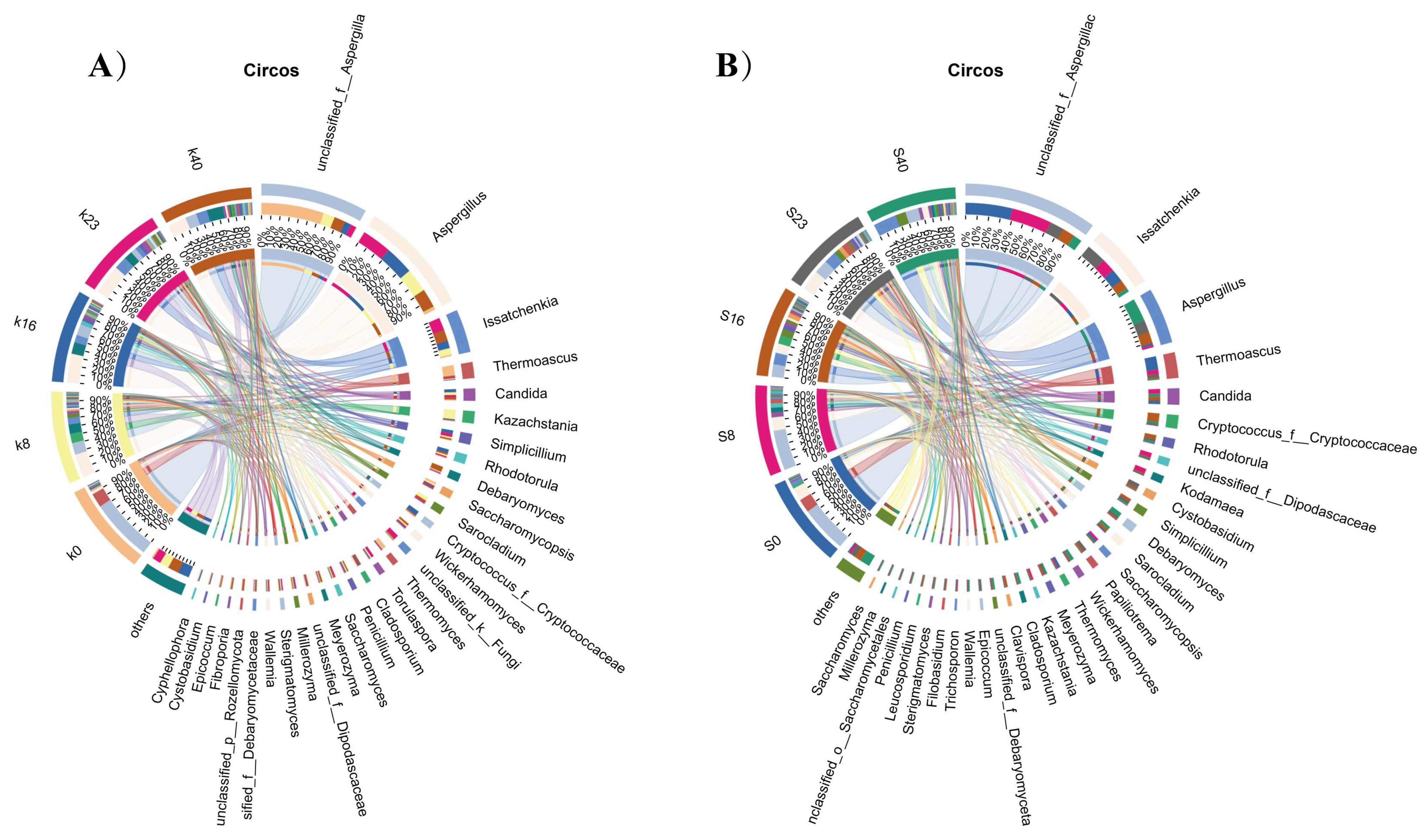
Fungal community composition was also analyzed at the genus level, with genera of relative abundance below 1% grouped as “Others.” As shown in
Figure 3, notable temporal changes in fungal genera were observed in both groups during fermentation. In the experimental group (B),
Aspergillus exhibited very low abundance from days 0 to 8, followed by an increase from 2.1% to 13.7% between days 8 and 16, and a gradual rise to 27.6% by day 40. In contrast, in the control group (A),
Aspergillus abundance was low on day 0 but increased sharply from 3.5% to 27.6% between days 0 and 8, continued to rise slightly until day 23, and then declined modestly to 21.9% by day 40. Overall,
Aspergillus abundance remained consistently lower in the experimental group compared to the control group.
Issatchenkia relative abundance significantly increased following inoculation. At the beginning of the fermentation process (day 0),
Issatchenkia accounted for 15.6% in the experimental group and 1.2% in the control group. In the experimental group,
Issatchenkia peaked at 23.9% on day 23 and declined to 3.9% by day 40. In contrast, its abundance remained relatively stable in the control group between 7% and 15% from days 8 to 40, with a maximum of 15% on day 23. During fermentation,
I. orientalis Y1 produces enzymes associated with the formation of higher alcohols and volatile acids such as pectinases and lipases [
23,
24,
25]. In summary, inoculation with
I. orientalis Y1 significantly altered the fungal community structure in
Baijiu mash, with the most pronounced effects observed in the relative abundances of
Aspergillus and
Issatchenkia.
In summary, inoculation with Issatchenkia orientalis Y1 significantly altered the structural characteristics of the microbial community during Baijiu mash fermentation. This effect was mainly reflected in the enrichment of Lactobacillus, the delayed early proliferation of Bacillus and Aspergillus, the modulation of the temporal distribution of Acetobacter, and the marked increase in the relative abundance of Issatchenkia within the fungal community. Collectively, these changes reshaped the successional dynamics of both bacterial and fungal communities in the fermentation system.
3.3. Effect of Issatchenkia orientalis Y1 on the Succession of the Microbial Community in the Baijiu Mash
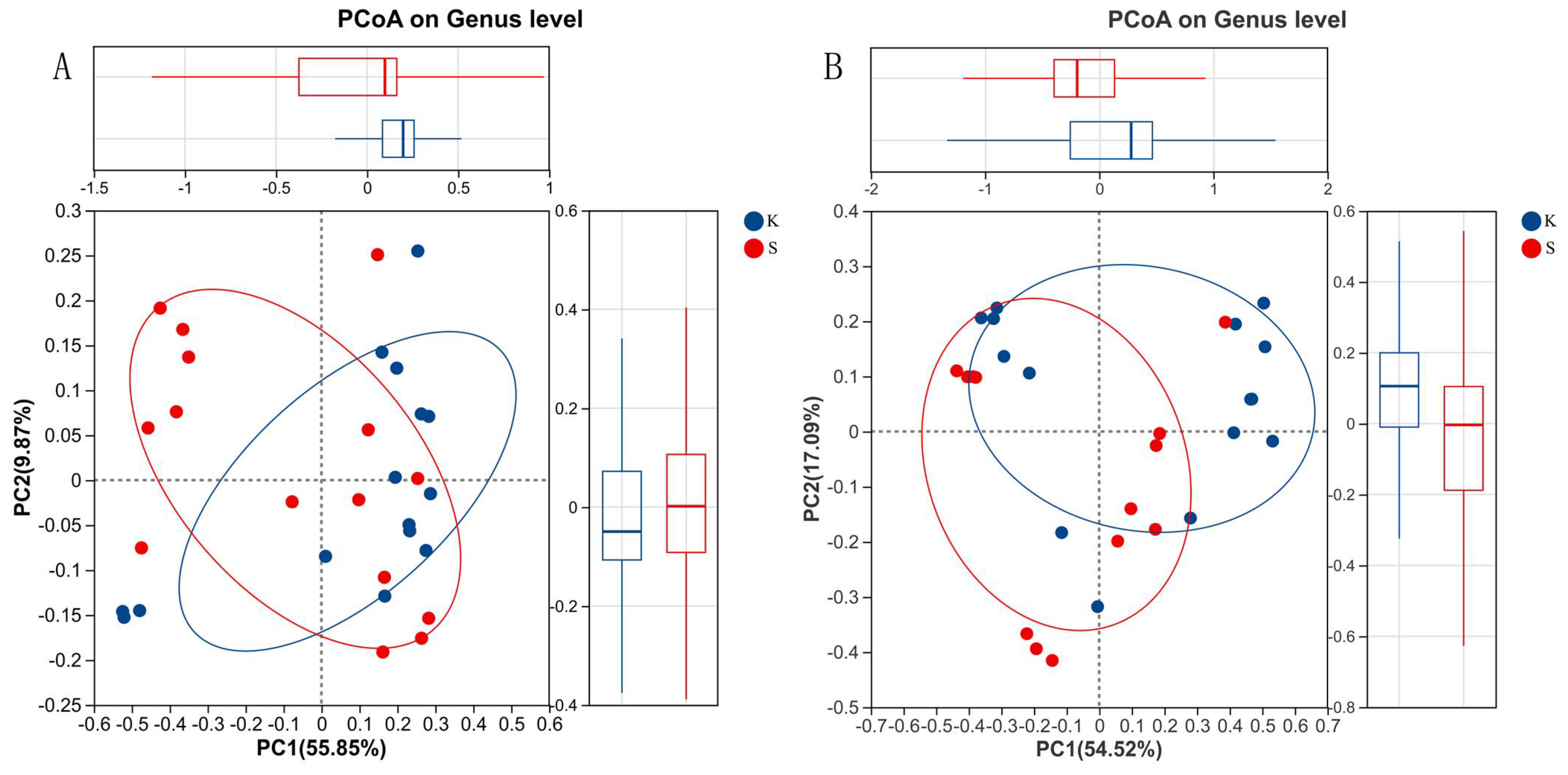
Principal Coordinate Analysis (PCoA) was performed to evaluate the similarities and differences in bacterial community structure between
Baijiu mash samples from the experimental and control groups. As shown in
Figure 4A, the bacterial communities in the experimental (A) and control (B) groups exhibited a broadly similar succession trajectory throughout the fermentation process. In terms of sample distribution, both groups showed greater dispersion on days 0 and 23–40, whereas tighter clustering was observed during days 8–16. This pattern suggests that bacterial community structures differed more substantially between the two groups at the initial and later stages of fermentation, while becoming more similar during the mid-fermentation period. Overall, these findings indicate that inoculation with
I. orientalis Y1 did not alter the general succession pattern of the bacterial community but had a pronounced impact on community structure during the early and late stages of fermentation.
As shown in
Figure 4B, fungal community dynamics differed between groups primarily during the early stage of fermentation. The experimental (A) and control (B) groups exhibited similar trends from days 16 to 40, whereas marked differences were observed during the first 8 days. In terms of sample distribution, both groups were more dispersed on days 0–8 and became more clustered during days 16–40. This pattern indicates significant differences in fungal community structure between groups in the early stage, with increasing similarity in the later stage. These results suggest that inoculation with
I. orientalis Y1 altered the trajectory of the fungal community during the first 8 days of fermentation, while its influence became less pronounced from days 16–40. Inoculation with functional microorganisms modulates community structure and function through synergistic or antagonistic interactions with resident microbes [
26]. The stage-specific alterations to the microbial community observed here indicate that
I. orientalis Y1 restructured the interaction network through either cooperative and competitive relationships with the native community, which ultimately changed the community structure and the stability of its functions.
3.4. Effect of Issatchenkia orientalis Y1 on the Assembly Pathways of the Microbial Community in the Baijiu Mash
Microbial community composition is governed by assembly processes [
27]. To evaluate the effect of
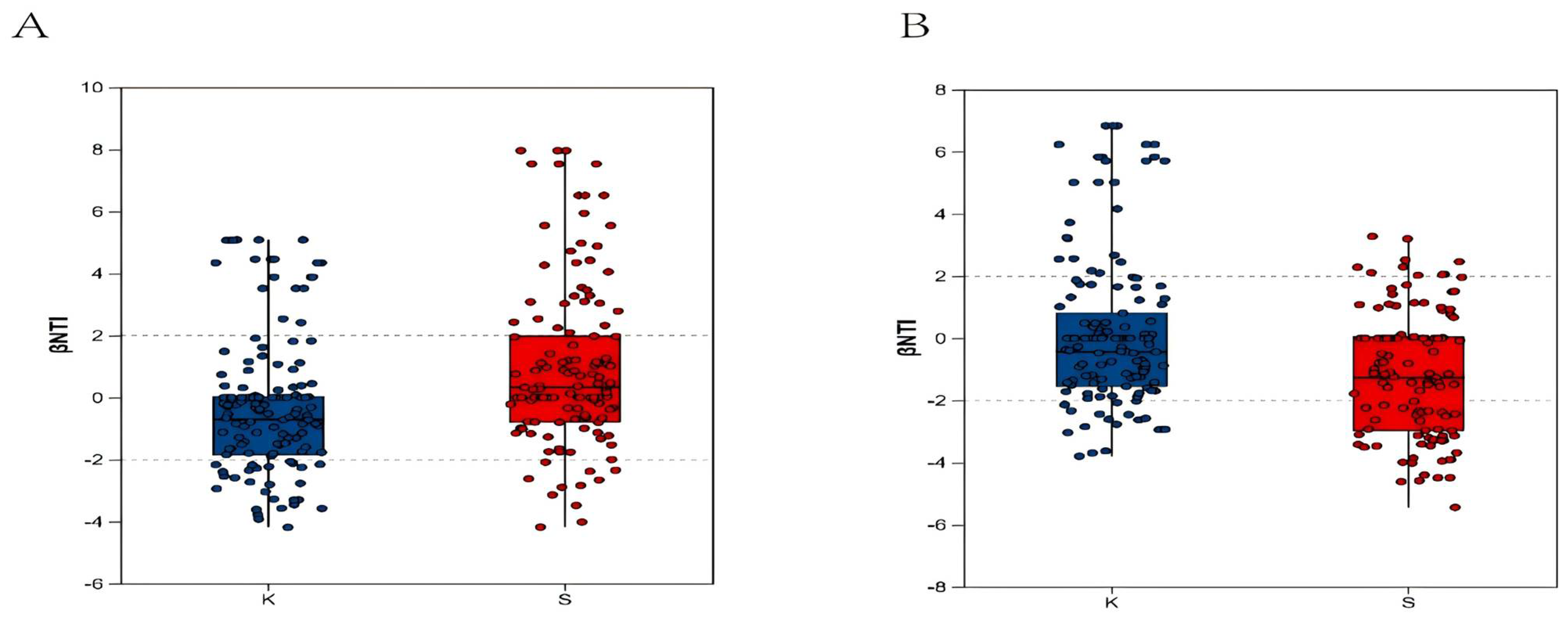
I. orientalis Y1 on community assembly during fermentation, the β-nearest taxon index (βNTI) was calculated using a null model with 999 randomizations [
28]. As shown in
Figure 5A,B, both bacterial and fungal communities were influenced by stochastic (|βNTI| < 2) and deterministic (|βNTI| > 2) processes. However, inoculation with
I. orientalis Y1 increased the contribution of deterministic processes in bacterial communities, whereas fungal communities remained primarily driven by stochastic processes.
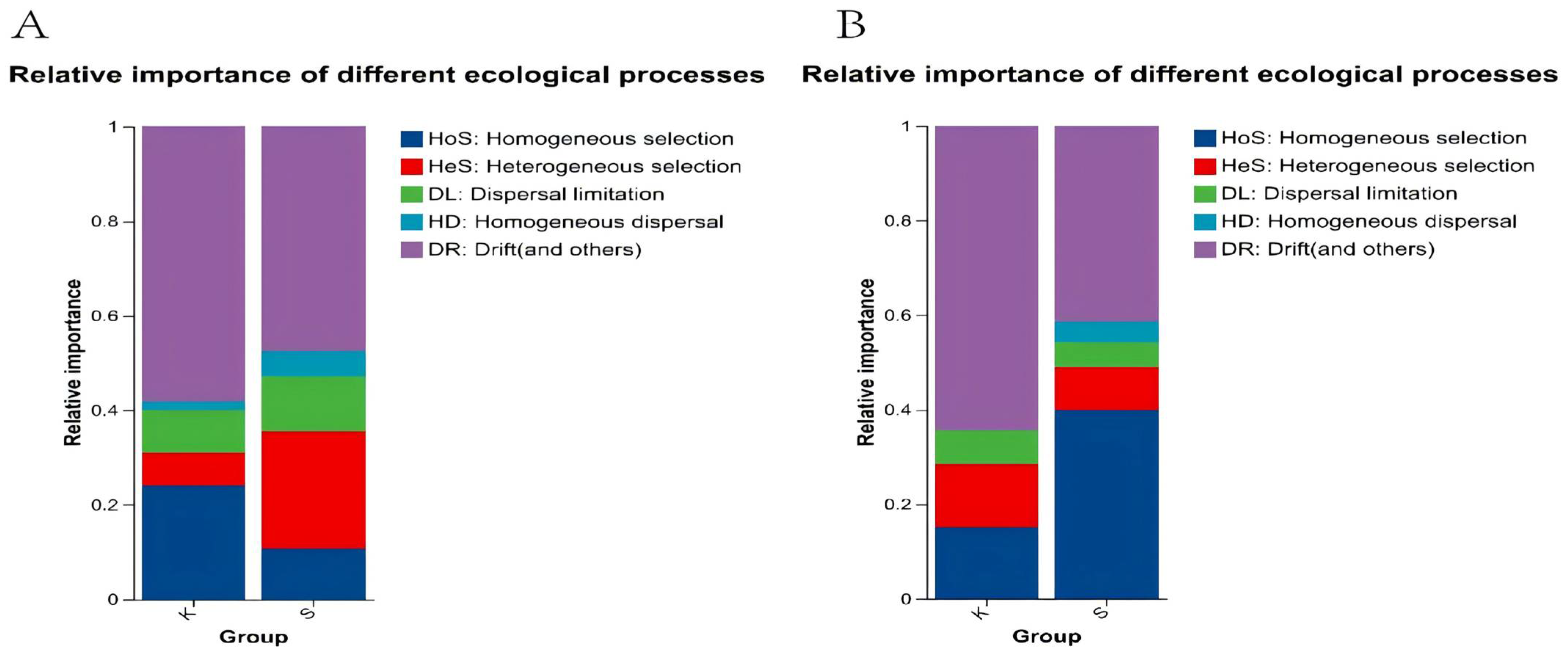
Based on βNTI results, the Raup-Crick index (RC_bray) was applied to partition assembly mechanisms into five ecological processes and quantify their relative contributions [
29]. As shown in
Figure 6A,B, in bacterial communities, the contribution of homogeneous selection increased from 15.1% to 40%, while heterogeneous selection decreased from 13.3% to 8.88%. Dispersal limitation declined from 6.44% to 5.33%, homogeneous dispersal increased from 0.00% to 4.44%, and ecological drift decreased from 64.4% to 41.3%. In fungal communities, homogeneous selection decreased from 24% to 10.6%, whereas heterogeneous selection increased from 7.11% to 24.8%. Dispersal limitation rose from 8.88% to 11.5%, homogeneous dispersal increased from 1.77% to 5.33%, and ecological drift declined from 58.2% to 47.5%. Overall, these results indicate that inoculation with
I. orientalis Y1 significantly altered microbial community assembly during
Baijiu fermentation.
Although stochastic processes dominated microbial community assembly during
Baijiu fermentation, inoculation with
I. orientalis Y1 altered the relative contributions of heterogeneous selection, homogeneous selection, dispersal microbial limitation, homogeneous limitation, and ecological drift, thereby reshaping community composition. Deterministic processes favor microorganisms with strong environmental adaptability, promoting specific community functions. In contrast, stochastic processes enhance functional diversity and contribute to ecosystem stability. Consequently, an increased contribution of deterministic processes may reduce species diversity during community assembly [
30]. Deterministic processes are influenced by both biotic and abiotic factors. Thus, their increased contribution suggests that inoculation with
I. orientalis Y1 modified environmental conditions and microbial interactions within the fermentation system.
I. orientalis Y1 inoculation significantly reshaped the assembly mechanisms of microbial communities during Baijiu fermentation, as evidenced by enhanced deterministic assembly in bacterial communities, reduced contributions of ecological drift in both bacterial and fungal communities, and altered relative contributions of ecological processes in fungal community assembly. These findings suggest that I. orientalis Y1 may modify community assembly rules by regulating fermentation conditions and microbial interactions, thereby influencing community composition and its potential functional stability.
3.5. Correlation Analysis Between Environmental Factors and Microbial Diversity
As shown in
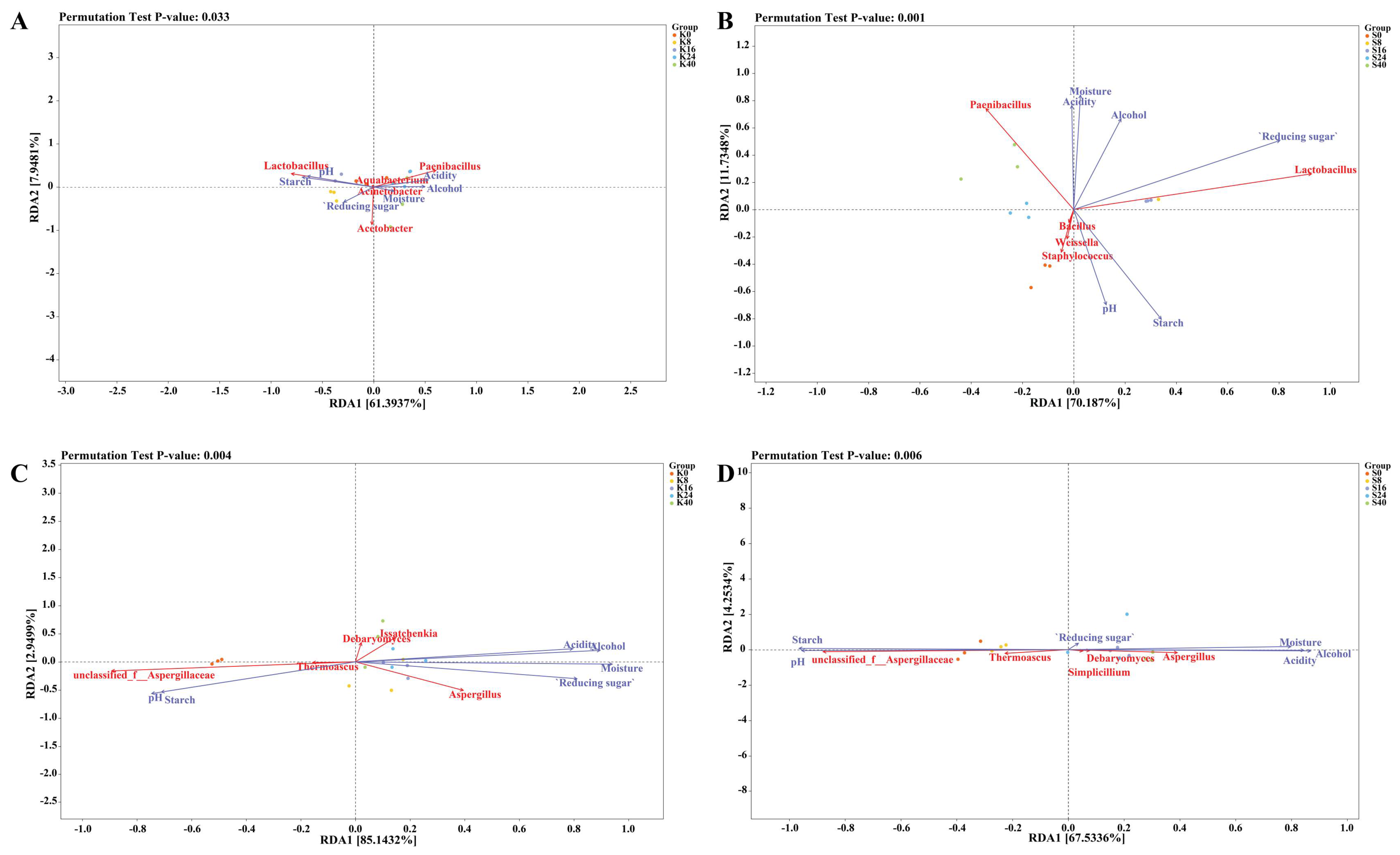
Figure 7A, significant associations were observed between physicochemical factors and bacterial community composition.
Paenibacillus was positively correlated with alcohol and acidity, but negatively correlated with starch, pH, and reducing sugar.
Lactobacillus was positively correlated with starch and pH, while showing negative correlations with alcohol, acidity, and moisture.
Acinetobacter was positively correlated with reducing sugar, but negatively correlated with alcohol and acidity.
Acetobacter was positively correlated with moisture and reducing sugar, but negatively correlated with starch, pH, and acidity. In contrast,
Aquabacterium was located near the origin of the ordination plot, indicating relatively weak correlations with the measured physicochemical factors.
As shown in
Figure 7B, clear associations were also detected between physicochemical factors and bacterial community composition.
Lactobacillus was positively correlated with reducing sugar and alcohol, but negatively correlated with starch and pH.
Paenibacillus was positively correlated with moisture and acidity, and also showed a certain positive correlation with alcohol, whereas it was negatively correlated with starch and pH.
Bacillus,
Weissella, and
Staphylococcus were positively correlated with pH and starch, but negatively correlated with moisture, acidity, alcohol, and reducing sugar. Compared with the control group, the bacterial community in the experimental group showed a tighter relationship with physicochemical factors and a clearer successional trajectory, indicating that the treatment enhanced the directional selection imposed by key physicochemical factors on bacterial community structure.
As shown in
Figure 7C, significant associations were observed between physicochemical factors and fungal community composition.
Issatchenkia and
Debaryomyces were positively correlated with alcohol and acidity, and also showed a certain positive correlation with moisture, whereas they were negatively correlated with starch and pH.
Aspergillus was positively correlated with reducing sugar and moisture, and also showed a certain positive correlation with alcohol and acidity, but was negatively correlated with starch and pH.
Unclassified_f__Aspergillaceae was positively correlated with starch and pH, but negatively correlated with alcohol, acidity, moisture, and reducing sugar. In contrast,
Thermoascus was located near the origin on the left side of the ordination plot, suggesting relatively weak correlations with the measured physicochemical factors.
As shown in
Figure 7D, significant associations were likewise found between physicochemical factors and fungal community composition.
Aspergillus was positively correlated with moisture, alcohol, and acidity, and also showed a certain positive correlation with reducing sugar, but was negatively correlated with starch.
Debaryomyces and
Simplicillium, located near the origin on the right side of the ordination plot, were generally positively correlated with alcohol, acidity, and moisture, but negatively correlated with starch.
Unclassified_f__Aspergillaceae and
Thermoascus were distributed on the left side of the ordination plot and were positively correlated with starch, but negatively correlated with alcohol, acidity, moisture, and reducing sugar.
I. orientalis Y1 inoculation significantly strengthened the deterministic effects of physicochemical factors on microbial community assembly in Baijiu mash and reshaped microbial responses to the alcohol environment. Specifically, Lactobacillus shifted from being negatively correlated with alcohol to positively correlated after inoculation, while fungal genera such as Aspergillus and Debaryomyces maintained or showed enhanced positive correlations with alcohol. This suggests that inoculation favored the enrichment of alcohol-tolerant and ethanol metabolism-related microorganisms. Collectively, I. orientalis Y1 enhanced the ecological role of alcohol, thereby tightening the coupling among substrate depletion, ethanol accumulation, and microbial succession, which may contribute to the establishment and maintenance of an ethanol-producing environment in the late fermentation stage.
3.6. Effect of Issatchenkia orientalis Y1 on the Microbial Functional Traits in Baijiu Mash
3.6.1. Changes in the Microbial Metabolic Functions in Baijiu Mash Mediated by Issatchenkia orientalis Y1
During
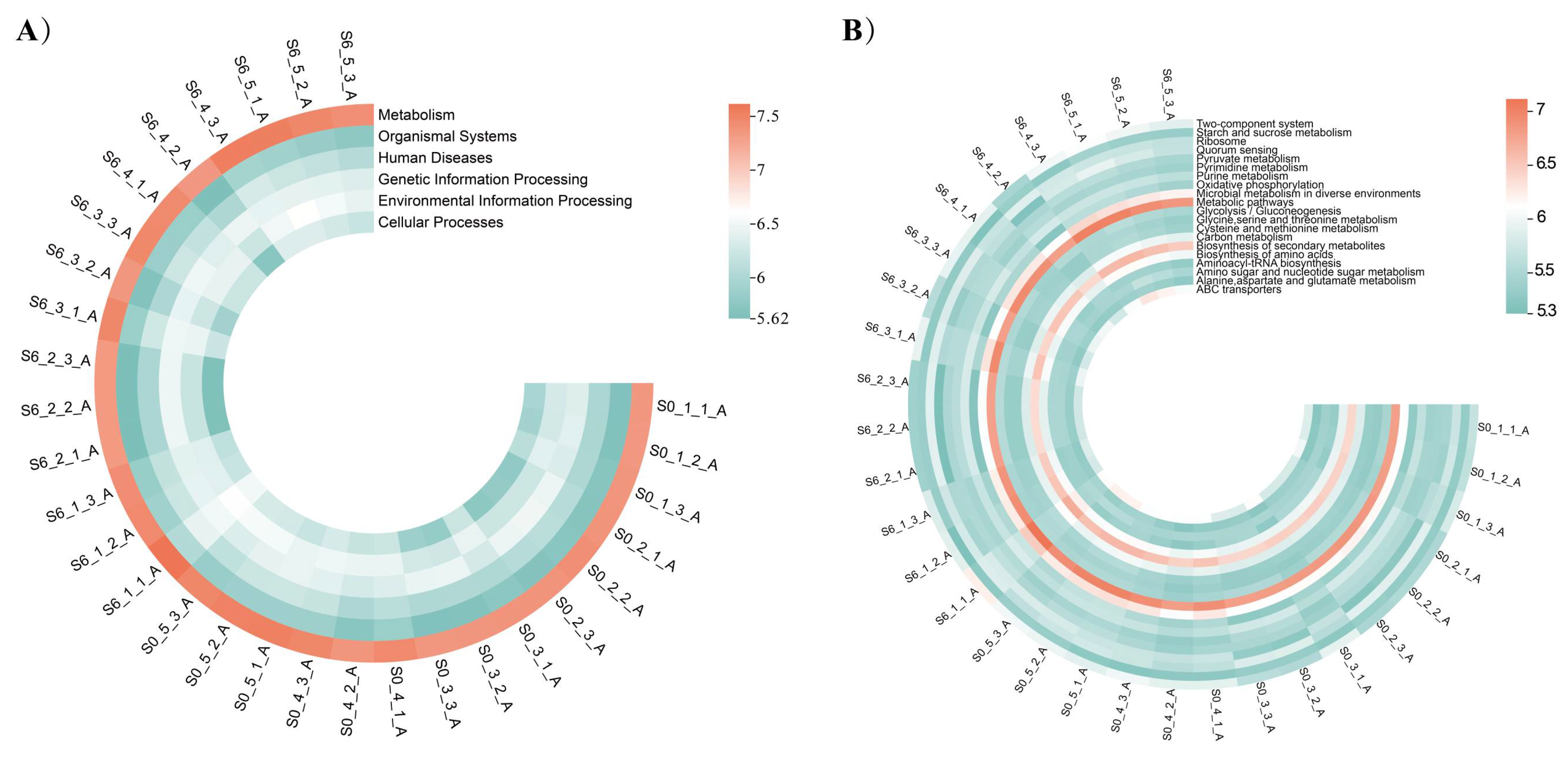
Baijiu mash fermentation, the microbial community undergoes dynamic succession accompanied by shifts in metabolic function. Functional prediction was performed using PICRUSt2, and pathway enrichment analysis was conducted based on the KEGG database.
Figure 8 presents the changes in metabolic functions at KEGG levels 1 and 3 in the control and experimental groups throughout fermentation. KEGG level 1 analysis (
Figure 8A) showed that metabolism was the dominant functional category across all fermentation stages in both groups. Other relatively abundant categories included genetic information processing, environmental information processing, human diseases, cellular processes, and organismal systems. Comparison between groups indicated that the relative abundance of metabolism pathways in the experimental group exceeded that of the control group only on day 16.
Based on KEGG annotation, the top 20 metabolic pathways were selected for further analysis. As shown in
Figure 8B, the dominant pathways were similar in both groups and included metabolic pathways, biosynthesis of secondary metabolites, microbial metabolism in diverse environments, biosynthesis of amino acids, carbon metabolism, and purine metabolism. Trend analysis indicated that metabolic functions in the experimental group generally increased and then declined. On days 23 and 40, the relative abundance of all metabolic pathways in the experimental group was lower than in the control group, suggesting that inoculation with
I. orientalis Y1 reduced overall predicted metabolic activity in the
Baijiu mash microbial community at later fermentation stages.
I. orientalis Y1 inoculation exerted a stage-dependent effect on the predicted metabolic functions of the microbial community in
Baijiu mash. Specifically, the experimental group exhibited a higher relative abundance of metabolic pathways on day 16, whereas the relative abundances of major metabolic pathways were consistently lower than those in the control group during the late fermentation stage (days 23–40). These findings suggest that
I. orientalis Y1 may transiently enhance microbial metabolic activity during the middle stage of fermentation, but reduce the overall metabolic potential of the community at later stages.
3.6.2. Effect of Issatchenkia orientalis Y1 on the Correlation Between Dominant Microorganisms and Metabolic Functions in the Baijiu Mash
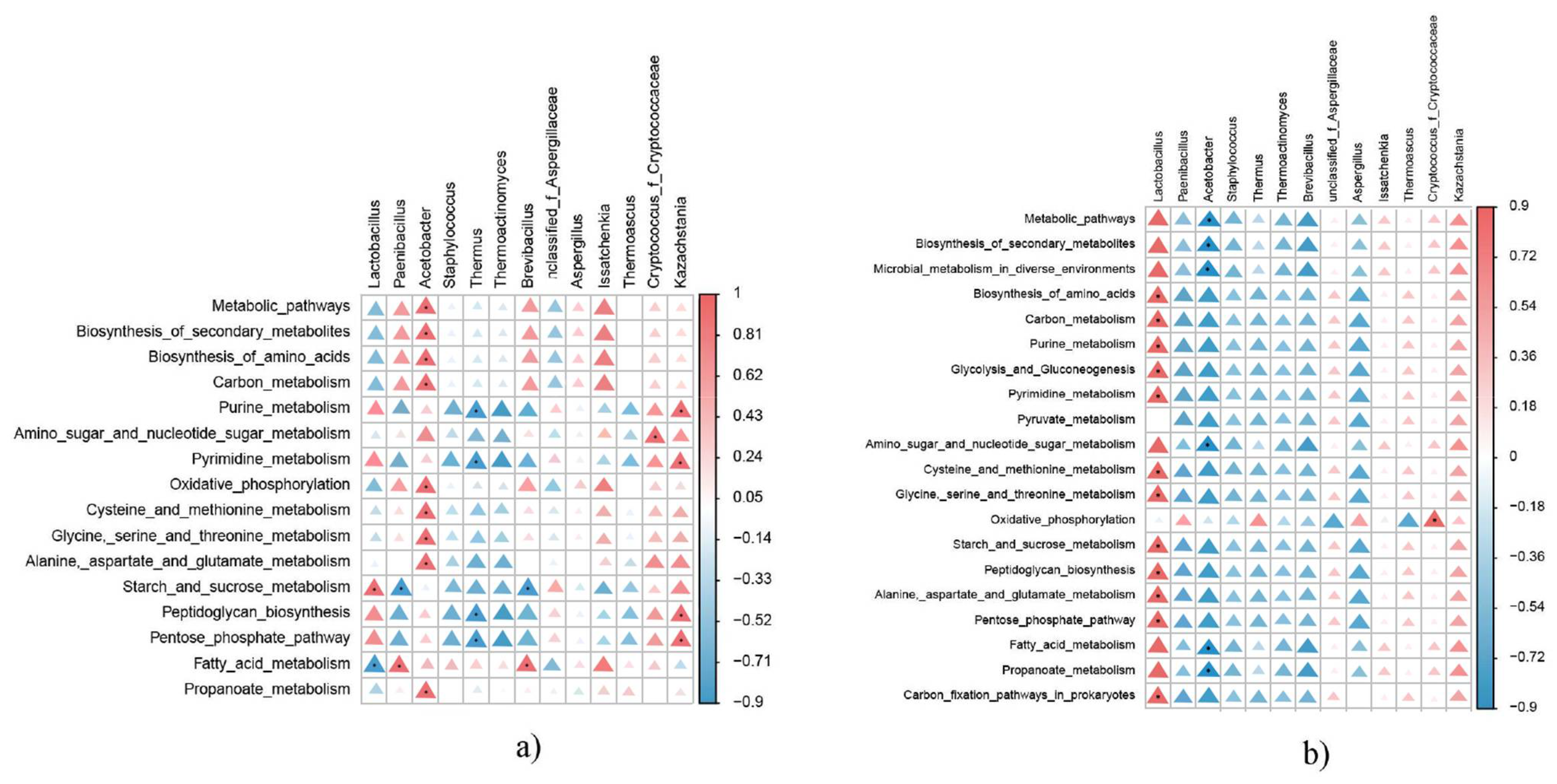
To evaluate associations between dominant microorganisms and metabolic functions, Spearman correlation analysis was conducted between genera with relative abundance > 1% and predicted metabolic functions. As shown in
Figure 9a, in the control group,
Lactobacillus,
Acetobacter,
Bacillus,
Thermoactinomyces,
Shortibacterium,
Cryptococcus (
Cryptococcaceae), and
Kazachstania were significantly correlated with multiple metabolic functions. Specifically,
Acetobacter showed significant positive correlations with metabolic pathways; biosynthesis of secondary metabolites; biosynthesis of amino acids; carbon metabolism; oxidative phosphorylation; cysteine and methionine metabolism; glycine, serine, and threonine metabolism; alanine, aspartate, and glutamate metabolism; and propionate metabolism. In contrast,
Thermoactinomyces was significantly negatively correlated with purine metabolism, pyrimidine metabolism, peptidoglycan biosynthesis, and the pentose phosphate pathway.
As shown in
Figure 9b, in the experimental group,
Lactobacillus exhibited significant positive correlations with nearly all metabolic functions, whereas most other bacterial genera were negatively correlated with these functions. Specifically,
Lactobacillus was significantly positively correlated with biosynthesis of amino acids; carbon metabolism; purine metabolism; glycolysis; gluconeogenesis; pyruvate metabolism; pyrimidine metabolism; cysteine and methionine metabolism; glycine, serine, and threonine metabolism; alanine, aspartate, and glutamate metabolism; starch and sucrose metabolism; peptidoglycan biosynthesis; pentose phosphate pathway; and carbon fixation pathways in prokaryotes. In contrast to the control group,
Acetobacter in the experimental group exhibited predominantly negative correlations with metabolic functions. The fungal genus
Aspergillus was negatively correlated with the majority of metabolic pathways, while other fungal genera tended to be positively correlated with these pathways.
Inoculation with I. orientalis Y1 significantly restructured the associations between dominant microorganisms and predicted metabolic functions during Baijiu fermentation. Compared with the control group, the experimental group exhibited a clear shift in the microorganism–function coupling pattern, with Lactobacillus becoming the major genus positively associated with most metabolic pathways, whereas the contributions of other bacterial genera, particularly Acetobacter, were markedly weakened or reversed. Meanwhile, Aspergillus showed predominantly negative correlations with metabolic functions in the experimental group. These results suggest that I. orientalis Y1 inoculation altered microbial interactions and redistributed functional contributions within the community, thereby reshaping the metabolic cooperation network during fermentation.
4. Conclusions
In this study, we showed that inoculation with Issatchenkia orientalis Y1 altered the microbial ecology of strong-flavor Baijiu fermented grains in a mixed-culture fermentation system. At the community level, Y1 inoculation changed microbial diversity and succession patterns, as reflected by the enrichment of Lactobacillus and Issatchenkia, the delayed early proliferation of Bacillus and Aspergillus, and the altered temporal dynamics of Acetobacter. Co-occurrence network analysis further suggested that inoculation modified potential microbial association patterns during fermentation. Null-model analysis indicated that Y1 inoculation increased the relative contribution of deterministic processes and reduced ecological drift, suggesting a shift in community assembly toward stronger environmental filtering and/or biotic interactions. In addition, correlation analyses showed closer associations between physicochemical factors, including alcohol, and microbial succession after inoculation. Functional prediction based on amplicon sequencing suggested stage-dependent shifts in microbial functional potential and changes in the associations between dominant taxa and predicted metabolic pathways. Notably, Lactobacillus showed positive associations with multiple predicted pathways after inoculation. Collectively, these findings suggest that I. orientalis Y1 may act as an ecological regulator in strong-flavor Baijiu fermentation by influencing community succession, inferred assembly processes, and predicted functional potential. Nevertheless, because the functional analysis was mainly based on amplicon-derived prediction and the experiments were conducted in a laboratory-scale simulated fermentation system, further studies integrating metabolomics, metagenomics, and pilot-scale validation are needed to verify the underlying mechanisms and their contribution to flavor formation under practical production conditions.