


Abstract
The overuse of mineral fertilizers has brought about numerous matters such as deteriorating soil health, crop safety concerns, and environmental pollution. The global requirements for effective waste handling and sustainable agricultural production have been growing continuously. Therefore, integrated nutrient management method might be a key way to achieve circular agriculture, such as replacing chemical fertilizers with organic fertilizers. In modern agriculture, digestate that is a byproduct of anaerobic digestion as a fertilizer is becoming increasingly favored as a viable method for improving crop yield and quality. However, the application of digestate in agriculture have not yet been fully explored. This review addresses a knowledge gap by synthesizing current research on digestate as a fertilizer. Firstly, the physical–chemical and biological properties of digestate are discussed. Following that, this review focuses on its specific impact on crop growth and quality. Lastly, it outlines the challenges faced in the application of digestate and looks ahead to future trends. With appropriate policy support and technological innovation, digestate holds promise for advancing environmental sustainability. This review aims to provide direction and reference for future research on the application of digestate.
1. Introduction
The production of agricultural organic waste has been huge, yet its utilization rate has remained relatively low. Unprocessed waste has become a major threat to the ecological environment [1,2,3]. Anaerobic digestion is a viable solution for achieving these goals, as it both produces renewable energy and facilitates the implementation of sustainable agricultural systems [4]. It not only helps reduce greenhouse gas emissions in agricultural production but also generates biogas, that could be used for thermal energy and power generation [5]. Besides biogas, Anaerobic digestion also produces digestate rich in nitrogen, phosphorus, and trace elements, which is returned to the fields as organic fertilizer [6,7]. However, although digestate possesses theoretical advantages in terms of soil improvement (such as increasing cation exchange capacity and water-holding capacity) and promoting crop growth and quality (such as providing balanced nutrients and releasing mineral elements slowly), its actual agricultural effectiveness remains highly uncertain [8]. The root cause of this uncertainty lies in the highly variable composition of the digestate. As a result, its application presents challenges [9]. Fluctuations in the composition of the digestate make it difficult to achieve accurate fertilization because the feedstock for anaerobic digestion may vary [10]. Its application as a fertilizer is limited by safety dangers and contamination (Heavy metals, pathogens, etc.) [11]. For sustainably using digestate, nutrient management, regulatory oversight, stringent process control and innovation need to be addressed [9,11].
The review employs a subject-based keyword retrieval method to collect and organize relevant literature. The numerous reviews have thoroughly explored the potential value and future of digestates. However, limited research has focused on the specific effects of anaerobic digestate on the improvement in crop growth and quality, as well as its practical application performance. In this paper, based on the relevant and important literature published in recent years, the physicochemical and biological properties of digestates are firstly described. The discussion then focuses on the positive impact of the digestate on the growth of crops and the improvement in crop quality. And the limiting factors and related optimization strategies for the application of digestate are presented. Finally, the future research prospects of digestate are analyzed.
2. Physico-Chemical and Biological Properties of Digestate
2.1. Chemical Composition of Digestate
The digestate has often applied in agriculture as a fertilizer [12]. Digestate is a promising supply of macronutrients and micronutrients for plants. Table 1 indicates the physicochemical properties of the digestate reported in the literature. Digestate generally consists of a series of essential macronutrients, micronutrients, inorganic constituents, humus and microbial biomass. However, its nutrient content is not fixed but is significantly influenced by the fermentation feedstock (livestock and poultry manure, food waste, and crop straw, etc.), process parameters (temperature and retention time) and post-treatment procedures. The nutritional content of the feedstock is a key element, affecting the nutrient components in the digestate. For instance, raw materials with high nitrogen level (e.g., food waste or animal manure) could yield digestate with higher nitrogen concentration. Similarly, raw materials rich in phosphorus (e.g., sewage sludge or poultry bedding) will result in digestate with elevated phosphorus content [13,14,15]. Manure serves as a beneficial fermentation substrate, with its microbial communities promoting anaerobic digestion processes. The resulting digestate possesses a balanced composition of micronutrients and macronutrients. To improve fermentation efficiency, livestock manure with high-energy waste materials is a good approach. Digestate from food waste is rich in nitrogen, phosphorus, and organic matter. Thus, recovering its agriculturally valuable components is crucial. These substances serve as a resource for producing fertilizer. The co-digestion of waste residues with organic waste offers a pathway to obtain higher-quality digestate with reduced phytotoxicity, thereby enhancing its suitability for use as fertilizer [14]. Longer retention times usually promote more efficient digestion and a more substantial nutrient supply, but they may also lead to increased production of volatile fatty acids and ammonia. Conversely, shorter retention times may reduce nutrient supply and result incomplete digestion [14]. The quality of the resulting digestate can be actively managed and stabilized through the implementation of both feedstock pretreatment and post-digestion treatment processes. This approach enables a more consistent output, moving beyond reliance on material with inherently variable composition [16].
Table 1.
Physicochemical properties of digestate reported in the literature.
2.2. Biological Properties of Digestate
As a byproduct of anaerobic digestion, the microbial community in digestate primarily originates from the feedstock rather than being enriched during the anaerobic process [28]. Existing research has shown that digestate contains microorganisms that promote plant growth, such as arbuscular mycorrhizal fungi, Enterobacter, Bacillus, Bacillus siamensis, Pseudomonas, Rhodococcus, and Bacteroides [29]. The liberation of nutrients contained in digestate typically requires microbial action. Pseudomonas strains could perform multiple activities, e.g., biological control, growth promotion, induction of systemic plant defenses, and pathogenicity. Escherichia coli offers many advantages to plants including in involvement in the synthesis of specific compounds, preventing or reducing disease, and aiding nutrient uptake. Mycobacterium phylum plays a significant role in inter-root phosphorus mobilization in the plant microbiome [29]. Moreover, many promising beneficial microorganisms generate antimicrobial substances that have been shown to inhibit pathogens [30]. However, it is important to note that despite reducing some pathogens, the anaerobic digestion process is not effective against all microorganisms [31]. A one-year field investigation conducted in France by Pourcher et al. revealed marked variations in the pathogen removal efficiency of anaerobic digestion which exhibited a reduction in Campylobacter, Clostridium difficile and Clostridium botulinum [32]. Some pathogens can be enriched and even some emerge and re-emerge after anaerobic digestion [33]. It is generally not known which potential pathogenic bacteria are present. These bacteria inhabit the soil or survive anaerobic digestion. They could be irritated by nutrients in the digestate or by the transformation of the digestate from the anaerobic reaction to the farm. These systems are extremely complex and may include a variety of abiotic and biotic contributors [34]. In addition, digestate may serve as a significant reservoir of antibiotic resistance genes (ARGs). An analysis by Zeng et al. of soil subjected to long-term digestate irrigation revealed a total of 12 antibiotics, 175 unique ARGs, and 9 mobile genetic elements, and identified 50 potentially pathogenic bacterial genera, 13 of which exhibited multidrug resistance [35]. These pose non-negligible potential risks to soil biosafety and human health.
2.3. Physico-Chemical Properties of Digestate
Digestate is typically alkaline because organic acids are converted into methane and CO2 during the anaerobic digestion process, and the pH of the biogas produced from different feedstocks varies. For instances, digestate extracted from sewage sludge is typically neutral to slightly alkaline properties, with a pH range generally between 6.8 and 8.0. Food waste digestate often possesses a slightly higher pH value of 7.6–8.5. Pig manure digestate pH typically falls between 8.04 and 8.14 [25]. Applying digestate helps regulate soil pH and enhance soil’s ability to buffer acid–base fluctuations. This effectively maintains soil nutrient balance, thereby further boosting soil fertility [36]. However, due to its high pH, applying digestate in combination with nitrogen fertilizers like urea increases the risk of ammonia volatilization losses [37]. A study by Li et al. demonstrated that adding an acidic hydrothermally carbonized aqueous phase to alkaline digestate to adjust the pH of surface water reduced ammonia volatilization by 4.2–65.5%, confirming that pH regulation is an effective strategy for reducing agricultural ammonia emissions from digestate [37]. EC is another crucial parameter for digestate, reflecting its salinity. It correlates with the degradation and mineralization of organic matter. Organic substances can influence plants by regulating cellular osmotic pressure and enzyme activity. The high EC value shows increased salt concentration, which could cause soil salinization. If not managed properly, it can also be detrimental to plant growth [36]. The EC standard values proposed by Chojnacka et al. range from 0.2 to 2.5 ms/cm, while the C/N ratio standard values range from 10 to 20 [16]. The C/N ratio is also a key parameter for digestate, serving as a pivotal parameter in digestate fertilizer composting and nutrient balancing. This parameter exhibits much variability, which affects the efficiency of nitrogen during the digestion process and the stabilization of organic matter [38]. In general terms, microorganisms need the right C/N to effectively degrade organics. The C/N is elevated when the carbon content is higher than the nitrogen content, signaling an excess of carbon relative to nitrogen. In this condition, microbial communities likely encounter restrictions on nitrogen available, which could impede their metabolic events and growth [6,19]. A low C/N ratio is both an advantage of digestate as a nitrogen fertilizer and a source of environmental risk. A low C/N ratio means that nitrogen will not be biologically fixed after the digestate is applied to the soil, resulting in higher nitrogen supply efficiency. However, due to the lack of sufficient available carbon sources to fix the nitrogen, the ammonium nitrogen in the digestate is highly susceptible to loss through leaching or volatilization [39].
3. Benifits of Digestate Application
3.1. The Influence of Digestate on Crop Growth and Yield
Digestate has the potential to serve as a soil conditioner [14]. It provided sustained nutrients to crops and increases soil organic carbon content [40,41,42]. Digestate provides mineral nutrients, it also reduces soil bulk density and improves aggregate stability, water conductivity, and water-holding capacity, hence promoting plant growth [43,44,45]. This may be due to the metabolic activity of anaerobic microorganisms contained in the digestate. They produce substances such as polysaccharide gels, fats, and waxes with binding properties, which effectively improve soil aggregate structure (Figure 1) [46,47]. The relative advantages of digestate are more pronounced in soils with poor nutrient retention capacity. Its organic matter content may improve nutrient use efficiency by reducing leaching [48]. By using digestate as an alternative to traditional fertilizers, this approach combines the immediate benefits of chemical fertilizers with the long-term advantages of organic options, thereby helping to regulate the soil microbial community. This measure regulated soil microbial communities by enhancing soil nutrient levels and enzyme activity, providing essential nutrients for microbial biomass (Figure 1) [49,50,51,52,53]. Organic replacement enhances soil biomes with helpful functional groups, which benefits the fertility of the soil, while also aiding in crop growth and yield [54,55]. It induces the involvement of more N cycle-related bacteria, thus promoting soil nitrogen fixation [56,57]. Although Cheong et al. focused on crop yield and did not directly measure any microbial indicators, their findings indirectly suggest that digestate may improve the rhizosphere microenvironment [58]. In contrast, Doyeni et al. directly measured soil microbial activity under field conditions and found that the application of digestate enhances microbial activity. This result provides more direct evidence that digestate promotes crop growth by activating soil microorganisms [59].
Figure 1.
Effects of digestate application in crops: A Case Study of Tomato. The actual scene depicted in the figure comes from the campus farm at Hokkaido University. A red arrow pointing up indicates an increase; a red arrow pointing down indicates a decrease.
The nutritional value of digestate lies in its high content of readily absorbable, fast-acting nutrients and organic components that break down slowly. Element P affects energy transmission within plants, element C alters soil nutrient proportion, calcium influences plant cell wall structure, and nitrogen impacts soil fertilization and plant growing [60]. Thus, standardized digestate components, especially the macronutrients of potassium, phosphorus and nitrogen, as well as the micronutrients of calcium, magnesium and zinc, are essential to meet agricultural needs [61]. Table 2 shows the effects of different methods of applying digestate on crop growth and yield. A study by Tshikalange et al. [62] on spinach showed that digestate treatment outperformed inorganic fertilizers in terms of growth parameters, but was inferior to inorganic fertilizers in potassium content, while zinc accumulation was significantly higher. This may be due to a compensatory effect between digestate and chemical fertilizers in nutrient supply, rather than a simple equivalent relationship. Strategies for replacing chemical fertilizers with digestate in diversified cropping systems hold potential for enhancing resource use efficiency. But their effectiveness depends on factors such as crop type and a comprehensive assessment of life-cycle carbon emissions [63]. As fertilizer, digestate provides slow-release nutrients. This reduces the risk of nutrient loss. Simultaneously, it enhances the availability of soil nutrients and maintains soil nutrient levels [64,65]. Field experiments with cabbage conducted by Kovačević et al. in Serbia showed that the solid digestate treatment (200 kg N ha−1) yielded the highest yield (5005 g m−2), representing an increase of approximately 9% compared to mineral fertilizer [66]. In contrast, greenhouse studies by Duri et al. in Italy found that digestate significantly boosted early yields in eggplant (+79%) compared to mineral fertilizers, though total yield over the entire growing season was approximately 6% lower than that achieved with mineral fertilizers [67]. Comparative analysis of the two studies [66,67] indicates that anaerobic digestate can serve as a viable alternative to mineral fertilizers and even achieve superior yield performance for short-cycle crops such as cauliflower. In contrast, for long-cycle fruit and vegetable crops represented by eggplant [67], digestate demonstrates a dynamic yield characteristic, showing a prominent yield advantage at the early growth stage while resulting in a slightly lower total yield. This is directly related to the nutrient release pattern of digestate, which involves a rapid supply of available nitrogen followed by a subsequent deficiency in slow-release nitrogen. Consequently, strategies for replacing mineral fertilizers with digestate should be differentiated based on the crop growth cycle and specific objectives.
Table 2.
Crop growth and yield responses to digestate application.
The data in Table 2 reveal the potential mechanisms by which digestate promotes crop growth, including enhanced root development and increased photosynthesis (Figure 1). The digestate contains natural auxin-like substances that could be directly absorbed by the root system and promote cell division and elongation in the root apical meristem. Therefore, digestate supplementation may trigger changes in root morphology and root growth rate [72]. A robust and well-developed root system is essential for the effective uptake of water, and changes in root morphology in turn affect yield [45,73]. To be specific, it is early root hair growth and root development that have an impact on plant establishment and overall growth [72]. Tshikalange et al. [62] found that spinach treated with cattle dung biogas digestate had a root length of 333 ± 20.14 cm (Table 2), which was longer than that of plants in plots treated with inorganic fertilizer. In theory, increased root length demonstrates enhanced nutrient uptake and greater tolerance to diverse stresses [62]. It has been demonstrated in various crops that applying digested digestate alone or in combination with chemical fertilizers increases chlorophyll content in plant leaves (Table 2). This enhances photosynthesis, thereby promoting plant growth and development, while also reducing leaf aging in the later stages [53]. However, the effectiveness of its application relies on factors such as the application rate, the crop growth stage, and experimental conditions. Although the studies by Li et al. [43] and Vaish et al. [68] both revealed the influence of leachate on chlorophyll, the former indicated that the relative advantage of leachate was more pronounced under salt stress at 7.5 dS m−1; the latter suggested that leachate can be used directly as a chlorophyll promoter in conventional cultivation. Furthermore, these results may be related to crop-specific differences. The primary reason for the increased chlorophyll content when combined digestate with chemical fertilizers may be twofold. Firstly, the digestate contains mineral elements such as iron and calcium that constitute chlorophyll, enabling effective participation in chloroplast synthesis within the plant [74]. On the other hand, the slow-release effect of the digestate ensures plants could obtain sufficient nitrogen from the soil over an extended period, that possibly induces the production of plant hormones, such as cytokinin. Nitrogen in digestate effluent acts as a nutrient signal to activate the expression of cytokinin synthase genes in roots and leaves, catalyzing the production of more cytokinin to sustain the increase in chlorophyll content within the plant [75].
3.2. The Influence of Digestate on Crop Quality
Table 3 shows the influences of different methods of applying digestate on crop quality. Current research indicates that the application of digestate may maintain or enhance the nutritional quality of certain crops. Under specific crop and experimental conditions, digestate performs no worse than current fertilization strategies (Table 3). This will promote the economic value and commodity attributes of agricultural products [76]. Digestate serve as excellent alternatives to chemical fertilizers and have the potential to minimize the adverse effects of chemical fertilizers [5]. Since digestate is originated from natural substances, they are an important source of macronutrients and micronutrients that are released during the digestion process. Their application therefore affects the mineral composition of crops [77]. Protein level is a quality standard for crops [78]. Brychkova et al. found that grasses grown on plots fertilized with digestate showed increased crude protein content of up to 22.8% [73]. Subsequent work by Vaish et al. 2022 confirmed that the protein content of brinjals grown in culture with digestate increased by 326.8% at 65 days as compared to the controls [68]. The discrepancy between these two sets of results may be due to the fact that as a fruit vegetable, eggplant may be more sensitive to nutritional supply in its protein synthesis than grass forage crops. Soluble sugars are crucial for osmoregulation under abiotic stress in plant cells [79]. Faran et al. have shown that lettuce treated with anaerobic liquid dairy digestate had a soluble sugar content 253% higher than that of the control group treated with standard nutrient solution. The study also noted that the digestate used exhibited high levels of ammonium nitrogen, with NH4+ concentrations reaching 2376.67 mg/L [79]. Based on this, it may be inferred that these results reflect an osmotic regulatory response induced by high ammonium nitrogen stress [79]. Li et al. compared the efficacy of digestate and NPK fertilizer using tomatoes grown under greenhouse conditions in Japan, employing a nitrogen-equivalent design. The study showed that the digestate treatment increased soluble sugar content by 21.27% compared to the NPK treatment [43]. Although both results indicate an increase in soluble sugars, the former represents a response to high-ammonium stress, while the latter reflects a metabolic optimization effect. Vitamin C is taken as an antioxidant supplement that is claimed to strengthen resistance to oxidative stress and disease [80]. In terms of antioxidant capacity, A pot-based experiment conducted by Lee et al. in a U.S. greenhouse setting showed that high-concentration digestate significantly increased the ascorbic acid and total phenolic content in kale compared to the control group treated with OS +slow-release fertilizer [69]. Similarly, in a hydroponic study of baby lettuce grown in Greek greenhouses, Ntinas et al. found that both antioxidant capacity and total phenolic content in the 5% and 10% digestate treatment groups were significantly higher than those in the Hoagland complete nutrient solution control group. The optimal range was found to be 5–10%, while 20% was not feasible due to growth inhibition [70]. These studies consistently indicate that the antioxidant-enhancing effect is concentration-dependent and often comes at the cost of a relative decrease in yield.
Table 3.
Crop quality responses to digestate application.
Sensory characteristics are a key factor in consumer acceptance. Studies have shown that the efficacy of digestate in improving fruit quality exhibits significant crop-specificity and is highly dependent on experimental conditions. Among the sensory qualities of fruits and vegetables, flavor quality is one of the core elements. It directly affects consumers’ evaluation of the product and their willingness to buy (Figure 1) [83,84]. Regarding the impact on sensory quality, we take tomatoes as an example. Tomatoes have become a widely cultivated crop and rank among the world’s most popular horticultural crops, holding a significant position in the global vegetable trade [85,86]. The flavor of tomatoes comes primarily from non-volatile materials, that is ketones, esters, phenols, aldehydes, alcohols, and terpenes [87]. For example, alcohols enhance the tomato’s sweetness; phenolic compounds have a stimulating odor; these volatile flavor components are organic compounds produced by metabolic pathways in plants [88]. A variety of compounds with differing volatilities collectively contribute to the flavor and aroma of fruits and vegetables. Insufficient N supply due to reduced release rates from digestate may stimulate stress responses in plants, subsequently activating the synthesis pathways of jasmonic acid and ethylene. This leads to increased accumulation of secondary metabolites such as phenolic flavonoids in fruits, thereby affecting flavor [89]. Alan et al. [81] found in summer field trials with constant nitrogen levels in Turkey that tomatoes treated with digestate were not inferior to those treated with chemical fertilizers in terms of flavor-related indicators such as soluble solids and titratable acidity. A study by Zheng et al. on tomatoes grown in greenhouses using digestate drip irrigation also reported a similar trend [90]. However, neither of these studies directly measured consumer-perceived flavor. For many fleshy fruits, firmness is a valuable indicator of ripeness. Maturity stage is a qualitative element closely associated with organoleptic features [84]. Ripening and over-ripening are complicated physiological processes involving fine regulation at different physiological levels such as hormone regulation, which are a crucial determination of fruit quality [91,92]. Hormones in the digestate stimulate the crop’s metabolism to make the cell walls thicker. Results regarding the effect of digestate on fruit firmness remain inconsistent. A two-year field trial conducted by Alan et al. on tomatoes showed that, compared to an equivalent amount of chemical fertilizer, treatments with solid digestate and liquid digestate did not increase fruit firmness [81]. However, a study by Li et al. indicated that an appropriate application rate (3%) is essential for maintaining cucumber quality [93]. This discrepancy may stem from differences in crop type, digestate type, and application method. Color is a key market parameter for consumers, particularly in the Asian market, as Asian consumers tend to prefer fruits with deeper hues and full pigmentation [94]. Castellano et al. [82] found in a field trial conducted in Sicily, Italy, that it provided the most direct evidence under field conditions. Compared to the application of chemical fertilizers alone, the combined application of microfiltered digestate and chemical fertilizers significantly improved the color of citrus peel, possibly because the biogas slurry influenced carotenoid synthesis.
Nitrate and nitrite residues are converted into carcinogens such as nitrosamines within the human (Figure 1). These compounds are also prevalent in traditionally harvested fruits and vegetables, but are contained at lower values in organically raised crops [48,84,95]. The nitrogen in digestate is predominantly in the form of amino nitrogen, amide nitrogen and ammonia nitrogen, and these nitrogen sources are distinct in nature from conventional chemical fertilizers [71,96]. It is also worth noting that many trace elements (e.g., Mn and Mo) and amino acids in the digestate may stimulate nitrite (nitrate) reductase activity in celery leaves and roots, leading to a reduction in nitrate content [29]. Greenhouse experiments conducted by El-Beltagi et al. in Pakistan demonstrated that the application of digestate effectively reduces nitrate levels in spinach leaves. Under arid conditions, digestate converts nitrate nitrogen into organic nitrogen by activating nitrate reductase in plants, thereby significantly improving crop safety while increasing yields [97]. The efficacy of digestate in mitigating nitrate accumulation in vegetables has been consistently demonstrated across diverse cultivation systems. In a greenhouse study conducted in Greece, Ntinas et al. reported that when digestate was utilized as the sole nutrient source in a floating hydroponic system, nitrate levels in lettuce were remarkably lower (approximately 2–10 mg/kg FW) compared to the control group (250 mg/kg FW) [70]. Similarly, in soil-based cultivation experiments in China, Bian et al. observed that digestate effectively inhibited nitrate enrichment in celery [71]. These findings suggest that regardless of the growth medium—whether soilless or soil-based—or the specific climatic conditions of protected agriculture, digestate serves as a viable strategy for enhancing vegetable safety by optimizing nitrogen forms and metabolic pathways. As a sustainable nutrient alternative, digestate exhibits significant potential in remediating heavy metal-contaminated soils and enhancing plant stress resistance [98]. Beyond nutrient substitution, digestate optimizes soil aggregate structure and aeration, which synergistically mediates the balance of rhizosphere micro-ecology. This physical improvement selectively promotes the proliferation of probiotics while suppressing pathogen infection through microbial antagonism. Consequently, the transition from nutrient replacement to habitat restoration not only reduces chemical fertilizer dependence but also provides systemic reinforcement for crop disease resistance [99].
4. Constraints and Optimization Strategies for Digestate
4.1. Potential Risks and Challenges in Digestate
While digestate offers substantial agricultural benefits, the cumulative risk posed by its constituent heavy metals (e.g., Cd, Pb, Ni, Cr, and Cu) within the soil–crop system remains a critical concern that cannot be overlooked [19,100]. Specifically, these risks become more pronounced under high-intensity application scenarios or in environmental contexts where soil pH significantly dictates heavy metal bioavailability. First of all, in intensive livestock farming regions, digestate is frequently recycled onto a limited area of farmland due to logistical and transportation cost constraints. Risk assessments indicate that this scenario leads to accumulation rates of heavy metals (particularly Cu and Zn) that far exceed the soil’s natural attenuation capacity [101]. The cumulative presence of heavy metals in soil poses significant environmental risks. Their severity does a direct disservice to soil health and biological activity, while also posing potential threats to ecosystem security and human health (Figure 2) [102], for example, fractures, kidney injuries, weakened immune systems, and lung cancer [103]. Sadly, between the 1960s and the 2020s, exorbitant amounts of heavy metals were liberated into the environment. It is projected that approximately 800,000 tons of lead and 30,000 tons of chromium were released. Most of these heavy metals accumulated in the agricultural soil, highlighting the necessity for careful monitoring and management to prevent environmental pollution [104]. Secondly, the ‘regulation by key environmental variables’ exposure scenario plays a critical role. The bioavailability of heavy metals depends heavily on soil physicochemical properties, notably pH and soil texture. Under an acidic soil scenario (pH < 5.5), the solubility of heavy metals increases significantly, facilitating their desorption from soil particle surfaces into the soil solution. This scenario drastically enhances the bioconcentration factor (BCF) of crops [19]. As a result, heavy metals existing in the digestate may heighten soil levels beyond the maximum permissible concentration. Heavy metals in digestate, like Cd, Pb, Ni, Cr, Cu, etc., could adversely affect soil quality and crop health at concentrations beyond standard levels (Table 4). In microbial habitat scenarios, these metals may disrupt the natural decomposition of organic matter, suppress the growth of soil microorganisms, and cause soil acidification [19]. When taken up by crops, these metals usually concentrate in plant, especially in above-ground portions and roots, which leads to growth retardation, lower nutritional value and plant yields [105]. From a toxicological perspective, these risks exhibit species-specific characteristics. Particular effects involve delayed shoot and root development due to Cr, reduced nutrient availability and seed germination in wheat caused by Cd, reduced nutrient uptake from Ni, and interference with enzymes and seed germination in wheat and maize caused by Pb [19,106].
Figure 2.
Potential risks and optimization directions for digestate as fertilizer.
Table 4.
Heavy metal content standards to be followed in different countries for the use of digestate as a fertilizer.
Besides that, there is also the problem of pathogenic microbial residues from the application of digestate as a fertilizer (Figure 2). The utilization of digestate on farm land, particularly unprocessed agricultural land, carries a high threat of environmental spread of these pathogens, which could pollute water, air, and food [33,111]. This is of particular concern for readily available crops, as they could be straightforward vectors of dietary borne illnesses. The health effects of pathogen retention in anaerobic digestate are crucial, since improperly treated or non-treated digestate results in pollution of water, soil and agricultural products [19,112]. This is a threat to both animal and human health, which is underlined by the potential contamination pathways of cropland, silage, and directly applied of digestate [113]. In practical applications, the risk of residual pathogens in digestate is influenced by a complex interplay of various factors. High concentrations of free ammonia nitrogen (FAN) in digestate exhibit a chemical inactivation effect on pathogens. However, residual organic matter may provide nutrient support for opportunistic pathogens, leading to a ‘regrowth’ phenomenon during storage [114]. According to data from the ADRISK risk assessment model developed by Nag et al., while mesophilic anaerobic digestion can achieve a removal rate of 2.0–4.5 log units for indicator bacteria, its inactivation efficiency for enteric viruses is often below 1.5 log units. Notably, when the residual biodegradable COD in the digestate exceeds 2.0 g L−1, pathogen concentrations may rebound by up to 1.2 log units during the early stages of storage [111]. Following the application of digestate, microorganisms such as Enterococcus faecalis may persist on crop surfaces through rhizospheric uptake or foliar contact. For fast-growing vegetables, the risk of pathogens entering the human food chain increases significantly if the interval between application and harvest is insufficient. Kalaitzidis et al. found that an insufficient interval (less than 2–3 weeks) between the application of basil and harvest prevents pathogens from breaking down naturally, significantly increasing the likelihood of pathogens entering the food chain through the consumption of raw leaves [115].
Another risk inherented in the application of digestate is the lack of standardization of the concentration and frequency of application, which lead to multiple hazards such as fertilizer damage, environmental pollution and soil health risks (Figure 2). Under short-term risk scenarios, continuous high-frequency application leads to the rapid accumulation of ions such as chloride (Cl−), sulfate (SO42−), calcium (Ca2+), magnesium (Mg2+), and sodium (Na+), causing a sharp increase in electrical conductivity (EC). The osmotic pressure generated by this high-salinity environment inhibits the normal absorption of water and nutrients by plants, resulting in stunted crop growth [116,117]. In the greenhouse experiment on Shanghai cabbage cultivation conducted by Jin et al. [118], the initial electrical conductivity (EC) of the soil was 28.9 mS m−1. After applying the digestate, the EC values in the DF-340 and DF-680 groups rose to 108.0 and 102.2 mS cm−1 short-term, respectively [118]. Based on this, it is inferred that the yellowing of the leaves may be related to the EC levels. Under conditions of long-term accumulation and concentration effects, results from Meng et al.’s greenhouse experiments on Chinese cabbage indicate that digestate at concentrations of ≤10% is harmless to soil and plants. High-concentration digestate (≥10%) could inhibit root elongation and seed germination, with germination rates dropping from 87.6% to 2.4%. However, digestate at concentrations of 50% and 100% promotes crop growth due to its high nutrient content [119]. Nevertheless, long-term application of high-concentration digestate, particularly in the top 1–4 cm of soil, may lead to the potential accumulation of salts. From this, it can be seen that the appropriate application rate for digestate may need to be determined through field trials in order to decrease secondary pollution and negative impacts [120].
4.2. Optimization Strategies in Digestate
The potential value of digestate may be elevated through the pretreatment of raw materials prior to anaerobic digestion or post-treatment of digestate (Figure 2). Various substrate pre-treatment methods could be used to treat address pathogens, non-digestible materials and organic pollutants [14]. As a new type of green solvent, Deep Eutectic Solvent (DES) holds significant potential for processing hard-to-degrade materials (such as lignocellulose). DESs are eutectic mixtures composed of two or more hydrogen bond acceptors (HBAs) and hydrogen bond donors (HBDs), resembling ionic liquids in their structure and properties. Compared to traditional ionic liquids, DES possess multiple benefits, which include environmental friendliness, low cost, high purity, ease of recovery and purification, simple synthesis, and good biocompatibility. Based on the properties of the HBDs, DESs are typically categorized into carbohydrate-based, acid-based, and alcohol-based types [121]. Research in China on the use of DES for the pretreatment of digestate has established a systematic technical approach, primarily comprising two pathways, including in the direct treatment of digestate with acidic DES and the pretreatment of agricultural waste (straw) with DES to enhance anaerobic digestion efficiency. He et al. treated digester residue with a formic acid:choline chloride (5:1) DES at 120 °C for 4 h, recovering high-purity lignin (Mw = 3179 g/mol) while increasing the biochemical methane potential of the solid residue by 91.59% [122]. Shen et al. found that choline chloride/glycerol pretreatment resulted in a cumulative methane yield of 316.85 mL/g vs. from corn stover (2.22 times that of the control), yet choline chloride/triethanolamine pretreatment achieved a cellulose retention rate of 97.90%, hemicellulose retention of 88.29%, and lignin removal of 23.73% [123]. Europe has indeed placed greater emphasis on the ecological safety aspects of DES research, with the core research focus shifting from traditional DES to natural deep eutectic solvents (NADES)—low-melting-point mixtures composed of natural primary metabolites such as organic acids, amino acids, and sugars [124]. Temperature has a vital function in pathogen elimination. Compared to thermophilic conditions, hyperthermic environments are often more efficient at reducing or eliminating pathogenic bacteria, for example, Clostridium spp and Escherichia coli [19,125]. Certain substrates (e.g., mixed biowastes) present a high risk of pathogen transmission when improperly disposed of. Therefore, pre-treatment by methods such as pasteurization is necessary to ensure the safety of digestate applications [19]. The EU generally adopts a standard of 70 °C for 1 h, while Ireland, in order to achieve more thorough inactivation of pathogens, uses a longer treatment time of 60 °C for 96 h [126]. Because of the high content of soluble ammonia and phosphorus in the digestate, failure to properly dilute it could damage plant growth and cause leaf burn. Moreover, the presence of highly concentrated toxic compounds in digestate could inhibit crop growth. Consequently, dilution appears to be the preferred approach for diluting raw digested slurry using tap water, secondary/tertiary treated wastewater, saline groundwater, synthetic culture media, or seawater. This technology avoids the suppression caused by excessive nutrients and inhibitors, while also providing crops with the appropriate amount of nutrients for growth [127]. The United States employs the most direct dilution strategy, using irrigation water to dilute manure slurry directly in the fields (Iowa Administrative Code r. 567-65.101, last amended 2024) [128]. Japan is known for its “irrigation water mixing and dilution” approach and places a strong emphasis on optimizing irrigation methods. Kitaya et al. [129] studied a sweet potato production system that combines bottom irrigation with digested slurry. Their research clearly indicates that the digested slurry must be diluted to a specific concentration (1:20) to achieve optimal growth [129]. These technologies can be applied individually or engineered in combination based on the specific characteristics of the digested residue, ensuring compliance and environmental safety throughout the disposal process [130,131].
The strategies for heavy metal management in digestates exhibit distinct regional characteristics driven by local environmental regulations and agricultural demands. In the EU, heavy metal removal focuses on precision treatment and nutrient recycling, with the primary treatment methods being solid–liquid separation and membrane treatment (ultrafiltration/reverse osmosis). Solid–liquid separation is typically performed as the first treatment step, yielding the solid fraction (SF) and liquid fraction (LF) from anaerobic digestion. Reverse osmosis (RO) is typically used for solid–liquid separation to prevent membrane damage caused by abrasive solids and to remove macromolecules, microorganisms and suspended solids, preceding microfiltration (MF) or ultrafiltration (UF) in the processing cascade [132]. Pressure-driven membrane processes, which include nanofiltration, ultrafiltration and reverse osmosis, concentrate and separate phosphorus or nitrogen from the feed solution, producing products with higher fertilizer value [133]. In the Netherlands, Van Puffelen et al. found through their study of a full-scale cascade membrane filtration system that 98% of the phosphorus in digestate was removed prior to reverse osmosis. Although the study did not directly measure heavy metals, since heavy metals such as copper and zinc in digestate are often bound to solid particles and phosphates [132]. This efficient physical separation process likely also resulted in the simultaneous removal of significant amounts of major heavy metals. Research findings indicate that the ultrafiltration process achieves a retention rate of over 96.9% for heavy metals such as Cu, Zn, and Fe in digestate [133]. This is consistent with the findings of Proskynitopoulou et al. [134], who reported that the vast majority of heavy metals are effectively retained during the coarse filtration and ultrafiltration stages, with only trace amounts detected in the final reverse osmosis permeate. In recent years, China has placed a strong emphasis on the synergistic passivation of heavy metals in digestate (Figure 2). The combination of digestate and biochar aids in the immobilization of heavy metals in soil. Biochar produces synergistic effects with organic fertilizers through its abundant functional groups, while effectively immobilizing heavy metals in soil via its strong adsorption capacity and high specific surface area, thereby reducing ecological risks from heavy metal contamination. Concurrently, the combined application of biochar and organic fertilizers establishes a nutrient-rich soil microenvironment that promotes metabolic activity and proliferation of beneficial microbial communities [135]. An analysis of soil Cd speciation based on the findings of Feng et al. [1] indicated that the OFB treatment increased the levels of oxidizable Cd and residual Cd by 14.90% and 17.60%, respectively, compared to the control, suggesting a significant transformation of Cd from an active form to a stable form. Evidently, the conjunctive application of biochar and digestate provided a feasible answer for remediating Cd-contaminated soils. Simultaneously, it provides significant benefits for composting and soil remediation [98]. Research by Xue et al. [136] indicates that the co-application of biochar and pig manure digestate (BSD-8 treatment) can reduce the content of bioavailable cadmium to 0.167 mg/kg, while significantly increasing the activity of transaminase, urease, and alkaline phosphatase. The synergistic effects between biochar and digestate have been confirmed. The former promotes plant growth and reshapes microbial communities by enhancing soil organic matter and nutrient content. While the latter reduces the bioavailability of Cd through surface complexation and ion exchange. In addition, the use of nanoparticle additives may be considered. Nanoparticles stabilize heavy metals in digested slurry primarily through morphological transformation and adsorption. The strong reducing power of nZVI can also alter the valence state of polyvalent heavy metals (such as Cr(VI)), thereby reducing their toxicity [137]. Yadav et al. [138] noted that iron-based nanoparticles (nZVI, Fe2O3, Fe3O4) efficiently remove heavy metal contaminants such as Cr(VI), Pb(II), As(III), and Cd(II) from water and soil through multiple mechanisms, including adsorption, reduction, precipitation, and oxidation. Furthermore, removal efficiency is significantly influenced by pH, dosage, and contaminant concentration. Lu et al. [139] reported that nZVI-loaded biochar can remove >99% of Cd within 40 min. The MnFe2O4–biochar composite achieved removal rates exceeding 90% and 85% for Sb(III) and Cd(II), respectively, and NH2-functionalized magnetic chitosan beads exhibited an adsorption capacity of 158.73 mg/g for Cu(II) [139]. These data demonstrate that iron-based nanoparticles and their composites possess highly efficient immobilization capabilities for various heavy metals, offering a technically feasible approach to mitigating heavy metal risks in digestate.
Precision fertilization is a crucial aspect of sustainable agriculture and has proven highly effective in developed countries that possess digital infrastructure (Figure 2). Precision fertilization employs the “4R nutrient management” approach, which involves selecting the right fertilizer source, applying the right amount, at the right time, and in the right place. By precisely matching fertilizer application to crop needs, this strategy helps optimize nitrogen use [140]. Variable Rate Application (VRA), sensor-based monitoring, controlled-release fertilizers, water-fertigation, and remote sensing—these nitrogen management technologies enable farmers to precisely match nitrogen fertilizer application to crop needs in both space and time, thereby significantly reducing unnecessary nitrogen leaching and nitrous oxide (N2O) emissions [141,142]. Precise nutrient management reduces costs and greenhouse gas emissions, while also improving fertilizer efficiency by 10–20% and increasing yields by 5–10% [143]. Therefore, the application of digestate as fertilizer resource, combined with treatment procedures that have a low impact on the environment, will have a beneficial influence on the environment and make the agricultural sector sustainable. Additionally, various countries have enacted relevant regulations to reduce over-fertilization. According to the Chinese standard “Digested Fertilizer” [144] (NY/T 2596–2022), digestate is returned to fields in accordance with the requirements for applying livestock and poultry manure; however, this makes it challenging to market as a product [38]. In accordance with the EU Nitrates Directive, Denmark currently limits the supply of nitrogen in digestate to no more than 170 kg ha−1. While the addition of phosphorus is capped at 30 kg ha−1 starting in 2025 [145]. Malaysian standards for organic fertilizers stipulate that the concentration of pathogenic E. coli should be less than 10 CFU per gram of product [146]. France classifies digestates into four grades—A, B, C, and D—based on the origin of the raw materials and heavy metal content. Compared to other European countries, France’s Grade A has relatively lenient tolerance limits for Cu (≤300 mg kg−1) and Zn (≤600 mg kg−1) [147]. Swedish SPCR 120 requires that digestate must be labeled with information on plant nutrients (N, P, K), heavy metals (Cd, Pb, Hg, Ni, Cr, Cu, Zn), sanitary quality (Salmonella-free), physical impurities (≤specified limits), as well as organic matter and dry matter content [148].
5. Future Research Prospects in Digestate
Technological innovation is a major direction for the future development of digestate. Developing advanced analytical methods is crucial for identifying pollutants such as microplastics and heavy metals in digestate that adversely affect soil health. During the application of digestate, the high variability in the properties of its raw materials poses challenges for identifying its diverse components. Emerging treatment technologies also serve as methods to reduce heavy metal accumulation in digestate. Heat treatment is capable of killing pathogens. Evaporation concentration technology efficiently concentrates nutrients while preserving active substances. Membrane separation technology selectively separates nutrients from harmful substances. Future efforts will focus on enhancing the development of digestate treatment technologies and advancing new techniques. Additionally, in terms of precision fertilization and targeted regulation, research approaches include integrating digestate application equipment with crop sensors to achieve precision drip irrigation, and utilizing multispectral drones for real-time monitoring of crop growth [16].
Extension recommendations and policy are critical to the future application of digestate. Establishing unified technical standards is crucial for the processing and commercialization of digestate, ensuring environmental safety, and enhancing market confidence [149]. In addition, in order to realize a circular economy in agriculture, it is important to identify adequate end-users of N, K and P recovered from anaerobic digestion to ensure a practically viable closed-loop system. Such products could be applied straight to the field to improve soil fertility, especially in areas with nutrient deficiencies. Recycled potassium chloride is critical for the production of entirely NPK fertilizers that are widely used in horticulture and agriculture. However, to ensure a successful circular economy and achieve a closed-loop system, establishing a buyer market is crucial, encompassing farmers, fertilizer companies, and municipal authorities managing public green spaces. Furthermore, establishing market pathways to sell these recycled nutrients at competitive pricing is also crucial. Appropriate collaboration between fertilizer producers and anaerobic digestion plants also assists in assure that recovered nutrients are integrated into prevailing agricultural practices. This will generate economic motivation for the revival process and strengthen circulative economy approaches [150].
6. Conclusions
The application of digestate as fertilizer is of significant importance to the development of circular agriculture. Digestate has shown potential in agricultural production, yet its application as organic fertilizer remained controversial across numerous studies. Overall, regarding the fertilizing properties, appropriate application of digestate can enlarge soil nutrient retention capacity, refine soil stability, promote microbial community development, and stimulate plant root growth. It is worth observing that digestate, as one of the fertilizer sources in integrated nutrient management, has been found to be quite effective and can rival mineral fertilizers in many conditions. In agricultural production, the rational utilization of digestate could enhance crop photosynthetic efficiency and carbon metabolism efficiency, thereby supporting circular and sustainable agricultural practices. However, the widespread application of digestate as a sustainable fertilizer faces many challenges. The potential of digestate may be better harnessed in agricultural production by overcoming current limitations. This review indicates that the digestate is worth promoting because it is able to achieve resource utilization and also meets the development trend of green, sustainable, and circular economy. It is suggested that uniform regulatory standards should be developed to strengthen the promotion and application in the future. The furture research should focus more deeply on emerging technologies and policies to enhance the safety of digestate in circular agriculture.
Author Contributions
Conceptualization, F.L.; methodology, Z.W. and F.L.; validation, Z.W. and F.L.; formal analysis, Z.W. and F.L.; investigation, F.L., Z.W. and C.W.; resources, Z.W. and Q.L.; data curation, Z.W., C.W. and Q.L.; writing—original draft preparation, F.L., Z.W. and Y.Y.; writing—review and editing, N.S. and Y.Y.; project administration, F.L. and Y.Y.; funding acquisition, F.L. and Y.Y. All authors have read and agreed to the published version of the manuscript.
Funding
This research was funded by This work was supported by Natural Science Foundation of Sichuan Province (2025ZNSFSC1105), the Xihua University Talent Introduction Program (Grant numbers Z242058, Z241057), and JST SPRING (grant number JPMJSP2119).
Institutional Review Board Statement
Not applicable.
Informed Consent Statement
Not applicable.
Data Availability Statement
The raw data supporting the conclusions of this article will be made available by the authors upon request.
Acknowledgments
We would like to express our sincere gratitude to Samia Sultana from Hokkaido University for her valuable assistance in polishing the English language of this manuscript.
Conflicts of Interest
The authors declare no conflict of interest.
References
- Feng, Y. Agricultural biomass wastes and their resource utilization technologies: A review. Biomass Bioenergy 2025, 203, 108291. [Google Scholar] [CrossRef] [Scilit]
- Kovalev, D.A.; Izmailov, A.Y.; Dorokhov, A.S.; Makarov, A.G.; Safonov, A.V.; Litti, Y.V.; Kovalev, A.A. Two-stage anaerobic digestion of organic agricultural waste: Efficiency evaluation of using carbon cloth as a carrier material for anaerobic biofilters during the start-up. Int. J. Hydrogen Energy 2025, 120, 13–23. [Google Scholar] [CrossRef] [Scilit]
- Sharma, M.; Bains, A.; Goksen, G.; Dhull, S.B.; Ali, N.; Rashid, S.; Elossaily, G.M.; Chawla, P. A review of valorization of agricultural waste for the synthesis of cellulose membranes: Separation of organic, inorganic, and microbial pollutants. Int. J. Biol. Macromol. 2024, 277, 134170. [Google Scholar] [CrossRef] [Scilit]
- Boarino, A.; Demichelis, F.; Vindrola, D.; Robotti, E.; Marengo, E.; Martin, M.; Deorsola, F.; Padoan, E.; Celi, L. Bio-physical pre-treatments in anaerobic digestion of organic fraction of municipal solid waste to optimize biogas production and digestate quality for agricultural use. Waste Manag. 2024, 189, 114–126. [Google Scholar] [CrossRef] [Scilit]
- Li, F.; Yuan, Y.; Shimizu, N.; Magaña, J.; Gong, P.; Na, R. Impact of organic fertilization by the digestate from by-product on growth, yield and fruit quality of tomato (Solanum lycopersicon) and soil properties under greenhouse and field conditions. Chem. Biol. Technol. Agric. 2023, 10, 70. [Google Scholar] [CrossRef] [Scilit]
- Wani, S.S.; Parveez, M. Synergistic effects of anaerobic digestion for diverse feedstocks: A holistic study on feedstock properties, process efficiency, biogas yield, and economic viability. Energy Sustain. Dev. 2025, 87, 101755. [Google Scholar] [CrossRef] [Scilit]
- Kong, F.; Li, Q.; Yang, Z.; Chen, Y. Does the application of biogas slurry reduce soil N2O emissions and increase crop yield?—A systematic review. J. Environ. Manag. 2023, 342, 118339. [Google Scholar] [CrossRef] [Scilit]
- Mukhtiar, A.; Mahmood, A.; Zia, M.A.; Ameen, M.; Dong, R.; Shoujun, Y.; Javaid, M.M.; Khan, B.A.; Nadeem, M.A. Role of biogas slurry to reclaim soil properties providing an eco-friendly approach for crop productivity. Bioresour. Technol. Rep. 2024, 25, 101716. [Google Scholar] [CrossRef] [Scilit]
- Ries, J.; Chen, Z.; Park, Y. Potential applications of food-waste-based anaerobic digestate for sustainable crop production practice. Sustainability 2023, 15, 8520. [Google Scholar] [CrossRef] [Scilit]
- Grobelak, A.; Bień, B.; Sławczyk, D.; Bień, J. Conditioning biomass for biogas plants: Innovative pre-treatment and digestate valorization techniques to enhance soil health and fertility. Sustainability 2025, 17, 3289. [Google Scholar] [CrossRef] [Scilit]
- Mia, M.S.; Zzaman, W. Food waste–derived organic fertilizers: Critical insights, agronomic impacts, and pathways for sustainable adoption. Int. J. Food Sci. 2025, 2025, 1551054. [Google Scholar] [CrossRef] [Scilit]
- Klüpfel, C.; Yuan, B.; Biller, P.; Herklotz, B. Hydrothermal liquefaction as a treatment technology for anaerobic digestate: A review. Renew. Sustain. Energy Rev. 2025, 210, 115156. [Google Scholar] [CrossRef] [Scilit]
- Peng, W.; Lü, F.; Hao, L.; Zhang, H.; Shao, L.; He, P. Digestate management for high-solid anaerobic digestion of organic wastes: A review. Bioresour. Technol. 2020, 297, 122485. [Google Scholar] [CrossRef] [Scilit]
- Dhull, P.; Mozhiarasi, V.; Kumar, S.; Rose, P.M.B.; Lohchab, R.K. Current and prognostic overview of digestate management and processing practices, regulations and standards. Biocatal. Agric. Biotechnol. 2024, 61, 103345. [Google Scholar] [CrossRef] [Scilit]
- Wang, W.; Lee, D.-J. Valorization of anaerobic digestion digestate: A prospect review. Bioresour. Technol. 2021, 323, 124626. [Google Scholar] [CrossRef] [Scilit]
- Chojnacka, K.; Moustakas, K. Anaerobic digestate management for carbon neutrality and fertilizer use: A review of current practices and future opportunities. Biomass Bioenergy 2024, 180, 106991. [Google Scholar] [CrossRef] [Scilit]
- Barampouti, E.M.; Mai, S.; Malamis, D.; Moustakas, K.; Loizidou, M. Exploring technological alternatives of nutrient recovery from digestate as a secondary resource. Renew. Sustain. Energy Rev. 2020, 134, 110379. [Google Scholar] [CrossRef] [Scilit]
- Sobhi, M.; Guo, J.; Gaballah, M.S.; Li, B.; Zheng, J.; Cui, X.; Sun, H.; Dong, R. Selecting the optimal nutrients recovery application for a biogas slurry based on its characteristics and the local environmental conditions: A critical review. Sci. Total Environ. 2022, 814, 152700. [Google Scholar] [CrossRef] [Scilit] [PubMed]
- Sobhi, M.; Elsamahy, T.; Zakaria, E.; Gaballah, M.S.; Zhu, F.; Hu, X.; Zhou, C.; Guo, J.; Huo, S.; Dong, R. Characteristics, limitations and global regulations in the use of biogas digestate as fertilizer: A comprehensive overview. Sci. Total Environ. 2024, 957, 177855. [Google Scholar] [CrossRef] [Scilit]
- Sobhi, M.; Han, T.; Stinner, W.; Cui, X.; Sun, H.; Li, B.; Guo, J.; Dong, R. Hybrid technology for nutrients recovery as microbial biomass and ammonium sulfate from un-diluted biogas liquid digestate using a modified airlift reactor. J. Clean. Prod. 2020, 267, 121976. [Google Scholar] [CrossRef] [Scilit]
- Cheng, J.; Xu, J.; Huang, Y.; Li, Y.; Zhou, J.; Cen, K. Growth optimisation of microalga mutant at high CO2 concentration to purify undiluted anaerobic digestion effluent of swine manure. Bioresour. Technol. 2015, 177, 240–246. [Google Scholar] [CrossRef] [Scilit]
- Yang, L.; Tan, X.; Li, D.; Chu, H.; Zhou, X.; Zhang, Y.; Yu, H. Nutrients removal and lipids production by Chlorella pyrenoidosa cultivation using anaerobic digested starch wastewater and alcohol wastewater. Bioresour. Technol. 2015, 181, 54–61. [Google Scholar] [CrossRef] [Scilit]
- Massa, M.; Buono, S.; Langellotti, A.L.; Castaldo, L.; Martello, A.; Paduano, A.; Sacchi, R.; Fogliano, V. Evaluation of anaerobic digestates from different feedstocks as growth media for Tetradesmus obliquus, Botryococcus braunii, Phaeodactylum tricornutum and Arthrospira maxima. New Biotechnol. 2017, 36, 8–16. [Google Scholar] [CrossRef] [Scilit]
- Xia, A.; Murphy, J.D. Microalgal cultivation in treating liquid digestate from biogas systems. Trends Biotechnol. 2016, 34, 264–275. [Google Scholar] [CrossRef] [Scilit]
- Patel, N.P.; Ahammed, M.M. Biochar from anaerobic digestates: Production, characteristics and applications in wastewater remediation. Bioresour. Technol. Rep. 2025, 31, 102258. [Google Scholar] [CrossRef] [Scilit]
- Coelho, J.J.; Prieto, M.L.; Dowling, S.; Hennessy, A.; Casey, I.; Woodcock, T.; Kennedy, N. Physical-chemical traits, phytotoxicity and pathogen detection in liquid anaerobic digestates. Waste Manag. 2018, 78, 8–15. [Google Scholar] [CrossRef] [Scilit] [PubMed]
- Czekała, W.; Nowak, M.; Piechota, G. Sustainable management and recycling of anaerobic digestate solid fraction by composting: A review. Bioresour. Technol. 2023, 375, 128813. [Google Scholar] [CrossRef] [Scilit]
- Tsamadou, V.; Ohlsson, J.A.; Schnuerer, A. Converge or diverge? Exploring the fate of taxonomically different anaerobic digestion communities under uniform growth conditions. Microb. Biotechnol. 2025, 18, e70233. [Google Scholar] [CrossRef] [Scilit]
- O’Connor, J.; Mickan, B.S.; Rinklebe, J.; Song, H.; Siddique, K.H.M.; Wang, H.; Kirkham, M.B.; Bolan, N.S. Environmental implications, potential value, and future of food-waste anaerobic digestate management: A review. J. Environ. Manag. 2022, 318, 115519. [Google Scholar] [CrossRef] [Scilit]
- Xu, Z.; Mandic-Mulec, I.; Zhang, H.; Liu, Y.; Sun, X.; Feng, H.; Xun, W.; Zhang, N.; Shen, Q.; Zhang, R. Antibiotic bacillomycin D affects iron acquisition and biofilm formation in Bacillus velezensis through a Btr-mediated FeuABC-dependent pathway. Cell Rep. 2019, 29, 1192–1202.e5. [Google Scholar] [CrossRef] [Scilit]
- Nag, R.; Russell, L.; Nolan, S.; Auer, A.; Markey, B.K.; Whyte, P.; O’Flaherty, V.; Bolton, D.; Fenton, O.; Richards, K.G.; et al. Quantitative microbial risk assessment associated with ready-to-eat salads following the application of farmyard manure and slurry or anaerobic digestate to arable lands. Sci. Total Environ. 2022, 806, 151227. [Google Scholar] [CrossRef] [Scilit]
- Pourcher, A.-M.; Druilhe, C.; Le Maréchal, C.; Repérant, E.; Boscher, E.; Ziebal, C.; Martin, L.; Lebreton, M.; Rouxel, S.; Houdayer, C.; et al. Quantification of indicator and pathogenic bacteria in manures and digestates from three agricultural biogas plants over a one-year period. Waste Manag. 2023, 169, 91–100. [Google Scholar] [CrossRef] [Scilit]
- Zhao, Q.; Liu, Y. Is anaerobic digestion a reliable barrier for deactivation of pathogens in biosludge? Sci. Total Environ. 2019, 668, 893–902. [Google Scholar] [CrossRef] [Scilit] [PubMed]
- Gong, J.; Liu, B.; Liu, P.; Zhang, L.; Chen, C.; Wei, Y.; Li, J.; Ding, G. Changes in bacterial diversity, co-occurrence pattern, and potential pathogens following digestate fertilization: Extending pathogen management to field for anaerobic digestion of livestock manure. Waste Manag. 2023, 158, 107–115. [Google Scholar] [CrossRef] [Scilit]
- Zeng, J.Y.; Meng, M.; Qi, L.; Li, Y.; Yao, H. Environmental risks in swine biogas slurry-irrigated soils: A comprehensive analysis of antibiotic residues, resistome, and bacterial pathogens. Environ. Int. 2024, 191, 108954. [Google Scholar] [CrossRef] [Scilit]
- Meng, X.; Yan, J.; Zuo, B.; Wang, Y.; Yuan, X.; Cui, Z. Full-scale of composting process of biogas residues from corn stover anaerobic digestion: Physical-chemical, biology parameters and maturity indexes during whole process. Bioresour. Technol. 2020, 302, 122742. [Google Scholar] [CrossRef] [Scilit]
- Li, D.; Cheng, Y.; Li, T.; Sun, H.; Xue, L.; Cui, H.; Feng, Y.; Yang, L.; Chu, Q. Co-application of biogas slurry and hydrothermal carbonization aqueous phase substitutes urea as the nitrogen fertilizer and mitigates ammonia volatilization from paddy soil. Environ. Pollut. 2021, 287, 117340. [Google Scholar] [CrossRef] [Scilit]
- Guan, D.; Zhao, J.; Wang, Y.; Fu, Z.; Zhang, D.; Zhang, H.; Xie, J.; Sun, Y.; Zhu, J.; Wang, D. A critical review on sustainable management and resource utilization of digestate. Process Saf. Environ. Prot. 2024, 183, 339–354. [Google Scholar] [CrossRef] [Scilit]
- Li, M.; Liu, Y.; Luo, L.; Ying, S.; Jiang, P. Effects of different biogas slurry application patterns on nitrogen and phosphorus losses in a paddy field. Paddy Water Environ. 2024, 22, 521–533. [Google Scholar] [CrossRef] [Scilit]
- Tiong, Y.W.; Sharma, P.; Xu, S.; Bu, J.; An, S.; Foo, J.B.L.; Wee, B.K.; Wang, Y.; Lee, J.T.E.; Zhang, J.; et al. Enhancing sustainable crop cultivation: The impact of renewable soil amendments and digestate fertilizer on crop growth and nutrient composition. Environ. Pollut. 2024, 342, 123132. [Google Scholar] [CrossRef] [Scilit] [PubMed]
- Ren, A.T.; Abbott, L.K.; Chen, Y.; Xiong, Y.-C.; Mickan, B.S. Nutrient recovery from anaerobic digestion of food waste: Impacts of digestate on plant growth and rhizosphere bacterial community composition and potential function in ryegrass. Biol. Fertil. Soils 2020, 56, 973–989. [Google Scholar] [CrossRef] [Scilit]
- Xi, B.; Dang, Q.; Wei, Y.; Li, X.; Zheng, Y.; Zhao, X. Biogas slurry as an activator for the remediation of petroleum contaminated soils through composting mediated by humic acid. Sci. Total Environ. 2020, 730, 139117. [Google Scholar] [CrossRef] [Scilit] [PubMed]
- Li, F.; Yuan, Y.; Gong, P.; Imazumi, Y.; Na, R.; Shimizu, N. Comparative effects of mineral fertilizer and digestate on growth, antioxidant system, and physiology of lettuce under salt stress. Hortic. Environ. Biotechnol. 2023, 64, 379–391. [Google Scholar] [CrossRef] [Scilit]
- Mayerová, M.; Šimon, T.; Stehlík, M.; Madaras, M.; Koubová, M.; Smatanová, M. Long-term application of biogas digestate improves soil physical properties. Soil Tillage Res. 2023, 231, 105715. [Google Scholar] [CrossRef] [Scilit]
- Wang, N.; Bai, X.; Huang, D.; Chen, Q.; Shao, M.; Xu, Q. Impacts of digestate-based compost on soil property and nutrient availability. Environ. Res. 2023, 234, 116551. [Google Scholar] [CrossRef] [Scilit] [PubMed]
- Liao, H.; Hao, X.; Li, Y.; Ma, S.; Gao, S.; Cai, P.; Chen, W.; Huang, Q. Protists regulate microbially mediated organic carbon turnover in soil aggregates. Glob. Change Biol. 2023, 30, e17102. [Google Scholar] [CrossRef] [Scilit]
- Li, G.; Yu, C.; Shen, P.; Hou, Y.; Ren, Z.; Li, N.; Liao, Y.; Li, T.; Wen, X. Crop diversification promotes soil aggregation and carbon accumulation in global agroecosystems: A meta-analysis. J. Environ. Manag. 2023, 350, 119661. [Google Scholar] [CrossRef] [Scilit]
- Sogn, T.A.; Dragicevic, I.; Linjordet, R.; Krogstad, T.; Eijsink, V.G.H.; Eich-Greatorex, S. Recycling of biogas digestates in plant production: NPK fertilizer value and risk of leaching. Int. J. Recycl. Org. Waste Agric. 2018, 7, 49–58. [Google Scholar] [CrossRef] [Scilit]
- Lu, Y.; Xiao, Q.; Wu, S.; Yuan, H.; Gao, T.; Cai, T.; Wu, X.; Ma, Y.; Liao, X. Partial substitution of nitrogen fertilizer with biogas slurry increases rice yield and fertilizer utilization efficiency, enhancing soil fertility in the Chaohu Lake Basin. Plants 2024, 13, 2024. [Google Scholar] [CrossRef] [Scilit]
- Dai, X.; Song, D.; Zhou, W.; Liang, G.; He, P.; Sun, G.; Yuan, F.; Liu, Z.; Yao, Y.; Cui, J. Partial substitution of chemical nitrogen with organic nitrogen improves rice yield, soil biochemical indictors and microbial composition in a double rice cropping system in south China. Soil Tillage Res. 2021, 205, 104753. [Google Scholar] [CrossRef] [Scilit]
- He, H.; Peng, M.; Lu, W.; Hou, Z.; Li, J. Commercial organic fertilizer substitution increases wheat yield by improving soil quality. Sci. Total Environ. 2022, 851, 158132. [Google Scholar] [CrossRef] [Scilit] [PubMed]
- Li, X.; Li, B.; Chen, L.; Liang, J.; Huang, R.; Tang, X.; Zhang, X.; Wang, C. Partial substitution of chemical fertilizer with organic fertilizer over seven years increases yields and restores soil bacterial community diversity in wheat–rice rotation. Eur. J. Agron. 2022, 133, 126445. [Google Scholar] [CrossRef] [Scilit]
- Liang, X.; Wang, C.; Wang, H.; Yao, Z.; Qiu, X.; Wang, J.; He, W. Biogas slurry topdressing as replacement of chemical fertilizers reduces leaf senescence of maize by up-regulating tolerance mechanisms. J. Environ. Manag. 2023, 344, 118433. [Google Scholar] [CrossRef] [Scilit]
- Li, P.; Li, Y.; Xu, L.; Zhang, H.; Shen, X.; Xu, H.; Jiao, J.; Li, H.; Hu, F. Crop yield-soil quality balance in double cropping in China’s upland by organic amendments: A meta-analysis. Geoderma 2021, 403, 115197. [Google Scholar] [CrossRef] [Scilit]
- Liu, H.; Du, X.; Li, Y.; Han, X.; Li, B.; Zhang, X.; Li, Q.; Liang, W. Organic substitutions improve soil quality and maize yield through increasing soil microbial diversity. J. Clean. Prod. 2022, 347, 131323. [Google Scholar] [CrossRef] [Scilit]
- Zhu, H.; Yu, C.; Yang, Y.; Luo, J.; He, Y. Straw combined with siderite enhanced nitrogen retention in biogas slurry returning soil. Environ. Res. 2025, 280, 121924. [Google Scholar] [CrossRef] [Scilit]
- Hallat-Sanchez, J.; Smith, J.; Norton, G.J. Impact of adding anaerobic digestate to soil and consequences on crop performance. Agronomy 2023, 13, 2889. [Google Scholar] [CrossRef] [Scilit]
- Cheong, J.C.; Lee, J.T.E.; Lim, J.W.; Song, S.; Tan, J.K.N.; Chiam, Z.Y.; Yap, K.Y.; Lim, E.Y.; Zhang, J.; Tan, H.T.W.; et al. Closing the food waste loop: Food waste anaerobic di-gestate as fertilizer for the cultivation of the leafy vegetable, xiao bai cai (Brassica rapa). Sci. Total Environ. 2020, 715, 136789. [Google Scholar] [CrossRef] [Scilit]
- Doyeni, M.O.; Suproniene, S.; Barcauskaite, K.; Tilvikiene, V. Animal manure digestate fertilization effect on the soil microbial activity and crop productivity in the northern part of temperate climate conditions-Lithuania. Geoderma Reg. 2023, 34, e00699. [Google Scholar] [CrossRef] [Scilit]
- Ran, Y.; Bai, X.; Long, Y.; Ai, P. Yield and quality of rice under the effects of digestate application. Agriculture 2022, 12, 514. [Google Scholar] [CrossRef] [Scilit]
- Zhu, X.; Chi, X.; Duan, Y.; Li, C.; Yun, M.; Ma, J.; Zhang, Z.; Shen, B.; Kong, W.; Wang, Z. Review on multifaceted recycling of anaerobic digestate: Nutrient utilization and thermochemical conversion. J. Environ. Chem. Eng. 2026, 14, 120821. [Google Scholar] [CrossRef] [Scilit]
- Tshikalange, B.; Ololade, O.; Jonas, C.; Bello, Z.A. Effectiveness of cattle dung biogas digestate on spinach growth and nutrient uptake. Heliyon 2022, 8, e09195. [Google Scholar] [CrossRef] [Scilit]
- Wang, H.; Liang, X.; Feng, X.; Qiu, X.; Wang, S.; Wang, J.; Chen, B. Biogas slurry topdress-ing as replacement of chemical fertilizers boosts water and nitrogen use efficiency and yield in semiarid rainfed field crops. Agric. Water Manag. 2025, 318, 109725. [Google Scholar] [CrossRef] [Scilit]
- Vo, N.X.Q.; Tran, T.P.O.; Lam, P.T.H.; Trinh, T.B.H. Reuse of biogas sludge for the slow-release fertilizer production to improve fertilizer use efficiency and soil fertility. Bioresour. Technol. Rep. 2024, 26, 101877. [Google Scholar] [CrossRef] [Scilit]
- Yadav, R.; Sudhishri, S.; Khanna, M.; Lal, K.; Dass, A.; Kushwaha, H.L.; Bandyopadhyay, K.; Suman, A.; Singh, A.; Singh, R.K.; et al. A greener approach to spinach farming: Drip nutrigation with biogas slurry digestate. Agronomy 2024, 14, 681. [Google Scholar] [CrossRef] [Scilit]
- Kovačević, D.; Manojlović, M.; Čabilovski, R.; Ilić, Z.S.; Petković, K.; Štrbac, M.; Vijuk, M. Digestate and manure use in kohlrabi production: Impact on plant-available nutrients and heavy metals in soil, yield, and mineral composition. Agronomy 2022, 12, 871. [Google Scholar] [CrossRef] [Scilit]
- Duri, L.G.; Paradiso, R.; Di Mola, I.; Cozzolino, E.; Ottaiano, L.; Marra, R.; Mori, M. Organic fertilization and biostimulant application to improve yield and quality of eggplant while reducing the environmental impact. Plants 2025, 14, 962. [Google Scholar] [CrossRef] [Scilit]
- Vaish, B.; Srivastava, V.; Singh, U.K.; Gupta, S.K.; Chauhan, P.S.; Kothari, R.; Singh, R.P. Explicating the fertilizer potential of anaerobic digestate: Effect on soil nutrient profile and growth of Solanum melongena L. Environ. Technol. Innov. 2022, 27, 102471. [Google Scholar] [CrossRef] [Scilit]
- Lee, M.E.; Steiman, M.W.; St. Angelo, S.K. Biogas digestate as a renewable fertilizer: Effects of digestate application on crop growth and nutrient composition. Renew. Agric. Food Syst. 2021, 36, 173–181. [Google Scholar] [CrossRef] [Scilit]
- Ntinas, G.K.; Bantis, F.; Koukounaras, A.; Kougias, P.G. Exploitation of liquid digestate as the sole nutrient source for floating hydroponic cultivation of baby lettuce (Lactuca sativa) in greenhouses. Energies 2021, 14, 7199. [Google Scholar] [CrossRef] [Scilit]
- Bian, X.; Wang, K.; Gong, H. Biochar-enhanced agricultural application of liquid digestate from food waste anaerobic digestion for celery cultivation. Sci. Total Environ. 2023, 869, 161562. [Google Scholar] [CrossRef] [Scilit]
- Jamison, J.; Khanal, S.K.; Nguyen, N.H.; Deenik, J.L. Assessing the effects of digestates and combinations of digestates and fertilizer on yield and nutrient use of brassica juncea (Kai Choy). Agronomy 2021, 11, 509. [Google Scholar] [CrossRef] [Scilit]
- Brychkova, G.; McGrath, A.; Larkin, T.; Goff, J.; McKeown, P.C.; Spillane, C. Use of anaerobic digestate to substitute inorganic fertilisers for more sustainable nitrogen cycling. J. Clean. Prod. 2024, 446, 141016. [Google Scholar] [CrossRef] [Scilit]
- Kumar, A.; Verma, L.M.; Sharma, S.; Singh, N. Overview on agricultural potentials of biogas slurry (BGS): Applications, challenges, and solutions. Biomass Convers. Biorefinery 2023, 13, 13729–13769. [Google Scholar] [CrossRef] [Scilit]
- Alhammad, B.A.; Seleiman, M.F. Improving plant growth, seed yield, and quality of faba bean by integration of bio-fertilizers with biogas digestate. Agronomy 2023, 13, 744. [Google Scholar] [CrossRef] [Scilit]
- Wang, Z.; Sanusi, I.A.; Wang, J.; Ye, X.; Kana, E.B.G.; Olaniran, A.O.; Shao, H. Developments and prospects of farmland application of biogas slurry in China—A review. Microorganisms 2023, 11, 2675. [Google Scholar] [CrossRef] [Scilit]
- Ngwenya, N.; Risenga, I.; Chimuka, L. Impact of organic fertilizers on the yield, nutrients and phytochemical composition of Moringa oleifera: A review. J. Plant Nutr. 2025, 49, 950–969. [Google Scholar] [CrossRef] [Scilit]
- Kurt, G.; Ozturk, E.; Sefaoglu, F.; Gul, V.; Toktay, Z.; Mosber, G. Performance of organic manures alone or combined with chemical fertilizers in increasing growth, yield, and nutritional quality of potatoes in the Eastern part of Türkiye. J. Plant Nutr. 2025, 48, 101–113. [Google Scholar] [CrossRef] [Scilit]
- Faran, M.; Nadeem, M.; Manful, C.F.; Galagedara, L.; Thomas, R.H.; Cheema, M. Agronomic performance and phytochemical profile of lettuce grown in anaerobic dairy digestate. Agronomy 2023, 13, 182. [Google Scholar] [CrossRef] [Scilit]
- Muscolo, A.; Marra, F.; Canino, F.; Maffia, A.; Mallamaci, C.; Russo, M.T. Growth, nutritional quality and antioxidant capacity of lettuce grown on two different soils with sulphur-based fertilizer, organic and chemical fertilizers. Sci. Hortic. 2022, 305, 111421. [Google Scholar] [CrossRef] [Scilit]
- Alan, O.; Budak, B.; Sen, F.; Ongun, A.R.; Tepecik, M.; Ata, S. Solid and liquid digestate generated from biogas production as a fertilizer source in processing tomato yield, quality and some health-related compounds. J. Agric. Sci. 2025, 163, 55–70. [Google Scholar] [CrossRef] [Scilit]
- Castellano, A.; Selvaggi, R.; Mantovi, P.; Spina, D.; Hamam, M.; Pappalardo, G. The effect of fertilization with microfiltered liquid digestate on the quality parameters of Citrus fruits. Front. Sustain. Food Syst. 2023, 7, 1128103. [Google Scholar] [CrossRef] [Scilit]
- Sun, X.; Li, Z.; Qiang, R.; Dabu, X. The combination of quantitative and qualitative analysis with targeted metabolomics reveals the differing impacts of organic fertilizer and biochar application on the intrinsic quality of tomatoes. Sci. Hortic. 2025, 345, 114137. [Google Scholar] [CrossRef] [Scilit]
- Munné-Bosch, S.; Bermejo, N.F. Fruit quality in organic and conventional farming: Advantages and limitations. Trends Plant Sci. 2024, 29, 878–894. [Google Scholar] [CrossRef] [Scilit] [PubMed]
- Hassan, H.; Elaksher, S.H.; Shabala, S.; Ouyang, B. Cadmium uptake and detoxification in tomato plants: Revealing promising targets for genetic improvement. Plant Physiol. Biochem. 2024, 214, 108968. [Google Scholar] [CrossRef] [Scilit]
- Yang, J.; Mattoo, A.K.; Liu, Y.; Zvomuya, F.; He, H. Trade-offs of organic and organic-inorganic fertilizer combinations in tomato quality and yield: A global meta-analysis (1992–2021). Eur. J. Agron. 2023, 151, 126985. [Google Scholar] [CrossRef] [Scilit]
- Panuccio, M.R.; Mallamaci, C.; Attinà, E.; Muscolo, A. Using digestate as fertilizer for a sustainable tomato cultivation. Sustainability 2021, 13, 1574. [Google Scholar] [CrossRef] [Scilit]
- Villena, J.; Moreno, C.; Roselló, S.; Beltrán, J.; Cebolla-Cornejo, J.; Moreno, M.M. Breeding tomato flavor: Modeling consumer preferences of tomato landraces. Sci. Hortic. 2023, 308, 111597. [Google Scholar] [CrossRef] [Scilit]
- Panuccio, M.R.; Papalia, T.; Attinà, E.; Giuffrè, A.; Muscolo, A. Use of digestate as an alternative to mineral fertilizer: Effects on growth and crop quality. Arch. Agron. Soil Sci. 2018, 65, 700–711. [Google Scholar] [CrossRef] [Scilit]
- Zheng, J.; Li, X.; Zhang, Y.; Zhang, P.; Wang, J. Effects of digestate application on tomato growth, yield, quality, and soil nitrogen content via integrated hole irrigation. J. Biobased Mater. Bioenergy 2019, 13, 620–634. [Google Scholar] [CrossRef] [Scilit]
- Maatallah, S.; Guizani, M.; Montevecchi, G.; Santunione, G.; Flamini, G.; Dabbou, S. Investigation of pomological and biochemical properties of peach cultivars with different ripening periods. J. Food Compos. Anal. 2025, 148, 108427. [Google Scholar] [CrossRef] [Scilit]
- Arabia, A.; Munné-Bosch, S.; Muñoz, P. Melatonin triggers tissue-specific changes in anthocyanin and hormonal contents during postharvest decay of Angeleno plums. Plant Sci. 2022, 320, 111287. [Google Scholar] [CrossRef] [Scilit] [PubMed]
- Li, N.; Yang, X.; Liu, J.; Liu, Y.; Chen, Q.; Wu, F.; Chang, R. Effect of raw material and application rate of biogas slurry on cucumber growth, Fusarium wilt suppression, and soil properties. Environ. Technol. Innov. 2023, 32, 103396. [Google Scholar] [CrossRef] [Scilit]
- González-Villagra, J.; Muñoz-Alarcón, A.; Pirce, F.; Müller, E.; Ribera-Fonseca, A. Effects of foliar phosphorus application at harvest and postharvest in sweet cherry (Prunus avium L.; cv. Regina) produced in southern Chile. Horticulturae 2025, 11, 1052. [Google Scholar] [CrossRef] [Scilit]
- Kazimierczak, R.; Średnicka-Tober, D.; Hallmann, E.; Kopczyńska, K.; Zarzyńska, K. The impact of organic vs. conventional agricultural practices on selected quality features of eight potato cultivars. Agronomy 2019, 9, 799. [Google Scholar] [CrossRef] [Scilit]
- Dutta, S.; He, M.; Xiong, X.; Tsang, D.C.W. Sustainable management and recycling of food waste anaerobic digestate: A review. Bioresour. Technol. 2021, 341, 125915. [Google Scholar] [CrossRef] [Scilit]
- El-Beltagi, H.S.; El-Nady, M.F.; El-Mogy, M.M.; Metwaly, M.M.S.; Ismail, A.M.; Shabana, M.A.; Kesba, H.H.; Abd El-Al, S.S.M.; Elmenofy, W.; Abd El-Aziz, M.A.; et al. Biogas slurry application to enhance spinach (Spinacia oleracea L.) growth and improve polluted soil properties. Pol. J. Environ. Stud. 2025, 34, 204192. [Google Scholar] [CrossRef] [Scilit] [PubMed]
- Feng, Z.; Zhou, H.; Han, L.; Zhang, Y.; Pang, Y.; Xing, T.; Li, L. Impacts of the combined application of digestate-based compost and biochar on the heavy metal Cd distribution and stress in the plant-soil system. Biochem. Eng. J. 2025, 221, 109773. [Google Scholar] [CrossRef] [Scilit]
- de Castro e Silva, H.L.; Barros, R.M.; dos Santos, I.F.S.; de Alcântara, M.A.K.; Lora, E.E.S.; Izário Filho, H.J.; de Menezes Oliveira, V.B.; Fonseca, A.L.; de Oliveira, D.; Triques, M.C.; et al. Addition of iron ore tailings to increase the efficiency of anaerobic digestion of swine manure: Ecotoxicological and elemental analyses in digestates. Environ. Dev. Sustain. 2024, 26, 15361–15379. [Google Scholar] [CrossRef] [Scilit]
- De Castro e Silva, H.L.; Sigurnjak, I.; Robles-Aguilar, A.; Adriaens, A.; Meers, E. Development of conversion factors to estimate the concentrations of heavy metals in manure-derived digestates. Waste Manag. 2023, 168, 334–343. [Google Scholar] [CrossRef] [Scilit]
- Jiang, B.; Tian, J.; Chen, H.; Zheng, H.; Xu, Z.; Lin, Y. Heavy metals migration and antibiotics removal in anaerobic digestion of swine manure with biochar addition. Environ. Technol. Innov. 2022, 27, 102735. [Google Scholar] [CrossRef] [Scilit]
- Feng, L.; Aryal, N.; Li, Y.; Horn, S.J.; Ward, A.J. Developing a biogas centralised circular bioeconomy using agricultural residues-Challenges and opportunities. Sci. Total Environ. 2023, 868, 161656. [Google Scholar] [CrossRef] [Scilit]
- Zhao, H.; Wu, Y.; Lan, X.; Yang, Y.; Wu, X.; Du, L. Comprehensive assessment of harmful heavy metals in contaminated soil in order to score pollution level. Sci. Rep. 2022, 12, 3552. [Google Scholar] [CrossRef] [Scilit]
- Rolka, E.; Wyszkowski, M.; Żołnowski, A.C.; Skorwider-Namiotko, A.; Szostek, R.; Wyżlic, K.; Borowski, M. Digestate from an agricultural biogas plant as a factor shaping soil properties. Agronomy 2024, 14, 1528. [Google Scholar] [CrossRef] [Scilit]
- Alengebawy, A.; Abdelkhalek, S.T.; Qureshi, S.R.; Wang, M.-Q. Heavy metals and pesticides toxicity in agricultural soil and plants: Ecological risks and human health implications. Toxics 2021, 9, 42. [Google Scholar] [CrossRef] [Scilit]
- Sytar, O.; Taran, N. Effect of heavy metals on soil and crop pollution in Ukraine—A review. J. Cent. Eur. Agric. 2022, 23, 881–887. [Google Scholar] [CrossRef] [Scilit]
- Sun, Y.; Li, H.; Guo, G.; Semple, K.T.; Jones, K.C. Soil contamination in China: Current priorities, defining background levels and standards for heavy metals. J. Environ. Manag. 2019, 251, 109512. [Google Scholar] [CrossRef] [Scilit] [PubMed]
- Rashid, A.; Schutte, B.J.; Ulery, A.; Deyholos, M.K.; Sanogo, S.; Lehnhoff, E.A.; Beck, L. Heavy metal contamination in agricultural soil: Environmental pollutants affecting crop health. Agronomy 2023, 13, 1521. [Google Scholar] [CrossRef] [Scilit]
- Malhotra, M.; Aboudi, K.; Pisharody, L.; Singh, A.; Banu, J.R.; Bhatia, S.K.; Varjani, S.; Kumar, S.; González-Fernández, C.; Kumar, S.; et al. Biorefinery of anaerobic digestate in a circular bioeconomy: Opportunities, challenges and perspectives. Renew. Sustain. Energy Rev. 2022, 166, 112642. [Google Scholar] [CrossRef] [Scilit]
- Diéguez-Santana, K.; Chicaiza-Ortiz, C.; Zhang, J.; Logroño, W. Anaerobic digestate: Pollutants, ecotoxicology, and legislation. In Anaerobic Digestate Management; IWA Publishing: London, UK, 2022; pp. 359–384. [Google Scholar] [CrossRef] [Scilit]
- Nag, R.; Auer, A.; Nolan, S.; Russell, L.; Markey, B.K.; Whyte, P.; O’Flaherty, V.; Bolton, D.; Fenton, O.; Richards, K.G.; et al. Evaluation of pathogen concentration in anaerobic digestate using a predictive modelling approach (ADRISK). Sci. Total Environ. 2021, 800, 149574. [Google Scholar] [CrossRef] [Scilit]
- Qi, G.; Pan, Z.; Yamamoto, Y.; Andriamanohiarisoamanana, F.J.; Yamashiro, T.; Iwasaki, M.; Ihara, I.; Tangtaweewipat, S.; Umetsu, K. The survival of pathogenic bacteria and plant growth promoting bacteria during mesophilic anaerobic digestion in full-scale biogas plants. Anim. Sci. J. 2019, 90, 297–303. [Google Scholar] [CrossRef] [Scilit]
- Nolan, S.; Waters, N.R.; Brennan, F.; Auer, A.; Fenton, O.; Richards, K.; Bolton, D.J.; Pritchard, L.; O’Flaherty, V.; Abram, F. Toward assessing farm-based anaerobic digestate public health risks: Comparative investigation with slurry, effect of pasteurization treatments, and use of miniature bioreactors as proxies for pathogen spiking trials. Front. Sustain. Food Syst. 2018, 2, 41. [Google Scholar] [CrossRef] [Scilit]
- Senevirathne, N.; Kaparaju, P. Enhancing the agronomic value of anaerobic digestate: A review of current vs. emerging technologies, challenges and future directions. Agriculture 2025, 15, 2108. [Google Scholar] [CrossRef] [Scilit]
- Kalaitzidis, A.; Sarrou, E.; Katsantonis, D.; Koutroubas, S.D.; Kougias, P.G.; Korres, N.E. Investigating the effect of anaerobic digestion residue on basil growth, secondary metabolite synthesis, and growing substrate properties. Crops 2026, 6, 22. [Google Scholar] [CrossRef] [Scilit]
- Sarsekeyeva, F.K.; Sadvakasova, A.K.; Sandybayeva, S.K.; Kossalbayev, B.D.; Huang, Z.; Zayadan, B.K.; Akmukhanova, N.R.; Leong, Y.K.; Chang, J.-S.; Allakhverdiev, S.I. Microalgae- and cyanobacteria-derived phytostimulants for mitigation of salt stress and improved agriculture. Algal Res. 2024, 82, 103686. [Google Scholar] [CrossRef] [Scilit]
- Fan, Y.; Zhang, Y.; Wan, M.; Hu, W.; Chen, Z.; Huang, B. Plastic shed production intensified secondary soil salinization in perennial fruit production systems. Agric. Ecosyst. Environ. 2021, 316, 107469. [Google Scholar] [CrossRef] [Scilit]
- Jin, K.; Ran, Y.; Alengebawy, A.; Yang, G.; Jia, S.; Ai, P. Agro-environmental sustainability of using digestate fertilizer for solanaceous and leafy vegetables cultivation: Insights on fertilizer efficiency and risk assessment. J. Environ. Manag. 2022, 320, 115895. [Google Scholar] [CrossRef] [Scilit]
- Meng, X.; Zeng, B.; Wang, P.; Li, J.; Cui, R.; Ren, L. Food waste anaerobic biogas slurry as fertilizer: Potential salinization on different soil layer and effect on rhizobacteria community. Waste Manag. 2022, 144, 490–501. [Google Scholar] [CrossRef] [Scilit] [PubMed]
- Jin, K.; Pezzuolo, A.; Gouda, S.G.; Jia, S.; Eraky, M.; Ran, Y.; Chen, M.; Ai, P. Valorization of bio-fertilizer from anaerobic digestate through ammonia stripping process: A practical and sustainable approach towards circular economy. Environ. Technol. Innov. 2022, 27, 102414. [Google Scholar] [CrossRef] [Scilit]
- Hansen, B.B.; Spittle, S.; Chen, B.; Poe, D.; Zhang, Y.; Klein, J.M.; Horton, A.; Adhikari, L.; Zelovich, T.; Doherty, B.W.; et al. Deep eutectic solvents: A review of fundamentals and applications. Chem. Rev. 2021, 121, 1232–1285. [Google Scholar] [CrossRef] [Scilit]
- He, H.; He, H.; Wang, W.; Zhang, P.; Song, W.; Wang, H.; Yuan, X. Innovative valorization of biogas digestate: Deep eutectic solvent treatment for high-purity lignin recovery and methane production enhancement. Chem. Eng. J. 2026, 527, 171843. [Google Scholar] [CrossRef] [Scilit]
- Shen, R.; Hou, X.; Luo, J.; Zhao, L.; Yao, Z.; Yu, J. Comprehensive insights into the impact of pretreatment with deep eutectic solvents on the anaerobic digestion of cornstalk. Chem. Eng. J. 2025, 514, 171843. [Google Scholar] [CrossRef] [Scilit]
- Cajnko, M.M.; Vicente, F.A.; Novak, U.; Likozar, B. Natural deep eutectic solvents (NaDES): Translating cell biology to processing. Green. Chem. 2023, 25, 9045–9062. [Google Scholar] [CrossRef] [Scilit]
- Jiang, X.; Chang, Y.; Zhang, T.; Qiao, Y.; Klobučar, G.; Li, M. Toxicological effects of polystyrene microplastics on earthworm (Eisenia fetida). Environ. Pollut. 2020, 259, 113896. [Google Scholar] [CrossRef] [Scilit]
- Nolan, S.; Thorn, C.E.; Ashekuzzaman, S.M.; Kavanagh, I.; Nag, R.; Bolton, D.; Cummins, E.; O’Flaherty, V.; Abram, F.; Richards, K.; et al. Landspreading with co-digested cattle slurry, with or without pasteurisation, as a mitigation strategy against pathogen, nutrient and metal contamination associated with untreated slurry. Sci. Total Environ. 2020, 744, 140841. [Google Scholar] [CrossRef] [Scilit]
- Cheng, C.C.; Wang, C.Y.; Syukriyah, I.; Kee, M.L.; Wei, J.L.; Shi, I.T.; Loke, P.S.; Teong, K.L. Anaerobic digestate as a low-cost nutrient source for sustainable microalgae cultivation: A way forward through waste valorization approach. Sci. Total Environ. 2022, 803, 150070. [Google Scholar] [CrossRef] [Scilit]
- Iowa Legislature. Iowa Administrative Code, Rule 567-65.101: Requirements for Land Application of Manure from a Confinement Feeding Operation; Iowa Legislature: Des Moines, IA, USA, 2024. [Google Scholar]
- Kitaya, Y.; Siqinbatu; Endo, R.; Shibuya, T. Application of digestate from a methane fermentation process for supplying water and nutrients in sweet potato cultivation in sandy soil. Methane 2024, 3, 410–420. [Google Scholar] [CrossRef] [Scilit]
- Fernandes, F.; Silkina, A.; Fuentes-Grünewald, C.; Wood, E.E.; Ndovela, V.L.S.; Oatley-Radcliffe, D.L.; Lovitt, R.W.; Llewellyn, C.A. Valorising nutrient-rich digestate: Dilution, settlement and membrane filtration processing for optimisation as a waste-based media for microalgal cultivation. Waste Manag. 2020, 118, 197–208. [Google Scholar] [CrossRef] [Scilit]
- Reuland, G.; Sigurnjak, I.; Dekker, H.; Michels, E.; Meers, E. The potential of digestate and the liquid fraction of digestate as chemical fertiliser substitutes under the RENURE criteria. Agronomy 2021, 11, 1374. [Google Scholar] [CrossRef] [Scilit]
- Van Puffelen, J.L.; Brienza, C.; Regelink, I.C.; Sigurnjak, I.; Adani, F.; Meers, E.; Schoumans, O.F. Performance of a full-scale processing cascade that separates agricultural digestate and its nutrients for agronomic reuse. Sep. Purif. Technol. 2022, 297, 121501. [Google Scholar] [CrossRef] [Scilit]
- Camilleri-Rumbau, M.S.; Popovic, O.; Briceño, K.; Errico, M.; Søtoft, L.F.; Christensen, K.V.; Norddahl, B. Ultrafiltration of separated digestate by tubular membranes: Influence of feed pretreatment on hydraulic performance and heavy metals removal. J. Environ. Manag. 2019, 250, 109404. [Google Scholar] [CrossRef] [Scilit]
- Proskynitopoulou, V.; Vourros, A.; Garagounis, I.; Dimopoulos Toursidis, P.; Lorentzou, S.; Zouboulis, A.; Kougias, P.; Panopoulos, K.D. Treatment of anaerobically digested pig manure by applying membrane processes for nutrient recovery and antibiotics removal. Environ. Sci. Pollut. Res. 2025, 32, 27715–27727. [Google Scholar] [CrossRef] [Scilit]
- Kabaivanova, L.; Ivanova, J.; Chorukova, E.; Hubenov, V.; Nacheva, L.; Simeonov, I. Algal biomass accumulation in waste digestate after anaerobic digestion of wheat straw. Fermentation 2022, 8, 715. [Google Scholar] [CrossRef] [Scilit]
- Xue, S.; Chen, F.; Wang, Y.; Ran, Y.; He, L.; Shao, Z.; Zhang, C.; Qiu, L. Effects of co-applications of biochar and solid digestate on enzyme activities and heavy metals bio-availability in Cd-polluted greenhouse soil. Water Air Soil Pollut. 2021, 232, 140. [Google Scholar] [CrossRef] [Scilit]
- Zhang, Y.; Zeng, H.; Yuan, Y.; Jiang, C.; Xie, W.; Zheng, Y.; Peng, Y. Recent advances of nano zero-valent iron (nZVI) on the remediation of heavy metals polluted environment: Modified methods, mechanisms, influencing factors and application challenges. J. Environ. Chem. Eng. 2025, 13, 119433. [Google Scholar] [CrossRef] [Scilit]
- Yadav, J.; Rani, M.; Shanker, U.; Sillanpaa, M. Forging the advances of iron-based nano-materials by functionalizing charge carriers regions for eradication of heavy metal ion contamination. Inorg. Chem. Commun. 2024, 164, 112440. [Google Scholar] [CrossRef] [Scilit]
- Lu, N.; Sun, Y.; Li, Y.; Liu, Z.; Wang, N.; Meng, T.; Luo, Y. A review on the application of magnetic nanomaterials for environmental and ecological remediation. Toxics 2025, 13, 814. [Google Scholar] [CrossRef] [Scilit]
- Fixen, P.E. A brief account of the genesis of 4R nutrient stewardship. Agron. J. 2020, 112, 4511–4518. [Google Scholar] [CrossRef] [Scilit]
- Singh, A.K.; Sajwan, A.; Kamboj, A.D.; Joshi, G.; Gautam, R.; Kumar, M.; Mani, G.; Lal, S.; Kaur, J. Advances in precision nutrient management of fruit crops. J. Plant Nutr. 2024, 47, 3251–3271. [Google Scholar] [CrossRef] [Scilit]
- Ravikumar, S.; Vellingiri, G.; Sellaperumal, P.; Pandian, K.; Sivasankar, A.; Sangchul, H. Real-time nitrogen monitoring and management to augment N use efficiency and ecosystem sustainability—A review. J. Hazard. Mater. Adv. 2024, 16, 100466. [Google Scholar] [CrossRef] [Scilit]
- Awais, M.; Wang, X.; Ashraf, M.U. Mitigation and adaptation strategies in climate-smart agriculture: A review for sustainable production. Clim. Smart Agric. 2026, 3, 100097. [Google Scholar] [CrossRef] [Scilit]
- NY/T 2596–2022; Anaerobic Digested Fertilizer. Ministry of Agriculture and Rural Affairs of the People’s Republic of China: Beijing, China, 2022.
- Sommer, S.G.; Knudsen, L. Impact of Danish livestock and manure management regulations on nitrogen pollution, crop production, and economy. Front. Sustain. 2021, 2, 658231. [Google Scholar] [CrossRef] [Scilit]
- Khoshnevisan, B.; Duan, N.; Tsapekos, P.; Awasthi, M.K.; Liu, Z.; Mohammadi, A.; An-gelidaki, I.; Tsang, D.C.W.; Zhang, Z.; Pan, J.; et al. A critical review on livestock manure biorefinery technologies: Sustainability, challenges, and future perspectives. Renew. Sustain. Energy Rev. 2021, 135, 110033. [Google Scholar] [CrossRef] [Scilit]
- AFNOR. NFU 44–051: Amendements Organiques, Dénominations, Spécifications et Marquages; AFNOR: Paris, France, 2006. [Google Scholar]
- Sverige, A. Årsrapport Certifierad Återvinning, SPCR 120–Produktionsåren 2012, 2011, 2010; Avfall Sverige: Malmö, Sweden, 2013. [Google Scholar]
- Golovko, O.; Ahrens, L.; Schelin, J.; Sörengård, M.; Bergstrand, K.-J.; Asp, H.; Hultberg, M.; Wiberg, K. Organic micropollutants, heavy metals and pathogens in anaerobic digestate based on food waste. J. Environ. Manag. 2022, 313, 114997. [Google Scholar] [CrossRef] [Scilit]
- Shafaghat, A.H.; Merenda, A.; Seccombe, D.; Phuntsho, S.; Shon, H.K. From waste to high-value fertilisers: Harvesting nutrients from liquid anaerobic digestate for a circular bioeconomy. Desalination 2024, 596, 118266. [Google Scholar] [CrossRef] [Scilit]
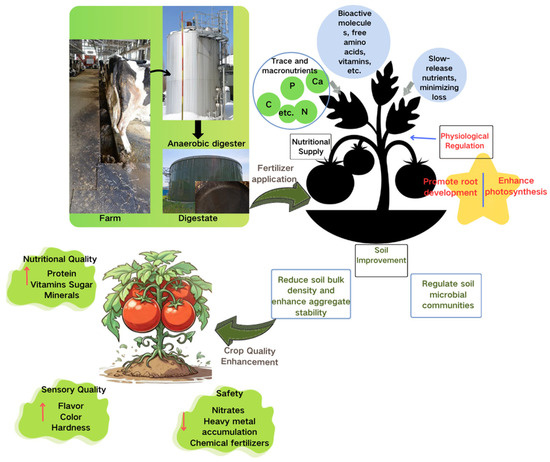
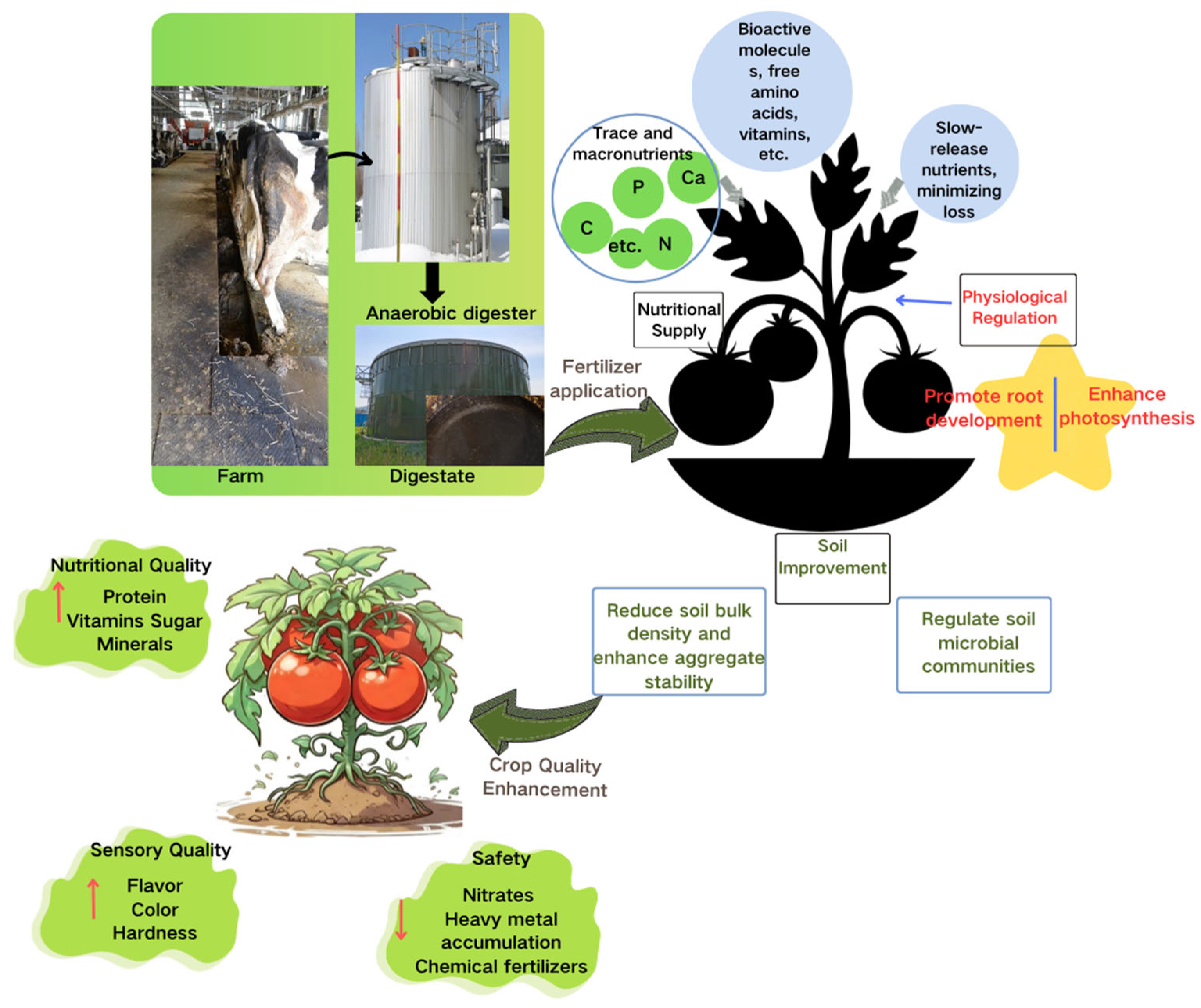
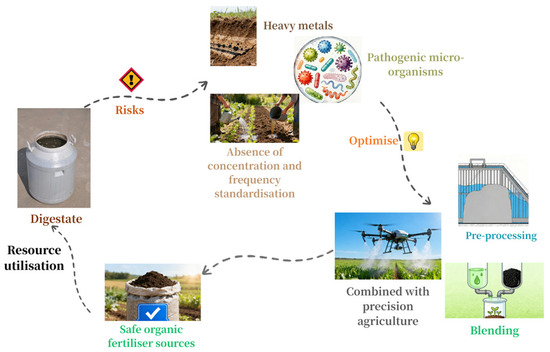
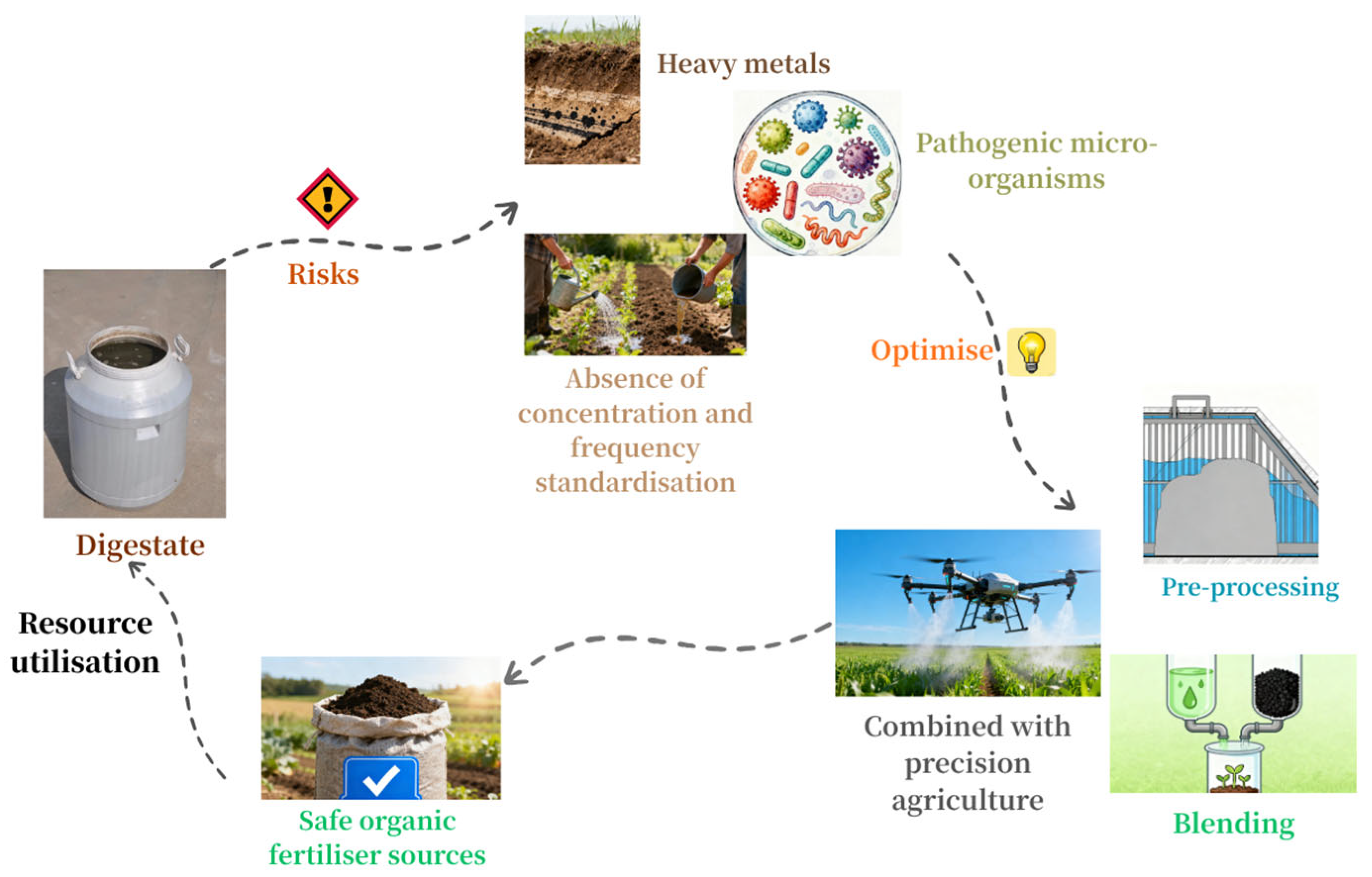

Disclaimer/Publisher’s Note: The statements, opinions and data contained in all publications are solely those of the individual author(s) and contributor(s) and not of MDPI and/or the editor(s). MDPI and/or the editor(s) disclaim responsibility for any injury to people or property resulting from any ideas, methods, instructions or products referred to in the content. |
© 2026 by the authors. Licensee MDPI, Basel, Switzerland. This article is an open access article distributed under the terms and conditions of the Creative Commons Attribution (CC BY) license.