
Article

Exploring the Microbiota of Palm Wine, a Restricted Traditional Fermented Beverage from the Colombian Andes

by
Johannes Delgado-Ospina
1,2,
Carlos David Grande-Tovar
3,
Maria del Pilar Garcia-Mendoza
4,
Luis Gabriel Poveda-Perdomo
1,
Fabián Felipe Fernández-Daza
5,* and
Clemencia Chaves-López
2
1
Grupo de Investigación Biotecnología, Facultad de Ingeniería, Universidad de San Buenaventura Cali, Carrera 122 # 6-65, Cali 76001, Colombia
2
Faculty of Bioscience and Technology for Food, Agriculture and Environment, University of Teramo, Via R. Balzarini 1, 64100 Teramo, Italy
3
Grupo de Investigación de Fotoquímica y Fotobiología, Universidad del Atlántico, Carrera 30 # 8-49, Puerto Colombia 081008, Colombia
4
Centro de Desarrollo Tecnológico Agroindustrial—CDTA, Universidad Tecnológica de Pereira, Carrera 27 No. 10-02 Barrio Álamos, Pereira 660003, Colombia
5
Grupo de Investigación en Microbiología, Industria y Ambiente—GIMIA, Facultad de Ciencias Básicas, Universidad Santiago de Cali, Calle 5 # 62-00, Cali 760035, Colombia
*
Author to whom correspondence should be addressed.
Fermentation 2026, 12(5), 244; https://doi.org/10.3390/fermentation12050244
Submission received: 16 January 2026 / Revised: 26 April 2026 / Accepted: 7 May 2026 / Published: 19 May 2026
(This article belongs to the Special Issue Microbial Ecosystems in Fermented Foods)

Abstract

Colombian palm wine is a traditional fermented beverage produced from the sap of Attalea butyracea, whose microbiota and biochemical features remain poorly characterized. A comprehensive analytical framework was applied to palm wine samples from three Andean producers. This included the determination of proximate composition, total phenolic content, and antioxidant activity, alongside a dual microbiological approach: traditional plate counting and high-throughput 16S rRNA/ITS metabarcoding. PICRUSt2 was employed to predict KEGG-based metabolic pathways to elucidate the microbial functional potential. The wines exhibited a low pH (3.35–3.65), a variable ethanol content (1.62–8.40 g/L), high residual sugars, moderate microbial loads, and limited antioxidant activity (as measured using the ABTS and DPPH assays). Analysis using high-throughput sequencing revealed high bacterial community diversity, dominated by Liquorilactobacillus nagelii, Limosilactobacillus fermentum, Limosilactobacillus panis, Lacticaseibacillus casei, and Zymomonas mobilis alongside the yeast Saccharomyces cerevisiae. Functional profiling revealed a significant enrichment in metabolic pathways related to carbohydrates, amino acids, and cofactors/vitamins, as well as xenobiotic biodegradation and metabolism. These findings provide the first integrated microbiological and physicochemical characterization of Colombian palm wine and highlight its biotechnological potential.

1. Introduction

Fermentation is used to stabilize and extend the shelf life of several food products. Beyond preservation, fermentation may improve the functional characteristics of many agricultural products as well as their quality and nutritional and organoleptic properties [1,2]. Moreover, fermentation yields products with significant benefits for consumption. Compared with fiber intake, fermented foods/beverages may improve immune response and microbiome diversity via modulation of the gut microbiome by promoting anti-inflammatory bacteria and reducing pro-inflammatory cytokine production in colonic tissue [3]. These products are also a source of probiotics and can reduce adverse reactions, including lactose intolerance [4].
In particular, fermented beverages such as cider, beer, and wine, as well as those derived from fermented milk, such as kefir and yogurt, are produced under controlled microbial growth conditions, during which numerous chemical transformations of primary into secondary compounds occur due to enzymatic activity [5]. Microbial enzymes can degrade complex compounds into simple ones, and anti-nutritional and toxic compounds are decomposed [6].
Traditional fermentations with bioactive potential occur spontaneously and involve a consortium of bacteria, fungi, and/or yeasts, depending on the substrate to be degraded (e.g., food waste, meat products, fruits, dairy, and vegetables). The interaction between the microbiota and substrate provides an excellent source of bioactive substances, such as minerals, sugars, organic compounds, peptides, and antioxidants (phenolic compounds) [1]. This composition and its favorable characteristics depend on the region’s native raw materials and the utensils used in their preparation, alongside the elaboration process.
The viability and biostability of these nutrients are improved via the biological transformation of the raw substrate constituents by microorganisms during beverage fermentation. In addition, the proteolytic activity of microorganisms such as Bacillus and lactic acid bacteria generates bioactive peptides and free amino acids that have many specific functions in the human body. These include immune-modulatory, antioxidant, and anti-inflammatory actions, as well as improved energy balance [7]. The metabolic functions of the gut microbiota can be enhanced via enzymes such as lipases, proteases, esterases, amylases, β-galactosidase, and lactase in beverages fermented by Bifidobacterium and lactic acid bacteria [7,8]. Short-chain fatty acids (SCFAs), such as acetate, butyrate, and propionate, produced by lactic acid bacteria during fermentation of beverages, play important roles in intestinal and immunomodulatory functions [9].
Among fermented beverages, “palm wine” is a product produced worldwide, especially in developing countries. This beverage refers to a group of alcoholic drinks made from sap spontaneously fermented by various tropical plants in the Arecaceae (also known as Palmae) family. Depending on where it is manufactured and consumed, palm wine is known by several names, according to the nation of origin [10].
In Colombia, palm wine is made with sap of Attalea butyracea (Mutis ex L.f.) Wess. This is one of the largest neotropical palms that grows in the dry areas of northern, central, and eastern Colombia and is among the most valuable plants [11]. Thirty-six uses across eight use categories, including food, animal feed, medicine, construction, technology, and culture, are reported for this species in Colombia [12]. In the Caribbean lowlands and the Magdalena River Valley, the adult palms are tapped to obtain a whitish and turbid sap with a sucrose content of 11.7%, which is fermented and sold as “palm wine”. Its commercialization is limited to minor local activity; this product does not reach large markets and is sold at informal street stalls, mainly along the main roads of the Magdalena River Valley.
Palm sap is obtained via tapping, which involves a series of operations to stimulate sap flow [10,11,13]. In Colombia, upon felling the palm, the 10–15 leaves that make up the palm are removed to carve a rectangular cavity of 20 × 30 × 20 cm in the palm’s meristematic zone. The sap, rising through the ascending vascular conduits, accumulates within the cavity. Following a 24 h spontaneous fermentation period, the resulting beverage is harvested and consumed [11,14]. The cavity is filled with sap again by cutting the side walls. The amount of sap depends on the height of the palm; e.g., an 8 m tall palm produces approximately 1 L of sap per day for up to 30 days [11]. Taller palms can produce up to 3.7 L per day. The freshly extracted sap has a pleasant aroma and, after fermentation, has a pungent flavor similar to apple cider. Numerous native microorganisms develop during spontaneous palm sap fermentation, and various metabolites are released, enhancing its functional and organoleptic qualities [14,15]. Palm wine producers typically allow the beverage to ferment for 24 to 48 h. This timeframe is determined by empirical knowledge of the desired flavor, with fermentation adjusted to achieve the optimal balance between acidity and alcohol content. Extending fermentation beyond 48 h leads to excessive conversion of alcohol to acetic acid, resulting in a beverage with a distinctly acidic taste and vinegar-like characteristics [16].
Although the consumption of palm wine in Colombia dates back to pre-Hispanic times, no previous studies have characterized the microbial consortia involved in its fermentation. Therefore, this research represents the first comprehensive exploration of the Colombian palm wine microbiota through culture-dependent and culture-independent approaches, complemented by a detailed physicochemical characterization. This pioneering study provides a foundational reference for understanding the microbial ecology and biochemical complexity of this traditional beverage, contributing novel insights into Colombia’s fermentation systems and their biotechnological potential.

2. Materials and Methods

2.1. Samples

Traditional palm wine samples were obtained from local producers of the agricultural region of Melgar, located 323 m above sea level (MASL) (Producer 1); Carmen de Apicalá, located 328 MASL (Producer 2); and Cunday, located 475 MASL (Producer 3), located in the Andes region of Tolima, Colombia (Figure 1). Its climate is warm and semi-dry, with temperatures ranging from 22 to 35 °C, with an annual average of 28 °C. Three samples from each producer were collected and refrigerated at 4 °C until analysis. The producers stated that the wine was obtained via the tapping method. After cutting the palm, they made a cavity 20 cm deep. The cavity was filled with sap and fermented simultaneously to produce the wine. Producers 1 and 2 removed the wine after 24 h, while producer 3 removed the wine after 48 h. Then, sugar was added according to regional custom to increase the drink’s ethanol content.

2.2. Physicochemical Characterization

Physicochemical characterization was determined according to Delgado-Ospina et al.’s method [1], without modification. The soluble solids were measured with an Abbe refractometer (DR-A1, Atago, Tokyo, Japan) at 25 °C. pH was measured with a pH meter (Orion 2 Star, Thermo Scientific, Waltham, MA, USA). The ash and protein contents were determined using the Kjeldahl method 981.10 of the AOAC International, where factor 6.25 was used to convert nitrogen into protein (heat block DK6, Velp Scientifica, Monza, Milano, Italy) [17].

2.3. Antioxidant Capacity Assays

The antioxidant capacity was measured with the radical-scavenging activity using the ABTS radical cation discoloration assay [18] and the radical-scavenging ability assay with the stable radical DPPH [19]. The samples were filtered with a 0.45 µm membrane filter to avoid interference in the spectrophotometric measurement. The absorbance was determined at 734 nm for the ABTS assay and 515 nm for the DPPH assay using a spectrophotometer (Genesys 10 UV, Thermo electron, Waltham, MA, USA). The results were expressed in µmol of Trolox equivalents per liter of palm wine.

2.4. Total Phenolic Content

The total phenolic content was determined using the Folin–Ciocalteu method [20]. The absorbance was measured at 760 nm using a spectrophotometer (Biospectrometer kinetic, Eppendorf, Hamburg, Germany). The results were expressed in mg of gallic acid equivalents per liter of palm wine via comparison with the gallic acid calibration curve.

2.5. Organic Acid, Ethanol, and Sugar Content

The samples were centrifuged at 6000× g for 5 min at 4 °C and then filtered through a 0.22 µm PVDF membrane. Twenty microliters of each sample was injected into a column (Supelco Gel C-610H, 300 mm × 7.8 mm, 8 µm) coupled to an HPLC system with a refractive index detector (L-2400, Elite Lachrom, Hitachi, Tokyo, Japan), using 0.1% H3PO4 as the mobile phase at 0.5 mL/min and 30 °C. Saccharose, glucose, fructose, lactic acid, and ethanol were identified and quantified via comparison with adequate standards. Five extractions were obtained from each sample.

2.6. Microbiological Analyses

For microbiological analysis, palm wine was decimal-diluted with sterile saline solution. The dilutions were plated onto MRS agar (Oxoid, Basingstoke, UK) for lactic acid bacteria and VRBD (Violet Red Bile Dextrose) agar for Enterobacteriaceae, both at 37 °C under anaerobic conditions for 48 h. For acetic acid bacteria, GYC agar supplemented with ethanol at 7.0 g/L was used as described by Delgado-Ospina et al. [1]. Yeasts in YPD agar for 24 h at 30 °C and molds in DG18 agar for 96 h at 30 °C were both supplemented with 150 mg/L of chloramphenicol (Sharlab, Barcelona, Spain).

2.7. Metagenomic DNA, Sequence Analysis, and Species Identification

The palm wine was treated as described by Delgado-Ospina et al. [1]. Genomic DNA was extracted and purified using a QIAamp PowerFecal DNA kit (Qiagen, Carlsbad, CA, USA) according to the manufacturer’s instructions. The OD260/280 ratio was used to determine the quantity and quality of DNA, and samples with values of 1.8–2.0 and a minimum concentration of 100 ng/µL were sequenced.
The DNA was sequenced on an Illumina HiSeq platform (Metagenome Amplicon Sequencing: MiSeq/HiSeq2500) by Macrogen (Seoul, Korea). The V3 and V4 regions of 16S rDNA were targeted for bacteria, and the ITS region for yeast. Adapter sequences were removed using Scythe (v0.994) and Sickle to improve quality. After adapter trimming, reads shorter than 36 bp were dropped to produce clean data.
Bioinformatic analysis was performed as described by Delgado-Ospina et al. [1]. The reads that could not be assigned to the specific genus level were allocated as unclassified taxa. Functional prediction was carried out using PICRUSt2 [21] implemented within the QIIME 2 framework to infer KEGG orthologs (KOs) [22] and associated metabolic pathways from ASV-based 16S rRNA gene sequences.

2.8. Alpha Diversity Analysis

Alpha diversity indices were determined at the OTU level. Microbial richness and diversity were estimated using the Chao1 and Shannon indices, respectively [23]. Before analysis, sequencing depth adequacy was evaluated using rarefaction curves, and the feature table was subsequently rarefied to 4000 reads per sample to ensure comparability across all samples.

2.9. Statistical Analysis

The data on the microbial population, chemical characterization, antioxidant capacity, and total phenolic content (TPC) of wine palm were analyzed using ANOVA with Minitab 16 (State College, PA, USA). The relative abundance of each OTU was determined for each sample type. All values are shown as means with the standard deviation of three replicates.

3. Results

Microbial counts (Table 1) revealed that the viable microbiota was dominated by the association of presumptive LAB, BAA, and yeasts together with molds. Coliforms were not detectable (<1.0 log CFU/g) in the analyzed samples. The analyses revealed some differences between samples from different producers. In particular, samples from producer 2 showed the lowest yeast values, with significant differences (p < 0.05) compared with the other two wines.

3.1. Sequence Analysis

The number of high-quality pf paired sequences obtained from Colombian palm wine reached 324,446 for bacteria and 411,352 for fungi. The rarefaction analysis, expressed as a percentage, indicated satisfactory coverage of all the samples. In addition, the proportions of high-quality sequences were 84.65% for bacteria and 84.289% for fungi, indicating that the sequences obtained were sufficient to represent the microbial structures of the samples.

3.2. Bacterial Communities of the Colombian Palm Wine

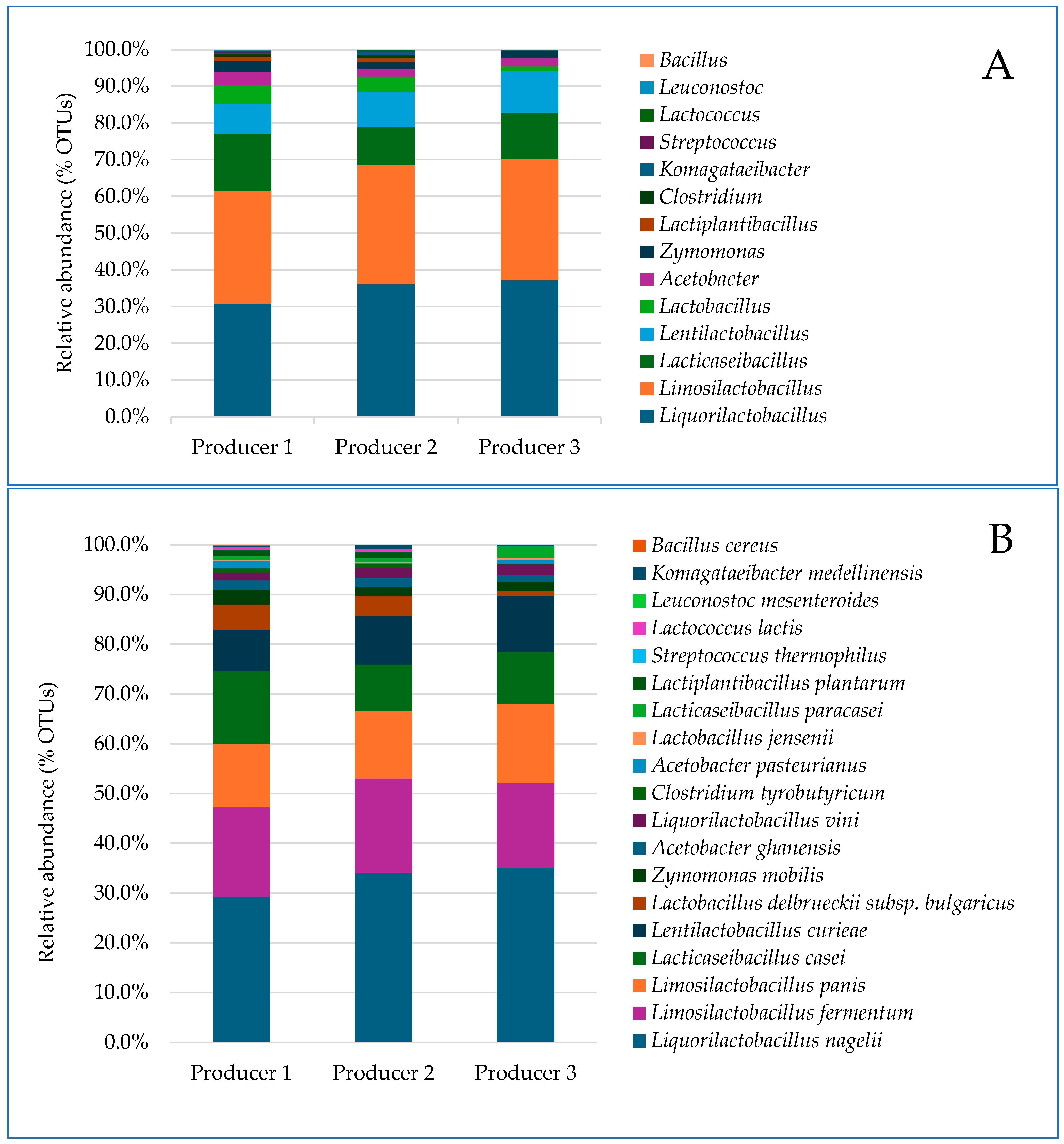
The analyses allowed us to detect two bacterial phyla in palm wine: Bacillota and Pseudomonadota. Bacillota was the predominant phylum, with relative abundances of 93.2%, 95.4%, and 95.8% for the wines from producers 1, 2, and 3, respectively. In contrast, Pseudomonadota was the subdominant phylum, with relative abundances of 6.8%, 4.6%, and 4.2% across the samples.
The bacterial reads were further clustered into two phyla, three classes, five orders, six families, 14 genera, and 19 species (with slight differences between producers).
As illustrated in Figure 2A, which depicts the genus-level distribution, the community was dominated by members of the Bacillota phylum, specifically the genera Liquorilactobacillus, Limosilactobacillus, Lacticaseibacillus, Lentilactobacillus, and Lactobacillus. Conversely, the subdominant Pseudomonadota phylum was primarily represented by the genera Zymomonas and Acetobacter.
Taxonomic profiling at the species level identified a community dominated by lactic acid bacteria. The most abundant bacterial species were Liquorilactobacillus nagelii (29.3, 34.1, and 35.1%), Limosilactobacillus fermentum (18.0, 18.9, and 17.0%), Limosilactobacillus panis (12.7, 13.5, and 16.0%), and Lacticaseibacillus casei (14.8, 9.4, and 10.3%). Additionally, the species Zymomonas mobilis was present at lower abundances (3.0, 1.7, and 1.9%), while all other species each accounted for 10% (Figure 2B).

3.3. Fungal Communities of the Colombian Palm Wine

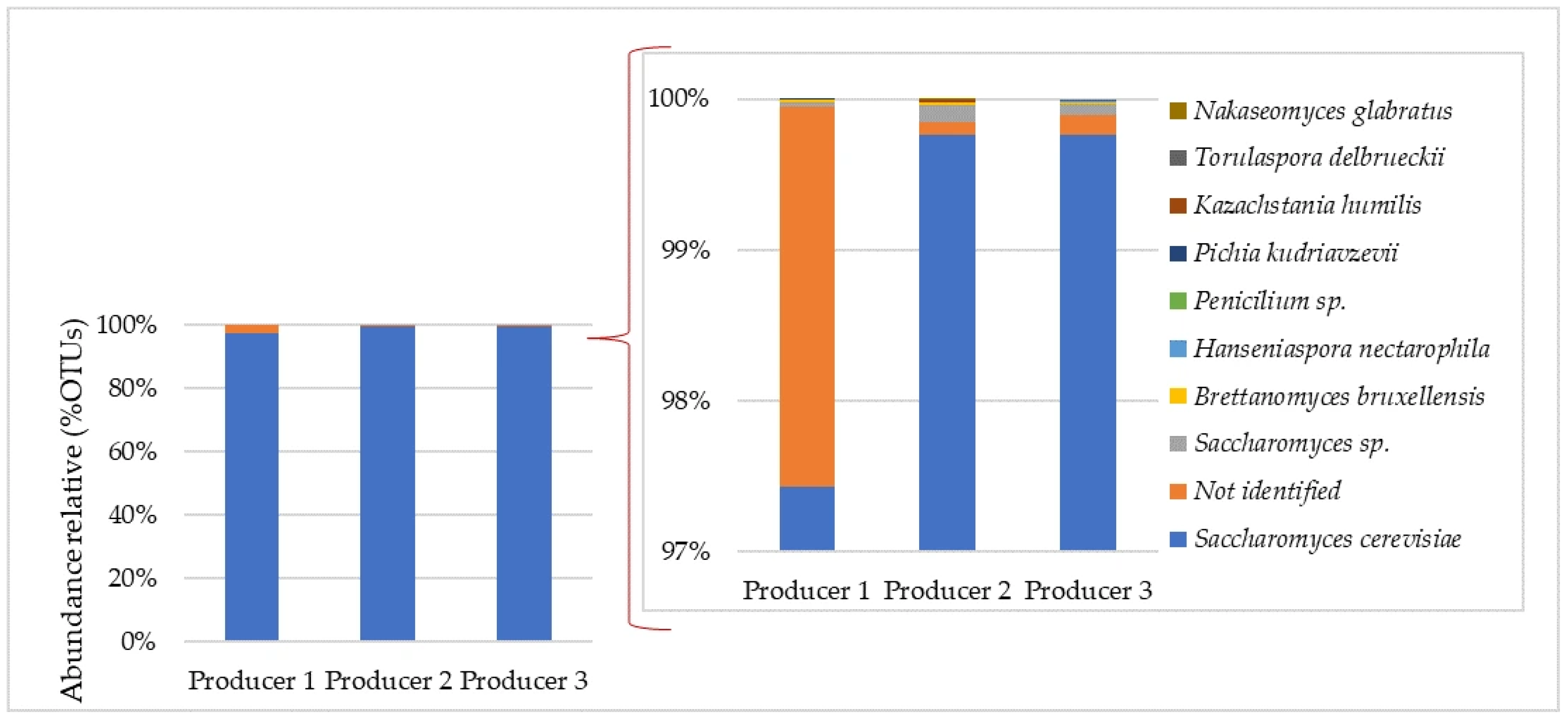
Analysis of the fungal community composition in Colombian palm wine revealed Ascomycota as the only phylum present. At the family level, Saccharomycetaceae was dominant, comprising genera well known for alcoholic production via carbohydrate fermentation. Figure 3 shows that Saccharomyces was predominant, with minor contributions from Brettanomyces and Hanseniaspora. At the species level, Saccharomyces cerevisiae was the primary yeast, accounting for 97.43–99.76% of the sequence reading. Brettanomyces bruxellensis and Hanseniaspora nectarophila were the following most common species identified from the fungal sequence reads, but at low percentages. The results indicated significant variations in the community compositions of the three different Colombian palm wines.

3.4. Species Richness and Diversity Index

The structure and stability of the palm wine fermentation ecosystem are determined by its microbial diversity. Species richness (observed species and Chao1) and diversity (Shannon) indices were used to characterize the α-diversity of the microbial community in Colombian palm wine, separating bacterial and fungal groups. In general, the analysis revealed a significantly greater diversity and richness of bacteria than fungi (Table 2), with observed bacterial species ranging from 15 to 19, compared with 5 to 8 observed fungal species. The Chao1 richness estimates closely matched the observed species counts for bacteria and fungi, suggesting that the sequencing depth was sufficient to capture most microbial taxa present.
As evidenced by the Shannon index, samples from producer 1 showed the highest bacterial diversity (Shannon = 3.01), while samples from producers 2 and 3 exhibited reduced bacterial richness and diversity. Overall, these results indicated that the palm wine microbiota were characterized by a diverse and relatively even bacterial community, a less diverse fungal community dominated by a few species, and significant variations in community compositions across the three food samples.

3.5. Metabolic Pathways

This part of the study aimed to profile the metabolic pathways active in palm wine fermentation. We focused our analysis on the sample from producer 2. This sample produced the highest Chao1 richness values for bacteria and fungi. We hypothesized that this increased taxonomic diversity would translate into greater functional diversity, making it the most informative sample for investigating the range of metabolic pathways contributing to fermentation and product quality. We performed a predictive analysis using 16S rRNA taxonomic profiles to explore this predicted functional potential.
The advantage of 16S and ITS metabarcoding lies in its ability to accurately monitor the relative abundance of microbial populations directly within the food matrix. This approach facilitates a comprehensive characterization of the taxonomic structure and diversity of the entire microbial community [24].
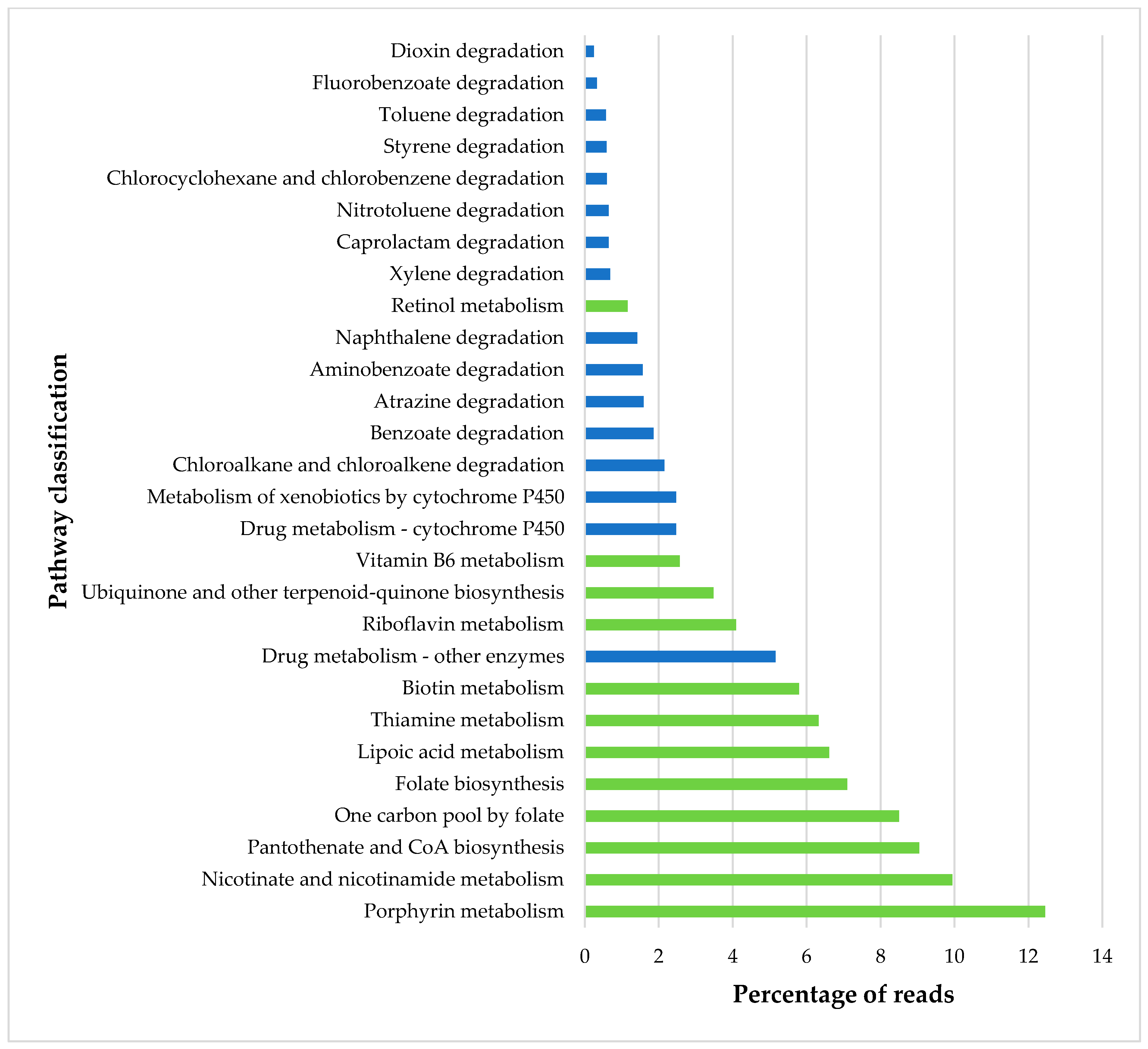
The results revealed that the most abundant predicted KEGG orthologs (KOs) were associated with core cellular functions. These included pathways involved in genetic information processing (2,740,325 average predicted counts), protein families related to signaling and cellular processes (2,143,183 average predicted counts), carbohydrate metabolism (1,455,200), amino acid metabolism (1,208,000 average predicted counts), and general metabolic protein families (1,038,106 average predicted counts). The analysis inferred a high abundance of pathways for cofactor and vitamin metabolism (816,221 average predicted counts) and xenobiotic biodegradation (243,441 average predicted counts) (Figure 4), indicating these as prominent functional features of the Colombian palm wine microbiome.

3.6. Chemical Characteristics of Colombian Palm Wine

Table 3 shows the characteristics measured in the palm wine. Significant differences were observed in the chemical compositions of the wines from the three different producers. The palm wine had a low pH (3.35–3.65), consistent with the presence of lactic and acetic acids. In addition, many differences were observed in the ethanol content, which showed a medium alcohol content (1.62–8.40 g/L) and high fermentable sugars content (11.9–75.02 g/L), consistent with the low fermentation time to which the drink is subjected, whereby not all sugars can be transformed into alcohol.
In addition, the table reveals three distinct metabolic profiles indicative of different fermentation stages or conditions. The samples from producer 1 appeared to be in an advanced stage of fermentation, as evidenced by a low residual sugars content (approximately 5.2 g/L for glucose and fructose) and a significant ethanol content (5.20 g/L). The very low pH (3.49) was likely a combined result of this alcoholic production and the presence of organic acids (acetic, succinic, and lactic). Meanwhile, the samples from producer 2 contained high levels of simple sugars (with glucose and fructose at 20.83 and 23.03 g/L, respectively) and a very low ethanol content (1.62 g/L), indicating that fermentation was delayed or strongly inhibited. The presence of 1.82 g/L of lactic acid might indicate bacterial activity or a specific metabolic shift. The samples from producer 3 showed vigorous and ongoing fermentation. They had added sugar according to regional custom to increase the drink’s ethanol content; moreover, they showed the highest sugar load (fructose: 40.90 g/L; glucose: 33.59 g/L) and had already produced the most ethanol (8.40 g/L). They also showed the highest production of succinic acid and significant levels of lactic acid, contributing to the very acidic environment (pH 3.35). The sucrose was nearly depleted, suggesting efficient invertase activity.

Anti-Radical Capacity and Total Phenolic Compounds

The antioxidant capacity (DPPH and ABTS) and TPC found in palm wine are shown in Table 4.
The total phenolic content, expressed as gallic acid equivalents (GAE), was highest in samples from producers 1 and 2. In contrast, the radical-scavenging assay revealed that samples from producer 3 showed a significantly higher DPPH scavenging capacity (1.08 ± 0.04 µM TE/L). This indicated an extreme hydrogen-donating antioxidant potential in samples for producers 3. The ABTS radical-scavenging activity, while less variable across samples, followed the same trend, with samples from producer 3 also showing the highest activity (0.17 ± 0.02 µM TE/L).
The marked discordance in samples from producer 3, which showed the most potent antioxidant activity yet the lowest TPC, indicates that its scavenging potential is not primarily driven by total phenolic content. Instead, this activity likely arises from specific, potent phenolic fractions or from non-phenolic antioxidants (such as vitamins, peptides, or Maillard reaction products) generated during fermentation.

4. Discussion

Several fermented palm sap drinks are produced across tropical regions worldwide. Numerous investigations have demonstrated the biogeographic diversification of microbial communities in relation to variations in palm species, geographic locations, and environmental niches (Table 5). The most used palm species in Africa are the African oil palm (Elaeis guineensis), Raffia palm (Raphia hookeri), Ron palm (Borassus aethiopum), and Palmyra palm (Borassus akeassii). In India, mainly three types of palms are used to make wines, including Palmyra palm (Borassus flabellifer), Date palm wine (Phoenix sylvestris (L.) Roxb.), and Palm wine (Cocos nucifera). Meanwhile, the Lala palm (Hyphaene coriacea) is frequently used in South Asia; coconut palm (Cocos nucifera), Nipa palms (Nypa fruticans), and Kaong palms (Arenga pinnata) in the Philippines; Jubaea chilensis in Chile; and Palm wine (Cocos nucifera) and Taberna palm (Acrocomia aculeata) in Mexico [16]. The species Attalea butyracea is used in Colombia due to its many medicinal properties [11]. This botanical and biogeographic diversity leads to a wide array of organoleptic profiles worldwide. The scientific literature highlights significant variations in sensory traits, ranging from sweet, mildly effervescent beverages with fruity and floral aromatic notes (produced by specific yeast esters), to pungent, highly acidic drinks characterized by a dense milky-white turbidity and distinct viscosity resulting from bacterial exopolysaccharides [16,25].
The sugary sap of the palm tree supports a diverse microbiota, including lactic acid bacteria, yeasts, enterococci, coliforms, aerobic mesophiles, and enterococci [16], which ferment this sap into a nutrient-rich alcoholic beverage [39,40]. These microorganisms likely originate from colonized surfaces of the inflorescence, petioles, felt, and xylem stream [41].
The microbial counts (Table 1) indicate that fermentations are guided by a variety of microorganisms, driven by a succession of yeasts and bacteria in a symbiotic community, as in other fermented foods, with metabolically active populations [42]. In general, the low pH values (≤3.65) across all palm wines can be attributed to the acid-producing metabolic activities of LAB and acetic bacteria. These results are consistent with those reported by Djeni et al. [13] in palm wines from Côte d’Ivoire.
In this study, we employed high-throughput amplicon sequencing of the 16S rRNA and ITS regions to characterize the bacterial and fungal microbiota, respectively, associated with Colombian palm wine. This metabarcoding approach allowed for a precise determination of the taxonomic composition and relative abundance of microbial populations directly within the complex food matrix. To our knowledge, this represents the first comprehensive report on the microbial community structure of this traditional Colombian fermented beverage, providing a baseline for understanding its functional and sensory properties.
Based on the bacterial alpha diversity results, the palm wine samples from lower altitudes (producer 1 at 323 MASL and producer 2 at 328 MASL) showed higher species richness values than the samples from higher altitudes (475 MASL). This pattern leads to the hypothesis that environmental factors associated with altitude shape microbial communities. However, this observed difference could also be influenced by other parameters of production, such as variations in fermentation techniques, raw material handling, or local microclimates, as reported by Gao et al. in wine grapes [43], Zhao et al. in rice wine koji [44], and others. The reduced microbial diversity in samples from producer 3 can be explained by its production parameters. The addition of sucrose created a substrate-rich environment, intensifying microbial competition. This selective pressure would favor “strategist microorganism species” adapted for rapid growth and high yield in resource-abundant conditions. Consequently, a few high-performance fermentative species (e.g., dominant yeasts and lactic acid bacteria) outcompete a wider array of slower-growing species, leading to a less diverse community through competitive exclusion. While this finding offers a compelling hypothesis, this study was based on a small sample of only three producers. Consequently, our findings cannot be used to draw conclusions about the influence of geographical or environmental factors, such as altitude, on the microbial community. Further research with larger sample sizes across diverse locations is, therefore, necessary to expand on these preliminary results, identify the full spectrum of microbial species present, and elucidate their specific roles in fermentation and their contributions to overall palm wine quality.
The global diversity of palm wine bacterial communities highlights the complex interplay of environmental factors, microbial populations, and fermentation processes in shaping this traditional beverage. For example, species of the genus Fructobacillus have been reported as the predominant bacteria in palm wine from Mexico, followed by Leuconostoc, Gluconacetobacter, Sphingomonas, Vibrio, and some Enterobacteriaceae genera [32]. Conversely, palm wine from Côte d’Ivoire is characterized by a dominance of Lactobacillus (L. diolivorans and L. fermentum), Fructobacillus (F. durionis, F. ficulneus, and F. fructosus), Acetobacter (A. tropicalis), and Glucanoacetobacter (G. frateurii and G. oxydans) [15]. Recent studies in India found Acetobacter to be overwhelmingly predominant, comprising up to 90%. In contrast, the remaining 10% of enriched OTUs were Lactobacillus, Candidatus, Gluconobacter, Burkholderia, Clustoridium, Oenococcus, Zymomonas, and Enterobacter species in Indian palm wine [29]. Our analysis of Colombian palm wine (Figure 2) revealed a community dominated by Liquorilactobacillus nagelii (~32.8%), Limosilactobacillus fermentum (~18.0%), Limosilactobacillus panis (~14.1%), Lacticaseibacillus casei (~11.5%), Lentilactobacillus curieae (~9.7%), and Lactobacillus delbrueckii subsp. bulgaricus (~3.4%). These findings align with previous reports (Table 3), confirming that despite regional variations in specific taxa, the microbiota of palm wine is consistently shaped by members of the Lactobacillaceae family and the newly reclassified genera formerly belonging to Lactobacillus [45]. L. nagelii, L. fermentum, L. casei, L. paracasei, L. plantarum, L. lactis, L. mesenteroides, Z. mobilis, A. ghanensis, A. pasteurianus, and B. cereus have been previously reported to be involved in palm wine production around the world (Table 3), although in some cases, some of these species decreased or disappeared after some days [14,36,46].

4.1. Technology Potential

This specific microbial consortium directly shapes the beverage’s physical properties. Strains of Lactobacillaceae (including the former Lactobacillus genus) and Leuconostoc spp. synthesize exopolysaccharides (EPSs) during sap fermentation, primarily dextrans and levans [47]. Additionally, the systematic acidification of the medium triggers the precipitation of soluble proteins from the sap, which, in synergy with the EPS–bacterial network, improves light scattering (Mie scattering). These polymers are responsible for the beverage’s distinctive consistency and its milky-white appearance [10,25]. Individual LAB species contribute distinct functional roles. L. mesenteroides has a strong acidifying capacity, which could be an important asset in food preservation [14]. L. nagelii may be responsible for slowing down alcoholic fermentation, which may be beneficial for some wine types. Moreover, it contributes to malolactic fermentation, a process that converts malic acid into lactic acid, which softens the flavor of the wine and improves its stability. It also produces dextran [48], an exopolysaccharide that can contribute to the texture and stability of palm wine. In addition, L. vini is among the most common bacteria in various alcoholic fermentations, indicating the presence of efficient tolerance mechanisms and stress responses [49]. Among previously unreported LAB in palm wine, L. panis was identified. Sourdough-derived strains of this species produce large amounts of lactic acid, EPS, and a fructosyltransferase enzyme [50].
Acetic acid bacteria (AAB) play an important role in the fermentation of palm wine by oxidizing ethanol to acetic acid. In palm wine, AAB typically proliferate toward the end of the fermentation process, allowing enough ethanol to oxidize [40]. They also give beverages a sour flavor and have numerous uses in the food and biomedical industries because they produce bacterial cellulose, gluconic acid, and L-sorbose [51]. However, when acetic acid is produced in large quantities, it degrades palm wine [10]. In our work, we detected very few AAB species, with A. ghanensis being the most prevalent species, followed by A. pasteurianus. A. pasteurianus was also prevalent in the palm wines of Côte d’Ivoire [13]; in “Taberna” from Mexico [36]; in palm wine from different Eleasis gunineasis trees collected from Idiaba in Abeokuta, Nigeria [52]; and in palm wine from Borassus akeassii produced in Burkina Faso [53].
Ethanol production in palm wine is mainly attributed to the high yeast content. However, we found Z. mobilis, also reported by Alcántara-Hernández et al. [36], which has been shown to have notable ethanol-producing capabilities, surpassing some yeasts in certain aspects [54]. According to our findings, Saccharomyces cerevisiae was the most abundant yeast (at nearly 97%) in Colombian palm wine. This species has been identified as the dominant yeast in other palm wines, with relative abundances ranging from 78% to 96%, and is responsible for the ethanol content [13,35]. Okafor et al. [55] isolated Saccharomyces cerevisiae strains from the sap of Elaeis guineensis and Raphia hookeri palms, demonstrating strong potential as starter cultures for standardizing palm wine production. The strains showed probiotic potential, with 89–90% survival under simulated gastrointestinal conditions, and high stress tolerance, including resistance to 15% ethanol at 37 °C. They were also non-hemolytic and susceptible to antifungal agents, supporting their safety and suitability for controlled fermentation.
The distinctive flavor profiles of Colombian palm wine are significantly shaped by the presence of specific non-Saccharomyces yeasts. For example, Torulaspora delbrueckii, also found in Nipa palm sap and in palm wine made with Palmyra and Nipa palms from Thailand [56], improves the fragrance profile of wine by increasing the formation of higher alcohols (3-methyl-1-propanol and phenylethyl alcohol) and ethyl esters (ethyl decanoate and ethyl butanoate) [57] when used in conjunction with S cerevisiae. Similarly, Pichia kudriavzevii, which has also been isolated from coconut inflorescence sap in Thailand [56] and in Taberna sap wine from Mexico [58], enhances the sensory characteristics of alcoholic beverages [56] and has been reported to produce high levels of ethanol from glucose and xylose [59]. This study also identified yeast species not previously reported in palm wine, highlighted the unique microbial ecology of Colombian palm wine, and revealed the complex roles these yeasts may play. This was the case for Kazachstania humilis (Candida humilis), which is usually isolated from fermented wheat [60], and Hanseniaspora nectarophila, which has been reported as the most dominant species in most grape pre-fermentation samples (its role in wine fermentation remains undetermined) [61]. Brettanomyces bruxellensis has been described as the primary spoilage yeast during the maturation stage of wine in barrels. It can transform hydroxycinnamic acids into vinyl and ethyl derivatives, which produce off-flavors in wine [62]. Furthermore, the isolation of Nakaseomyces glabratus (Candida glabrata) presents a dichotomy: a specific strain has shown promising results in enhancing varietal aroma, while other strains are known for their pathogenic potential [63].

4.2. Probiotic Potential

Functional pathway analysis of palm wine using the KEGG database revealed bacterial activities that primarily target genetic information processing (15.9%), signaling and cellular processes (12.5%), carbohydrate metabolism (8.5%), and amino acid metabolism (7.0%). This aligns with palm wine’s high sugar content (Table 4) and amino acid levels [64], which bacteria utilize during their metabolic activity and multiplication, a phenomenon observed in other fermentations, such as cacao fermentation [65]. Microbial biosynthesis of nutrients and antioxidants is a key functional outcome of palm wine fermentation. Antioxidant molecules and health-beneficial nutrients found in palm wine may be produced by the microorganisms involved in fermentation [40,66].
Additional metabolic activities related to cofactor and vitamin metabolism (4.7%) contribute to the beverage’s nutritional enrichment. These include essential biosynthetic routes, such as porphyrin metabolism (for cobalamin biosynthesis), nicotinate and nicotinamide metabolism (for niacin), pantothenate and CoA biosynthesis (for pantothenic acid), folate biosynthesis (for folic acid), and pathways for thiamine, biotin, riboflavin, vitamin B6, and retinol production. This functional profile aligns with the recognized status of palm wine as a natural source of B-complex vitamins (thiamine and riboflavin) and antioxidants (ascorbic acid) [67,68], which are synthesized or increased by the resident microbiota (particularly lactic acid bacteria and yeasts) during fermentation [67]. Although Nigerian natural medicine attributes therapeutic properties against malaria and some eye conditions to palm wine’s vitamin content [68], studies on the content and evolution of the vitamins and cofactors during the fermentation of palm wine are lacking.
Several of the lactic acid bacterial species reported in our study have been shown to possess probiotic potential and could have beneficial effects on consumer health, thereby increasing their attractiveness. L. nagelii was the most abundant bacterium found in this study. Its presence was previously documented in palm wine from Borassus akeassii in Burkina Faso [35] and in Taberna, a traditional alcoholic beverage produced by fermenting coyol palm sap (Acrocomia aculeata) from Mexico [36]. It has also been isolated from various ecological niches, including water kefir, fermented cassava, wild cocoa beans, semi-fermented wine, fermented silage, kombucha, and shalgam [69]. This species inhabits plant-associated environments, and its presence may be directly linked to the palm species used by the producers or the collection practices that introduce native palm microbiota into the fermenting sap. Furthermore, variations in production methods, such as the extent of exposure to oxygen or the ambient temperature during fermentation, could create conditions that favor the establishment of this species over other lactic acid bacteria more commonly reported elsewhere. Meanwhile, Rayavarapu and Tallapragada reported, for the first time, the probiotic potential of L. fermentum isolated from palm wine in India [70]. In addition, the probiotic potential of L. plantarum isolated in Cameroon from palm wine and its high antimicrobial activity against Escherichia coli, Salmonella enterica, and Salmonella enterica subsp. Enterica Serovar Typhimurium, Staphylococcus aureus, and Listeria monocytogenes have been reported [27,28]. Similarly, L. plantarum and Raffia mambillensis from Cameroon demonstrated a hypocholesterolemic effect in in vitro and in vivo studies in rats [38].
Additionally, strains of L. delbrueckii, L. fermentum, L. casei, and L. plantarum isolated from palm wine in Nigeria exhibited potential probiotic activity and inhibited Staphylococcus aureus in vitro [71]. L. paracasei, found in the fresh sap of E. guinneesis (palm wine), presented immune system-enhancing properties [37]. L. curieae has been less studied; Liu et al. [72] found a strain isolated from stinky tofu brine with probiotic and bioactive potential. L. delbrueckii subsp. bulgaricus and Streptococcus thermophilus are recognized probiotics that are used together as a starter in yogurt production.
Palm wine exhibits functional properties, including antidiabetic activity, through the inhibition of α-glucosidase and α-amylase, the reduction in intestinal glucose absorption, and increased muscle uptake, particularly in nutrient-rich Raphia hookeri wine containing bioactive sugars such as d-tagatose and rhamnose [73].
Fresh palm sap is also characterized by a significant contribution of vitamin C and B vitamins (thiamine, riboflavin, niacin, and pyridoxine), which act as essential enzyme cofactors and contribute to the nutritional value and antioxidant capacity of the beverage [74]. Compared with other palm wines, the lower antioxidant activity and phenolic content observed in Colombian palm wine likely stem from several factors, including differences in palm species, the specific fermentation stage analyzed, and variations in processing methods [67,73,74,75]. The unique chemical composition of the sap, as well as the dynamics of microbial metabolism during fermentation, can influence the release and transformation of phenolic compounds. Additionally, the formation of glycosidic bonds or interactions with other macromolecules may not fully compensate for initially low precursor levels in the raw sap [67], resulting in final values that, while potentially enhanced by fermentation, remain comparatively modest.
In silico analyses (KEGG) also suggest pathways for xenobiotic degradation and metabolism, including pharmaceuticals and pesticides (benzoate, aminobenzoate, xylene, and toluene). Although less active than those for vitamins, these indicate the microbiota’s potential to transform or eliminate undesirable compounds, thereby improving the chemical safety of palm wine and contributing to its bioremediation potential [29].

5. Conclusions

Through a functional metagenomic approach across three Colombian sites, this first integrated characterization of Attalea butyracea palm wine revealed a microbial community dominated by lactic acid bacteria (Liquorilactobacillus nagelii, Limosilactobacillus fermentum, Lacticaseibacillus casei, and Lactiplantibacillus curieae) and Saccharomyces cerevisiae, which together drive ethanol production, shape sensory profiles, and underpin probiotic potential. Metabolic pathway analysis further demonstrated robust activity in vitamin B-complex biosynthesis, xenobiotic degradation, and the generation of functional metabolites, thereby enhancing nutraceutical value and chemical safety.
This work is distinguished by its multi-site functional metagenomic approach, establishing baseline data for a previously uncharacterized beverage while documenting yeast species (Kazachstania and Hanseniaspora) and technological traits not previously reported in this matrix. These include aroma enhancement by Torulaspora delbrueckii, high ethanol production by Pichia kudriavzevii, and vitamin-synthesizing capacity inherent to resident microbiota.
This study enriches fermentation microbiology and comparative genomics via metagenomic analysis of microbial adaptation in an undomesticated tropical matrix. For industry, it delivers a metagenomic inventory of autochthonous strains warranting future isolation, a genomic framework for quality optimization, and pathway-level evidence of vitamin and antioxidant biosynthesis that empirically grounds functional food positioning.
While metagenomic analysis evidenced pathways associated with vitamin biosynthesis and antioxidant production, the presence of these genetic potentials does not automatically confer functional food status. While substantiating health claims would require quantifying bioactive compounds at nutritionally relevant levels and conducting human intervention studies, the presence of ethanol complicates positioning palm wine as a conventional functional beverage. However, its microbial-derived nutritional enrichment remains noteworthy within traditional dietary contexts where consumption is moderate.
Future research must address the critical threat of destructive harvesting, the current practice of felling Attalea butyracea palms for sap extraction. Subsequent work will prioritize adapting non-destructive inflorescence tapping techniques from Southeast Asia and Africa, alongside strain isolation for starter cultures and quantitative vitamin validation. This integrated approach aims to transform traditional knowledge into sustainably produced, scientifically validated products that preserve the invaluable palm resource and its associated microbial diversity.

Author Contributions

Conceptualization, C.D.G.-T., J.D.-O. and C.C.-L.; methodology, L.G.P.-P., J.D.-O. and F.F.F.-D.; validation, J.D.-O. and C.C.-L.; formal analysis, J.D.-O., M.d.P.G.-M. and C.C.-L.; investigation, C.D.G.-T., and C.C.-L.; resources, C.D.G.-T. and J.D.-O.; data curation, F.F.F.-D. and J.D.-O.; writing—original draft preparation, J.D.-O., M.d.P.G.-M. and C.C.-L.; writing—review and editing, J.D.-O., C.D.G.-T., M.d.P.G.-M. and C.C.-L.; project administration, C.D.G.-T. and J.D.-O.; funding acquisition, J.D.-O. and C.D.G.-T. All authors have read and agreed to the published version of the manuscript.

Funding

This research has been funded by the Dirección General de Investigaciones of Universidad Santiago de Cali under call No. DGI-01-2026 and project 934-621124-763.

Institutional Review Board Statement

Not applicable.

Informed Consent Statement

Not applicable.

Data Availability Statement

The original contributions presented in this study are included in the article. Further inquiries can be directed to the corresponding author.

Acknowledgments

The authors also acknowledge the support provided by Universidad de San Buenaventura Cali, University of Teramo, Universidad Santiago de Cali, and Universidad del Atlántico. During the preparation of this article, the authors used Grammarly software (https://app.grammarly.com/ accessed on 2 January 2026) to improve their English writing and fluency. Following this process, the authors reviewed and edited the content to ensure its technical accuracy.

Conflicts of Interest

The authors declare no conflicts of interest.

References

  1. Delgado-Ospina, J.; Puerta-Polanco, L.F.; Grande-Tovar, C.D.; Cuervo, R.A.; Navia-Porras, D.P.; Poveda-Perdomo, L.G.; Fernández-Daza, F.F.; Chaves-López, C. Exploring the core microbiota of four different traditional fermented beverages from the Colombian Andes. Fermentation 2022, 8, 733. [Google Scholar] [CrossRef]
  2. Cuvas-Limon, R.B.; Nobre, C.; Cruz, M.; Rodriguez-Jasso, R.M.; Ruíz, H.A.; Loredo-Treviño, A.; Texeira, J.A.; Belmares, R. Spontaneously fermented traditional beverages as a source of bioactive compounds: An overview. Crit. Rev. Food Sci. Nutr. 2021, 61, 2984–3006. [Google Scholar] [CrossRef] [PubMed]
  3. Crowder, S.L.; Jim, H.S.L.; Hogue, S.; Carson, T.L.; Byrd, D.A. Gut microbiome and cancer implications: Potential opportunities for fermented foods. Biochim. Biophys. Acta-Rev. Cancer 2023, 1878, 188897. [Google Scholar] [CrossRef]
  4. Tang, Z.; Wang, Q.; Zhao, Z.; Shen, N.; Qin, Y.; Lin, W.; Xiao, Y.; Yuan, M.; Chen, H.; Chen, H.; et al. Evaluation of fermentation properties, antioxidant capacity in vitro and in vivo, and metabolic profile of a fermented beverage made from apple and cantaloupe. LWT-Food Sci. Technol. 2023, 179, 114661. [Google Scholar] [CrossRef]
  5. Marco, M.L.; Heeney, D.; Binda, S.; Cifelli, C.J.; Cotter, P.D.; Foligné, B.; Gänzle, M.; Kort, R.; Pasin, G.; Pihlanto, A.; et al. Health benefits of fermented foods: Microbiota and beyond. Curr. Opin. Biotechnol. 2017, 44, 94–102. [Google Scholar] [CrossRef]
  6. Tamang, J.P.; Shin, D.H.; Jung, S.J.; Chae, S.W. Functional properties of microorganisms in fermented foods. Front. Microbiol. 2016, 7, 578. [Google Scholar] [CrossRef]
  7. Chugh, B.; Kamal-Eldin, A. Bioactive compounds produced by probiotics in food products. Curr. Opin. Food Sci. 2020, 32, 76–82. [Google Scholar] [CrossRef]
  8. Den Besten, G.; Van Eunen, K.; Groen, A.K.; Venema, K.; Reijngoud, D.J.; Bakker, B.M. The role of short-chain fatty acids in the interplay between diet, gut microbiota, and host energy metabolism. J. Lipid Res. 2013, 54, 2325–2340. [Google Scholar] [CrossRef]
  9. Gill, P.A.; van Zelm, M.C.; Muir, J.G.; Gibson, P.R. Review article: Short chain fatty acids as potential therapeutic agents in human gastrointestinal and inflammatory disorders. Aliment. Pharmacol. Ther. 2018, 48, 15–34. [Google Scholar] [CrossRef]
  10. Santiago-Urbina, J.A.; Ruiz-Terán, F. Microbiology and biochemistry of traditional palm wine produced around the world. Int. Food Res. J. 2014, 21, 1261–1269. [Google Scholar]
  11. Bernal, R.; Galeano, G.; García, N.; Olivares, I.L.; Cocomá, C. Uses and commercial prospects for the wine palm, Attalea butyracea, in Colombia. Ethnobot. Res. Appl. 2010, 8, 255–268. [Google Scholar] [CrossRef]
  12. Salcedo-Rivera, G.A.; Herazo-Vitola, F.Y.; Cruz, J.F.; Serrano, O.S. Fauna associated with the Wine Palm Attalea butyracea (Mutis ex L.f.) Wess.Boer (1988) (Arecales: Arecaceae) in an agroecosystem of Galeras, Sucre, Colombia. Biota Colomb. 2018, 19, 39–48. [Google Scholar] [CrossRef]
  13. Djeni, T.N.; Kouame, K.H.; Ake, F.D.M.; Amoikon, L.S.T.; Dje, M.K.; Jeyaram, K. Microbial diversity and metabolite profiles of Palm Wine produced from three different palm tree species in Côte d’Ivoire. Sci. Rep. 2020, 10, 1715. [Google Scholar] [CrossRef] [PubMed]
  14. Kouamé, H.K.; Aké, M.D.F.; Assohoun, N.M.C.; Djè, M.K.; Djéni, N.T. Dynamics and species diversity of lactic acid bacteria involved in the spontaneous fermentation of various palm tree saps during palm wine tapping in Côte d’Ivoire. World J. Microbiol. Biotechnol. 2020, 36, 64. [Google Scholar] [CrossRef] [PubMed]
  15. Djeni, T.N.; Keisam, S.; Kouame, K.H.; Assohoun-Djeni, C.N.; Ake, F.D.M.; Amoikon, L.S.T.; Tuikhar, N.; Labala, R.K.; Dje, M.K.; Jeyaram, K. Dynamics of microbial populations and metabolites of fermenting saps throughout tapping process of ron and oil palm trees in Côte d’Ivoire. Front. Microbiol. 2022, 13, 954917. [Google Scholar] [CrossRef]
  16. Santiago-Urbina, J.A.; Verdugo-Valdez, A.G.; Ruiz-Terán, F. Physicochemical and microbiological changes during tapping of palm sap to produce an alcoholic beverage called “taberna”, which is produced in the south east of Mexico. Food Control 2013, 33, 58–62. [Google Scholar] [CrossRef]
  17. Latimer, G.W. Official Methods of Analysis of AOAC International (No. 543/L357); AOAC International: Gaithersburg, MD, USA, 2012. [Google Scholar]
  18. Re, R.; Pellegrini, N.; Proteggente, A.; Pannala, A.; Yang, M.; Rice-Evans, C. Antioxidant activity applying an improved ABTS radical cation decolorization assay. Free Radic. Biol. Med. 1999, 26, 1231–1237. [Google Scholar] [CrossRef]
  19. Brand-Williams, W.; Cuvelier, M.E.; Berset, C. Use of a free radical method to evaluate antioxidant activity. LWT-Food Sci. Technol. 1995, 28, 25–30. [Google Scholar] [CrossRef]
  20. Singleton, V.L.; Rossi, J.A.J. Colorometry of total phenolics with phosphomolybdic-phosphotungstic acid reagents. Am. J. Enol. Vitic. 1965, 16, 144–158. [Google Scholar] [CrossRef]
  21. Douglas, G.M.; Maffei, V.J.; Zaneveld, J.R.; Yurgel, S.N.; Brown, J.R.; Taylor, C.M.; Huttenhower, C.; Langille, M.G.I. PICRUSt2 for prediction of metagenome functions. Nat. Biotechnol. 2020, 38, 685–688. [Google Scholar] [CrossRef]
  22. Kanehisa, M.; Goto, S. KEGG: Kyoto Encyclopedia of Genes and Genomes. Nucleic Acids Res. 2000, 28, 27–30. [Google Scholar] [CrossRef]
  23. Chaves-López, C.; Serio, A.; Delgado-Ospina, J.; Rossi, C.; Grande-Tovar, C.D.; Paparella, A. Exploring the bacterial microbiota of colombian fermented maize dough “Masa agria” (Maiz añejo). Front. Microbiol. 2016, 7, 1168. [Google Scholar] [CrossRef] [PubMed]
  24. De Filippis, F.; Parente, E.; Ercolini, D. Metagenomics insights into food fermentations. Microb. Biotechnol. 2017, 10, 91–102. [Google Scholar] [CrossRef]
  25. Adamu-Governor, O.L.; Shittu, T.A.; Afolabi, O.R.; Uzochukwu, S.V.A. Screening for gum-producing lactic acid bacteria in oil palm (Elaeis guineensis) and raphia palm (Raphia regalis) sap from South-West Nigeria. Food Sci. Nutr. 2018, 6, 2047–2055. [Google Scholar] [CrossRef] [PubMed]
  26. Fossi, B.T.; Ekabe, D.E.; Toukam, L.L.; Tatsilong Pambou, H.O.; Gagneux-Brunon, A.; Nkenfou Nguefeu, C.; Bongue, B. Probiotic lactic acid bacteria isolated from traditional cameroonian palm wine and corn beer exhibiting cholesterol lowering activity. Heliyon 2022, 8, e11708. [Google Scholar] [CrossRef]
  27. Fossi, B.T.; Ekue, N.B.; Nchanji, G.T.; Ngah, B.G.; Anyangwe, I.A.; Wanji, S. Probiotic properties of lactic acid bacteria isolated from fermented sap of palm tree (Elaeis guineensis). J. Microbiol. Antimicrob. 2015, 7, 42–52. [Google Scholar] [CrossRef]
  28. Fossi, B.T.; Goghomu, S.; Tongwa, M.; Ndjouenkeu, R.; Cho Ngwa, F. Screening for bacteriocins producing probiotic bacteria from fermented sap of palm trees (Elaeis guineesis and Raffia sudanica): Production and partial characterization of bacteriocins. J. Appl. Biotechnol. Bioeng. 2017, 2, 1–8. [Google Scholar] [CrossRef]
  29. Prathiviraj, R.; Rajeev, R.; Jose, C.M.; Begum, A.; Selvin, J.; Kiran, G.S. Fermentation microbiome and metabolic profiles of Indian palm wine. Gene Rep. 2022, 27, 101543. [Google Scholar] [CrossRef]
  30. Amoikon, T.L.S.; Marcotte, S.; N’Dede Djeni, T.; Celaire N’Sa, K.M.; Grondin, C.; Tinsley, C.; Casaregola, S.; Dje, M.K. A study on the potential of yeasts isolated from palm wines to produce flavouring compounds. LWT-Food Sci. Technol. 2020, 128, 109506. [Google Scholar] [CrossRef]
  31. Lakshmi, S.S.; Mahesh, C.H.; Gayatri, K.; Manisha, P.; Aishwarya, K. Statistical optimization of amylase production and its purification from a palm wine isolate Bacillus sp., Q-164. Biocatal. Agric. Biotechnol. 2020, 29, 101820. [Google Scholar] [CrossRef]
  32. Astudillo-Melgar, F.; Ochoa-Leyva, A.; Utrilla, J.; Huerta-Beristain, G. Bacterial diversity and population dynamics during the fermentation of palm wine from Guerrero Mexico. Front. Microbiol. 2019, 10, 531. [Google Scholar] [CrossRef]
  33. Egue, L.A.N.; Bouatenin, J.P.K.M.; N’guessan, F.K.; Koussemon-Camara, M. Virulence factors and determination of antifungal susceptibilities of Candida species isolated from palm wine and sorghum beer. Microb. Pathog. 2018, 124, 5–10. [Google Scholar] [CrossRef]
  34. Das, S.; Tamang, J.P. Changes in microbial communities and their predictive functionalities during fermentation of toddy, an alcoholic beverage of India. Microbiol. Res. 2021, 248, 126769. [Google Scholar] [CrossRef] [PubMed]
  35. Ouoba, L.I.I.; Kando, C.; Parkouda, C.; Sawadogo-Lingani, H.; Diawara, B.; Sutherland, J.P. The microbiology of Bandji, palm wine of Borassus akeassii from Burkina Faso: Identification and genotypic diversity of yeasts, lactic acid and acetic acid bacteria. J. Appl. Microbiol. 2012, 113, 1428–1441. [Google Scholar] [CrossRef]
  36. Alcántara-Hernández, R.J.; Rodríguez-Álvarez, J.A.; Valenzuela-Encinas, C.; Gutiérrez-Miceli, F.A.; Castañón-González, H.; Marsch, R.; Ayora-Talavera, T.; Dendooven, L. The bacterial community in ‘Taberna’ a traditional beverage of Southern Mexico. Lett. Appl. Microbiol. 2010, 51, 558–563. [Google Scholar] [CrossRef] [PubMed]
  37. Eze, C.O.; Berebon, D.P.; Gugu, T.H.; Nworu, C.S.; Esimone, C.O. Effects of Lactobacillus spp. isolated from the sap of palm tree Elaeis guineensis (palm wine) on cellular and innate immunity. Afr. J. Microbiol. Res. 2019, 13, 33–39. [Google Scholar] [CrossRef]
  38. Ngongang, E.F.T.; Tiencheu, B.; Fossi, B.T.; Achidi, A.U.; Shiynyuy, D.M.; Womeni, H.M.; François, Z.N. Isolation and identification of cholesterol lowering probiotic bacteria from Palm Wine (Raffia mambillensis). J. Microbiol. Res. 2016, 6, 93–102. [Google Scholar] [CrossRef]
  39. Coutiño, B.; Flores, A.C.; Vela-Gutiérrez, G.; Sepúlveda, L.; Aguilar, C.N.; Chavez-Gonzalez, M.; Rodríguez, R. 7—Tavern or Coyol Wine: A beverage from palm sap with biotechnological potential. In Biotechnological Progress and Beverage Consumption; Grumezescu, A.M., Holban, A.M., Eds.; Academic Press: Cambridge, MA, USA, 2020; pp. 233–252. ISBN 978-0-12-816678-9. [Google Scholar]
  40. Oluwole, O.; Kosoko, S.; Familola, O.; Ibironke, O.; Cheikyoussef, A.; Raheem, D.; Saraiva, A.; Raposo, A. Fermented traditional wine from palm trees: Microbial, nutritional attributes and health impacts. Front. Food Sci. Technol. 2023, 3, 100228. [Google Scholar] [CrossRef]
  41. Karamoko, D.; Djeni, N.T.; N’guessan, K.F.; Bouatenin, K.M.J.; Dje, K.M. The biochemical and microbiological quality of palm wine samples produced at different periods during tapping and changes which occured during their storage. Food Control 2012, 26, 504–511. [Google Scholar] [CrossRef]
  42. Delgado-Ospina, J.; Acquaticci, L.; Molina-Hernandez, J.B.; Rantsiou, K.; Martuscelli, M.; Kamgang-Nzekoue, A.F.; Vittori, S.; Paparella, A.; Chaves-López, C. Exploring the capability of yeasts isolated from colombian fermented cocoa beans to form and degrade biogenic amines in a Lab-Scale Model System for cocoa fermentation. Microorganisms 2021, 9, 28. [Google Scholar] [CrossRef]
  43. Gao, F.; Chen, J.; Xiao, J.; Cheng, W.; Zheng, X.; Wang, B.; Shi, X. Microbial community composition on grape surface controlled by geographical factors of different wine regions in Xinjiang, China. Food Res. Int. 2019, 122, 348–360. [Google Scholar] [CrossRef] [PubMed]
  44. Zhao, X.; Xiang, F.; Tang, F.; Cai, W.; Guo, Z.; Hou, Q.; Yang, X.; Song, W.; Shan, C. Bacterial communities and prediction of microbial metabolic pathway in rice wine koji from different regions in China. Front. Microbiol. 2022, 12, 748779. [Google Scholar] [CrossRef]
  45. Zheng, J.; Wittouck, S.; Salvetti, E.; Franz, C.M.A.P.; Harris, H.M.B.; Mattarelli, P.; O’toole, P.W.; Pot, B.; Vandamme, P.; Walter, J.; et al. A taxonomic note on the genus Lactobacillus: Description of 23 novel genera, emended description of the genus Lactobacillus beijerinck 1901, and union of Lactobacillaceae and Leuconostocaceae. Int. J. Syst. Evol. Microbiol. 2020, 70, 2782–2858. [Google Scholar] [CrossRef]
  46. Okafor, C.A.; Okanlawon, T.S.; Olagunju, A.M.; Isatoye, E.F.; Oni, T.R.; Adeyemo, S.M. Invertase activities of lactic acid bacteria isolated from traditional fermented milk (“nono”), agadagidi and palm wine obtained from different locations in Ile-Ife, Osun-State, Nigeria. GSB Biol. Pharm. Sci. 2023, 22, 147–156. [Google Scholar] [CrossRef]
  47. Abarquero, D.; Renes, E.; Fresno, J.M.; Tornadijo, M.E. Study of exopolysaccharides from lactic acid bacteria and their industrial applications: A review. Int. J. Food Sci. Technol. 2022, 57, 16–26. [Google Scholar] [CrossRef]
  48. Bechtner, J.; Hassler, V.; Wefers, D.; Vogel, R.F.; Jakob, F. Insights into extracellular dextran formation by Liquorilactobacillus nagelii TMW 1.1827 using secretomes obtained in the presence or absence of sucrose. Enzym. Microb. Technol. 2021, 143, 109724. [Google Scholar] [CrossRef]
  49. Mendonça, A.A.; da Silva, P.K.N.; Calazans, T.L.S.; de Souza, R.B.; Elsztein, C.; de Morais Junior, M.A. Gene regulation of the Lactobacillus vini in response to industrial stress in the fuel ethanol production. Microbiol. Res. 2020, 236, 126450. [Google Scholar] [CrossRef]
  50. Waldherr, F.W.; Meissner, D.; Vogel, R.F. Genetic and functional characterization of Lactobacillus panis levansucrase. Arch. Microbiol. 2008, 190, 497–505. [Google Scholar] [CrossRef]
  51. Gomes, R.J.; Borges, M.d.F.; Rosa, M.d.F.; Castro-Gómez, R.J.H.; Spinosa, W.A. Acetic acid bacteria in the food industry: Systematics, characteristics and applications. Food Technol. Biotechnol. 2018, 56, 139–151. [Google Scholar] [CrossRef]
  52. Okolie, P.I.; Opara, C.N.; Emerenini, E.C.; Uzochukwu, S.V.A. Evaluation of bacterial diversity in palm wine by 16S rDNA analysis of community DNA. Niger. Food J. 2013, 31, 83–90. [Google Scholar] [CrossRef][Green Version]
  53. Tapsoba, F.; Savadogo, A.; Legras, J.-L.; Zongo, C.; Traore, A.S. Microbial diversity and biochemical characteristics of Borassus akeassii wine. Lett. Appl. Microbiol. 2016, 63, 297–306. [Google Scholar] [CrossRef]
  54. Pallach, M.; Marchetti, R.; Di Lorenzo, F.; Fabozzi, A.; Giraud, E.; Gully, D.; Paduano, L.; Molinaro, A.; D’Errico, G.; Silipo, A. Zymomonas mobilis exopolysaccharide structure and role in high ethanol tolerance. Carbohydr. Polym. 2018, 201, 293–299. [Google Scholar] [CrossRef]
  55. Okafor, O.I.; Odibo, F.J.C.; Ajogwu, T.M.C.; Obianom, A.O. Microbial characterization and probiotic profiling of starter cultures in palm wine fermentation: A biotechnological assessment. J. Sci. Technol. 2025, 3, 1–9. [Google Scholar] [CrossRef]
  56. Limtong, S.; Am-In, S.; Kaewwichian, R.; Kaewkrajay, C.; Jindamorakot, S. Exploration of yeast communities in fresh coconut, palmyra, and nipa palm saps and ethanol-fermenting ability of isolated yeasts. Antonie Van Leeuwenhoek 2020, 113, 2077–2095. [Google Scholar] [CrossRef]
  57. Zhang, B.-Q.; Luan, Y.; Duan, C.-Q.; Yan, G.-L. Use of Torulaspora delbrueckii co-fermentation with two Saccharomyces cerevisiae strains with different aromatic characteristic to improve the diversity of red wine aroma profile. Front. Microbiol. 2018, 9, 606. [Google Scholar] [CrossRef] [PubMed]
  58. Santiago-Urbina, J.A.; Arias-García, J.A.; Ruiz-Terán, F. Yeast species associated with spontaneous fermentation of taberna, a traditional palm wine from the southeast of Mexico. Ann. Microbiol. 2015, 65, 287–296. [Google Scholar] [CrossRef]
  59. Udomsaksakul, N.; Kodama, K.; Tanasupawat, S.; Savarajara, A. Diversity of ethanol fermenting yeasts in coconut inflorescence sap and their application potential. ScienceAsia 2018, 44, 371–381. [Google Scholar] [CrossRef]
  60. Muche, N.; Geremew, T.; Jiru, T.M. Isolation and characterization of potential probiotic yeasts from Ethiopian injera sourdough. 3 Biotech 2023, 13, 300. [Google Scholar] [CrossRef] [PubMed]
  61. Kamilari, E.; Mina, M.; Karallis, C.; Tsaltas, D. Metataxonomic analysis of grape microbiota during wine fermentation reveals the distinction of cyprus regional terroirs. Front. Microbiol. 2021, 12, 726483. [Google Scholar] [CrossRef]
  62. Peña, R.; Vílches, J.; G.-Poblete, C.; Ganga, M.A. Effect of Candida intermedia LAMAP1790 antimicrobial peptides against wine-spoilage yeasts Brettanomyces bruxellensis and Pichia guilliermondii. Fermentation 2020, 6, 65. [Google Scholar] [CrossRef]
  63. Rosa, C.A.; Lachance, M.-A.; Limtong, S.; Santos, A.R.O.; Landell, M.F.; Gombert, A.K.; Morais, P.B.; Sampaio, J.P.; Gonçalves, C.; Gonçalves, P.; et al. Yeasts from tropical forests: Biodiversity, ecological interactions, and as sources of bioinnovation. Yeast 2023, 40, 511–539. [Google Scholar] [CrossRef]
  64. Pammi, N.; Bhukya, K.K.; Lunavath, R.K.; Bhukya, B. Bioprospecting of palmyra palm (Borassus flabellifer) nectar: Unveiling the probiotic and therapeutic potential of the traditional rural drink. Front. Microbiol. 2021, 12, 683996. [Google Scholar] [CrossRef] [PubMed]
  65. Mota-Gutierrez, J.; Ferrocino, I.; Giordano, M.; Suarez-Quiroz, M.L.; Gonzalez-Ríos, Ó.; Cocolin, L. Influence of taxonomic and functional content of microbial communities on the quality of fermented cocoa pulp-bean mass. Appl. Environ. Microbiol. 2021, 87, e00425-21. [Google Scholar] [CrossRef]
  66. Sumerta, I.N.; Ruan, X.; Howell, K. The forgotten wine: Understanding palm wine fermentation and composition. Int. J. Food Microbiol. 2025, 429, 111022. [Google Scholar] [CrossRef]
  67. Hebbar, K.B.; Pandiselvam, R.; Manikantan, M.R.; Arivalagan, M.; Beegum, S.; Chowdappa, P. Palm sap—Quality profiles, fermentation chemistry, and preservation methods. Sugar Tech 2018, 20, 621–634. [Google Scholar] [CrossRef]
  68. Onyeukwu, O.B.; Diakparomre, O.; Njideaka, O.T.; Dibie, D.C.; Nwaiku, F. Palm Wine: A review on its composition, preservation, health benefits, and market value. Int. J. Basic Sci. Technol. 2024, 10, 71–80. [Google Scholar] [CrossRef]
  69. Yetiman, A.; Ortakci, F. Genomic, probiotic, and metabolic potentials of Liquorilactobacillus nagelii AGA58, a novel bacteriocinogenic motile strain isolated from lactic acid-fermented shalgam. J. Biosci. Bioeng. 2023, 135, 34–43. [Google Scholar] [CrossRef]
  70. Rayavarapu, B.; Tallapragada, P. Evaluation of potential probiotic characters of Lactobacillus fermentum. Sci. Study Res. Chem. Chem. Eng. Biotechnol. Food Ind. 2019, 20, 183–197. [Google Scholar]
  71. Esezi-Ovila, O.; Akani, N.P.; Amadi, L.O.; Ugboma, C.J. Investigation of the probiotic potentials of lactic acid bacteria isolated from Palm Wine, Cabbage, Ogi, and Tiger Nuts. Int. J. Microbiol. Appl. Sci. 2023, 2, 116–123. [Google Scholar]
  72. Liu, Y.; Zhang, Y.; Ro, K.-S.; Li, H.; Wang, L.; Xie, J.; Wei, D. Gastrointestinal survival and potential bioactivities of Lactobacillus curieae CCTCC M2011381 in the fermentation of plant food. Process Biochem. 2020, 88, 222–229. [Google Scholar] [CrossRef]
  73. Erukainure, O.L.; Chukwuma, C.I.; Islam, M.S. Raffia palm (Raphia hookeri) wine: Qualitative sugar profile, functional chemistry, and antidiabetic properties. Food Biosci. 2019, 30, 100423. [Google Scholar] [CrossRef]
  74. Sarma, C.; Mummaleti, G.; Sivanandham, V.; Kalakandan, S.; Rawson, A.; Anandharaj, A. Anthology of palm sap: The global status, nutritional composition, health benefits & value added products. Trends Food Sci. Technol. 2022, 119, 530–549. [Google Scholar] [CrossRef]
  75. Raghu, R.S.; Biju, J. Biochemical changes of coconut inflorescence sap on storage in different varieties. J. Pharmacogn. Phytochem. 2020, 9, 711–714. [Google Scholar] [CrossRef]
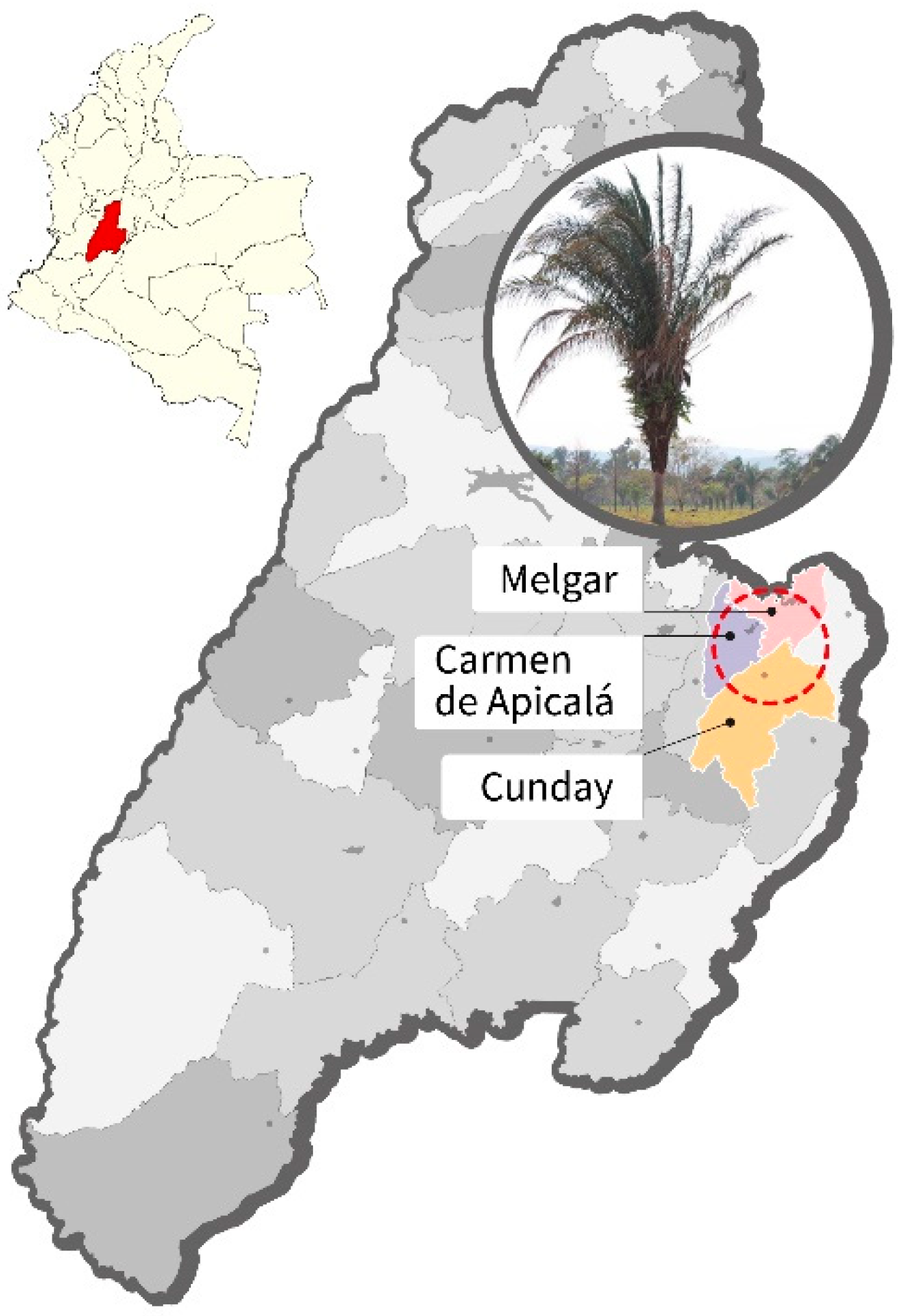
Figure 1. Location of palm wine producers. Municipalities of Melgar, Carmen de Apicalá, and Cunday in Colombia.
Fermentation 12 00244 g001
Figure 2. Relative abundances (%) of bacterial 16S rDNA genes from Colombian palm wine. (A): genus level. (B): species level.
Fermentation 12 00244 g002
Figure 3. Relative abundances (%) of fungal communities at the species level in Colombian palm wine.
Fermentation 12 00244 g003
Figure 4. Metabolic pathways related to the metabolism of cofactors and vitamins (green bars) and the biodegradation and metabolism of xenobiotics (blue bars) found in the palm wine bacterial community.
Fermentation 12 00244 g004
Table 1. Microbial counts measured in Colombian palm wine.
MicroorganismsMicrobial Counts (Log CFU mL−1)
Producer 1Producer 2Producer 3
Lactic acid bacteria5.7 ± 0.5 a6.2 ± 0.6 b6.1 ± 0.3 ab
Acetic acid bacteria4.8 ± 1.2 b4.5 ± 0.5 a4.1 ± 0.9 a
Yeast5.9 ± 1.3 b3.2 ± 0.6 a4.5 ± 0.5 ab
Molds 2.7 ± 1.2 b1.5 ± 0.3 a1.7 ± 0.6 ab
Coliformsn.d.n.d.n.d.
pH3.49 ± 0.05 a3.65 ± 0.04 b3.35 ± 0.07 a
Results are expressed as means ± standard deviations of three replicates. Different letters in the same row indicate significant differences (p < 0.05). Abbreviations: n.d.—not detected.
Table 2. Alpha diversity indexes of the microbial community in palm wine.
Palm WineObserved SpeciesChao1Shannon
BacteriaFungiBacteriaFungiBacteriaFungi
Producer 11951963.010.18
Producer 21881892.870.03
Producer 31571582.710.03
Table 3. Characterization of Colombian palm wine.
ParameterProducer 1Producer 2Producer 3
Glucose (g/L)5.2 ± 1.1 a20.83 ± 0.02 b33.59 ± 0.55 c
Fructose (g/L)5.2 ± 0.9 a23.03 ± 0.66 b40.90 ± 0.68 c
Saccharose (g/L)1.5 ± 0.4 b1.40 ± 0.07 b0.53 ± 0.05 a
Ethanol (g/L)5.20 ± 1.1 b1.62 ± 0.01 a8.40 ± 0.57 c
Acetic acid (g/L)0.61 ± 0.1 b0.48 ± 0.02 a0.47 ± 0.09 a
Succinic acid (g/L)2.20 ± 0.30 b1.36 ± 0.29 a3.19 ± 0.06 c
Lactic acid (g/L)0.2 ± 0.1 a1.82 ± 0.04 b1.93 ± 0.04 b
Results are expressed as means ± standard deviations of three replicates. Different letters in the same row indicate significant differences (p < 0.05).
Table 4. Antioxidant capacity (DPPH and ABTS radical-scavenging assay) and total phenolic content (TPC) of Colombian palm wine.
DPPH (µM TE/L)ABTS (µM TE/L)TPC (mg GAE/L)
Producer 10.16 ± 0.07 a0.17 ± 0.02 a0.37 ± 0.03 b
Producer 20.21 ± 0.11 a0.16 ± 0.02 a0.40 ± 0.07 b
Producer 31.08 ± 0.04 b0.27 ± 0.01 b0.20 ± 0.02 a
TE: Trolox equivalent; ABTS: 2,2′-azino-bis(3-ethylbenzothiazoline-6-sulfonic acid); DPPH: 2,2-diphenyl-1-picrylhydrazyl. Results are expressed as means ± standard deviations of three replicates. Different letters in the same column indicate significant differences (p < 0.05).
Table 5. Main microorganisms found in palm wines of different origins.
PalmCountry of OriginBacteriaYeastReferences
African oil palm (Elaeis guineensis)CameroonLevilactobacillus brevis
Enteroccocus faecium
-[26]
African oil palm (Elaeis guineensis)CameroonLactobacillus pentosus, Lactobacillus plantarum, and Lactobacillus brevis.-[27]
Palm oil tree (Elaeis guineesis) and Palm Raffia (Raffia sudanica)CameroonL. plantarum, Lactobacillus rhamnosus, L. brevis.[28]
Indian palm wineIndiaAcetobacter sp., Lactobacillus sp., Candidatus sp., Gluconobacter sp., Burkholderia sp., Clustordium sp., Oenococcus sp., Zymomonas sp., and Enterobacter sp.-[29]
Raffia palm
(Raphia hookeri)


Ron palm
(Borassus aethiopum)
Côte d’Ivoire-Saccharomyces cerevisiae, Hanseniaspora jakobsenii, Geotrichum candidum, Yarrowia lipolytica, Kodamaea ohmeri, Candida sorboxylosa, Meyerozyma caribbica, Yarrowia deformans, Pichia manshurica, Pichia kudriavzevii, Debaryomyces hansenii.

S. cerevisiae, H. jakobsenii, D. hansenii, Hanseniaspora guilliermondii, M. caribbica, P. manshurica, Y. lipolytica, Y. deformans, Candida ethanolica, K. ohmeri.
[30]
Palmyrah palm
(Borassus flabellifer)
IndiaBacillus sp. close relation with B. cereus, B. proteolyticus, and B. pacificus.-[31]
African oil palm
(Elaeis guineensis),

Raffia palm
(Raphia hookeri)

Ron palm
(Borassus aethiopum)
Côte d’IvoireLAB: Leuconostoc mesenteroides, Fructobacillus durionis, Lactobacillus fermentum, L. pseudomesenteroides, Weisella cibaria, Enterococcus casseliflavus, Lactobacillus paracasei, and Lactococcus lactis.

LAB: L. mesenteroides, F. durionis, L. pseudomesenteroides, W. cibaria, and L. paracasei.

LAB: L. mesenteroides, F. durionis, and L. pseudomesenteroides.
-[14]
Raffia palm (Raphia hookeri)Côte d’IvoireL. mesenteroides, Lactobacillus sp.S. cerevisiae, Hanseniaspora sp., and Hanseniaspora valbyensis[13]
Ron palm
(Borassus aethiopum)


African oil palm
(Elaeis guineensis)
Côte d’IvoireLAB: F. durionis, Fructobacillus ficulneus, Fructobacillus fructosus, Lactobacillus diolivorans, L. fermentum, Oenococcus kitaharae, Oenococcus oeni
AAB: Acinetobacter xiamenensis, Acetobacter tropicalis, Gluconobacter frateurii, Gluconobacter oxydans
S. cerevisiae, H. guilliermondii, Schwanniomyces etchelisii, Zygosaccharomyces bailii, Torulaspora delbrueckii


S. cerevisiae, H. guilliermondii,
[15]
Palm wine
(Cocos nucifera)
MexicoLAB: Fructobacillus, Leuconostoc, Lactococcus.
AAB: Gluconacetobacter, Acetobacter.
Others: Vibrio sp.
-[32]
African oil palm
(Elaeis guineensis)
Côte d’Ivoire-Kluyveromyces marxianus, Candida tropicalis, Candida inconspicua, Candida rugosa[33]
Date palm
(Phoenix sylvestris (L.) Roxb.)
IndiaLAB: L. paraplantarum, uncultured Leuconostoc sp., L. mesenteroides, Lactobacillus sp., L. lactis,
AAB: Acetobacter sp., Gluconobacter sp.
S. cerevisiae, Starmerella meliponinorum, T. delbrueckii, Lachancea thermotolerans, Lachancea lanzarotensis, Lachancea kluyveri, Hanseniaspora uvarum[34]
Raffia palm
(Raphia hookeri) and oil palm (Elaeis guineensis)
NigeriaLAB: Leuconostoc lactis, L. fermentum, Lactobacillus delbrueckii ssp. Lactis, L. delbrueckii ssp. delbrueckii, Lactobacillus acidophilus, L. plantarum, Leuconstoc mesenter. ssp. mesent./dextrac. L. pentosus, Lactobacillus coprophilus, L. brevis, Lactobacillus cripatus, L. rhamnosus-[25]
Palmyra palm (Borassus akeassii)Burkina FasoLAB: L. plantarum, L. fermentum, L. paracasei, L. mesenteroides, F. durionis, Liquorelactobacillus nagelii, and Streptococcus mitis.
AAB: Acetobacter indonesiensis, A. tropicalis, Acetobacter estunensis, Acetobacter ghanensis, Acetobacter aceti, Acetobacter lovaniensis, Acetobacter orientalis, Acetobacter pasteurianus, Acetobacter cerevisiae, G. oxydans, and Gluconobacter saccharivorans.
S. cerevisiae, Arthroascus fermentans, Issatchenkia orientalis, C. tropicalis, Trichosporon asahii, Candida pararugosa, H. uvarum, K. ohmeri, S. pombe, Trichosporon asteroides, Trigonopsis variabilis, Galactomyces geotrichum, and Candida quercitrusa[35]
Coyol palm
(Acrocomia aculeate)
MexicoLAB: F. durionis, F. fructosus, L. nagelii, Lactobacillus sucicola, Lactobacillus sp.
AAB: A. pasteurianus.
Others: Zymomonas mobilis.
Enterobacteria: Pantoea agglomerans, Enterobacter hormaechei, Enterobacter aerogenes, Klebsiella pneumoniae, Citrobacter freundii, Kluyvera georgiana.
[36]
Elaeis guineensisNiger
(Igbo Eze North)
LAB: L. brevis, L. paracasei subsp. Tolerans, L. paracasei, and Lactobacillus yonginensis[37]
Palm Raffia Wine (Raffia mambillensis)CameroonL. plantarum and L. Pentosus[38]
Abbreviations: LAB: lactic acid bacteria. AAB: acetic acid bacteria.
Disclaimer/Publisher’s Note: The statements, opinions and data contained in all publications are solely those of the individual author(s) and contributor(s) and not of MDPI and/or the editor(s). MDPI and/or the editor(s) disclaim responsibility for any injury to people or property resulting from any ideas, methods, instructions or products referred to in the content.