
Review

Research Progress in the Mechanisms of Microbial Furfural Tolerance and Future Research Prospects for Its Biotechnological Exploitation

1
College of Food Science, Fujian Agriculture and Forestry University, Fuzhou 350002, China
2
Xianghu Laboratory, Hangzhou 311200, China
3
College of Biological Science and Engineering, Ningde Normal University, Ningde 352100, China
4
East China Electric Power Test & Research Institute Co., Ltd., China Energy Engineering Group, Hangzhou 311215, China
5
National Engineering Laboratory for Industrial Enzymes, College of Biotechnology, Tianjin University of Science and Technology, Tianjin 300457, China
6
Pinghu Dushangang Environmental Protection Energy Co., Ltd., Jiaxing 314205, China
*
Authors to whom correspondence should be addressed.
These authors contributed equally to this work.
Fermentation 2026, 12(5), 232; https://doi.org/10.3390/fermentation12050232
Submission received: 9 March 2026 / Revised: 29 April 2026 / Accepted: 6 May 2026 / Published: 8 May 2026
(This article belongs to the Special Issue Lignocellulosic Biomass in Biorefinery Processes)

Abstract

Lignocellulose is the most abundant renewable biomass on Earth, and its efficient bioconversion is critical for achieving carbon neutrality, substituting fossil resources, and advancing sustainable biomanufacturing. However, furfural, a dominant inhibitor generated during lignocellulosic pretreatment, severely compromises microbial metabolism and fermentation performance. To date, no systematic review has comprehensively integrated the mechanisms of furfural-induced microbial toxicity with corresponding stress tolerance strategies. This review elaborates on three core themes: the multi-pathway toxic effects of furfural, intrinsic microbial tolerance mechanisms, and advanced strategies for constructing a high-tolerance microbial chassis. Despite considerable progress, several research gaps persist, including poorly understood synergistic or antagonistic interactions between furfural and other hydrolysate inhibitors, insufficient integration of adaptive laboratory evolution, rational design, and random mutagenesis in anti-inhibitor research, and limited understanding of trade-offs between furfural tolerance and industrial fermentation robustness. Future efforts should address these gaps through combinatorial stress simulation, multi-omics profiling, and the “evolve–elucidate–engineer” paradigm, thereby enabling the scalable and stable application of lignocellulosic biomanufacturing.

1. Introduction

Lignocellulose stands as the most abundant renewable biomass resource on Earth, and its efficient bioconversion serves as a key pathway to achieve the “dual carbon” goal and replace fossil resources [1]. Lignocellulose comprises three major components: cellulose, hemicellulose, and lignin. Hemicellulose typically accounts for 20–35% of its dry mass [2]. Acid pretreatment combined with steam explosion is a widely used strategy for lignocellulose valorization. In this process, hemicellulose is the main fraction hydrolyzed, and xylose is its primary degradation product. However, high temperatures cause partial xylose degradation into furfural. Pretreatment also generates other inhibitory byproducts, such as 5-HMF, acetate, and glycolaldehyde [3]. Among these inhibitors, furfural is the most abundant. For example, when sugarcane bagasse is treated with phosphoric acid at 190 °C for 5 min, the yield of furfural is about 2 g/L, which completely inhibits Escherichia coli KJ122 growth and fermentation [4]. Therefore, its toxicological mechanisms have been more extensively studied than those of other inhibitors.
Furfural not only significantly prolongs the microbial growth lag phase and reduces cell viability but also inhibits the synthesis of target products such as ethanol, thereby severely undermining the economic viability of the biomass refining industry [5]. Consequently, elucidating the mechanisms of microbial tolerance to furfural and developing highly tolerant strains have emerged as research frontiers in the field of biomass conversion [6,7]. To date, no systematic and comprehensive review has integrated furfural-induced microbial toxicity mechanisms with corresponding stress tolerance strategies. We performed a literature search in the NCBI database covering the period from 2003 to 2026, using the search terms “furfural, tolerance, and genes”, and systematically reviewed the microbial toxicity mechanisms of furfural, the physiological and molecular bases underlying microbial tolerance to furfural and strategies for constructing highly tolerant strains. Finally, we outlined future research directions, aiming to provide insights for advancing the efficient utilization of lignocellulosic resources.

2. Microbial Toxicity Mechanisms of Furfural

2.1. Furfural Influences on Microbial DNA and the Underlying Mechanisms

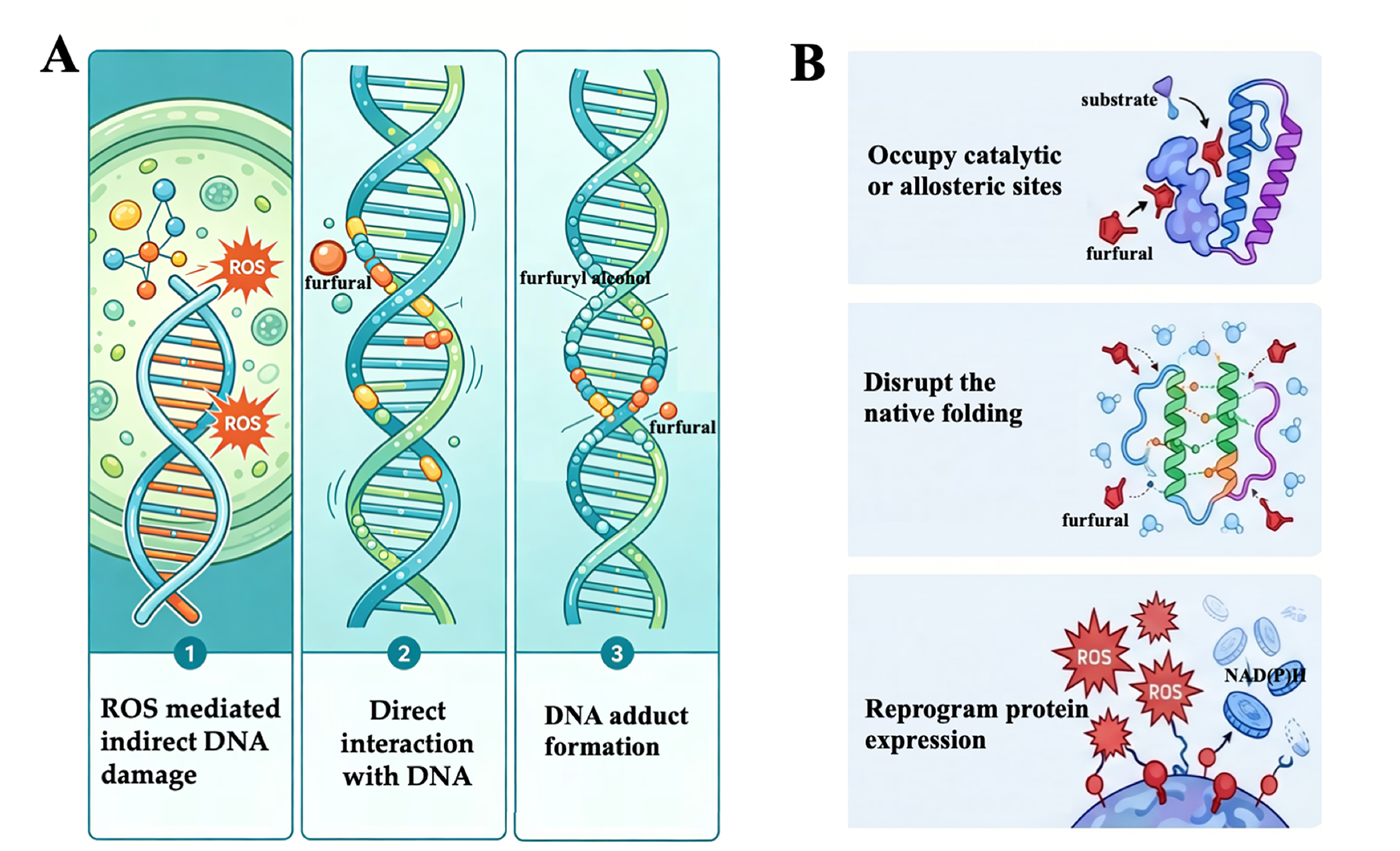
Furfural is a potent genotoxin that causes DNA strand breaks, point mutations, and large-scale chromosomal rearrangements [8]. In Saccharomyces cerevisiae (S. cerevisiae), 0.1 g/L to 20 g/L furfural increases mitotic recombination 1.5- to 40-fold. Whole-genome SNP analysis confirms diverse single base substitutions across all 16 chromosomes, notably C→T and G→A transitions [9]. Similar genotoxicity has been reported in Escherichia coli (E. coli) and Salmonella enterica serovar Typhimurium [10,11]. Furfural-induced DNA damage is primarily mediated by three types of mechanisms. The first one is reactive oxygen species (ROS)-mediated indirect DNA damage. For example, furfural induces the accumulation of ROS in S. cerevisiae, causing damage to cellular structures including mitochondrial membranes, vacuolar membranes, the actin cytoskeleton, and chromatin [8]. The second one is direct interaction with DNA. Treatment of λ phage DNA with furfural is protected against cleavage by restriction endonucleases DraI and SspI, but not by ApaI, BssHII, or SacII, indicating that under the conditions used, furfural reacts exclusively with AT base pairs and requires a minimum of 3–4 consecutive AT pairs for this reaction [12]. The third one is metabolic activation and DNA adduct formation. Furfural can be reduced to furfuryl alcohol, which can then undergo sulfotransferase-mediated bioactivation to form a reactive sulfate ester capable of forming covalent adducts with DNA [13] (Figure 1A).

2.2. Furfural Influences on Microbial Proteins and the Underlying Mechanisms

Furfural exerts multiple detrimental effects on microbial proteins, acting through both direct physicochemical interactions and indirect stress-induced pathways. Furfural can bind directly to the active site of certain enzymes, acting as a competitive inhibitor. For instance, it competes with acetaldehyde for the substrate binding pocket of alcohol dehydrogenase (ADH) in S. cerevisiae [14]. It also inhibits enzymes noncompetitively by binding to allosteric sites, thereby altering the protein’s tertiary conformation. For pyruvate dehydrogenase (PDH), furfural does not occupy the substrate binding cavity yet impairs catalytic activity through structural distortion [14]. Furfural can also disrupt the native conformation of both structural and functional proteins. Spectroscopic and molecular docking studies reveal that furfural forms hydrogen bonds, van der Waals forces, and hydrophobic interactions with protein backbones and side chains. This leads to a loss of ordered secondary structures (α helices, β sheets) and a shift toward disordered random coils. In S. cerevisiae, such denaturation is vividly illustrated by the collapse of the actin cytoskeleton. Over 70% of cells exposed to furfural lose normal actin cables and retain only aberrant cortical patches, impairing polarity, budding, and intracellular trafficking [15]. Comparative proteomics demonstrates that furfural triggers a large-scale reprogramming of protein expression. In S. cerevisiae fermenting under 8 g/L furfural, 107 proteins involved in translation and protein synthesis are downregulated, alongside central metabolic enzymes of glycolysis and the tricarboxylic acid cycle. Conversely, a specific set of 18 stress-responsive proteins, including heat shock proteins (HSPs) and signaling pathway components, is significantly upregulated [16]. Furthermore, catalytic proteins in the sulfur-containing amino acid biosynthesis pathway are persistently repressed, indicating targeted metabolic bottlenecks.
The above effects are mediated by three principal molecular mechanisms. Firstly, furfural occupies catalytic or allosteric sites, blocking substrate access or conformational flexibility [14]. Secondly, hydrophobic and hydrogen bonding interactions between furfural and proteins can disrupt the hydration shell and intramolecular forces maintaining native folding [16]. Thirdly, NAD(P)H depletion from furfural detoxification and ROS accumulation create an oxidizing intracellular environment that covalently modifies and inactivates proteins [14]. Collectively, these mechanisms impair enzymatic catalysis, dismantle structural networks, and redirect proteome composition, severely compromising cell fitness and biotechnological performance (Figure 1B).

2.3. Furfural Influences on Microbial Lipids and the Underlying Mechanisms

Furfural perturbs microbial lipid metabolism at multiple levels, with the direction and magnitude of the effect being highly dependent on furfural concentration, the microbial species, and culture conditions. These disturbances arise from a combination of direct enzyme inhibition, cofactor competition, oxidative damage, and metabolic reprogramming.
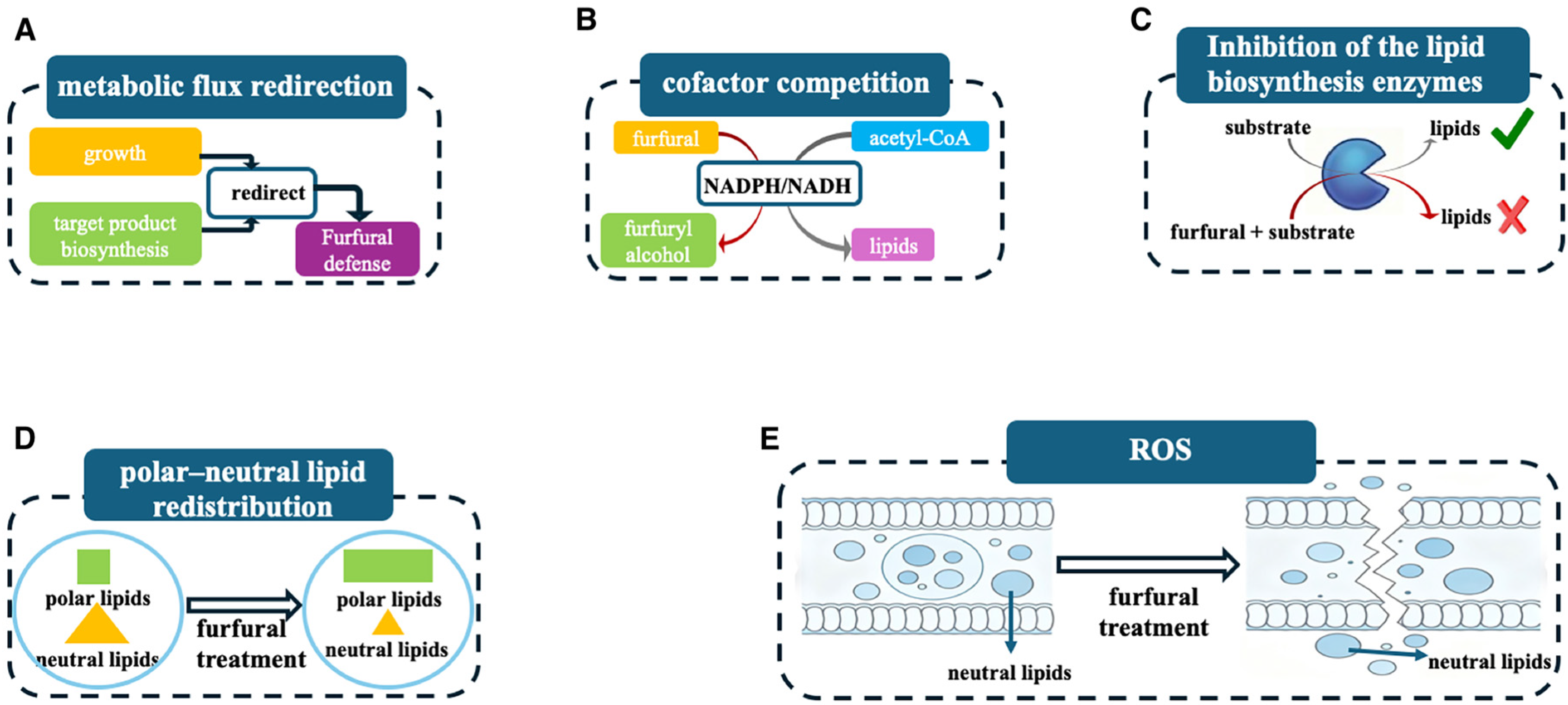
Firstly, furfural induces metabolic flux redirection in a concentration-dependent manner. In S. cerevisiae, subinhibitory furfural levels redirect carbon flux from ethanol production toward lipid accumulation, increasing total lipid content by 5–10% [17]. This likely represents a stress-induced energy storage strategy. However, as furfural concentration increases, this adaptive response is overridden, and lipid synthesis is severely inhibited, paralleling the general growth arrest [18] (Figure 2A). Secondly, there is a cofactor competition between furfural detoxification and lipid biosynthesis. The most universal mechanism underlying furfural induced lipid impairment is the competition for reduced cofactors. Both furfural reduction (to furfuryl alcohol) and lipid biosynthesis are highly NAD(P)H-dependent processes. When furfural is present, the detoxification machinery consumes a large proportion of the cellular NAD(P)H pool, thereby limiting the availability of this reducing power for fatty acid and lipid synthesis. This cofactor drain is considered the primary cause of reduced lipid accumulation in oleaginous microorganisms, such as Rhodotorula glutinis at 1.5 g/L furfural [19] (Figure 2B). Thirdly, furfural can inhibit the lipid biosynthesis enzymes directly. For example, in Yarrowia lipolytica, even low furfural concentrations disrupt glycolytic enzymes, reducing carbon source utilization and causing a temporary halt in lipid synthesis [20]. Although detailed kinetic studies of furfural-mediated inhibition of specific lipid biosynthetic enzymes (e.g., acetyl CoA carboxylase, fatty acid synthase) remain limited, the general protein denaturing and enzyme-inhibitory properties of furfural suggest that direct enzyme impairment contributes to the observed lipid decline (Figure 2C). Fourthly, furfural alters the balance between polar (membrane) and neutral (storage) lipids. In Saccharomyces carlsbergensis, furfural concentrations exceeding 0.8 g/L reduce both polar and neutral lipid contents, with the reduction being more pronounced during the stationary phase [21]. Since neutral lipids serve as intracellular energy reserves and are involved in cellular protective mechanisms under stress, their depletion renders cells more susceptible to furfural toxicity, creating a vicious cycle of increasing sensitivity (Figure 2D). In addition, furfural metabolism generates reactive oxygen species (ROS), which attack the unsaturated fatty acids of membrane phospholipids, causing lipid peroxidation [15,22]. This oxidative damage compromises membrane integrity, fluidity, and the function of membrane-embedded proteins, further exacerbating cellular stress and contributing to the loss of membrane-associated neutral lipid droplets (Figure 2E).
In summary, the detrimental effects of furfural on DNA, proteins, and lipids constitute the molecular basis of its overall toxicity. These effects are tightly interconnected through core processes such as oxidative stress, cofactor depletion, and covalent modification. ROS act as both direct mediators of DNA and lipid damage and triggers of protein oxidation and denaturation. Meanwhile, sustained NAD(P)H consumption not only restricts lipid biosynthesis but also compromises the regeneration of antioxidant systems such as glutathione, thereby exacerbating oxidative damage to macromolecules. Consequently, furfural toxicity is not a single-target effect but rather a cascading, multi-target attack that collectively inhibits cell growth, prolongs the lag phase, and blocks the synthesis of desired metabolites.

3. Mechanism of Microbial Tolerance to Furfural

During long-term evolution and stress adaptation, microorganisms have formed multi-level furfural tolerance mechanisms, including furfural degradation and transformation, oxidative stress defense, cell membrane barrier enhancement, and metabolic regulation optimization. These mechanisms cooperate with each other to resist furfural toxicity.

3.1. Efficient Transformation of Furfural

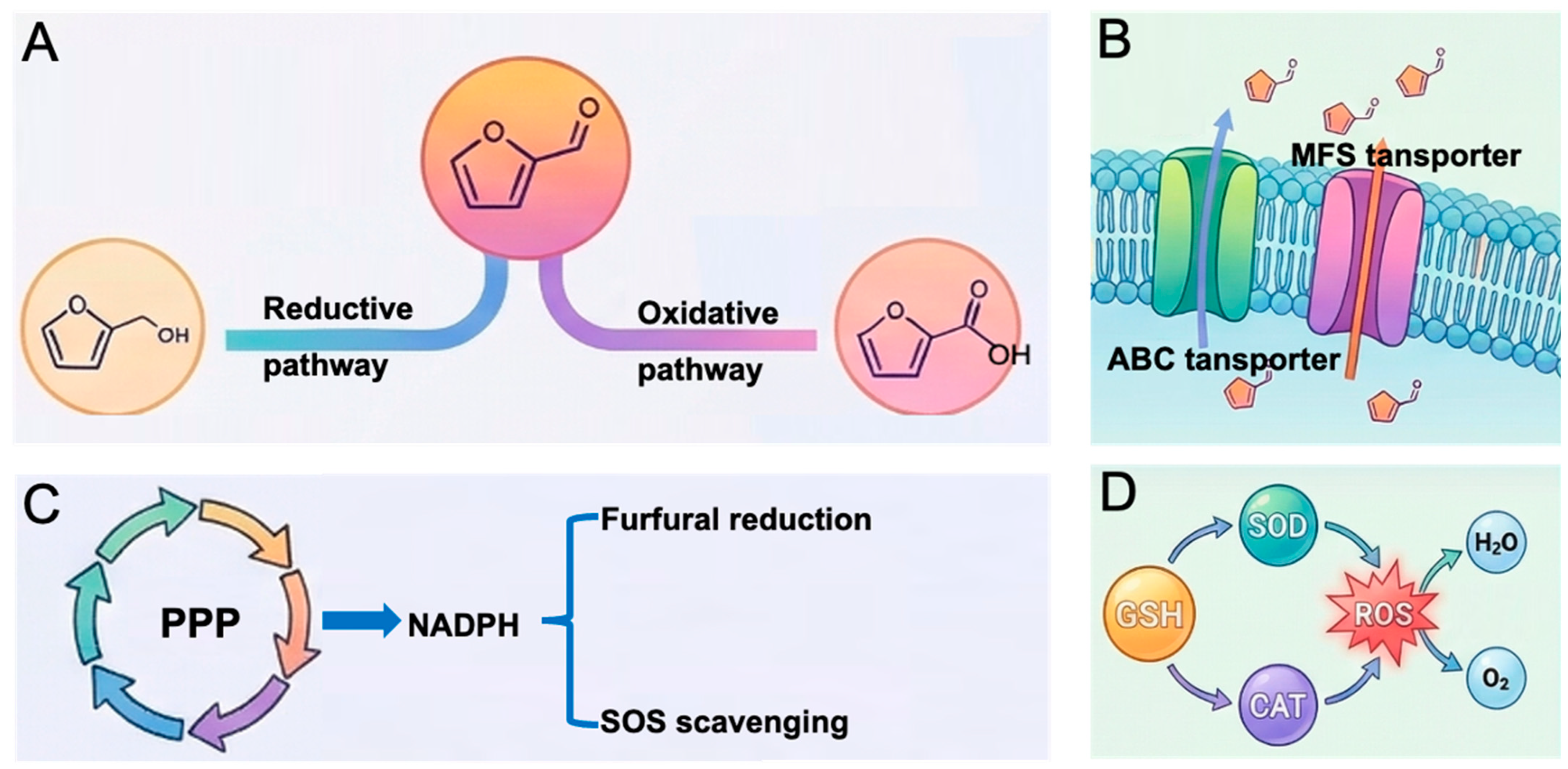
Converting furfural into furfuryl alcohol is the most direct tolerance strategy of microorganisms, and this process mainly relies on the catalytic effect of oxidoreductase systems. In S. cerevisiae, alcohol dehydrogenase (including ADH1, ADH6, and ADH7) and aldo-keto reductase (such as GRE2) are key enzymes that catalyze the reduction of furfural to furfuryl alcohol (Table 1) [23,24,25,26]. In E. coli LY180, furfural toxicity can be solved by overexpression of fucO, ucpA, or pntAB or deletion of yqhD. The optimal genetic trait combination (ΔyqhD + PyadC′fucO-ucpA) is integrated into E. coli LY180, yielding the ethanol-producing strain XW129, while the same combination similarly improves furfural tolerance in succinate-producing E. coli derivatives [5,27]. Additionally, furfural can be metabolized by other bacteria, including Bacillus coagulans, Bacillus cereus, Clostridium acetobutylicum, Pseudomonas spp., Lactococcus and Trichococcus [28,29,30,31,32], and fungi, such as Trichoderma, Aspergillus [33,34], as well as extremophiles, e.g., Thermoanaerobacter pseudethanolicus 39E [35] (Table 1; Figure 3A).
Table 1. Enzymes for converting furfural to less toxic compounds.
MicroorganismsKey DiscoveriesReferences
Aldehyde reductase  
Clostridium beijerinckii NCIMB 8052Plasmid overexpression of aldo-keto reductase (AKR) (Cbei_3974) and short-chain dehydrogenase/reductase (SDR) (Cbei_3904)[36]
S. cerevisiae BY4742Overexpression of aldehyde reductase (RDS1)[37]
Clostridium beijerinckii NCIMB 8052 (Cb)Constitutive expression of aldo-keto reductase (Cbei_3974)[38]
Scheffersomyces stipitisOverexpression of aldehyde reductases (SsOye3.3p and SsOye2.6p)[39]
Kodamaea ohmeri SSKOverexpression of the aldo-keto/aldehyde reductase (AKR/ARI) gene[40]
Corynebacterium glutamicum S9114Overexpression of CGS9114_RS01115 (oxidoreductase)[41]
Aldehyde dehydrogenase  
Yarrowia lipolytica PO1fOverexpression of YALI0E15400p (FALDH2)[42]
K. marxianus NRRL Y-50883 (SLP1)Upregulation of the aldehyde dehydrogenases (ALD4 and ALD6) [43]
Kodamaea ohmeri SSKOverexpression of the aldehyde dehydrogenase (ALDH) gene[40]
Neurospora crassa T112Overexpression of aldehyde dehydrogenase mutants ahd-2 (NCU00378)[44]
Kluyveromyces marxianus NBRC1777Overexpression of a novel alpha/beta hydrolase (KmYME)[45]
Alcohol dehydrogenases  
Thermoanaerobacter pseudethanolicus 39EOverexpression of butanol dehydrogenase (BdhA)[35]
S. cerevisiae MT8-1XOverexpression of transaldolase (TAL) and alcohol dehydrogenase (ADH)[46]
E. coli XW92Protein engineering to increase FucO activity[47]
Kodamaea ohmeri SSKOverexpression of the alcohol dehydrogenase (ADH) gene[40]
S. cerevisiae BY4742Overexpression of ADH7 (NADPH-dependent alcohol dehydrogenases)[48]
Amorphotheca resinae
ZN1
Overexpression of two Zn-dependent alcohol dehydrogenase genes and five AKR/ARI genes[49]
Clostridium beijerinckii NCIMB 8052Overexpressing glycerol dehydrogenase (Gldh) genes (dhaD1 and gldA1) and dihydroxyacetone kinase (dhaK)[50]
Scheffersomyces stipitis CBS 6054Overexpression of aryl-alcohol dehydrogenases (SsAAD2, SsAAD3, and SsAAD4)[51]
In addition to the reductive pathway, some microorganisms can also convert furfural into furoic acid through the oxidative pathway (Table 1). Whole cells of Pseudomonas putida KT2440 can selectively oxidize furfural to furoic acid with a quantitative yield. Genetic background studies reveal that the molybdate transporter plays a key role in furfural oxidation, and its deletion significantly represses furan carboxylic acid synthesis, indicating that molybdenum-dependent enzymes (molybdoenzymes) are the core of such oxidation reactions [52]. Yarrowia lipolytica’s furfural tolerance is enhanced by biotransformation of furfural into furoic acid via overexpressing its aldehyde dehydrogenase. Notably, YALI0E15400p (FALDH2) exhibits the highest conversion efficiency, doubling cell growth and lipid yield under 0.4 g/L furfural stress [42]. Gluconobacter oxydans (ATCC 621H) could metabolize furfural to furoic acid with a titer of 40 g L−1, a productivity of 0.167 g L−1 h−1 and a yield of nearly 100% [53]. Chlorella vulgaris is the first microalga shown to transform furfural into furoic acid under photoautotrophic or mixotrophic conditions with a conversion ratio of 100%. However, furfural prolongs its growth lag phase and reduces the photosynthetic yield Y(II) [54]. Under aerobic conditions, Amorphotheca resinae ZN1 and Corynebacterium glutamicum ATCC13032 simultaneously converts furfural into its corresponding alcohol and carboxylic acid [55,56]. For Agrobacterium tumefaciens strain S33, an aldehyde dehydrogenase (Ald) encoded by the ald gene within its nicotine-degrading cluster mediates furfural oxidation to furoic acid. When heterologously expressed in recombinant E. coli, this enzyme achieves a specific conversion rate of 0.032 mmol·min−1·g−1 (dry cell weight) and it is strictly NAD-dependent and exhibits optimal activity under alkaline (pH 9.0) and low-salt conditions [57]. Notably, Acetobacter rancens IFO3297 exhibits exceptional performance in furfural-to-furoic-acid conversion, yielding 110 g/L of product with a 95% molar yield [58]. As a model furan-degrading strain, Cupriavidus basilensis HMF14 harbors eight hmf genes arranged in two distinct clusters, among which the five genes governing furfural degradation are highly conserved across furan-degrading microorganisms [59] (Figure 3A).

3.2. Regulation of Cell Membrane Structure and Transport System

The cell membrane is the first barrier for microorganisms to resist external toxic substances. Under furfural stress, microorganisms can maintain membrane fluidity by regulating the phospholipid composition of the cell membrane and increasing the content of unsaturated fatty acids, thereby reducing the transmembrane transport of furfural. In E. coli, increasing the abundance of phosphatidylethanolamine head group in the cell membrane could improve its tolerance to furfural [60]. When Zymomonas mobilis is under high-furfural-concentration stress, the expression levels of several membrane composition-related genes are significantly downregulated, including oprM (associated with lipoprotein biosynthesis), kpsC (associated with polysaccharide capsule biosynthesis), and genes encoding flagellar proteins. Meanwhile, the contents of membrane-related compounds are also notably affected, among which the content of isoprenoids (such as hopanoids) is significantly reduced [61]. S. cerevisiae strain SCF-R4 is obtained through multiple rounds of progressive X-ray irradiation combined with adaptive laboratory evolution. Compared with its parental strain, SCF-R4 exhibits significantly higher furfural tolerance, which is closely associated with its superior cell membrane integrity [62] (Figure 3B). In summary, microorganisms employ passive membrane adaptation to remodel the structure and composition of the cell envelope. This strategy primarily acts by strengthening the physical barrier, thereby minimizing furfural penetration into cells.
At the same time, transporters can pump out the accumulated furfural in the cell through the active efflux mechanism, reducing the intracellular furfural concentration. Transcriptome analysis shows that membrane transporters of Clostridium beijerinckii NCIMB 8052 are overexpressed after it is cultured under a high concentration of furfural [36]. In Clostridium thermocellum, genes for sulfate transporter subunits have obvious response under furfural treatment according to transcriptome analysis [63]. For Aspergillus oryzae RIB40, the expression levels of efflux transporters—including ATP-binding cassette (ABC) transporters and major facilitator superfamily (MFS) transporters—are significantly upregulated under furfural stress [64] (Table 2; Figure 3B).
Table 2. Global regulatory mechanisms in response to furfural.
MicroorganismsKey DiscoveriesReference
E. coli LY180Overexpression of polyamine transporters[6]
E. coli LY180Disruption of YqhC, a transcriptional regulator belonging to the AraC/XylS family[27]
Bacillus coagulans DSM2314An upregulation of SigB and genes promoted by SigB, such as NhaX and YsnF[65]
S. cerevisiae CEN.PK113-7DOverexpression of Rad18 and Gcn1 to increase the activities of catalase (CAT) and superoxide dismutase (SOD)[66]
Aureobasidium pullulans CCTCC M2012223Key genes (i.e., SIR, GSS, CYS, and GSR) involved in sulfur assimilation pathway[67]
Pseudomonas putida KT2440Overexpression of ATP-binding cassette (ABC) transporters and a hypothetical protein[68]
E. coli BW25113 ΔrecA::KanOverexpression of thymidylate synthase or GroES chaperone[69]
E. coli KSYH(DE3)Overexpression of PHB synthetic genes (bktB, phaB, and phaC from Ralstonia eutropha H16[70]
S. cerevisiae BY4742Overexpression of a putative transcription factor (YPR015C)[71]
Candida glycerinogenes UA5Overexpression of transcription factor, either STB5 or ETP1[72]
S. cerevisiae BY4741Overexpression of transcription factor YAP1(C620F)[73]
Pichia pastoris X33Overexpression of high-affinity cysteine transporter (YCT1), and Pyrimidine pathway-regulatory protein (PPR1)[74]
S. cerevisiae ER-6c (MAT a) and S. cerevisiae ER-3a (MAT α)Overexpression of the transcription activator Msn2[75]
S. cerevisiaeOverexpression of Yap1p[76]
S. cerevisiae GSE16-MCR1Overexpression of the mitochondrial NADH-cytochrome b5 reductase (MCR1)[77]
E. coli LY180Overexpression of thyA gene (coding for thymidylate synthase)[78]
Clostridium
saccharoperbutylacetonicum N1-4 (HMT) (DSM 14923)
Overexpression efflux pump genes (srpB) from Pseudomonas putida[79]
S. cerevisiae Y258Overexpressing isocitrate dehydrogenase (IDH1) and dicarboxylate carrier (DIC1)[80]
E. coli LGE2Overexpression of ycfR (encoding a stress-induced protein)[81]
S. cerevisiaeDisruption of SIZ1, a gene encoding an E3 SUMO-protein ligase[82]
S. cerevisiae BY4717Overexpression of the bifunctional glutathione (GSH) synthetase genes GCSGS[83]
E. coli CFA101Overexpression of cyclopropane-fatty acid-acyl-phospholipid synthase (cfa)[84]
E. coli BL21(DE3)Overexpression of Zmo0994 to trigger genes involved in aerobic respiration for ATP synthesis[85]
Zymomonas mobilis 8bOverexpression of ZMO0465 and cysteine synthase operon ZMO0003-0006[86]
S. cerevisiae BY4741Deletion of PHO13 encoding p-nitrophenylphosphatase[87]
S. cerevisiae
CEN.PK 113-5D
Overexpression of γ-glutamylcysteine synthetase (GSH1)[88]
S. cerevisiae D452-2Disruption of ornithine decarboxylase and the polyamine transporter and overexpression of SPE, involved in the polyamine biosynthesis[89]
Candida tropicalis YB-3Overexpression of sulfate adenosine transferase, glutathione reductase, and inositol phosphate synthase[90]
Collectively, these two mechanisms function in a complementary manner: passive membrane adaptation restricts the influx of furfural, while active efflux systems eliminate intracellular furfural, thereby jointly enhancing microbial tolerance to furfural.

3.3. Adaptive Reconstruction of Metabolic Network

Microorganisms will adjust the distribution of metabolic flux to cope with the metabolic inhibition caused by furfural. When Clostridium acetobutylicum is under the pressure of furfural, the metabolites and key enzymes/proteins involved in glycolysis, reductive tricarboxylic acid (TCA) cycle, acetone–butanol synthesis and redox metabolism are lower than those in the control group, while proteins involved in gluconeogenesis, the oxidative TCA cycle, and thiol peroxidase (TPX) for oxidative stress are significantly upregulated, indicating that inhibitor stress induces the stress response and metabolic regulation [91]. The enhancement of the pentose phosphate pathway (PPP) is a common adaptation strategy (Table 3; Figure 3C). The NADPH produced by this pathway can provide reducing power for furfural reduction and ROS scavenging. In S. cerevisiae, there are several strategies for overcoming furfural toxicity, including overexpression genes involved in the pentose phosphate pathway (PPP) (zwf1, gnd1, rpe1 and tkl1) [46,92,93], upregulating detoxification and antioxidant proteins (such as Ahp1p, alcohol dehydrogenase) and downregulating nitrogen metabolism-related proteins to conserve energy [94,95,96] (Table 3). In addition, the mutation of genes such as glucose-6-phosphate isomerase in the glycolytic pathway can enhance E. coli strain SSK101 resistance to furfural and maintain the stability of basic metabolic functions [97]. In Bacillus coagulans DSM2314, the sigma factor gene sigB and its target genes (e.g., NhaX, YsnF) are upregulated when furfural exists, since these genes are involved in the synthesis of cell wall components [65] (Table 2).
Table 3. Strategies for enhancing NAD(P)H supply to drive furfural reduction.
MicroorganismsKey DiscoveriesReference
E. coli LY180Overexpression of transhydrogenase (pntAB)[5]
E. coli LY180Deleting yqhD and dkgA (NADPH-Dependent Oxidoreductase)[27]
S. cerevisiae BY4741 (MATa his3Δ1 leu2Δ0 met15Δ0 ura3Δ0)Mutants of zwf1, gnd1, rpe1, and tkl1[92]
S. cerevisiae CCUG53310 and S. cerevisiae PE-2Overexpression of PRS3 (Prs3p synthesizes 5-phospho-ribosyl-1(alpha)-pyrophosphate (PRPP) in an ATP-dependent reaction)[93]
Zymomonas mobilis F211Increasing NAD(P)H biosynthesis[96]
S. cerevisiaeOverexpression of genes involved in cofactor biosynthesis: NADH dehydrogenase (NDH), GLR1, OYE2, ZWF1, and IDP1 genes responsible for the interconversion of NADPH and NADP+, overexpression of NAD(P)+ transhydrogenase (PNTB) and NAD+ kinase (POS5)[98]
Cupriavidus necator NCIMB 11599Inserting the nicotine amide salvage pathway genes pncB and nadE to increase the NAD(P)H pool[99]
E. coli HM501Activation of the nicotine amide salvage pathway (pncB and nadE)[100]

3.4. Activation of Oxidative Stress Defense System

In response to the accumulation of ROS induced by furfural, microorganisms activate the antioxidant system centered on glutathione (GSH), superoxide dismutase (SOD) and catalase (CAT). GSH can maintain intracellular redox balance by scavenging ROS, while SOD and CAT catalyze the decomposition of superoxide anions and hydrogen peroxide, respectively. S. cerevisiae CEN.PK113-AL80–4 is adaptive to grow under 2 g/L furfural, and the tolerance mechanism is overexpressing Rad18 and Gcn1 to increase the activities of catalase (CAT) (75%) and superoxide dismutase (SOD) (27.6%) [66]. Interestingly, S. cerevisiae strains YBA_08 and F60C exhibit high efficiency in furfural degradation. Compared to the model strain S288C, they show a 406% increase in glutathione content, which confers protection against reactive oxygen species-mediated cellular damage [101] (Figure 3D). Additionally, Zymomonas mobilis ZMNP is a plasmid-free mutant generated from parental strain Zymomonas mobilis ZM4 via deletion of all four of its native plasmids. Transcriptomic and proteomic profiling demonstrates that ZMNP enhances tolerance to furfural from upregulated expression of stress-responsive and cysteine biosynthesis genes, a change that accelerates intracellular reactive oxygen species (ROS) detoxification and nucleic acid damage repair [102] (Table 2).
In summary, microbial furfural tolerance relies on four functionally distinct yet complementary strategies. Enzymatic biotransformation provides rapid, targeted detoxification at the cost of substantial cofactor consumption. Cell membrane remodeling and active efflux serve as a low-cost, broad-spectrum physical defense that limits intracellular toxin accumulation but cannot fully eliminate the stress. Metabolic rewiring, most prominently the reinforcement of the pentose phosphate pathway, maintains redox balance and supplies NADPH for both detoxification and ROS scavenging, playing a conserved auxiliary role. The GSH–SOD–CAT antioxidant axis universally mitigates downstream oxidative damage without addressing the primary source of toxicity. Different microbial taxa preferentially deploy distinct dominant mechanisms to cope with furfural stress.
Furthermore, these four mechanisms can be systematically organized into a two-tier comparative framework. The first tier encompasses evolutionarily conserved core defenses: enzymatic conversion, membrane barrier adjustment, PPP-driven metabolic rewiring, and the antioxidant cascades. These strategies are widely distributed across bacteria, yeasts, and filamentous fungi, forming a fundamental, cross-species defense module. The second tier comprises microorganism or strain specific adaptations, including unique oxidoreductase isoforms, specialized regulatory systems (e.g., SigB), plasmid loss-induced metabolic reprogramming, and exceptional antioxidant accumulation. Although often not transferable across species, these traits can dramatically elevate host-specific resistance.

4. Strategies for Constructing Highly Furfural-Tolerant Microorganisms

Based on the understanding of furfural toxicity and tolerance mechanisms, researchers have developed a variety of strategies to construct highly tolerant strains, including adaptive laboratory evolution, genetic engineering modification and random mutation.

4.1. Adaptive Laboratory Evolution

Adaptive laboratory evolution (ALE) simulates the natural selection process, so that the strains accumulate beneficial mutations under growth pressure, thereby obtaining stably inherited highly tolerant strains. The S. cerevisiae strain 12-1 screened by this method has a 36 h shorter growth lag phase and a 6.67% higher ethanol conversion rate under the condition of 4 g/L furfural [103]. The evolved strain of Rhodosporidium toruloides derived via 16 successive rounds of sub-cultivation demonstrates a 2.5-fold higher specific growth rate than the wild-type strain under furfural stress [104]. The ethanologenic bacterium Zymomonas mobilis strain ZMF3-3, successfully isolated via ALE, achieves a theoretical ethanol yield of 94.84% under the stress of 3 g/L furfural, whereas the starting strain ZM4 only reaches a theoretical ethanol yield of 9.89% [105]. After ALE, Pediococcus acidilactici XH11 produced 61.9 g/L D-lactate from untreated corncob hydrolysates within 96 h of fermentation [106]. Compared with the parental S. cerevisiae strain TMB3400, the evolved strain shows a significantly shorter lag phase in medium containing furfural as the sole inhibitor. It can also grow under hydrolysate concentrations that are lethal to TMB3400 and displayed markedly improved bioconversion performance under industrially relevant conditions [107]. Based on these results, ALE not only enhances the strain’s tolerance to furfural, but also improves its fermentation performance under furfural stress and its tolerance to real lignocellulosic hydrolysates.
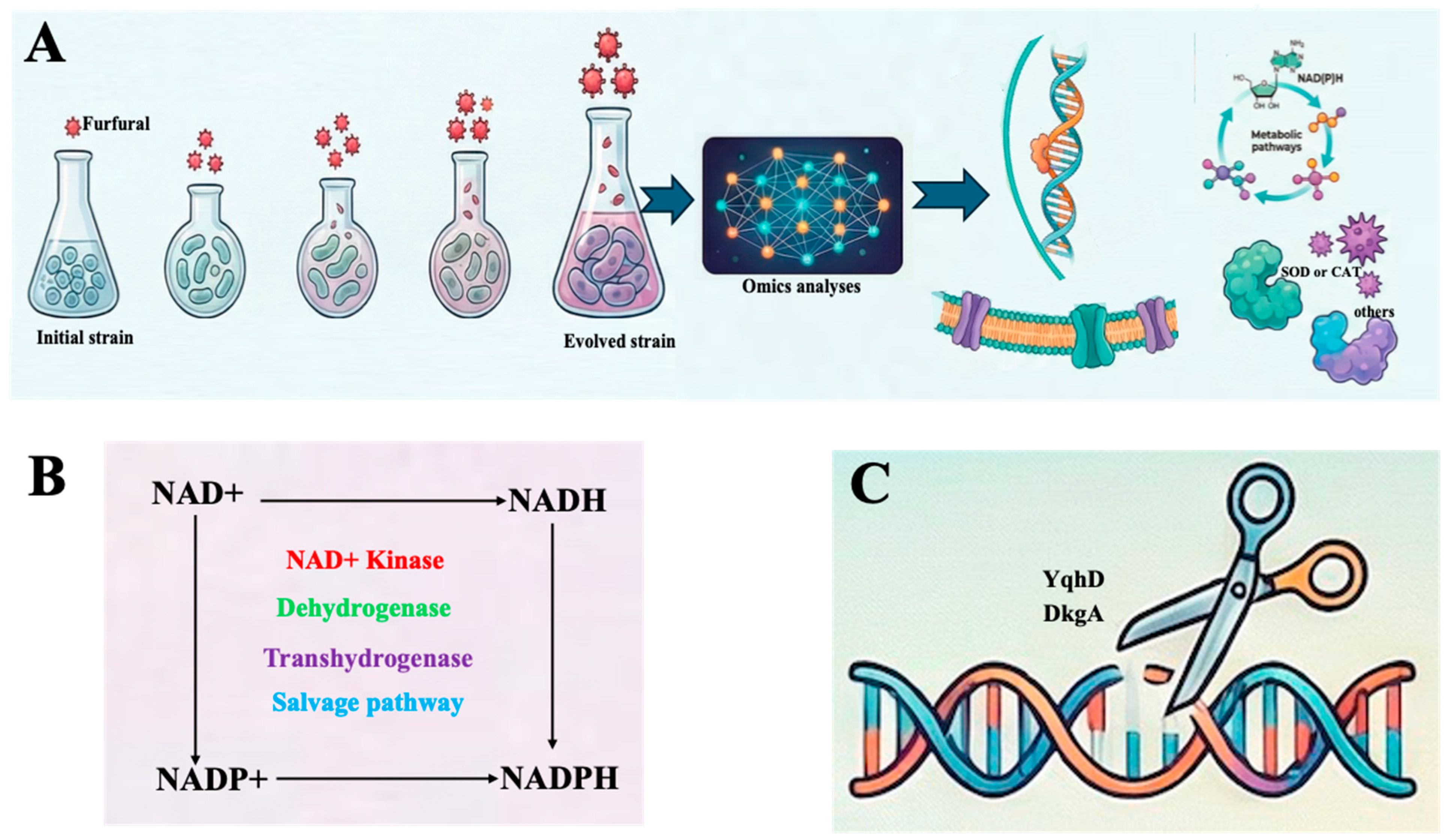
Typically, ALE is combined with omics analyses to elucidate the mechanisms of microbial strain tolerance to furfural. Researchers have identified several key determinants: enhanced NAD(P)H supply [67,101,108,109], mutations in transcriptional factors [110,111], overexpression of ATP-binding cassette (ABC) transporters (PP_RS19785 and PP_RS18130) [68], partial genome deletion [8] and modification of cell wall components [112] (Table 2 and Table 3). In addition, several specific enzymes have been identified to enhance furfural resistance, including catalase, superoxide dismutase, xylose reductase and xylitol dehydrogenase [66,113] (Figure 4A).
However, the practical utility of ALE is constrained by three principal limitations. Firstly, the furfural-tolerant mechanism remains poorly defined, as the phenotype typically arises from complex, polygenic alterations spanning multiple metabolic and regulatory networks, creating a “black box” effect that obscures the identification of precise molecular targets and impedes subsequent rational optimization [68]. Secondly, ALE is inherently time-intensive, requiring hundreds of generations of continuous cultivation and selection to achieve stable tolerance, which prolongs development timelines and limits responsiveness to urgent industrial demands [107]. In addition, prolonged adaptation under controlled laboratory conditions is probably not applicable to large-scale fermentation processes (Table 4).

4.2. Precision Modification by Genetic Engineering

The development of genetic engineering technology has provided possibilities for the precise construction of highly tolerant strains, mainly including strategies such as overexpression, knockout and mutation of key genes [69]. As mentioned above, furfural can be either reduced to furfuryl alcohol or oxidized to furoic acid, so overexpression of genes involved in this reaction is a promising strategy for detoxification. Overexpression of aldehyde reductase contributes to furfural detoxification, such as FucO in E. coli [47], RDS1 in S. cerevisiae [37], Cbei_3974 in Clostridium beijerinckii [38], SsOye3.3p in Scheffersomyces stipitis [39], ALD4 and ALD6 in K. marxianus NRRL Y-50883 (SLP1) [43] and AKR/ARI in Kodamaea ohmeri SSK [40] (Table 1). Similarly, overexpression of aldehyde dehydrogenase also facilitates furfural detoxification, including ALDH in Kodamaea ohmeri SSK [40], CGS9114_RS01115 in Corynebacterium glutamicum [41], and YALI0E15400p in Yarrowia lipolytica PO1f [42] (Table 1). Certain alcohol dehydrogenases may also participate in furfural reduction, including ADH7 from S. cerevisiae [48], Zn-dependent alcohol dehydrogenase genes from Amorphotheca resinae [49], glycerol dehydrogenase from Clostridium pasteurianum [50], alcohol dehydrogenase (ADH) from S. cerevisiae MT8-1X [46], aryl-alcohol dehydrogenases from Scheffersomyces stipitis CBS 6054 [51], and the ADH genes from Kodamaea ohmeri SSK [40] (Table 1). In Neurospora crassa T112, mutation of the aldehyde dehydrogenase gene ahd-2 (NCU00378) enhances cellular resistance to furfural [44]. Interestingly, overexpression of PHB synthetic genes can also improve cells’ tolerance to furfural [70] (Table 2).
Enhancing NAD(P)H supply represents another effective strategy for promoting furfural detoxification. This strategy includes the overexpression of NAD(P)H regeneration enzymes, such as NADH dehydrogenase, NAD(P)+ transhydrogenase and NAD+ kinase [98,114]. In addition, the overexpression of nicotinamide salvage pathway genes is also involved in this strategy [99,100] (Table 3, Figure 4B). Furthermore, deletion of genes involved in NAD(P)H consumption is also an efficient strategy to alleviate furfural toxicity. For example, deletion of NADPH-dependent aldehyde reductase (YqhD) and methylglyoxal reductase (DkgA) effectively protects cells against furfural stress [114] (Figure 4C).
Besides converting furfural into less toxic metabolites, overexpression of other genes associated with cell growth also serves as an effective strategy to enhance microbial tolerance to furfural. Such targets include transcription factors [71,72,73,74,75,76,77], thymidylate synthase [78], polyamine transporters [6], efflux pumps [79], sigma factors [65], butanol dehydrogenase [35], isocitrate dehydrogenase [80], stress-induced proteins [81], E3 SUMO-protein ligase [82], glutathione synthase [83], cyclopropane-fatty acid-acyl-phospholipid synthase [84], a novel LEA-like protein [85], cysteine synthase [86] and alpha/beta Hydrolase (KmYME) [45] (Table 2). Targeted gene deletion represents an additional strategy for enhancing microbial tolerance to furfural. For example, deletion of the PHO13 gene has been shown to improve both growth and ethanol production in an ethanol-producing strain under furfural stress [87]. Interestingly, enhanced glutathione biosynthesis and the modulation of spermidine levels also contribute to furfural tolerance [88,89] (Table 2).
Application of rational genetic engineering is limited by several key constraints. Firstly, this approach depends critically on prior mechanistic knowledge of furfural-induced stress responses and cellular detoxification networks. However, such understanding remains incomplete, particularly in non-model industrial hosts, thereby restricting the design of effective genetic interventions. Furthermore, the overexpression of detoxification enzymes such as aldehyde reductases imposes a substantial metabolic burden by consuming cofactors like NAD(P)H and diverting carbon flux away from product synthesis, while native regulatory mechanisms, including feedback inhibition and gene silencing, may further attenuate the intended phenotypic improvements. Finally, given that furfural tolerance is a polygenic trait, single target modifications typically confer only marginal gains and often fail to confer cross-protection against other inhibitory compounds that coexist in lignocellulosic hydrolysates, thus limiting the industrial robustness of rationally engineered strains (Table 4).

4.3. Random Mutagenesis for Improving Furfural Tolerance in Microorganisms

Random mutagenesis improves furfural tolerance in microorganisms by creating diverse mutant libraries. Popular technologies include atmospheric and room-temperature plasma (ARTP), UV, or ion beams, followed by high-concentration screening to isolate strains with superior detoxifying abilities. For example, Jiang et al. employed ARTP mutagenesis coupled with adaptive laboratory evolution (ALE) to treat Bacillus coagulans NL01 (B. coagulans NL01), thereby obtaining the tolerant mutant strain B. coagulans GKN316. This mutant strain efficiently converted furfural into less toxic alcohol derivatives. When cultivated in undetoxified corn stover hydrolysate, B. coagulans GKN316 exhibited a significant 1.9-fold increase in lactic acid (LA) accumulation, reaching 45.39 g/L relative to the parental strain NL01 [115]. Following ARTP mutagenesis of Candida tropicalis YB 0, the resulting mutant libraries are screened using media containing varying concentrations of furfural. After primary and secondary screening, the mutant strain designated YB 3 is isolated and exhibits the ability to grow in the presence of 6.5 g/L furfural [90].
Random mutagenesis is a low-throughput and labor-intensive process that generates extensive mutant libraries in which beneficial mutations are vastly outnumbered by neutral and deleterious variants. Identifying strains with elevated furfural tolerance from such complex populations demands substantial screening effort, consuming considerable labor, time, and resources while markedly reducing strain development efficiency. Moreover, mutagenic agents introduce stochastic alterations across the entire genome rather than targeting specific functional loci. Consequently, even strains exhibiting enhanced furfural tolerance frequently harbor cryptic, tolerance-unrelated mutations that can compromise genetic stability, sporulation capacity, or industrial performance under scale-up conditions, ultimately leading to inconsistent fermentation outcomes. Additionally, iterative improvement remains challenging, as the accumulation of undefined mutations limits the predictability of trait stacking. Re-mutagenesis of an already tolerant strain often encounters a saturated mutational landscape in which newly acquired mutations confer little to no additive or synergistic benefit, thereby impeding further enhancement of tolerance through successive rounds of random mutagenesis (Table 4).
In summary, each of the three principal strategies for enhancing microbial furfural tolerance exhibits inherent limitations that stem from both their methodological characteristics and the polygenic complexity of furfural tolerance itself. To overcome these constraints, future investigations should prioritize the integration of complementary approaches. Such integrative efforts will be essential for developing more efficient and robust microbial chassis tailored to industrial lignocellulosic biomanufacturing.

5. Challenges and Future Prospects

Lignocellulosic biomass, as the most abundant renewable resource on Earth, has great potential in replacing fossil fuels to support the development of second-generation biomanufacturing. However, the pretreatment process of lignocellulosic biomass inevitably produces various toxic inhibitors, among which furfural is one of the most representative and harmful components. This review systematically delineates the multi-faceted mechanisms by which furfural exerts toxicity on microbial cells and the corresponding tolerance strategies that microorganisms have evolved and further evaluates the strengths and limitations of current approaches for constructing robust industrial strains. The integration of these findings reveals several overarching principles and highlights critical gaps that must be addressed to advance lignocellulosic biomanufacturing.
Firstly, the toxicity of furfural is not attributable to a single molecular target but rather manifests as a cascade of interconnected cellular damages. Furfural simultaneously induces oxidative stress through ROS generation, inhibits key glycolytic and TCA cycle enzymes via both competitive and non-competitive mechanisms, causes extensive DNA damage and genomic instability, and disrupts cytoskeletal integrity and proteome homeostasis. Critically, these toxic effects are intertwined: ROS accumulation leads to DNA double strand breaks, while cofactor depletion (particularly NADH/NADPH) caused by furfural reduction impairs both lipid biosynthesis and energy metabolism. This multi-target mode of action explains why single gene modifications typically yield only marginal improvements in overall tolerance.
Secondly, microorganisms counter furfural stress through four functionally distinct but complementary defense modules. Enzymatic biotransformation, either reductive conversion to furfuryl alcohol or oxidative conversion to furoic acid, serves as the most direct detoxification route. Cell membrane remodeling and active efflux transporters provide a low-cost physical barrier and expulsion system that limits intracellular toxin accumulation. Metabolic rewiring, especially reinforcement of the pentose phosphate pathway, sustains NADPH supply for both detoxification and ROS scavenging. The antioxidant axis centered on glutathione, superoxide dismutase, and catalase mitigates secondary oxidative damage. These four modules form a layered defense network in which membrane barriers restrict furfural entry, enzymatic biotransformation eliminates intracellular furfural, PPP derived NADPH fuels these enzymatic reactions, and the antioxidant system repairs collateral oxidative injury. The overall furfural tolerance level of a given host is determined by the combined efficiency and coordination of these layers.
A key insight is that these tolerance mechanisms can be systematically organized into a two-tier comparative framework. The first tier comprises evolutionarily conserved core defenses—enzymatic conversion, membrane adaptation, PPP driven metabolic rewiring, and the GSH–SOD–CAT antioxidant cascade. The second tier encompasses organism or strain specific adaptations, including unique enzymes, regulatory systems, etc. The existence of this two-tier framework carries direct implications for strain engineering: the conserved modules provide universal and tractable targets for rational improvement across multiple industrial chassis, while the specific adaptations represent a valuable genetic reservoir that can be mined from nature and introduced into desired hosts through targeted genetic modification.
Despite significant progress, the construction of furfural-tolerant strains remains constrained by the inherent limitations of each strategy. ALE generates phenotypes through polygenic alterations that are difficult to deconvolute. Rational genetic engineering is heavily dependent on prior mechanistic knowledge. Random mutagenesis, while simple to implement, suffers from low-throughput, labor-intensive screening and the accumulation of cryptic, tolerance-unrelated mutations. These limitations collectively underscore the need for integrated strategies that transcend the boundaries of individual methods.
Looking forward, several research directions deserve particular attention. Firstly, the synergistic or antagonistic interactions between furfural and other inhibitors (e.g., acetic acid, phenolic compounds) in lignocellulosic hydrolysates remain poorly understood and should be systematically investigated using combinatorial stress assays coupled with multi-omics profiling [116,117]. Such studies will reveal whether tolerance mechanisms identified against furfural alone remain effective under complex hydrolysate conditions. Secondly, the development of microbial chassis capable of simultaneously tolerating multiple inhibitors should be prioritized. This endeavor can be accelerated through a cyclical “evolve–elucidate–engineer” framework, in which ALE under complex hydrolysate stress generates broad-spectrum tolerance, multi-omics analyses decode the underlying regulatory and metabolic networks, and rational engineering stacks validated tolerance determinants into industrial hosts. Thirdly, efforts from the feedstock processing side, such as optimizing pretreatment conditions to suppress furfural formation at the source. It can reduce the detoxification burden imposed on microorganisms and should be developed in parallel with strain engineering. Fourthly, as systems biology tools continue to advance, the integration of genome-scale metabolic models, machine learning-guided protein engineering, and high-throughput screening platforms will enable more precise and predictive design of robust microbial catalysts. Finally, since NADH and NADPH are also key factors for target product biosynthesis and cell growth, it is worth noting that the development of tolerant strains should not only focus on the tolerance level, but also pay attention to the industrial traits of the strains (such as growth rate, substrate utilization efficiency, and product yield). In that way, the developed strains can meet the requirements of large-scale industrial fermentation.
In conclusion, microbial furfural tolerance is a complex, multi-layered trait that demands an equally multi-faceted engineering approach. The convergence of mechanistic understanding, comparative genomics, adaptive evolution, and rational design holds great promise for overcoming the current bottlenecks in lignocellulosic biomanufacturing and realizing the industrial potential of biomass-derived fuels and chemicals.

Author Contributions

Conceptualization, A.S., W.L.; Investigation, A.S.; Writing—Original draft preparation, J.X., M.C. and L.Z.; Writing—Review and Editing, Q.Z., Z.H.; Supervision, X.L., X.F.; Project Administration, X.Y., W.Z., A.S. All authors have read and agreed to the published version of the manuscript.

Funding

The work was financially supported by grants from the National Natural Science Foundation of China (32401219).

Institutional Review Board Statement

Not applicable.

Informed Consent Statement

Not applicable.

Data Availability Statement

No new data were created or analyzed in this study.

Acknowledgments

During the preparation of this manuscript, the authors used an online AI NAMED notebooklm (https://notebooklm.google.com/) for the purposes of preparing our schematic diagram. The authors have reviewed and edited the output and take full responsibility for the content of this publication. We gratefully acknowledge Jiangang Yu for his valuable advice during the preparation of this paper.

Conflicts of Interest

Laiping Zhang, Xiaobin Lin and Xiaomin Fang are employed by East China Electric Power Test & Research Institute Co., Ltd. of China Energy Engineering Group. Xiangdong Ye and Weiping Zhu are employed by Pinghu Dushangang Environmental Protection Energy Co., Ltd. The remaining authors declare that the research was conducted in the absence of any commercial or financial relationships that could be construed as a potential conflict of interest.

References

  1. Wu, D.; Wei, Z.; Mohamed, T.A.; Zheng, G.; Qu, F.; Wang, F.; Zhao, Y.; Song, C. Lignocellulose biomass bioconversion during composting: Mechanism of action of lignocellulase, pretreatment methods and future perspectives. Chemosphere 2022, 286, 131635. [Google Scholar] [CrossRef]
  2. Zoghlami, A.; Paes, G. Lignocellulosic Biomass: Understanding recalcitrance and predicting hydrolysis. Front. Chem. 2019, 7, 874. [Google Scholar] [CrossRef]
  3. Todhanakasem, T.; Yodsanga, S.; Sowatad, A.; Kanokratana, P.; Thanonkeo, P.; Champreda, V. Inhibition analysis of inhibitors derived from lignocellulose pretreatment on the metabolic activity of Zymomonas mobilis biofilm and planktonic cells and the proteomic responses. Biotechnol. Bioeng. 2018, 115, 70–81. [Google Scholar] [CrossRef]
  4. Sawisit, A.; Jantama, K.; Zheng, H.; Yomano, L.P.; York, S.W.; Shanmugam, K.T.; Ingram, L.O. Mutation in galP improved fermentation of mixed sugars to succinate using engineered Escherichia coli AS1600a and AM1 mineral salts medium. Bioresour. Technol. 2015, 193, 433–441. [Google Scholar] [CrossRef]
  5. Wang, X.; Yomano, L.P.; Lee, J.Y.; York, S.W.; Zheng, H.; Mullinnix, M.T.; Shanmugam, K.T.; Ingram, L.O. Engineering furfural tolerance in Escherichia coli improves the fermentation of lignocellulosic sugars into renewable chemicals. Proc. Natl. Acad. Sci. USA 2013, 110, 4021–4026. [Google Scholar] [CrossRef]
  6. Geddes, R.D.; Wang, X.; Yomano, L.P.; Miller, E.N.; Zheng, H.; Shanmugam, K.T.; Ingram, L.O. Polyamine transporters and polyamines increase furfural tolerance during xylose fermentation with ethanologenic Escherichia coli strain LY180. Appl. Environ. Microbiol. 2014, 80, 5955–5964. [Google Scholar] [CrossRef]
  7. Saengphing, T.; Sattayawat, P.; Kalawil, T.; Suwannarach, N.; Kumla, J.; Yamada, M.; Panbangred, W.; Rodrussamee, N. Improving furfural tolerance in a xylose-fermenting yeast Spathaspora passalidarum CMUWF1-2 via adaptive laboratory evolution. Microb. Cell Fact. 2024, 23, 80. [Google Scholar] [CrossRef] [PubMed]
  8. Qi, L.; Zhu, Y.X.; Wang, Y.K.; Tang, X.X.; Li, K.J.; He, M.; Sui, Y.; Wang, P.M.; Zheng, D.Q.; Zhang, K. Nonlethal furfural exposure causes genomic alterations and adaptability evolution in Saccharomyces cerevisiae. Microbiol. Spectr. 2023, 11, e0121623. [Google Scholar] [CrossRef] [PubMed]
  9. Qi, L.; Zhang, K.; Wang, Y.T.; Wu, J.K.; Sui, Y.; Liang, X.Z.; Yu, L.Z.; Wu, X.C.; Wang, P.M.; Xu, J.Z.; et al. Global analysis of furfural-induced genomic instability using a yeast model. Appl. Environ. Microbiol. 2019, 85, e01237-19. [Google Scholar] [CrossRef]
  10. Zdzienicka, M.; Tudek, B.; Zielenska, M.; Szymczyk, T. Mutagenic activity of furfural in Salmonella typhimurium TA100. Mutat. Res. 1978, 58, 205–209. [Google Scholar] [CrossRef]
  11. Khan, Q.A.; Hadi, S.M. Effect of furfural on plasmid DNA. Biochem. Mol. Biol. Int. 1993, 29, 1153–1160. [Google Scholar]
  12. Hadi, S.M.; Shahabuddin; Rehman, A. Specificity of the interaction of furfural with DNA. Mutat. Res. 1989, 225, 101–106. [Google Scholar] [CrossRef]
  13. Monien, B.H.; Herrmann, K.; Florian, S.; Glatt, H. Metabolic activation of furfuryl alcohol: Formation of 2-methylfuranyl DNA adducts in Salmonella typhimurium strains expressing human sulfotransferase 1A1 and in FVB/N mice. Carcinogenesis 2011, 32, 1533–1539. [Google Scholar] [CrossRef]
  14. Modig, T.; Liden, G.; Taherzadeh, M.J. Inhibition effects of furfural on alcohol dehydrogenase, aldehyde dehydrogenase and pyruvate dehydrogenase. Biochem. J. 2002, 363, 769–776. [Google Scholar] [CrossRef]
  15. Allen, S.A.; Clark, W.; McCaffery, J.M.; Cai, Z.; Lanctot, A.; Slininger, P.J.; Liu, Z.L.; Gorsich, S.W. Furfural induces reactive oxygen species accumulation and cellular damage in Saccharomyces cerevisiae. Biotechnol. Biofuels 2010, 3, 2. [Google Scholar] [CrossRef]
  16. Lin, F.M.; Tan, Y.; Yuan, Y.J. Temporal quantitative proteomics of Saccharomyces cerevisiae in response to a nonlethal concentration of furfural. Proteomics 2009, 9, 5471–5483. [Google Scholar] [CrossRef]
  17. Erkan, S.B.; Yatmaz, E.; Germec, M.; Turhan, I. Effect of furfural concentration on ethanol production using Saccharomyces cerevisiae in an immobilized cells stirred-tank bioreactor with glucose-based medium and mathematical modeling. J. Food Process. Preserv. 2021, 45, e14635. [Google Scholar] [CrossRef]
  18. Sarvari Horvath, I.; Franzen, C.J.; Taherzadeh, M.J.; Niklasson, C.; Liden, G. Effects of furfural on the respiratory metabolism of Saccharomyces cerevisiae in glucose-limited chemostats. Appl. Environ. Microbiol. 2003, 69, 4076–4086. [Google Scholar] [CrossRef] [PubMed][Green Version]
  19. Yong, Z.; Zhang, X.; Tan, T. Effects of furfural on the growth and lipid production of oleaginous yeast Rhodotorula glutinis. Sheng Wu Gong Cheng Xue Bao 2015, 31, 1484–1491. [Google Scholar]
  20. Beopoulos, A.; Chardot, T.; Nicaud, J.M. Yarrowia lipolytica: A model and a tool to understand the mechanisms implicated in lipid accumulation. Biochimie 2009, 91, 692–696. [Google Scholar] [CrossRef] [PubMed]
  21. Lopes da Silva, T.; Santo, R.; Reis, A.; Passarinho, P.C. Effect of Furfural on Saccharomyces carlsbergensis growth, physiology and ethanol production. Appl. Biochem. Biotechnol. 2017, 182, 708–720. [Google Scholar] [CrossRef]
  22. Yang, J.; Ding, M.Z.; Li, B.Z.; Liu, Z.L.; Wang, X.; Yuan, Y.J. Integrated phospholipidomics and transcriptomics analysis of Saccharomyces cerevisiae with enhanced tolerance to a mixture of acetic acid, furfural, and phenol. OMICS 2012, 16, 374–386. [Google Scholar] [CrossRef]
  23. Petersson, A.; Almeida, J.R.; Modig, T.; Karhumaa, K.; Hahn-Hagerdal, B.; Gorwa-Grauslund, M.F.; Liden, G. A 5-hydroxymethyl furfural reducing enzyme encoded by the Saccharomyces cerevisiae ADH6 gene conveys HMF tolerance. Yeast 2006, 23, 455–464. [Google Scholar] [CrossRef]
  24. Almeida, J.R.; Roder, A.; Modig, T.; Laadan, B.; Liden, G.; Gorwa-Grauslund, M.F. NADH- vs NADPH-coupled reduction of 5-hydroxymethyl furfural (HMF) and its implications on product distribution in Saccharomyces cerevisiae. Appl. Microbiol. Biotechnol. 2008, 78, 939–945. [Google Scholar] [CrossRef]
  25. Liu, Z.L.; Moon, J.; Andersh, B.J.; Slininger, P.J.; Weber, S. Multiple gene-mediated NAD(P)H-dependent aldehyde reduction is a mechanism of in situ detoxification of furfural and 5-hydroxymethylfurfural by Saccharomyces cerevisiae. Appl. Microbiol. Biotechnol. 2008, 81, 743–753. [Google Scholar] [CrossRef] [PubMed]
  26. Moon, J.; Liu, Z.L. Engineered NADH-dependent GRE2 from Saccharomyces cerevisiae by directed enzyme evolution enhances HMF reduction using additional cofactor NADPH. Enzym. Microb. Technol. 2012, 50, 115–120. [Google Scholar] [CrossRef] [PubMed]
  27. Turner, P.C.; Miller, E.N.; Jarboe, L.R.; Baggett, C.L.; Shanmugam, K.T.; Ingram, L.O. YqhC regulates transcription of the adjacent Escherichia coli genes yqhD and dkgA that are involved in furfural tolerance. J. Ind. Microbiol. Biotechnol. 2011, 38, 431–439. [Google Scholar] [CrossRef] [PubMed]
  28. Nichols, N.N.; Lunde, T.A.; Graden, K.C.; Hallock, K.A.; Kowalchyk, C.K.; Southern, R.M.; Soskin, E.J.; Ditty, J.L. Chemotaxis to furan compounds by furan-degrading Pseudomonas strains. Appl. Environ. Microbiol. 2012, 78, 6365–6368. [Google Scholar] [CrossRef]
  29. Zhang, Y.; Han, B.; Ezeji, T.C. Biotransformation of furfural and 5-hydroxymethyl furfural (HMF) by Clostridium acetobutylicum ATCC 824 during butanol fermentation. Nat. Biotechnol. 2012, 29, 345–351. [Google Scholar] [CrossRef]
  30. Zheng, D.; Bao, J.; Lu, J.; Gao, C. Isolation and characterization of a furfural-degrading bacterium Bacillus cereus sp. strain DS1. Curr. Microbiol. 2015, 70, 199–205. [Google Scholar] [CrossRef]
  31. Yan, Y.; Bu, C.; He, Q.; Zheng, Z.; Ouyang, J. Efficient bioconversion of furfural to furfuryl alcohol by Bacillus coagulans NL01. RSC Adv. 2018, 8, 26720–26727. [Google Scholar] [CrossRef]
  32. Ujor, V.C.; Okonkwo, C.C. Microbial detoxification of lignocellulosic biomass hydrolysates: Biochemical and molecular aspects, challenges, exploits and future perspectives. Front. Bioeng. Biotechnol. 2022, 10, 1061667. [Google Scholar] [CrossRef]
  33. He, J.; Liu, X.; Xia, J.; Xu, J.; Xiong, P.; Qiu, Z. One-step utilization of non-detoxified pretreated lignocellulose for enhanced cellulolytic enzyme production using recombinant Trichoderma reesei RUT C30 carrying alcohol dehydrogenase and nicotinate phosphoribosyltransferase. Bioresour. Technol. 2020, 310, 123458. [Google Scholar] [CrossRef]
  34. Jia, H.Y.; Yang, Z.Y.; Chen, Q.; Zong, M.H.; Li, N. Engineering promiscuous alcohol dehydrogenase activity of a reductive aminase AspRedAm for selective reduction of biobased furans. Front. Chem. 2021, 9, 610091. [Google Scholar] [CrossRef]
  35. Clarkson, S.M.; Hamilton-Brehm, S.D.; Giannone, R.J.; Engle, N.L.; Tschaplinski, T.J.; Hettich, R.L.; Elkins, J.G. A comparative multidimensional LC-MS proteomic analysis reveals mechanisms for furan aldehyde detoxification in Thermoanaerobacter pseudethanolicus 39E. Biotechnol. Biofuels 2014, 7, 165. [Google Scholar] [CrossRef] [PubMed]
  36. Zhang, Y.; Ezeji, T.C. Transcriptional analysis of Clostridium beijerinckii NCIMB 8052 to elucidate role of furfural stress during acetone butanol ethanol fermentation. Biotechnol. Biofuels 2013, 6, 66. [Google Scholar] [CrossRef] [PubMed]
  37. Tafere Abrha, G.; Li, Q.; Kuang, X.; Xiao, D.; Ayepa, E.; Wu, J.; Chen, H.; Zhang, Z.; Liu, Y.; Yu, X.; et al. Phenotypic and comparative transcriptomics analysis of RDS1 overexpression reveal tolerance of Saccharomyces cerevisiae to furfural. J. Biosci. Bioeng. 2023, 136, 270–277. [Google Scholar] [CrossRef]
  38. Okonkwo, C.C.; Ujor, V.; Ezeji, T.C. Chromosomal integration of aldo-keto-reductase and short-chain dehydrogenase/reductase genes in Clostridium beijerinckii NCIMB 8052 enhanced tolerance to lignocellulose-derived microbial inhibitory compounds. Sci. Rep. 2019, 9, 7634. [Google Scholar] [CrossRef]
  39. Wang, X.; Zhao, H.; Wang, Y.; Wang, Y.; Cui, Z.; Guo, L.; Bu, J.; Guo, Y.; Liu, Y.; Lin, N.; et al. Novel class of aldehyde reductases identified from Scheffersomyces stipitis for detoxification processes in cellulosic ethanol production industry. Int. J. Biol. Macromol. 2024, 282, 136882. [Google Scholar] [CrossRef] [PubMed]
  40. Yang, Y.Q.; Li, X.; Wang, Z.F.; Deng, Y.L.; Wang, Z.Z.; Fang, X.Y.; Zhang, M.D.; Sun, W.; Zhao, X.Q.; Liu, Z.Q.; et al. Whole genome sequencing of Kodamaea ohmeri SSK and its characterization for degradation of inhibitors from lignocellulosic biomass. Biology 2025, 14, 458. [Google Scholar] [CrossRef] [PubMed]
  41. Zhou, P.; Khushk, I.; Gao, Q.; Bao, J. Tolerance and transcriptional analysis of Corynebacterium glutamicum on biotransformation of toxic furaldehyde and benzaldehyde inhibitory compounds. J. Ind. Microbiol. Biotechnol. 2019, 46, 951–963. [Google Scholar] [CrossRef]
  42. Kim, J.; Son, H.F.; Hwang, S.; Gong, G.; Ko, J.K.; Um, Y.; Han, S.O.; Lee, S.M. Improving lipid production of Yarrowia lipolytica by the aldehyde dehydrogenase-mediated furfural detoxification. Int. J. Mol. Sci. 2022, 23, 4761. [Google Scholar] [CrossRef]
  43. Sandoval-Nunez, D.; Romero-Gutierrez, T.; Gomez-Marquez, C.; Gshaedler, A.; Arellano-Plaza, M.; Amaya-Delgado, L. Physiological and transcriptome analyses of Kluyveromyces marxianus reveal adaptive traits in stress response. Appl. Microbiol. Biotechnol. 2023, 107, 1421–1438. [Google Scholar] [CrossRef]
  44. Feldman, D.; Kowbel, D.J.; Cohen, A.; Glass, N.L.; Hadar, Y.; Yarden, O. Identification and manipulation of Neurospora crassa genes involved in sensitivity to furfural. Biotechnol. Biofuels 2019, 12, 210. [Google Scholar] [CrossRef]
  45. Wu, D.; Wang, D.; Hong, J. Effect of a novel alpha/beta hydrolase domain protein on tolerance of K. marxianus to lignocellulosic biomass derived inhibitors. Front. Bioeng. Biotechnol. 2020, 8, 844. [Google Scholar] [CrossRef]
  46. Hasunuma, T.; Ismail, K.S.K.; Nambu, Y.; Kondo, A. Co-expression of TAL1 and ADH1 in recombinant xylose-fermenting Saccharomyces cerevisiae improves ethanol production from lignocellulosic hydrolysates in the presence of furfural. J. Biosci. Bioeng. 2014, 117, 165–169. [Google Scholar] [CrossRef]
  47. Zheng, H.; Wang, X.; Yomano, L.P.; Geddes, R.D.; Shanmugam, K.T.; Ingram, L.O. Improving Escherichia coli FucO for furfural tolerance by saturation mutagenesis of individual amino acid positions. Appl. Environ. Microbiol. 2013, 79, 3202–3208. [Google Scholar] [CrossRef]
  48. Ishida, Y.; Nguyen, T.T.M.; Izawa, S. The yeast ADH7 promoter enables gene expression under pronounced translation repression caused by the combined stress of vanillin, furfural, and 5-hydroxymethylfurfural. J. Biotechnol. 2017, 252, 65–72. [Google Scholar] [CrossRef] [PubMed]
  49. Wang, X.; Gao, Q.; Bao, J. Transcriptional analysis of Amorphotheca resinae ZN1 on biological degradation of furfural and 5-hydroxymethylfurfural derived from lignocellulose pretreatment. Biotechnol. Biofuels 2015, 8, 136. [Google Scholar] [CrossRef]
  50. Agu, C.V.; Ujor, V.; Ezeji, T.C. Metabolic engineering of Clostridium beijerinckii to improve glycerol metabolism and furfural tolerance. Biotechnol. Biofuels 2019, 12, 50. [Google Scholar] [CrossRef]
  51. Wang, X.; Lewis Liu, Z.; Zhang, X.; Ma, M. A new source of resistance to 2-furaldehyde from Scheffersomyces (Pichia) stipitis for sustainable lignocellulose-to-biofuel conversion. Appl. Microbiol. Biotechnol. 2017, 101, 4981–4993. [Google Scholar] [CrossRef] [PubMed]
  52. Zheng, Z.; Xu, Q.; Tan, H.; Zhou, F.; Ouyang, J. Selective biosynthesis of furoic acid from furfural by Pseudomonas Putida and identification of molybdate transporter involvement in furfural oxidation. Front. Chem. 2020, 8, 587456. [Google Scholar] [CrossRef] [PubMed]
  53. Zhou, X.; Zhou, X.; Xu, Y.; Chen, R.R. Gluconobacter oxydans (ATCC 621H) catalyzed oxidation of furfural for detoxification of furfural and bioproduction of furoic acid. J. Chem. Technol. Biotechnol. 2017, 92, 1285–1289. [Google Scholar] [CrossRef]
  54. Kriechbaum, R.; Spadiut, O.; Kopp, J. Bioconversion of Furanic Compounds by Chlorella vulgaris-Unveiling biotechnological potentials. Microorganisms 2024, 12, 1222. [Google Scholar] [CrossRef]
  55. Ran, H.; Zhang, J.; Gao, Q.; Lin, Z.; Bao, J. Analysis of biodegradation performance of furfural and 5-hydroxymethylfurfural by Amorphotheca resinae ZN1. Biotechnol. Biofuels 2014, 7, 51. [Google Scholar] [CrossRef]
  56. Tsuge, Y.; Kudou, M.; Kawaguchi, H.; Ishii, J.; Hasunuma, T.; Kondo, A. FudC, a protein primarily responsible for furfural detoxification in Corynebacterium glutamicum. Appl. Microbiol. Biotechnol. 2016, 100, 2685–2692. [Google Scholar] [CrossRef]
  57. Shang, J.; Wang, X.; Zhang, M.; Li, L.; Wang, R.; Huang, H.; Wang, S. An NAD-specific 6-hydroxy-3-succinoyl-semialdehyde-pyridine dehydrogenase from nicotine-degrading Agrobacterium tumefaciens Strain S33. Microbiol. Spectr. 2021, 9, e0092421. [Google Scholar] [CrossRef] [PubMed]
  58. Mitsukura, K.; Sato, Y.; Yoshida, T.; Nagasawa, T. Oxidation of heterocyclic and aromatic aldehydes to the corresponding carboxylic acids by Acetobacter and Serratia strains. Biotechnol. Lett. 2004, 26, 1643–1648. [Google Scholar] [CrossRef]
  59. Wierckx, N.; Koopman, F.; Ruijssenaars, H.J.; de Winde, J.H. Microbial degradation of furanic compounds: Biochemistry, genetics, and impact. Appl. Microbiol. Biotechnol. 2011, 92, 1095–1105. [Google Scholar] [CrossRef]
  60. Tan, Z.; Khakbaz, P.; Chen, Y.; Lombardo, J.; Yoon, J.M.; Shanks, J.V.; Klauda, J.B.; Jarboe, L.R. Engineering Escherichia coli membrane phospholipid head distribution improves tolerance and production of biorenewables. Metab. Eng. 2017, 44, 1–12. [Google Scholar] [CrossRef]
  61. He, M.X.; Wu, B.; Shui, Z.X.; Hu, Q.C.; Wang, W.G.; Tan, F.R.; Tang, X.Y.; Zhu, Q.L.; Pan, K.; Li, Q.; et al. Transcriptome profiling of Zymomonas mobilis under furfural stress. Appl. Microbiol. Biotechnol. 2012, 95, 189–199. [Google Scholar] [CrossRef]
  62. Ren, J.; Zhang, M.; Guo, X.; Zhou, X.; Ding, N.; Lei, C.; Jia, C.; Wang, Y.; Zhao, J.; Dong, Z.; et al. Furfural tolerance of mutant Saccharomyces cerevisiae selected via ionizing radiation combined with adaptive laboratory evolution. Biotechnol. Biofuels Bioprod. 2024, 17, 117. [Google Scholar] [CrossRef]
  63. Wilson, C.M.; Yang, S.; Rodriguez, M., Jr.; Ma, Q.; Johnson, C.M.; Dice, L.; Xu, Y.; Brown, S.D. Clostridium thermocellum transcriptomic profiles after exposure to furfural or heat stress. Biotechnol. Biofuels 2013, 6, 131. [Google Scholar] [CrossRef] [PubMed]
  64. Korpioja, M.E.; Sveholm, E.; Dilokpimol, A.; Paasela, T.; Kovalchuk, A. Transcriptome analysis of Aspergillus oryzae RIB40 under chemical stress reveals mechanisms of adaptation to fungistatic compounds of lignocellulosic side streams. Biotechnol. Biofuels Bioprod. 2025, 18, 89. [Google Scholar] [CrossRef]
  65. van der Pol, E.; Springer, J.; Vriesendorp, B.; Weusthuis, R.; Eggink, G. Precultivation of Bacillus coagulans DSM2314 in the presence of furfural decreases inhibitory effects of lignocellulosic by-products during L(+)-lactic acid fermentation. Appl. Microbiol. Biotechnol. 2016, 100, 10307–10319. [Google Scholar] [CrossRef]
  66. Chen, G.; Shan, Y.; Wang, J.; Zhang, Q.; Yao, L.; Chen, X. Multiple Lignocellulosic inhibitor-tolerant Saccharomyces cerevisiae strains developed by evolutionary engineering and CRISPR/Cas9 gene editing technology. J. Agric. Food Chem. 2025, 73, 23486–23497. [Google Scholar] [CrossRef]
  67. Zou, X.; Wang, Y.; Tu, G.; Zan, Z.; Wu, X. Adaptation and transcriptome analysis of Aureobasidium pullulans in corncob hydrolysate for increased inhibitor tolerance to malic acid production. PLoS ONE 2015, 10, e0121416. [Google Scholar] [CrossRef] [PubMed]
  68. Zou, L.; Jin, X.; Tao, Y.; Zheng, Z.; Ouyang, J. Unraveling the mechanism of furfural tolerance in engineered Pseudomonas putida by genomics. Front. Microbiol. 2022, 13, 1035263. [Google Scholar] [CrossRef] [PubMed]
  69. Glebes, T.Y.; Sandoval, N.R.; Reeder, P.J.; Schilling, K.D.; Zhang, M.; Gill, R.T. Genome-wide mapping of furfural tolerance genes in Escherichia coli. PLoS ONE 2014, 9, e87540. [Google Scholar] [CrossRef]
  70. Jung, H.R.; Lee, J.H.; Moon, Y.M.; Choi, T.R.; Yang, S.Y.; Song, H.S.; Park, J.Y.; Park, Y.L.; Bhatia, S.K.; Gurav, R.; et al. Increased tolerance to furfural by introduction of polyhydroxybutyrate synthetic genes to Escherichia coli. J. Microbiol. Biotechnol. 2019, 29, 776–784. [Google Scholar] [CrossRef]
  71. Abrha, G.T.; Li, Q.; Kuang, X.; Xiao, D.; Ayepa, E.; Wu, J.; Chen, H.; Zhang, Z.; Liu, Y.; Yu, X.; et al. Contribution of YPRO15C overexpression to the resistance of Saccharomyces cerevisiae BY4742 strain to furfural inhibitor. Pol. J. Microbiol. 2023, 72, 177–186. [Google Scholar] [CrossRef]
  72. Jiang, Y.; Zhuge, B.; Qin, Y.; Zong, H.; Lu, X. Candida glycerinogenes Strains overexpressing transcription factors have improved furfural tolerance in ethanol production from non-detoxified cellulose hydrolysate. Curr. Microbiol. 2022, 79, 196. [Google Scholar] [CrossRef]
  73. Kim, D.; Hahn, J.S. Roles of the Yap1 transcription factor and antioxidants in Saccharomyces cerevisiae’s tolerance to furfural and 5-hydroxymethylfurfural, which function as thiol-reactive electrophiles generating oxidative stress. Appl. Environ. Microbiol. 2013, 79, 5069–5077. [Google Scholar] [CrossRef]
  74. Paes, B.G.; Steindorff, A.S.; Formighieri, E.F.; Pereira, I.S.; Almeida, J.R.M. Physiological characterization and transcriptome analysis of Pichia pastoris reveals its response to lignocellulose-derived inhibitors. AMB Express 2021, 11, 2. [Google Scholar] [CrossRef] [PubMed]
  75. Sasano, Y.; Watanabe, D.; Ukibe, K.; Inai, T.; Ohtsu, I.; Shimoi, H.; Takagi, H. Overexpression of the yeast transcription activator Msn2 confers furfural resistance and increases the initial fermentation rate in ethanol production. J. Biosci. Bioeng. 2012, 113, 451–455. [Google Scholar] [CrossRef] [PubMed]
  76. Mertens, J.A.; Skory, C.D.; Nichols, N.N.; Hector, R.E. Impact of stress-response related transcription factor overexpression on lignocellulosic inhibitor tolerance of Saccharomyces cerevisiae environmental isolates. Biotechnol. Prog. 2021, 37, e3094. [Google Scholar] [CrossRef]
  77. Wallace-Salinas, V.; Signori, L.; Li, Y.Y.; Ask, M.; Bettiga, M.; Porro, D.; Thevelein, J.M.; Branduardi, P.; Foulquie-Moreno, M.R.; Gorwa-Grauslund, M. Re-assessment of YAP1 and MCR1 contributions to inhibitor tolerance in robust engineered Saccharomyces cerevisiae fermenting undetoxified lignocellulosic hydrolysate. AMB Express 2014, 4, 56. [Google Scholar] [CrossRef]
  78. Zheng, H.; Wang, X.; Yomano, L.P.; Shanmugam, K.T.; Ingram, L.O. Increase in furfural tolerance in ethanologenic Escherichia coli LY180 by plasmid-based expression of thyA. Appl. Environ. Microbiol. 2012, 78, 4346–4352. [Google Scholar] [CrossRef]
  79. Jimenez-Bonilla, P.; Zhang, J.; Wang, Y.; Blersch, D.; de-Bashan, L.E.; Guo, L.; Wang, Y. Enhancing the tolerance of Clostridium saccharoperbutylacetonicum to lignocellulosic-biomass-derived inhibitors for efficient biobutanol production by overexpressing efflux pumps genes from Pseudomonas putida. Bioresour. Technol. 2020, 312, 123532. [Google Scholar] [CrossRef] [PubMed]
  80. Unrean, P. Flux control-based design of furfural-resistance strains of Saccharomyces cerevisiae for lignocellulosic biorefinery. Bioprocess Biosyst. Eng. 2017, 40, 611–623. [Google Scholar] [CrossRef]
  81. Chang, D.; Islam, Z.U.; Zheng, J.; Zhao, J.; Cui, X.; Yu, Z. Inhibitor tolerance and bioethanol fermentability of levoglucosan-utilizing Escherichia coli were enhanced by overexpression of stress-responsive gene ycfR: The proteomics-guided metabolic engineering. Synth. Syst. Biotechnol. 2021, 6, 384–395. [Google Scholar] [CrossRef]
  82. Xiao, H.; Zhao, H. Genome-wide RNAi screen reveals the E3 SUMO-protein ligase gene SIZ1 as a novel determinant of furfural tolerance in Saccharomyces cerevisiae. Biotechnol. Biofuels 2014, 7, 78. [Google Scholar] [CrossRef]
  83. Qiu, Z.; Deng, Z.; Tan, H.; Zhou, S.; Cao, L. Engineering the robustness of Saccharomyces cerevisiae by introducing bifunctional glutathione synthase gene. J. Ind. Microbiol. Biotechnol. 2015, 42, 537–542. [Google Scholar] [CrossRef]
  84. Choi, T.R.; Song, H.S.; Han, Y.H.; Park, Y.L.; Park, J.Y.; Yang, S.Y.; Bhatia, S.K.; Gurav, R.; Kim, H.J.; Lee, Y.K.; et al. Enhanced tolerance to inhibitors of Escherichia coli by heterologous expression of cyclopropane-fatty acid-acyl-phospholipid synthase (cfa) from Halomonas socia. Bioprocess Biosyst. Eng. 2020, 43, 909–918. [Google Scholar] [CrossRef] [PubMed]
  85. Yang, J.; Kim, H.E.; Jung, Y.H.; Kim, J.; Kim, D.H.; Walmsley, A.R.; Kim, K.H. Zmo0994, a novel LEA-like protein from Zymomonas mobilis, increases multi-abiotic stress tolerance in Escherichia coli. Biotechnol. Biofuels 2020, 13, 151. [Google Scholar] [CrossRef] [PubMed]
  86. Yang, S.; Franden, M.A.; Wang, X.; Chou, Y.C.; Hu, Y.; Brown, S.D.; Pienkos, P.T.; Zhang, M. Transcriptomic profiles of Zymomonas mobilis 8b to furfural acute and long-term stress in both glucose and xylose conditions. Front. Microbiol. 2020, 11, 13. [Google Scholar] [CrossRef]
  87. Fujitomi, K.; Sanda, T.; Hasunuma, T.; Kondo, A. Deletion of the PHO13 gene in Saccharomyces cerevisiae improves ethanol production from lignocellulosic hydrolysate in the presence of acetic and formic acids, and furfural. Bioresour. Technol. 2012, 111, 161–166. [Google Scholar] [CrossRef] [PubMed]
  88. Ask, M.; Mapelli, V.; Hock, H.; Olsson, L.; Bettiga, M. Engineering glutathione biosynthesis of Saccharomyces cerevisiae increases robustness to inhibitors in pretreated lignocellulosic materials. Microb. Cell Fact. 2013, 12, 87. [Google Scholar] [CrossRef] [PubMed]
  89. Kim, S.K.; Jin, Y.S.; Choi, I.G.; Park, Y.C.; Seo, J.H. Enhanced tolerance of Saccharomyces cerevisiae to multiple lignocellulose-derived inhibitors through modulation of spermidine contents. Metab. Eng. 2015, 29, 46–55. [Google Scholar] [CrossRef]
  90. Liu, J.; Ni, Z.; Jiao, B.; Hu, Y.; Sun, Z.; Wu, D.; Yuan, Q.; Han, Y.; Wang, L. Comprehensive transcriptomic analysis of the isolated Candida tropicalis with enhanced tolerance of furfural inhibitor. Int. J. Mol. Sci. 2025, 26, 2999. [Google Scholar] [CrossRef]
  91. Liu, H.; Zhang, J.; Yuan, J.; Jiang, X.; Jiang, L.; Zhao, G.; Huang, D.; Liu, B. Omics-based analyses revealed metabolic responses of Clostridium acetobutylicum to lignocellulose-derived inhibitors furfural, formic acid and phenol stress for butanol fermentation. Biotechnol. Biofuels 2019, 12, 101. [Google Scholar] [CrossRef]
  92. Gorsich, S.W.; Dien, B.S.; Nichols, N.N.; Slininger, P.J.; Liu, Z.L.; Skory, C.D. Tolerance to furfural-induced stress is associated with pentose phosphate pathway genes ZWF1, GND1, RPE1, and TKL1 in Saccharomyces cerevisiae. Appl. Microbiol. Biotechnol. 2006, 71, 339–349. [Google Scholar] [CrossRef] [PubMed]
  93. Cunha, J.T.; Aguiar, T.Q.; Romani, A.; Oliveira, C.; Domingues, L. Contribution of PRS3, RPB4 and ZWF1 to the resistance of industrial Saccharomyces cerevisiae CCUG53310 and PE-2 strains to lignocellulosic hydrolysate-derived inhibitors. Bioresour. Technol. 2015, 191, 7–16. [Google Scholar] [CrossRef]
  94. Liu, Z.L.; Ma, M.; Song, M. Evolutionarily engineered ethanologenic yeast detoxifies lignocellulosic biomass conversion inhibitors by reprogrammed pathways. Mol. Genet. Genom. 2009, 282, 233–244. [Google Scholar] [CrossRef]
  95. Ding, M.Z.; Wang, X.; Liu, W.; Cheng, J.S.; Yang, Y.; Yuan, Y.J. Proteomic research reveals the stress response and detoxification of yeast to combined inhibitors. PLoS ONE 2012, 7, e43474. [Google Scholar] [CrossRef]
  96. Hu, D.; Wang, Z.; He, M.; Ma, Y. Functional gene identification and corresponding tolerant mechanism of high furfural-tolerant Zymomonas mobilis Strain F211. Front. Microbiol. 2021, 12, 736583. [Google Scholar] [CrossRef] [PubMed]
  97. Jilani, S.B.; Dev, C.; Eqbal, D.; Jawed, K.; Prasad, R.; Yazdani, S.S. Deletion of pgi gene in E. coli increases tolerance to furfural and 5-hydroxymethyl furfural in media containing glucose-xylose mixture. Microb. Cell Fact. 2020, 19, 153. [Google Scholar] [CrossRef] [PubMed]
  98. Liu, C.G.; Li, K.; Li, K.Y.; Sakdaronnarong, C.; Mehmood, M.A.; Zhao, X.Q.; Bai, F.W. Intracellular redox perturbation in Saccharomyces cerevisiae improved furfural tolerance and enhanced cellulosic bioethanol production. Front. Bioeng. Biotechnol. 2020, 8, 615. [Google Scholar] [CrossRef]
  99. Lee, S.M.; Cho, D.H.; Jung, H.J.; Kim, B.; Kim, S.H.; Bhatia, S.K.; Gurav, R.; Jeon, J.M.; Yoon, J.J.; Park, J.H.; et al. Enhanced tolerance of Cupriavidus necator NCIMB 11599 to lignocellulosic derived inhibitors by inserting NAD salvage pathway genes. Bioprocess Biosyst. Eng. 2022, 45, 1719–1729. [Google Scholar] [CrossRef]
  100. Song, H.S.; Jeon, J.M.; Kim, H.J.; Bhatia, S.K.; Sathiyanarayanan, G.; Kim, J.; Won Hong, J.; Gi Hong, Y.; Young Choi, K.; Kim, Y.G.; et al. Increase in furfural tolerance by combinatorial overexpression of NAD salvage pathway enzymes in engineered isobutanol-producing E. coli. Bioresour. Technol. 2017, 245, 1430–1435. [Google Scholar] [CrossRef]
  101. Wang, H.; Li, Q.; Zhang, Z.; Ayepa, E.; Xiang, Q.; Yu, X.; Zhao, K.; Zou, L.; Gu, Y.; Li, X.; et al. Discovery of new strains for furfural degradation using adaptive laboratory evolution in Saccharomyces cerevisiae. J. Hazard. Mater. 2023, 459, 132090. [Google Scholar] [CrossRef]
  102. Geng, B.; Liu, S.; Chen, Y.; Wu, Y.; Wang, Y.; Zhou, X.; Li, H.; Li, M.; Yang, S. A plasmid-free Zymomonas mobilis mutant strain reducing reactive oxygen species for efficient bioethanol production using industrial effluent of xylose mother liquor. Front. Bioeng. Biotechnol. 2022, 10, 1110513. [Google Scholar] [CrossRef]
  103. Yao, L.; Jia, Y.; Zhang, Q.; Zheng, X.; Yang, H.; Dai, J.; Chen, X. Adaptive laboratory evolution to obtain furfural tolerant Saccharomyces cerevisiae for bioethanol production and the underlying mechanism. Front. Microbiol. 2023, 14, 1333777. [Google Scholar] [CrossRef]
  104. Park, G.W.; Shin, S.; Kim, S.J.; Lee, J.S.; Moon, M.; Min, K. Rice straw-derived lipid production by HMF/furfural-tolerant oleaginous yeast generated by adaptive laboratory evolution. Bioresour. Technol. 2023, 367, 128220. [Google Scholar] [CrossRef]
  105. Shui, Z.X.; Qin, H.; Wu, B.; Ruan, Z.Y.; Wang, L.S.; Tan, F.R.; Wang, J.L.; Tang, X.Y.; Dai, L.C.; Hu, G.Q.; et al. Adaptive laboratory evolution of ethanologenic Zymomonas mobilis strain tolerant to furfural and acetic acid inhibitors. Appl. Microbiol. Biotechnol. 2015, 99, 5739–5748. [Google Scholar] [CrossRef]
  106. Qiu, Z.; Han, X.; He, J.; Jiang, Y.; Wang, G.; Wang, Z.; Liu, X.; Xia, J.; Xu, N.; He, A.; et al. One-pot d-lactic acid production using undetoxified acid-pretreated corncob slurry by an adapted Pediococcus acidilactici. Bioresour. Technol. 2022, 363, 127993. [Google Scholar] [CrossRef]
  107. Heer, D.; Sauer, U. Identification of furfural as a key toxin in lignocellulosic hydrolysates and evolution of a tolerant yeast strain. Microb. Biotechnol. 2008, 1, 497–506. [Google Scholar] [CrossRef] [PubMed]
  108. Jung, Y.H.; Kim, S.; Yang, J.; Seo, J.H.; Kim, K.H. Intracellular metabolite profiling of Saccharomyces cerevisiae evolved under furfural. Microb. Biotechnol. 2017, 10, 395–404. [Google Scholar] [CrossRef] [PubMed]
  109. Wang, X.; Khushk, I.; Xiao, Y.; Gao, Q.; Bao, J. Tolerance improvement of Corynebacterium glutamicum on lignocellulose derived inhibitors by adaptive evolution. Appl. Microbiol. Biotechnol. 2018, 102, 377–388. [Google Scholar] [CrossRef]
  110. Igeno, M.I.; Macias, D.; Blasco, R. A case of Adaptive Laboratory Evolution (ALE): Biodegradation of furfural by Pseudomonas pseudoalcaligenes CECT 5344. Genes 2019, 10, 499. [Google Scholar] [CrossRef]
  111. Pedrino, M.; Narcizo, J.P.; Aguiar, I.R.; Reginatto, V.; Guazzaroni, M.E. Upgrading Pseudomonas sp. toward tolerance to a synthetic biomass hydrolysate enriched with furfural and 5-Hydroxymethylfurfural. ACS Omega 2025, 10, 5449–5459. [Google Scholar] [CrossRef] [PubMed]
  112. Fernandes, M.A.; Mota, M.N.; Faria, N.T.; Sa-Correia, I. An evolved strain of the Oleaginous yeast Rhodotorula toruloides, multi-tolerant to the major inhibitors present in lignocellulosic hydrolysates, exhibits an altered cell envelope. J. Fungi 2023, 9, 1073. [Google Scholar] [CrossRef]
  113. Sharma, S.; Varghese, E.; Arora, A.; Singh, K.N.; Singh, S.; Nain, L.; Paul, D. Augmenting pentose utilization and ethanol production of native Saccharomyces cerevisiae LN using medium engineering and response surface methodology. Front. Bioeng. Biotechnol. 2018, 6, 132. [Google Scholar] [CrossRef]
  114. Miller, E.N.; Jarboe, L.R.; Turner, P.C.; Pharkya, P.; Yomano, L.P.; York, S.W.; Nunn, D.; Shanmugam, K.T.; Ingram, L.O. Furfural inhibits growth by limiting sulfur assimilation in ethanologenic Escherichia coli strain LY180. Appl. Environ. Microbiol. 2009, 75, 6132–6141. [Google Scholar] [CrossRef]
  115. Jiang, T.; Qiao, H.; Zheng, Z.; Chu, Q.; Li, X.; Yong, Q.; Ouyang, J. Lactic acid production from pretreated hydrolysates of corn stover by a newly developed Bacillus coagulans Strain. PLoS ONE 2016, 11, e0149101. [Google Scholar] [CrossRef]
  116. Ji, X.X.; Li, B.; Chen, R.R.; Xia, Z.Y.; Xie, C.Y.; Tang, Y.Q. Impact of complex inhibitors in straw hydrolysates on xylose-fermenting Saccharomyces cerevisiae and inhibitor-tolerant strain construction. Fungal Biol. 2026, 130, 101709. [Google Scholar] [CrossRef]
  117. Zhang, X.; Dai, Y.; Zhao, X.Q.; Liu, C.G.; Wang, Z.; Bai, F.W. Omics analyses decoding mechanisms underlying the self-flocculating phenotype of yeast cells and stress tolerance for robust production. Metab. Eng. 2026, 95, 77–89. [Google Scholar] [CrossRef]
Figure 1. Furfural impact on DNA and proteins in microorganisms. (A) Three mechanisms of furfural-induced DNA damage; (B) three modes of furfural action on proteins.
Fermentation 12 00232 g001
Figure 2. Schematic overview of furfural effects on microbial lipid metabolism. (A) Furfural-induced metabolic flux redirection; (B) competition for cofactors between furfural detoxification and lipid biosynthesis; (C) inhibition of lipid biosynthetic enzymes; (D) shift in polar–neutral lipid balance; (E) generation of ROS from furfural metabolism.
Fermentation 12 00232 g002
Figure 3. Multi-level defense mechanisms to furfural. (A) Direct detoxification and transformation; (B) membrane and transport regulation to physically block or export furfural; (C) metabolic flux rerouting to produce more NADPH through PPP; (D) oxidative stress scavenging by neutralizing furfural-induced ROS.
Fermentation 12 00232 g003
Figure 4. Two strategies for engineering furfural-tolerant microbes. (A) ALE combined with multiple omics analysis to obtain furfural tolerance strains; (B) pathways for enhancing NAD(P)H supply; (C) deletion of genes involved in NAD(P)H consumption.
Fermentation 12 00232 g004
Table 4. Comparison of three technologies to obtain furfural tolerance strains.
TechnologiesALERational Genetic EngineeringRandom Mutagenesis
 Mechanistic Insight Low (polygenes)High (defined genotype)Very low (stochastic noise)
SpeedSlow (long-term cultivation)Fast (direct construction)Moderate
Mechanism PredictabilityLowHighVery low
Knowledge DependencyLowHighLow
Disclaimer/Publisher’s Note: The statements, opinions and data contained in all publications are solely those of the individual author(s) and contributor(s) and not of MDPI and/or the editor(s). MDPI and/or the editor(s) disclaim responsibility for any injury to people or property resulting from any ideas, methods, instructions or products referred to in the content.