
Selected Yeast Strains and Varietal Identity: A Useful Tool to Shape Sicilian White Wines

 ,
, 
Abstract
1. Introduction
2. Materials and Methods
2.1. Winemaking Process
2.2. Juice and Wine Analysis
2.2.1. Technological Parameters
2.2.2. Total Flavonoids and p-DACA (p-Dimethylaminocinnamaldehyde) Reactive Flavonols
2.2.3. Average Buffer Capacity
2.2.4. Volatile Organic Composition
2.2.5. Sensory Analysis
2.2.6. Statistical Analysis
3. Results
3.1. Grapes/Juice
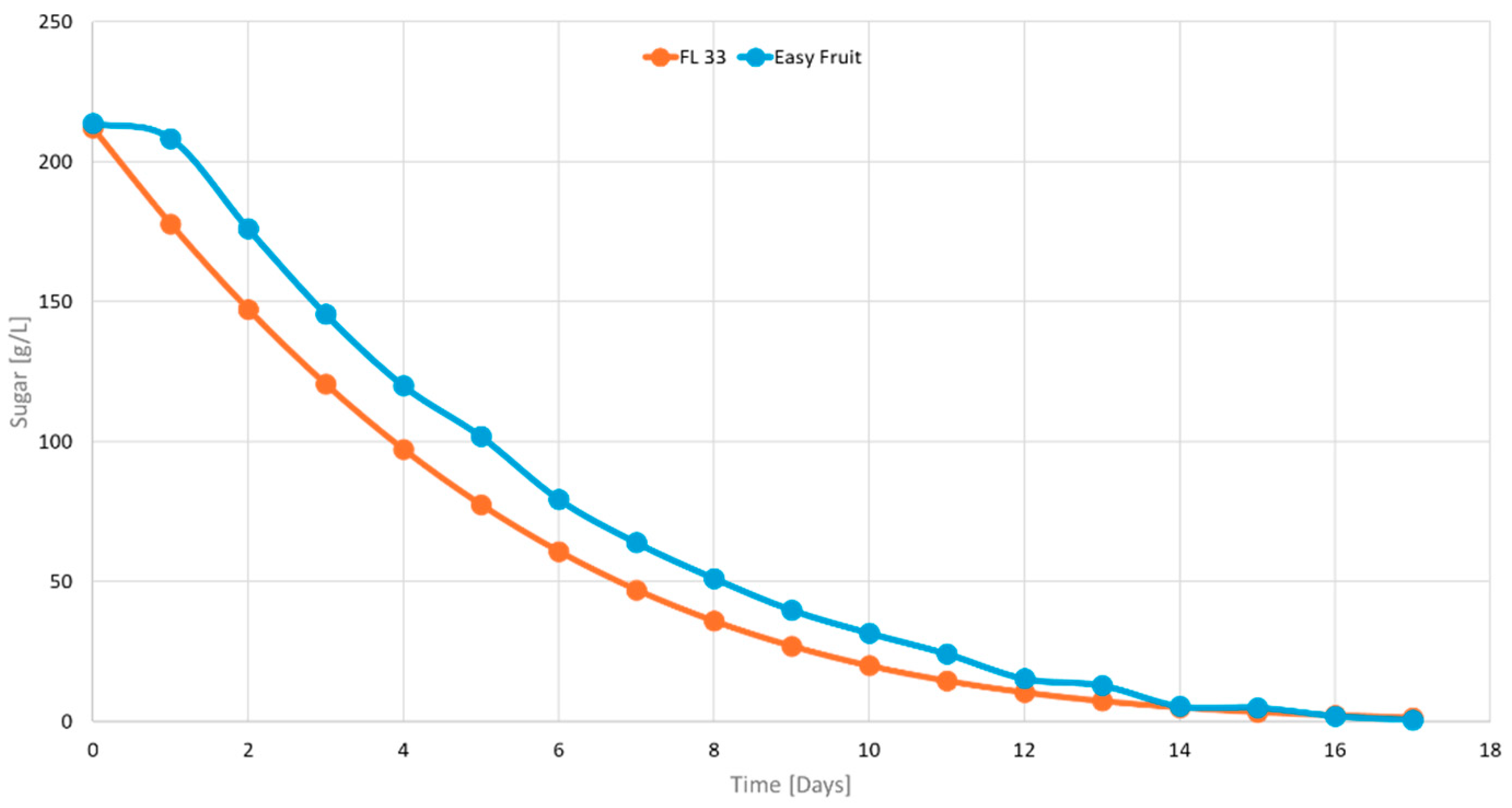
3.2. Comparison of Fermentation Kinetics
3.3. Wine Technological Parameters
3.3.1. Grillo
3.3.2. Catarratto
3.4. Volatile Organic Compounds of Wines
3.4.1. Grillo
Glycosylated Compounds
Free Compounds
3.4.2. Catarratto
Glycosylated Compounds
Free Compounds
3.4.3. Moscato Giallo
Glycosylated Compounds
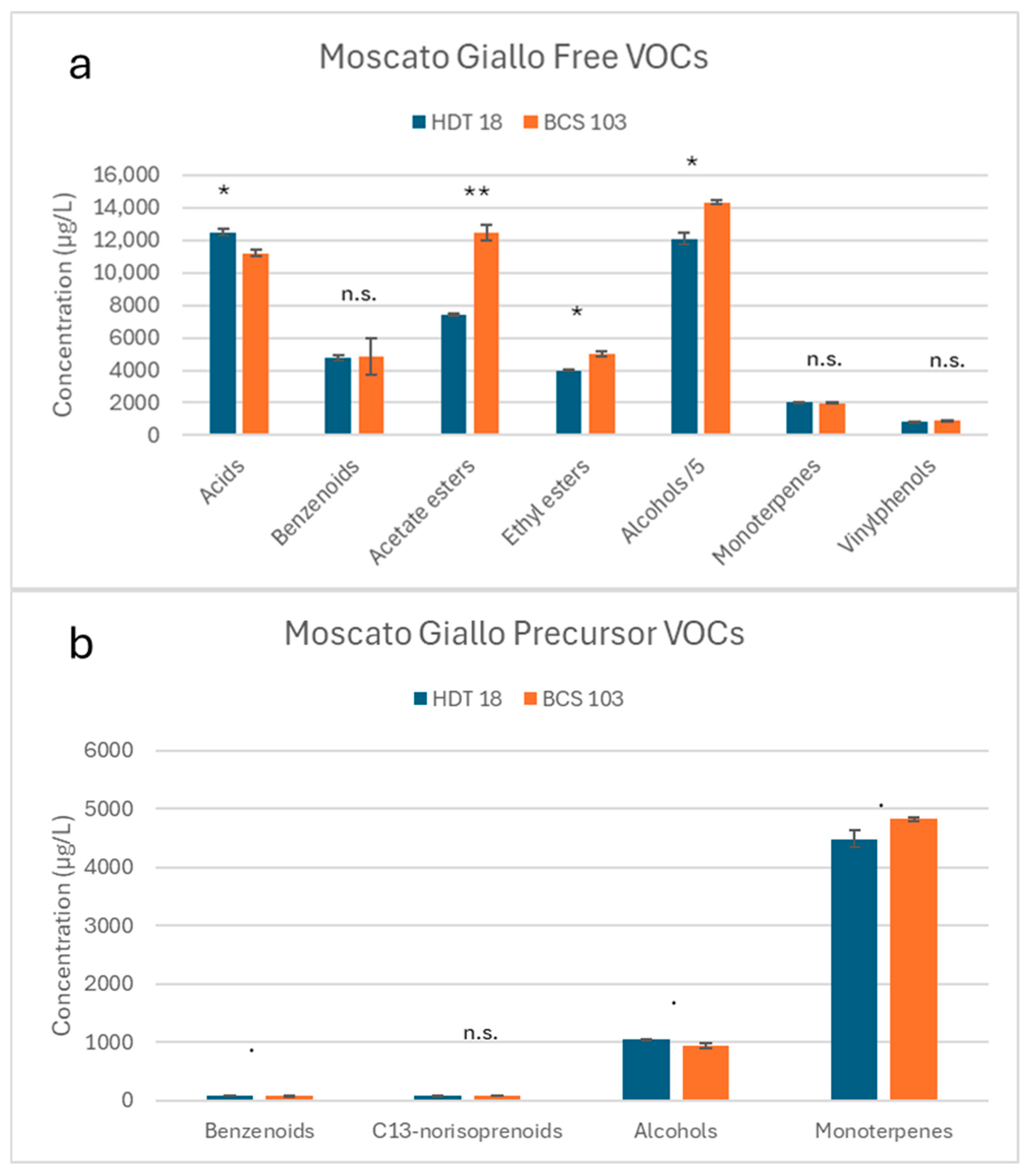
Free Volatile Organic Compounds
3.5. Sensory Analysis
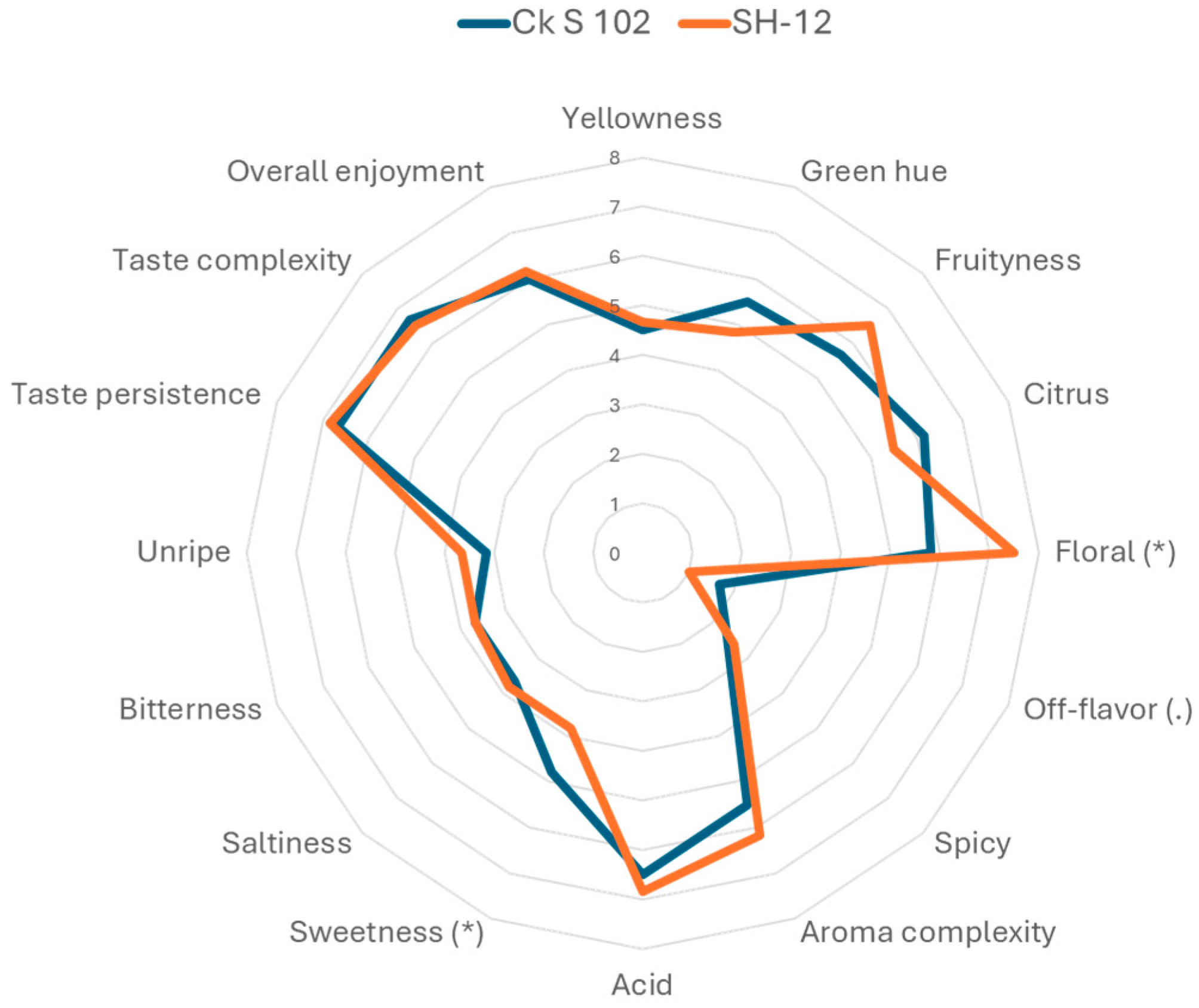
3.5.1. Grillo
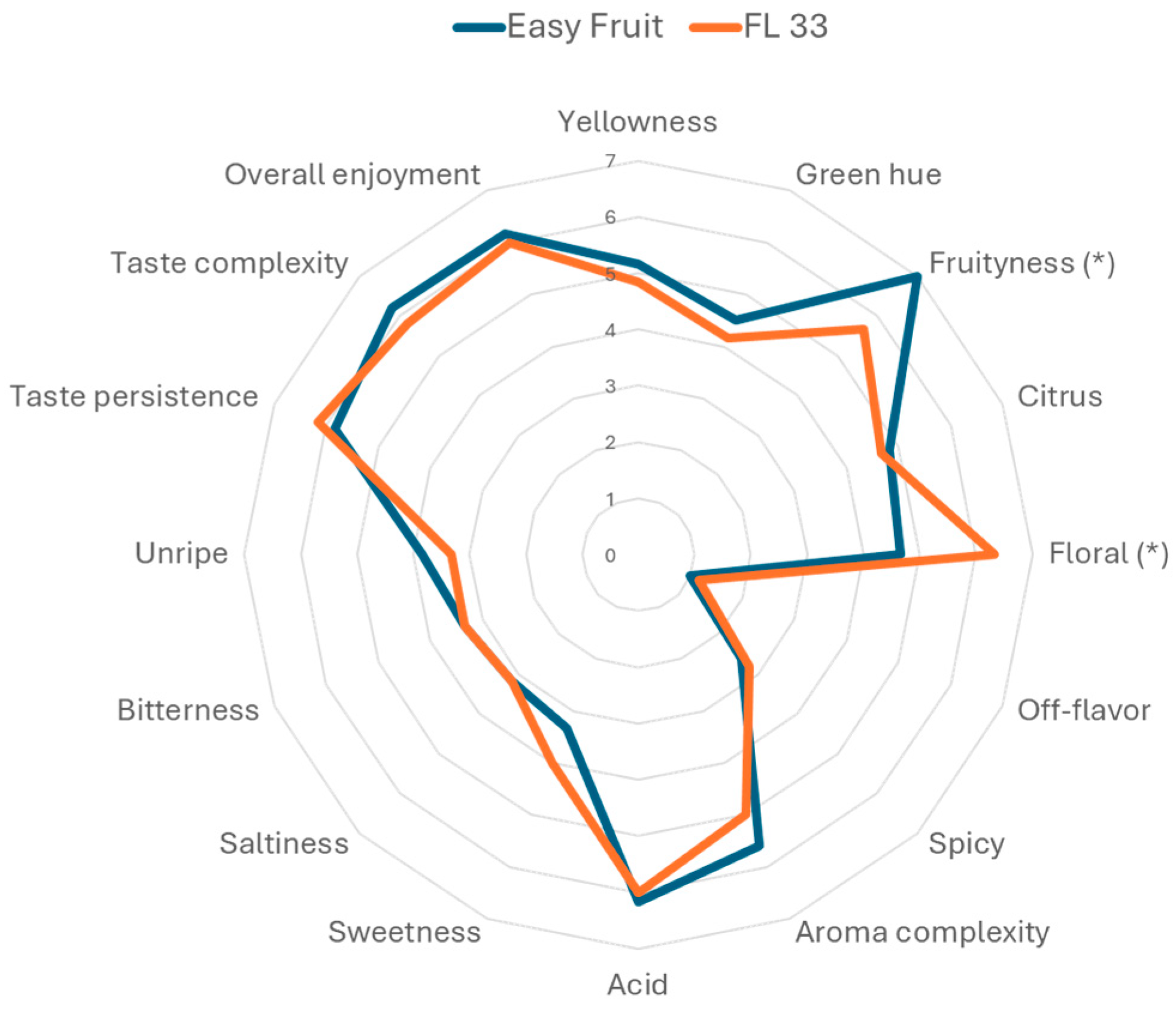
3.5.2. Catarratto
3.5.3. Moscato Giallo
4. Discussion
4.1. Grillo
4.2. Catarratto
4.3. Moscato Giallo
5. Conclusions
Supplementary Materials
Author Contributions
Funding
Institutional Review Board Statement
Informed Consent Statement
Data Availability Statement
Conflicts of Interest
References
- Regione Siciliana, Istituto Regionale della Vite e del Vino. La Vitivinicoltura Siciliana in Cifre; Istituto Regionale della Vite e del Vino: Palermo, Italy, 2024. [Google Scholar]
- Hazelwood, L.A.; Daran, J.M.; Van Maris, A.J.; Pronk, J.T.; Dickinson, J.R. The Ehrlich Pathway for Fusel Alcohol Production: A Century of Research on Saccharomyces cerevisiae Metabolism. Appl. Environ. Microbiol. 2008, 74, 2259–2266. [Google Scholar] [CrossRef] [Scilit] [PubMed]
- Cabrera, M.J.; Moreno, J.; Ortega, J.M.; Medina, M. Formation of Ethanol, Higher Alcohols, Esters, and Terpenes by Five Yeast Strains in Musts from Pedro Ximénez Grapes in Various Degrees of Ripeness. Am. J. Enol. Vitic. 1988, 39, 283–287. [Google Scholar] [CrossRef] [Scilit]
- Belda, I.; Ruiz, J.; Esteban-Fernández, A.; Navascués, E.; Marquina, D.; Santos, A.; Moreno-Arribas, M.V. Microbial Contribution to Wine Aroma and Its Intended Use for Wine Quality Improvement. Molecules 2017, 22, 189. [Google Scholar] [CrossRef] [Scilit]
- Ugliano, M.; Bartowsky, E.J.; McCarthy, J.; Moio, L.; Henschke, P.A. Hydrolysis and Transformation of Grape Glycosidically Bound Volatile Compounds During Fermentation with Three Saccharomyces Yeast Strains. J. Agric. Food Chem. 2006, 54, 6322–6331. [Google Scholar] [CrossRef] [Scilit]
- Souza-Coutinho, M.; Brasil, R.; Souza, C.; Sousa, P.; Malfeito-Ferreira, M. Consumers Associate High-Quality (Fine) Wines with Complexity, Persistence, and Unpleasant Emotional Responses. Foods 2020, 9, 452. [Google Scholar] [CrossRef] [Scilit]
- Vitaggio, C.; Pollon, M.; Schnitter, M.; Caraci, V.; Cinquanta, L.; Corona, O. Effect of pre-fermentative cold soaking and use of different enzymes on the chemical and sensory properties of Catarratto wines. J. Food Compos. Anal. 2025, 143, 107560. [Google Scholar] [CrossRef] [Scilit]
- Corona, O. Wine-Making with Protection of Must Against Oxidation in a Warm, Semi-Arid Terroir. S. Afr. J. Enol. Vitic. 2010, 31, 58–63. [Google Scholar] [CrossRef] [Scilit]
- Fracassetti, D.; Stuknytė, M.; La Rosa, C.; Gabrielli, M.; De Noni, I.; Tirelli, A. Thiol precursors in Catarratto Bianco Comune and Grillo grapes and effect of clarification conditions on the release of varietal thiols in wine. Aust. J. Grape Wine Res. 2018, 24, 125–133. [Google Scholar] [CrossRef] [Scilit]
- Paolini, M.; Roncone, A.; Cucinotta, L.; Sciarrone, D.; Mondello, L.; Camin, F.; Moser, S.; Larcher, R.; Bontempo, L. Aromatic Characterisation of Moscato Giallo by GC–MS/MS and Validation of Stable Isotopic Ratio Analysis of the Major Volatile Compounds. Biomolecules 2024, 14, 710. [Google Scholar] [CrossRef] [Scilit]
- Di Stefano, R. Gli Aromi dei Moscati con Particolare Riferimento a Quelli del Moscato Giallo; Atti dell’Accademia Italiana della Vite e del Vino: Siena, Italy, 2013. [Google Scholar]
- Corona, O.; Squadrito, M.; Vento, G.; Tirelli, A.; Di Stefano, R. Over-evaluation of total flavonoids in grape skin extracts containing sulphur dioxide. Food Chem. 2015, 172, 537–542. [Google Scholar] [CrossRef] [Scilit] [PubMed]
- Topaloğlu, A.; Esen, Ö.; Turanlı-Yıldız, B.; Arslan, M.; Çakar, Z.P. From Saccharomyces cerevisiae to Ethanol: Unlocking the Power of Evolutionary Engineering in Metabolic Engineering Applications. J. Fungi 2023, 9, 984. [Google Scholar] [CrossRef] [Scilit]
- Aiello, E.; Arena, M.P.; De Vero, L.; Montanini, C.; Bianchi, M.; Mescola, A.; Alessandrini, A.; Pulvirenti, A.; Gullo, M. Wine Yeast Strains Under Ethanol-Induced Stress: Morphological and Physiological Responses. Fermentation 2024, 10, 631. [Google Scholar] [CrossRef] [Scilit]
- Vion, C.; Yeramian, N.; Hranilovic, A.; Masneuf-Pomarède, I.; Marullo, P. Influence of Yeasts on Wine Acidity: New Insights into Saccharomyces cerevisiae. OENO One 2024, 58, 1–17. [Google Scholar] [CrossRef] [Scilit]
- Vilela, A. Use of Nonconventional Yeasts for Modulating Wine Acidity. Fermentation 2019, 5, 27. [Google Scholar] [CrossRef] [Scilit]
- Goold, H.D.; Kroukamp, H.; Williams, T.C.; Paulsen, I.T.; Varela, C.; Pretorius, I.S. Yeast’s Balancing act Between Ethanol and Glycerol Production in Low-Alcohol Wines. Microb. Biotechnol. 2017, 10, 264–278. [Google Scholar] [CrossRef] [Scilit]
- Waterhouse, A.L.; Sacks, G.L.; Jeffery, D.W. Understanding Wine Chemistry; Wiley: Hoboken, NJ, USA, 2024. [Google Scholar]
- Bartowsky, E.J.; Henschke, P.A. Acetic Acid Bacteria Spoilage of Bottled Red Wine—A Review. Int. J. Food Microbiol. 2008, 125, 60–70. [Google Scholar] [CrossRef] [Scilit]
- Blackmore, D.; Walker, R. Potassium Concentration and pH Inter-Relationships in Grape Juice and Wine of Chardonnay and Shiraz from a Range of Rootstocks in Different Environments. Aust. J. Grape Wine Res. 2012, 18, 183–193. [Google Scholar] [CrossRef] [Scilit]
- Ćorković, I.; Pichler, A.; Šimunović, J.; Kopjar, M. A Comprehensive Review on Polyphenols of White Wine: Impact on Wine Quality and Potential Health Benefits. Molecules 2024, 29, 5074. [Google Scholar] [CrossRef] [Scilit] [PubMed]
- Loscos, N.; Hernández-Orte, P.; Cacho, J.; Ferreira, V. Evolution of the Aroma Composition of Wines Supplemented with Grape Flavour Precursors from Different Varietals During Accelerated Wine Ageing. Food Chem. 2010, 120, 205–216. [Google Scholar] [CrossRef] [Scilit]
- Parker, M.; Capone, D.L.; Francis, I.L.; Herderich, M.J. Aroma Precursors in Grapes and Wine: Flavor Release during Wine Production and Consumption. J. Agric. Food Chem. 2017, 66, 2281–2286. [Google Scholar] [CrossRef] [Scilit] [PubMed]
- Louw, L.; Tredoux, A.G.J.; Van Rensburg, P.; Kidd, M.; Naes, T.; Nieuwoudt, H.H. Fermentation-derived aroma compounds in varietal young wines from South Africa. S. Afr. J. Enol. Vitic. 2010, 31, 213–225. [Google Scholar] [CrossRef] [Scilit]
- Genovese, A.; Gambuti, A.; Piombino, P.; Moio, L. Sensory Properties and Aroma Compounds of Sweet Fiano Wine. Food Chem. 2007, 103, 1228–1236. [Google Scholar] [CrossRef] [Scilit]
- Piergiovanni, M.; Masuero, D.; Carlin, S.; Luzzini, G.; Furlan, N.; Slaghenaufi, D.; Ugliano, M.; Rolle, L.; Segade, S.R.; Piombino, P.; et al. Free Methyl Salicylate and Its Glycosides Mapping in Monovarietal Italian White Wines. OENO One 2023, 57, 115–127. [Google Scholar] [CrossRef] [Scilit]
- Schneider, R.; Baumes, R.; Bayonove, C.; Razungles, A. Volatile Compounds Involved in the Aroma of Sweet Fortified Wines (Vins Doux Naturels) from Grenache Noir. J. Agric. Food Chem. 1998, 46, 3230–3237. [Google Scholar] [CrossRef] [Scilit]
- Chatonnet, P.; Dubourdieu, D.; Boidron, J.N.; Lavigne, V. Synthesis of Volatile Phenols by Saccharomyces cerevisiae in Wines. J. Sci. Food Agric. 1993, 62, 191–202. [Google Scholar] [CrossRef] [Scilit]
- Valera, M.J.; Olivera, V.; Boido, E.; Dellacassa, E.; Carrau, F. Wine Aroma Characterization of the Two Main Fermentation Yeast Species of the Apiculate Genus Hanseniaspora. Fermentation 2021, 7, 162. [Google Scholar] [CrossRef] [Scilit]
- Oliveira, J.M.; Faria, M.; Sá, F.; Barros, F.; Araújo, I.M. C6-Alcohols as Varietal Markers for Assessment of Wine Origin. Anal. Chim. Acta 2006, 563, 300–309. [Google Scholar] [CrossRef] [Scilit]
- Styger, G.; Prior, B.; Bauer, F.F. Wine Flavor and Aroma. J. Ind. Microbiol. Biotechnol. 2011, 38, 1145–1159. [Google Scholar] [CrossRef] [Scilit]
- Carpena, M.; Fraga-Corral, M.; Otero, P.; Nogueira, R.A.; Garcia-Oliveira, P.; Prieto, M.A.; Simal-Gandara, J. Secondary Aroma: Influence of Wine Microorganisms in Their Aroma Profile. Foods 2021, 10, 51. [Google Scholar] [CrossRef] [Scilit] [PubMed]
- Ivit, N.N.; Longo, R.; Kemp, B. The Effect of Non-Saccharomyces and Saccharomyces Non-Cerevisiae Yeasts on Ethanol and Glycerol Levels in Wine. Fermentation 2020, 6, 77. [Google Scholar] [CrossRef] [Scilit]
- Gawel, R.; Van Sluyter, S.; Waters, E.J. The Effects of Ethanol and Glycerol on the Body and Other Sensory Characteristics of Riesling Wines. Aust. J. Grape Wine Res. 2007, 13, 38–45. [Google Scholar] [CrossRef] [Scilit]
- Berbegal, C.; Polo, L.; Lizama, V.; Álvarez, I.; Ferrer, S.; Pardo, I.; García-Esparza, M.J. Influence of Native S. cerevisiae Strains on the Final Characteristics of “Pago” Garnacha Wines from East Spain. Beverages 2023, 9, 17. [Google Scholar] [CrossRef] [Scilit]
- Payan, C.; Gancel, A.-L.; Jourdes, M.; Christmann, M.; Teissedre, P.-L. Wine Acidification methods: A Review. OENO One 2023, 57, 113–126. [Google Scholar] [CrossRef] [Scilit]
- Paraggio, M.; Fiore, C. Screening of Saccharomyces cerevisiae Wine Strains for the Production of Acetic Acid. World J. Microbiol. Biotechnol. 2004, 20, 743–747. [Google Scholar] [CrossRef] [Scilit]
- Santos, J.P.; Lozano, J.; Aleixandre, M.; Arroyo, T.; Cabellos, J.M.; Gil, M.; del Carmen Horrillo, M. Threshold Detection of Aromatic Compounds in Wine with an Electronic Nose and a Human Sensory Panel. Talanta 2010, 80, 1899–1906. [Google Scholar] [CrossRef] [Scilit] [PubMed]
- Petretto, G.; Urgeghe, P.P.; Cabizza, R.; Del Caro, A. Evaluation of Volatile and Chemical Profile of Sherry-Like White Wine Vernaccia di Oristano from Sardinia by Comprehensive Targeted and Untargeted Approach. Eur. Food Res. Technol. 2023, 249, 1887–1897. [Google Scholar] [CrossRef] [Scilit]
- Singleton, V.L. Oxygen with Phenols and Related Reactions in Musts, Wines, and Model Systems: Observations and Practical Implications. Am. J. Enol. Vitic. 1987, 38, 69–77. [Google Scholar] [CrossRef] [Scilit]
- Ragg, E.; De Noni, I.; Tirelli, A. New Insight into the Pinking Phenomena of White Wine. IVES Conf. Ser. 2022. Available online: https://ives-openscience.eu/14133/ (accessed on 21 July 2025).
- Van Buiten, C.B.; Elias, R.J. Impact of Pre- and Post-Fermentation Fining with Polyvinylpolypyrrolidone on the Chemical Stability and Aromatic Profile of Viognier Wine. J. Food Sci. 2024, 89, 4286–4297. [Google Scholar] [CrossRef] [Scilit]
- Chassagne, D.; Vernizeau, S.; Nedima, M.; Alexandre, H. Hydrolysis and Sorption by Saccharomyces cerevisiae strains of Chardonnay Grape must Glycosides During Fermentation. Enzym. Microb. Technol. 2005, 37, 212–217. [Google Scholar] [CrossRef] [Scilit]
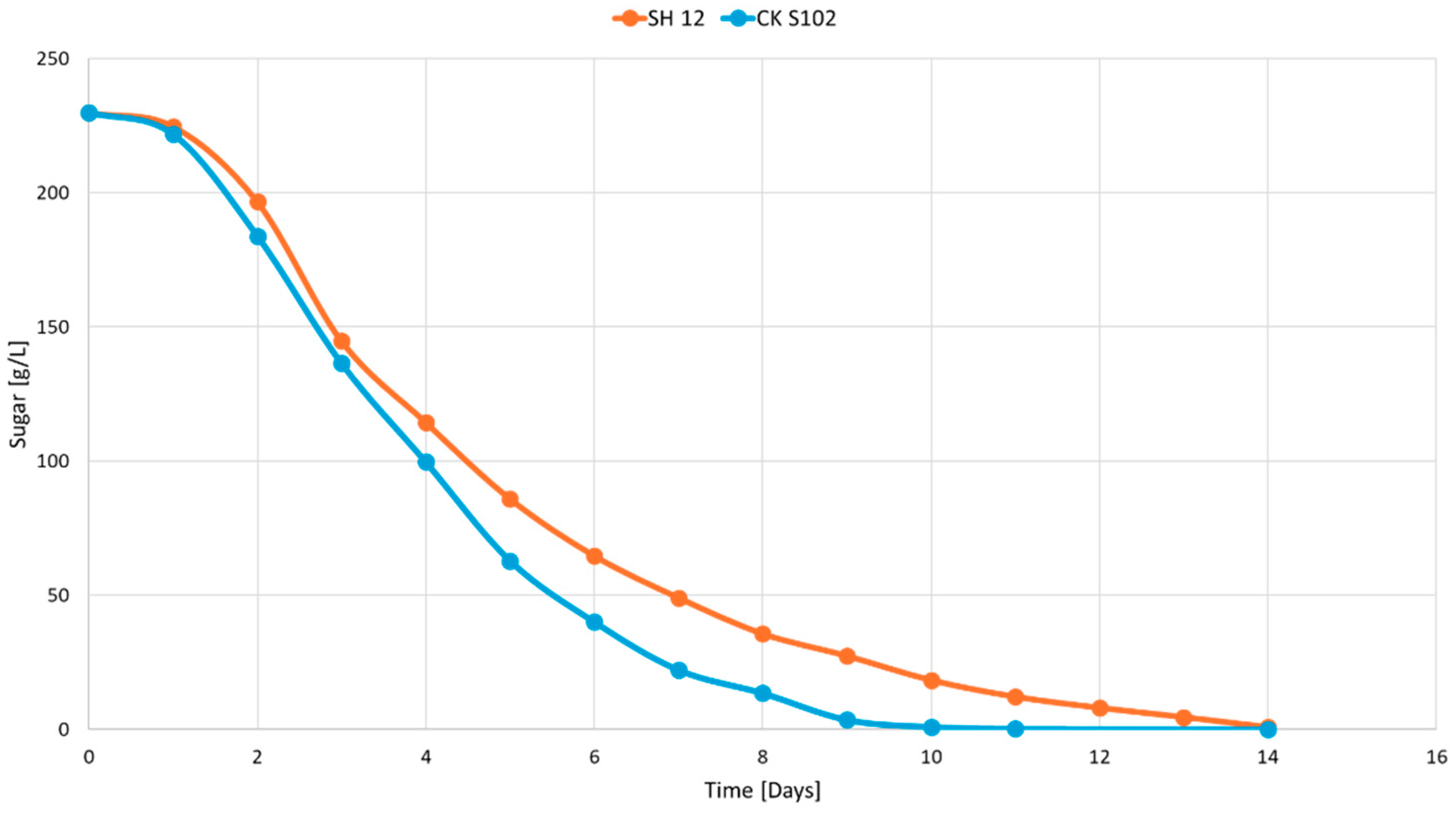
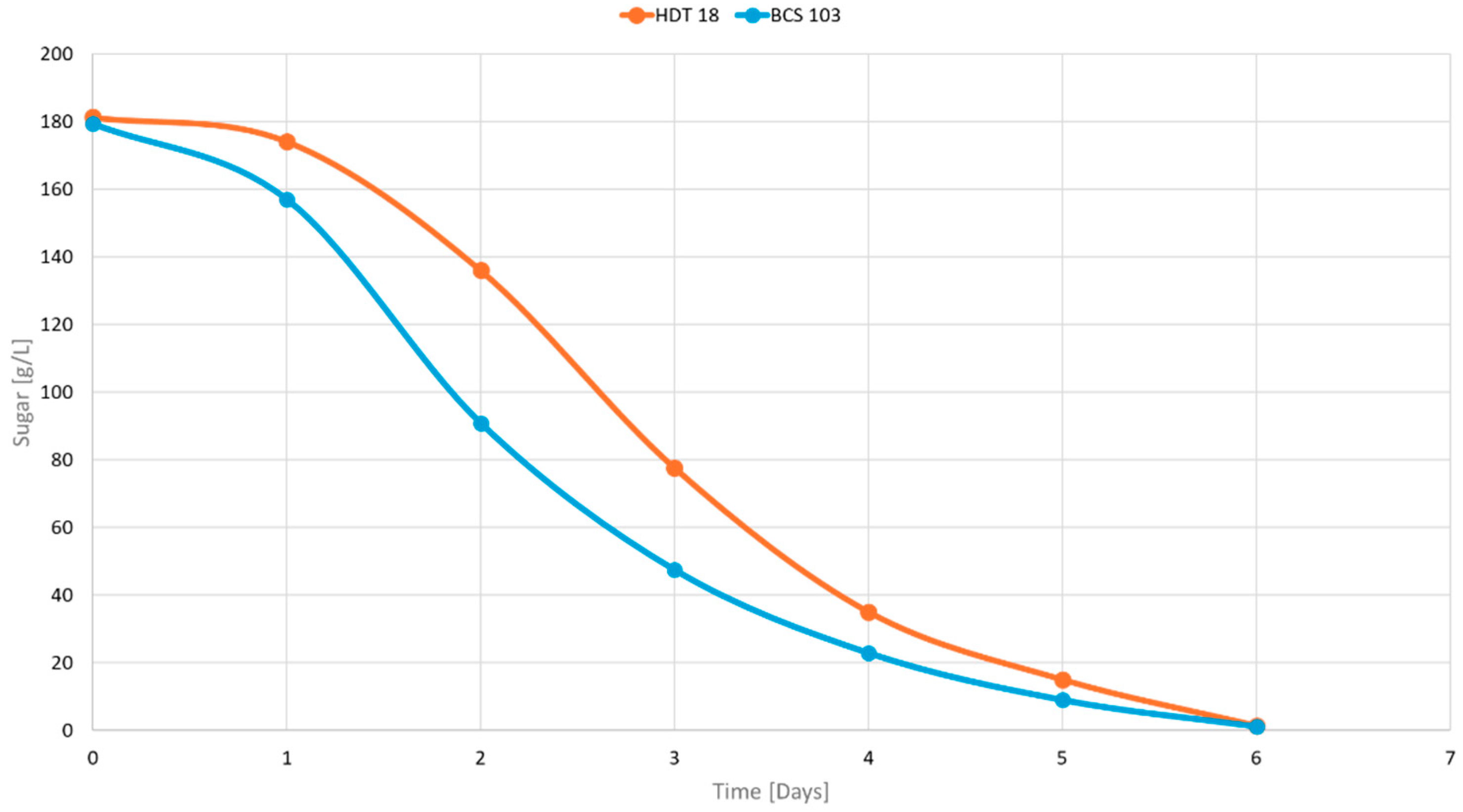
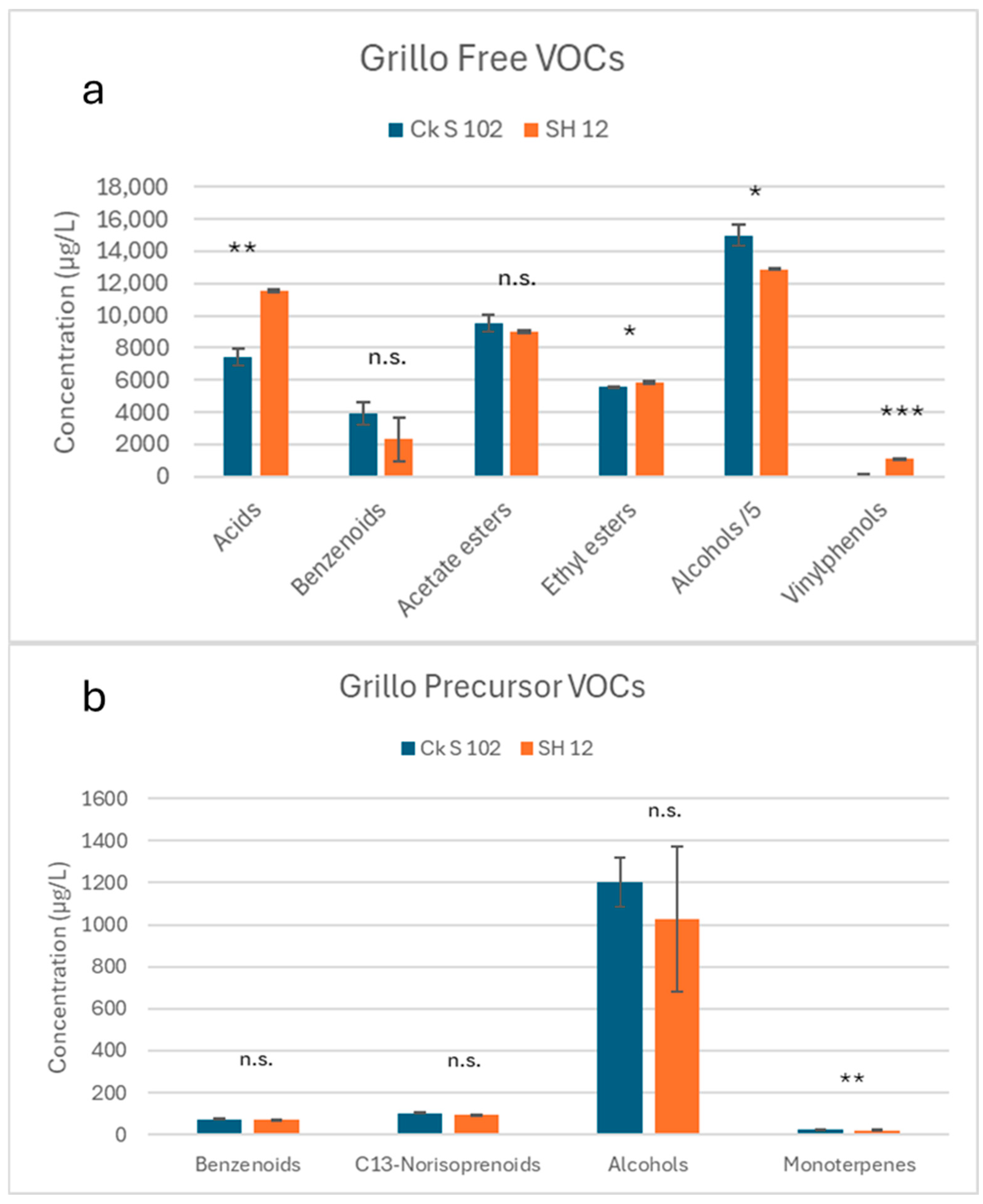
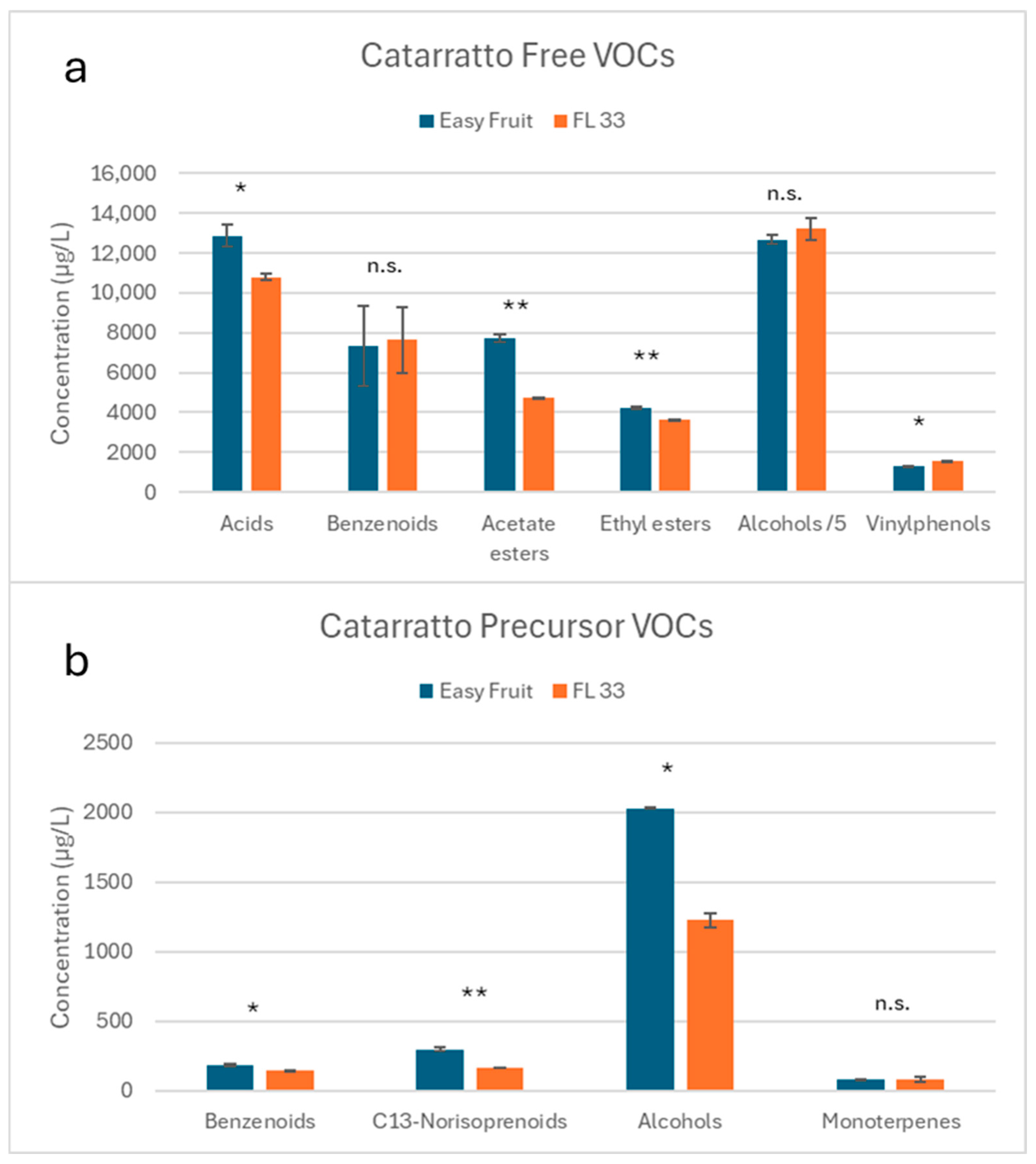



| Cultivar | Grillo | Catarratto | Moscato Giallo |
|---|---|---|---|
| Reducing sugars (g/L) | 229.9 ± 0.1 | 218.9 ± 0.1 | 180.2 ± 0.1 |
| pH | 3.59 ± 0.07 | 3.57 ± 0.06 | 3.80 ± 0.03 |
| Titratable acidity (g/L) | 5.1 ± 0.1 | 4.9 ± 0.1 | 4.4 ± 0.1 |
| YAN (mg/L) | 134 ± 1 | 102 ± 1 | 140 ± 5 |
| Yeast Strain | SH-12 | CK S 102 |
|---|---|---|
| Alcohol (% v/v) | 14.38 ± 0.01 | 13.92 ± 0.01 |
| *** | *** | |
| Titratable acidity (g/L) | 5.03 ± 0.02 | 4.77 ± 0.01 |
| ** | ** | |
| pH | 3.35 ± 0.02 | 3.37 ± 0.01 |
| Volatile acidity (g/L) | n.s. | n.s. |
| Residual sugar (g/L) | 1.6 ± 0.1 | 1.60 ± 0.01 |
| n.s. | n.s. | |
| Volatile acidity (g/L) | 0.25 ± 0.01 | 0.32 ± 0.01 |
| * | * | |
| Malic acid (g/L) | 1.18 ± 0.01 | 0.80 ± 0.01 |
| *** | *** | |
| Tartaric acid (g/L) | 2.14 ± 0.01 | 2.17 ± 0.01 |
| n.s. | n.s. | |
| Dry extract (g/L) | 18.3 ± 0.2 | 18.3 ± 0.1 |
| n.s. | n.s. | |
| Glycerol (g/L) | 6.0 ± 0.1 | 6.6 ± 0.1 |
| *** | *** | |
| Potassium (g/L) | 0.39 ± 0.04 | 0.33 ± 0.01 |
| n.s. | n.s. | |
| Buffer capacity (meq/L) | 32.8 ± 0.8 | 33.9 ± 0.8 |
| n.s. | n.s. | |
| Catechins (mg/L) | 22.81 ± 0.02 | 25.34 ± 0.01 |
| *** | *** | |
| Total flavonoids (mg/L) | 94.4 ± 0.2 | 94.21 ± 0.06 |
| n.s. | n.s. |
| Yeast Strain | Easy Fruit | FL-33 |
|---|---|---|
| Alcohol (% v/v) | 13.52 ± 0.03 | 13.46 ± 0.01 |
| . | . | |
| Titratable acidity (g/L) | 6.07 ± 0.04 | 6.15 ± 0.04 |
| n.s. | n.s. | |
| pH | 3.33 ± 0.01 | 3.31 ± 0.01 |
| Volatile acidity (g/L) | n.s. | n.s. |
| Residual sugar (g/L) | 1.6 ± 0.1 | 1.60 ± 0.01 |
| n.s. | n.s. | |
| Volatile acidity (g/L) | 0.21 ± 0.01 | 0.29 ± 0.01 |
| ** | ** | |
| Malic acid (g/L) | 0.90 ± 0.02 | 0.94 ± 0.01 |
| n.s. | n.s. | |
| Tartaric acid (g/L) | 3.52 ± 0.04 | 3.56 ± 0.06 |
| n.s. | n.s. | |
| Dry extract (g/L) | 21.32 ± 0.05 | 21.2 ± 0.1 |
| n.s. | n.s. | |
| Glycerol (g/L) | 7.03 ± 0.01 | 7.21 ± 0.06 |
| n.s. | n.s. | |
| Potassium (g/L) | 0.68 ± 0.01 | 0.63 ± 0.03 |
| n.s. | n.s. | |
| Buffer capacity (meq/L) | 36.4 ± 0.9 | 40.0 ± 0.1 |
| * | * | |
| Catechins (mg/L) | 26.1 ± 0.1 | 27.6 ± 0.1 |
| n.s. | n.s. | |
| Total flavonoids (mg/L) | 128.3 ± 0.2 | 129.4 ± 0.1 |
| n.s. | n.s. |
| Yeast Strain | BCS 103 | HDT 18 |
|---|---|---|
| Alcohol (% v/v) | 11.29 ± 0.02 | 11.29 ± 0.04 |
| n.s. | n.s. | |
| Titratable acidity (g/L) | 4.77 ± 0.02 | 4.9 ± 0.1 |
| n.s. | n.s. | |
| pH | 3.31 ± 0.01 | 3.32 ± 0.01 |
| Volatile acidity (g/L) | n.s. | n.s. |
| Residual sugar (g/L) | 1.34 ± 0.03 | 1.20 ± 0.01 |
| * | * | |
| Volatile acidity (g/L) | 0.11 ± 0.01 | 0.14 ± 0.01 |
| * | * | |
| Malic acid (g/L) | 0.99 ± 0.01 | 1.09 ± 0.01 |
| * | * | |
| Tartaric acid (g/L) | 3.48 ± 0.04 | 3.51 ± 0.04 |
| n.s. | n.s. | |
| Dry extract (g/L) | 18.3 ± 0.1 | 18.5 ± 0.2 |
| n.s. | n.s. | |
| Glycerol (g/L) | 5.52 ± 0.01 | 5.29 ± 0.01 |
| *** | *** | |
| Potassium (g/L) | 0.49 ± 0.02 | 0.51 ± 0.02 |
| n.s. | n.s. | |
| Buffer capacity (meq/L) | 32. ± 2 | 34 ± 1 |
| n.s. | n.s. | |
| Catechins (mg/L) | 7.65 ± 0.04 | 7.34 ± 0.03 |
| * | * | |
| Total flavonoids (mg/L) | 96.0 ± 0.1 | 87 ± 0.1 |
| ** | ** |
Disclaimer/Publisher’s Note: The statements, opinions and data contained in all publications are solely those of the individual author(s) and contributor(s) and not of MDPI and/or the editor(s). MDPI and/or the editor(s) disclaim responsibility for any injury to people or property resulting from any ideas, methods, instructions or products referred to in the content. |
© 2026 by the authors. Licensee MDPI, Basel, Switzerland. This article is an open access article distributed under the terms and conditions of the Creative Commons Attribution (CC BY) license.
Share and Cite
Schnitter, M.; Vitaggio, C.; Pollon, M.; Caraci, V.; Amato, F.; Savastano, R.; Girolli, L.; Corona, O. Selected Yeast Strains and Varietal Identity: A Useful Tool to Shape Sicilian White Wines. Fermentation 2026, 12, 227. https://doi.org/10.3390/fermentation12050227
Schnitter M, Vitaggio C, Pollon M, Caraci V, Amato F, Savastano R, Girolli L, Corona O. Selected Yeast Strains and Varietal Identity: A Useful Tool to Shape Sicilian White Wines. Fermentation. 2026; 12(5):227. https://doi.org/10.3390/fermentation12050227
Chicago/Turabian StyleSchnitter, Manuel, Clara Vitaggio, Matteo Pollon, Valentina Caraci, Filippo Amato, Riccardo Savastano, Laura Girolli, and Onofrio Corona. 2026. "Selected Yeast Strains and Varietal Identity: A Useful Tool to Shape Sicilian White Wines" Fermentation 12, no. 5: 227. https://doi.org/10.3390/fermentation12050227
APA StyleSchnitter, M., Vitaggio, C., Pollon, M., Caraci, V., Amato, F., Savastano, R., Girolli, L., & Corona, O. (2026). Selected Yeast Strains and Varietal Identity: A Useful Tool to Shape Sicilian White Wines. Fermentation, 12(5), 227. https://doi.org/10.3390/fermentation12050227