
Article

Seasonal Variations in Characteristics of Municipal Sludge and Their Impact on Anaerobic Digestion

1
School of Mechanical and Electrical Engineering, Henan University of Technology, Zhengzhou 450001, China
2
Agricultural and Rural Affairs Bureau of Chengwu County, Heze 274200, China
3
College of Mechanical & Electrical Engineering, Henan Agricultural University, Zhengzhou 450002, China
*
Authors to whom correspondence should be addressed.
Fermentation 2026, 12(5), 223; https://doi.org/10.3390/fermentation12050223
Submission received: 12 March 2026 / Revised: 25 April 2026 / Accepted: 27 April 2026 / Published: 30 April 2026

Abstract

Anaerobic digestion is crucial for safe treatment and energy recovery from municipal sludge. However, seasonal variations in sludge physicochemical properties challenge the continuous, stable operation of anaerobic digestion systems. To investigate the seasonal variations in characteristics of municipal sludge and their impact, this study collected sludge samples from a Beijing plant over a year, analyzed their properties and microbial communities, and evaluated their biogas potential through four-week batch anaerobic digestion tests. The results demonstrated that spring sludge exhibited the highest organic matter (68.7% of total solids, TS), including soluble proteins, sugars, and lipids, while the lignocellulose content peaked in autumn (17% TS). These fluctuations were primarily driven by variations in rainfall, temperature, and human activities. The microbial community shifted significantly: Proteiniclasticum and other hydrolytic bacteria were dominant in spring, whereas Candidatus_Microthrix was notably enriched in winter. Consequently, the biochemical methane potential (BMP) was highest in spring (342.5 mL/g volatile solids) and lowest in autumn (255.8 mL/g volatile solids). Spearman’s correlation analysis indicated a significant positive correlation between BMP and soluble protein content, and a weak negative correlation with cellulose content. These findings provide essential data support for seasonal regulation of sludge anaerobic digestion systems, facilitating strategies to achieve stable biogas production.

1. Introduction

China’s rapid economic development has led to a continuous increase in the production of urban sewage and sludge. According to statistics compiled by the Ministry of Housing and Urban-Rural Development of the People’s Republic of China (2024), the municipal wastewater discharge volume reached 6.68 × 10¹⁰ m3 in 2023, with 14.94 million metric tons of dewatered sludge disposed of from treatment plants [1]. Sludge contains various substances with negative environmental impacts, such as pathogens [2] and polycyclic aromatic hydrocarbons [3]. Improper disposal of sludge can lead to significant environmental pollution and potential risks. Meanwhile, sludge also contains much organic content and valuable nutrients including nitrogen, phosphorus, and sulfur. Against the backdrop of current resource shortages, the recovery of these resources from sludge has become an important measure for sustainable development [4].
Practical experience and extensive research in sludge treatment plants have demonstrated that the technology combining anaerobic digestion with land application can effectively achieve the recycling of nutrients and energy contained in sludge, and has the potential to reach a state of negative carbon emissions [5]. This is highly significant for safe treatment, disposal, and energy recovery from sludge. However, during the actual operation of sludge anaerobic digestion systems, the sludge properties, yield, and microbial communities are often influenced by seasonal variations, which subsequently affect the anaerobic digestion performance [6,7]. For instance, sludge yield and organic matter content are typically lower in summer and higher in spring. This seasonal fluctuation challenges the stable, continuous operation of anaerobic digestion systems [8], as evidenced by the significant variation in sludge yield (ranging from 1.5 to 2.7 kg dry solids·kg−1 biochemical oxygen demand) reported by Jin et al. [9]. To mitigate annual fluctuations in biogas production, measures such as appropriately increasing the feed rate of sludge and enhancing its organic matter content input to the anaerobic digestion system can be implemented, taking into account the characteristic seasonal differences in sludge properties [10,11,12].
However, research on seasonal variations in sludge characteristics and their influence on anaerobic digestion performance remains limited. This knowledge gap hampers the development of practical guidelines for adjusting treatment processes in response to fluctuations in feedstock properties. Therefore, a systematic investigation into the seasonal dynamics of sludge is essential to ensure efficient and stable year-round operation of anaerobic digestion systems, enable more precise optimization of pretreatment methods, inform targeted co-digestion strategies, and support the design of enhanced microbial consortia.
This study utilized sludge from a municipal wastewater treatment plant in Beijing that has maintained long-term stable operation. It analyzed the seasonal variations in the sludge’s organic matter content and composition, and employed high-throughput sequencing technology to characterize the microbial community structure and evaluate the biochemical methane potential (BMP). Correlation analysis was conducted to elucidate the relationship between the characteristics of the raw sludge and anaerobic digestion performance. The findings aim to provide data support for achieving year-round stable operation of sludge anaerobic digestion systems.

2. Materials and Methods

2.1. Raw Materials

The sludge used in this experiment was obtained from a wastewater treatment plant in Beijing. It consisted of pre-dewatered sludge, formed from a mixture of primary and surplus sludge, generated by treating 100% domestic sewage using an anaerobic–anoxic–oxic process. As the capital of China, and due to having a large urban population, Beijing’s sludge is representative of typical cities in northern China.
During the experimental period, which ran from October to the following September, sludge samples were collected no less than twice a month. After collection, samples were immediately transported to the laboratory and stored in a cold room at 4 °C for subsequent analysis, which was initiated as soon as possible.
The seasons for the experiment were defined according to traditional Chinese solar terms to better align with the actual local climate and living habits: Spring (February, March, and April), Summer (May, June, and July), Autumn (August, September, and October), and Winter (November, December, and January).

2.2. Analysis of Raw Material Characteristics

This study characterized the raw sludge by analyzing key properties including organic matter, soluble sugar, soluble protein, lipids, volatile organic acids, lignocellulose, and microorganisms. The detailed assay protocols are described in the Supplementary Testing Methods. Briefly, the total solids (TS) and volatile solids (VS) contents were determined following standard methods [13]. Soluble sugar content was measured using the phenol–sulfuric acid method [14], while soluble protein content was quantified by the Folin phenol reagent method [15]. Lipid content was determined via Soxhlet extraction [16]. The lignocellulose content was analyzed according to the Van Soest method [17]. Volatile fatty acids (VFAs), including acetic, propionic, isobutyric, butyric, isovaleric, valeric, and caproic acid, were analyzed using a gas chromatography system (GC-2010 Plus, Shimadzu, Kyoto, Japan) equipped with a flame ionization detector and an Rtx-wax capillary column, following the procedure described by Jiao et al. [18]. All measurements were performed in triplicate, and the results are reported as mean values.
The microbial community in raw materials was analyzed by Illumina Miseq high-throughput sequencing. Briefly, microbial DNA was extracted using an E.Z.N.A.® Soil DNA Kit (Omega Bio-tek, Inc., Norcross, GA, USA) according to the manufacturer’s protocol. After DNA quality check, the extracted DNA was amplified using 338F (ACTCCTACGGGAGGCAGCAG) and 806R (GGACTACHVGGGTWTCTAAT) primers [19]. Purified amplicons were pooled in equimolar amounts and paired-end-sequenced on an Illumina MiSeq platform (Illumina, San Diego, CA, USA), according to standard protocols (Shanghai Majorbio Bio-Pharm Technology Co., Ltd., Shanghai, China). The results were analyzed and obtained using the Silva (SSU123) 16S rRNA database.

2.3. Biochemical Methane Potential Tests

To investigate the seasonal variation in the biochemical methane potential (BMP) of sludge, samples collected in March, June, September, and December were selected to represent spring, summer, autumn, and winter conditions, respectively, constituting four experimental groups. Clean 120 mL serum bottles were used, and effluent collected from the stable operational phase of a continuous anaerobic digestion reactor at the same sludge treatment plant was added as inoculum sludge. The inoculum-to-substrate ratio (based on VS) was maintained at 2:1. Distilled water was added to adjust the TS content in each bottle to a uniform level, minimizing experimental deviations. A blank control—containing only inoculum sludge without any test substrate—was also included to account for background biogas production from the inoculum. All experimental setups were performed in triplicate. After adding the inoculum, experimental sludge, and distilled water as required, the headspace of each serum bottle was purged with nitrogen gas for two minutes to establish anaerobic conditions. The bottles were immediately sealed with rubber stoppers and secured with aluminum caps. The sealed bottles were then incubated in a constant-temperature water bath maintained at 37 °C. Each bottle was shaken several times daily to ensure thorough mixing and optimal contact between the substrate and inoculum.
During the BMP test, biogas production and composition from each serum bottle set were monitored daily over a four-week period. Biogas volume was measured using a syringe, while its composition was analyzed with a gas chromatograph (GC-8A, Shimadzu, Japan). The recorded data on biogas volume, compositional percentages, and methane concentration were utilized to calculate the methanogenic rate and cumulative methane production. These kinetic parameters were subsequently fitted using the Modified Gompertz model as expressed in Equation (1) [20]:
P = P 0 exp exp R m a x e p 0 λ t + 1
where P (mL/g VS) is the cumulative methane production, corrected for the blank control; P0 (mL/g VS) represents the maximum methane production potential; Rmax (mL/g VS/d) denotes the maximum methane production rate; λ (d) is the lag phase time; e is the natural constant (approximately 2.7183); and t (d) is the digestion time.

2.4. Data Analysis

Data organization and visualization were performed using Origin 2021. Differences were assessed for significance using the Duncan test in SPSS 17.0. The relationships between raw sludge properties and anaerobic digestion performance were examined using Spearman’s correlation analysis in SPSS 17.0.

3. Results and Discussion

3.1. Seasonal Variation in Organic Matter in Sludge

The volatile solids-to-total solids ratio (VS/TS), which serves as an indicator of organic matter content, is a critical parameter influencing sludge anaerobic digestion performance [21]. During the experimental period, the TS of the sludge ranged from 15.0% to 17.8%, while the VS content varied between 10.3% and 11.0%. As illustrated in Figure 1, the VS/TS ratio exhibited distinct seasonal variations, with values of approximately 68.7% in spring, 59.9% in summer, 61.8% in autumn, and 64.2% in winter. This pattern indicates a general trend of higher ratios in winter and spring, and lower ratios in summer and autumn.
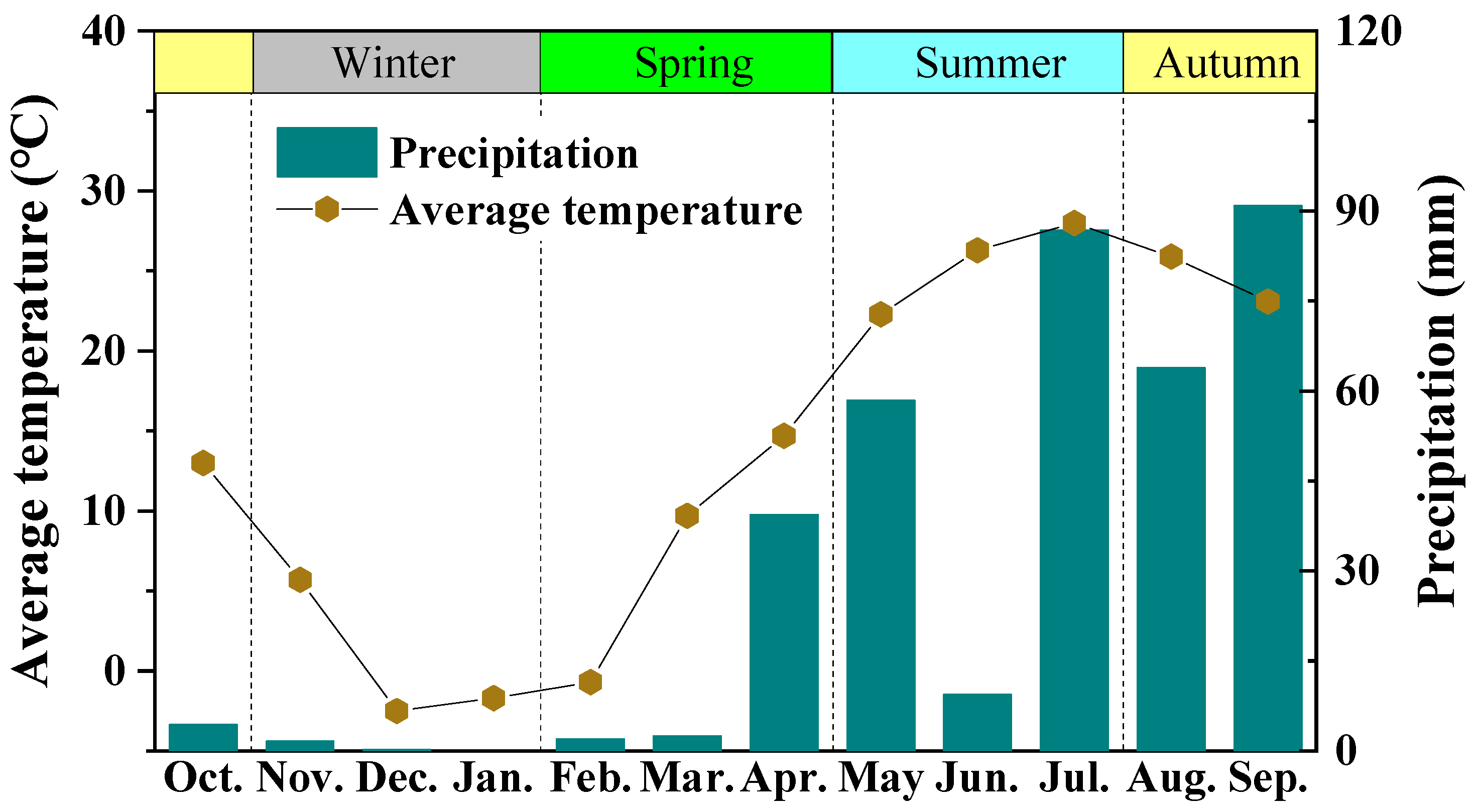
The observed seasonal fluctuations in sludge characteristics can be largely attributed to weather conditions, particularly seasonal changes in rainfall and temperature that influence wastewater treatment plant operations [22,23]. Figure 2 presents the air temperature and weather data recorded during the sampling period [24]. Beijing experiences a typical continental monsoon climate, characterized by hot, rainy summers and cold, dry winters. Intensive summer rainfall can dilute the organic load entering the treatment plant, while higher temperatures enhance microbial activity, collectively contributing to the relative reduction in VS content during summer. Conversely, the opposite conditions in winter lead to higher VS levels. This finding is consistent with observations reported in previous studies [25].
A lower VS/TS ratio typically implies reduced biogas production potential. To mitigate seasonal fluctuations and ensure a stable annual biogas yield, operational strategies can be adjusted during summer and autumn. Such measures may include increasing the feed volume of digested sludge (on a dry basis) or supplementing with sludge characterized by a higher organic matter content [9,10].

3.2. Seasonal Variation in Soluble Sugars, Soluble Proteins, and Lipids in Sludge

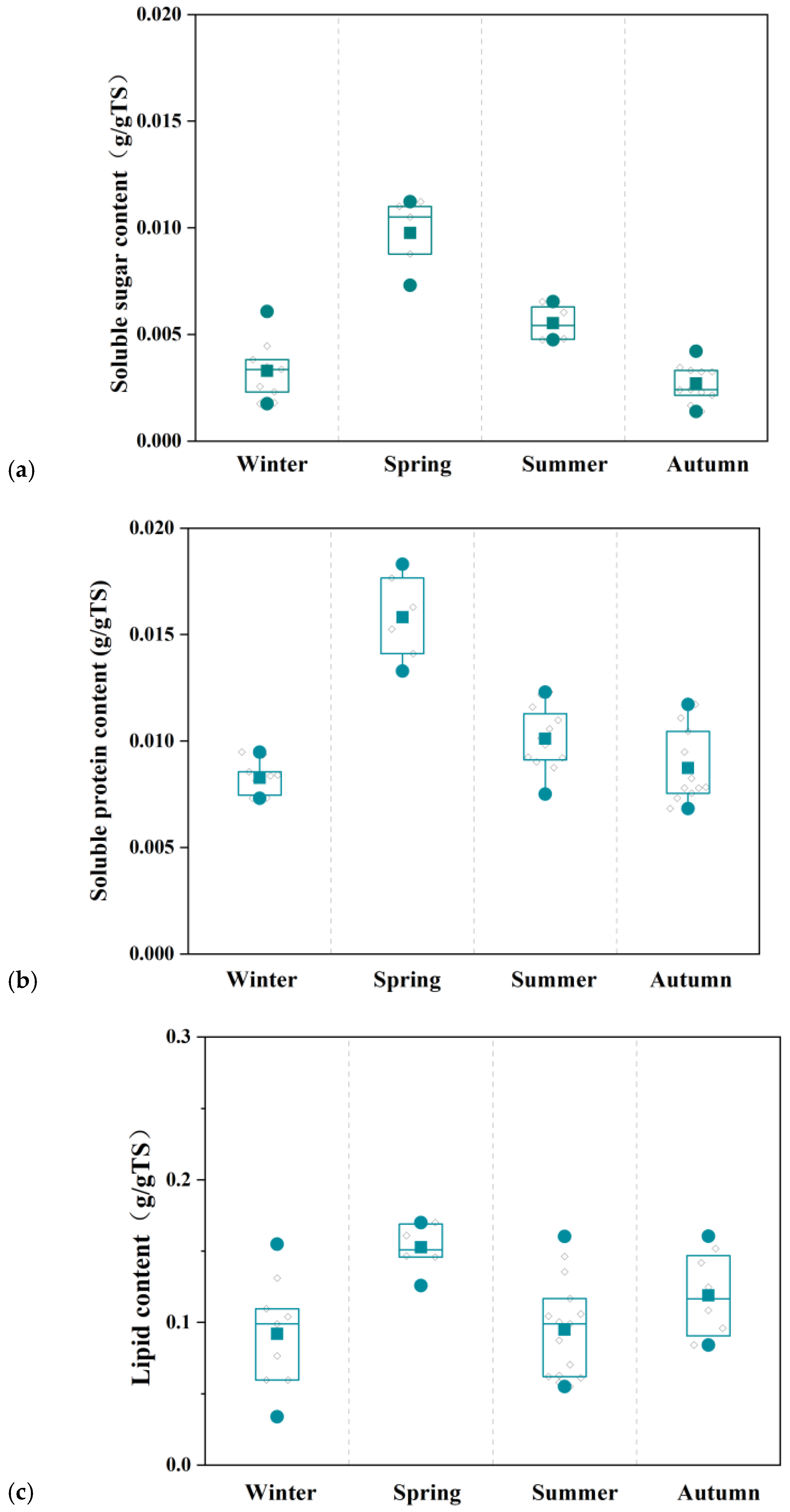
Soluble sugars, proteins, and lipids are the primary organic components of sludge, serving as the basis for assessing anaerobic digestion performance and as key parameters for predicting and optimizing the process. Their seasonal variations are shown in Figure 3a, Figure 3b, and Figure 3c, respectively.
In spring, the contents of soluble sugars, soluble proteins, and lipids reached their significantly highest levels among the four seasons (p < 0.05), with average values of 0.98% TS (range: 0.73–1.12% TS), 1.58% TS (1.33–1.83% TS), and 15.27% TS (12.59–17.00% TS), respectively. In summer, the average soluble sugar content (0.55% TS) and protein content (1.01% TS) were higher than those in autumn (0.27% TS and 0.87% TS) and winter (0.33% TS and 0.83% TS). In contrast, the lipid content was higher in autumn (11.91% TS) than in summer (9.50% TS) and winter (9.20% TS).
Overall, spring exhibited the highest organic content, which is consistent with findings reported by Wang [26] and Wang et al. [11], and aligns with the higher VS/TS ratio observed in spring (Figure 1). The higher levels in spring can be attributed to two factors: elevated temperatures and human activity alongside lower rainfall, which increase the organic concentration in wastewater, as well as dietary shifts toward fresh produce that contribute to the organic load [11,27]. In contrast, the lower levels observed in winter can be linked to cold temperatures and scant precipitation, which reduced the input of organic matter, especially sugars and proteins.
Among the three organic components, lipids constituted the largest proportion. The lipid content observed in this study was generally higher than that reported by Lv et al. (5–15% TS) [28]. In another study, Lv and Liu [29] found that lipid and protein levels were higher in Beijing than in Guangzhou, while sugar content was lower. This discrepancy may reflect dietary differences between northern and southern China, with northern regions consuming more meat and protein-rich foods, and southern regions preferring fruits and sweeter foods. Additionally, longer hydraulic retention time in Beijing’s treatment plants may also influence compositional characteristics. These regional variations suggest that sludge treatment strategies should be tailored to local conditions. For instance, to enhance the anaerobic digestion efficiency of lipid-rich sludge, methods such as prolonging the sludge retention time, raising the anaerobic fermentation temperature, and increasing microbial activity and growth rate can be adopted [30].

3.3. Seasonal Variation in Volatile Fatty Acids in Sludge

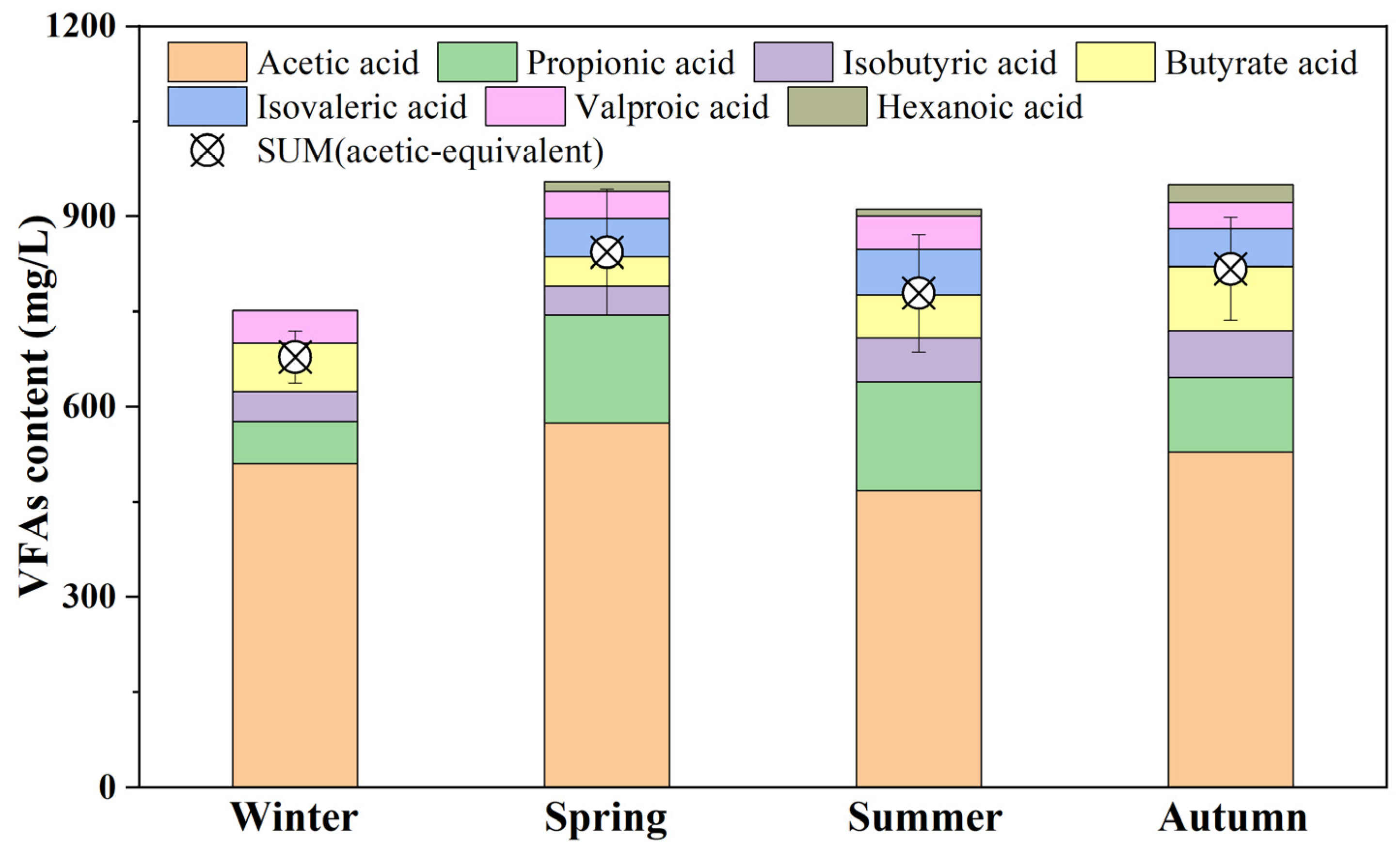
Volatile fatty acids (VFAs), crucial intermediate products in anaerobic digestion, serve as a key indicator for optimizing and controlling sludge treatment processes, as their concentration directly impacts subsequent digestion performance. As shown in Figure 4, the total VFA content (calculated as acetic acid) exhibited distinct seasonal variation, with the highest level in spring (843.64 mg/L), followed by comparable levels in summer (778.85 mg/L) and autumn (817.03 mg/L), and a significantly lower concentration in winter (678.19 mg/L) (p < 0.05). This trend generally aligns with the seasonal variations observed in soluble sugars, proteins, and lipids within the sludge. Acetic acid was the predominant component across all seasons, accounting for 51% to 68% of the total VFAs. Propionic acid represented a significant proportion (approximately 18%) in spring and summer, whereas butyric acid was notably higher (also around 18%) in autumn and winter.
The increase in VFAs is primarily driven by the hydrolysis of organic matter. The seasonal variation in VFA levels generally aligns with changes in sludge organic content (i.e., Figure 1), except in winter. Although winter exhibits the lowest VFA concentration, its volatile solids (VS) content is the second highest after spring. This deviation in winter may be explained by seasonal shifts in the microbial community structure. Specifically, although the organic matter content is higher in winter, the hydrolysis efficiency of microorganisms is likely reduced due to lower temperatures, consequently affecting VFA production [31]. Furthermore, the highest VFA and acetic acid concentrations in spring indicate a high potential for anaerobic fermentation during this season.

3.4. Seasonal Variation in Lignocellulose in Sludge

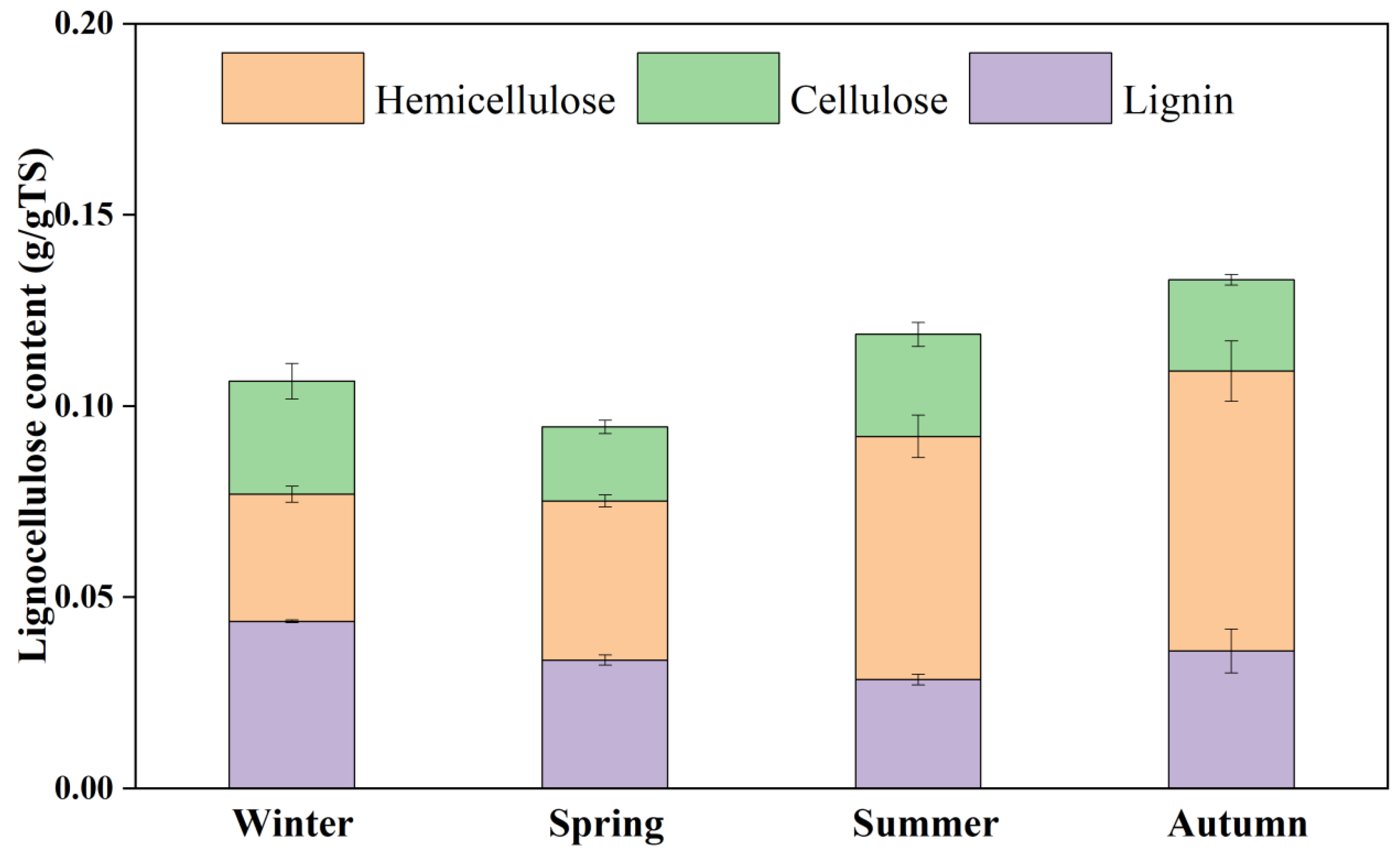
Lignocellulose, which is generally recalcitrant to biodegradation, is a key factor limiting the methane production efficiency of sludge during anaerobic digestion. The seasonal content and composition of lignocellulose in the sludge are shown in Figure 5. The total lignocellulose content (sum of cellulose, hemicellulose, and lignin) was 13% TS in spring, 15% TS in summer, 17% TS in autumn, and 15% TS in winter. Across all seasons, the content of the three components consistently followed the following order: hemicellulose > lignin > cellulose. Spring exhibited the lowest content of hemicellulose (7.5% TS) and cellulose (1.9% TS). In contrast, summer and autumn showed significantly higher hemicellulose contents, at 9.2% TS and 10.9% TS, respectively (p < 0.05). In winter, hemicellulose accounted for the lowest proportion (51%) of the total lignocellulose, while cellulose (20%) and lignin (29%) reached their highest proportions.
Autumn had the highest lignocellulose content, particularly hemicellulose, which constituted up to 65% of the total, followed by summer. The peak of summer and autumn may be due to the lush growth of plants during these two seasons; then, the increased inflow of suspended solids like fallen leaves and weeds into urban wastewater may be the primary sources of lignocellulose in sludge. The elevated lignocellulose content, being difficult to degrade, can significantly impact biogas fermentation efficiency. To enhance anaerobic digestion performance, pretreatment processes such as thermal hydrolysis and mechanical or chemical methods can be employed [32]. Alternatively, bioaugmentation by inoculating or enriching specific microbial communities can be adopted to improve the degradation of these recalcitrant components [33].

3.5. Seasonal Variation in Microbial Community in Sludge

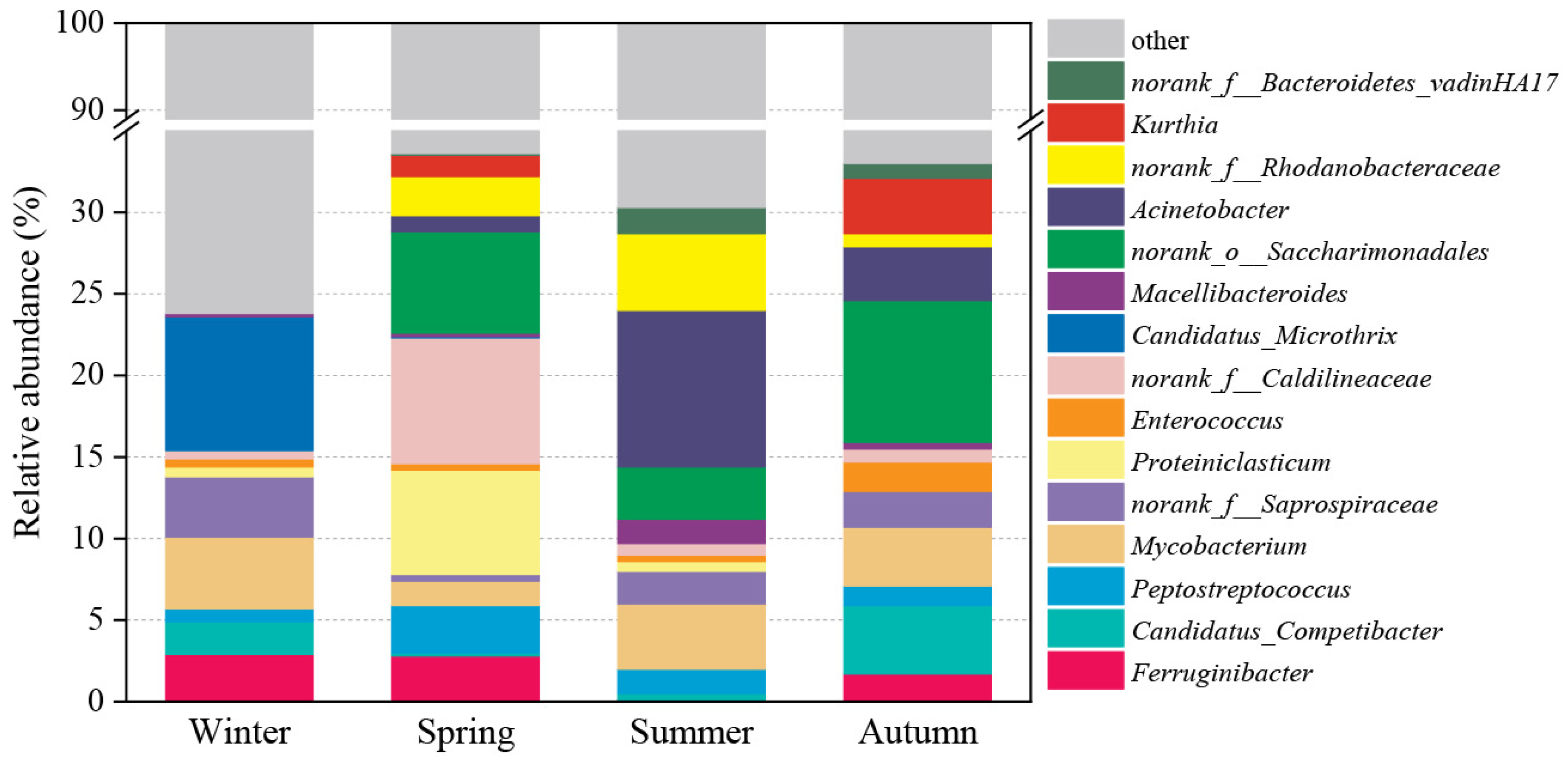
High-throughput sequencing has been widely adopted to analyze raw materials’ microbial community as an important biochemical characteristic. Figure 6 shows the microbial community at the genus level in raw sludge across the four seasons, and the microbial community in phylum is shown in Figure S1. Seven microbial genera—Mycobacterium, norank_f_Saprospiraceae, Ferruginibacter, Candidatus_Competibacter, Peptostreptococcus, Enterococcus, and Macellibacteroides—were consistently present throughout all seasons. The combined relative abundance of these seven genera was approximately 15% in autumn and winter, but less than 10% in spring and summer. In winter, Candidatus_Microthrix exhibited the highest relative abundance at about 8.2%, whereas it was nearly undetectable in other seasons. The top three microorganisms in spring were Proteiniclasticum, norank_f_Caldilineaceae, and norank_o_Saccharimonadales, each with a relative abundance exceeding 6%. These three genera were also present in other seasons, with norank_o_Saccharimonadales being the most abundant in autumn at 8.7%. In summer, the most prevalent microorganism was Acinetobacter, with a relative abundance reaching 9.6%, followed by norank_f_Rhodanobacteraceaeat 4.7%. Both of these microorganisms were also detected in spring and autumn, but were absent in winter sludge.
The seven microbial genera consistently present across all seasons are commonly involved in complex molecular degradation, nitrogen and phosphorus removal, and are typical inhabitants of sludge ecosystems [34,35,36]. However, the dominant type varied significantly by season. The winter-dominant Candidatus_Microthrix is often associated with sludge bulking [37]. In spring, the key genera include Proteiniclasticum [38], which is involved in protein digestion, and norank_f_Caldilineaceae [39], known for its role in phosphorus uptake under aerobic conditions. Furthermore, norank_o_Saccharimonadales, which exhibited a high relative abundance in both spring and autumn, is generally recognized for its functions in the glycolysis of glucose and phosphorus removal [40]. The summer-dominant Acinetobacter is considered capable of denitrifying phosphorus removal [41]. While the inherent microbial community structure of the raw sludge can, to some extent, reflect its biochemical characteristics, the ultimate dominant microbiota after the material is fed into the anaerobic digester is primarily shaped by a combination of the feedstock properties and the specific inoculant microbial communities within the fermenter. Therefore, the microbial community patterns described above highlight, from a microbiological perspective, the distinct characteristics of the raw feedstock across different seasons. At the same time, future studies could employ metagenomic or metatranscriptomic approaches to precisely identify the functional genes and active pathways responsible for the observed seasonal changes in sludge.

3.6. Seasonal Variation in Sludge Biochemical Methane Potential

The cumulative methane production curves for sludge from different seasons were effectively fitted using the Modified Gompertz model, with all R2 values exceeding 0.99, indicating an excellent fit (Table 1). In terms of maximum methane potential, the values for spring, summer, autumn, and winter were 342.5, 279.2, 255.8, and 277.8 mL/g-VS, respectively. The maximum methane production rates were 60.7, 46.7, 58.3, and 55.7 mL/g-VS/d for the respective seasons. Overall, spring sludge demonstrated the highest methane potential and production rate, while autumn showed the lowest potential. Interestingly, summer had the lowest production rate despite an intermediate potential. The lag phase was shortest in summer and longest in winter, suggesting faster microbial initiation in warmer weather but potentially slower adaptation in cold conditions. These findings on seasonal variability align with observations reported in previous studies [42].
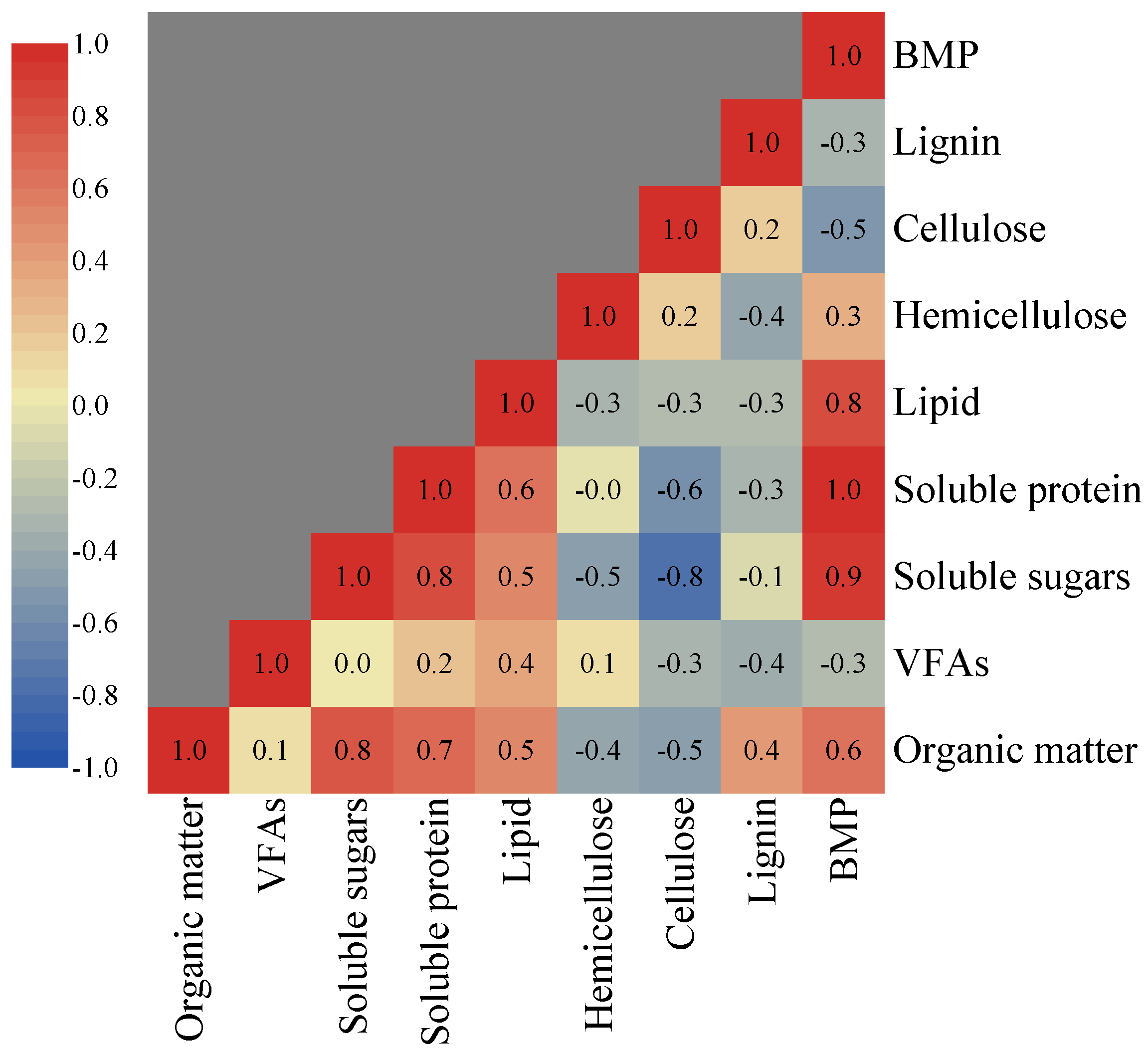
To further elucidate the relationship between the characteristics of raw sludge and its anaerobic digestion performance, a Pearson correlation analysis was conducted, with the results presented in Figure 7. The BMP showed positive correlations with the organic matter (VS/TS), soluble sugars, soluble proteins, and lipid content. Among these, soluble sugars and lipids exhibited weak positive correlations with BMP, whereas soluble protein demonstrated a significant positive correlation. Conversely, cellulose content was weakly negatively correlated with BMP.
These results indicate that a higher soluble protein content significantly enhances the methane production potential. This finding aligns with the study by Li et al. [43], which reported that protein, with its higher energy density compared to carbohydrates, contributes substantially to biogas production. Furthermore, the negative correlation with cellulose suggests that a higher lignocellulosic content impedes anaerobic digestion performance, as these components are recalcitrant and more difficult to degrade compared to readily biodegradable substances like proteins and fats.
To further enhance the anaerobic fermentation performance of sludge from wastewater treatment plants, the Advanced Wet Oxidation & Steam Explosion (AWOSE) process has been proposed as a pretreatment technology [44]. While this method has demonstrated promising results at the laboratory scale and has been further validated in small-scale trials, its effectiveness under real seasonal variations remains to be fully assessed. According to the present study, sludge composition exhibits significant seasonal fluctuations—for instance, it has a higher protein content in spring—which may lead to variability in the efficiency of pretreatment technologies. Therefore, it is recommended that validation experiments include sludge samples from at least two distinct seasons when refining municipal sewage treatment technologies, in order to ensure the reliability and generalizability of the findings.
It should be noted that the anaerobic digestion performance observed in batch tests is also influenced in practical applications through factors such as hydraulic retention time, temperature, and reactor type. Therefore, studies conducted at larger scales and over longer durations are needed to better understand the characteristics and seasonal variations in sludge. The findings of this study are based solely on data from a single year and are limited to Beijing, a representative city in northern China. Further research involving multi-year monitoring across different geographical regions is recommended to establish a more accurate and generalizable profile of sludge properties. Such expanded and more comprehensive datasets would provide stronger support for optimizing sludge treatment technologies and developing robust anaerobic digestion processes.

4. Conclusions

This study investigated the seasonal variations in the characteristics of municipal sludge from a wastewater treatment plant in Beijing and assessed their impact on anaerobic digestion. The results indicated that spring sludge exhibited the highest content of organic matter, including soluble proteins, sugars, and lipids, whereas the lignocellulose content peaked in autumn. These seasonal fluctuations were primarily driven by variations in rainfall, temperature, and human activities. Significant shifts in the microbial community structure were observed: Proteiniclasticum and other hydrolytic bacteria were dominant in spring, while Candidatus_Microthrix was notably enriched in winter. Accordingly, the BMP was highest in spring (342.5 mL/g-VS) and lowest in autumn. A significant positive correlation was identified between BMP and soluble protein content, whereas a weak negative correlation was found with cellulose content. These findings provide crucial data support for the seasonal regulation of sludge anaerobic digestion systems. To achieve stable biogas production year-round, it is recommended to adjust operational strategies during summer and autumn, such as increasing the sludge feeding rate, supplementing with high-organic-content sludge, or optimizing pretreatment processes.

Supplementary Materials

The following supporting information can be downloaded at: https://www.mdpi.com/article/10.3390/fermentation12050223/s1, Figure S1: Seasonal variation of microbial community in phylum; Supplementary Testing Methods.

Author Contributions

Conceptualization, R.L. and H.S.; methodology, R.L. and C.Z.; software, Y.G. and W.S.; validation, H.S.; formal analysis, P.L.; data curation, R.L., C.Z. and P.L.; writing—original draft preparation, R.L.; writing—review and editing, H.Z.; visualization, R.L.; supervision, H.S.; funding acquisition, R.L. and H.S. All authors have read and agreed to the published version of the manuscript.

Funding

This research was funded by the Doctoral Scientific Research Start-up Foundation from Henan University of Technology (2023BS080) and Postdoctoral Research Funding Project of Henan Province (Grant No.HN2023124).

Institutional Review Board Statement

Not applicable.

Informed Consent Statement

Not applicable.

Data Availability Statement

The original contributions presented in this study are included in the article. Further inquiries can be directed to the corresponding author.

Conflicts of Interest

The authors declare no conflicts of interest.

Abbreviations

The following abbreviations are used in this manuscript:
BMPbiochemical methane potential
TStotal solids
VSvolatile solids
VFAsvolatile fatty acids

References

  1. Ministry of Housing and Urban Rural Development of the People’s Republic of China. China Urban and Rural Construction Statistical Yearbook 2023; China City Press: Beijing, China, 2024.
  2. Zhang, B.; Fu, Y.; Wang, F.; Jin, P.; Xu, P.; Li, H.; Xu, X.; Shen, C. The risk of viable but non-culturable (VBNC) enterococci and antibiotic resistance transmission during simulated municipal sludge composting. WASTE Manag. 2024, 183, 1–9. [Google Scholar] [CrossRef]
  3. Nang, S.; Mercl, F.; Kosnar, Z.; Pierdona, L.; Dolezal, P.; Paul, C.S.; Tlustos, P. Torrefaction of sewage sludge: An approach to nutrient recycling and contaminant reduction in agriculture. Environ. Res. 2025, 275, 121409. [Google Scholar] [CrossRef]
  4. Zacher, A.; Vitow, N.; Heinrich, S.; Leinweber, P.K. The phosphorus fertilizer effect of biochar from municipal sewage sludge. Arch. Agron. Soil Sci. 2025, 71, 1–13. [Google Scholar] [CrossRef]
  5. Lu, D.; Song, Y.; Yang, Z.; Li, H. Research progress and perspective on sludge anaerobic digestion technology: A bibliometric analysis. Water Sci. Technol. 2024, 89, 2311–2325. [Google Scholar] [CrossRef]
  6. Revollar, S.; Meneses, M.; Vilanova, R.; Francisco, M.; Vega, P. Adapting WWTP Performance to Seasonality and Climate Change: Temperature-Driven Strategies for Enhanced Nitrogen Removal. Process Saf. Environ. Prot. 2025, 195, 106792. [Google Scholar] [CrossRef]
  7. Shi, X.; Liu, W.; Nie, Z.; Li, Q.; Liang, X.; Zhao, W.; Qu, H.; Bian, D. Seasonal Effects on Pilot-Scale High-Concentration Activated Sludge Systems in Cold Regions. J. Water Process Eng. 2023, 52, 103575. [Google Scholar] [CrossRef]
  8. Halecki, W.; Mlynska, A.; Gasiorek, M.; Petryk, A.; Chmielowski, K. Short-Term and Annual Variability of Continuously Monitored Biogas Yield from Sewage Sludge at a Wastewater Treatment Plant. Energies 2026, 19, 1377. [Google Scholar] [CrossRef]
  9. Jin, Y.X.; Pan, X.Y.; Huang, J.N.; Wu, Z.Y.; Zhou, Y.L.; An, Y.; Wang, D.Z.; Liu, L.Q. Research on sludge yield and output of municipal wastewater treatment plant in a coastal city of southern Fujian. China Water Wastewater 2024, 40, 40–46. [Google Scholar] [CrossRef]
  10. Guruge, S.K.; Han, Z.; Dai, S.; Islam, A.; Ben, W.; Tian, Z.; Zhang, Y.; Yang, M. Seasonal variation of antibiotic resistance genes in activated sludge of a full-scale municipal wastewater treatment plant: Contribution of activated sludge functional taxa and clinically relevant taxa. Water Res. 2025, 268, 122598. [Google Scholar] [CrossRef] [PubMed]
  11. Wang, Q.B.; Gong, C.C.; Wei, B.; Liu, W.Y.; Zhang, P.; Duan, Y.; Song, J.W.; Wang, L. Analysis of wastewater treatment plant performance and sludge characteristics under seasonal climate change. Water Wastewater Eng. 2021, 47, 49–54. [Google Scholar] [CrossRef]
  12. Saha, B.; Arshad, N.; Sriariyanun, M.; Rodiahwati, W.; Gundupalli, M.P. Anaerobic Digestion: Technology for Biogas as a Source of Renewable Energy from Biomass—A Review. Appl. Sci. Eng. Prog. 2025, 18, 7895. [Google Scholar] [CrossRef]
  13. APHA-AWWA-WEF. Standard Methods for the Examination of Water and Wastewater; American Public Health Association (APHA): Washington, DC, USA, 2005. [Google Scholar]
  14. Le, C.; Stuckey, D.C. Colorimetric measurement of carbohydrates in biological wastewater treatment systems: A critical evaluation. Water Res. 2016, 94, 280–287. [Google Scholar] [CrossRef]
  15. Zhu, S.; Chen, H. Unraveling the role of polyferric chloride in anaerobic digestion of waste activated sludge. Bioresour. Technol. 2022, 346, 126620. [Google Scholar] [CrossRef]
  16. GB/T6433-2006; General Administration of Quality Supervision, Inspection and Quarantine of the People’s Republic of China. China Standards Press: Beijing, China, 2006.
  17. Sun, H.; Cui, X.; Stinner, W.; Mustafa Shah, G.; Cheng, H.; Shan, S.; Guo, J.; Dong, R. Synergetic effect of combined ensiling of freshly harvested and excessively wilted maize stover for efficient biogas production. Bioresour. Technol. 2019, 285, 121338. [Google Scholar] [CrossRef]
  18. Jiao, Y.; Zou, M.; Yang, X.; Tsang, Y.F.; Chen, H. Perfluorooctanoic acid triggers oxidative stress in anaerobic digestion of sewage sludge. J. Hazard. Mater. 2022, 424, 127418. [Google Scholar] [CrossRef] [PubMed]
  19. Hu, Z.; Yang, Q.; Jiang, X.; Yang, C.; Xu, Z.; Li, Y.; Xie, S.; Liu, X. Bioaerosol Emission Characteristics from an Underground Wastewater Treatment Plant: Distribution, Microbial Population, Influencing Factors and Health Risk Assessment. Environ. Technol. Innov. 2025, 40, 104452. [Google Scholar] [CrossRef]
  20. Moffit, M.A.M.; Suja’, F.; Ahmad, I.K.; Bhaskaran, A.N. Biogas production and reactor performance of a pilot scale anaerobic biofilm digester treating food waste. Renew. Energy 2025, 243, 122414. [Google Scholar] [CrossRef]
  21. Rabii, A.; Aldin, S.; Dahman, Y.; Elbeshbishy, E. A review on anaerobic co-digestion with a focus on the microbial populations and the effect of multi-stage digester configuration. Energies 2019, 12, 1106. [Google Scholar] [CrossRef]
  22. Lawrence, J.; Giurea, R.; Bettinetti, R. The impact of seasonal variations in rainfall and temperature on the performance of wastewater treatment plant in the context of environmental protection of Lake Como, a tourist region in Italy. Appl. Sci. 2024, 14, 11721. [Google Scholar] [CrossRef]
  23. Ranieri, E.; D’Onghia, G.; Lopopolo, L.; Gikas, P.; Ranieri, F.; Gika, E.; Spagnolo, V.; Herrera, J.A.; Ranieri, A.C. Influence of climate change on wastewater treatment plants performances and energy costs in Apulia, South Italy. Chemosphere 2024, 350, 141087. [Google Scholar] [CrossRef]
  24. National Bureau of Statistics of China. China Statistical Yearbook; China Statistics Press: Beijing, China, 2020.
  25. Zhou, J.; Zhang, J.; Lambers, H.; Wu, J.; Qin, G.; Li, Y.; Li, Y.; Li, Z.; Wang, J.; Wang, F. Intensified rainfall in the wet season alters the microbial contribution to soil carbon storage. Plant Soil. 2022, 476, 337–351. [Google Scholar] [CrossRef]
  26. Wang, F. Impact of temperature on performance of excess sludge. China Water Wastewater 2018, 34, 86–88. [Google Scholar] [CrossRef]
  27. Zhao, B.; Wang, Y.; Wang, J.; Qiu, Y.; Zhu, F.; Chen, Q.; Zhang, Y.; Wang, H.; Fu, X. Seasonal variations in nutrient changes during sludge anaerobic digestion combined with thermal hydrolysis and deep dewatering. Waste Manag. 2025, 201, 114785. [Google Scholar] [CrossRef]
  28. Lv, F.; Han, Y.; Liu, J.; Li, L. Research progress on the characteristics of sewage sludge and its anaerobic digestion performance. Environ. Eng. 2016, 34, 780–785. [Google Scholar]
  29. Lv, F.; Liu, J. Comparative analysis of sludge properties of urban sewage treatment plants in our country north and south. Water Wastewater Eng. 2016, 52, 63–66. [Google Scholar]
  30. Liu, M.; Yao, B.; Cong, S.; Ma, T.; Zou, D. Optimization of wastewater phosphorus removal in winter temperatures using an anaerobic–critical aerobic strategy in a pilot-scale sequencing batch reactor. Water 2020, 12, 110. [Google Scholar] [CrossRef]
  31. Cui, Y.; Zhang, J.; Wen, L.; Liu, J.; Hao, Z.; Wei, C.; Jiang, Y.; Wei, Y.; Shen, P. Seasonal changes of chemodiversity along with microbial succession in a municipal wastewater treatment plant. J. Environ. Sci. 2025, 150, 318–331. [Google Scholar] [CrossRef]
  32. Balasundaram, G.; Gahlot, P.; Ahmed, B.; Biswas, P.; Tyagi, V.K.; Svensson, K.; Kumar, V.; Kazmi, A.A. Advanced steam-explosion pretreatment mediated anaerobic digestion of municipal sludge: Effects on methane yield, emerging contaminants removal, and microbial community. Environ. Res. 2023, 238, 117195. [Google Scholar] [CrossRef] [PubMed]
  33. Ros, M.; de Souza Oliveira Filho, J.; Perez Murcia, M.D.; Bustamante, M.A.; Moral, R.; Coll, M.D.; Lopez Santisima-Trinidad, A.B.; Pascual, J.A. Mesophilic anaerobic digestion of pig slurry and fruit and vegetable waste: Dissection of the microbial community structure. J. Clean. Prod. 2017, 156, 757–765. [Google Scholar] [CrossRef]
  34. Ma, J.; Ji, Y.; Fu, Z.; Yan, X.; Xu, P.; Li, J.; Liu, L.; Bi, P.; Zhu, L.; Xu, B.; et al. Performance of Anaerobic/Oxic/Anoxic Simultaneous Nitrification, Denitrification and Phosphorus Removal System Overwhelmingly Dominated by Candidatus_Competibacter: Effect of Aeration Time. Bioresour. Technol. 2023, 384, 129312. [Google Scholar] [CrossRef]
  35. Jin, Y.; Tian, Y.; Xiong, W.; Wang, Y.; Xiao, G.; Wang, S.; Su, H. Effects of Carrier Surface Hydrophilic Modification on Sludge Granulation: From Sludge Characteristics, Extracellular Polymeric Substances, and Microbial Community. Environ. Pollut. 2024, 357, 124476. [Google Scholar] [CrossRef]
  36. Galagoda, R.; Cha, G.; Hara-Yamamura, H.; Honda, R.; Konstantinidis, K.T.; Matsuura, N. Genomic Insights into Chlorine Resistance of a Mycobacterium Sp. Strain Isolated from Treated Wastewater Effluent. Water Res. 2025, 2025, 123807. [Google Scholar] [CrossRef] [PubMed]
  37. Zhang, L.; Wang, S.; Jia, Y.; Liu, Z.; Yao, J.; Chen, Y. Alterations in Microbial Communities and Antibiotic Resistance Genes Pre- and Post-Sludge Bulking in a Wastewater Treatment Plant. Environ. Pollut. 2025, 376, 126391. [Google Scholar] [CrossRef]
  38. Liu, J.; Bao, Y.; Zhang, X.; Zhang, K.; Chen, S.; Wu, H.; He, J. Proteiniclasticum sediminis Sp. Nov., an Obligate Anaerobic Bacterium Isolated from Anaerobic Sludge. Antonie Van Leeuwenhoek 2021, 114, 1541–1549. [Google Scholar] [CrossRef]
  39. Qiu, J.M.; Jiang, H.Y.; Yan, Y.J.; Lu, C.S.; Li, X.; Kobayashi, T.; Hu, Y. Effects of Ultrasonic Sludge Reflux in an Improved Anaerobic/Anoxic/Oxic(A2/O) System for Municipal Wastewater Treatment Plant: Pollutant Removal, Sludge Reduction, and Microbial Community. Biochem. Eng. J. 2026, 225, 109910. [Google Scholar] [CrossRef]
  40. Zhang, J.; Lei, S.; Zhang, X.; Xie, S.; Zheng, Y.; Yang, W.; Wang, Z.; Chen, A.; Zhao, J. Enhanced Nitrogen Phosphorus Removal by Saccharimonadales Sp in a Sequencing Batch Reactor. Biochem Eng. J. 2024, 211, 109456. [Google Scholar] [CrossRef]
  41. Liang, W.; Yang, B.; Bin, L.; Hu, Y.; Fan, D.; Chen, W.; Li, P.; Tang, B. Intensifying the Simultaneous Removal of Nitrogen and Phosphorus of an Integrated Aerobic Granular Sludge-Membrane Bioreactor by Acinetobacter Junii. Bioresour. Technol. 2024, 397, 130474. [Google Scholar] [CrossRef]
  42. Zhang, M. Microbial Community Structure of Anaerobic Digestion Sludge in Different Seasons: Insight into Characteristic and Metagenomics; Lanzhou University: Lanzhou, China, 2023. [Google Scholar]
  43. Li, J.; Lu, S.; Wu, S.; Zhang, W.; Hua, M.; Pan, B. The breakdown of protein hydrogen bonding networks facilitates biotransformation of protein wastewaters during anaerobic digestion methanogenesis: Focus on protein structure and conformation. Environ. Res. 2022, 208, 112735. [Google Scholar] [CrossRef]
  44. Dutta, N.; Giduthuri, A.T.; Usman Khan, M.; Garrison, R.; Ahring, B.K. Improved valorization of sewage sludge in the circular economy by anaerobic digestion: Impact of an innovative pretreatment technology. Waste Manag. 2022, 154, 105–112. [Google Scholar] [CrossRef] [PubMed]
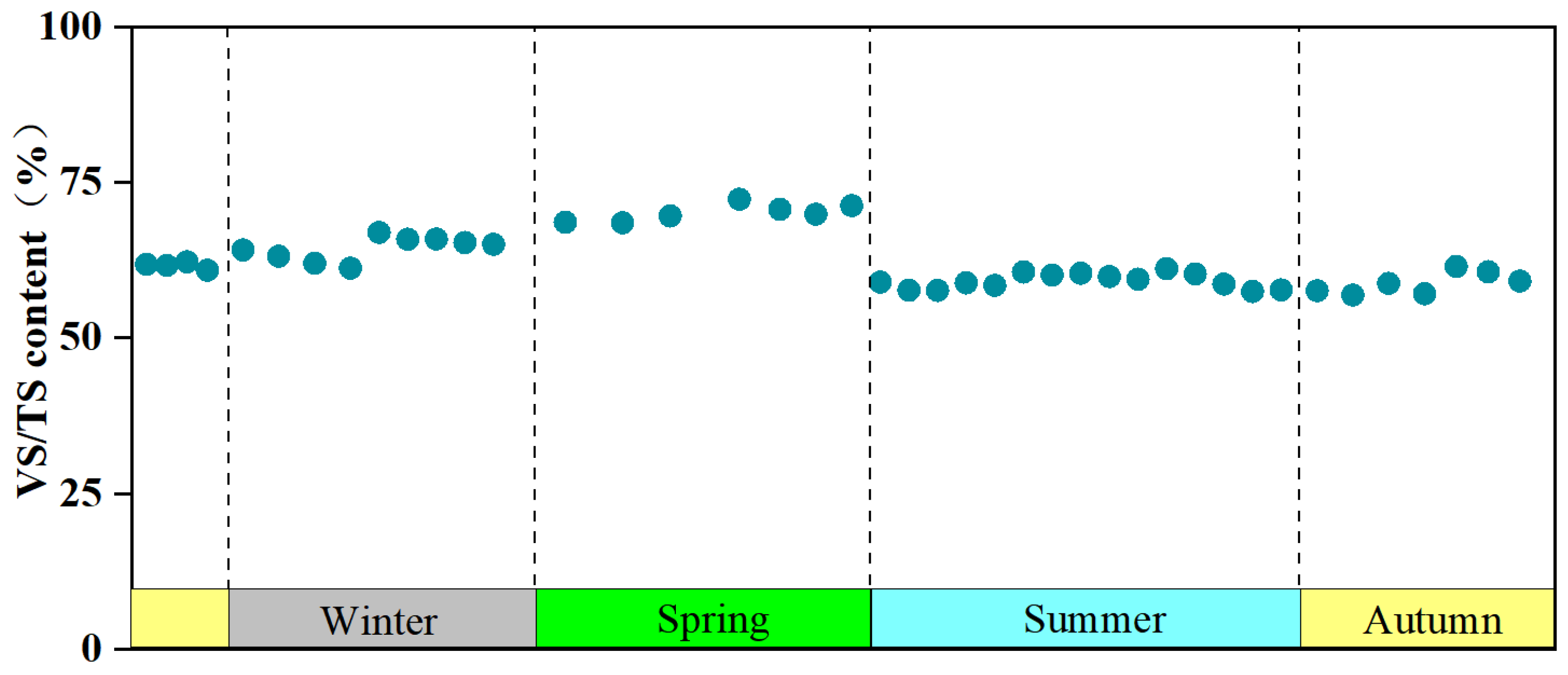
Figure 1. VS/TS content seasonal variation in sludge.
Fermentation 12 00223 g001
Figure 2. Variation in temperature and precipitation.
Fermentation 12 00223 g002
Figure 3. Seasonal variation in soluble sugars (a), soluble proteins (b), and lipid content (c) in sludge.
Fermentation 12 00223 g003
Figure 4. Seasonal variation in VFA content and composition in sludge.
Fermentation 12 00223 g004
Figure 5. Seasonal variation in lignocellulose content in sludge.
Fermentation 12 00223 g005
Figure 6. Seasonal variation in microbial community in genus.
Fermentation 12 00223 g006
Figure 7. The correlation between sludge characteristics and its anaerobic digestion performance. Note: VFAs and BMP represent volatile fatty acids and biochemical methane potential, respectively.
Fermentation 12 00223 g007
Table 1. Methane production by anaerobic digestion of sludge.
SeasonMaximum Methane Production (mL/g-VS)Maximum Methane Production Rate (mL/g-VS/d)Methane Production Delay Time (d)R2
Spring342.560.70.830.994
Summer279.246.70.260.993
Autumn255.858.30.780.992
Winter277.855.71.080.993
Disclaimer/Publisher’s Note: The statements, opinions and data contained in all publications are solely those of the individual author(s) and contributor(s) and not of MDPI and/or the editor(s). MDPI and/or the editor(s) disclaim responsibility for any injury to people or property resulting from any ideas, methods, instructions or products referred to in the content.