Article

In Situ Enclosure Experiments Evaluating Clay–Bacillus Ba3 Broth for Dinoflagellate Control in Coastal Aquaculture Waters

1
College of Environmental Science and Engineering, Fujian Normal University, Fuzhou 350007, China
2
Fujian Key Laboratory of Pollution Control and Resource Recycling, Fuzhou 350007, China
3
Fujian Province Research Centre for River and Lake Health Assessment, Fuzhou 350007, China
4
Coastal and Marine Ecology Division, Gujarat Institute of Desert Ecology, Bhuj 370001, Gujarat, India
*
Authors to whom correspondence should be addressed.
Fermentation 2026, 12(3), 149; https://doi.org/10.3390/fermentation12030149
Submission received: 21 January 2026 / Revised: 6 March 2026 / Accepted: 11 March 2026 / Published: 13 March 2026
(This article belongs to the Section Industrial Fermentation)

Abstract

We evaluated the algicidal properties of Bacillus Ba3 fermentation broth combined with clay for harmful algae bloom (HAB) control through in situ enclosure experiments in Suao Bay, China. It was indicated by the results that the combination significantly reduced HAB abundance, turbidity and phosphorous in water without affecting zooplankton and small fish. The treatment achieved 99.8% (Phase 1) and 100% (Phase 2, with sediment) removal rates for harmful dinoflagellates, primarily Prorocentrum donghaiense and Karenia mikimotoi, while demonstrating high taxonomic selectivity, allowing beneficial diatom populations such as Chaetoceros spp. to remain resilient. This synergy is attributed to clay acting as a physical carrier that brings adsorbed algicidal metabolites into direct, prolonged contact with algal membranes. This method shows promise for prolonged dinoflagellate control and may offer an economical and environmentally sound approach to HABs. More research is needed to establish its action on a wider scale in marine environments.

1. Introduction

As human activities have increased in offshore marine environments, harmful algal blooms (HABs) or red tides have also increased, endangering the resilience of the offshore ecosystem, the aquaculture industry, and coastal communities and livelihood [1,2]. The technology for controlling red tides has been available since the 1980s, and researchers at home and abroad have performed a variety of field and indoor experiments, mostly involving physical, chemical, and biological techniques [3,4]. Though the most commonly used method involves laboratory-based studies, the logistical issues surrounding in situ experimentation have resulted in a significant gap in field-tested information on the topic of alga control [5,6]. Despite the studies of physical and chemical interventions, a biological control using microbial metabolites is a more selective approach. Buley et al. [7] investigated the ability of hydrogen peroxide, VigorOx SP-15, Peraclean, copper, or chelated copper, and a certain clay-based product to control cyanobacterial blooms in aquaculture. Lee et al. [8] investigated the effects of a Sophorolipid–Yellow clay mixture in reducing HABs and the impact of that treatment on marine plankton. With regard to clay treatment, the ability to prevent the regrowth of a HAB is also related to a number of factors including the concentrations of the clay treatment applied, the sedimentation rate of the clay out of the water column, and the frequency at which the settled clays are resuspended, as well as the duration of time between the clay application and the resuspension of these deposits [9,10].
Biological factors, such as the encystment and excystment rates of dinoflagellates, which are known to occur in a large number of species, could also affect the ability of red tide organisms to escape the clay and enhance red tide growth [10]. Nevertheless, the low removal efficiency of HAB organisms is one of the most significant drawback associated with using original clays, which often require a vast amount of clay to effectively impact HAB organisms in the field [11]. So far, modified clay technology has been the only large-scale field application method for HAB mitigation in China; thus, there is a need for fresh, efficient, and environmentally friendly approaches to red tide control. The prospect of mitigating HABs through algicidal microorganisms has also been rapidly developed. For example, Bacillus sp. algicidal bacteria, by directly or indirectly attacking cells, can cause algal cells to lyse [12,13]. Secondary metabolite substances secreted by Bacillus sp. will also cause cell lysis and death by coming into contact with and then invading algal cells, although this takes a considerable amount of time [14].
The inhibitory effect of combined methods on HAB species in marine environments has not been extensively studied. The goal of researchers has long been to integrate existing algal control technologies, maximize the advantages of various technologies, and develop an integrated and effective algal control method. In our view, conducting in situ enclosure experiments in the field environment may provide a more definitive demonstration of the efficacy of various algal control strategies. In our previous study [14], a Ba3 fermentation broth combined with natural clay was added to the field area to evaluate the resulting advantages and effects of a combined method for algal control. Ba3 is most closely related to Bacillus tropicus, GenBank accession number: OK103791.1. Clay and Ba3 sterile fermentation broth were combined in the present study to perform laboratory algal control experiments, and their influence on algal dissolution was more significant than clay or sterile fermentation broth alone. Even though there is broad use of modified clay in China, its low effectiveness leads to the consumption of huge amounts of clay. The synergistic interaction between Ba3 sterile broth and clay produces a synergistic effect, in which clay acts as a physical carrier that can deliver algicidal metabolites to the algal membranes in prolonged and direct contact, enhancing its efficacy and local concentration. It is assumed that the proposed synergistic effect occurs via the mediation of clay particles as physical carriers, and thus increases the local concentration of metabolites at the cellular interface due to the adsorption of bacterial lipopeptides such as surfactin and iturin, and through the stabilization of their direct contact with the algal membrane structures. Polyaluminum chloride (PAC) and hydrogen peroxide (H2O2) were chosen as comparative controls, as they are the current industrial standards of chemical mitigation of HABs, and thus can be used to provide a benchmark against which the selectivity of the biological–physical treatment can be assessed. The research team conducted in situ algal containment research in Suao Bay, located in the Pingtan area of China, to explore the feasibility of this combined method. In this study, three objectives were addressed: (1) establish an algal control system and evaluate its efficacy; (2) assess taxonomic selectivity and community shifts post-treatment; and (3) provide technical support for the implementation of HAB control methods in marine environments.

2. Materials and Method

2.1. Study Area

Pingtan is located on the east coast of Fujian Province, 119°32′ E~120°10′ E, 25°15′ N~25°45′ N, and faces the Taiwan Strait to the east. Additionally, the study area contains the largest island in Fujian Province, Pingtan Island, which is rich in marine resources and has developed its tourism industry. However, red tides have significantly impaired marine development over the past decade [15], making this environment an ideal location for experimental studies. The effects of sterile fermentation liquid (Ba3), clay, and their combinations on dinoflagellate growth, water quality parameters, total phosphorus (TP), and soluble reactive phosphorus (SRP) were evaluated. The in situ enclosure algal control experiment was implemented in two phases. Phase 1 was an in situ water sample algal control experiment was conducted in early June, and Phase 2 was an in situ water sample assembly sediment algal control experiment was conducted in early July.

2.2. Mesocosm Experiment Setup and Sampling

The experiments were carried out in Suao Bay (Pingtan, China), where the aquaculture resources were chosen with the purpose of being impacted by red tide outbreaks on a regular basis. A control experiment of the algal control in an in situ water sample was conducted in a 90 L plastic box attached to fish cages and left at the top, as shown in Supplementary Figure S1a. The experiment was separated into two groups of high- and low-density treatment (group a and group b) with three parallel samples in each. The concentration of algal cells in situ in the high-density treatment was adjusted to 1.0 × 10⁶ cell/L, and the concentration in the low-density treatment was 3.4 × 10⁵ cell/L. The total cell density of the natural phytoplankton assemblage was adjusted by either concentrating raw seawater via gentle siphon filtration (20-μm mesh) for the high-density treatment (1.0 × 10⁶ cells/L) or using ambient seawater for the low-density treatment (3.4 × 10⁵ cells/L). These values represent the total density of all species present, primarily dominated by the target dinoflagellates Prorocentrum donghaiense and Karenia mikimotoi. Water quality parameters (temperature, dissolved oxygen (DO), turbidity, salinity, and pH) were measured every day (at 16:00) over a period of six days in Phase 1 and Phase 2, and 500 mL water samples in Phase 1 and Phase 2 were taken to determine total phosphorus (TP) and soluble reactive phosphorus (SRP). Further, water samples of 1 L that were fixed in the Lugol’s iodine solution were collected to identify phytoplankton species and their density measurements were conducted via light microscopy. The top of the plastic box was left open to maintain the resemblance to the natural environmental conditions outside the enclosure (e.g., Phase 1 used only water, whereas Phase 2 was supplemented of natural sandy-silt surface sediment (top 2–3 cm) collected directly from the seabed at the experimental site, as in Supplementary Figure S1b). A total of 100 g of surface sediment samples was sampled (on the first and seventh days of the experiment) at low temperature and with low light in polyethylene plastic bags, and the levels of sediment total organic carbon (TOC), total nitrogen (TN) and other parameters were determined. The experimental setup consisted of six groups of particular dosages: the control group (60 mL algal solution), a sterile fermentation broth group (1.0% filtrate), and a clay group (100 mg/L−1). Three combination treatments (clay + sterile fermentation broth (100 mg L−1 + 1.0%), clay + PAC (100 mg L−1 + 4 mg L−1), and clay + H2O2 (100 mg L−1 + 2 mg L−1) were used to determine the synergistic and comparative effects. The rationale behind these dosages was arrived at after laboratory optimization of these dosages to assess how effective they were in the growth of dinoflagellates and water quality parameters. The clay used was natural kaolin, with mineralogy confirmed by X-ray diffraction to contain >80% kaolinite. Ba3 broth was produced by fermenting Bacillus tropicus Ba3 (OK103791.1) in LB medium for 72 h at 28°C, followed by sterile filtration (0.22 μm). Key metabolites, specifically surfactin (~50 mg/L) and iturin (~20 mg/L), were quantified via HPLC according to the methods of Balaji-Prasath et al. [14]. The treatment was applied by pre-mixing the 100 mg/L−1 clay with the 1.0% (v/v) sterile Ba3 broth and a small volume of site water to form a concentrated slurry. This wet mixture was then distributed evenly over the mesocosm surface, allowing the clay to act as a physical carrier that delivers the adsorbed algicidal metabolites directly to initiate flocculation.

2.3. Toxicity Test for Aquatic Organisms by In Situ Enclosure

In the in situ algal control experiment, three liters of water was collected before and after the experiment from the 100 mg/L clay + 1.0% sterile fermentation (at 100 mg/L + 1.0% filtrate) and then taken back to the laboratory for analysis. Post-treatment 3 L subsampling was used for lab practicality (controlled conditions, multiple replicates); direct in-enclosure monitoring was avoided due to enclosure constraints (90 L boxes on fish cages) and organism escape risk. The water sample taken before the experiment was used as the control group, and the water sample taken after the experiment was used as the experimental group. In order to explain the chemical nature of the algicidal effect, the sterile fermentation broth is referred to as the cell-free filtrate supplemented with extracellular metabolites. The active elements of the Ba3 sterile filtrate are lipopeptides (primarily surfactin and iturin) and extracellular enzymatic elements, namely proteins and amylases, which are described in a prior laboratory study [14]. The biochemical agents have an indirect lysing effect upon the algal cells through a disruption to membrane integrity. Three parallel samples were taken in each group, and 10 experimental organisms (Brachionus plicatilis, Artemia, Medaka) were randomly placed in each parallel sample. The experiment was carried out for 48 h, and the death of individual aquatic organisms was observed every 24 h. After the observation procedure was completed, it was determined that the organism had died when there was no response to stimulation. In this experiment, organisms with higher oxygen demands and volumes had to be supplied with fresh air pumped into the chamber and ventilated. Valve-regulated ventilation was used to maintain the DO present at the same level in each group. The experimental conditions were set at a light intensity of 2650 ± 100 Lx, with a light–dark time ratio of 12 h:12 h and a temperature of 20 ± 1 °C. The sources and cultivation of aquatic organisms are shown in Supplementary Table S1. All experimental organisms were deprived of food for 24 h for investigation before the experiment commenced.

2.4. Formula Calculation for Cell Concentration and Algicidal Efficiency

The calculation of algicidal efficiency is as follows:
R = C 0 C 1 C 0
where R represents the algicidal efficiency (%); C1 the algal cell density in the treatment group (Cells/mL); and C0 the control group algal cell density (Cells/mL).

2.5. Determination of Relevant Indicators

The instruments or measurement methods used in the detection and analysis of water body indicators were as follows: DO and pH were analyzed by a portable meter, turbidity was analyzed by a spectrophotometer, and TP and SRP were analyzed by the ammonium molybdate spectrophotometry standard method.

2.6. Statistical Analysis

The experimental data were analyzed using SPSS 22.0 software. All data were presented as mean ± standard deviation. Statistical differences (p < 0.05) and (p < 0.01) were assessed by two-way analysis of variance (ANOVA).

3. Results

3.1. Taxonomic Richness and Community Composition Shifts

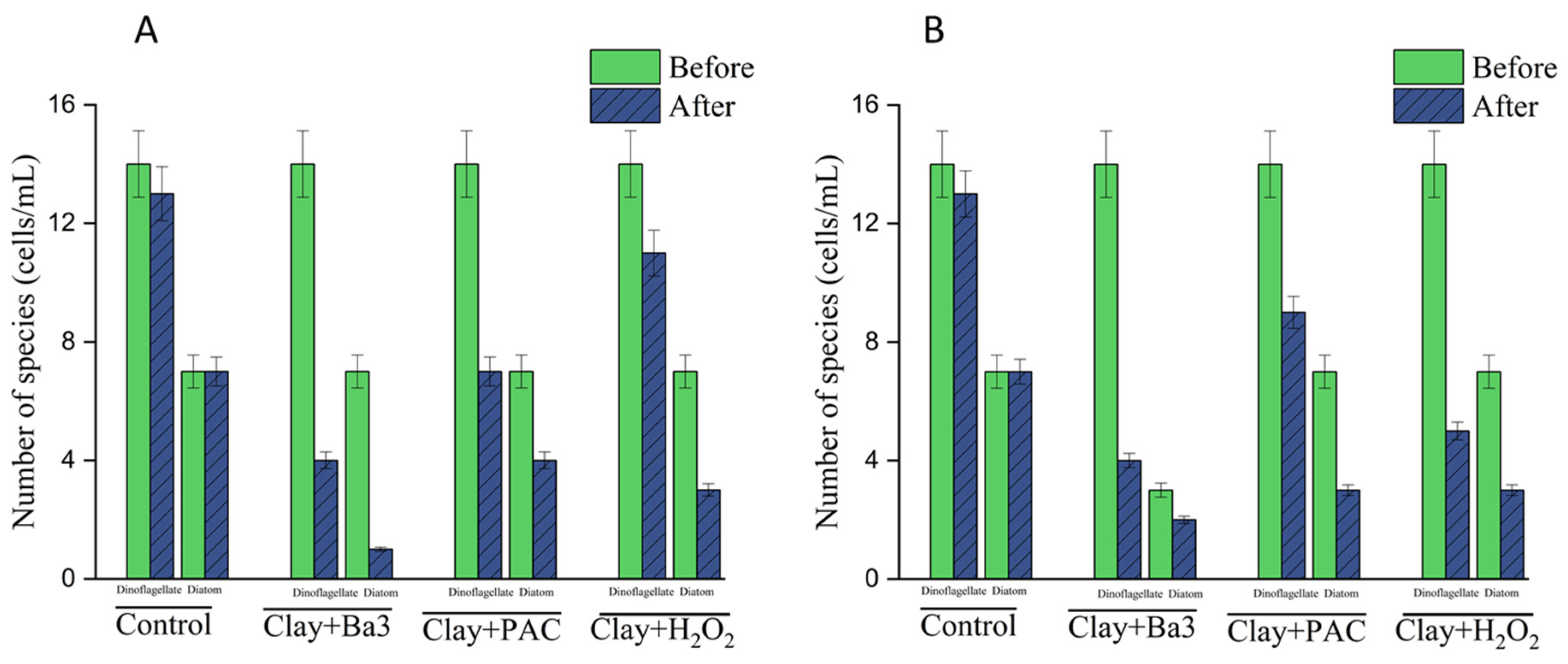
The changes in the number of algal species (genera) before and after the experiment are shown in Figure 1. Before the experiment, a total of 23 species (genera) of phytoplankton were detected belonging to the four phyla: Dinophyta, Diatom, Chlorophyta, and Cryptophyta. Among the phyla detected in this experiment, diatoms represented the highest diversity of species, followed by Dinophyta. Because the species and numbers of Chlorophyta and Cryptophyta were very few, the species and numbers are not relevant to this analysis. A total of 14 species (genera) were detected in Diatoms, accounting for about 60.9% of phytoplankton species, mainly Chaetoceros sp. and Cylindrotheca sp.; a total of 7 species (genera) were detected in Dinophyta, which accounted for about 30.4% of the phytoplankton species, mainly Prorocentrum donghaiense and Karenia mikimotoi. After the experiment, 21 species (genera) were still detectable in the control group, while the number of algal species detected in each experimental group was significantly lower than that in the control group. Whether belonging to the alga-enriched group or the non-enriched group, the clay + sterile fermentation broth groups contained the fewest species detectable in algal water. By the end of the experiment, the richness in the alga-enriched Clay + Ba3 group reflected a decrease in dinoflagellates to four species (genera) and diatoms to one species (genera). In contrast, the control group maintained a higher diversity, with dinoflagellates richness remaining above 12 species and diatoms at approximately 7 species, confirming the targeted impact of the treatment on community structure.

3.2. Changes in the Algal Density and Algal Dissolution Rate—Phase 1

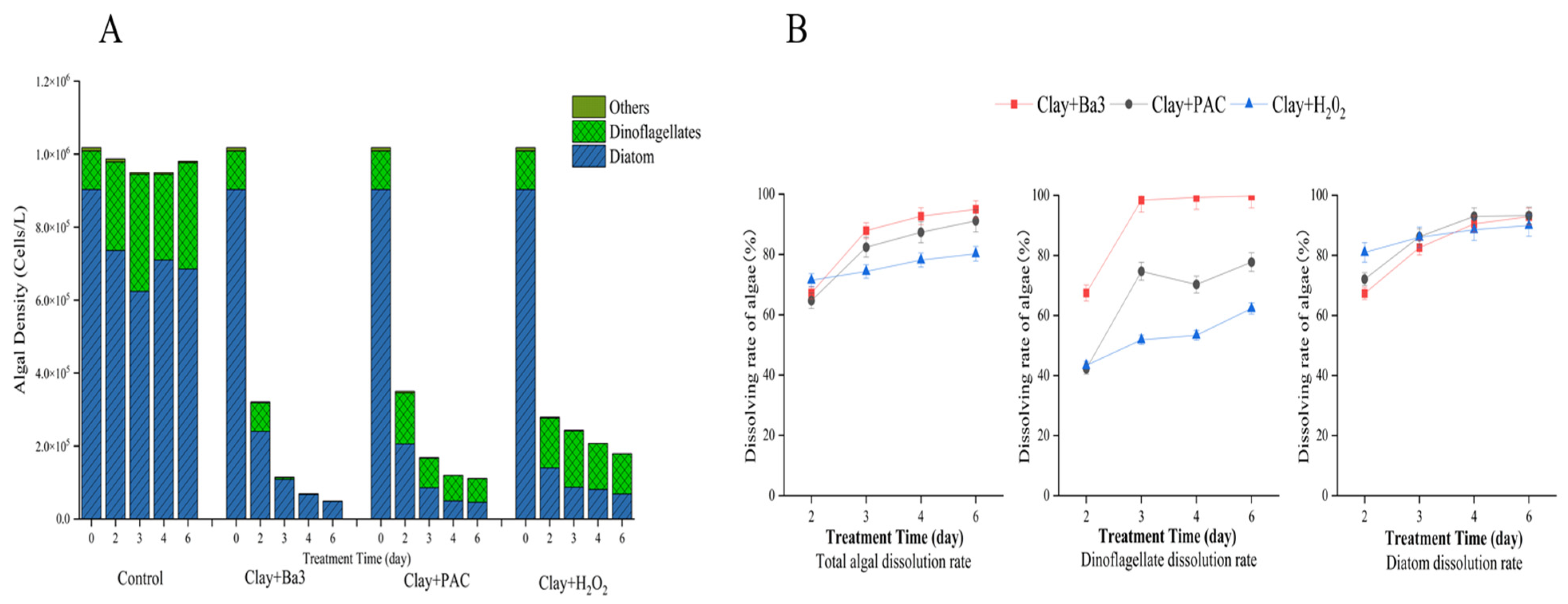
Figure 2A shows that diatoms and dinoflagellates account for 99.1% of the total density of algae; the density of chlorophyta and cryptophyta is very low. At the beginning of the experiment, the total algal density was about 1.0 × 10⁶ Cells/L, the abundance of diatoms was 1.1 × 10⁵ Cells/L, accounting for 88.7%, and dinoflagellates accounted for about 10.4% of the total algal density. The change in algal dissolution rate in the high-density treatment group is shown in Figure 2B. For both total algae and dinoflagellates, the removal efficacy followed this order: clay + Ba3 broth > clay + PAC > clay + H2O2 and the algal dissolution rate in the clay + sterile fermentation broth group increased up to 95.0%. In the clay + H2O2 group, the algal dissolution rate was the highest on day 2 with a peak of 1.5%, consistent with laboratory results. The clay and H2O2 groups were able to rapidly precipitate algal cells in a short period. As the experiment concluded, the dinoflagellate algicidal efficiency of the clay + sterile fermentation broth group reached 99.8%. In terms of diatom removal effect, clay + PAC group > clay + sterile fermentation broth group > clay + H2O2. At the end of the experiment, the diatom dissolution rate of the clay + PAC group reached 93.3%. Statistical analysis results showed no significant difference in the rate of algal dissolution between total algae and diatoms in all experimental groups (p > 0.05). However, there was a significant difference in the dissolution rate of dinoflagellates between the clay + sterile fermentation broth group and the other two groups (p < 0.05). Compared to the other two groups, the clay + sterile fermentation broth group appeared to have the significant controlling effect. This selective mode of action that is cell wall composition-dependent is evidenced in the high removal efficiency on dinoflagellates (99.8%) as compared to that of diatoms (e.g., Chaetoceros spp.). Dinoflagellates that often have cellulose-containing thecae or are unarmed are more vulnerable to the enzymatic or surfactant-like metabolites of strain Ba3 than diatoms, which are defended by the rigid siliceous frustules. Specifically, the proteases and amylases present in the Ba3 broth break down the proteinaceous and polysaccharide coats of the cell wall of the dinoflagellate, and the lipopeptides initiate rapid membrane permeabilization of the cell wall. In comparison, the inflexible siliceous frustules of diatoms like Chaetoceros spp. produce a physical shield against the cell that protects it against these particular attacks of the enzymes and surfactants, and hence the selective vulnerability observed. The synergy between clay and the Bacillus 3 sterile broth was observed and can probably be explained by the presence of clay particles used as physical carriers. By introducing flocculation, clay adsorbs bacterial metabolites and places these in direct and indirect contact with algal cell membranes, increasing the immediate and extended concentration of the algicidal compounds. Furthermore, the original mechanical stress or membrane deformation caused by the presence of clay may increase the vulnerability of dinoflagellates to the secondary metabolites contained in the broth, and this fact may lead to faster lysis when compared to the broth alone. Before the experiment, dinoflagellates accounted for 10.4% and diatoms for 88.7% of the total density of algae. After the experiment, clay + sterile fermentation broth group dinoflagellates and diatoms accounted for 11.1% and 88.9% of the total density, respectively. This stability in community structure was not observed in the other treatment groups.
The density of dinoflagellates and diatoms in the clay + PAC group was 45.9% and 54.1%. The density of dinoflagellates and diatoms in the clay + H2O2 group was 61.4% and 38.6% these percentages represent the community composition at the conclusion of the 6-day experimental period. Therefore, while total phytoplankton density decreased across all treatments, the clay + sterile fermentation broth combination more effectively maintained the diatom-dominant structure by achieving a higher selective removal rate (99.8%) for harmful dinoflagellates compared to the chemical treatments.
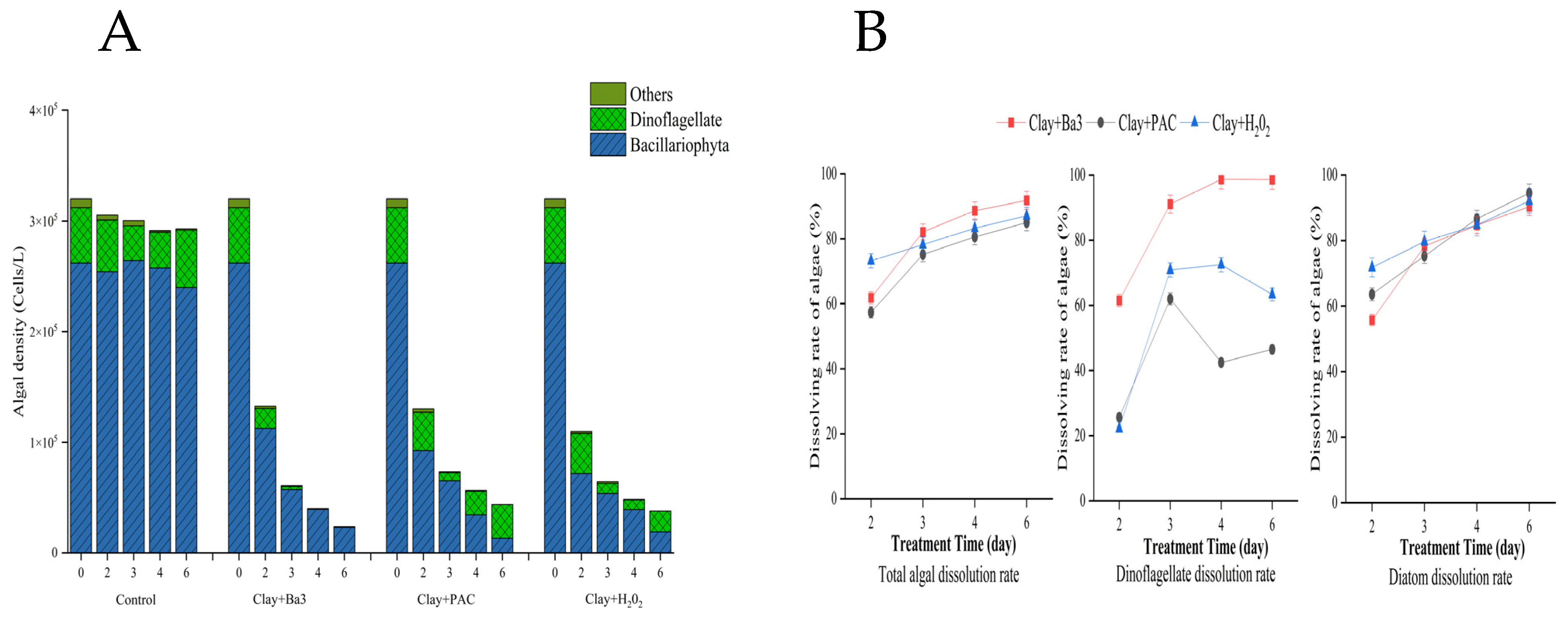
The density changes of each phyla of the unenriched group (group b) of algae are shown in Figure 3A. Since the sum of the phytoplankton densities of the diatom phylum and dinoflagellate phylum accounts for 97.6% of the total algal density, and the density of the phylum chlorophyta and cryptophyta phylum is very low, and the green algae and cryptoalgae are still classified as “other” here. At the beginning of the experiment, the total algae density of group b was about 3.2 × 10⁵ Cells/L, dinoflagellates accounted for about 13.2% of the total algae density, diatoms were still the absolute dominant taxa in algal water, with a density of 6.0 × 10⁴ Cells/L, accounting for about 85.6%, and other algae accounted for about 1.3%.
Figure 3B shows the changes in the rate of algal dissolution in the control group. Compared with the high-density treatment group, the clay + sterile fermentation broth group still provided the best removal effect of total algae and dinoflagellates, with algicidal efficiencies of 91.8% and 98.6%, respectively. The algal lysis rate of algae and dinoflagellates showed the clay + H2O2 group > clay + PAC group, with the algae lysis rates of total algae and dinoflagellates at 87.0% and 63.4%, respectively. While the initial algicidal impact of the clay + H2O2 group was more pronounced than that of the clay + PAC group, the efficiency of the H2O2 combination declined significantly when applied to higher algal cell densities. In contrast, the clay + sterile fermentation broth treatment demonstrated a robust removal effect regardless of initial biomass. Notably, the algicidal efficiency observed in the alga-enriched (high-density) groups was significantly higher than that of their respective control groups, suggesting that the synergistic biological–physical method is particularly effective under the high-density conditions typical of active red tide blooms.
Before the experiment, dinoflagellates accounted for about 13.2% of the total algal density, and diatoms accounted for 85.6% of the total algal density. Following the experiment, the dinoflagellates in the clay + sterile fermentation broth group accounted for 5.7% of the total algal density, and the diatoms accounted for 94.3% of the total algal density; the clay + PAC group accounted for 69.8% of the total algal density. In the clay + H2O2 group, dinoflagellates accounted for 45.8% of the total algal density, and diatoms accounted for 54.2% of the total algal density. Compared to the proportions present before the experiment, the proportion of dinoflagellates in the total algal density in the clay + sterile fermentation broth group decreased; however, the proportion of diatoms increased. When the proportion of dinoflagellates in the clay + PAC group and clay + H2O2 group increased, the results were consistent with group a, so the combination of clay + sterile fermentation broth likely provided a desirable effect on the maintenance and improvement of community structure. In this experiment, the clay + sterile fermentation broth group had the best removal effect on dinoflagellates, especially for Karenia spp., Alexandrium spp., and Prototheca spp., which was in line with the research in the laboratory of strain Ba3 on red tide. The growth effect of dinoflagellates was consistent, but the removal effect of the clay + sterile fermentation broth group on diatoms was poor, especially for Chaetoceros spp. This absence of the removal of diatoms like Chaetoceros spp., in favor of dinoflagellates, 99.8%, suggests that the operational mechanism may be selective and seems to be linked to dissimilar cell wall compositions. The dinoflagellates (often with cellulose-containing thecae or no covering at all) can be more susceptible to the biosurfactants or extracellular enzymes of the Ba3 broth, but the diatoms, which use stone-like siliceous frustules to stiffen their cell surfaces, are relatively more resistant.

3.3. Phase 2: Influence of Benthic Sediment on HAB Mitigation Efficacy

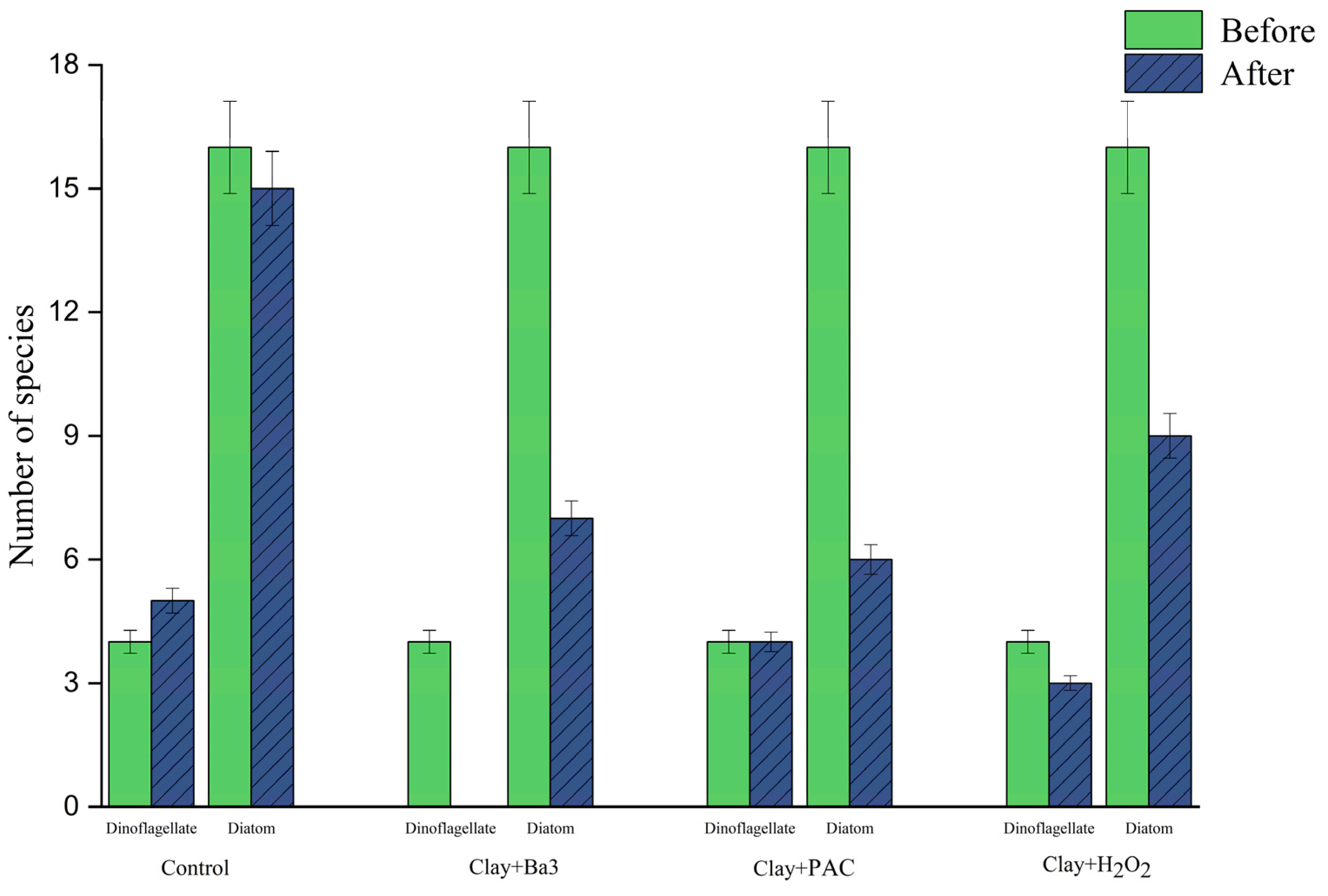
The changes in the number of algal species (genus) before and after the experiment are shown in Figure 4. The initial community composition for Phase 2 was consistent with Phase 1, dominated by diatoms (72.7%) and dinoflagellates (18.2%), and other species accounted for 9.1%. Diatoms were the phyla with the most species detected in this experiment, followed by dinoflagellates; Chlorophyta and Cryptophyta were minimal. After the experiment, 21 species (genera) were detected in the control group, and the number of algal species detected in each experimental group was significantly lower than that in the control group. Only seven species of diatoms were detected in the algal water from the clay + sterile fermentation broth group.

3.4. Comparative Efficacy with Benthic Interaction Analysis of Algicidals

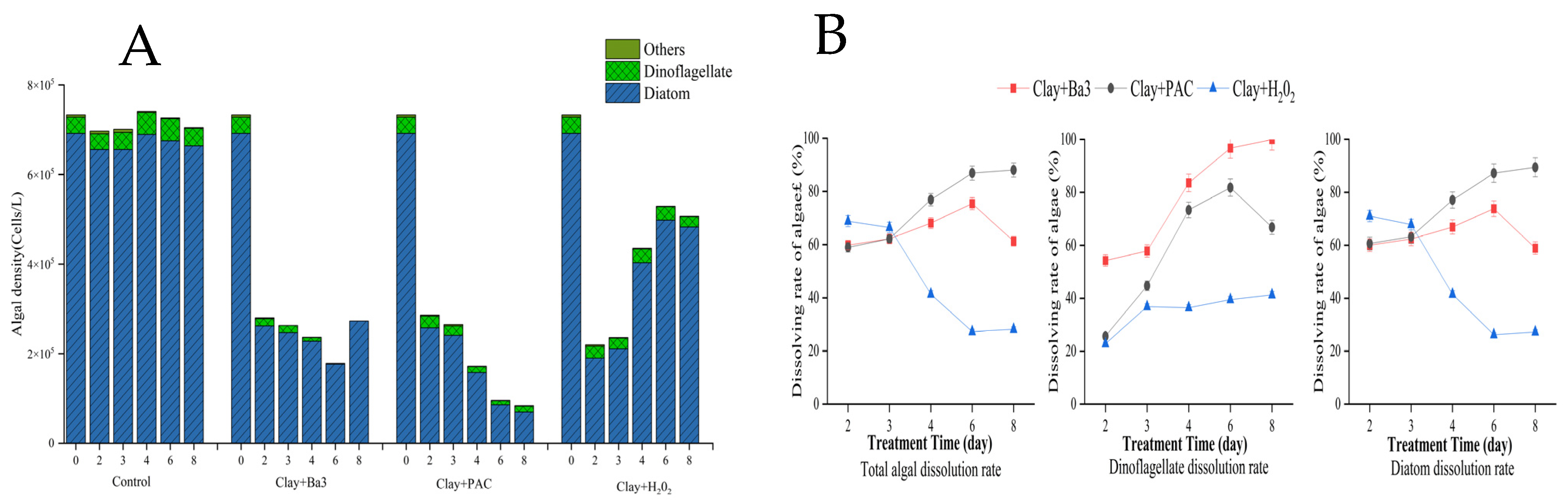
The density changes in each category in this experiment are shown in Figure 5A. The total phytoplankton density was approximately 7.3 × 10⁵ Cells/L, with dinoflagellates accounting for about 4.9% of the total algal density. The diatoms dominated the algal water, with an abundance of 6.92 × 10⁵ cells/L, accounting for approximately 94.4%, while other algae (Dinoflagellate, Chlorophyta, and Cryptophyta) constituted 0.7%. Because the investigational period of the in situ water sample algal removal experiment began in early June, whereas the investigational period of the in situ water sample with sediment algae removal experiment began in early July, the proportion of algae in the total algae density decreased, and the proportion of diatoms increased when compared with the in situ water sample (without the sediment experiment). The algicidal efficiency change is shown in Figure 5A,B. In terms of the overall algal removal effect, the clay + PAC > clay + sterile fermentation broth group > clay + H2O2 group, and the clay + PAC group displayed the highest algicidal efficiency 88.1%, which varied significantly from the experimental results of the unassembled sediment group. However, there is the need to differentiate between the elimination of total phytoplankton and the elimination of desirable harmful species. Whereas clay + PAC was more effective in removing total algae, including beneficial diatoms, the taxonomic selectivity of the clay + Ba3 broth treatment was larger. It eliminated the target harmful dinoflagellates, both P. donghaiense and K. mikimotoi, with 100% success and also allowed the diatom community to flourish and eventually recover. This choosiness is desirable in aquaculture situations in order to avoid sterilizing the whole ecosystem. The clay + sterile fermentation broth was the most effective method of dissolving algae in the non-sediment experiment. The sterile fermented broth and sediment group produced a dissolving rate of algae in 6 d at a 75.4% decline, and after an 8 d lysis rate, which was only 61.3%, far below the clay + PAC group. At the same time, the algal dissolution rate of the clay + H2O2 group reached 68.9% on the second day and then continued to decrease to 28.2% on the eighth day. The trend of the algicidal efficiency of diatoms was almost the same as that of the total algae. Therefore, the variation trend in dinoflagellate density was consistent with the results of the algal removal experiment without sediment, and the dissolution rate of dinoflagellates was as follows: clay + sterile fermentation broth group > clay + PAC group > clay + H2O2 group. At the end of the experiment, the dinoflagellate dissolution rate of the clay + sterile fermentation broth group reached 100%, followed by the clay + PAC group at 66.8% and the clay + H2O2 group at 41.3%.
Before the experiment, dinoflagellates accounted for about 4.9% of the total algal density, and diatoms accounted for 94.4% of the total algal density. After the experiment, the dinoflagellates in the clay + sterile fermentation broth group accounted for 0% of the total algal density and the diatoms accounted for 100% of the total algal density; the clay + PAC group accounted for 15.5% of the total algal density. In the clay + H2O2 group, dinoflagellates accounted for 4.5% of the total algal density, and diatoms accounted for 95.5% of the total algal density. Compared with the data taken before the experiment, the density of dinoflagellates in the clay + sterile fermentation broth group was reduced to 0%, leaving only diatoms, while the dinoflagellate ratios of the clay + PAC group and clay + H2O2 group all differed significantly.
Compared to the experiment in which algae were removed without sediment, the clay + sterile fermentation broth group consistently removed dinoflagellates, while the clay + sterile fermentation broth group did not remove diatoms, especially when the assembled sediment was removed. In the algal experiment, the density of diatoms recovered from 1.8 × 10⁵ Cells/L on the sixth day to 2.7 × 10⁵ Cells/L. The recovery in this diatom density is possibly explained by two distinct processes: first, the biochemical breakdown of Ba3 metabolites by the end of day 8, thereby decreasing their inhibitory pressure, and, secondly, a local release of nutrient, silicate or nitrogen, by the benthic sediment that selectively enhances the growth of the surviving resilient diatom populations against the lysed dinoflagellate. The discriminating effect is needed to maintain a positive phytoplankton community structure and prevent the complete sterilization of the entire ecosystem in the process of HAB control. Multiple reports on the algicidal bacteria point to the existence of certain algal-lytic activities; we therefore presume that strain Ba3 will have strong lytic activity against a particular algal taxon and be ineffective against others. The co-culture with the ba3 sterile fermentation broth and clay is the only way to efficiently kill most dinoflagellates but leave a group of desirable diatoms to exist in the aqueous environment, which results in a better structure of the entire phytoplankton community. In order to support these observations, more studies are needed. Acute toxicity tests showed no objectionable effects on Brachionus plicatilis, Artemia salina, and Oryzias latipes; at the same time, long-term ecological safety was assessed with the help of benthic monitoring. The fact that the increase in sediment total organic carbon (TOC) and total nitrogen (TN) was not significant after the deposition of clay–alga flocs (as illustrated in Supplementary Figure S16) shows that the treatment is not causing localized hypoxia of benthic species or nutrient overload. Furthermore, the application of biodegradable bacterial metabolites minimizes the possibility of disrupting the native microbial community in the long run when compared to the use of the indestructible chemical algaecides.

3.5. Water Safety and Environmental Quality

Temperature (avg. 27.4 °C), salinity (~30–33), and pH (~8.1) remained stable across all groups with no statistically significant differences (p > 0.05). The changing of water temperature in the in situ water sample algal control experiment is shown in Supplementary Figure S2. During the experiment, the water temperature in the experimental box changed from 24.1 °C to 28.8 °C, with an average water temperature of 27.4 °C. Typically, the water temperature outside the experimental box was lower than the temperature inside the box. On the sixth day of the outdoor experiment, the weather was cloudy, which resulted in a lower temperature, but no extreme weather changes affected the experiment during the investigation. The water temperature of the control group was higher than that of the experimental group, which may be due to the effect of the treatment and the algae in the experimental group or the endothermic hydrolysis reaction, resulting in a lower water temperature than that of the control group.
The temperature changes of groups a and b with different algal cell densities showed no significant variance in temperature changes between the two groups (p > 0.05). Supplementary Figure S3 shows the water temperature change in the in situ water sample assembly sediment algal control experiment. During the experiment, the water temperature in the experimental box changed from 26.8 °C to 28.4 °C, with an average water temperature of 27.3 °C. The water temperature outside the experimental box tended to be lower than that inside the box (experimental group). Supplementary Figure S4. shows the change of salinity in the in situ water sample algal control experiment. The initial salinity of group a and group b was 30. The salinity outside the experimental box fluctuated greatly. There was a downward trend in the experimental period, which may have been caused by the intermittent rainfall and increased cloud cover on the sixth day and the resulting lower water temperature. The salinity variation trends in the two groups of different algal cell densities were basically the same. Therefore, there was no sharp change in salinity during the experimental period, which led to the death of algal cells. Supplementary Figure S5 shows the change in salinity in the experiment with the in situ water sample assembly for algal control in sediment. The salinity of each group increased to 33 and overlapped during the experiment due to wind and climatic effects. There was no significant difference in the change in salinity between the control group and each experimental group (p > 0.05), and the assembled sediment did not affect the salinity of the water body but had a significant impact.
Supplementary Figure S6 shows the change in DO concentration in the in situ water sample algal control experiment. The initial DO in the experiments of group a and group b was 8.2 mg/L and 8.5 mg/L. At the end of the experiment, the DO values of the clay + H2O2 algal control method increased most evidently, which is likely because the reaction products of H2O2 and algae were water and oxygen; the DO values of the clay + PAC group increased slightly, but the change range was small. The DO value of the clay + sterile fermentation broth group was slightly lower than that of the control group, and the a and b groups decreased to 7.9 mg/L and 7.7 mg/L, respectively, which was consistent with the laboratory algal control results. Supplementary Figure S7 shows the change in DO concentration in the algal control experiment of in situ water sample assembly in sediment. The initial DO in the experiment was 6.9 mg/L, which was lower than the initial DO value of 8.45 mg/L in the experimental group without sediment. At the end of the experiment, the DO value of the clay + H2O2 algal control method most noticeably increased, reaching 8.9 mg/L, which was consistent with the conclusion of the algal control experiment without the bottom mud. In the algal control experiment involving assembling the sediment, the DO value of the clay + sterile fermentation broth group did not decrease at the end of the experiment but stayed higher than that of the control group. These conditions are closer to how sediment floats and mixes with the water body in rainy weather. This experiment shows that the combined method of clay and sterile fermentation broth to control algae does not have an adverse effect on the DO concentration in the water body at this dosage.
Supplementary Figure S8 shows the turbidity change in the in situ water sample algal control experiment. The initial turbidity of the experiments in groups a and b was 5.9 NTU and 5.2 NTU. Because the experimental area is in an aquaculture area, the turbidity of the water body is affected by the swimming of cultured organisms, in effect, so the initial turbidity is higher. At the end of the experiment, the turbidity of the experimental group was lower than that of the control group, indicating that the three algal control methods had a desirable effect on the turbidity of algal water. However, there was no significant difference in the turbidity change between the experimental groups (p > 0.05). The turbidity removal rate of group a was as follows: clay + sterile fermentation broth group (78.3%) > clay + PAC group (76.8%) > clay + H2O2 (75.8%); the turbidity removal rate of group b was shown as clay + PAC group (81.9%) > clay + sterile fermentation broth group (80.7%) > clay + H2O2 (72.3%). It should be noted that under field conditions, turbidity may also be affected by factors such as wind power and organisms in the breeding area. Overall, the clay + sterile fermentation broth group has a better removal effect on the turbidity of algal water in the process of algal control. Supplementary Figure S9 shows the turbidity change in the in situ water sample assembly in the sediment algal control experiment. The initial turbidity in the experimental box was 5.3 NTU. Clay + sterile fermentation broth group > clay + H2O2 group, the turbidity changes between clay + PAC groups were significantly different (p < 0.05), and the turbidity removal rate was 58.6%. The diatom density in the group rebounded, so the turbidity removal rate was lower than that in the clay + PAC group, consistent with the changing trend in algal density in each experiment.
The pH of seawater generally fluctuates between 8.0 and 8.5, and the pH of surface seawater generally remains around 8.1 ± 0.2. Supplementary Figure S10 shows the pH changes in the in situ algal control experiment. The initial pH of the experiments in groups a and b was 8.2 and 8.1. At the end of the experiment, the pH of the control group remained unchanged, while the three experimental groups decreased slightly. Among them, the clay + PAC group had the most significant pH drop in which the pH value of group a dropped to 7.7 and the pH value of group b dropped to 7.8. The smallest drop was shown by the clay + sterile fermentation broth group; the pH value of group a dropped to 7.9, and the pH value of group b dropped to 7.9. The algal water with two different algal cell densities showed the same trend of pH change in each experimental group. There was no significant difference in pH value change among each experimental group (p > 0.05). In the laboratory simulation experiment, the effect of strain Ba3 on the pH value of the water body was negligible, and the in situ algal control experiment also showed a similar effect on algal removal compared to the other two algal control methods, clay + sterile fermentation broth.
The solution used contains nutrients suitable for the survival of certain bacteria, and the growth of some bacteria can affect the change in pH value. Supplementary Figure S11 shows the pH value change in the in situ water sample assembly sedimentary sediment control algal control experiment. The initial pH value of the experiment was 8.2; at the end of the experiment, the pH of the control group increased slightly. There was a slight decrease in the three experimental groups. The pH value decreased the most in the clay + sterile fermentation broth, with the lowest pH value at 7.7; the pH value decreased the least in the clay + H202 group, with the lowest value at 8.0. The effect on the pH value of the water body was the most limited. However, in the experiment after assembling the sediment, the pH value of the clay + sterile fermentation broth group fluctuated greatly.
Supplementary Figure S12 shows the results of changes in TP during the in situ water algal control experiment. The TP concentration of the control group fluctuated at around 0.14 mg/L in the algal water containing two different algal densities. There was no significant difference in the changes in TP concentration between the control group, the experimental group (p > 0.05), and the other experimental groups. The TP concentration decreased most significantly in the clay + PAC group, from 0.15 mg/L to 0.09 mg/L in group a, at a removal rate of 41.7%; in group b, it decreased from 0.14 mg/L to 0.09 mg/L, at a removal rate of 41.7% and 38.0%, followed by the clay + fermentation broth group. The removal rates of TP at the end of the experiment were 23.7% and 23.2%, respectively; the clay + H2O2 group had the worst removal effect on TP and the TP concentration during the experiment was the same as the control group. Similarly, the changing trend in TP with different algal cell densities in the two groups was the same.
The change result of SRP is shown in Supplementary Figure S13. During the experiment, the SRP concentration of the control group in the algal water with two different algal densities was about 0.12 mg/L; the most apparent decrease in the SRP concentration was still in the clay + PAC group, and then group a decreased from 0.122 mg/L to 0.004 mg/L with a removal rate of 96.7%; group b decreased from 0.119 mg/L to 0.007 mg/L, with a removal rate of 94.1.0%. The clay + sterile filtration group followed with a removal rate of 32.3% and 29.7%, respectively; however, the SRP in the clay + H2O2 group showed an upward trend, which was always slightly higher than that in the control group during the experiment. The variation trend of SRP in the two groups with different algal cell densities was basically the same.
Supplementary Figure S14 shows the results of changes in TP during the in situ water sample assembly process for the sediment control algal control experiment. The initial TP concentration of the experiment was 0.14 mg/L. At the end of the experiment, the TP concentration of the control group and each experimental group changed significantly (p < 0.05). The TP concentration of the control group increased to 0.55 mg/L, and in each experimental group, the TP concentration in the water body increased. For the control group, each experimental group had a specific removal effect on TP, which showed that the clay + PAC group (61.2%) > the clay + fermentation broth group (58.4%) > clay + H2O2 group (31.4%).
The change effect of SRP is shown in Supplementary Figure S15. The initial SRP concentration of the experiment was 0.12 mg/L. At the end of the experiment, there were significant differences in the changes in SRP concentration between the control group and the clay + PAC group and the clay + bacteria fermentation broth group (p < 0.05), but there was no significant difference from the clay + H2O2 group (p < 0.05). During the experiment, the SRP of the clay + H2O2 group increased more than that of the control group, which was consistent with the experimental results of the algal removal experiment without the sediment. The clay + fermentation broth and clay + PAC groups significantly impacted SRP, especially in the clay + PAC group. The SRP removal rate of the clay + PAC group was 98.3% at the end of the experiment; the SRP removal rate of the clay + fermentation broth group was 52.1% at the end of the experiment.
After the in situ water sample assembly sediment algal control experiment, the total organic carbon (TOC) and total nitrogen (TN) content of the sediment samples were measured, and the results are shown in Supplementary Figure S16. The TOC and TN contents in marine sediments were generally less than 2.0%. In this experiment, the TOC content of the control group was 1.26%; the TOC of the clay + sterile fermentation broth group, the clay + PAC group, and the clay + H2O2 group was 1.23%, 1.12%, and 1.22%, respectively. The experimental group contained a TOC content lower than the control group, but there was no significant difference in the TOC content between the control group and each experimental group (p > 0.05). The TN content of the control group was 0.1%, and the TN content of the clay + sterile fermentation broth group, the clay + PAC group, and the clay + H2O2 group were 0.09%, 0.07%, and 0.08%, respectively. The TN content of each experimental group was also slightly lower than that of the control group. Therefore, if maintained at the dosage used in this study, the sterile fermentation broth + clay combined algal control method will likely not increase the carbon and nitrogen load of the sediment. Although the temperature and salinity levels remained constant in the 90 L enclosures, which facilitated consistency of the experiment, there were some observed container effects, specifically, the slightly higher internal temperatures as compared to the ambient bay water, which should be taken into account when applying this technology on a larger scale. Vertical mixing and thermal dissipation in the open waters should be stronger compared to the occurrence in the closed enclosures. Subsequent large-scale experiments ought to be put in place for such hydrographic differences to ensure that the duration of contact between the clay–broth flocs and the target dinoflagellates is sufficient in varying current and temperature conditions.


3.6. Evaluation of Treatment Safety: Impacts on Aquatic Organisms

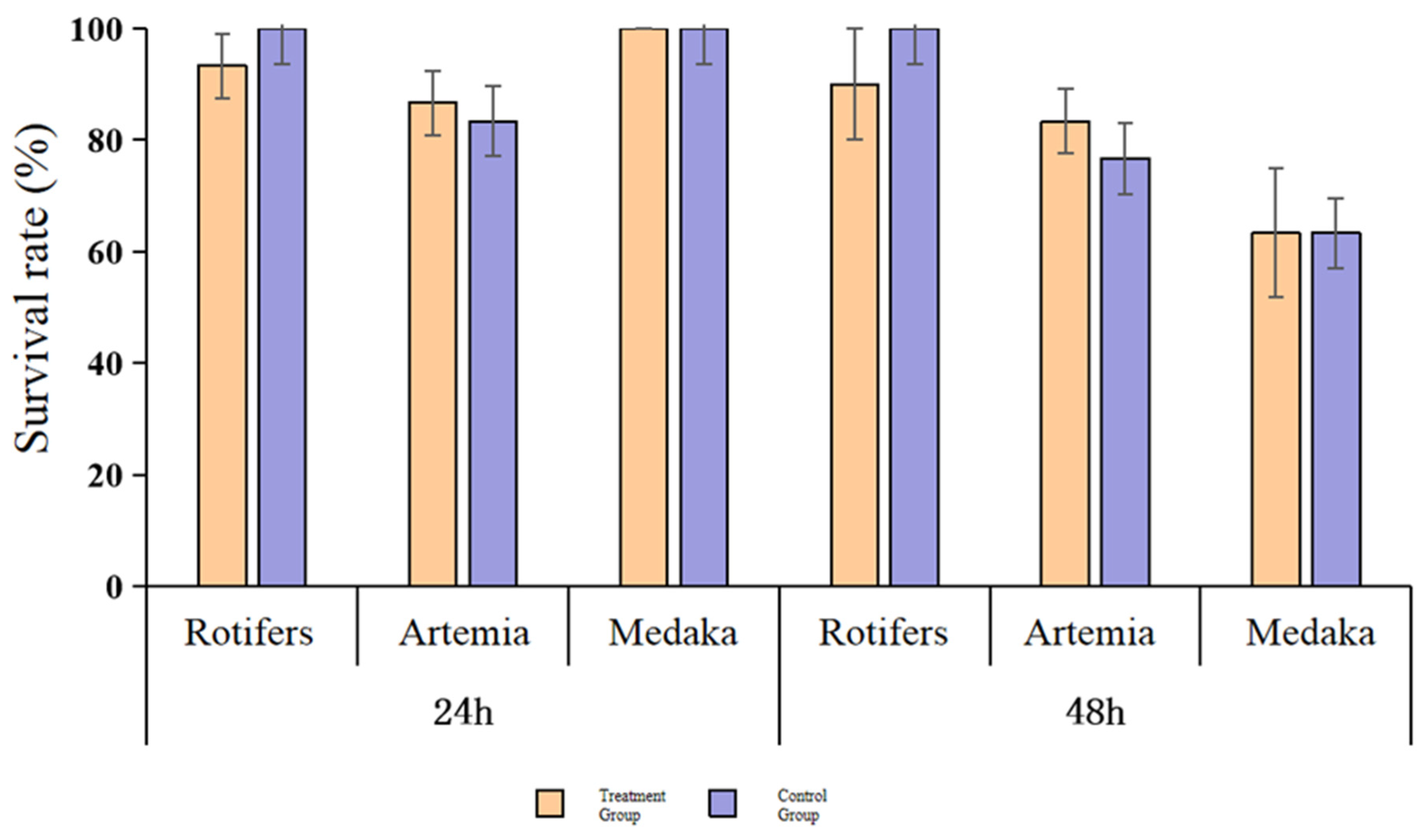
In order to understand whether the Ba3 sterile fermentation broth combined with the clay algal control method at the dosage of this study (100 mg/L + 1.0% filtrate) is toxic to marine aquatic organisms, the in situ enclosure control method was used. The water samples during the algal experiment were tested for biotoxicity. The three different categories of experimental organisms, which belong to different trophic levels of the marine ecosystem, were selected as the differences in size and volume distribute them into different water layers in the ocean. The experimental results are shown in Figure 6. The Ba3 sterile fermentation broth combined with the clay-controlled algal control method had little effect on the survival of all experimental animals, but different organisms displayed varying degrees of toxicity. When the experimental time was 24 h, the survival rate of the rotifers, Artemia, and Medaka species were 93.3%, 86.7%, and 100%, respectively; at 48 h, the survival rates dropped to 90.0%, 83.3%, and 63.0%. Medika’s survival rate fell the most, possibly because this organism needs more oxygen, and the DO is consumed during the experiment, which decreases the Medaka’s survival rate. At the end of the experiment, the final survival rate of the three experimental organisms was basically the same as that of the control group. Therefore, the algal control method of the clay + Ba3 sterile fermentation broth at a dosage of 100 mg/L + 1.0% filtrate is likely non-toxic to aquatic organisms. Although no abnormal phenomena were found in the growth conditions of the experimental organisms during the experiment period, other toxic effects need to be considered for future research. Nevertheless, the combination of clay and Ba3 sterile fermentation broth appears to be a relatively safe and effective method of controlling red tide organisms in aquaculture water.
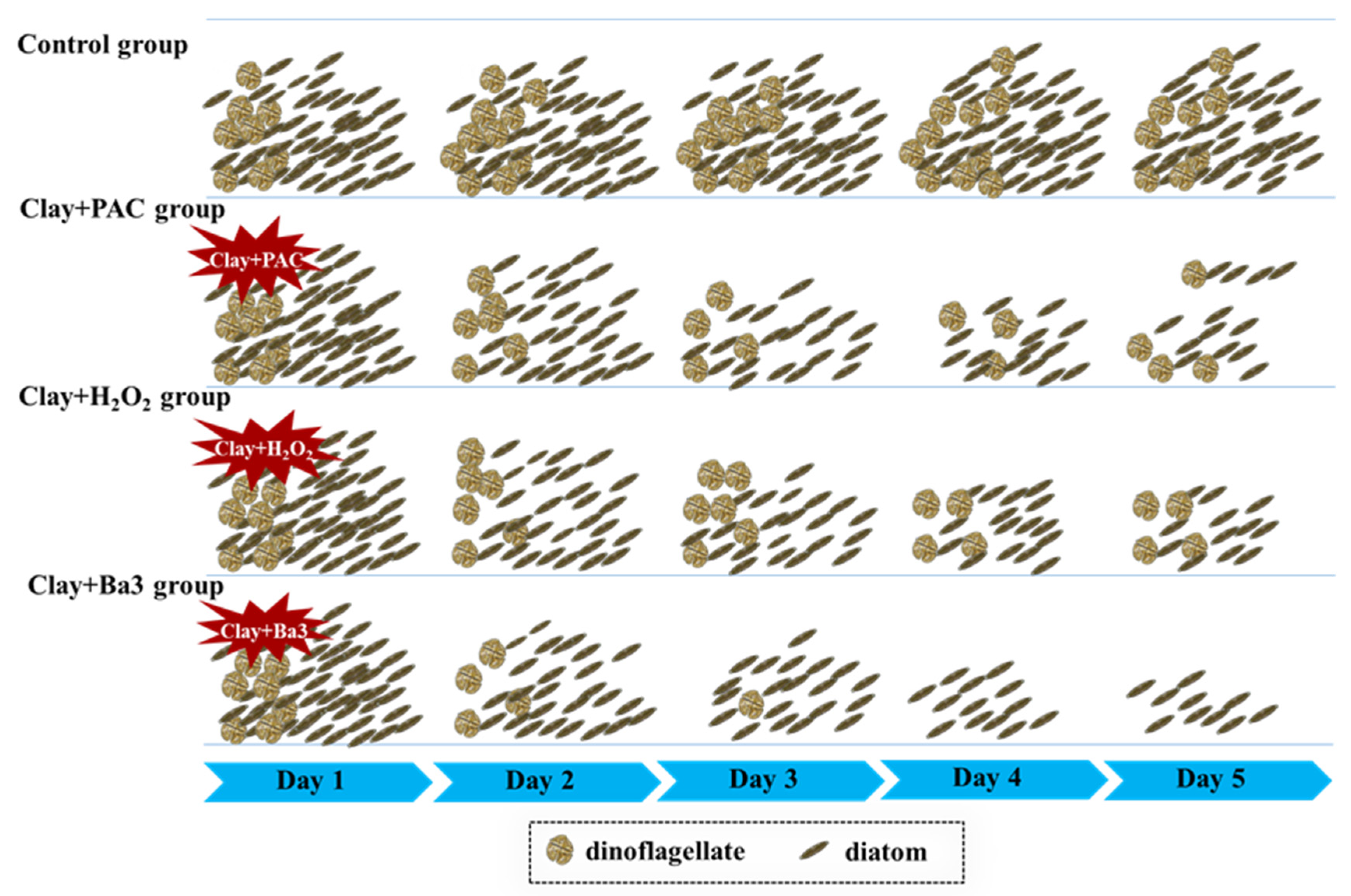
In this study, in situ water samples were collected to conduct sedimentary algal control experiments, focusing on understanding and mastering the environmental effects of Ba3 sterile fermentation broth and clay in the process of in situ enclosure for emergency algal control. The changes in algal cell density, water turbidity, DO, pH, TP, SRP, sediment TOC, TN content, and biological toxicity before and after the experiment were analyzed. Results showed superior algal control effects compared to clay + PAC and clay + H2O2. In this study, clay coagulation was applied to Ba3 sterile fermentation broth, which disproved the conclusion that only large amounts of clay were capable of flocculating and settling algae but improved the process of controlling algae. As a result, algal cells, particularly dinoflagellates, can be prevented from growing and causing secondary pollution of the ecological environment. The response of natural algal communities in marine environments after treatment with different concentrations of the algicide is shown schematically in Figure 7.

4. Discussion

Based on our previous findings, Ba3 fermentation broth plus coagulant (clay) exhibited a high removal efficiency of more than 98.0% against harmful dinoflagellates and prevented the algal cells from rebounding. As found by our group in the laboratory experiment, the clay plus Ba3 (clay + fermentation broth) mixture provided an average removal efficiency of 94.0% at 24 h with minimal detrimental effects on the marine plankton. Thus far, few studies have focused on the response of a combined approach to mitigate harmful algicidal algae bloom [14]. To the best of our knowledge, there have been no reports so far about how this approach may affect the marine environment. Algicidal secondary metabolites from a bacterial fermentation broth have also been proven to inhibit the growth of HABs [16]. For example, Bacillus fermentation broth, compared to other anti-algal bacteria isolated from marine water, displayed more potent algicidal activity [17,18]. We hypothesize that the secondary metabolites in the fermentation broth actively mitigate the algal cells [19]. Moreover, further investigation is required regarding the isolation and purification of algicidal compounds, their safety in the marine environment, and their effect on cultured organisms [20,21].
In practice, algal active substances do not act alone, so the combination of multiple substances also needs consideration, but this particular combination of fermentation broth and clay seems to support its use in controlling harmful species significantly. As far as we are aware, this is the first report describing the algicidal activity of a combination of clay and fermentation broth of Ba3 against water and sediment phytoplankton communities in the marine environment, providing valuable information regarding the control of toxic dinoflagellate cysts in the aquatic environment. Therefore, the algicidal potential of the combination identified in this study could provide future opportunities for controlling HABs.
Due to combination treatment results, variations in water quality indicate that the clay + sterile fermentation broth group did dissolve. The decrease in DO may be due to the addition of sterile fermentation broth, causing bacterial reproduction to produce large quantities of oxygen, resulting in a temporary local decrease in DO concentration [22]. There is a significant difference (p > 0.05), implying that the combination of clay and sterile fermentation broth at this dosage will not cause adverse effects on DO in the water since the change in pH value in water is mainly affected by the water’s dissolved CO2 content and temperature.
When water is highly nutrient-rich, organisms can also affect it [23]. When an algal bloom occurs, algal cells need to consume CO2 for photosynthesis, but the acidic water in the water body substances decreases, resulting in a slight increase in water pH [24]. In the present study, as the experimental time was increased, the algal cell density and the pH value decreased. Therefore, compared to the control, the lower pH level found in treatments was likely to be caused by removing certain phytoplankton species. The system’s turbidity is determined by the sedimentation effect of algal cells and different processes that remove turbidity. Since the bacterial fermentation broth contains many organic substances, an increased dosage of bacterial fermentation broth leads to increased water turbidity and organic matter content. Furthermore, the Ba3 sterile fermentation broth and clay composition method was the most effective in reducing turbidity, particularly TP and SRP. In addition, the mariculture area led to relatively higher nutrient levels in seawater, especially nitrogen and phosphorus, which tends to trigger algal blooms [25]. When algal blooms fade, their major components are preserved in the sediments and continue to increase the nutrient levels.
According to our results, the decrease in dinoflagellate biomass observed in the 24 h treatments might be attributed to the combination of the Ba3 compound and natural clay since the depletion of nutrients would naturally lead to a decrease in phytoplankton biomass. The concentrations of nutrients dropped over time, irrespective of the treatment groups, resulting in the depletion of the nutrients 48 h later than in the control group. An interesting finding was that the reduction in phytoplankton biomass and biodiversity in the control group was delayed by 24 h compared to the treatment groups. In our study, bacteria were consistently found in all treatment groups at high densities. Based on other studies [26,27], it is also possible that some cryptophytes are capable of grazing bacteria. Thus, the increase in bacterial abundance in this study’s treatment groups may have enriched cryptophyte biomasses.
The TOC and TN contents of sediment samples ranged from 1.22 to 1.24% and 0.08 to 0.09%, respectively, slightly lower than the irradiation group. Therefore, the Ba3 sterile fermentation broth and clay group did not increase the sediment’s carbon and nitrogen load at this dosage. Based on previous findings [28,29], periphytic diatoms showed more effective tolerance of several stress factors, such as nutrient limitation, when compared to planktonic diatoms. Therefore, limiting nutrient conditions during the middle of the experiment probably played an essential role in facilitating the switch from planktonic to periphytic diatoms.
Biological interactions and characteristics, including differences in toxicant sensitivity, can also play significant roles in determining the phytoplankton community structure and function. Therefore, Ba3 plus natural clay may affect the shifting phytoplankton community structure in the higher-dose treatment group, particularly in diatom communities. Thus, in this study, biological toxicity tests were carried out on the water samples in the in situ algae to fully understand the effect of Ba3 plus natural clay on the abundance and biodiversity of the phytoplankton community in the field control experiment. After 48 h, the survival rates of rotifers, halozoa, and medaka were 90.0%, 83.3%, and 63.0%, respectively, which was broadly consistent with the control group. Therefore, the Ba3 sterile fermentation broth and clay group method showed no toxicity to aquatic organisms at this dosage.
There are limitations to this study as the experiments only analyzed the alga-solubilizing compounds of Ba3. Further research on the mechanisms associated with alga-solubilizing bacteria Ba3 is required. Also, this study only carried out in situ algal control experiments in the field, although there was no red tide outbreak in the Pingtan maritime area during the research period. Therefore, there are limitations to improving the understanding of Ba3 plus natural clay’s impact on the marine environment. To ascertain the safe use of Ba3 plus natural clay in the field, a larger volume of experiments must be carried out in open natural environments. This method has not been applied to the actual control of red tide; therefore, the actual risks and effects of this method of algal control need to be further studied.

5. Conclusions

Clay and sterile fermentation broth have been shown to significantly reduce the diversity and abundance of phytoplankton in the water from 23 species (genus) to 3 species (genus). In the algal control experiment for in situ water samples, the removal rates of total algae and dinoflagellates were as follows: clay + sterile fermentation broth group > clay + PAC group > clay + H2O2 group, with the total algicidal efficiency of the clay + sterile fermentation broth group being the highest at 95.0% and the algicidal efficiency of dinoflagellates being as high as 99.8%. Based on the results of an in situ water sample assembly and sediment control experiment for algal control, the removal rates of total algae and diatoms were clay + PAC > clay + sterile fermentation broth group > clay + H2O2 group due to the rebound of diatom density in the later stage. Dinoflagellates, however, retained the highest removal rate at 100%. The combined clay + sterile fermentation broth method ran diagonally to Chaetoceros, Actinobacteria, and other algae with horn hairs and thorns, Cylindrotheca Pseudomonas, and other algae with cell chains, etc. By measuring the water temperature, salinity, DO concentration, turbidity, pH, TP, and SRP concentration of the water body before and after the in situ enclosure control experiment, it was found that the optimal dosage was 100 mg/L clay + 1.0% filtrate. The bacterial fermentation broth combination method produced a removal rate of 78.3–80.7% for turbidity and had a particularly effective removal impact on TP and SRP active phosphorus, with a removal rate of TP at 58.4% and a removal rate of active phosphorus SRP at 52.1%. The sediment samples’ TOC and TN content before and after the in situ water sample assembly sediment algal control experiment were also determined. The combined algal control method of sterile fermentation broth + clay at the dosage in this study did not increase the sediment’s carbon, nitrogen, and phosphorus load. This scalable, environmentally friendly method of extremely suppressing undesired algal blooms by taking advantage of the synergistic roles of clay as a physical adsorbent and Ba3 metabolites as selective biocidal agents can preserve the structural integrity of the underlying phytoplankton community.

Supplementary Materials

The following supporting information can be downloaded at: https://www.mdpi.com/article/10.3390/fermentation12030149/s1, Figure S1. In situ experimental enclosure setup. Visual representation of the field experiment: (a) in situ water sample enclosures; (b) water sample assembly containing sediment used for the removal experiments. Figure S2. Temporal variations in water temperature. Comparative analysis of temperature changes across treatment groups in (a) algal-enriched conditions and (b) algal-unenriched conditions. Treatments include control, clay + fermentation broth, clay + PAC, and clay + H2O2. Figure S3. Temperature fluctuations in sediment assembly. Monitoring of water temperature specifically within the in situ algal removal experiment utilizing assembly sediment. Figure S4. Salinity profiles over time. Changes in water salinity (measured in PSU) for (a) algal enrichment and (b) algal-unenriched groups across a 6-day period. Figure S5. Salinity changes in sediment assembly. Salinity monitoring for the in situ experimental setup incorporating sediment over an 8-day duration. Figure S6. Dissolved oxygen (DO) levels before and after treatment. Impact of various clay-based treatments on DO concentrations (mg/L) in (a) enriched and (b) unenriched algal environments. Figure S7. Change in DO in situ algal removal experiment assembly sediment. Figure S8. Changes in water turbidity. Effectiveness of treatments in reducing turbidity (NTU) in (a) algal enrichment and (b) unenriched groups, comparing “before” and “after” states. Figure S9. Change in turbidity for in situ algal removal experiment assembly sediment. Figure S10. pH stability across experimental groups. Variations in pH levels for (a) algal enrichment and (b) unenriched groups. Figure S11. Change in pH in situ algal removal experiment assembly sediment. Figure S12. Total phosphorus (TP) concentration changes. Reduction in TP levels (mg/L) across different treatment groups for both enriched (a) and unenriched (b) algal water. Figure S13. Soluble reactive phosphorus (SRP) dynamics. Pre- and post-treatment concentrations of SRP (mg/L) in (a) algal enrichment and (b) unenriched groups. Figure S14. Change in TP for in situ algal removal experiment assembly sediment. Figure S15. Change in SRP for in situ algal removal experiment assembly sediment. Figure S16. Sediment nutrient content (TOC and TN) within the sediment of the in situ removal experiment. Table S1. Sources and culture conditions of aquatic organisms.

Author Contributions

B.P.B.: (Writing—Original Draft, Supervision, Data Curation, Funding Acquisition, Software, Writing—Review and Editing), Y.S.: (Conceptualization, Supervision, Writing—Review and Editing, Project Administration, Funding Acquisition), Y.W.: (Writing—Original Draft, Data Curation, Software, Formal Analysis). All authors have read and agreed to the published version of the manuscript.

Funding

This study was supported by National Key Research & Development Plan “Strategic International Scientific and Technological Innovation Cooperation” (2016YFE0202100), Marine Red Tide Early Warning and Prevention in Pingtan coastal area (PT2021006). National Natural Science Foundation of China (41573075), Fujian Provincial Water Conservancy Technology Project (SC-292, DH-1558, 21NB000922, MSK202.

Institutional Review Board Statement

Not applicable.

Informed Consent Statement

Not applicable.

Data Availability Statement

The original contributions presented in the study are included in the article. Further inquiries can be directed to the corresponding authors.

Conflicts of Interest

The authors declare no conflicts of interest.

References

  1. Young, N.; Sharpe, R.A.; Barciela, R.; Nichols, G.; Davidson, K.; Berdalet, E.; Fleming, L.E. Marine Harmful Algal Blooms and Human Health: A Systematic Scoping Review. Harmful Algae 2020, 98, 101901. [Google Scholar] [CrossRef]
  2. Seger, A.; Hallegraeff, G. Application of Clay Minerals to Remove Extracellular Ichthyotoxins Produced by the Dinoflagellates Karlodinium veneficum and Karenia mikimotoi. Harmful Algae 2022, 111, 102151. [Google Scholar] [CrossRef]
  3. Pal, M.; Purohit, H.J.; Qureshi, A. Genomic Insight for Algicidal Activity in Rhizobium Strain AQ_MP. Arch. Microbiol. 2021, 203, 5193–5203. [Google Scholar] [CrossRef] [PubMed]
  4. Balaji-Prasath, B.; Wang, Y.; Su, Y.P.; Hamilton, D.P.; Lin, H.; Zheng, L.; Zhang, Y. Methods to Control Harmful Algal Blooms: A Review. Environ. Chem. Lett. 2022, 20, 3133–3152. [Google Scholar] [CrossRef]
  5. Mohan, H.; Vadivel, S.; Rajendran, S. Removal of Harmful Algae in Natural Water by Semiconductor Photocatalysis—A Critical Review. Chemosphere 2022, 302, 134827. [Google Scholar] [CrossRef]
  6. Santos, A.A.; Guedes, D.O.; Barros, M.U.G.; Oliveira, S.; Pacheco, A.B.F.; Azevedo, S.M.F.O.; Magalhães, V.F.; Pestana, C.J.; Edwards, C.; Lawton, L.A.; et al. Effect of Hydrogen Peroxide on Natural Phytoplankton and Bacterioplankton in a Drinking Water Reservoir: Mesocosm-Scale Study. Water Res. 2021, 197, 117069. [Google Scholar] [CrossRef]
  7. Buley, R.P.; Adams, C.; Belfiore, A.P.; Fernandez-Figueroa, E.G.; Gladfelter, M.F.; Garner, B.; Wilson, A.E. Field Evaluation of Seven Products to Control Cyanobacterial Blooms in Aquaculture. Environ. Sci. Pollut. Res. 2021, 28, 29971–29983. [Google Scholar] [CrossRef] [PubMed]
  8. Lee, Y.-J.; Choi, J.-K.; Kim, E.-K.; Youn, S.-H.; Yang, E.-J. Field Experiments on Mitigation of Harmful Algal Blooms Using a Sophorolipid—Yellow Clay Mixture and Effects on Marine Plankton. Harmful Algae 2008, 7, 154–162. [Google Scholar] [CrossRef]
  9. Anderson, D.M. Control of Florida Red Tide Using Phosphatic Clay; Florida Institute of Phosphate Research: Bartow, FL, USA, 2004. [Google Scholar]
  10. Owen, K.C.; Owen, J.L.; Owen, D.P. A Potential Mechanism for the Regrowth of Harmful Algal Blooms Following Clay Treatment. Int. J. Integr. Biol. 2013, 14, 10–16. [Google Scholar]
  11. Zhang, Y.; Yu, Z.; Song, X.; Yuan, Y.; Cao, X. Effects of Modified Clay Used for the Control of Harmful Algal Blooms on Alexandrium pacificum Cysts. Harmful Algae 2018, 72, 36–45. [Google Scholar] [CrossRef]
  12. Wang, M.; Chen, S.; Zhou, W.; Yuan, W.; Wang, D. Algal Cell Lysis by Bacteria: A Review and Comparison to Conventional Methods. Algal Res. 2020, 46, 101794. [Google Scholar] [CrossRef]
  13. Balaji-Prasath, B.; Wang, Y.; Su, Y.; Chen, M.; Zheng, Y. Algicidal Properties of Microbial Fermentation Products on Inhibiting the Growth of Harmful Dinoflagellate Species. Fermentation 2022, 8, 176. [Google Scholar] [CrossRef]
  14. Balaji Prasath, B.; Wang, Y.; Su, Y.; Zheng, W.; Lin, H.; Yang, H. Coagulant plus Bacillus nitratireducens Fermentation Broth Technique Provides a Rapid Algicidal Effect of Toxic Red Tide Dinoflagellate. J. Mar. Sci. Eng. 2021, 9, 395. [Google Scholar] [CrossRef]
  15. Xu, Y.; Xu, T. An Evolving Marine Environment and Its Driving Forces of Algal Blooms in the Southern Yellow Sea of China. Mar. Environ. Res. 2022, 178, 105635. [Google Scholar] [CrossRef]
  16. Ouyang, L.; Liu, Y.; Chen, H.; Zaynab, M.; Yang, X.; Wang, S.; Li, S. Encapsulation and Algicidal Properties of Fermentation Products from Vibrio Brasiliensis H115. Front. Mar. Sci. 2021, 8, 676913. [Google Scholar] [CrossRef]
  17. Zhao, L.; Chen, L.; Yin, P. Algicidal Metabolites Produced by Bacillus sp. Strain B1 against Phaeocystis globosa. J. Ind. Microbiol. Biotechnol. 2014, 41, 593–599. [Google Scholar] [CrossRef]
  18. Liu, J.; Yang, C.; Chi, Y.; Wu, D.; Dai, X.; Zhang, X.; Igarashi, Y.; Luo, F. Algicidal Characterization and Mechanism of Bacillus licheniformis Sp34 against Microcystis aeruginosa in Dianchi Lake. J. Basic Microbiol. 2019, 59, 1112–1124. [Google Scholar] [CrossRef] [PubMed]
  19. Hu, X.; Su, H.; Xu, Y.; Xu, W.; Li, S.; Huang, X.; Cao, Y.; Wen, G. Algicidal Properties of Fermentation Products from Bacillus Cereus Strain JZBC1 Dissolving Dominant Dinoflagellate Species Scrippsiella trochoidea, Prorocentrum micans, and Peridinium umbonatum. Biologia 2020, 75, 2015–2024. [Google Scholar] [CrossRef]
  20. Zhang, Z.; Wang, J.; Hu, G.; Huang, J.; Chen, L.; Yin, Y.; Cai, Y.; Shen, X.; Ji, N. Isolation and Characterization of an Algicidal Bacterium against the Bloom-Forming Algae Raphidophyte Heterosigma akashiwo. Environ. Technol. 2023, 44, 2607–2616. [Google Scholar] [CrossRef] [PubMed]
  21. Hu, X.; Wen, G.; Xu, W.; Xu, Y.; Su, H.; Yang, K.; Xu, Y.; Li, Z.; Cao, Y. Effects of the Algicidal Bacterium CZBC1 on Microalgal and Bacterial Communities in Shrimp Culture. Aquac. Environ. Interact. 2019, 11, 279–290. [Google Scholar] [CrossRef]
  22. Yu, X.; Cai, G.; Wang, H.; Hu, Z.; Zheng, W.; Lei, X.; Zhu, X.; Chen, Y.; Chen, Q.; Din, H.; et al. Fast-Growing Algicidal Streptomyces sp. U3 and Its Potential in Harmful Algal Bloom Controls. J. Hazard. Mater. 2018, 341, 138–149. [Google Scholar] [CrossRef] [PubMed]
  23. Verspagen, J.M.; Van de Waal, D.B.; Finke, J.F.; Visser, P.M.; Van Donk, E.; Huisman, J. Rising CO2 Levels Will Intensify Phytoplankton Blooms in Eutrophic and Hypertrophic Lakes. PLoS ONE 2014, 9, e104325. [Google Scholar] [CrossRef]
  24. Burlacot, A.; Dao, O.; Auroy, P.; Cuiné, S.; Li-Beisson, Y.; Peltier, G. Alternative Photosynthesis Pathways Drive the Algal CO2-Concentrating Mechanism. Nature 2022, 605, 366–371. [Google Scholar] [CrossRef]
  25. Nwankwegu, A.S.; Li, Y.; Huang, Y.; Wei, J.; Norgbey, E.; Sarpong, L.; Lai, Q.; Wang, K. Harmful Algal Blooms under Changing Climate and Constantly Increasing Anthropogenic Actions: The Review of Management Implications. 3 Biotech 2019, 9, 449. [Google Scholar] [CrossRef]
  26. Unrein, F.; Gasol, J.M.; Not, F.; Forn, I.; Massana, R. Mixotrophic Haptophytes Are Key Bacterial Grazers in Oligotrophic Coastal Waters. ISME J. 2014, 8, 164–176. [Google Scholar] [CrossRef]
  27. Yoo, Y.D.; Seong, K.A.; Myung, G.; Kim, H.S.; Jeong, H.J.; Palenik, B.; Yih, W. Ingestion of the Unicellular Cyanobacterium synechococcus by the Mixotrophic Red Tide Ciliate Mesodinium rubrum. Algae 2015, 30, 281–290. [Google Scholar] [CrossRef]
  28. Pandey, L.K.; Bergey, E.A.; Lyu, J.; Park, J.; Choi, S.; Lee, H.; Depuydt, S.; Oh, Y.-T.; Lee, S.-M.; Han, T. The Use of Diatoms in Ecotoxicology and Bioassessment: Insights, Advances and Challenges. Water Res. 2017, 118, 39–58. [Google Scholar] [CrossRef]
  29. Underwood, G.J.; Boulcott, M.; Raines, C.A.; Waldron, K. Environmental Effects on Exopolymer Production by Marine Benthic Diatoms: Dynamics, Changes in Composition, and Pathways of Production 1. J. Phycol. 2004, 40, 293–304. [Google Scholar] [CrossRef]
Figure 1. Comparison of phytoplankton community structure and taxonomic richness before and after treatment. Data are categorized into (A) high-density algal enrichment groups and (B) low-density unenriched groups. Values represent the number of species (genera) detected across two phyla: Dinoflagellate and Diatom.
Fermentation 12 00149 g001
Figure 2. Impact of experimental treatments on algal populations in high-density mesocosms. (A) Temporal changes in phylum-specific cell densities over a 6-day period. (B) Comparative algicidal efficiencies of clay + Ba3 broth, clay + PAC, and clay + H2O2. Significant differences (p < 0.05) are indicated by varying letters.
Fermentation 12 00149 g002
Figure 3. Response of indigenous phytoplankton communities in low-density unenriched water samples. (A) Fluctuations in cell density for dominant phyla (Diatoms and Dinoflagellates). (B) Dynamic changes in the algicidal rate across experimental groups, illustrating the performance of the synergistic clay + Ba3 treatment.
Fermentation 12 00149 g003
Figure 4. Taxonomic diversity of phytoplankton following Phase 2 (water–sediment) enclosure experiments. The figure displays the shift in species richness for each treatment group in the presence of natural benthic sediment.
Fermentation 12 00149 g004
Figure 5. Integrated efficacy of HABs mitigation strategies in Phase 2 mesocosms containing bottom sediment. (A) Total phytoplankton cell density changes over an 8-day experimental duration. (B) Comparison of dissolution rates, highlighting the 100% removal of dinoflagellates in the clay + Ba3 broth group.
Fermentation 12 00149 g005
Figure 6. Effects of Ba3 sterile fermented broth combined with clay on the survival of aquatic organisms.
Fermentation 12 00149 g006
Figure 7. Schematic illustration of the response of the natural algal community following different treatment applications.
Fermentation 12 00149 g007
Disclaimer/Publisher’s Note: The statements, opinions and data contained in all publications are solely those of the individual author(s) and contributor(s) and not of MDPI and/or the editor(s). MDPI and/or the editor(s) disclaim responsibility for any injury to people or property resulting from any ideas, methods, instructions or products referred to in the content.