
Functional Traits, Safety Assessment, and In Situ Storage Stability of Probiotic Candidate Lactic Acid Bacteria from Traditional Beyaz Cheese



Abstract
1. Introduction
2. Materials and Methods
2.1. Isolation of LAB
2.2. Tolerance to Simulated Gastric Juice
2.3. Tolerance to Bile Salts
2.4. Genotypic Identification of Bacteria
2.5. Auto-Aggregation and Hydrophobicity
2.6. Hemolytic, DNase, Bile Salt Hydrolase and Gelatinase Activities
2.7. Organic Acid Production
2.8. Antibiotic Resistance
2.9. Identification of Virulence and Biogenamine Genes
2.10. In Situ Milk Fermentation
2.11. Statistical Analysis
3. Results and Discussion
3.1. Isolation and Selection of LAB from Cheese
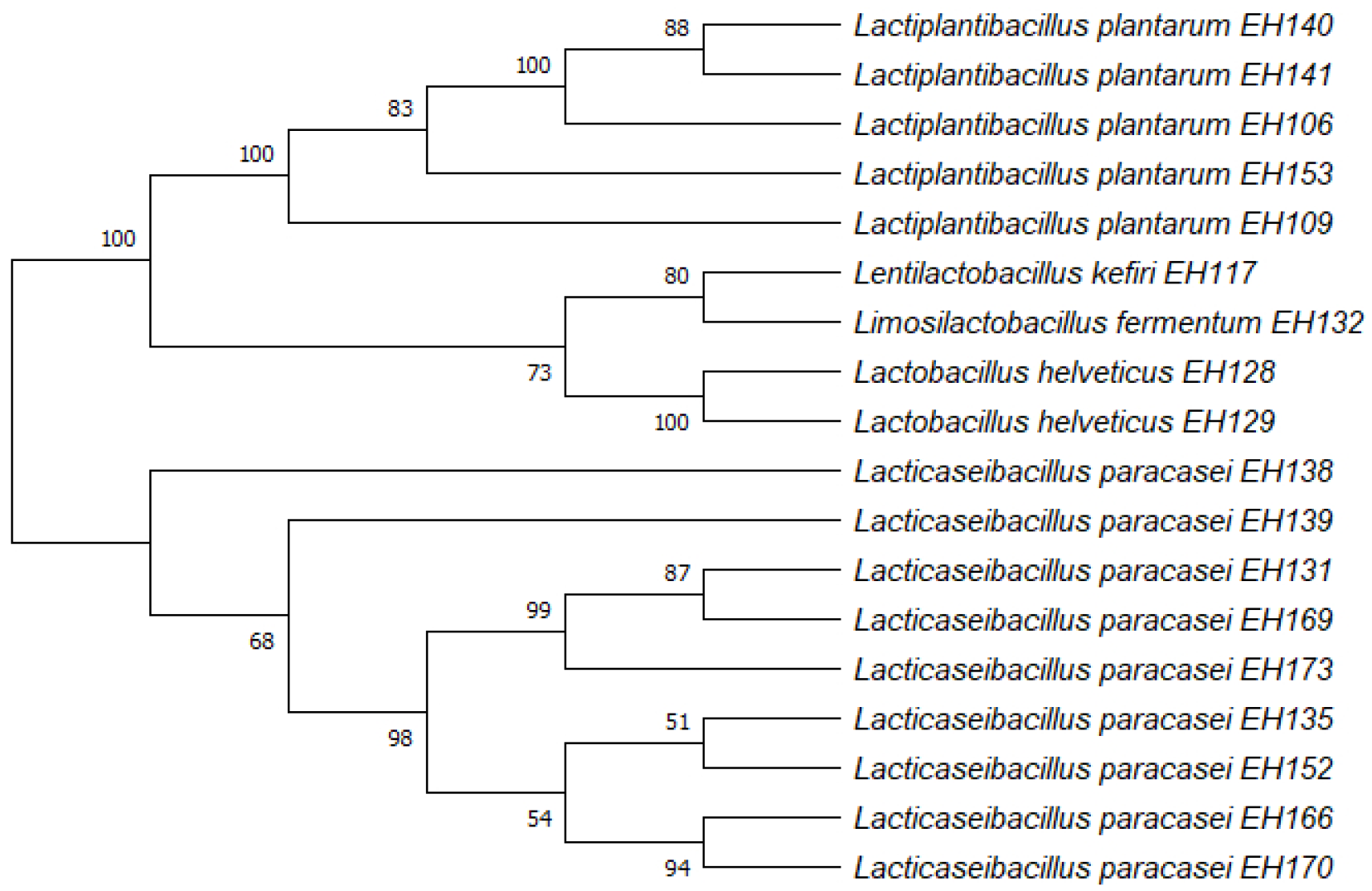
3.2. Genotypic Identification of Bacteria
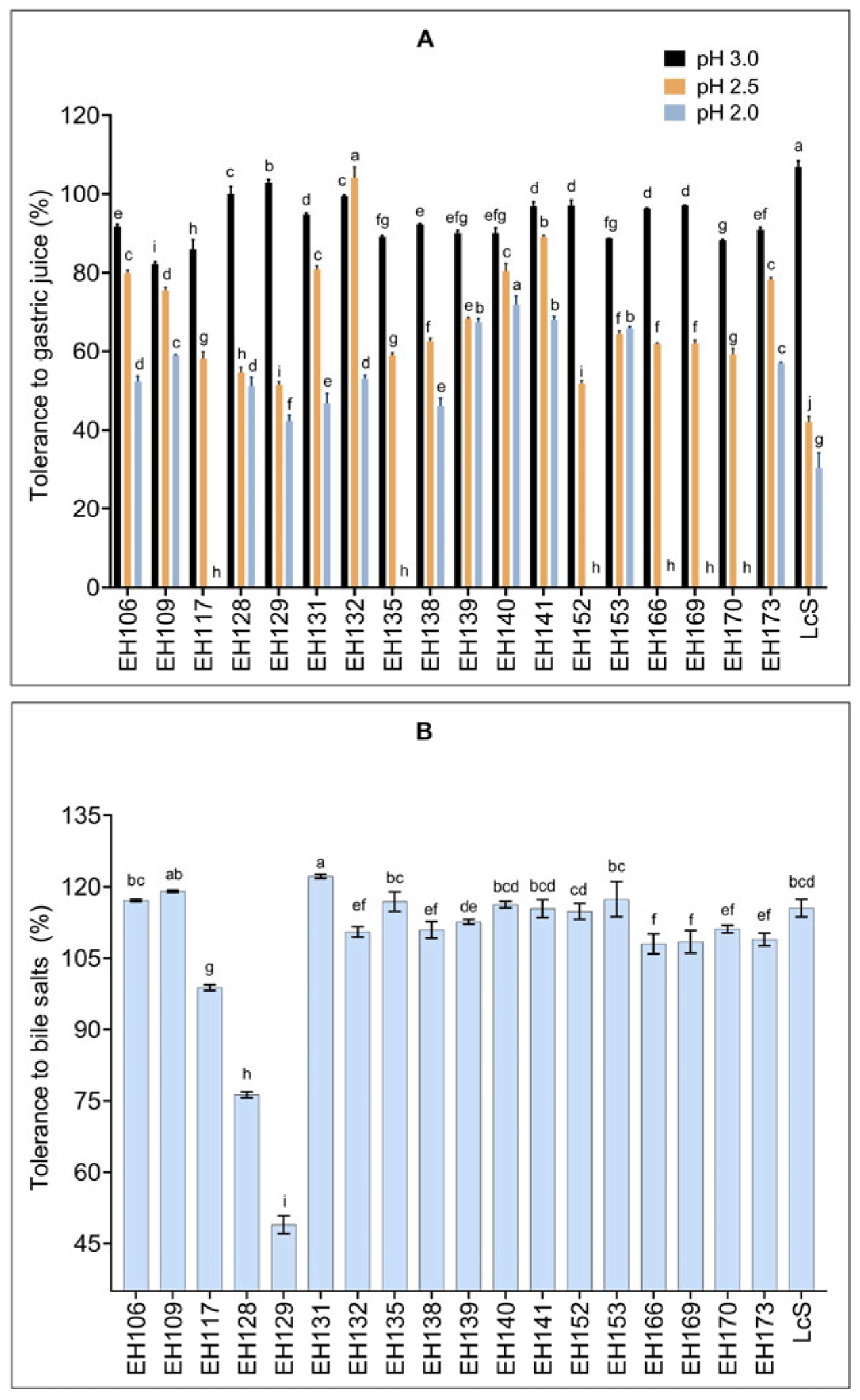
3.3. Tolerance to Simulated Gastric Juice and Bile Salts
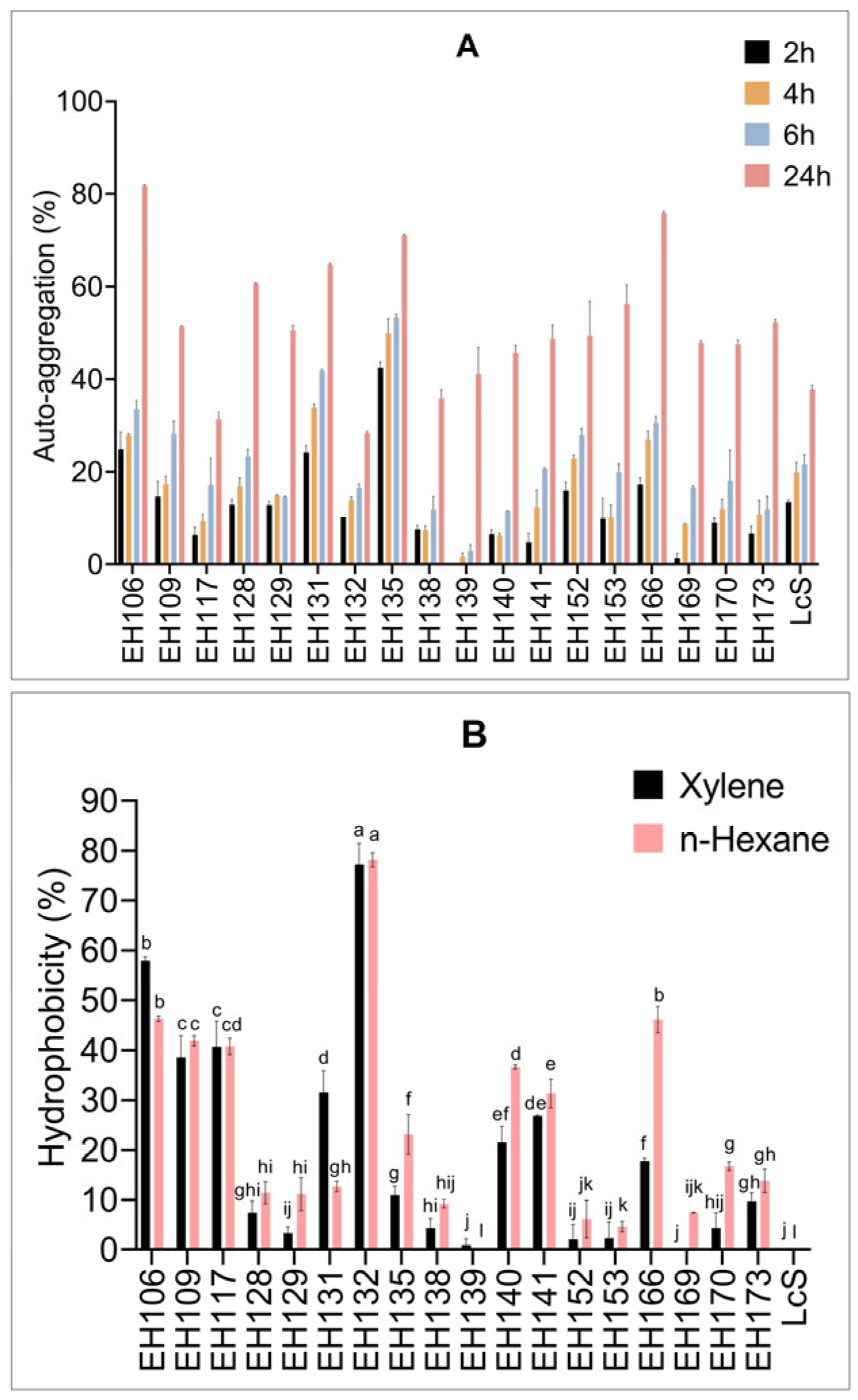
3.4. Auto-Aggregation and Hydrophobicity
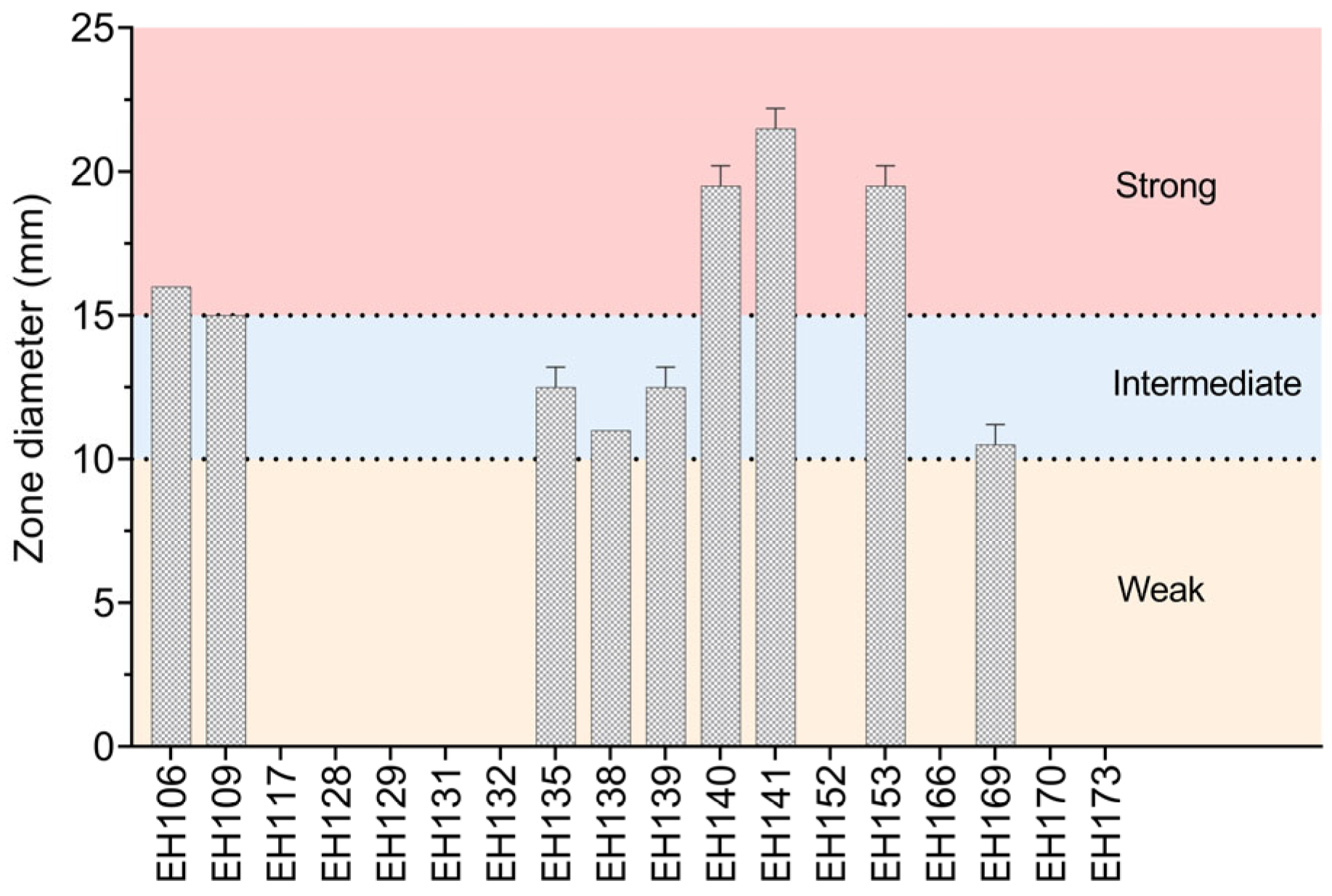
3.5. Hemolytic, DNase, Bile Salt Hydrolase and Gelatinase Activities
3.6. Organic Acid Production
3.7. Antibiotic Resistance
3.8. Identification of Virulence and Biogenamine Genes
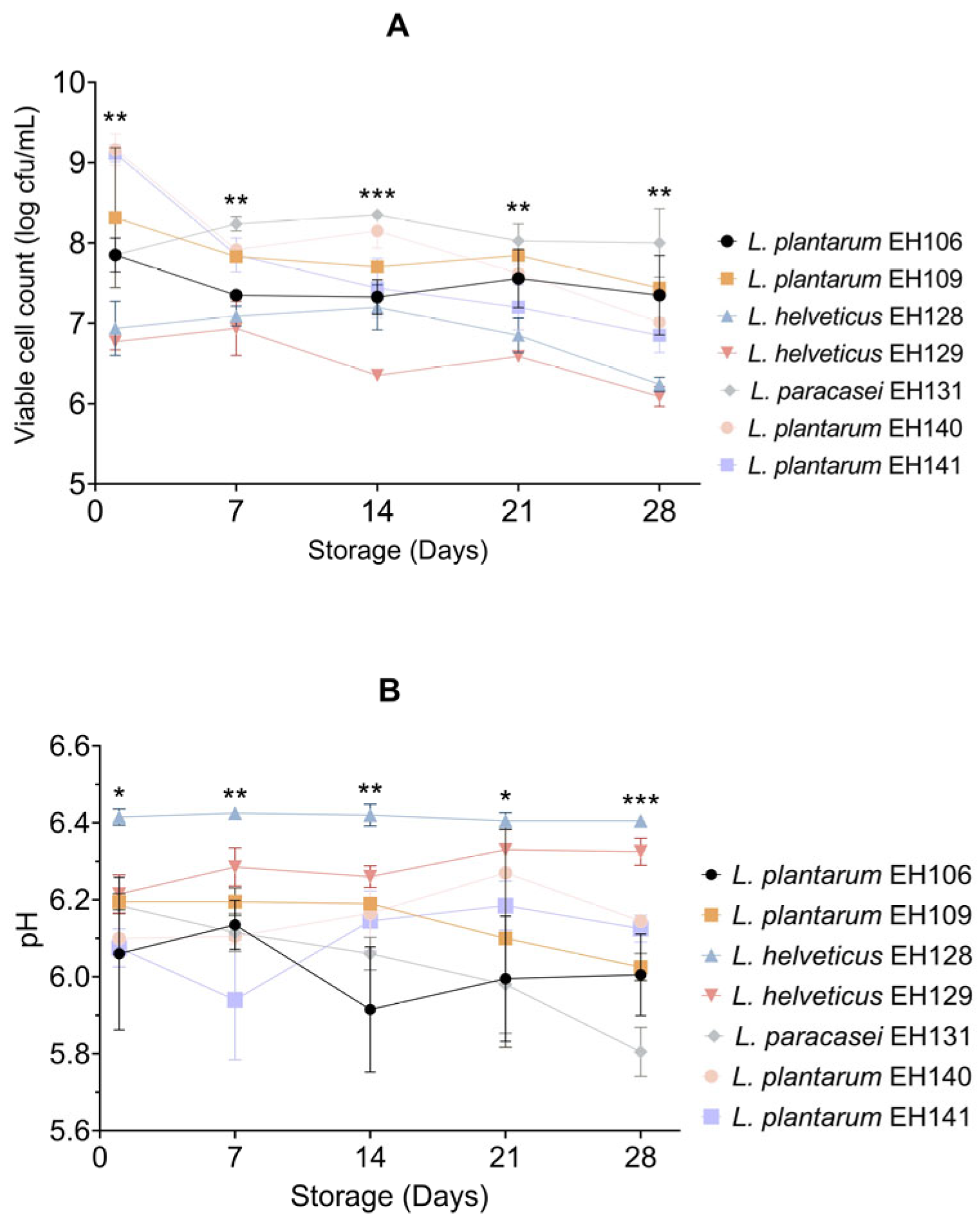
3.9. In Situ Milk Fermentation
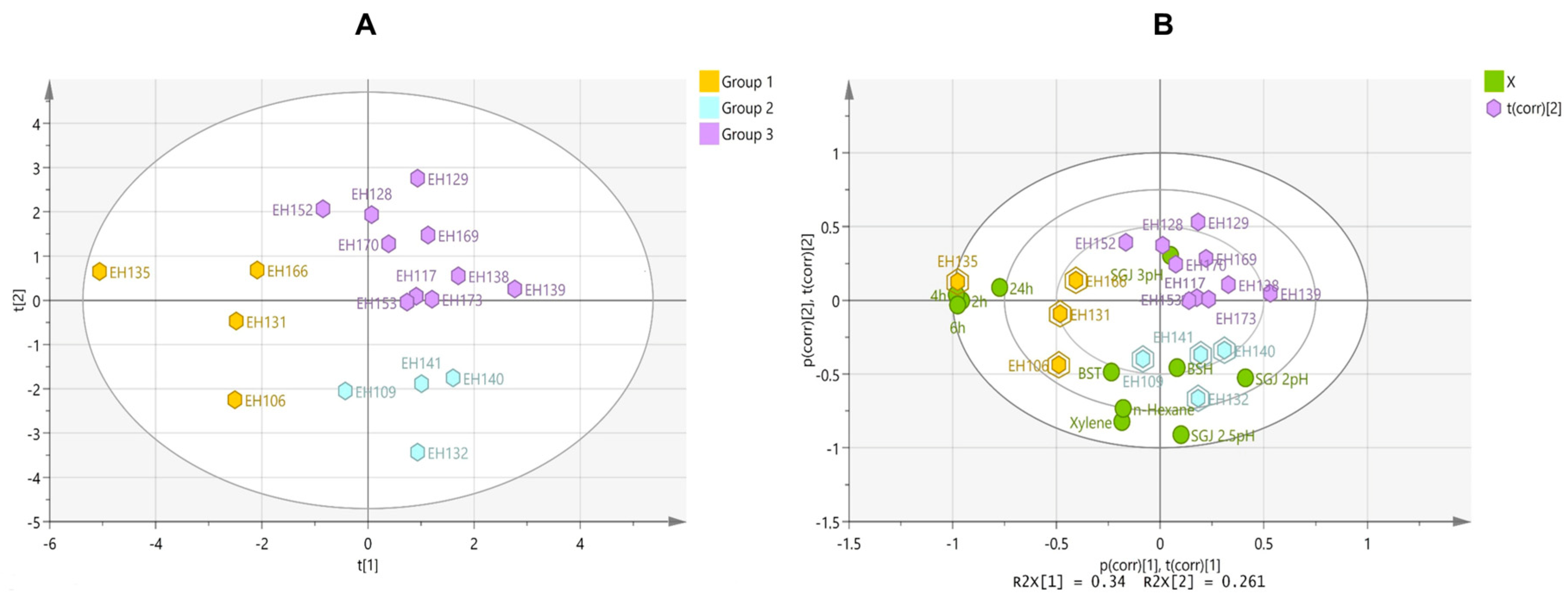
3.10. Principal Component Analysis
4. Conclusions
Supplementary Materials
Author Contributions
Funding
Institutional Review Board Statement
Informed Consent Statement
Data Availability Statement
Conflicts of Interest
Abbreviations
| ANOVA | Analysis of variance |
| ATCC | American Type Culture Collection |
| BEA | Bile Esculine Agar |
| BSH | Bile salt hydrolase |
| CFU | Colony-forming unit |
| DNA | Deoxyribonucleic acid |
| DNase | Deoxyribonuclease |
| EFSA | European Food Safety Authority |
| FAO | Food and Agriculture Organization |
| HCl | Hydrochloric acid |
| HPLC | High-performance liquid chromatography |
| ISAPP | International Scientific Association for Probiotics and Prebiotics |
| ISO | International Standardisation Organisation |
| kb | Kilo base |
| LOD | Limit of detection |
| MEGA | Molecular Evolutionary Genetics Analysis |
| MIC | Minimum inhibition concentration |
| MRS | De Man, Rogosa and Sharpe |
| N | Normalite |
| NaCl | Sodium chloride |
| nm | nanometer |
| PBS | Phosphate-buffered saline |
| PCA | Principal component analysis |
| PCR | Polymerase chain reaction |
| rpm | Revolutions per minute |
| rRNA | Ribosomal ribonucleic acid |
| V | Volt |
| WHO | World Health Organization |
References
- Hayaloğlu, A.A. Cheese Varieties Ripened Under Brine. In Cheese; McSweeney, P.L.H., Fox, P.F., Cotter, P.D., Everett, D.W., Eds.; Academic Press: London, UK, 2017; pp. 997–1040. [Google Scholar]
- Albayrak, Ç.B.; Duran, M. Isolation and Characterization of Aroma-Producing Lactic Acid Bacteria from Artisanal White Cheese for Multifunctional Properties. LWT—Food Sci. Technol. 2021, 150, 112053. [Google Scholar] [CrossRef]
- Meena, K.K.; Taneja, N.K.; Jain, D.; Ojha, A.; Kumawat, D.; Mishra, V. In Vitro Assessment of Probiotic and Technological Properties of Lactic Acid Bacteria Isolated from Indigenously Fermented Cereal-Based Food Products. Fermentation 2022, 8, 529. [Google Scholar] [CrossRef]
- İmece, A.; Şengül, M.; Çetin, B.; Aktaş, H. Effect of Probiotic Lactiplantibacillus plantarum Strains on Some Properties of Grapefruit Juice and Naringin. J. Stored Prod. Res. 2024, 108, 102359. [Google Scholar] [CrossRef]
- Erkaya-Kotan, T.; Hayaloğlu, A.A. Volatilome Profile (HS-SPME/GC–MS) and Proteolysis in Beyaz Peynir (White-Brined Cheese) Made Using Different Probiotic Adjunct Cultures and Ripened under Brine or Vacuum Package Systems, and Chemometric Analysis. Int. Dairy J. 2024, 152, 105894. [Google Scholar] [CrossRef]
- Salık, M.A.; Çakmakçı, S. Development and Techno-Functional Characterization of Beyaz Cheese Fortified with Walnut (Juglans regia L.) Leaf Powder and Lactobacillus acidophilus LA-5. Probiotics Antimicrob. Proteins 2025, 1–19. [Google Scholar] [CrossRef] [PubMed]
- Rolim, F.R.; Neto, O.C.F.; Oliveira, M.E.G.; Oliveira, C.J.; Queiroga, R.C. Cheeses as Food Matrices for Probiotics: In Vitro and In Vivo Tests. Trends Food Sci. Technol. 2020, 100, 138–154. [Google Scholar] [CrossRef]
- Hill, C.; Guarner, F.; Reid, G.; Gibson, G.R.; Merenstein, D.J.; Pot, B.; Morelli, L.; Canani, R.B.; Flint, H.J.; Salminen, S.; et al. The International Scientific Association for Probiotics and Prebiotics Consensus Statement on the Scope and Appropriate Use of the Term Probiotic. Nat. Rev. Gastroenterol. Hepatol. 2014, 11, 506–514. [Google Scholar] [CrossRef]
- FAO/WHO. Guidelines for the Evaluation of Probiotics in Food; FAO: Rome, Italy, 2002; Available online: https://www.fao.org/3/a0512e/a0512e.pdf (accessed on 22 September 2025).
- ISO 15214:1998; Microbiology of Food and Animal Feeding Stuffs—Horizontal Method for the Enumeration of Mesophilic Lactic Acid Bacteria—Colony-Count Technique at 30 °C. International Organization for Standardization: Geneva, Switzerland, 2015.
- Mokhtari, H.A.E.R.; Hassaine, O.; Çetin, B.; Meral-Aktaş, H. Probiotic Potential, Safety Assessment, and Functional Properties of Lactic Acid Bacteria from Camel Milk. Enzyme Microb. Technol. 2025, 189, 110676. [Google Scholar] [CrossRef]
- Kumari, M.; Kumar, R.; Singh, D.; Bhatt, S.; Gupta, M. Physiological and Genomic Characterization of an Exopolysaccharide-Producing Weissella cibaria CH2 from Cheese of the Western Himalayas. Food Biosci. 2020, 35, 100570. [Google Scholar] [CrossRef]
- Meral-Aktaş, H.; Erdoğan, A.; Çetin, B. Bacteriocin Characterization of Autochthonous Lactococcus lactis L54 and Its Application as Starter Culture for Beyaz Cheese. Food Biosci. 2023, 53, 102739. [Google Scholar] [CrossRef]
- Kumar, S.; Stecher, G.; Suleski, M.; Sanderford, M.; Sharma, S.; Tamura, K. MEGA12: Molecular Evolutionary Genetic Analysis Version 12 for Adaptive and Green Computing. Mol. Biol. Evol. 2024, 41, msae263. [Google Scholar] [CrossRef]
- Seddik, H.A.; Ceugniez, A.; Bendali, F.; Cudennec, B.; Drider, D. Yeasts Isolated from Algerian Infants’ Feces Revealed a Burden of Candida albicans Species, Non-albicans Candida Species and Saccharomyces cerevisiae. Arch. Microbiol. 2016, 198, 71–81. [Google Scholar] [CrossRef]
- Rosenberg, M.; Gutnick, D.; Rosenberg, E. Adherence of Bacteria to Hydrocarbons: A Simple Method for Measuring Cell-Surface Hydrophobicity. FEMS Microbiol. Lett. 1980, 9, 29–33. [Google Scholar] [CrossRef]
- Pieniz, S.; Andreazza, R.; Anghinoni, T.; Camargo, F.; Brandelli, A. Probiotic Potential, Antimicrobial and Antioxidant Activities of Enterococcus durans Strain LAB18s. Food Control 2014, 37, 251–256. [Google Scholar] [CrossRef]
- Lavilla-Lerma, L.; Pérez-Pulido, R.; Martínez-Bueno, M.; Maqueda, M.; Valdivia, E. Characterization of Functional, Safety, and Gut Survival-Related Characteristics of Lactobacillus Strains Isolated from Farmhouse Goat’s Milk Cheeses. Int. J. Food Microbiol. 2013, 163, 136–145. [Google Scholar] [CrossRef]
- Byakika, S.; Mukisa, I.M.; Byaruhanga, Y.B.; Muyanja, C. Probiotic Potential of Lactic Acid Starter Cultures Isolated from a Traditional Fermented Sorghum–Millet Beverage. Int. J. Microbiol. 2020, 2020, 7825943. [Google Scholar] [CrossRef] [PubMed]
- Lopes, M.D.F.S.; Simões, A.P.; Tenreiro, R.; Marques, J.J.F.; Crespo, M.T.B. Activity and Expression of a Virulence Factor, Gelatinase, in Dairy Enterococci. Int. J. Food Microbiol. 2006, 112, 208–214. [Google Scholar] [CrossRef]
- Asarat, M.; Vasiljevic, T.; Ravikumar, M.; Apostolopoulos, V.; Donkor, O. Extraction and Purification of Short-Chain Fatty Acids from Fermented Reconstituted Skim Milk Supplemented with Inulin. Food Anal. Methods 2016, 9, 3069–3079. [Google Scholar] [CrossRef]
- Nagpal, R.; Wang, S.; Ahmadi, S.; Hayes, J.; Gagliano, J.; Subashchandrabose, S.; Kitzman, D.W.; Becton, T.; Read, R.; Yadav, H. Human-Origin Probiotic Cocktail Increases Short-Chain Fatty Acid Production via Modulation of Mice and Human Gut Microbiome. Sci. Rep. 2018, 8, 12649. [Google Scholar] [CrossRef]
- Klare, I.; Konstabel, C.; Müller-Bertling, S.; Reissbrodt, R.; Huys, G.; Vancanneyt, M.; Swings, J.; Goossens, H.; Witte, W. Evaluation of New Broth Media for Microdilution Antibiotic Susceptibility Testing of Lactobacilli, Pediococci, Lactococci, and Bifidobacteria. Appl. Environ. Microbiol. 2005, 71, 8982–8986. [Google Scholar] [CrossRef]
- EFSA Panel on Additives and Products or Substances Used in Animal Feed (FEEDAP). Guidance on the Assessment of Bacterial Susceptibility to Antimicrobials of Human and Veterinary Importance. EFSA J. 2012, 10, 2740. [CrossRef]
- Güler, M.A.; Çetin, B.; Albayrak, B.; Meral-Aktaş, H.; Tekgündüz, K.Ş.; Kara, M.; Işlek, A. Isolation, Identification, and In Vitro Probiotic Characterization of Forty Novel Bifidobacterium Strains from Neonatal Feces in Erzurum Province, Türkiye. J. Sci. Food Agric. 2024, 104, 4165–4175. [Google Scholar] [CrossRef] [PubMed]
- Ayağ, N.; Dağdemir, E.; Çetin, B.; Hayaloğlu, A.A. Isolation and Identification of Lactic Acid Bacteria from Artisanal Turkish Cheeses, and Evaluation of γ-Aminobutyric Acid (GABA) Production Potential. Int. Dairy J. 2025, 161, 106132. [Google Scholar] [CrossRef]
- Faye, T.; Tamburello, A.; Vegarud, G.E.; Skeie, S. Survival of Lactic Acid Bacteria from Fermented Milks in an In Vitro Digestion Model Exploiting Sequential Incubation in Human Gastric and Duodenum Juice. J. Dairy Sci. 2012, 95, 558–566. [Google Scholar] [CrossRef]
- Aktaş, H.; Çetin, B. An Investigation on Probiotic Properties, Technological Characteristics and Safety Evaluation of Yoghurt Bacteria. Biologia 2025, 80, 2913–2925. [Google Scholar] [CrossRef]
- Plessas, S.; Nouska, C.; Karapetsas, A.; Kazakos, S.; Alexopoulos, A.; Mantzourani, I.; Chondrou, P.; Fournomiti, M.; Galanis, A.; Bezirtzoglou, E. Isolation, Characterization and Evaluation of the Probiotic Potential of a Novel Lactobacillus Strain Isolated from Feta-Type Cheese. Food Chem. 2017, 226, 102–108. [Google Scholar] [CrossRef]
- Demir, F.H.; Kaptan, B. Identification of Lactic Acid Bacteria Isolated from the Protected Geographical Indication Edirne White Cheese Using MALDI-TOF MS: Impact of Ripening Time and Type of Milk on Microbial Diversity. Int. Dairy J. 2025, 162, 106156. [Google Scholar] [CrossRef]
- Karahan, A.G.; Kılıç, G.B.; Kart, A.; Aloğlu, Ş.H.; Öner, Z.; Aydemir, S.; Erkuş, O.; Harsa, Ş. Genotypic Identification of Some Lactic Acid Bacteria by Amplified Fragment Length Polymorphism Analysis and Investigation of Their Potential Usage as Starter Culture Combinations in Beyaz Cheese Manufacture. J. Dairy Sci. 2010, 93, 1–11. [Google Scholar] [CrossRef]
- Golić, N.; Čadež, N.; Terzić-Vidojević, A.; Šuranská, H.; Beganović, J.; Lozo, J.; Kos, B.; Šušković, J.; Raspor, P.; Topisirović, L. Evaluation of Lactic Acid Bacteria and Yeast Diversity in Traditional White Pickled and Fresh Soft Cheeses from the Mountain Regions of Serbia and Lowland Regions of Croatia. Int. J. Food Microbiol. 2013, 166, 294–300. [Google Scholar] [CrossRef]
- Cerit, Z.G.; Ilıkkan, Ö.K.; Baloğlu, M.C.; Yılmaz, R. Detection of the Lactic Acid Bacterial Community in a Small-Scale White Cheese Processing Facility Using Shotgun Metagenomics and Culturomics. Int. Dairy J. 2024, 155, 105971. [Google Scholar] [CrossRef]
- Dağdemir, E.; Özdemir, S. Technological Characterization of the Natural Lactic Acid Bacteria of Artisanal Turkish White Pickled Cheese. Int. J. Dairy Technol. 2008, 61, 133–140. [Google Scholar] [CrossRef]
- Ruiz-Ramírez, Y.; Valadez-Blanco, R.; Calderón-García, C.; Chikindas, M.L.; Ponce-Alquicira, E. Probiotic and Functional Potential of Lactic Acid Bacteria Isolated from Pulque and Evaluation of Their Safety for Food Applications. Front. Microbiol. 2023, 14, 1241581. [Google Scholar] [CrossRef] [PubMed]
- Samtiya, M.; Bhushan, B.; Sari, T.P.; Badgujar, P.C.; Chandratre, G.A.; Singh, P.; Kumar, A.; Dhewa, T. Characterization of Indigenous Lactobacilli from Dairy Fermented Foods of Haryana as Potential Probiotics Utilizing a Multiple Attribute Decision-Making Approach. Food Prod. Process. Nutr. 2024, 6, 81. [Google Scholar] [CrossRef]
- Abouloifa, H.; Rokni, Y.; Bellaouchi, R.; Ghabbour, N.; Karboune, S.; Brasca, M.; Ben Salah, R.; Chihib, N.E.; Saalaoui, E.; Asehraou, A. Characterization of Probiotic Properties of Antifungal Lactobacillus Strains Isolated from Traditionally Fermenting Green Olives. Probiotics Antimicrob. Proteins 2020, 12, 683–696. [Google Scholar] [CrossRef]
- El Oirdi, S.; Lakhlifi, T.; Fraberger, V.; D’Amico, S.; Kaddouri, A.C.; Bouymajane, A.; Yatim, M.; Belhaj, A. Probiotic Features of Three Lactic Acid Bacteria Strains Isolated from Foods and Characterization of Their Bioactive Molecules. Microbiology 2023, 92, 881–891. [Google Scholar] [CrossRef]
- Melgar-Lalanne, G.; Rivera-Espinoza, Y.; Reyes Méndez, A.I.; Hernández-Sánchez, H. In Vitro Evaluation of the Probiotic Potential of Halotolerant Lactobacilli Isolated from a Ripened Tropical Mexican Cheese. Probiotics Antimicrob. Proteins 2013, 5, 239–251. [Google Scholar] [CrossRef] [PubMed]
- Lakhlifi, T.; El Oirdi, S.; Maroui, I.; Zouhair, R.; Belhaj, A. Probiotic Properties and Safety Aspect of Three Antifungal Lactic Acid Bacteria Strains Isolated from Wheat and Camel Milk. Biologia 2023, 78, 1129–1139. [Google Scholar] [CrossRef]
- Bentahar, M.C.; Benabdelmoumene, D.; Robert, V.; Dahmouni, S.; Qadi, W.S.; Bengharbi, Z.; Langella, P.; Benbouziane, B.; Al-Olayan, E.; Mediani, A.; et al. Evaluation of Probiotic Potential and Functional Properties of Lactobacillus Strains Isolated from Dhan, Traditional Algerian Goat Milk Butter. Foods 2024, 13, 3781. [Google Scholar] [CrossRef]
- Kumar, R.; Grover, S.; Batish, V.K. Bile Salt Hydrolase (Bsh) Activity Screening of Lactobacillus spp.: In Vitro Selection of Indigenous Lactobacillus Strains with Potential Bile Salt Hydrolysing and Cholesterol-Lowering Ability. Probiotics Antimicrob. Proteins 2012, 4, 162–172. [Google Scholar] [CrossRef]
- Bustos, A.Y.; de Valdez, G.F.; Fadda, S.; Taranto, M.P. New Insights into Bacterial Bile Resistance Mechanisms: The Role of Bile Salt Hydrolase and its Impact on Human Health. Food Res. Int. 2018, 112, 250–262. [Google Scholar] [CrossRef]
- Chandrasekaran, P.; Weiskirchen, S.; Weiskirchen, R. Effects of Probiotics on Gut Microbiota: An Overview. Int. J. Mol. Sci. 2024, 25, 6022. [Google Scholar] [CrossRef]
- Chen, H.; Ju, H.; Wang, Y.; Du, G.; Yan, X.; Cui, Y.; Yue, T. Antifungal Activity and Mode of Action of Lactic Acid Bacteria Isolated from Kefir against Penicillium expansum. Food Control 2021, 130, 108274. [Google Scholar] [CrossRef]
- Sew, S.W.; Lu, Y.; Taniasuri, F.; Liu, S.Q. Chemical Analysis and Flavour Compound Changes of Vegetable Blend Slurry Fermented with Selected Probiotic Bacteria. Food Biosci. 2022, 47, 101784. [Google Scholar] [CrossRef]
- Campedelli, I.; Mathur, H.; Salvetti, E.; Clarke, S.; Rea, M.C.; Torriani, S.; Ross, R.P.; Hill, C.; O’Toole, P.W. Genus-Wide Assessment of Antibiotic Resistance in Lactobacillus spp. Appl. Environ. Microbiol. 2019, 85, e01738-18. [Google Scholar] [CrossRef]
- Duche, R.T.; Singh, A.; Wandhare, A.G.; Sangwan, V.; Sihag, M.K.; Nwagu, T.N.; Panwar, H.; Ezeogu, L.I. Antibiotic Resistance in Potential Probiotic Lactic Acid Bacteria of Fermented Foods and Human Origin from Nigeria. BMC Microbiol. 2023, 23, 142. [Google Scholar] [CrossRef]
- Shin, E.; Paek, J.J.; Lee, Y. Antimicrobial Resistance of Seventy Lactic Acid Bacteria Isolated from Commercial Probiotics in Korea. J. Microbiol. Biotechnol. 2023, 33, 500–510. [Google Scholar] [CrossRef] [PubMed]
- Taşdelen, E.; Arslan, S. Identification of Lactic Acid Bacteria in Bee Bread and Bee Pollen Samples Collected from Different Regions of Türkiye and Comparison of Their Probiotic Properties. Ital. J. Food Sci. 2025, 37, 354–369. [Google Scholar] [CrossRef]
- Sanders, M.E.; Akkermans, L.M.A.; Haller, D.; Hammerman, C.; Heimbach, J.T.; Hörmannsperger, G.; Huys, G.; Levy, D.D.; Lutgendorff, F.; Mack, D.; et al. Safety Assessment of Probiotics for Human Use. Gut Microbes 2010, 1, 164–185. [Google Scholar] [CrossRef]
- Martín, I.; Barbosa, J.; Pereira, S.I.; Rodríguez, A.; Córdoba, J.J.; Teixeira, P. Study of Lactic Acid Bacteria Isolated from Traditional Ripened Foods and Partial Characterization of Their Bacteriocins. LWT–Food Sci. Technol. 2023, 173, 114300. [Google Scholar] [CrossRef]
- Kwon, Y.J.; Chun, B.-H.; Jung, H.-S.; Chu, J.; Joung, H.; Park, S.-Y.; Kim, B.K.; Jeon, C.O. Safety Assessment of Lactiplantibacillus (formerly Lactobacillus) plantarum Q180. J. Microbiol. Biotechnol. 2021, 31, 1420. [Google Scholar] [CrossRef]
- Abarquero, D.; Bodelón, R.; Flórez, A.B.; Fresno, J.M.; Renes, E.; Mayo, B.; Tornadijo, M.E. Technological and Safety Assessment of Selected Lactic Acid Bacteria for Cheese Starter Cultures Design: Enzymatic and Antimicrobial Activity, Antibiotic Resistance and Biogenic Amine Production. LWT–Food Sci. Technol. 2023, 180, 114709. [Google Scholar] [CrossRef]
- Işık, S.; Dağdemir, E.; Tekin, A.; Hayaloğlu, A.A. Metabolite Profiling of Fermented Milks as Affected by Adjunct Cultures during Long-Term Storage. Food Biosci. 2023, 56, 103344. [Google Scholar] [CrossRef]
- González, L.; Sacristán, N.; Arenas, R.; Fresno, J.M.; Tornadijo, M.E. Enzymatic Activity of Lactic Acid Bacteria (with Antimicrobial Properties) Isolated from a Traditional Spanish Cheese. Food Microbiol. 2010, 27, 592–597. [Google Scholar] [CrossRef] [PubMed]
- Jitpakdee, J.; Kantachote, D.; Kanzaki, H.; Nitoda, T. Selected Probiotic Lactic Acid Bacteria Isolated from Fermented Foods for Functional Milk Production: Lower Cholesterol with More Beneficial Compounds. LWT–Food Sci. Technol. 2021, 135, 110061. [Google Scholar] [CrossRef]
- Aktaş, H.; Çetin, B. Effects of Novel Autochthonous Starter Cultures on Quality Characteristics of Yoghurt. Int. J. Food Eng. 2024, 20, 799–808. [Google Scholar] [CrossRef]
- Gómez, N.C.; Ramiro, J.M.P.; Quecan, B.X.V.; de Melo Franco, B.D.G. Use of Potential Probiotic Lactic Acid Bacteria (LAB) Biofilms for the Control of Listeria monocytogenes, Salmonella Typhimurium, and Escherichia coli O157:H7 Biofilm Formation. Front. Microbiol. 2016, 7, 863. [Google Scholar] [CrossRef]
- Padilla, C.; Lobos, O. Virulence, Bacteriocin Genes and Antibacterial Susceptibility in Enterococcus faecalis Strains Isolated from Water Wells for Human Consumption. SpringerPlus 2013, 2, 43. [Google Scholar] [CrossRef]
- Vankerckhoven, V.; Van Autgaerden, T.; Vael, C.; Lammens, C.; Chapelle, S.; Rossi, R.; Jabes, D.; Goossens, H. Development of a Multiplex PCR for the Detection of asa1, gelE, cylA, esp, and hyl Genes in Enterococci and Survey for Virulence Determinants among European Hospital Isolates of Enterococcus faecium. J. Clin. Microbiol. 2004, 42, 4473–4479. [Google Scholar] [CrossRef] [PubMed]
- Martin-Platero, A.M.; Valdivia, E.; Maqueda, M.; Martinez-Bueno, M. Characterization and Safety Evaluation of Enterococci Isolated from Spanish Goats’ Milk Cheeses. Int. J. Food Microbiol. 2009, 132, 24–32. [Google Scholar] [CrossRef]
- de las Rivas, B.; Marcobal, A.; Carrascosa, A.V.; Muñoz, R. PCR Detection of Foodborne Bacteria Producing the Biogenic Amines Histamine, Tyramine, Putrescine, and Cadaverine. J. Food Prot. 2006, 69, 2509–2514. [Google Scholar] [CrossRef]
- Botthoulath, V.; Upaichit, A.; Thumarat, U. Identification and In Vitro Assessment of Potential Probiotic Characteristics and Antibacterial Effects of Lactobacillus plantarum subsp. plantarum SKI19, a Bacteriocinogenic Strain Isolated from Thai Fermented Pork Sausage. J. Food Sci. Technol. 2018, 55, 2774–2785. [Google Scholar] [CrossRef] [PubMed]



| Isolate Code | 16S-rRNA Identification Result | Similarity in NCBI (%) |
|---|---|---|
| EH106 | Lactiplantibacillus plantarum | 100 |
| EH109 | Lactiplantibacillus plantarum | 100 |
| EH117 | Lentilactobacillus kefiri | 99.52 |
| EH128 | Lactobacillus helveticus | 100 |
| EH129 | Lactobacillus helveticus | 100 |
| EH131 | Lacticaseibacillus paracasei | 100 |
| EH132 | Limosilactobacillus fermentum | 100 |
| EH135 | Lacticaseibacillus paracasei | 99.85 |
| EH138 | Lacticaseibacillus paracasei | 99.56 |
| EH139 | Lacticaseibacillus paracasei | 99.56 |
| EH140 | Lactiplantibacillus plantarum | 99.79 |
| EH141 | Lactiplantibacillus plantarum | 100 |
| EH152 | Lacticaseibacillus paracasei | 100 |
| EH153 | Lactiplantibacillus plantarum | 99.80 |
| EH166 | Lacticaseibacillus paracasei | 99.85 |
| EH169 | Lacticaseibacillus paracasei | 99.09 |
| EH170 | Lacticaseibacillus paracasei | 100 |
| EH173 | Lacticaseibacillus paracasei | 99.80 |
| Strains | Organic Acids (mg/L) | ||||
|---|---|---|---|---|---|
| Malic | Lactic | Acetic | Citric | Propionic | |
| L. plantarum EH106 | ND d | 26,783.06 ± 398.54 bcd | 4504.83 ± 175.69 bcd | ND | ND |
| L. plantarum EH109 | ND d | 26,966.41 ± 1360.44 bc | 4115.81 ± 216.33 cdef | ND | ND |
| L. kefiri EH117 | ND d | 12,477.92 ± 205.82 i | 3435.31 ± 66.98 fg | ND | ND |
| L. helveticus EH128 | 424.66 ± 36.29 a | 24,911.42 ± 474.99 bcd | 3922.28 ± 46.36 defg | ND | ND |
| L. helveticus EH129 | 136.81 ± 8.93 d | 31,316.24 ± 42.31 a | 4892.65 ± 236.95 ab | ND | ND |
| L. paracasei EH131 | 173.03 ± 30.47 c | 15,834.67 ± 996.88 h | 4569.82 ± 143.42 bcd | ND | ND |
| L. fermentum EH132 | 122.11 ± 4.98 d | 13,376.38± 796.22 i | 5366.95 ± 175.10 a | ND | ND |
| L. paracasei EH135 | ND d | 22,296.94 ± 369.19 ef | 3373.84 ± 68.38 g | ND | ND |
| L. paracasei EH138 | ND d | 25,977.75 ± 1081.40 bcd | 3468.16 ± 9.85 efg | ND | ND |
| L. paracasei EH139 | ND d | 27,088.25 ± 514.79 b | 4058.74 ± 1085.15 cdefg | ND | ND |
| L. plantarum EH140 | ND d | 24,570.16 ± 1693.42 cde | 3554.04 ± 0.34 efg | ND | ND |
| L. plantarum EH141 | 231.16 ± 8.57 b | 26,697.27 ± 323.49 bcd | 4894.57 ± 132.92 ab | ND | ND |
| L. paracasei EH152 | 208.72 ± 19.96 b | 26,933.64 ± 454.33 bc | 4507.83 ± 61.54 bcd | ND | ND |
| L. plantarum EH153 | ND d | 24,313.85 ± 1723.03 de | 4633.17 ± 7.24 bc | ND | ND |
| L. paracasei EH166 | ND d | 18,128.65 ± 2345.34 g | 3435.34 ± 94.59 fg | ND | ND |
| L. paracasei EH169 | ND d | 12,725.73 ± 775.87 i | 3398.69 ± 18.87 g | ND | ND |
| L. paracasei EH170 | ND d | 21,759.33 ± 247.65 f | 3531.29 ± 132.73 efg | ND | ND |
| L. paracasei EH173 | ND d | 26,046.04 ± 1380.44 bcd | 4148.06 ± 651.96 cde | ND | ND |
| Sig. | *** | *** | *** | - | - |
| Strains | Amp | Van | Gen | Kan | Str | Ery | Cli | Tet | Cla |
|---|---|---|---|---|---|---|---|---|---|
| L. plantarum EH106 | <0.125 [S] | n.r. | 32 [R] | >128 [R] | n.r. | 1 [S] | 0.50 [S] | 8 [S] | 2 [S] |
| L. plantarum EH109 | <0.125 [S] | n.r. | 16 [S] | >128 [R] | n.r. | 1 [S] | 0.25 [S] | 16 [S] | 1 [S] |
| L. kefiri EH117 | 0.5 [S] | n.r. | 8 [S] | 128 [R] | 32 [S] | <0.125 [S] | <0.125 [S] | 16 [R] | 2 [S] |
| L. helveticus EH128 | <0.125 [S] | 1 [S] | 64 [R] | 128 [R] | 128 [R] | <0.125 [S] | <0.125 [S] | 0.250 [S] | 2 [S] |
| L. helveticus EH129 | <0.125 [S] | 1 [S] | 8 [S] | 64 [R] | 8 [S] | <0.125 [S] | <0.125 [S] | 0.5 [S] | 0.5 [S] |
| L. paracasei EH131 | <0.125 [S] | n.r. | <0.125 [S] | 64 [S] | <0.125 [S] | <0.125 [S] | <0.125 [S] | 0.250 [S] | <0.125 [S] |
| L. fermentum EH132 | <0.125 [S] | n.r. | <0.125 [S] | 64 [R] | 4 [S] | <0.125 [S] | <0.125 [S] | 0.5 [R] | 0.5 [S] |
| L. paracasei EH135 | 1 [S] | n.r. | 64 [R] | 128 [R] | 128 [R] | <0.125 [S] | <0.125 [S] | 0.250 [S] | 1 [S] |
| L. paracasei EH138 | <0.125 [S] | n.r. | 32 [S] | 128 [R] | 64 [S] | <0.125 [S] | <0.125 [S] | 0.125 [S] | 0.5 [S] |
| L. paracasei EH139 | 1 [S] | n.r. | 32 [S] | 128 [R] | 64 [S] | <0.125 [S] | <0.125 [S] | 0.250 [S] | 0.5 [S] |
| L. plantarum EH140 | <0.125 [S] | n.r. | 32 [R] | 128 [R] | n.r. | 1 [S] | <0.125 [S] | 8 [S] | 2 [S] |
| L. plantarum EH141 | <0.125 [S] | n.r. | 32 [R] | >128 [R] | n.r. | 0.5 [S] | <0.125 [S] | 4 [S] | 1 [S] |
| L. paracasei EH152 | <0.125 [S] | n.r. | <0.125 [S] | >128 [R] | 64 [S] | 0.5 [S] | <0.125 [S] | 0.5 [S] | 1 [S] |
| L. plantarum EH153 | <0.125 [S] | n.r. | 32 [R] | >128 [R] | n.r. | 0.5 [S] | <0.125 [S] | 4 [S] | 1 [S] |
| L. paracasei EH166 | <0.125 [S] | n.r. | 64 [R] | 128 [R] | 64 [S] | <0.125 [S] | <0.125 [S] | 4 [S] | 1 [S] |
| L. paracasei EH169 | <0.125 [S] | n.r. | <0.125 [S] | 64 [S] | <0.125 [S] | <0.125 [S] | <0.125 [S] | <0.125 [S] | <0.125 [S] |
| L. paracasei EH170 | <0.125 [S] | n.r. | 32 [S] | 64 [S] | 32 [S] | <0.125 [S] | <0.125 [S] | <0.125 [S] | 1 [S] |
| L. paracasei EH173 | <0.125 [S] | n.r. | 32 [S] | 128 [R] | 64 [S] | <0.125 [S] | <0.125 [S] | <0.125 [S] | 1 [S] |
Disclaimer/Publisher’s Note: The statements, opinions and data contained in all publications are solely those of the individual author(s) and contributor(s) and not of MDPI and/or the editor(s). MDPI and/or the editor(s) disclaim responsibility for any injury to people or property resulting from any ideas, methods, instructions or products referred to in the content. |
© 2026 by the authors. Licensee MDPI, Basel, Switzerland. This article is an open access article distributed under the terms and conditions of the Creative Commons Attribution (CC BY) license.
Share and Cite
Uçar, E.; Meral-Aktaş, H. Functional Traits, Safety Assessment, and In Situ Storage Stability of Probiotic Candidate Lactic Acid Bacteria from Traditional Beyaz Cheese. Fermentation 2026, 12, 133. https://doi.org/10.3390/fermentation12030133
Uçar E, Meral-Aktaş H. Functional Traits, Safety Assessment, and In Situ Storage Stability of Probiotic Candidate Lactic Acid Bacteria from Traditional Beyaz Cheese. Fermentation. 2026; 12(3):133. https://doi.org/10.3390/fermentation12030133
Chicago/Turabian StyleUçar, Elif, and Hacer Meral-Aktaş. 2026. "Functional Traits, Safety Assessment, and In Situ Storage Stability of Probiotic Candidate Lactic Acid Bacteria from Traditional Beyaz Cheese" Fermentation 12, no. 3: 133. https://doi.org/10.3390/fermentation12030133
APA StyleUçar, E., & Meral-Aktaş, H. (2026). Functional Traits, Safety Assessment, and In Situ Storage Stability of Probiotic Candidate Lactic Acid Bacteria from Traditional Beyaz Cheese. Fermentation, 12(3), 133. https://doi.org/10.3390/fermentation12030133