


Abstract
Barley grass is an emerging forage potentially helping relieve the lack of green forage for livestock, and its nutritive value is influenced by kinds of cultivation conditions. This study was conducted to investigate the effect of cultivation temperature (25 °C vs. 30 °C) and seed sterilization (0.2% NaClO) on the dynamic changes in nutrient component, fermentation potential and bacterial community of hydroponic barley grass. The results showed that starch content (56.67%) in the barley grass gradually declined and cell wall components, crude protein, and ash concentrations increased, with 26–35% dry matter loss by 10 days of cultivation, where a higher cultivation temperature (30 °C) resulted in a higher fiber concentration (NDF 29.82% vs. 19.44%; ADF 12.57% vs. 8.02%) and a lower starch content (19.69% vs. 32.05%) while seed sterilization treatment resulted in an opposite result along with an improved dry matter recovery (73.33% vs. 70.15%). Furthermore, seed sterilization increased in vitro rumen gas production (GP48 55.97 vs. 50.50 mL/0.2 g DM) of the resulting barley grass, and its fermentation potential by 10 days of cultivation was much lower than that by 8 days. Bacterial diversity analysis revealed that seed sterilization decreased the richness and diversity of bacterial community, and the abundance of taxa Methyloversatilis, Parabacteroides, Phascolarctobacterum, Lactococcus, Pseudomonas might account for the difference in nutrient component. It is suggested that optimizing cultivation conditions like temperature and sterilization could significantly improve nutrient value and dry matter recovery of hydroponic barley grass, and the production cycle of hydroponic barley grass is no better if more than 8 days, where the bacterial community plays an indispensable role.
1. Introduction
Green forage plays a vital role in grazing production, providing principal nutrients and some functional components for livestock [1,2]. However, with grassland degeneration and demand expansion, securing the supply of high-quality forage may become increasingly challenging during the cold season or in some arid area. Except for supplying the reserved dry grass by remote transportation, high-efficiency factory production of green forage would be an alternative to fill the gap of forage demand in a special period, even in a normal condition [3,4]. Hydroponic green fodder production is characterized as condition controlled, quality safety, short cycle and land saving, producing nutritious green feed without any byproduct [5].
Barley (Hordeum vulgare L.) is one of the major cereal crops worldwide as well as a vital fodder crop in livestock production used either in the form of barley grain or whole plant. Nowadays, hydroponic barley grass, which is the freshly sprouted leaves from common barley grain, has become increasingly popular in herbivore production characterized by its rapid growth, large biomass yield and high nutrition with special functions. Barley grass can be a rich source of phenolic compounds, flavonoids, vitamins, minerals, enzymes, polysaccharides, chlorophylls and antioxidants [2]. It is reported that barley grass can enhance immunity, reduce cardiovascular diseases, regulate blood pressure, and has anti-cancer, anti-diabetic and anti-inflammatory effects in human nutrition [6]. Germination and plant growth of barley grass are generally influenced by various growth factors like cultivation temperature, light intensity and culture duration whereby resulting in different nutrient content and bioactive components [5,7,8]. Furthermore, temperature conditioning might account for the largest expense in the condition controlling of hydroponic barley grass, where optimal temperature is around 25 °C [9]. Except for the effects of environment conditions and nutrient supply, epiphytic microbiota might also be a vital factor influencing the germination and plant growth of barley grass [10,11]. There is limited research focusing on the succession of bacterial community in hydroponic barley grass production till now. Moreover, to figure out appropriate conditions and make full use of hydroponic barley grass, it is critical to clearly understand the variation in its nutritional value under different cultivation conditions.
Therefore, this study was to first select the superior cultivation temperature (25 °C vs. 30 °C) mainly based on the dynamic changes in nutrient components of hydroponic barley grass, and then investigate the effect of seed sterilization (0.2% NaClO solution) on the dynamic changes in nutrient components, bacterial community and rumen fermentation potential, consequently promoting the optimization of hydroponic barley grass cultivation and its application in livestock production.
2. Materials and Methods
2.1. Hydroponic Cultivation of Barley Grass and Sample Collection
For the cultivation of hydroponic barley grass, barley seeds were weighed and steeped in distilled water (seed:H2O ratio of 1:1; not sterilized) for 2 h at room temperature. With the floated seeds discarded, the steeped barley seeds were spread on nylon net for 30 min to drain away free water. Then steeped seeds weighing 200 g were evenly spread on the cultivation pallet (20 cm by 30 cm) and in total 30 duplicates were prepared. Half of the pallets were cultivated in a plant growth chamber (YUNTANGKEQI, YT-590L, Jinan, China) at 25 °C (almost optimal temperature; denoted as group CD-25 °C) or 30 °C (group CD-30 °C) and then three pallets were randomly selected for sample collection on day 0, 2, 4, 6, 8, 10 of hydroponic cultivation (denoted as D0, D2, …, D10). During the cultivation period, the lighting condition was set as 24 h dark for the first 2 days and 24 h light (providing an average light intensity about 500 lux with a wave length of 400–700 nm) for the later 8 days, keeping a relative humidity of 60%~70% via manual water spraying at 8 h interval. Following the comparison of cultivation temperatures, the necessity of seed sterilization was then investigated. A part of the barley seeds were steeped in 0.2% sodium hypochlorite (NaClO; Sinopharm Chemical Reagent Co., Ltd., Shanghai, China) solution for 2 h [8], i.e., seed sterilization (denoted as group D-25 °C), and then 15 pallets were cultivated at 25 °C as aforementioned. The aforementioned group CD-25 °C was set as the shared control group when analyzing the effects of cultivation temperature and seed sterilization. Whole barley grass was sampled in two duplicates at each time-point, where one was frozen at −80 °C for 16S rDNA sequencing, the other put in paper envelope was oven-dried 48 h at 65 °C (firstly 105 °C drying 20 min to inactive enzymes) for chemical composition analysis and in vitro rumen fermentation evaluation. Additionally, the total fresh weight of each pallet was recorded at the end (D10) and then multiplied by dry matter (DM) content to calculate DM recovery as the formula:
DM recovery = (D10 final fresh weight × D10 dry matter content)/(D0 initial fresh weight × D0 dry matter content)
2.2. Nutrient Component Analysis
Air-dried samples were ground to pass 1 mm screen for the determination of DM, crude protein (CP), neutral detergent fiber (NDF), acid detergent fiber (ADF), acid detergent lignin (ADL), water soluble carbohydrate (WSC) and starch contents. In detail, DM content was measured by oven drying at 105 °C for 4 h, and CP was calculated by multiplying nitrogen content with factor 6.25, where nitrogen content was analyzed by the Kjeldah method (Alvas KN680, Jinan, China). The contents of NDF, ADF and ADL were measured by filter bag method using a semi-automatic fiber analyzer (ANKOM A200i, Macedon, NY, USA), and the results were expressed with inclusive of residual ash. Ash was measured by combustion in a muffle furnace at 550 °C for four hours following calcination. For WSC content measurement, extract fluid was prepared by extracting 0.5 g of air-dried sample with 20 mL distilled water at 80 °C for 30 min, and was analyzed by 3,5-dinitrosalicylic acid (DNS) colorimetric method [12]. Starch content was measured using amyloglucosidase colorimetry [13]. Notably, based on the results of growth performance, DM recovery and nutrient component, only the samples cultivating at 25 °C were subjected to the following bacterial community analysis and in vitro rumen fermentation.
2.3. Bacterial Community Diversity Analysis
Microbial DNA was extracted from the selected barley grass cultivating at 25 °C (CD0, CD2, CD8; D0, D2, D8) using genome DNA extraction kit (BioTeke, Beijing, China) according to the manufacturer’s protocol. The DNA was quantified using NanoDrop (Invitrogen, Carlsbad, CA, USA) and detected by agarose gel electrophoresis. The primers 341F (5′-CCTACGGGNGGCWGCAG-3′) and 805R (5′-GACTACHVGGGTATCTAATCC-3′) were used to amplify the V3–V4 regions of the 16S rDNA. The procedure of PCR amplification was set as following: first, initial denaturation at 98 °C for 30 s; then 32 cycles of denaturation at 98 °C for 10 s, annealing at 54 °C for 30 s, and extension at 72 °C for 45 s; finally, followed by an extension at 72 °C for 10 min. The PCR product was purified with AMPure XT beads (Beckman Coulter Genomics, Danvers, MA, USA) and then underwent size and quantity assessment (more than 2 nM) using an Agilent 2100 Bioanalyzer (Agilent, Santa Clara, CA, USA) and the Library Quantification Kit for Illumina (Kapa Biosciences, Woburn, MA, USA). Illumina NovaSeq 6000 platform was used for 2 × 250 paired-end sequencing conducted by LC Biotechnology (Hangzhou, China).
Paired-end reads were assigned to the samples by the unique barcode and then subjected to the removing of barcode and primer sequence. The paired-end reads were merged using the FLASH software (v1.2.8), followed by window-scanning quality filtering with specific filtering conditions to obtain high-quality clean tags using fqtrim (version 0.94). Chimeric sequences were eliminated using Vsearch software (version 2.3.4) and denoise was performed using DADA2. Based on the feature table and feature sequence, alpha diversity (Observed_species, Ace, Shannon, Simpson, Chao1, Pielou-e and Good_coverage) and beta diversity (principal coordinate analysis, PCoA) were calculated by QIIME2 after sequence normalization according to the SILVA (release 138) classifier, and the R package (v3.5.2) was used to produce graphs. Sequence alignment was performed using Blast, and annotations of feature sequences were obtained by the reference of the SILVA database. The relative abundance of different bacterial populations was presented with stacked bar. Linear discriminant analysis (LDA) and effect size (LEfSe) analysis was conducted to identify the differential genera (LDA ≥ 3, p < 0.05). Finally, the correlation heat map of differential bacterial genera and nutrient components was created using the software GraphPad Prism 8.0.
2.4. Fermentation Potential Evaluation
In vitro rumen gas production test was conducted to evaluate the fermentation potential of hydroponic barley grass cultivated for different duration according to the procedure of Menke et al. [14]. In brief, a 120 mL glass syringe (minimum scale 1 mL) containing ~200 mg (dry matter) of barley grass feed was injected into 30 mL artificial rumen fluid, where rumen inoculum was collected from 3 Angus beef cattle (~600 kg) fitted with permanent rumen cannula before the morning feeding, strained through four layers of cheesecloth into a vacuum bottle and immediately transported to the laboratory. The rumen fluid was mixed with the buffer solution in a 1:2 (v/v) proportion to generate artificial rumen fluid under a continuous flux of N2. Donor cattle were accustomed to the diet consisting of 28% ground corn, 35% corn silage, 20% corn stalk, 8% soybean meal, 5% palm meal, 4% premix in advance. All the procedures with animals were approved by the China Agricultural University Laboratory Animal Welfareand Animal Experimental Ethical Inspection Committee (NO. AW82305202-2-5).
Each feed sample (three samples per treatment at every timepoint) was prepared in duplicate along with three blank syringes (i.e., rumen fluid only) as baseline control, and then all the prepared syringes were kept in 39 °C water-bath incubator for 48 h, where the volume of gas production was recorded manually at time-points of 0, 2, 4, 6, 8, 10, 12, 16, 20, 24, 28, 32, 36, 42, 48 h of incubation. Finally, fermentation fluid was collected for the measurement of pH value and ammonia nitrogen concentration [15], and the data of average gas production were fitted by the nonlinear regression model:
where GP (mL/0.2 g DM) is the cumulative volume of GP at time t, B (mL/0.2 g DM) is the asymptotic GP, and c (%/h) is the rate of gas production.
GP = B × (1 − e−ct)
2.5. Statistical Analysis
Two-factor ANOVA analysis was used to analyze the data of nutrient components and alpha diversity, where cultivation duration (Day) and temperature or seed sterilization (T) were set as fixed effects and the following statistical model was used:
where Yijk is the every observation of the cultivation treatments, µ denotes the general mean, Dayi (i = 0, 2, 4, 6, 8, 10) denotes the effect of cultivation duration, Tj (j = 1, 2) denotes the effect of cultivation temperature (25, 30 °C) or seed sterilization (yes or no), Di × Tj denotes the interaction between cultivation duration and cultivation temperature or seed sterilization, and eijk is the random residual error. Data were subjected to the GLM procedure of SAS (version 9.4; SAS Institute Inc., Cary, NC, USA), and Duncan’s test was used to conduct multiple comparison with difference declared significant at p < 0.05. Additionally, t-test was used to analyze the data of in vitro gas production and corresponding parameters at each timepoint. All the figures were plotted by the software GraphPad Prism 8.0.
Yijk = μ + Dayi + Tj + Dayi × Tj + eijk
3. Results
3.1. Effects of Cultivation Temperature on the Dynamic Nutrient Components of Hydroponic Barley Grass
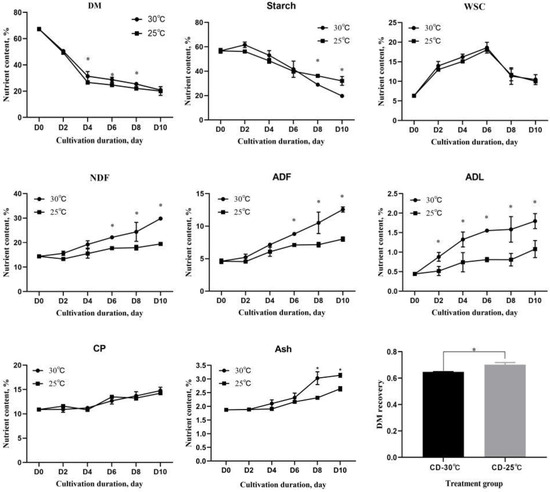
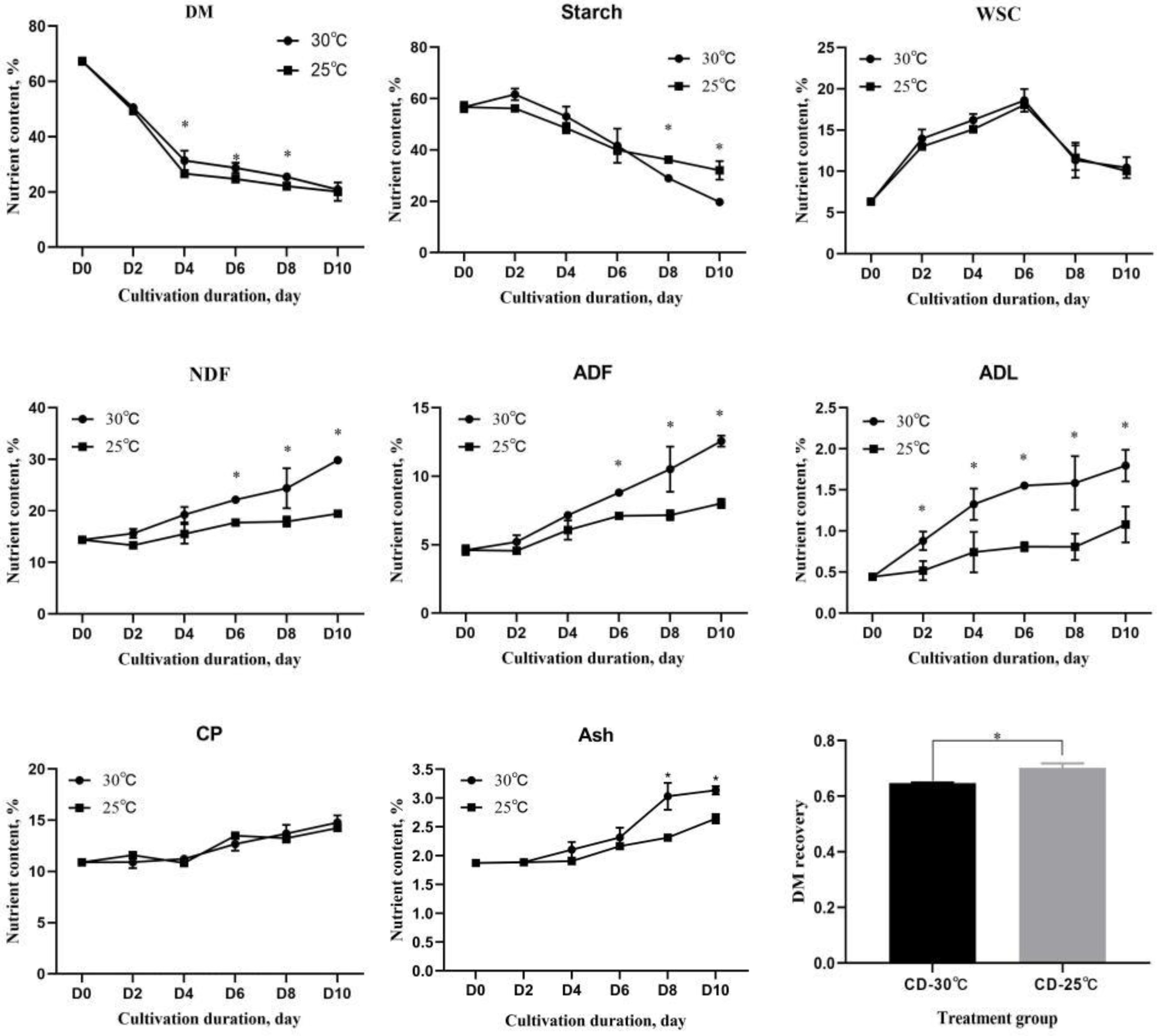
The dynamic change in nutrient components of hydroponic barley grass cultivating at 25 or 30 °C is illustrated in Figure 1. In general, cultivation duration and temperature both exerted a significant effect (p < 0.01) along with an interaction on most nutrient components of hydroponic barley grass. As the cultivation of hydroponic barley grass went on, regardless of temperature, the contents of DM and starch gradually declined (p < 0.01), and those of NDF, ADF, ADL, CP and ash linearly increased (p < 0.01) while WSC concentration experienced a quadratic change (p < 0.01) with the peak value appearing on Day 6 of cultivation. As to the effect of cultivation temperature, DM contents at 30 °C were higher (p < 0.01) than those at 25 °C in the period of Day4–Day8. A higher cultivation temperature (30 °C) resulted in higher (p < 0.01) concentrations of NDF, ADF, ADL and ash but lower starch concentration and DM recovery (64.79% vs. 70.15%) in hydroponic barley grass relative to those at 25 °C. Additionally, a significant interaction effect (p < 0.01) of cultivation temperature and duration was found on the contents of NDF, ADF, ADL and starch.
Figure 1.
Dynamic changes in nutrient content and DM recovery of hydroponic barley grass at the cultivation temperature of 25 °C and 30 °C (DM, dry matter; WSC, water soluble carbohydrate; CP, crude protein; NDF, neutral detergent fiber; ADF, acid detergent fiber; ADL, acid detergent lignin; Ash, crude ash; * denotes significant difference at p < 0.05. Additionally, the contents of these nutrients significantly change (p < 0.01) across the cultivation process).
3.2. Effects of Seed Sterilization on the Dynamic Nutrient Components of Hydroponic Barley Grass
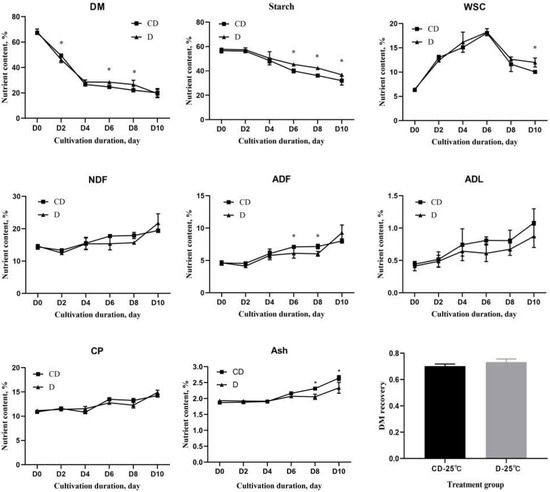
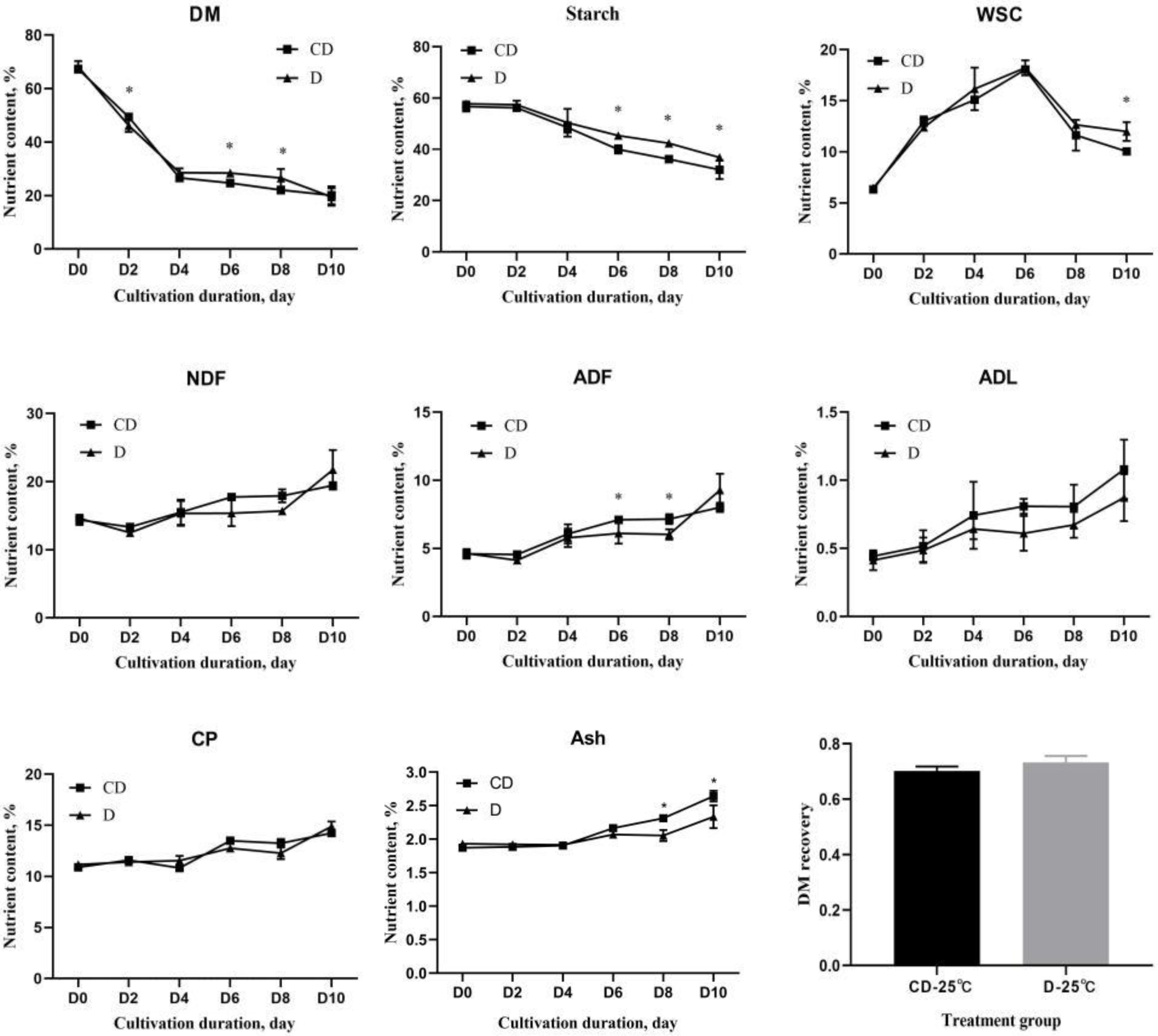
The dynamic nutrient components of hydroponic barley grass cultivating at 25 °C with (D) or without (CD) seed sterilization treatment are presented in Figure 2. All the nutrient components experienced significant changes (p < 0.01) with the extention of cultivation duration, with a similar change trend in two groups. Seed sterilization treatment led to the increase in starch (p = 0.03) and WSC (p = 0.05) concentrations with lower ADF and ash contents (p < 0.05), finally resulting in the improvement of DM recovery (73.33% vs. 70.15%). A significant interaction effect (p = 0.03) of seed sterilization and cultivation duration was only found on ADF and ash contents of hydroponic barley grass.
Figure 2.
Dynamic changes in nutrient content and DM recovery of hydroponic barley grass without (CD) or with (D) seed sterilization (DM, dry matter; WSC, water soluble carbohydrate; CP, crude protein; NDF, neutral detergent fiber; ADF, acid detergent fiber; ADL, acid detergent lignin; Ash, crude ash; * denotes significant difference at p < 0.05. Additionally, the contents of these nutrients significantly change (p < 0.01) across the cultivation process).
3.3. Effects of Seed Sterilization on the Dynamic Bacterial Community Diversity of Hydroponic Barley Grass
The alpha diversity of bacterial community in hydroponic barley grass cultivating at 25 °C with (D) or without (CD) seed sterilization treatment is shown in Table 1. The Good_coverage of all the samples was over 0.999. With the extension of cultivation duration, there was no significant change in the alpha diversity indices of bacterial community while seed sterilization treatment tended to decrease the indices of Observed_species (p = 0.05), Ace (p = 0.06), Chao1 (p = 0.05) and Shannon (p = 0.07).
Table 1.
Effects of seed sterilization and cultivation duration on the alpha diversity of bacterial community in hydroponic barley grass at 25 °C condition.
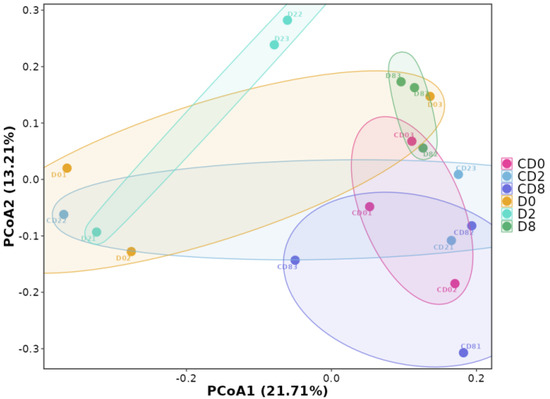
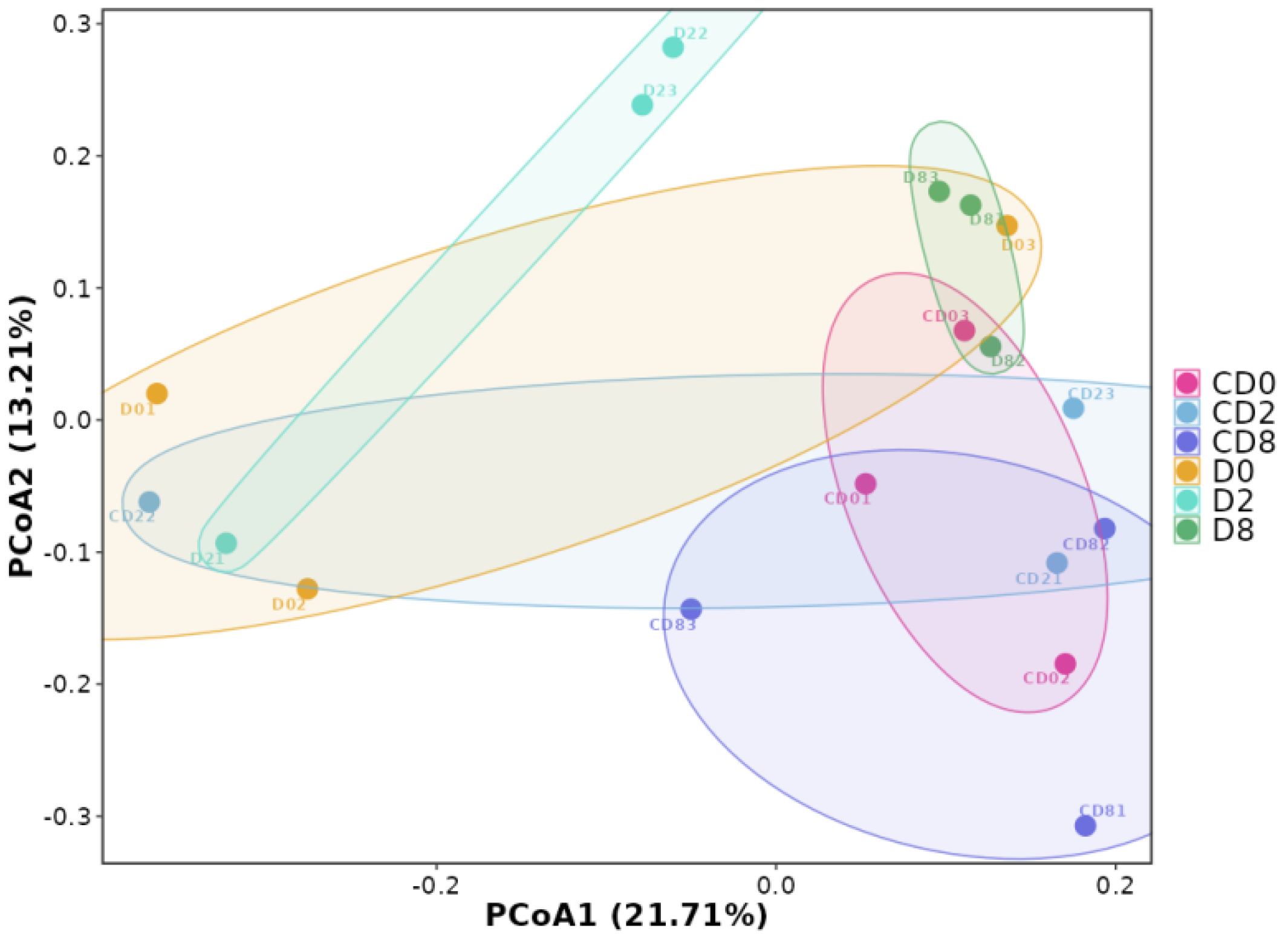
The beta diversity of bacterial communities is illustrated in Figure 3 (PCoA analysis). The samples within a group were quite discrete in distribution and thus those deriving from different time-points or groups distributed in partial overlapping, where unweighted_unifrac Anosim analysis revealed a tendency of difference (p = 0.06; R = 0.1934) among the groups. In detail, the samples of D0 were mostly separated from those of CD0, and the samples of D8 were clearly separated from those of CD8 and D2 as well as those of CD0 and CD2.
Figure 3.
Principal coordinates analysis (PCoA) of bacterial community in the hydroponic barley grass with (D) or without (CD) seed sterilization treatment (CD0, denotes the samples of group CD on day 0 of cultivation, the same denotation for the others; unweighted_unifrac Anosim p = 0.06; R = 0.1934).
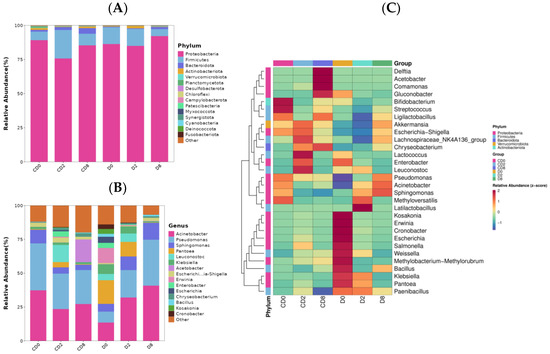
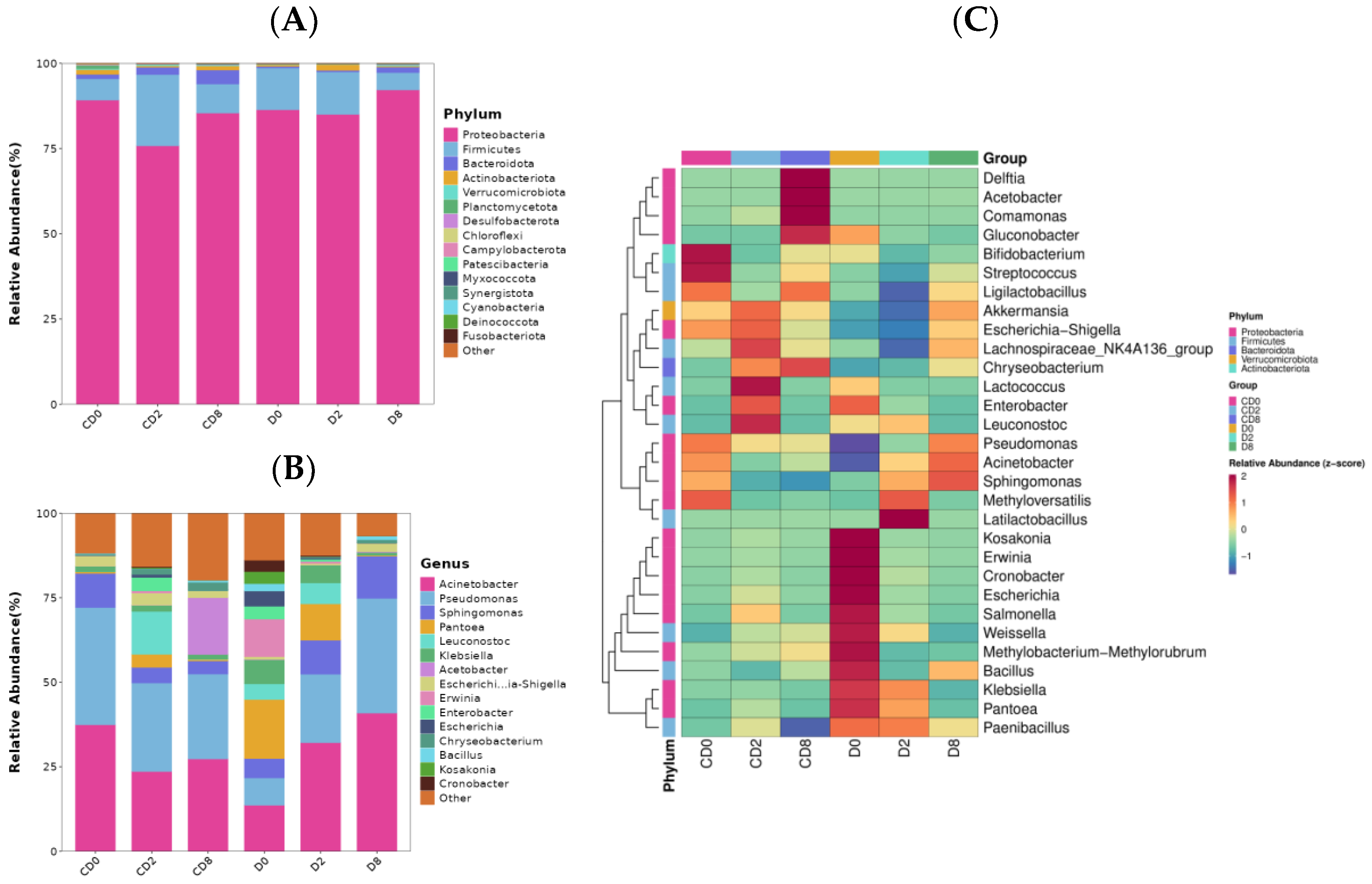
The relative abundance of bacterial communities on phylum level is illustrated in Figure 4A. The dominant bacterial phyla in the hydroponic barley grass were Proteobacteria (75.85%~92.24%) and Firmicutes (5.07%~20.89%). With cultivation duration lengthened, the relative abundance of Bacteroidota increased in both groups (1.30–4.10%; 0.48–1.64%). In comparison, the relative abundance of the phyla Firmicutes, Bacteroidota, and Actinobacteriota was quite different between the two groups (CD vs. D) at each time-point. On genus level (Figure 4B), Acinetobacter (13.68%~40.93%), Pseudomonas (8.07%~33.94%) and Sphingomonas (3.89%~12.48%) were the shared main bacterial genera in barley grass, along with Escherichia-Shigella, Leuconostoc, Acetobacter, Erwinia, Pantoea, and Klebsiella only abundant in some samples. The relative abundance of the main genera between the two treatment groups (CD vs. D) was obviously different on Day 0 (CD0 vs. D0), and so was on Day 2 and Day 8 (Figure 4C). On Day 0, compared to the control treatment (CD), seed sterilization treatment (D) apparently lowered the relative abundance of Acinetobacter, Pseudomonas, Sphingomonas, Methyloversatilis, Escherichia-Shigella, Akkermansia, Ligilactobacillus, Streptococcus, Bifidobacterium, and increased the relative abundance of Pantoea, Leuconostoc, Klebsiella, Erwinia, Lactococus, Enterobacter, Weissella, Paenibacillus, Escherichia, Bacillus, Kosakonia and Cronobacter. The change in trend of their abundance was also different in these two groups, where the relative abundance of Acinetobacter, Pseudomonas and Sphingomonas in D group increased with cultivation duration lengthened while it was converse for the control group (CD). By Day 8, the abundance of Acinetobacter, Pseudomonas, Sphingomonas, and Paenibacillus in D group were much higher and those of Acetobacter, Delftia, Comamonas, and Gluconobacter were lower than those in CD group.
Figure 4.
(A) Abundance of bacterial community on phylum level in the hydroponic barley grass cultivating 0–10 days with or without seed sterilization at 25 °C; (B) Abundance of bacterial community on genus level in the hydroponic barley grass cultivating 0–10 days with or without seed sterilization at 25 °C; (C) Abundance heatmap of bacterial taxa in the hydroponic barley grass cultivating 0–10 days with or without seed sterilization at 25 °C. (CD and D, denotes the treatment group without or with seed sterilization; CD0, denotes the samples of group CD on day 0 of cultivation, the similar denotation for the others).
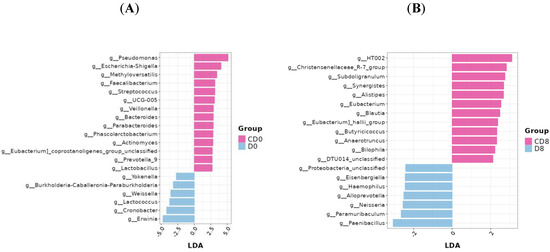
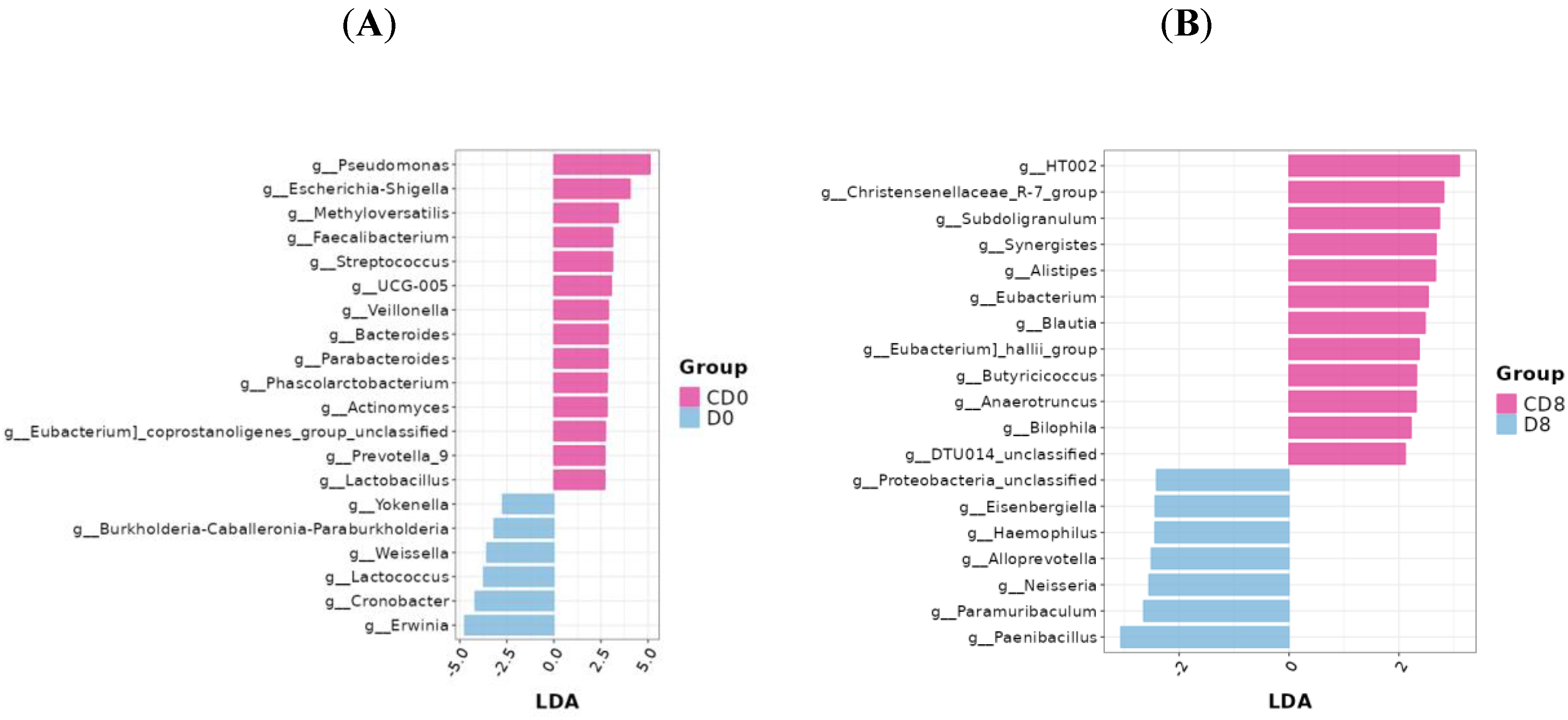
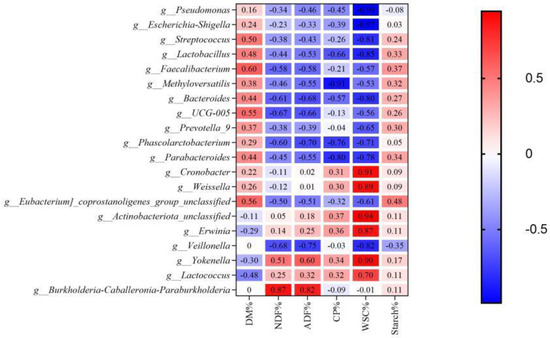
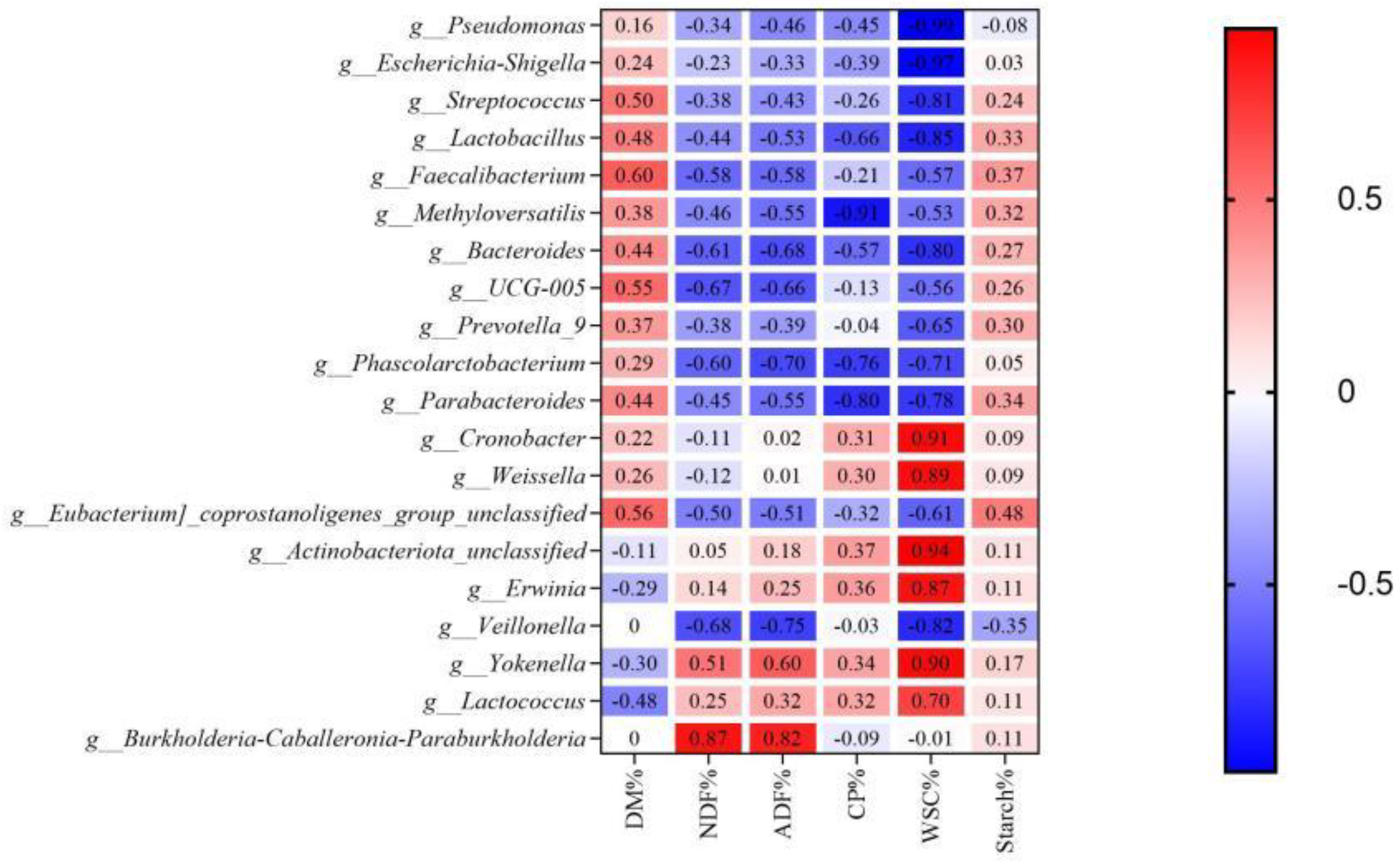
Differential taxa (LefSe analysis) of bacterial community in the hydroponic barley grass without (CD) or with (D) seed sterilization on Day 0 and Day 8 are illustrated in Figure 5. Relatively speaking, microbial genera Pseudomonas, Escherichia-Shigella, Methyloversatilis, Faecalibacterium, Streptococcus, UCG-005, Veillonella, Bacteroides, Parabacteroides, Phascolarctobacterum, Actinomyces, Eubacterium_coprostanoligenes_group_unclassified, and Prevotella_9, Lactobacillus were enriched in CD0 group while Cronobacter, Erwinia, Lactococcus, Weissella, Burkholderia-Caballeronia-Paraburkholderia, and Yokenella were enriched in D0 group. By Day 8, genera HT002, Christensenellaceae_R-7_group, Subdoligranulum, Synergistes, Alistipes, Eubacterium_hallii_group, Butyricicoccus, Anaerotruncus, Bilophila, and DTU014_unclassified were remarkably enriched in the control group (CD8) while Paenibacillus, Paramuribaculum, Neisseria, Alloprevotella, Haemophilus, Eisenbergiella, and Proteobacteria_unclassified were enriched in the seed sterilization group (D8). Correlation analysis (Figure 6) of nutrient component and differential bacterial genera on Day 0 showed that, WSC content in the hydroponic barley grass was negatively correlated with the abundance of Pseudomonas, Escherichia-Shigella, Streptococcus, Lactobacillus, Bacteroides, Veillonella, Parabacteroides, Phascolarctobacterum, and Prevotella_9, and was positively correlated with that of Actinobacteriota_unclassified, Cronobacter, Erwinia, Yokenella, Lactococcus, and Weissella. The CP content negatively correlated with the abundance of Methyloversatilis, Parabacteroides, and Phascolarctobacterum, and the contents of NDF and ADF were positively related to the abundance of Burkholderia-Caballeronia-Paraburkholderia.
Figure 5.
Differential genera of bacterial community in the hydroponic barley grass without (CD) or with (C) seed sterilization on Day 0 (A) and Day 8 (B) by LEfSe analysis.
Figure 6.
Correlation analysis of nutrient components and differential bacterial genera on Day 0.
3.4. Effects of Seed Sterilization and Cultivation Duration on the In Vitro Rumen Fermentation Profile of Hydroponic Barley Grass
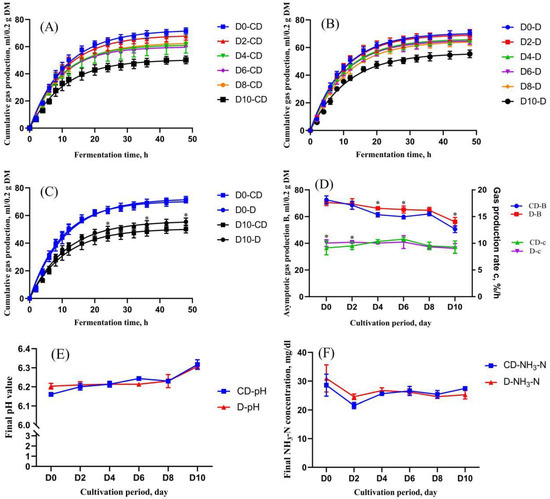
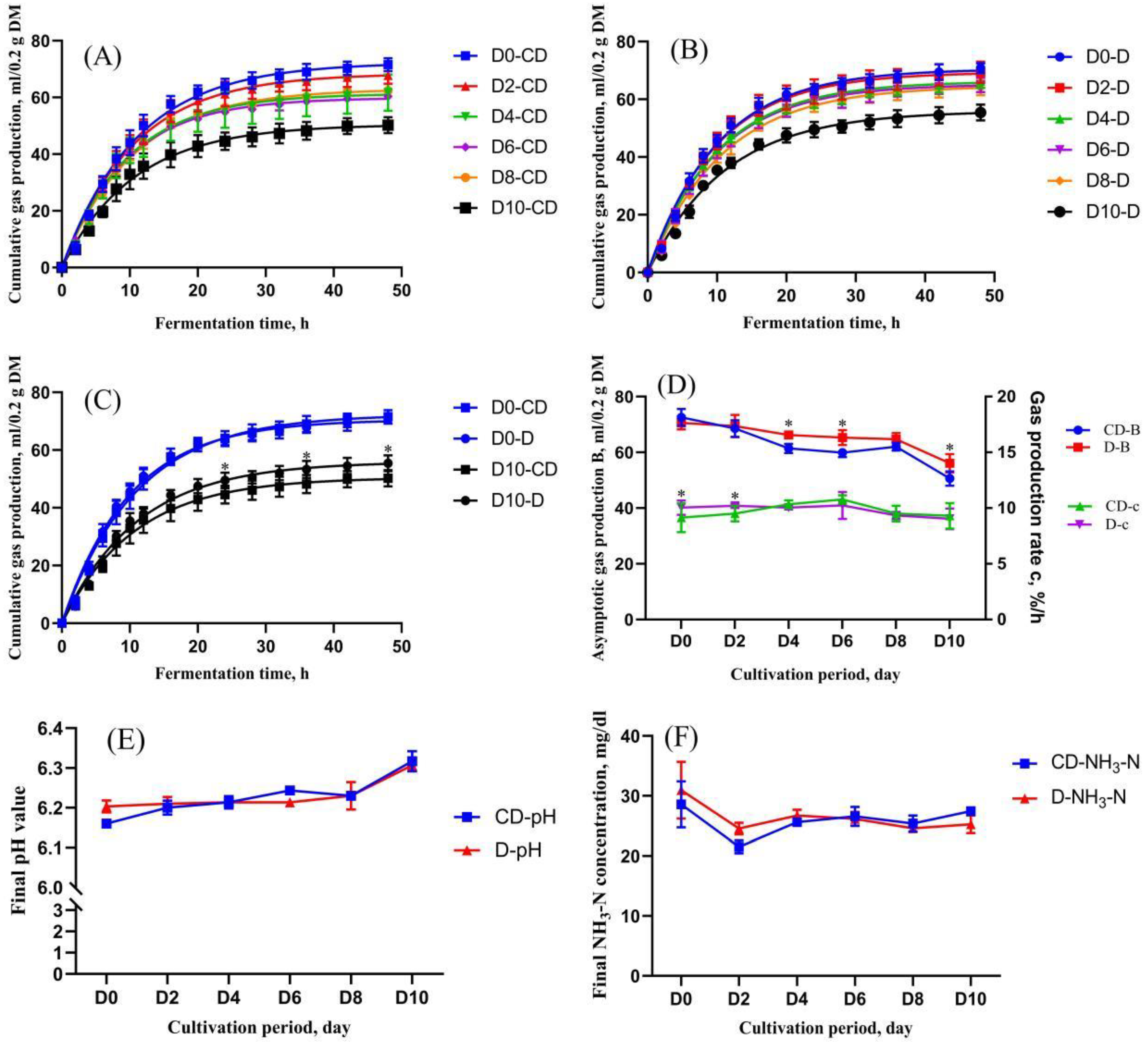
In vitro rumen gas production is a common way to evaluate the fermentation characteristics of feedstuff. As illustrated in Figure 7, all the samples of hydroponic barley grass (25 °C) showed a similar change trend of in vitro rumen gas production curve, and their gas production gradually decreased as the cultivation period of barley grass lengthened (p < 0.05). In detail, the gas production curves of the barley grass samples on Day 4, Day 6 and Day 8 almost overlapped regardless of seed sterilization while the gap of gas production at the last two days was obviously larger than those at other time, where original barley grain (D0) had the highest gas production and barley grass on Day 10 the least (Figure 7A–C). In comparison, there was no significant difference in the asymptotic gas production (B) of the barley grass on Day 0 and Day 2, but seed sterilization treatment led to the increase in asymptotic gas production for the barley grass on Day 4, Day 6 and Day 10 as well as gas production rate (c) on Day 0 and Day 2 (Figure 7D). Additionally, seed sterilization made no difference (p > 0.05) on the final rumen fluid pH value (Figure 7E) and ammonia nitrogen concentration (Figure 7F). Of which, rumen fluid pH value slightly increased as the cultivation period of hydroponic barley grass was lengthened (especially the samples of D10), while ammonia nitrogen concentration gradually declined (especially the samples of D2).
Figure 7.
(A) In vitro rumen gas production curves of hydroponic barley grass cultivating 0–10 days at 25 °C; (B) In vitro rumen gas production curves of hydroponic barley grass cultivating 0–10 days at 25 °C with seed sterilization; (C) Comparison of in vitro rumen gas production curves of hydroponic barley grass with or without seed sterilization on Day 0 and Day 10. (D) Comparison of gas production parameters of hydroponic barley grass cultivating 0–10 days with or without seed sterilization; (E) Final pH of fermentation fluid of hydroponic barley grass cultivating 0–10 days with or without seed sterilization; (F) Final ammonia concentration of fermentation fluid of hydroponic barley grass cultivating 0–10 days with or without seed sterilization.(D0-CD, denotes the samples of group CD on day 0 of cultivation; D0-D, denotes the samples of group D on day 0 of cultivation, the similar denotation for the others; * denotes significant difference at p < 0.05).
4. Discussion
The results of this study showed that the contents of DM and starch gradually declined and those of NDF, ADF, ADL, CP and ash linearly increased in the growing hydroponic barley grass, along with WSC concentration experiencing a quadratic increase. Cultivation temperature exerted a significant effect on the nutrient component of hydroponic barley grass, where a higher cultivation temperature (30 °C vs. 25 °C) resulted in higher contents of DM, NDF, ADF, ADL and ash with a lower starch concentration and a poorer DM recovery by the end of 10-day cultivation. Moreover, seed sterilization treatment resulted in higher WSC and starch concentrations and DM recovery with lower ADF and ash contents in the hydroponic barley grass. Meanwhile, it decreased the richness and diversity of bacterial community, where the taxa Methyloversatilis, Parabacteroides, Phascolarctobacterum, Lactococcus, Pseudomonas, Burkholderia-Caballeronia-Paraburkholderia, Veillonella, Yokenella, Bacteroides, and Eubacterium_coprostanoligenes_group_unclassified might account for the difference in nutrient component. Finally, in vitro rumen gas production gradually decreased as the cultivation period of hydroponic barley grass was lengthened, and seed sterilization treatment resulted in faster and larger gas production without remarkable difference in pH value and ammonia nitrogen concentration in the final fermentation fluid.
4.1. Effects of Cultivation Temperature and Seed Sterilization on the Dynamic Nutrient Components of Hydroponic Barley Grass
Hydroponic fodder production is concretely expressed as putting one kilogram of grain into a hydroponic system and producing 4–8 kg of fresh green sprouts, where hydroponic fodder would grow to 20–30 cm height and roots will weave together like a mat within 8–10 days [16]. In the present study, the height of barley grass by Day 10 was in the range of 20~25 cm, in which the barley grass grew better at 25 °C than that at 30 °C indicated by its higher and greener appearance but no remarkable difference was owed to seed sterilization (no exact data recorded). During sprouting process, there will be breakdown of complex compounds like carbohydrates, proteins and lipids into a more simple form driven by the metabolic activities of endogenous hydrolytic enzymes in seeds [16,17]. Starch, accounting for almost 60% of the dry weight of barley seed, is partly catabolized to soluble sugars for use in cell respiration and tissue generation, resulting in a corresponding decrease in DM. Meanwhile, proteins hydrolyzing into peptides and free amino acids for tissue generation, even partly deamination for energy supply commonly occur in the cultivation process. Moreover, photosynthesis is generally minimal in the early stage and the seedling has to rely on its starch and fat reserves to meet its energy demand [18]. That is why DM and starch contents of hydroponic barley grass were found to gradually decline, consequently resulting in the relative increase in ash concentration. The mean DM loss of about 25% with a broad range of 7–47% across various studies have been reported [19]. Consistently, 26–35% of DM was lost in the 10-day cultivation in the present study. Given that no nitrogen was externally added, the change in CP content was not likely to be a true increase. The linear increase in CP concentration in barley grass should result from the concentration effect of matter losses like starch and WSC. Dung et al. [20] also reported increased concentrations of crude protein, ash and most minerals in barley sprouts when compared to the barley grain, likely owing to its DM loss of 21%. Such an effect would also partially explain the increase in NDF, ADF, and ADL concentrations. In addition, fiber content would increase as photosynthesis intensifies and the plant grows, where carbohydrates for fiber synthesis are likely provided by the catabolism of starch and deamination of amino acids [18]. In comparison, a higher cultivation temperature (30 °C vs. 25 °C) resulted in higher concentrations of DM, NDF, ADF, ADL and ash, with a lower starch concentration in the barley grass. Stronger moisture evaporation and cell respiration at a higher temperature might account for the lower moisture and starch contents in the barley grass. More DM losses by plant respiration would always result in an increase in fiber concentration though the newly generated little cell wall components. Similarly, both wheat and barley grasses in treatment with the 20/15 °C (day/night) growth temperatures had the highest height, weight and yield when compared to those treated with the 10/5 °C and 30/25 °C growth temperatures [2]. It could be explained as low temperatures would cause physicochemical changes that restrict the growth and photosynthesis of seedlings, and high temperatures could cause enzymatic changes that limit photosynthesis, thereby reducing plant growth and yield. Noteworthily, the results expressed with inclusive of residual ash would partly exaggerate the increase in NDF, ADF and ADL contents given that ash concentration gradually increased in the cultivation process. With reference to chemical composition, hydroponic barley grass cultivated at 25 °C would likely have a higher nutritional value relative to that at 30 °C. Definitely, more characteristics like physiochemical structure and digestibility would further justify such a selection.
As widely documented, bacteria (106–108 CFU/g) are predominant on raw barley grains, with a much lower population of yeasts (103–105 CFU/g) and filamentous fungi (~102 CFU/g) [21]. Microorganisms on the surface of barley grain might exert an effect on the germination and growth process, and subsequently the nutritional value of hydroponic barley grass [11]. In the present study, seed sterilization treatment resulted in higher WSC and starch concentrations with lower ADF and ash contents in the hydroponic barley grass, finally improving the DM recovery of hydroponic barley grass, indicating that the inhibition of bacterial activity did improve the preservation of nutrients in the process. Similar studies in malting reported that the proliferation of microorganisms would promote the hydrolysis of grain starch and protein via the effects of secreted amylolytic and proteolytic enzymes or other metabolites [22]. Lin et al. [8] compared the effects of sodium hypochlorite and potassium permanganate at the concentration of 1% or 2% on the growth and yield of hydroponic barley seedlings and reported that the disinfection effect of sodium hypochlorite was better than that of potassium permanganate. Other chemical agents like ozone water, hydrogen peroxide, and sorbic acid were also used to control microbial proliferation. However, it is not clear what kinds of bacteria make a determining influence on the nutrients. Even so, it is sure that proper seed sterilization would help produce nutrient-rich hydroponic barley grass. More research focusing on the functional effect of bacterial taxa is worthwhile, ultimately providing a guide for a selective alteration of bacterial community.
4.2. Effects of Seed Sterilization on the Dynamic Diversity of Bacterial Community in Hydroponic Barley Grass
Bacterial community of barley grain is commonly dominated by Gram-negative bacteria from phylum Proteobacteria, followed by Actinobacteriota, Firmicutes, Bacteroidota, Acidobacteria, and Cyanobacteria [11,23]. Consistently, the dominant bacterial phyla in the hydroponic barley grass were Proteobacteria and Firmicutes across the process. Furthermore, Acinetobacter, Pseudomonas and Sphingomonas were the main bacterial genera in the barley grain and their relative abundance apparently decreased during the germination and growth of barley grass, along with the increased abundance of Leuconostoc, Lactococus, Escherichia-Shigella and Enterobacter by Day 2, and that of Acetobacter and Chryseobacterium by Day 8. Similarly, microbial communities associated with barley varied greatly in abundance at different stages of the malting process [11]. The humid and mild environmental conditions for barley cultivation would favor the growth of both desired bacteria like lactic acid bacteria and harmful microorganisms such as molds, salmonella, and fusarium. Lactic acid bacteria (LAB) are normally detected at low abundance levels (0–102 CFU/g), and some of the highly abundant LAB species identified in steeped barley include Leuconostoc, Lactococcus, Streptococcus and Lactobacillus [11,24]. The increased abundance of Leuconostoc and Lactococus was found in the barley grass on Day 2. The oxygen-deficient environment caused by the respiratory consumption in germination stage might favor the growth of lactic acid bacteria, but the anaerobic condition would gradually disappear with the growth of barley grass and subsequently resulting in the decline of LAB abundance [11]. In parallel, kinds of metabolites like enzymes, organic acids and antibiotics would be secreted into the common growth environment, driving the succession of microbial community. By Day 8 of cultivation, the predominant genera in the barley grass were Acinetobacter, Pseudomonas and Acetobacter, implying that these taxa better acclimated to the hydroponic conditions. A lot of studies reveal that Pseudomonas is one of the most common bacterial species in barley sprouts [25,26]. Acinetobacter species are aerobic bacteria with the potential of biogenic amines production but can also use acetate as substrate in an anaerobic environment [27]. Acetobacter is a type of strictly aerobic Gram-negative bacteria that metabolizes organic matter through chemoheterotrophics, and its dramatic increase might cause severe matter loss. However, the causal relationship between the bacterial community and nutrients deserves further research.
The difference in nutrient components proved the influence of seed sterilization in the present study. Seed sterilization resulted in decreased richness and diversity of bacterial community, indicating that bacterial community was dramatically altered by the 2 h steeping with 0.2% sodium hypochlorite. The increased abundance of LAB like Leuconostoc, Lactococus, Weissella would likely inhibit the proliferation of mold and other toxic fungi. However, the increased abundance of the potential pathogens like Pantoea, Klebsiella, Escherichia, Bacillus and Cronobacter would likely increase the risk of feed safety and nutrient loss. Previous studies have suggested that the initial microbes in seeds have important effects on the microbial community structure during germination [11,21]. Consistently, seed sterilization led to the remarkable difference in bacterial community of the barley grass by Day 2 or Day 8 of cultivation. In detail, the genera Acinetobacter, Pseudomonas, and Sphingomonas increasingly became predominant taxa, and the abundance of undesirable bacteria like Pantoea, Erwinia and Klebsiella significantly declined. Furthermore, correlation analysis revealed that the abundance of Methyloversatilis, Parabacteroides, Phascolarctobacterum, Lactococcus, Pseudomonas, Burkholderia-Caballeronia-Paraburkholderia, Veillonella, Yokenella, Bacteroides, and Eubacterium_coprostanoligenes_group_unclassified might account for the difference in nutrient component content, implying that selectively altering the abundance of some bacterial taxa via inoculation or disinfection would help build better production of barley grass. Similarly, studies on malting also revealed that changes in the diversity and the compositional and functional changes in the grain-associated microbiota would exert a remarkable impact on malting efficiency [11]. In addition to the bacterial community, fungi are also commonly found on barley grain and would also influence the process of germination and nutrient content, which is worth further investigation in the future.
4.3. Effects of Seed Sterilization and Cultivation Duration on In Vitro Rumen Gas Production of Hydroponic Barley Grass
In addition to the nutrient content, digestion profile is another vital characteristic to evaluate the feeding value of barley grass. In vitro rumen gas production is a simple technique to evaluate feed quality, reflecting the extent and rate of feed fermentation and its digestibility [28]. In general, gas production is closely related to the chemical compositions of the feed, in particular to the carbohydrate content, meaning that more fermentable substrate (organic matter) would have larger gas production [14]. In the present study, gas production of hydroponic barley grass gradually decreased as its cultivation duration lengthened, indicating the decline of fermentation potential. In general, gas production rate and fermentation extent of starch in rumen is much higher relative to that of structural carbohydrates (fiber constituents). It might be owed to the degradation of starch and the generation of cell wall during grain germination and growth, and some other nutrients like organic acids and protein would not be fermented to generate gases or be fermented with less gas production efficiency. The increased CP concentration and decreased organic matter content (increased ash concentration) in the barley grass might also be one of the reasons. The remarkable difference in ash concentrations between the two treatment groups at the late stage of hydroponic barley grass cultivation well coincided with the apparent gap in their gas production curves. In a word, the remarkable alteration of nutrient constituents should be essentially responsible for the decreased fermentation potential. Previous results indicate that the nutritive value of original barley grain was higher than that of resulting barley sprouts, and the younger the barley sprout, the greater its nutrient weight [3,19]. It is suggested that hydroponic barley grass should be harvested in a selective production circle taking consideration of the nutrient content, biomass yield and potential functional effect. Except for respiration expense of the nutrients, bacterial activity is another main source of nutrient loss by direct consumption or indirect influence on other metabolisms [5]. Seed sterilization would inhibit the activities of some kinds of microorganisms whereby making a difference on the nutrient content of barley grass. In the current study, the larger gas production of barley grass indicated that seed sterilization treatment could help keep fermentation potential of barley grass. It should be owed to the increased starch and WSC concentrations and less fiber and ash contents, which retained more organic nutrients as mentioned above. Furthermore, gas production of the barley grass cultivated for 10 days was obviously lower than that cultivated for 8 days, along with an apparently increased final fluid pH value, indicating a dramatic decrease in fermentation potential because of remarkable nutrient changes. It is suggested that cultivation lasting for 8 days would be proper for quality barley grass without regard to the functional potential, and the longer cultivation period would expect a dramatically large nutrient loss. The digestibility of these hydroponic barley grass might be superior to the raw barley grain indicated by their lower ammonia nitrogen concentration in the final fermentation fluid, resulting from better synchronization of energy and nitrogen metabolism. Unfortunately, nutrient digestibility and volatile fatty acids were not measured in the present study. Of course, more in vivo evaluation is necessary to justify the application of hydroponic barley grass in livestock production.
5. Conclusions
The results of this study revealed that cultivation temperature (25 °C vs. 30 °C) did exert a remarkable effect on the nutrient value of hydroponic barley grass, indicating that an integrated consideration of growth performance and conditioning expense is necessary in practical production. Meanwhile, based on the variation in nutrient value and rumen fermentation profile, a production cycle of no more than 8 days is suggested for hydroponic barley grass with no exogenous nutrients input. Moreover, seed sterilization treatment proved the influence of bacterial community on the nutrient value of hydroponic barley grass, inferring that selectively altering the abundance of some bacterial taxa would help improve the quality. Taken together, optimizing cultivation conditions like temperature and sterilization could significantly improve nutrient value and DM recovery of hydroponic barley grass, where the bacterial community plays an indispensable role. However, as an emerging feedstuff for livestock production, the superiority and application feasibility of hydroponic barley grass still needs further evaluation. More comprehensive experiments like response surface analysis are expected to take the interactions of various cultivation conditions into consideration and then draw an objective conclusion based on more evaluation indicators such as nutrient digestibility, animal performance and economic analysis.
Author Contributions
Writing—original draft preparation, data curation, P.L.; writing—review and editing, formal analysis, Q.W.; methodology, visualization, X.D.; resources, supervision, funding acquisition, W.Z.; Conceptualization, project administration, funding acquisition, validation, L.H. All authors have read and agreed to the published version of the manuscript.
Funding
This study was funded by the open research fund of the Henan Province Engineering Research Center of Efficient Use of New Energy of Low Carbon Technologies (69194075), the Hainan Province Science and Technology Commissioner Project (KJTP202549) and China Agricultural Research System of MOF and MARA (CARS-39).
Data Availability Statement
All raw data and sequencing information can be requested by con-tacting the corresponding author Liwen He (helw@cau.edu.cn).
Acknowledgments
We are grateful for the assistance and guidance provided by Zhenxiang Wei and Hongyue Yuan.
Conflicts of Interest
The authors declare no conflict of interest.
References
- Wang, M.; Leng, C.; Zhu, Y.; Wang, P.; Gu, Z.; Yang, R. UV-B treatment enhances phenolic acids accumulation and antioxidant capacity of barley seedlings. Lwt-Food Sci. Technol. 2022, 153, 112445. [Google Scholar] [CrossRef] [Scilit]
- Islam, M.Z.; Park, B.; Lee, Y. Influence of temperature conditions during growth on bioactive compounds and antioxidant potential of wheat and barley grasses. Foods 2021, 10, 2742. [Google Scholar] [CrossRef] [Scilit]
- Vastolo, A.; Cutrignelli, M.I. Hydroponic forage in ruminant nutrition: A systematic review of nutritional value, performance outcomes, and sustainability. Animals 2025, 15, 3544. [Google Scholar] [CrossRef] [Scilit]
- Cupido, C.; Müller, F.; Samuels, I.; Mpanza, T.; Engelbrecht, A.; Kekaya, I. Evaluating the potential of hydroponic fodder production–Implications for smallholder and communal farmers in water-limited agro-ecological areas in the Northern Cape Province of South Africa. Water Res. Comm. 2025. [Google Scholar]
- Yang, J.; Sun, J.; Wang, X.; Zhang, B. Light intensity affects growth and nutrient value of hydroponic barley fodder. Agronomy 2024, 14, 1099. [Google Scholar] [CrossRef] [Scilit]
- Zeng, Y.; Pu, X.; Yang, J.; Du, J.; Yang, X.; Li, X.; Li, L.; Zhou, Y.; Yang, T. Preventive and therapeutic role of functional ingredients of barley grass for chronic diseases in human beings. Oxid. Med. Cell. Longev. 2018, 1, 3232080. [Google Scholar] [CrossRef] [Scilit]
- Suo, B.; Wang, W.; Zhang, Y.; Yang, K.; Qi, J.; Xing, R.; Zhang, Q. Effects of different nutrient solutions on the growth of barley seedlings in plant factories. Chin. J. Grassl. 2023, 45, 82–91. [Google Scholar]
- Lin, K.; Liu, W.; Chen, Y. Effects of different types and concentrations of disinfectants under LED red and blue light on the growth and yield of hydroponic barley seedlings. China Light 2024, 1, 1–5. [Google Scholar]
- Elghalmi, O.; El Aadmoni, Z.; Samir, K.; El Koudrim, M. Enhancing forage production and nutrient value through cereal/legume mixtures in hydroponic systems: A study on barley, triticale, and fodder pea. Agr. Res. 2024, 1, 1–8. [Google Scholar] [CrossRef] [Scilit]
- Zhou, Q.; Zhou, Y.; Wang, L.; Li, Y.; Xiao, J.; Li, H.; Wang, M. Harnessing beneficial microbes to boost sprout and microgreen production: Current knowledge and future perspectives. Crit. Rev. Food Sci. 2025, 1, 1–19. [Google Scholar] [CrossRef] [Scilit] [PubMed]
- Chen, W.; Cheung, H.Y.K.; McMillan, M.; Turkington, T.K.; Izydorczyk, M.S.; Grafenhan, T. The dynamics of indigenous epiphytic bacterial and fungal communities of barley grains through the commercial malting process in Western Canada. Curr. Res. Food Sci. 2022, 5, 1352–1364. [Google Scholar] [CrossRef] [Scilit] [PubMed]
- NY/T 2742-2015; Determination of Soluble Sugar in Fruits and Derived Products—3,5-Dinitrosalicylic Acid Colorimetry. The Ministry of Agriculture: Beijing, China, 2015.
- Xiong, Y. Determination of gelatinization degree (ripening degree) of feed starch. Feed Indu 1999, 21, 30–31. [Google Scholar]
- Menke, K.H.; Raab, L.; Salewski, A.; Steingass, H.; Fritz, D.; Schneider, W. The estimation of the digestibility and metabolizable energy content of ruminant feeding stuffs from the gas production when they are incubated with rumen liquor in vitro. J. Agri. Sci. 1979, 93, 217–222. [Google Scholar] [CrossRef] [Scilit]
- Broderick, G.A.; Kang, J.H. Automated simultaneous determination of ammonia and total amino acids in ruminal fluid and in vitro media. J. Dairy Sci. 1980, 63, 64–75. [Google Scholar] [CrossRef] [Scilit]
- Rajkumar, G.; Dipu, M.T.; Lalu, K.; Shyama, K.; Banakar, P.S. Evaluation of hydroponics fodder as a partial feed substitute in the ration of crossbred calves. Indian J. Anim. Res. 2018, 52, 1809–1813. [Google Scholar] [CrossRef] [Scilit]
- Devendar, R.; Kumari, N.N.; Reddy, Y.R.; Rao, K.S.; Reddy, K.K.; Raju, J.; Sridhar, K. Growth performance, nutrient utilization and carcass characteristics of sheep fed hydroponic barley fodder. Anim. Nutr. Feed Tech. 2020, 20, 321–331. [Google Scholar] [CrossRef] [Scilit]
- Duan, H.; Liu, L.; Wang, W.; Li, S.; Shi, Z.; Liang, G.; Liu, W. Stay-green trait enhances grain yield, nutritional quality, and seed germination ability in Oat (Avena sativa L.) on the Qinghai–Tibet Plateau. Plants 2025, 14, 2500. [Google Scholar] [CrossRef] [Scilit]
- Mahesh, M.S.; Chaudhary, S.K.; Tewari, D.; Dutta, N. Hydroponic forage for ruminant feeding: A comprehensive review. Anim. Nutr. Feed Tech. 2024, 24, 441–459. [Google Scholar] [CrossRef] [Scilit]
- Dung, D.; Godwin, I.; Nolan, J. Nutrient content and in sacco degradation of hydroponic barley sprouts grown using nutrient solution or tap water. J. Anim. Vet. Adv. 2010, 9, 2432–2436. [Google Scholar] [CrossRef] [Scilit]
- Galiwango, S.K.; Kizilyar, E.G.; De Rouck, G.; Van de Voorde, I.; Weiland, F. The barley malting microbiome: Influence on malt quality, control and characterization methods. Brew. Sci. 2024, 77, 76–84. [Google Scholar]
- Noots, I.; Derycke, V.; Jensen, H.E.; Michiels, C.; Delcour, J.A.; Coppens, T. Studies on barley starchy endosperm cell wall degradation by Rhizopus VII. J. Cereal Sci. 2003, 37, 81–90. [Google Scholar] [CrossRef] [Scilit]
- Malfliet, S. Characterisation of Microbial Communities and Xylanolytic Bacteria During Malting of Barley: Impact on Malt Quality. Ph.D. Dissertation, KU Leuven, Leuven, Belgium, 2013. [Google Scholar]
- Li, X.; Cai, G.; Wu, D.; Zhang, M.; Lin, C.; Lu, J. Microbial community dynamics of Dan’er barley grain during the industrial malting process. Food Microbiol. 2018, 76, 110–116. [Google Scholar] [CrossRef] [Scilit] [PubMed]
- Ostlie, H.M.; Porcellato, D.; Kvam, G.; Wicklund, T. Investigation of the microbiota associated with ungerminated and germinated Norwegian barley cultivars with focus on lactic acid bacteria. Int. J. Food Microbiol. 2021, 341, 109059. [Google Scholar] [CrossRef] [Scilit]
- Yang, G.; Xu, J.; Xu, Y.; Li, R.; Wang, S. Analysis of dynamics and diversity of microbial community during production of germinated brown rice. Foods 2023, 12, 755. [Google Scholar] [CrossRef] [Scilit]
- Fuhs, G.W.; Chen, M. Microbiological basis of phosphate removal in the activated sludge process for the treatment of wastewater. Microb. Ecol. 1975, 2, 119–138. [Google Scholar] [CrossRef] [Scilit] [PubMed]
- He, L.; Zhou, W.; Wang, C.; Yang, F.; Chen, X.; Zhang, Q. Effect of cellulase and Lactobacillus casei on ensiling characteristics, chemical composition, antioxidant activity, and digestibility of mulberry leaf silage. J. Dairy Sci. 2019, 102, 9919–9931. [Google Scholar] [CrossRef] [Scilit]

Disclaimer/Publisher’s Note: The statements, opinions and data contained in all publications are solely those of the individual author(s) and contributor(s) and not of MDPI and/or the editor(s). MDPI and/or the editor(s) disclaim responsibility for any injury to people or property resulting from any ideas, methods, instructions or products referred to in the content. |
© 2026 by the authors. Licensee MDPI, Basel, Switzerland. This article is an open access article distributed under the terms and conditions of the Creative Commons Attribution (CC BY) license.