Article

Screening of Non-Saccharomyces for Citrus reticulata cv. ‘Dahongpao’ Fruit Wine and Volatile Organic Compounds Analyzed by Gas Chromatography–Ion Mobility Spectrometry


1
College of Agriculture and Forestry Science and Technology, Chongqing Three Gorges Vocational College, Chongqing 404160, China
2
Engineering Research Center of Three Gorges Characteristic Agricultural Products Processing at Chongqing Three Gorges Vocationl College of Chongqing Education Commission of China, Chongqing 404160, China
*
Author to whom correspondence should be addressed.
Fermentation 2026, 12(2), 102; https://doi.org/10.3390/fermentation12020102
Submission received: 2 January 2026 / Revised: 26 January 2026 / Accepted: 30 January 2026 / Published: 11 February 2026
(This article belongs to the Section Yeast)

Abstract

In recent years, there has been substantial global progress in screening yeasts for fermenting various specialty fruits, especially non-Saccharomyces species known for their contributions to aroma enhancement. This study focused on mature fruits and soil samples collected from orchards located in the main production region of C. reticulata cv. ‘Dahongpao’ (CRCD) in China, with the objective of isolating specialized non-Saccharomyces yeasts suitable for producing CRCD fruit wine. After enrichment cultivation, seven characteristic yeast strains were isolated and purified. These isolates were identified as Candida parapsilosis, Meyerozyma caribbica, Candida quercitrusa, and Meyerozyma guilliermondii through a combination of microscopic morphology and molecular biology methods, which also included Pichia fermentans, Pichia kudriavzevii, and Pichia kluyveri. The strains’ fermentation potential, ethanol production rates, and tolerance levels were assessed, leading to the selection of Candida parapsilosis, Candida quercitrusa, Pichia fermentans, Pichia kudriavzevii, and Pichia kluyveri for further fermentation experiments. The commercial yeast La-Ma was used as a control. Analysis of volatile organic compounds (VOCs) in the fruit wine samples was performed using Gas Chromatography–Ion Mobility Spectrometry (GC-IMS). A total of 42 different VOCs were identified, with esters being the most prevalent. The fingerprint profiles demonstrated notable differences between the fruit wine samples fermented with selected yeasts and those fermented with commercial yeasts. Principal component analysis (PCA) indicated that Pichia kluyveri displayed the most significant divergence from both commercial and other selected yeasts. The samples contained notable VOCs such as 2-methyl-1-butanol, pentanal, 3-methyl-2-butenal, propyl acetate, butyl acetate, isobutyl acetate, isopentyl acetate, and 3-methyl-2-butenyl acetate, while the methanol production was observed to be lower compared to other samples. Consequently, this strain has the potential to produce distinctive fruit wine.

1. Introduction

CRCD is a traditional citrus variety from China, known for its long history of cultivation. The area dedicated to its growth covers nearly 870,000 hectares, with Wanzhou recognized as the birthplace of Chinese CRCD. This region accounts for about one-third of the national cultivation area and produces over 50% of the country’s annual yield, earning it the distinction of being the global gene bank for CRCD [1,2,3]. Compared to other citrus types, CRCD is noted for its distinctive flavor characteristics. After harvest, these fruits offer an ideal balance of sweetness and acidity, with a juice yield of about 60%, sugar content ranging from 12% to 15%, and a pH between 3.3 and 4.0, making them excellent for producing specialty fruit wines.
Fermented fruit wine is a low-alcohol beverage made from various fruits, which are either crushed or juiced and then fermented. The alcohol content typically ranges from 8% to 18% by volume. Factors such as the choice of raw materials, fermentation technique, and aging conditions significantly influence the flavor profile of fruit wine [4]. Yeasts are generally classified into two main categories: brewer’s yeast and non-Saccharomyces [5]. Studies have shown that Saccharomyces is highly effective at producing alcohol [6], while non-Saccharomyces excels in fermentation efficiency and aroma enhancement [7].
Currently, most commercial yeasts used in fruit wine production are brewer’s yeasts. The selection process for brewer’s yeast primarily involves screening raw materials, such as grapes. In most fruit wine production, commercial yeast is used directly as the fermentation strain, resulting in significant homogenization of fruit wine flavors [8]. Although there is a long tradition of brewing red tangerine wine, there has been a persistent shortage of specialized strains. At present, commercially available yeast remains the main strain used, further contributing to the uniformity of fruit wine flavors. Therefore, it is essential to select local fermentation strains, particularly non-Saccharomyces capable of producing distinctive fermentation flavors, to support the healthy development of the red tangerine wine industry.
The process of screening local yeasts generally involves isolating samples from ripe fruits and soil in orchards. Through isolation and purification, Li et al. evaluated the fermentation capabilities, alcohol production potential, and resistance of the yeasts. To accurately identify the selected strains, molecular biology techniques are used, enabling precise identification of possible non-Saccharomyces species [9,10]. Building on this foundation, gas chromatography-mass spectrometry (GC-MS) and GC-IMS methods can be used to analyze the flavor characteristics of fermented fruit wines [11,12,13]. From Rosa roxburghii Tratt, three ethanol-tolerant yeast strains were selected: Candida tropicalis, Pichia guilliermondii, and Wickerhamomyces anomalus. The integration of these ethanol-tolerant yeast strains with the isolated strains enhanced the aromatic profile of Roxburghii wine [9].
In this study, non-Saccharomyces yeast strains were enriched, isolated, and screened, and their species were identified using high-throughput sequencing technology. The brewing characteristics of these strains, including their tolerance to brewing conditions and fermentation performance, were investigated. Meanwhile, VOCs produced during fermentation were determined by GC-IMS to evaluate their potential application value in the production of CRCD fruit wine.

2. Materials and Methods

2.1. Chemicals, Reagents, Culture Media and Microorganisms

La-Ma active fruit wine dry yeast (a commercial yeast, hereinafter referred to as K yeasts) and pectinase were obtained from Yantai Diboshi Self Brewing Machine Co., Ltd. (Yantai, China). Conjugated ketones such as 2-butanol, 2-pentanol, 2-hexanol, 2-heptanol, 2-octanol, and 2-nonanol were acquired from Aladdin Holding Group Co., Ltd. (Beijing, China). Primers were secured from Sangong Bioengineering (Shanghai) Co., Ltd. (Shanghai, China). The 2× PCR Mix was sourced from Beijing Quanshi Jin Biotechnology Co., Ltd. (Beijing, China), and high-purity low-osmotic gelatinous agarose was also obtained from the same supplier. The DL5000 Marker was acquired from Nanjing Nuowezan Biotechnology Co., Ltd. (Nanjing, China).

2.2. Sample Collection

Fruit samples of CRCD were obtained from the orange-producing region in Tailong Town, located in Wanzhou City, Chongqing (East Longitude 108°31′17″, North Latitude 30°53′42″). In total, 10 ripe fresh fruits and 10 decayed fruits were collected from the orchards in Tailong Town, Wanzhou District, Chongqing City.

2.3. Enrichment of Strains

Juice is extracted from fresh fruit using a juicer, and the obtained liquid is transferred into a sterile 500 mL bottle. This liquid is left to ferment naturally for a duration of 3 to 5 days at a temperature of 28 °C. The fermentation trials were carried out three times under consistent conditions [14].

2.4. Isolation, Purification and Preliminary Identification of Strains

A 1 mL portion of the previously mentioned culture medium was diluted to a concentration of 10−6. From this dilution, 150 μL was taken from the 10−4 dilution and evenly spread onto Wallerstein Nutrient Broth (WLN) plates, with three parallel replicates performed. The plates were incubated at 28 °C for 7 days. Colonies displaying various shapes and colors were selected and purified on WLN plates using the streak dilution method. These plates were inverted and incubated at 28 °C for an additional 3 days. After several purification rounds, individual colonies were successfully isolated. The yeast colonies on the WLN plates were initially categorized into different WLN culture types based on observed characteristics such as color, shape, surface texture, and edge features. The morphology and staining properties of the purified single colonies were analyzed under a microscope, with details on colony color, yeast morphology, reproductive strategy, and cellular characteristics carefully documented [9,15,16]. Simultaneously, the purified strain was cultured on a slant for 3 days, assigned an identification number, and preserved in a refrigerator at 4 °C.

2.5. Screening of Saccharomyces cerevisiae

2.5.1. Activation of Strains

The strains preserved on the sloped surface were transferred onto solid Yeast Extract Peptone Dextrose Medium (YPD) and incubated for a duration of 48 h. After this period, a solitary colony was chosen and inoculated into sterilized YPD liquid medium, which was then cultured in a shaker at 180 rpm and 28 °C for another 48 h to produce the activated strain solution.

2.5.2. Fermentation Capacity Screening

Utilizing commercial yeast as a control, and the amount of starter culture addition was 20 g/hL, the activated strain obtained in Section 2.5.1 was introduced into a YPD liquid culture tube, which contained an inverted Durham tube. The culture was incubated at a temperature of 28 °C, and the production of gas was observed every 12 h, with the gas volume in the Durham tube documented accordingly.

2.5.3. Determination of Ethanol Production Capacity of Strains

The activated strain was transferred to Triphenyltetrazolium Chloride Agar (TTC) solid medium and incubated statically at 28 °C for 48 h to assess the color of the yeast. The color intensity reflects the respiratory enzyme activity within the yeast, which influences its capacity for alcohol production. Yeast strains with higher alcohol production potential display a deep red hue, followed by red, light red, or no color. The strain exhibiting the deepest color was selected for initial screening [17,18]. It was then inoculated onto YPD slant medium and cultured again at 28 °C for another 48 h before being stored in a refrigerator at 4 °C for subsequent screening and identification of yeast strains.

2.5.4. Determination of Tolerance Performance of Strains

The strains identified during the screening process described in Section 2.5.3 underwent tolerance testing for ethanol and SO2, as well as evaluations for minimized H2S production, to identify those with improved tolerance. YPD liquid medium was distributed into test tubes, sterilized at 121 °C for 20 min, and then cooled to room temperature (25 °C). A 2% w/v yeast inoculum was added and cultured at 28 °C for 48 h, after which the cell suspension’s absorbance (OD600 nm) was measured. Media were modified according to designated conditions (a–d), and absorbance values for each treatment were recorded in triplicate [18].
Experiment A was conducted to evaluate the tolerance of juice to initial ethanol concentration, including 0% (blank control), 8%, 10%, 12%, 14%, and 16%. B was performed to assess the tolerance of juice to various initial SO2 concentrations, including 0 mg/L (blank control), 80 mg/L, 130 mg/L, 180 mg/L, 230 mg/L, and 280 mg/L. C was performed to assess the tolerance of juice to various initial glucose concentrations, including 0% (blank control), 20%, 25%, 30%, 35%, and 40%. D was conducted to evaluate the tolerance of juice to different pH values range from 2 to 6. For experiments (A) and (B), sterilization was performed before any adjustments, while in experiments (C) and (D), adjustments were made prior to sterilization. Sterilization was carried out at 121 °C for 15 min.

2.6. Identification of Strains

2.6.1. Morphological Identification

The chosen strains were applied to WLN nutrient agar medium through streaking and incubated at 28 °C for 5 days to assess features such as colony color, morphology, and luster, aiding in the initial identification of the strains. Following this, the strains underwent staining with crystal violet and were analyzed using an optical microscope.

2.6.2. Molecular Biology Identification

The D1/D2 region of the 26S ribosomal RNA (rRNA) genes was sequenced and identified by utilizing seven yeast strains that were acquired through the analysis and purification of WLN plates. To amplify the gene sequences of the 26S rRNA D1/D2 region, universal primers ITS1 (5′-TCCGTAGGTGAACCTGCGG-3′) and ITS4 (5′-TCCTCCGCTTATTGATATGC-3′) were utilized. The PCR amplification process involved a pre-denaturation phase at 98 °C for 3 min, succeeded by denaturation at 98 °C for 10 s, annealing at 53 °C for 10 s, and extension at 72 °C for 10 s, repeated for a total of 37 cycles, concluding with a final extension at 72 °C for 5 min. After PCR amplification, 5 μL of the amplified product underwent electrophoresis on a 1% agarose gel (150 V, 100 mA for 20 min). The target DNA bands were subsequently excised from the PCR product, and sequencing of the purified PCR product was carried out using the primers. The PCR products were dispatched to Shanghai Bioengineering Co., Ltd. (Shanghai, China). for sequencing [10,19,20]. The sequencing data were then analyzed through the Basic Local Alignment Search Tool (BLAST 2.15.0) available at the National Center for Biotechnology Information (NCBI). Additionally, a phylogenetic tree was constructed using the Neighbor-Joining method in MEGA 11.0.13 software, incorporating 1000 bootstrap tests.

2.7. Production Process and Operation Points of CRCD Wine

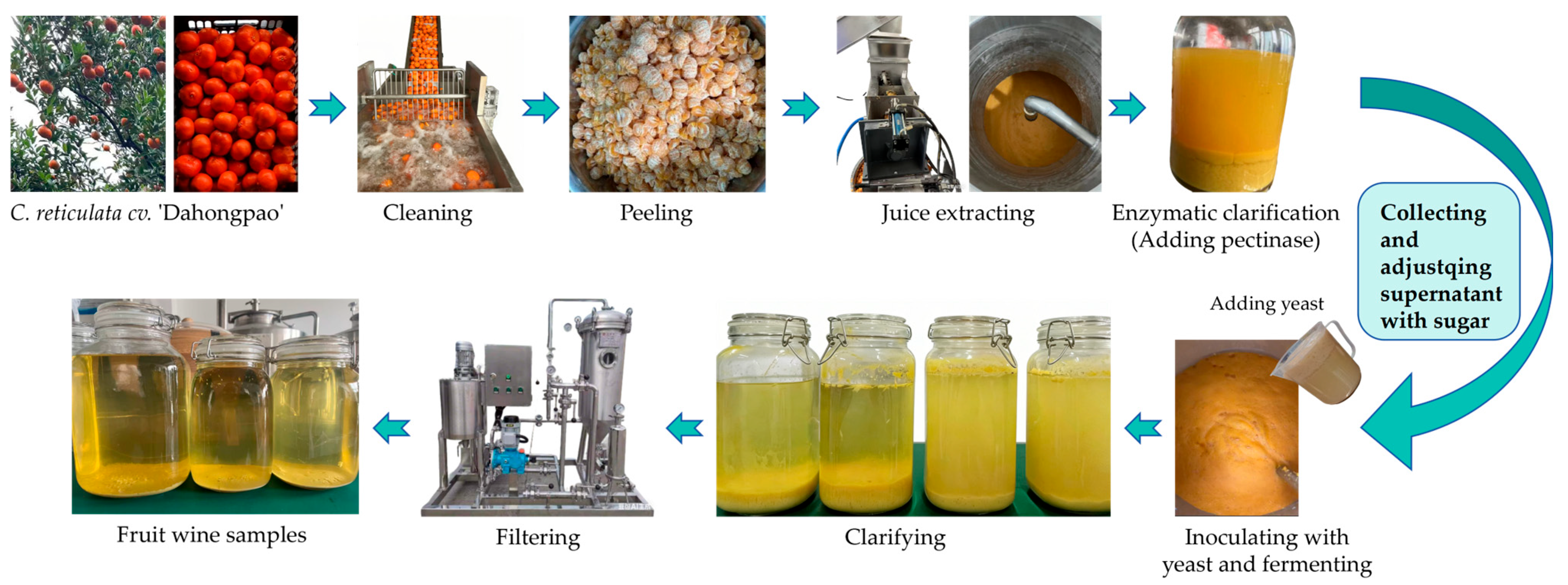
The winemaking process of CRCD Wine was shown in Figure 1, and the detailed operating points were as follows. Fresh CRCD fruits that had not undergone any freshness treatments were selected by discarding defective ones such as rotten and moldy fruits, followed by washing. To enable enzymatic hydrolysis, pectinase was added at a concentration of 0.3%, the juice was thoroughly mixed and then enzymatically hydrolyzed at 20 °C for 8 h. After this step, sucrose was added to set the initial fermentation sugar concentration to 18.0%, while maintaining the natural pH value. K yeast was inoculated at a rate of 0.12 g/L; active dry yeast was first added to a 5% sucrose solution and activated at 30–35 °C for 30 min before use. Yeast colonies were manually screened for purification, then inoculated into YPD liquid medium at 28 °C for 48 h. Afterward, a 2% dilution of the yeast was introduced into the juice for fermentation, which was carried out at 20 °C until dry-type fruit wine was produced (total sugar content < 5.0 g/L). Once fermentation was completed, three parallel sets were created for monitoring. Samples of the fermentation supernatant were collected and frozen at −50 °C for preservation [21].

2.8. Determination of Fruit Wine VOCs

GC-IMS (FlavourSpec®, Dortmund, Germany) was utilized to examine the VOCs. The analyses were carried out in triplicate. In the process of preparing the samples, 1 mL of fruit wine samples was placed into a 20 mL headspace bottle. After a 20-min incubation period at 60 °C, the samples were injected, and three sets of parallel measurements were taken for each sample.
The conditions for headspace injection were established with an incubation temperature of 60 °C and a duration of 20 min. A volume of 100 µL was injected using a non-flow technique, with the incubation speed held constant at 500 r/min. The injection needle’s temperature was adjusted to 85 °C [13,22]. Regarding the gas chromatography (GC) parameters, the column temperature remained at 60 °C, utilizing high-purity nitrogen (≥99.999% purity) as the carrier gas. A programmed increase was implemented, beginning with an initial flow rate of 2.0 mL/min for a period of 2 min, followed by a linear ramp to 10.0 mL/min over 8 min, and subsequently rising to 100.0 mL/min within 10 min, which was maintained for an additional 10 min. The overall chromatographic runtime was 30 min, with the injection port temperature set to 80 °C. As for the ion mobility spectrometry (IMS) setup, a Tritium source (3H) was utilized for the ion source, along with a migration tube measuring 53 mm in length. The electric field strength was fixed at 500 V/cm, and the temperature of the migration tube was kept at 45 °C. The drift gas, also high-purity nitrogen (≥99.999% purity), flowed at a rate of 75.0 mL/min.

2.9. Data Processing and Analysis

A total of six ketones were detected in a composite standard, which enabled the creation of a calibration curve linking retention time to retention index. The retention index for the target substance was then determined based on its retention time. For qualitative analysis of the target substance, data from the integrated GC retention index database (NIST 2020) and the IMS migration time database provided by VOCal 4.6.2.x software were searched and compared.
The VOCal data processing software used the Reporter, Gallery Plot, and Dynamic PCA plug-ins to generate three-dimensional spectra, two-dimensional spectra, difference spectra, fingerprint spectra, and PCA spectra for the VOCs in different samples. Graphical representations were created using Origin Pro 2024.

3. Results and Analysis

3.1. Isolation, Purification and Morphological Identification of Yeast

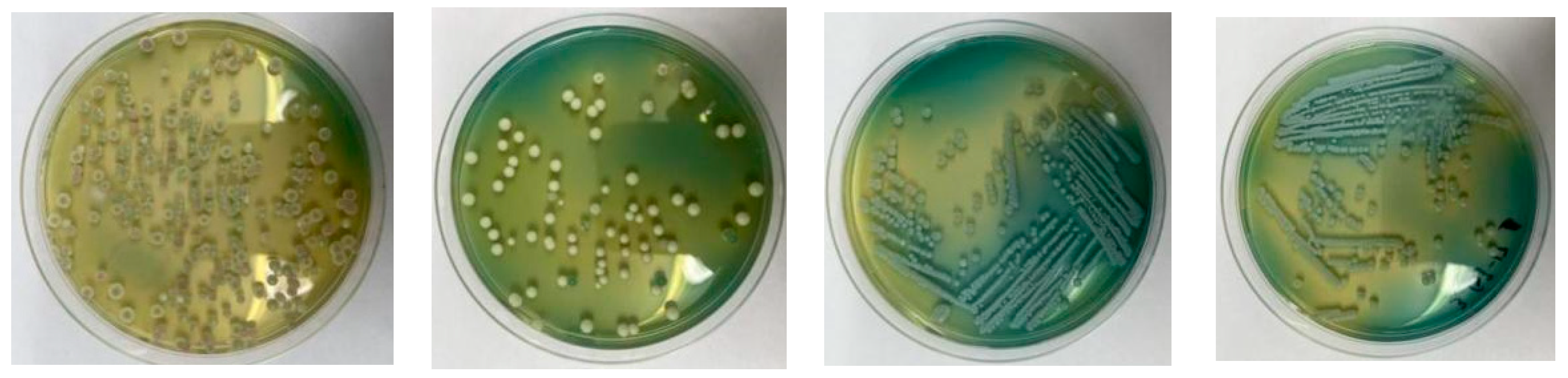
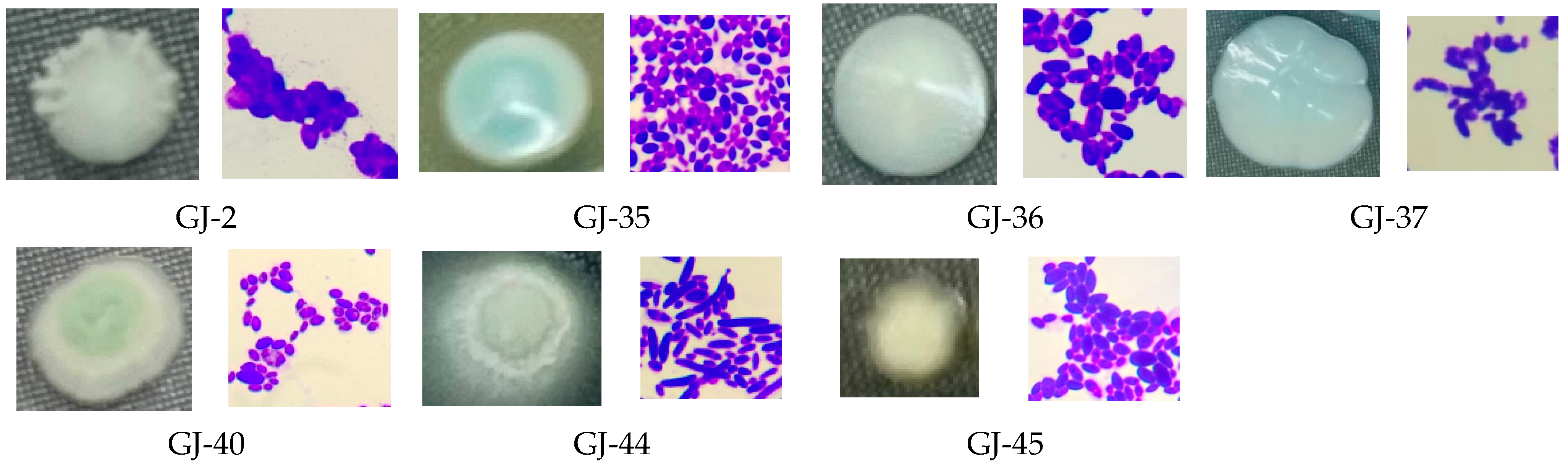
CRCD juice was subjected to natural fermentation. The fermentation broth was diluted and spread-plated on WLN plates, followed by streak isolation of colonies with typical morphological characteristics. The results are presented in Figure 2. The samples collected from natural fermentation are shown in Figure 2, along with the subsequent culture conducted on WLN plates. Figure 2 presents the outcomes of colony and plate production following several purification procedures. The initial classification of each colony, based on the unique features of the yeast colonies observed on the WLN plates, as well as microscopic morphology and additional characteristics, is illustrated in Figure 3.
As shown in Figure 3 and Table A1, most yeast grown on WLN plates interact with its constituents throughout their metabolic processes. Different yeast species display a range of colors, such as white, green, or combinations of both, and their colony morphology can be spherical, dome-like, or flat. Under microscopic examination, yeast cells are generally oval, elliptical, or sausage-shaped, with budding as the predominant mode of reproduction. After 48 h of growth in YPD liquid medium, most yeasts typically produce sediment and bubbles at the bottom, leading to the formation of fungal mats on the surface and causing the liquid medium to appear mostly turbid.

3.2. Analysis of Yeast Fermentation Performance

As shown in Table 1, strains GJ-2, GJ-36, GJ-40, GJ-44, and GJ-45 produced white, thick precipitates after 72 h of fermentation, resulting in a slightly cloudy fermentation broth. This indicates that these five strains have strong coagulation abilities. Notably, strain GJ-44 produced gas that filled the Durham tube in just 24 h, while strains GJ-2 and GJ-45 did so within 36 h, demonstrating relatively faster fermentation rates for these three strains.

3.3. Analysis of Ethanol Production Capacity of Strains

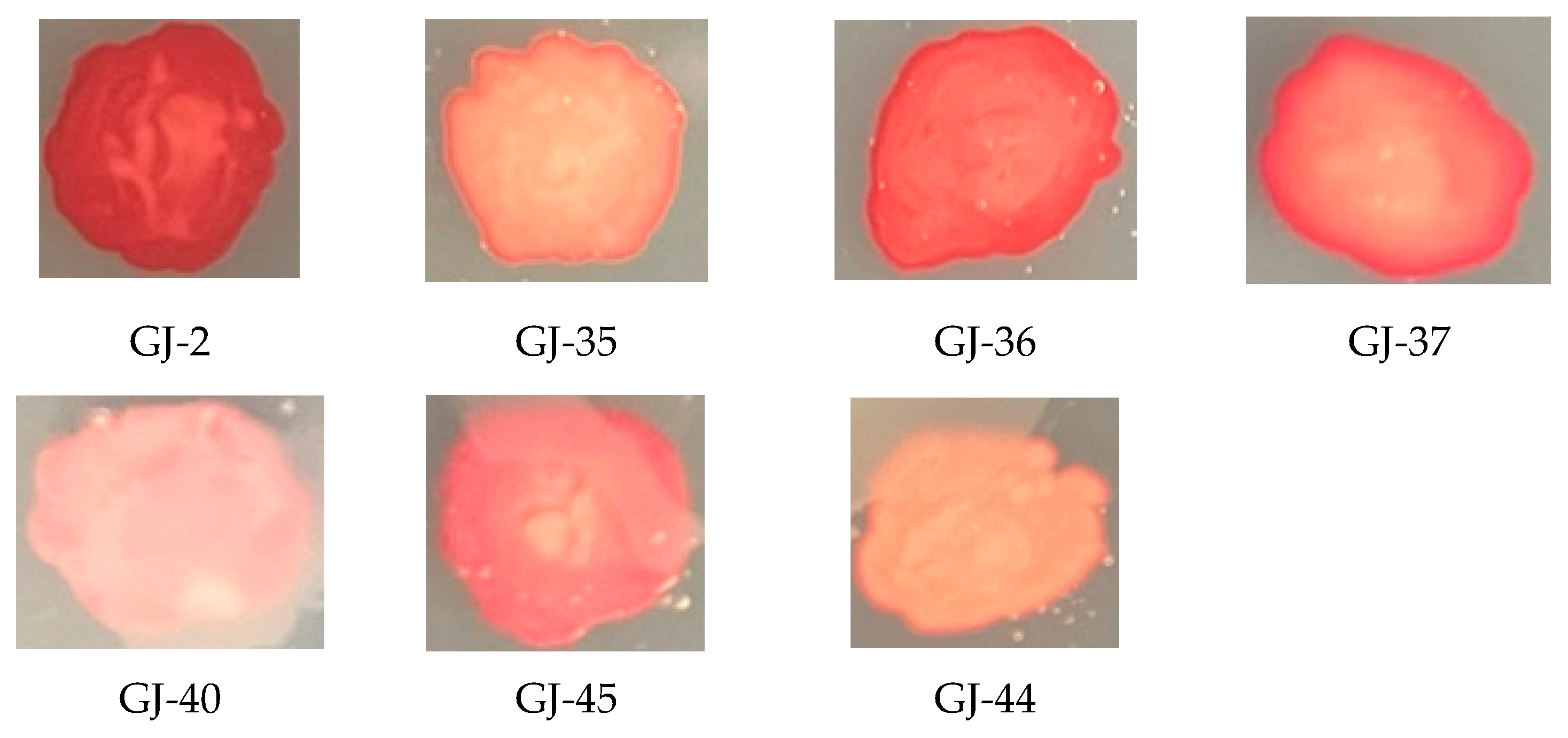
As shown in Figure 4, seven yeast strains were analyzed using the TTC coloration method. One strain, GJ-2, displayed a deep red colony, indicating its exceptional ability to produce alcohol. Three strains—GJ-36, GJ-37, and GJ-45—showed red colonies, denoting robust alcohol production capabilities. Conversely, the other three strains, GJ-35, GJ-40, and GJ-41, exhibited light pink colonies, implying that they had the lowest ethanol production potential [23].

3.4. Molecular Biological Identification of Yeast and Genotyping of Saccharomyces cerevisiae

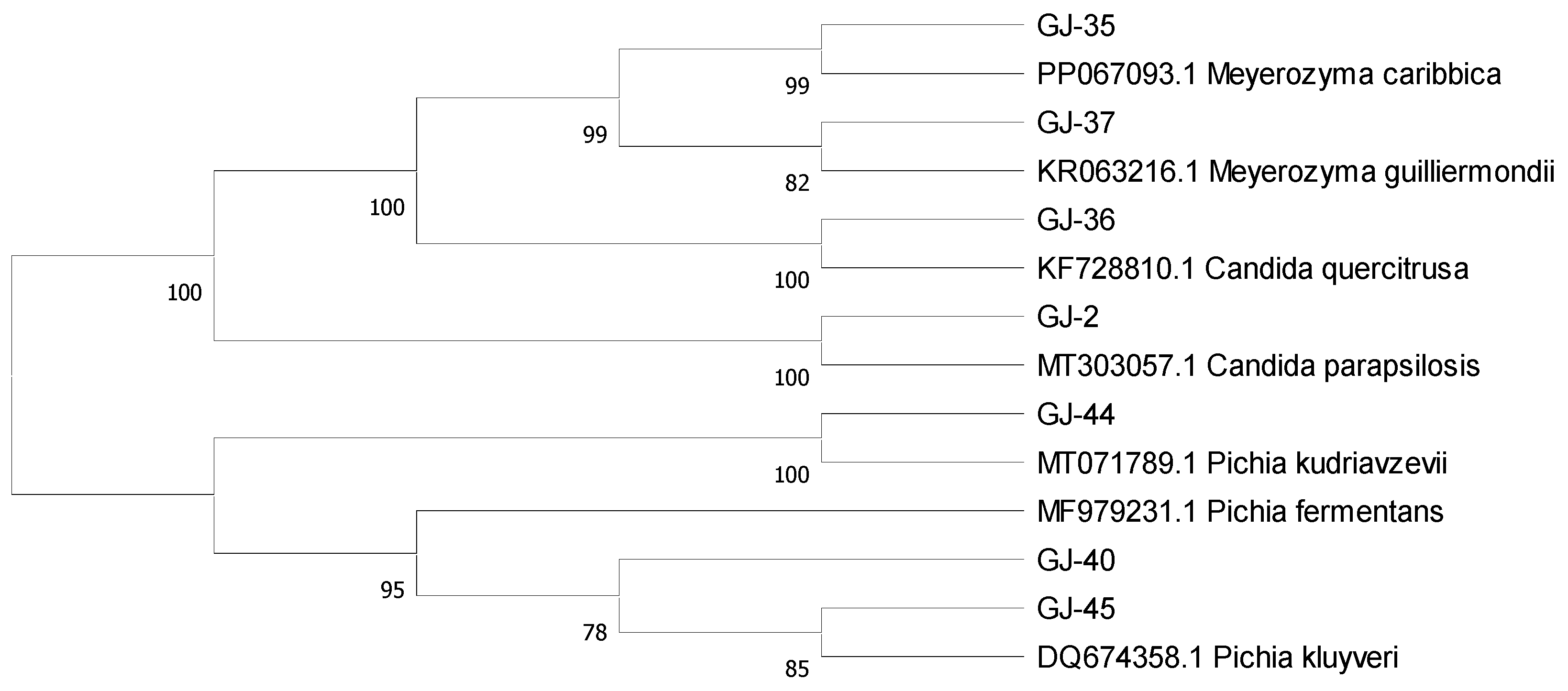
DNA obtained from the strains was utilized as a template for PCR amplification targeting the DI/D2 region of the 26S rDNA, employing the ITS1 and ITS4 primers. Following the PCR amplification, the products were sequenced, and the findings from the sequence comparisons are shown in Table 2. A phylogenetic tree was developed using these sequences, with the outcomes depicted in Figure 5.
The sequencing analysis of 14 yeast strains used NCBI homology evaluation, along with assessments of colony color, morphology, and microscopic characteristics of the yeasts cultivated on WLN plates. The findings are summarized in Table 2. The strains were identified as follows: GJ-2 as Candida parapsilosis, GJ-35 as Meyerozyma caribbica, GJ-36 as Candida quercitrusa, GJ-37 as Meyerozyma guilliermondii, GJ-40 as Pichia fermentans, GJ-44 as Pichia kudriavzevii, and GJ-45 as Pichia kluyveri.

3.5. Evaluation of Yeast Tolerance

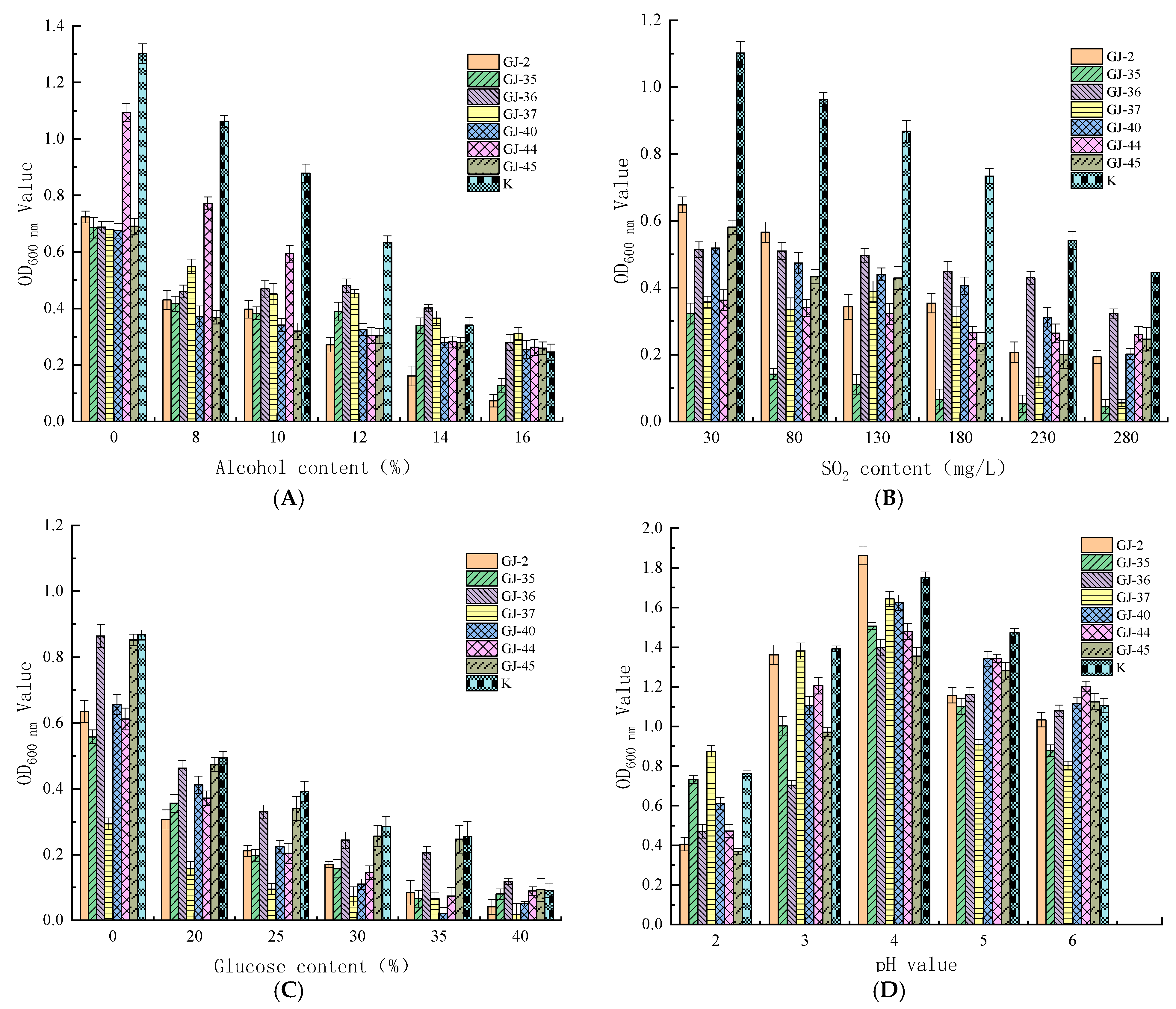
To evaluate the tolerance capabilities of yeast that has been artificially selected and K under various fermentation conditions, we measured the OD600 nm readings of the fermentation broth after inoculating the yeast at different levels of sugar, SO2, ethanol, and pH. Figure 6A–D show that the OD600 nm readings of the K fermentation broth exceeded those of the seven artificially selected yeasts across the ranges of alcohol concentration (0–12% vol), SO2 levels (30–280 mg/L), and glucose concentrations (0–35%). This indicates that K ferments at a faster rate than the artificially selected yeasts.
Figure 6A shows that at an alcohol concentration of 16% vol, the OD600 nm measurements for GJ-2 and GJ-35 are lower than those of the other selected yeasts and K. This suggests that, at alcohol concentrations of ≤16% vol, the alcohol tolerance of the other selected yeasts is similar to that of K, except for GJ-2 and GJ-35. Figure 6B shows that at SO2 concentrations of 30–280 mg/L, K displays higher sulfur dioxide tolerance than the selected yeasts. Among the seven selected yeasts, GJ-36, GJ-44, and GJ-45 exhibit higher sulfur dioxide tolerance than the others. Figure 6C shows that at glucose concentrations of 0–25%, GJ-36 has glucose tolerance comparable to K, followed by GJ-2, GJ-35, GJ-40, and GJ-44. Lastly, Figure 6D indicates that at pH values of 3–5, K and the selected yeasts have higher OD600 nm values in the fermentation broth. Generally, the pH of matured citrus juice falls between 3 and 4, and the selected yeasts tend to show improved reproduction and metabolic activity in this pH range.

3.6. Analysis of Fermented Fruit Wine VOCs

3.6.1. GC-IMS Spectrum Analysis

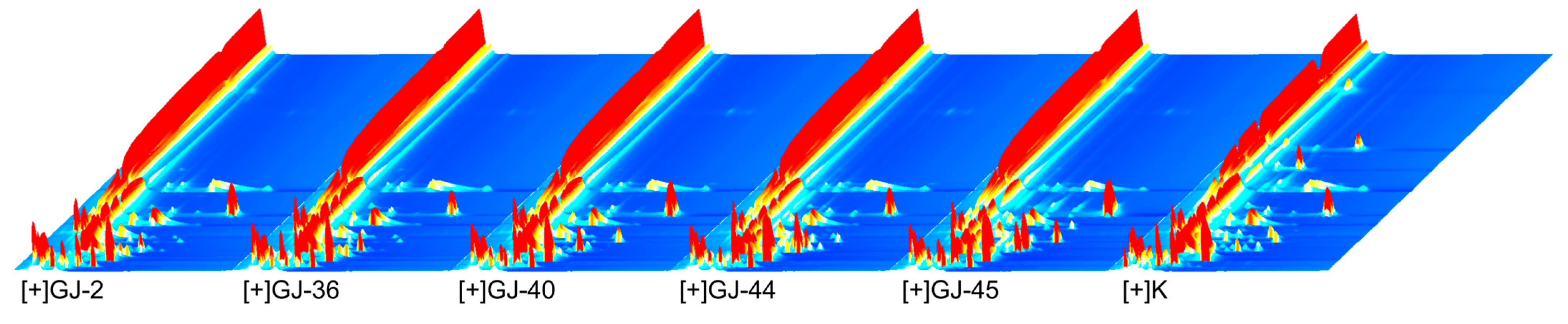
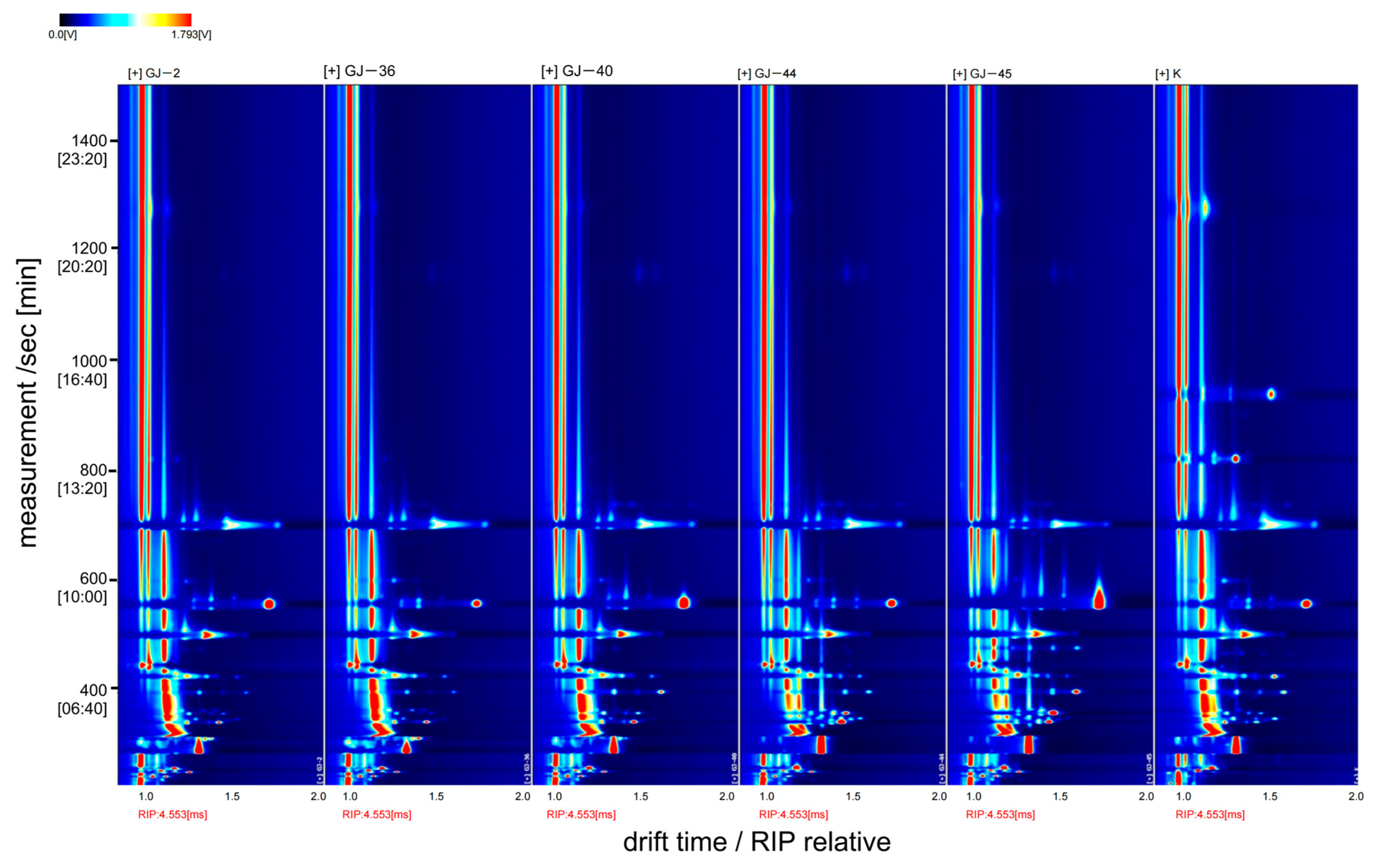
Figure 7 presents the three-dimensional GC-IMS spectra for the samples, highlighting the variations in VOCs among different samples, although some similarities are also present. To facilitate a clearer comparison of VOC differences among the samples, dimensionality reduction techniques were applied, resulting in the two-dimensional spectrum shown in Figure 8. As shown in Figure 8, the organic compounds produced from the fermentation of red tangerine wine using both selected yeast and K yeast exhibit significant differences in signal points and color intensity when viewed from above. Most VOC signals are detected with retention times between 250 and 600 s, while a smaller portion of VOC signals appears within the 750 to 1000 s range.
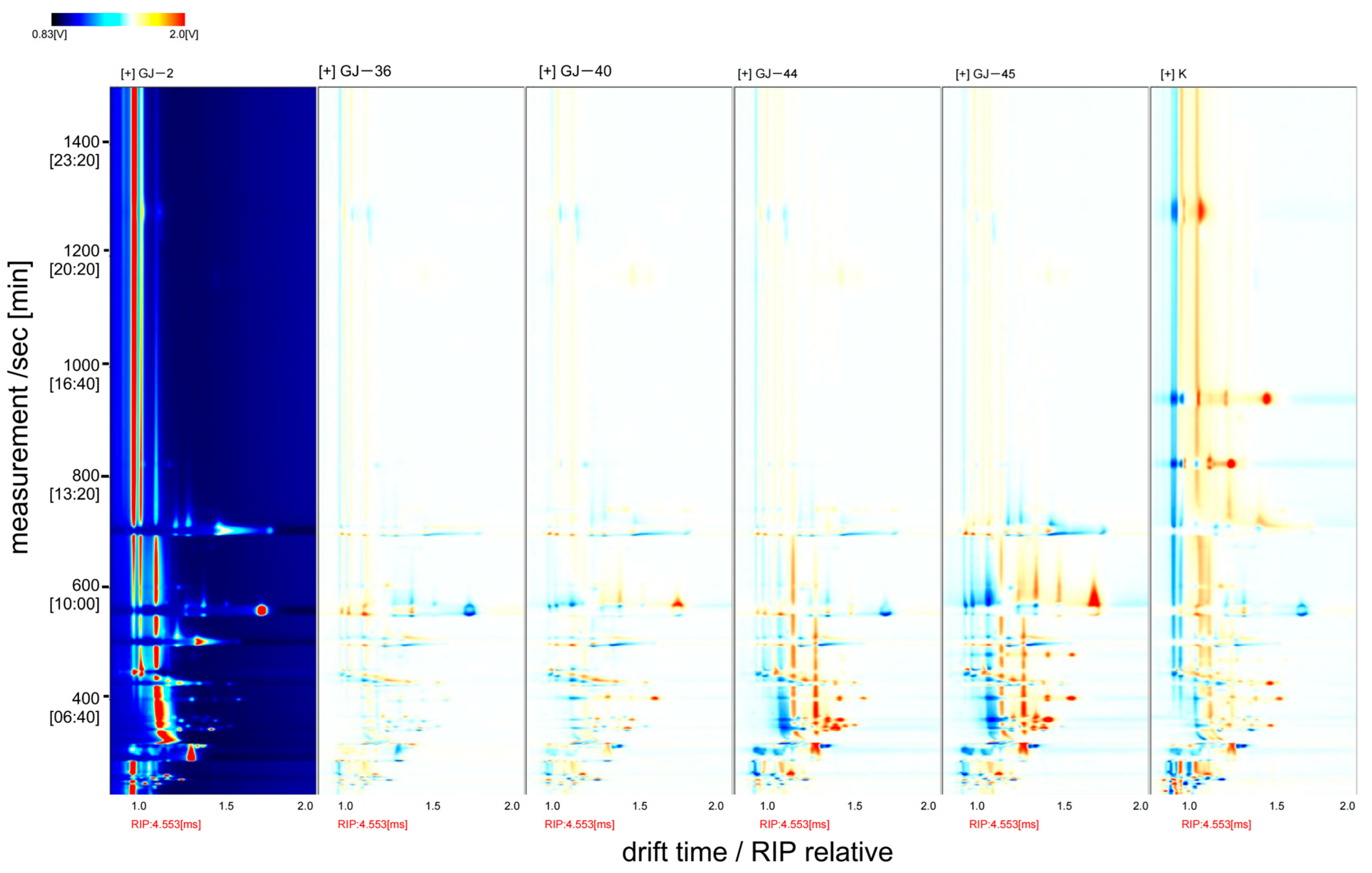
To further enhance the intuitive comparison of VOCs across different samples, the spectrum of sample GJ-2 is used as the reference. The spectra of other samples are subtracted from this reference, producing difference comparison diagrams for each sample, as shown in Figure 8. In these diagrams, white indicates that the VOC content in the target sample matches the reference, red indicates a higher concentration of the substance relative to the reference, and blue indicates a lower concentration compared to the reference. The intensity of the ion peaks is represented by the saturation of the color, with darker shades indicating more significant differences [24]. Analysis of the positions and intensities of the blue and red points in Figure 9 reveals a notable disparity in VOCs between sample K and the artificially selected yeast fermentation fruit wine samples. Among the five artificially selected yeast fermentation fruit wine samples, GJ-45 exhibits a more pronounced difference in VOCs than the others.

3.6.2. GC-IMS Qualitative Analysis of Red Tangerine Wine VOCs

The analysis of VOCs in citrus fruit wine fermented with both K yeast and artificially selected yeast was carried out using the GC-IMS Library Search. In total, 42 VOCs along with their respective dimers (denoted as ‘M’ for monomer and ‘D’ for dimer) were identified, as shown in Table 3 and Figure 10. These substances included 19 esters, 8 alcohols, 5 aldehydes, 3 ketones, 2 acids, and 5 other compounds.
Ester compounds are the most prevalent VOCs found in red tangerine wine; since the wine samples were not in the aging stage, the ester compounds were predominantly produced during fermentation. Research has shown that among the key ester aroma components in citrus wine fermented by Saccharomyces cerevisiae are ethyl 3-phenylpropionate, ethyl decanoate, and ethyl phenylacetate, which together contribute to a distinct floral and fruity scent [25]. Furthermore, another investigation revealed that when Saccharomyces cerevisiae was utilized for mixed fermentation with other yeast strains, the resulting wine (JW14 + DV10) displayed elevated concentrations of esters such as ethyl acetate, ethyl propionate, isobutyl acetate, propyl acetate, and propyl hexanoate, producing mild fruity aromas reminiscent of banana and pineapple [26]. The addition of non-brewing yeast alongside brewer’s yeast for mixed inoculation in the fermentation of spring citrus wine further enhanced ester levels, including ethyl octanoate, ethyl decanoate, and ethyl benzoate VOCs [27].
Alcohols are important VOCs found in fruit wines, being the second most prevalent after esters. This conclusion supports the study by Lü et al. [28], which explored the production of VOCs during the mixed fermentation process of navel orange wine utilizing different non-Saccharomyces yeast strains. The primary origin of these alcohols is attributed to the fermentation itself. In comparison to other K and artificially selected yeasts, GJ-45 tends to have a notably higher level of 2-methyl-1-butanol, which adds flavors that evoke sensations of roasted onions, fruits, flowers, and wine in the final product. Moreover, K yeast fermentation produces 3-methyl-1-butanol, 1-hexanol, and 1-butanol, infusing aromas of banana, fruit, green characteristics, red wine, and whisky, thus enriching the diversity and complexity of the overall aroma profile.
The flavor profile of fruit wine is significantly affected by aldehydes and ketones. Specifically, in the case of GJ-45, hexanal is found in greater amounts than in other artificial yeasts and K yeasts, giving rise to a unique herbal aroma typical of fruit wine. Additionally, higher levels of pentanal and 3-methyl-2-butenal are detected, which add delicate grassy scents, subtle hints of banana, and a range of fruity nuances. In fruit wines fermented with K yeasts, 3-hydroxy-2-butanone and acetone are present in relatively high concentrations, imparting a buttery, creamy fragrance associated with apple and pear notes.

3.6.3. GC-IMS Fingerprint Spectrum Analysis

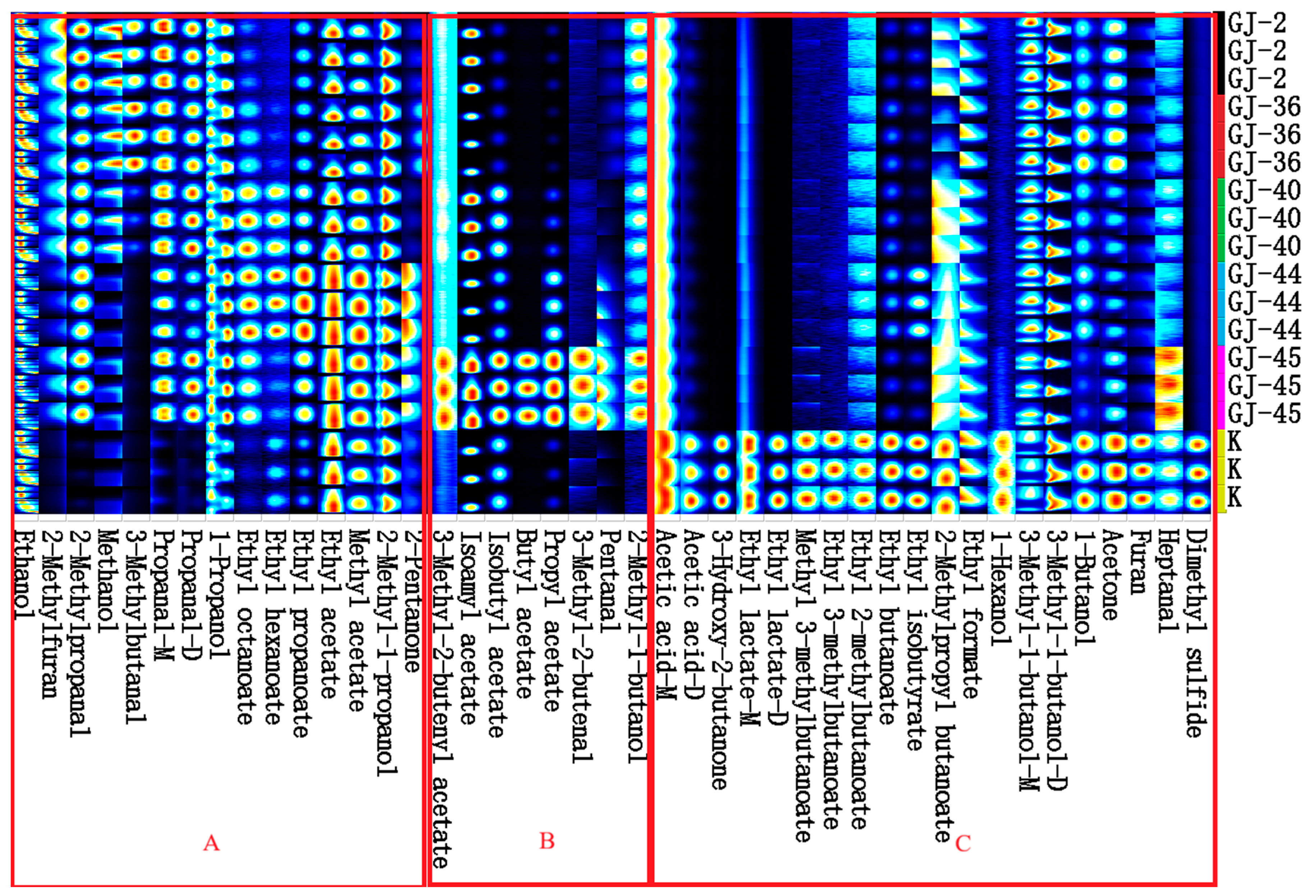
The fingerprint profiles of differential VOCs in ‘Dahongpao’ fruit wine, determined by manual strain screening and fermentation with K yeast, are shown in Figure 10. Each row displays the selected signal peaks from an individual sample, while each column presents the corresponding signal peaks of the same VOCs across various samples. The color intensities represent the concentration levels of these substances [29]. In ‘Dahongpao’ fruit wine, a total of 42 VOCs, including both monomers and dimers, were detected using GC-IMS. This group includes 19 esters, 8 alcohols, 5 aldehydes, 3 ketones, 2 acids, and 5 other types of organic compounds, as listed in Table 3.
Figure 10 shows that the VOCs produced during the fermentation of fruit wine samples, using five specially selected yeasts and K yeast, exhibit pronounced differences in both types and concentrations. Among the five fruit wine samples fermented with the specially selected yeasts, the fingerprint spectra for GJ-2 and GJ-36 are quite similar, reflecting comparable flavor characteristics. In contrast, the fingerprint spectra for GJ-40, GJ-44, and GJ-45 display considerable differences, indicating significant variations in flavor among these samples.
Region C is defined by the primary VOCs that arise during the fermentation process of K yeasts. Among these, heptanal is present at the highest concentration in GJ-45, accompanied by a range of compounds including 3-methyl-1-butanol-M, 3-methyl-1-butanol-D, acetic acid-M, acetic acid-D, 3-hydroxy-2-butanone, ethyl lactate-M, ethyl lactate-D, methyl 3-methylbutyrate, ethyl 3-methylbutyrate, ethyl 2-methylbutyrate, ethyl butyrate, isobutyl ethanoate, propyl 2-methylbutyrate, ethyl formate, 1-hexanol, 1-butanol, acetone, and dimethyl sulfide, which exhibit relatively high or distinctive concentrations in K samples.
Region B primarily comprises VOCs that are either exclusive to GJ-45 samples or found in elevated concentrations. These compounds consist of 2-methyl-1-butanol, pentanal, 3-methyl-2-butenal, propyl acetate, butyl acetate, isobutyl acetate, isopentyl acetate, along with the ester of 3-methyl-2-butenal.
Area A mainly examines six samples that contain the distinct VOCs detected in fruit wines fermented with selected yeast. Among these, common VOCs such as 1-propanol, ethyl acetate, methyl acetate, and 2-methyl-1-propanol are present in all six samples. Furthermore, the VOCs 2-methylpropionaldehyde, propane-M, and propane-D are commonly found in five of the yeast-fermented fruit wine samples. Notably, methanol is present in relatively significant amounts in samples GJ-2 and GJ-36.

3.6.4. Sample Cluster Analysis (Dynamic Principal Component PCA Analysis)

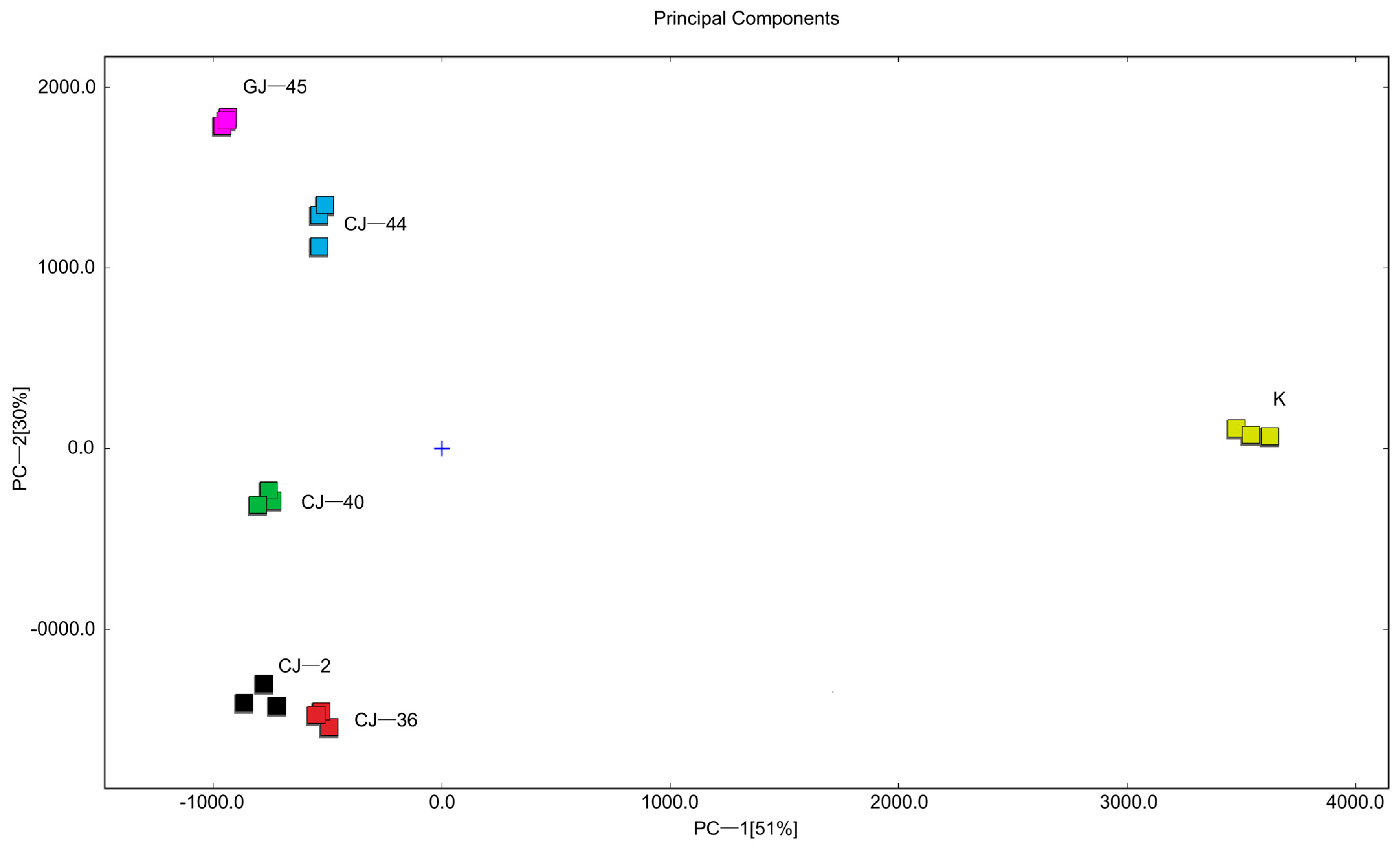
As shown in Figure 11, the variability among all six samples obtained from yeast artificial selection and the fermentation processes of fruit wine with K yeast was quite modest. GJ-2 appears on the positive axis of PC1, while the five other yeasts selected through artificial means are situated on the negative PC1 axis, with a considerable separation from GJ-2. This arrangement highlights significant flavor differences between commercial and artificially selected yeast during the fermentation of fruit wine. Moreover, both GJ-44 and GJ-45 occupy positions on the positive axis of PC2, in contrast to GJ-2, GJ-36, and GI-40, which are located on the negative axis of PC2. This further indicates flavor variations among the fermentations of fruit wine using the selected yeasts. The flavor characteristics of GJ-2 and GJ-36 are notably similar, while GJ-40, GJ-44, and GJ-45 show greater variability, reflecting distinct flavor differences. The analytical findings correspond closely with those obtained from the fingerprint spectrum analysis. Additionally, the combined contribution rate of the two principal components, PC1 and PC2, reaches 81%, confirming that PCA analysis captures a substantial portion of the information from the samples, effectively differentiating between commercial and selected yeasts, as well as the flavor profiles of fruit wine samples fermented with various artificially selected yeasts.

3.6.5. Sample Similarity Analysis

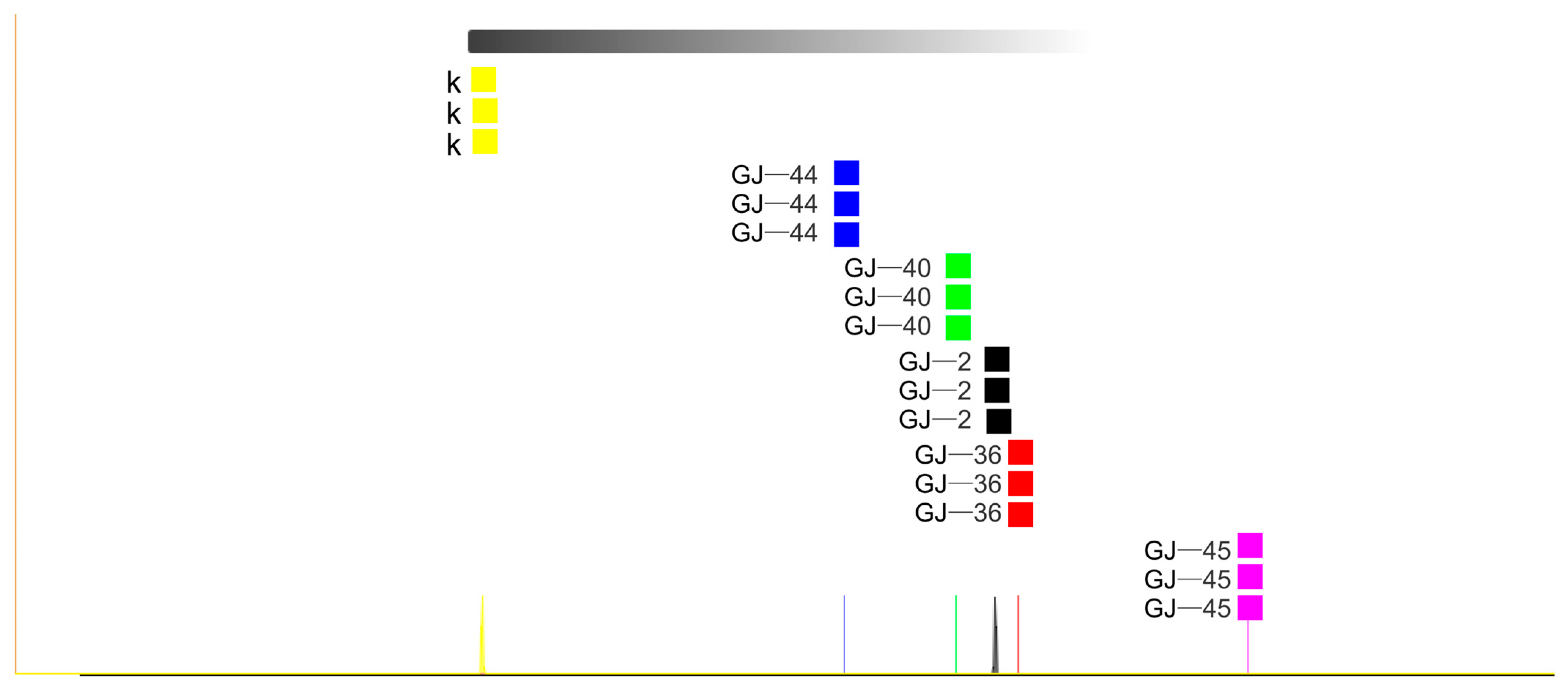
The nearest neighbor algorithm was used to compute the Euclidean distance between the samples to analyze their similarities. Figure 12 shows that the five yeast fermentation fruit wine samples, which were artificially selected, display distinct fermentation characteristics associated with K yeast. This highlights notable variations in the organic compounds produced by these samples compared to K yeast. Among these five, GJ-45 is the most divergent from the other samples, exhibiting the least similarity with the remaining four. Conversely, GJ-2 and GJ-36 show the highest degree of similarity to each other. This observation is consistent with the findings from both the fingerprint spectrum analysis and the dynamic PCA results.

4. Discussion

Non-Saccharomyces yeasts were initially isolated from spoiled grapes or other fruits and were considered harmful microorganisms due to their production of undesirable flavor compounds such as H2S [30]. However, further in-depth studies have revealed that non-Saccharomyces yeasts can also synthesize glycerol and volatile esters, thereby enhancing the flavor and quality of wine [31]. Consequently, research on non-Saccharomyces yeasts has gradually expanded to cider [32], pear wine [33], and other fruit wines.
CRCD is a characteristic fruit of Chongqing, China. Commercial yeast strains, predominantly Saccharomyces cerevisiae derived from winemaking, have long been used for CRCD fruit wine fermentation, resulting in flavor homogeneity in the final products. In the present study, seven non-Saccharomyces yeast strains were isolated and identified, including Candida parapsilosis, Meyerozyma caribbica, Candida quercitrusa, Meyerozyma guilliermondii, Pichia fermentans, Pichia kudriavzevii, and Pichia kluyveri. The stress tolerance of these strains was investigated, and the differences in VOCs in fruit wines fermented by the five strains with better tolerance were further analyzed.
The WLN medium is commonly used to identify prevalent yeast species, primarily based on the characteristics of their colony color and structure. Various yeast colonies grown on WLN medium were initially categorized at a basic level [34,35,36]. GJ-35 displays a creamy color with a hint of green, a rounded protrusion, and a glossy surface, and has been tentatively identified as Torulaspora delbrueckii. In contrast, GJ-40 presents a white color with greenish undertones, also featuring a protrusion but with a wrinkled surface that resembles a volcano at its center; it has been tentatively identified as Pichia kluyveri. Other strains remain unclassified at this time. Although WLN medium is effective for the preliminary isolation of various yeast types, it lacks the precision required for species-level identification; therefore, further identification using molecular biology techniques is necessary.
During alcoholic fermentation, yeasts are exposed to multiple stresses, including osmotic stress caused by high sugar concentrations at the early fermentation stage, acid stress throughout the process, and ethanol stress in the late stage [37]. In this study, we investigated the stress tolerance of non-Saccharomyces yeasts during CRCD fruit wine fermentation. The results showed that the ethanol tolerance of strains GJ-36, GJ-37, GJ-40, GJ-44, and GJ-45 was comparable to that of the commercial strain K. Strains GJ-36, GJ-44, and GJ-45 exhibited stronger SO2 tolerance than the other screened strains. GJ-36 and GJ-45 showed favorable glucose tolerance in the glucose concentration range of 100 g/L to 250 g/L. Both the screened strains and strain K grew well under the fermentation pH range of 3–5.
To improve the screening process for yeast strains with fermentation production traits, five selectively chosen strains—GJ-2, GJ-36, GJ-40, GJ-44, and GJ-45—served as experimental subjects. These strains exhibit significant resistance to alcohol, SO2, and elevated sugar levels. Natural juice from CRCD was fermented with K yeast as a control to produce dry fruit wine. The sensory differences in the resulting fruit wine were examined, and GC-IMS technology was used to analyze the differences in VOCs between the selected yeast strains and K yeast in the fermented fruit wine.
In yeast fermentations of citrus fruit wine that were artificially selected, besides the previously noted ethyl caproate, ethyl caprylate, and ethyl acetate VOCs, samples fermented with GJ-45 exhibited relatively high concentrations of propyl acetate, butyl acetate, isobutyl acetate, isopentyl acetate, and 3-methyl-2-butene ester, imparting a unique pear and raspberry aroma to the fruit wine. In commercial samples of fruit wine fermented with yeast, the dominant esters include ethyl lactate, methyl 3-methylbutyrate, ethyl 3-methylbutyrate, ethyl 2-methylbutyrate, ethyl butyrate, ethyl isobutyrate, ethyl propionate, and ethyl formate. These esters contribute to the complex aromas and flavors reminiscent of apples, bananas, pineapples, whiskey, rum, and others. The aromatic elements identified in these wines, featuring a wide variety of esters and other volatile organic compounds, could play essential roles in the homogenization of flavors within commercially fermented fruit wines.
The wine samples made from fruit and fermented with the GJ-45 strain exhibit distinct VOCs, with methanol levels remaining relatively low and comparable to those produced by K yeast varieties. Notably, the ion peak intensities for compounds such as ethyl acetate, methyl acetate, 3-methyl-2-butene acetate, 2-methyl-1-butanol, 3-methyl-2-butenal, propyl acetate, butyl acetate, isobutyl acetate, isopentyl acetate, pentanal, and heptanal are significantly higher than those found in fruit wines produced by artificial or commercial methods. These substances contribute unique aromas, including roasted onion, pear-like fragrances, fresh notes of pear and raspberry, banana undertones, and a hint of sweetness to citrus fruit wines, making them distinctive strains for creating uniquely flavored fermented citrus beverages.

5. Conclusions

This research first reported seven non-Saccharomyces yeast strains, including Pichia kudriavzevii, isolated from CRCD fruit. Among these isolates, Pichia kluyveri demonstrates exceptional fermentation capabilities and strong potential for ethanol production. It achieves peak performance with an alcohol content of 12% vol, an SO2 concentration of 130 mg/L, a sugar level of 20%, and a pH range of 3 to 4, indicating good tolerance, though it is less robust than K yeasts. Five strains, including Candida parapsilosis, were selected for their enhanced fermentation efficiency and relatively strong tolerance. These strains were introduced into CRCD juice for fruit wine production, which was later compared to ‘Dahongpao’ fruit wine fermented with commercial yeast. GC-IMS technology was used to assess the VOCs in the fruit wine samples. Combined with fingerprint spectra and dynamic PCA, notable flavor differences were found between wines fermented with the selected yeasts and those produced with K yeasts. Overall, the variation among fruit wines fermented with the selected yeasts was lower, yet they remained distinguishable from those associated with K yeasts. Dynamic PCA analysis showed that GJ-45 Pichia pastoris had the largest Euclidean distance from the K yeast, indicating the most significant flavor divergence. The samples contained compounds such as 2-methyl-1-butanol, pentanal, 3-methyl-2-butenal, propyl acetate, butyl acetate, isobutyl acetate, isopentyl acetate, and 3-methyl-2-butenyl acetate—VOCs that are either absent from or present in minimal amounts in wines fermented by commercial or other selected yeasts. These compounds contribute to the unique flavor profile of the samples. Thus, the selection of Pichia kluyveri holds promise for creating uniquely flavored ‘Dahongpao’ fruit wine.

Author Contributions

Conceptualization and data analysis, X.F.; supervision, Q.N.; writing—review and editing, X.L.; investigation, P.T., T.F. and C.X.; methodology, W.Z. and Y.Z.; and S.L.; formal analysis, S.L. and L.Z.; writing—original draft preparation, X.F. All authors have read and agreed to the published version of the manuscript.

Funding

This research was funded by 2025 Chongqing Education Commission Science and Technology Research Plan Project (KJZD-K202503501); Chongqing Technical Innovation and Application Development Special 403 Project (CSTB2022TIAD-ZXX0043) for supplying the testing materials and related services.

Institutional Review Board Statement

Not applicable.

Informed Consent Statement

Not applicable.

Data Availability Statement

The raw data supporting the conclusions of this article will be made available by the authors on request.

Conflicts of Interest

The authors declare that there are no conflicts of interest that could be perceived as prejudicing the impartiality of the research reported.

Appendix A

Table A1. Morphological description of typical yeast colonies on WLN plates (cultured for 7 days), cell morphology, and YPD liquid culture status.
NumberColonial MorphologyCellular MorphologyYPD Liquid Nutrient Medium
DyestuffMorphologyLateralEdgeSurfaceWLN Colonial MorphologyCell ShapeModes of ReproductionStateSedimentation StateFungus
GJ-2Green and whitecircularCentral bulgeEtched patternSmooth and moistCentral protuberance, smooth surface, opaque and creamyorbicular-ovatePropagation by seedlingmuddywhite precipitateNot formed
GJ-35The center is green and the edge is whiteregularCentral protrusion, opaque and smooth surface
GJ-36bulgeformed
GJ-37Green and whiteCentral bulgeCentral protrusion, smooth surface, opaque and creamyNot formed
GJ-40The center is green and the edge is whiteMicro-protrusionsdryCentral protrusion and opaqueformed
GJ-44Central bulgeDry the plushChicane-shaped
GJ-45off-white colorMicro-protrusionsFelt-likeNot transparent and creamy yellowoval

References

  1. Zhang, W.; Fu, X.; Zhang, Y.; Chen, X.; Feng, T.; Xiong, C.; Nie, Q. Metabolome Comparison of Sichuan Dried Orange Peels (Chenpi) Aged for Different Years. Horticulturae 2024, 10, 421. [Google Scholar] [CrossRef]
  2. Li, S.; Mao, X.; Guo, L. Comparative analysis of the impact of three drying methods on the properties of citrus reticulata blanco cv. dahongpao powder and solid drinks. Foods 2023, 12, 2514. [Google Scholar] [CrossRef]
  3. Li, Z.; Zhao, Z.; Zhou, Z. Simultaneous separation and purification of five polymethoxylated flavones from “dahongpao” tangerine (Citrus tangerina tanaka) using macroporous adsorptive resins combined with prep-HPLC. Molecules 2018, 23, 2660. [Google Scholar] [CrossRef]
  4. Wei, J.; Zhang, Y.; Yuan, Y. Characteristic fruit wine production via reciprocal selection of juice and non-Saccharomyces species. Food Microbiol. 2018, 79, 66–74. [Google Scholar] [CrossRef]
  5. Jolly, N.P.; Cristian, V.; Pretorius, I.S. Not your ordinary yeast: Non-Saccharomyces yeasts in wine production uncovered. FEMS Yeast Res. 2014, 14, 215–237. [Google Scholar] [PubMed]
  6. Parapouli, M.; Vasileiadi, A.; Afendra, A.S. Saccharomyces cerevisiae and its industrial applications. AIMS Microbiol. 2020, 6, 1–32. [Google Scholar] [CrossRef]
  7. Morata, A.; Escott, C.; Bañuelos, M.A.; Loira, I.; del Fresno, J.M.; González, C.; Suárez-Lepe, J.A. Contribution of Non-Saccharomyces Yeasts to Wine Freshness. A Review. Biomolecules 2019, 10, 34. [Google Scholar] [CrossRef] [PubMed]
  8. Sun, W.; Chen, X.; Bi, P. Screening and characterization of indigenous non-Saccharomyces cerevisiae with high enzyme activity for kiwifruit wine production. Food Chem. 2024, 440, 138309. [Google Scholar] [CrossRef] [PubMed]
  9. Li, Y.; Ding, P.; Tang, X. Screening and oenological property analysis of ethanol-tolerant non-Saccharomyces yeasts isolated from Rosa roxburghii Tratt. Front. Microbiol. 2023, 14, 12. [Google Scholar] [CrossRef]
  10. Lei, Y.; Li, T.; Chen, L. Isolation and identification of non-Saccharomyces yeasts and their flavour characteristics while brewing Yinhong plum wine. Flavour Fragr. J. 2024, 39, 244–260. [Google Scholar]
  11. Zhang, T.; Liao, Z.; Li, Z. Revealing the flavor differences of Sauvignon Blanc wines fermented in different oak barrels and stainless-steel tanks through GC-MS, GC-IMS, electronic, and artificial sensory analyses. Food Chem. X 2025, 25, 102188. [Google Scholar] [CrossRef]
  12. Zhou, C.; Yu, Y.; Ai, J. Fruit wines classification enabled by combing machine learning with comprehensive volatiles profiles of GC-TOF/MS and GC-IMS. Food Res. Int. 2025, 204, 115890. [Google Scholar] [CrossRef] [PubMed]
  13. Wang, Y.; Ma, Y.; Duan, J. Discrimination and characterization of the volatile organic compounds in red and black raspberry wines fermented with different commercial Saccharomyces cerevisiae: An integrated analysis using E-nose, GC-MS, GC-IMS, and multivariate statistical models. Food Chem. 2025, 478, 143678. [Google Scholar] [CrossRef]
  14. Luo, B.; Yang, Y.; Lin, Q. Optimizing yeast strain selection for mulberry wine fermentation: A performance-based approach. Qual. Assur. Saf. Crops Foods 2024, 16, 60–68. [Google Scholar] [CrossRef]
  15. Schuller, D.; Côrte-Real, M.; Leão, C. A differential medium for the enumeration of the spoilage yeast Zygosaccharomyces bailii in wine. J. Food Prot. 2000, 63, 1570–1575. [Google Scholar] [CrossRef]
  16. Zhu, X.; Torija, M.J.; Mas, A. Effect of a multistarter yeast inoculum on ethanol reduction and population dynamics in wine fermentation. Foods 2021, 10, 623. [Google Scholar] [CrossRef]
  17. Zhong, W.; Chen, T.; Yang, H.; Li, E. Isolation and selection of non-Saccharomyces yeasts being capable of degrading citric acid and evaluation its effect on kiwifruit wine fermentation. Fermentation 2020, 6, 25. [Google Scholar] [CrossRef]
  18. Wang, X.; Wang, Z.; Feng, T. Screening of yeast in various vineyard soil and study on its flavor compounds from brewing grape wine. Molecules 2022, 27, 512. [Google Scholar] [CrossRef] [PubMed]
  19. Arias, C.R.; Burns, J.K.; Friedrich, L.M.; Goodrich, R.M.; Parish, M.E. Yeast species associated with orange juice: Evaluation of different identification methods. Appl. Environ. Microbiol. 2002, 68, 1955–1961. [Google Scholar] [CrossRef]
  20. Ivey, M.L.; Phister, T.G. Detection and identification of microorganisms in wine: A review of molecular techniques. J. Ind. Microbiol. Biotechnol. 2011, 38, 1619. [Google Scholar] [CrossRef] [PubMed]
  21. Zhang, Y.; Ye, H.; Zou, Y. Flavor characteristics of navel orange wine fermented by Saccharomyces cerevisiae SC-125 and Angel Yeast SY. Fermentation 2023, 9, 872. [Google Scholar] [CrossRef]
  22. Wu, Y.; Li, Z.; Zou, S. Chemical composition and flavor characteristics of cider fermented with Saccharomyces cerevisiae and non-Saccharomyces cerevisiae. Foods 2023, 12, 3565. [Google Scholar] [CrossRef] [PubMed]
  23. Ma, T.; Zhu, H.; Yin, J. The Response Characteristics of One Saccharomyces cerevisiae Strain Under Continuous Passage in Artificial Culture Medium. J. Fungi 2025, 11, 513. [Google Scholar] [CrossRef]
  24. Cao, W.; Shu, N.; Wen, J. Characterization of the key aroma volatile compounds in nine different grape varieties wine by headspace gas chromatography–ion mobility spectrometry (HS-GC-IMS), odor activity values (OAV) and sensory analysis. Foods 2022, 11, 2767. [Google Scholar] [CrossRef]
  25. Zhang, X.Y. Studies on the Application Potential of optimized Pichia fermentans in Reducing Acid During the Fermentation of Citrus Wine. Master’s Thesis, Huazhong Agricultural University, Wuhan, China, 2023. [Google Scholar]
  26. Gao, T.T. Study on the Influence of Mixed-Fermentation on Flavor of Citrus Wine. Master’s Thesis, Hunan University, Changsha, China, 2022. [Google Scholar]
  27. Fu, Y.; Gao, Y.; Yang, M. Effects of Non-Saccharomyces Yeasts and Their Pairwise Combinations in Co-Fermentation with Saccharomyces cerevisiae on the Quality of Chunjian Citrus Wine. Molecules 2024, 29, 14. [Google Scholar]
  28. LÜ, X.; GAO, T.T.; LIU, W. Analysis of Volatile Aroma Components of Navel Orange Wine Produced by Mixed Fermentation of Non Saccharomyces cerevisiae and Saccharomyces cerevisiae Based on GC-IMS. Sci. Technol. Food Ind. 2023, 44, 139–148. [Google Scholar]
  29. Zhang, Y.; Tong, X.; Chen, B. Novel application of HS-GC-IMS for characteristic fingerprints and flavor compound variations in citrus reticulatae pericarpium during storage with different Aspergillus niger fermentation. Food Chem. X 2023, 18, 100653. [Google Scholar] [CrossRef]
  30. Padilla, B.; Gil, J.V.; Manzanares, P. Past and Future of Non-Saccharomyces Yeasts: From Spoilage Microorganisms to Biotechnological Tools for Improving Wine Aroma Complexity. Front. Microbiol. 2016, 7, 411. [Google Scholar] [CrossRef]
  31. Tufariello, M.; Fragasso, M.; Pico, J.; Panighel, A.; Castellarin, S.D.; Flamini, R.; Grieco, F. Influence of non-Saccharomyces on wine chemistry: A focus on aroma-related compounds. Molecules 2021, 26, 644. [Google Scholar] [CrossRef]
  32. Xu, Y.; Zhao, G.A.; Wang, L.P. Controlled formation of volatile components in cider making using a combination of Saccharomyces cerevisiae and Hanseniaspora valbyensis yeast species. J. Ind. Microbiol. Biotechnol. 2006, 33, 192–196. [Google Scholar] [CrossRef]
  33. Li, Y.; Huang, Y.; Long, H.; Yu, Z.; Huang, M.; Liu, X. Biodiversity and Oenological Property Analysis of Non-Saccharomyces Yeasts Isolated from Korla Fragrant Pears (Pyrus sinkiangensis Yu). Fermentation 2022, 8, 388. [Google Scholar] [CrossRef]
  34. Xia, H.; Zhang, Z.; Sun, L. effects of mixed fermentation on the aroma compounds of ‘Italian Riesling’dry white wine in eastern foothill of Helan mountain. Fermentation 2023, 9, 303. [Google Scholar] [CrossRef]
  35. Alencar, B.R.A.; De Freitas, R.A.A.; Guimarães, V.E.P. Meyerozyma caribbica isolated from Vinasse-irrigated sugarcane plantation soil: A promising yeast for ethanol and xylitol production in biorefineries. J. Fungi 2023, 9, 789. [Google Scholar] [CrossRef] [PubMed]
  36. Yu, Z.H.; Li, L.; Chen, Q.Y. Transcriptomic Analysis of Cell Stress Response in Wickerhamomyces anomalus H4 Under Octanoic Acid Stress. Fermentation 2024, 10, 563. [Google Scholar] [CrossRef]
  37. Auesukaree, C. Molecular mechanisms of the yeast adaptive response and tolerance to stresses encountered during ethanol fermentation. J. Biosci. Bioeng. 2017, 124, 133–142. [Google Scholar] [CrossRef]
Figure 1. Schematic diagram of the winemaking process.
Fermentation 12 00102 g001
Figure 2. Colony characteristics of yeast on WLN plates.
Fermentation 12 00102 g002
Figure 3. Typical colony morphology and cell morphology of yeast.
Fermentation 12 00102 g003
Figure 4. Analysis of ethanol production capacity of different yeast strains.
Fermentation 12 00102 g004
Figure 5. Phylogenetic tree of different yeast strains based on 26S rDNA gene sequence.
Fermentation 12 00102 g005
Figure 6. Analysis of the difference in tolerance between artificially screened yeast and K yeast. (A) ethanol tolerance, (B) SO2 tolerance, (C) Glucose tolerance, and (D) pH value tolerance.
Fermentation 12 00102 g006
Figure 7. 3D Diagram of gas chromatography ion mobility spectrum of six samples.
Fermentation 12 00102 g007
Figure 8. GC-IMS 2D topographic of volatile compounds in six samples.
Fermentation 12 00102 g008
Figure 9. GC-IMS difference diagram of six samples.
Fermentation 12 00102 g009
Figure 10. Fingerprint of volatile compounds in different CRCD wine groups. (A) represents the major common VOCs contained in the CRCD fruit wine samples subjected to artificial yeast screening. (B) represents the unique VOCs detected in CRCD fruit wine samples fermented by the artificially screened yeast strain GJ-45. (C) consists of the major unique VOCs specific to CRCD fruit wine samples fermented by commercial yeast K.
Fermentation 12 00102 g010
Figure 11. PCA analysis of different samples.
Fermentation 12 00102 g011
Figure 12. Euclidean distance between samples.
Fermentation 12 00102 g012
Table 1. Analysis of Fermentation Capacity of Different Yeasts.
Number12 h24 h36 h48 h72 hPrecipitate ColorLevel of Turbidity
GJ-2++++++++++++Less white firm precipitationSlightly cloudy
GJ-35 +++++Whiter, slightly loose precipitationmuddy
GJ-36 ++++Less white firm precipitationSlightly cloudy
GJ-37 +++Whiter loose precipitatesmuddy
GJ-40 ++++Less white firm precipitationSlightly cloudy
GJ-44++++++++++++++Less white firm precipitationSlightly cloudy
GJ-45++++++++++++Less white firm precipitationSlightly cloudy
“+”, “++” and “+++” respectively indicate that the gas production reaches 1/3, 2/3 and all of the volume of Durham tube.
Table 2. Comparison results of different yeast sequences.
NumberReference StrainsFragment Length/bpGenebank
Identifier
Homology/%Nomenclature
GJ-2Candida parapsilosis505MT303057.1100Candida parapsilosis
GJ-35Meyerozyma caribbica573KF728778.199.82Meyerozyma caribbica
GJ-36Candida quercitrusa590KF728810.199.83Candida quercitrusa
GJ-37Meyerozyma guilliermondii571KR063216.1100Meyerozyma guilliermondii
GJ-40Pichia fermentans491MF979231.199.51Pichia fermentans
GJ-44Pichia kudriavzevii485MT071789.1100Pichia kudriavzevii
GJ-45Pichia kluyveri558DQ674358.199.51Pichia kluyveri
Table 3. Qualitative results of volatile components in CRCD wine fermented by different yeasts.
NumberClassifyCompoundCASRetention IndexRetention Time/sTransition Time/msFlavor Description
1estersEthyl octanoate106-32-11462.91156.041.48822fruity, pineapple, apple, brandy
2Ethyl lactate-M97-64-31367.7941.2091.14395fruity
3Ethyl lactate-D97-64-31367.3940.3311.53794fruity
4Ethyl hexanoate123-66-01255.2741.7671.79573pineapple, fruity
53-Methyl-2-butenyl acetate1191-16-81277.9776.820.94583fruity
6Isoamyl acetate123-92-21148.5561.8041.7465wine
7Butyl acetate123-86-41103.1480.8781.62173fruity
82-Methylpropyl butanoate539-90-21155.3575.0811.33576apple, pineapple
9Ethyl 3-methylbutanoate108-64-51097.1471.1141.65213apple, banana, sour and sweet
10Ethyl 2-methylbutanoate7452-79-11079.1447.2231.64622apple
11Ethyl butanoate105-54-41065.1429.5251.56252pineapple, fruity, ester, whiskey
12Isobutyl acetate110-19-01042.2402.0941.61767sweet, banana, fruity
13Methyl 3-methylbutanoate556-24-11034.9393.6881.53691strong apple, pineapple
14Propyl acetate109-60-41007.3363.6031.48373fruity, pear
15Ethyl isobutyrate97-62-1997.5353.4271.5635sweet, fruity, alcoholic
16Ethyl propanoate105-37-3989.3346.791.45714grape, pineapple, fruity, rum
17Ethyl acetate141-78-6915.9295.4681.33799fruity, sweet
18Methyl acetate79-20-9865.2264.4981.19618Ester, Green
19Ethyl formate109-94-4860.1261.5771.22738pineapple, rum
20esters1-Hexanol111-27-31351.0907.8731.31683fruity, wine, sweet,
213-Methyl-1-butanol-M123-51-31230.5705.3551.24438whiskey, banana
223-Methyl-1-butanol-D123-51-31230.5705.3551.49064whiskey, banana
231-Butanol71-36-31169.4603.5311.26564wine
242-Methyl-1-propanol78-83-11118.1506.1671.36946alcoholic, leather
251-Propanol71-23-81066.2430.8531.25625alcohol, pungent
26Methanol67-56-1906.2289.2410.97424alcohol, pungent
272-Methyl-1-butanol137-32-61209.3675.5181.4601roast onion, fruity, floral, wine
28aldehydesHeptanal111-71-71203.8668.0191.36309aldehyde, fatty, green herbs, wine
293-Methylbutanal590-86-3949.0317.591.40988chocolate, fat
302-Methylpropanal78-84-2851.4256.6371.28234banana, melon
313-Methyl-2-butenal107-86-81219.2689.2751.37179fruity
32Pentanal110-62-31012.7369.2691.42558green grassy, faint banana, pungent
33ketone3-Hydroxy-2-butanone513-86-01306.1823.8651.33255butter, cream
342-Pentanone107-87-91012.8369.3541.35965acetone, fresh, sweet, fruity, wine
35Acetone67-64-1854.9258.6131.11567fresh, apple, pear
36acidAcetic acid-M64-19-71509.81279.5151.05569spicy
37Acetic acid-D64-19-71509.41278.3531.15753spicy
38otherPropanal-M123-38-6837.1248.7331.07063green grassy
39Propanal-D123-38-6837.1248.7331.14901green grassy
40Furan110-00-9847.3254.3320.94361special
41Dimethyl sulfide75-18-3811.5235.2310.95712cabbage, sulfur, gasoline
422-Methylfuran534-22-5873.8269.4810.97694chocolate, ether-like odor
Disclaimer/Publisher’s Note: The statements, opinions and data contained in all publications are solely those of the individual author(s) and contributor(s) and not of MDPI and/or the editor(s). MDPI and/or the editor(s) disclaim responsibility for any injury to people or property resulting from any ideas, methods, instructions or products referred to in the content.