
Article

Kinetics of Lactic Acid, Acetic Acid and Ethanol Production During Submerged Cultivation of a Forest Litter-Based Biofertilizer

IMBE, Aix Marseille Univ, Avignon Univ, CNRS, IRD, Marseille, France
*
Author to whom correspondence should be addressed.
Fermentation 2026, 12(1), 52; https://doi.org/10.3390/fermentation12010052
Submission received: 1 December 2025 / Revised: 8 January 2026 / Accepted: 13 January 2026 / Published: 16 January 2026

Abstract

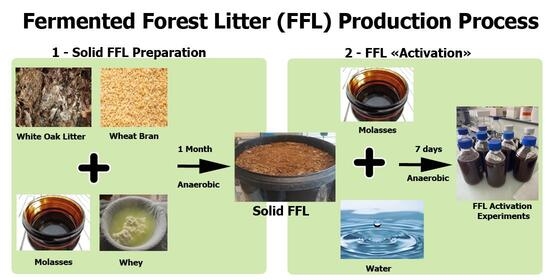
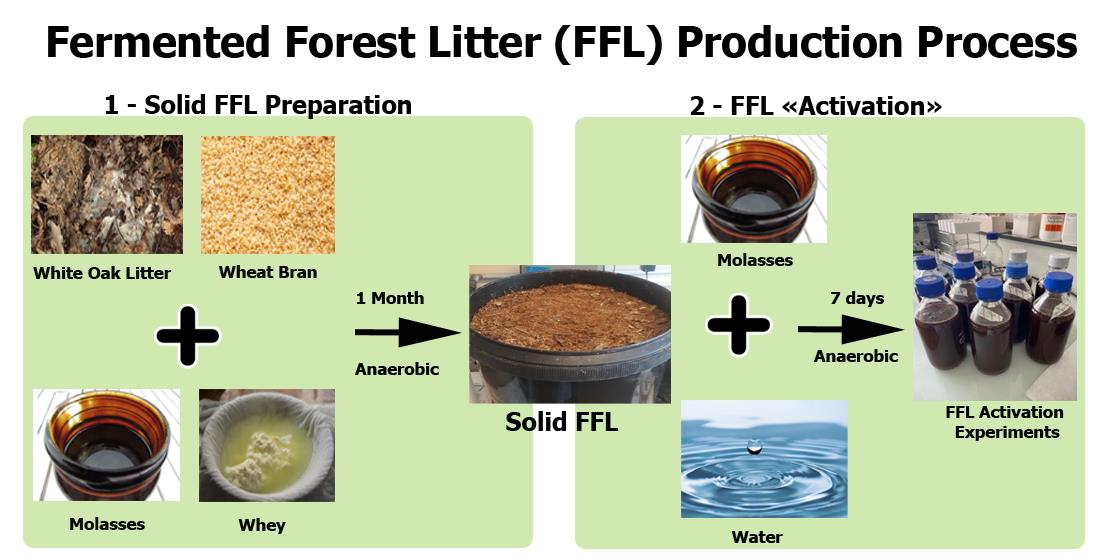
Fermented forest litter (FFL) is a biofertilizer obtained by anaerobic fermentation of forest litter combined with agricultural by-products. Its production involves an initial one-month solid-state fermentation of oak litter mixed with whey, molasses and wheat bran, followed by a one-week submerged fermentation-called the “activation” phase-during which the solid FFL is fermented with sugarcane molasses diluted in water. This study aimed to evaluate the effects storage duration (6, 18 and 30 months), and temperature (ambient and 29 °C) on the activation phase. For this purpose, pH, sugar consumption and metabolite production dynamics were monitored. Under all experimental conditions, the pH dropped to values close to 3.5, sucrose was rapidly hydrolyzed, and glucose was preferentially consumed over fructose. Fructose was metabolized only after glucose was depleted, suggesting the involvement of fructophilic microorganisms. The time-course evolution of lactic acid (LA) concentration was adequately fitted by the Gompertz model (R2 > 0.970). The highest LAmax concentration (6.30 g/L) and production rate (2.16 g/L·d) were obtained with FFL stored for 6 months. Acetic acid (AA) and ethanol were also detected reaching maxima values of 1.19 g/L and 0.96 g/L, respectively. Their profiles varied depending on the experimental conditions. Notably, the AA/LA ratio increased with the age of the FFL. Overall, sugar consumption and metabolite production were significantly slower at ambient temperature, than at 29 °C. These results contribute to a better understanding of the metabolic dynamics during FFL activation and highlight key parameters that should be considered to optimize future biofertilizer production processes.

Graphical Abstract

1. Introduction

The combined increase in population and the decline in soil fertility have led to an exponential expansion of conventional agricultural practices including mechanization, monoculture, and the systematic use of pesticides and mineral fertilizers. However, this agricultural model has shown its limitations [1], generating growing interest in alternative and sustainable solutions [2]. These approaches highlight the crucial role of microorganisms in implementing effective strategies for crop and livestock production within a closed-loop circular economy [3]. Microbial biomass can be produced by enrichment from the indigenous microflora of raw materials, or from strains selected by fermentation bioprocesses [4,5,6]. In addition to improving crop productivity, organic biofertilizers produced through anaerobic processes offer several advantages, including low-cost technology, the use of renewable resources, and improved of soil structure [6]. Furthermore, they can help mitigate the adverse effects of chemical fertilization and contribute to the reduction in global warming impacts [6].
A specific example of this type of biofertilizer is that produced from forest litter combined with local agricultural by-products such as wheat or rice bran, whey, and sugarcane or beet molasses. This technique, now commonly practiced in Latin America and some Southeast Asian countries, is gaining increasing interest in Europe [7,8]. The artisanal preparation of this biofertilizer involves a two-step process, both carried out under anoxic conditions. First, a one-month solid-state fermentation produces a solid matrix called fermented forest litter (FFL). This solid FFL can then be stored at ambient temperature or in a cold room for several months. Subsequently, a small portion of this FFL is mixed with sugary substrates and water to produce a liquid biofertilizer, also called “activated” FFL (aFFL), which is then used in agriculture [8].
Few studies have been conducted on the microbiology, biochemistry, and physicochemical properties of FFL [9,10,11,12]. Physicochemical analyses revealed a substantial decrease in pH (below 4), an increase in electrical conductivity (from 1238 to 2876 µS/cm and from 2219 to 2876 µS/cm), and a decrease in the C/N ratio (from 18.24 to 15.43 and from 17.11 to 15.10), depending on the forest litter mix used [9]. Gas chromatography analyses of the culture headspace revealed the presence of volatile organic compounds such as ethanol and ethyl acetate, suggesting yeasts metabolic activity [10,11]. Furthermore, metabarcoding analyses confirmed the presence of yeasts from the genera Saccharomyces and Clavispora, as well as lactic acid bacteria (LAB), both homofermentative (e.g., Lactococcus) and heterofermentative (e.g., Leuconostoc and Lentilactobacillus) [10]. The LAB were predominant (84%) but some proteobacteria (9%) were also detected [10]. LAB are likely responsible for the decrease in FFL pH due to the production of LA and possibly other organic acids [10]. Another recent study, conducted in Senegal with locally produced FFL, demonstrated the potential of this type of biofertilizer for tomato growth [12]. These authors also showed the abundance of Firmicutes—that include LAB-, Bacilli, α-proteobacteria (e.g., species from Burkholderiales and Caulobacteriales), as well as some fungal species [10,12]. Some aerobic bacteria from the Acetobacter genera were also found [10,12].
LA can be produced from agricultural by-products, including liquid wastes rich in sugar, oil, starch, lignocellulosic and dairy [13,14,15]. Among the latter, whey, used for the production of FFL, plays a key role as a source of both LAB and lactose, and constitutes a suitable substrate for the production of LA [16,17]. LAB have demonstrated significant potential in agriculture by regulating soil organic matter and nutrient cycling, as well as by detoxifying harmful compounds [18]. Certain strains of Lactobacillus have shown potential as biocontrol agents against bacterial plant pathogens, such as species of the genera Xanthomonas and Pseudomonas [19]. Specifically, goat whey proteins have been shown to exhibit antibacterial activity against pathogens such as Listeria, Salmonella, Staphylococcus, and Pseudomonas species [20]. Furthermore, LA has been reported to enhance enzymatic activity and bacterial diversity in soils [21].
The present study aimed to characterize the activation phase (submerged culture), focusing on two specific points raised by farmers: (i) the storage time of the FFL solid matrix, and (ii) the incubation temperature during the activation process. For these conditions, the dynamics of pH, sugar consumption, and the production of acids and ethanol were monitored over a 7-day fermentation period. Furthermore, an attempt was made to model the production of both LA and AA in a complex medium, with an undefined microbiome and without biomass concentration data.

2. Materials and Methods

2.1. Experimental Conditions

The FFL used in this study was obtained from a previously established fermentation process, in which white oak (Quercus alba) leaf litter (collected from Sainte-Baume forest, Provence, France) was mixed with molasses, wheat bran, and goat whey, and incubated in hermetically sealed plastic jars for one month at room temperature, as previously described [9]. The FFL was then stored at 4 °C, before use for the activation process.
The aFFL was prepared by mixing 25 g of solid FFL and 25 g of sugarcane molasses (Partner & Co., Guérande, France) with 950 mL of distilled water. The mixture was transferred into a 1 L glass jar, sealed tightly, and incubated under anaerobiosis at 29 °C in a controlled environment chamber or at ambient temperature. Four experimental conditions were tested by duplicate (Table 1).

2.2. Analytical Methods

2.2.1. pH Measurement

The pHwater was determined by diluting 1 mL of aFFL in 25 mL of deionized water. The pH was measured using a pH meter (Hanna Instruments HI2020-02, Lingolsheim, France). Measurements were performed in duplicate, and the average value was reported.

2.2.2. Quantification of Sugars Consumed and Acids and Ethanol Produced

Samples were collected once a day, and prepared by mixing 1 mL of aFFL in 2 mL of distilled water, followed by a vigorous agitation for 10 min. Molasses sample was adequately diluted before analysis. For solid FFL samples, one g of samples was suspended in 25 mL of deionized water. The resulting suspensions were centrifuged at 14,000 rpm for 5 min (Eppendorf Centrifuge 5804, Schonenbuch, Switzerland). The supernatant of each sample was then diluted (1:10) and stored at −20 °C until analysis. High-performance liquid chromatography (HPLC) was performed using an Agilent 1200 system (Hewlett Packard, Palo Alto, CA, USA) equipped with a 20 µL injection loop and a refractive index detector (RID G1362A, Agilent, Hewlett Packard, Palo Alto, CA, USA). Separation was achieved using an Aminex HPX-87H column (300 × 7.8 mm, Bio-Rad, Hercules, CA, USA) under the following conditions: mobile phase of 8 mM sulfuric acid, flow rate of 0.6 mL/min, and column temperature maintained at 50 °C, as previously described [10]. Sucrose, glucose, fructose, as well as LA, AA, and ethanol were identified by comparing their retention times with those of pure standards. Concentrations (g/L) were calculated using calibration curves. For FFL and molasses samples, results are expressed as g/kg (wet matter basis).

2.3. Sugar Conversion Yields

For each experiment, the dynamics of sugar consumption was monitored, and the conversion yields of total sugars into LA or AA were calculated as follow:
Y L A S =   [ L A ] f [ L A ] i S i S f
Y A A S = [ A A ] f [ A A ] i S i S f
where
YLA/S and YAA/S (g/g) represent the conversion yields of sugars into LA and AA, respectively.
[LA]f, [AA]f and [LA]i, [AA]i refer to the final and initial concentrations (g/L) LA and AA, respectively.
Si and Sf represent the initial and final total sugar concentrations (g/L).
Moreover, a molar ratio γ = [AA]/[LA] was calculated, as indicator of metabolism orientation [22].

2.4. Mathematical Model

Typically, LA production by a pure strain of LAB cultivated on a simple substrate is described by the Luedeking-Piret model, which accounts for both growth-associated and non-growth-associated production [23,24,25], as shown in Equation (3).
d [ L A ] d t = α d X d t + β X
However, since the non-growth-associated constant β, is much smaller than α [21,23], the second term of Equation (3) is usually neglected [20]. In the present study, we aimed to describe LA production by an undefined microbial community grown on a complex medium. Due to the presence of solid particles originating from forest litter and wheat bran in the FFL, biomass concentration (X) could not be accurately determined and a growth-based model [26] could not be used. Therefore, a Gompertz model (4) was employed, as it has been shown to provide a better fit than other models for describing LA production on defined medium [25], or on complex substrates such as vegetable juice [27] or during solid-state fermentation of Brassica campestris [28]. A similar model was also applied to AA production and is discussed herein.
P = m 1 exp ( m 2 exp ( k t ) )
where:
P is the LA or AA produced (g/L)
m1, m2, k are fitting parameters
t is the time (d)
For each acid, the maximum productivity (Vmax, g/L.d) is calculated as follows:
V m a x   =   0.368 m 1 k
The corresponding time of maximum acid productivity (topt, d) is given by:
t o p t =   L n   m 2 k
Moreover, m1 can be assimilated to a virtual maximum acid production (Pmax, g/L).

2.5. Result Analysis

The Gompertz model was adapted by our team to run it with KaleidaGraph 4.5.2 (Synergy Software). The same program was used to create figures.

3. Results and Discussion

3.1. Biochemical Composition of Substrates

Sugarcane molasses and FFLs were analyzed by HPLC, and their compositions are presented in Table 2.
Sugarcane molasses was found to contain predominantly sucrose, along with lower levels of glucose and fructose-resulting from sucrose hydrolysis-for a total sugar content of 355 g/kg. The relatively low glucose concentration may be attributed to a partial consumption by microorganisms with high tolerance to low water activity. As the overall sugar concentration values are expressed on a wet matter basis, they are lower that common values usually admitted (between 400 g/kg and 500 g/kg). In this work, if sucrose would be expressed on a dry matter basis, it would reach 407 g/kg.
FFLs, regardless of their age, did not contain sucrose. However, they contained trace amounts of residual monosaccharides, mainly fructose ranging from 3.72 to 4.27 g/kg. Whatever the age of the FFL, AA concentrations were higher than LA concentrations. Both increased with FFLs time storage, likely due to the continuation of the fermentation process, although slowly, during storage at 4 °C. This hypothesis is supported by the results reported by Miché et al. for 1-month FFL prepared in the same way [10]. Indeed, these authors reported higher concentrations of residual sucrose/lactose, glucose and fructose/galactose (129.1; 35.0 and 48.2 g/kg, respectively) as well as lower concentrations of lactic and acetic acids (14.6 and 0 g/kg, respectively) [10].

3.2. Typical Time Course of Sugar Consumption and Acid Production During an Activation Run

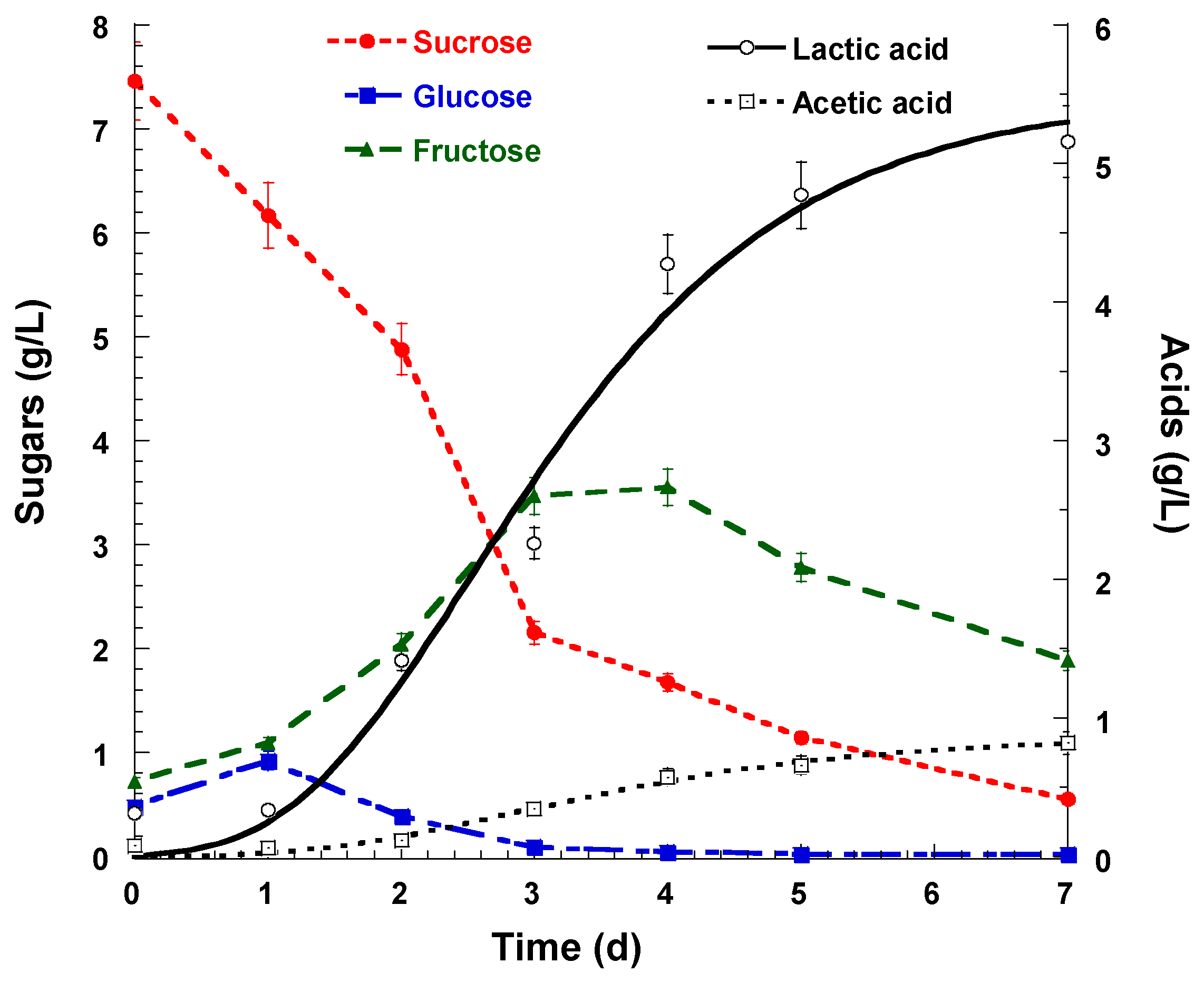
As shown in Figure 1, sucrose was rapidly hydrolyzed within the first three days. Subsequently, its dissimilation rate significantly decreased. Glucose, a product of sucrose hydrolysis, initially accumulated in the medium before being rapidly consumed, reaching near-zero levels by day 3. Upon its appearance in the medium, glucose is immediately utilized. In contrast, fructose accumulated and began to be consumed only after glucose was depleted.
This behavior can be attributed to the microbial composition of FFL. Previous studies have reported a high abundance of LAB in FFL [10,11], including Lactobacillus and Pediococcus species, which are also capable of fermenting fructose [29,30,31]. In addition, FFL has been shown to contain significant populations of yeasts, particularly of the Saccharomyces genus [10,12], which are also able to consume both glucose and fructose, though they generally prefer glucose [32]. However, this preference may vary depending on the strain and environmental conditions [33,34].
Both LA and AA exhibited similar production profiles, reaching maximum concentrations of 5.16 g/L and 0.82 g/L, respectively, at the end of the experiment (Figure 1). These dynamics are characteristic of growth-associated metabolites. Moreover, LA production is well known to be growth-associated under anoxic conditions [27,35].
Under anaerobic conditions, AA can be produced by heterolactic bacteria [19], certain Clostridium species [36], or yeasts such as Brettanomyces/Dekkera [37] or Saccharomyces genius [38]. However, recent studies on FFL have reported the presence of heterolactic bacteria such as Leuconostoc species [10], while also ruling out the presence of Clostridium under strict anaerobic conditions [11]. Therefore, it is reasonable to hypothesize that the observed AA was mainly produced by heterofermentative LAB. This hypothesis is further supported by the similarity in the time profiles of LA and AA.

3.3. pH Evolution

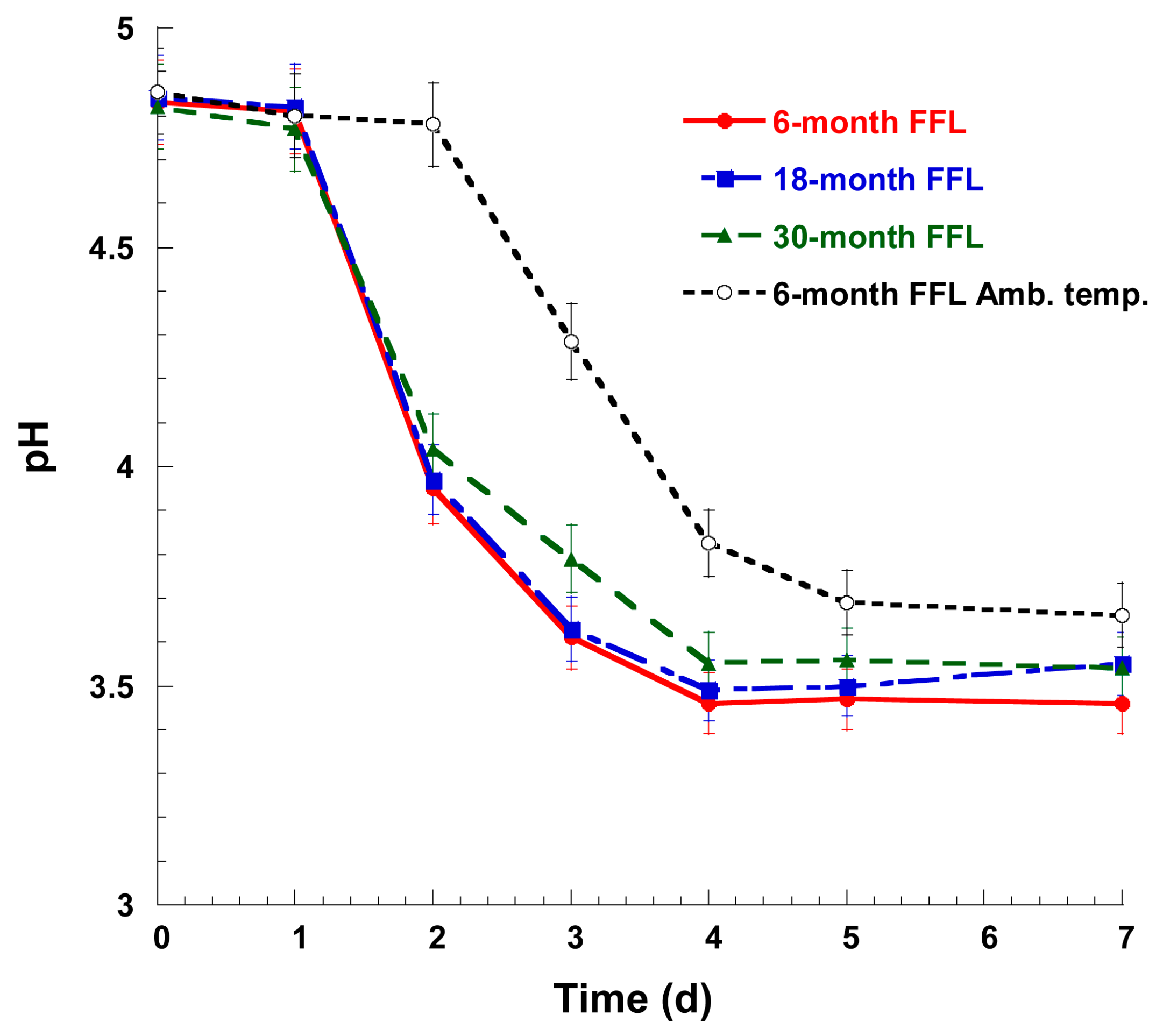
Regardless of the conditions, the pH of the medium decreased over time, reaching final values between 3.5 and 3.7 (Figure 2).
These acidic conditions, well below the optimal pH range for Lactobacillus species (typically between 6.0 and 7.0), are known to significantly impair microbial growth, LA production, and overall productivity [25,26,35].
Similar pH profiles were observed for the three different FFL ages tested. However, experiments conducted at ambient temperatures noticeably exhibited longer lag phase compared to those carried out under controlled or optimal temperature conditions. This slower acidification rate, along with the prolonged lag phase, can be attributed to suboptimal temperatures for microbial activity, as both mesophilic yeasts and LAB generally exhibit optimal growth between 30 °C [35] and 37 °C [27,28]; even though some it can reach up to 44 °C for some strains [13].

3.4. Impact of FFL Storage Time and Temperature on Sucrose Consumption

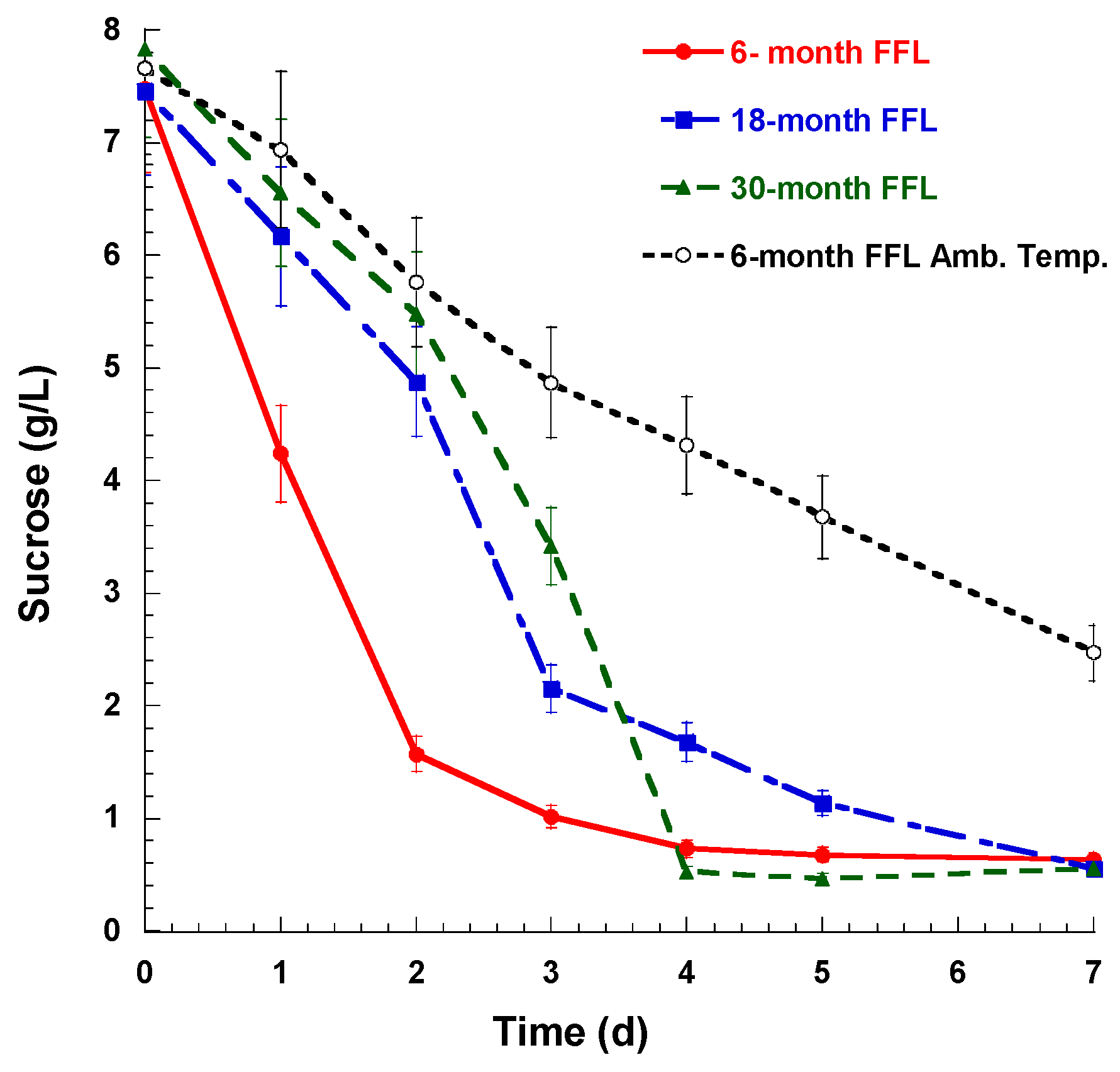
The time-course dynamics of sucrose consumption are presented in Figure 3. Except for the experiment conducted at ambient temperature, sucrose was almost entirely consumed after 7 days, with only approximately less than 1 g/L remaining in the medium. This residual concentration may be linked to the low pH (~3.6), which is known to potentially inhibit LAB activity [25,35].
The experiment using 6-month FFL showed a significantly faster sucrose consumption during the first 4 days, suggesting a higher initial metabolic activity. The run performed at ambient temperature exhibited a linear consumption pattern, with a sucrose degradation rate estimated at 0.745 g/L·d.

3.5. Impact of FFL Storage Time and Temperature on LA Production

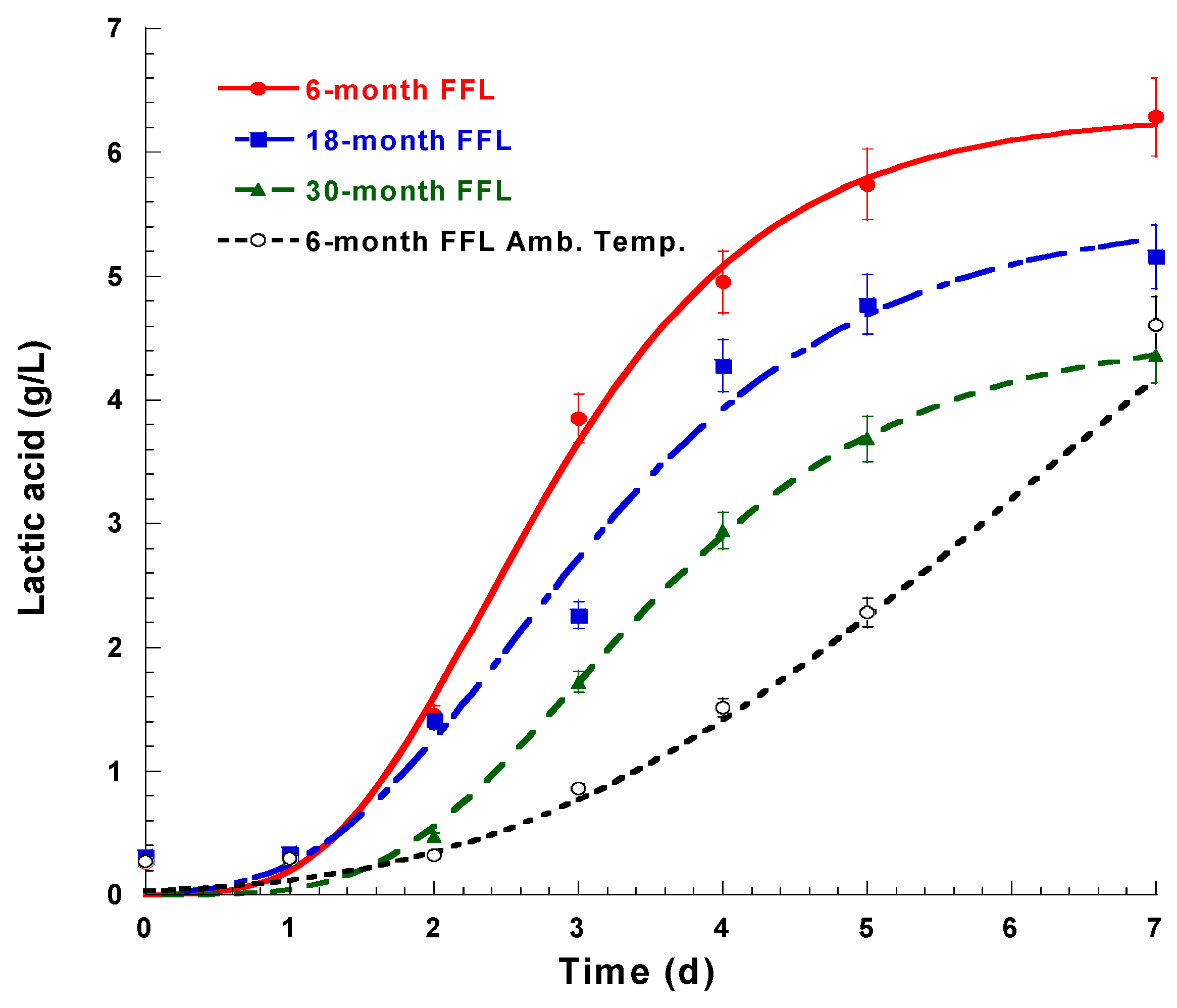
For all experimental runs, LA production over time was accurately described by the Gompertz model, with correlation coefficients exceeding 0.977 (Figure 4, Table 3). Similar to pH evolution and sugar consumption, LA productivity (Vmax) was strongly influenced by the storage time of the FFL: the more recent the FFL solid matrix, the higher the Vmax. Values ranged from 1.06 to 2.16 g/L·d (or 54.4 to 90.0 mg/L·h), respectively. The time at which maximum productivity occurred (topt) also decreased with the freshness of the FFL material, as shown in Table 3. In all cases, LAmax decreased with the age of the FFL, and was lower than concentrations reported to be inhibitory for its production by pure cultures [35]. The lower LAmax values obtained with older FFL suggest that overall metabolic activities are slowed down by prolonged storage, probably due to microbial death, and/or changes in microbial community composition, as already observed for dynamics of yeasts and bacteria in kombucha beverage stored for several weeks, for example [39].
Temperature controlled at 29 °C—close to the optimal growth temperature of LAB-led to a marked improvement in LA productivity, in agreement with previous findings on Lactobacillus pure cultures [35,40].
The LA productivities, ranging from 1.06 to 2.16 g/L·d (i.e., 0.044 to 0.090 g/L·h) remained significantly lower than those reported for pure Lactobacillus strains grown under optimal conditions (including agitation and pH regulation), which typically range from 1.0 g/L·h to 1.45 g/L·h [25,35,41], and even 5.41 g/L·h for a strain of L. Rhamnosus grown on apple pomace [42] or 4.37 g/L·h for a Bacillus strain [43] grown on glucose.

3.6. Impact of FFL Storage Time and Temperature on AA Production

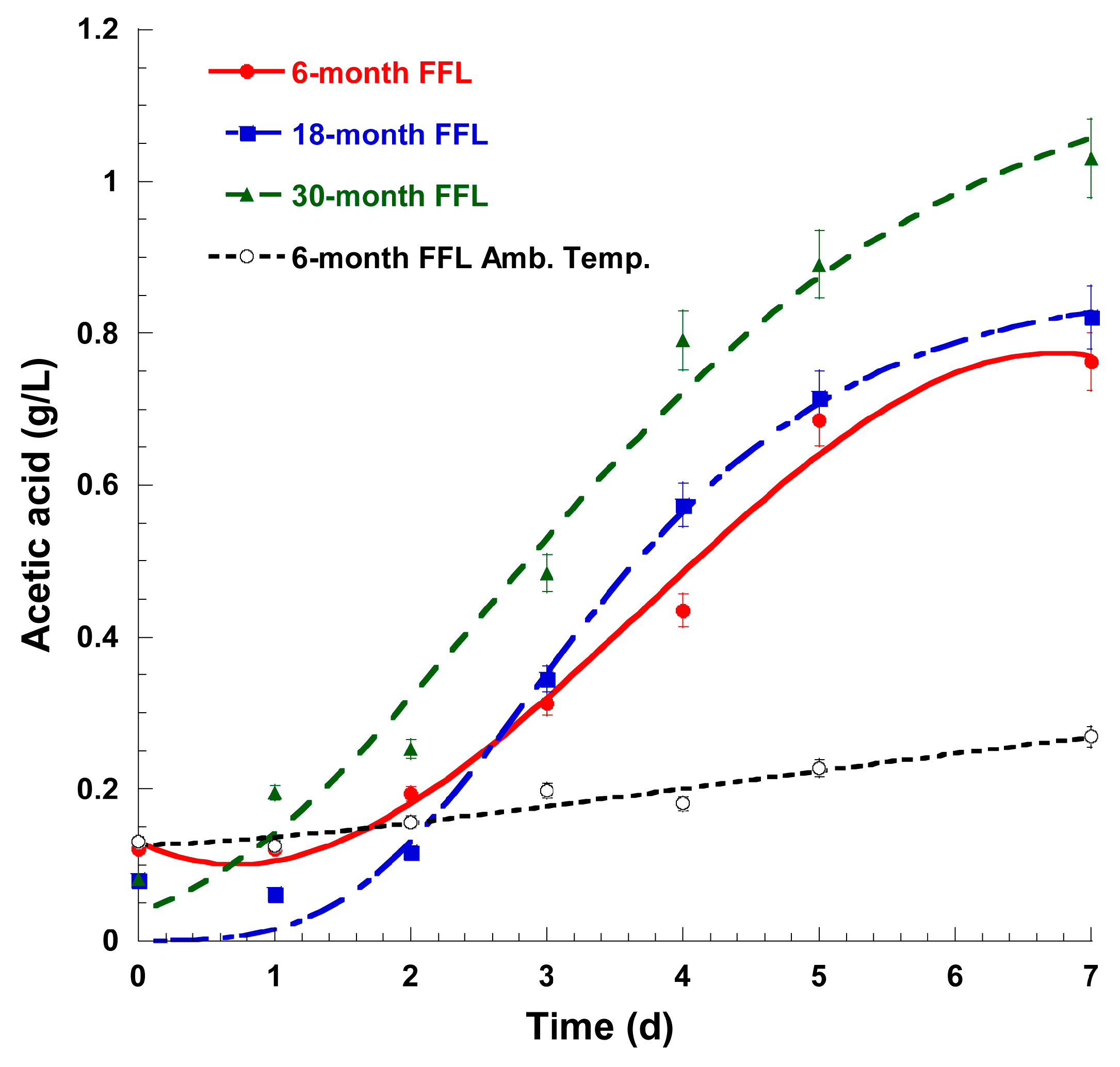
Different models were applied to fit the experimental data of AA production (Figure 5). Data of the 6-, 18- and 30-month FFLs were well described by the Gompertz model. The experiment run with 6-month FFL at ambient temperature exhibited a linear profile (Table 4).
Interestingly, a clear inverse relationship was observed between LA and AA maximal concentrations: LAmax decreased, and AAmax increased with increasing FFL age. This suggests a shift in the microbial community composition during storage, possibly reflecting an enrichment in heterolactic bacteria at the expense of homolactic ones. Some Saccharomyces strains are also able to produce AA up to 1 g/L [38].
Heterolactic fermentation of glucose typically yields LA, AA, ethanol, and CO2 [14,20,43]. Under anoxic conditions, CO2 production during FFL fermentation has been estimated at approximately 2 mL/day for 10 g of solid substrate [11], which corresponds to roughly 68 mg of CO2 per liter of activated FFL after 7 days. Compared to the amounts of LA, AA or ethanol produced in equimolar proportions [23,43], the CO2 contribution is negligible.

3.7. Impact of FFL Storage Time and Temperature on Ethanol Production

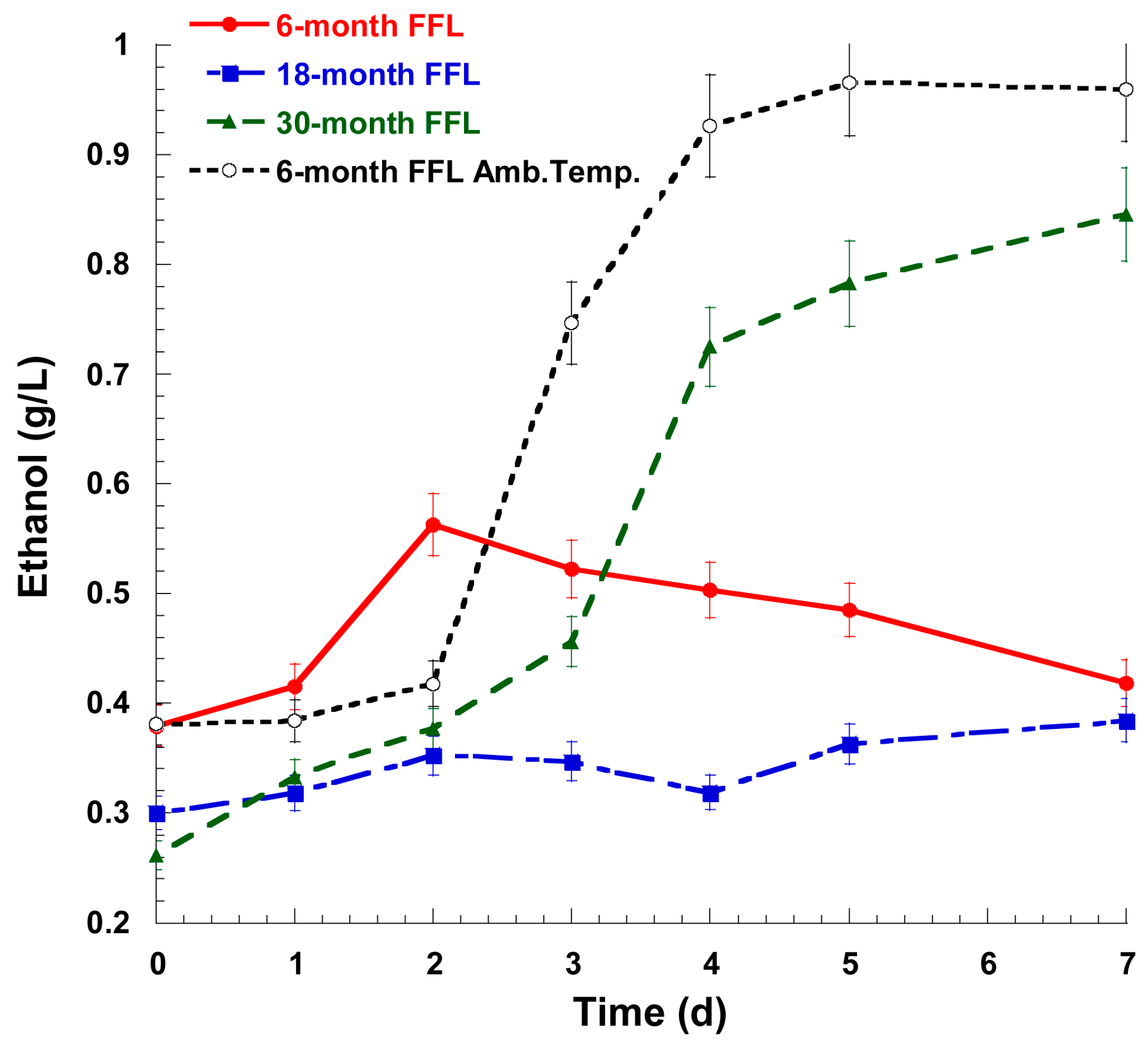
Ethanol production over time did not follow a consistent trend across the four experimental conditions (Figure 6). A growth-like pattern was recorded for the run conducted at ambient temperature or oldest FFL, reaching a maximum of 0.97 g/L on day 5 and 0.82 g/L on day 7, respectively.
The experiments performed with 6-month and 18-month FFLs exhibited low ethanol production, which may be attributed to the dominance of homolactic bacteria in these matrices.

3.8. Conversion Yields: Indicators of Metabolic Diversity

The conversion yields of sugars into metabolic end-products offer valuable insight into the functional diversity of the microbial communities involved under the different experimental conditions (Table 5).
For the 6- and 18-month-old FFLs, high LA yields, combined with consistently low YAA/S and YEtOH/S, indicate a predominance of homofermentative LA bacteria [43,44]. In the case of the 30-month-old FFL, the divergence between AA and ethanol yields suggests a mixed population, with the likely coexistence of homofermentative and heterofermentative LAB as well as ethanol-producing yeasts.
When comparing the experiment conducted at ambient temperature with the one at 29 °C (runs 1 and 4), no difference in LA yield was observed. However, AA yield decreased while ethanol yield increased under ambient temperatures. This suggests that temperature variation influenced the dominant microbial populations and their metabolic routes, favoring organisms with ethanol-producing capabilities at lower temperatures.
Importantly, the LA yield obtained with the 6-month-old FFL is close to the theoretical value of 1 g/g reported for lactose or sucrose conversion by homofermentative LAB [20,29,41], further supporting the dominance of homofermentative pathways in these conditions. In contrast, with the oldest FFL, this yield decreased markedly, reaching values close to the theoretical value of 0.5 g/g reported for heterofermentative LAB [43].

4. Conclusions

This study assessed the influence of various experimental conditions on the activation dynamics of FFL, with a view to its potential use in the production of biofertilizers. This led to the following conclusions: solid FFL can be stored at 4 °C for extended periods-up to at least 30 months-without losing its ability to be (re)activated. However, longer storage times resulted in a prolonged lag phase, reduced LA productivity, and an increased in AA/LA ratio during the activation phase, suggesting a change in the microbial community structure over time. Maintaining a temperature of 29 °C enhanced LA productivity without altering its final concentration. In contrast, experiments conducted at ambient temperature (15–25 °C) exhibited linear profiles for pH, sugar consumption, and AA production, due to suboptimal conditions for microbial growth. During the activation phase, the hydrolysis of sucrose initially led to the accumulation of glucose and fructose. Glucose was consumed first, while fructose continued to accumulate until glucose depletion triggered its dissimilation—suggesting the presence of fructophilic microorganisms. LA production was well described by the Gompertz model under all tested conditions. In contrast, AA production followed different kinetics, and the Gompertz model proved relevant only for experiments conducted at controlled temperature (29 °C), indicating the involvement of diverse metabolic pathways [13]. Ethanol was also detected as a final product of fermentation. Its final concentration increased with FFL age, although its production did not follow a consistent kinetic model pattern, reflecting a greater microbial and metabolic diversity.
These results contribute to a better understanding of the metabolic dynamics occurring during FFL activation and highlight key parameters that should be considered for optimizing future biofertilizer production processes. In particular, it is recommended that users avoid prolonged storage of FFL and perform the activation process at temperatures of approximately 30 °C.

Author Contributions

Conceptualization, P.C.; methodology P.C. and L.C.; validation, L.C. and P.C.; formal analysis, P.C.; investigation, S.N., L.M., M.M. and P.C.; resources, M.M.; writing—original draft preparation, L.M., L.C. and P.C.; writing—review and editing, L.M., P.C.; visualization P.C., supervision, L.C. and P.C.; project administration, P.C.; funding acquisition, L.M. and P.C. All authors have read and agreed to the published version of the manuscript.

Funding

This research received funding from Innovative and Valorization Department of IRD (French Research Institute for Development).

Institutional Review Board Statement

Not applicable.

Informed Consent Statement

Not applicable.

Data Availability Statement

The original contributions presented in this study are included in the article. Further inquiries can be directed to the corresponding author.

Acknowledgments

Authors wish to thank Sabine Sicard from the Aix-Marseille University library for her assistance in bibliographic research, and the IRD Communication Department for its support for promoting our research.

Conflicts of Interest

The authors declare no conflicts of interest.

Abbreviations

The following abbreviations are used in this manuscript:
FFLFermented forest litter
aFFLActivated fermented forest litter
LABLactic acid bacteria
LALactic acid
AAAcetic acid
γAA/LA ratio
EtOHEthanol
m1, m2, kFitting parameters of the Gompertz model
VmaxMaximum productivity for each run
toptTime of maximum productivity
SSucrose
YConversion yield of sucrose into product

References

  1. FAO. Soils for Nutrition: State of the Art; FAO: Rome, Italy, 2022. [Google Scholar] [CrossRef]
  2. Afzal, A.; Asad, S.A. Microbial applications for sustainable agriculture. In Innovations in Sustainable Agriculture; Farooq, M., Pisante, M., Eds.; Springer: Cham, Switzerland, 2019; pp. 43–77. [Google Scholar] [CrossRef]
  3. Glockow, T.; Kaster, A.K.; Rabe, K.S.; Niemeyer, C.M. Sustainable agriculture: Leveraging microorganisms for a circular economy. Appl. Microbiol. Biotechnol. 2024, 108, 452. [Google Scholar] [CrossRef]
  4. Suthar, H.; Hingurao, K.; Vaghashiya, J.; Parmar, J. Fermentation: A process for biofertilizer production. In Microorganisms for Green Revolution, Microoganisms for Sustainability 6; Panpatte, D.G., Jhala, Y.K., Vyas, R.V., Shelat, H.N., Eds.; Springer Nature: Singapore, 2017; pp. 229–252. [Google Scholar] [CrossRef]
  5. El Sheikha, A.F.; Ray, R.C. Bioprocessing of horticultural wastes by solid-state fermentation into value-added/innovative bioproducts: A review. Food Rev. Int. 2022, 39, 3009–3065. [Google Scholar] [CrossRef]
  6. Areeshi, M.Y. Recent advances on organic biofertilizer production from anaerobic fermentation of food waste: Overview. Int. J. Food Microbiol. 2022, 374, 109719. [Google Scholar] [CrossRef] [PubMed]
  7. Terre & Humanisme. Manuel de la Litière Forestière Fermentée; Editions du Rouergue: Arles, France, 2021; p. 128. ISBN 978-2-8126-2180-2. [Google Scholar]
  8. Christen, P.; Lerch, T.; Criquet, S.; Abecassis, V.; Fernandes, P. Un biostimulant agricole à base de litière forestière fermentée. In Explorer L’environnement—Des Solutions Pour Innover; Fouilland, E., Gourmelon, F., Eds.; CNRS-Editions Pub.: Paris, France, 2023; pp. 19–22. [Google Scholar]
  9. Marois, J.; Lerch, T.Z.; Dunant, U.; Farnet da Silva, A.M.; Christen, P. Chemical and microbial characterization of fermented forest litters used as biofertilizers. Microorganisms 2023, 11, 306. [Google Scholar] [CrossRef]
  10. Miché, L.; Dries, A.; Ben Ammar, I.; Davidson, S.; Cagnacci, L.; Combet-Blanc, Y.; Abecassis, V.; Penton Fernandez, G.; Christen, P. Changes in chemical properties and microbial communities’ composition of a forest litter–based biofertilizer produced through aerated solid-state culture under different oxygen conditions. Environ. Sci. Pollut. Res. 2024, 32, 16725–16739. [Google Scholar] [CrossRef]
  11. Gutierrez, A.; Rébufa, C.; Farnet da Silva, A.M.; Davidson, S.; Foli, L.; Combet-Blanc, Y.; Martinez, M.; Christen, P. Biochemical and microbial characterization of a forest litter-based bio-fertilizer produced in batch culture by fermentation under different initial oxygen concentrations. World J. Microbiol. Biotechnol. 2024, 40, 353. [Google Scholar] [CrossRef]
  12. Zoumman, A.M.A.; Fernandes, P.; Gueye, M.; Chaintreuil, C.; Cournac, L.; Kane, A.; Assigbetse, K. Exploring microbial diversity in forest litter-based fermented bioproducts and their effects on tomato (Solanum lycopersicum L.) growth in Senegal. Int. J. Plant Biol. 2025, 16, 55. [Google Scholar] [CrossRef]
  13. Abedi, E.; Bagher Hashemi, S.M. Lactic Acid Production—Producing Microorganisms and Substrates Sources-State of Art. Heliyon 2020, 6, e04974. [Google Scholar] [CrossRef]
  14. Huang, J.; Wang, J.; Liu, S. Advanced Fermentation Techniques for Lactic Acid Production from Agricultural Waste. Fermentation 2023, 9, 765. [Google Scholar] [CrossRef]
  15. Wan-Mohtar, W.A.A.Q.I.; Khalid, N.I.; Rahim, M.H.A.; Luthfi, A.A.I.; Zaini, N.S.M.; Din, N.A.S.; Mohd Zaini, N.A. Underutilized Malaysian Agro-Industrial Wastes as Sustainable Carbon Sources for Lactic Acid Production. Fermentation 2023, 9, 905. [Google Scholar] [CrossRef]
  16. Lech, M. Optimisation of protein-free waste whey supplementation used for the industrial microbial production of lactic acid. Biochem. Eng. J. 2020, 157, 107531. [Google Scholar] [CrossRef]
  17. Mukherjee, R.; Raj, N.; Sivaprakasam, S. Harnessing valorization potential of whey permeate for D-lactic acid production using lactic acid bacteria. Biomass Conv. Bioref. 2023, 13, 15639–15658. [Google Scholar] [CrossRef]
  18. Raman, J.; Kim, J.S.; Choi, K.R.; Eun, H.; Yang, D.; Ko, Y.J.; Kim, S.J. Application of lactic acid bacteria in sustainable agriculture: Advantages and limitations. Int. J. Mol. Sci. 2022, 23, 7784. [Google Scholar] [CrossRef] [PubMed]
  19. Daranas, N.; Rosello, G.; Cabrefiga, J.; Donati, I.; Francés, J.; Badosa, E.; Spinelli, F.; Montesinos, E.; Bonaterra, A. Biological control of bacterial plant diseases with Lactobacillus plantarum strains selected for their broad-spectrum activity. Ann. Appl. Biol. 2019, 174, 92–105. [Google Scholar] [CrossRef]
  20. Ferreira Campos, M.I.; de Souza Barbosa, P.P.; Junqueira Camargo, L.; da Silva Pinto, L.; Mataribu, B.; Serraõ, C.; Marques-Santos, L.F.; Lopes, J.H.; Cajhu de Oliveira, J.M.; de Almeida Gadelha, C.A.; et al. Characterization of goat whey proteins and their bioactivity and toxicity assay. Food Biosci. 2022, 46, 101591. [Google Scholar] [CrossRef]
  21. Rodriguez-Morgado, B.; Caballero Jimenez, P.; Terrada Moral, M.; Parrado Rubio, J. Effect of L-lactic acid from whey wastes on enzyme activities and bacterial diversity of soil. Biol. Fertil. Soils 2017, 53, 389. [Google Scholar] [CrossRef]
  22. Adler-Nissen, J.; Demain, A.L. Aeration-controlled formation of acetic acid in heterolactic fermentations. J. Ind. Microbiol. 1994, 13, 335–343. [Google Scholar] [CrossRef]
  23. Lunelli, B.H.; Andrade, R.R.; Atala, D.I.P.; Wolf Maciel, M.R.; Maugeri Filho, F.; Maciel Filho, R. Production of lactic acid from sucrose: Strain selection, fermentation, and kinetic modelling. Appl. Biochem. Biotechnol. 2010, 161, 227–237. [Google Scholar] [CrossRef]
  24. Sikder, J.; Chakraborthy, S.; Sharma, V.; Drioli, E. Kinetic of lactic acid production from sugarcane juice using Lactobacillus plantarum NCIM 2912. Asia Pac. J. Chem. Eng. 2014, 9, 374–381. [Google Scholar] [CrossRef]
  25. Popova-Krumova, P.; Donova, S.; Atanasova, N.; Yankov, D. Lactic acid production by Lactiplantibacillus plantarum AC 11S-Kinetics and modeling. Microorganisms 2004, 12, 739. [Google Scholar] [CrossRef]
  26. Fu, W.; Mathews, A.P. Lactic acid production from lactose by Lactobacillus plantarum: Kinetic model and effects of pH, substrate, and oxygen. Biochem. Eng. J. 1999, 3, 163–170. [Google Scholar] [CrossRef]
  27. Sharma, V.; Mishra, H.N. Unstructured kinetic modeling of growth and lactic acid production by Lactobacillus plantarum NCDC 414 during fermentation of vegetable juices. LWT–Food Sci. Technol. 2014, 59, 1123–1128. [Google Scholar] [CrossRef]
  28. Ghimire, A.; Sah, A.K.; Poudel, R. Kinetics and modelling of growth and lactic acid production in Gundruk, a Himalayan fermented vegetable dish. Food Sci. Nutr. 2020, 8, 5591–5600. [Google Scholar] [CrossRef] [PubMed]
  29. Viesser, J.A.; de Melo Pereira, G.V.; de Carvalho Neto, D.P.; Rogez, H.; Goes-Neto, A.; Azevedo, V.; Brenig, B.; Aburjaile, F.; Soccol, C.R. Co-culturing fructophilic lactic acid bacteria and yeast enhanced sugar metabolism and aroma formation during cocoa beans fermentation. Int. J. Food Microbiol. 2021, 329, 109015. [Google Scholar] [CrossRef] [PubMed]
  30. de Oliveira Junqueira, A.C.; de Melo Pereira, G.V.; Viesser, J.A.; de Carvalho Neto, D.P.; Peters Querne, L.B.; Soccol, C.R. Isolation and selection of fructose-consuming lactic bacteria associated with coffee bean fermentation. Food Biotechnol. 2022, 36, 58–75. [Google Scholar] [CrossRef]
  31. Endo, A.; Maeno, S.; Tanizawa, Y.; Kneifel, W.; Arita, M.; Dicks, L.; Salminen, S. Fructophilic lactic acid bacteria, a unique group a fructose-fermenting microbes. Appl. Environ. Microbiol. 2018, 84, e01290-18. [Google Scholar] [CrossRef]
  32. Schutz, M.; Gafner, J. Lower fructose uptake capacity of genetically characterized strains of Saccharomyces bayanus compared to strains of Saccharomyces cerevisiae—A likely cause of reduced alcoholic fermentation activity. Am. J. Enol. Viti. 1995, 46, 175–180. [Google Scholar] [CrossRef]
  33. Berthels, N.J.; Cordero Otero, R.R.; Bauer, F.F.; Thevelein, J.M.; Pretorius, I.S. Discrepancy in glucose and fructose utilisation during fermentation by Saccharomyces cerevisiae wine yeast strains. FEMS Yeast Res. 2004, 4, 683–689. [Google Scholar] [CrossRef]
  34. Berthels, N.J.; Cordero Otero, R.R.; Bauer, F.F.; Pretorius, I.S.; Thevelein, J.M. Correlation between glucose/fructose discrepancy and hexokinase kinetic properties in different Saccharomyces cerevisiae wine yeast strains. Appl. Microbiol. Biotechnol. 2008, 77, 1083–1091. [Google Scholar] [CrossRef]
  35. Giraud, E.; Lelong, B.; Raimbault, M. Influence of pH and initial lactate concentration on the growth of Lactobacillus plantarum. Appl. Microbiol. Biotechnol. 1991, 36, 96–99. [Google Scholar] [CrossRef]
  36. Cheryan, M. Acetic acid production. In Encyclopedia of Microbiology, 3rd ed.; Schaechter, M., Ed.; Academic Press: Oxford, UK, 2009; pp. 145–149. [Google Scholar]
  37. Ciani, M.; Ferraro, L. Role of oxygen on acetic acid production by Brettanomyces/Dekkera in winemaking. J. Sci. Food Agric. 1997, 75, 489–495. [Google Scholar] [CrossRef]
  38. Paraggio, M.; Fiore, C. Screening of Saccharomyces cerevisiae wine strains for the production of acetic acid. World J. Microbiol. Biotechnol. 2004, 20, 743–747. [Google Scholar] [CrossRef]
  39. Grassi, A.; Cristani, C.; Palla, M.; Di Giorgi, R.; Giovanetti, M. Storage time and temperature affect microbial dynamics of yeasts and acetic acid bacteria in a kombucha beverage. Int. J. Food. Microbiol. 2022, 382, 109934. [Google Scholar] [CrossRef]
  40. Abdulla, R.; Derman, E.; Balasubramaniam, S.; Gansau, J.A.; Chandel, A.K. Bioconversion of oil palm empty bunches into lactic acid via Lactobacillus acidophilus. Waste Biomass Valor. 2025, 16, 4955–4967. [Google Scholar] [CrossRef]
  41. Trontel, A.; Barsic, V.; Slavica, A.; Santek, B.; Novak, S. Modelling the effect of different substrates and temperature on the growth and lactic acid production by Lactobacillus amylovorus DSM 20351 in batch process. Food Technol. Biotechnol. 2010, 48, 352–361. [Google Scholar]
  42. Gullon, B.; Yanez, R.; Alonso, J.L.; Parajo, J.C. L-lactic acid production from apple pomace by sequential hydrolysis and fermentation. Biores. Technol. 2008, 99, 308–319. [Google Scholar] [CrossRef] [PubMed]
  43. Abdel-Rahman, M.A.; Tashiro, Y.; Sonomoto, K. Recent advances in lactic acid production by microbial fermentation processes. Biotechnol. Adv. 2013, 31, 877–902. [Google Scholar] [CrossRef]
  44. Moreira Costa, V.; Basso, T.O.; Poleto Angeloni, L.H.; Oetterer, M.; Basso, L.C. Production of acetic acid, ethanol and optical isomers of lactic acid by Lactobacillus strains isolated from industrial ethanol fermentation. Cienc. Agrotec. 2008, 32, 503–509. [Google Scholar] [CrossRef]
Figure 1. Time-course profiles of sugar consumption and acid production during the activation of the 18-month FFL (dashed lines represent the measured values, and solid line represents the model).
Fermentation 12 00052 g001
Figure 2. pH evolution during FFL activation.
Fermentation 12 00052 g002
Figure 3. Sucrose consumption during FFL activation.
Fermentation 12 00052 g003
Figure 4. Experimental data (symbols) and predicted Gompertz model (lines) for LA production during FFL activation.
Fermentation 12 00052 g004
Figure 5. Experimental data (symbols) and predicted Gompertz or linear model (lines) for AA production during FFL activation.
Fermentation 12 00052 g005
Figure 6. Ethanol production profiles during FFL activation.
Fermentation 12 00052 g006
Table 1. Experimental conditions for aFFL fermentation (for 1 L).
Run6-Month FFL
(g)
18-Month FFL
(g)
30-Month FFL
(g)
Temp.
(°C)
125--29
2-25-29
3--2529
425--Amb. 1
1 Ambient temperature comprised between 15 °C and 25 °C.
Table 2. Composition of FFLs and molasses used for aFFL production. Values (in g/kg) are the average of two biological replicates, measured in duplicate.
Substrates6-Month FFL18-Month FFL30-Month FFLMolasses
Glucose0.846 ± 0.040.645 ± 0.02 0.734 ± 0.0524.8 ± 0.63
Fructose 13.72 ± 0.214.27 ± 0.184.24 ± 0.2636.7 ± 0.97
Sucrose 1---293.0 ± 2.59
Lactic acid2.38 ± 0.162.83 ± 0.424.08 ± 0.38-
Acetic acid5.73 ± 0.446.05 ± 0.399.89 ± 0.57-
1 FFL samples may contain residual fructose and/or galactose, and sucrose and/or lactose that cannot be separated by HPLC.
Table 3. Kinetic parameters for LA production calculated with the Gompertz model.
RunLAmax
(g/L)
Vmax
(g/L·d)
topt
(d)
R2
16.302.162.350.995
25.501.462.510.977
34.541.302.960.989
4nd *1.067.220.992
* nd: not determined.
Table 4. Kinetic parameters for AA production calculated with the Gompertz model.
RunAAmax
(g/L)
Vmax
(g/L·d)
topt
(d)
R2
10.830.1282.660.976
20.910.2052.870.973
31.190.2182.540.978
4 1-0.021 1-0.928
1 Fur run 4 (6-month FFL at ambient temperature), experimental data are fitted with a linear regression.
Table 5. Yields of sucrose conversion into LA, AA and ethanol.
RunYLA/S
(g/g)
YAA/S
(g/g)
γ
(g/g)
YEtOH/S
(g/g)
10.880.0360.0400.083
20.700.0420.0600.084
30.560.0620.1100.100
40.830.0150.0180.020
Disclaimer/Publisher’s Note: The statements, opinions and data contained in all publications are solely those of the individual author(s) and contributor(s) and not of MDPI and/or the editor(s). MDPI and/or the editor(s) disclaim responsibility for any injury to people or property resulting from any ideas, methods, instructions or products referred to in the content.