Article

High Cell Density Fermentation Strategy for High-Level Soluble Expression of Glucagon-like Peptide-1 Analogue in Escherichia coli


Bioprocess and Bioproduct Development Laboratory, University School of Biotechnology, Guru Gobind Singh Indraprastha University, Sector 16C, Dwarka, New Delhi 110078, India
*
Author to whom correspondence should be addressed.
Fermentation 2026, 12(1), 53; https://doi.org/10.3390/fermentation12010053

Submission received: 30 October 2025 / Revised: 30 November 2025 / Accepted: 2 December 2025 / Published: 16 January 2026

Abstract

Glucagon-like peptide-1 (GLP-1) is an incretin hormone and therapeutic agent for Type II diabetes mellitus. However, recombinant production in E. coli yields insufficient quantities, increasing manufacturing costs and limiting patient access. Improving yield and productivity is crucial to make GLP-1 treatments more affordable. An optimized bioprocess was developed to enhance the yield of recombinant GLP-1 (rGLP-1) analogues. Expression constructs encoding monomeric and concatemeric GLP-1 fused to GST were designed. Batch fermentations of these clones at varying pre-induction specific growth rates guided the fed-batch strategy for yield enhancement. The specific yield of monomer construct exhibited higher yields than the concatemer. Process optimization achieved a specific yield (Yp/x) of 116.7 mg/g, a dry cell weight of 88.9 g/L, and a volumetric yield of 10.3 g/L. The specific productivity of soluble rGLP-1 reached 0.4 g/L/h. Purification via affinity chromatography and enterokinase cleavage yielded authentic GLP-1 peptide confirmed by Western blot and mass spectrometry. The developed high-yield fermentation process significantly enhances rGLP-1 productivity in E. coli, potentially reducing upstream production costs by 20–30% and enabling wider accessibility to affordable GLP-1 therapies.

1. Introduction

Diabetes is a chronic metabolic disorder characterized by deficiencies in insulin secretion, function or both [1]. It is a major global health concern [2]. The World Health Organization (WHO) reports that the number of individuals living with diabetes increased from 200 million in 1990 to 830 million in 2022, an increase of 630 million over this period [3]. Pharmacological management of diabetes includes various therapeutic agents, notably GLP-1 receptor agonists [4]. Glucagon-like peptide-1 (GLP-1), an incretin hormone produced in the gut, consists of a 30- or 31-amino-acid sequence [5,6,7]. It is secreted by intestinal L cells in response to food intake [8,9] and plays a critical role in regulating insulin secretion, gastric emptying, and satiety, which makes it a promising target for diabetes therapy [10]. The clinical utility of GLP-1 is limited by its short half-life of less than two minutes due to rapid degradation by dipeptidyl peptidase-IV (DPP-IV) [11]. To overcome this limitation, GLP-1 analogues and DPP-IV inhibitors have been developed as novel treatment strategies for Type II diabetes mellitus [12]. This study aims to develop an optimized high-density fermentation strategy to enhance the soluble expression yields of GLP-1 analogues in E. coli, offering a more cost-effective solution for diabetes treatment.
Liraglutide, a GLP-1 analogue, consists of 31 amino acids and exhibits 97% sequence homology with the endogenous peptide. Commercial production of liraglutide in Saccharomyces cerevisiae is currently not cost-effective [13]. For instance, producing liraglutide in yeast can result in low yields as low as 50 mg/L, highlighting the financial challenges of this method. Although efforts have been made to improve production levels, significant challenges remain, and detailed data on yield and productivity are lacking. Other analogues, such as Exenatide and Lixisenatide, are synthesized using solid-phase peptide synthesis [14]. This method can achieve yields up to 100 mg/L, but the production costs may range from $500 to $1000 per gram. Precise yield data for commercial products are limited in the public domain [15], and production costs remain high [16].
E. coli provides several advantages over yeast and mammalian expression systems, including reduced production costs, increased protein yields, and straightforward genetic manipulation. These characteristics render E. coli an appropriate platform for glucagon-like peptide-1 (GLP-1) analogue production, as these peptides do not require post-translational modifications [17,18]. Despite these benefits, direct expression of GLP-1 in bacterial systems remains problematic, with most studies reporting inclusion body formation [19,20] or low product yields [21]. This persistent limitation necessitates the development of innovative strategies to address inclusion body formation.
High cell density fermentation (HCDF) of E. coli in synthetic medium with controlled nutrient feeding is an established method to increase recombinant protein production [22]. Precise regulation of carbon and nitrogen sources reduces metabolic stress and minimizes by-product accumulation, such as acetate. This strategy maintains optimal growth rates and supports a productive physiological state in the cells. As a result, volumetric yield and overall productivity are improved without reducing specific yield, since balanced substrate feeding enables efficient protein expression. Additionally, strict control of dissolved oxygen and pH promotes biomass accumulation and stable expression of target recombinant proteins [23]. However, the current literature lacks reports on the development of HCDF specifically aimed at achieving soluble expression of recombinant proteins.
This study addresses these challenges by optimizing the bioprocess to enhance soluble expression of the target protein. An E. coli strain was genetically engineered to harbour a plasmid encoding the recombinant GLP-1 (rGLP-1) analogue peptide, expressed as both monomers and concatemers fused to a glutathione S-transferase (GST) tag.
Following optimization in shake flasks, a fed-batch fermentation process was implemented. This approach yielded approximately 88.9 g/L of dry cell weight at 8 h post-induction with the GST-GLP-1 analogue. A volumetric yield of 10.3 g/L was achieved at an optical density (OD600) of 180, representing the highest volumetric yield reported to date for GLP-1 in the E. coli expression system. Additionally, the highest volumetric productivity for a soluble rGLP-1 analogue, 0.4 g/L/h, was obtained during fed-batch fermentation. The GST-GLP-1 analogue was purified using affinity chromatography and subsequently cleaved enzymatically with enterokinase.

2. Materials and Methods

2.1. Strains, Plasmids, Chemicals, and Filters

For sub-cloning and plasmid construction, the E. coli DH5α strain was selected. Conversely, the BL21(DE3) strain was chosen for expression analysis. The vector pGEX-4T-1 served as the expression vector in this study. Plasmid pGEX-4T-1 with GST tag was available for fusion upstream of desired protein or peptide and used for the expression of the fusion proteins. The GLP-1 analogue peptide gene as monomer and concatemer were cloned in the restriction sites BamHI and XhoI in the pGEX-4T-1 vector, which was synthesized from GenScript (Piscataway, NJ, USA). Details of the hosts and plasmids are given in Table 1, while details of genes are provided in Table S1. The following reagents were acquired from Ameresco (Framingham, MA, USA): Agarose ITM (Cat No.: 0710), Acrylamide (Cat No.: 0341), Bis-acrylamide (Cat No.: 0172), sodium dodecyl sulphate (SDS) (Cat No.: 0227), Ammonium persulfate (APS) (Cat No.: 0486), Isopropyl β-D-1-thiogalactopyranoside (IPTG) (Cat No.: 0487), and TEMED (Cat No.: 0761). Thermo Fisher Scientific (Vilnius, Lithuania) supplied the GeneJET plasmid miniprep kit (Cat No.: K0502) and GeneJET gel extraction kit (Cat No.: K0691). HiMedia (Mumbai, India) provided Luria–Bertani (LB) medium (Cat No.: M1245), Terrific broth (Cat No.: G004-500G), and ampicillin (Cat No.: CMS645). Sodium hydroxide (cat No.: 68451) and Ethylene diamine tetra-acetic acid (EDTA) (Cat No.: 054960) were obtained from SRL (Gurugram, India). The procurement of additional chemicals and buffer salts was conducted through Merck-Millipore, Darmstadt, Germany. Amicon® ULTRAcel® centrifugal filters, specifically 10K (cat No.: UFC901096) and 3K (Cat No.: UFC900324) variants, were sourced from Merk-Millipore, Cork, Ireland. Fermentas, Vilnius, Lithuania, supplied the restriction enzymes, ligase, and polymerase enzymes. The PierceTM BCA protein assay kit (Cat No.: 23227) was acquired from Thermo Fisher Scientific, Tokyo, Japan. G Biosciences, St. Louis, MO, USA, provided the glutathione resin (Cat No.: 786-310), Accu-chek, Mannheim, Germany (Cat No.: 07444141212), Recombinant Enterokinase, Merck Millipore (Cat No.: 69066-3), Anti-GLP-1 antibody mouse mAb Novus (Cat No.: NLS1205SS), anti-mouse IgG, Santa Cruz, Dallas, TX, USA (Cat No.: m-IgGκ BP-HRP: sc-516102), Antifoam 204, Sigma-Aldrich, St. Louis, MO, USA (Cat No.: A8311), and B-PER™ Bacterial Protein Extraction Reagent, Thermo Fisher Scientific, Waltham, MA, USA (Cat No.: 78243). All supplementary reagents utilized were of analytical-grade quality.

2.2. Design and Expression of Recombinant GST-GLP-1 Analogue

GLP-1 analogue monomer (codon-optimized for E. coli) was synthesized by Genscript (Piscataway, NJ, USA) in the pUC19 vector while GLP-1 analogue concatemer was synthesized by Genscript (Piscataway, NJ, USA) in the pGEX-4T-1 vector. This vector contained BamHI and XhoI restriction sites at the N- and C-termini, respectively. Furthermore, an enterokinase (EK) cleavage site was incorporated upstream to the GLP-1 analogue sequence. The primer sequences utilized in this research are detailed in Table 2. For the polymerase chain reaction, the following thermal cycling protocol was implemented: an initial denaturation phase at 95 °C for 3 min, succeeded by 30 cycles comprising denaturation at 95 °C for 30 s, annealing at 44.7 °C for 45 s, and extension at 74 °C. The procedure culminated with a final extension step at 74 °C for 5 min, after which the reaction process was held at 4 °C. The GLP-1 analogue gene product, following PCR amplification, underwent elution using the GeneJet extraction kit (Cat No.: K0691, Thermo fisher scientific, Vilnius, Lithuania). The isolated product and pGEX-4T-1 vector underwent enzymatic digestion using their corresponding restriction endonucleases, followed by a ligation reaction catalyzed by T4 DNA ligase. Subsequently, the ligation mixture was introduced into E. coli DH5α competent cells to facilitate the identification of positive transformants. The incorporation of the gene into the pGEX-4T-1 vector was validated through a series of techniques, encompassing restriction digestion, colony PCR, and Sanger sequence analysis. Upon confirmation, the successfully recombinant plasmid (pGEX-4T-1-GLP1 analogue) was isolated and preserved as a cell bank at temperatures of −70 °C for further use. To facilitate expression studies, the plasmid was subsequently transformed into the BL21(DE3) bacterial strain. Colonies obtained were subsequently used for expression studies.

2.3. Fermentation Process Development and Optimization

2.3.1. Expression Analysis in Shake Flask

Colonies for two clones (GST-GLP-1 monomer and GST-10× GLP-1 concatemer) were inoculated into 10 mL of LB medium (Tryptone 10 g/L, yeast extract 5 g/L, and sodium chloride 10 g/L) containing ampicillin at 100 µg/mL to prepare the primary culture. These cultures were then incubated overnight at 37 °C for GST-GLP-1 monomer and for GST-10× GLP-1 concatemer, both shaken at 200 rpm in an incubator shaker. For expression, a specific volume of the overnight-grown culture was used to inoculate 100 mL of fresh TB medium (Tryptone 12 g/L, yeast extract 24 g/L, potassium dihydrogen phosphate 2.2 g/L, and Dibasic potassium phosphate 9.4 g/L) to achieve an initial optical density of around 0.05 at 600 nm (OD600 nm) at the time of inoculation. The secondary cultures were incubated at 37 °C in a shaker incubator. Upon reaching an OD600 nm of 0.6–0.8, the culture was induced with 0.5 mM IPTG. The cultures were kept at 37 °C and collected 4 and 8 h post-induction for both monomer and concatemer. Growth was assessed by measuring OD at 600 nm. The cultures were centrifuged at 6000× g for 10 min. The pellet and supernatant were collected, then stored at −20 °C for future characterization. For expression analysis, an appropriate volume of 5× gel-loading dye was added to both the pellet and supernatant. This mixture was heated at 100 °C for 10 min, centrifuged again, and subsequently loaded onto a 12% SDS-PAGE gel. The experiments were conducted in triplicate. Subsequently, the gels were stained using Coomassie brilliant blue, and the bands were measured by densitometry (ImageJ software, version 1.54d).

2.3.2. Optimization of Process Conditions for Soluble Expression of GST-GLP-1 Fusion Protein

Optimization of Inducer IPTG concentration (0.01, 0.1, 0.5, 0.7 and 1 mM) and pH (5.5, 6.0, 6.5, 7.0, and 7.5) was performed in a shake flask at 37 °C to determine the optimal concentrations, varying one factor at a time. To optimize temperature, monomer studies were conducted at 37 °C, 32 °C, and 25 °C, while concatemer studies were performed at 30 °C, 25 °C, and 18 °C.
For optimization of process conditions, bacterial cultures were grown in synthetic media. The composition of the synthetic media is described earlier [24]. The following day, an appropriate aliquot of the overnight culture was transferred to 20 mL of synthetic media supplemented with 100 µg/mL ampicillin. The culture was then incubated until the OD600 reached a range of 0.6–0.8. Following culture preparation, IPTG (0.5 mM) was introduced to induce expression for a duration of 8 h at 25 °C. According to the final OD of the cells, 108 cells/mL were collected from each flask, centrifuged at 8000× g, and resuspended in 100 µL of reduced 1X SDS-loading buffer. The samples were boiled for 10 min, centrifuged at 8000× g for 5 min, and the supernatant was loaded on the 12% SDS-PAGE to check the expression of the cells. The gels were then stained with Coomassie brilliant blue, and the bands were quantified through densitometry using ImageJ software. The rest of the culture was harvested by centrifuging at 8000× g for 30 min at 4 °C. Following confirmation of protein expression, the pellet was resuspended in 100 µL of B-PER lysis solution and incubated at room temperature for 20 min. Subsequently, the sample was centrifuged at 8000× g, and the pellet and supernatant were separated. Samples were then prepared to verify the protein solubility using 12% SDS-PAGE.

2.3.3. Optimizing Growth Phase-Specific Induction for Maximum GST-GLP-1 Fusion Protein Yield in Fermenter

The growth curve optimization and batch mode cultivation investigations were executed using the synthetic medium (4 gL−1 (NH4)2HPO4, 13.2 gL−1 KH2PO4, 1.7 gL−1 Citric Acid anhydrous, pH 7.0). In a 1 L flask containing 200 mL of synthetic medium, primary inoculum was prepared by cultivating cells for 12 h at 37 °C. The OD600 of the seed was 3.8 on a rotary shaker. Batch cultivation was conducted in a 3 L bioreactor with a working volume of 1.7 L at 25 °C using minimal medium. Culture pH was maintained at 7.0 (deadband was 0.05) and dissolved oxygen tension at 40% through agitation (400–900 rpm) and airflow (0.5–2 L/min). Foam was controlled using a 10% antifoam solution. Additionally, the batch medium required the independent sterilization of a 2.8% (28 g/L) glucose solution via autoclaving. Induction with 0.5 mM IPTG occurred at OD600 values of 1, 10, and 20. Fermentation was monitored by measuring OD600, wet/dry cell weight, and residual glucose analyzed using an Accu-Chek Active (2021 Roche Diabetes Care GmbH, Mannheim, Germany).

2.3.4. High Cell Density Fermentation for Achieving High Yield and Productivity

Fed-batch cultivation was conducted in a 3 L bioreactor at 25 °C and pH 7 with a 1.7 L working volume. Seed culture was prepared using pGEX-4T-1 GST-GLP1 in synthetic medium. Feeding began when OD600 reached 30 and glucose dropped below 500 mg/dL using 28 g/L glucose and 100 µg/mL ampicillin. Specific growth was maintained at 0.35 h −1 before induction and 0.15 h −1 post-induction with 0.5 mM IPTG at an OD600 of 86 [24]. Fed-batch cultivation lasted 8 h, with hourly sampling for OD600, WCW, DCW, glucose, and SDS-PAGE analysis. Cultures were harvested via centrifugation at 6000× g rpm for 15 min.

2.4. Purification of GST-GLP-1 Analogue

The cellular pellet was resuspended in a lysis buffer composed of 20 mM Tris-Cl (pH 7.5), 50 mM NaCl, 250 mM Triton X-100, 2 mM lysozyme, and 5 mM Benzamidine HCl. Following resuspension, the resulting mixture was subjected to a number of steps, including vortexing, homogenization, and sonication, for preparation of homogenous cell lysate. The cell lysate was then centrifuged at 1000× g for a duration of 30 min, maintained at a temperature of 4 °C throughout the procedure. Following centrifugation, the pellet and supernatant were separated. The pellet was discarded, and the supernatant was filtered with 0.45 μm filters and carefully transferred to a glutathione resin column that had been pre-equilibrated. The column was then washed with a buffer solution (50 mM Tris-Cl, 150 mM NaCl) at a flow rate of 1 mL/min. The chromatography column underwent a washing procedure using five column volumes of wash buffer. Elution of the GST-GLP-1 analogue was achieved using an elution buffer containing 10 mM reduced glutathione (50 mM Tris-Cl, pH 8). The resulting fractions were collected and subjected to analysis via 12% SDS-PAGE. Following elution, the fraction was pooled and buffer exchanged with 10 mM Tris, pH 7.5, and concentrated using filters with a 3 kDa molecular weight cut-off. Protein concentration was quantified using a BCA kit.

2.5. Qualitative and Quantitative Analysis of Purified Protein

2.5.1. Purity Through SDS-PAGE

To evaluate the purity of the protein, SDS-PAGE was performed using a BIORAD Mini PROTEAN® Tetra Cell system (Bio-Rad Laboratories, Hercules, CA, USA), following the Laemmli SDS-PAGE methodology [25,26]. The purified GST-GLP-1 analogue underwent analysis via SDS-PAGE, utilizing a 12% SDS-polyacrylamide gel under reducing conditions (25% β-mercaptoethanol, v/v) to qualitatively assess the purified protein. Appropriate markers were employed to estimate the molecular weights of the proteins. Following electrophoresis, the gel was subjected to Coomassie blue R-250 staining, and subsequent band quantification was accomplished through densitometric analysis.

2.5.2. Protein Concentration Through BCA

The protein concentration in the final purified GST-GLP-1 analogue was quantified utilizing a BCA kit in accordance with the manufacturer’s protocol. A standard curve, encompassing concentrations from 125 µg/mL to 1000 µg/mL, was established using the provided BSA stock (2 mg/mL) and 10 mM tris buffer (pH 7.5) as the diluent (Figure S3). Samples were appropriately diluted before analysis. In duplicate, 25 µL aliquots of standards and sample(s) were dispensed into wells of a 96-well microplate. A total of 200 µL of BCA working reagent was added in each well, prepared by combining one part protein sample with eight parts BCA working reagent. The microplate was subsequently incubated at 37 °C for 30 min. Absorbance measurements were obtained at 562 nm employing a plate reader.

2.5.3. Protein Estimation in Gel Through Densitometry

The expression and purification efficiency of the fusion protein, both in its monomeric and concatemeric forms, as well as its cleaved product, were quantified through densitometric analysis of Coomassie brilliant blue-stained SDS–PAGE gels. Following electrophoresis, the gels were imaged using a gel documentation system under consistent illumination. The intensity of each protein band corresponding to the fusion protein and the cleaved GLP-1 fragment was measured utilizing ImageJ software [27]. Densitometric analysis was conducted using the Gel Analysis function after uniform background subtraction. Band intensities were normalized to a reference band to calculate the relative yield and cleavage efficiency [28].

2.6. Cleavage of the GST-GLP-1 Fusion Protein

The enzymatic cleavage procedure utilizing enterokinase involved the preparation of a reaction mixture. This mixture comprised 50 µg of protein suspended in enterokinase buffer (20 mM Tris-HCl pH 7.5, 50 mM NaCl, 2 mM CaCl2, 0.1% Tween 20) and 1 unit of recombinant enterokinase enzyme. The reaction was incubated at 23 °C for a duration of 16 h, with continuous agitation at 50 rpm. A 16% tris-tricine Urea SDS-PAGE gel was utilized to analyze the digested reaction [29,30,31].

2.7. Western Blot

Subsequently, the identity of the cleaved peptide was verified through a modified Western blot technique [32]. Uncleaved and cleaved purified protein GLP-1 analogue was loaded in the gel along with synthetic GLP-1 control (GL Biosciences, Shanghai, China), then transferred to PVDF membrane. We have used Anti-GLP-1 antibody mouse mAb as a primary antibody and anti-mouse IgG as a secondary antibody, which was HRP conjugated for binding to the primary antibody. 3,3′-diaminobenzidine (DAB) and H2O2 mixture was used to develop the bands.

2.8. Mass Spectroscopy (Intact Mass)

The cleaved GLP-1 analogue band was isolated by cutting from SDS-PAGE gel and subsequently fragmented by syringe passage. Peptide extraction was performed by introducing gel elution buffer (1M Tris-HCl pH 8.8, 24 mM glycine, 1% SDS) and subjecting the mixture to overnight incubation at 37 °C with continuous agitation. The mixture containing soluble peptide was centrifuged at 4000× g rpm for 10 min, after which the supernatant was transferred to a fresh tube. Precipitation of the peptide in supernatant was achieved through the addition of five volumes of chilled acetone, followed by overnight incubation at −20 °C. Subsequently, the sample was subjected to centrifugation at 13,000× g rpm for 20 min and allowed to dry. The resulting peptide was then solubilized in a buffer containing 10 mM Tris-HCl (pH 7.5) and 0.6% SDS before being stored at −80 °C for future use. Intact mass analysis (MALDI-TOF) was conducted further to characterize the exact molecular weight of cleaved rGLP-1. HCCA was dissolved in 50% ACN water with 0.1% TFA and utilized as the matrix. MALDI-TOF MS was performed on a time-of-flight mass spectrometer Autoflexspeed (Bruker Daltonics, Bremen, Germany) in positive reflectron mode. The instrument was operated with an accelerating voltage of 4.9 × 2400 V. The time delay for pulse ion extraction and laser shot frequency were set at 120 ns and 2000 Hz, respectively. Two thousand shots per sample were recorded. The m/z range was plotted from 2400 to 3800 to minimize interference from the high-intensity matrix signal.

3. Results

3.1. Design and Expression of Recombinant GST-GLP-1 Analogue and GST-10× GLP-1 Analogue

Recombinant constructs were designed for a GLP-1 analogue in both monomeric and concatemeric forms, each incorporating a GST tag at the N-terminus. An enterokinase cleavage site was introduced between the GST tag and the GLP-1 analogue monomer to enable efficient, precise separation of the two components after cleavage. For the concatemer, cysteine residues were inserted between the GST tag and each GLP-1 analogue to facilitate cleavage. The synthetic gene encoding the construct was cloned into the pGEX-4T-1 expression vector, which is optimized for production of GST-tagged proteins.
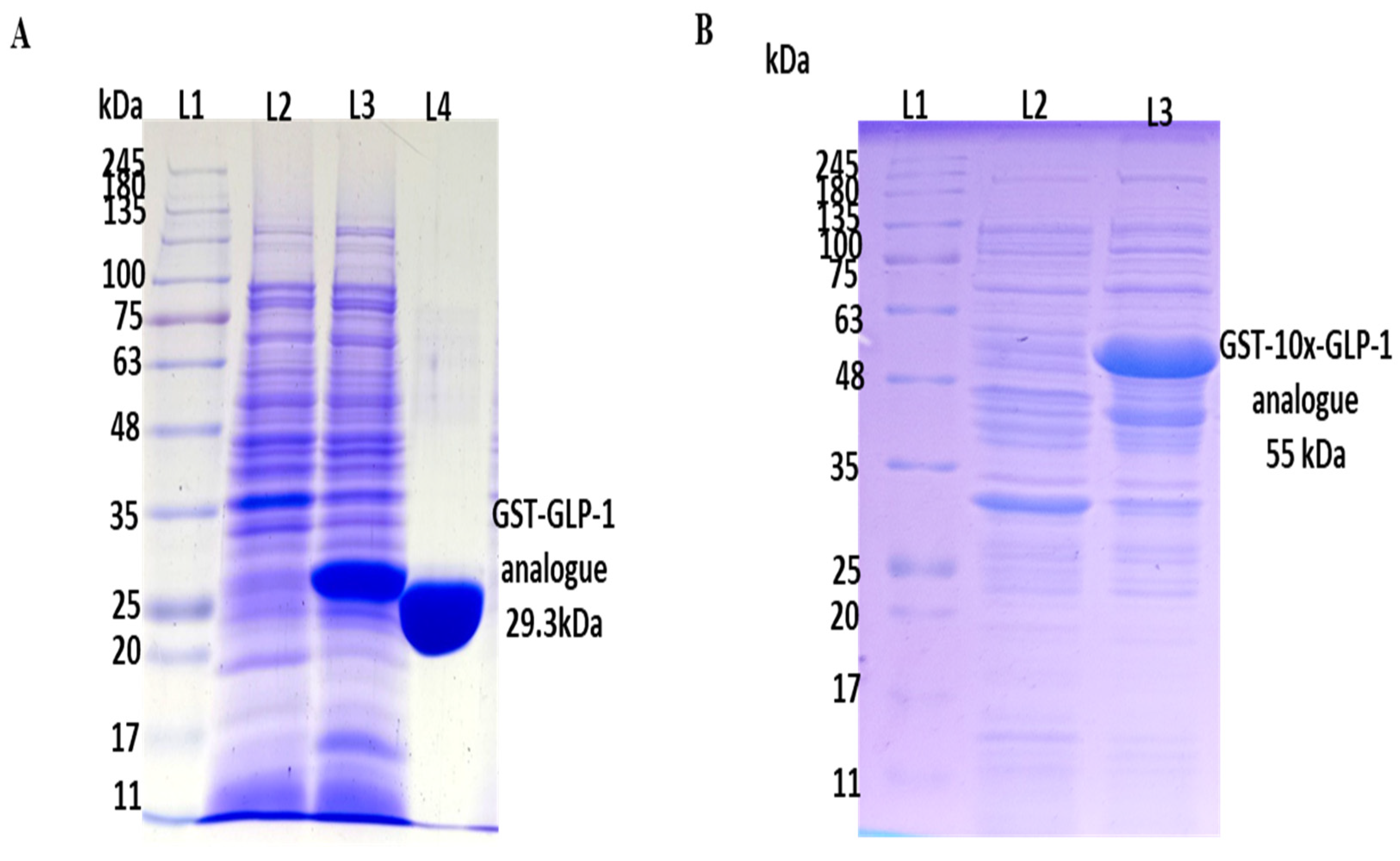
Expression of fusion proteins, GST-GLP-1 and GST-10× GLP-1, was successfully verified in E. coli BL21 (DE3) containing the plasmids in LB medium at 37 °C, as shown in Figure 1. Prominent bands at 29.3 kDa (Lane L3 in Figure 1A) and 55 kDa (Lane L3 in Figure 1B) confirmed the expression of GST-GLP-1 and GST-10× GLP-1 analogues, respectively.

3.2. Optimization of Process Conditions for Enhanced Soluble Expression of GST-GLP-1 Fusion Protein

After verifying clones for expression of the desired proteins, we optimized process conditions to enhance soluble fusion protein expression while maintaining specific yield. Optimization of soluble fusion protein expression was conducted in two stages. The first stage aimed to maximize specific yield by adjusting parameters including inducer concentration, pH, and harvest time. The second stage focused on assessing the effect of temperature on protein partitioning between the soluble fraction and inclusion bodies to evaluate product accumulation. A synthetic growth medium was used to identify optimal conditions, i.e., 0.5 mM inducer (IPTG), pH 7, and an 8 h post-induction harvest time (Figures S1 and S2). Following these optimizations, temperature was varied, and the fusion protein was expressed at 25 °C, 32 °C, and 37 °C. Samples collected at each temperature were analyzed for protein partitioning. The supernatant, representing the soluble fraction, and the pellet, containing cellular debris or inclusion bodies, were separated. Equal amounts of each fraction were analyzed by SDS-PAGE and densitometry.
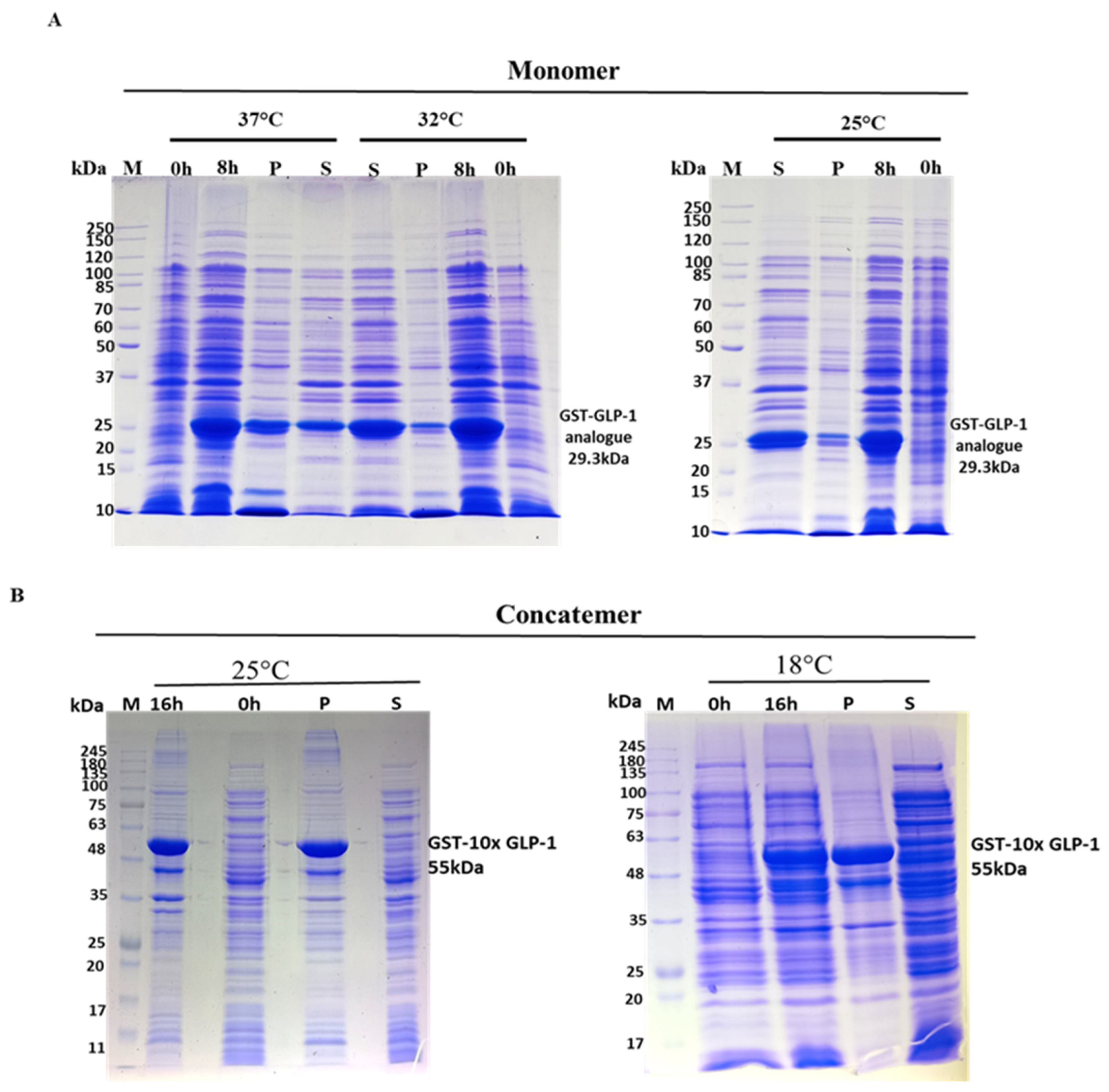
Protein partitioning between the soluble fraction and inclusion bodies experiments, as shown in Figure 2A, indicated that GST-GLP-1 predominantly accumulated as inclusion bodies in samples grown at 32 °C and 37 °C, with only minimal protein detected in the soluble fraction. In contrast, samples cultured at 25 °C displayed a significant soluble fraction of the expressed protein, with distinct bands at approximately 29.3 kDa. For the GST-10× GLP-1 construct as shown in Figure 2B, protein accumulation continued as significant inclusion bodies persisted even at 25 °C. Lowering the cultivation temperature to 18 °C resulted in partial accumulation of both inclusion bodies and soluble protein, thereby reducing the soluble specific yield of the fusion protein. Consequently, the strategy to enhance GLP-1 content by concatemer design was not effectively realized. So, we decided to move forward with developing a fermentation process for the monomer construct.

3.3. Optimizing Growth Phase-Specific Induction for Maximum GST-GLP-1 Fusion Protein Yield

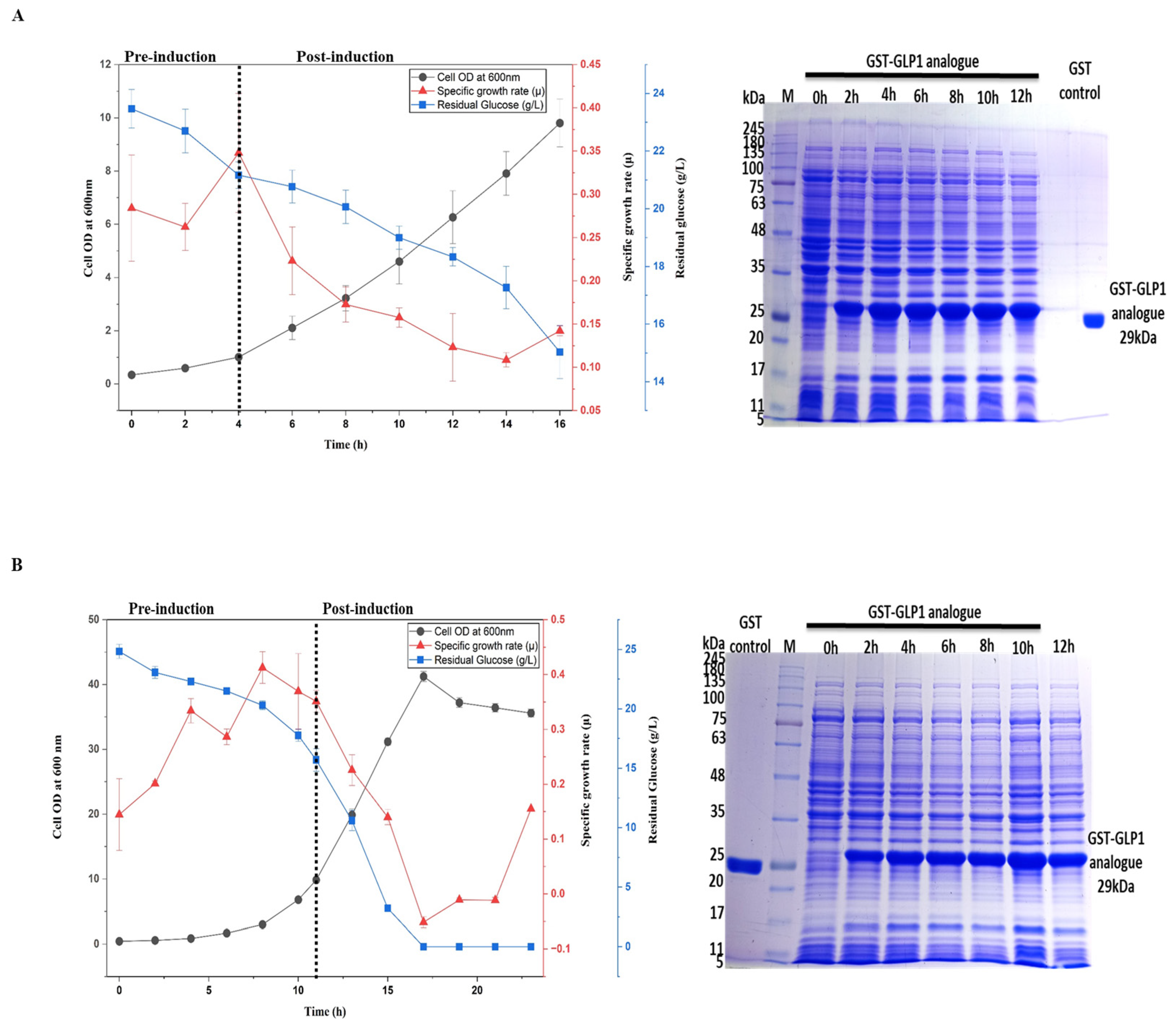
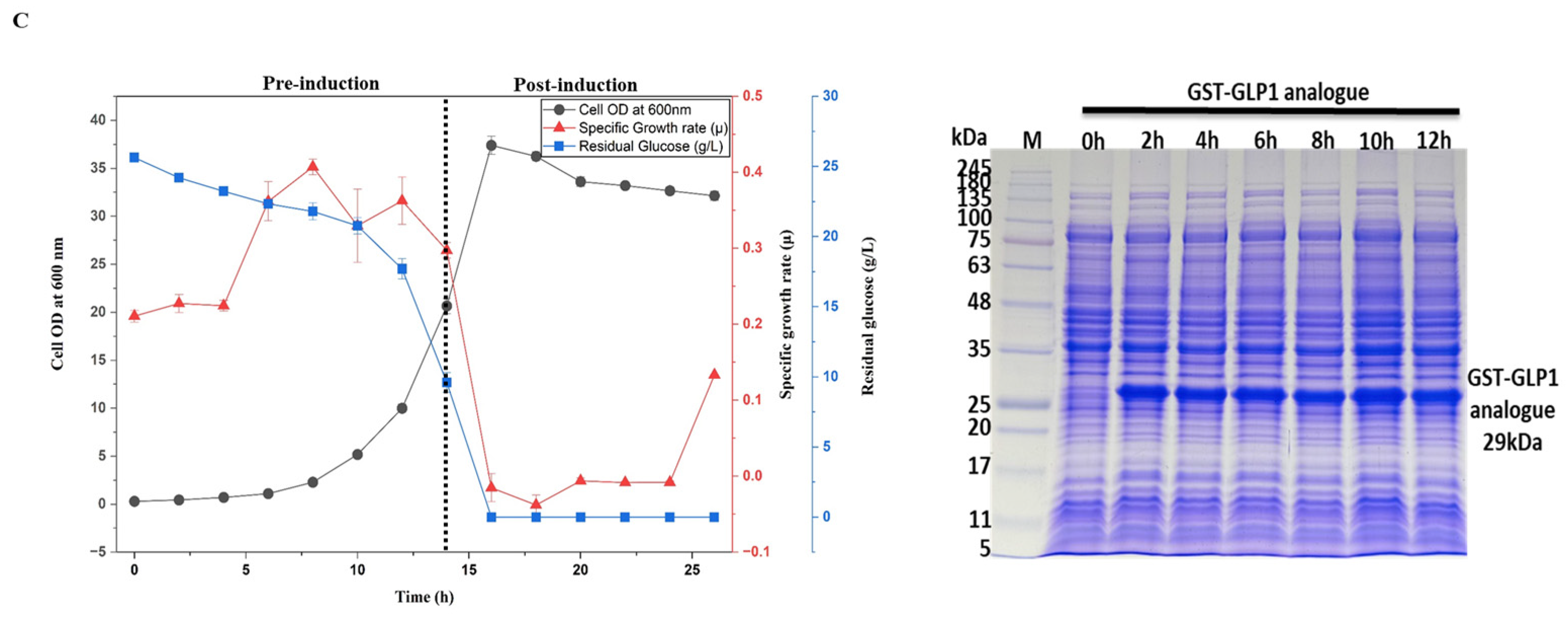
Batch fermentation experiments were performed with inductions at distinct growth phases to investigate the soluble expression kinetics of rGLP-1 at the temperature optimized for soluble expression. The objective was to assess how the growth phase, serving as an indicator of the pre-induction growth rate, affects the specific expression of the rGLP-1 analogue. Firstly, an uninduced batch was taken, and different growth phases were identified by specific OD values. It was also observed that the specific growth rate remained at its maximum until the residual glucose concentration dropped below 11 g/L. Based on such information, different fermentation experiments were planned in which cultures were induced at early, mid, and late log phases, corresponding to optical densities at 600 nm of 1, 10, and 20, respectively. Key online fermentation parameters, including pH, temperature, dissolved oxygen, and agitation, were monitored and controlled. Additional parameters such as OD600 nm, residual glucose, wet cell weight (WCW), dry cell weight (DCW), and soluble rGLP-1 analogue expression were measured and analyzed over 12 h post-induction, as illustrated in Figure 3A–C. The average maximum volumetric yield of GST-GLP-1 and the preinduction specific growth rate in early log phase were 1.78 g/L at 16 h and 0.34 h−1, respectively. Similarly, average maximum volumetric yield of GST-GLP-1 and the preinduction specific growth rate in the mid-log phase were 3.32 g/L at 17 h and 0.35 h−1, respectively, and finally, average maximum volumetric yield of GST-GLP-1 and the preinduction specific growth rate in late log phase were 0.82 g/L at 18 h and 0.29 h−1, respectively, For mid-log phase the volumetric yield of GST-GLP-1 peaked at 3.2 g/L around the 18th hour, 6 h after induction at the mid-log phase, and remained consistent thereafter. The pre-induction growth rate was approximately 0.3~0.35 h−1. Across all experiments, induction at different growth phases resulted in a consistent decline in culture performance, as measured by specific growth rate, irrespective of glucose concentration above 11 g/L following induction. This decline may have affected various nutrient uptake rates, necessitating close monitoring during the growth process and informing the further development of fed-batch fermentation strategies. A plausible explanation for this decline in specific growth rate could be the metabolic burden imposed on the cells post-induction, in which energy and resources are diverted to rGLP-1 production rather than cellular growth. This shift in energy allocation may explain the decrease in growth rates.

3.4. Enhancing Volumetric Yield and Productivity Through High Cell Density Fermentation

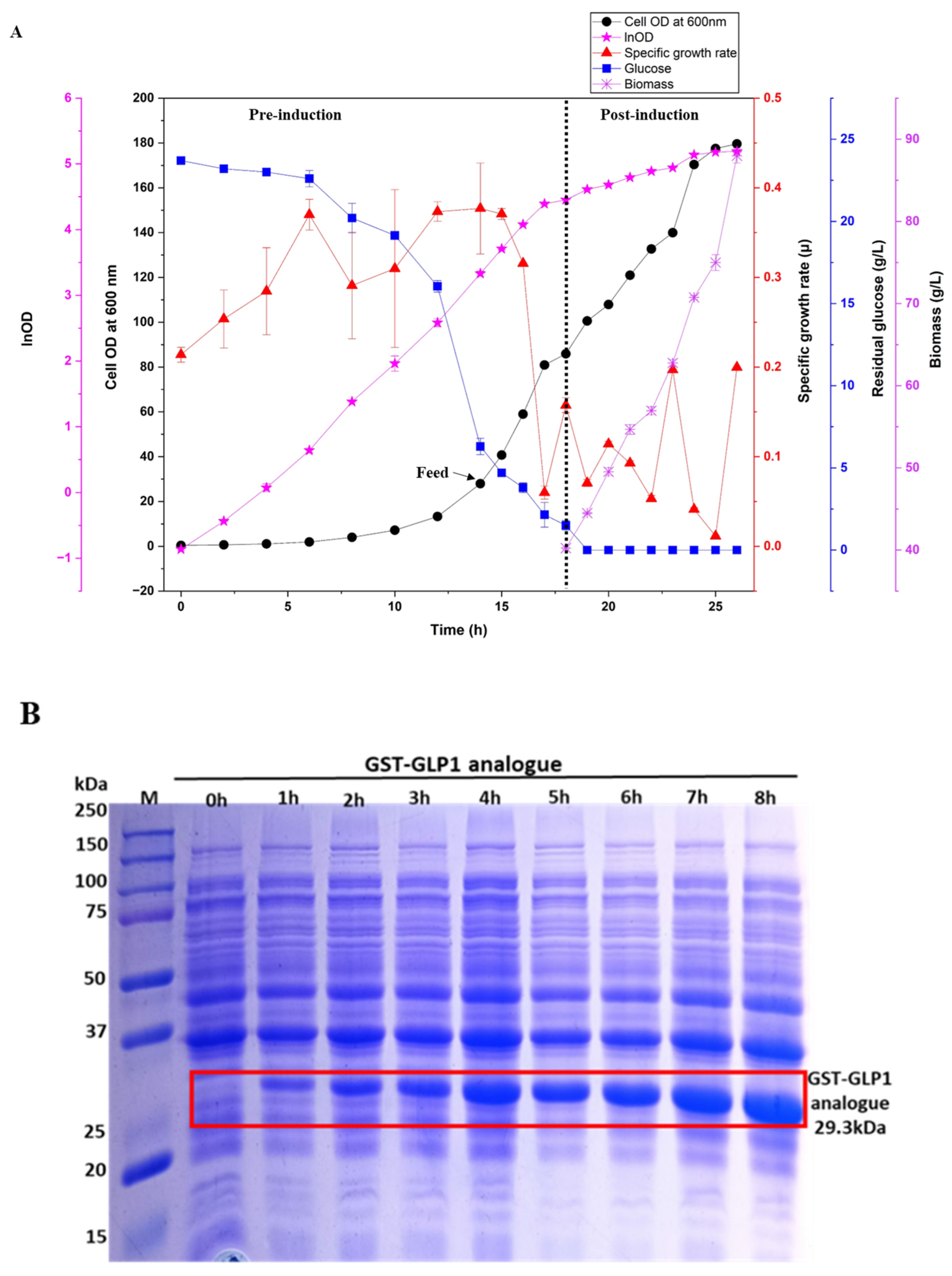
A strategy was developed to enhance the volumetric yield of recombinant r-GLP-1 analogues in E. coli during high-density fermentation. The fed-batch process maintained predetermined feeding rates. These rates supported a specific growth rate (µ) of about ~0.30–0.35 h−1 before induction and around ~0.1–0.15 h−1 after induction, based on previous batch data (Figure 4A). This control was achieved through careful nutrient feeding reported earlier [24].
Glucose feeding in fed-batch fermentation supported growth to ~0.31 prior to induction, likely reducing the accumulation of by-products such as acetic acid. This reduction occurs because residual glucose near 1 g/L likely maintains glycolysis activity while preventing overflow metabolism that leads to excess acetic acid. Subsequently, the culture was induced at around OD600 of 86 (mid-exponential phase, approximately 40.1 g/L DCW), with a residual glucose level of 1.2 g/L. Following induction, a growth rate of approximately 0.09 h−1 was observed (Figure 4A). This method effectively maintained high volumetric and specific yields of soluble rGLP-1 analogue proteins. Throughout and after induction, glucose levels were carefully maintained at baseline, thereby preventing the onset of the stationary phase.
After 26 h of fed-batch fermentation, the final OD600 reached 180.3 (around 88.9 g/L DCW; Figure 4A). To put this into perspective, typical industrial fermentation processes often achieve an OD600 of around 100~150, making our result significantly higher and underscoring the robustness of our method. This result indicated the expression of the GST-GLP-1 analogue, as shown in Figure 4B.
The fed-batch fermentation yielded a volumetric yield of 10.38 g/L and specific yield (Yp/x) of 116.7 mg/g of GST-GLP-1 protein, one of the highest reported for the fusion protein. In addition, the soluble rGLP-1 with a GST tag analogue demonstrated a very high volumetric productivity of 0.4 g/L/h in fed-batch fermentation (Table 3). This productivity highlights the effectiveness of our optimized strategy in achieving superior results.

3.5. Purification and Cleavage of GST-GLP-1 Analogue to Recover GLP-1

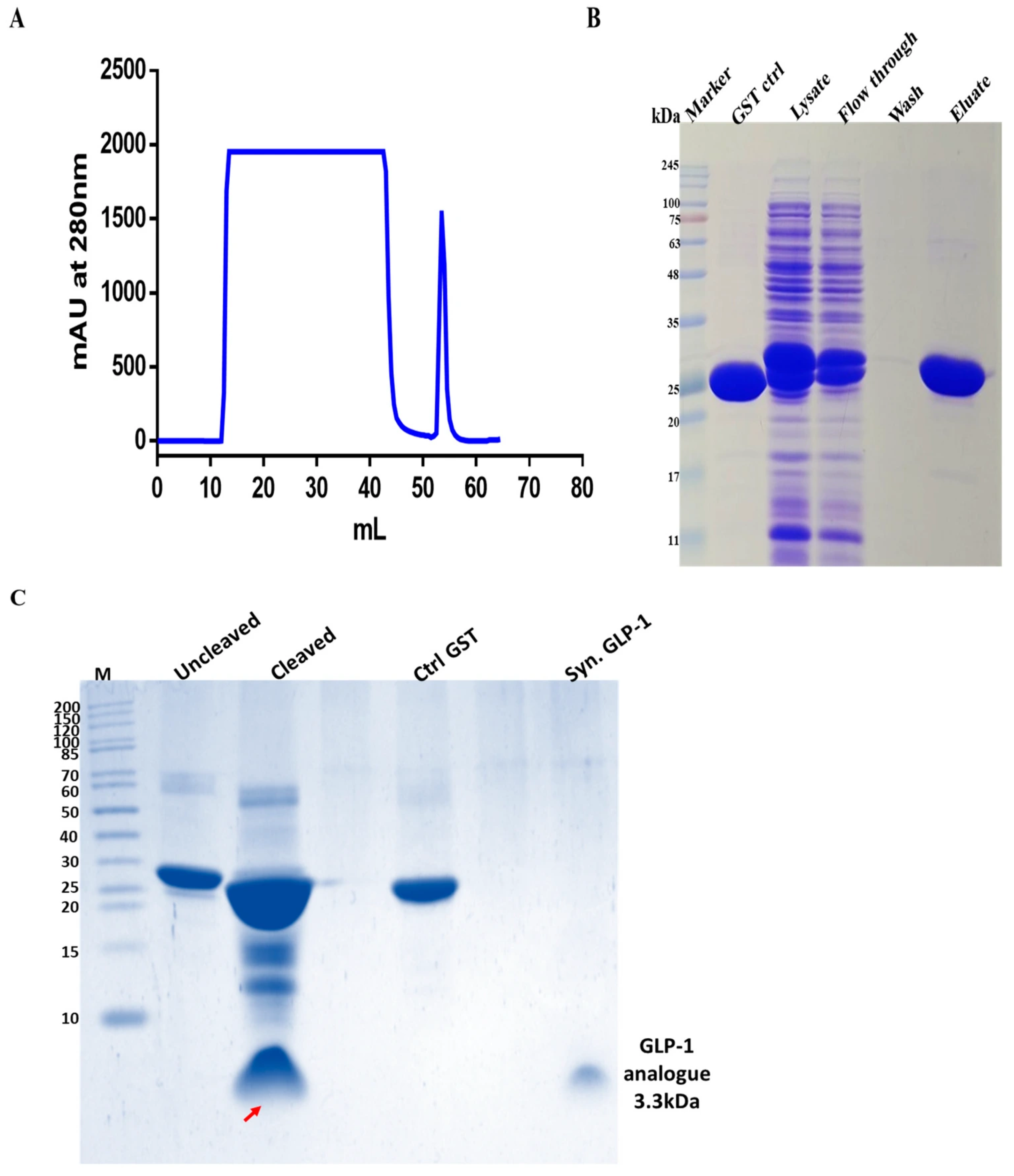
Affinity chromatography was used to purify the GST-GLP-1 analogue fusion protein to homogeneity. Elution of the GST-tagged GLP-1 analogue was achieved with 10 mM reduced glutathione. The fusion protein eluted as a single peak (Figure 5A). Subsequent SDS-PAGE analysis showed a single band, indicating a purity greater than 98% as observed by densitometry (Figure 5B) and confirmed by RP-HPLC (Figure S4).
The GST-GLP-1 analogue fusion protein was cleaved with 1 U recombinant enterokinase for 16 h at 23 °C under continuous agitation at 50 rpm. Cleavage was monitored by SDS-PAGE, which revealed a band at approximately 3.3 kDa corresponding to the synthetic GLP-1 standard loaded on the gel, as shown in Figure 5C.

3.6. Characterization of GLP-1 Analogue

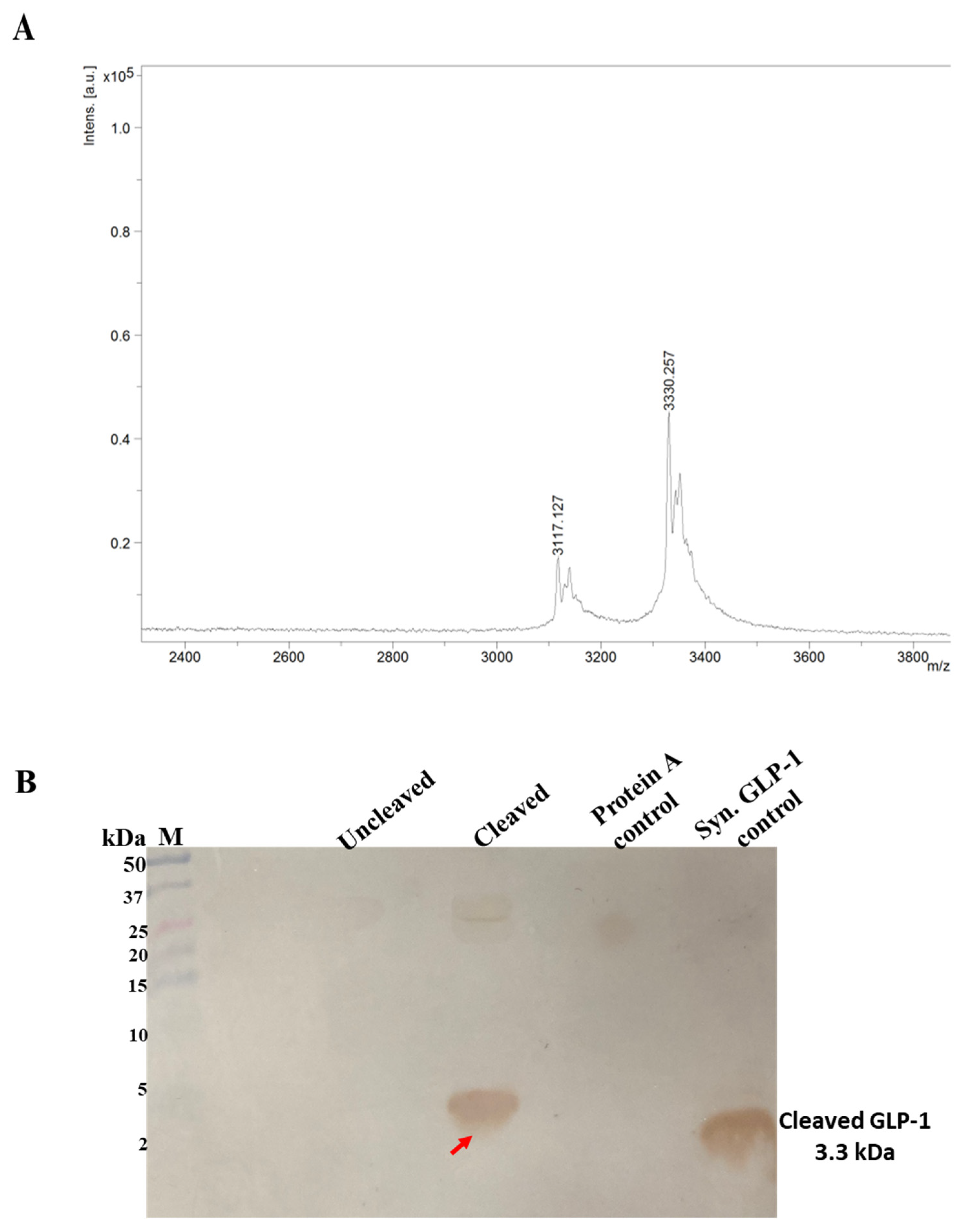
The identity of the GLP-1 peptide generated after cleavage was confirmed through intact mass analysis by mass spectrometry (MS) and Western blot analysis. The cleaved GLP-1 analogue displayed an intact mass of 3.3 kDa (see Figure 6A). Specific anti-GLP antibodies bound exclusively to the cleaved peptide in the Western blot, confirming its identity as shown in Figure 6B.

4. Discussion and Conclusions

Strains were constructed for production of recombinant glucagon-like peptide-1 (rGLP-1) in both monomers as well as concatemer, fused with GST tag at N terminal. However, the specific yield of monomer was significantly better than concatemer for producing the soluble fusion protein with GST, which was taken on to design the fermentation process. A high-yielding fermentation process was developed to enhance the yield and productivity of recombinant glucagon-like peptide-1 (rGLP-1) analogues expressed in Escherichia coli. In a typical process, the selected medium and a temperature of 37 °C yields E. coli growth at a rate of approximately 0.6 to 0.7 h−1 during the initial batch phase prior to fed-batch. At this elevated growth rate, acetate, an undesirable by-product of glucose metabolism that impairs both E. coli growth and recombinant protein production, is normally accumulated [33]. By lowering the fermentation temperature, we aimed to mitigate this accumulation, demonstrating a substantial improvement in final density. This improvement may have occurred due to a metabolic shift that diverts excess carbon away from acetate production and contributes to cell growth, aligning with known carbon-flux models. This shift presents a strategic alternative to traditional growth-rate throttling techniques. According to the literature, acetate accumulation is typically reduced by maintaining E. coli at lower specific growth rates through controlled feeding, generally around 0.2 h−1 and 0.15 h−1 and between 0.1 h−1 and 0.12 h−1 post-induction. However, this strategy prolongs the batch duration compromises productivity and does not address the acetate produced during the initial batch phase. Additionally, this novel approach contrasts with an analysis found in the study by Smith et al., which highlights the drawbacks of prolonged batch cycles due to stringent growth-rate limitations.
Fermentation was conducted at approximately 25 °C, a lower temperature that reduced the specific growth rate and was expected to minimize acetate formation. This change in temperature likely rerouted central-carbon fluxes, particularly affecting the Pta-Ack pathway, which is responsible for acetate production. As a result, this metabolic shift could have diverted excess carbon towards pathways that enhance cellular growth. This approach required an additional 4 h before feeding could be initiated. Following feed introduction, a growth rate higher than typically reported in the literature was achieved, compensating for the initial delay. This strategy improved both yield and productivity.
This approach yielded a maximum of 10.8 g/L of the rGST-GLP-1 analogue as soluble protein in 26 h during fed-batch fermentation, representing the highest reported value for this fusion peptide in an E. coli expression system. The described feeding strategy can be applied to enhance the volumetric productivity of recombinant peptides expressed in E. coli.
Affinity chromatography was employed to purify the fusion protein, which was subsequently subjected to cleavage procedures to separate the fusion protein, GST tag, and recombinant GLP-1 analogue. Mass spectrometry confirmed the molecular weights of the resulting recombinant GLP-1 analogue, and identity was verified by Western blot analysis.
In conclusion, the improved, high-yielding fermentation process offers new opportunities to enhance the production of recombinant peptides. One practical question is how this enhanced process can be applied to large-scale production of therapeutic peptides, potentially enabling more efficient clinical applications. Inviting researchers to explore this aspect could pave the way for advancements in biopharmaceutical manufacturing.

Supplementary Materials

The following supporting information can be downloaded at: https://www.mdpi.com/article/10.3390/fermentation12010053/s1. Table S1: shows the gene sequences of monomeric GLP-1 and concatemeric GLP-1.; Figure S1: SDS- PAGE with 12% Tris-Glycine showing expression of the recombinant GST-GLP-1 analogue in E. coli strain and stained with R250 Coomassie stain. Inducer (IPTG) optimization at 0.01, 0.1, 0.5, 0.7 and 1 mM for monomer study.; Figure S2: SDS- PAGE with 12% Tris-Glycine showing expression of the recombinant GST-GLP-1 analogue in E. coli strain and stained with R250 Coomassie stain.  pH optimization at different pH 5.5, 6.0, 6.5, 7.0 and 7.5 for monomer study.; Figure S3: Standard curve of BSA. Concentration in a range of 0-1000 µg.; Figure S4: RP-HPLC chromatogram showing the peak of purified GST-GLP-1.; Figure S5: A Chromatogram of GST-GLP-1 analogue; Figure S6: Intact mass analysis of the recombinant GLP-1 analogue.

Author Contributions

Conceptualization, G.P.; methodology, G.P., S.R.K., and E.S.; software, formal analysis, S.R.K., E.S., and G.P.; investigation, S.R.K. and E.S.; validation, S.R.K.; resources, G.P.; data curation, S.R.K.; writing—original draft preparation, S.R.K.; writing—review and editing, S.R.K. and G.P.; visualization, S.R.K.; supervision, G.P.; project administration, G.P.; funding acquisition, G.P. All authors have read and agreed to the published version of the manuscript.

Funding

This work was supported by FRGS intramural grant (grant no: GGSIPU/DRC/FRGS/2019/1553/29) funded by Guru Gobind Singh Indraprastha University, New Delhi.

Institutional Review Board Statement

Not applicable.

Data Availability Statement

The original contributions presented in this study are included in the article/Supplementary Materials. Further inquiries can be directed to the corresponding author.

Acknowledgments

S.R.K. was supported through the CSIR-UGC fellowship scheme. S.R.K. and E.S. were supported through a fellowship scheme (STRF) from GGS Indraprastha University. We are grateful to Vishwanath for the data analysis.

Conflicts of Interest

The authors declare no conflicts of interest.

Abbreviations

The following abbreviations are used in this manuscript:
SDS-PAGESodium dodecyl sulphate polyacrylamide gel electrophoresis
GSTGlutathione S-transferases
BCABicinchoninic acid
ACNAcetonitrile
TFATrifluoroacetic acid
H2O2Hydrogen peroxide

References

  1. American Diabetes Association. Diagnosis and classification of diabetes mellitus. Diabetes Care 2009, 32 (Suppl. 1), S62–S67. [Google Scholar] [CrossRef]
  2. Hossain, M.J.; Al-Mamun, M.; Islam, M.R. Diabetes mellitus, the fastest growing global public health concern: Early detection should be focused. Health Sci. Rep. 2024, 7, e2004. [Google Scholar] [CrossRef]
  3. NCD Risk Factor Collaboration (NCD-RisC). Worldwide trends in diabetes prevalence and treatment from 1990 to 2022: A pooled analysis of 1108 population-representative studies with 141 million participants. Lancet 2024, 404, 2077–2093. [Google Scholar] [CrossRef]
  4. Diabetes Canada Clinical Practice Guidelines Expert Committee; Lipscombe, L.; Booth, G.; Butalia, S.; Dasgupta, K.; Eurich, D.T.; Goldenberg, R.; Khan, N.; MacCallum, L.; Shah, B.R.; et al. Pharmacologic Glycemic Management of Type 2 Diabetes in Adults. Can. J. Diabetes 2018, 42 (Suppl. 1), S88–S103. [Google Scholar] [CrossRef]
  5. Drucker, D.J.; Habener, J.F.; Holst, J.J. Discovery, characterization, and clinical development of the glucagon-like peptides. J. Clin. Investig. 2017, 127, 4217–4227. [Google Scholar] [CrossRef] [PubMed]
  6. Bu, T.; Sun, Z.; Pan, Y.; Deng, X.; Yuan, G. Glucagon-Like Peptide-1: New Regulator in Lipid Metabolism. Diabetes Metab. J. 2024, 48, 354–372. [Google Scholar] [CrossRef]
  7. Choe, H.J.; Cho, Y.M. Peptidyl and Non-Peptidyl Oral Glucagon-Like Peptide-1 Receptor Agonists. Endocrinol. Metab. 2021, 36, 22–29. [Google Scholar] [CrossRef]
  8. Torun, A.N.; Ertugrul, D.T. Incretin System in the Pathogenesis of Type 2 Diabetes and the Role of Incretin Based Therapies in the Management of Type 2 Diabetes. In Treatment of Type 2 Diabetes; InTech: London, UK, 2015. [Google Scholar] [CrossRef]
  9. Nauck, M.A.; Quast, D.R.; Wefers, J.; Meier, J.J. GLP-1 receptor agonists in the treatment of type 2 diabetes-state-of-the-art. Mol. Metab. 2021, 46, 101102. [Google Scholar] [CrossRef] [PubMed]
  10. Nathan, D.M.; Buse, J.B.; Davidson, M.B.; Ferrannini, E.; Holman, R.R.; Sherwin, R.; Zinman, B. Medical management of hyperglycemia in type 2 diabetes: A consensus algorithm for the initiation and adjustment of therapy: A consensus statement of the American Diabetes Association and the European Association for the Study of Diabetes. Diabetes Care 2009, 32, 193–203. [Google Scholar] [CrossRef] [PubMed]
  11. Müller, T.D.; Finan, B.; Bloom, S.R.; D’Alessio, D.; Drucker, D.J.; Flatt, P.R.; Fritsche, A.; Gribble, F.; Grill, H.J.; Habener, J.F.; et al. Glucagon-like peptide 1 (GLP-1). Mol. Metab. 2019, 30, 72–130. [Google Scholar] [CrossRef]
  12. Gilbert, M.P.; Pratley, R.E. GLP-1 Analogs and DPP-4 Inhibitors in Type 2 Diabetes Therapy: Review of Head-to-Head Clinical Trials. Front. Endocrinol. 2020, 11, 178. [Google Scholar] [CrossRef]
  13. Shah, D.; Risebrough, N.A.; Perdrizet, J.; Iyer, N.N.; Gamble, C.; Dang-Tan, T. Cost-effectiveness and budget impact of liraglutide in type 2 diabetes patients with elevated cardiovascular risk: A US-managed care perspective. Clin. Outcomes Res. 2018, 10, 791–803. [Google Scholar] [CrossRef]
  14. Trujillo, J.M.; Nuffer, W.; Smith, B.A. GLP-1 receptor agonists: An updated review of head-to-head clinical studies. Ther. Adv. Endocrinol. Metab. 2021, 12, 2042018821997320. [Google Scholar] [CrossRef]
  15. Wang, L.; Ding, J.W.; Zhu, C.L.; Guo, B.R.; Yang, W.; He, W.X.; Li, X.X.; Wang, Y.Y.; Li, W.C.; Wang, F.; et al. Semaglutide attenuates seizure severity and ameliorates cognitive dysfunction by blocking the NLR family pyrin domain containing 3 inflammasome in pentylenetetrazole-kindled mice. Int. J. Mol. Med. 2021, 48, 219. [Google Scholar] [CrossRef] [PubMed]
  16. Barber, M.J.; Gotham, D.; Bygrave, H.; Cepuch, C. Estimated Sustainable Cost-Based Prices for Diabetes Medicines. JAMA Netw. Open 2024, 7, e243474. [Google Scholar] [CrossRef] [PubMed]
  17. Niazi, S.K.; Magoola, M. Advances in Escherichia coli-Based Therapeutic Protein Expression: Mammalian Conversion, Continuous Manufacturing, and Cell-Free Production. Biologics 2023, 3, 380–401. [Google Scholar] [CrossRef]
  18. Pouresmaeil, M.; Azizi-Dargahlou, S. Factors involved in heterologous expression of proteins in E. coli host. Arch. Microbiol. 2023, 205, 212. [Google Scholar] [CrossRef]
  19. Kim, S.G.; Shin, S.Y.; Park, Y.C.; Shin, C.S.; Seo, J.H. Production and solid-phase refolding of human glucagon-like peptide-1 using recombinant Escherichia coli. Protein. Expr. Purif. 2011, 78, 197–203. [Google Scholar] [CrossRef]
  20. Cheng, N.; Yang, L.; Dai, N.; Hu, Z.; Yang, F.; Chen, R.; Cheng, X.; Zhou, J.; Huang, Y.; Su, Z. A novel strategy to prepare the precursor peptide of liraglutide. Process Biochem. 2017, 62, 10–15. [Google Scholar] [CrossRef]
  21. Li, W.; Gao, M.; Liu, W.; Kong, Y.; Tian, H.; Yao, W.; Gao, X. Optimized soluble expression and purification of an aggregation-prone protein by fusion tag systems and on-column cleavage in Escherichia coli. Protein Pept. Lett. 2012, 19, 1324–1329. [Google Scholar] [CrossRef]
  22. Yee, L.; Blanch, H.W. Recombinant protein expression in high cell density fed-batch cultures of Escherichia coli. Biotechnology 1992, 10, 1550–1556. [Google Scholar] [CrossRef]
  23. Li, X.; Robbins, J.W., Jr.; Taylor, K.B. Effect of the levels of dissolved oxygen on the expression of recombinant proteins in four recombinant Escherichia coli strains. J. Ind. Microbiol. 1992, 9, 1–9. [Google Scholar] [CrossRef] [PubMed]
  24. Bhardwaj, R.; Shakri, A.R.; Hans, D.; Gupta, P.; Fernandez-Becerra, C.; Del Portillo, H.A.; Pandey, G.; Chitnis, C.E. Production of recombinant PvDBPII, receptor binding domain of Plasmodium vivax Duffy binding protein, and evaluation of immunogenicity to identify an adjuvant formulation for vaccine development. Protein Expr. Purif. 2017, 136, 52–57. [Google Scholar] [CrossRef]
  25. Fleury, L.; Deracinois, B.; Dugardin, C.; Nongonierma, A.B.; FitzGerald, R.J.; Flahaut, C.; Cudennec, B.; Ravallec, R. In vivo and in vitro comparison of the DPP-IV Inhibitory potential of food proteins from different origins after gastrointestinal digestion. Int. J. Mol. Sci. 2022, 23, 8365. [Google Scholar] [CrossRef]
  26. He, F. Laemmli-sds-page. Bio-Protocol 2011, 17, e80. [Google Scholar] [CrossRef]
  27. Schneider, C.A.; Rasband, W.S.; Eliceiri, K.W. NIH Image to ImageJ: 25 years of image analysis. Nat. Methods 2012, 9, 671–675. [Google Scholar] [CrossRef] [PubMed]
  28. Choudhury, L.; Shukla, E.; Jena, R.; Yadav, V.; Ahmad, A.; Mishra, R.; Pandey, G. Staphylococcal Protein A with Engineered Cysteine: Comparison of Monomeric Content as a Critical Quality Attribute during Intracellular and Extracellular Expression. Fermentation 2022, 8, 150. [Google Scholar] [CrossRef]
  29. Schagger, H. Tricine-SDS-PAGE. Nat. Protoc. 2006, 1, 16–22. [Google Scholar] [CrossRef] [PubMed]
  30. Moldes, A.; Álvarez-Chaver, P.; Vecino, X.; Cruz, J. Purification of lipopeptide biosurfactant extracts obtained from a complex residual food stream using Tricine-SDS-PAGE electrophoresis. Front. Bioeng. Biotechnol. 2023, 11, 1199103. [Google Scholar] [CrossRef]
  31. Sarfo, K.; Moorhead, G.B.; Turner, R.J. A novel procedure for separating small peptides on polyacrylamide gels. Lett. Pept. Sci. 2003, 10, 127–133. [Google Scholar] [CrossRef]
  32. Okita, N.; Higami, Y.; Fukai, F.; Kobayashi, M.; Mitarai, M.; Sekiya, T.; Sasaki, T. Modified Western blotting for insulin and other diabetes-associated peptide hormones. Sci. Rep. 2017, 7, 6949. [Google Scholar] [CrossRef] [PubMed]
  33. van de Walle, M.; Shiloach, J. Proposed mechanism of acetate accumulation in two recombinant Escherichia coli strains during high density fermentation. Biotechnol. Bioeng. 1998, 57, 71–78. [Google Scholar] [CrossRef]
Figure 1. SDS-PAGE with 12% Tris-Glycine showing expression of the recombinant GST-GLP-1 analogue in E. coli strain and stained with R250 Coomassie stain. (A) Lane L1: protein marker, L2: 0 h pre-induction, L3: 8 h post-induction, and L4: GST control protein. (B) Lane L1: protein marker, L2: 0 h pre-induction, and L3: 8 h post-induction.
Fermentation 12 00053 g001
Figure 2. Expression and protein partitioning of recombinant fusion protein at different temperatures were analyzed by SDS-PAGE with 12% Tris-Glycine and stained with R250 Coomassie stain. (A) Temperature optimization at 37 °C, 32 °C, and 25 °C for monomer study. (B) Temperature optimization at 25 °C and 18 °C for concatemer study. Lane M: pre-stained molecular weight marker, Lane 0: pre-induced, Lane 8 h and 16 h: post-induction samples at 8 h and 16 h, and samples were sonicated and centrifuged for protein partitioning of GST-GLP-1 analogue and GST 10× GLP-1, Lane P: Pellet after lysis, and Lane S: soluble fraction after lysis.
Fermentation 12 00053 g002
Figure 3. Analysis of batch fermenters for GST-GLP-1 analogue expression when induced at (A) early log phase, (B) mid-log phase, and (C) late log phase. The left panel shows growth and glucose consumption profiles. The right panel shows the expression profile of GST-GLP-1 analogue in SDS-PAGE with 12% Tris-Glycine and stained with R250 Coomassie stain.
Fermentation 12 00053 g003aFermentation 12 00053 g003b
Figure 4. Analysis of fed-batch fermentation for GST-GLP-1 analogue expression. (A) History plot of fed-batch fermenter shows growth and glucose consumption profiles, and (B) shows the expression profile of GST-GLP-1 analogue in SDS-PAGE with 12% Tris-Glycine and stained with R250 Coomassie stain.
Fermentation 12 00053 g004
Figure 5. (A) Chromatogram of GST-GLP-1 analogue, (B) 12% SDS-PAGE gel showing purification of GST-GLP-1 analogue by affinity chromatography, and (C) 16% SDS-PAGE gel showing cleaved GLP-1 analogue. Cleaved GLP-1 is indicated by red arrow.
Fermentation 12 00053 g005
Figure 6. (A). Intact mass analysis of the recombinant GLP-1 analogue and (B) Western blot of GLP-1 analogue. Cleaved GLP-1 is indicated by red arrow.
Fermentation 12 00053 g006
Table 1. Host strains and plasmid used.
Strains/PlasmidsCharacteristicsSources
Strains  
DH5αF φ80dlacZΔM15 ΔphoA8 recA1 relA1 endA1 gyrA96 thiE1 hsdR17(rk-,mk+) supE44 Δ(lacZYA-argF)U169Amersham Biosciences, Piscataway, NJ, USA
BL21(DE3)F ompT hsdSB(rB,mB) gal dcm λ(DE3) [lacI lacUV5-T7p07 ind1 sam7 nin5] [malB+] K-12(λS)Novagen, Madison, WI, USA
Plasmid  
pGEX-4T-1 (5067 bp)lacI lacIq tac promoter AmpR lacZ alpha GST tag thrombin siteSigma Aldrich, St. Louis, MO, USA
GLP1 peptide sequenceHAEGTFTSDVSSYLEGQAAKEFIAWLVRGRGUniProt database entry: U3KRF3
Table 2. Primer details with oligonucleotide sequence and restriction sites inserted.
S.No.PlasmidOligonucleotide SequenceRestriction Site
1pGEX-4T-1-GLP1 analogueFP-5′-GGATCCGACGACGACGACA-3′BamHI
RP-5′-CTCGAGTTAACGACCACGAAC-3′XhoI
FP: Forward primer and RP: reverse primer. Restriction sites inserted are marked by an underline.
Table 3. Summary of fed-batch fermentation.
BatchTotal Fermentation Elapse Time (h)Time of Induction (h)Induction ODHarvest (Final) ODDry Biomass (g/L)GST-GLP-1 Analogue Volumetric Yield (g/L)Specific Yield (g/g)GLP-1 Analogue * (g/L)
Fed-batch261886180.388.910.3760.11671.21
* Estimated values on the basis of moles.
Disclaimer/Publisher’s Note: The statements, opinions and data contained in all publications are solely those of the individual author(s) and contributor(s) and not of MDPI and/or the editor(s). MDPI and/or the editor(s) disclaim responsibility for any injury to people or property resulting from any ideas, methods, instructions or products referred to in the content.