
Review

Recent Developments in the Valorization of Sugarcane Bagasse Biomass via Integrated Pretreatment and Fermentation Strategies

by
Mbuyu Germain Ntunka
1,*,
Thobeka Pearl Makhathini
2,
Siphesihle Mangena Khumalo
1,
Joseph Kapuku Bwapwa
3 and
Marc Mulamba Tshibangu
2
1
Department of Chemical Engineering, Faculty of Engineering & The Built Environment, Durban University of Technology, Durban 4000, South Africa
2
Department of Chemical Engineering, Mangosuthu University of Technology, Jacobs, Durban 4026, South Africa
3
Department of Civil Engineering, Mangosuthu University of Technology, Jacobs, Durban 4026, South Africa
*
Author to whom correspondence should be addressed.
Fermentation 2025, 11(11), 632; https://doi.org/10.3390/fermentation11110632
Submission received: 6 October 2025 / Revised: 26 October 2025 / Accepted: 27 October 2025 / Published: 6 November 2025
(This article belongs to the Special Issue Lignocellulosic Biomass in Biorefinery Processes)

Abstract

The growing global demand for clean energy and sustainability has increased interest in lignocellulosic biomass as a viable alternative to conventional fossil fuels. Among the various biomass resources, sugarcane bagasse, an abundant agro-industrial by-product, has emerged as a promising feedstock to produce renewable fuels and value-added chemicals. Its high carbohydrate content offers significant potential for bioconversion. However, its complex and recalcitrant lignocellulosic matrix presents significant challenges that necessitate advanced pretreatment techniques to improve enzymatic digestibility and fermentation efficiency. This review consolidates recent developments in the valorization of sugarcane bagasse focusing on innovative pretreatment and fermentation strategies for sustainable bioethanol production. It emphasizes the synergistic benefits of integrating various pretreatment and fermentation methods to improve bioethanol yields, reduce processing costs and enhance overall process sustainability. This review further explores recent technological advancements, the impact of fermentation inhibitor, and emerging strategies to overcome these challenges through microbial strains and innovative fermentation methods. Additionally, it highlights the multi-faceted advantages of bagasse valorization, including waste minimization, renewable energy production and the promotion of sustainable agricultural practices. By evaluating the current state of research and outlining future perspectives, this paper serves as a comprehensive guide to advancing the valorization of sugarcane bagasse in the transition towards a low-carbon economy. The novelty of this review lies in its holistic integration of technological, economic, and policy perspectives, uniquely addressing the scalability of integrated pretreatment and fermentation processes for sugarcane bagasse, and outlining practical pathways for their translation from laboratory to sustainable industrial biorefineries within the circular bioeconomy framework.

1. Introduction

The global shift towards sustainable energy and resource recovery has intensified interest in lignocellulosic biomass as a renewable feedstock for bio-based products [1]. Among the various agro-industrial residues, sugarcane bagasse (SCB) stands out due to its abundance, low cost, and rich carbohydrate content [1,2]. As a by-product of sugar extraction, bagasse comprises approximately 30% of the total sugarcane mass and is primarily composed of cellulose, hemicellulose, and lignin [3]. These properties make SCB a promising candidate for bioconversion into fuels, chemicals, and value-added chemicals [3]. With millions of tons generated annually, particularly in countries with extensive sugarcane cultivation, such as Brazil and India [4], the challenge has evolved from waste management to finding value-driven applications for this biomass. Recent advances in integrated pretreatment and fermentation strategies have intensified interest in the valorization of bagasse for bioethanol and other bio-based products. However, the recalcitrant nature of its lignocellulosic matrix poses significant challenges for efficient valorization, necessitating the development of integrated strategies that combine pretreatment and fermentation processes.
The significance of bagasse valorization is multifold: it not only minimizes waste and serves as an alternative to fossil fuels but also stimulates local economies and supports sustainable agricultural practices [5]. The drive to reduce greenhouse gas emissions while meeting the global energy demand has accelerated research into renewable biofuels, with bagasse emerging as a promising feedstock due to its high cellulose, hemicellulose, and lignin content [3,5]. Conversional approaches to bagasse utilization have largely focused on combustion for energy generation or rudimentary composting, both of which offer limited economic and environmental returns [6]. Studies indicate that bagasse can serve as a low-cost substrate for bioethanol production, especially if pretreatment and fermentation processes are optimally integrated [7]. The integration of emerging pretreatment technologies with advanced fermentation techniques, along with modeling and simulation using tools such as Aspen Plus™ V11, has further enhanced process efficiency and economic feasibility [7]. It is worth noting that pretreating bagasse is a critical step that disrupts the structural integrity of the lignocellulosic matrix, thereby enhancing enzymatic accessibility and improving hydrolysis yields [8].
From an economic point of view, the integration of pretreatment and fermentation into a cohesive valorization pipeline not only improves process efficiency but also reduces operational costs and environmental burdens associated with separate unit operations. This has opened new avenues for the production of second-generation biofuels and biochemicals. Available literature [9,10] suggest that fermentation using engineered microbial consortia or robust strains of Saccharomyces cerevisiae, Zymomonas mobilis, and Clostridium spp. has demonstrated improved tolerance to inhibitors and higher conversion efficiencies. However, according to Ajala et al. [3], these developments are particularly relevant in the context of bioethanol production, where integrated systems have achieved yields exceeding 0.2 g/g. Beyond ethanol, bagasse-derived hydrolysates are now being explored for the biosynthesis of a variety of chemicals, viz., xylitol, lactic acid, and succinic acid, expanding the economic potential of bagasse biomass [11,12]. However, these bio-chemicals are not explicitly discussed in this review. Despite these advancements, several challenges remain unresolved. The heterogeneity of bagasse composition, variability in sugarcane cultivation practices, and the presence of fermentation inhibitors such as furfural and acetic acid continue to hinder process optimization [1,13]. Addressing these key challenges requires a multidisciplinary approach that combines material science, microbiology, and systems engineering.
Global sugarcane bagasse is produced mainly where sugarcane is grown. Sugarcane-growing regions determine where bagasse is generated; Brazil and India are the two largest national producers and therefore the biggest bagasse sources. Other important producing countries include China, Thailand, Mexico, and south Africa, which also contribute materially to regional bagasse supplies. Table 1 gives a comparison of the regions, the sugarcane production and corresponding amounts of generated sugarcane bagasse.
As can be seen from Table 1, Brazil is highlighted as the world’s largest sugarcane producer and a focal point for bagasse-based cogeneration and biorefining efforts [4,14]. India is the second major source by cane area and generates tens of millions of tonnes of wet residual bagasse annually, with strong government interest in using bagasse for electricity and value-added products [15].
Reported global and national bagasse quantities differ across studies because of differing definitions (bagasse alone versus bagasse + straw), reporting years, and wet versus dry mass conventions. Reported figures in the estimate global sugarcane bagasse production approximately 540 million tonnes per year, while combined global residues (bagasse + straw) are estimated at 279 million tonnes per year. In addition, per-ton yield factors such as ~0.14 tonnes of bagasse per tonne of cane are also used in some estimates [4,14,17].
The literature shows a multi-sector set of uses for bagasse ranging from traditional onsite fuel to emerging biorefinery feedstocks; these uses determine economic value and handling choices. Energy cogeneration remains dominant in many producing countries, while research and pilot/commercial uses for chemicals, materials, and construction are expanding.
Cogeneration and electricity production are common practices, where bagasse fuels boilers and steam turbines in sugar/ethanol mills, often producing surplus electricity that can be sold to the grid (a practice well documented for Brazil) [18,19]. Bagasse is a principal feedstock for second-generation cellulosic ethanol and is currently being evaluated for the production of other biofuels and platform chemicals like furfural and xylitol [4,14,15,20]. Pyrolysis, torrefaction, and pelletization are investigated as processes to convert biomass into thermochemical products such as bio-oil, biochar, and improved transportable fuels [5,21,22]. Sugarcane bagasse is also utilized as a raw material for pulp, paper, and nanocellulose, its ash serves as a supplementary cementitious material in construction, it is partially used in animal feed and soil amendments, and its treated fibers and biochars are applied in adsorbents, composites, ceramics, and specialty materials [3,20,23,24,25,26,27,28,29].
This review consolidates recent developments in the integrated pretreatment and fermentation of sugarcane bagasse biomass, highlighting major innovations and future research directions. It begins by discussing the physical and chemical characteristics of bagasse, followed by an in-depth evaluation of pretreatment techniques developed over the past decade. Subsequently, it explores the fermentation processes, including simultaneous saccharification and co-fermentation methods, and provides detailed analysis of technological innovations, economic assessments, environmental impacts, and real-world case studies.
The novelty of this review lies in its comprehensive integration of process development with scalability assessment. Unlike earlier reviews that focus on pretreatment or fermentation separately, this review uniquely explores how these advances can be translated into pilot and large-scale biorefinery systems. It systematically evaluates the technical challenges, economic trade-offs and regulatory factors influencing industrial deployment. By combining process intensification strategies, digital process monitoring, and co-product valorization models, this review offers a holistic framework that bridges scientific innovation with industrial implementations, contributing to the evolution of sustainable bioethanol production and the circular bioeconomy.

2. Sugarcane Bagasse Biomass: Composition and Characteristics

Sugarcane bagasse is a by-product generated during the extraction of juice from sugarcane stalks. Its composition typically includes cellulose (32–44%), hemicellulose (27–32%), and lignin (19–24%), making it a rich lignocellulosic biomass suitable for conversion into biofuels and value-added bioproducts [30]. The fibrous matrix, with its rigid and complex structure, presents significant challenges for enzymatic hydrolysis and fermentation. Nevertheless, this inherent recalcitrance also makes bagasse an excellent candidate for advanced pretreatment strategies designed to fractionate its components.

2.1. Chemical Composition and Structural Characteristics

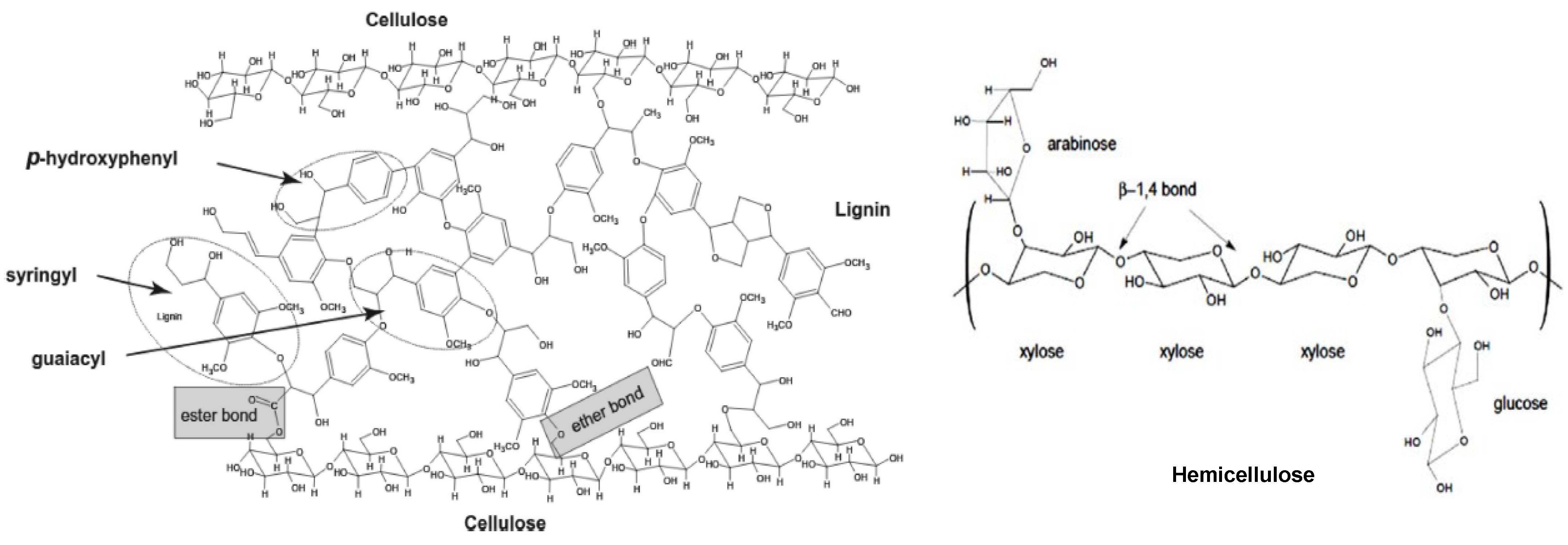
The inherent structure of bagasse is a hierarchical assembly of cellulose fibers, hemicellulose matrices, and a protective lignin network. Figure 1 demonstrates the linkage between cellulose and lignin, this structure not only confers mechanical strength to the sugarcane stalk but also limits the accessibility of enzymes required during saccharification and subsequent fermentation [30]. In sugarcane bagasse structure, the linear cellulose chains are held together by strong inter- and intramolecular hydrogen bonds, causing them to aggregate into rigid, thread-like microfibrils. These microfibrils have both highly ordered crystalline regions and less ordered amorphous regions. Hemicellulose is characterized as a complex, branched, amorphous polysaccharide composed of various sugar monomers, viz., xylose, glucose, and arabinose. It is apparent from Figure 1 that in sugarcane bagasse, xylose is the major component. Hemicellulose chains are shorter and less crystalline than cellulose. They bind to the surface of cellulose microfibrils through hydrogen bonds and are covalently linked to lignin, acting as a binding matrix. Lignin, on the other hand, is a three-dimensional, amorphous, highly branched phenolic polymer synthesized from phenylpropane precursor monomers. Lignin functions as a natural “glue” that surrounds and binds the cellulose and hemicellulose together. This network provides mechanical rigidity, structural integrity, and resistance to chemical and biological degradation.
Sugarcane bagasse exhibits the typical composition of lignocellulosic plant cell wall material, consisting of three primary structural components plus minor constituents. Table 2 summarizes the typical chemical composition of the sugarcane bagasse cell wall.
As shown in Table 1, the chemical composition of sugarcane bagasse reflects the fundamental architecture of lignocellulosic plant cell walls, where cellulose microfibrils provide structural strength, hemicellulose acts as a matrix polymer connecting cellulose and lignin, and lignin serves as a rigid binding agent that provides structural integrity and protection. However, the lignin component creates significant processing challenges, as it “hampers saccharification which further leads to low yields of the value-added products” [32]. Consequently, this composition necessitates pretreatment strategies to reduce “biomass recalcitrance, i.e., cellulose crystallinity, structural complexity of cell wall and lignification” [33]. Considering the highly interconnected nature of these components, effective pretreatment methods are required to disrupt lignin barriers and expose the cellulose and hemicellulose fractions for subsequent enzymatic conversion [3,33].

2.2. Physical and Morphological Attributes

Microscopic analyses reveal that sugarcane bagasse fibers are elongated, with a mixture of hard rind fibers and softer pith tissues. Pith is found in milled sugarcane bagasse residue, which consists of vascular bundles and the surrounding parenchyma tissue. The pith is particularly rich in fermentable sugars due to the presence of parenchyma cells, although it is often separated before industrial processing to enhance pulp quality in papermaking processes [34]. Lignin is highly concentrated in the middle lamella, the region that glues the individual plant cells together [35]. It also forms a thin layer that fills the gaps between cellulose microfibrils within the cell walls, embedding the hemicellulose [36]. This intricate and robust lignocellulosic matrix makes raw sugarcane bagasse resistant to decomposition, requiring specialized chemical or physical pretreatments to break down the structure and access the carbohydrates [37,38]. Moreover, due to its high porosity, sugarcane bagasse is an excellent candidate for physicochemical processing, enabling enhanced contact with chemicals and enzymes during pretreatment procedures [39,40].

3. Overview of Pretreatment Strategies for Sugarcane Bagasse Valorization

Pretreatment is a critical step in the conversion of lignocellulosic biomass such as sugarcane bagasse. It aims to disrupt the compact matrix, remove or modify lignin, and reduce cellulose crystallinity, thus increasing the susceptibility of the biomass to enzymatic hydrolysis. Recent studies have developed several innovative pretreatment techniques that can be broadly classified into physical, chemical, biological, and integrated approaches.

3.1. Physical and Thermo-Chemical Methods

Physical pretreatment methods focus on reducing biomass particle size and enhancing surface area. Techniques such as milling, irradiation, and extrusion are widely used. Recent innovations have been reported in the literature for the physical treatment of bagasse. Ajala et al. [3] reported that the ball milling and ultrasonication technique has been demonstrated to reduce crystallinity and improve enzymatic digestibility significantly. It was also reported that ball milling, in particular, disrupts the hydrogen bonding network in cellulose, enhancing its reactivity. Steam explosion is one of the most widely adopted pretreatment methods for sugarcane biomass. In this process, bagasse is subjected to high-pressure steam followed by rapid decomposition. This process causes hemicellulose solubilization and partial lignin disruption, improving enzymatic access. According to da Silva et al. [41], the use of steam explosion enhances sugar yields and reduces inhibitor formation under optimized temperature and residence time. Microwave-assisted pretreatment is one of the emerging pretreatment techniques. Microwave irradiation induces rapid heating and internal pressure buildup, leading to cell wall rupture. Phiri et al. [42] reported that, when combined with mild chemical agents, this method enhances delignification and sugar recovery while minimizing energy input. It is important to note that these methods are often used in tandem with chemical treatments to maximize efficiency, especially in integrated biorefinery setups.
Thermo-chemical methods combine heat and chemical agents to break down the lignocellulosic matrix. These approaches are particularly effective in solubilizing hemicellulose and disrupting lignin structures, thereby improving fermentable sugar yields. In the application of alkaline treatment, sodium hydroxide and calcium hydroxide are commonly used to cleave ester bonds in lignin and hemicellulose. Alkali-treated bagasse exhibits improved porosity and reduced lignin content, facilitating microbial fermentation [43]. Recent work by Phiri et al. [42] demonstrated that alkali-treated bagasse fibers embedded in thermoset matrices showed superior mechanical and thermal properties due to enhanced fiber-matrix adhesion. The use of acid hydrolysis as a treatment technique, requires the use of dilute sulfuric or hydrochloric acid in hydrolyzing hemicellulose into xylose and arabinose. Integrated acid–microwave systems have demonstrated potential in balancing sugar yield and inhibitor suppression, as reported by Chougala et al. [44] in their recent review. Emerging methods such as organosolv pretreatment use organic solvents, viz., ethanol and acetone, to selectively extract lignin. Oxidative agents like hydrogen peroxide or ozone are also being explored for their ability to depolymerize lignin under mild conditions. These methods offer cleaner lignin fractions and improved cellulose accessibility, though solvent recovery remains a challenge.
An interesting development is the integration of organosolv pretreatment with novel catalysts, such as sodium carbonate–oxygen combinations, to achieve moderate processing conditions and high sugar yields [45]. These methods are economically appealing as they often produce “green lignin” as a by-product that can be further valorized in the production of high-value chemicals and materials. Recent trends emphasize the integration of physical and thermo-chemical methods to create synergistic effects. For example, combining steam explosion with alkali treatment has yielded higher sugar recovery and reduced lignin content compared to standalone methods. Process intensification strategies such as microwave-assisted alkali hydrolysis and ultrasound-enhanced acid treatment are being actively explored to reduce energy consumption and improve throughput. Table 3 presents a summary of the discussed pretreatment techniques in terms of advantages, challenges, cost-effectiveness and sustainability.

3.2. Biological Pretreatment Methods

Biological pretreatment methods have emerged as a sustainable and environmentally friendly alternative for the valorization of sugarcane bagasse, particularly in the context of biofuel production [51]. Biological pretreatment employs microorganisms or enzymes to selectively degrade lignin and hemicellulose without the need for harsh chemical reagents. Recent innovations in microbial engineering, enzyme optimization, and solid-state fermentation have significantly advanced the efficiency and applicability of biological pretreatment strategies.

3.2.1. Enzymatic Delignification and Hydrolysis

One of the most promising developments in biological treatment is the use of ligninolytic enzymes such as laccases, manganese peroxidases, and lignin peroxidases. These enzymes, often derived from white-rot fungi and actinomycetes, facilitate the selective breakdown of lignin without generating harsh chemical by-products. da Silva et al. [41] demonstrated the efficacy of laccase extracted from Xylaria sp. in delignifying sugarcane bagasse under mild conditions. The optimized treatment achieved a 31.2% lignin removal when syringaldazine was used as a mediator, resulting in a 56% increase in enzymatic hydrolysis efficiency and a bioethanol yield of 67.3% from the hydrolysate. The integration of enzymatic pretreatment with subsequent saccharification has also shown considerable promise. Enzyme cocktails tailored to sugarcane bagasse composition including cellulases, xylanases, and β-glucosidases have been optimized to improve sugar release while minimizing enzyme loading. Advances in enzyme immobilization and recycling further enhance process economics and scalability.

3.2.2. Fungal Solid-State Fermentation

Solid-state fermentation (SSF) using ligninolytic fungi has gained traction as a low-cost and effective method for biological pretreatment. White-rot fungi such as Pleurotus ostreatus, Agaricus bisporus, and Calocybe indica have demonstrated strong lignin-degrading capabilities while preserving cellulose integrity [52]. Khan et al. [52] reported that SSF of sugarcane bagasse with these fungal strains significantly improved its digestibility and nutritional value for ruminant feed applications. After 56 days of fermentation, the in vitro dry matter digestibility and total gas production increased markedly, indicating enhanced microbial accessibility and reduced recalcitrance [52]. Fungal pretreatment, especially using white-rot fungi or laccase enzymes, has shown promising results in this area. For example, a study reported 84% delignification of bamboo using laccase from Pleurotus sp. at 400 IU/mL in an 8-hour treatment period [30]. Although biological methods generally require longer processing times, they are environmentally benign and reduce the formation of inhibitory compounds that can adversely affect fermentation.

3.2.3. Microbial Consortia and Adaptive Fermentation

Recent studies [53,54] have explored the use of microbial consortia synergistic with communities of bacteria and fungi to enhance the degradation of complex lignocellulosic substrates. These consortia can adapt to varying feedstock compositions and environmental conditions, offering robustness and flexibility in bioprocessing. Engineered strains of Clostridium thermocellum, Trichoderma reesei, and Bacillus subtilis have been incorporated into mixed cultures to improve cellulose hydrolysis and reduce inhibitor formation [55]. Adaptive fermentation strategies, including fed-batch and sequential inoculation techniques, have been employed to maintain microbial activity and optimize metabolite production. These systems are particularly effective in minimizing the accumulation of toxic intermediates such as furfural and acetic acid, which can inhibit microbial growth and reduce product yields.
Despite these advances, biological treatment of sugarcane bagasse faces several challenges. The variability in bagasse composition due to seasonal and geographic factors can affect microbial performance and process consistency. Moreover, the slow kinetics of biological degradation compared to chemical methods necessitate longer residence times and careful process control. The key advantage of biological pretreatment lies in its capacity to operate under moderate temperatures and pressures while generating minimal waste streams. With advancements in microbial engineering and enzyme technology, biological pretreatment methods are poised to become an integral aspect of sustainable biomass valorization strategies.

3.3. Integrated and Combined Pretreatment Approaches

Single pretreatment methods often fall short in achieving complete fractionation of sugarcane bagasse components or in maintaining process sustainability. For instance, while acid hydrolysis effectively solubilizes hemicellulose, it may generate fermentation inhibitors such as furfural and hydroxymethylfurfural [44]. Similarly, alkaline treatments are efficient in lignin removal but may require extensive washing and neutralization. Integrated pretreatment approaches aim to combine the strengths of individual methods while mitigating their limitations, thereby improving overall process efficiency and product recovery. Integrated approaches that combine physical, chemical, and biological methods have shown synergistic effects. For instance, a combination of dilute acid pretreatment with subsequent enzymatic saccharification can yield significantly enhanced monomeric sugar recovery, which is essential for high-yield bioethanol production [43,56]. Emerging integrated or combined pretreatment approaches are discussed in the subsequent subsections.

3.3.1. Liquid Hot Water (LHW) + Deep Eutectic Solvent (DES) Pretreatment

One of the most promising integrated strategies involves the combination of liquid hot water (LHW) and deep eutectic solvents (DES). LHW pretreatment disrupts the hemicellulose-lignin matrix through autohydrolysis, while DES selectively solubilizes lignin under mild conditions. A recent study by Xian et al. [57] demonstrated that this combined approach significantly enhanced enzymatic saccharification of sugarcane bagasse, yielding over 85 g/L of total fermentable sugars (glucose and xylose) and 34.3 g/L of bioethanol after fermentation. The synergy between thermal and solvent-based mechanisms facilitated efficient fractionation of biomass components and minimized inhibitor formation, making this method highly attractive for biorefinery applications.

3.3.2. Microwave + DES or Ionic Liquids (ILs) Pretreatment

Microwave heating provides rapid and selective heating, especially for polar solvents and biomass components, shortening treatment duration by producing alternative reaction pathways relative to conventional conductive heating [58]. When paired with ionic liquids (ILs)/DES, this technology can accelerate lignin solubilization and hemicellulose hydrolysis and improve cellulose accessibility at a lower energy usage cost than conventional heating [58,59,60]. In a typical microwave + solvent (DES/IL) pretreatment system, the anion and H-bond donors disrupt cellulose inter- and intra-molecular H-bonds and solvate lignin hemicellulose fragments, facilitating fractionation [61]. On the other hand, the microwave effects include rapid dipolar heating of the solvent, forcing polar biomass components to increase local temperatures, which subsequently accelerates solvent penetration and mass transfer [58,62]. The microwave effects promote selective cleavage of ether bonds in lignin and glycosidic/acetyl linkages in hemicellulose [62]. The application of microwave also reduces boundary-layer limitations at particle surfaces.
Sharma et al. [60] reported a novel and intensified pretreatment strategy for sugarcane bagasse biomass using a combination of microwave irradiation and eco-friendly solvents (i.e., ILs and DES). Specifically, 1-butyl-3-methylimidazolium chloride ([Bmim]Cl) was used as an IL, and choline chloride (ChCl) was used as a DES to facilitate effective delignification and improve carbohydrate accessibility for enzymatic hydrolysis. The pretreatment was followed by saccharification using an in-house enzyme derived from Aspergillus assiutensis VS34. Among the tested systems, the microwave − [Bmim]Cl + PEG-8000 pretreatment yielded the highest sugar release (327.76 ± 1.8 mg/g biomass), outperforming microwave + [Bmim]Cl (308.1 ± 2.4 mg/g) and microwave-ChCl/glycerol (297.36 ± 2.4 mg/g). Subsequent fermentation of the hydrolysate produced ethanol at 146.96 ± 1.9 mg/g biomass, achieving a bioconversion efficiency of 44.39%. Gan et al. [63] explored a microwave-assisted DES (choline chloride/lactic acid) pretreatment method for sugarcane bagasse to enable efficient fractionation of its components and conversion into valuable industrial products such as paper, lignin microspheres, and furfural. The pretreatment process was conducted at 135 °C for 20 min, achieving high selectivity, retaining 95.2% of cellulose in the solid fraction while effectively removing 84.1% of hemicellulose and 88.3% of lignin. The microwave + IL/DES technology has been demonstrated to be effective in the pretreatment of lignocellulosic biomass; however, its efficacy can be affected by several variables, viz., solvent types, solid load, temperature, time, as well as microwave power/field. According to the available literature, ChCl/glycerol, ChCl/lactic acid, and ChCl/urea are the most effective DES reported for the pretreatment of lignocellulosic biomass [60]. ILs such as [Bmim]Cl and hydroxide-based tetrabutylammonium hydroxide have been reported to be effective when integrated with microwave irradiation [59,60]. According to the work reported by Suriyachai et al. [64] and Wang et al. [65] for an optimum recovery or pretreatment yield, a solid load of 1–20 wt% is recommended. This does not suggest that higher solid loads are not possible; however, operating at a higher load of more than 20 wt% solids will compromise mass/heat transfer [65]. Operating temperature range of 80–160 has been reported to be effective in many microwave + DES/IL systems, with some studies reporting effective delignification at < 140 with microwave intensification [58,63]. With microwave systems, the heating duration can range from tens of seconds to a few minutes as opposed to conventional heating systems that take hours [59].
The microwave-assisted DES or IL technology is associated with a number of advantages. This technology involves rapid heating, subsequently shortening treatment time, resulting in lower energy usage [58]. This technology has reported improved sugar yields at relatively lower enzyme loads, i.e., it promotes enzymatic saccharification [60,66]. According to Gan et al. [63] solvent-based systems enable recovery of relatively clean lignin and hemicellulose streams suitable for further valorization, e.g., phenolics. Furthermore, DES are biodegradable, low-toxicity, and less expensive compared to many IL-based solvents, making DES + microwave systems attractive [61]. Despite the aforementioned advantages of microwave-assisted DES/IL systems, the technology still faces with challenges. Solvent cost and recovery, particularly for IL-based systems, remain a challenge. DES systems are characterized by low costs; however, there is a challenge with solvent recovery [67]. Available literature on technoeconomic assessments suggests that solvent recovery is the main bottleneck for scale-up [68]. Furthermore, water tolerance, lignin quality control, and scaled microwave reactor engineering remain the main hurdles before industrial deployment.

3.3.3. Ultrasound (US) + DES or Ionic Liquids (ILs) Pretreatment

Ultrasound (US) is a process intensification tool that generates cavitation, microjets, and strong local shear that physically disrupts biomass structure and increases mass transfer [69]. When coupled with solvents that chemically disrupt lignin–carbohydrate networks, such as DES or ILs, the two modes act synergistically to accelerate delignification, hemicellulose removal, and cellulose accessibility, often at milder bulk conditions and shorter retention times than solvent-only or conventional heating approaches [69,70,71]. The pretreatment mechanism of the US + DES/IL system involves three main stages, viz., physical disruption from US, chemical dissolution by DES/IL, and synergistic coupling. During physical disruption from US, acoustic cavitation produces micro-jets, shock waves, and localized high shear/temperatures that erode cell walls, increase porosity, and expose internal surfaces to solvent action [69,72]. This increases solvent penetration and mass transfer rates [72]. At the second stage of the pretreatment mechanism, the solvent’s anion and hydrogen-bond network weaken cellulose crystalline structure and solvate lignin/hemicellulose fragments, enabling their removal or depolymerization [73]. Synergistic coupling as the final stage accelerates solvent access and enhances desorption/solubilization kinetics; at the same time, lower bulk temperatures or shorter residence times are often possible [70,71].
Ultrasound-assisted pretreatment combined with ILs or DESs has shown significant potential for enhancing sugarcane bagasse fractionation and enzymatic hydrolysis. Yu et al. [70] demonstrated that coupling ultrasound (20–50 kHz, ~100 W, 30 min, 80 °C) with ILs such as [Bmim]Cl and 1-butyl-3-methylimidazolium acetate ([Bmim]OAc) markedly improved biomass dissociation and accelerated enzymatic and acid hydrolysis of sugarcane bagasse and wheat straw compared with IL-only treatments, resulting in higher sugar yields and faster dissolution. Similarly, Ji et al. [71] reported that sweeping-frequency ultrasound integrated with ethanol-synergized and ternary DES systems achieved substantial lignin removal and enhanced enzymatic hydrolysis efficiency of sugarcane bagasse relative to DES alone, indicating the synergistic effects of ultrasound and solvent chemistry in biomass fractionation. Complementary combinatorial studies [74,75] found that optimizing ultrasound parameters alongside IL and surfactant composition further improved sugarcane bagasse delignification and saccharification efficiency. Studies on other lignocellulosic feedstocks, including wheat straw, eucalyptus, and sorghum, confirm the general applicability of ultrasound + DES/IL pretreatment as a versatile and effective approach for biomass valorization [70,71,75].
Ultrasound-assisted pretreatment combined with DESs or ILs offers several advantages over solvent-only processes in lignocellulosic biomass valorization. Studies consistently report faster delignification and higher enzymatic sugar yields when ultrasound is integrated with DES or IL pretreatments, owing to the synergistic enhancement of both physical and chemical mechanisms [70,71]. The process typically operates under milder conditions, as ultrasound enables effective lignin and hemicellulose disruption at lower temperatures or shorter reaction times without compromising efficiency [76]. Furthermore, the cavitation effects generated by ultrasonic waves improve mass transfer and solvent penetration within the biomass matrix, an especially valuable benefit when using viscous DESs or ILs that may otherwise limit solvent accessibility [69]. Additionally, optimized ultrasound parameters and solvent compositions can facilitate selective fractionation, promoting lignin removal while retaining cellulose and hemicellulose integrity, thereby creating cleaner lignin streams suitable for downstream valorization [71,73].
Despite the promising laboratory results, several challenges limit the large-scale application of ultrasound combined with DESs or ILs for biomass pretreatment. The scale-up of ultrasound systems remains a major obstacle, as laboratory-scale probe or bath sonicators generate localized cavitation zones that are difficult to replicate uniformly in high-throughput or continuous reactors; this necessitates careful reactor engineering, including the use of multimode transducers, optimized flow-through designs, and improved acoustic coupling to ensure energy efficiency [69,77]. Additionally, solvent cost and recovery present economic constraints, while ILs are effective, their high cost and susceptibility to degradation make solvent recycling crucial for techno-economic feasibility, whereas DESs, though cheaper and less toxic, still require efficient regeneration and reuse strategies [73,78]. Ultrasound–solvent interactions further complicate process performance, as the high viscosity of many DESs or high-solids biomass loadings can dampen cavitation intensity and limit energy transfer, demanding optimized solvent formulations and operating conditions [76]. Lignin condensation or modification during pretreatment, dependent on solvent chemistry and process severity, can alter lignin’s structural integrity and reduce its suitability for downstream valorization, suggesting the need for detailed lignin characterization and process control.
There are other DES/IL and microwave-assisted pretreatment technologies which are reported to be effective for biomass pretreatment in the literature, viz., hydrothermal + DES/IL [79,80], surfactants + DES/IL [75], as well as organosilvs + microwave/ultrasound [81,82]. However, these processes are associated with several cross-cutting challenges. The transition from low-solids laboratory experiments to industrially relevant high-solids operations introduces complications related to mass transfer, rheology, and mixing, ultimately impacting process uniformity and scalability [83]. Another key challenge is lignin valorization uncertainty, since the profitability of advanced pretreatment systems often depends on generating high-value lignin coproducts. However, variations in lignin structure, condensation reactions during processing, and fluctuating market demand make lignin-derived revenue streams unreliable [68]. Moreover, regulatory, safety, and environmental constraints pose additional challenges. The use of corrosive, halide-containing, or volatile solvents, as well as persistent surfactants, raises environmental compliance concerns. Although greener options such as DESs and low-volatility organics offer improvements, they do not eliminate issues related to solvent recovery, waste handling, and safety [61]. Together, these factors suggest the need for holistic process development that integrates feedstock variability, product valorization, solvent sustainability, and regulatory compliance.

3.3.4. Acid Pretreatment + Enzymatic Saccharification + Detoxification

Another integrated approach involves sequential acid hydrolysis, enzymatic saccharification, and detoxification. Dilute sulfuric acid pretreatment effectively removes xylan and releases xylose-rich hydrolysates. However, the presence of acetic acid and other degradation products necessitates detoxification prior to fermentation. Yaverino-Gutierrez et al. [84] employed calcium oxide and activated carbon to detoxify sugarcane bagasse hydrolysates, preserving over 95% of xylose content while removing inhibitory compounds. Subsequent enzymatic saccharification yielded up to 47.4% reducing sugars, demonstrating the viability of this integrated green chemistry approach for clean sugar production.

3.3.5. Hybrid Biological–Chemical Pretreatment

Integrating biological and chemical pretreatments is gaining traction as a low-energy alternative. For example, mild alkali treatment followed by fungal solid-state fermentation using white-rot fungi enhances lignin degradation while preserving cellulose. This hybrid approach leverages the selectivity of biological systems and the efficiency of chemical disruption. Khan et al. [47] reported improved digestibility and gas production from sugarcane bagasse treated with Pleurotus ostreatus after alkali conditioning, suggesting potential for biofuel and feed applications. Ruan et al. [85] applied response surface methodology to optimize sodium hydroxide pretreatment and enzymatic hydrolysis parameters, achieving a cellulose conversion rate of 85.3% and a reducing sugar yield of 443.5 mg/g sugarcane bagasse. Such data-driven approaches facilitate the design of efficient and scalable pretreatment systems tailored to specific biomass compositions.
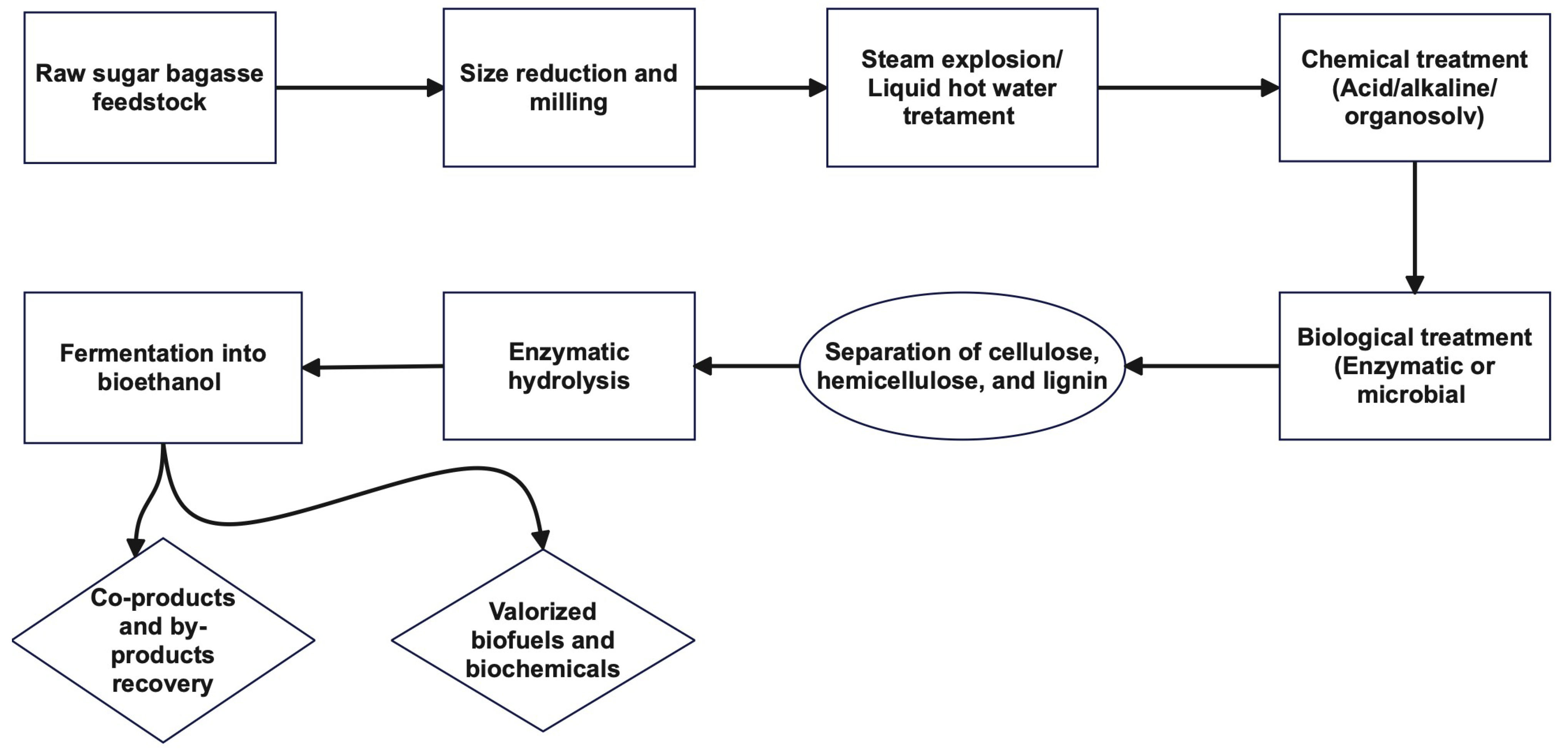
Integrated pretreatment strategies align with the principles of green chemistry and circular bioeconomy. By reducing chemical usage, energy input, and waste generation, these methods offer a more sustainable pathway for sugarcane bagasse valorization. Moreover, the ability to recover multiple products, including fermentable sugars, lignin derivatives, and organic acids enhances the economic viability of biorefineries. However, challenges remain in terms of process integration, equipment compatibility, and downstream purification. An illustrative flow diagram of an integrated pretreatment process is summarized in Figure 2.
The integrated approach is designed to maximize the breakdown of the resilient lignin–carbohydrate complexes while ensuring that the enzymatic hydrolysis step is not inhibited by residual chemical solvents or inhibitory compounds. This integrated methodology has resulted in improved process yields and faster conversion rates.

4. Fermentation Processes Applied to Bagasse

After successful pretreatment, the subsequent fermentation step is critical for converting the released sugars into bioethanol or other biofuels. Advances in fermentation technology have focused on enhancing sugar conversion efficiency, reducing process time, and integrating fermentation with pretreatment to streamline production.

4.1. Simultaneous Saccharification and Fermentation (SSF)

In the simultaneous saccharification and fermentation (SSF) process, enzymatic hydrolysis of the pretreated bagasse and fermentation occur in a single reactor operated under conditions that favor both enzymatic activity and microbial fermentation. This integrated process reduces the overall process time and minimizes the inhibition of enzymes by accumulated sugars. Research indicates that operational parameters, such as substrate loading, pH, temperature, and enzyme dosage, must be carefully optimized to achieve maximum ethanol productivity in SSF systems [43].
A comparative analysis shows that SSF processes reduce capital and operating costs due to consolidated unit operations, though they may require robust microbial strains capable of withstanding simultaneous hydrolytic and fermentative conditions.

4.2. Simultaneous Saccharification and Co-Fermentation (SSCF)

The SSCF process extends the SSF concept by incorporating microbes that can ferment both hexose and pentose sugars concurrently. This is particularly important for bagasse, where hemicellulose hydrolysis releases xylose and arabinose in addition to hexose sugars like glucose. Studies conducted on bagasse pulp waste using ammonia catalytic steam explosion (AE) pretreatment have demonstrated that SSCF can achieve ethanol yields of up to 67.5% of the theoretical maximum, with productivity improvements observed at higher solids loadings (e.g., 8% w/v) [34].
SSCF offers the advantage of higher overall sugar utilization, and co-culture fermentation systems have been designed to enhance conversion rates. For instance, a bacterial co-culture system has been employed for the conversion of agro-waste impacted bagasse into bioethanol, demonstrating the significance of synergistic microbial interactions in optimizing fermentation outcomes [34].

4.3. Process Optimization and Integration with Pretreatment

The success of fermentation processes is heavily dependent on the quality of the hydrolysate generated during pretreatment. Integrated process simulation using modeling software such as Aspen Plus™ V11 has enabled researchers to optimize both pretreatment and fermentation operations in a unified framework [7]. Such simulation studies assess various parameters, including sugar yield, enzyme inhibition, and fermentation kinetics, and provide valuable data for techno-economic and exergy analyses.
Recent technological innovations have introduced measures such as process integration and energy recovery from fermentation by-products. The combined production of bioethanol and other co-products (e.g., lignin-derived chemicals and fodder yeast) is emerging as a promising strategy to enhance overall process economics. These integrated biorefineries not only produce high-purity bioethanol but also enable the valorization of by-products, thereby creating additional revenue streams [86].

5. Technological Innovations and Process Integration

The integration of pretreatment and fermentation stages into a continuous or semi-continuous process flow is central to recent technological advancements in bagasse valorization. Novel process schemes now combine advanced disintegration techniques with optimized biological conversion strategies, wherein process control and simulation play crucial roles in ensuring economic and operational efficiency.

5.1. Advances in Process Simulation and Modeling

Process modeling tools, such as Aspen Plus™, have been instrumental in designing and optimizing integrated biorefineries employing bagasse as a primary feedstock. These simulation tools enable researchers to evaluate multiple process configurations, determine energy and mass balances, and perform life cycle analyses (LCA) to identify potential environmental bottlenecks [7,86]. Exergy analysis further assists in pinpointing thermodynamic inefficiencies across the production chain, thus driving innovation in process integration.

5.2. Integration of First- and Second-Generation Ethanol Production

Recent research has demonstrated that integrating second-generation ethanol production from lignocellulosic bagasse with first-generation processes (which typically utilize sugarcane juice) can yield substantial environmental and economic benefits [7]. Such integration minimizes energy consumption and maximizes resource utilization by harnessing both readily fermentable sugars from juice and those generated through the enzymatic hydrolysis of bagasse.

5.3. Co-Product and Energy Recovery Strategies

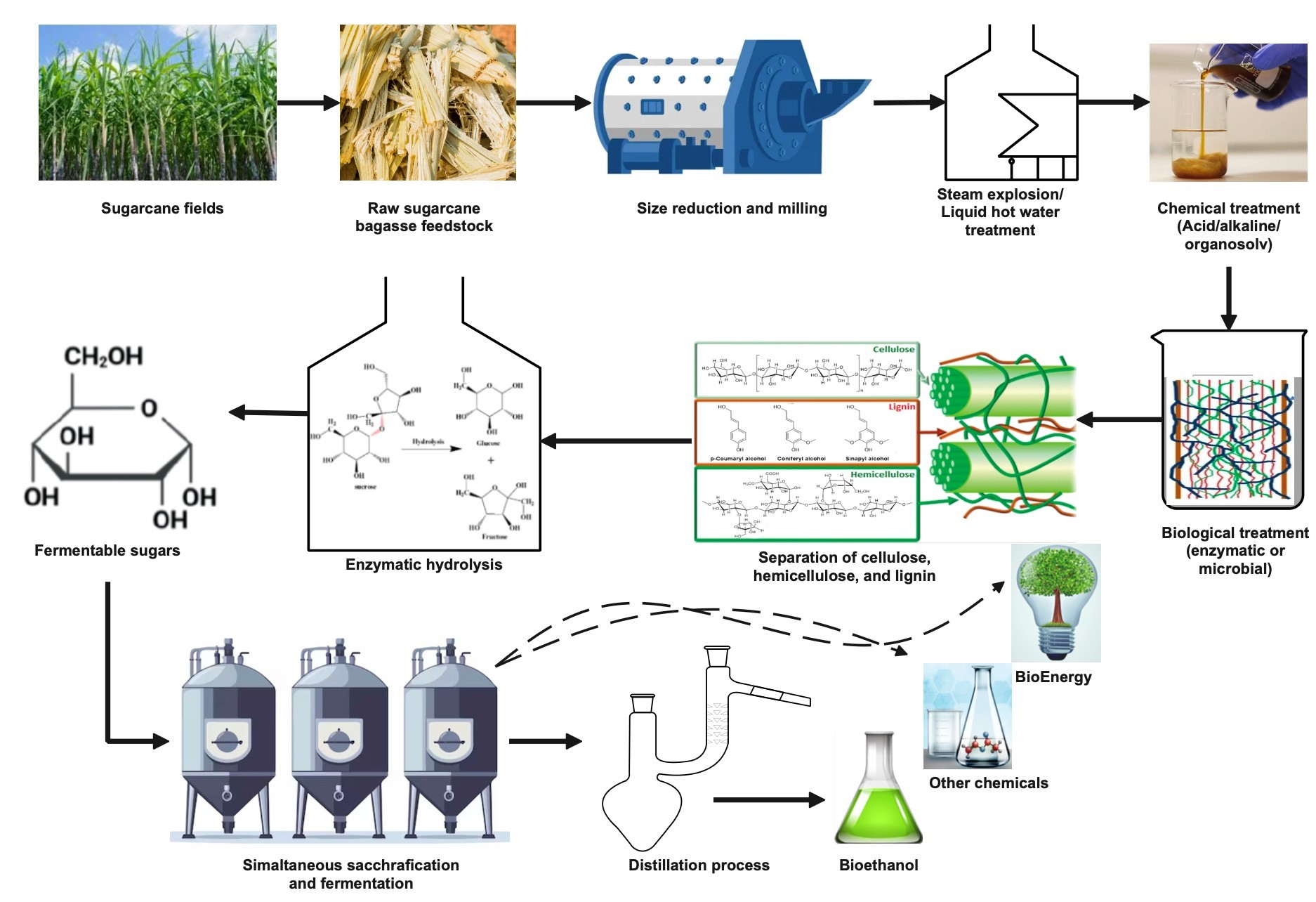
In addition to producing bioethanol, integrated biorefineries are increasingly focused on the valorization of co-products such as lignin, which can be processed into high-value chemicals, or used as a feedstock for producing activated carbon. For example, studies on bagasse valorization have shown that combining organosolv pretreatment with fermentation not only enhances ethanol yield but also produces “green lignin” with improved structural integrity that can find applications in advanced materials [7,34]. Moreover, excess energy generated during the process can be recovered through cogeneration systems that supply process heat and generate surplus electricity, further enhancing economic viability [86]. Figure 3 highlights the importance of integrating various pretreatment modules with the fermentation step, ensuring a streamlined process that maximizes yield and resource recovery.

6. Economic Analysis of Bagasse-Based Bioethanol Production

Economic feasibility is a crucial determinant in scaling up bagasse valorization processes from laboratory to industrial levels. Recent techno-economic studies have provided detailed capital and operational cost assessments, with promising results that suggest bioethanol production from bagasse can be both economically viable and competitive with conventional fossil fuels.

6.1. Capital and Operational Expenditures

Economic analyses have indicated that the total capital investment (TCI) required per gallon of bioethanol produced from sugarcane bagasse is approximately USD 17, whereas alternative feedstocks such as brown algae may achieve lower costs (around USD 12 per gallon) [7]. For instance, for bagasse-based processes, working capital assessments report figures around USD 4 million, fixed capital investments (FCI) ranging from USD 5 to 20 million, and overall TCI estimates around USD 94 to 109 million [7]. These numbers highlight the upfront financial commitment needed, but they also underscore the potential for economies of scale and integration benefits when co-product valorization and energy recovery systems are incorporated.

6.2. Internal Rate of Return and Process Efficiency

Several studies have reported internal rates of return (IRR) in the range of 8–20% for bioethanol production from lignocellulosic waste, which includes bagasse [87]. The variation in IRR is largely due to differences in process configurations, feedstock quality, and local economic factors [7]. Economic models have particularly emphasized that integrated pretreatment and fermentation processes tend to offer higher IRRs, as they improve overall conversion efficiency and reduce processing costs by consolidating operations.

6.3. Comparative Economic Metrics

A comparative economic assessment is required to understand the viability of sugarcane bagasse as a feedstock for bioethanol production compared to other biomass sources. The production cost of bioethanol depends on various interrelated factors, including feedstock price, pretreatment intensity, enzyme dosage, fermentation efficiency, and process integration, etc. Table 4 provides a comparative overview of key economic parameters associated with bagasse-based bioethanol production versus other feedstocks.
The economic assessments are further supported by simulation studies that integrate process parameters, energy recovery, and by-product revenue streams. These studies are critical for establishing the commercial viability of large-scale bagasse valorization facilities.

6.4. Sensitivity Analysis and Economic Risks

Sensitivity analyses have shown that product yield, energy costs, and raw material supply fluctuations are the major economic risk factors in bagasse biorefineries. Changes in sugar yield, for example, can have a significant impact on overall profitability. Therefore, advanced process simulation and robust risk assessment models are essential for the accurate prediction of economic performance in variable market conditions.

7. Environmental Impacts and Sustainability Considerations

The environmental benefits of converting sugarcane bagasse into bioethanol extend beyond renewable energy production. Life cycle assessments (LCA) and exergy analyses indicate that these processes can significantly reduce greenhouse gas (GHG) emissions, minimize fossil fuel dependency, and support circular economy initiatives.

7.1. Life Cycle Assessment and Environmental Metrics

Comprehensive LCAs compare the environmental burdens of various pretreatment and fermentation methods. Studies have demonstrated that pretreatment processes, if optimized with environmentally benign chemicals and energy recovery mechanisms, can lower overall acidification, eutrophication, and photochemical oxidant formation compared to conventional fuels [45]. For example, a critical review highlighted that while biological pretreatment might exhibit higher energy demands, it produces fewer inhibitory by-products, thereby reducing the environmental impact on subsequent fermentation stages [45].
Environmental metrics such as the acidification potential (measured in kg SO2 equivalent per kg of processed biomass) have been used to assess different pretreatment methods. In certain cases, diluted sulfuric acid combined with microwave-assisted treatment resulted in acidification potentials as high as 0.51 kg SO2 eq/kg, underscoring the need for careful selection of pretreatment chemicals and conditions to optimize both performance and environmental sustainability [45].

7.2. Exergy Analysis and Energy Efficiency

Exergy analysis provides insights into the thermodynamic efficiencies of bagasse valorization processes. One case study reported an exergetic efficiency of 45.03% for a sugarcane bagasse-based biorefinery, demonstrating that strategic integration of raw material and energy streams can reduce energy losses and improve overall system performance [7]. These analyses are critical for identifying “hotspots” of energy dissipation and for guiding process improvements to further diminish environmental impacts.

7.3. Environmental Benefits of Sugarcane Bagasse Valorization

Utilizing sugarcane bagasse for bioethanol production presents several key environmental benefits, for example, reductions in greenhouse gas emissions, where bioethanol is inherently carbon-neutral since the CO2 released during combustion is offset by the CO2 absorbed by the sugarcane. Also, valorizing bagasse mitigates the environmental hazards associated with open burning and dumping of agricultural residues, thus reducing local air pollution and soil degradation. Finally, the integrated systems that recover energy and co-products contribute to a circular bioeconomy, reducing reliance on nonrenewable resources and minimizing waste streams [7].

7.4. Comparison of Environmental Impacts Across Pretreatment Methods

Table 5 presents a comparative overview of environmental impacts associated with different pretreatment approaches.
These comparisons highlight that although some pretreatment methods may have inherent environmental challenges, integrated strategies can be optimized to significantly lower adverse impacts [56].

8. Case Studies and Applications

Several real-world case studies illustrate the practical application of integrated pretreatment and fermentation strategies in bagasse valorization. These case studies provide insights into process performance, economic feasibility, and environmental sustainability, thereby validating laboratory-scale research on a commercial scale.

8.1. Case Study 1: Integrated Production of Ethanol and Lignin from Bagasse Pulp Waste

A notable study focused on the integrated production of ethanol and “green lignin” from bagasse pulp waste (BPW) generated during depicting processes prior to papermaking [34]. In this process, BPW was subjected to two pretreatment methods: modified oxygen delignification and ammonia catalytic steam explosion (AE). The AE pretreatment, in particular, demonstrated superior performance in simultaneous saccharification and co-fermentation (SSCF) systems, achieving ethanol concentrations up to 22.2 g/L at 8% (w/v) substrate loading. Moreover, the recovered lignin held recovery yields of approximately 52.3% of the theoretical lignin content [34]. The integration of ethanol and lignin recovery not only improved the process economics but also expanded the product portfolio, offering additional revenue streams from by-products.

8.2. Case Study 2: Techno-Economic Feasibility and Energy Analysis of Bagasse-Based Bioethanol Production

Another comprehensive study evaluated the performance of sugarcane bagasse for biofuel production through the lens of exergy destruction and life cycle environmental impacts [86]. The process integrated conventional pretreatment (dilute acid and steam explosion) followed by enzymatic hydrolysis and fermentation. This study involved rigorous simulation using Aspen Plus™ software to balance material and energy flows, with the results revealing an energy efficiency of 45.03% and favorable economic indicators such as a capital investment of approximately USD 17 per gallon of bioethanol produced [7,86]. The economic analysis also underscored the potential for process integration to lower energy costs and improve overall sustainability.

8.3. Case Study 3: Comparative Analysis of Pretreatment Methods for Delignification

A systematic review on pretreatment strategies for sugarcane bagasse delignification provided insights into the comparative performance of various methods, including thermo-chemical, chemical, biological, and integrated processes [30]. The review emphasized that while dilute acid and steam explosion remain effective for initial breakdown, combined pretreatment approaches are increasingly favored due to their enhanced sugar recovery and minimized formation of inhibitory compounds. Such methods have demonstrated an improvement in sugar yield by effectively removing the lignin barrier, thereby confirming that integrated pretreatment is a key step toward efficient and sustainable bagasse valorization.

8.4. Comparative Performance Overview

To contextualize the technological and economic findings discussed in the previous section, a summary of key performance metrics of relevant case studies is presented in Table 6.
These case studies collectively establish that integrated pretreatment and fermentation approaches not only improve technical performance but also provide significant economic and environmental benefits, paving the way for sustainable industrial applications.

9. Scalability Issues and the Translation of Laboratory or Pilot Scale Processes into Real-World Industrial Applications

Efforts to valorize sugarcane bagasse through integrated pretreatment and fermentation have advanced significantly at the laboratory scale, yet translating these pathways into full industrial practice remains a critical bottleneck [89]. Scaling up exposes interlinked challenges in technical robustness, economic viability, and regulatory compliance that are not apparent in controlled experimental settings [90]. Process integration is particularly demanding. Methods such as steam explosion, when combined with enzymatic hydrolysis or microbial fermentation, require reactor systems that can maintain precise operational control under continuous, high-throughput conditions [91]. Variability in sugarcane bagasse composition driven by cultivated variety, season, and milling practices further complicates uniform performance, as fluctuations in lignin and polysaccharide content directly influence pretreatment efficiency and downstream conversion yields [92]. Moreover, microbial strains and enzyme cocktails optimized in pilot studies often lose stability and efficiency under industrial constraints, reducing overall productivity [90].
Beyond the technical domain, large-scale facilities require substantial capital investment and reliable biomass supply chains. Although regions with strong sugar industries, such as Brazil and India, present clear opportunities, transportation logistics and seasonal fluctuations limit broader adoption [93]. Economic feasibility depends heavily on co-product valorization, where lignin and other residues can be directed to energy or higher-value applications [90]. Pilot and demonstration plants highlight technical feasibility but reveal persistent challenges in effluent treatment, operational optimization, and long-term market integration [89]. Finally, environmental and safety regulations impose additional constraints on the large-scale handling of pretreatment chemicals and effluents.
Overcoming these hurdles will require coordinated advances in process engineering, techno-economic optimization, and policy support to establish bagasse biorefineries as a cornerstone of resolving scalability challenges in bagasse valorization requires a holistic strategy that merges technological innovation with systemic economic and policy interventions. On the technical front, modular bioreactor design, resilient microbial and enzymatic systems, and adaptive digital controls are essential to maintain robustness under industrial conditions. Economically, regionalized biomass supply chains, infrastructure investment, and effective co-product markets can mitigate high capital costs. Environmental and safety considerations should be embedded from the outset through greener pretreatment chemistries, energy-efficient operations, and rigorous regulatory compliance. By aligning science, engineering, market mechanisms, and governance, the transition from pilot demonstrations to sustainable, commercial-scale biorefineries becomes achievable, positioning bagasse as a critical feedstock within the circular and sustainable bioeconomy [93].

10. Use of Artificial Intelligence and Machine Learning Tools in Technological Innovations and Process Integration

Recent developments in the valorization of sugarcane bagasse biomass have increasingly incorporated machine learning (ML) and artificial intelligence (AI) tools to enhance pretreatment and fermentation strategies. These technological innovations facilitate the optimization of process conditions, improve efficiency, and support sustainable practices in biomass conversion. The integration of ML and AI into these processes is proving to be transformative, offering new avenues for maximizing the potential of sugarcane bagasse as a renewable resource.
ML techniques, such as artificial neural networks, C5.0 classification trees, and random forest algorithms, have been applied to optimize ethanol production from sugarcane bagasse. These models effectively predict optimal conditions for simultaneous hydrolysis and fermentation (SHF), achieving high accuracy with R2 values over 0.90 and low root mean square errors [94].
Process network synthesis, coupled with ML, has been used to evaluate multiple conversion pathways for sugarcane bagasse. The multilayer perceptron algorithm demonstrated significant correlations between process profitability and product yield, guiding the selection of optimal conversion technologies [95].
AI models have been developed to optimize acid-catalyzed steam explosion (ACSE) pretreatment, balancing glucose yield and inhibitor levels. These models enable constraint-based optimization, improving fermentation outcomes by predicting the effects of various pretreatment conditions [96].
AI-driven approaches are also employed in real-time monitoring and optimization of extraction processes, enhancing the recovery of functional compounds from plant waste, including sugarcane bagasse. This integration supports the digitization and sustainability of biomass valorization processes [97].
While the integration of ML and AI in sugarcane bagasse valorization shows promising results, challenges remain in scaling these technologies for industrial applications. The complexity of biological systems and variability in biomass composition require robust models and extensive data for accurate predictions. Nonetheless, continued advancements in AI and ML are likely to further enhance the efficiency and sustainability of biomass conversion processes [95,96].

11. Conclusions and Future Perspectives

Integrated pretreatment and fermentation strategies for sugarcane bagasse biomass valorization have evolved remarkably in recent years. The following key insights summarize the current state of research and suggest future directions. Integrated approaches that combine physical, chemical, and biological pretreatment have shown significant improvements in sugar recovery and conversion efficiency. Among these approaches, steam explosion coupled with chemical catalysts or biological treatments has proven particularly effective in disrupting the recalcitrant lignocellulosic structure of sugarcane bagasse and enhancing enzymatic accessibility.
The valorization of SCB remains at the forefront of sustainable bioethanol production, warranting continued research and development. This review highlights the critical importance of integrated strategies that simultaneously optimize pretreatment and fermentation processes to enhance both process efficiency and economic viability.
Future research should focus on refining integrated pretreatment methods that synergistically enhance sugar yields while minimizing inhibitory by-products. Approaches such as combined steam explosion and alkaline treatment merit further investigation for their potential to improve the overall processing efficiency. Similarly, the development of robust microbial strains and enzyme cocktails capable of efficiently undertaking simultaneous saccharification and co-fermentation will be essential for achieving higher conversion efficiencies and improving tolerance to fermentation inhibitors. Expanding LCA studies to include various emerging pretreatment strategies, such as pulsed electric field and ionic liquid approaches, will provide comprehensive insights into the environmental impacts and economic feasibility. In addition, developing scalable economic models that integrate the recovery of valuable co-products, such as lignin and organic acids, could enhance the profitability of bio-refineries. Advances in process monitoring and automation, supported by real-time analytics and machine learning algorithms, can significantly enhance operational stability and efficiency, identify process bottlenecks, and enable adaptive optimization. Addressing the persistent challenges such as feedstock heterogeneity and the presence of fermentation inhibitors will require a multidisciplinary approach that bridges material science, microbiology, and systems engineering. Strengthened collaborations between academic institutions, industry stakeholders, and governments will be instrumental in accelerating innovation and technology transfer.
In conclusion, the valorization of sugarcane bagasse offers a promising pathway towards renewable energy generation and bio-based products. Implementing the recommendations highlighted herein will enhance both environmental sustainability and economic competitiveness of SCB-based bio-ethanol. Continued investment and innovation in this field will play a pivotal role in advancing the circular bio-economy, delivering significant socio-economic and environmental benefits in regions heavily reliant on sugarcane cultivation.

Author Contributions

Conceptualization, M.G.N., T.P.M., S.M.K., J.K.B. and M.M.T.; methodology, M.G.N., T.P.M., S.M.K., J.K.B. and M.M.T.; software, M.G.N., T.P.M., S.M.K., J.K.B. and M.M.T.; validation, M.G.N., T.P.M., S.M.K., J.K.B. and M.M.T.; formal analysis, M.G.N., T.P.M., S.M.K., J.K.B. and M.M.T.; investigation, M.G.N., T.P.M., S.M.K., J.K.B. and M.M.T.; resources, M.G.N., T.P.M., S.M.K., J.K.B. and M.M.T.; data curation, M.G.N., T.P.M., S.M.K., J.K.B. and M.M.T.; writing—original draft preparation, M.G.N., T.P.M., S.M.K., J.K.B. and M.M.T.; writing—review and editing, M.G.N., T.P.M., S.M.K., J.K.B. and M.M.T.; visualization, M.G.N., T.P.M., S.M.K., J.K.B. and M.M.T.; supervision, M.G.N., T.P.M., S.M.K., J.K.B. and M.M.T.; project administration, M.G.N., T.P.M., S.M.K., J.K.B. and M.M.T.; funding acquisition, M.G.N., T.P.M., S.M.K., J.K.B. and M.M.T. All authors have read and agreed to the published version of the manuscript.

Funding

The APC was funded by Mangosuthu University of Technology and Durban University of Research Research Directorates.

Institutional Review Board Statement

This study did not require ethical approval.

Data Availability Statement

No new data were created.

Acknowledgments

During the preparation of this manuscript/study, the authors used QuillBot and Grammarly language and grammar checks for the purposes of improving the style and the clarity of the manuscript. The authors have reviewed and edited the output and take full responsibility for the content of this publication.

Conflicts of Interest

The authors declare no conflicts of interest.

Abbreviations

The following abbreviations are used in this manuscript:
SCBsugarcane bagasse
LHWliquid hot water
DESdeep eutectic solvent
SSFsimultaneous saccharification and fermentation
SSCFsimultaneous saccharification and co-fermentation
ACSEammonia catalytic steam explosion
LCAlife cycle analysis
TCItotal capital investment
FCIfixed capital investment
IRRinternal rate of return
LCAlife cycle assessment
GHGgreenhouse gas
BPWbagasse pulp waste
MLmachine learning
AIartificial intelligence
SHFsimultaneous hydrolysis and fermentation
ACSEacid-catalyzed steam explosion

References

  1. Konde, K.S.; Nagarajan, S.; Kumar, V.; Patil, S.V.; Ranade, V.V. Sugarcane Bagasse Based Biorefineries in India: Potential and Challenges. Sustain. Energy Fuels 2021, 5, 52–78. [Google Scholar] [CrossRef]
  2. Ungureanu, N.; Vlăduț, V.; Biriș, S. Sustainable Valorization of Waste and By-Products from Sugarcane Processing. Sustainability 2022, 14, 11089. [Google Scholar] [CrossRef]
  3. Ajala, E.O.; Ighalo, J.O.; Ajala, M.A.; Adeniyi, A.G.; Ayanshola, A.M. Sugarcane bagasse: A biomass sufficiently applied for improving global energy, environment and economic sustainability. Bioresour. Bioprocess. 2021, 8, 87. [Google Scholar] [CrossRef] [PubMed]
  4. Bezerra, T.L.; Ragauskas, A.J. A review of sugarcane bagasse for second-generation bioethanol and biopower production. Biofuels Bioprod. Biorefining 2016, 10, 634–647. [Google Scholar] [CrossRef]
  5. Hiranobe, C.T.; Gomes, A.S.; Paiva, F.F.G.; Tolosa, G.R.; Paim, L.L.; Dognani, G.; Cardim, G.P.; Cardim, H.P.; dos Santos, R.J.; Cabrera, F.C. Sugarcane Bagasse: Challenges and Opportunities for Waste Recycling. Clean Technol. 2024, 6, 662–699. [Google Scholar] [CrossRef]
  6. Costa, M.; Schiavon, N.; Felizardo, M.; Souza, A.; Dussán, K. Emission analysis of sugarcane bagasse combustion in a burner pilot. Sustain. Chem. Pharm. 2023, 32, 101028. [Google Scholar] [CrossRef]
  7. Joseph, A.M.; Tulasi, Y.; Shrivastava, D.; Kiran, B. Techno-economic feasibility and exergy analysis of bioethanol production from waste. Energy Convers. Manag. X 2023, 18, 100358. [Google Scholar] [CrossRef]
  8. Riaz, S.; John, A.J.; Samuel, M.S.; Ethiraj, S. Recent developments and emerging methodologies in the pre-treatment of lignocellulosic biomass. Sustain. Chem. Environ. 2025, 11, 100285. [Google Scholar] [CrossRef]
  9. Smith, J.; van Rensburg, E.; Görgens, J.F. Simultaneously improving xylose fermentation and tolerance to lignocellulosic inhibitors through evolutionary engineering of recombinant Saccharomyces cerevisiaeharbouring xylose isomerase. BMC Biotechnol. 2014, 14, 41. [Google Scholar] [CrossRef]
  10. Zhang, K.; Lu, X.; Li, Y.; Jiang, X.; Liu, L.; Wang, H. New technologies provide more metabolic engineering strategies for bioethanol production in Zymomonas mobilis. Appl. Microbiol. Biotechnol. 2019, 103, 2087–2099. [Google Scholar] [CrossRef]
  11. Gokhale, D.V. Lignocellulosic Biomass as a Raw Material for Production of Fuels and Value Added Products. Trends Carbohydr. Res. 2021, 13, 28. [Google Scholar]
  12. Gunjal, A.B. Value-Added Products from Agroindustry by-Product: Bagasse. In Biotechnology for Sustainable Environment; Springer: Berlin/Heidelberg, Germany, 2021; pp. 339–351. [Google Scholar]
  13. Panakkal, E.J.; Sriariyanun, M.; Ratanapoompinyo, J.; Yasurin, P.; Cheenkachorn, K.; Rodiahwati, W.; Tantayotai, P. Influence of Sulfuric Acid Pretreatment and Inhibitor of Sugarcane Bagasse on the Production of Fermentable Sugar and Ethanol. Appl. Sci. Eng. Prog. 2021, 15. [Google Scholar] [CrossRef]
  14. Melati, R.B.; Schmatz, A.A.; Pagnocca, F.C.; Contiero, J.; Brienzo, M. Sugarcane Bagasse: Production, Composition, Properties, and Feedstock Potential; Universidade Estadual Paulista: São Paulo, Brazil, 2017. [Google Scholar]
  15. Quereshi, S.; Naiya, T.K.; Mandal, A.; Dutta, S. Residual sugarcane bagasse conversion in India: Current status, technologies, and policies. Biomass- Convers. Biorefinery 2020, 12, 3687–3709. [Google Scholar] [CrossRef]
  16. Jones, M.R.; McFarlane, S.A.; Nicholson, R.J.; Basdew, I.; Sithole, P.; Stranack, R. A Review of South African Sugarcane Production the 2020/21 Season. In Proceedings of the Annual Congress—South African Sugar Technologists’ Association, Durban, South Africa, 17–19 August 2021. [Google Scholar]
  17. Singh, A.; Kanchan; Sadhvi; Saxena, M.; Sharma, N. Production Process of Sugarcane Bagasse for the Generation of Bio-Products and Biofuel: An Overview. Arch. Curr. Res. Int. 2024, 24, 231–240. [Google Scholar] [CrossRef]
  18. Hofsetz, K.; Silva, M.A. Brazilian sugarcane bagasse: Energy and non-energy consumption. Biomass Bioenergy 2012, 46, 564–573. [Google Scholar] [CrossRef]
  19. Junior, L.M.C.; Júnior, E.P.S.; da Silva, C.F.F.; de Oliveira, B.H.C.; Dantas, J.B.C.; dos Reis, J.V.; Schramm, V.B.; Schramm, F.; Carvalho, M. Supply of bioelectricity from sugarcane bagasse in Brazil: A space–time analysis. Sustain. Environ. Res. 2024, 34, 17. [Google Scholar] [CrossRef]
  20. Areeya, S.; Panakkal, E.J.; Kunmanee, P.; Tawai, A.; Amornraksa, S.; Sriariyanun, M.; Kaoloun, A.; Hartini, N.; Cheng, Y.-S.; Kchaou, M.; et al. A Review of Sugarcane Biorefinery: From Waste to Value-Added Products. Appl. Sci. Eng. Prog. 2024, 17, 7402. [Google Scholar] [CrossRef]
  21. Miranda, N.T.; Motta, I.L.; Filho, R.M.; Maciel, M.R.W. Sugarcane bagasse pyrolysis: A review of operating conditions and products properties. Renew. Sustain. Energy Rev. 2021, 149, 111394. [Google Scholar] [CrossRef]
  22. Nunes, L.J.; Loureiro, L.M.; Sá, L.C.; Silva, H.F. Sugarcane Industry Waste Recovery: A Case Study Using Thermochemical Conversion Technologies to Increase Sustainability. Appl. Sci. 2020, 10, 6481. [Google Scholar] [CrossRef]
  23. de Queiroz, A.L.M.; Lima, H.H.S.; da Silva, J.A.; Jaguaribe, D.C.A.; de Santana, E.A. Paper production from sugarcane bagasse and its application as a filter to clarify sugarcane juice. Obs. Econ. Latinoam. 2025, 23, 169. [Google Scholar] [CrossRef]
  24. Abdalla, T.A.; Hussein, A.A.E.; Ahmed, Y.H.; Semmana, O. Strength, durability, and microstructure properties of concrete containing bagasse ash—A review of 15 years of perspectives, progress and future insights. Results Eng. 2024, 21, 101764. [Google Scholar] [CrossRef]
  25. Murugesan, T.; Athira, G.; Vidjeapriya, R.; Bahurudeen, A. Sustainable Opportunities for Sugar Industries Through Potential Reuse of Sugarcane Bagasse Ash in Blended Cement Production. Sugar Tech 2021, 23, 949–963. [Google Scholar] [CrossRef]
  26. Camargo, J.M.d.O.; Ríos, J.M.G.; Antonio, G.C.; Leite, J.T.C. Physicochemical Properties of Sugarcane Industry Residues Aiming at Their Use in Energy Processes. In Sugarcane-Biotechnology for Biofuels; IntechOpen: London, UK, 2021. [Google Scholar]
  27. Zafeer, M.K.; Menezes, R.A.; Venkatachalam, H.; Bhat, K.S. Sugarcane bagasse-based biochar and its potential applications: A review. Emergent Mater. 2023, 7, 133–161. [Google Scholar] [CrossRef]
  28. Patil, U.P.; Patil, S.U. Agro-waste valorization for sustainable economy of sugar mills in India. Indian J. Chem. Technol. 2023, 30, 265–277. [Google Scholar] [CrossRef]
  29. Ferreira-Leitão, V.; Gottschalk, L.M.F.; Ferrara, M.A.; Nepomuceno, A.L.; Molinari, H.B.C.; Bon, E.P.S. Biomass Residues in Brazil: Availability and Potential Uses. Waste Biomass Valorization 2010, 1, 65–76. [Google Scholar] [CrossRef]
  30. Karp, S.G.; Woiciechowski, A.L.; Soccol, V.T.; Soccol, C.R. Pretreatment strategies for delignification of sugarcane bagasse: A review. Braz. Arch. Biol. Technol. 2013, 56, 679–689. [Google Scholar] [CrossRef]
  31. Walford, S.N. Sugarcane bagasse: How easy is it to measure its constituents? Proc. S. Afr. Sug. Technol. Ass. 2008, 81, 266–273. [Google Scholar]
  32. Alokika; Anu; Kumar, A.; Kumar, V.; Singh, B. Cellulosic and hemicellulosic fractions of sugarcane bagasse: Potential, challenges and future perspective. Int. J. Biol. Macromol. 2021, 169, 564–582. [Google Scholar] [CrossRef]
  33. Arni, S.A. Extraction and isolation methods for lignin separation from sugarcane bagasse: A review. Ind. Crops Prod. 2018, 115, 330–339. [Google Scholar] [CrossRef]
  34. Huanlei, Y.; Yan, J. Preliminary Study on Integrated Production of Ethanol and Lignin from Bagasse Pulp Waste. BioResources 2020, 15, 8161. [Google Scholar] [CrossRef]
  35. Xu, F.; Zhong, X.; Sun, R.; Lu, Q. Anatomy, ultrastructure and lignin distribution in cell wall of Caragana Korshinskii. Ind. Crop. Prod. 2006, 24, 186–193. [Google Scholar] [CrossRef]
  36. Emons, A.M.C.; Mulder, B.M. How the deposition of cellulose microfibrils builds cell wall architecture. Trends Plant Sci. 2000, 5, 35–40. [Google Scholar] [CrossRef]
  37. Hu, F.; Ragauskas, A. Pretreatment and Lignocellulosic Chemistry. BioEnergy Res. 2012, 5, 1043–1066. [Google Scholar] [CrossRef]
  38. Ravindran, R.; Jaiswal, A.K. A comprehensive review on pre-treatment strategy for lignocellulosic food industry waste: Challenges and opportunities. Bioresour. Technol. 2016, 199, 92–102. [Google Scholar] [CrossRef]
  39. Cruz, G.; Monteiro, P.A.; Braz, C.E.; Seleghim, P.; Polikarpov, I.; Crnkovic, P.M. Investigation of Porosity, Wettability and Morphology of the Chemically Pretreated Sugarcane Bagasse. In Proceedings of the 22nd International Congress of Mechanical Engineering, Ribeirão Preto, SP, Brazil, 3–7 November 2013. [Google Scholar]
  40. Brienzo, M.; Tyhoda, L.; Benjamin, Y.; Görgens, J. Relationship between physicochemical properties and enzymatic hydrolysis of sugarcane bagasse varieties for bioethanol production. New Biotechnol. 2015, 32, 253–262. [Google Scholar] [CrossRef]
  41. da Silva, G.R.; Pratto, B.; Morandim-Giannetti, A.d.A. Optimization of Sugarcane Bagasse Pretreatment with Xylaria sp. Laccase for Bioethanol Production. Waste Biomass Valorization 2025, 16, 4541–4551. [Google Scholar] [CrossRef]
  42. Phiri, R.; Rangappa, S.M.; Siengchin, S. Sugarcane bagasse for sustainable development of thermoset biocomposites. J. Polym. Res. 2024, 31, 317. [Google Scholar] [CrossRef]
  43. Shukla, A.; Kumar, D.; Girdhar, M.; Kumar, A.; Goyal, A.; Malik, T.; Mohan, A. Strategies of pretreatment of feedstocks for optimized bioethanol production: Distinct and integrated approaches. Biotechnol. Biofuels Bioprod. 2023, 16, 44. [Google Scholar] [CrossRef]
  44. Chougala, V.; Gowda, A.C.; Nagaraja, S.; Ammarullah, M.I. Effect of Chemical Treatments on Mechanical Properties of Sugarcane Bagasse (Gramineae Saccharum Officinarum L.) Fiber Based Biocomposites: A Review. J. Nat. Fibers 2024, 22, 2445571. [Google Scholar] [CrossRef]
  45. David, A.J.; Abinandan, S.; Vaidyanathan, V.K.; Xu, C.C.; Krishnamurthi, T. `A critical review on current status and environmental sustainability of pre-treatment methods for bioethanol production from lignocellulose feedstocks. 3 Biotech 2023, 13, 233. [Google Scholar] [CrossRef] [PubMed]
  46. Jain, S.; Kumar, S. Advances and challenges in pretreatment technologies for bioethanol production: A comprehensive review. Sustain. Chem. Clim. Action 2024, 5, 100053. [Google Scholar] [CrossRef]
  47. Ma, C.; Ni, L.; Guo, Z.; Zeng, H.; Wu, M.; Zhang, M.; Zheng, B. Principle and Application of Steam Explosion Technology in Modification of Food Fiber. Foods 2022, 11, 3370. [Google Scholar] [CrossRef]
  48. Fonseca, B.C.; Reginatto, V.; López-Linares, J.C.; Lucas, S.; García-Cubero, M.T.; Coca, M. Ideal conditions of microwave-assisted acid pretreatment of sugarcane straw allow fermentative butyric acid production without detoxification step. Bioresour. Technol. 2021, 329, 124929. [Google Scholar] [CrossRef]
  49. Kininge, M.M.; Gogate, P.R. Intensification of alkaline delignification of sugarcane bagasse using ultrasound assisted approach. Ultrason. Sonochemistry 2021, 82, 105870. [Google Scholar] [CrossRef] [PubMed]
  50. Den, W.; Sharma, V.K.; Lee, M.; Nadadur, G.; Varma, R.S. Lignocellulosic Biomass Transformations via Greener Oxidative Pretreatment Processes: Access to Energy and Value-Added Chemicals. Front. Chem. 2018, 6, 141. [Google Scholar] [CrossRef] [PubMed]
  51. Vieira, S.; Barros, M.V.; Sydney, A.C.N.; Piekarski, C.M.; de Francisco, A.C.; de Souza Vandenberghe, L.P.; Sydney, E.B. Sustainability of Sugarcane Lignocellulosic Biomass Pretreatment for the Production of Bioethanol. Bioresour. Technol. 2020, 299, 122635. [Google Scholar] [CrossRef] [PubMed]
  52. Khan, N.A.; Khan, M.; Sufyan, A.; Saeed, A.; Sun, L.; Wang, S.; Nazar, M.; Tan, Z.; Liu, Y.; Tang, S. Biotechnological Processing of Sugarcane Bagasse through Solid-State Fermentation with White Rot Fungi into Nutritionally Rich and Digestible Ruminant Feed. Fermentation 2024, 10, 181. [Google Scholar] [CrossRef]
  53. Peng, Q.; Lin, L.; Tu, Q.; Wang, X.; Zhou, Y.; Chen, J.; Jiao, N.; Zhou, J. Unraveling the roles of coastal bacterial consortia in degradation of various lignocellulosic substrates. mSystems 2023, 8, e0128322. [Google Scholar] [CrossRef]
  54. Vu, V.N.; Kohári-Farkas, C.; Filep, R.; Laszlovszky, G.; Ban, M.T.; Bujna, E.; Gupta, V.K.; Nguyen, Q.D. Design and construction of artificial microbial consortia to enhance lignocellulosic biomass degradation. Biofuel Res. J. 2023, 10, 1890–1900. [Google Scholar] [CrossRef]
  55. Druzhinina, I.S.; Kubicek, C.P. Genetic engineering of Trichoderma reesei cellulases and their production. Microb. Biotechnol. 2017, 10, 1485–1499. [Google Scholar] [CrossRef]
  56. Ntunka, M.G.; Khumalo, S.M.; Makhathini, T.P.; Mtsweni, S.; Tshibangu, M.M.; Bwapwa, J.K. Valorization of Lignocellulosic Biomass to Biofuel: A Systematic Review. Chemengineering 2025, 9, 58. [Google Scholar] [CrossRef]
  57. Xian, X.; Li, B.; Feng, S.; Huang, J.; Fu, X.; Wu, T.; Lin, X. Enhanced Bioethanol Production from Sugarcane Bagasse: Combination of Liquid Hot Water and Deep Eutectic Solvent Pretreatment for Optimized Enzymatic Saccharification. Front. Chem. Sci. Eng. 2024, 18, 85. [Google Scholar] [CrossRef]
  58. Mattonai, M.; Messina, G.S.; Nardella, F.; Ribechini, E. New Parameters to Model Microwave-Assisted Deep Eutectic Solvent Extraction of Lignin Using Analytical Pyrolysis–GC/MS. ACS Sustain. Chem. Eng. 2022, 10, 15660–15669. [Google Scholar] [CrossRef]
  59. Hou, X.; Wang, Z.; Sun, J.; Li, M.; Wang, S.; Chen, K.; Gao, Z. A microwave-assisted aqueous ionic liquid pretreatment to enhance enzymatic hydrolysis of Eucalyptus and its mechanism. Bioresour. Technol. 2019, 272, 99–104. [Google Scholar] [CrossRef]
  60. Sharma, V.; Nargotra, P.; Sharma, S.; Sawhney, D.; Vaid, S.; Bangotra, R.; Dutt, H.C.; Bajaj, B.K. Microwave irradiation-assisted ionic liquid or deep eutectic solvent pretreatment for effective bioconversion of sugarcane bagasse to bioethanol. Energy, Ecol. Environ. 2023, 8, 141–156. [Google Scholar] [CrossRef]
  61. Sharma, V.; Tsai, M.-L.; Chen, C.-W.; Sun, P.-P.; Patel, A.K.; Singhania, R.R.; Nargotra, P.; Dong, C.-D. Deep eutectic solvents as promising pretreatment agents for sustainable lignocellulosic biorefineries: A review. Bioresour. Technol. 2022, 360, 127631. [Google Scholar] [CrossRef]
  62. Isaac, A.; de Paula, J.; Viana, C.M.; Henriques, A.B.; Malachias, A.; Montoro, L.A. From nano- to micrometer scale: The role of microwave-assisted acid and alkali pretreatments in the sugarcane biomass structure. Biotechnol. Biofuels 2018, 11, 73. [Google Scholar] [CrossRef]
  63. Gan, P.; Zhang, K.; Xu, Q.; Zhao, Y.; Li, J.; Yang, G.; Zhang, Y.; Wang, Y.; Zhang, L.; Wang, B.; et al. Microwave-assisted choline chloride/lactic acid pretreatment for high-efficiency separation and value-added utilization of Sugarcane bagasse components. Ind. Crop. Prod. 2024, 220, 119251. [Google Scholar] [CrossRef]
  64. Suriyachai, N.; Khongchamnan, P.; Laosiripojana, N.; Kreetachat, T.; Wongcharee, S.; Sakulthaew, C.; Chokejaroenrat, C.; Imman, S. Optimization of Cellulose Recovery Using Deep Eutectic Solvent Fractionation: A Response Surface Method Approach. Energies 2024, 17, 4257. [Google Scholar] [CrossRef]
  65. Wang, N.; Liu, K.; Hou, Z.; Zhao, Z.; Li, H.; Gao, X. Microwave-assisted deep eutectic solvents pretreatment for lignocellulose: Kinetics, intensified mechanism and process optimization. Chem. Eng. Sci. 2024, 302, 120881. [Google Scholar] [CrossRef]
  66. Amesho, K.T.; Cheng, P.C.; Chang, K.L.; Peng, Y.P.; Jhang, S.R.; Lin, Y.C. Microwave-Assisted Deep Eutectic Solvents/Dimethyl Sulfoxide System for Efficient Valorization of Sugar Bagasse Waste into Platform Chemicals: A Biorefinery Approach for Circular Bioeconomy. Bioresour. Technol. 2022, 363, 127969. [Google Scholar] [CrossRef] [PubMed]
  67. Zhao, J.; Wilkins, M.R.; Wang, D. A review on strategies to reduce ionic liquid pretreatment costs for biofuel production. Bioresour. Technol. 2022, 364, 128045. [Google Scholar] [CrossRef] [PubMed]
  68. Ovejero-Pérez, A.; Nakasu, P.Y.S.; Hopson, C.; Costa, J.M.; Hallett, J.P. Challenges and opportunities on the utilisation of ionic liquid for biomass pretreatment and valorisation. npj Mater. Sustain. 2024, 2, 7. [Google Scholar] [CrossRef] [PubMed]
  69. Flores, E.M.; Cravotto, G.; Bizzi, C.A.; Santos, D.; Iop, G.D. Ultrasound-assisted biomass valorization to industrial interesting products: State-of-the-art, perspectives and challenges. Ultrason. Sonochemistry 2021, 72, 105455. [Google Scholar] [CrossRef]
  70. Yu, X.; Bao, X.; Zhou, C.; Zhang, L.; Yagoub, A.E.-G.A.; Yang, H.; Ma, H. Ultrasound-ionic liquid enhanced enzymatic and acid hydrolysis of biomass cellulose. Ultrason. Sonochemistry 2018, 41, 410–418. [Google Scholar] [CrossRef]
  71. Ji, Q.; Yu, X.; Yagoub, A.E.-G.A.; Chen, L.; Fakayode, O.A.; Zhou, C. Synergism of sweeping frequency ultrasound and deep eutectic solvents pretreatment for fractionation of sugarcane bagasse and enhancing enzymatic hydrolysis. Ultrason. Sonochemistry 2021, 73, 105470. [Google Scholar] [CrossRef]
  72. Madeleine, J.B.; Zhang, D. Effect of Ultrasound on Lignocellulosic Biomass as a Pretreatment for Biorefinery and Biofuel Applications. Ind. Eng. Chem. Res. 2013, 52, 3563–3580. [Google Scholar] [CrossRef]
  73. Li, P.; Yang, C.; Jiang, Z.; Jin, Y.; Wu, W. Lignocellulose Pretreatment by Deep Eutectic Solvents and Related Technologies: A Review. J. Bioresour. Bioprod. 2023, 8, 33–44. [Google Scholar] [CrossRef]
  74. Sharma, V.; Nargotra, P.; Sharma, S.; Bajaj, B.K. Efficacy and functional mechanisms of a novel combinatorial pretreatment approach based on deep eutectic solvent and ultrasonic waves for bioconversion of sugarcane bagasse. Renew. Energy 2021, 163, 1910–1922. [Google Scholar]
  75. Sharma, V.; Nargotra, P.; Bajaj, B.K. Ultrasound and surfactant assisted ionic liquid pretreatment of sugarcane bagasse for enhancing saccharification using enzymes from an ionic liquid tolerant Aspergillus assiutensis VS34. Bioresour. Technol. 2019, 285, 121319. [Google Scholar] [CrossRef]
  76. Ma, Q.; Ji, Q.; Chen, L.; Zhu, Z.; Tu, S.; Okonkwo, C.E.; Out, P.; Zhou, C. Multimode ultrasound and ternary deep eutectic solvent sequential pretreatments enhanced the enzymatic saccharification of corncob biomass. Ind. Crop. Prod. 2022, 188, 115574. [Google Scholar] [CrossRef]
  77. Ziaei-Rad, Z.; Pazouki, M.; Fooladi, J.; Azin, M.; Gummadi, S.N.; Allahverdi, A. Investigation of a robust pretreatment technique based on ultrasound-assisted, cost-effective ionic liquid for enhancing saccharification and bioethanol production from wheat straw. Sci. Rep. 2023, 13, 446. [Google Scholar] [CrossRef] [PubMed]
  78. Roy, R.; Rahman, M.S.; Raynie, D.E. Recent Advances of Greener Pretreatment Technologies of Lignocellulose. Curr. Res. Green Sustain. Chem. 2020, 3, 100035. [Google Scholar] [CrossRef]
  79. Ma, C.Y.; Xu, L.H.; Zhang, C.; Guo, K.N.; Yuan, T.Q.; Wen, J.L. A Synergistic Hydrothermal-Deep Eutectic Solvent (Des) Pretreatment for Rapid Fractionation and Targeted Valorization of Hemicelluloses and Cellulose from Poplar Wood. Bioresour. Technol. 2021, 341, 125828. [Google Scholar] [CrossRef]
  80. Jikun, X.; Hou, H.; Hu, J.; Liu, B. Coupling of Hydrothermal and Ionic Liquid Pretreatments for Sequential Biorefinery of Tamarix austromongolica. Appl. Energy 2018, 229, 745–755. [Google Scholar] [CrossRef]
  81. Portero-Barahona, P.; Carvajal-Barriga, E.J.; Martín-Gil, J.; Martín-Ramos, P. Sugarcane Bagasse Hydrolysis Enhancement by Microwave-Assisted Sulfolane Pretreatment. Energies 2019, 12, 1703. [Google Scholar] [CrossRef]
  82. Alio, M.A.; Tugui, O.-C.; Vial, C.; Pons, A. Microwave-assisted Organosolv pretreatment of a sawmill mixed feedstock for bioethanol production in a wood biorefinery. Bioresour. Technol. 2019, 276, 170–176. [Google Scholar] [CrossRef]
  83. Kim, K.H.; Yoo, C.G. Challenges and Perspective of Recent Biomass Pretreatment Solvents. Front. Chem. Eng. 2021, 3, 785709. [Google Scholar] [CrossRef]
  84. Yaverino-Gutierrez, M.A.; Ramos, L.; Ascencio, J.J.; Chandel, A.K. Enhanced Production of Clean Fermentable Sugars by Acid Pretreatment and Enzymatic Saccharification of Sugarcane Bagasse. Processes 2024, 12, 978. [Google Scholar] [CrossRef]
  85. Lingru, R.; Wu, H.; Wu, S.; Zhou, L.; Wu, S.; Shang, C. Optimizing the Conditions of Pretreatment and Enzymatic Hydrolysis of Sugarcane Bagasse for Bioethanol Production. ACS Omega 2024, 9, 29566–29575. [Google Scholar] [CrossRef]
  86. Ojeda, K.; Ávila, O.; Suárez, J.; Kafarov, V. Evaluation of technological alternatives for process integration of sugarcane bagasse for sustainable biofuels production—Part 1. Chem. Eng. Res. Des. 2011, 89, 270–279. [Google Scholar] [CrossRef]
  87. Pan, S.; Zabed, H.M.; Zhao, M.; Qi, X.; Wei, Y. Techno-economic and life cycle assessments for bioenergy recovery from acid-hydrolyzed residues of sugarcane bagasse in the biobased xylose production platform. J. Clean. Prod. 2023, 400, 136718. [Google Scholar]
  88. Srinophakun, T.R.; Suwajittanont, P. Techno-Economic Analysis of Bioethanol Production from Palm Oil Empty Fruit Bunch. Int. J. Technol. 2022, 13, 1787–1795. [Google Scholar] [CrossRef]
  89. Sarkar, N.; Ghosh, S.K.; Bannerjee, S.; Aikat, K. Bioethanol production from agricultural wastes: An overview. Renew. Energy 2012, 37, 19–27. [Google Scholar] [CrossRef]
  90. Balan, V. Current Challenges in Commercially Producing Biofuels from Lignocellulosic Biomass. ISRN Biotechnol. 2014, 2014, 463074. [Google Scholar] [CrossRef] [PubMed]
  91. Sun, Y.; Cheng, J. Hydrolysis of lignocellulosic materials for ethanol production: A review. Bioresour. Technol. 2002, 83, 1–11. [Google Scholar] [CrossRef] [PubMed]
  92. Dias, M.O.; Junqueira, T.L.; Cavalett, O.; Cunha, M.P.; Jesus, C.D.; Rossell, C.E.; Filho, R.M.; Bonomi, A. Integrated versus stand-alone second generation ethanol production from sugarcane bagasse and trash. Bioresour. Technol. 2012, 103, 152–161. [Google Scholar] [CrossRef]
  93. Gnansounou, E. Production and use of lignocellulosic bioethanol in Europe: Current situation and perspectives. Bioresour. Technol. 2010, 101, 4842–4850. [Google Scholar] [CrossRef]
  94. Fischer, J.; Lopes, V.S.; Cardoso, V.L.; Filho, U.C.; Cardoso, V.L. Machine learning techniques applied to lignocellulosic ethanol in simultaneous hydrolysis and fermentation. Braz. J. Chem. Eng. 2017, 34, 53–63. [Google Scholar] [CrossRef]
  95. Tujah, C.E.; Ali, R.A.; Ibrahim, N.N.L.N. Optimization of Sugarcane Bagasse Conversion Technologies Using Process Network Synthesis Coupled with Machine Learning. Pertanika J. Sci. Technol. 2023, 31, 1605–1619. [Google Scholar] [CrossRef]
  96. Huang, X.-Y.; Zhang, X.; He, Y.; Yao, J.-W.; Xing, L.; Bai, F.-W.; Dong, J.-J.; Liu, C.-G. Leveraging machine learning for acid catalyzed steam explosion pretreatment: Towards supporting fermentation by the trade-off between glucose and inhibitors. J. Clean. Prod. 2024, 448, 141530. [Google Scholar] [CrossRef]
  97. Alloun, W.; Calvio, C. Bio-Driven Sustainable Extraction and AI-Optimized Recovery of Functional Compounds from Plant Waste: A Comprehensive Review. Fermentation 2024, 10, 126. [Google Scholar] [CrossRef]
Figure 1. Cellulose, hemicellulose, and lignin chemical structure in sugarcane bagasse. Adapted from Ajala et al. [3] and Walford [31].
Fermentation 11 00632 g001
Figure 2. An integrated pretreatment process for sugarcane bagasse biomass valorization.
Fermentation 11 00632 g002
Figure 3. Integrated biorefinery process flow for sugarcane bagasse valorization.
Fermentation 11 00632 g003
Table 1. Regional variations in sugarcane production and the corresponding amounts of bagasse generated.
RegionReported Sugarcane
Production [Million Tonnes (Mt)]
Reported Sugarcane Bagasse Residue Estimates [Million Tonnes per Year (Mt/yr)]References
Brazil721 Mt181 Mt/yr[4,14]
India347 Mt75–90 Mt/yr (residual sugarcane bagasse wet)[14,15]
China123 Mt-[14]
Thailand96 Mt-[14]
South Africa18.22 Mt1.353 Mt/yr[2,16]
Global-Sugarcane bagasse only ~540 Mt/yr (one review) and sugarcane bagasse + straw ~279 Mt/yr (alternative estimate)[4,17]
Table 2. Typical chemical composition of sugarcane bagasse.
ComponentPercentage Range (%)DescriptionReferences
Cellulose32–45Linear polysaccharide forming crystalline fibers[30,32,33]
Hemicellulose20–32Amorphous heteropolysaccharide matrix[30,32]
Lignin17–32Complex aromatic polymer providing structural rigidity[30,32]
Ash1.0–9.0 [32]
Table 3. Evaluation of physical and thermo-chemical sugarcane bagasse pretreatment techniques.
Treatment MethodMain MechanismAdvantageChallengesCost-EffectivenessSustainabilityReference
Ball milling and ultrasonicationSize reduction of biomass using shear and impact forces, which leads to the reduction in crystallinity and increased surface area.(1) Reduces crystallinity.
(2) Enhances enzymatic digestibility
(1) High energy consumption.
(2) Equipment wear.
Simple operation and no chemicals use reduce cost but high energy consumption makes the method less cost-effective for large scale use.Eco-friendly (no chemicals or inhibitors) but high energy consumption lowers sustainability.[3,46]
Steam explosionRapid decompression of steam-treated biomass, which causes hemicellulose hydrolysis and partial lignin distribution.(1) Improves sugar yield.
(2) Partial lignin disruption
(1) Formation of inhibitors.
(2) Requires pressure vessels
Minimal chemicals required, simple operation, low energy consumption.Minimal waste, reduced environmental footprint and scalable[41,47]
Microwave-assisted pretreatmentDisrupts the lignocellulosic biomass and relocates crystalline cellulose which improves enzymatic cellulose hydrolysis.(1) Rapid heating.
(2) Enhances delignification with low energy
(1) Limited scalability.
(2) Requires microwave reactors
The cost is mainly influenced by reactor design.Energy efficient, higher sugar yields, minimal chemical used.[42,48]
Alkaline treatmentSaponification and cleavage of lignin-carbohydrate linkages which leads to the reduction in cellulose crystallinity.(1) Reduces lignin.
(2) Improves porosity and fermentation.
(1) Chemical handling.
(2) Potential environmental impact.
Highly effective, lower reactor cost than acid and scalableRecyclability of alkaline reagents reduces environmental impact of the process.[42,49]
Acid hydrolysisProtonation of glycosidic bonds and cleavage in hemicellulose, which leads to its solubilization and improved cellulose accessibility.(1) High sugar yield.
(2) Effective hemicellulose breakdown.
(1) Inhibitor formation.
(2) Highly corrosive.
Highly effective; however, it requires corrosion-resistant setup.Requires careful waste management.[44,50]
Organosolv/oxidative treatmentSolvent + catalyst solubilize lignin through bond cleavage and depolymerization, which enhances the accessibility of the cellulose.(1) Clean lignin recovery.
(2) Improved cellulose accessibility.
(1) Solvent recovery challenges.
(2) Cost of oxidants.
Influenced by solvent recovery, low chemical usageReduced waste, lower environmental footprint.[44,46]
Table 4. Comparative Economic Metrics for Bagasse vs. Alternative Feedstock-Based Bioethanol Production.
Economic ParameterBagasse-Based ProcessAlternatives Feedstock CommentsReference
Total Capital Investment (TCI)~$17 USD/gallon~$12 USD/gallon (Brown Algae), $4663.625 USD/gallon (Palm Oil Empty Fruit bunch)Lower TCI compare for alternative feedstock due to process simplicity[7,88]
Working Capital~$17 USD/gallonVariable, $699.54 USD/gallonIndicative of initial operational investment[7,88]
Fixed Capital Investment (FCI)$5–20 million USD-FCI varies with facility size and process integration[7]
Internal Rate of Return8–20%-Reflects economic robustness of integrated process[7]
Table 5. Environmental Impact Comparison for Various Pretreatment Methods.
Pretreatment MethodAcidification Potential (kg SO2 eq/kg)Energy ConsumptionEnvironmental CommentsReference
Dilute Acid (Microwave-Assisted)~0.51Moderate-HighHigh acidification potential, efficient hydrolysis[45]
Alkaline PretreatmentLower acidification potentialModeratePromotes lignin removal, but may produce salt wastes[45]
Biological PretreatmentLowHighEnvironmentally benign but higher energy requirement[45]
Integrated/CombinedVariable (Optimized Conditions)LowerSynergistic effects reduce overall environmental burdens[45]
Table 6. Summary Comparison of Key Case Studies in Sugar cane Bagasse Valorization.
Case StudyPretreatment ApproachEthanol Yield/Conversion RateCo-ProductsExergetic/Economic Metrics
IntegratedOxygenUp to 22.2 g/LGreenPromising
Ethanol & Lignin ProductionOxygen Delignification + AE PretreatmentUp to 22.2 g/L at 8% (w/v) substrate loadingGreen lignin with ~52% recoveryPromising economic returns; enhanced process integration
Techno-Economic Feasibility StudyDilute Acid + Steam ExplosionTCI ~USD 17 per gallon; exergetic efficiency ~45%None explicitly reportedFavorable IRRs (8–20%); integrated simulation and LCA validates concept
Comparative Delignification ReviewThermo-Chemical & Integrated ApproachesEnhanced hydrolysis efficiency & sugar yieldN/ALower inhibitor formation; improved environmental profiles
Disclaimer/Publisher’s Note: The statements, opinions and data contained in all publications are solely those of the individual author(s) and contributor(s) and not of MDPI and/or the editor(s). MDPI and/or the editor(s) disclaim responsibility for any injury to people or property resulting from any ideas, methods, instructions or products referred to in the content.