
Article

Genomic and Transcriptomic Characterization of a High-Yield Docosahexaenoic Acid (DHA) Mutant Schizochytrium sp. HS01

1
State Key Laboratory of Microbial Diversity and Innovative Utilization, Institute of Microbiology, Chinese Academy of Sciences, Beijing 100101, China
2
College of Life Science, University of Chinese Academy of Sciences, Beijing 100049, China
*
Authors to whom correspondence should be addressed.
Fermentation 2025, 11(11), 631; https://doi.org/10.3390/fermentation11110631
Submission received: 14 September 2025 / Revised: 29 October 2025 / Accepted: 31 October 2025 / Published: 5 November 2025

Abstract

Docosahexaenoic acid (DHA), an omega-3 polyunsaturated fatty acid essential for human health, is primarily produced at scale using Schizochytrium sp. Mutagenesis-based strain improvement has increased DHA yields, but the genetic and metabolic mechanisms underlying high productivity remain poorly understood. Here, we conducted the comparative whole-genome sequencing and transcriptomic profiling of a high-DHA-yielding mutant strain (HS01) and its parental strain (GS00). The GS00 genome assembly spans 62.4 Mb and encodes 14,886 predicted genes. Functional annotation highlighted pathways involved in central metabolism, saturated fatty acid (SFA) synthesis, and polyunsaturated fatty acid (PUFA)/DHA biosynthesis. Comparative genomics identified 40 insertions/deletions and 396 single-nucleotide polymorphisms between HS01 and GS00, including mutations in the coding and regulatory regions of key metabolic genes. Transcriptomic analysis revealed extensive metabolic reprogramming in HS01, including the upregulation of glycolysis and tricarboxylic acid (TCA) cycle genes, along with a distinct fatty acid profile and the altered expression of fatty acid metabolism genes compared with GS00. Collectively, the integrated genomic and transcriptomic analyses not only pinpointed specific mutations potentially associated with the HS01 high-DHA phenotype but also revealed substantial transcriptional and metabolic remodeling, providing valuable insights into the mechanisms that drive enhanced DHA biosynthesis.

1. Introduction

Polyunsaturated fatty acids (PUFAs) are essential components of cell membranes and intracellular storage lipids, playing a critical role in maintaining human health [1,2]. Docosahexaenoic acid (DHA), a member of the omega-3 polyunsaturated fatty acid family, is one of the most important PUFAs. The molecule contains 22 carbon atoms and 6 double bonds. DHA serves as a vital structural component of the brain, eyes, and nervous system [1,3]. Due to the human body’s limited capacity to efficiently synthesize DHA, it must be obtained through dietary sources [4]. Adequate dietary intake of DHA is crucial for cognitive and visual development, as well as for maintaining overall health. Additionally, DHA has been shown to reduce inflammation and lower the risk of heart disease [5,6]. Consequently, DHA is widely added to infant formula and other food products such as milk and eggs. The recommended daily intake of DHA for optimal health is at least 250–500 mg [7].
Large-scale DHA production has become critical in various industries. Traditionally, commercial DHA production has relied on extraction from deep-sea fish oil. However, fish oil contains relatively low and variable DHA levels, influenced by factors such as season and geographic region. As a result, microbial fermentation has emerged as a promising alternative. Schizochytrium (with some strains reclassified as Aurantiochytrium), a marine microorganism from the family Thraustochytriaceae, is the most significant strain in fermentative DHA production. It is renowned for its high DHA yield, rapid growth, and ease of cultivation, making it an ideal candidate for sustainable and scalable DHA manufacturing [8].
Several strains of Schizochytrium and Aurantiochytrium have been extensively reported for their exceptional DHA production capabilities, drawing considerable scientific and industrial interest [9,10,11]. Among these, Schizochytrium sp. S31 (ATCC 20888) and Schizochytrium (Aurantiochytrium) limacinum SR21 (ATCC MYA-1381) stand out as widely studied strains. Metabolism studies and metabolic engineering of Schizochytrium and Aurantiochytrium have been the focus of extensive research aiming to optimize their DHA biosynthesis pathways. Significant efforts in screening new Schizochytrium sp. strains and modifying existing ones through mutagenesis and adaptive evolution have also been undertaken to improve strain performance and DHA production [12,13,14]. These approaches have enabled the development of superior strains with enhanced DHA synthesis capabilities, driving innovation in sustainable omega-3 production [15]. In our previous studies, we identified a naturally high-DHA-producing strain of Schizochytrium sp., designated GS00. Through a multi-pronged laboratory evolution approach, we further developed this strain into a high-yield DHA-producing mutant, HS01 [16]. This mutant strain demonstrated an unprecedented DHA production capacity, with a content approximately 59.6% higher than that of GS00, reaching about 44.3% of dry cell weight. The HS01 strain now has been used for industrial-scale DHA production.
During strain development, comparing the genetic differences between strains with varying DHA production levels and understanding the impact of mutations on DHA production pathways are crucial for elucidating the mechanisms of DHA synthesis and further guiding strain engineering. The biosynthesis pathway of DHA is not only linked to the synthesis of unsaturated fatty acids but also closely interconnected with central metabolic pathways and fatty acid biosynthesis pathways. Central metabolic pathways, including glycolysis, the pentose phosphate pathway, and the tricarboxylic acid (TCA) cycle, provide essential precursors such as acetyl-CoA and reducing power for the synthesis of PUFAs and DHA. Additionally, the fatty acid biosynthesis pathway is intricately related to the DHA synthesis pathway. DHA biosynthesis in Schizochytrium occurs through two natural pathways [17]. The first is the desaturation–elongation pathway, where DHA is synthesized from alpha-linolenic acid via sequential desaturation and elongation reactions catalyzed by desaturase and elongase enzymes. However, Schizochytrium is primarily believed to utilize the polyketide synthase (PKS) pathway for DHA biosynthesis. In this pathway, DHA is synthesized de novo from acetyl-CoA, with malonyl-CoA serving as the extender unit. These reactions are catalyzed by PUFA synthase, a multi-subunit enzyme structurally homologous to PKS. In Schizochytrium sp., PUFA synthase is encoded by three genes that share protein domain similarities with polyunsaturated fatty acid synthases found in marine bacteria. Other PUFAs, such as DPA, are also synthesized via this pathway in Schizochytrium sp. To elucidate the differences between GS00 and HS01, we conducted whole-genome sequencing and characterization of GS00, followed by genome sequencing and comparative genomic and transcriptomic analysis of HS01 and GS00. This investigation provided valuable insights into the mechanisms driving high-yield DHA production in HS01, laying a foundation for targeted strategies to further enhance DHA production in the future.

2. Materials and Methods

2.1. Strains and Chemicals

The Schizochytrium sp. strains GS00 and HS01 were preserved by Xiamen Huison Biotech Co., Ltd. (Xiamen, China). The GS00 strain, a DHA-producing strain, was isolated by Xiamen Huison Biotech Co., Ltd. The HS01 strain was developed through a multi-pronged adaptive laboratory evolution (ALE) method beginning with the GS00 as the parent strain. The docosahexaenoic acid (DHA) standard was purchased from Sigma-Aldrich (St. Louis, MO, USA), while all other chemicals were obtained from Sigma-Aldrich or local suppliers of analytical-grade reagents.

2.2. Culture Conditions

The GS00 and HS01 strains were cultured in a normal culture (NC) medium, as described previously [16]. The normal culture (NC) medium contained 6% glucose and 0.4% yeast extract. The strains were cultured at 25 °C and 230 rpm for 72 h. Biomass was determined using dry weight measurement. Cells were harvested, and the resulting pellet was dried in an oven at 80 °C until a constant dry weight was achieved. The DHA content was analyzed using gas chromatography. Fermentations were performed in 5 L bioreactors. The strains were inoculated at 4% (v/v) into a fermentation medium containing 4% glucose, 0.4% yeast extract, 1.5% sodium sulfate, 0.5% ammonium sulfate, and trace elements. The cultivation was carried out at 25 °C. Upon depletion of the initial glucose, signaled by a change in dissolved oxygen (DO), a fed-batch strategy was initiated. A concentrated glucose feed was continuously supplied into the bioreactor, with the feeding rate dynamically controlled to maintain the dissolved oxygen level at 30% saturation.

2.3. Fatty Acid Composition Analysis

The fatty acid composition was determined according to AOAC official methods [18] with modifications for cell pretreatment based on [19]. Briefly, the cell pellet was washed twice, resuspended in 15 mL of 8.3 M HCl, and hydrolyzed at 75 °C for 1 h. The reaction was then quenched by adding 10 mL of 95% ethanol. The lipids were subsequently liberated through triple extraction using a 1:1 (v/v) mixture of petroleum ether and diethyl ether. The extracted lipids were derivatized into fatty acid methyl esters (FAMEs) via a two-step methylation process: first by reaction with 2 mL of 2% NaOH in methanol at 60 °C for 30 min, followed by treatment with 2 mL of 15% BF3-methanol at 60 °C for 2 min. After rapid cooling to room temperature, the FAMEs were extracted into 2 mL of n-hexane following the addition of 5 mL of a saturated sodium chloride solution and phase separation by centrifugation (4000× g, 10 min, 4 °C). The organic extract was concentrated under a gentle stream of nitrogen to a final volume of 1.0 mL. Fatty acid levels, including DHA, were quantified using an Agilent 6890N gas chromatograph (Agilent, Santa Clara, CA, USA) equipped with a flame ionization detector.

2.4. Genomic DNA Extract

Genomic DNA was extracted from GS00 and HS01 using an EasyPure® Genomic DNA Kit (TransGen Biotech Co., Ltd., Beijing, China). The quality of genomic DNA was assessed via agarose gel electrophoresis. The DNA was then quantified using a Qubit 4.0 Fluorometer (Invitrogen, Waltham, MA, USA).

2.5. Genome Sequencing of GS00

The genome of GS00 was sequenced and assembled using a combination of the PacBio RSII system (Single Molecule Real-Time technology) and the Illumina HiSeq PE150 system. Library construction and sequencing was performed at the Beijing Novogene Bioinformatics Technology Co., Ltd. (Beijing, China). Low-quality reads were filtered using SMRT 2.3.0 software, and the filtered reads were assembled to generate one contig without gaps [20,21].

2.6. Genome Component Prediction of GS00

Coding genes were identified using the Augustus 2.7 program [22]. Interspersed repetitive sequences were predicted with RepeatMasker (http://www.repeatmasker.org), and tandem repeats were analyzed using the Tandem Repeats Finder (TRF) [23,24]. Transfer RNA (tRNA) genes were predicted with tRNAscan-SE, ribosomal RNA (rRNA) genes were identified using rRNAmmer, and small nuclear RNAs (snRNA) were predicted via BLAST searches against the Rfam database [25,26].

2.7. Gene Prediction and Annotation of GS00

Seven databases were used to predict gene functions: GO (Gene Ontology), KEGG (Kyoto Encyclopedia of Genes and Genomes), COG (Clusters of Orthologous Groups), NR (Non-Redundant Protein Database), TCDB (Transporter Classification Database), Swiss-Prot, and TrEMBL [27,28,29,30,31]. A whole-genome BLAST search (E-value < 1 × 10⁻⁵, alignment length percentage > 40%) was performed against these seven databases to identify gene functions.

2.8. Genome Sequencing of HS01 and Comparative Genomic Analysis

The genome of HS01 was sequenced using Illumina’s massively parallel sequencing (MPS) technology. Library construction and sequencing were carried out by Beijing Novogene Bioinformatics Technology Co., Ltd. Quality control of both paired-end and mate-pair reads was performed using an in-house program. The filtered reads were then assembled with SOAPdenovo (http://soap.genomics.org.cn/soapdenovo.html, accessed on 12 March 2022) to generate scaffolds. All reads were used for gap closure. Comparative analysis of HS01 and GS00 was performed using the MUMmer and LASTZ alignment tools. Genomic synteny, SNP (single-nucleotide polymorphism), indel (insertion and deletion), and SV (structural variation) were analyzed based on the alignment results.

2.9. Transcriptome Sequencing and Analysis of GS00 and HS01

Total mRNA from GS00 and HS01 was extracted by isolating total RNA and purifying mRNA using poly-T oligo-attached magnetic beads. The cDNA library was constructed by synthesizing first-strand cDNA using random hexamer primers and M-MuLV Reverse Transcriptase, followed by second-strand synthesis with DNA Polymerase I. The cDNA fragments were then blunt-ended, adenylated, and ligated to adaptors. The library was size-selected (370–420 bp) using the AMPure XP system and then sequenced using the Illumina NovaSeq 6000 platform. All downstream analyses were based on high-quality clean data. featureCounts v1.5.0-p3 was used to count the number of reads mapped to each gene. Then, the FPKM (the expected number of Fragments Per Kilobase of transcript sequence per Millions base pairs sequenced) of each gene was calculated based on the gene length and the number of reads mapped to the gene. Differential expression analysis was performed using the DESeq2 R package (1.20.0).

2.10. Data Analysis and Statistics

All results represent the mean of five biological replicates (n = 5). The 5 L fermentation profile is a representative result from five independent experiments. All data were analyzed using Origin 8.0 to calculate mean values, standard deviations, and to perform Student’s t-tests. Differential gene expression in the transcriptomic analysis was evaluated based on changes in FPKM (Fragments Per Kilobase of transcript per Million mapped reads) values.

3. Results

3.1. General Features of the GS00 and HS01 Strains

As previously described, a high-yield docosahexaenoic acid (DHA)-producing strain of Schizochytrium sp., designated HS01, was developed from its parent strain GS00 through a multi-pronged adaptive laboratory evolution (ALE) strategy [16]. Compared to GS00, HS01 exhibited a significant twofold increase in DHA production alongside reduced accumulation of saturated fatty acids (SFAs). In shake-flask fermentation experiments (Table 1), HS01 achieved a DHA yield of 0.43 ± 0.01 g/g dry cell weight (DCW), doubling the yield of GS00 (0.22 ± 0.01 g/g DCW). Notably, while DHA production showed a marked difference between the two strains, their total lipid content and biomass remained largely unaltered. A significant reduction in the saturated fatty acid C16:0 was also observed in the evolved strain HS01. These distinct metabolic shifts underscore the remarkable efficacy of the ALE process [16]. Elucidating the genetic basis of these changes through multi-omics analysis will be key to uncovering the underlying mechanisms.

3.2. Functional Annotation and Metabolic Pathway Analysis of the GS00 Genome

First, the parent strain GS00 was subjected to whole-genome sequencing using a combination of PacBio (third-generation) and Illumina (second-generation) technologies. Following sequencing, raw data were filtered to obtain high-quality clean data, which were subsequently assembled using SMRT Portal software 2.3 (Single Molecule Real-Time analysis platform). This process generated 6.7 Gb of PacBio subreads, achieving approximately 106-fold coverage of the estimated genome size.
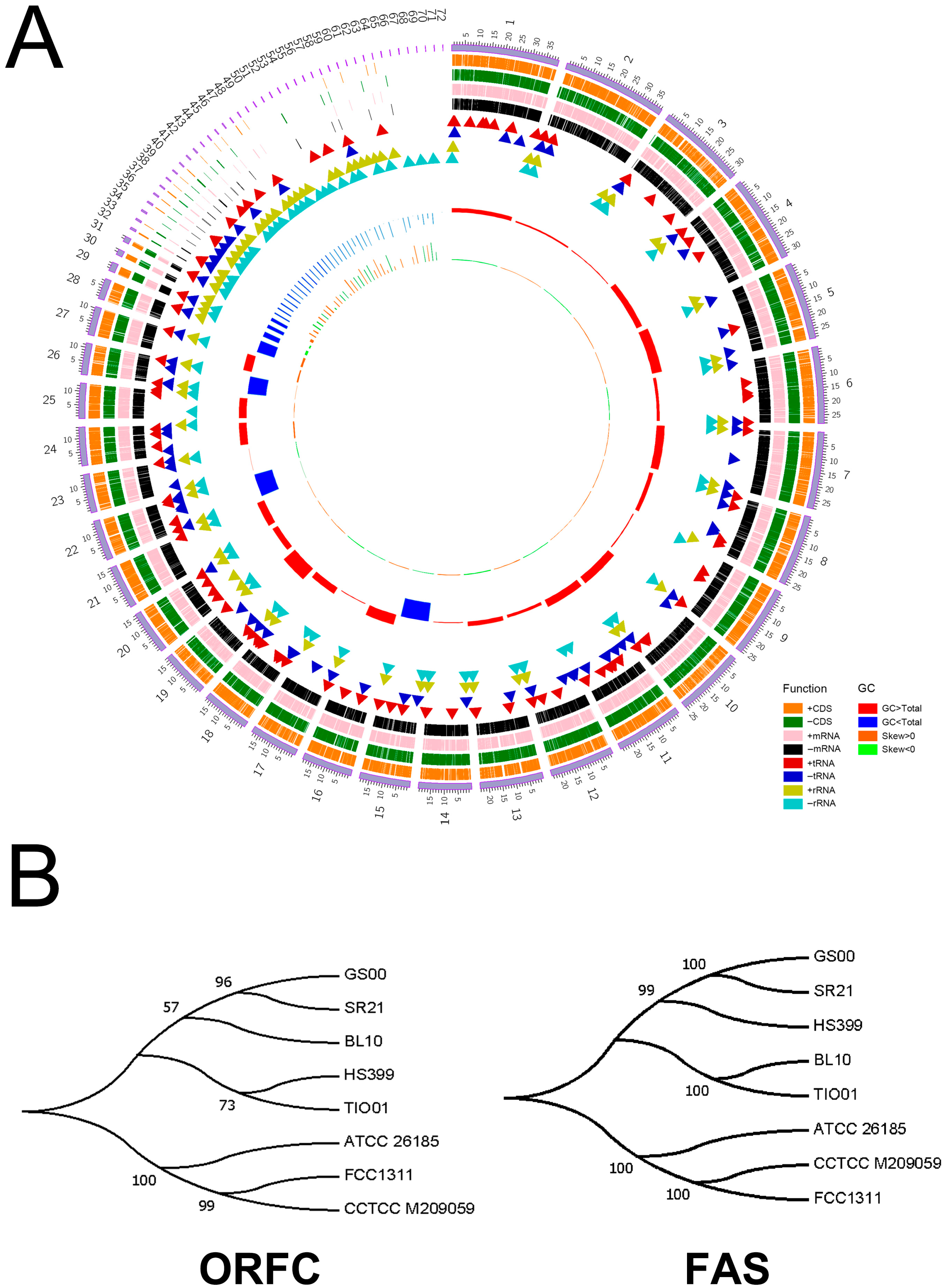
The assembled genome of GS00 comprises 62,438,497 base pairs (62.4 Mb), organized into 72 contigs, with an N50 length of 2,496,014 bp; the GC content of the sequence reads was 45% (Figure 1A). The genome encodes 14,886 genes, with an average gene length of 1713 bp. Non-coding RNA elements include 555 tRNA genes and 295 rRNA copies, comprising 93 copies of 28S rRNA, 89 copies of 18S rRNA, and 113 copies of 5S rRNA. The genome also contains 1,229,489 bp of interspersed repetitive sequences, representing 1.97% of the total genome length. Key genomic features of GS00 are summarized in Table 2.
Gene functions were annotated by comparing predicted protein sequences against multiple protein databases (Figure S1). A total of 8729 genes were categorized into functional groups using Gene Ontology (GO) terms. Pfam database analysis further classified these genes into 379 protein domain superfamilies, while Kyoto Encyclopedia of Genes and Genomes (KEGG) mapping linked 2148 genes to 245 biological pathways. Additional annotations were performed using the Eukaryotic Orthologous Groups (KOG), Non-Redundant Protein (NR), and Swiss-Prot databases, classifying 1736, 3560, and 1974 genes, respectively.
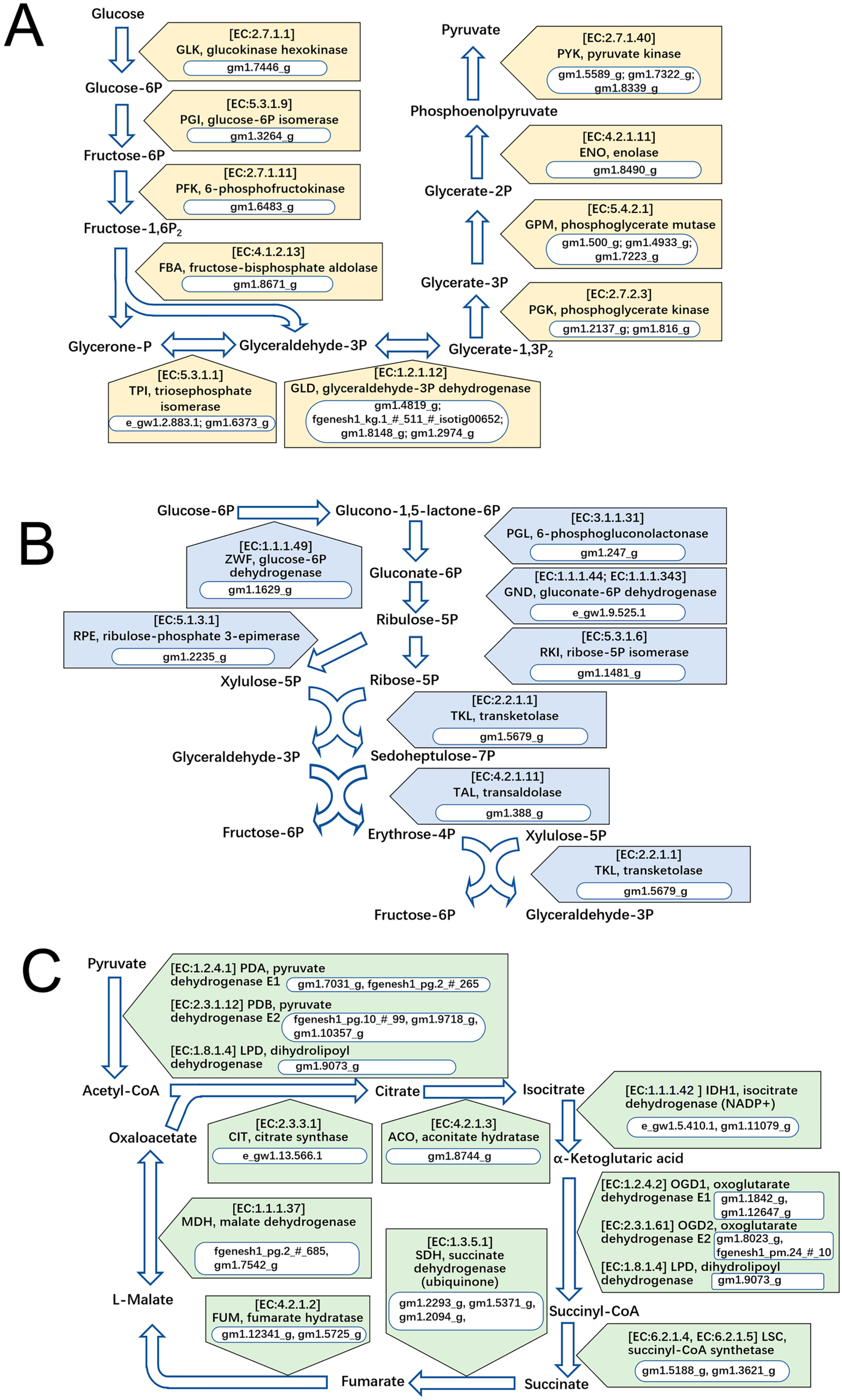
Using these annotations and BLAST alignment against NCBI databases, genes critical to central metabolism and DHA biosynthesis were further identified. As shown in Figure 2 and Supplemental Table S1, 51 genes were linked to glycolysis, the pentose phosphate (PP) pathway, and the tricarboxylic acid (TCA) cycle. Notably, multiple genes encoding distinct enzyme isoforms were annotated, including four GLD (glyceraldehyde-3P dehydrogenase; EC:1.2.1.12), three GPM (phosphoglycerate mutase; EC:5.4.2.1), three PYK (pyruvate kinase; EC:2.7.1.40), three PDB (pyruvate dehydrogenase E2; EC:2.3.1.12), and three SDH (succinate dehydrogenase; EC:1.3.5.1) genes. These results not only contribute to the existing knowledge regarding Schizochytrium genome annotation but also highlight the importance of elucidating metabolic properties through the analysis of isoenzyme differences.

3.3. Annotation of Genes in the Fatty Acid and PUFA Biosynthesis Pathways

Our analysis focused on genes involved in fatty acid biosynthesis and polyunsaturated fatty acid (PUFA) production, particularly docosahexaenoic acid (DHA). Two primary pathways were targeted: the fatty acid synthase (FAS) pathway, responsible for saturated fatty acid (SFA) synthesis, and two putative PUFA biosynthesis routes—the polyketide synthase (PKS) pathway and the elongation–desaturation (E-D) pathway.
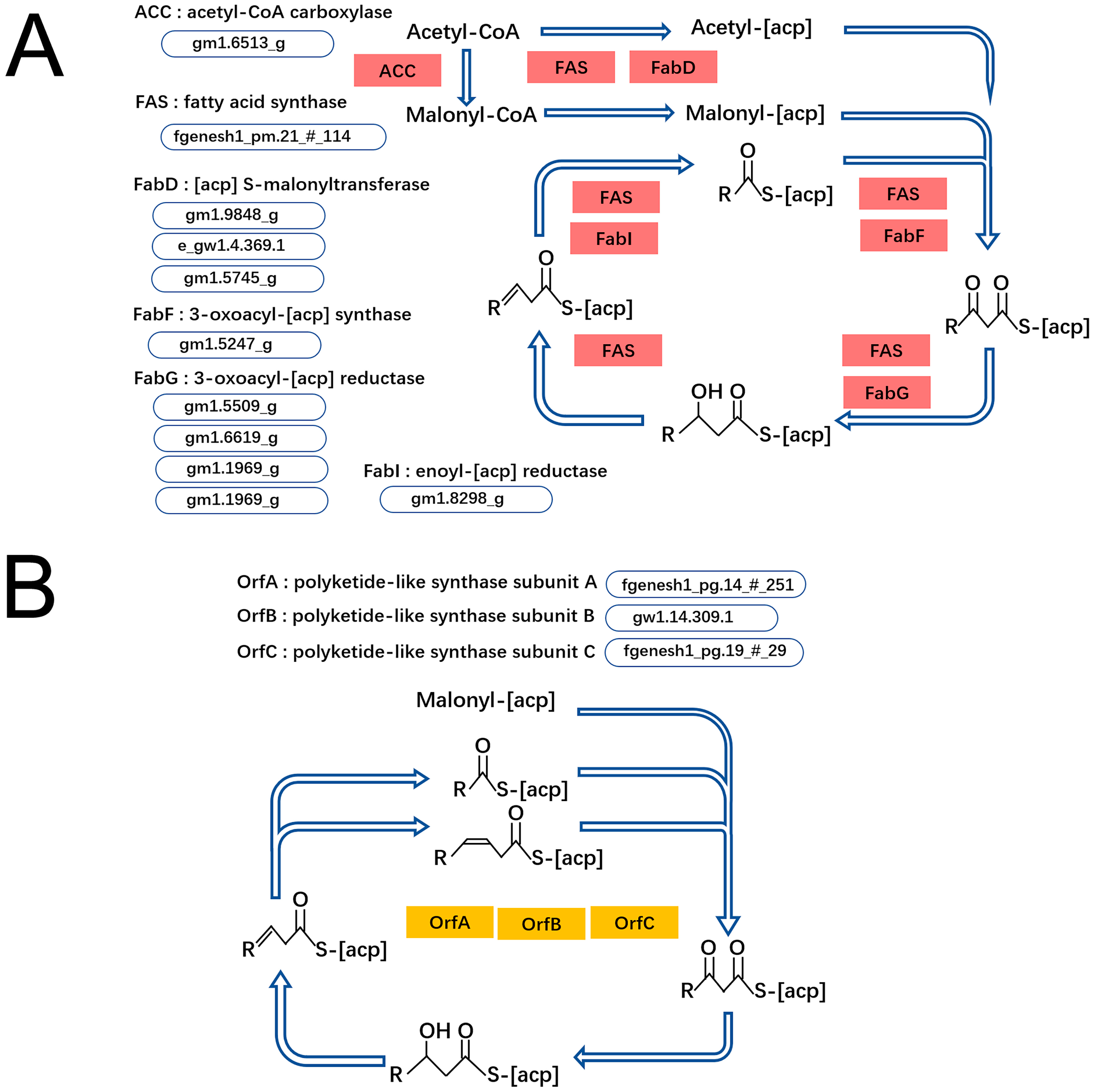
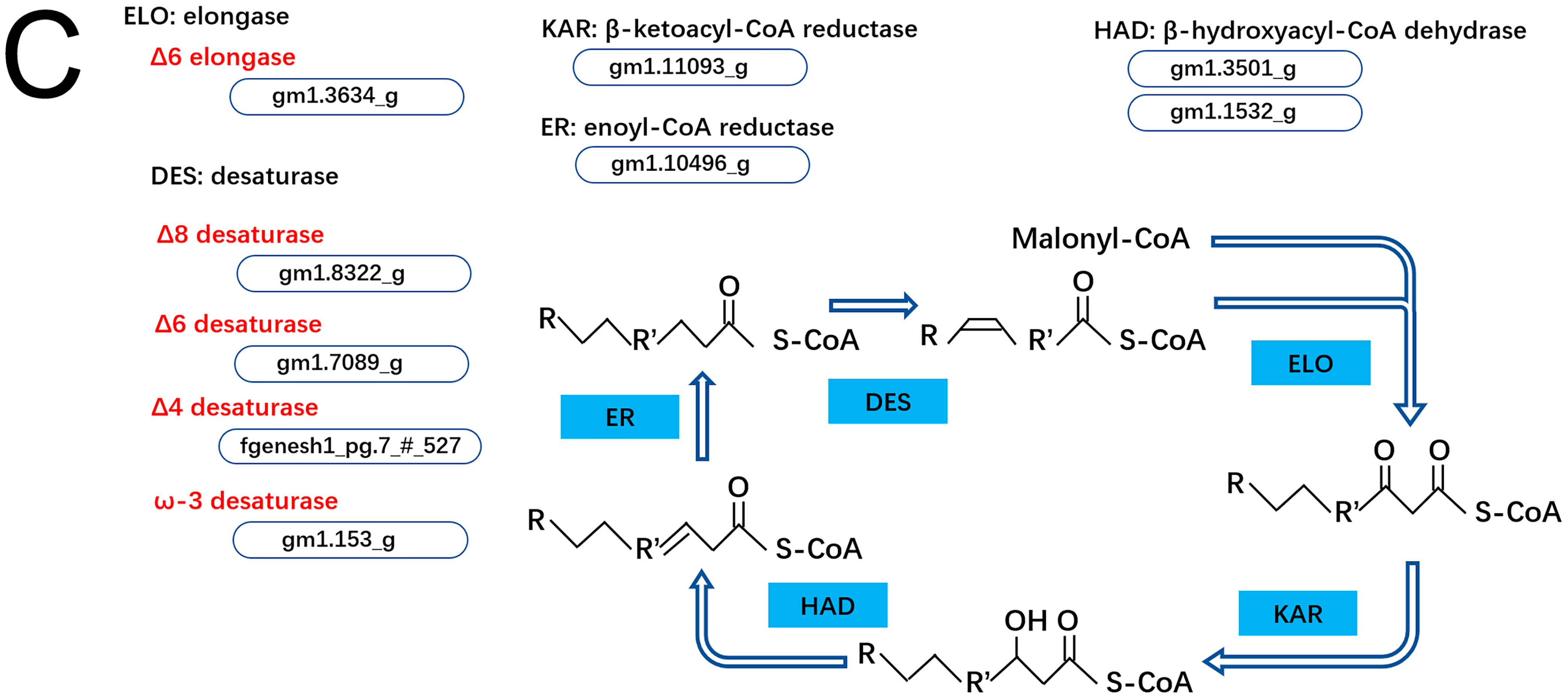
Genomic analysis of GS00 revealed the coexistence of two distinct fatty acid synthase (FAS) systems: type I fatty acid synthase (FAS I), a single large multifunctional enzyme encoded by one gene, and type II fatty acid synthase (FAS II), discrete enzymes encoded by separate genes, each catalyzing specific reactions (Figure 3A). Key genes in the PKS and E-D pathways were also annotated. Three PKS pathway genes (orfA, orfB, and orfC) were identified and are hypothesized to encode core proteins involved in DHA biosynthesis (Figure 3B). Additionally, nine genes associated with the elongation–desaturation (E-D) pathway were annotated, including one elongase and four desaturases (Figure 3C). These results provide a basis for studying the metabolism of different fatty acids in this strain.

3.4. Comparative Genomic Analysis of GS00 and Schizochytrium Limacinum SR21

To elucidate the phylogenetic position of GS00, we conducted comparative sequence analyses of key metabolic genes between GS00 and several Thraustochytriaceae species, including Aurantiochytrium acetophilum HS399, Schizochytrium (Aurantiochytrium) limacinum SR21, Aurantiochytrium sp. KH105, Aurantiochytrium limacinum BL10, Hondaea fermentalgiana FC1311, Schizochytrium sp. CCTCC M209059, Schizochytrium sp. TIO01, and Thraustochytrium sp. ATCC 26185. As shown in Figure 1B, phylogenetic analysis of key fatty acid synthesis pathway genes demonstrated that GS00 shares the highest sequence similarity with Schizochytrium limacinum SR21.
To further explore genomic divergence between these closely related strains, we conducted a genome-wide comparative analysis using the SR21 genome as a reference (Figure S1). This revealed substantial genomic variations between GS00 and SR21, including 10,595 insertions/deletions (InDels), 5675 single-nucleotide polymorphisms (SNPs), and 1346 structural variations (SVs). Notably, 15% of InDels and 22% of SNPs were localized within coding regions or regulatory elements. Although above results shown GS00 shares a close phylogenetic relationship with strain SR21, its DHA biosynthetic features differ markedly [32]. The aforementioned genetic variations are likely responsible for the distinct phenotypic characteristics observed between the two strains.

3.5. Comparative Genomic Analysis of GS00 and HS01

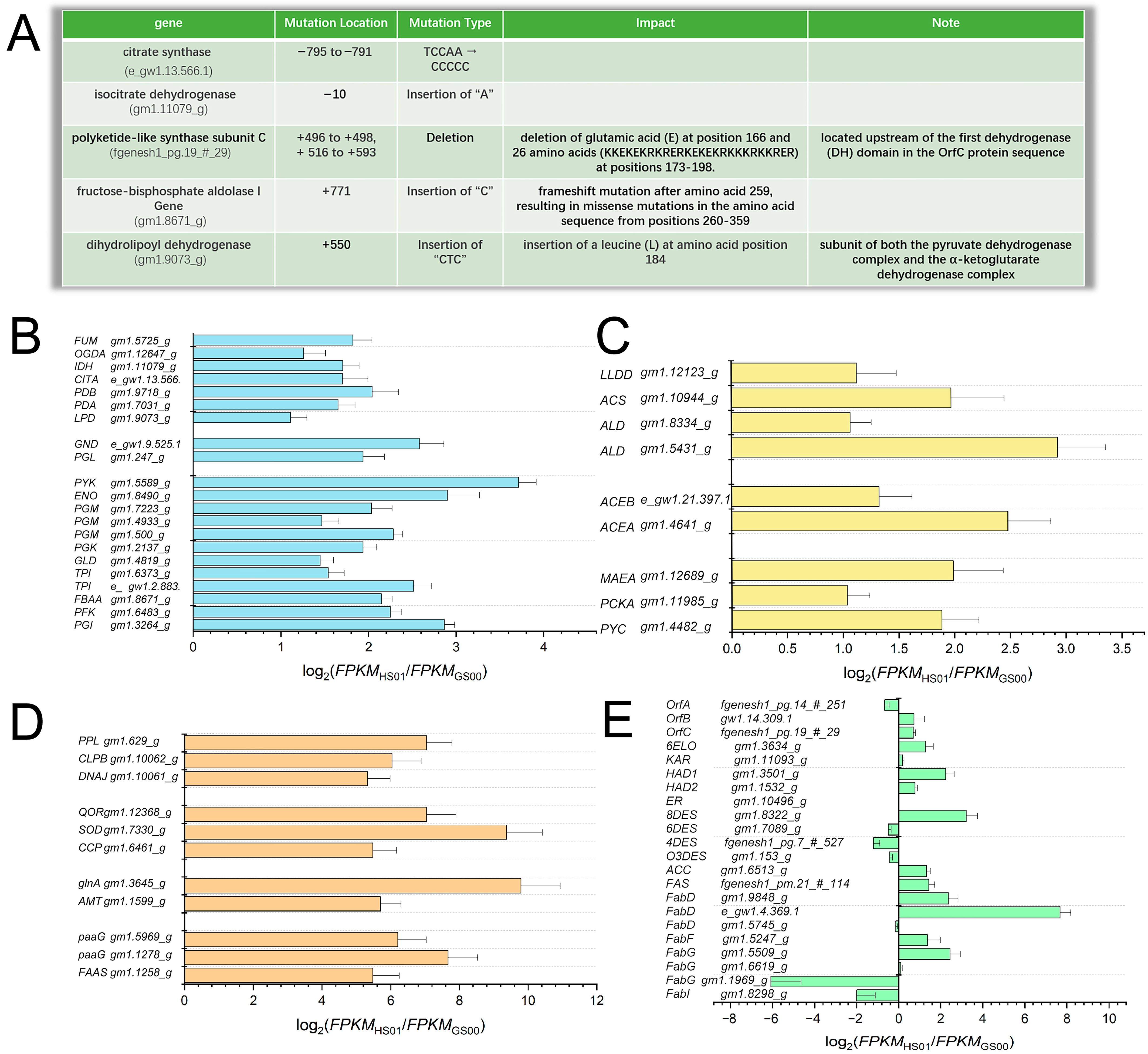
To further uncover the genetic determinants of enhanced DHA biosynthesis in strain HS01, we performed a comparative genomic analysis between GS00 and its high-yielding derivative, HS01. Synteny analysis revealed structural variations between the two genomes. Specifically, 44 InDel variants were identified in HS01 compared to GS00, including 34 insertions and 10 deletions, with 6 localized within open reading frames (ORFs). Meanwhile, 396 single-nucleotide polymorphisms (SNPs) were detected, including 44 SNPs within ORFs (24 causing missense mutations). The proteins encoded by these ORFs may be closely associated with the enhanced DHA production observed in strain HS01. However, functional annotation indicated that only a few of these ORFs are involved in clearly defined metabolic pathways. Among them, two mutations were identified in the upstream regulatory regions of two key TCA cycle genes—citrate synthase (e_gw1.13.566.1) and isocitrate dehydrogenase (gm1.11079_g). In addition, three insertion/deletion events caused fragment shifts in open reading frames (ORFs), including the unsaturated fatty acid synthase PKS subunit OrfC (fgenesh1_pg.19_#_29), the fructose-bisphosphate aldolase I gene (gm1.8671_g) involved in glycolysis, and dihydrolipoyl dehydrogenase (LPD) (gm1.9073_g), which participates in both the pyruvate dehydrogenase and α-ketoglutarate dehydrogenase complexes (Figure 4A). Of course, these mutations do not provide direct evidence for their involvement in the enhanced DHA biosynthesis. Therefore, further comparative transcriptomic analysis may offer more direct insights into the mechanisms underlying the increased DHA production.

3.6. Comparative Transcriptomic Analysis of GS00 and HS01

Comparative transcriptomic analysis was conducted under varying conditions to further explore the differences between the two strains. First, we compared the two strains after culturing in shake flasks. Specifically, cell pellets from 72 h GS00 and HS01 culture were harvested for transcriptome analysis. Differential expression profiling focused on genes associated with central metabolic pathways, polyunsaturated fatty acid (PUFA) biosynthesis, and fatty acid synthesis. The HS01 strain exhibited higher transcriptional activity in central metabolic pathways than GS00.
Most genes associated with glycolysis were significantly upregulated in HS01, accompanied by increased expression of several tricarboxylic acid (TCA) cycle genes (e.g., CITA, IDH, FUM, PYC, MAEA, ACEA) (Figure 4B,C). We further examined the expression of genes related to fatty acid biosynthesis (Figure 4E). In the saturated fatty acid (SFA) pathway, three genes were markedly upregulated (log2FC > 2), while two were downregulated (log2FC < –2). Interestingly, the expression of genes in the PKS pathway, which is essential for docosahexaenoic acid (DHA) production, remained largely unchanged. Similarly, in the elongation–desaturation (E–D) pathway for PUFA biosynthesis, most genes exhibited no significant expression differences, except for a few individual cases. We also conducted functional enrichment analysis of the most highly variable genes by clustering the pathways of genes with an absolute log2 fold change >5 (Figure 4D). The results revealed pronounced upregulation of several genes in HS01, including fatty acid β-oxidation genes (e.g., FAAS [fatty-acyl-CoA synthase], paaG [enoyl-CoA hydratase]), nitrogen assimilation regulators (e.g., glnA [glutamine synthetase]), molecular chaperones, and electron transport chain components.
These transcriptomic results provide important insights: the upregulation of glycolytic and TCA cycle genes, together with alterations in fatty acid metabolism. The enhancement of glycolytic and TCA cycle genes may supply more acetyl-CoA precursors for DHA biosynthesis. Meanwhile, changes in fatty acid metabolism, including the upregulation of β-oxidation–related genes, may reflect enhanced fatty acid turnover and conversion processes [33]. In addition, the altered expression of other genes, such as molecular chaperones, may exert additional regulatory effects that indirectly contribute to the increased DHA production. Therefore, a more detailed analysis of transcriptomic dynamics during the fermentation process is warranted to further elucidate the underlying mechanisms.

3.7. Transcriptional Analysis of DHA Fermentation in Strain HS01

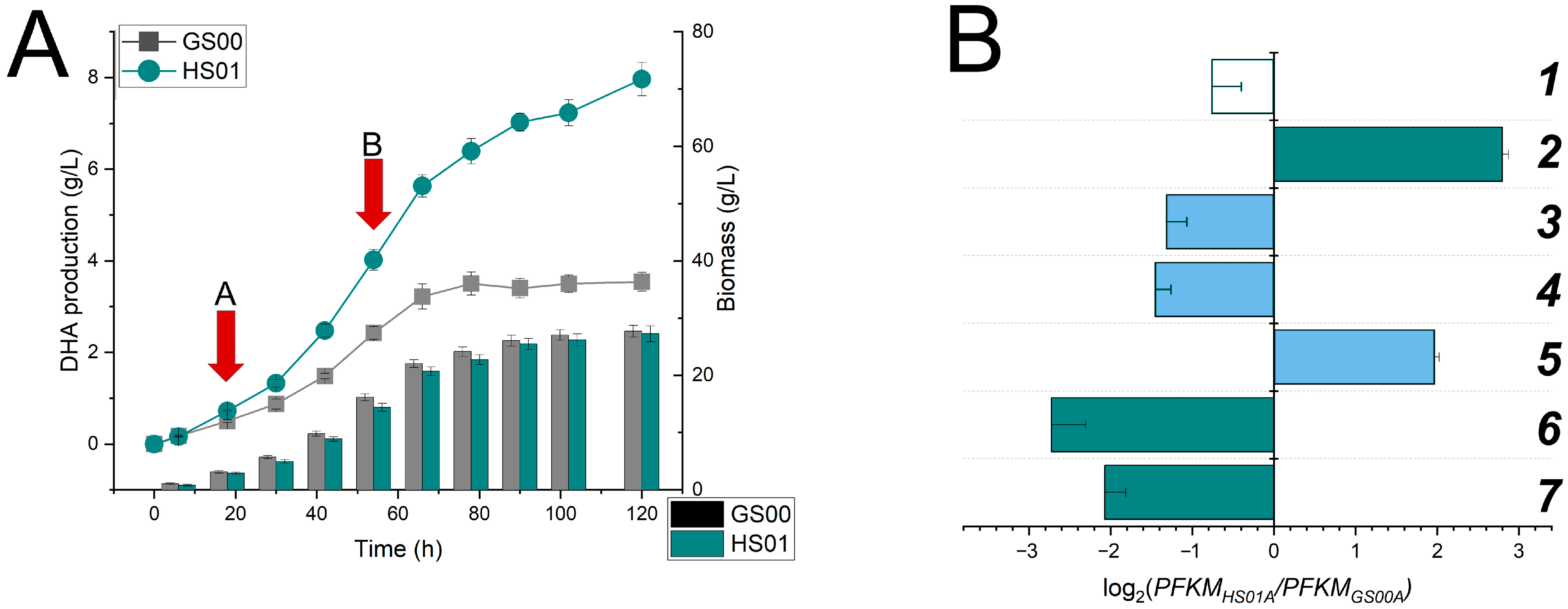
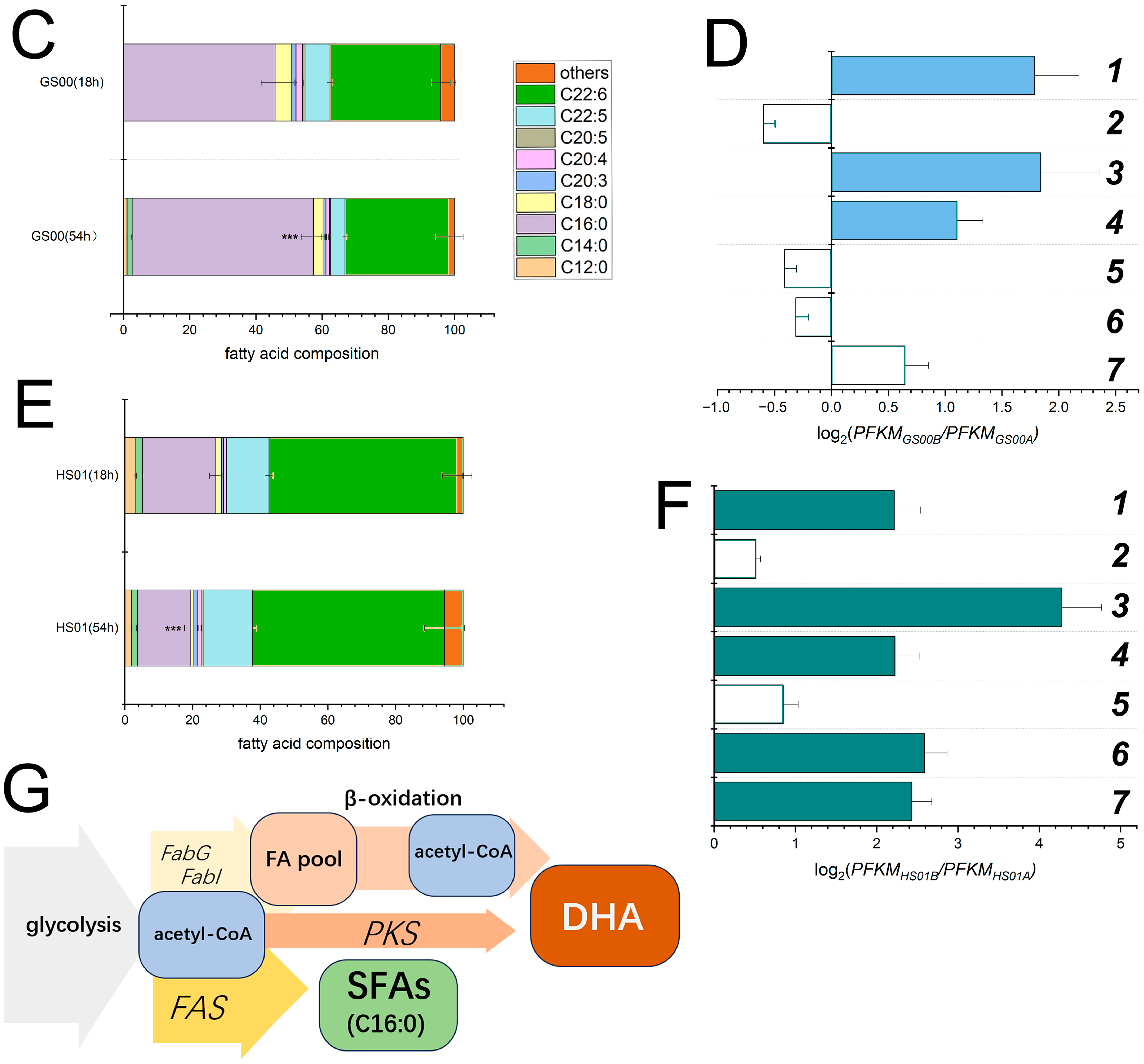
We further examined both fatty acid accumulation patterns and transcriptional profiles during 5 L fermentation. Overall, DHA accumulation in HS01 was markedly higher than in GS00 throughout fermentation (Figure 5A). Meanwhile, no significant differences were observed in biomass formation or glucose consumption rates between the two strains (during the fermentation process, the total glucose consumption of GS00 was 1.14 kg, whereas that of HS01 was 1.21 kg). Fatty acid composition analysis showed that by 18 h (point A), DHA already constituted 56.84% of total fatty acids in HS01, compared to only 33.47% in GS00. Conversely, palmitic acid (C16:0) levels in HS01 were 15.8%, substantially lower than the 45.82% observed in GS00 (Figure 5C,E). Moreover, HS01 displayed significantly higher levels of other PUFAs (such as DPA), as well as elevated proportions of certain SFAs (C12:0, C14:0). At the DHA accumulation stage (54 h, point B), the proportion of C16:0 increased in GS00 but decreased in HS01, whereas the relative proportion of DHA remained nearly unchanged. These results indicate that DHA biosynthesis proceeds via a pathway distinct from that of C16:0.
Transcriptomic analysis further clarified these metabolic differences. The changes in representative genes for the different selected pathways are shown in Figure 5B,D,F. At point A, relative to GS00, the high-producing HS01strain showed elevated expression of aceA (isocitrate lyase) and fabG (3-oxoacyl-ACP reductase) but reduced expression of most other fatty acid synthesis genes, including orfA (for DHA synthesis) (Figure 5B). This pattern aligns with our prior flask-level observations [16]. However, during fermentation, HS01 exhibited a transcriptional profile entirely distinct from that of GS00. In HS01, the transcription levels of all genes increased significantly as fermentation progressed (Figure 5F). In contrast, GS00 showed no increase in the transcription levels of its relevant genes (Figure 5D). These results indicate that HS01 sustained a more active and robust overall gene expression profile during fermentation. Collectively, our results demonstrate that the altered fatty acid profile and enhanced late-stage transcriptional activity of HS01 may contribute to its elevated DHA accumulation. This enhancement is likely driven by an increased carbon flux redirected through alternative fatty acid metabolic pathways toward DHA biosynthesis.

4. Discussion

Schizochytrium sp. is a critical microbial producer of docosahexaenoic acid (DHA) and other polyunsaturated fatty acids (PUFAs), positioning it at the forefront of industrial biomanufacturing research. Consequently, metabolic engineering strategies targeting DHA biosynthesis and strain optimization have become key priorities in the field. DHA production has been extensively studied in the closely related species Schizochytrium limacinum SR21, with reports in the literature indicating that DHA makes up approximately 28.7% of its total fatty acids [34]. Schizochytrium sp. S31 (ATCC 20888) is another well-characterized strain, with a documented DHA yield reaching up to 34.8% of its total fatty acids [35]. Through strain mutagenesis, evolutionary breeding, and metabolic engineering strategies, several superior strains have been developed, achieving DHA contents ranging from 35.6% to 45.8% [15,34,35,36].
Although genomic and transcriptomic analyses have been conducted on certain strains (such as SR21), the key enzymes and regulatory mechanisms underlying DHA synthesis remain insufficiently elucidated. The metabolic basis for high DHA yield in strains derived from screening or mutagenesis, including industrially promising ones, remains unclear. In this study, we systematically compared the genomic and transcriptomic profiles of the DHA-producing strain Schizochytrium sp. GS00 and its high-yielding derivative HS01. HS01 is an industrially applied strain capable of achieving a DHA content exceeding 56% of total fatty acids, and it has been successfully scaled up to commercial production in 75-ton fermenters. In-depth analysis of the metabolic characteristics of such industrial strains is of great significance for elucidating the mechanisms underlying high DHA production in Schizochytrium and guiding further metabolic engineering efforts.
Genomic differences between strains HS01 and GS00 provide valuable clues for understanding the basis of HS01’s enhanced DHA production. Several mutations were identified in genes related to primary metabolism; however, no direct evidence links these changes to the increased DHA yield. In particular, whether the mutation in OrfC within the PKS pathway affects enzyme activity remains to be experimentally verified. In HS01, the transcriptional upregulation of genes involved in central metabolism—such as those in the glycolytic and TCA cycle pathways—was especially pronounced during the late fermentation stage. The specific genomic mutations responsible for this enhancement remain unclear and may instead be attributed to alterations in global regulatory mechanisms. Interestingly, the upregulation of glycolytic and TCA cycle genes did not lead to an increase in biomass, suggesting that more carbon flux was directed toward target product synthesis (Figure 5G). At the fermentation level, HS01 displayed distinct fatty acid accumulation patterns from GS00, even at the early stage. A key observation was the difference in saturated fatty acid composition (e.g., C12:0 and C14:0) (Figure 5C,E), indicating that HS01 maintains a distinct intracellular fatty acid pool. Consistent with this observation, transcriptional differences were also observed in genes involved in fatty acid biosynthesis and β-oxidation. These findings suggest that mutations in HS01 may have globally reshaped its fatty acid biosynthetic network, creating a unique fatty acid pool that supplies DHA precursors. Meanwhile, the enhanced glycolytic and TCA cycle may provide additional metabolic flux and reduce power, collectively contributing to the elevated DHA production.
Among the differentially expressed genes, several provided informative clues. For instance, compared with GS00, HS01 exhibited markedly higher expression of aceA and fabG during fermentation. AceA may promote malate formation, thereby increasing the supply of acetyl-CoA and reducing equivalents (NADPH) required for DHA biosynthesis. In parallel, FabG appears to participate in an alternative pathway for saturated fatty acid (SFA) synthesis. Nevertheless, due to limited experimental evidence, further research is required. Future studies will focus on the functional characterization of unannotated mutation sites and on integrating metabolomic and transcriptomic analyses to provide deeper insights into the molecular mechanisms underlying DHA overproduction in HS01. In summary, by integrating genomic and transcriptomic analyses, this study identified key mutations as well as system-wide transcriptional and metabolic changes in HS01. These findings provide a potential model for enhanced DHA production, driven by strengthened central carbon metabolism and altered fatty acid metabolism during fermentation, thereby laying a foundation for further mechanistic studies and biotechnological applications.

Supplementary Materials

The following supporting information can be downloaded at: https://www.mdpi.com/article/10.3390/fermentation11110631/s1, Figure S1: Functional annotation of GS00 and comparative genomic information with Schizochytrium limacinum SR21; Table S1: Gene annotation information.

Author Contributions

Conceptualization, Y.T. and W.L.; methodology, Y.T.; validation, H.Z. and W.L.; investigation, H.Z.; writing—original draft preparation, W.L.; supervision, Y.T.; funding acquisition, W.L. All authors have read and agreed to the published version of the manuscript.

Funding

This research was funded by National Key Research and Development Project of China, grant number 2021YFA0910600.

Institutional Review Board Statement

Not applicable.

Informed Consent Statement

Not applicable.

Data Availability Statement

The original contributions presented in this study are included in the article/Supplementary Material. Further inquiries can be directed to the corresponding authors.

Acknowledgments

We gratefully acknowledge Liyi Chen from Xiamen Huison Biotech Co., Ltd. for providing the strains and experimental materials, and Bo Liu from Microcyto Biotech Co., Ltd. for supplying certain methods and equipment.

Conflicts of Interest

The authors declare no conflicts of interest.

References

  1. Masson, S.; Latini, R.; Tacconi, M.; Bernasconi, R. Incorporation and washout of n-3 polyunsaturated fatty acids after diet supplementation in clinical studies. J. Cardiovasc. Med. 2007, 8 (Suppl. S1), S4–S10. [Google Scholar] [CrossRef]
  2. Russo, G.L. Dietary n-6 and n-3 polyunsaturated fatty acids: From biochemistry to clinical implications in cardiovascular prevention. Biochem. Pharmacol. 2009, 77, 937–946. [Google Scholar] [CrossRef]
  3. Jordan, R.G. Prenatal omega-3 fatty acids: Review and recommendations. J. Midwifery Womens Health 2010, 55, 520–528. [Google Scholar] [CrossRef] [PubMed]
  4. Horrocks, L.A.; Yeo, Y.K. Health benefits of docosahexaenoic acid (DHA). Pharmacol. Res. 1999, 40, 211–225. [Google Scholar] [CrossRef]
  5. Birch, E.E.; Garfield, S.; Castaneda, Y.; Hughbanks-Wheaton, D.; Uauy, R.; Hoffman, D. Visual acuity and cognitive outcomes at 4 years of age in a double-blind, randomized trial of long-chain polyunsaturated fatty acid-supplemented infant formula. Early Human Dev. 2007, 83, 279–284. [Google Scholar] [CrossRef]
  6. Innis, S.M. Dietary omega 3 fatty acids and the developing brain. Brain Res. 2008, 1237, 35–43. [Google Scholar] [CrossRef] [PubMed]
  7. Harris, W.S.; Mozaffarian, D.; Lefevre, M.; Toner, C.D.; Colombo, J.; Cunnane, S.C.; Holden, J.M.; Klurfeld, D.M.; Morris, M.C.; Whelan, J. Towards establishing dietary reference intakes for eicosapentaenoic and docosahexaenoic acids. J. Nutr. 2009, 139, 804S–819S. [Google Scholar] [CrossRef] [PubMed]
  8. Hauvermale, A.; Kuner, J.; Rosenzweig, B.; Guerra, D.; Diltz, S.; Metz, J.G. Fatty acid production in Schizochytrium sp.: Involvement of a polyunsaturated fatty acid synthase and a type I fatty acid synthase. Lipids 2006, 41, 739–747. [Google Scholar] [CrossRef]
  9. Ji, X.J.; Mo, K.Q.; Ren, L.J.; Li, G.L.; Huang, J.Z.; Huang, H. Genome Sequence of Schizochytrium sp. CCTCC M209059, an Effective Producer of Docosahexaenoic Acid-Rich Lipids. Genome Announc. 2015, 3, e00819-15. [Google Scholar] [CrossRef]
  10. Liang, L.; Zheng, X.; Fan, W.; Chen, D.; Huang, Z.; Peng, J.; Zhu, J.; Tang, W.; Chen, Y.; Xue, T. Genome and Transcriptome Analyses Provide Insight into the Omega-3 Long-Chain Polyunsaturated Fatty Acids Biosynthesis of Schizochytrium limacinum SR21. Front. Microbiol. 2020, 11, 687. [Google Scholar] [CrossRef]
  11. Xu, Y.; Zhang, Z.; Bian, Y.; Wang, Y.; Deng, Z.; Luo, R.; Li, W.; Yan, J.; Zhao, B.; Sun, D. Regulatory Mechanisms of EPA and DHA Proportions in a PUFA-Producing Microalga, Schizochytrium sp. ATCC 20888: From the Biosynthesis and Storage Distribution Aspects. J. Agric. Food Chem. 2025, 73, 4137–4151. [Google Scholar] [CrossRef]
  12. Lian, M.; Huang, H.; Ren, L.; Ji, X.; Zhu, J.; Jin, L. Increase of docosahexaenoic acid production by Schizochytrium sp. through mutagenesis and enzyme assay. Appl. Biochem. Biotechnol. 2010, 162, 935–941. [Google Scholar] [CrossRef]
  13. Sun, X.M.; Ren, L.J.; Bi, Z.Q.; Ji, X.J.; Zhao, Q.Y.; Huang, H. Adaptive evolution of microalgae Schizochytrium sp. under high salinity stress to alleviate oxidative damage and improve lipid biosynthesis. Bioresour. Technol. 2018, 267, 438–444. [Google Scholar] [CrossRef]
  14. Wang, F.; Bi, Y.; Diao, J.; Lv, M.; Cui, J.; Chen, L.; Zhang, W. Metabolic engineering to enhance biosynthesis of both docosahexaenoic acid and odd-chain fatty acids in Schizochytrium sp. S31. Biotechnol. Biofuels 2019, 12, 141. [Google Scholar] [CrossRef] [PubMed]
  15. Nazir, Y.; Phabakaran, P.; Halim, H.; Mohamed, H.; Naz, T.; Abdul Hamid, A.; Song, Y. Strategic Development of Aurantiochytrium sp. Mutants with Superior Oxidative Stress Tolerance and Glucose-6-Phosphate Dehydrogenase Activity for Enhanced DHA Production Through Plasma Mutagenesis Coupled with Chemical Screening. Front. Nutr. 2022, 9, 876649. [Google Scholar] [CrossRef]
  16. Zhong, H.; Zhang, M.; Chen, L.; Liu, W.; Tao, Y. Development of Schizochytrium sp. strain HS01 with high-DHA and low-saturated fatty acids production by multi-pronged adaptive evolution. Biotechnol. Lett. 2023, 45, 1147–1157. [Google Scholar] [CrossRef]
  17. Qiu, X. Biosynthesis of docosahexaenoic acid (DHA, 22:6-4, 7,10,13,16,19): Two distinct pathways. Prostaglandins Leukot. Essent. Fat. Acids 2003, 68, 181–186. [Google Scholar] [CrossRef] [PubMed]
  18. Choi, J.Y.; Park, H.; Park, J.J.; Cho, I.H. Validation of the AOAC method for analyzing fatty acids in meat by-products for the Korean Food Composition Database. Food Sci. Biotechnol. 2023, 32, 847–854. [Google Scholar] [CrossRef]
  19. Peng, Y.F.; Chen, W.C.; Xiao, K.; Xu, L.; Wang, L.; Wan, X. DHA Production in Escherichia coli by Expressing Reconstituted Key Genes of Polyketide Synthase Pathway from Marine Bacteria. PLoS ONE 2016, 11, e0162861. [Google Scholar] [CrossRef] [PubMed]
  20. Berlin, K.; Koren, S.; Chin, C.S.; Drake, J.P.; Landolin, J.M.; Phillippy, A.M. Assembling large genomes with single-molecule sequencing and locality-sensitive hashing. Nat. Biotechnol. 2015, 33, 623–630. [Google Scholar] [CrossRef]
  21. Koren, S.; Phillippy, A.M. One chromosome, one contig: Complete microbial genomes from long-read sequencing and assembly. Curr. Opin. Microbiol. 2015, 23, 110–120. [Google Scholar] [CrossRef]
  22. Stanke, M.; Diekhans, M.; Baertsch, R.; Haussler, D. Using native and syntenically mapped cDNA alignments to improve de novo gene finding. Bioinformatics 2008, 24, 637–644. [Google Scholar] [CrossRef] [PubMed]
  23. Saha, S.; Bridges, S.; Magbanua, Z.V.; Peterson, D.G. Empirical comparison of ab initio repeat finding programs. Nucleic Acids Res. 2008, 36, 2284–2294. [Google Scholar] [CrossRef] [PubMed]
  24. Benson, G. Tandem repeats finder: A program to analyze DNA sequences. Nucleic Acids Res. 1999, 27, 573–580. [Google Scholar] [CrossRef] [PubMed]
  25. Lowe, T.M.; Eddy, S.R. tRNAscan-SE: A program for improved detection of transfer RNA genes in genomic sequence. Nucleic Acids Res. 1997, 25, 955–964. [Google Scholar] [CrossRef]
  26. Lagesen, K.; Hallin, P.; Rodland, E.A.; Staerfeldt, H.H.; Rognes, T.; Ussery, D.W. RNAmmer: Consistent and rapid annotation of ribosomal RNA genes. Nucleic Acids Res. 2007, 35, 3100–3108. [Google Scholar] [CrossRef]
  27. Kanehisa, M.; Goto, S.; Kawashima, S.; Okuno, Y.; Hattori, M. The KEGG resource for deciphering the genome. Nucleic Acids Res. 2004, 32, D277–D280. [Google Scholar] [CrossRef]
  28. Magrane, M.; UniProt, C. UniProt Knowledgebase: A hub of integrated protein data. Database 2011, 2011, bar009. [Google Scholar] [CrossRef]
  29. Ashburner, M.; Ball, C.A.; Blake, J.A.; Botstein, D.; Butler, H.; Cherry, J.M.; Davis, A.P.; Dolinski, K.; Dwight, S.S.; Eppig, J.T.; et al. Gene ontology: Tool for the unification of biology. The Gene Ontology Consortium. Nat. Genet. 2000, 25, 25–29. [Google Scholar] [CrossRef]
  30. Tatusov, R.L.; Fedorova, N.D.; Jackson, J.D.; Jacobs, A.R.; Kiryutin, B.; Koonin, E.V.; Krylov, D.M.; Mazumder, R.; Mekhedov, S.L.; Nikolskaya, A.N.; et al. The COG database: An updated version includes eukaryotes. BMC Bioinform. 2003, 4, 41. [Google Scholar] [CrossRef]
  31. Saier, M.H., Jr.; Reddy, V.S.; Tamang, D.G.; Vastermark, A. The transporter classification database. Nucleic Acids Res. 2014, 42, D251–D258. [Google Scholar] [CrossRef]
  32. Morita, E.; Kumon, Y.; Nakahara, T.; Kagiwada, S.; Noguchi, T. Docosahexaenoic acid production and lipid-body formation in Schizochytrium limacinum SR21. Mar. Biotechnol. 2006, 8, 319–327. [Google Scholar] [CrossRef]
  33. Dutta, K.; Ashikhmina, M.S.; Skorb, E.V.; Shityakov, S. Strategies for Improved Docosahexaenoic Acid Synthesis in Microalgae. ACS Synth. Biol. 2025, 14, 3849–3861. [Google Scholar] [CrossRef] [PubMed]
  34. Cui, X.; Chen, T.; Meng, Y.; Pan, X.; Wu, R.; Lu, Y.; Yao, C.; Lin, X.; Ling, X. Determining metabolic mechanism linking phospholipids and docosahexaenoic acid through phosphatidylcholine synthesis by phosphocholine cytidylyltransferase (CCT) overexpression in Schizochytrium sp. Microb. Cell Fact. 2025, 24, 81. [Google Scholar] [CrossRef] [PubMed]
  35. Liu, Y.; Han, X.; Chen, Z.; Yan, Y.; Chen, Z. Selectively superior production of docosahexaenoic acid in Schizochytrium sp. through engineering the fatty acid biosynthetic pathways. Biotechnol. Biofuels Bioprod. 2024, 17, 75. [Google Scholar] [CrossRef] [PubMed]
  36. Li, Z.; Meng, T.; Ling, X.; Li, J.; Zheng, C.; Shi, Y.; Chen, Z.; Li, Z.; Li, Q.; Lu, Y.; et al. Overexpression of Malonyl-CoA: ACP Transacylase in Schizochytrium sp. to Improve Polyunsaturated Fatty Acid Production. J. Agric. Food Chem. 2018, 66, 5382–5391. [Google Scholar] [CrossRef]
Figure 1. (A) Genomic component prediction and functional annotation of Schizochytrium sp. GS00. The circular map of the GS00 genome is shown. The assembled genome consists of 72 contigs, with different genomic features—coding sequences (CDS), mRNA, tRNA, and rRNA—indicated by distinct colors (CDS and mRNA are shown as vertical lines, whereas tRNA and rRNA are indicated by triangles); (B) Phylogenetic analysis of orfC and FAS in GS00 and related species. HS399: Aurantiochytrium acetophilum HS399; SR21: Aurantiochytrium limacinum SR21; KH105: Aurantiochytrium sp. KH105; BL10: Aurantiochytrium limacinum BL10; FC1311: Hondaea fermentalgiana FC1311; CCTCC M209059: Schizochytrium sp. CCTCC M209059; TIO01: Schizochytrium sp. TIO01; ATCC 26185: Thraustochytrium sp. ATCC 26185.
Fermentation 11 00631 g001
Figure 2. Annotation of central metabolic pathway genes. (A) Gene annotation for glycolysis; (B) Gene annotation for the pentose phosphate (PP) pathway; (C) Gene annotation for the tricarboxylic acid (TCA) cycle.
Fermentation 11 00631 g002
Figure 3. Annotation of genes involved in fatty acid metabolism. (A) Saturated fatty acid biosynthesis pathway; (B) Polyketide synthase (PKS)-mediated polyunsaturated fatty acid (PUFA) biosynthesis pathway; (C) PUFA biosynthesis pathway via the elongation–desaturase system.
Fermentation 11 00631 g003aFermentation 11 00631 g003b
Figure 4. (A) Genomic variants between GS00 and HS01: important mutations associated with central metabolic pathways and fatty acid biosynthesis pathway; (B) Genes in central metabolic pathways, including glycolysis, pentose phosphate (PP) pathway, and tricarboxylic acid (TCA) cycle, showing significant transcriptional changes between GS00 and HS01 (|log2 Fold Change (FPKM)| > 1); (C) Genes involved in byproduct metabolism and anaplerotic reactions showing significant transcriptional differences between GS00 and HS01 (|log2 fold change (FPKM)|> 1); (D) Subset of genes with significant transcriptional changes between GS00 and HS01 (|log2 Fold Change (FPKM)| > 5); (E). Transcriptional changes in genes related to fatty acid biosynthesis, including both saturated (SFAs) and polyunsaturated fatty acids (PUFAs), between GS00 and HS01. PGI: glucose-6-phosphate isomerase; PFK: 6-phosphofructokinase; FBAA: fructose-bisphosphate aldolase I; TPI: triosephosphate isomerase; GLD: glyceraldehyde 3-phosphate dehydrogenase; PGK: phosphoglycerate kinase; PGM: phosphoglycerate mutase; ENO: enolase; PYK: pyruvate kinase; PGL: 6-phosphogluconolactonase; GND: gluconate-6P dehydrogenase; LPD: dihydrolipoyl dehydrogenase; PDA: pyruvate dehydrogenase E1 component; PDB: pyruvate dehydrogenase E2 component; CITA: citrate synthase I; IDH isocitrate dehydrogenase (NADP+); OGDA: 2-oxoglutarate dehydrogenase E1 component; FUM: fumarate hydratase; PYC: pyruvate carboxylase; PCKA: phosphoenolpyruvate carboxykinase (ATP); MAEA: malate dehydrogenase; aceA: isocitrate lyase; ACEB: malate synthase; ALD: aldehyde dehydrogenase (NAD+); ACS: acetyl-CoA synthetase; LLDD: L-lactate dehydrogenase (cytochrome); FAAS: fatty-acyl-CoA synthase; paaG: enoyl-CoA hydratase; AMT: ammonium transporter; glnA: glutamine synthetase; CCP: cytochrome c peroxidase; SOD: superoxide dismutase; QOR: NADPH2:quinone reductase; DNAJ: DnaJ homolog; ClpB: ATP-dependent Clp protease ATP-binding subunit ClpB; PPL: peptidyl-prolyl cis-trans isomerase; OrfA: polyketide synthase subunit A; OrfB: polyketide synthase subunit B; OrfC: polyketide synthase subunit C; 6ELO: Δ6 elongase; KAR: very-long-chain 3-oxoacyl-CoA reductase; HAD1 and HAD2: very-long-chain 3-hydroxyacyl-CoA dehydratase; ER: very-long-chain enoyl-CoA reductase; 8DES: Δ8 desaturase; 6DES: Δ6 desaturase; 4DES: Δ4 desaturase; O3DES: ω3 desaturase; ACC: acetyl-CoA carboxylase; FAS: fatty-acid synthase; FabD: [acyl-carrier-protein] S-malonyltransferase; FabF: 3-oxoacyl-[acyl-carrier-protein] synthase II; FabG: 3-oxoacyl-[acyl-carrier protein] reductase; FabI: enoyl-[acyl-carrier protein] reductase I.
Fermentation 11 00631 g004
Figure 5. (A) Fermentation performance of GS00 and HS01 at the 5 L scale, showing DHA production and biomass accumulation. Samples were collected at the indicated time points for fatty acid composition analysis and transcriptomic comparison. (C,E) Fatty acid composition of GS00 (C) and HS01 (E) after 18 h and 54 h of fermentation. Statistical significance was determined by comparing the 54 h sample to the 18 h sample (***, p < 0.001). (B,D,F) Transcriptional changes in key genes in GS00 and HS01 at 18 h (Point A) and 54 h (Point B) of fermentation. (B): Transcriptional differences between HS01 and GS00 at 18 h of fermentation; (D) Transcriptional changes in GS00 over the fermentation period (54 h vs. 18 h); (F) Transcriptional changes in HS01 over the fermentation period (54 h vs. 18 h). Genes are shown in white (|log2FC| < 1), sky blue (1 ≤ |log2FC| < 2), or cyan (|log2FC| ≥ 2) based on their absolute log2 fold change (FPKM). 1. OrfA (fgenesh1_pg.14_#_251); 2: FabG (gm1.5509_g); 3: FAS (fgenesh1_pm.21_#_114); 4: FadA (gm1.2323_g, 3-ketoacyl-CoA thiolase, a key enzyme in the β-oxidation pathway for fatty acid degradation); 5: ACEA (gm1.4641_g) 6: ACC (gm1.6513_g) 7: PDH (gm1.7031_g). G. Proposed DHA biosynthetic pathway, associated genes, and the inferred metabolic flux distribution in HS01 and GS00. (G) A proposed fatty acid biosynthesis and regulation pathway, where glycolysis provides precursors for DHA and SFAs, which are synthesized via different pathways.
Fermentation 11 00631 g005aFermentation 11 00631 g005b
Table 1. General features of GS00 and HS01 strains.
Biomass (g/L)Lipid Contents in Dry Cell Weight (DCW, %)DHA Content (g/g DCW)Palmitic Acid (C16:0) Content (g/g DCW)
GS0020.11 ± 3.7566.21 ± 4.130.22 ± 0.01 0.38 ± 0.03 g/g
HS0118.52 ± 2.31 (ns)63.06 ± 5.57 (ns)0.43 ± 0.01 g/g (***)0.11 ± 0.01 g/g (***)
The GS00 and HS01 strains were cultured in flasks for 72 h. The cultures were then harvested to measure biomass and lipid production, as well as perform genome and transcriptome analyses. The biomass and lipid contents were compared between GS00 and HS01. Significance was determined relative to the GS00 strain: ns, not significant (p > 0.05); ***, p < 0.001.
Table 2. Genome assembly and gene prediction statistics for GS00.
Statistical of Assembly
ContigsMax_Length (bp)N50_Length (bp)Total_length (bp)GC (%)
723,959,1282,496,01462,438,49745
Statistical Table of Predicted Gene
TypeNumber (#)Average Length (bp)Total Length (bp)
Coding genes14,886171325,499,787
Non-coding RNAstRNA5557843,526
5sRNA11311512,995
5.8sRNA000
18sRNA891781158,522
28sRNA933710344,993
Dispersed repeatsLTR724772489,440
DNA741176493,326
LINE517781367,464
SINE124637191
RC2936619,197
Unknown3706624,220
Repeat Size(bp)
Tandem repeatsTRF29,9851~19992,477,602
Minisatellite DNA12,98410~60603,254
Microsatellite DNA12,4232~6724,772
LTR: long terminal repeats; DNA: DNA transposons; LINE: long interspersed nuclear elements; SINE: short interspersed nuclear elements; RC: rolling circle; unknown: unclassified repetitive elements; TRF: tandem repeats fragments.
Disclaimer/Publisher’s Note: The statements, opinions and data contained in all publications are solely those of the individual author(s) and contributor(s) and not of MDPI and/or the editor(s). MDPI and/or the editor(s) disclaim responsibility for any injury to people or property resulting from any ideas, methods, instructions or products referred to in the content.