Article

Investigating the Influence of Vessel Shape on Spontaneous Fermentation in Winemaking

1
Linking Landscape, Environment, Agriculture and Food (LEAF) Research Center, Associated Laboratory TERRA, Instituto Superior de Agronomia, Universidade de Lisboa, Tapada da Ajuda, 1349-017 Lisboa, Portugal
2
College of Science and Engineering, American University of Armenia, 40 Marshal Baghramyan Ave, Yerevan 0019, Armenia
3
Faculdade de Ciências da Universidade do Porto (FCUP), Campo Alegre Campus, 4169-007 Porto, Portugal
4
enotecUPM, Chemistry and Food Technology Department, ETSIAAB, Universidad Politécnica de Madrid, Campus de Excelencia Internacional Moncloa, Avenida Puerta de Hierro 2, 28040 Madrid, Spain
5
Estação Vitivinícola Nacional (EVN), 2565-191 Dois Portos, Portugal
*
Author to whom correspondence should be addressed.
Fermentation 2024, 10(8), 401; https://doi.org/10.3390/fermentation10080401

Submission received: 10 June 2024 / Revised: 27 July 2024 / Accepted: 30 July 2024 / Published: 2 August 2024
(This article belongs to the Special Issue Fermentation and Biotechnology in Wine Making)

Abstract

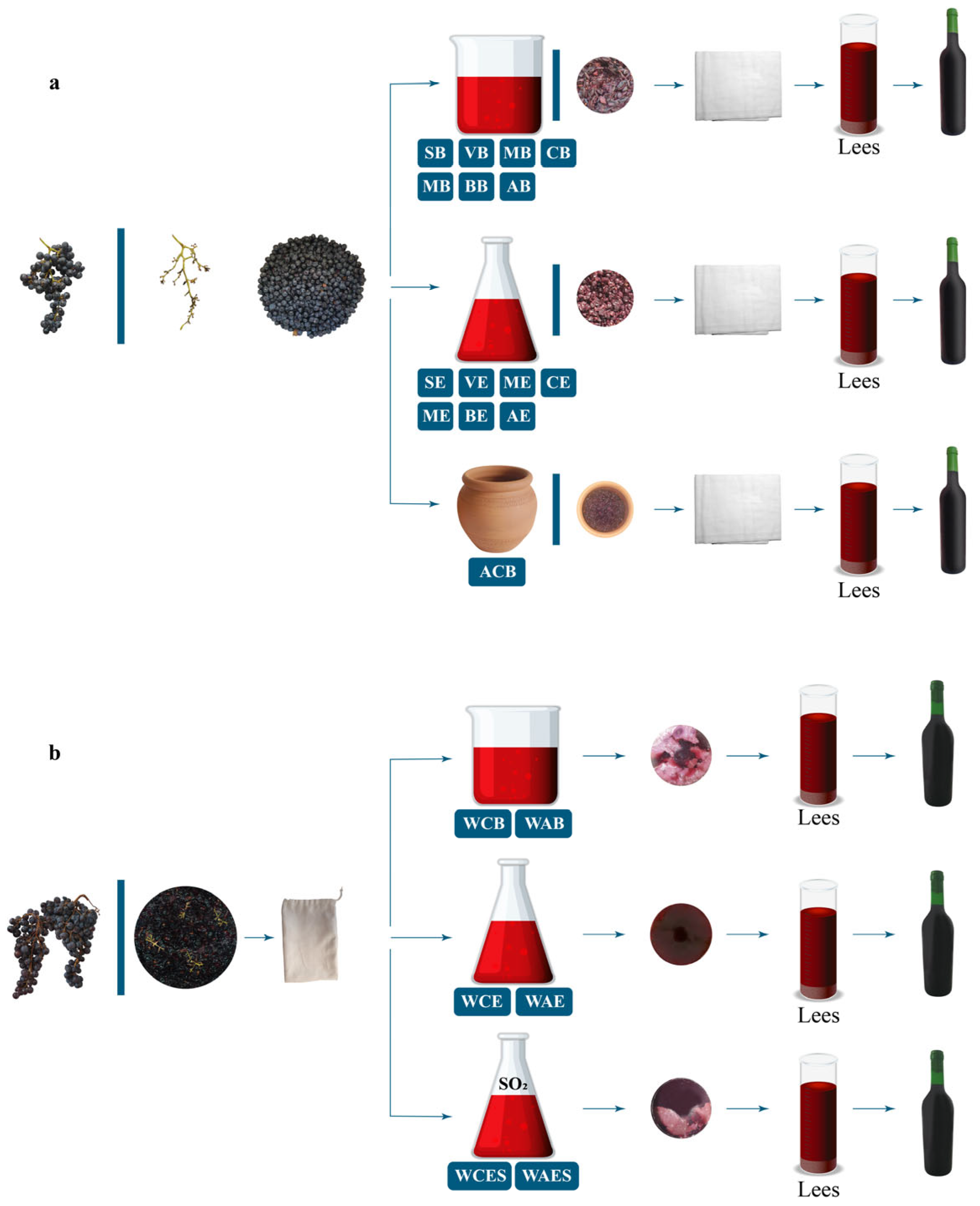
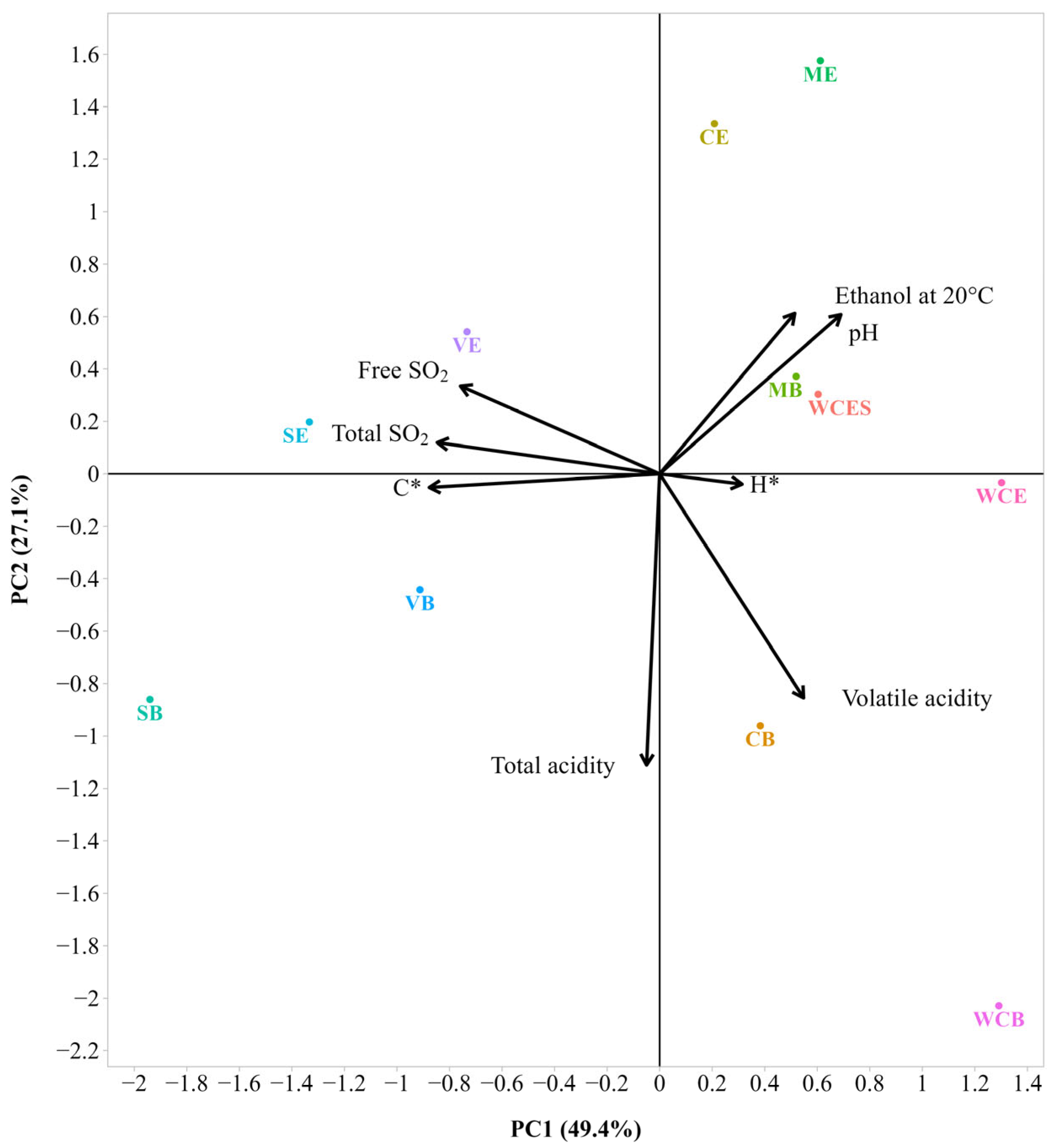
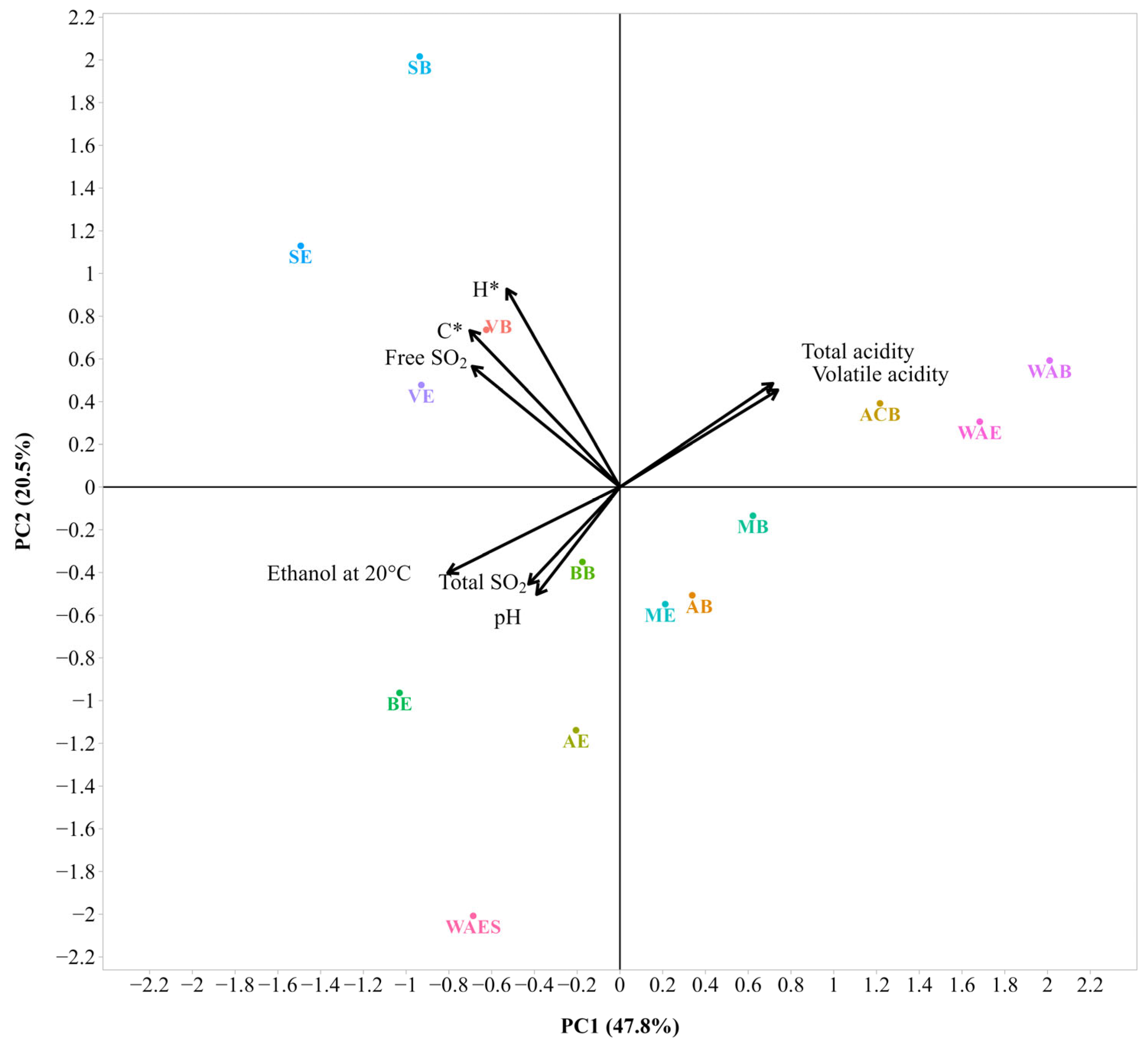
The earliest archaeological evidence of wine came from ceramic vessels of the Transcaucasian ‘Shulaveri-Shomutepe’ or ‘Aratashen-Shulaveri-Shomutepe culture’ (SSC/AShSh: c. 6000–5200 BC). Western European ‘Bell Beaker culture’ (BB: c. 2500–2000 BC) is characterized by bell-shaped pottery vessels but has so far not been found with residues consistent with wine. Knowing that wild grapes populated both habitats, the absence of wine during the Bell Beaker period remains to be explained. The main goal of this work was to investigate whether the shape of the vessels could influence the performance of spontaneous fermentation, specifically regarding the production of volatile acidity. Crushed grapes or juices from various grape cultivars were fermented in two types of vessels: (i) borosilicate glass beakers (4–5 L) to imitate bell beakers and (ii) Erlenmeyer flasks (5 L) to imitate SSC/AShSh vessels. Fermentations occurred spontaneously, and the wines were analyzed for their conventional physical–chemical parameters (e.g., ethanol content, total acidity, volatile acidity, pH), chromatic characteristics (e.g., wine color intensity, wine hue), and volatile composition by gas-chromatography-flame ionization detection (GC-FID). At the end of fermentation, the yeast species were identified by molecular methods. In addition, wine yields and phenolic composition (e.g., total phenols, anthocyanins, total pigments) were determined for wild grapes in comparison with six red varieties Vitis vinifera L. subsp. sativa (Vinhão, Marufo, Branjo, Melhorio, Castelão and Tempranillo Tinto), chosen as a function of their genetic relatedness with the wild counterpart. Wines produced from V. sylvestris grapes showed higher total acidity and color intensity when compared to the cultivated varieties. Saccharomyces cerevisiae dominated at the end of all spontaneous fermentations in all types of vessels and conditions. Wines fermented in Erlenmeyers showed ethanol concentrations as high as 14.30% (v/v), while the highest ethanol level was 12.30% (v/v) in beakers. Volatile acidity increased to a maximum of 4.33 g/L (acetic acid) in Erlenmeyers and 8.89 g/L in beakers. Therefore, the shape of the vessels influenced the performance of fermentation, probably due to the different exposures to air, leading to vinegary ferments more frequently in open mouths than in conical-shaped flasks. These results provide a hypothesis based on fermentation performance for the absence of wine produced in the Iberian Peninsula until the arrival of Phoenician settlers.
Keywords: experimental archaeology; pottery vessels; vessel’s shape; prehistoric winemaking; Shulaveri-Shomutepe/Aratashen-Shulaveri-Shomutepe culture; Bell Beaker culture; Vitis sylvestris; spontaneous fermentation; vinegar; wine yields; phenolic composition; volatiles experimental archaeology; pottery vessels; vessel’s shape; prehistoric winemaking; Shulaveri-Shomutepe/Aratashen-Shulaveri-Shomutepe culture; Bell Beaker culture; Vitis sylvestris; spontaneous fermentation; vinegar; wine yields; phenolic composition; volatiles