
Article

Fermentation Process Effects on Fermented McIntosh Apple Ciders

1
Western Agriculture Research Center, Montana State University, Corvallis, MT 59828, USA
2
Department of Food Science and Human Nutrition, Iowa State University, Ames, IA 50011, USA
*
Author to whom correspondence should be addressed.
Fermentation 2024, 10(3), 115; https://doi.org/10.3390/fermentation10030115

Submission received: 30 January 2024 / Revised: 16 February 2024 / Accepted: 17 February 2024 / Published: 20 February 2024
(This article belongs to the Special Issue Assessment of the Quality and Safety of Fermented Foods 2.0)

Abstract

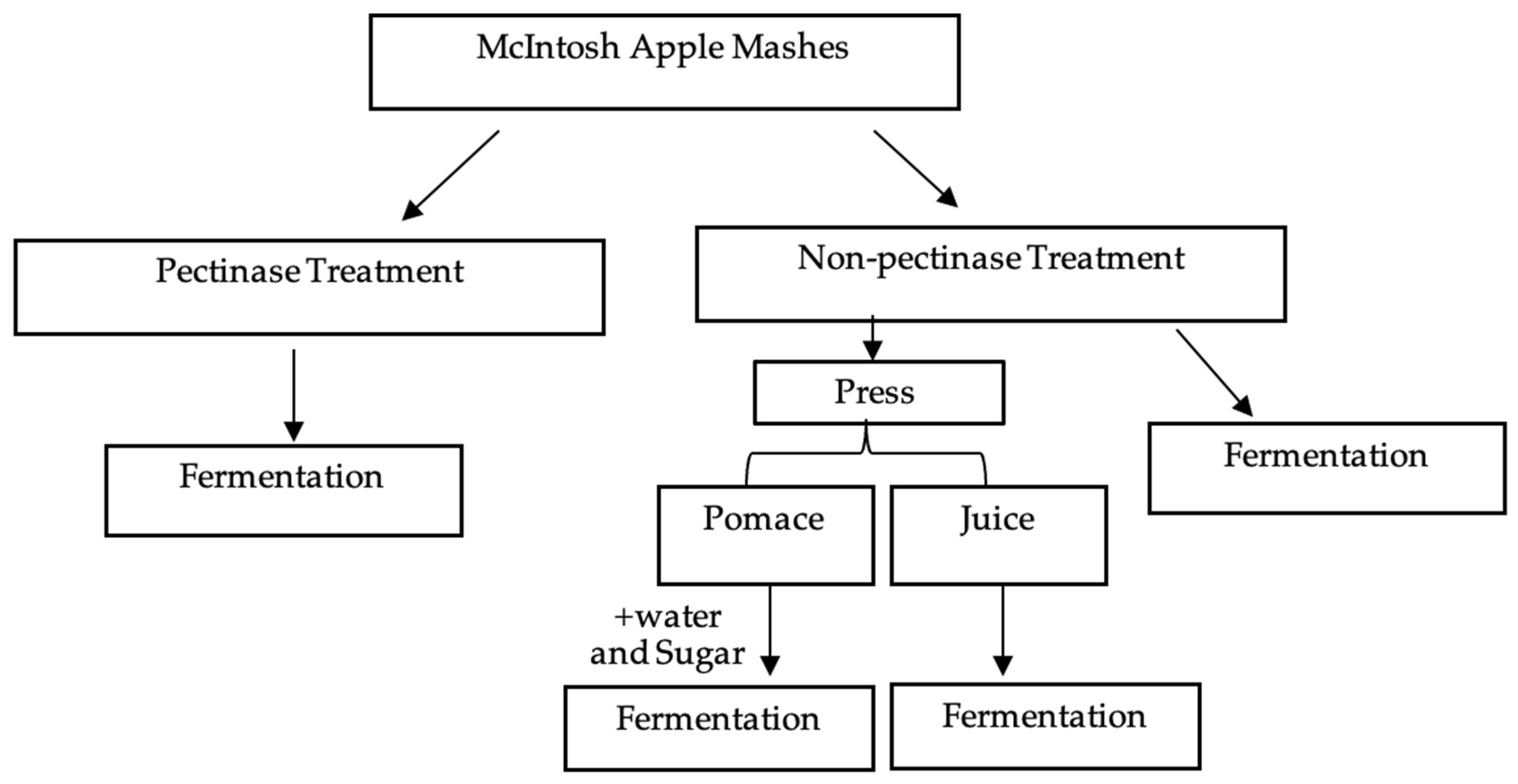
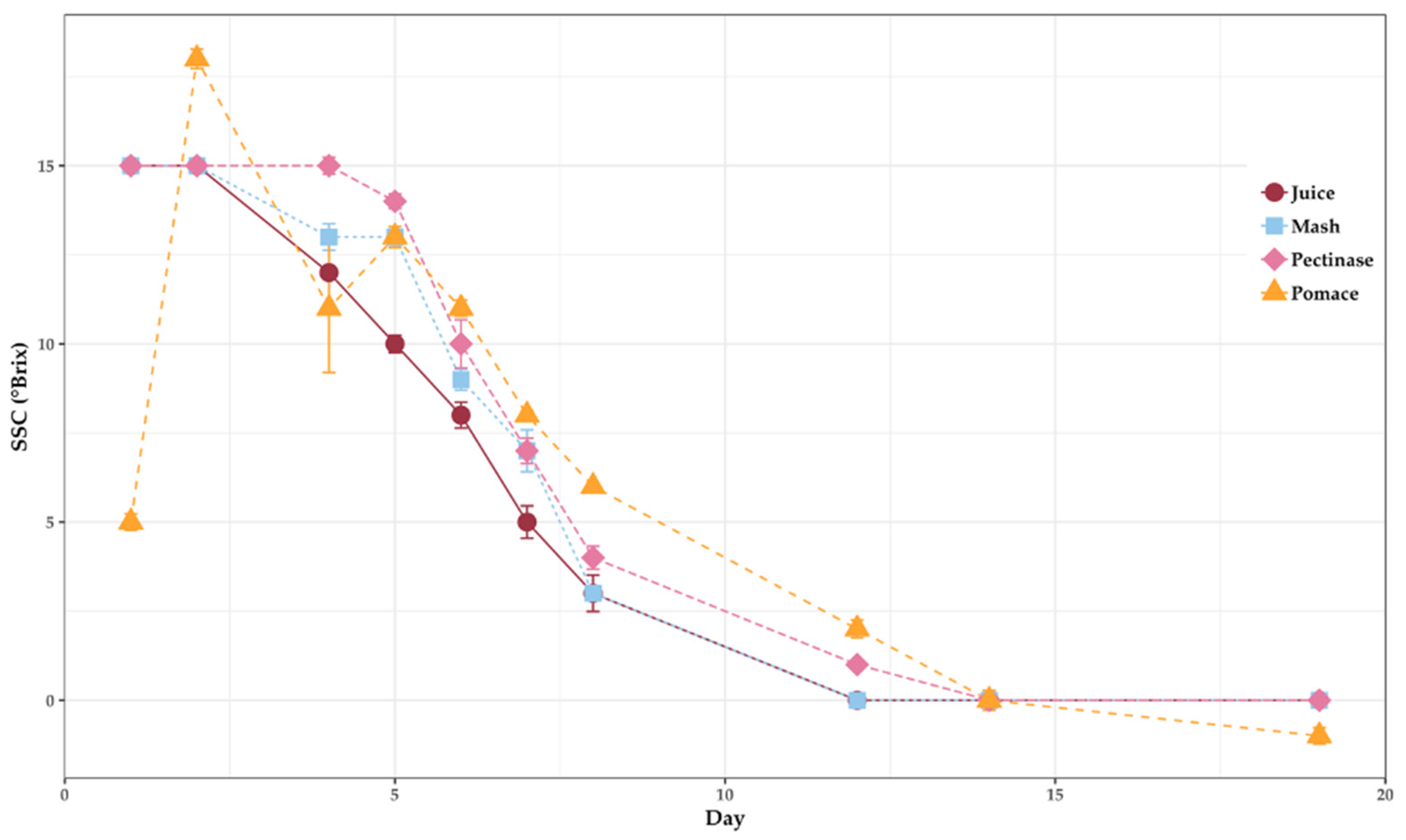
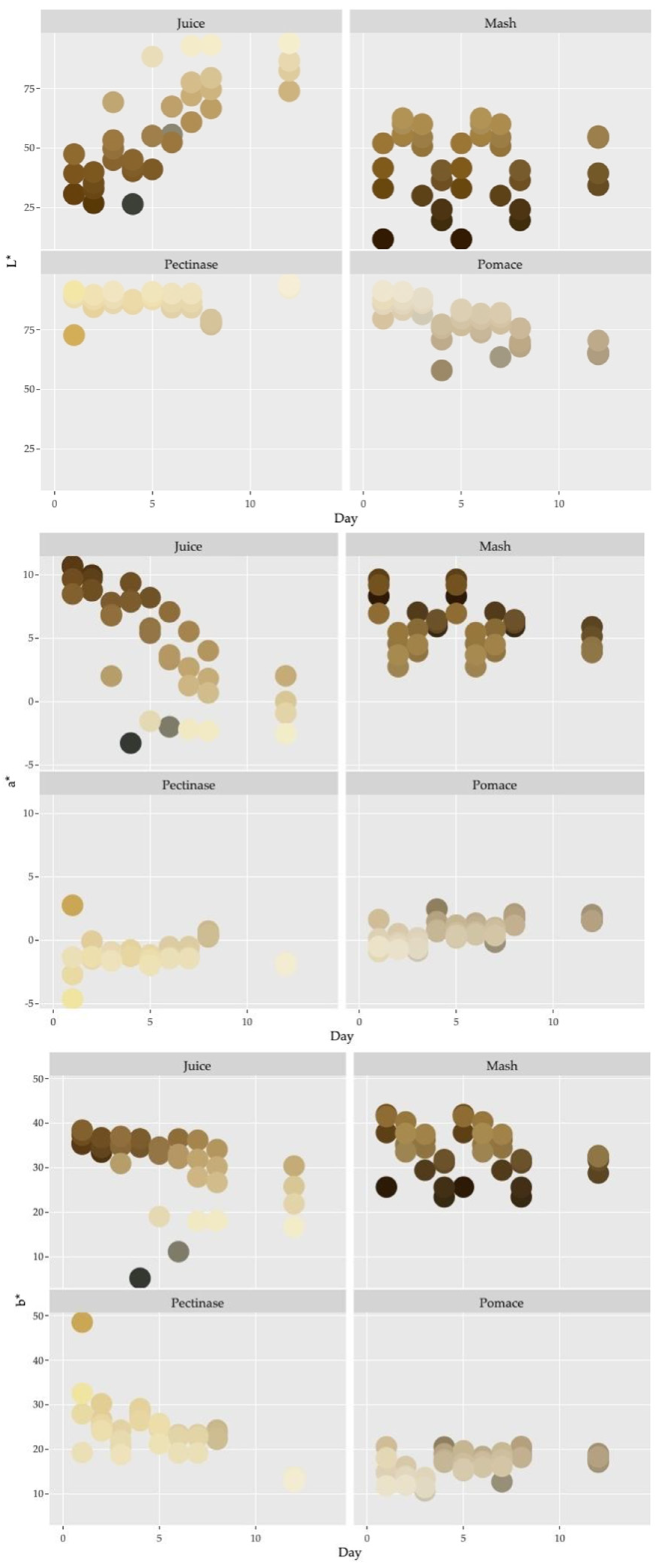
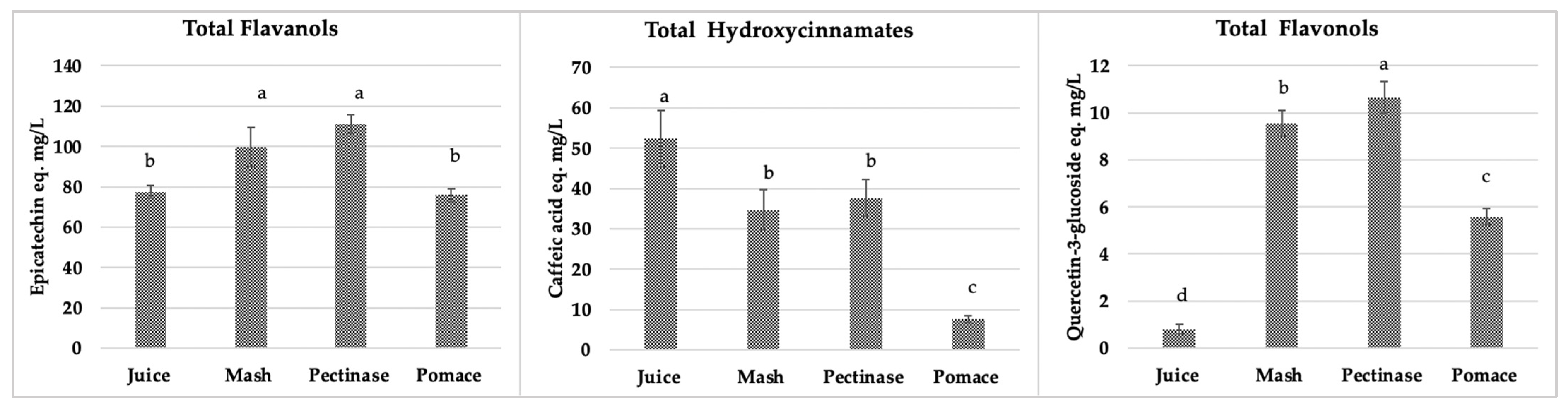
This research is the first study of McIntosh apple cider fermentation using different must treatments. The must materials included standard pressed juice, the common cider fermentation material, mash, direct from the apple shredder both with and without pectinase additions, and finally, pomace. These four treatments caused multiple differences from the standard hard ciders from juice, starting with the apple must characteristics, following through the yeast fermentation processes, and carried into the final ciders. Initial apple musts had different sugar content, pH, acids, total phenolics, and antioxidant activities. Although juice contained more total phenolics and had more antioxidant capabilities, it contained lower levels of yeast assimilable nitrogen. The sugar consumption dynamic changes had a differential dynamic trend but did not alter the capacity for complete apple cider fermentation. From the fermentation color dynamic changes, it indicated that must materials would have effects on color-changing amplitudes. Juice treatment had the largest changes from the must. Pomace and mash with pectinase had fewer color changes in multiple color values (L*, a*, b*). The mono phenolics in the final cider indicated that pomace ferments contained the least hydroxycinnamates but a similar amount of total flavanols as juice-fermented ciders. Cider from the juice contained the least flavonols, whereas the mash, both with and without pectinase treatments, had the largest amount of flavonols. This work will provide some applicable information for apple cider fermentation from the apple wastes in the cider industry.
Keywords: apple cider; McIntosh; pectinase; mash; juice; pomace apple cider; McIntosh; pectinase; mash; juice; pomace