Article

Lignin Valorization via Microwave Processing: Conversion to Porous Hydrophilic Carbon Materials

by
Larissa Giorgetti Mendes
,
Paloma Elias da Silva Pellegrini
*,
Eduardo de Souza Esperança
,
Silvia Vaz Guerra Nista
and
Stanislav Moshkalev
*
Center for Semiconductor Components and Nanotechnologies, Universidade Estadual de Campinas, Campinas 13083-970, SP, Brazil
*
Authors to whom correspondence should be addressed.
Submission received: 27 April 2026 / Revised: 26 May 2026 / Accepted: 27 May 2026 / Published: 31 May 2026

Abstract

Millions of tons of lignin waste are generated annually by the pulp and paper industries and by biofuel production. Current strategies for lignin valorization, biochars and hydrogels, often rely on time-costly and pollutant-generating processes and therefore fail to meet sustainability requirements nor are economically efficient. In this work, we address the challenge of transforming lignin into a valued-added material. We propose using microwave processing to convert lignin into a functional material that is carbon-rich, structured, hydrophilic, and highly porous. Unlike conventional methods, this process is rapid, occurring in approximately 30 s under normal conditions. It induces graphitization and up to a sixfold volumetric expansion of the lignin precursor sample, leading to the formation of a stable carbon material with high porosity in the form of capsules. The resulting material exhibits strong hydrophilicity, absorbing up to 90% of its volume in water within minutes while enabling controlled release over periods of up to 24 h. This unique combination of ultrafast processing, high water uptake capacity, and controlled-release performance positions the material as a promising alternative to the valorization of lignin. Its properties make it particularly suitable for water management applications in agriculture and urban environments.

1. Introduction

Lignin is an abundant natural biopolymer composed basically of complex aromatic structures that presents carbon content of up to 65%. It is a key structural component of plant cell walls [1], and it represents approximately 30% of wood weight, hence becoming one of the main byproducts of paper and pulp industries. Worldwide, 50 to 70 million tons of lignin is produced annually and only 2% is reported to be value-added [2]. This value is expected to reach more than 220 million tons per year by 2030, as lignin is also a residue of the emergent biofuel production [3]. Such waste calls for immediate strategies to valorize lignin and contribute to a circular economy, aligning with the United Nations (UN) Sustainable Development Goals.
Among the multiple valorization strategies [4,5,6,7], we can mention carbonization and graphitization processes that convert lignin into biochars [8], carbon fibers [9,10], biofuels [11,12], and even graphene [10]. In particular, the production of graphene from lignin is a costly process that can reach dozens of thousands of dollars per kilogram [13,14]. So, a sustainable conversion of lignin into valuable functional materials is still challenging. Conventional carbonization and graphitization methods are based on pyrolysis [15], hydrothermal carbonization (HTC) [16], and chemical and physical activation [17]. However, these methods still utilize toxic chemicals, are time consuming, require inert media, and generate pollutant residues, undermining the sustainability goal. Thus, the demand persists to develop technologies for the valorization of lignin that are green, cost-advantageous, scalable, and that can efficiently produce functional carbon materials.
In this work, we present a microwave-assisted process that addresses these challenges. Using microwave irradiation and a small fraction of exfoliated graphite, we converted lignin into a porous, carbon-rich material in 30 s. Due to its high porosity, the obtained material is hydrophilic and exhibits great potential for controlled water absorption and release. These functionalities are well suited for the applications requiring water management, such as agriculture, engineering, and urban planning.
Contrary to pyrolysis [17], which requires an inert atmosphere, microwave processing promotes fast, selective, and contactless heating under normal conditions. Under microwave irradiation, the reactions for lignin’s transformation happen locally, the entire process occurs in approximately 30 s, and the precursor lignin sample undergoes a significant volumetric expansion, the process being highly efficient and cost-effective. Hence, contrary to conventional conversion methods that usually produce hydrophobic carbon materials [18], our resulting material is highly porous, three-dimensional, in forms of macro capsules with up to 90% of their volume composed of pores.
To contextualize the proposed methodology within the current state of the art, Table 1 summarizes representative lignin processing approaches reported in the literature and compares them with the microwave-assisted strategy developed in this work.
All of the approaches presented in Table 1 require an inert atmosphere and demand hours of processing. In contrast, the proposed microwave processing stands out for its rapid processing time (approximately 30 s) and its operation under normal conditions. Hence, the proposed microwave process not only converts lignin into a high-value material, but also represents an energy-efficient approach, since its localized and ultrafast heating minimizes excessive energy consumption.
This work is organized into three main sections. The Experimental Section, where the proposed methodology for the transformation of lignin using microwave irradiation is detailed; the Results and Discussion Section, which presents the water absorption and release properties of the material; and finally, the Conclusion Section, which provides a brief summary of the results and discusses the possible impact of our findings.

2. Materials and Methods

2.1. Materials

We used kraft lignin, in powder, from Sigma-Aldrich, Burlington, VT, USA (370959), hydroxyethyl-cellulose (HEC) (Sigma-Aldrich, 09368, Burlington, VT, USA), and exfoliated graphite (Micrograf HC30, from Nacional de Grafite, Itapecerica, Brazil), in powder, with nominal sheet size of 30 μm.

2.2. Methodology

Kraft lignin is obtained by a common process of depolymerization through strong aqueous alkali. In the kraft process, the lignin’s water solubility is increased and cellulosic fibers are liberated [28]. We began our work by preparing the precursor material based on kraft lignin.
We prepared mixtures of kraft lignin and different concentrations of graphite (from 3% to 15% in m/m) that are commercially available in powder. The presence of conductive graphite results in strong localized heating during microwave processing. Then, a solution of 2% of HEC in water was added to the powder mixtures to form homogeneous films. The preparation is complete upon drying the films at room temperature (28 °C) for 24 h.
Once dry, the lignin films were cut into smaller, square pieces of approximately 2 mm of thickness and 1 cm of width, with typical masses of 0.8 g, resulting in densities in the order of 0.4 g/cm3. These pieces were the precursor samples for the process of transformation of lignin; each was placed inside a conventional microwave oven (Electrolux ME36B, China manufactured in China, but the exact city is not mentioned ) of 800 W for an average time of 30 s.
Graphite, in powder, is known to be a microwave susceptor. Under microwave irradiation, graphite reaches temperatures greater than 800 °C, in minutes [29]. In this work, during the microwave processing, the graphite within the lignin samples rapidly heats, acting as localized hot spots. Due to its high thermal conductivity [30], heat propagates through the lignin powder, promoting graphitization and the liberation of gases. By consequence, there is a significant volumetric expansion of the sample and the formation of pores. To collect and eliminate the liberated volatile gases, an in-house exhaust chamber was built to accommodate the microwave oven. After processing each sample, cooling was performed at room temperature to avoid influencing subsequent processes.
The materials obtained using microwave processing exhibit a significant mass loss and volumetric expansion. The typical masses of the processed samples were 0.07 g, with densities as low as 0.06 g/cm3, indicating up to a sixfold increase in volume.
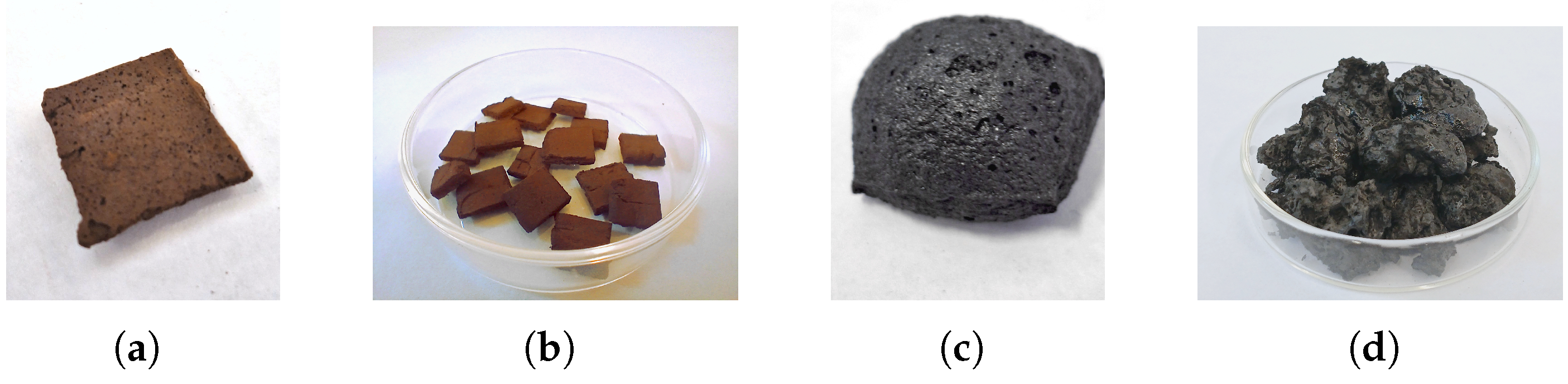
Figure 1 shows a sample before (a,b) and after (c,d) microwave irradiation with a visible color change between the samples: from light brown to black. This color change is highly probably an effect of the graphitization process.
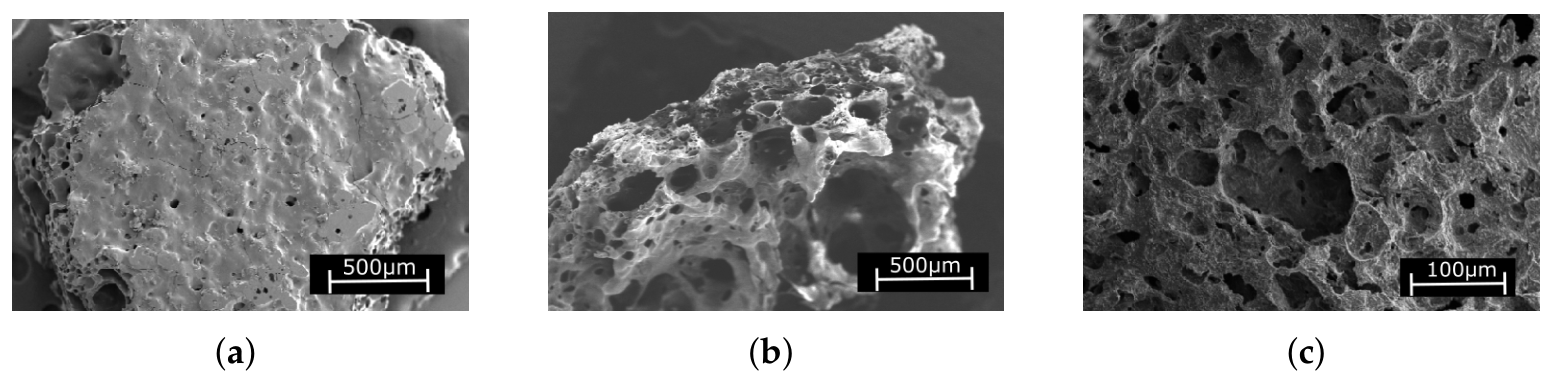
To confirm the formation of pores, scanning electron microscopy (SEM) analysis was conducted using a Hitachi S-3400N (Tokyo, Japan) microscope. For the imaging analysis, the processed samples were crushed to enable visualization of both the exterior and interior regions of the samples. In Figure 2, we show the images of processed samples with 3% (Figure 2a), 10% (Figure 2b), and 15% (Figure 2c) of graphite in the precursor composition. We notice that the surfaces are filled with pores of varying sizes which might impact the water-retention capability of the material. Such variety arises from the microwave irradiation. The graphite content in the precursor sample reaches high temperatures and ignites the conversion of lignin into a carbon-rich material. During conversion, the liberation of gases is not uniform in the sample, thus creating a diversity of pores.
Although the formation of macroscopic pores is evident, the processed samples were analyzed using accelerated surface area and porosimetry (ASAP) (Micrometrics, ASAP 2000 Plus, Norcross, GA, USA) to investigate the surface properties at the nanometric scale.
For this analysis, the samples were crushed into fragments of approximately 7 mm. Subsequently, they were conditioned in a vacuum oven at 105 °C for 12 h. After equilibration to room temperature, the samples were weighed (1 g) and transferred to the treatment apparatus, where they were heated to 150 °C under vacuum until constant pressure was achieved (approximately 3 μmHg, 8 h).
The results obtained indicate a Brunauer–Emmett–TellerBET surface area of 0.21 m2/g, which is extremely low and likely below the reliable range for meaningful Brunauer–Emmett–Teller (BET) analysis. This low surface area suggests that the material is predominantly macroporous, making it unsuitable for effective nitrogen adsorption during the ASAP analysis.
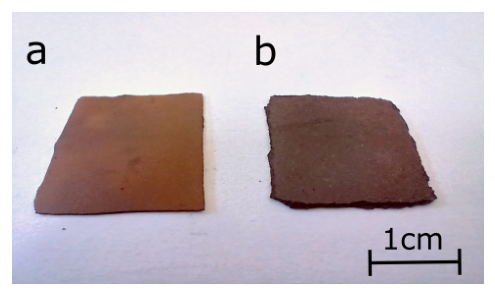
The increase in graphite content in the processed samples was evidenced by the significant reduction in the resistivity. To evaluate the resistivity of the samples, we performed electrical measurements using the four-probe method. The precursor and processed samples were crushed and pressed into thick films, as shown in Figure 3. Resistivity was measured to reduce from 4 Ω cm to 0.84 Ω cm for the precursor and the processed sample, respectively. The fivefold decrease shows the tendency of graphitization of the process using microwave irradiation.
The transformation of lignin was also validated via Fourier Transform Infrared (FT-IR) analysis. The FT-IR measurements were performed using a JASCO FT/IR-4X spectrometer (Tokyo, Japan) equipped with a ZnSe diamond attenuated total reflectance (ATR) crystal, at a 4 cm−1 resolution, using 16 accumulated scans. Background spectra were obtained before each measurement under normal conditions and normalization was applied during processing.
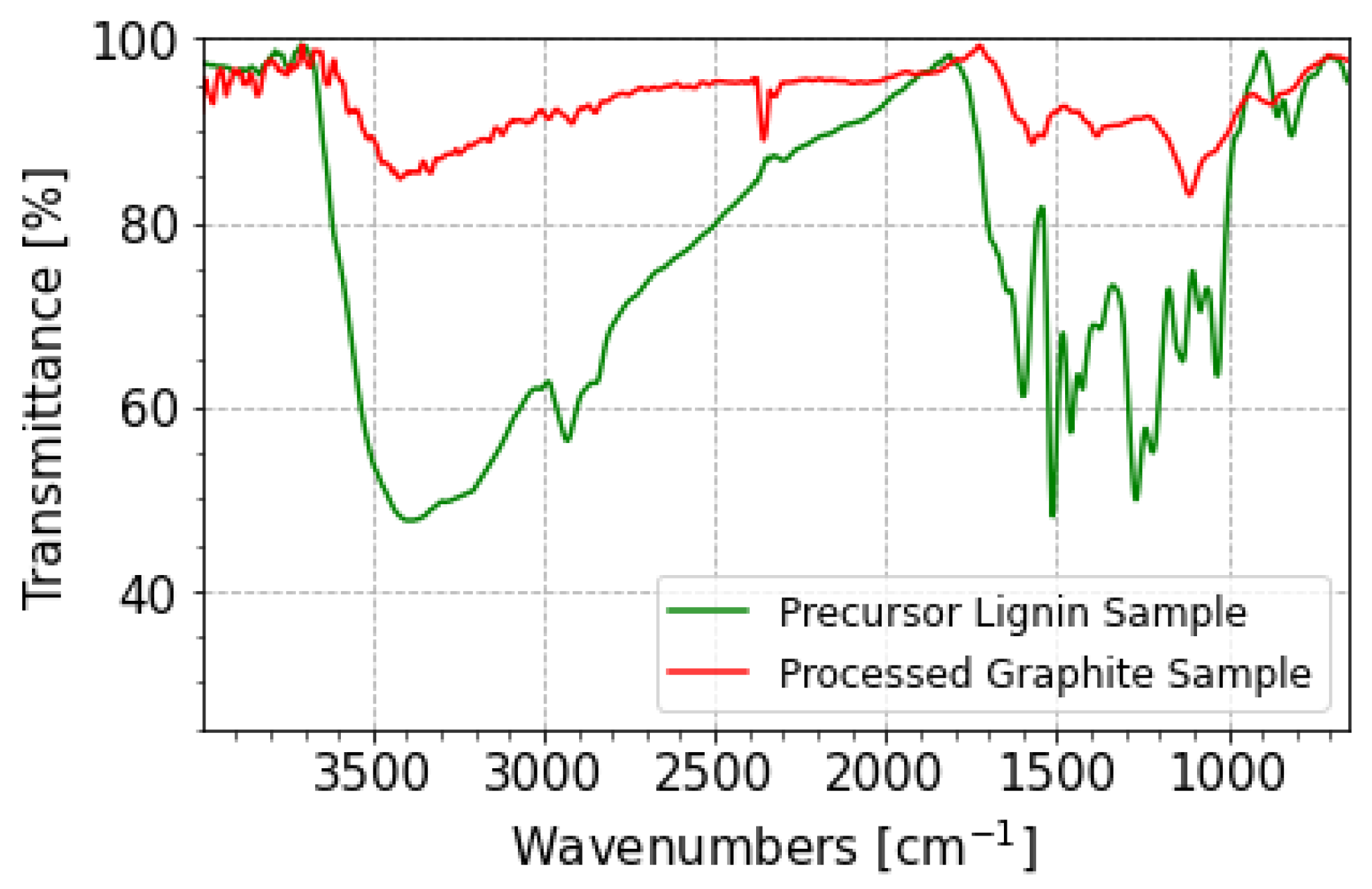
The transmission spectra, shown in Figure 4, exhibit broad bands at approximately 3400 cm−1 that is a characteristic absorption band of lignin, usually associated with strong hydrogen bonding [31,32]. At the regions of 1700 cm−1 and from 1600 cm−1 to 1400 cm−1, the bands correspond to carbonyl/carboxyl stretching and aromatic rings that may vary depending on the type of lignin used. Peaks from 800 cm−1 to 600 cm−1 indicate the presence of sulphur and carbon bonds that compose standard lignin compositions [32]. After microwave processing (Figure 4), the spectrum changed significantly, with very strong reduction of bands associated with lignin’s aromatic rings, carbon and sulphur bonds.
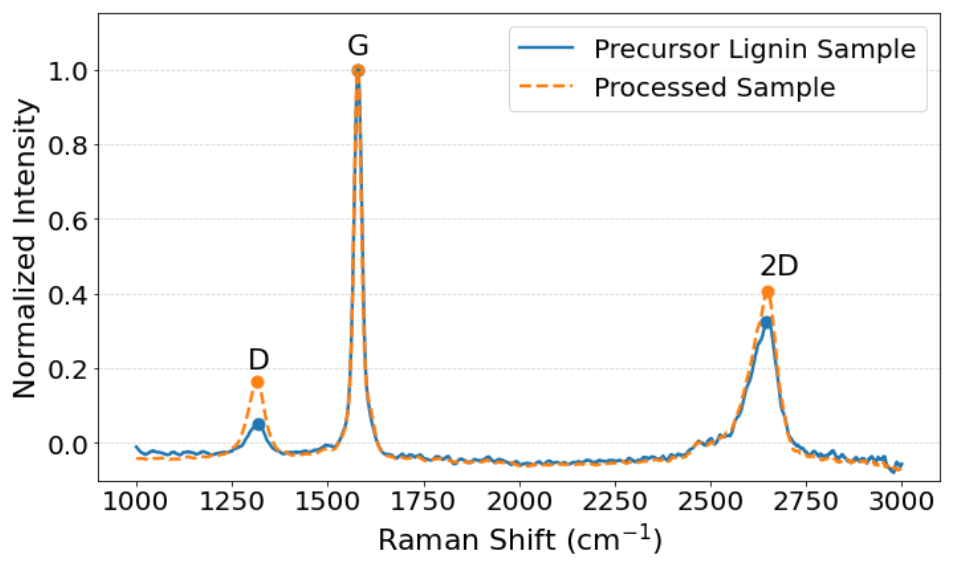
To complement the characterization of the precursor lignin sample and the microwaved sample, we performed Raman spectroscopy to evaluate their fingerprint. We utilized the apparatus XploRA from Horiba (Kyoto, Japan), at 785 nm with a diffraction grating of 600 lines/mm and a 10% filter. All measurements were performed in the same conditions; we performed normalization and baseline correction during processing of the data. As the precursor lignin sample is a mixture of kraft lignin with graphite, the graphite fingerprint dominated its Raman spectrum. In Figure 5, the blue spectrum represents the precursor sample while the orange represents the processed sample. We clearly see three peaks in both spectra related to the G, D, and 2D bands of graphite, respectively, at 1315 cm−1, 1578 cm−1, and 2646 cm−1.
For the precursor sample, the ratio between the intensities of the D and G bands ( I D / I G ) is approximately 0.05 which indicates a high-quality graphite with low defects. These results agree with recent studies using the same graphite [33]. Interestingly, the ratio I D / I G increases to 0.16 in the processed sample suggesting the formation of defects, or as we suspect, new graphite islands due to the microwave processing. For both spectra, we notice the full width at half maximum (FWHM) of the bands is maintained indicating that no oxidation took place during the process.
Such changes between the spectra evidence the transformation of lignin into a porous and highly graphitized material.
In the next section, we explore the water absorption capabilities, the release rate, and the reuse of the obtained material considering the intrinsic variability of the experiment.

3. Results

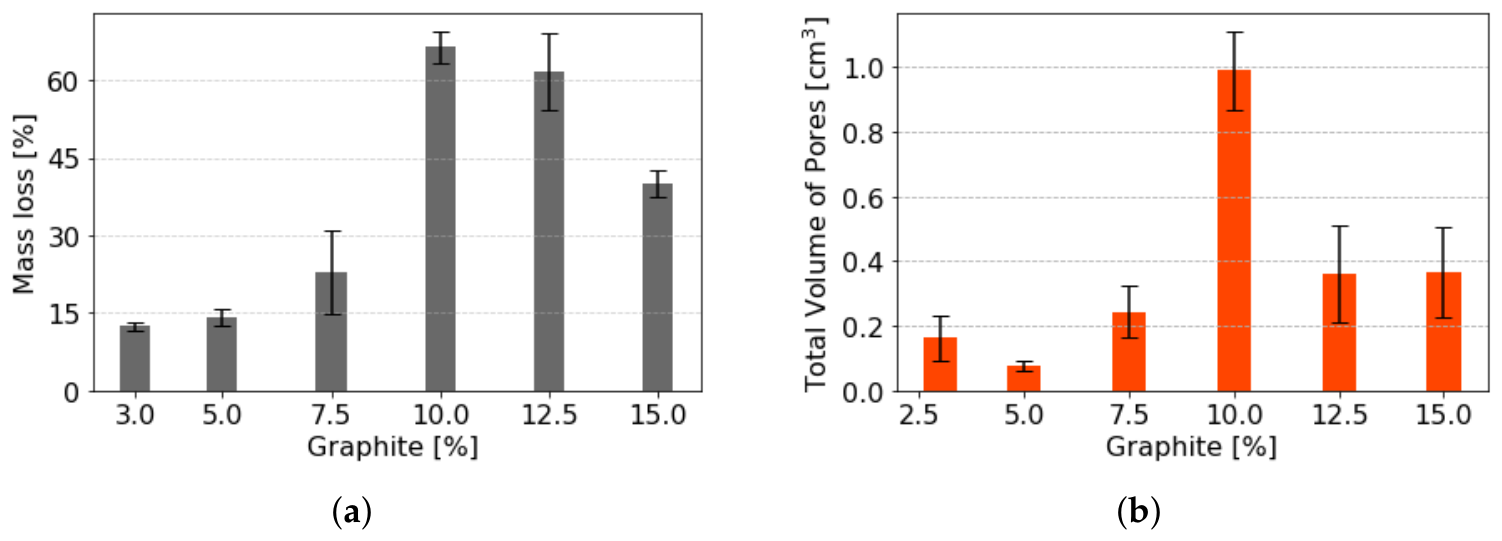
The porosity of the transformed material arises from the expansion of the lignin sample during microwave irradiation. In addition, the lignin might produce volatile gases and suffer mass loss throughout the process. As the graphite concentration in the lignin sample determines the temperature of the sample processing, it significantly influences how much of the mass is lost and the volume of the pores due to expansion. Thus, by varying the concentration of the graphite in the precursor sample, we obtain materials with different porosities, and thus different absorption properties.
In Figure 6a,b, the mass loss and the total volume of pores are, respectively, exhibited as the graphite concentration was varied from 3% to 15%. In Figure 6a, the peak at 10% of graphite indicates that 60% of the lignin sample was lost due to the formation of volatile products. Furthermore, increasing the graphite concentration to 10% led to a larger total pore volume, corresponding to approximately 90% of the final sample volume (about 1 cm3), as shown in Figure 6b. The larger pore volume suggests a substantial expansion and, consequently, a greater capacity for water absorption. For graphite concentrations smaller than 10%, burning was less pronounced, with only 25% of mass loss; however, the total volume of pores is three times smaller than that for 10% of graphite which can compromise absorption. Interestingly, the relation between graphite concentration and total volume of pores is non-linear. For 12.5% and 15% of graphite in the precursor sample, we obtained a high mass loss due to processing which indicates a more significant release of volatile products, but the porosity was impaired as expansion was less pronounced, and the total volume of pores was only 0.36 cm3. This strong heating might have occurred because the higher concentration of graphite could have caused intense burning that overcame the expansion process.
Hence, the data indicate that there is a delicate balance between the initial graphite concentration and volume of pores. To further investigate the obtained material, we performed water absorption experiments under normal conditions.
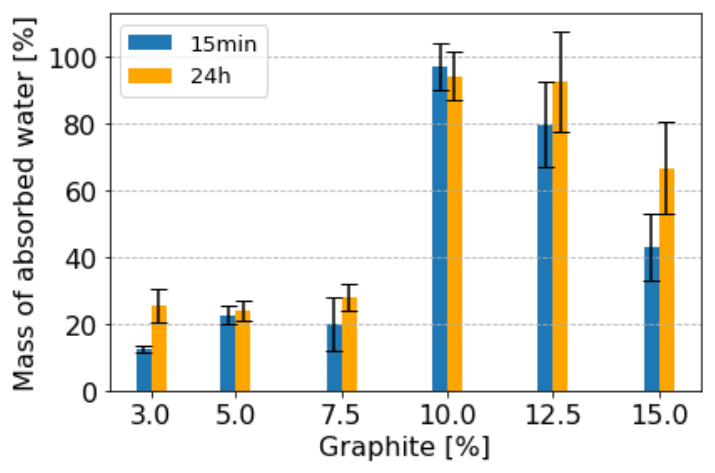
Initially, samples with varying graphite concentrations (from 3% to 15%) were immersed in water for 15 min and their masses were measured. The results in Figure 7 show the mass percentage of water absorbed inside the sample.
We continued the experiment for 24 h of immersion in water and found that the absorption remained approximately the same as for 15 min. This fact suggests that the material can quickly absorb water: even for a short immersion of 15 min, the samples practically reached their maximum absorption capability. Using a dry sample with 10% of graphite, we decreased the immersion time to 30 s and, once again, we nearly achieved the maximum absorption of approximately 90% of water in the sample. Hence, the material is able to absorb a relative large content of water extremely rapidly.
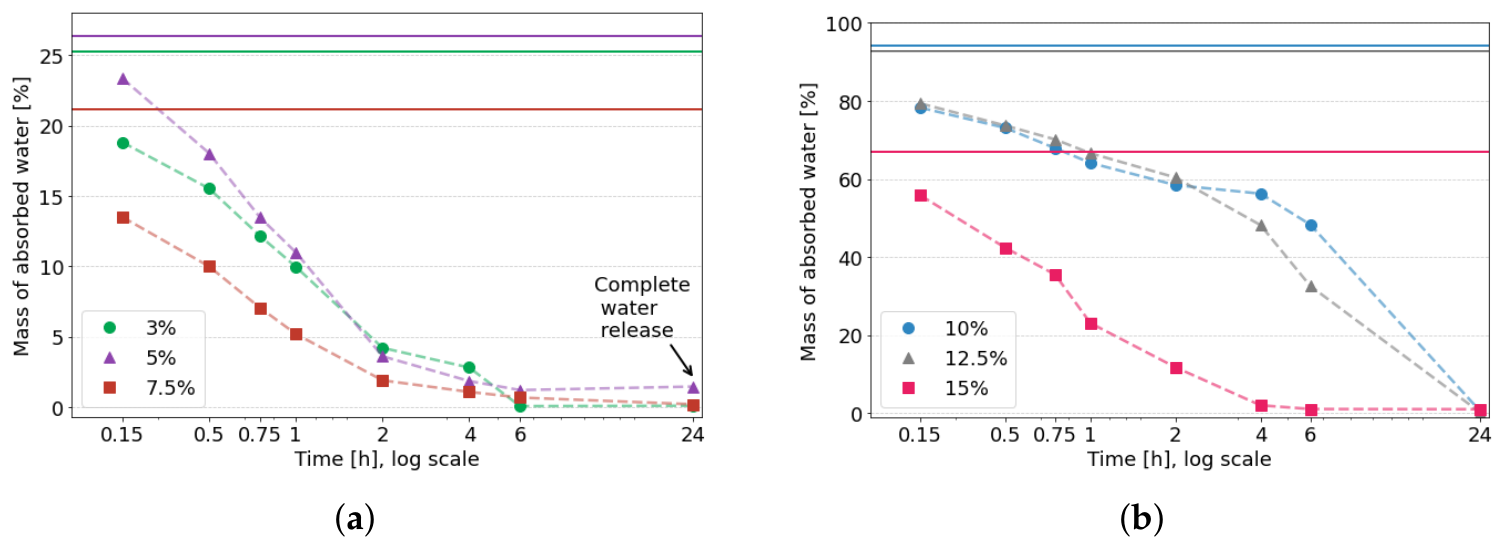
After immersion in water, the samples were left to dry at normal conditions and their masses were weighted in different time intervals to investigate the release of water. The results are shown in Figure 8 where the vertical axis represents the percentage of mass of absorbed water remaining in the sample.
In Figure 8a, we show the water release for samples with 3%, 5%, and 7.5% of graphite, and in Figure 8b, for 10%, 12.5%, and 15% of graphite. In all cases, we verified the practically complete release of water after 24 h of drying. The standard deviations were calculated for each graphite concentration, and all values were below 5%; therefore, they were omitted from the graph for clearer data visualization. Since the water release was much slower than the absorption, this suggests a high water-retention capacity of the material.
In Table 2, we compare the rates of release during the first hour and from the second until the sixth hour of the experiment. Overall, the release of water is faster during the first hour and then slows down until the drying of the sample.
The same sample fabricated with 10% of graphite of was, again, immersed in water to verify its capability of reuse. To quantify the reuse results, the absorbed mass was measured for different time intervals. These data are presented in Table 3 and compared with the results obtained for the first absorption.
Although the reused sample showed a slightly smaller absorption during the first 15 min of immersion in water, it reached a similar absorption capability after 30 min.

4. Discussion

The methodology proposed based on microwave processing is sustainable and generates a novel carbon material that is highly porous and hydrophilic (Figure 1). Using the proposed process, the conversion of lignin into a graphitic material occurs in approximately 30 s which stands out among current processes aiming at the valorization of lignin. Moreover, these features make the processed material a promising candidate for water retention in soil, helping to mitigate environmental risks such as flooding and mudslides.
The precursor samples of lignin were prepared by adding a concentration of graphite in the mixture. This concentration set the temperature of the lignin conversion process, influencing volumetric expansion and, consequently, the total volume of pores of the processed sample. If the concentration of graphite is too low, the process does not reach the proper conditions for lignin conversion. However, if the concentration is too high, burning might overcome the volumetric expansion resulting in a smaller volume of pores. For this reason, the concentration of graphite was carefully tuned. The results found show that using 10% of graphite led to the best balance of volume of pores and loss of mass during microwave processing.
The absorption experiments (Figure 7) sustained these conclusions. For graphite concentrations less than 10%, the obtained material has lower capability to absorb water as expected due to the smaller volume of pores. Using 10% of graphite, after only 15 min of immersion, more than 90% of the sample was filled with water. As for graphite concentrations greater than 10%, the absorption capability gradually decreases, also agreeing with the decrease in pore volume.
Contrary to the absorption, the release of water was significantly slower (Figure 8). For all concentrations of graphite analyzed, it took approximately 24 h of drying in normal conditions to release all the water that was previously absorbed. The highest graphite concentration (15%) exhibited the fastest release rate and the samples with lower graphite concentrations did not present significant differences in this measurement. Hence, by tuning the graphite concentration in the sample, we can balance the ultrafast absorption capability and slow release.
The reuse of the sample was quantified by repeating the absorption experiments. After 15 min of immersion in water, the reused sample presented a difference of 14% against the original sample. Although, after 24 h, this difference decreased to only 5%, indicating that the material obtained through microwave processing is indeed reusable.
These characteristics associated with water retention make the material a promising alternative to agriculture, civil, and environmental engineering. We anticipate using this material in soil to assist in flood mitigation and by consequence reduce the risks of disasters.

5. Conclusions

In this work, we proposed using microwave irradiation to stably transform lignin into a porous material with great capability to absorb and release water. Differently from conventional conversion methods, in particular to produce biochars [8], the proposed process occurs under normal conditions, is ultrafast (sub-30 s), and promotes localized heating due to the added graphite fraction in the precursor lignin sample. Heating then propagates at high temperatures within the precursor sample resulting in a volumetric expansion and the formation of macro pores. Such features make the material a promising alternative to water-retention applications.
We investigated the optimal processing conditions to obtain this porous material. Using 10% of graphite in the lignin precursor sample, the obtained material exhibited a high density of pores that ranged in size from the sub millimeter to the nanometric scale and can fill up to 90% its volume with water within a few seconds. In contrast, the release of water can take up to 24 h. Due to its rapid absorption and significant water-retention capacity, the obtained material is a promising candidate for flood prevention and water storage, while also providing controlled release in dry terrains.
The microwave irradiation methodology offers a green approach to valorize lignin. It is a scalable and cost-effective solution to the waste problem of paper and pulp industries.

6. Patents

The process developed in this work is under the patent BR 102024026131-3.

Author Contributions

Conceptualization, L.G.M., S.V.G.N. and S.M.; methodology, L.G.M., P.E.d.S.P. and E.d.S.E.; validation, L.G.M., P.E.d.S.P. and S.V.G.N.; formal analysis, P.E.d.S.P.; investigation, L.G.M.; resources, S.M.; data curation, L.G.M. and P.E.d.S.P.; writing—original draft preparation, P.E.d.S.P.; writing—review and editing, P.E.d.S.P. and S.M.; supervision, S.M.; project administration, S.V.G.N. and S.M.; funding acquisition, S.M. All authors have read and agreed to the published version of the manuscript.

Funding

This research was funded by the São Paulo Research Foundation (FAPESP), under the project C-Liga 2024/01069-9, 2025/19556-6, and by the National Institute of Science and Technology for Nano and Microelectronics for Enabling Technologies (INCT-NAMITEC), under the project 406193/2022-3.

Institutional Review Board Statement

Not applicable.

Informed Consent Statement

Not applicable.

Data Availability Statement

Data is contained within the article.

Acknowledgments

The authors thank Nacional de Grafite for providing the graphite HC30.

Conflicts of Interest

The authors declare no conflicts of interest.

Abbreviations

The following abbreviations are used in this manuscript:
UNUnited Nations
HTCHydrothermal Carbonization
HECHydroxyethyl-Cellulose
SEMScanning Electron Microscopy
BETBrunauer–Emmett–Teller
FT-IRFourier Transform Infrared
ATRAttenuated Total Reflectance
FWHMFull Width at Half Maximum

References

  1. Jiju, P.S.; Patel, A.K.; Shruthy, N.S.; Shalu, S.; Dong, C.D.; Singhania, R.R. Sustainability through lignin valorization: Recent innovations and applications driving industrial transformation. Bioresour. Bioprocess. 2025, 12, 88. [Google Scholar] [CrossRef] [Scilit] [PubMed]
  2. Jeffri, N.I.; Rawi, N.F.M.; Kassim, M.H.M.; Abdullah, C.K. Unlocking the potential: Evolving role of technical lignin in diverse applications and overcoming challenges. Int. J. Biol. Macromol. 2024, 274, 133506. [Google Scholar] [CrossRef] [Scilit] [PubMed]
  3. Bajwa, D.S.; Pourhashem, G.; Ullah, A.H.; Bajwa, S.G. A concise review of current lignin production, applications, products and their environmental impact. Ind. Crop. Prod. 2019, 139, 111526. [Google Scholar] [CrossRef] [Scilit]
  4. Shorey, R.; Salaghi, A.; Fatehi, P.; Mekonnen, T.H. Valorization of lignin for advanced material applications: A review. RSC Sustain. 2024, 2, 804–831. [Google Scholar] [CrossRef] [Scilit]
  5. Liu, Z.H.; Hao, N.; Wang, Y.Y.; Dou, C.; Lin, F.; Shen, R.; Bura, R.; Hodge, D.B.; Dale, B.E.; Ragauskas, A.J.; et al. Transforming biorefinery designs with ‘Plug-In Processes of Lignin’ to enable economic waste valorization. Nat. Commun. 2021, 12, 3912. [Google Scholar] [CrossRef] [Scilit]
  6. Chen, M.; Li, Y.; Liu, H.; Zhang, D.; Shi, Q.S.; Zhong, X.Q.; Guo, Y.; Xie, X.B. High value valorization of lignin as environmental benign antimicrobial. Mater. Today Bio 2023, 18, 100520. [Google Scholar] [CrossRef] [Scilit]
  7. Kumar, R.; Singh, R.K.; Savu, R.; Dubey, P.K.; Kumar, P.; Moshkalev, S.A. Microwave-assisted synthesis of void-induced graphene-wrapped nickel oxide hybrids for supercapacitor applications. RSC Adv. 2016, 6, 26612–26620. [Google Scholar] [CrossRef] [Scilit]
  8. Sun, L.M.; McIntyre, S.R.; Iacomi, P.; Everden, K.; Williams, P.T.; Zong, S.; Liu, X.; Zhu, X.; Yang, Y.; Li, S.; et al. Biochar production, activation, and applications: A comprehensive technical review. Carbon Capture Sci. Technol. 2025, 16, 100421. [Google Scholar] [CrossRef] [Scilit]
  9. Qu, W.; Han, X.; Liu, J.; Yin, L.; Liang, C.; Hu, P. Unlocking the graphitization potential of lignin: Insights into its transformation through hot pressing and carbonization. Green Chem. 2023, 25, 9873–9883. [Google Scholar] [CrossRef] [Scilit]
  10. García-Negrón, V.; Chmely, S.C.; Ilavsky, J.; Keffer, D.J.; Harper, D.P. Development of nanocrystalline graphite from lignin sources. ACS Sustain. Chem. Eng. 2022, 10, 1786–1794. [Google Scholar] [CrossRef] [Scilit]
  11. Lawoko, M.; Samec, J.S. Kraft lignin valorization: Biofuels and thermoset materials in focus. Curr. Opin. Green Sustain. Chem. 2023, 40, 100738. [Google Scholar] [CrossRef] [Scilit]
  12. Mukundan, S.; Boffito, D.; Shrotri, A.; Atanda, L.; Beltramini, J.; Patience, G. Thermocatalytic hydrodeoxygenation and depolymerization of waste lignin to oxygenates and biofuels in a continuous flow reactor at atmospheric pressure. ACS Sustain. Chem. Eng. 2020, 8, 13195–13205. [Google Scholar] [CrossRef] [Scilit]
  13. Ray, A. Graphene Semiconductor Manufacturing Processes & Technologies: A Comprehensive Guide. Compassionate AI 2025, 3, 42–44. [Google Scholar]
  14. Gkika, D.A.; Maroulas, K.N.; Kyzas, G.Z. Various reduced graphene oxide green synthetic routes: Comparing the cost procedures. ACS Omega 2025, 10, 36221–36237. [Google Scholar] [CrossRef] [Scilit]
  15. Dong, H.; Li, M.; Jin, Y.; Wu, Y.; Huang, C.; Yang, J. Preparation of graphene-like porous carbons with enhanced thermal conductivities from lignin nano-particles by combining hydrothermal carbonization and pyrolysis. Front. Energy Res. 2020, 8, 148. [Google Scholar] [CrossRef] [Scilit]
  16. Sangchoom, W.; Mokaya, R. Valorization of lignin waste: Carbons from hydrothermal carbonization of renewable lignin as superior sorbents for CO2 and hydrogen storage. ACS Sustain. Chem. Eng. 2015, 3, 1658–1667. [Google Scholar] [CrossRef] [Scilit]
  17. Farid, M.A.A.; Andou, Y. A route towards graphene from lignocellulosic biomass: Technicality, challenges, and their prospective applications. J. Clean. Prod. 2022, 380, 135090. [Google Scholar] [CrossRef] [Scilit]
  18. Varkolu, M.; Gundekari, S.; Omvesh; Palla, V.C.S.; Kumar, P.; Bhattacharjee, S.; Vinodkumar, T. Recent advances in biochar production, characterization, and environmental applications. Catalysts 2025, 15, 243. [Google Scholar] [CrossRef] [Scilit]
  19. Zhang, H.; Yan, Q.; Peng, Y.; Cai, Z.; Wan, C. Upgrading lignin into graphene-based materials: State of the art and perspectives. Adv. Energy Sustain. Res. 2024, 5, 2300252. [Google Scholar] [CrossRef] [Scilit]
  20. Liu, F.; Chen, Y.; Gao, J. Preparation and characterization of biobased graphene from Kraft lignin. BioResources 2017, 12, 6545–6557. [Google Scholar] [CrossRef] [Scilit]
  21. Wang, H.; Meng, H.; Olowoyo, J.O.; Zeng, Y.; Zheng, Y. Advancements in lignin valorization for energy storage applications: Sustainable technologies for lignin extraction and hydrothermal carbonization. Nanomaterials 2025, 15, 309. [Google Scholar] [CrossRef] [Scilit]
  22. Kim, Y.S.; Hanif, M.A.; Song, H.; Kim, S.; Cho, Y.; Ryu, S.K.; Kim, H.G. Wood-Derived graphite: A sustainable and cost-effective material for the wide range of industrial applications. Crystals 2024, 14, 309. [Google Scholar] [CrossRef] [Scilit]
  23. Yan, Q.; Li, J.; Zhang, X.; Hassan, E.B.; Wang, C.; Zhang, J.; Cai, Z. Catalytic graphitization of kraft lignin to graphene-based structures with four different transitional metals. J. Nanoparticle Res. 2018, 20, 223. [Google Scholar] [CrossRef] [Scilit]
  24. Li, W.; Wanninayake, N.; Gao, X.; Li, M.; Pu, Y.; Kim, D.Y.; Ragauskas, A.J.; Shi, J. Mechanistic insight into lignin slow pyrolysis by linking pyrolysis chemistry and carbon material properties. ACS Sustain. Chem. Eng. 2020, 8, 15843–15854. [Google Scholar] [CrossRef] [Scilit]
  25. Zheng, Q.; Zhang, D.; Fu, P.; Wang, A.; Sun, Y.; Li, Z.; Fan, Q. Insight into the fast pyrolysis of lignin: Unraveling the role of volatile evolving and char structural evolution. Chem. Eng. J. 2022, 437, 135316. [Google Scholar] [CrossRef] [Scilit]
  26. Yunpu, W.; Leilei, D.; Liangliang, F.; Shaoqi, S.; Yuhuan, L.; Roger, R. Review of microwave-assisted lignin conversion for renewable fuels and chemicals. J. Anal. Appl. Pyrolysis 2016, 119, 104–113. [Google Scholar] [CrossRef] [Scilit]
  27. Jiang, F.; Yao, Y.; Natarajan, B.; Yang, C.; Gao, T.; Xie, H.; Wang, Y.; Xu, L.; Chen, Y.; Gilman, J.; et al. Ultrahigh-temperature conversion of biomass to highly conductive graphitic carbon. Carbon 2019, 144, 241–248. [Google Scholar] [CrossRef] [Scilit]
  28. Gellerstedt, G. Softwood kraft lignin: Raw material for the future. Ind. Crop. Prod. 2015, 77, 845–854. [Google Scholar] [CrossRef] [Scilit]
  29. de la Hoz, A.; Díaz-Ortiz, A.; Prieto, P. Microwave-Assisted Green Organic Synthesis; Royal Society of Chemistry: Cambridge, UK, 2016. [Google Scholar]
  30. Nista, S.V.; Alaferdov, A.V.; Isayama, Y.H.; Mei, L.H.; Moshkalev, S.A. Flexible highly conductive films based on expanded graphite/polymer nanocomposites. Front. Nanotechnol. 2023, 5, 1135835. [Google Scholar] [CrossRef] [Scilit]
  31. Heen Blindheim, F.; Ruwoldt, J. Quantifying the abundance of alkane moieties in lignins with FTIR spectroscopy and PLS regression; estimating grafting degree of esterification. ChemSusChem 2025, 18, e202400938. [Google Scholar] [CrossRef] [Scilit]
  32. Boeriu, C.G.; Bravo, D.; Gosselink, R.J.; van Dam, J.E. Characterisation of structure-dependent functional properties of lignin with infrared spectroscopy. Ind. Crop. Prod. 2004, 20, 205–218. [Google Scholar] [CrossRef] [Scilit]
  33. Pellegrini, P.E.; Vaz, L.d.M.L.G.; Nista, S.V.G.; Hernández-Figueroa, H.E.; Moshkalev, S. Synthesis and Functionalities of Blade-Coated Nanographite Films. Micro 2024, 4, 460–473. [Google Scholar] [CrossRef] [Scilit]
Figure 1. Transformation of lignin into a porous material using microwave irradiation. Precursor samples of lignin (a,b) were prepared with varying concentrations of graphite (from 3% to 15%). Via microwave irradiation, the samples were transformed into a porous, carbon-rich material (c,d).
Carbon 12 00049 g001
Figure 2. SEM of processed samples with 3% (a), 10% (b), and 15% (c) of graphite in the precursor composition.
Carbon 12 00049 g002
Figure 3. Films of the precursor sample of lignin (a) and the processed sample (b). These films were used for electric measurements. The processed sample exhibited a fivefold decrease in resistivity, compared with the precursor sample of lignin.
Carbon 12 00049 g003
Figure 4. Compositional analysis of lignin by FT-IR. In green, the spectrum of the precursor lignin sample shows a broad absorption band at 3400 cm−1, corresponding to O–H stretching vibrations associated with strong hydrogen bonding, which is characteristic of lignin. After microwave irradiation, the carbon-rich material is obtained and its spectrum, in red, shows a decrease in the intensity, at 3400 cm−1, indicating a compositional change in the lignin structure.
Carbon 12 00049 g004
Figure 5. Raman spectroscopy of the precursor lignin sample and the processed sample. The precursor lignin sample used contains 10% of graphite; hence, the graphite characteristic Raman spectrum dominated the fingerprint of the precursor sample and its bands D, G, and 2D were clearly visible. As expected due to the high carbon content, the processed sample exhibited the characteristic graphite bands, with increased intensities of the D and 2D bands.
Carbon 12 00049 g005
Figure 6. During microwave irradiation, two processes occur: burning and expansion of the lignin sample. Both are influenced by the concentration of graphite in the sample. In (a), we show the mass loss due to burning and in (b), the volume of pores due to expansion, when varying the concentration of graphite in the sample from 3% to 15%.
Carbon 12 00049 g006
Figure 7. Capability of microwaved samples to absorb water, after being immersed for 15 min (blue bars) and for 24 h (orange bars). Note that samples with 10% of graphite exhibited water absorption of approximately 90% of its volume whereas samples with lower concentrations of graphite, 3%, 5%, and 7.5%, absorbed less water at 30% of their volume. We conclude that a graphite concentration of 10% is optimal, while higher concentrations showed a decreasing trend in absorption capability.
Carbon 12 00049 g007
Figure 8. Water release from the processed lignin samples containing from 3% to 7.5% (a), and from 10% to 15%, of graphite (b). The solid lines indicate the maximum mass of absorbed water for each sample. The mass of water released by the samples was monitored for 24 h, until they were fully dry.
Carbon 12 00049 g008
Table 1. Comparison of conventional lignin conversion methods and the rapid microwave processing approach developed in this work.
ReferenceMethodologyAtmosphereTemperatureTime
Zhang et al. [19]Thermal carbonizationInert (N2)900–1300 °C6 h
Liu et al. [20]Catalytic carbonizationInert (Ar)1000 °C1.5 h
Wang et al. [21]Hydrothermal carbonizationH2O200–280 °C6–24 h
Kim et al. [22]Conventional graphitization (non-catalytic)Inert (Ar)2400–3000 °C5–10 h
Yan et al. [23]Catalytic graphitizationInert (Ar)800–1600 °C0.5–4 h
Li et al. [24]Slow pyrolysisInert (He)300–600 °C4 h
Zheng et al. [25]Fast pyrolysisInert (He)200–800 °C1–2 h
Yunpu et al. [26]Microwave-assisted pyrolysisInert (Ar, N2)1000 °C0.5–1 h
Jiang et al. [27]Joule-heating ultrafast graphitizationInert (Ar)2000 °C1 h
This workMicrowave processingNormal conditions800 °C 30 s
Table 2. Rates of release of water over 24 h for varying concentrations of graphite in the lignin sample.
Graphite Concentration [%]Rate of Release for the First Hour [%/h]Rate of Release Between the Second and Sixth Hour [%/h]
30.200.10
50.280.12
7.50.190.06
100.320.10
12.50.280.10
150.700.19
Table 3. Reuse of samples for absorption.
Immersion Time [h]Mass of Water-Reused Sample [%]Mass of Water-Original Sample [%]
0.157397
0.58195
18181
27892
249095
Disclaimer/Publisher’s Note: The statements, opinions and data contained in all publications are solely those of the individual author(s) and contributor(s) and not of MDPI and/or the editor(s). MDPI and/or the editor(s) disclaim responsibility for any injury to people or property resulting from any ideas, methods, instructions or products referred to in the content.