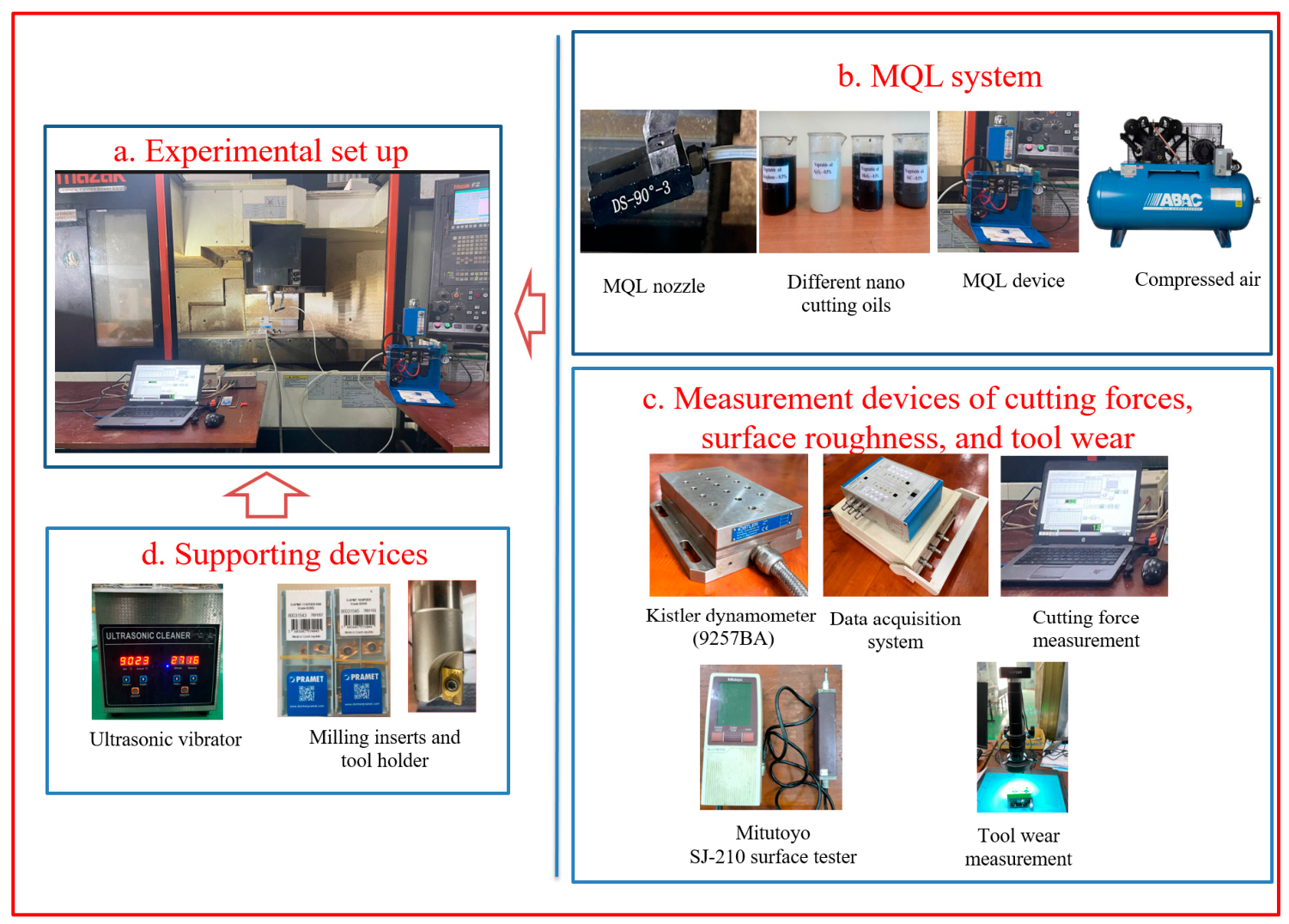
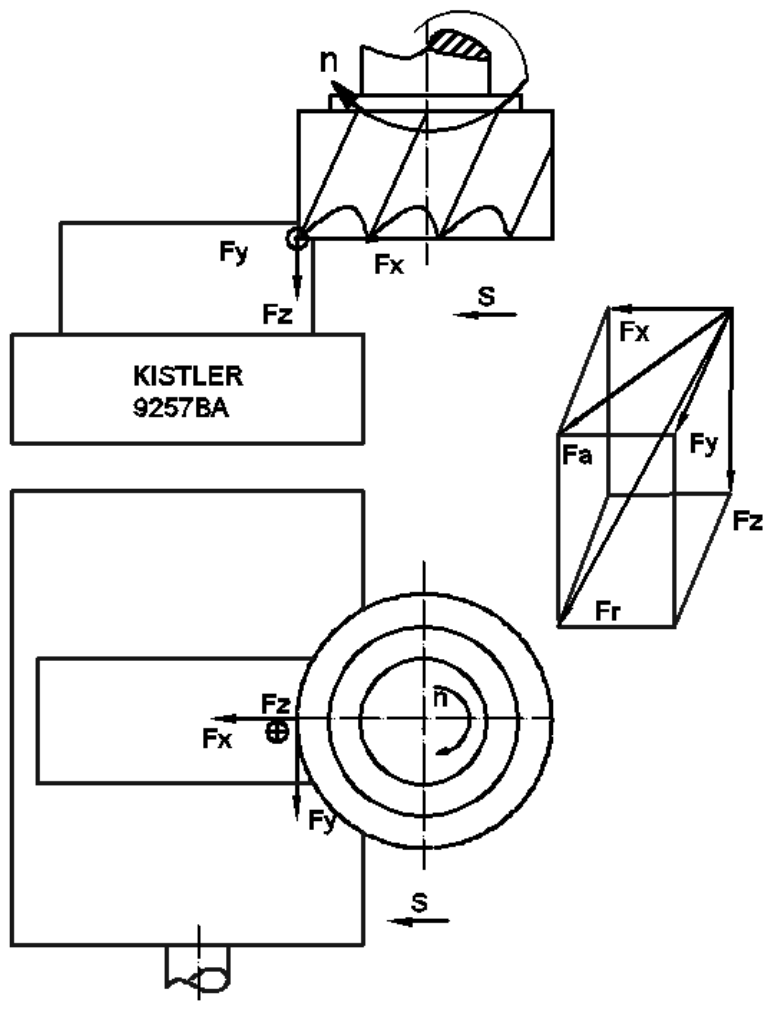
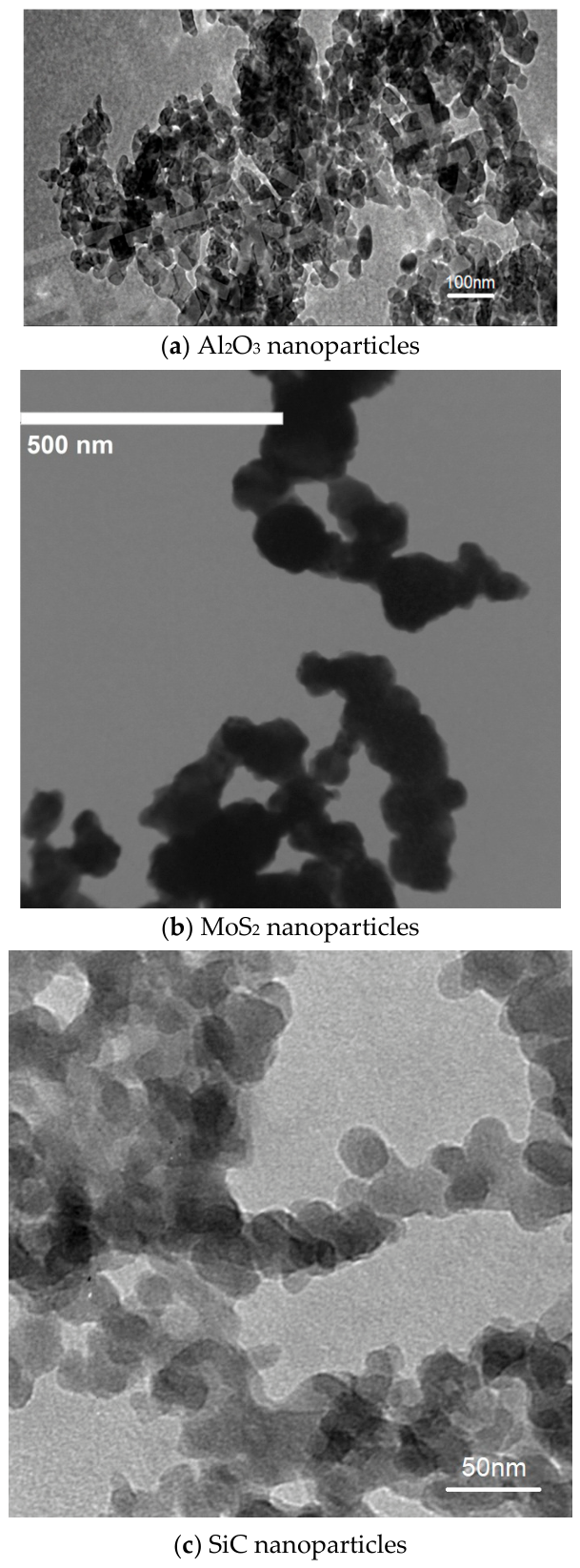
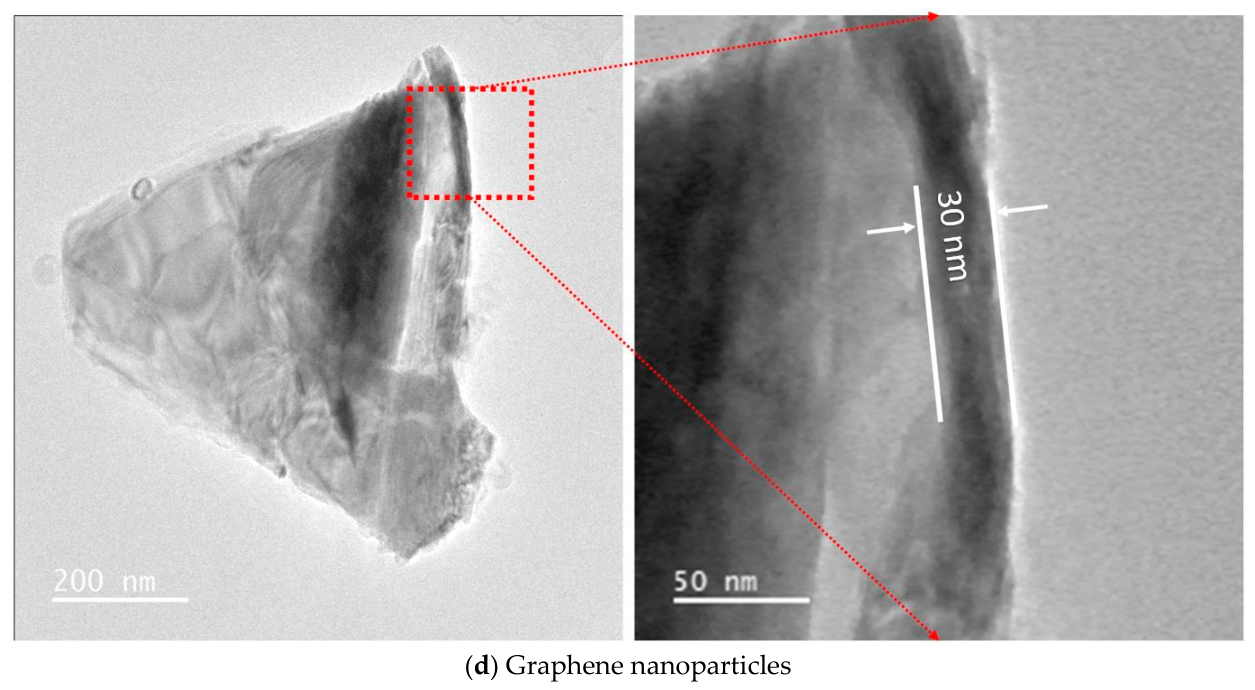
1. Introduction
Nickel-based superalloys are a group of high-performance metallic materials in which nickel acts as the primary element and is alloyed with elements such as Cr, Co, Mo, W, Al, Ti, or Nb to improve properties. Thanks to their unique microstructure consisting of a γ matrix phase (solid nickel solution) and a γ′ strengthening phase (Ni
3(Al, Ti)), these alloys exhibit very high mechanical strength at high temperatures, excellent resistance to creep, oxidation, and corrosion [
1]. Therefore, nickel-based superalloys are widely used in harsh working environments such as jet engine turbine blades, gas turbines in power plants, and equipment in the oil and gas, chemical, mechanical, and high-temperature industries [
2]. Due to their many excellent properties, they are classified as difficult-to-machine materials. The difficulty in machining nickel-based superalloys stems from the combination of their superior mechanical and thermal properties. First, the high strength and hardness, especially at high temperatures, result in very high cutting forces during machining, causing rapid tool wear [
3]. In addition, the strong strain hardening ability causes the surface material layer to become harder after each cut, making subsequent machining more difficult [
4]. Nickel-based superalloys also have low thermal conductivity, meaning that heat generated in the cutting zone is not dissipated quickly but concentrates at the cutting tool, increasing temperature, causing wear, and reducing tool life [
5]. Furthermore, this material tends to adhere to the cutting edge, causing built-up-edge (BUE) and reducing the quality of the machined surface [
6]. The complex alloy composition with strengthening phases such as γ′ also contributes to increased resistance to deformation, making the cutting process more difficult [
4]. Therefore, when machining nickel-based superalloys, the use of appropriate cutting tools, cutting parameters, and effective lubrication and cooling methods is crucial to ensuring quality and productivity [
7,
8].
Modi et al. [
9] optimized the cutting parameters (cutting speed, feed rate, and cutting depth) to achieve the minimum values of cutting force, surface roughness, and tool wear in turning Hastelloy C276. The Taguchi method and RSM methodology were applied to design the experiments and find out the optimal values. Oschelski et al. [
10] used a Box–Behnken experimental design to investigate the effects of cutting speed, cutting depth, and cooling lubrication conditions on the average surface roughness in turning Hastelloy
® X. The experimental results indicated that cutting speed and depth of cut were the most influential while the cutting depth above 1.5× nose radius of the cutting tool resulted the higher values of surface roughness because of chatter vibration. The MQL condition brought out equivalent results to wet cutting, so it can be an alternative solution to reduce cutting oil consumption. Singh et al. [
11] compared the effects of different cooling lubrication conditions (dry, wet, and MQL) on the turning performance of Hastelloy C276. Based on ANOVA analysis, the cutting depth and cooling condition have significant influences on surface roughness while cutting heat is strongly affected by cutting speed, followed by cooling environment and then the cutting depth. Furthermore, chip reduction coefficient is mainly influenced by feed rate. Wang et al. [
12] developed a multiscale CPFE model to study subsurface generation in ultra-precision diamond milling of pure Nickel. The findings indicated a larger cutting depth stimulated the creation and accumulation of dislocations, leading to a thicker subsurface damage layer.
Sivalingam et al. [
13] conducted a study on the turning performance of Hastelloy X by using a PVD Ti-Al-N coated insert. The experiments were conducted under dry, wet, and cryogenic conditions. The Moth-Flame Optimization (MFO) algorithm was used to identify the optimal set of turning parameters. The obtained results were validated by comparing it to other algorithms (Genetic Algorithm, Grass-Hooper Optimization (GHO), Grey-Wolf Optimization (GWO), and Particle Swarm Optimization (PSO). Besides, compared to dry and wet cutting, the cryogenic environment effectively reduced the cutting force and cutting temperature. Dhananchezian studied the machinability characteristics of Hastelloy C276 in the turning process under dry and liquid nitrogen (LN
2) cooling methods [
14]. The author found the significant reduction of cutting temperature by 61–68% and cutting force by 8–33% when compared to dry cutting. Additionally, tool wear was slowed down and turning performance was improved. Fengbiao Wang and Yongqing Wang [
15] compared the flood, LN
2 external spray and LN
2 inner injection cooling strategies in milling a Nickel-based alloy. The findings revealed the superior cooling effect of cryogenic conditions over flood coolant in terms of tool wear, tool life, and cutting heat. Shokrani and Newman [
16] investigated the milling process under flood, MQL, cryogenic and cryogenic-MQL strategies. The obtained results determined the reduction of flank wear resulted from MQL, cryogenic and cryogenic-MQL when compared to flood cooling. Singh et al. [
17] also reported the improvement of surface roughness by using an MQL method when machining Hastelloy C276 alloy. Cai et al. [
18] analytically modelled the cutting forces in end milling under an MQL condition. The authors built up the prediction model for cutting forces incorporated with the friction coefficient and MQL environments. The predicted results were validated by experimental investigations and showed the accepted agreements. Also, the findings indicated the significant influence of the friction coefficient on the layer thickness of oil droplets.
The introduction of nanoparticles in the nano-based cutting oil used for the MQL method has gained much attention and proven to improve the machining efficiency of Nickel-based superalloys. Each type of nanoparticle has different lubrication and cooling properties due to the differences in structure, material properties, morphology, and so on. Therefore, when they penetrate the cutting zone, the different types of nanoparticles will create different lubricating and cooling mechanisms. There are four main lubrication mechanisms created by nanoparticles, including rolling, filming, polishing, and mending [
19]. The rolling lubricating mechanism was created by nanoparticles having a nearly spherical morphology and high hardness, such as hBN, Al
2O
3, SiC, TiO
2, and so forth. They act like “micro-bearings” or “rollers” and contribute to reducing friction by converting sliding friction into rolling friction [
20].
Venkatesan et al. [
21] used coconut oil containing Hexagonal Boron Nitride (hBN) nanoparticles with 0.25 wt.% and 0.50 wt.% for the MQL system when turning Hastelloy X. The cutting inserts with different coating layers (Physical vapor deposition (PVD: TiAlN) as well as chemical vapor deposition (CVD: TiCN/Al
2O
3/TiN) were used. The findings showed that PVD-coated tools combined with MQL using 0.25 wt.% hBN nanofluid improved the turning performance compared to CVD-coated tools under dry and nanofluid MQL. Sen et al. [
22] applied AI-based predictive models for monitoring wear on PVD TiAlN-coated carbide inserts in machining Hastelloy C276 under MQL using Al
2O
3 nanofluid. The authors concluded that Al
2O
3 nanofluid MQL minimized tool wear by 23.5% and 17.8% compared to dry and MQL with pure palm oil, respectively. The nanoparticle concentration of 0.6% gave the best results and the increase of cutting parameters promoted the tool wear rate. Regarding the studies on milling Hastelloy C276, there have been some works focusing the use of mono and hybrid nanofluids to improve the machining performance. Günan et al. [
23] evaluated the effects of Al
2O
3 nanofluid MQL in the milling of the Hastelloy C276 alloy. Three different levels of Al
2O
3 nano concentration (0.5, 1.0 and 1.5 vol%), cutting speed (60, 75 and 90 m/min), and feed rate (0.10, 0.15 and 0.20 mm/rev) were investigated. The authors pointed out that 1.0 vol% Al
2O
3 nanoparticle concentration resulted in the improvement of tool life by 23% and 10% compared to 0.5 vol% and 1.5 vol% concentration, respectively. Also, the workpiece material adhesion was eliminated by using 1.0 vol% and 1.5 vol% concentration, and the flank wear was reduced by increasing the Al
2O
3 nanoparticle concentration.
Meanwhile, some other types of nanoparticles tend to create the protective tribo-film formation, called “filming effect”. In this case, nanoparticles deposit on tool and workpiece surfaces, form a thin, durable film that prevents direct metal-to-metal contact, and reduce the adhesion and tool wear (especially flank wear). Molybdenum disulfide (MoS
2) and Graphene (GrP) nanoparticles are the typical ones, which have the layered structure and superior lubricating performance [
24,
25]. Sen and Bhowmik [
26] studied the milling performance of Hastelloy C276 under various lubrication and cooling conditions including dry, MQL, Graphene (GnP) nanofluid MQL, and cryogenic LN
2-GnP nanofluid MQL. The authors claimed that compared to the dry condition, the cryogenic LN
2-GnP nanofluid MQL environment contributed to reduce the cutting force, cutting heat, and surface roughness by 25.49%, 29.84%, and 42.50%, respectively. The GnP nanofluid MQL, and cryogenic LN
2-GnP nanofluid MQL present better cooling and lubricating effectiveness than dry and pure MQL. In addition, the thermal conductivity of graphene nanoplatelets ranges from 3000 to 5000 (W/mK) and is much higher than most of the other types of nanoparticles common used [
27]. Chohan et al. [
28] investigated the performance of three different types of hybrid nanofluid including hexagonal boron nitride/graphite (hBN/Gr), hBN/MoS
2, and Gr/MoS
2 in the milling process of Inconel 601. The authors found that hBN/Gr hybrid nanofluid exhibited better performance in term of surface roughness, cutting temperature, tool wear, and tool life than hBN/MoS
2 Gr/MoS
2 hybrid nanofluids. Besides, the milling efficiency of Inconel 601 was improved under a hybrid nanofluid MQL environment when compared to dry, compressed air, pure MQL, and mono nanofluid MQL conditions. The main reasons lying behind the findings are the low viscosity and the improvement of lubricating performance and heat dissipation that resulted from hybrid nanofluids. The additives of nanoparticles in the nano-based cutting oils improves tribological performance through fluid–film enhancement and boundary film adsorption, which reduce direct surface contact, friction, and wear, while in some cases modifying surface interactions at the nanoscale [
29].
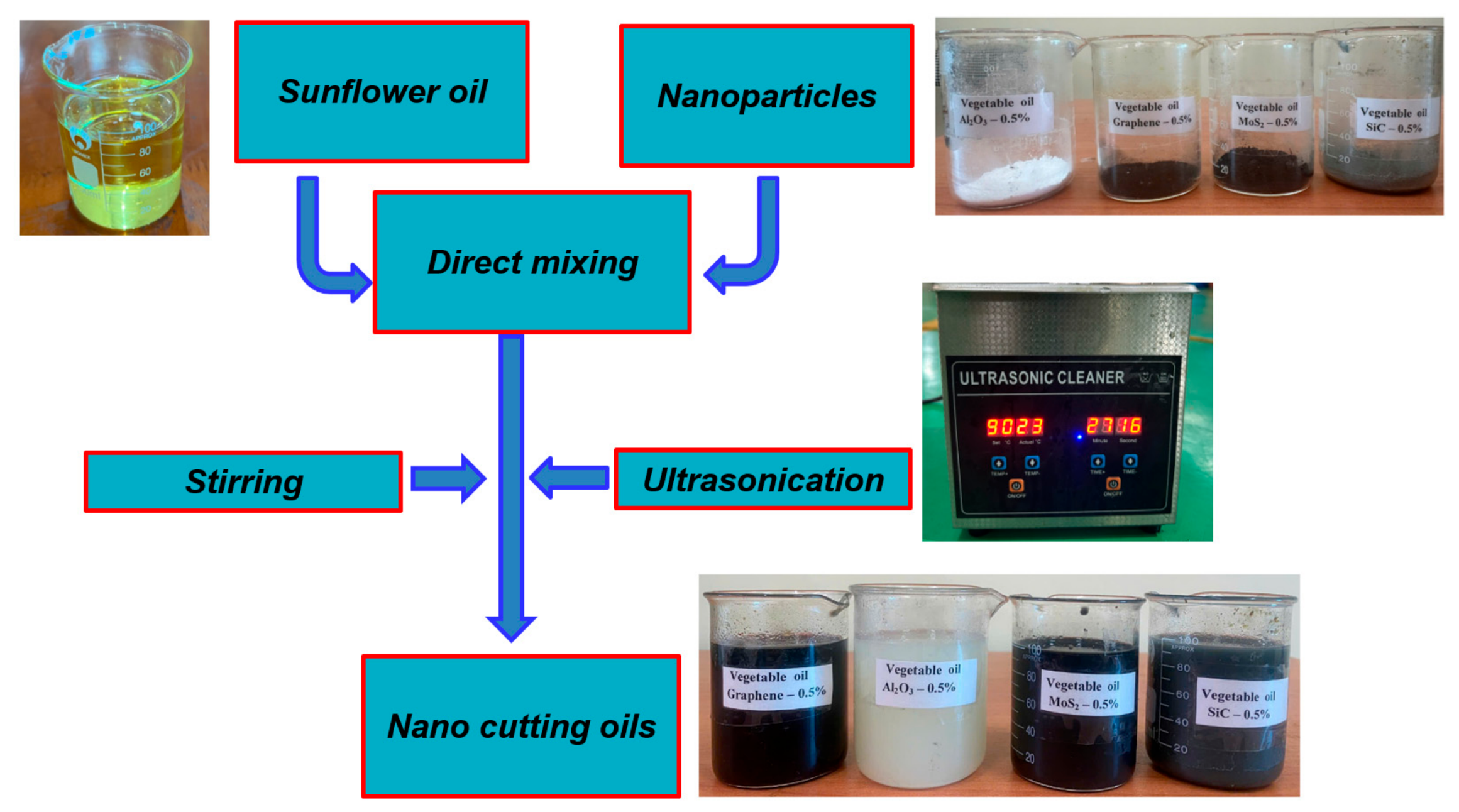
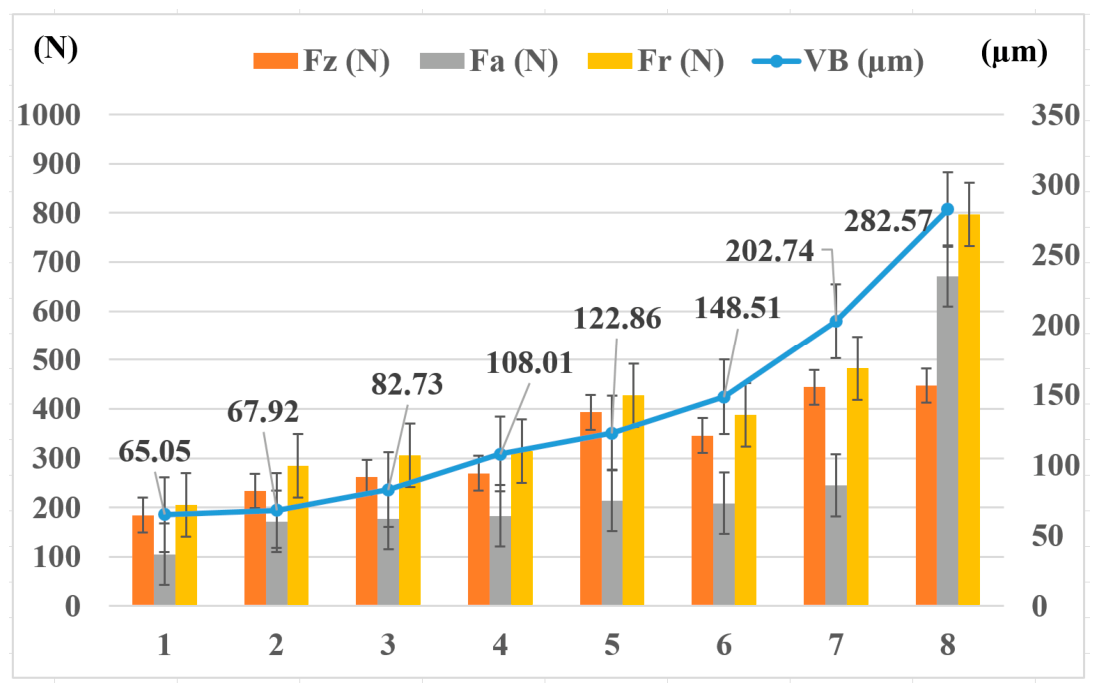
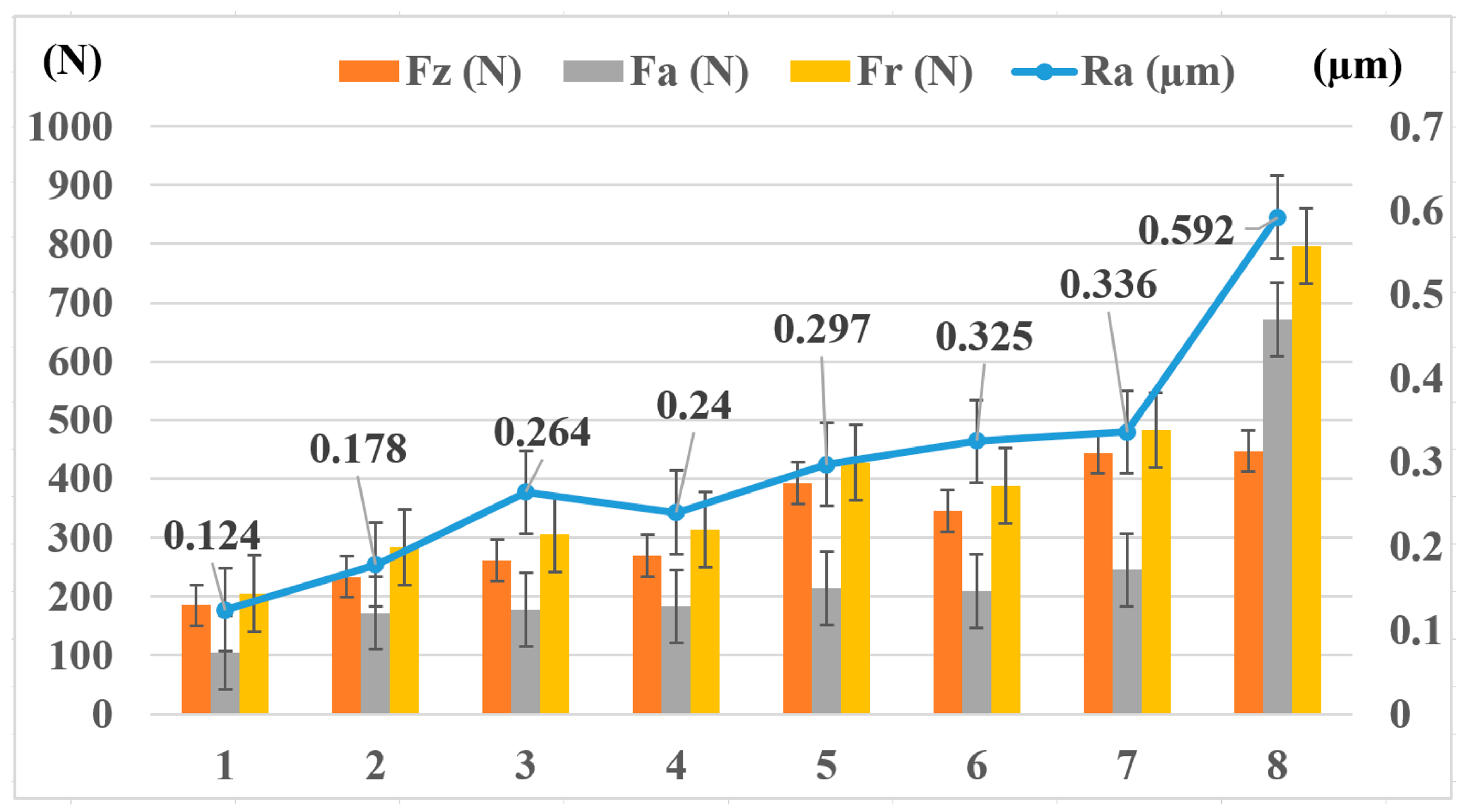
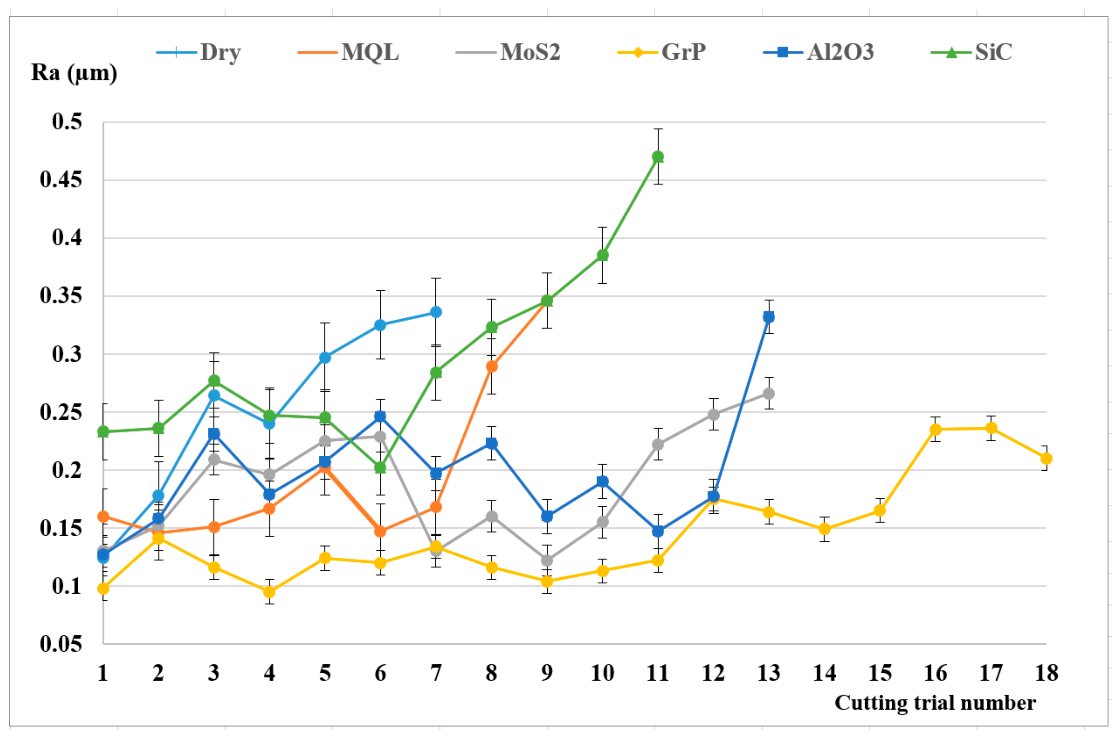
Through the literature review, it is well reported that there is a little information on the investigation of MQL using different types of nanoparticles for milling Hastelloy C276. Additionally, the existing works have not adequately compared the rolling and filming lubrication mechanisms of some typical nanoparticles in machining difficult-to-cut materials. Therefore, the authors made a comparative study on NF MQL using four different types of nanoparticles (Al2O3, MoS2, SiC, and GrP) with dry and pure MQL conditions in terms of surface roughness, cutting force components, and especially the variation of active and passive cutting forces over time.
4. Conclusions
In this paper, the influences of MQL using different types of nanoparticles (Al2O3, MoS2, SiC, and GrP) enriched in vegetable oil on the milling performance of Hastelloy C276 was studied and compared to the dry and pure MQL conditions. The response factors include surface roughness Ra and active cutting forces Fa and passive cutting force Fz. The main contributions of the study are summarized as follows:
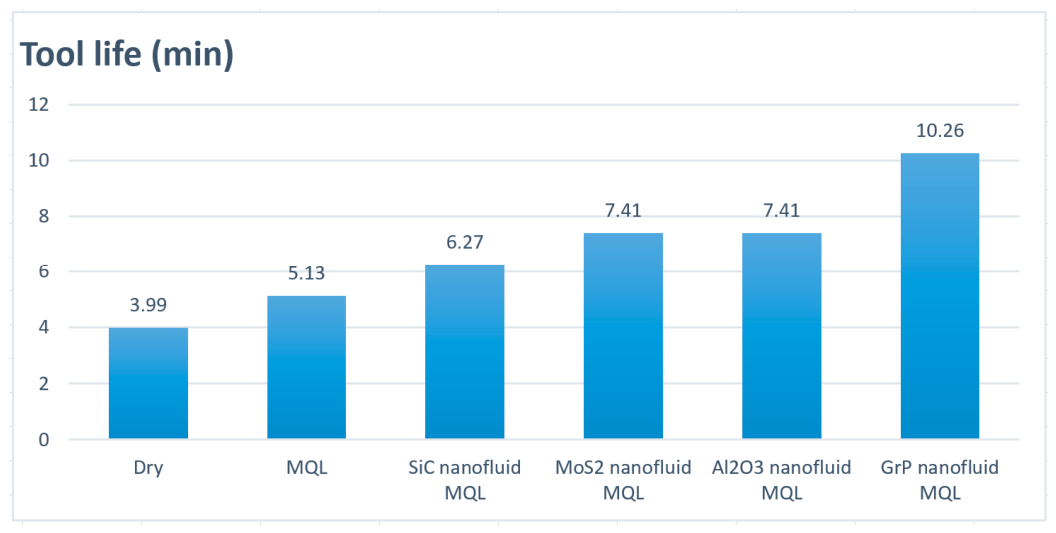
A nanofluid MQL environment reduces surface roughness and cutting forces more effectively than the dry and pure MQL methods, resulting in the significant improvement of tool life about 36.4 ÷ 61.1% and 18.2 ÷ 50%, respectively. MQL using graphene nanofluid achieved the best results among the surveyed strategies with the remarkable reduction in surface roughness Ra at about 54.3% and 34%, followed by MoS2 nanofluid MQL with about 23.7% and 7.7% and Al2O3 nanofluid MQL with about 21.7% and 1.5%.
The different types of nanoparticles result in various cooling and lubricating mechanisms. Graphene (Grp) and MoS2 nanoparticles have a layered structure and create a “buffering membrane” to separate the tool’s flank face from the elastic surface of the workpiece when penetrating the contact zone. Meanwhile, Al2O3 and SiC possess the nearly spherical morphology and high hardness, so they will act as “ball rollers” or abrasive material, causing micro-ploughing or polishing on the machined surface.
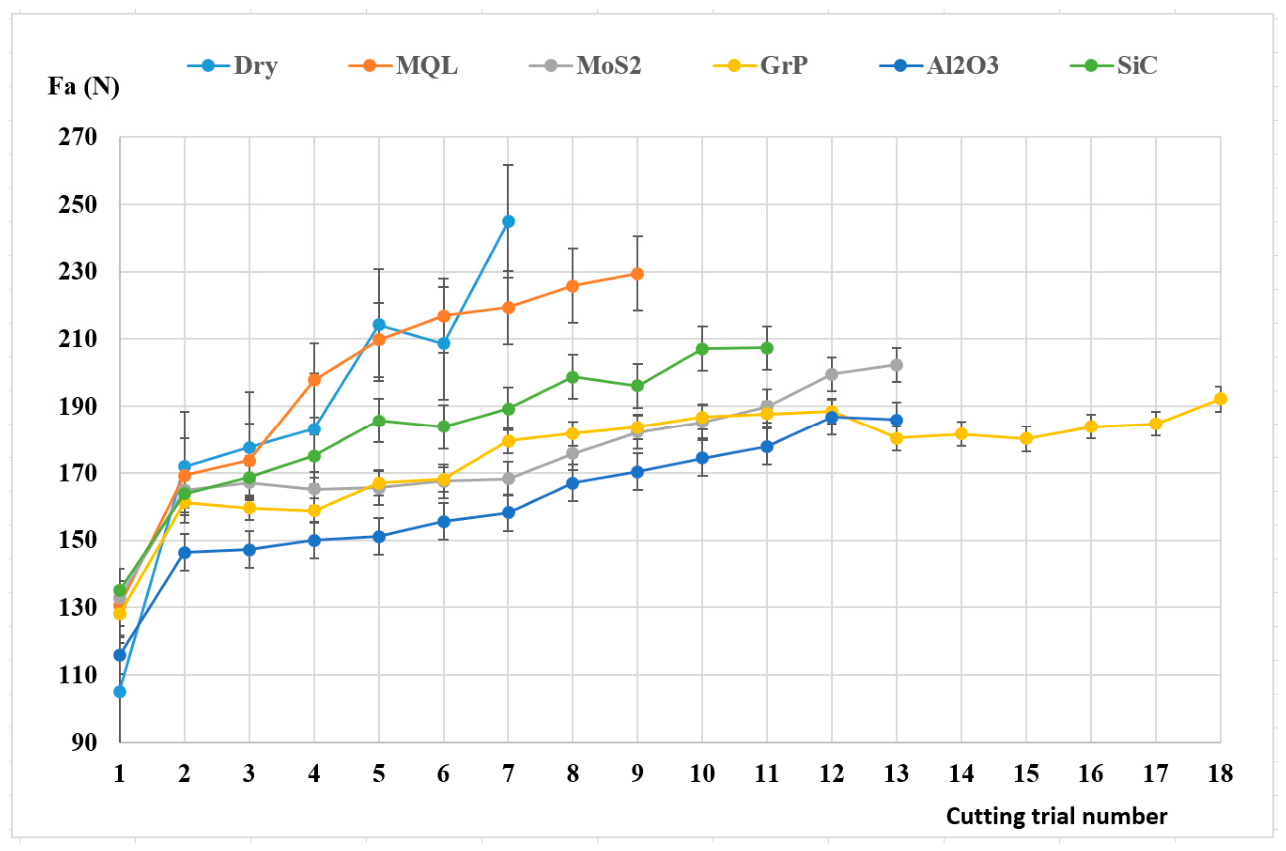
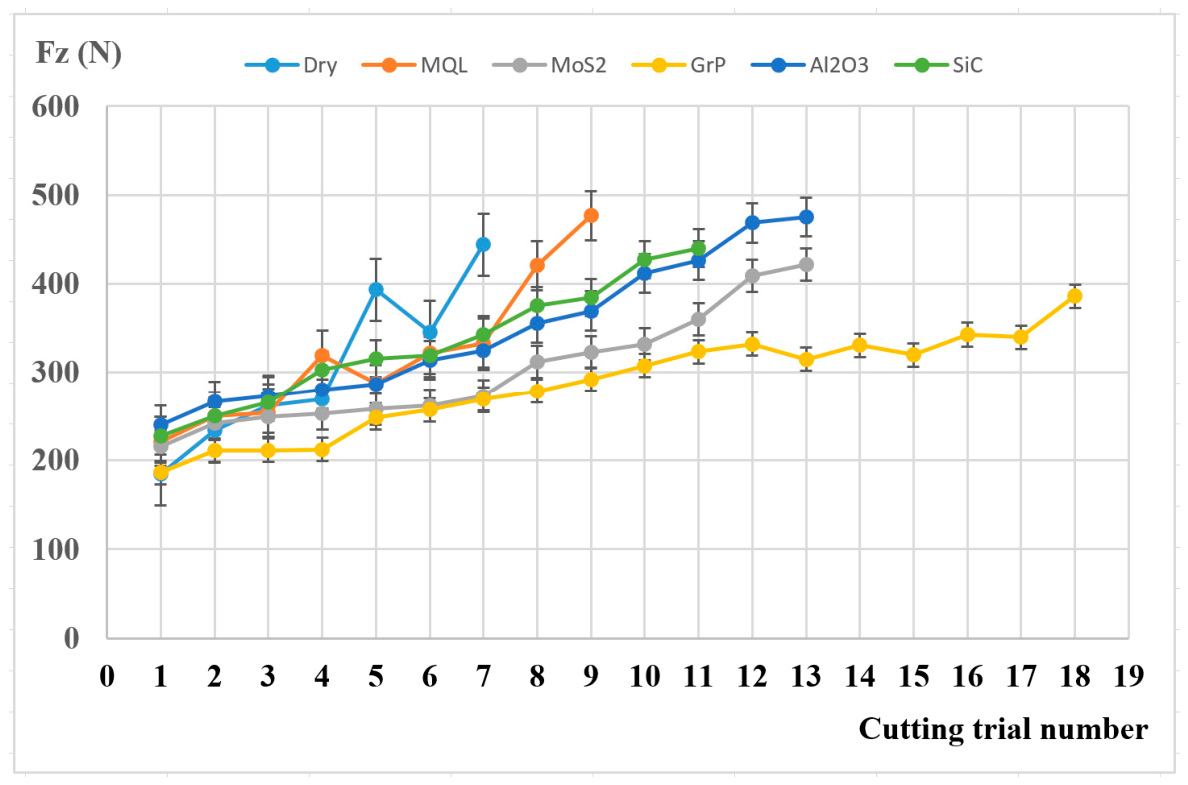
Regarding the machinability of Hastelloy C276, the nanoparticles having a layered structure present better performance than those with spherical morphology and high hardness, which is confirm by in-depth analysis of the variation of active and passive cutting forces Fa and Fz. Looking in detail, Al2O3 nanofluid MQL is the most effective in the Fa reduction of about 18.4% and 22.1%, while GrP nanofluid MQL reduces Fz the most at about 13.4% and 26% when compared to the dry and pure MQL conditions.
Despite the promising obtained results, there are several remaining limitations. The study was implemented with a single material and fixed machining conditions. In future scope, more investigations should be focused on the finding of the optimization results of nanoparticle concentration and MQL factors such as oil flow rate, nozzle angle and placement. Tool wear and surface microstructure need to be studied deeply in order to confirm the cooling and lubricating mechanisms of different types of nanoparticles. Additionally, a cost comparison between milling using nano cutting oils and dry cutting is necessary to assess their practicality in production.