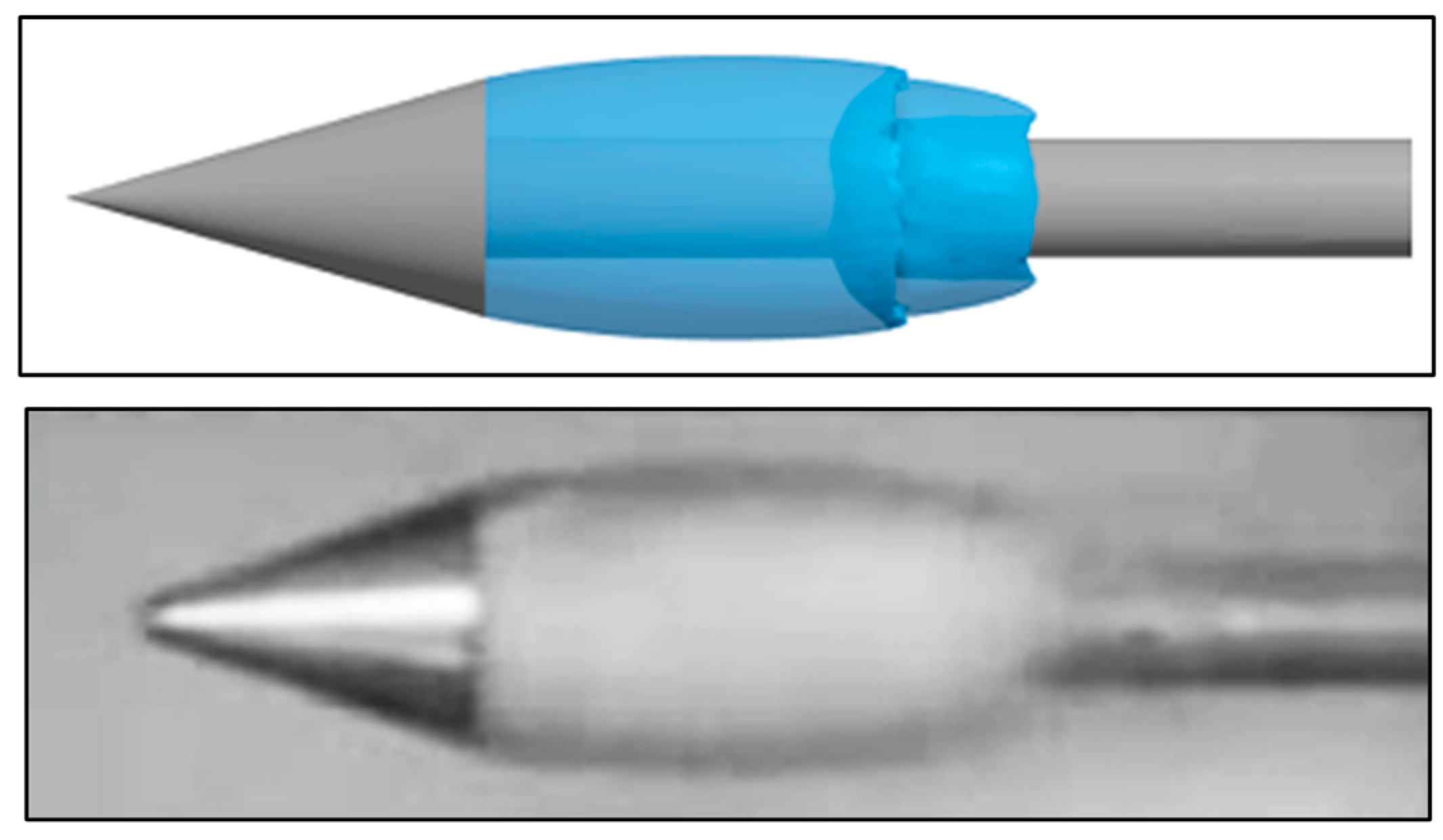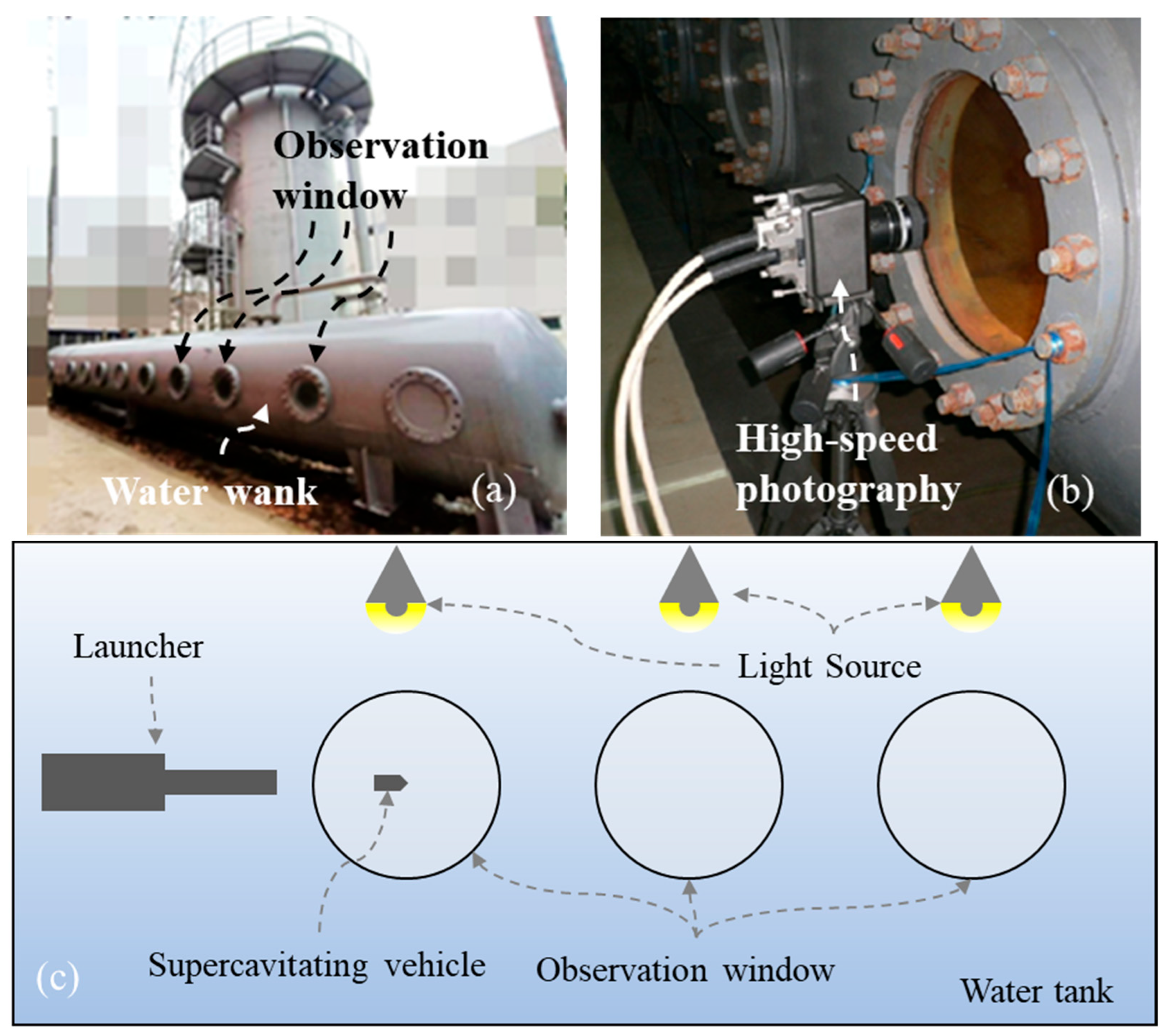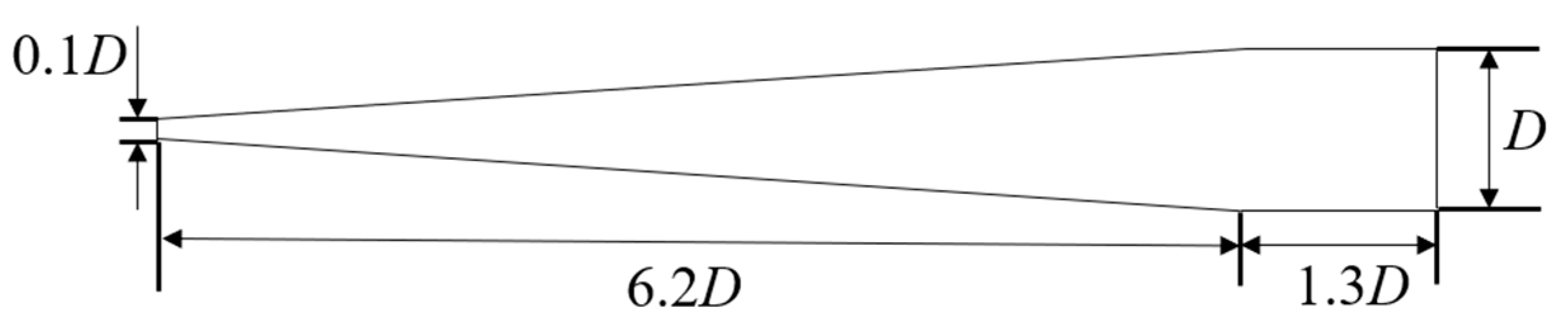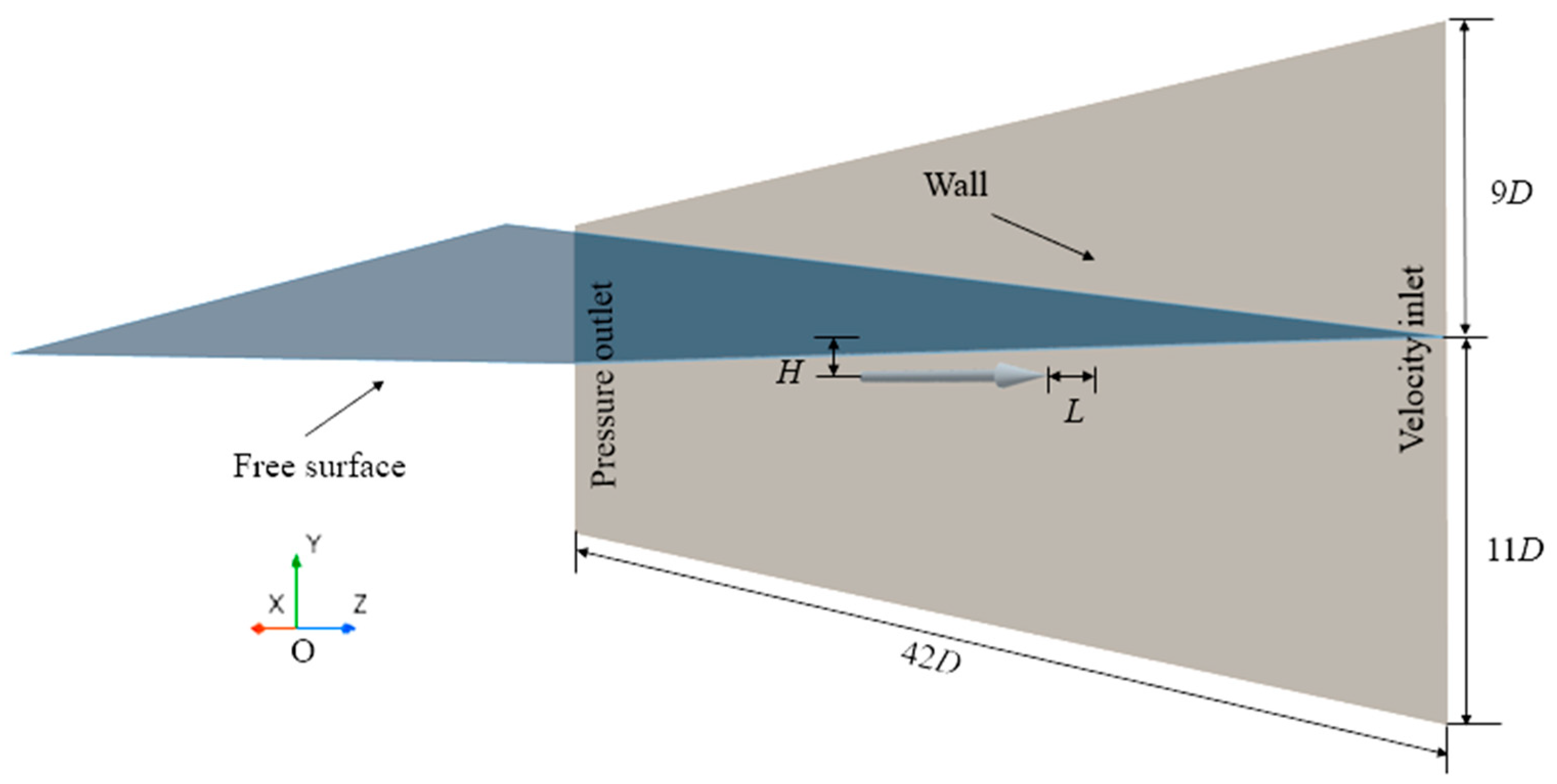
Supercavitating Bubble Dynamics near Free Surfaces and Solid Walls


Abstract
1. Introduction
2. Numerical Methodology
2.1. Governing Equations
2.2. Validations
3. Numerical Results and Discussion
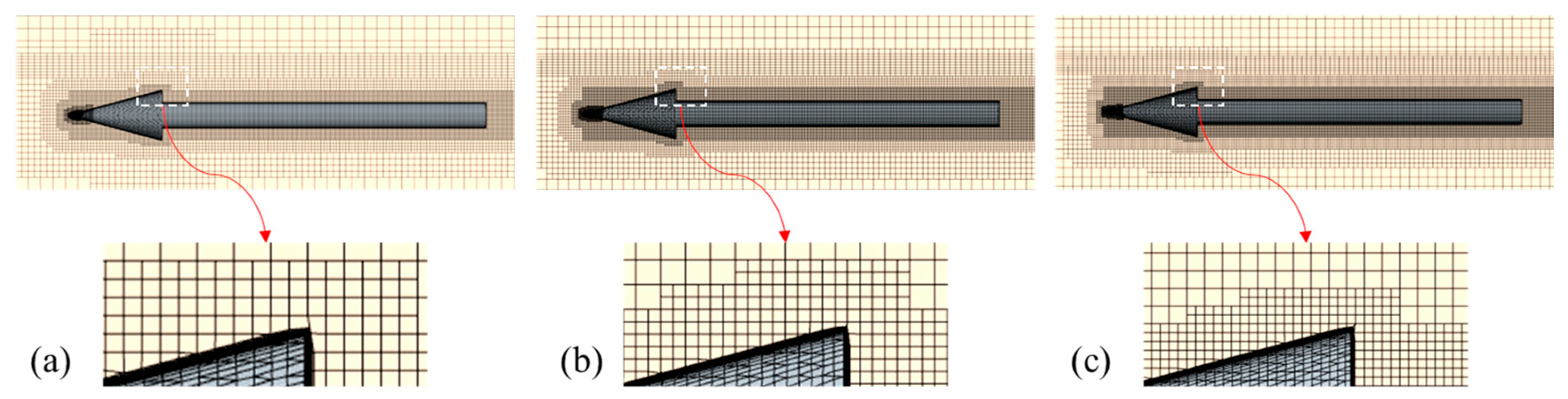
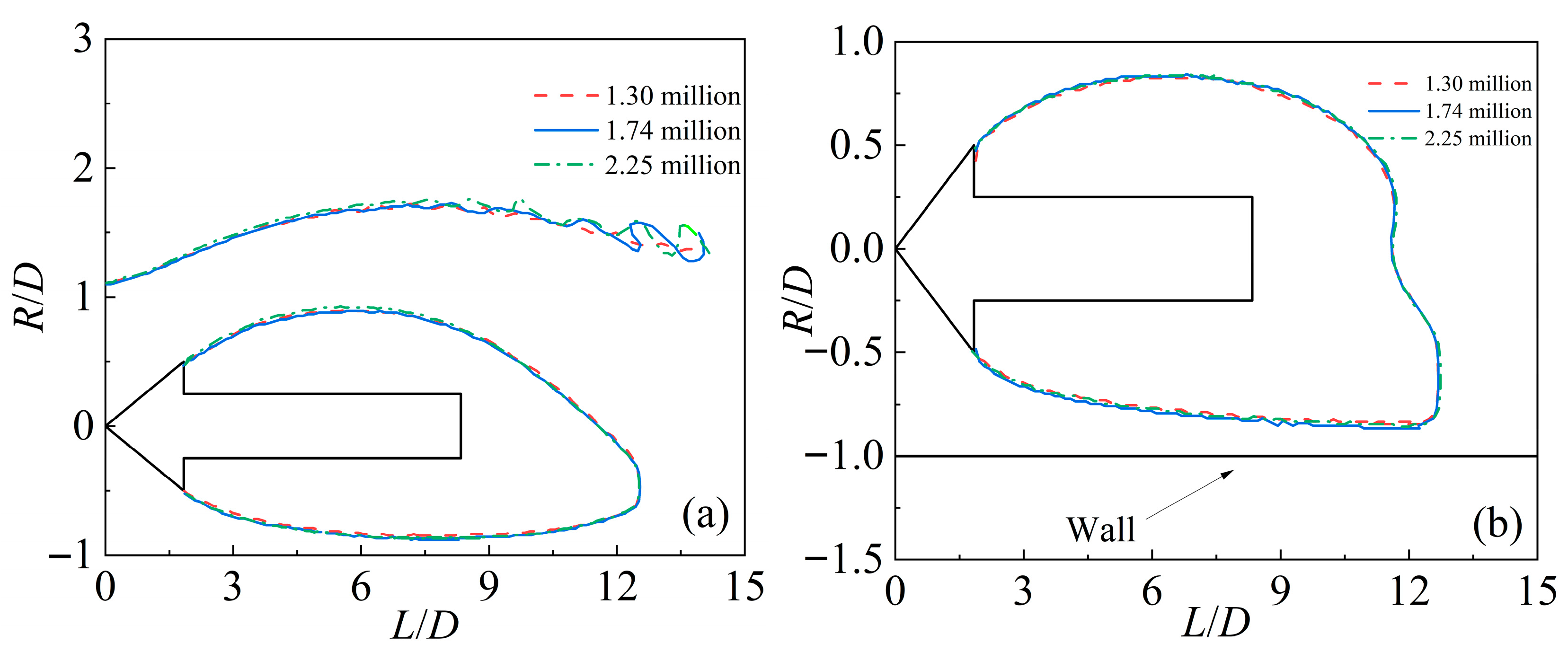
3.1. Grid Independence Verification
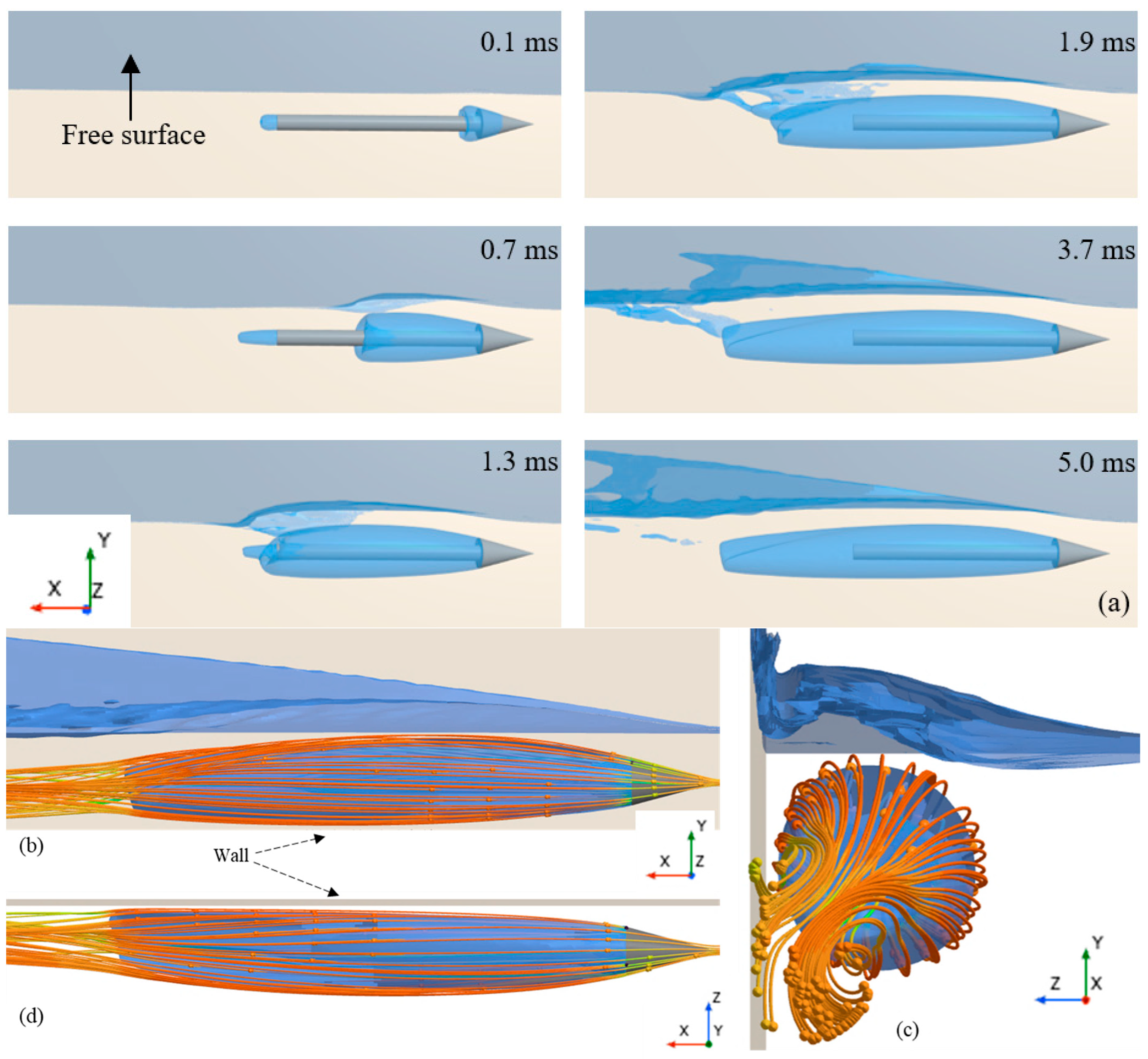
3.2. Effects of the Free Surface and Solid Wall on Supercavitation Dynamics
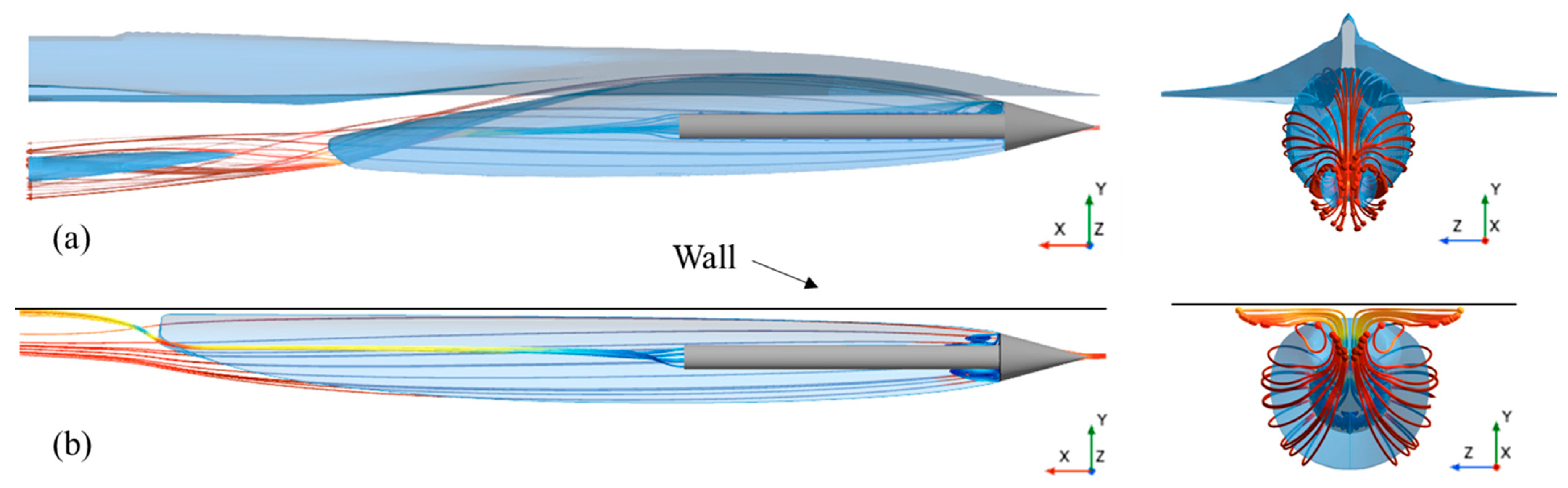
3.3. Analysis of Morphological Characteristics of the Supercavity Tail
3.4. Analysis of Hydrodynamic Loads on the Supercavitating Object
4. Conclusions
- (1)
- The free surface and solid wall exert significant influences on the morphology of the supercavity tail. Their presence alters the incoming flow direction: when the supercavitating object approaches the free surface, the tail of the supercavity deflects away from the interface; conversely, near a solid wall, it bends toward the boundary; under the simultaneous action of both boundaries, the supercavity tail undergoes torsional deformation accompanied by deflection.
- (2)
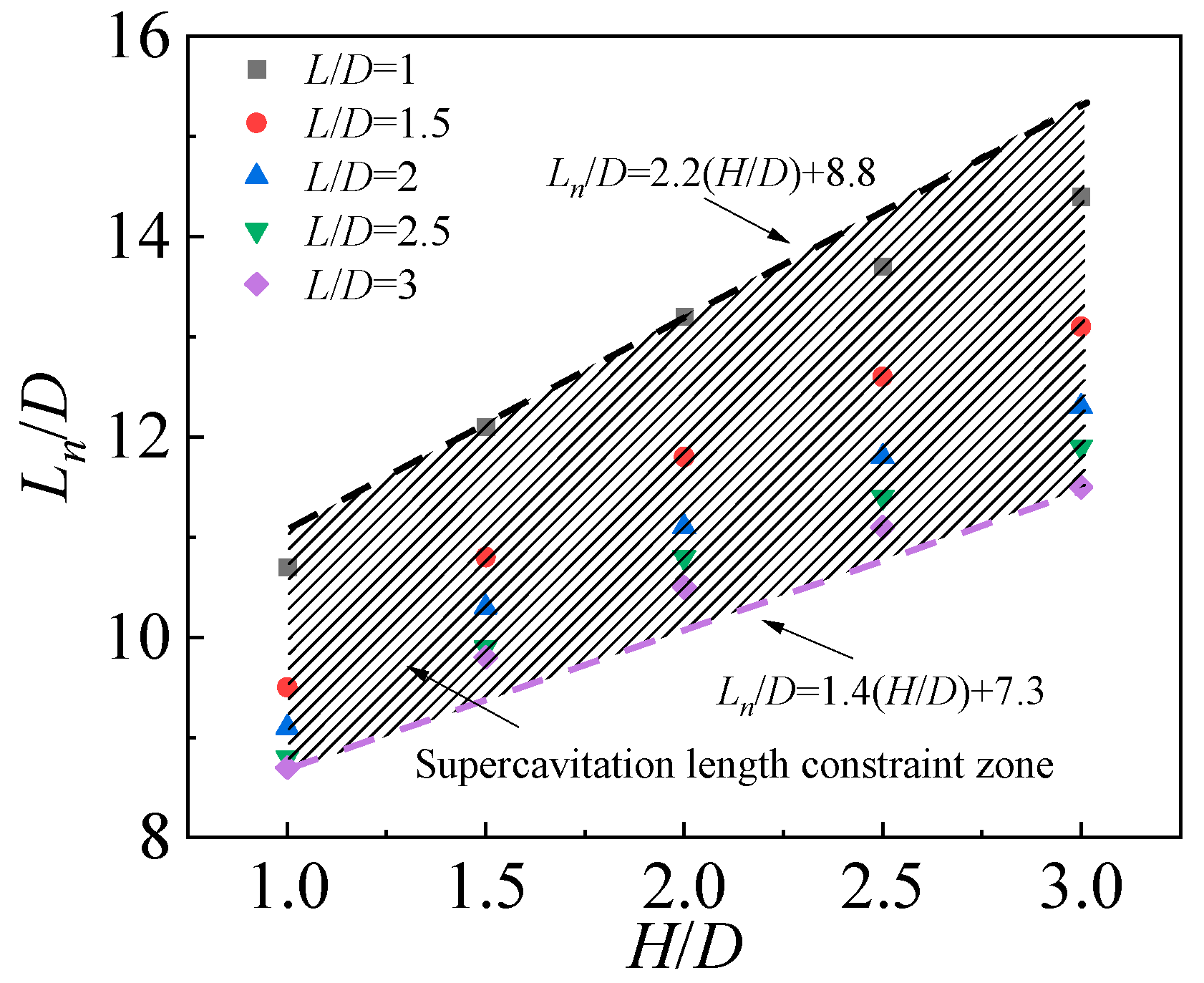
- The free surface and solid wall modify the flow velocity around the supercavity, leading to variations in supercavity length. Specifically, the free surface suppresses supercavity expansion, while the solid wall promotes its elongation. The normalized supercavity length is consistently distributed within a bounded region, with the upper boundary described by and the lower boundary by .
- (3)
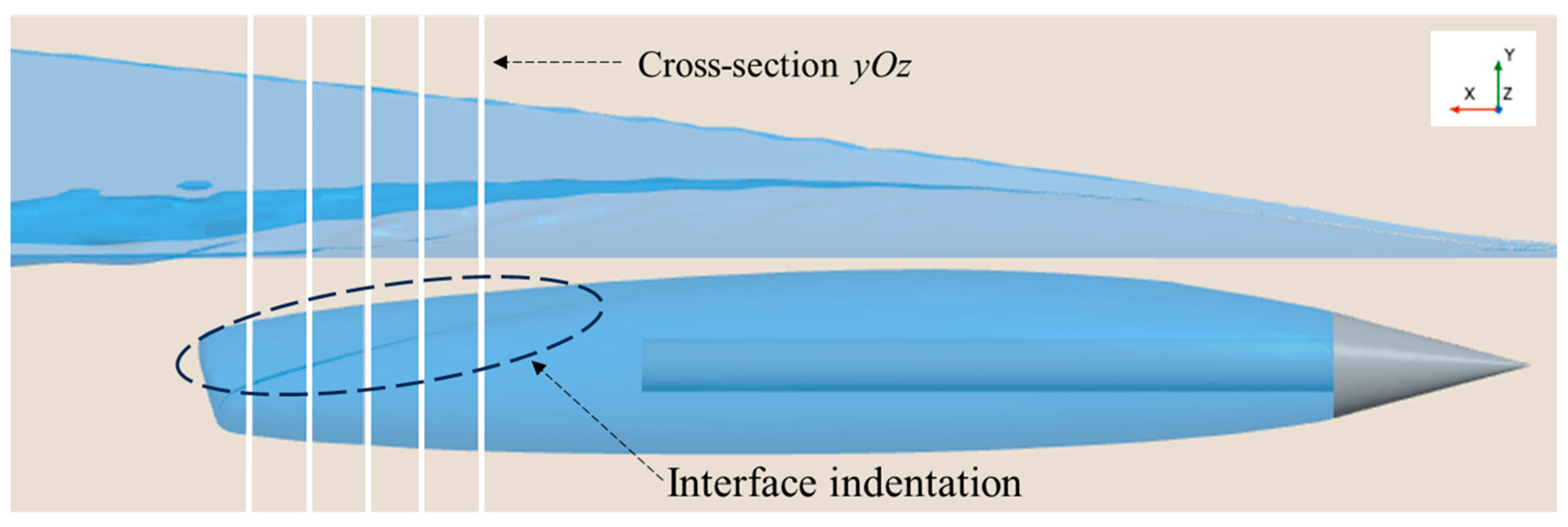
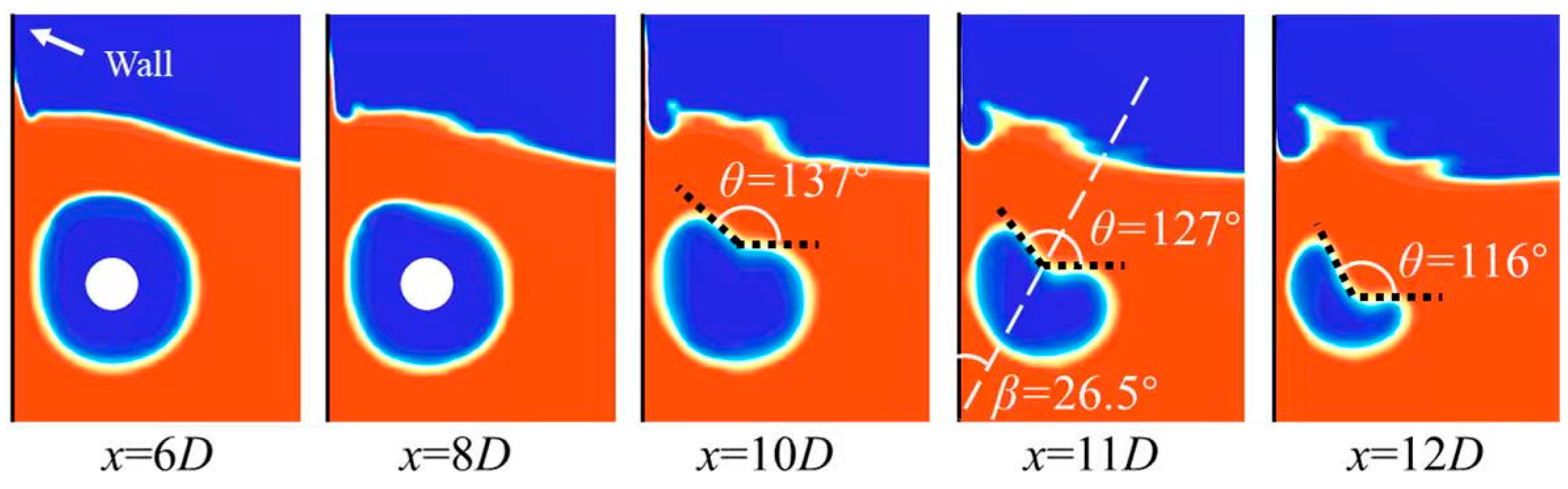
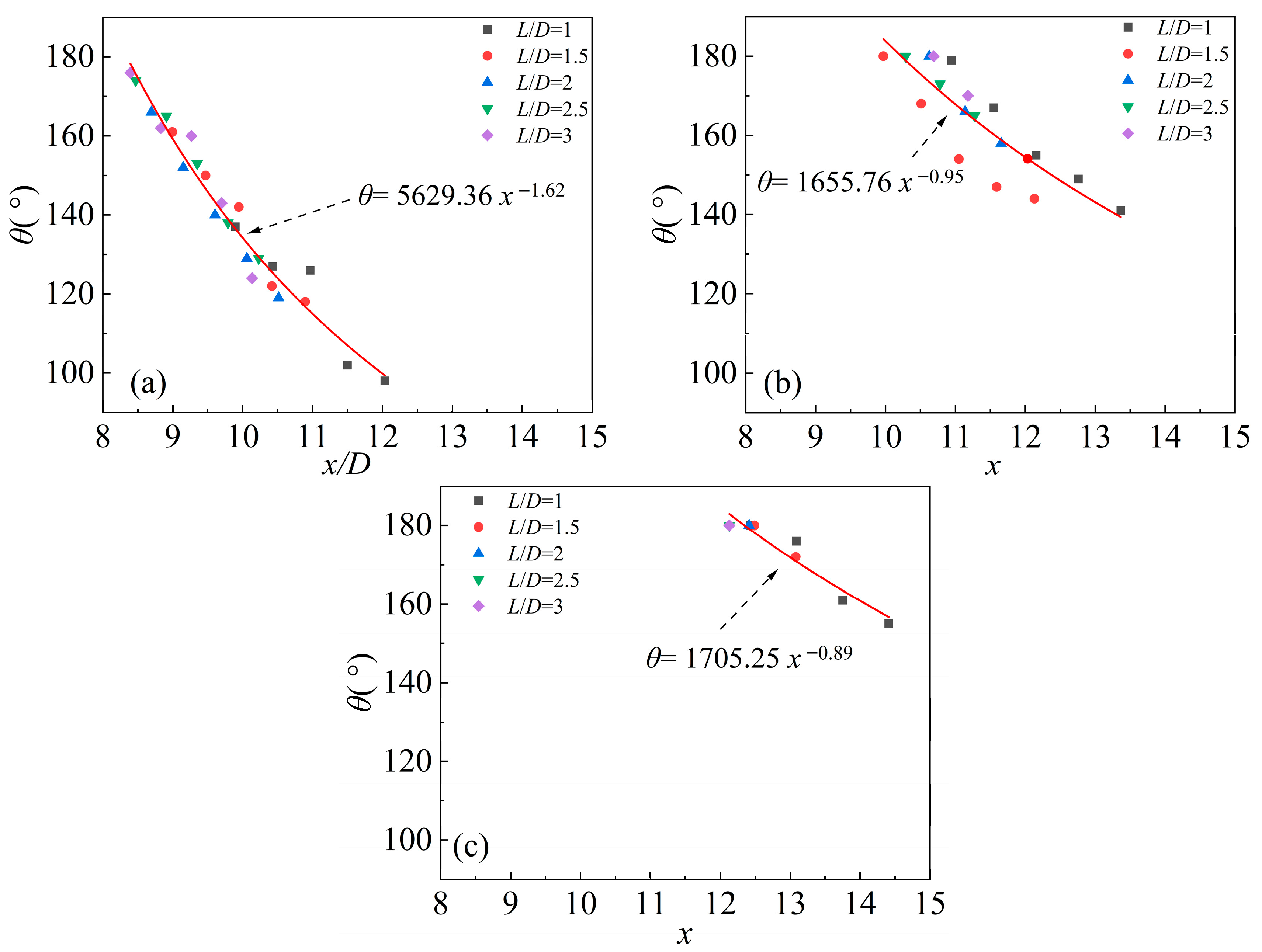
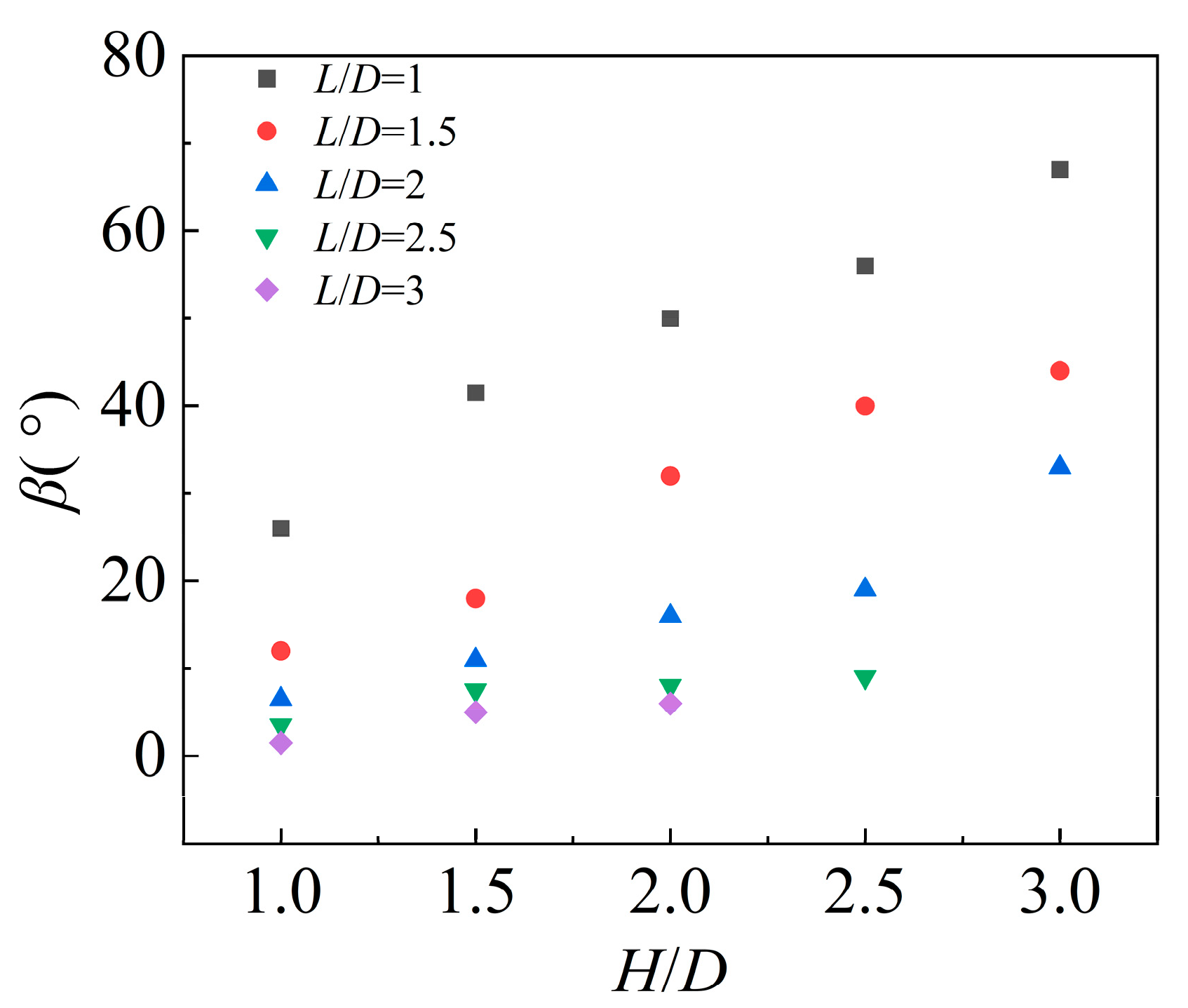
- Based on the variation characteristics of the indentation angle and torsional angle of the supercavity tail, the free surface is identified as the dominant factor inducing inward indentation. Additionally, the free surface inhibits torsional deformation of the supercavity tail, whereas the solid wall promotes this behavior. The supercavity interface exhibits increasing indentation toward the tail, and shows a strong negative correlation with the axial position , which can be well-described by a power function.
- (4)
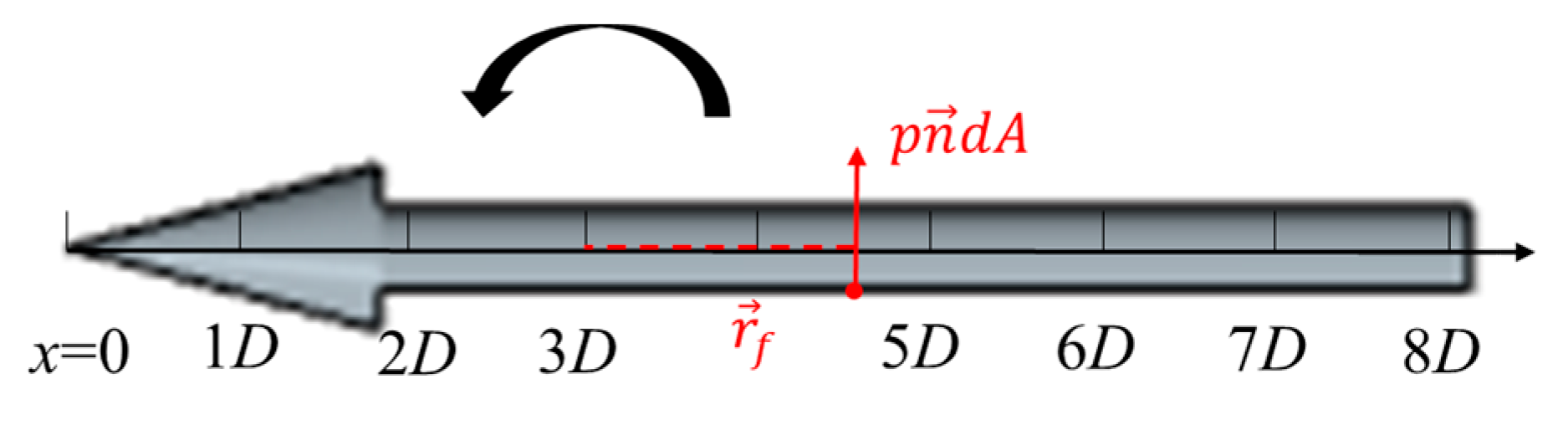
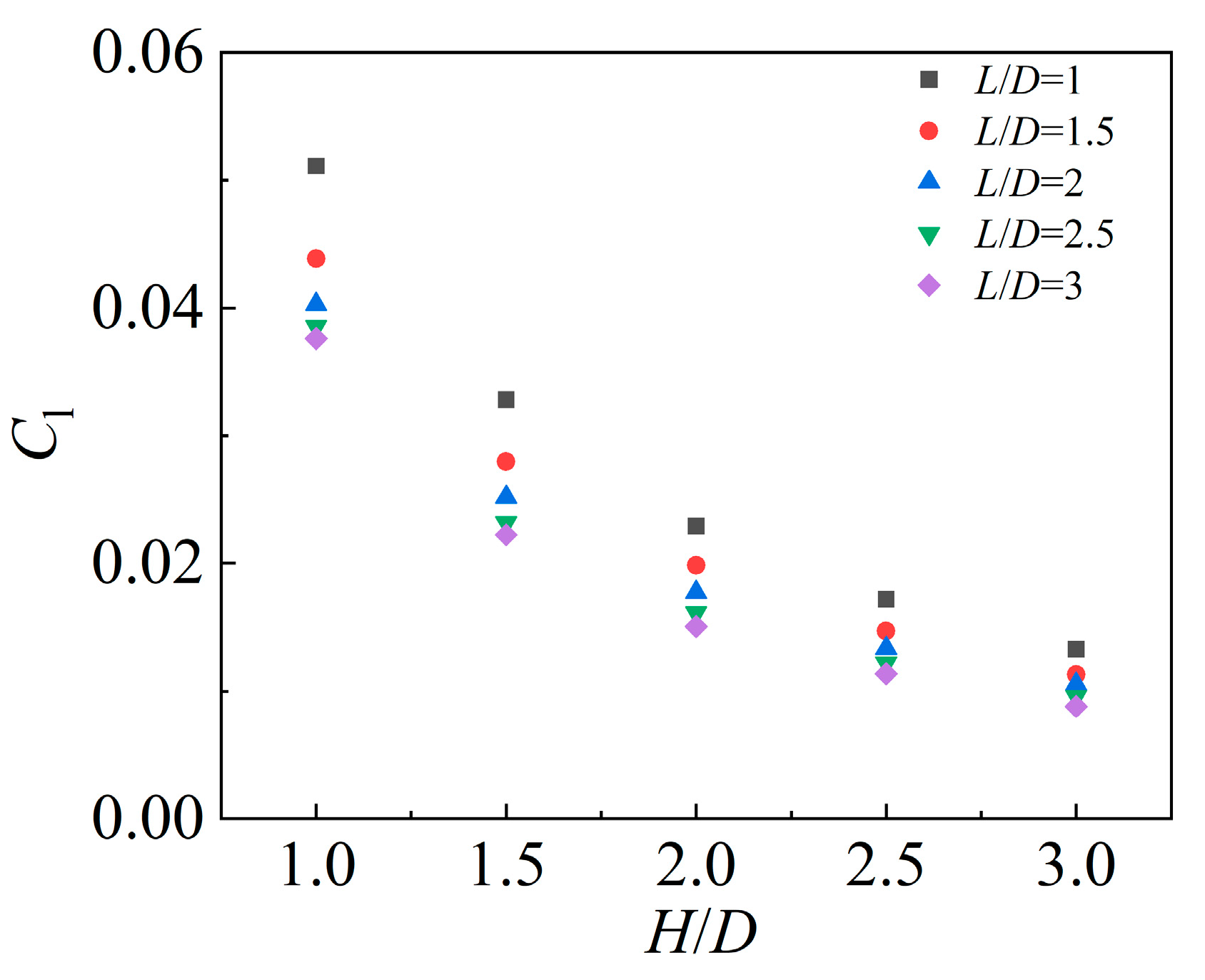
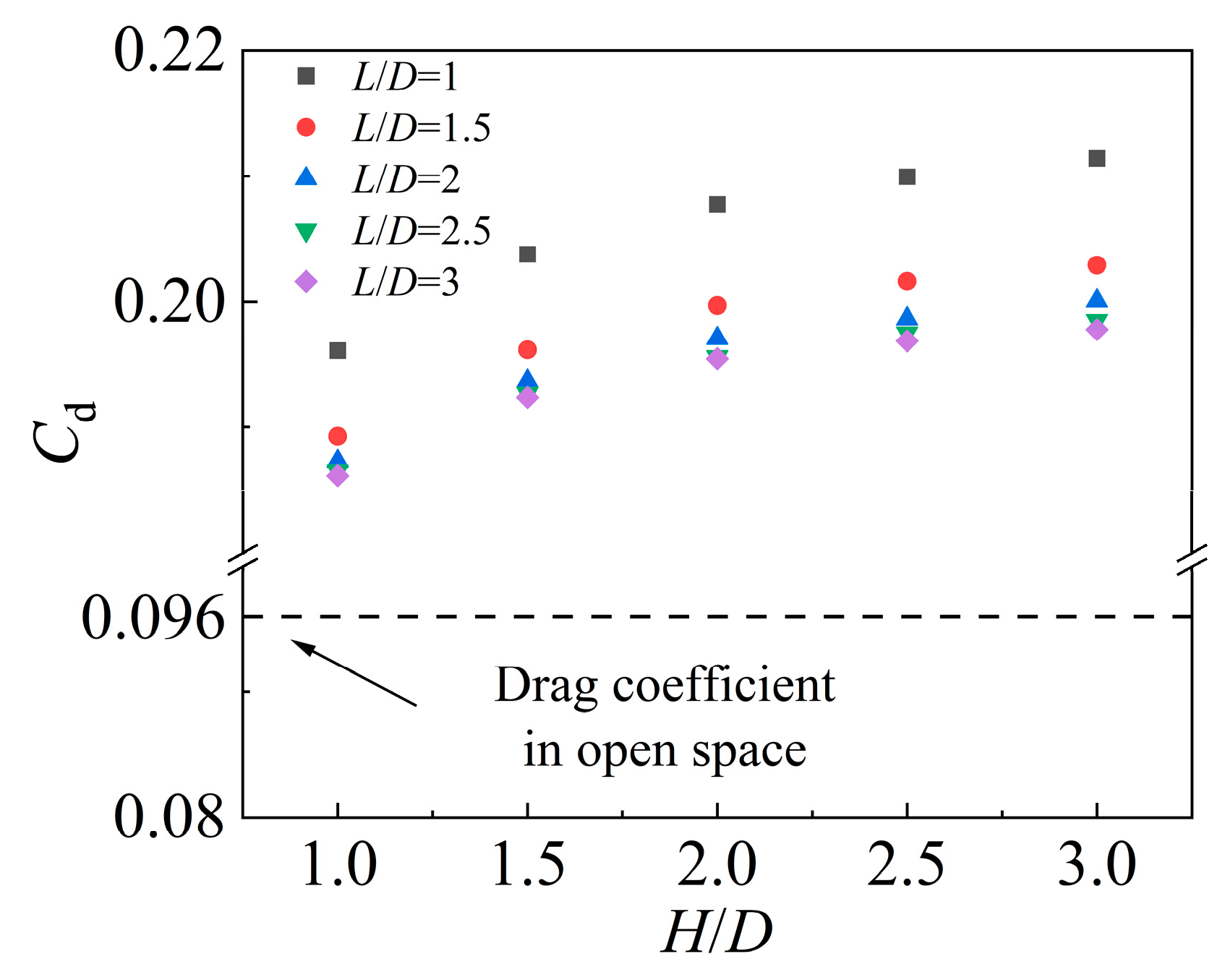
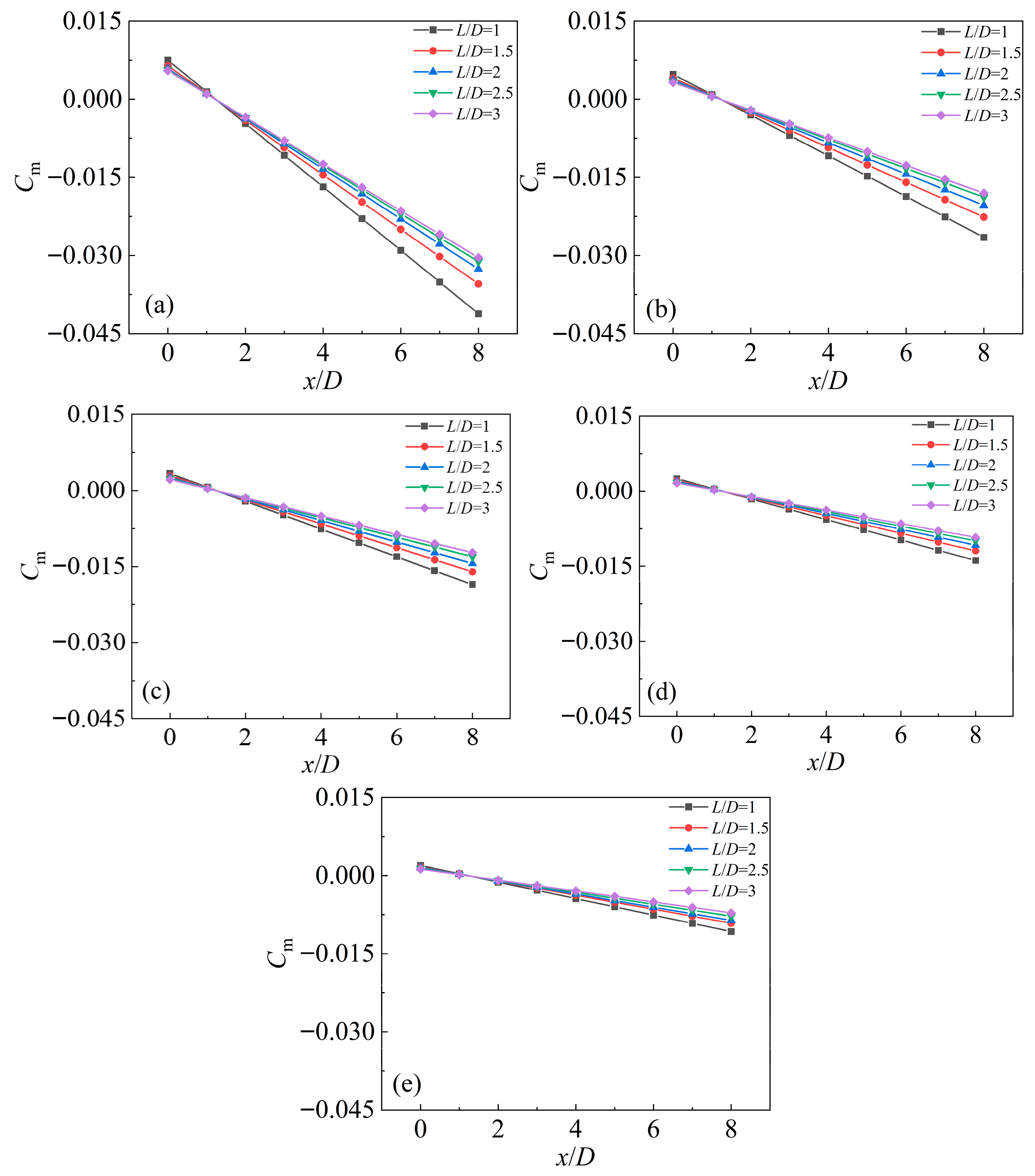
- The free surface and solid wall also significantly affect the lift, drag, and torque acting on the supercavitating object. Proximity to either the solid wall or free surface enhances the hydrodynamic lift. For drag, the solid wall increases the force magnitude, while the free surface tends to reduce it; however, compared to open water conditions, the combined action of both boundaries ultimately increases both lift and drag. A critical observation is that the torque coefficient is consistently zero at : positive for and negative for .
Author Contributions
Funding
Institutional Review Board Statement
Informed Consent Statement
Data Availability Statement
Conflicts of Interest
References
- Young, Y.L.; Valles, Z.; Di Napoli, I.; Montero, F.M.; Minerva, L.F.; Harwood, C. Wave effects on the hydroelastic response of a surface-piercing hydrofoil. Part 2. Cavitating and ventilating flows. J. Fluid Mech. 2023, 965, A3. [Google Scholar] [CrossRef] [Scilit]
- Ceccio, S.L. Friction Drag Reduction of External Flows with Bubble and Gas Injection. Annu. Rev. Fluid Mech. 2010, 42, 183–203. [Google Scholar] [CrossRef] [Scilit]
- Xiao, Z.; Wang, J.; Huang, R.; Wang, Y.; Zhi, Y.; Huang, J.; Wang, J. Modulation mechanisms of swept angle on the ventilated flows around surface-piercing hydrofoils. Phys. Fluids 2025, 37, 085193. [Google Scholar] [CrossRef] [Scilit]
- Wang, Y.; Huang, R.; Qiu, R.; Wang, Y.; Du, T. Experimental study on the mechanism of cavitation-induced ventilation. Int. J. Multiph. Flow 2024, 170, 104633. [Google Scholar] [CrossRef] [Scilit]
- Huang, R.; Qiu, R.; Zhi, Y.; Wang, Y. Investigations into the ventilated cavities around a surface-piercing hydrofoil at high Froude numbers. Phys. Fluids 2022, 34, 043304. [Google Scholar] [CrossRef] [Scilit]
- Laiadi, A. The influence of surface tension and gravity on cavitating flow past an inclined plate in a channel. Q. Appl. Math. 2022, 80, 529–548. [Google Scholar] [CrossRef] [Scilit]
- Laiadi, A.; Merzougui, A. Numerical solution of a cavity problem under surface tension effect. Math. Methods Appl. Sci. 2021, 44, 8463–8471. [Google Scholar] [CrossRef] [Scilit]
- Anevlavi, D.; Belibassakis, K.A. Analysis of partially cavitating hydrofoils under the free surface using BEM-based adjoint optimization. Appl. Math. Model. 2022, 112, 415–435. [Google Scholar] [CrossRef] [Scilit]
- Xu, C.; Khoo, B.C. Numerical investigation on the cloud cavitating flow over a Clark Y foil under free surface effect. Ocean Eng. 2022, 266, 112953. [Google Scholar] [CrossRef] [Scilit]
- Xu, C.; Huang, J.; Yu, C.; Wang, Y.; Huang, C.; Khoo, B.C. Free surface and near-wall effects on the cloud cavitating flow over an axisymmetric projectile. Ocean Eng. 2021, 238, 109682. [Google Scholar] [CrossRef] [Scilit]
- Xu, C.; Wang, Y.; Huang, C.; Yu, C.; Huang, J. Cloud Cavitating Flow That Surrounds a Vertical Hydrofoil Near the Free Surface. J. Fluids Eng.-Trans. Asme 2017, 139, 101302. [Google Scholar] [CrossRef] [Scilit]
- Xu, C.; Huang, J.; Wang, Y.; Wu, X.; Huang, C.; Wu, X. Supercavitating flow around high-speed underwater projectile near free surface induced by air entrainment. AIP Adv. 2018, 8, 035016. [Google Scholar] [CrossRef] [Scilit]
- Jin, M.-S.; Ha, C.-T.; Park, W.-G. Numerical study of ventilated cavitating flows with free surface effects. J. Mech. Sci. Technol. 2013, 27, 3683–3691. [Google Scholar] [CrossRef] [Scilit]
- Zhi, Y.; Zhan, J.; Huang, R.; Wang, Y.; Li, N. Numerical Investigation on the Ventilated Supercavity around a Body under Free Surface Effect. J. Mar. Sci. Eng. 2023, 11, 912. [Google Scholar] [CrossRef] [Scilit]
- Zhou, H.; Xiang, M.; Zhao, S.; Zhang, W. Development of a multiphase solver for cavitation flow near free surface. Ocean Eng. 2019, 188, 106236. [Google Scholar] [CrossRef] [Scilit]
- Nguyen, V.-T.; Phan, T.-H.; Duy, T.-N.; Park, W.-G. Unsteady cavitation around submerged and water-exit projectiles under the effect of the free surface: A numerical study. Ocean Eng. 2022, 263, 112368. [Google Scholar] [CrossRef] [Scilit]
- Erfanian, M.-R.; Moltani, A.-A.; Pasandidehfard, M. Numerical investigation of the interaction between a ventilated supercavity and free surface waves at high Froude numbers. Phys. Fluids 2024, 36, 123309. [Google Scholar] [CrossRef] [Scilit]
- Wang, Y.; Chang, X.; Xiaocui, W.; Chenguang, H.; Xianqian, W. Ventilated cloud cavitating flow around a blunt body close to the free surface. Phys. Rev. Fluids 2017, 2, 084303. [Google Scholar] [CrossRef] [Scilit]
- Wang, Y.; Wu, X.; Huang, C.; Wu, X. Unsteady characteristics of cloud cavitating flow near the free surface around an axisymmetric projectile. Int. J. Multiph. Flow 2016, 85, 48–56. [Google Scholar] [CrossRef] [Scilit]
- Xu, C.; Wang, Y.-W.; Huang, C.-G.; Huang, J.; Yu, C. The effect of free surface on cloud cavitating flow around a blunt body. J. Hydrodyn. Ser. B 2017, 29, 979–986. [Google Scholar] [CrossRef] [Scilit]
- Li, D.; Lyu, X. Numerical study on supercavitating flow in free stream with regular waves. Int. J. Nav. Archit. Ocean Eng. 2020, 12, 799–809. [Google Scholar] [CrossRef] [Scilit]
- Zhang, T.; Zhang, A.M.; Zhang, S.; Long, S.; Han, R.; Liu, L.; Ohl, C.-D.; Li, S. Free-surface jetting driven by a cavitating vortex ring. J. Fluid Mech. 2025, 1003, A4. [Google Scholar] [CrossRef] [Scilit]
- Chen, X.; Lu, C.-J.; Li, J.; Chen, Y. Properties of Natural Cavitation Flows Around A 2-D Wedge in Shallow Water. J. Hydrodyn. 2011, 23, 730–736. [Google Scholar] [CrossRef] [Scilit]
- Kawakami, E.; Arndt, R.E.A. Investigation of the Behavior of Ventilated Supercavities. J. Fluids Eng. 2011, 133, 091305. [Google Scholar] [CrossRef] [Scilit]
- Karn, A.; Arndt, R.E.A.; Hong, J. An experimental investigation into supercavity closure mechanisms. J. Fluid Mech. 2016, 789, 259–284. [Google Scholar] [CrossRef] [Scilit]
- Shao, S.; Karn, A.; Ahn, B.-K.; Arndt, R.E.A.; Hong, J. A comparative study of natural and ventilated supercavitation across two closed-wall water tunnel facilities. Exp. Therm. Fluid Sci. 2017, 88, 519–529. [Google Scholar] [CrossRef] [Scilit]
- Wu, P.-C.; Chen, J.-H. Numerical study on cavitating flow due to a hydrofoil near a free surface. J. Ocean Eng. Sci. 2016, 1, 238–245. [Google Scholar] [CrossRef] [Scilit]
- Schnerr, G.H.; Sauer, J. Physical and Numerical Modeling of Unsteady Cavitation Dynamics. In Proceedings of the Fourth International Conference on Multiphase, New Orleans, LA, USA, 27 May–1 June 2001. [Google Scholar]
- Rayleigh, L. On the pressure developed in a liquid during the collapse of a spherical cavity. Philos. Mag. 1917, 34, 221–226. [Google Scholar] [CrossRef] [Scilit]
- Moltani, A.-A.; PasandidehFard, M.; Erfanian, M.R. Experimental and numerical study of free surface effect on the ventilated cavitating flow around a surface vehicle model. Ocean Eng. 2023, 268, 113413. [Google Scholar] [CrossRef] [Scilit]
- Javadpour, M.; Farahat, S.; Ajam, H.; Salari, M.; Nezhad, A.H. An experimental and numerical study of supercavitating flows tric cavitators. J. Theor. Appl. Mech. 2016, 54, 795–810. [Google Scholar] [CrossRef] [Scilit]





Disclaimer/Publisher’s Note: The statements, opinions and data contained in all publications are solely those of the individual author(s) and contributor(s) and not of MDPI and/or the editor(s). MDPI and/or the editor(s) disclaim responsibility for any injury to people or property resulting from any ideas, methods, instructions or products referred to in the content. |
© 2026 by the authors. Licensee MDPI, Basel, Switzerland. This article is an open access article distributed under the terms and conditions of the Creative Commons Attribution (CC BY) license.
Share and Cite
Wei, P.; Weng, M.; Yang, X.; Hu, Y.; Liang, W.; Sun, S. Supercavitating Bubble Dynamics near Free Surfaces and Solid Walls. Fluids 2026, 11, 28. https://doi.org/10.3390/fluids11010028
Wei P, Weng M, Yang X, Hu Y, Liang W, Sun S. Supercavitating Bubble Dynamics near Free Surfaces and Solid Walls. Fluids. 2026; 11(1):28. https://doi.org/10.3390/fluids11010028
Chicago/Turabian StyleWei, Ping, Mingdeng Weng, Xiaobin Yang, Yiding Hu, Weige Liang, and Shiyan Sun. 2026. "Supercavitating Bubble Dynamics near Free Surfaces and Solid Walls" Fluids 11, no. 1: 28. https://doi.org/10.3390/fluids11010028
APA StyleWei, P., Weng, M., Yang, X., Hu, Y., Liang, W., & Sun, S. (2026). Supercavitating Bubble Dynamics near Free Surfaces and Solid Walls. Fluids, 11(1), 28. https://doi.org/10.3390/fluids11010028