1. Introduction
Cavitation is a physical phenomenon characterized by the formation and subsequent collapse of gas- or vapor-filled bubbles within a liquid, triggered when the local pressure drops to the vapor pressure of the fluid or to a level sufficient to release dissolved gases. Once formed, these bubbles are convected toward regions of higher pressure, where they become unstable and collapse violently, mobilizing elastic forces within the surrounding fluid. Experimental observations obtained from high-speed imaging under controlled conditions, such as those reported in [
1], have shown that for isolated or weakly interacting bubbles, collapse may occur through an implosive mechanism. During this process, the bubble radius rapidly decreases, and the interface may deform into a toroidal shape, generating high-velocity microjets directed toward the bubble center or nearby boundaries [
1,
2].
The phase transition back to the liquid state does not occur in a single event but rather through a damped oscillatory process, during which the bubble undergoes successive cycles of collapse and rebound. During the rebound phase, strong pressure waves are emitted and can be visualized using Schlieren or shadowgraph imaging techniques [
1]. Measurements performed with hydrophones in the vicinity of these events have reported local pressure amplitudes reaching values on the order of 4 MPa [
3].
Due to the high pressures generated during cavitation and its significant potential to cause damage to hydraulic machinery and structures, its detection and characterization have long been a subject of scientific investigation. In hydraulic systems, cavitation detection has traditionally been associated with the emission of high-frequency noise, often perceived by operators of pumps and turbomachinery and commonly characterized using acoustic methods [
4], thereby reducing subjective assessment.
However, such sensory-based detection does not necessarily apply to large-scale hydraulic structures, where accessibility is limited, and measurements are affected by strong background noise, as commonly observed in dam spillways. In these environments, the effects of cavitation often become evident only through post-operational visual inspections of the resulting material damage [
5]. Under such conditions, cavitation detection assumes a retrospective and corrective character, driven by the operational losses induced by the phenomenon, which may include efficiency degradation and, in more severe cases, structural failure of hydraulic components.
Beyond its traditionally recognized role as a source of material degradation in hydraulic systems, cavitation has also been investigated as a mechanism capable of promoting physicochemical transformations. In this context, bubble dynamics have been explored in applications such as the degradation of persistent organic compounds [
6], microorganism inactivation [
7], biofuel synthesis [
8], and the cleaning of internal surfaces in heat exchangers [
9] and industrial pipelines [
10].
In these applications, characterizing cavitation requires the identification of measurable physical signatures associated with bubble activity and flow conditions. Both numerical modeling approaches, such as computational fluid dynamics (CFD), and experimental techniques have been employed to investigate cavitating flows. Numerical models have been used to analyze the influence of geometric parameters, flow conditions, and the adequacy of turbulence modeling approaches, including Reynolds-Averaged Navier–Stokes (RANS) formulations, Large Eddy Simulation (LES), and, more rarely and under low Reynolds number conditions, Direct Numerical Simulation (DNS) [
11,
12,
13,
14,
15]. Within this framework, experimentation enables the observation and quantification of flow structures and bubble dynamics under controlled conditions.
High-speed detection and visualization techniques, such as laser-based methods, high-speed cameras, and optical approaches like Schlieren imaging [
1,
16,
17], enable direct observation of bubbles and collapse events. Although these techniques provide detailed information on bubble morphology and flow patterns, they are associated with high cost, sensitivity to environmental fluctuations, and limited applicability in confined or optically opaque industrial environments.
In parallel, acoustic methods based on hydrophones or accelerometers have been widely employed for cavitation detection, particularly through the analysis of spectral components at the second harmonic of the fundamental frequency, within the 20 kHz to 150 kHz range, and the extraction of broadband signals between 10 kHz and 5 MHz. Ref. [
18] estimated time scale in hydrodynamic cavitation by considering the residence time of fluid particles inside the cavitation chamber, establishing an analogy with ultrasonic cavitation frequency. Considering their study on cavitation design, the time scale ranged from 1 to 50 ms.
These techniques, standardized by organizations such as the International Electrotechnical Commission [
19] and discussed by [
4], provide reproducibility and comparability while relying on acoustic coupling with the medium and remaining sensitive to mechanical noise from the surrounding environment.
Experimental determination of cavitation inception and aggressiveness is a challenge; traditional optical visualization and other methods of measuring developed cavitation are developed. Most of them are based on direct or indirect measurements, as described by [
20]. Thus, the use of light scattering can detect the presence of nuclei in the flow. Holography [
21] and Phase Doppler Anemometry [
22] are direct optical measurements of nuclei distribution and can determine the radius and velocity of spherical nuclei within a control volume. However, measurement accuracy depends on whether nuclei pass directly through the measurement volume, which may be challenging to ensure.
Optical detection is preferred when possible because it accurately identifies cavitation locations, avoids false counts, and retains event timing information. Additionally, it allows direct observation of cavitation in the venturi, which is a significant benefit [
23].
In this context, ref. [
24] developed and tested a non-intrusive optical system based on light-emitting diodes (LEDs) and a phototransistor, operating at a sampling rate of 200 Hz, to detect hydrodynamic cavitation in a converging–diverging tube equipped with nozzles manufactured by additive manufacturing. The system distinguished between single-phase and two-phase flow regimes based on variations in the transmitted optical signal, whose attenuation was associated with the presence and spatial density of vapor bubbles. The experimental setup was also instrumented with pressure transducers, and a strong correlation was observed between the standard deviation of the pressure signal and the optical signal intensity, indicating that irradiance can serve as a proxy for flow fluctuations induced by cavitation under the tested conditions. Five regular nozzle geometries were evaluated: circular, square, pentagonal, hexagonal, and triangular, with the triangular configuration exhibiting the lowest Euler number and the highest relative turbulence intensity, indicating a greater tendency for cavitation development within the investigated configuration.
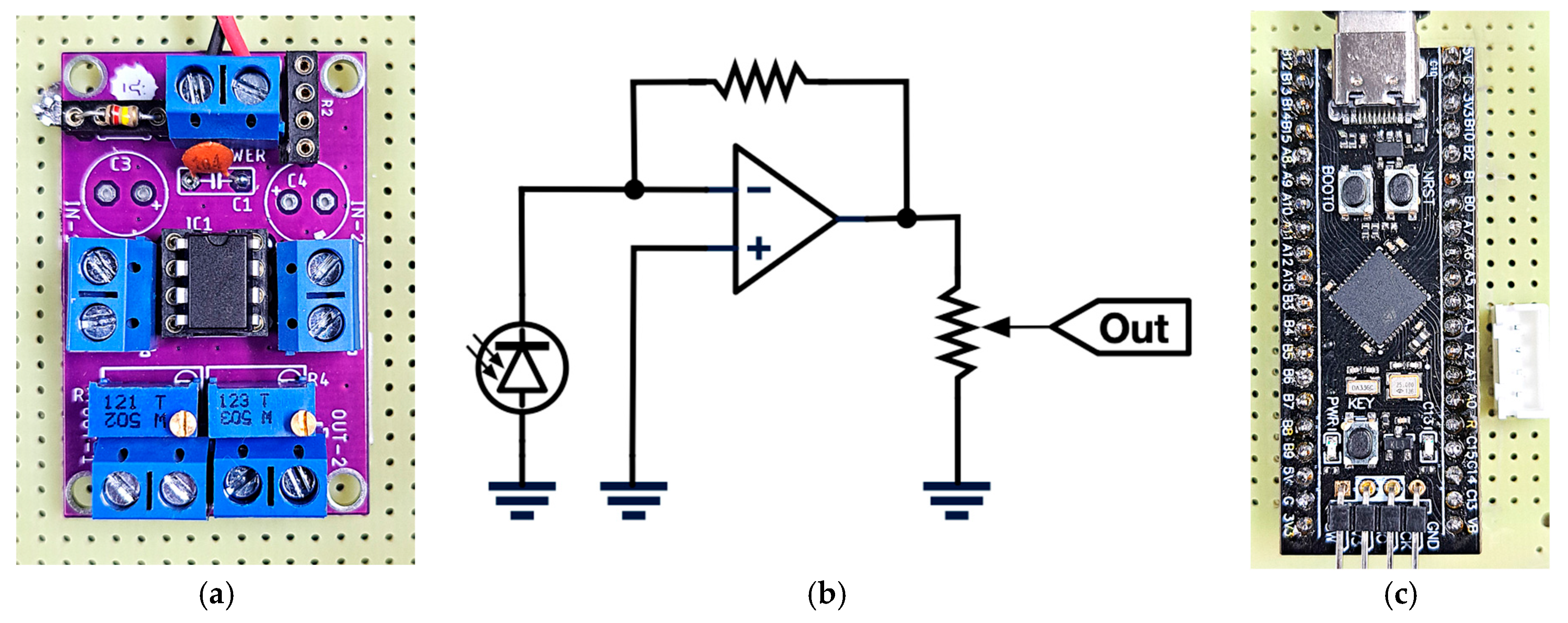
As a complementary alternative, systems based on the photodetection of light transmitted through cavitating flows have been explored due to their non-invasive nature and their ability to respond to fluctuations induced by bubbles and turbulent structures within the flow. These systems can be implemented using relatively low-cost components, such as photodiodes, phototransistors, operational amplifiers, and high-sampling-rate microcontrollers. However, their construction, calibration, and data analysis require specialized technical expertise in electronic instrumentation and digital signal processing, which limits their adoption in environments lacking such development infrastructure. Thus, although these systems offer the potential for lower hardware costs and greater flexibility compared to high-speed imaging or commercial acoustic sensors, their practical application still demands a technical knowledge base comparable to that required by more advanced methods.
In this context, this study proposes developing and evaluating an optical data acquisition system based on a high-speed microprocessor for the detection, statistical analysis, and spectral characterization of hydrodynamic cavitation downstream of a triangular orifice nozzle modeled via additive manufacturing. The approach is based on statistical and spectral analysis of signals acquired by a photodiode connected to a trans-impedance circuit and a high-sampling-rate microcontroller. To this end, the following specific objectives were defined: (1) to characterize the effective sampling rate of the developed system; (2) to determine the number of samples required to estimate the mean irradiance and its standard deviation for each tested flow condition; (3) to analyze the statistical distributions of the optical signal and its correlation with the biphasic flow regime; and (4) to study the turbulence of the flow through spectral analysis (in amplitude and frequency) of the acquired optical signals.
3. Results
The experiments began with tests conducted at a flow rate of 6.944 × 10
−4 m
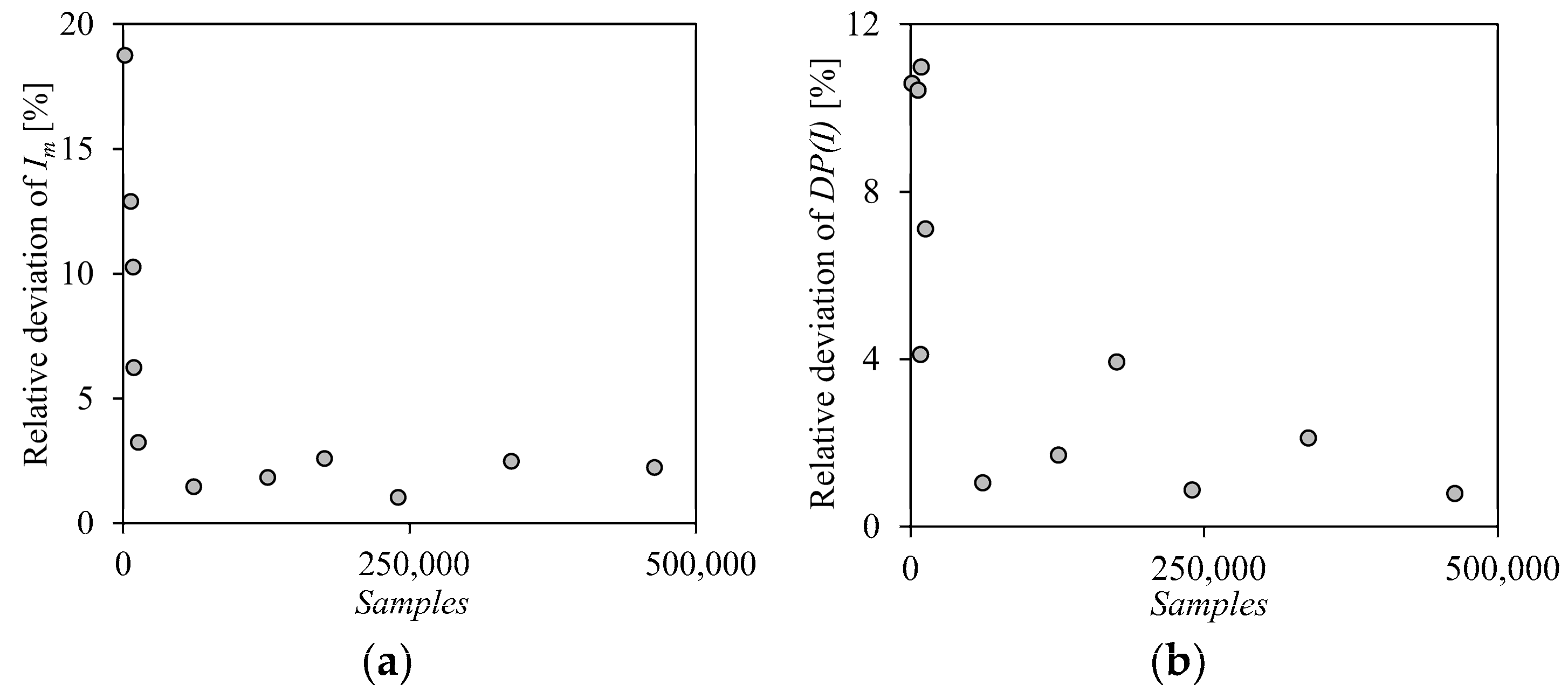
3/s, in which the number of optical signal samples acquired varied between 1410 and 463,401. The results were compared to a reference dataset containing 759,547 samples, which was used as the baseline for assessing statistical stability. It was observed that the relative deviations of both the mean irradiance and its standard deviation tended to decrease with increasing sample size, as illustrated in
Figure 6. Deviations dropped below 5% after approximately 61,430 samples and reached stability around 239,000 samples. Based on these results, an approximate total of 239,000 samples was adopted as the standard reference for each flow condition in the subsequent analysis stages.
The irradiance values were normalized according to the relation
I = I
pE/I
pEmax, and their distributions are presented in
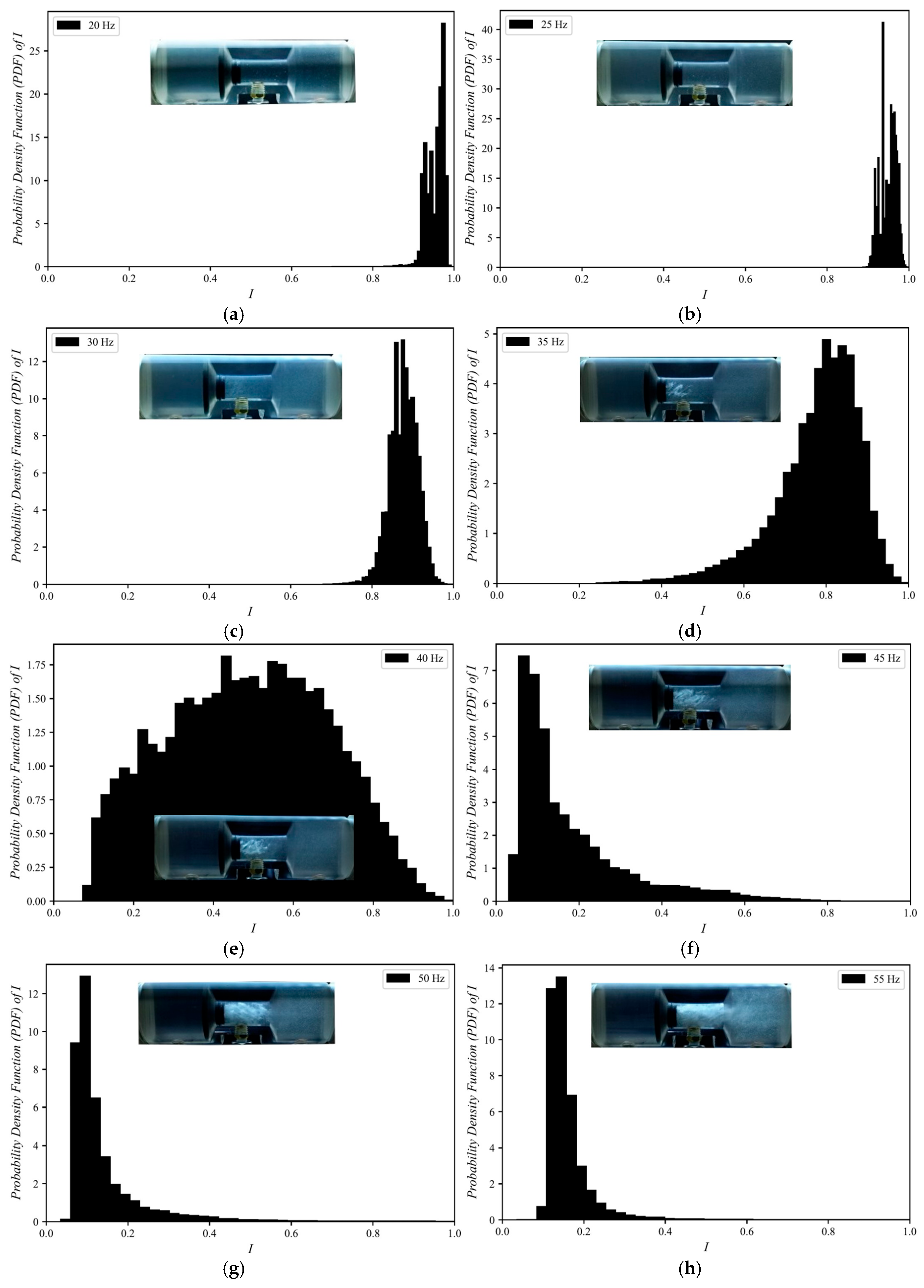
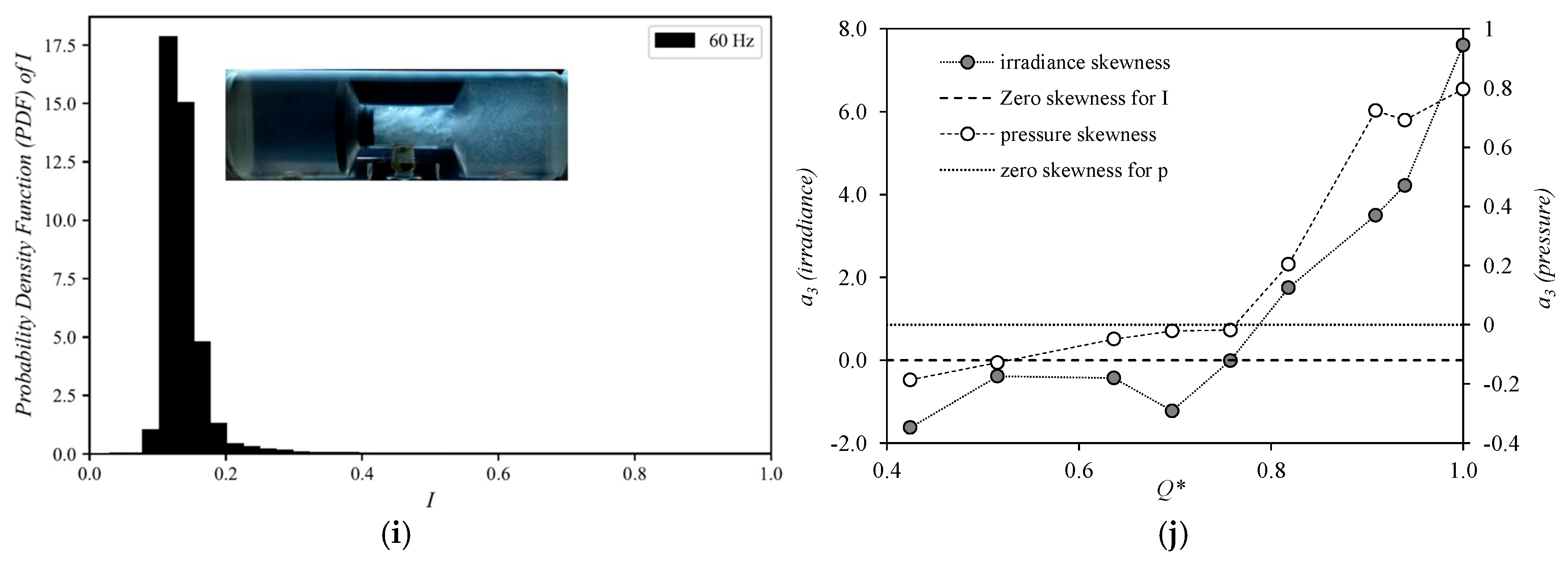
Figure 7a–i for the nine flow rates tested, also expressed in dimensionless form as Q* = Q/Q
max. For the two lowest flow rates, a strong concentration of I values above 0.9 was observed, with a mean around 0.98. Under the third condition, corresponding to a motor frequency of 30 Hz, the amplitude of signal fluctuations increased, and the mean value decreased to 0.83. As the bubble population increased with subsequent flow rates, the distribution of
I began to exhibit more pronounced negative skewness, with further increases in amplitude and a reduction in the mean to 0.62.
The 40 Hz condition marks a transition point at which the distribution becomes approximately symmetric. From 45 Hz onward, an inversion in the sign of the skewness coefficient is observed, indicating a shift in the statistical behavior of irradiance. This pattern becomes progressively more pronounced, resulting in increasingly lower mean values, reaching a minimum of 0.0032 at 60 Hz.
Figure 7j summarizes this evolution through the skewness,
a3, coefficient as a function of normalized flow rate, highlighting a change in the behavior of transmittance distributions within the biphasic regime as the flow rate increases. The figure also displays the skewness distribution of pressure signals at the Venturi throat, the measurements being obtained with the transducer operated as described in [
28]. Negative values prevail at lower flow rates, while positive values dominate at higher rates. The zero-crossing occurs at the same flow rate as observed for irradiance.
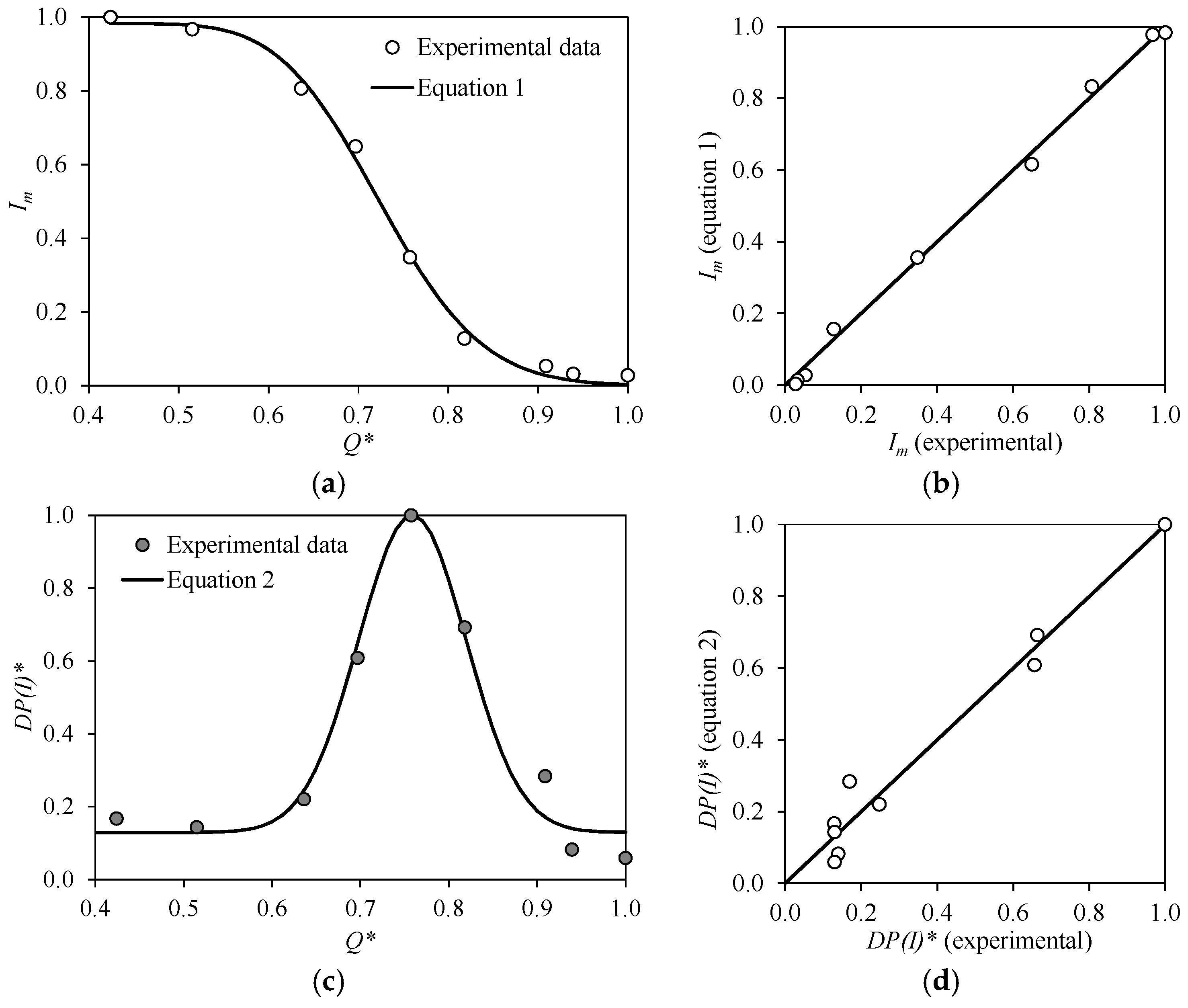
The mean irradiance values,
Im, exhibited a decreasing trend as a function of the normalized flow rate Q*, as shown in
Figure 8a. This behavior was well represented by the model proposed by [
24], described in Equation (1), whose fit yielded a coefficient of determination of R
2 = 0.997.
Figure 8b compares the experimental values and those calculated using this model, including the ideal fit line, demonstrating good agreement between prediction and measurement.
The standard deviation of irradiance, interpreted as an indirect measure of the turbulent intensity in the flow, was described by Equation (2), a function adapted from the Gaussian model.
Figure 8c,d show that the experimental data fit the model well, with R
2 = 0.970. It is observed that the standard deviation reaches its maximum at Q* = 0.76, corresponding to the regime in which the distribution of
I exhibits near-zero skewness, representing a transition between negatively and positively skewed statistical patterns, as illustrated in
Figure 7e.
Use of statistical analysis for monitoring signals was reported by [
29], in which it was applied to detect sound pressure signals, and found that statistical variables can be used to identify and characterize pressure signals.
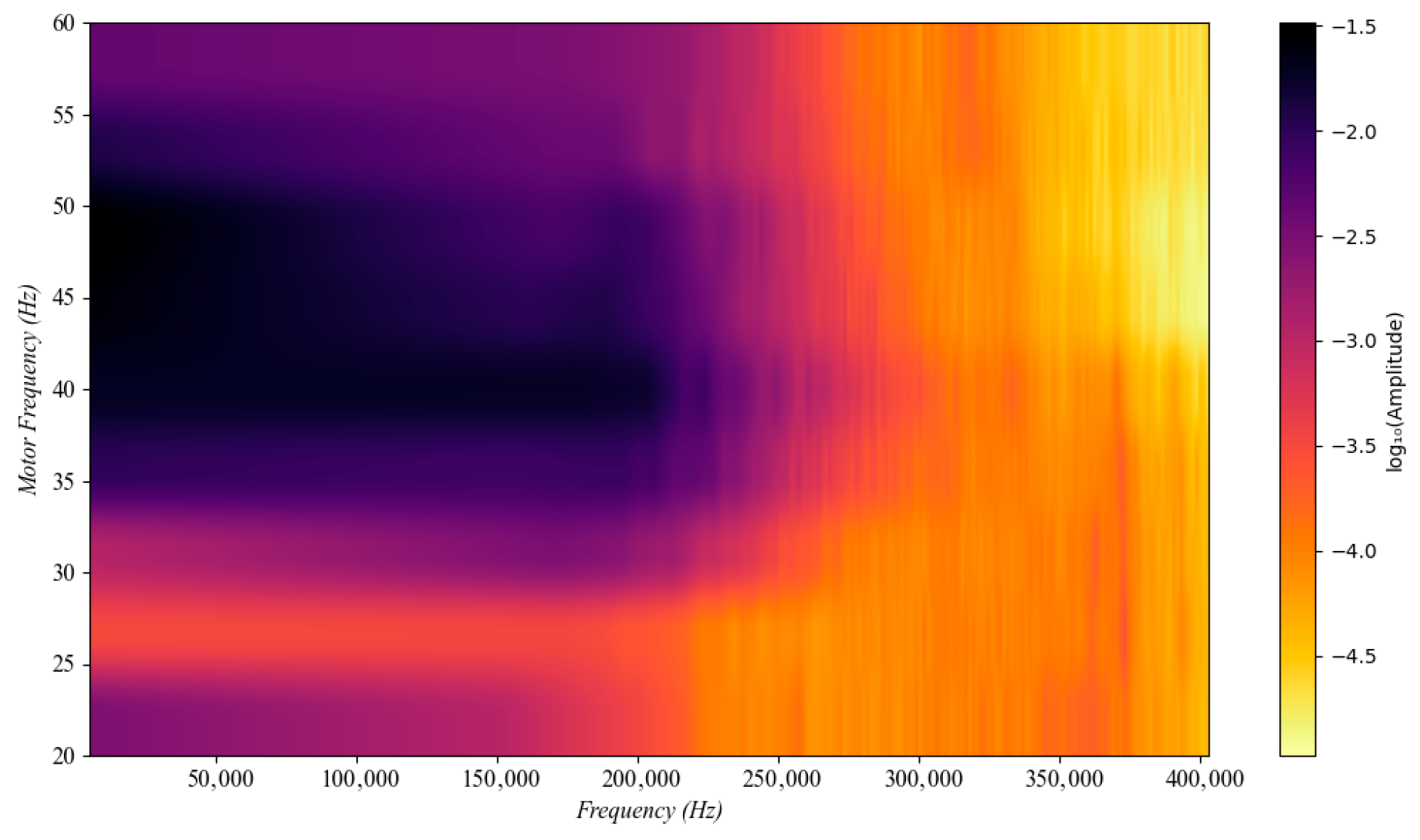
As illustrated in
Figure 9, the optical signal’s spectral response as a function of flow rate, expressed in terms of motor frequency, shows amplitude spectra characterized by a rise in amplitude up to a maximum value, followed by a decline. This behavior is consistently observed for frequencies up to approximately 200 kHz. A more pronounced amplitude drop is observed at frequencies higher than 200 kHz, which is analyzed in more detail in
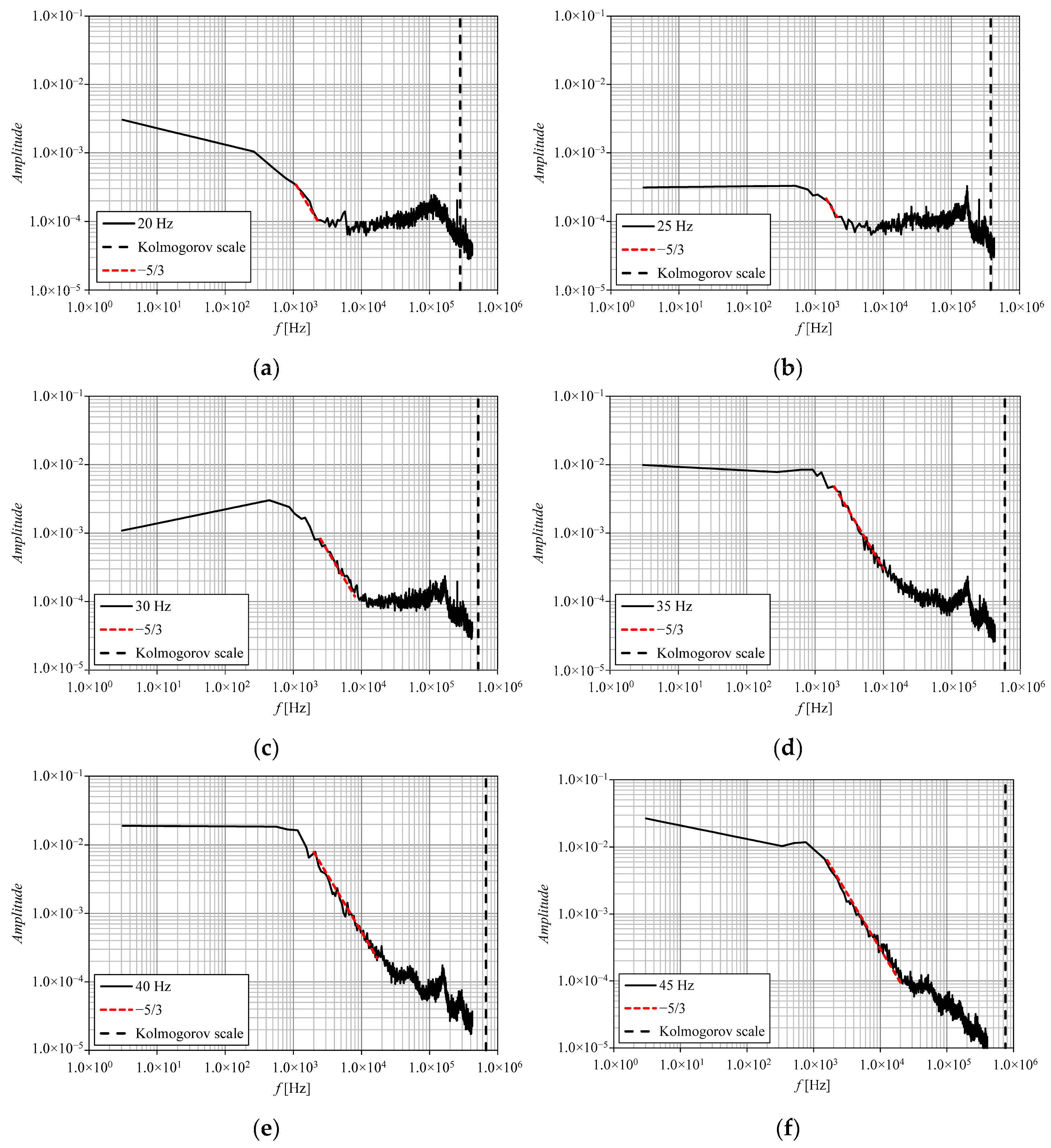
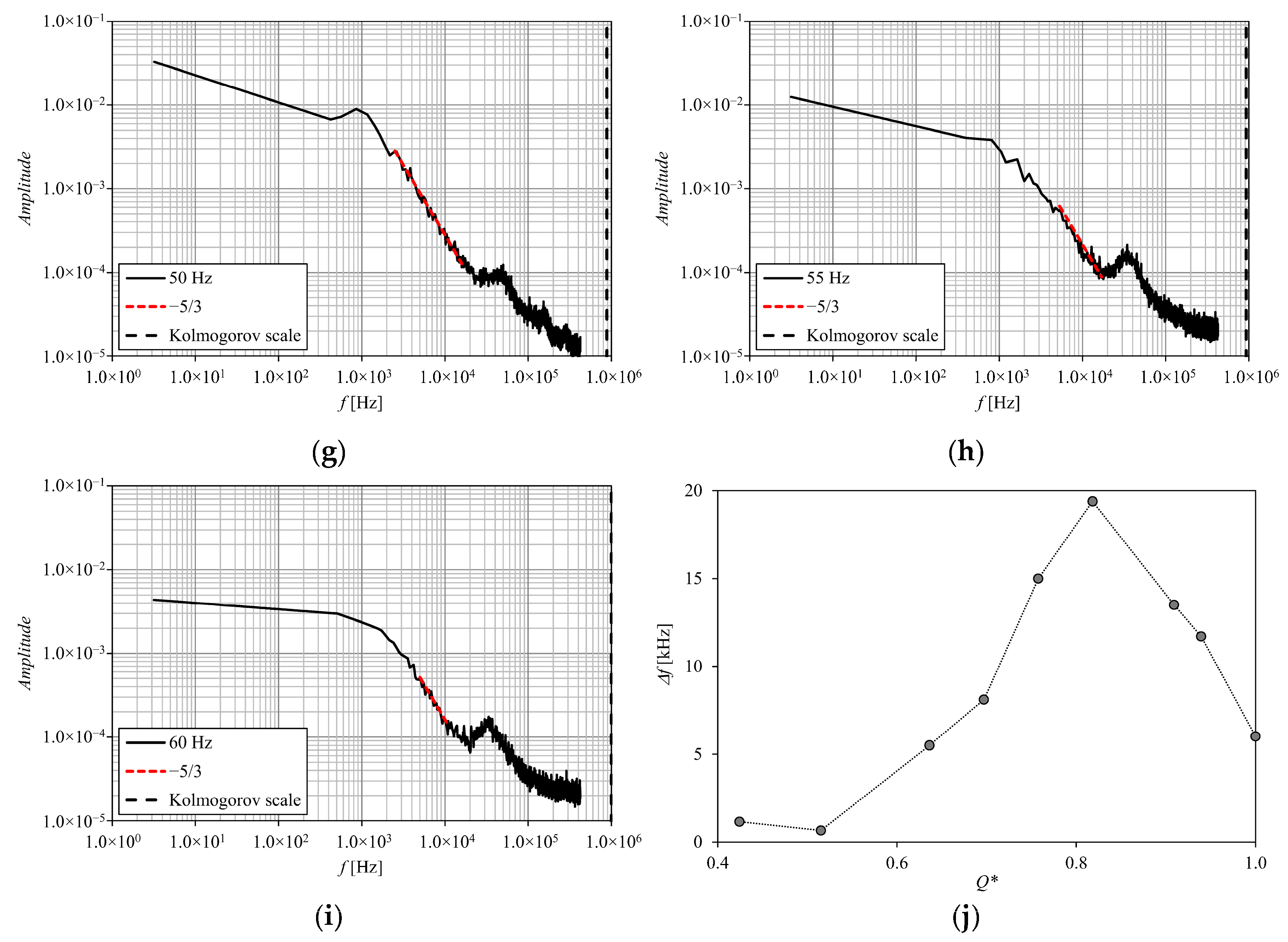
Figure 10a–j. To quantify the inertial subband, the frequency range associated with the −5/3 power-law decay was directly identified from the log-log spectra shown in
Figure 10a–i. Linear regression was used on the frequency band where there is a clear linear trend, in logarithmic coordinates. The corresponding frequency bandwidth (Δf) was then extracted for each operating condition.
All spectra were first windowed using a Hanning function to reduce spectral leakage, then converted to logarithmic scales in both frequency and amplitude to preserve the relative spectral structure as indicated by [
30,
31]. A shared logarithmic frequency base with 300 points was defined to span the relevant range, and each spectrum, composed initially of discrete frequency-amplitude pairs, was interpolated onto this base using linear interpolation in log-log space. The upper envelope for each flow condition was then constructed by taking the pointwise maximum amplitude across all interpolated spectra. This procedure enables consistent comparison across flow rates and reveals the spectral evolution, particularly within the energy cascade and high-frequency dissipative ranges.
In the cases corresponding to the lowest flow rates (
Figure 10a,b), the spectra exhibit high amplitudes at low frequencies, followed by a progressive decay. In portions of these spectra, a range can be identified that follows a power-law behavior with an exponent of −5/3. This characteristic suggests an analogy with turbulent kinetic energy spectra, assuming that the structure of the biphasic flow influences the transmission of light through the fluid. From this perspective, the optical spectrum may reflect the organization of turbulent scales within the flow. The low-frequency region, where the amplitude is higher, is associated with turbulence production, in which large eddies store energy introduced by external mechanical sources, in this case, the pump operating at constant rotation, which imposes a pressure difference on the system and drives the flow. In the intermediate frequency range, approximately between 1 and 2 kHz, an inertial region emerges consistent with Kolmogorov’s law [
32], where energy is transferred between scales without significant dissipation. At higher frequencies, the spectra reveal the likely contribution of vapor bubble formation and collapse, intermittent events that, even at low concentrations under the lowest flow conditions, generate spectral peaks on the order of 10
5 Hz (
Figure 10a–e).
The plots also include reference lines corresponding to the frequency associated with the onset of Kolmogorov’s microscale for vorticity, given by Equation (3).
where L is the hydraulic diameter of the nozzle, and V is the mean velocity at its section. Beyond this frequency, only amplitude decay is observed, consistent with the transition to the dissipative region of the spectrum, where minor scales dissipate energy in the form of heat.
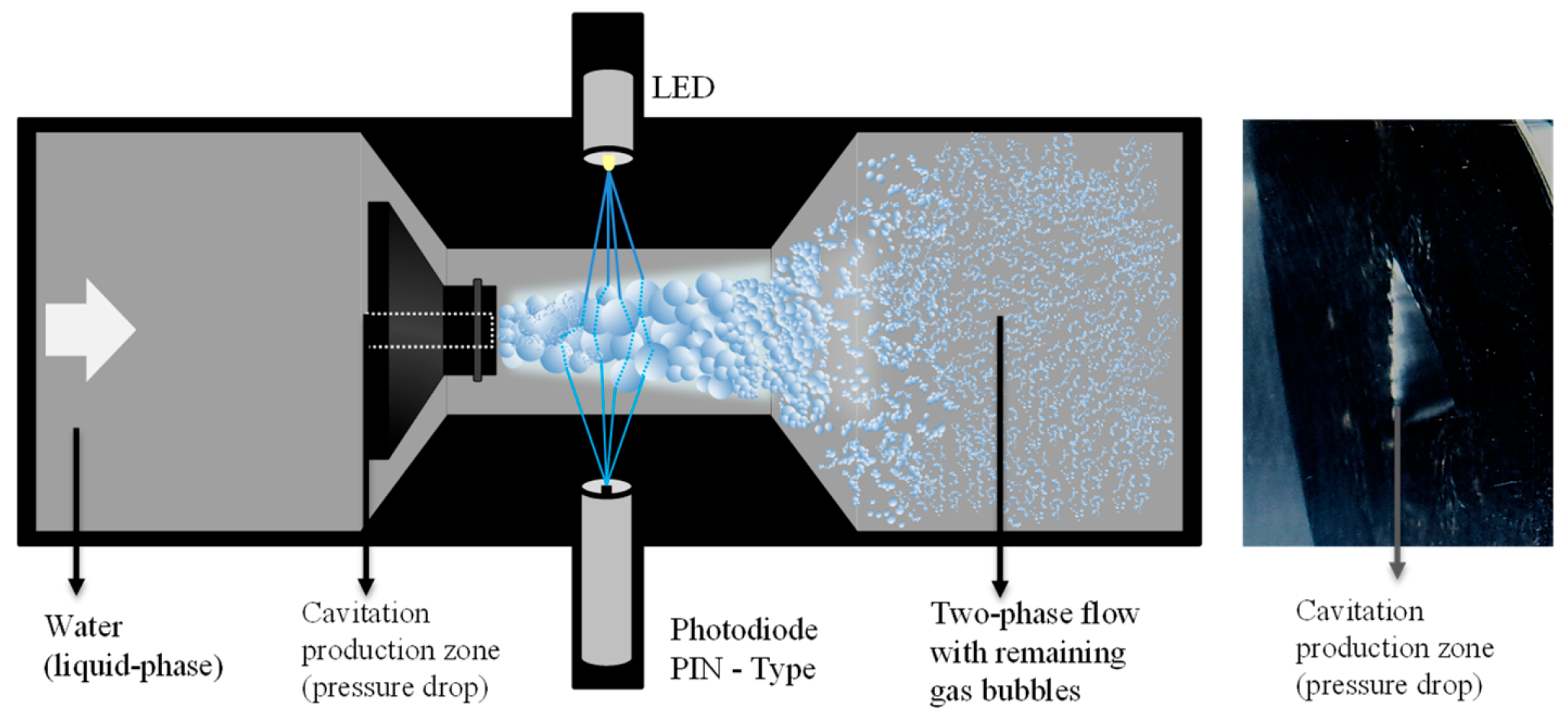
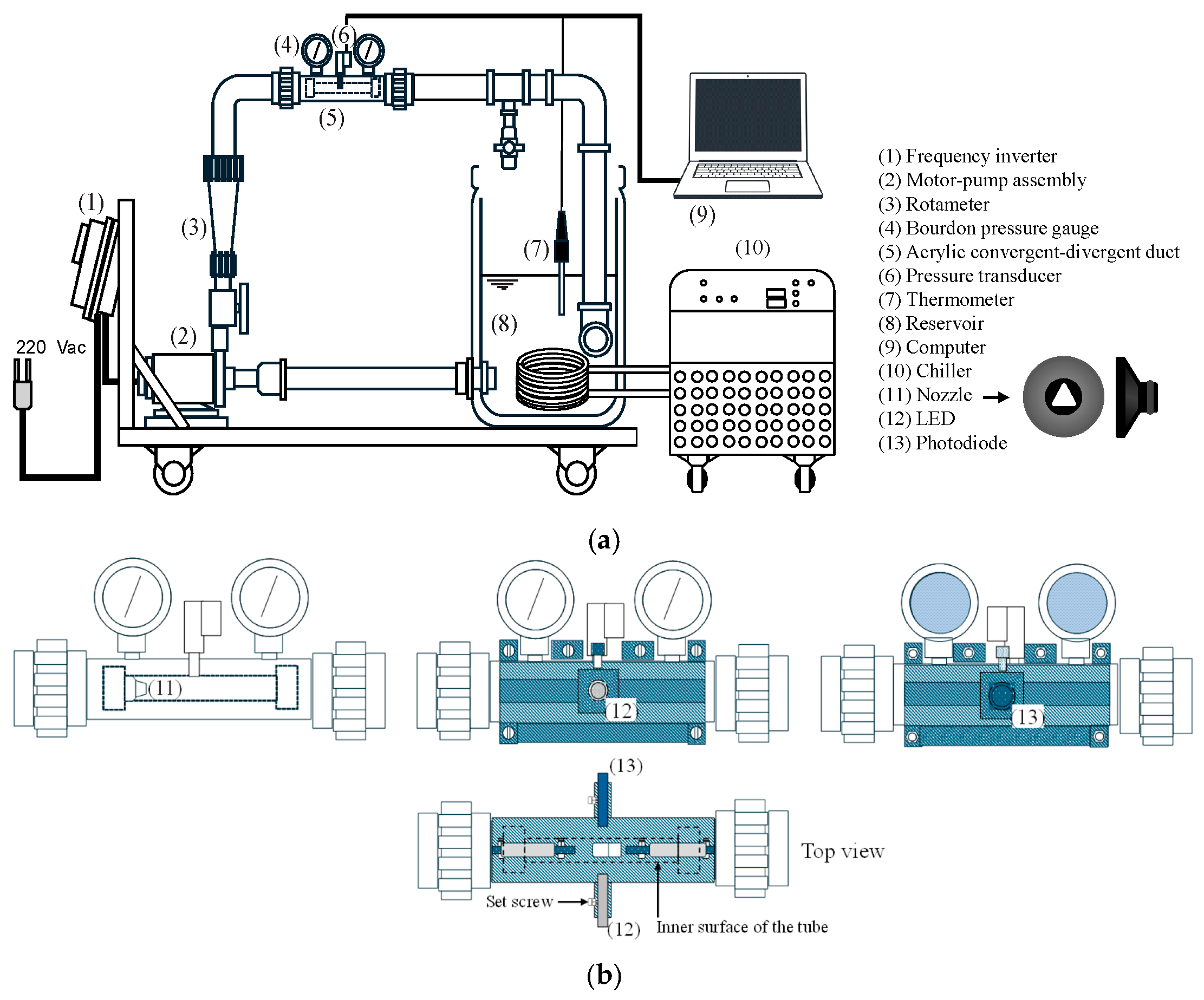
Figure 11 illustrates the optical arrangement used to monitor the vapor-liquid flow and a photograph of the persistent vapor formation region originating at the boundary of the abrupt transition to the triangular nozzle [
28]. As the stream transports bubbles, they continuously scatter and refract the light beam, so that photons follow different trajectories before reaching the photodiode. The superposition of these contributions causes the detected intensity to fluctuate around an average level. These fluctuations become stronger or weaker depending on the bubble size distribution, the range of turbulent scales present in the flow, and the spatiotemporal distribution of pressures and vapor concentration, which also influence the refractive index of light in this context [
26]. Thus, the variation in the measured signal reflects the passage of vortices of different sizes in movements that can be described with statistical fluid mechanics, as well as thermodynamic behaviors of multiphase flow.
The interpretation of these intensity fluctuations can be aided by theoretical models that describe cavitation phenomena, although such models are typically formulated for acoustically driven systems or for isolated bubbles. Since turbulence remains an unresolved problem, particularly in hydrodynamic cavitation, the present analysis adopts an interpretative framework based on physically consistent hypotheses, rather than predictive modeling. In this context, bubble migration and interaction, often described by primary and secondary Bjerknes forces, provide a qualitative insight into how pressure gradients and flow structures influence the spatial distribution and temporal dynamics of bubbles, even in the absence of an external acoustic field [
33,
34].
The bubble size distribution, which directly affects the amplitude of the optical signal, results from dynamic processes involving phase transition and radial oscillation. Models such as the Mikic–Rohsenow–Griffith–Theofanous–Patel (MRG-TP) formulation describe the growth and collapse of bubbles through regimes resulting from inertial effects, described by the Rayleigh–Plesset model, and subsequently by thermal diffusion and interfacial mass transfer [
35]. Although these models do not capture the full complexity of turbulent multiphase flows with numerous bubbles [
36], they provide a consistent physical basis to aid in the interpretation of optical fluctuations associated with cavitation dynamics.
An additional interpretation of
Figure 10 is that the fluctuations of light intensity may be understood because of the way turbulence and cavitation structures modulate the optical path. Slight variations in the local void fraction, caused by bubbles and vortical motions, alter the fraction of light reaching the photodiode. Since these variations are transported by the moving fluid, their temporal distribution mirrors the cascade of turbulent scales. In this sense, the spectral distribution of the measured intensity naturally develops a region where its slope follows the same power law found in the inertial range of turbulence. The broadening and subsequent narrowing of this region with increasing flow rate can then be viewed as a direct consequence of changes in bubble size distribution and the relative weight of different turbulent scales in the two-phase mixture.
As cavitation intensity increases with higher flow rates, the number of vapor bubbles rises, as does the distribution of their characteristic scales. The photo detection signals reveal an expansion of the spectral region that follows a −5/3 power-law behavior, indicating a widening of the frequency range associated with energy transfer across scales. This behavior consists of a greater variety of bubble sizes oscillating and interacting randomly with the light beam, thereby modulating the radiation transmitted through the biphasic mixture. A high-frequency spectral peak, initially located around 105 Hz, is identified up to the flow rate corresponding to a motor frequency equal to 40 Hz. From Q (45 Hz) onward, this peak nearly disappears but reappears at the three highest flow rates, albeit shifted to frequencies around 104 Hz. This shift suggests that, under high cavitation regimes, the increased density of vapor cavities promotes bubble coalescence, resulting in larger and more persistent structures. Such bubbles act as optical dampers, attenuating high-frequency variations, although they still induce fluctuations in light intensity, now confined to lower spectral bands. As a result, the high-frequency peaks observed at lower flow rates are replaced by lower-frequency peaks under conditions with higher vapor concentrations.
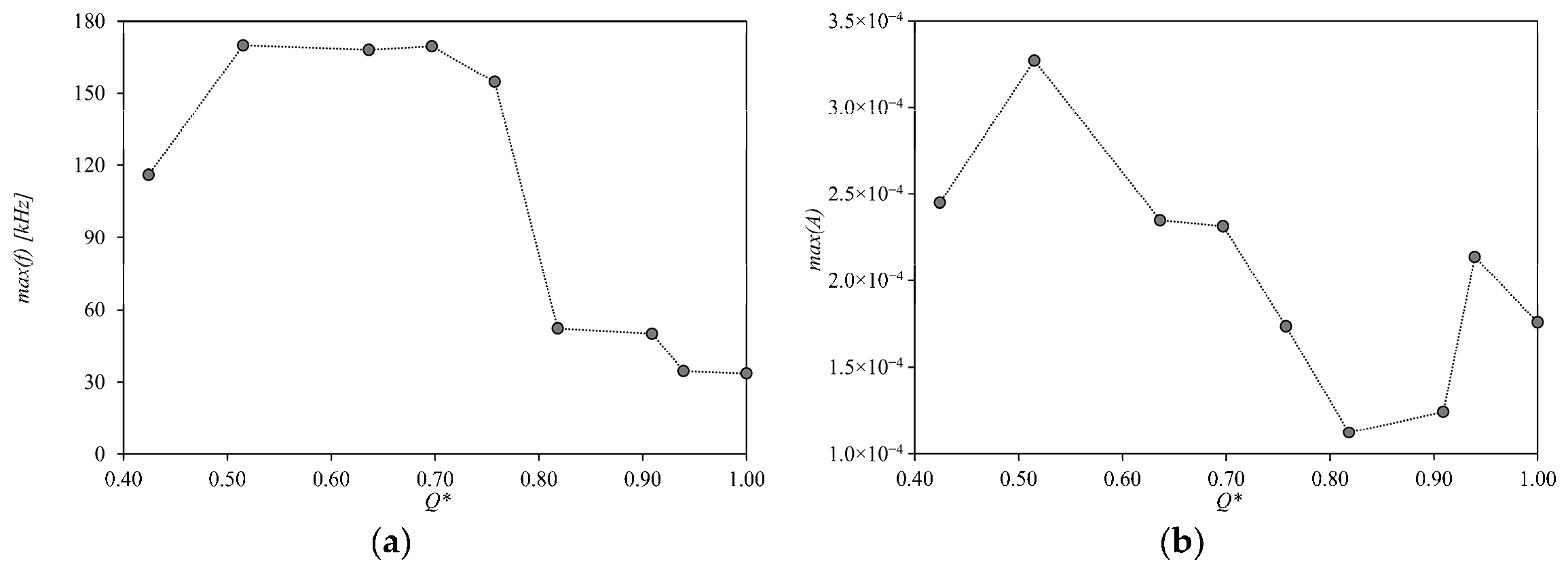
Figure 10j shows that the width of the frequency range consistent with Kolmogorov’s law increases with the flow rate until reaching a maximum, after which it decreases. This behavior is consistent with the hypothesis that, at very high flow rates, the coalescence process reduces the diversity of scales, compressing the inertial region. According to the spectral data, it was also observed that bubbles’ absence or low concentration in the initial regimes maintained spectral peaks around 10
5 Hz, followed by an abrupt drop to values on the order of 10
4 Hz, as evidenced in
Figure 12a.
Figure 12 highlights these spectral shifts, both in terms of peak frequencies and their corresponding amplitudes. The amplitudes associated with the peaks also decrease, reaching a minimum at the flow condition where the inertial region is most extended. Beyond this point, a partial recovery in amplitude is observed at the highest flow rates, as illustrated in
Figure 12b.
For the lower-frequency regions, and without applying the spectral envelope method, it becomes possible to directly identify the dominant frequencies by analyzing individual spectra obtained via the Fast Fourier Transform (FFT). Based on these peak frequencies, the Strouhal number was calculated for each flow rate as
where
f represents the dominant frequency identified in the spectrum,
Dh is the hydraulic diameter, and
V is the mean velocity, both evaluated at the section of the triangular nozzle. Ref. [
33] conducted a similar analysis to detect surge events in centrifugal compressors; however, their findings indicated that the presence of low frequencies corresponded to surge occurrence.
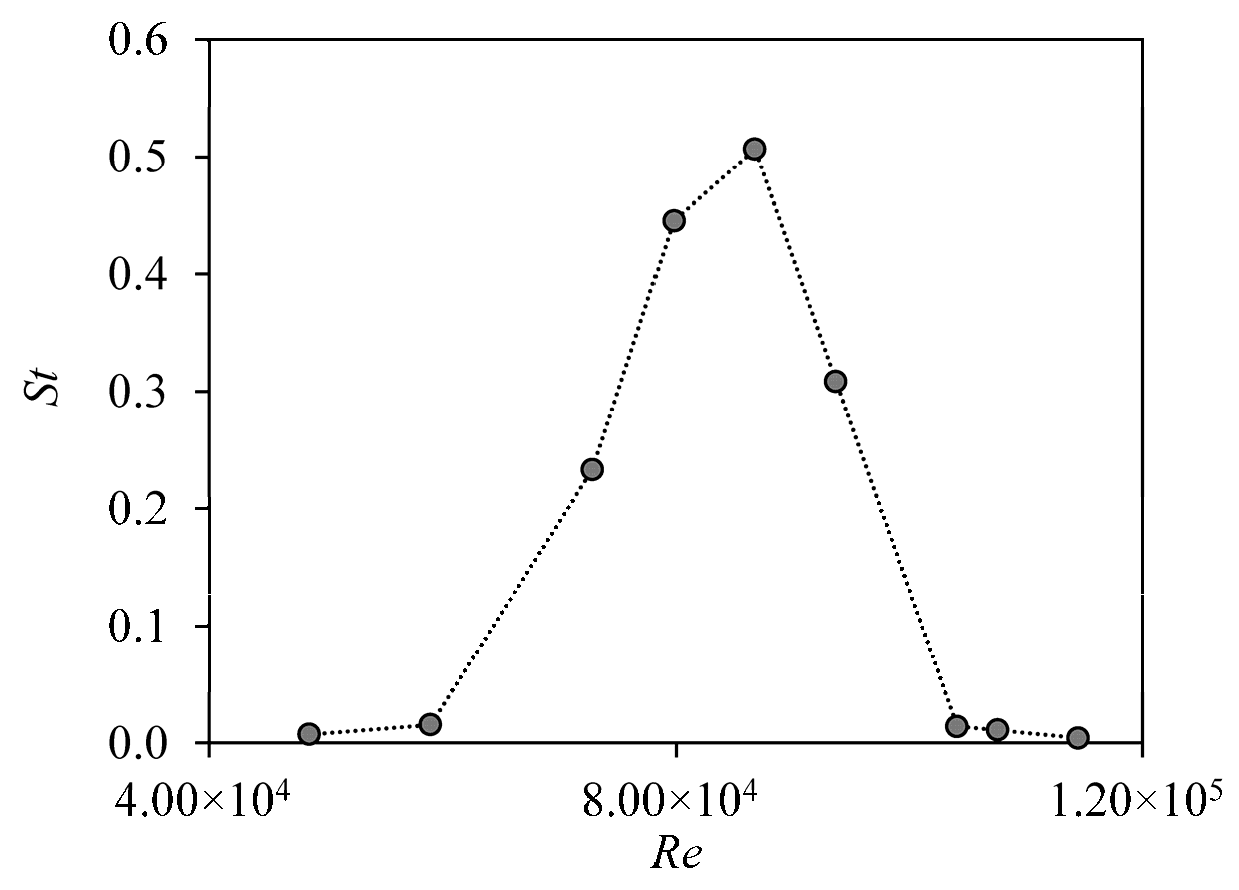
As shown in
Figure 13, the Strouhal number increases with Reynolds number up to an intermediate regime, after which it decreases as the flow rate continues to rise. This behavior indicates the existence of a transitional regime in which the interaction between the mean flow and coherent flow structures becomes most pronounced. A similar pattern was also identified by [
37] with a high-speed camera, who, in their investigation of hydrodynamic cavitation in polymer solutions and pure water, reported an increasing trend in the Strouhal number, calculated from the dominant frequency of the pressure spectrum, for pure water at Reynolds numbers on the order of 10
4.
At intermediate Reynolds numbers, the shear layers formed at the sharp edges of the triangular nozzle promote flow separation [
28] and the formation of coherent vortical structures, giving rise to recirculation zones and enhanced velocity fluctuations. Under these conditions, the characteristic time scales of vortex formation and convection become strongly coupled with the bulk flow velocity, leading to a peak in the Strouhal number. As the Reynolds number increases further, the flow becomes increasingly turbulent, and the coherence of these structures diminishes, resulting in a reduction in the dominant frequency and a corresponding decrease in the Strouhal number.
This interpretation is consistent with previous observations in cavitating and non-cavitating flows, where Strouhal numbers exhibit a similar rise-and-decay behavior associated with the transition from organized vortex shedding to fully developed turbulence [
38,
39]. In this sense, the observed peak in Strouhal number reflects the dynamic interaction between separation vortices, recirculation regions, and cavitation-induced fluctuations at the nozzle outlet, rather than a purely monotonic scaling with flow rate.
4. Conclusions
This study proposed and validated a high-speed optical data acquisition system based on photodetection and microprocessing, designed to characterize hydrodynamic cavitation downstream of a triangular nozzle produced by additive manufacturing. The developed instrumentation demonstrated satisfactory performance and feasibility for the indirect analysis of biphasic flows through optical signals modulated by bubble transit. The proposed methodology is particularly suitable for laboratory-scale systems with optical access, where non-intrusive monitoring is required, and is extensible to industrial applications with similar characteristics.
System characterization confirmed an effective average acquisition rate of approximately 847,000 samples per second, with high temporal stability, even under the transmission constraints imposed by USB-Serial communication. Tests with reference signals indicated that, despite resolution loss at higher frequencies, the system’s spectral response maintained a strong correlation with the original signals, validating the fidelity of the sampling process. Based on statistical convergence analysis, it was established that acquiring approximately 239,000 samples per experimental condition is sufficient to accurately estimate both the mean irradiance and its standard deviation for the experimental conditions of this work.
The study of statistical distributions showed that the mean irradiance decreased with increasing flow rate and that the transition in flow behavior could be identified by inverting the skewness coefficient, reflecting changes in the biphasic regime. This optical behavior of skewness closely resembles the statistical behavior observed in the instantaneous pressure signals, demonstrating the capability of the proposed methodology to investigate turbulence associated with vapor–liquid interactions. Within the investigated operating range, these results demonstrate that optical fluctuations can serve as reliable indicators of flow regime transitions.
Spectral analysis of the optical signals allowed relevant aspects of the turbulent dynamics and flow structure to be inferred. Spectral regions associated with energy production, transfer, and dissipation were identified, with an inertial range consistent with Kolmogorov’s law in the intermediate frequency band. The width of this range increased with flow rate up to a maximum before decreasing, a behavior consistent with bubble coalescence under high cavitation conditions. In the low-frequency range, associated with turbulence production and analogous to the turbulent kinetic energy spectrum, Strouhal numbers were calculated from the dominant frequency and the characteristic flow velocity. Their variation with Reynolds number followed a non-monotonic trend, reaching a maximum at an intermediate flow condition, consistent with enhanced bubble–flow interaction. Based on the experimental conditions investigated, the results demonstrate that the developed system can provide quantitative and reproducible information on the presence and intensity of cavitation, offering a viable and complementary alternative to conventional acoustic and imaging-based approaches commonly employed for this purpose.



 ,
,