Article

Mechanical, Swelling, and Structural Properties of Mechanically Tough Clay-Sodium Polyacrylate Blend Hydrogels

Department of Chemistry and Chemical Biology, School of Science and Technology, Gunma University, Kiryu, Gunma 376-8515, Japan
*
Author to whom correspondence should be addressed.
Submission received: 4 November 2016 / Revised: 13 February 2017 / Accepted: 20 February 2017 / Published: 25 February 2017
(This article belongs to the Special Issue Rheology of Gels)

Abstract

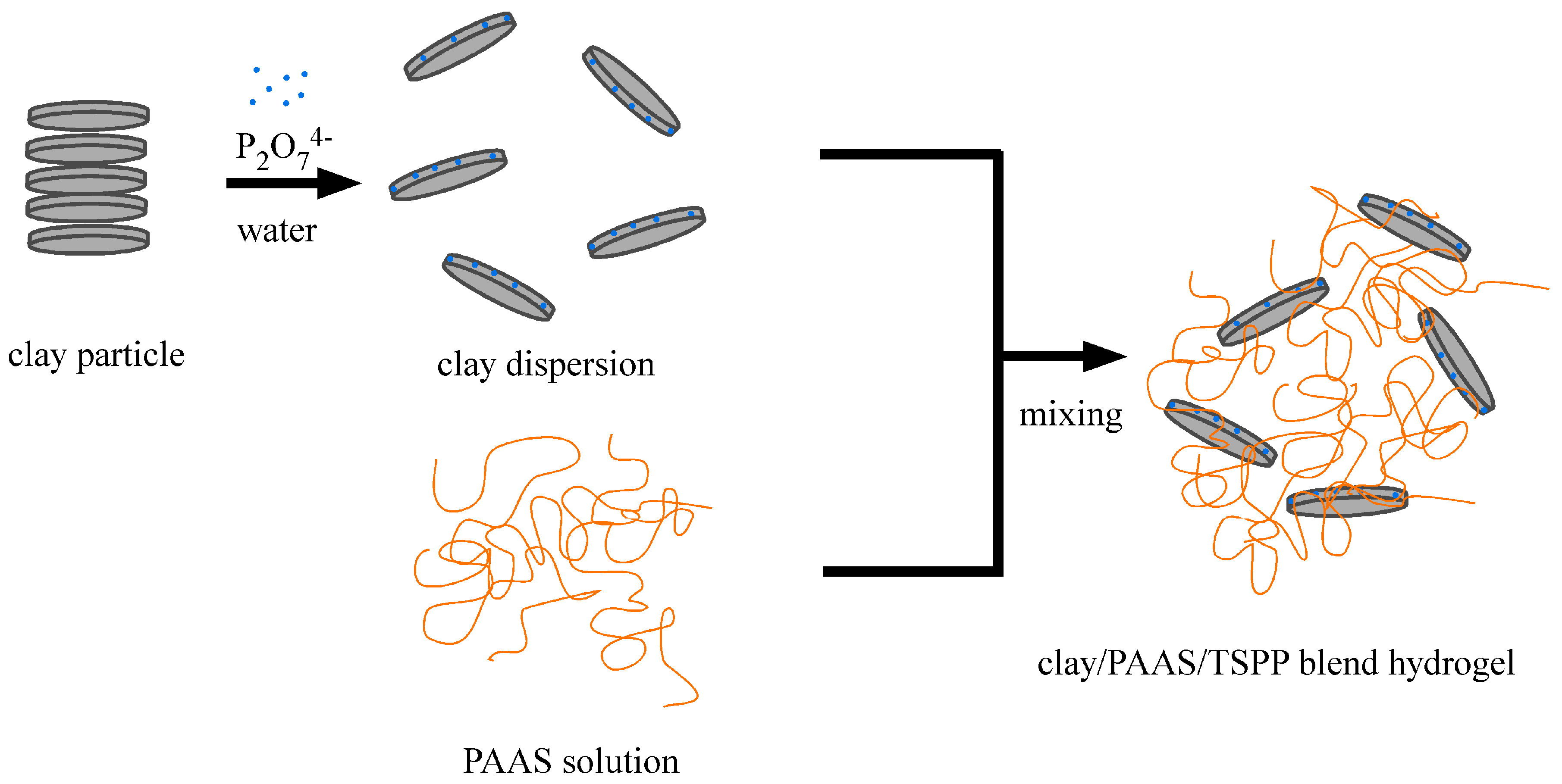
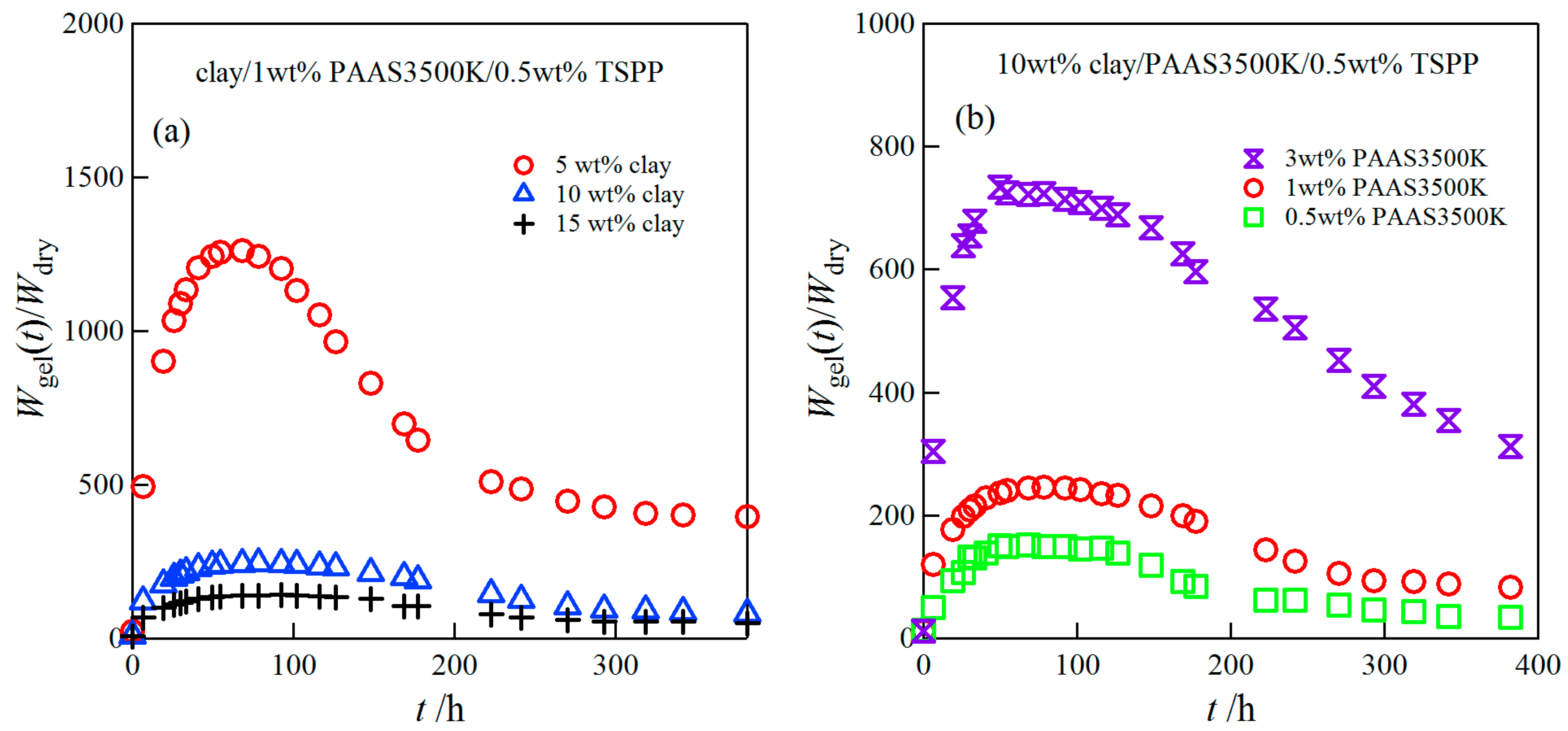
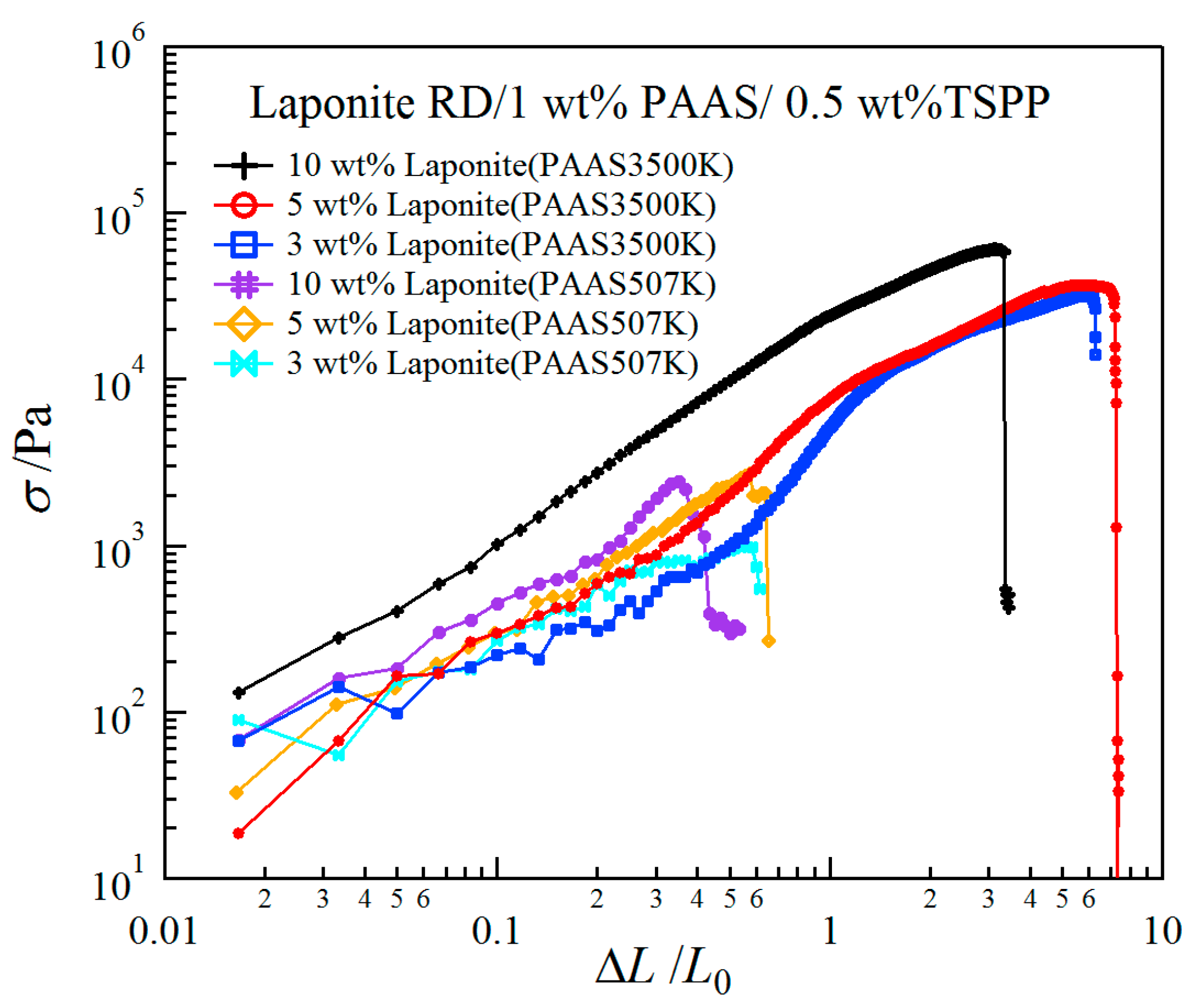
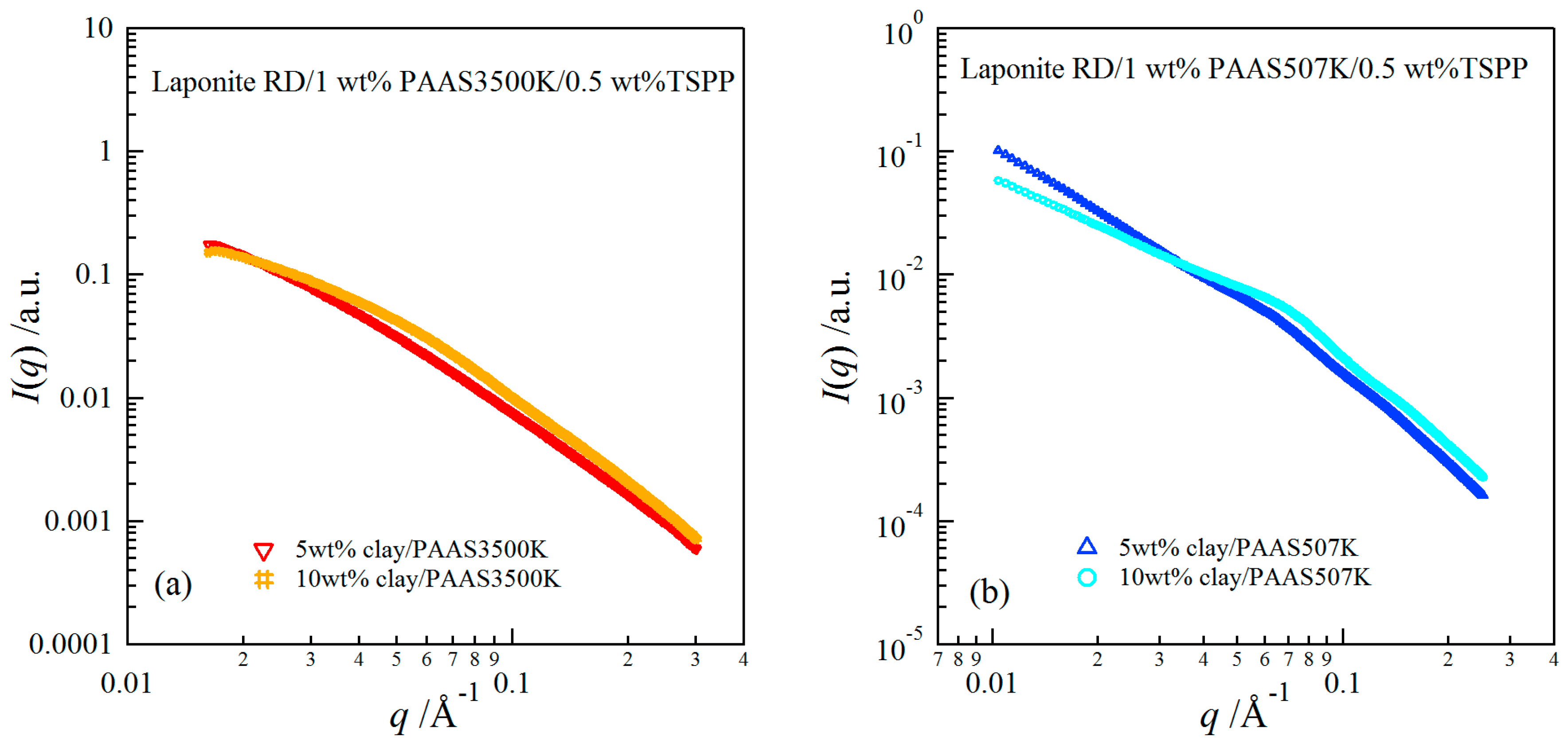
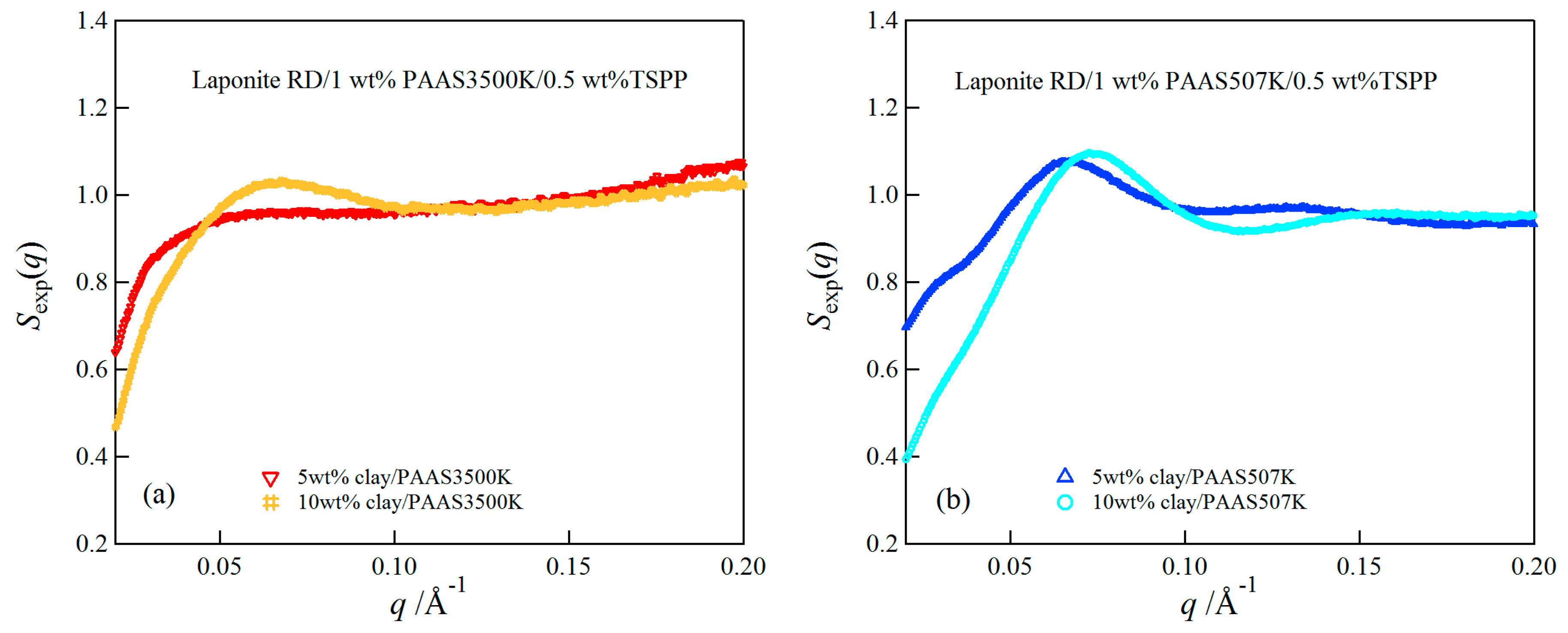
We investigated the mechanical, swelling, and structural properties of mechanically tough clay/sodium polyacrylate (PAAS) hydrogels prepared by simple mixing. The gels had large swelling ratios, reflecting the characteristics of the constituent polymer. The swelling ratios initially increased with the increase of the swelling time, and then attained maximum values. Afterwards, they decreased with an increase of the swelling time and finally became constant. An increase in the clay concentration lead to a decrease in the swelling ratios, whereas an increase in the PAAS concentration lead to an increase in the swelling ratios. Tensile measurements indicated that the toughness for clay/PAAS (Mw = 3.50 × 10⁶) gels was several hundred times larger than that of clay/PAAS (Mw = 5.07 × 10⁵) gels, i.e., the use of ultra-high molecular weight PAAS is essential for fabricating mechanically tough clay/PAAS blend hydrogels. Synchrotron small-angle X-ray scattering (SAXS) results showed that the SAXS intensity measured at small scattering angles decreased with an increase in the clay concentration, indicating that the interparticle interactions were more repulsive at higher concentrations. The decrease of the scattering intensity at high clay concentrations was larger for the clay/PAAS (Mw = 5.07 × 10⁵) gel system than for the clay/PAAS (Mw = 3.50 × 10⁶) gel system.
Keywords: clay; blend hydrogels; toughness; swelling properties; synchrotron small-angle X-ray scattering clay; blend hydrogels; toughness; swelling properties; synchrotron small-angle X-ray scattering