
Low-Substitution Glycerol Etherification of Guar Gum for Reduced-Residue Fracturing Fluids

 , , and
Abstract
1. Introduction

2. Results and Discussion
2.1. Orthogonal Experimental Results
2.2. Structural and Molecular Characterization
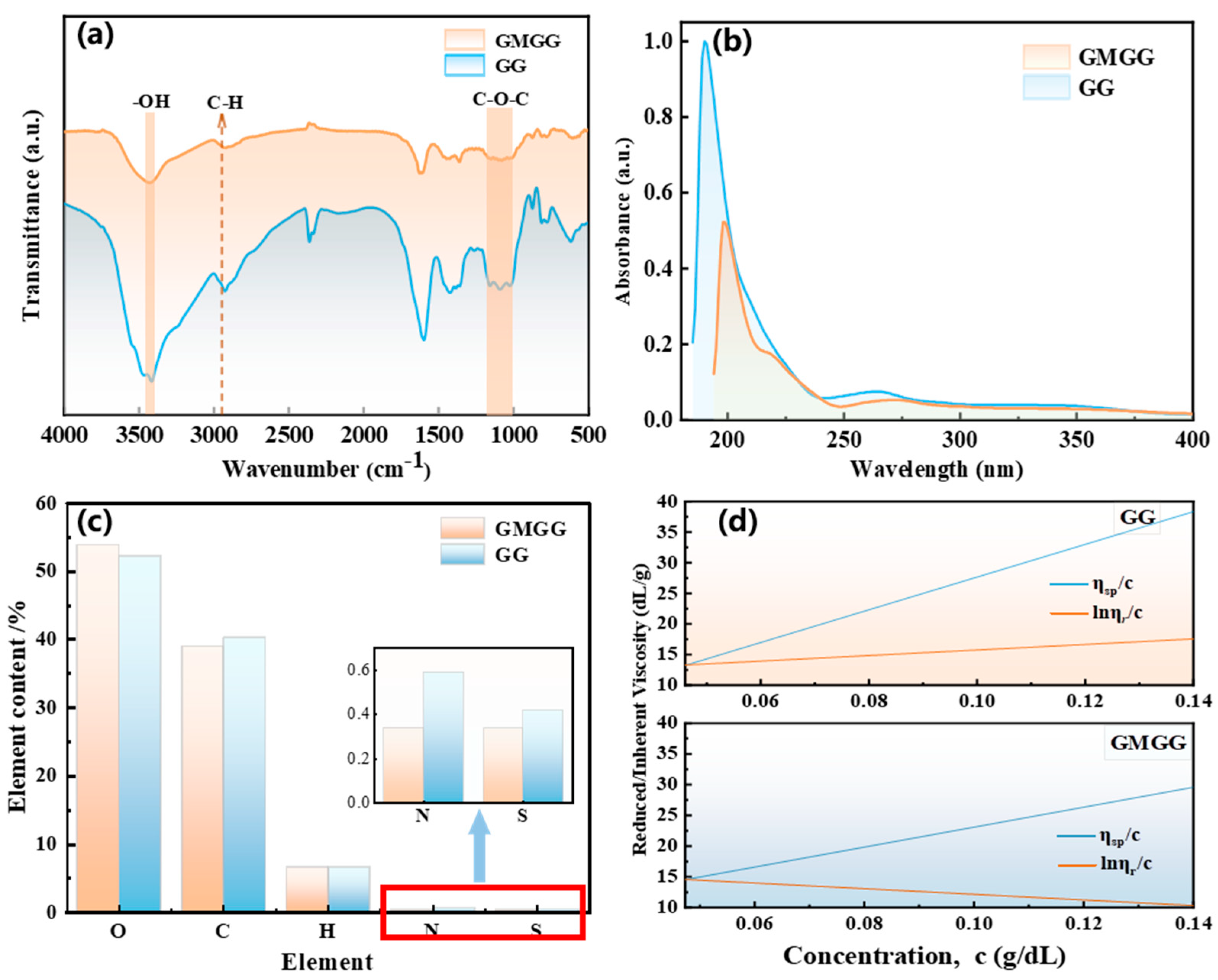
2.2.1. Spectroscopic and Elemental Evidence of Low-Substitution Etherification
2.2.2. Semi-Quantitative Estimation of the Degree of Substitution
2.2.3. Molecular Weight Characterization
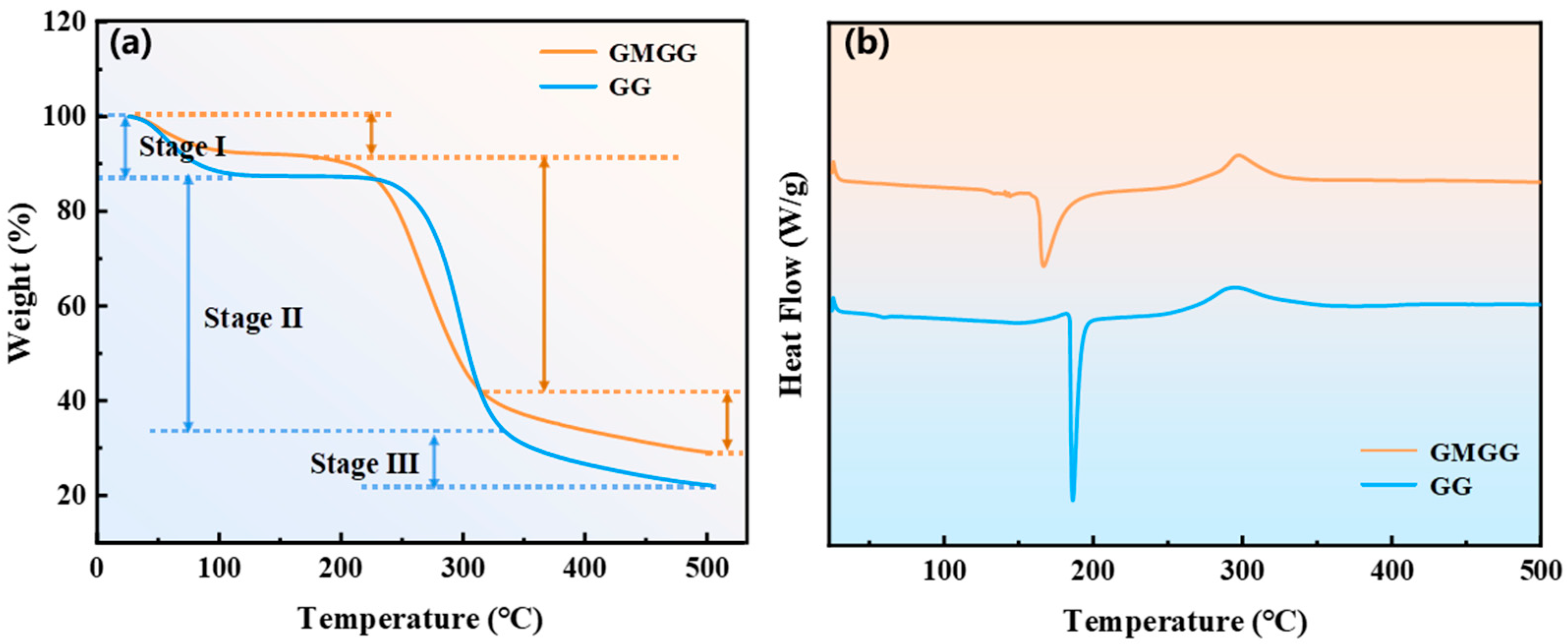
2.3. Thermal Behavior Analysis
2.4. Rheological Behavior of GMGG Crosslinked Gels
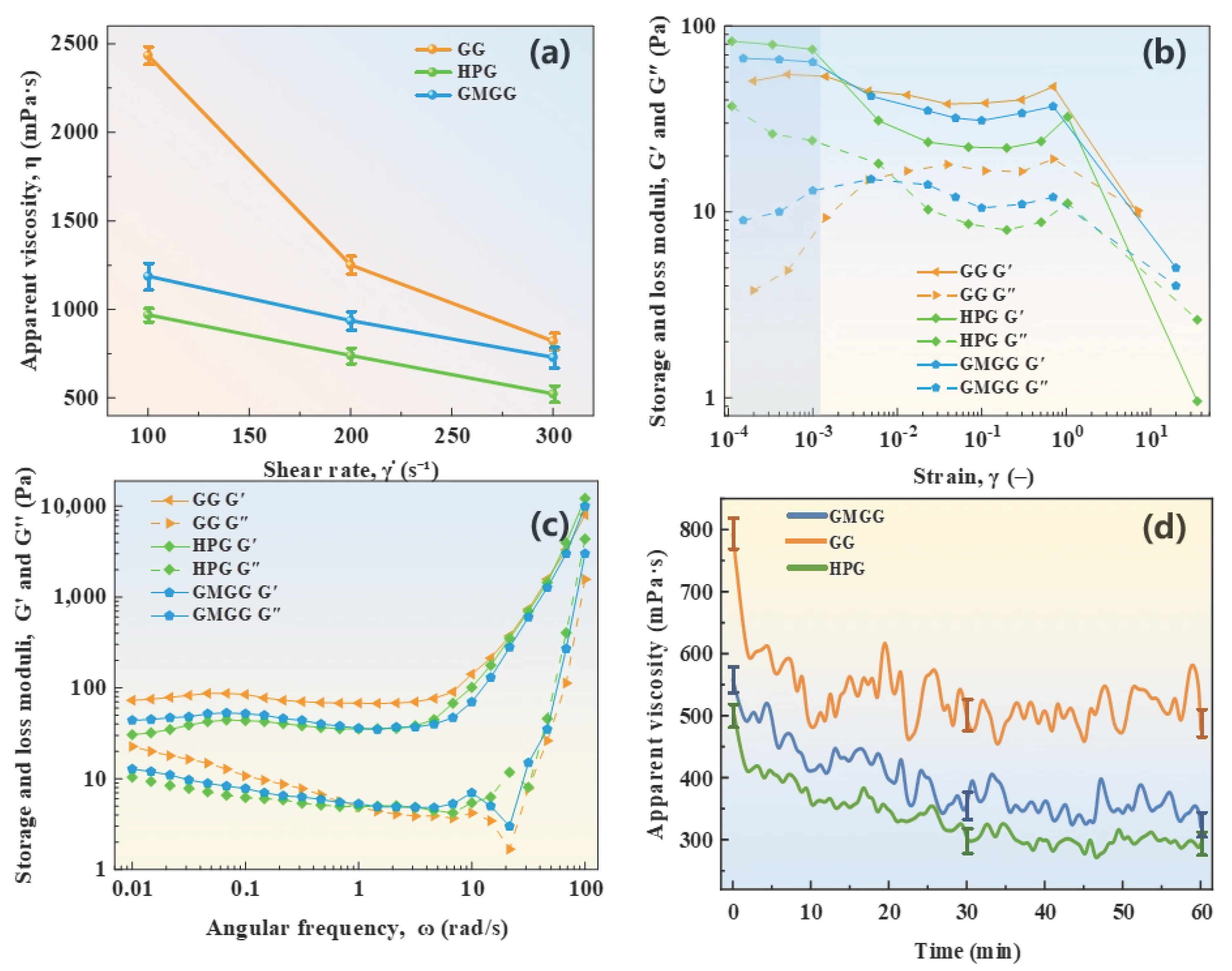
2.4.1. Steady-State and Dynamic Viscoelastic Response
2.4.2. Long-Term Shear Stability and Structure Retention
2.5. Evaluation of Engineering Application Performance
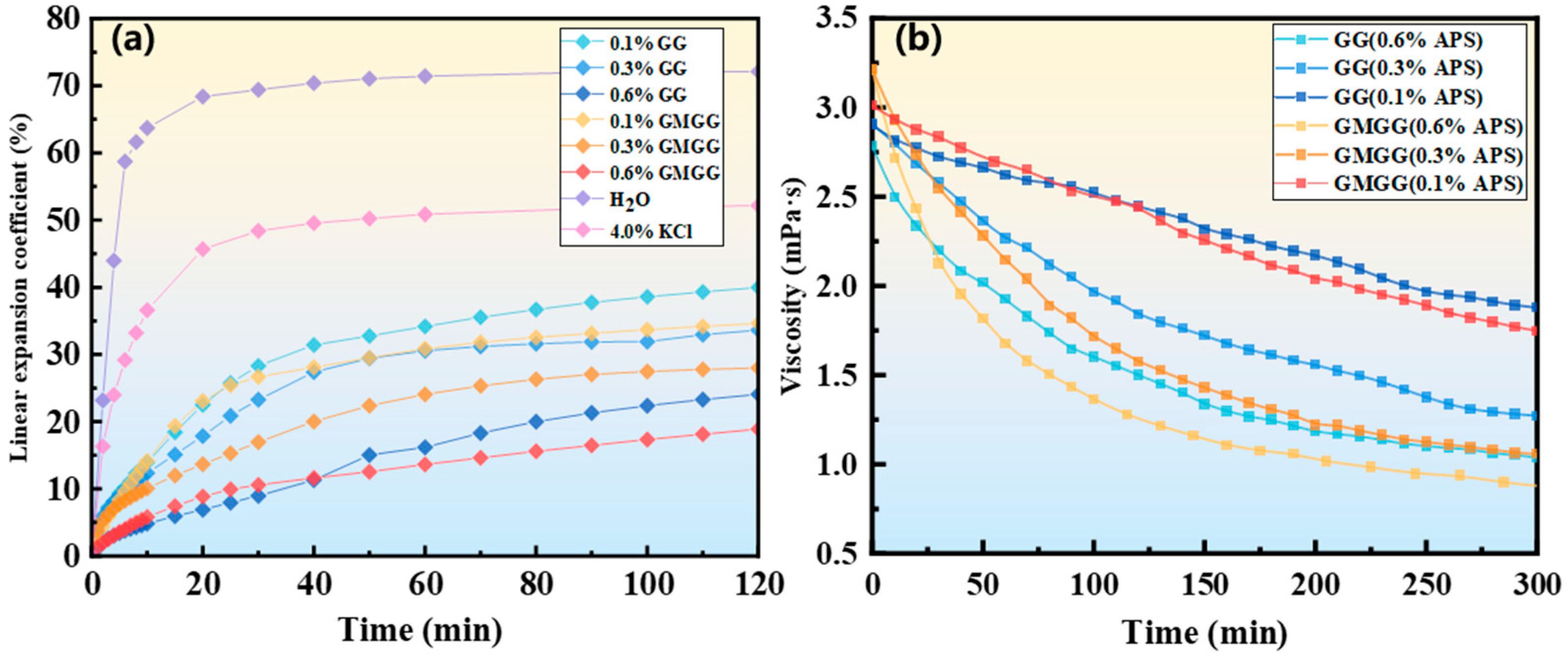
2.5.1. Filtration Control and Clay Swelling Inhibition
2.5.2. Gel-Breaking Performance and Reservoir Damage Assessment
2.6. Analysis of Modification Mechanism and Structure-Property Relationship
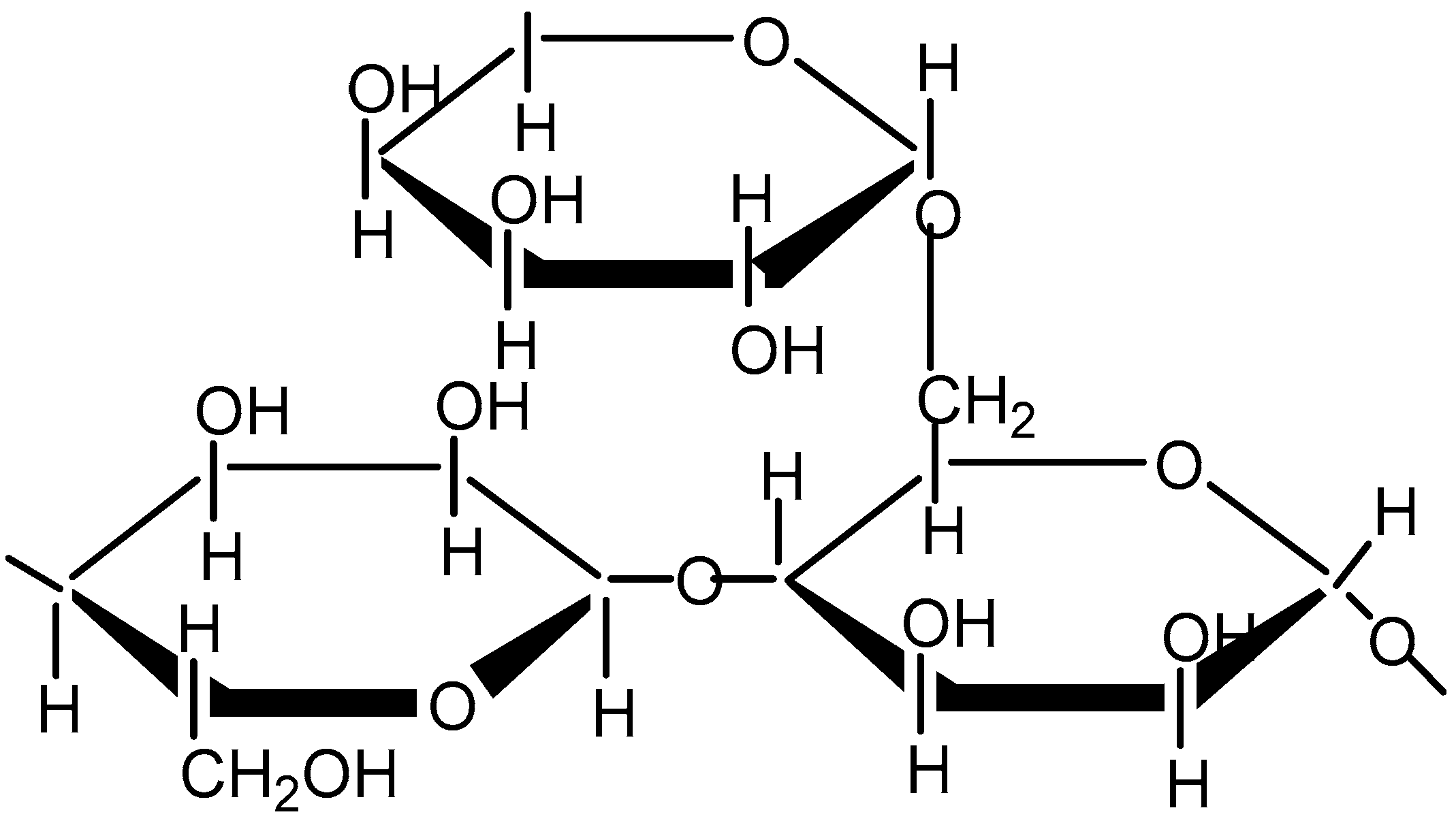
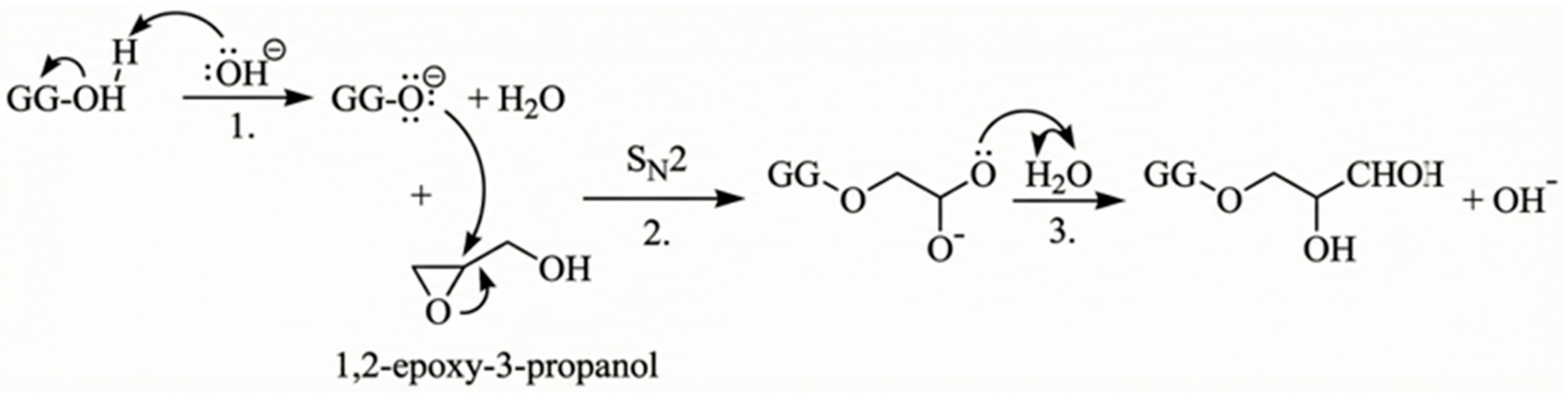
2.6.1. Explanation of Reaction Path of Etherification Modification
2.6.2. Influence of Structural Changes on Hydration Behavior and Residue Reduction
2.6.3. Relationship Between Single-Point Grafting Characteristics and Rheological Performance Stability
2.6.4. Correlation Between Structural Homogeneity and Crosslinked Gel Network Performance
2.6.5. Engineering Significance and Applicable Scope of Mechanism Analysis
3. Conclusions
4. Materials and Methods
4.1. Materials
4.2. Preparation of GMH-1 Modified Guar Gum
4.3. Orthogonal Experimental Design
4.4. Characterization and Performance Evaluation
4.4.1. Structural Characterization
4.4.2. Molecular Weight Determination
4.4.3. Thermal Analysis
4.4.4. Performance Evaluation
Author Contributions
Funding
Institutional Review Board Statement
Informed Consent Statement
Data Availability Statement
Acknowledgments
Conflicts of Interest
Abbreviations
| GG | Natural guar gum |
| GMGG | Modified product |
| GMH-1 | Glycerol ether-based modifier |
| HPG | Hydroxypropyl guar gum |
References
- Thombare, N.; Jha, U.; Mishra, S.; Siddiqui, M.Z. Guar gum as a promising starting material for diverse applications: A review. Int. J. Biol. Macromol. 2016, 88, 361–372. [Google Scholar] [CrossRef] [PubMed]
- Fan, H.; Gong, Z.; Wei, Z.; Chen, H.; Fan, H.; Geng, J.; Kang, W.; Dai, C. Understanding the temperature–resistance performance of a borate cross-linked hydroxypropyl guar gum fracturing fluid based on a facile evaluation method. RSC Adv. 2017, 7, 53290–53300. [Google Scholar] [CrossRef]
- Ghosh, B.; Abdelrahim, M.; Belhaj, H. Residual Damage, Its Consequences, and Remedial Measures on Post Hydrofrac Well Productivity: Learnt Lessons. Energies 2022, 15, 7194. [Google Scholar] [CrossRef]
- Wu, G.; Wang, L.; Zhao, C.; Zhang, Z.; Yin, J.; Anwaier, M.; Cai, Z.; Zhu, D. Experimental study of reservoir damage of water-based fracturing fluids prepared by different polymers. Pet. Sci. 2022, 21, 3298–3306. [Google Scholar] [CrossRef]
- Othman, A.; Aljawad, M.S.; Kalgaonkar, R.; Kamal, M.S. Application of Polymers in Hydraulic Fracturing Fluids: A review. Polymers 2025, 17, 2562. [Google Scholar] [CrossRef] [PubMed]
- Kumar, A.; Jena, H.M.; Gangawane, K.M. Biopolymer-based composites for enhanced oil recovery in sustainable energy generation. In Biopolymer-based Composites for Energy Generation and Storage; Bairagi, S., Ahmed, S., Jawaid, M., Eds.; Elsevier: Amsterdam, The Netherlands, 2026; Volume 10, pp. 301–314. [Google Scholar] [CrossRef]
- Wanniarachchi, W.A.M.; Ranjith, P.G.; Perera, M.S.A. Shale gas fracturing using foam-based fracturing fluid: A review. Environ. Earth Sci. 2017, 76, 91. [Google Scholar] [CrossRef]
- Sharma, G.; Sharma, S.; Kumar, A.; Almuhtaseb, A.; Naushad, M.; Ghfar, A.; Mola, G.; Stadler, F. Guar gum and its composites as potential materials for diverse applications: A review. Carbohydr. Polym. 2018, 199, 534–545. [Google Scholar] [CrossRef] [PubMed]
- Liu, X.; Chen, Y.; Yang, J.; Li, S.; Xie, H.; Ma, T. Effect of Molar Substitution on the Properties of γ-Hydroxypropyl Starch. Molecules 2022, 27, 2119. [Google Scholar] [CrossRef] [PubMed]
- Khan, M. Chemical and physical architecture of macromolecular gels for fracturing fluid applications in the oil and gas industry; current status, challenges, and prospects. Gels 2024, 10, 338. [Google Scholar] [CrossRef] [PubMed]
- Sutter, M.; Silva, E.D.; Duguet, N.; Raoul, Y.; Metay, E.; Lemaire, M. Glycerol ether synthesis: A bench test for green chemistry concepts and technologies. Chem. Rev. 2015, 115, 8609–8651. [Google Scholar] [CrossRef] [PubMed]
- Ding, T.; Bai, Y.; Xia, Y.; Xie, X.; Wang, M.; Chen, G. Study on Phosphorylation Modification of Guar Gum and Its Performance as a Fracturing Fluids Thickener. Chem. Sel. 2025, 10, e02162. [Google Scholar] [CrossRef]
- Huang, F.; Bai, Y.; Gu, X.; Kang, S.; Yang, Y.; Wang, K. A Novel Fracturing Fluid Based on Functionally Modified Nano-Silica-Enhanced Hydroxypropyl Guar Gel. Gels 2024, 10, 369. [Google Scholar] [CrossRef] [PubMed]
- Ma, J.; Fang, S.; Shi, P.; Duan, M. Hydrazine-Functionalized guar-gum material capable of capturing heavy metal ions. Carbohydr. Polym. 2019, 223, 115137. [Google Scholar] [CrossRef] [PubMed]
- Yi, Y.; Wu, L.; Zhang, J.; Wang, H. Sulfonation modification of guar gum and its performance as a fracturing fluids thickener. Pol. J. Chem. Technol. 2024, 26, 29–38. [Google Scholar] [CrossRef]
- Xu, Y.; Wu, Y.; Sun, P.; Zhang, F.; Linhardt, R.; Zhang, A. Chemically modified polysaccharides: Synthesis, characterization, structure activity relationships of action. Int. J. Biol. Macromol. 2019, 132, 970–977. [Google Scholar] [CrossRef] [PubMed]
- Motta, M.V.L.; De Castro, E.V.R.; Muri, E.J.B.; Loureiro, B.V.; Costalonga, M.L.; Filgueiras, P.R. Thermal and spectroscopic analyses of guar gum degradation submitted to turbulent flow. Int. J. Biol. Macromol. 2019, 131, 43–49. [Google Scholar] [CrossRef] [PubMed]
- Aulitto, M.; Fusco, S.; Limauro, D.; Fiorentino, G.; Contursi, P.; Bartolucci, S. Galactomannan degradation by thermophilic enzymes: A hot topic for biotechnological applications. World J. Microbiol. Biotechnol. 2019, 35, 32. [Google Scholar] [CrossRef] [PubMed]
- Wang, X.; Song, Y.; Wu, P.; Zhang, G.; Guo, J.; Li, Y. Rheological properties of hydroxypropyl guar gum fracturing fluids: Effects of cross-linking agents. Carbohydr. Polym. 2025, 36, 123837. [Google Scholar] [CrossRef] [PubMed]
- Kesavan, S.; Prud’homme, R.K. Rheology of guar and HPG cross-linked by borate. Macromolecules 1992, 25, 2026–2032. [Google Scholar] [CrossRef]
- Martin-Alfonso, M.J.; Martinez-Boza, F.J.; Luckham, P.F. Multiscale Quantitative Rheological Analysis of Composition-Temperature Relationships in Borate-Guar Hydrogels. ACS Appl. Polym. Mater. 2025, 7, 15896–15905. [Google Scholar] [CrossRef] [PubMed]
- Wrobel, M.; Mishuris, G.; Papanastasiou, P. On the influence of fluid rheology on hydraulic fracture. Int. J. Eng. Sci. 2021, 158, 103426. [Google Scholar] [CrossRef]
- Mao, J.; Mao, J.; Liu, B.; Xiao, Y.; Yang, X.; Lin, C.; Zhang, Y.; Wang, Q.; Zhang, Q. Study of crosslinker size on the rheological properties of borate crosslinked guar gum. Int. J. Biol. Macromol. 2023, 231, 123284. [Google Scholar] [CrossRef] [PubMed]
- Szopinski, D.; Luinstra, G.A. Viscoelastic properties of aqueous guar gum derivative solutions under large amplitude oscillatory shear (LAOS). Carbohydr. Polym. 2016, 153, 312–319. [Google Scholar] [CrossRef] [PubMed]
- Pan, J.; Gao, L.; Sun, W.; Wang, S.; Shi, X. Length effects of short alkyl side chains on phase-separated structure and dynamics of hydrophobic association hydrogels. Macromolecules 2021, 54, 5962–5973. [Google Scholar] [CrossRef]
- Kabir, M.A.; Gamwo, I.K. Filter cake formation on the vertical well at high temperature and high pressure: Computational fluid dynamics modeling and simulations. J. Pet. Gas Eng. 2011, 7, 146–164. [Google Scholar] [CrossRef]
- Saleh, T.A.; Rana, A. Surface-modified biopolymer as an environment-friendly shale inhibitor and swelling control agent. J. Mol. Liq. 2021, 342, 117275. [Google Scholar] [CrossRef]
- Fang, J.; Sun, J.; Feng, X.; Pan, L.; Bai, Y.; Yang, J. Research and Development of a High-Temperature-Resistant, Gel-Breaking Chemical Gel Plugging Agent and Evaluation of Its Physicochemical Properties. Gels 2025, 11, 350. [Google Scholar] [CrossRef] [PubMed]
- Ou, Z.; Chang, C.; Xie, W.; Zhang, H.; Hu, H.; Gao, R.; Gao, M.; Lin, S.; Ji, C.; Xia, Z. Implications of the geochemical characteristics of post-fracturing flowback fluids for shale gas exploration and exploitation. Energy Geosci. 2025, 6, 100416. [Google Scholar] [CrossRef]
- Kang, Y.; Xu, C.; You, L.; Yu, H.; Zhang, B. Comprehensive evaluation of formation damage induced by working fluid loss in fractured tight gas reservoir. J. Nat. Gas Sci. Eng. 2014, 18, 353–359. [Google Scholar] [CrossRef]
- Wang, T.; Ye, J. Rheological and fracturing characteristics of a cationic guar gum. Int. J. Biol. Macromol. 2023, 224, 196–206. [Google Scholar] [CrossRef] [PubMed]
- Kemmer, A.; Qi, H.; Heinze, T. Clickable polymers accessible through nucleophilic substitution on polysaccharides: A sophisticated route to functional polymers. BioResources 2022, 17, 7267. [Google Scholar] [CrossRef]
- Di Lorenzo, F.; Seiffert, S. Nanostructural heterogeneity in polymer networks and gels. Polym. Chem. 2015, 6, 5515–5528. [Google Scholar] [CrossRef]
- Picout, D.R.; Ross-Murphy, S.B. On the Mark–Houwink parameters for galactomannans. Carbohydr. Polym. 2007, 70, 145–148. [Google Scholar] [CrossRef]



| Run | A | B | C | D | Apparent Viscosity (mPa·s) | Insoluble Residue (%) | Comprehensive Index |
|---|---|---|---|---|---|---|---|
| 1 | 1 | 1 | 1 | 1 | 97.99 | 10.82 | 0.00 |
| 2 | 1 | 2 | 2 | 2 | 128.56 | 4.99 | 100.00 |
| 3 | 1 | 3 | 3 | 3 | 126.26 | 5.12 | 95.30 |
| 4 | 2 | 1 | 2 | 3 | 123.74 | 5.35 | 89.21 |
| 5 | 2 | 2 | 3 | 1 | 117.31 | 9.21 | 45.40 |
| 6 | 2 | 3 | 1 | 2 | 123.99 | 6.41 | 80.38 |
| 7 | 3 | 1 | 3 | 2 | 124.11 | 5.83 | 85.62 |
| 8 | 3 | 2 | 1 | 3 | 117.36 | 8.56 | 50.99 |
| 9 | 3 | 3 | 2 | 1 | 120.73 | 7.75 | 63.58 |
| Level | A | B | C | D |
|---|---|---|---|---|
| K1 | 65.10 | 58.28 | 43.79 | 36.33 |
| K2 | 71.66 | 65.46 | 84.26 | 88.67 |
| K3 | 66.73 | 79.75 | 75.44 | 78.50 |
| R | 6.56 | 21.47 | 40.47 | 52.34 |
| Variance | D > C > B > A | |||
| Optimal combination | D2C2B3A2 | |||
| Factor | Sum of Squares (SS) | Degree of Freedom (df) | Mean Square (MS) | F Value | p Value |
|---|---|---|---|---|---|
| B | 717.10 | 2 | 358.55 | 10.23 | 0.089 |
| C | 2717.66 | 2 | 1358.83 | 38.78 | 0.025 |
| D | 4621.43 | 2 | 2310.71 | 65.95 | 0.015 |
| A | 70.07 | 2 | 35.04 | - | - |
| Total | 8126.26 | 8 |
| Temperature (°C) | Sample | Initial Filtration Loss (m3·m−2) | Filtration Coefficient (m·min−1/2) | Filtration Rate (m·min−1) |
|---|---|---|---|---|
| 40.0 | GG | 1.10 × 10⁻³ | 1.41 × 10⁻⁴ | 2.35 × 10⁻⁵ |
| GMGG | 0.80 × 10⁻³ | 1.15 × 10⁻⁴ | 1.92 × 10⁻⁵ | |
| HPG | 1.05 × 10⁻³ | 2.20 × 10⁻⁴ | 3.85 × 10⁻⁵ | |
| 60.0 | GG | 1.26 × 10⁻³ | 2.91 × 10⁻⁴ | 4.85 × 10⁻⁵ |
| GMGG | 1.10 × 10⁻³ | 2.73 × 10⁻⁴ | 4.55 × 10⁻⁵ | |
| HPG | 1.20 × 10⁻³ | 2.73 × 10⁻⁴ | 4.80 × 10⁻⁵ | |
| 80.0 | GG | 1.41 × 10⁻³ | 3.54 × 10⁻⁴ | 5.90 × 10⁻⁵ |
| GMGG | 1.36 × 10⁻³ | 2.43 × 10⁻⁴ | 4.01 × 10⁻⁵ | |
| HPG | 1.35 × 10⁻³ | 3.30 × 10⁻⁴ | 5.35 × 10⁻⁵ |
| Number | Diameter (cm) | Length (cm) | K0 (mD) | K1 (mD) | D (%) |
|---|---|---|---|---|---|
| 1 | 2.58 | 5.79 | 20.54 | 14.49 | 29.45 |
| 2 | 2.55 | 5.45 | 19.27 | 13.29 | 31.03 |
| 3 | 2.53 | 6.13 | 27.38 | 19.09 | 30.28 |
| Level | A: Temperature (°C) | B: Time (h) | C: NaOH Dosage (wt % of GG) | D: GMH-1 Dosage (wt % of GG) |
|---|---|---|---|---|
| 1 | 30 | 1.0 | 1.5 | 0.15 |
| 2 | 35 | 1.5 | 2.0 | 0.20 |
| 3 | 40 | 2.0 | 2.5 | 0.25 |
Disclaimer/Publisher’s Note: The statements, opinions and data contained in all publications are solely those of the individual author(s) and contributor(s) and not of MDPI and/or the editor(s). MDPI and/or the editor(s) disclaim responsibility for any injury to people or property resulting from any ideas, methods, instructions or products referred to in the content. |
© 2026 by the authors. Licensee MDPI, Basel, Switzerland. This article is an open access article distributed under the terms and conditions of the Creative Commons Attribution (CC BY) license.
Share and Cite
Li, Y.; Shen, B.; Li, R.; He, H.; Wang, S.; Wang, Q.; Li, M.; Chen, G. Low-Substitution Glycerol Etherification of Guar Gum for Reduced-Residue Fracturing Fluids. Gels 2026, 12, 619. https://doi.org/10.3390/gels12070619
Li Y, Shen B, Li R, He H, Wang S, Wang Q, Li M, Chen G. Low-Substitution Glycerol Etherification of Guar Gum for Reduced-Residue Fracturing Fluids. Gels. 2026; 12(7):619. https://doi.org/10.3390/gels12070619
Chicago/Turabian StyleLi, Yongfei, Boyang Shen, Rong Li, Huili He, Shiyu Wang, Qian Wang, Maogang Li, and Gang Chen. 2026. "Low-Substitution Glycerol Etherification of Guar Gum for Reduced-Residue Fracturing Fluids" Gels 12, no. 7: 619. https://doi.org/10.3390/gels12070619
APA StyleLi, Y., Shen, B., Li, R., He, H., Wang, S., Wang, Q., Li, M., & Chen, G. (2026). Low-Substitution Glycerol Etherification of Guar Gum for Reduced-Residue Fracturing Fluids. Gels, 12(7), 619. https://doi.org/10.3390/gels12070619