Article

Development of Innovative Gluten-Free and Egg-Free Pasta from Acorn Flour and Carob–Xanthan Hydrogel


by
Francesca Vurro
*,
Alexandra-Mihaela Ailoaiei
,
Giacomo Squeo
,
Francesco Caponio
and
Antonella Pasqualone
*
Department of Soil, Plant and Food Science (DISSPA), University of Bari ‘Aldo Moro’, Via Amendola, 165/a, 70126 Bari, Italy
*
Authors to whom correspondence should be addressed.
Gels 2026, 12(7), 610; https://doi.org/10.3390/gels12070610
Submission received: 20 April 2026 / Revised: 3 July 2026 / Accepted: 7 July 2026 / Published: 8 July 2026
(This article belongs to the Special Issue Gels: Forming Behaviors, Mechanisms, and Food Applications)

Abstract

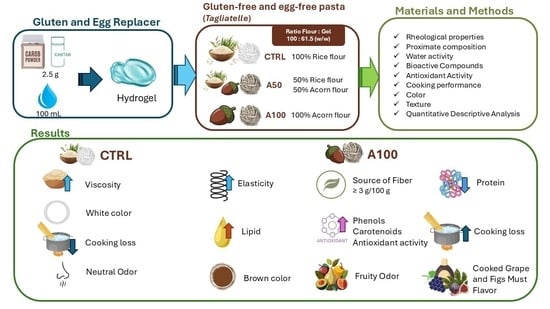
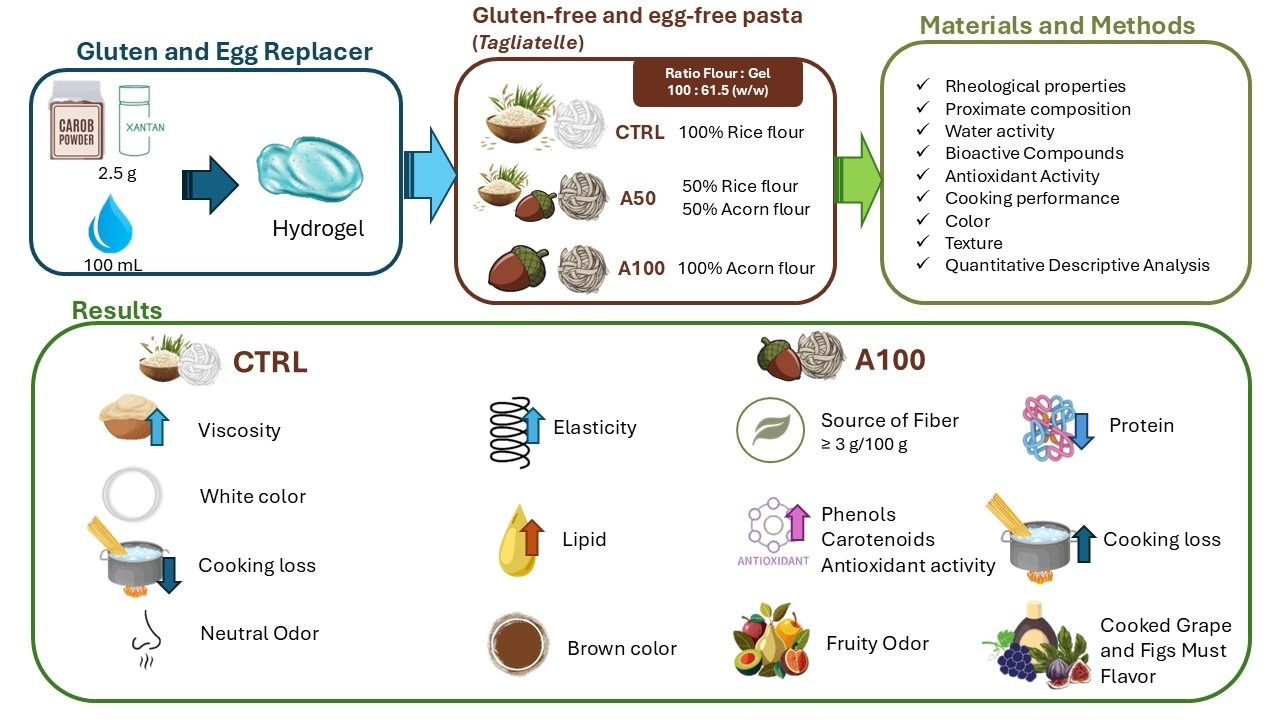
The increasing demand for sustainable, plant-based, gluten- and egg-free options is stimulating innovation in pasta products. The present work was aimed at investigating the effect of acorn flour (AF) at 50% (A50) and 100% (A100) in gluten-free and egg-free clean label tagliatelle, compared to a rice flour-based version (CTRL). A hydrogel consisting of carob seed flour and xanthan gum was used to reproduce the viscoelastic properties of gluten. Samples were analyzed for their rheological, physicochemical, nutritional, and sensory properties. The use of AF elevated the elastic modulus (G′), phenolic content, antioxidant activity, lipid content, and fiber content. The sample A100 was a “source of fiber”, according to EC Reg. 1924/06. In terms of cooking behavior, the incorporation of AF induced an increase in the water absorption index (WAI), the swelling index (SW), and a higher cooking loss. The addition of AF also resulted in a greater firmness at the cutting test and a brown color. The acorn tagliatelle had a fruity odor and flavor note. Based on these findings, AF could be a valid option in novel functional food prototypes, and also in gluten-free, egg-free and vegan versions.

Graphical Abstract

1. Introduction

Pasta constitutes a cornerstone of the Mediterranean diet and Italian gastronomic traditions [1].
The provenance of this food remains a topic of considerable debate. One school of thought attributes its introduction by Arabs in Sicily, while another believes that it was Marco Polo who first imported Asian noodles to Europe. Nonetheless, the prevailing hypothesis propounds that the introduction of this food was initiated by the ancient Greeks and Romans, who prepared it as strips made from flour and water, denominated “lagane”, and consumed it boiled in combination with legumes and vegetables, as documented by the poet Horace [2,3].
From a technological perspective, pasta is classified as fresh and dried, based on formulation, processing and stability. Fresh pasta is characterized by high moisture content (≥24%) and high water activity (aw 0.92–0.97), which results in limited shelf-life and necessitates the application of preservation strategies such as pasteurization followed by refrigerated storage [4]. The process of producing fresh pasta generally includes the following steps: first, a mixture of wheat flour, water and, frequently eggs, is prepared; then the mixture is extruded or laminated, followed by cutting or shaping into long pasta (e.g., tagliatelle, tagliolini), short pasta (e.g., maltagliati), and flat sheets for lasagna or for the wrapping of fillings, including cheese, vegetables, and meat [1,3].
Conversely, dried pasta is commonly produced exclusively from wheat flour, predominantly durum wheat semolina, and water. The dough is shaped mainly by extrusion and dried under controlled conditions designed to decrease the level of moisture to ≤12.5%, ensuring microbiological stability and an extended shelf-life at room temperature [3,4].
The pasta portfolio is already extensive in shapes, names, and adaptability to different sauces. However, a multitude of factors are contributing to its continued growth, including health concerns (e.g., coeliac disease and egg allergies), ethical considerations (e.g., vegan diets), and emerging trends promoted by social media, such as clean eating, ketogenic (a low-carbohydrate, high-fat dietary pattern) and plant-based diets, as well as other viral food trends (e.g., sport-oriented diets, high-protein products, and social media-inspired recipes) [5,6].
The exclusion of gluten and eggs from pasta raises several technological issues, such as loss of structure and elasticity, pale appearance, and limited integrity during cooking [7]. In order to overcome these challenges, the use of hydrogels, which consists of a three-dimensional network of hydrophilic polymers, has been demonstrated to be useful in reproducing the gluten matrix [8]. Carob (Ceratonia siliqua L.) pods contain high concentrations of polysaccharides, offering technological functional benefits in food applications. Furthermore, this Mediterranean legume plant exhibits a high degree of resilience to extreme environmental conditions, requiring minimal water and nutrient inputs, thereby adapting to conditions that are typically extreme for most crops [9]. Similarly, xanthan gum, a high-molecular-weight exopolysaccharide produced via Xanthomonas campestris fermentation, aligns with biotechnological development and has versatile food applications [10,11]. In this regard, the combined use of carob seed flour and xanthan gum is a promising solution, offering a dual benefit in addressing both technological functionality and ethical sustainability [8,12]. This also aligns with the clean label concept, which is characterized by a concise and easily comprehensible list of ingredients.
Hydrocolloids, which act as binders, are added to gluten-free flour, usually rice or corn. Recently, acorn flour, which is also gluten-free, has been considered for its functional properties [13]. Furthermore, acorns are an abundant but not yet adequately exploited resource, the use of which could enhance the value of the forest areas from which they originate, where agricultural activities are not possible.
Previous studies have successfully tested acorn flour in the development of pasta and noodles, but without considering specific categories of consumers, such as celiacs, the egg-allergic or vegans [14,15,16]. In this framework, the present research aimed to (i) develop and characterize egg-free and gluten-free clean label tagliatelle formulated from rice flour (RF) and acorn flour (AF), using a carob seed flour–xanthan gum hydrogel to improve dough rheological properties and technological performance, and (ii) promote AF as a resilient, sustainable, and nutrient-rich ingredient for “free-from” pasta.

2. Results and Discussion

2.1. Rheology of Dough

The rheology of dough is of critical importance for the quality of pasta. This is particularly true for gluten-free recipes, which are already characterized by significant textural problems [17]. Hydrogels can contribute to gluten-like network formation by providing a viscoelastic structure [18]. In this study, carob–xanthan hydrogel was used.
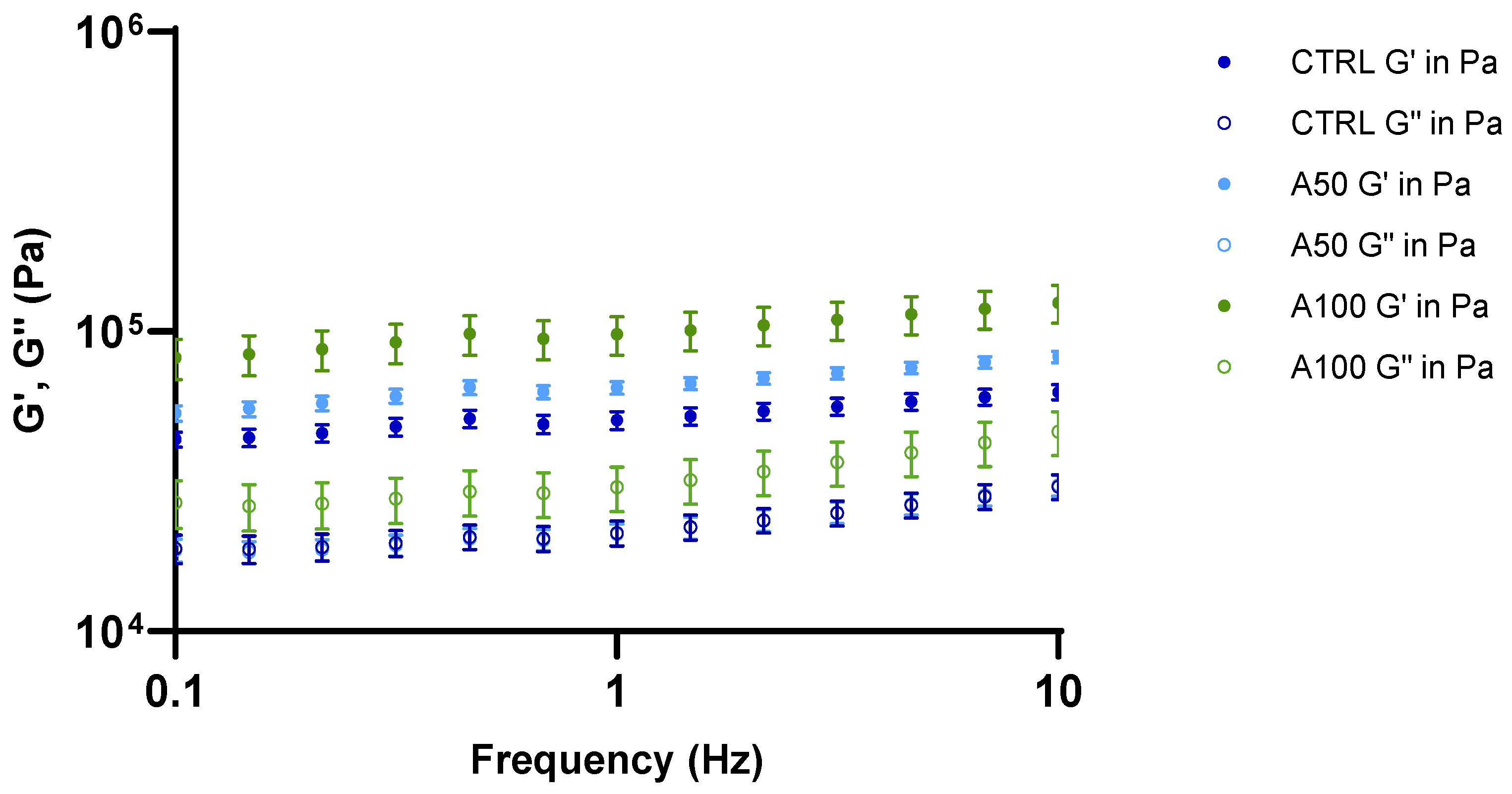
The effect of AF at 50% (A50) and 100% (A100) on dough rheology was compared to that of a rice flour-based dough prepared as the control (CTRL). For all doughs analyzed, G′ was higher than G″ across the range of frequencies tested, and both moduli increased with increasing frequency (Figure 1). Compared to the CTRL dough, the incorporation of AF increased the elasticity, as evidenced by the higher G′ value. The value of tan δ calculated at 1 Hz was 0.42 ± 0.01 in CTRL, which was higher than the 0.32 ± 0.01 and 0.31 ± 0.01 values observed in A50 and A100, respectively. These results confirmed the observations related to the storage modulus G′ discussed above. The RF-based dough presented a higher viscous contribution compared to the other samples, while the samples with AF demonstrated higher elasticity.
This phenomenon has been ascribed to multiple factors related to the chemical properties of AF. This ingredient is characterized by a high percentage of carbohydrates, represented primarily by starch and dietary fiber [19]. Starch, the main carbohydrate fraction, can form networks with other dough constituents, contributing to a solid-like structure [20,21]. Fiber can interact in this network, resulting in stronger elastic behavior [20]. In fact, previous studies have shown that AF in dough causes a significant increase in the elastic modulus, acting as a strengthening agent [22].
In addition to polysaccharide interactions, other AF components may also be involved. Phenolic compounds of acorns, particularly tannins, can interact within the dough matrix, leading to non-covalent bonds with amylose [23]. Furthermore, tannins are well-known for their high binding affinity toward different protein structures, which can induce protein–tannin complex formation [24]. These interactions can further reinforce the polymer network, thereby increasing elasticity and stability [23,25].
To quantitatively support these observations, correlations between the elastic modulus G′ and selected chemical components, discussed in the following paragraphs, were calculated. A strong positive correlation was observed between G′ and fiber (r = 0.96, p < 0.001). Similarly, G′ showed a strong correlation with total phenolic compounds (r = 0.95, p < 0.001) and tannins in raw pasta (r = 0.90, p < 0.001), suggesting a close relationship between these components and the elastic behavior of the dough.
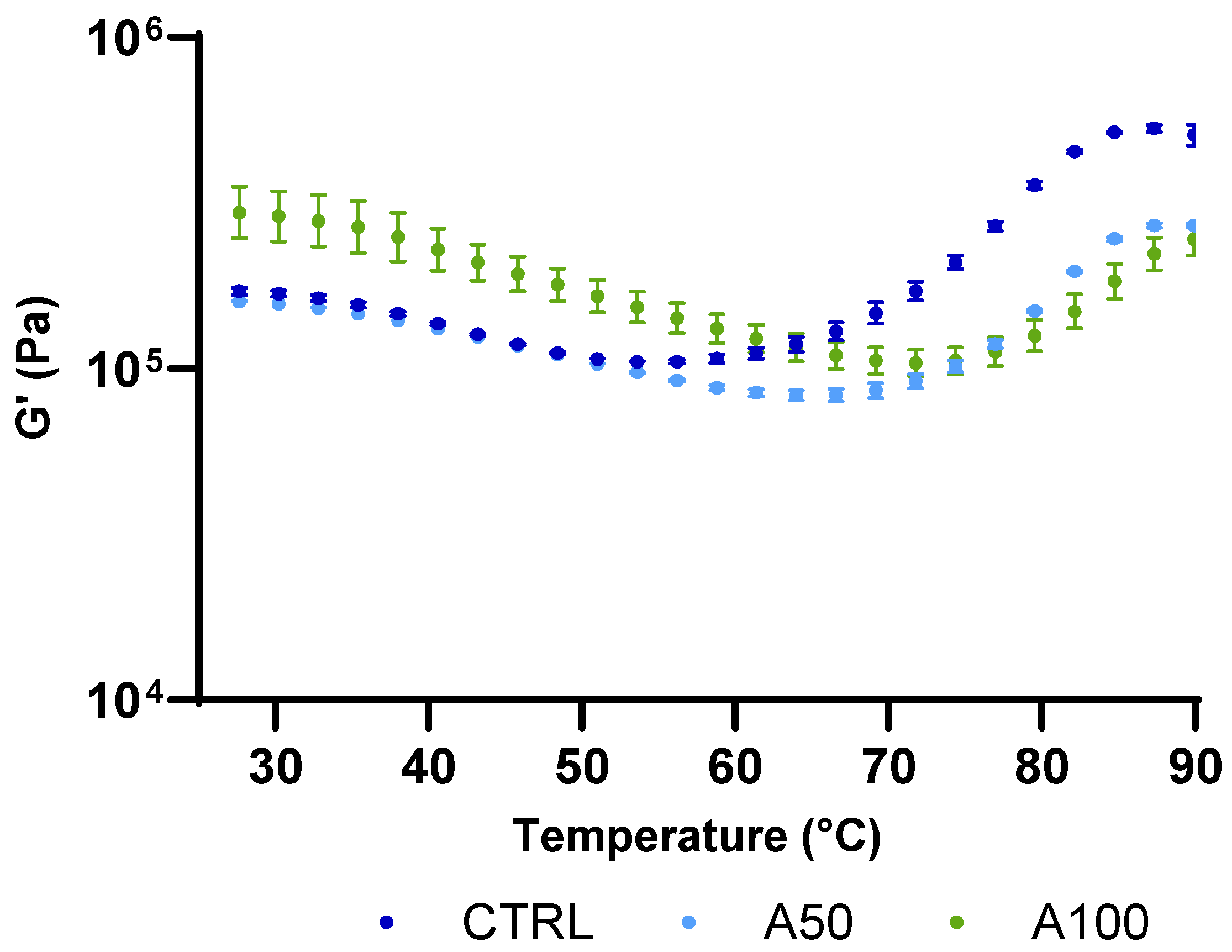
The rheological behavior of doughs during the heating process was evaluated at a frequency of 1 Hz, considering a temperature ramp from 25 to 90 °C (Figure 2), which is useful for comprehending the structural changes during the cooking process of pasta.
During the initial heating stage (<65 °C), the dough decreased in elastic modulus G′. In these conditions, the starch granules retain water and swell, causing an increase in viscosity, and a low peak of G′. As the temperature increased (65–90 °C), a high G′ peak was reached.
The samples showed different behavior during thermal treatment. This phenomenon was probably correlated with the chemical characteristics of starch, specifically the ratio between amylose and amylopectin. Additionally, it could be influenced by gelatinization temperatures, as well as the interactions of starch with lipids, fiber, and proteins [26,27]. Previous studies have suggested that acorn starch gelatinizes around 60 °C [22], while rice flour gelatinizes at around 70–75 °C [28]. In the first stage of treatment, the two samples with RF presented a similar trend, diverging from the 100% AF sample. Then, the two samples with AF showed a more similar rheological response, significantly differentiating from the CTRL.

2.2. Nutritional and Chemical Properties

As detailed in Table 1, the water activity of all samples showed similar values, lower than or equal to 0.97, the maximum value accepted for fresh pasta [4].
All of the experimental samples met the requirements for fresh pasta, with a moisture content of at least 24% [4]. The slight reduction in moisture observed in tagliatelle with AF could be connected to the different capacity of flours to retain water.
The addition of AF markedly influenced the nutritional composition of pasta. The most pronounced change was the significant increase in lipid, ash, and fiber concentrations. This enrichment was a direct consequence of the chemical composition of AF, which is known to contain high levels of these nutrients [29]. This trend is in line with the findings of Konya et al. [15] in acorn-enriched gluten-free noodles.
The addition of AF enriched the pasta in fiber, and sample A100 was classified as a “source of fiber” based on Regulation (EC) No 1924/2006 [30], because it was higher than 3 g/100 g of pasta. This represented a relevant nutritional improvement, given the well-documented role of fiber in promoting gut health and metabolic regulation, particularly in gluten-free products, which are often characterized by low fiber levels.
A significant reduction in protein content was caused by the inclusion of AF, in line with several studies on acorn-based products [22,31]. However, this decrease does not necessarily represent a nutritional limitation, as pasta is often seasoned with protein-rich meat or vegan sauces. From a product development perspective, protein levels in acorn-enriched pasta could be optimized through strategic formulation. This can be achieved by partially replacing flour with protein-rich ingredients, such as legume flours or protein concentrates [32].
The energetic value of tagliatelle was boosted by the inclusion of acorns, due to the higher lipid content of AF than RF. However, the results were overall in line with the mean value of commercial products, which are generally below 300 kcal/100 g depending on the recipes [33].
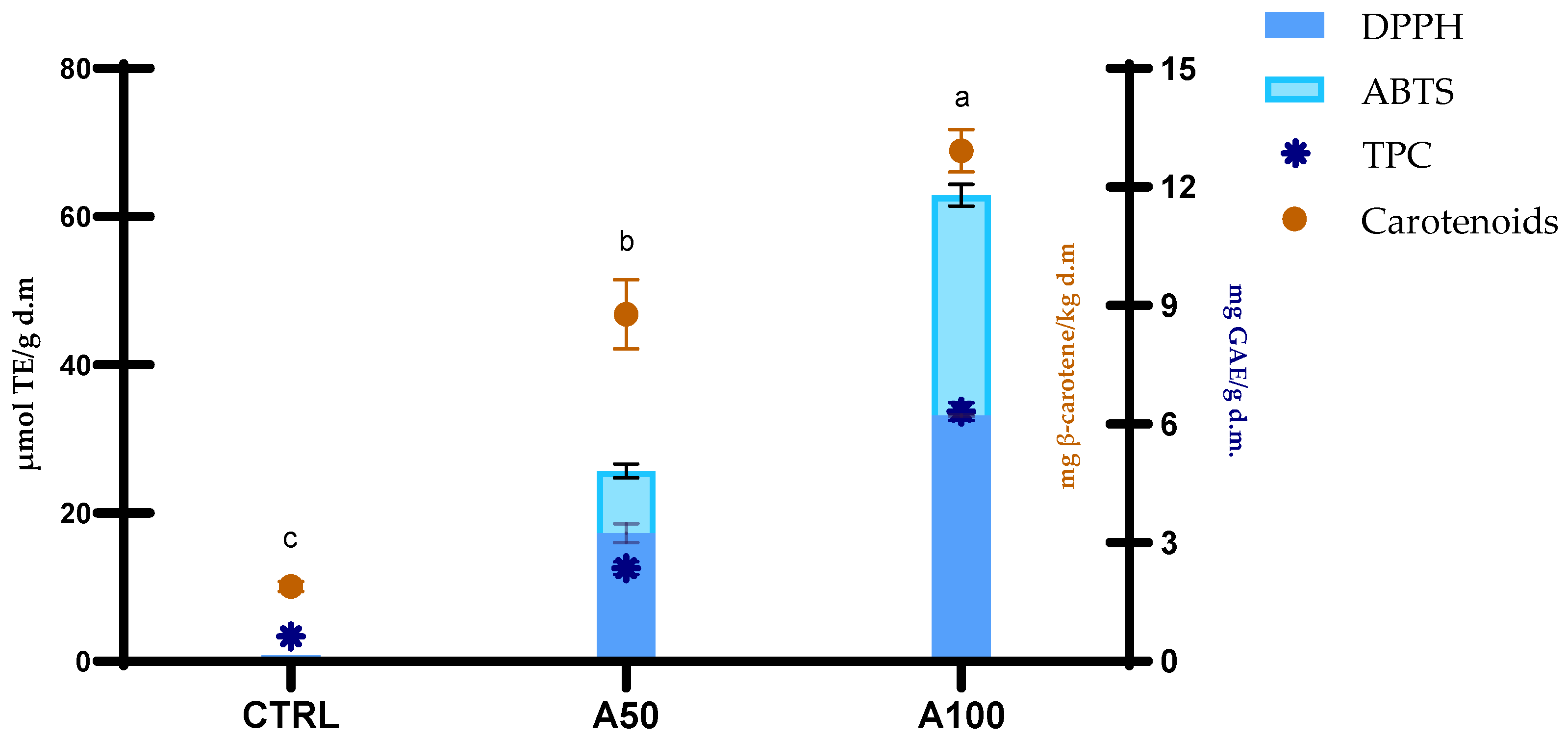
The incorporation of AF enhanced the antioxidant activity of tagliatelle, a phenomenon primarily ascribed to the high concentrations of phenolic compounds and carotenoids (Figure 3). These compounds are well-known for their strong capacity to mitigate oxidative stress, a process that can lead to cellular damage and contribute to the development of chronic diseases [13,34].
The results indicate that the antioxidant activity was almost negligible in formulation CTRL, as is typically observed in products based on refined flours [35]. Conversely, incorporating AF caused a substantial increase in antioxidant levels in direct proportion to the percentage used. This dose-dependent increase highlights the potential of AF as a valuable means of developing functional foods with enhanced health-promoting properties [13,29,34].
The tannin content detected in tagliatelle is reported in Table 2. In the CTRL rice-based formulation, tannins were only detected in the raw sample, in a very limited quantity, possibly due to the tannins naturally present in the carob seed flour used in the hydrogel [9]. However, their presence was no longer identified after cooking. The measured levels in acorn-based tagliatelle were in line with those generally reported for acorn flours from different Quercus species [32,36]. The commercial acorn flour used in this study was probably obtained from relatively sweet acorn varieties or subjected to a preliminary industrial debittering process [29]. Indeed, the traditional approach to processing acorns involves a series of procedures aimed at reducing their astringent taste and potential adverse digestive effects. These include prolonged soaking and leaching treatments, repeated washing, and the application of traditional practices involving the use of clay or ash [29,32]. The process of cooking pasta resulted in a further reduction in tannin levels, attributable to two primary mechanisms: thermal degradation and the leaching of water-soluble tannins into the boiling water [36]. Tannins are classified as antinutrients due to their mineral-chelating capacity and their potential to reduce nutrient bioavailability. However, they are generally not considered a major dietary concern under normal consumption, except for populations vulnerable to nutritional deficiencies. A suggested safe daily intake threshold is 1.5–2 g [37]. The tannin content in cooked A50 and A100 was comparable to other acorn-enriched products, such as focaccia formulated with 30% AF [38] and biscuits with 41% AF [39]. From a consumer perspective, tannins are often considered more relevant for their potential impact on sensory properties, particularly bitterness and astringency. In this case, these sensory notes were only slightly perceived but did not compromise the palatability of the pasta.

2.3. Texture, Cooking Performance, and Color

Texture is a crucial physical attribute that has a significant impact on consumer acceptance of pasta. In the context of Italian culinary tradition, the ideal way to cook pasta is defined as “al dente”, a term that indicates a certain degree of resistance when chewing, resulting in pasta that is cooked but still firm [40]. This way of cooking is generally associated with reduced digestibility and a lower glycemic index, as the starch structure remains partially ungelatinized [41]. Among the three formulations, there were no differences in the optimal cooking time (Table 3).
The texture of tagliatelle was evaluated using a cutting test. This mimics the mechanical action of teeth during mastication, measuring the force required to cut cooked pasta (Table 3). The incorporation of AF resulted in a significantly higher cutting force, indicating a firmer texture. This effect could be related to differences in the amylose-to-amylopectin ratio and their associated physicochemical properties, as well as to the gelatinization behavior of acorn starch and starch–protein interactions [42]. In addition, the high fiber content in AF could be a factor in the increased firmness, which translates into a more rigid structural network [31].
The other added value of acorns, besides their fiber content, is mainly related to their polyphenol content. As discussed previously in the rheological analysis results, polyphenols may have interacted with starch molecules, acting as structural modifiers and influencing the texture of cooked pasta. In fact, starch–polyphenol complexes can form through hydrogen bonding, thereby altering the structural organization and functional properties of the starch matrix [43].
Sample A100 demonstrated the highest values for both WAI and SI. This phenomenon can be due to the high fiber content of AF. In fact, fiber can retain water and swell, thereby contributing significantly to the pasta’s overall water uptake during cooking. The observed cooking losses were significantly lower than the maximum 8–12% limit established for good-quality pasta [44,45]. Nevertheless, A100 showed a significantly higher cooking loss than A50. While this difference was statistically significant (p ≤ 0.05), its practical relevance for consumer acceptance is hypothesized to be limited. As both samples remained below the threshold at which cooking loss is generally associated with notable deterioration in pasta quality attributes such as firmness, stickiness, and cooking water turbidity, the results can be explained by the weakening of the dough structure resulting in more starch and soluble solids being released into the cooking water. A similar phenomenon has been observed in formulations with high fiber content or non-traditional ingredients, where the binding network is less efficient at retaining solids than in gluten-based formulations [44]. In accordance with these considerations, Konya et al. [15] have reported analogous behavior in gluten-free egg-based noodles, reaching a value of 9.28% in the formulation containing 40% AF.
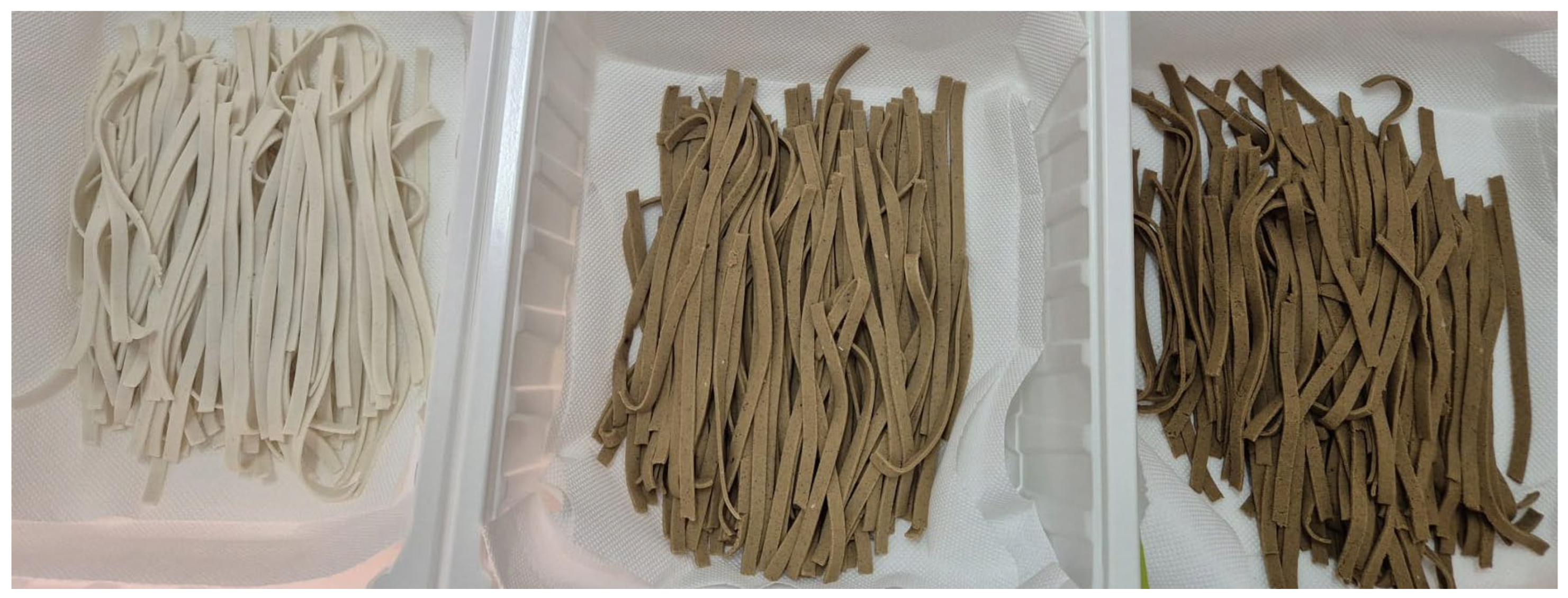
The inclusion of AF significantly changed the pasta color, shifting it away from the white of RF (Table 4 and Figure 4). This chromatic effect could be positively perceived by contemporary consumers, who have demonstrated an increasing preference for colored pasta varieties enriched with vegetable powders, cuttlefish ink, or other alternative flours [46,47]. This is particularly evident in gluten-free versions, which are available on the market in bright colors, such as green, orange, and blue, caused by the use, for example, of pea flour, red lentil flour and spirulina [48,49,50,51]. Incorporating AF significantly reduced lightness, giving the pasta a darker hue. AF increased the redness, yellowness and browning of the pasta. These color properties were due to the natural pigments present in AF in both the raw and cooked pasta samples, which also suggests good stability throughout the cooking process. The brown color of AF is typically caused by the activity of polyphenol oxidases. These enzymes oxidize phenolic compounds, producing dark pigments known as o-quinones. They can also participate in other reactions, complexing with other constituents and producing other brown polymers [52,53]. For both raw and cooked pasta, ΔE values were significantly higher than 3, a value generally considered to be easily appreciable by the human eye. Consequently, the color differences among the samples were sufficiently pronounced to be easily perceived by consumers under normal observation conditions [54].

2.4. Quantitative Descriptive Sensory Analysis

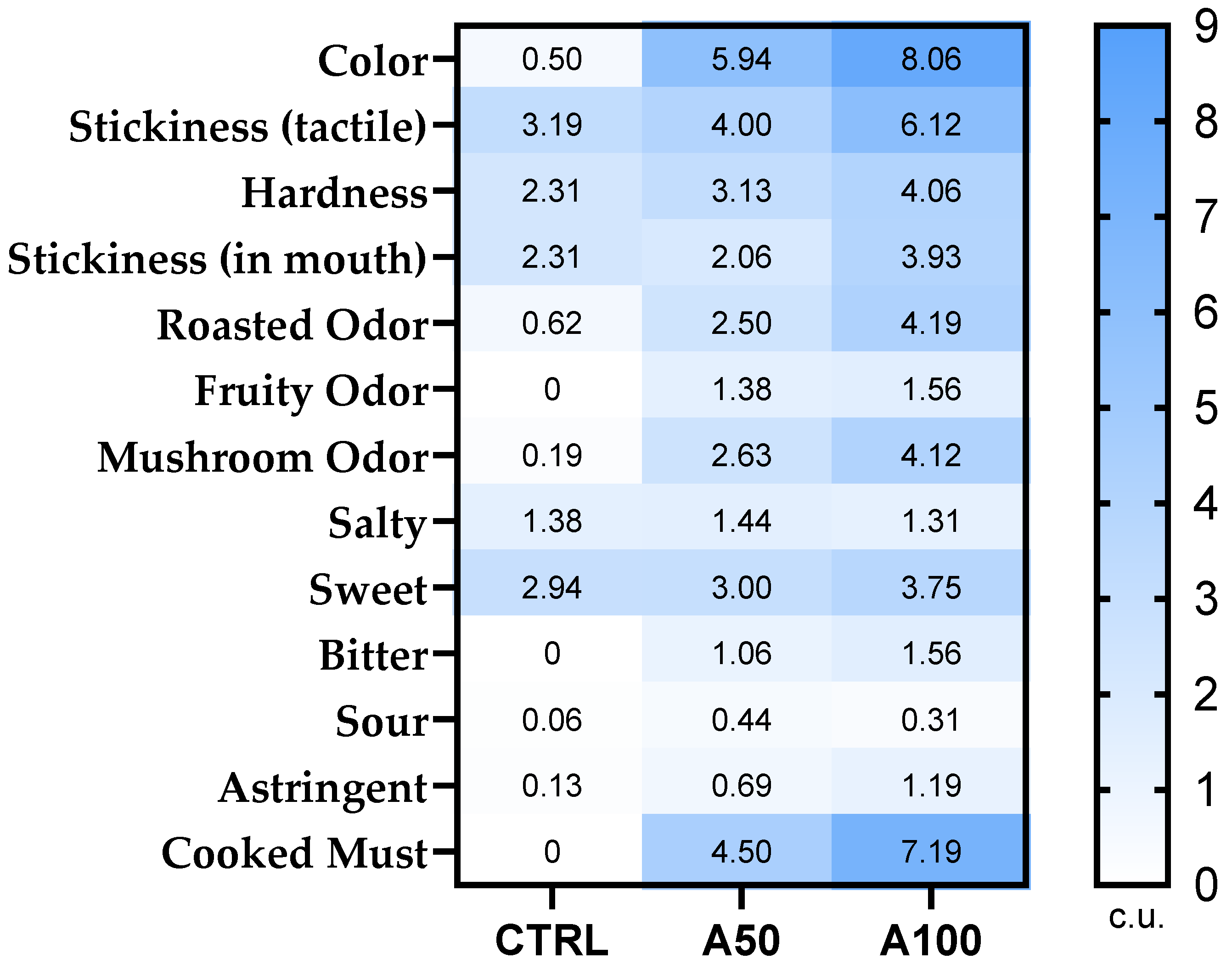
The sensory acceptability of gluten-free pasta has long been considered deficient in terms of both structure and taste, despite recent improvements [55,56,57]. Figure 5 shows the results of a sensory analysis considering the 13 sensory attributes evaluated on cooked tagliatelle made with hydrogel, RF, and/or AF.
Overall, incorporating AF modified the sensory parameters of the pasta compared to the formulation made with 100% RF. The sensory analysis was consistent with the instrumental evaluations for color and texture: the AF caused a brown-colored pasta and greater firmness.
The higher perceived adhesiveness, both on the fingers and in the mouth, can be attributed to the combined effect of fiber and starch gelatinization. The presence of fiber has been hypothesized to have reduced the hydrogel network’s capacity to retain starch granules and soluble solids during cooking, resulting in a greater amount of gelatinized starch on the product surface. These observations also reflect the higher cooking loss observed for samples with AF.
In terms of olfactory and flavor perception, the AF imparted notes reminiscent of fruit, mushrooms, cooked grape must and fig must. These are characteristic sensory notes of AF, also described as having a cashew and chocolate hint [58]. However, these sweet and earthy notes are unexpected in pasta, generally neutral in odor and flavor. Therefore, the selection of condiments should consider these notes, trying to adapt and have a balanced flavor [59]. In addition, the choice of sauce could be used to mask the slight bitterness typical of AF, caused by tannins [32]. Future studies will include a consumer test to validate product acceptability and to improve the robustness and reliability of the sensory findings.

3. Conclusions

The use of egg substitutes and gluten alternatives has received global attention, primarily due to vegan trends, animal welfare concerns, and the growing interest from individuals affected by allergies or intolerances. This study proposes a gluten-free and egg-free tagliatelle formulation, based on a carob–xanthan hydrogel combined with AF, using RF pasta as a control.
Rheological analyses showed that AF promoted a more pronounced elastic behavior, as indicated by the higher G′ modulus. Formulations containing AF exhibited increased lipid, ash, and fiber contents, with the 100% AF sample qualifying as a “source of fiber” according to EC Reg. 1924/2006 [30]. AF also enhanced the antioxidant profile of tagliatelle, particularly in terms of phenolic compounds and carotenoids.
The incorporation of AF influenced several characteristics, including color, texture and cooking properties. The sensory analysis confirmed the instrumental analyses, revealing higher odor and flavor complexity compared with the formulation prepared exclusively with RF.
The results of this study showed that the incorporation of hydrogel is a promising strategy for reproducing the structural roles of eggs and gluten in tagliatelle formulation. Moreover, AF has the potential to offer a novel alternative, thereby adding value to this natural and sustainable ingredient.
Future perspectives will investigate the nutritional implications of these formulations, including starch fractionation (rapidly digestible starch, slowly digestible starch and resistant starch), as well as their glycemic impact and related metabolic responses. Future research will also focus on sensory benchmarking against commercial tagliatelle and consumer acceptance tests to define appropriate sauce pairings that complement the unique flavor profile of acorn-enriched pasta. This will facilitate a more precise definition of the product’s sensory performance, consumer relevance, and overall commercial potential.
In conclusion, the synergy between carob–xanthan hydrogels and AF contributes to the development of a viscoelastic network with structural functionalities typically associated with gluten and eggs, while also transforming tagliatelle into a high-fiber, antioxidant-rich, clean-label functional food. By successfully integrating a hydrogel system with AF, this study provides a validated framework for developing gluten-free and vegan pasta with enhanced rheological complexity and nutritional value, laying the groundwork for future glycemic and shelf-life optimizations. From a practical perspective, these findings offer the food industry a scalable strategy for formulation optimization, demonstrating how hydrogels can effectively mimic the structural roles of gluten and eggs without compromising pasta quality. Furthermore, the utilization of AF paves the way for the valorization of this underutilized, sustainable resource. Given current global trends, this innovative formulation holds significant market potential, offering a nutritionally balanced alternative that aligns with modern consumer preferences.

4. Materials and Methods

4.1. Ingredients and Process

Rice flour (RF) (Lo Conte, Rome, Italy) (fat 0.5 g/100 g; carbohydrates 82 g/100 g; fiber 0.5 g/100 g; protein 7 g/100 g), xanthan gum (100% xanthan gum) (Food Bites, Rovello Porro, Italy) and carob seed flour (100% carob seed flour) (Rapunzelstraße, Legau, Germany) were purchased from local retailers. Commercial acorn flour (AF) (Quercus rotundifolia) was provided by Landratech (Manhente, Portugal) (fat 11.8 g/100 g; carbohydrates 75 g/100 g; fiber 3 g/100 g; protein 5.5 g/100 g).
For the hydrogel formulation, 100 mL of water was added to 2.5 g xanthan gum and 2.5 g carob seed flour and mixed with an immersion blender (Kenwood, London, UK) for 3 min. The gel was then used in the formulation of pasta, minimally modifying the ratio between gel and flour reported in Costantini et al. [17] (Table 5).
Dough was hand-mixed over a period of 20 min. Then, the dough was allowed to rest for 15 min at 20 °C, and hand-mixed for another 5 min. The pasta was extruded through a die to obtain its shape, namely tagliatelle (Torkio Ok Leonardo, Franceschi, Anzola dell’Emilia, Italy). The tagliatelle had a thickness of 2 mm, a width of 1 cm and a length of 10 cm. Three batches were prepared for each formulation.

4.2. Rheological Properties of Dough

The rheological properties of dough were evaluated with a rheometer (Haake Mars iQ Air, Thermo Fisher Scientific, Waltham, MA, USA) equipped with a parallel plate geometry (P35/Ti 02180932), as reported by Renoldi et al. [60] with minimal modifications. For the frequency sweep test a gap was set at 3 mm, the frequency in the ramp 0.1–10 Hz, at 20 °C at a strain value of 2.0%, within the linear viscoelastic region (LVR) of doughs. The storage modulus (G′) and loss modulus (G″) were recorded. The tan δ was calculated as the ratio between G″ and G′ at 1 Hz.
For the temperature sweep test the following conditions were considered: 2.0% strain, 1 Hz of frequency, heating ramp 25 to 90 °C, heating rate 3 °C/min, according to Peressini et al. [61], with minor modifications. The sample was covered during the analysis, using a sample hood to prevent water evaporation. The G′ modulus was recorded.
The rheological analyses were carried out in triplicate.

4.3. Proximate Composition and Water Activity

For moisture, a moisture analyzer at 105 °C (Radwag Wagi Elektroniczne, Radom, Poland) was used, in line with the AACC method 44–01.01 [62]. The water activity (aw) was measured using a hygrometer (Aqua Lab 100–240 V AC, Pullman, WA, USA).
The protein and ash contents were determined as described by the AACC methods 46–11.02 and 08–01.01 [62], respectively. The lipids were extracted and quantified using diethyl ether as the extraction solvent, with a semi-automatic extraction system (Velp Scientifica srl, Usmate, Italy) according to the AOAC method 922.06 [63]. The total dietary fiber was determined according to the AOAC method 991.43 [63]. The carbohydrates were calculated by subtracting the moisture, protein, lipid, and ash contents from 100. The results were expressed as g/100 g. The macronutrients were multiplied for the conversion factors (4 kcal/g for protein and carbohydrates, 9 kcal/g for lipids, and 2 kcal/g for fiber) and summed to obtain the energy value. Three replicates were carried out for each determination.

4.4. Bioactive Compounds and Antioxidant Activity

Extraction and quantification of total phenolic compounds (TPC), ABTS (2,2′-azino-bis-3-ethyl benzthiazoline-6-sulphonic acid) and DPPH (2,2-diphenyl-1-picrylhydrazyl) in vitro antioxidant activity assays were performed in triplicate, according to Vurro et al. [54].
The total carotenoid pigments were extracted, in triplicate, using water-saturated n-butyl alcohol. Then the absorbance of the supernatants was read at 435.8 nm by a Cary 60 UV–Vis spectrophotometer (Agilent Technologies, Santa Clara, CA, USA), according to the AACC method 14–50.01 [62].
The tannins were quantified by minimally modifying the method described by Monteiro [64]. The extraction of tannins was performed under the same conditions applied for the TPC and antioxidant activity. Briefly, for the control, 1 mL of sample extract was mixed with 2 mL of saturated solution of (NH4)2SO4 and 7 mL of deionized water (ELGA Purelab, High Wycombe, UK). In parallel, 1 mL of extract was mixed with 3 mL of 0.04% methylcellulose solution, 2 mL of saturated (NH4)2SO4, and 4 mL of deionized water. After 10 min at 20 °C, in the dark, the tubes were centrifuged (Thermo Fisher Scientific, Osterode am Harz, Germany) at 10,000× g at 4 °C. The absorbance of both supernatants was recorded at 280 nm using quartz cuvettes. Tannin content was calculated considering the difference in the absorbances and expressed as mg epicatechin equivalents (EE)/g d.m. The analysis was carried out in triplicate.

4.5. Texture, Cooking Performance, and Color Analysis

First, the optimal cooking time (OCT) was established for all samples according to the AACC method 66 [62]. Briefly, 20 g of tagliatelle were cooked in 200 mL of boiling unsalted distilled water. At 30 s intervals, samples were removed and cross-sectionally cut to visually observe the disappearance of the central opaque core.
The textural properties of cooked pasta at OCT, rinsed with distilled water and drained, were evaluated using a cutting test, with a texture analyzer equipped with a 1 kN load cell (Z1.0 TN, Zwick Roell, Ulm, Germany) according to Costantini et al. [17]. Four replicates were carried out for each batch.
The cooking performances, namely the swelling index (SI) and water absorption index (WAI), were determined in triplicate, according to Wang et al. [65]. Cooking loss (CL) was determined as reported by AACC method 66 [62], expressing the results as a percentage.
The color was measured using a colorimeter (CM-600d, Konica Minolta, Tokyo, Japan) equipped with SpectraMagic NX software (Konica Minolta, Tokyo, Japan). Before the measurement process, the instrument was calibrated using a standard white calibration tile, in accordance with the CIE (Commission Internationale de l’Éclairage) Illuminant C condition. The lightness (L*, from black to white), redness index (a*, from green to red), and yellowness index (b*, from blue to yellow) were determined in the CIE color space. The brown index was calculated as (100 L*). The color difference (∆E) was calculated according to Vurro et al. [54], using the same color evaluation scale. Six replicates were carried out for each batch.

4.6. Quantitative Descriptive Analysis

The sensory analysis of tagliatelle was performed considering the quantitative descriptive analysis (QDA), in accordance with the International Standardization Organization (ISO) standard 13299 [66] by a trained panel of eight people (four men and four women, ages 20 to 60). The members of the panel gave written approval in accordance with the ethical norms of the Laboratory of Food Science and Technology, Department of Soil, Plant and Food Science, University of Bari (Bari, Italy). They had no dietary intolerances or allergies. The panel was trained in accordance with ISO standards [66,67] for descriptor familiarization, evaluation rigor, and performance monitoring. A pre-test session was carried out according to ISO Standard 11132 [67]. A scale of intensity from 0 to 9 contractual units (c.u.) was used. Table 6 reports the descriptors considered. Fifteen-gram samples of cooked tagliatelle (OCT) were served in white dishes to each panelist for sensory evaluation. The samples were coded and presented in random order. The test was performed in the sensory analysis laboratory belonging to the Food Science and Technology Laboratory, Department of Soil, Plant and Food Science, University of Bari (Bari, Italy) [68]. Three replicates were carried out.

4.7. Statistical Analysis

The results were expressed as mean standard deviation (SD). Statistical analysis was performed using Minitab Statistical Software 21 (Minitab Inc., State College, PA, USA). The significant differences (p ≤ 0.05) were assessed by one-way parametric analysis of variance (ANOVA), followed by the Tukey HSD test. Graphs were created using GraphPad Prism 10 (GraphPad Software, San Diego, CA, USA).

Author Contributions

Conceptualization, F.V., G.S. and A.P.; formal analysis, F.V. and A.-M.A.; investigation, F.V., A.-M.A., G.S. and A.P.; data curation, F.V., A.-M.A., G.S., F.C. and A.P.; writing—original draft preparation, F.V.; writing—review and editing, A.-M.A., G.S., F.C. and A.P.; visualization, F.V. and A.-M.A.; supervision, G.S., F.C. and A.P.; project administration, G.S.; funding acquisition, G.S. and A.P. All authors have read and agreed to the published version of the manuscript.

Funding

This paper was supported by the PRIMA project MEDACORNET—Rescuing acorns as a Mediterranean traditional superfood. The PRIMA program is an Art.185 initiative supported and funded under Horizon 2020, the European Union’s Framework Program for Research and Innovation. In addition, this research was funded by the Italian “Ministero dell’Università e della Ricerca” (MUR)—MAR.V.E.L. Project “MARginal areas: Valorization of Ecosystem resources for fair and sustainable Livelihood” (CUP B91I24000340007).

Institutional Review Board Statement

Ethical review and approval were waived for this study due to the non-invasive nature of the sensory evaluation, which involved voluntary adult participants evaluating food products under normal consumption conditions, without the collection of sensitive personal data, in accordance with the General Data Protection Regulation (EU 2016/679) and institutional guidelines for non-interventional studies.

Informed Consent Statement

Informed consent was obtained from all subjects involved in the study. Participants were informed about the purpose of the research, the voluntary nature of their participation, their right to withdraw at any time, and the anonymity of the data collected.

Data Availability Statement

Data are contained within the article.

Acknowledgments

The authors are thankful to Pedro Babo and Landratech (Manhente, Portugal) for providing acorn flour. The authors are thankful to Anne Ridley for English language editing.

Conflicts of Interest

The authors declare no conflicts of interest.

Abbreviations

RFRice Flour
AFAcorn Flour
TPCTotal Phenolic Compounds
GAEGallic Acid Equivalent
TETrolox Equivalent
EEEpicatechin Equivalent
WAIWater Absorption Index
SWSwelling Index
OCTOptimal Cooking Time

References

  1. Nazari, V.; Pasqualone, A.; Pieroni, A.; Todisco, V.; Belardinelli, S.; Pievani, T. Evolution of the Italian pasta ripiena: The first steps toward a scientific classification. Discov. Food 2024, 4, 57. [Google Scholar] [CrossRef]
  2. Helcke, K. Pasta and Noodles: A Global History; Reaktion Books Ltd.: London, UK, 2016; pp. 9–26. [Google Scholar]
  3. Roshini, J.; Pandey, A.K.; Vashishth, R. History and Origin of Pasta. In Advances in Pasta Technology; Springer Nature: Cham, Switzerland, 2025; pp. 1–18. [Google Scholar]
  4. Decreto del Presidente della Repubblica 9 Febbraio 2001, n.187. Regolamento per la revisione della normativa sulla produzione e commercializzazione di sfarinati e paste alimentari, a norma dell’articolo 50 della legge 22 febbraio 1994, n. 146. In Official Journal of the Italian Republic; Istituto Poligrafico e Zecca dello Stato (IPZS): Rome, Italy, 2001; Volume 117.
  5. Hassoun, A.; Boukid, F.; Pasqualone, A.; Bryant, C.J.; García, G.G.; Parra-López, C.; Jagtap, S.; Trollman, H.; Cropotova, J.; Barba, F.J. Emerging trends in the agri-food sector: Digitalisation and shift to plant-based diets. Curr. Res. Food Sci. 2022, 5, 2261–2269. [Google Scholar] [CrossRef] [PubMed]
  6. Pilař, L.; Stanislavská, L.K.; Kvasnička, R.; Hartman, R.; Tichá, I. Healthy food on Instagram social network: Vegan, homemade and clean eating. Nutrients 2021, 13, 1991. [Google Scholar] [CrossRef] [PubMed]
  7. Saini, P.; Kaur, H.; Tyagi, V.; Saini, P.; Ahmed, N.; Dhaliwal, H.S.; Sheikh, I. Nutritional value and end-use quality of durum wheat. Cereal Res. Commun. 2023, 51, 283–294. [Google Scholar] [CrossRef]
  8. Zhang, H.; Zhang, F.; Yuan, R. Applications of natural polymer-based hydrogels in the food industry. In Hydrogels Based on Natural Polymers; Chen, Y., Ed.; Elsevier: Amsterdam, The Netherlands, 2020; Volume 13, pp. 357–410. [Google Scholar]
  9. Gadoum, A.; Difallah, A.; Adda, A.; Merah, O. Carob Tree: A Review of Traditional Uses, Medicinal Properties, and Future Perspectives in Sustainable Forestry. Life 2026, 16, 448. [Google Scholar] [CrossRef] [PubMed]
  10. Berninger, T.; Dietz, N.; González López, Ó. Water-soluble polymers in agriculture: Xanthan gum as eco-friendly alternative to synthetics. Microb. Biotechnol. 2021, 14, 1881–1896. [Google Scholar] [CrossRef] [PubMed]
  11. Zheng, Z.; Sun, Z.; Li, M.; Yang, J.; Yang, Y.; Liang, H.; Yang, S. An update review on biopolymer Xanthan gum: Properties, modifications, nanoagrochemicals, and its versatile applications in sustainable agriculture. Int. J. Biol. Macromol. 2024, 281, 136562. [Google Scholar] [CrossRef] [PubMed]
  12. Manzoor, A.; Dar, A.H.; Pandey, V.K.; Shams, R.; Khan, S.; Panesar, P.S.; Khan, S.A. Recent insights into polysaccharide-based hydrogels and their potential applications in food sector: A review. Int. J. Biol. Macromol. 2022, 213, 987–1006. [Google Scholar] [CrossRef] [PubMed]
  13. Stankov Jovanović, V.; Djurić, V.; Mitić, V.; Barjaktarević, A.; Cupara, S.; Ilić, M.; Nikolić, J. Oak Acorns as Functional Foods: Antioxidant Potential and Safety Assessment. Foods 2025, 14, 2486. [Google Scholar] [CrossRef] [PubMed]
  14. Zhang, Q.; Yu, J.; Li, K.; Bai, J.; Zhang, X.; Lu, Y.; Sun, X.; Li, W. The rheological performance and structure of wheat/acorn composite dough and the quality and in vitro digestibility of its noodles. Foods 2021, 10, 2727. [Google Scholar] [CrossRef] [PubMed]
  15. Konya, S.; Aktaş, K. The quality assessment of starch based noodles enriched with acorn flour, cooking characteristics, physical, chemical and sensorial properties. Braz. Arch. Biol. Technol. 2024, 67, e24220582. [Google Scholar] [CrossRef]
  16. Kasprzak-Drozd, K.; Mołdoch, J.; Gancarz, M.; Wójtowicz, A.; Kowalska, I.; Oniszczuk, T.; Oniszczuk, A. In vitro digestion of polyphenolic compounds and the antioxidant activity of acorn flour and pasta enriched with acorn flour. Int. J. Mol. Sci. 2024, 25, 5404. [Google Scholar] [CrossRef] [PubMed]
  17. Costantini, M.; Summo, C.; Faccia, M.; Caponio, F.; Pasqualone, A. Kabuli and Apulian black chickpea milling by-products as innovative ingredients to provide high levels of dietary fibre and bioactive compounds in gluten-free fresh pasta. Molecules 2021, 26, 4442. [Google Scholar] [CrossRef] [PubMed]
  18. Larrosa, V.; Lorenzo, G.; Zaritzky, N.; Califano, A. Optimization of rheological properties of gluten-free pasta dough using mixture design. J. Cereal Sci. 2013, 57, 520–526. [Google Scholar] [CrossRef]
  19. Szabłowska, E.; Tańska, M. Acorn flour properties depending on the production method and laboratory baking test results: A review. Compr. Rev. Food Sci. Food Saf. 2021, 20, 980–1008. [Google Scholar] [CrossRef] [PubMed]
  20. Yazar, G.; Demirkesen, I. Linear and non-linear rheological properties of gluten-free dough systems probed by fundamental methods. Food Eng. Rev. 2023, 15, 56–85. [Google Scholar] [CrossRef]
  21. Mostafa, S.; Ata, S.M.; Hussein, A.M.; Zaky, A.A. Development and quality evaluation of high-protein gluten-free pasta formulations. Sci. Rep. 2025, 15, 27266. [Google Scholar] [CrossRef] [PubMed]
  22. Beltrão Martins, R.; Gouvinhas, I.; Nunes, M.C.; Alcides Peres, J.; Raymundo, A.; Barros, A.I. Acorn flour as a source of bioactive compounds in gluten-free bread. Molecules 2020, 25, 3568. [Google Scholar] [CrossRef] [PubMed]
  23. Guan, Y.; Wang, Y.; Yang, X.; Li, L.; Shi, F.; Li, M.; Li, Y. Effects of tannic acid on physicochemical properties of gluten-free flour and the underlying mechanisms. Food Hydrocoll. 2025, 158, 110508. [Google Scholar] [CrossRef]
  24. Yoshimura, M.; Sugahara, Y.; Nagase, K.; Kobayashi, M.; Kamatari, Y.O.; Yamauchi, K. Protein-tannins binding mode in hydrolysable tannins-induced protein aggregation. Food Chem. 2025, 493, 145672. [Google Scholar] [CrossRef] [PubMed]
  25. Mamet, T.; Yao, F.; Li, K.K.; Li, C.M. Persimmon tannins enhance the gel properties of high and low methoxyl pectin. LWT 2017, 86, 594–602. [Google Scholar] [CrossRef]
  26. Correia, P.R.; Beirão-da-Costa, M.L. Effect of drying temperatures on starch-related functional and thermal properties of acorn flours. J. Food Sci. 2011, 76, E196–E202. [Google Scholar] [CrossRef] [PubMed]
  27. Singh, V.; Okadome, H.; Toyoshima, H.; Isobe, S.; Ohtsubo, K.I. Thermal and physicochemical properties of rice grain, flour and starch. J. Agric. Food Chem. 2000, 48, 2639–2647. [Google Scholar] [CrossRef] [PubMed]
  28. Jiang, H.; Mcclements, D.J.; Dai, L.; Qin, Y.; Ji, N.; Xiong, L.; Qiu, C.; Sun, Q. Effects of moisture content and retrogradation on structure and properties of indica rice flour and starch gels. Food Hydrocoll. 2024, 150, 109657. [Google Scholar] [CrossRef]
  29. Inácio, L.G.; Bernardino, R.; Bernardino, S.; Afonso, C. Acorns: From an Ancient food to a modern sustainable resource. Sustainability 2024, 16, 9613. [Google Scholar] [CrossRef]
  30. European Parliament and the Council. Regulation (EC) No 1924/2006 of the European Parliament and of the Council of 20 December 2006 on nutrition and health claims made on foods. Off. J. Eur. Union 2006, L304, 9–25. [Google Scholar]
  31. Szabłowska, E.; Tańska, M. Effects of acorn flour addition on baking characteristics of wheat flour. Foods 2025, 14, 190. [Google Scholar] [CrossRef] [PubMed]
  32. Szabłowska, E.; Tańska, M. Acorns as a Source of Valuable Compounds for Food and Medical Applications: A Review of Quercus Species Diversity and Laboratory Studies. Appl. Sci. 2024, 14, 2799. [Google Scholar] [CrossRef]
  33. Dello Russo, M.; Spagnuolo, C.; Moccia, S.; Angelino, D.; Pellegrini, N.; Martini, D.; Italian Society of Human Nutrition (SINU) Young Working Group. Nutritional quality of pasta sold on the Italian market: The food labelling of Italian products (FLIP) study. Nutrients 2021, 13, 171. [Google Scholar] [CrossRef] [PubMed]
  34. Gezici, S.; Sekeroglu, N. Neuroprotective potential and phytochemical composition of acorn fruits. Ind. Crops Prod. 2019, 128, 13–17. [Google Scholar] [CrossRef]
  35. Shruthi, P.; Sajayan, A.; Thakur, K.; Kaur, J. Antioxidant Rich Pasta. In Advances in Pasta Technology; Sharma, S., Sharma, R., Gupta, A., Bobade, H., Eds.; Springer: Cham, Switzerland, 2025. [Google Scholar] [CrossRef]
  36. Dordevic, D.; Zemancova, J.; Dordevic, S.; Kulawik, P.; Kushkevych, I. Quercus acorns as a component of human dietary patterns. Open Agric. 2025, 10, 20250423. [Google Scholar] [CrossRef]
  37. Zayed, A.; Abdelkareem, S.; Talaat, N.; Dayem, D.A.; Farag, M.A. Tannin in foods: Classification, dietary sources, and processing strategies to minimize anti-nutrient effects. Food Bioprocess Technol. 2025, 18, 9221–9249. [Google Scholar] [CrossRef]
  38. Vurro, F.; Haddada, A.; Ailoaiei, A.M.; De Angelis, D.; Hedia, H.; Klibi, N.; Caponio, G.R.; Squeo, G.; Stambouli-Essassi, S.; Pasqualone, A. Formulation of focaccia with acorn flour from Tunisian Quercus canariensis Willd: A strategy for lowering the glycemic index while enhancing nutritional value. Future Foods 2026, 14, 101115. [Google Scholar] [CrossRef]
  39. Lukinac, J.; Medaković, D.; Koceva Komlenić, D.; Šušak, A.; Jukić, M. Application of Quercus pubescens Acorn flour and xanthan gum in gluten-free cookies: RSM optimization and quality evaluation. Foods 2026, 15, 966. [Google Scholar] [CrossRef] [PubMed]
  40. Vilgis, T.A.; Toultchinski, P. How to cook pasta? Physicists view on suggestions for energy saving methods. Phys. Fluids 2024, 36, 117120. [Google Scholar] [CrossRef]
  41. Dodi, R.; Di Pede, G.; Scarpa, C.; Deon, V.; Dall’Asta, M.; Scazzina, F. Effect of the Pasta Making Process on Slowly Digestible Starch Content. Foods 2023, 12, 2064. [Google Scholar] [CrossRef] [PubMed]
  42. Wang, J.; Li, Y.; Guo, X.; Zhu, K.; Wu, Z. A Review of the Impact of Starch on the Quality of Wheat-Based Noodles and Pasta: From the View of Starch Structural and Functional Properties and Interaction with Gluten. Foods 2024, 13, 1507. [Google Scholar] [CrossRef] [PubMed]
  43. Wu, Y.; Liu, Y.; Jia, Y.; Zhang, H.; Ren, F. Formation and Application of Starch–Polyphenol Complexes: Influencing Factors and Rapid Screening Based on Chemometrics. Foods 2024, 13, 1557. [Google Scholar] [CrossRef] [PubMed]
  44. Romano, A.; Ferranti, P.; Gallo, V.; Masi, P. New ingredients and alternatives to durum wheat semolina for a high quality dried pasta. Curr. Opin. Food Sci. 2021, 41, 249–259. [Google Scholar] [CrossRef]
  45. Giuberti, G.; Gallo, A.; Cerioli, C.; Fortunati, P.; Masoero, F. Cooking quality and starch digestibility of gluten free pasta using new bean flour. Food Chem. 2015, 175, 43–49. [Google Scholar] [CrossRef] [PubMed]
  46. Sobota, A.; Wirkijowska, A.; Zarzycki, P. Application of vegetable concentrates and powders in coloured pasta production. Int. J. Food Sci. Technol. 2020, 55, 2677–2687. [Google Scholar] [CrossRef]
  47. Teterycz, D.; Sobota, A.; Zarzycki, P.; Latoch, A. Legume flour as a natural colouring component in pasta production. J. Food Sci. Technol. 2020, 57, 301–309. [Google Scholar] [CrossRef] [PubMed]
  48. Koli, D.K.; Rudra, S.G.; Bhowmik, A.; Pabbi, S. Nutritional, functional, textural and sensory evaluation of Spirulina enriched green pasta: A potential dietary and health supplement. Foods 2020, 11, 979. [Google Scholar] [CrossRef] [PubMed]
  49. Raczyk, M.; Polanowska, K.; Kruszewski, B.; Grygier, A.; Michałowska, D. Effect of spirulina (Arthrospira platensis) supplementation on physical and chemical properties of semolina (Triticum durum) based fresh pasta. Molecules 2022, 27, 355. [Google Scholar] [CrossRef] [PubMed]
  50. Bresciani, A.; Erba, D.; Casiraghi, M.C.; Iametti, S.; Marti, A.; Barbiroli, A. Pasta from red lentils (Lens culinaris): The effect of pasta-making process on starch and protein features, and cooking behavior. Foods 2022, 11, 4040. [Google Scholar] [CrossRef] [PubMed]
  51. Sudha, M.L.; Leelavathi, K. Effect of blends of dehydrated green pea flour and amaranth seed flour on the rheological, microstructure and pasta making quality. J. Food Sci. Technol. 2012, 49, 713–720. [Google Scholar] [CrossRef] [PubMed]
  52. Tilley, A.; McHenry, M.P.; McHenry, J.A.; Solah, V.; Bayliss, K. Enzymatic browning: The role of substrates in polyphenol oxidase mediated browning. Curr. Res. Food Sci. 2023, 7, 100623. [Google Scholar] [CrossRef] [PubMed]
  53. Zhang, S. Recent Advances of Polyphenol Oxidases in Plants. Molecules 2023, 28, 2158. [Google Scholar] [CrossRef] [PubMed]
  54. Vurro, F.; Anelli, P.; Zocchi, D.M.; De Bellis, P.; Pieroni, A.; Pasqualone, A. Bessarabian wild hop sourdough: Microbial characterization and effect on the physicochemical properties and flavor of the bread. Int. J. Gastron. Food Sci. 2025, 42, 101377. [Google Scholar] [CrossRef]
  55. Marti, A.; Pagani, M.A. What can play the role of gluten in gluten free pasta? Trends Food Sci. Technol. 2013, 31, 63–71. [Google Scholar] [CrossRef]
  56. Xhakollari, V.; Daniele, G.M.; Cianciabella, M.; Medoro, C.; Paradiso, V.; Canavari, M. Exploring the sensory characteristics and understanding consumer acceptance of gluten-free pasta. Eur. Food Res. Technol. 2025, 251, 1305–1317. [Google Scholar] [CrossRef]
  57. Capriles, V.D.; de Aguiar, E.V.; Dos Santos, F.G.; Fernández, M.E.A.; de Melo, B.G.; Tagliapietra, B.L.; Conti, A.C. Current status and future prospects of sensory and consumer research approaches to gluten-free bakery and pasta products. Food Res. Int. 2023, 173, 113389. [Google Scholar] [CrossRef] [PubMed]
  58. Bainbridge, D.A. Acorns as Food: History, Use, Recipes, and Bibliography; Sierra Nature Prints: San Diego, CA, USA, 2001. [Google Scholar]
  59. Ribes, S.; Gómez-Llorente, H.; Córdoba, L.; Fernández-Segovia, I.; Albors, A.; Barat, J.M.; Pérez-Esteve, É. Carob (Ceratonia siliqua L.) flour as a functional ingredient in fresh wheat pasta: Effect on its technological and sensory properties, oral processing and in vitro health benefits. Food Res. Int. 2025, 221, 117475. [Google Scholar] [CrossRef] [PubMed]
  60. Renoldi, N.; Brennan, C.S.; Lagazio, C.; Peressini, D. Evaluation of technological properties, microstructure and predictive glycaemic response of durum wheat pasta enriched with psyllium seed husk. LWT 2021, 151, 112203. [Google Scholar] [CrossRef]
  61. Peressini, D.; Cavarape, A.; Brennan, M.A.; Gao, J.; Brennan, C.S. Viscoelastic properties of durum wheat doughs enriched with soluble dietary fibres in relation to pasta-making performance and glycaemic response of spaghetti. Food Hydrocoll. 2020, 102, 105613. [Google Scholar] [CrossRef]
  62. American Association of Cereal Chemists (AACC) International. Approved Methods of Analysis, 11th ed.; American Association of Cereal Chemists: St. Paul, MN, USA, 2010. [Google Scholar]
  63. Association of Official Agricultural Chemists (AOAC) International. Official Methods of Analysis of AOAC International, 18th ed.; AOAC International: Gaithersburg, MD, USA, 2006. [Google Scholar]
  64. Monteiro, V.; Soares, C.; Grosso, C.; Delerue-Matos, C.; Ramalhosa, M.J. From forest to table: Optimizing the nutritional value of acorns through effective tannin extraction. Biol. Life Sci. Forum 2023, 26, 16. [Google Scholar] [CrossRef]
  65. Wang, J.; Brennan, M.A.; Brennan, C.S.; Serventi, L. Effect of vegetable juice. puree. and pomace on chemical and technological quality of fresh pasta. Foods 2021, 10, 1931. [Google Scholar] [CrossRef] [PubMed]
  66. ISO13299; Sensory Analysis—Methodology—General Guidance for Establishing a Sensory Profile. ISO: Geneva, Switzerland, 2016.
  67. ISO11132; Sensory Analysis—Methodology—Guidelines for the Measurement of the Performance of a Quantitative Descriptive Sensory Panel. ISO: Geneva, Switzerland, 2021.
  68. ISO8589; Sensory Analysis—General Guidance for the Design of Test Rooms. ISO: Geneva, Switzerland, 2007.
Figure 1. Mean storage modulus (G′, Pa) and loss modulus (G″, Pa) of doughs. CTRL = tagliatelle 100% rice flour; A50 = tagliatelle 50% rice flour–50% acorn flour; A100 = tagliatelle 100% acorn flour. Data are presented as means ± SD of three replicates.
Gels 12 00610 g001
Figure 2. Mean storage modulus (G′, Pa) of doughs as a function of temperature (T, °C). CTRL = tagliatelle 100% rice flour; A50 = tagliatelle 50% rice flour–50% acorn flour; A100 = tagliatelle 100% acorn flour. Data are presented as means ± SD of three replicates.
Gels 12 00610 g002
Figure 3. Bioactive compounds of tagliatelle pasta samples. CTRL = tagliatelle 100% rice flour; A50 = tagliatelle 50% rice flour–50% acorn flour; A100 = tagliatelle 100% acorn flour. d.m. = dry matter; TPC = Total Phenolic Compounds; ABTS = 2,2′-azino-bis-3-ethyl benzthiazoline-6-sulphonic acid; DPPH = 2,2-diphenyl-1-picrylhydrazyl; GAE = gallic acid equivalent; TE = Trolox equivalent. Carotenoids are expressed as mg β-carotene/kg d.m.; TPC as mg GAE/g d.m. Antioxidant activity as μmol TE/g d.m. Data are presented as means ± SD of three replicates. Different letters indicate significant differences at p ≤ 0.05.
Gels 12 00610 g003
Figure 4. Experimental tagliatelle pasta samples. From left to right: CTRL = tagliatelle 100% rice flour; A50 = tagliatelle 50% rice flour–50% acorn flour; A100 = tagliatelle 100% acorn flour.
Gels 12 00610 g004
Figure 5. Heat map of the quantitative descriptive sensory analysis of tagliatelle pasta samples. CTRL = tagliatelle 100% rice flour; A50 = tagliatelle 50% rice flour–50% acorn flour; A100 = tagliatelle 100% acorn flour. c.u. = contractual units. Data are expressed as means of three replicates.
Gels 12 00610 g005
Table 1. Nutritional composition and water activity (aw) of tagliatelle pasta samples.
g/100 gCTRLA50A100
Moisture35.03 ± 0.53 a34.55 ± 0.99 ab33.05 ± 0.12 b
Lipid0.76 ± 0.06 c4.56 ± 0.17 b8.11 ± 0.13 a
Protein6.03 ± 0.09 a4.55 ± 0.53 b3.53 ± 0.08 c
Carbohydrates57.85 ± 0.40 a55.54 ± 0.53 ab54.20 ± 0.07 b
Fiber2.29 ± 0.08 c2.69 ± 0.17 b4.37 ± 0.20 a
Ashes0.34 ± 0.03 c0.79 ± 0.01 b1.12 ± 0.14 a
Energetic value
(kcal/100 g)
257.70 ± 10.64 c276.10 ± 4.49 b295.20 ± 0.14 a
aw0.97 ± 0.00 a0.96 ± 0.01 a0.96 ± 0.03 a
Data are presented as means ± SD of three replicates. Different letters within the same row indicate significant differences (p ≤ 0.05). CTRL = tagliatelle 100% rice flour; A50 = tagliatelle 50% rice flour–50% acorn flour; A100 = tagliatelle 100% acorn flour.
Table 2. Tannin content of raw and cooked tagliatelle pasta samples.
SampleRaw
mg EE/g d.m.
Cooked
mg EE/g d.m.
CTRL0.66 ± 0.01 cn.d.
A5010.33 ± 0.41 b6.54 ± 0.12 b
A10017.99 ± 0.51 a8.02 ± 0.12 a
Data are presented as means ± SD of three replicates. Different letters within the same column indicate significant differences at p ≤ 0.05. CTRL = tagliatelle 100% rice flour; A50 = tagliatelle 50% rice flour–50% acorn flour; A100 = tagliatelle 100% acorn flour. d.m. = dry matter; EE = epicatechin equivalent; n.d. = not detected.
Table 3. Textural features and cooking performance of tagliatelle.
SampleOTC
(Min)
Hardness
(N)
WAI
(g/100 g)
SI
(g Water/g Pasta)
Cooking Loss
(g/100 g)
CTRL2.025.32 ± 0.70 c37.52 ± 2.08 b1.14 ± 0.03 b2.33 ± 0.24 c
A502.032.51 ± 0.94 b41.95 ± 2.12 b1.32 ± 0.07 b3.71 ± 0.32 b
A1002.039.12 ± 0.68 a54.00 ± 2.97 a1.60 ± 0.12 a5.56 ± 0.52 a
Data are reported as means ± SD of four replicates for texture analysis and three replicates for cooking performance. Different letters within the same column indicate significant differences (p ≤ 0.05). CTRL = tagliatelle 100% rice flour; A50 = tagliatelle 50% rice flour–50% acorn flour; A100 = tagliatelle 100% acorn flour; OCT = Optimal Cooking Time; WAI = Water Absorption Index; SI = Swelling Index.
Table 4. Color of raw and cooked tagliatelle pasta samples.
CTRLA50A100
Raw
L*89.25 ± 0.50 a65.6 ± 3.14 b54.00 ± 2.82 c
a*−0.32 ± 0.07 c6.19 ± 0.07 b8.25 ± 0.06 a
b*8.22 ± 0.10 b24.19 ± 0.88 a24.95 ± 0.85 a
Brown index 10.75 ± 0.50 c34.40 ± 3.14 b46.00 ± 2.82 a
ΔE-29.939.9
Cooked
L*72.85 ± 2.30 a51.83 ± 1.45 b47.23 ± 0.72 c
a*−0.92 ± 0.06 b6.78 ± 0.24 a6.99 ± 0.10 a
b*6.62 ± 0.65 b18.21 ± 0.48 a19.01 ± 0.50 a
Brown index27.15 ± 2.30 c48.18 ± 1.45 b52.77 ± 0.72 a
ΔE-25.229.5
Data are expressed as means ± SD of six replicates. Different letters within the same row indicate significant differences (p ≤ 0.05). CTRL = tagliatelle 100% rice flour; A50 = tagliatelle 50% rice flour–50% acorn flour; A100 = tagliatelle 100% acorn flour.
Table 5. Formulation of experimental tagliatelle pasta samples.
Ingredient (g)CTRLA50A100
Rice flour100500
Acorn flour050100
Gel *61.561.561.5
* 2.5 g xanthan gum + 2.5 g carob seed flour + 100 g of tap water at 20 °C.
Table 6. Sensory descriptors of quantitative descriptive analysis.
DescriptorDefinitionMin.
(0)
Max.
(9)
ColorColor of pastaWhite Dark brown
Stickiness (tactile)Stickiness when touching the product between the fingersAbsentVery intense
HardnessTightness in cookingSoft Hard
Stickiness (in mouth)Stickiness of the product in the mouth, on the palateAbsentVery intense
Roasted odorTypical odor associated with baked breadAbsentVery intense
Fruity odorTypical odor associated with ripe fruitAbsentVery intense
Mushroom odorTypical odor associated with mushroomAbsentVery intense
SaltyTypical flavor related to sodium chlorideAbsentVery intense
SweetTypical flavor related to sucroseAbsentVery intense
BitterTypical flavor related to caffeineAbsentVery intense
SourTypical flavor related to citric acidAbsentVery intense
AstringentTypically related to tannins, unripe fruitAbsentVery intense
Cooked mustTypical flavor related to cooked must, obtained from grapes and figsAbsentVery intense
Scale: 0–9 contractual units (c.u.). 0 = minimum perceived; 9 = maximum perceived.
Disclaimer/Publisher’s Note: The statements, opinions and data contained in all publications are solely those of the individual author(s) and contributor(s) and not of MDPI and/or the editor(s). MDPI and/or the editor(s) disclaim responsibility for any injury to people or property resulting from any ideas, methods, instructions or products referred to in the content.