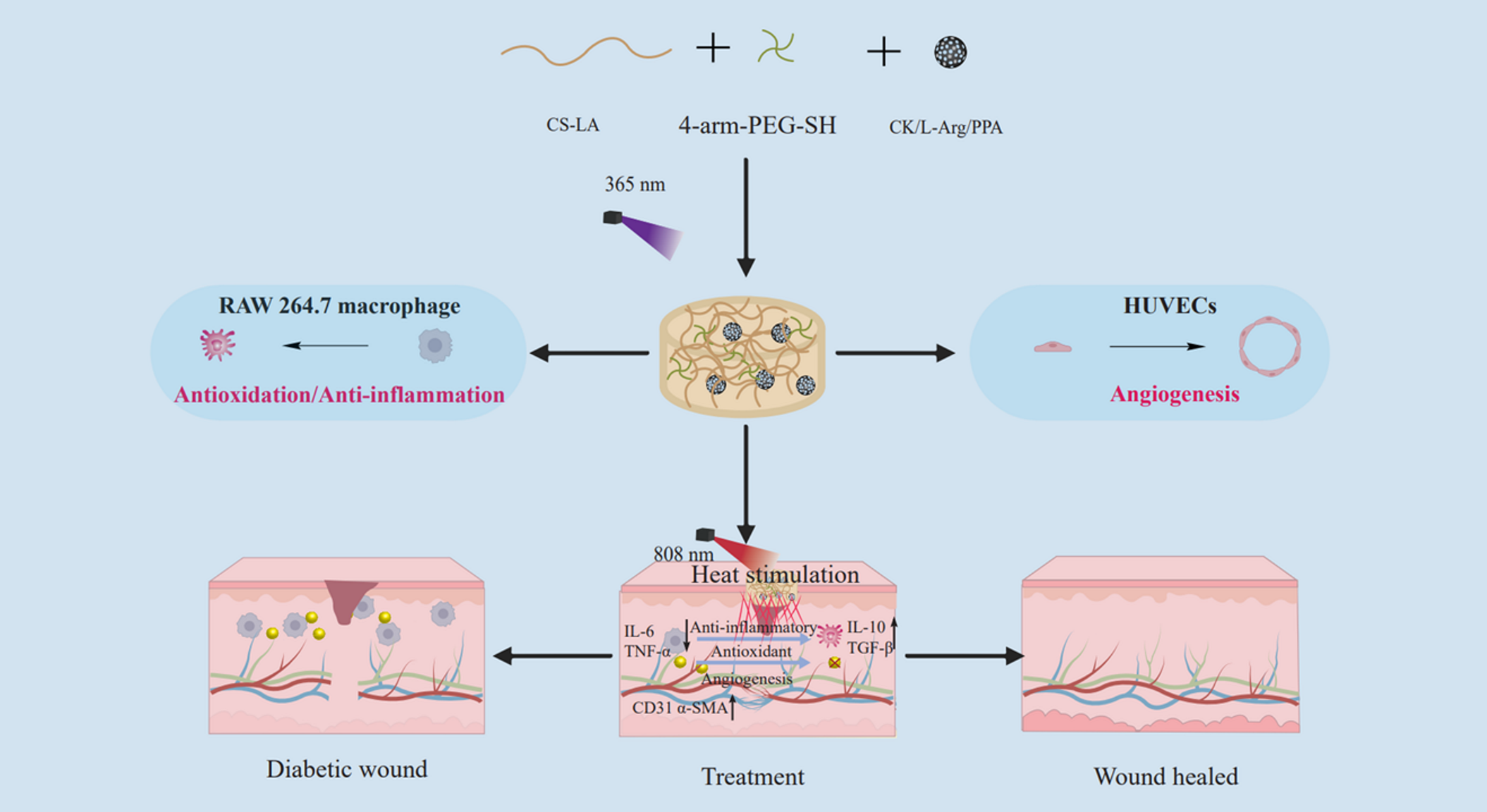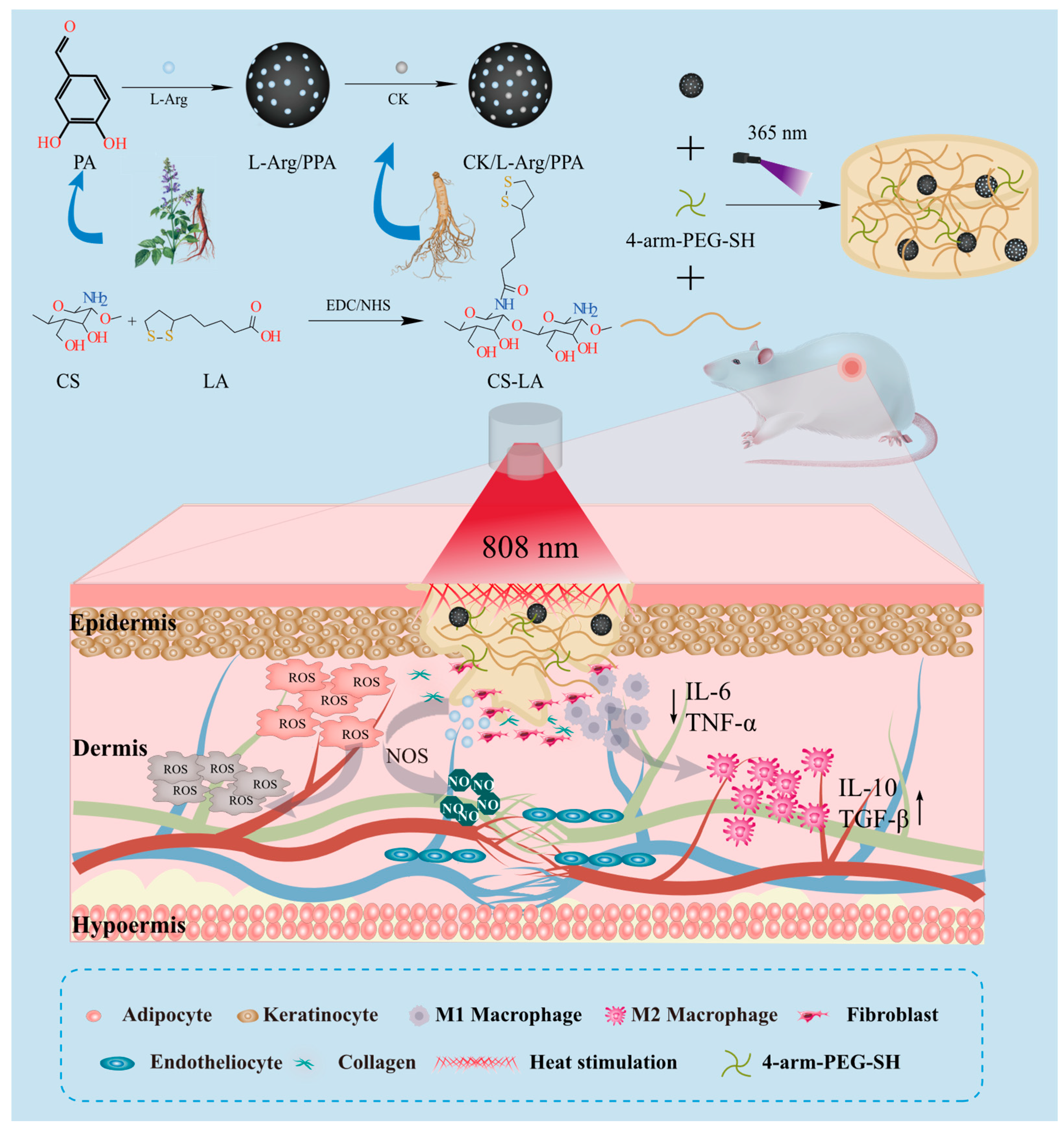

Mild Heat Stimulating and Microenvironment Reprogramming Hydrogel for Accelerating Diabetic Wound Healing

 , ,
, ,
Abstract
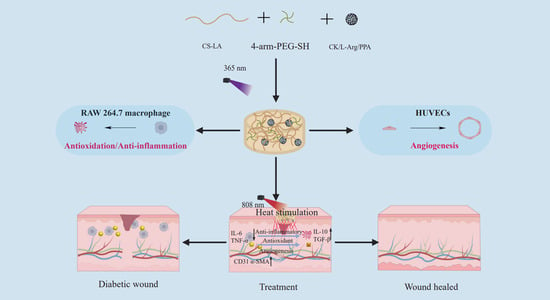
1. Introduction
2. Results and Discussion
2.1. Synthesis and Characterization of the Composite Hydrogel
2.2. Physicochemical Properties
2.3. Photothermal Performance and Near-Infrared Assisted Antibacterial Properties
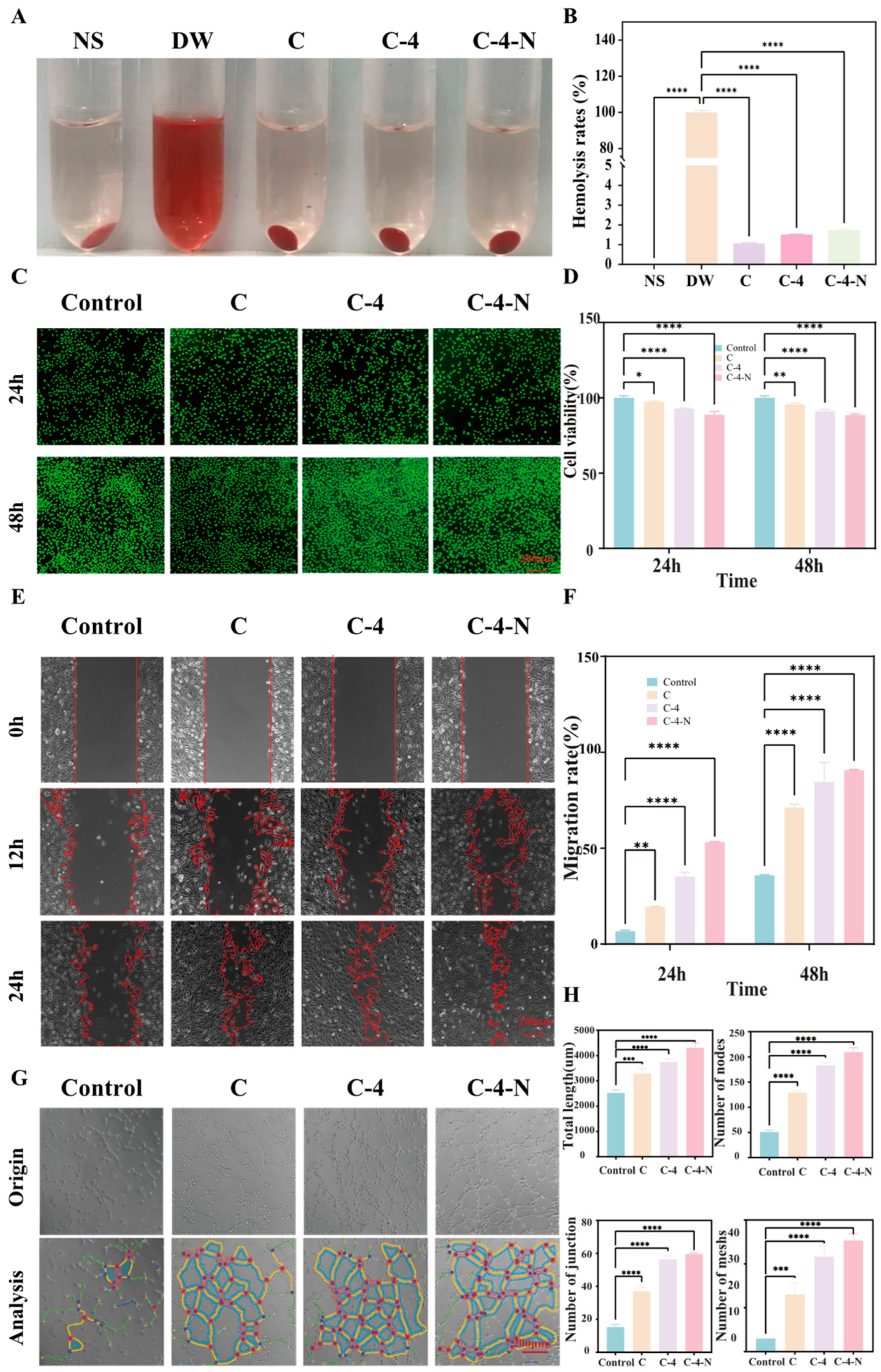
2.4. Biocompatibility, Cell Migration and Angiogenesis
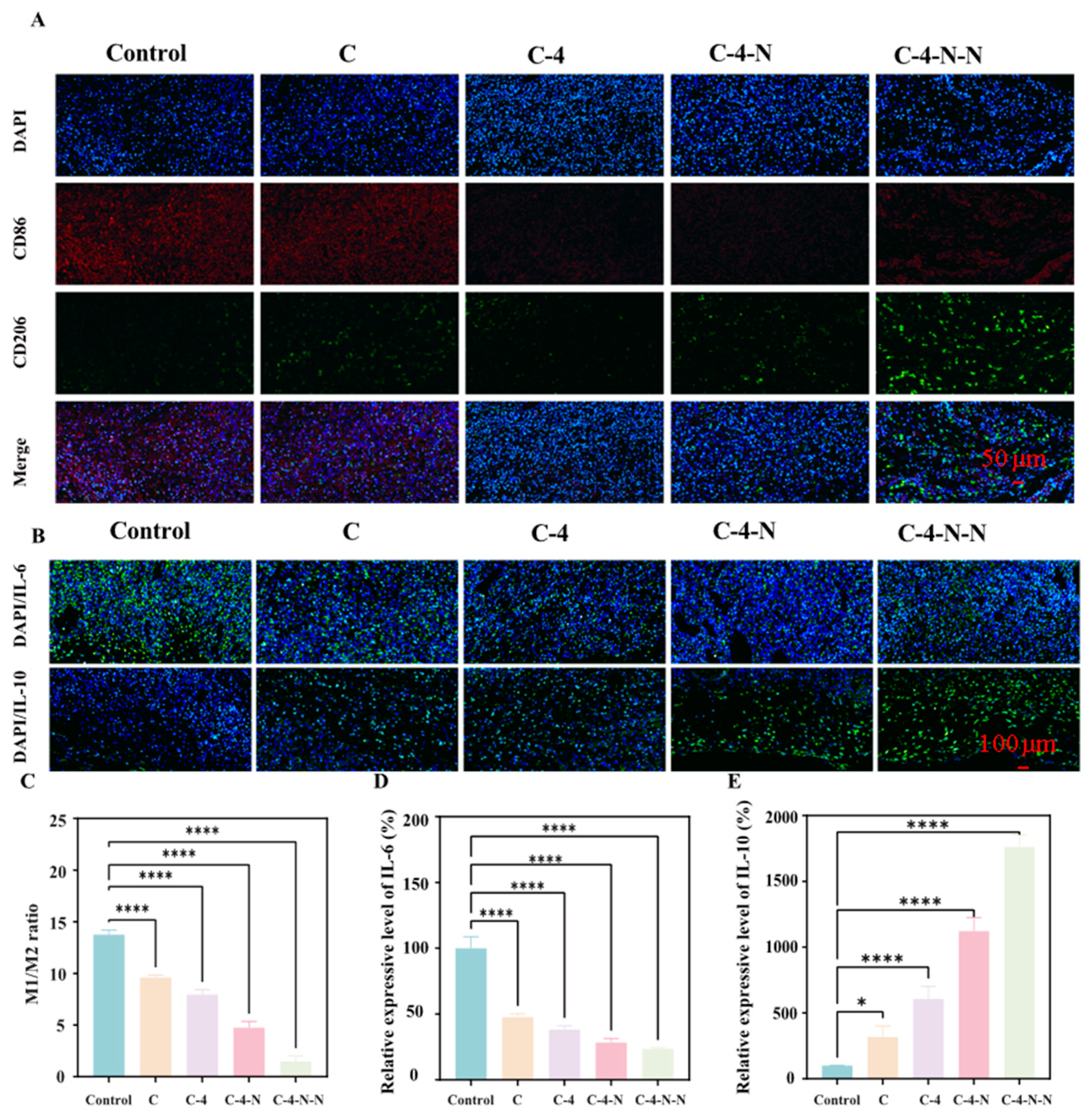
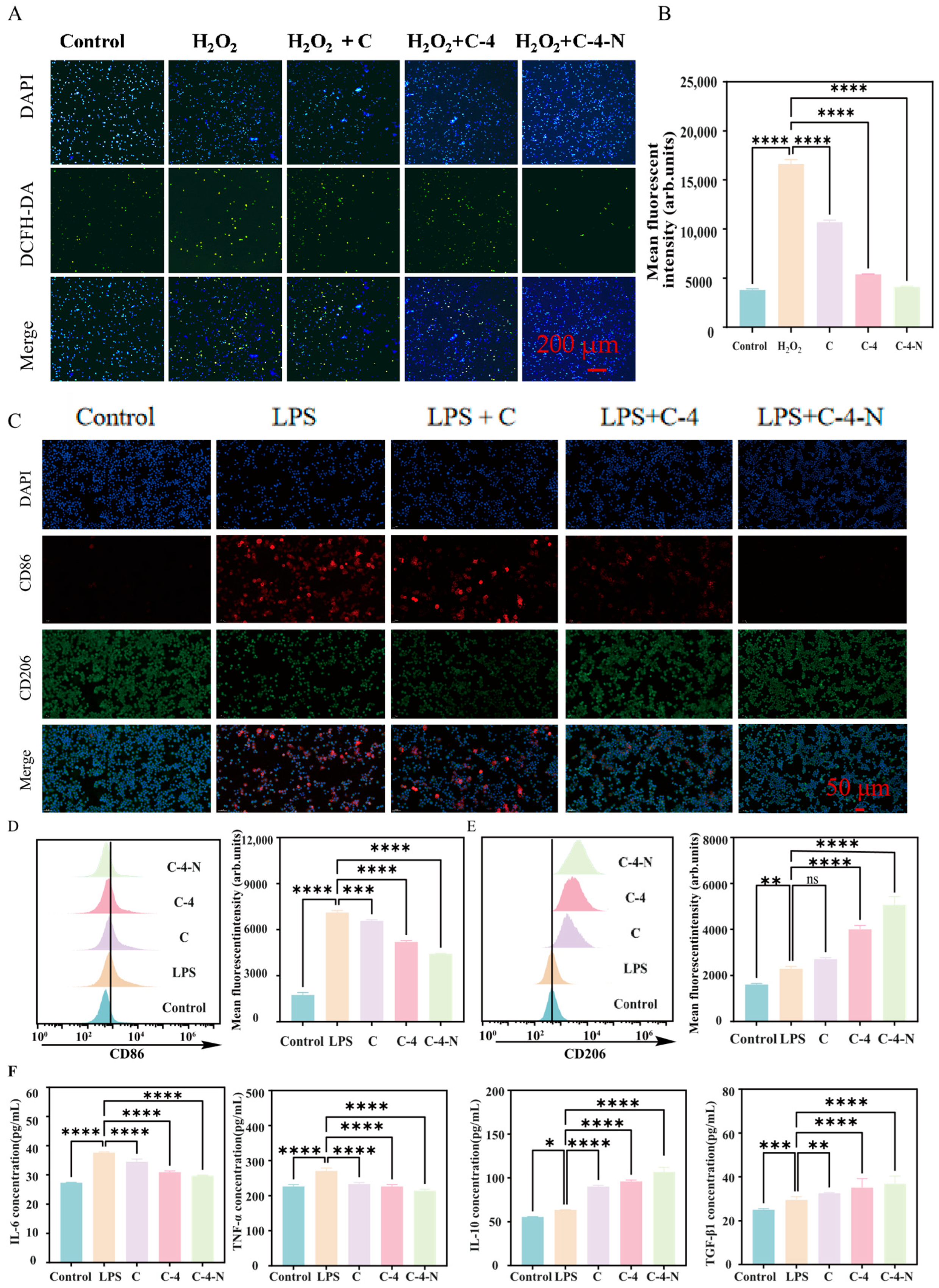
2.5. Antioxidant and Anti-Inflammatory Capacity
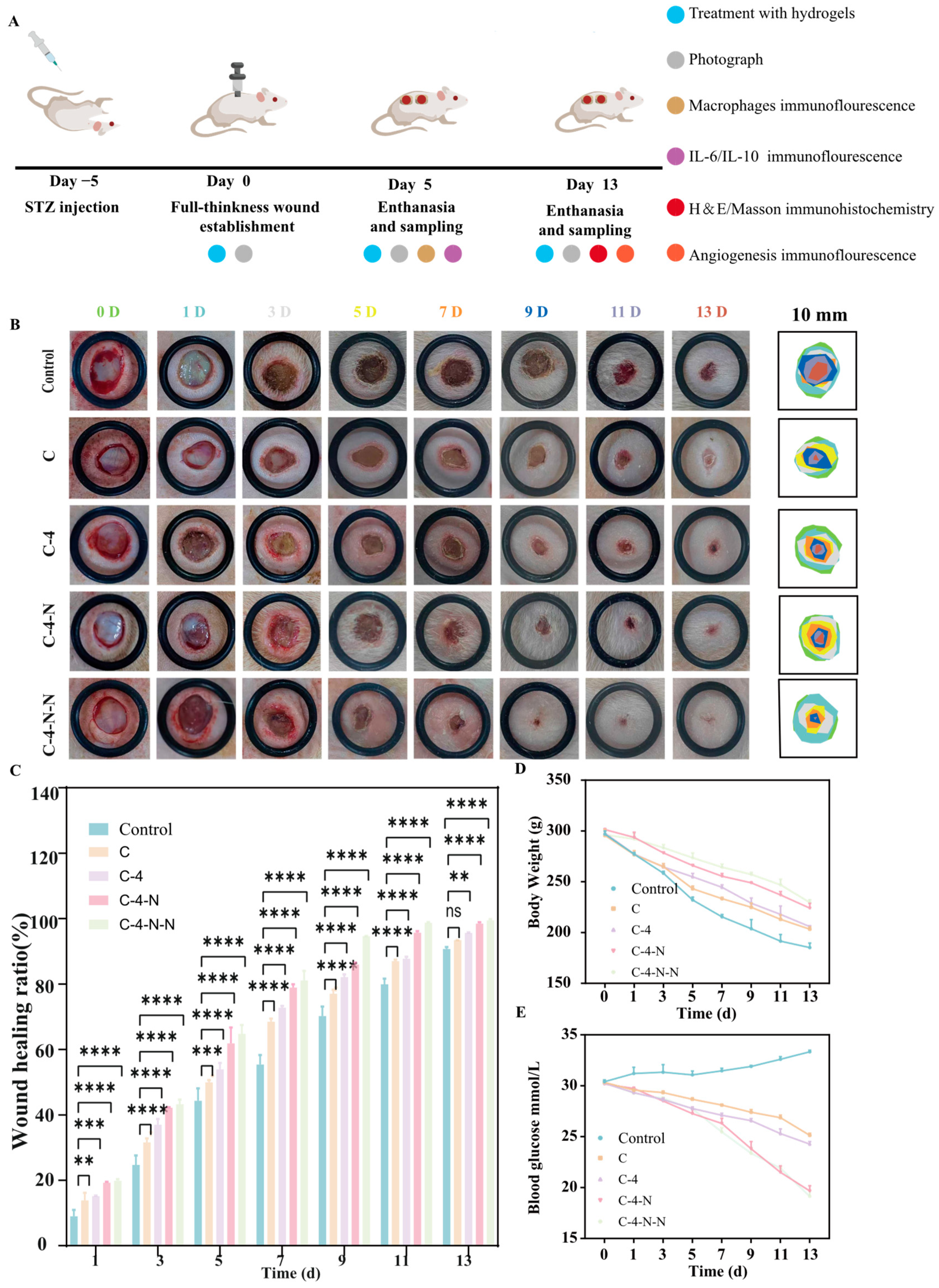
2.6. Wound Healing
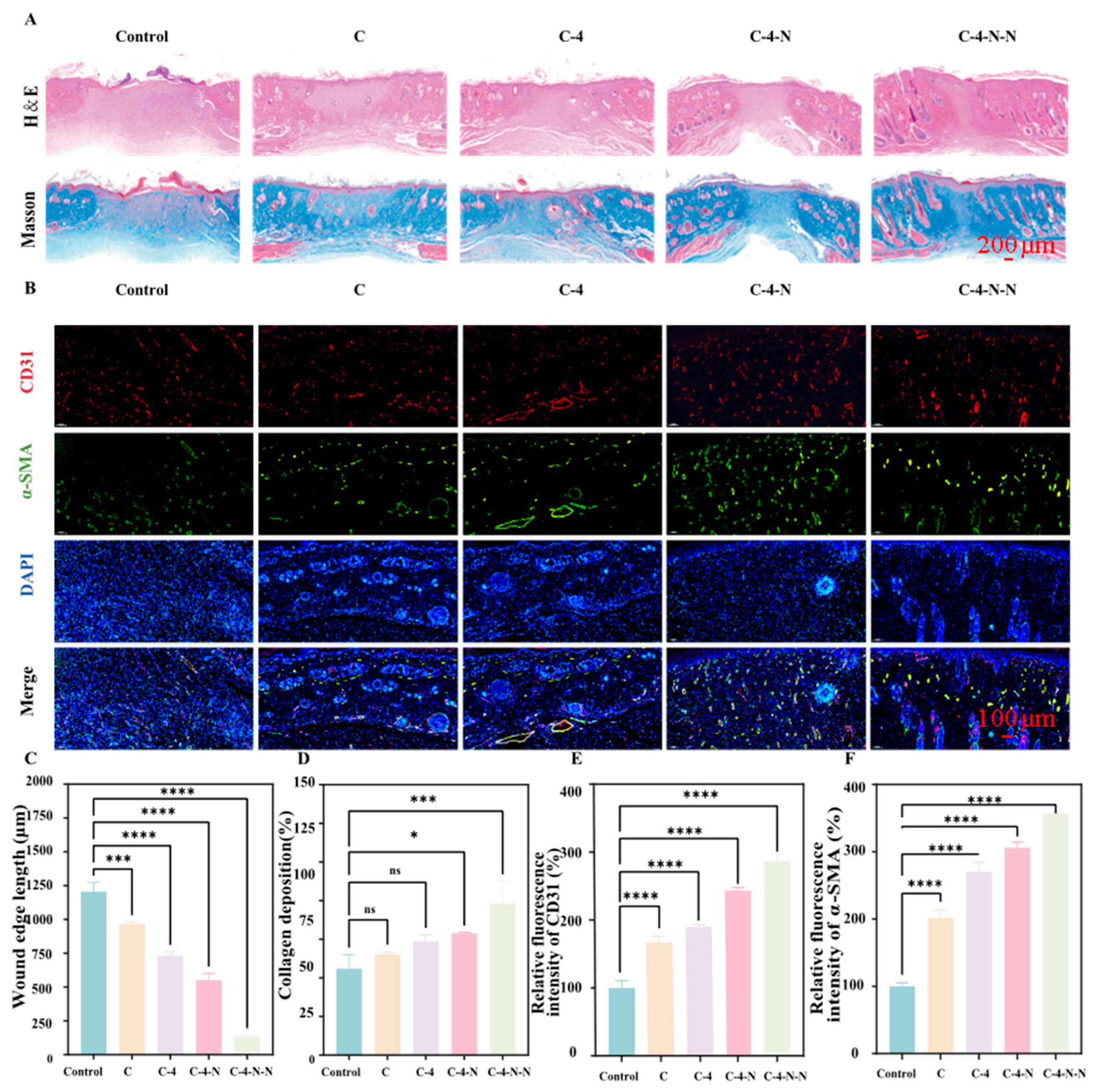
2.7. Histological and Immunofluorescence Analysis
3. Conclusions
4. Materials and Methods
4.1. Materials
4.2. Preparation of CK/L-Arg/PPA Nanoparticles
4.3. Synthesis of the CS-LA
4.4. Preparation of the C-4-N Composite Hydrogels
4.5. Characterization
4.6. Rheology Properties
4.7. Adhesion Properties of Hydrogels
4.8. Swelling of the Hydrogel
4.9. Release of CK/L-Arg/PPA Nanoparticles
4.10. Antibacterial
4.11. Cytotoxicity Test
4.12. Cell Migration
4.13. Detection of Angiogenic Capacity
4.14. Antioxidant Properties
4.15. Anti-Inflammatory Properties
4.16. In Vivo Photothermal Effects
4.17. Diabetic Skin Wound Healing Assay In Vivo
4.18. In Vivo Evaluation of Systemic Toxicity
4.19. Statistical Analysis
Supplementary Materials
Author Contributions
Funding
Institutional Review Board Statement
Informed Consent Statement
Data Availability Statement
Acknowledgments
Conflicts of Interest
Abbreviations
| CS | Chitosan |
| LA | Alpha-lipoic acid |
| EDC | 1-Ethyl-3-(3-dimethylaminopropyl) carbodiimide hydrochloride |
| NHS | N-hydroxy succinimide |
| FT-IR | Fourier transform infrared |
| 1H NMR | 1H Nuclear magnetic resonance |
| G′ | storage modulus |
| G″ | loss modulus |
| S. aureus | Staphylococcus aureus |
| E. coli | Escherichia coli |
| H&E | Hematoxylin and Eosin |
| Masson | Masson’s Trichrome Staining |
References
- McDermott, K.; Fang, M.; Boulton, A.J.M.; Selvin, E.; Hicks, C.W. Etiology, epidemiology, and disparities in the burden of diabetic foot ulcers. Diabetes Care 2022, 46, 209–221. [Google Scholar] [CrossRef] [PubMed]
- Xiang, P.; Jiang, M.; Chen, X.; Chen, L.; Cheng, Y.; Luo, X.; Zhou, H.; Zheng, Y. Targeting grancalcin accelerates wound healing by improving angiogenesis in diabetes. Adv. Sci. 2024, 11, e2305856. [Google Scholar] [CrossRef] [PubMed]
- Huang, F.; Lu, X.; Yang, Y.; Yang, Y.; Li, Y.; Kuai, L.; Li, B.; Dong, H.; Shi, J. Microenvironment-based diabetic foot ulcer nanomedicine. Adv. Sci. 2022, 10, e2203308. [Google Scholar] [CrossRef]
- Yan, Z.; Zhang, T.; Wang, Y.; Xiao, S.; Gao, J. Extracellular vesicle biopotentiated hydrogels for diabetic wound healing: The art of living nanomaterials combined with soft scaffolds. Mater. Today Bio 2023, 23, 100810. [Google Scholar] [CrossRef] [PubMed]
- Veves, A.; Falanga, V.; Armstrong, D.G.; Sabolinski, M.L. Graftskin, a human skin equivalent, is effective in the management of noninfected neuropathic diabetic foot ulcers: A prospective randomized multicenter clinical trial. Diabetes Care 2001, 24, 290–295. [Google Scholar] [CrossRef] [PubMed]
- Cheng, S.; Wang, H.; Pan, X.; Zhang, C.; Zhang, K.; Chen, Z.; Dong, W.; Xie, A.; Qi, X. Dendritic hydrogels with robust inherent antibacterial properties for promoting bacteria-infected wound healing. ACS Appl. Mater. Interfaces 2022, 14, 11144–11155. [Google Scholar] [CrossRef] [PubMed]
- Yang, F.; Mo, D.; Wu, B.; Chen, J.; Liu, Q.; Chen, W.; Pang, J.; Wang, W.; Jing, X.; Xiong, Y.; et al. Photo-controlled multifunctional hydrogel for photothermal sterilization and microenvironment amelioration of infected diabetic wounds. J. Control. Release 2024, 377, 470–484. [Google Scholar] [CrossRef] [PubMed]
- Jiang, T.; Chen, R.; Chang, J.; Duan, J.; Wang, Y.; Sun, Y.; Chen, X.; Ma, Y.; Zhang, L.; Jiang, H.; et al. Unveiling the immune microenvironment in diabetic nephropathy: From mechanisms to therapeutics. Front. Immunol. 2026, 17, 1750484. [Google Scholar] [CrossRef] [PubMed]
- Taha, N.A.; Hussein, A.A.; El-Hak, H.N.G.; El-Shenawy, N.S. A mini-review of nanoparticle therapeutics targeting oxidative stress and inflammation in diabetes. J. Basic Appl. Zool. 2025, 86, 29. [Google Scholar] [CrossRef]
- Giri, B.; Dey, S.; Das, T.; Sarkar, M.; Banerjee, J.; Dash, S.K. Chronic hyperglycemia mediated physiological alteration and metabolic distortion leads to organ dysfunction, infection, cancer progression and other pathophysiological consequences: An update on glucose toxicity. Biomed. Pharmacother. 2018, 107, 306–328. [Google Scholar] [CrossRef] [PubMed]
- Hlavackova, A.; Vydra, J.; Chrastinova, L.; Kotlin, R.; Stikarova, J.; Suttnar, J.; Dyr, J.E. Alteration of serum malondialdehyde level as biomarker of oxidative stress during acute myeloid leukemia treatment. Blood 2019, 134, 5181. [Google Scholar] [CrossRef]
- Youn, G.S.; Lee, K.W.; Choi, S.Y.; Park, J. Overexpression of HDAC6 induces pro-inflammatory responses by regulating ROS-MAPK-NF-kappaB/AP-1 signaling pathways in macrophages. Free Radic. Biol. Med. 2016, 97, 14–23. [Google Scholar] [CrossRef] [PubMed]
- Gao, S.; He, X.; Liu, H.; Liu, Y.; Wang, H.; Zhou, Z.; Chen, L.; Ji, X.; Yang, R.; Xie, J. Multifunctional bioactive nanozyme systems for enhanced diabetic wound healing. Adv. Healthc. Mater. 2024, 14, e2401580. [Google Scholar] [CrossRef] [PubMed]
- Banerjee, A.; Singh, P.; Sheikh, P.A.; Kumar, A.; Koul, V.; Bhattacharyya, J. A multifunctional silk-hyaluronic acid self-healing hydrogel laden with alternatively activated macrophage-derived exosomes reshape microenvironment of diabetic wound and accelerate healing. Int. J. Biol. Macromol. 2024, 270, 132384. [Google Scholar] [CrossRef] [PubMed]
- Yang, Q.; Fang, D.; Chen, J.; Hu, S.; Chen, N.; Jiang, J.; Zeng, M.; Luo, M. LncRNAs associated with oxidative stress in diabetic wound healing: Regulatory mechanisms and application prospects. Theranostics 2023, 13, 3655–3674. [Google Scholar] [CrossRef] [PubMed]
- Fahmy, M.I.; Khalaf, S.S.; Elrayess, R.A. The neuroprotective effects of alpha lipoic acid in rotenone-induced Parkinson’s disease in mice via activating PI3K/AKT pathway and antagonizing related inflammatory cascades. Eur. J. Pharmacol. 2024, 980, 176878. [Google Scholar] [CrossRef] [PubMed]
- Li, W.; Li, H.; Zheng, L.; Xia, J.; Yang, X.; Men, S.; Yuan, Y.; Fan, Y. Ginsenoside CK improves skeletal muscle insulin resistance by activating DRP1/PINK1-mediated mitophagy. Food Funct. 2022, 14, 1024–1036. [Google Scholar] [CrossRef]
- Superti, F.; Russo, R. Alpha-lipoic acid: Biological mechanisms and health benefits. Antioxidants 2024, 13, 1228. [Google Scholar] [CrossRef] [PubMed]
- Zhang, Q.-Y.; Tan, J.; Huang, K.; Nie, R.; Feng, Z.-Y.; Zou, C.-Y.; Li, Q.-J.; Chen, J.; Sheng, N.; Qin, B.-Q.; et al. Polyphenolic-modified cellulose acetate membrane for bone regeneration through immunomodulation. Carbohydr. Polym. 2023, 305, 120546. [Google Scholar] [CrossRef] [PubMed]
- Guo, C.; Zhu, J.; Wang, J.; Duan, J.; Ma, S.; Yin, Y.; Quan, W.; Zhang, W.; Guan, Y.; Ding, Y.; et al. Neuroprotective effects of protocatechuic aldehyde through PLK2/p-GSK3β/Nrf2 signaling pathway in both in vivo and in vitro models of Parkinson’s disease. Aging 2019, 11, 9424–9441. [Google Scholar] [CrossRef] [PubMed]
- Alshammari, G.M.; Abdelhalim, M.A.; Al-Ayed, M.S.; Al-Harbi, L.N.; Yahya, M.A. The protective effect of α-lipoic acid against gold nanoparticles (AuNPs)-mediated liver damage is associated with upregulating Nrf2 and suppressing NF-κB. Nutrients 2022, 14, 3327. [Google Scholar] [CrossRef] [PubMed]
- Lee, E.-S.; Choi, J.-S.; Kim, M.S.; You, H.J.; Ji, G.E.; Kang, Y.-H. Ginsenoside metabolite compound K differentially antagonizing tumor necrosis factor-α-induced monocyte–endothelial trafficking. Chem.-Biol. Interact. 2011, 194, 13–22. [Google Scholar] [CrossRef] [PubMed]
- Wang, H.; Yao, S.; Mo, Q.; Chen, M.; He, D.; Yan, L.; Wang, C.; Zou, T.; Luo, G.; Deng, J. L-Arginine-loaded microneedle patch enhances diabetic wound healing by regulating macrophage polarisation and mitochondrial homeostasis. Regen. Biomater. 2025, 12, rbaf092. [Google Scholar] [CrossRef] [PubMed]
- Zhang, Z.; Zhang, H.; Li, R.; Wu, H.; Cao, S.; Qi, L.; Li, J.; Guan, S. A self-supplying nitric oxide coating on Mg alloy for vascular stents promotes re-endothelialization. Acta Biomater. 2025, 209, 624–636. [Google Scholar] [CrossRef] [PubMed]
- Andrew, P. Enzymatic function of nitric oxide synthases. Cardiovasc. Res. 1999, 43, 521–531. [Google Scholar] [CrossRef] [PubMed]
- Karwi, Q.G.; Whiteman, M.; Wood, M.E.; Torregrossa, R.; Baxter, G.F. Pharmacological postconditioning against myocardial infarction with a slow-releasing hydrogen sulfide donor, GYY4137. Pharmacol. Res. 2016, 111, 442–451. [Google Scholar] [CrossRef] [PubMed]
- Su, Z.; Kong, L.; Dai, Y.; Tang, J.; Mei, J.; Qian, Z.; Ma, Y.; Li, Q.; Ju, S.; Wang, J.; et al. Bioresponsive nano-antibacterials for H2S-sensitized hyperthermia and immunomodulation against refractory implant–related infections. Sci. Adv. 2022, 8, eabn1701. [Google Scholar] [CrossRef] [PubMed]
- Tran, D.L.; Le Thi, P.; Lee, S.M.; Hoang Thi, T.T.; Park, K.D. Multifunctional surfaces through synergistic effects of heparin and nitric oxide release for a highly efficient treatment of blood-contacting devices. J. Control. Release 2020, 329, 401–412. [Google Scholar] [CrossRef] [PubMed]
- Dai, F.; Zhang, J.; Chen, F.; Chen, X.; Lee, C.J.; Liang, H.; Zhao, L.; Tan, H. A multi-responsive hydrogel combined with mild heat stimulation promotes diabetic wound healing by regulating inflammation and enhancing angiogenesis. Adv. Sci. 2024, 11, e2408783. [Google Scholar] [CrossRef]
- Zhang, Y.; Li, M.; Zhang, H.; You, J.; Zhou, J.; Ren, S.; Feng, J.; Han, Y.; Zhang, Y.; Zhou, Y. 3D-printed intelligent photothermal conversion Nb2C MXene composite scaffolds facilitate the regulation of angiogenesis-osteogenesis coupling for vascularized bone regeneration. Mater. Today Bio 2025, 31, 101647. [Google Scholar] [CrossRef] [PubMed]
- Min, Y.; Han, R.; Li, G.; Wang, X.; Chen, S.; Xie, M.; Zhao, Z. The pH-Sensitive Optical Fiber Integrated CMCS-PA@Fe Hydrogels for Photothermal Therapy and Real-Time Monitoring of Infected Wounds. Adv. Funct. Mater. 2023, 33, 2212803. [Google Scholar] [CrossRef]
- Sheng, L.; Zhang, Z.; Zhang, Y.; Wang, E.; Ma, B.; Xu, Q.; Ma, L.; Zhang, M.; Pei, G.; Chang, J. A novel “hot spring”-mimetic hydrogel with excellent angiogenic properties for chronic wound healing. Biomaterials 2020, 264, 120414. [Google Scholar] [CrossRef] [PubMed]
- Qi, X.; Cai, E.; Xiang, Y.; Zhang, C.; Ge, X.; Wang, J.; Lan, Y.; Xu, H.; Hu, R.; Shen, J. An immunomodulatory hydrogel by hyperthermia-assisted self-cascade glucose depletion and ROS scavenging for diabetic foot ulcer wound therapeutics. Adv. Mater. 2023, 35, e2306632. [Google Scholar] [CrossRef] [PubMed]
- Chen, S.; Chen, T.; Yuan, Y.; Liu, W.; Tang, X.; Zhang, Y.; Zhou, Y.; Wang, Z.; Zhu, Y.; Pang, Y. L-arginine induced versatile hydrogel with skin adaptiveness and mild photothermal antibacterial activity for dynamic diabetic wound healing. Chem. Eng. J. 2025, 522, 166942. [Google Scholar] [CrossRef]
- Geng, X.; Li, W.; Qu, J.; Wang, Q.; Che, T.; Yan, L.; Cui, H.; Liu, D.; Qin, S. Modified fish-skin-collagen-based hydrogels with antioxidant and antibacterial functions for diabetic wound healing. Adv. Healthc. Mater. 2025, 14, e2501456. [Google Scholar] [CrossRef] [PubMed]
- Xu, S.; Jiang, C.; Yu, T.; Chen, K. A multi-purpose dressing based on resveratrol-loaded ionic liquids/gelatin methacryloyl hydrogel for enhancing diabetic wound healing. Int. J. Biol. Macromol. 2024, 283, 136773. [Google Scholar] [CrossRef] [PubMed]
- Cui, M.; He, H.; Lu, H.; Yang, X.; Chen, S.; Zhou, X.; Li, F.; He, C.; Yang, G. Skin-mimetic bilayer hydrogel normalizes diabetic wound healing by orchestrating inflammatory cell dynamics: An early intervention strategy. Bioact. Mater. 2026, 61, 258–271. [Google Scholar] [CrossRef] [PubMed]
- Huang, L.P.; Liu, Y.; Li, Q.J.; Zhang, W.Q.; Wu, C.Y.; Zhao, L.M.; Xie, H.Q. A modified small intestinal submucosa patch with multifunction to promote scarless repair and reinvigoration of urethra. Adv. Healthc. Mater. 2023, 12, e2300519. [Google Scholar] [CrossRef] [PubMed]
- He, X.; Zhu, T.; Zhang, Z.; Cai, L.; Mao, H. An effective modification for enhancing bio-functionality and coloration of silk Fabrics with chitosan/alpha-lipoic acid conjugates. Fibers Polym. 2024, 25, 940–960. [Google Scholar] [CrossRef]
- Zeng, G.; Zhou, Y.; Liang, Y.; Zhang, F.; Luo, J.; Li, J.; Fang, Z. A hair fiber inspired bio-based adhesive with high bonding strength and mildew tolerance. Chem. Eng. J. 2022, 434, 134632. [Google Scholar] [CrossRef]
- Yang, M.; Tian, J.; Zhang, K.; Fei, X.; Yin, F.; Xu, L.; Wang, Y.; Li, Y. Bioinspired adhesive antibacterial hydrogel with self-healing and on-demand removability for enhanced full-thickness skin wound repair. Biomacromolecules 2023, 24, 4843–4853. [Google Scholar] [CrossRef] [PubMed]
- Liang, Y.; Li, M.; Yang, Y.; Qiao, L.; Xu, H.; Guo, B. pH/glucose dual responsive metformin release hydrogel dressings with adhesion and self-healing via dual-dynamic bonding for athletic diabetic foot wound healing. ACS Nano 2022, 16, 3194–3207. [Google Scholar] [CrossRef] [PubMed]
- Han, W.; Ren, J.; Xuan, H.; Ge, L. Controllable degradation rates, antibacterial, free-standing and highly transparent films based on polylactic acid and chitosan. Colloids Surf. A Physicochem. Eng. Asp. 2018, 541, 128–136. [Google Scholar] [CrossRef]
- Sun, Q.; Yuan, T.; Yang, G.; Guo, D.; Sha, L.; Yang, R. Chitosan-graft-poly(lactic acid)/CD-MOFs degradable composite microspheres for sustained release of curcumin. Int. J. Biol. Macromol. 2023, 253, 127519. [Google Scholar] [CrossRef] [PubMed]
- Jazani, A.M.; Arezi, N.; Maruya-Li, K.; Jung, S.; Oh, J.K. Facile strategies to synthesize dual location dual acidic pH/reduction-responsive degradable block copolymers bearing acetal/disulfide block junctions and disulfide pendants. ACS Omega 2018, 3, 8980–8991. [Google Scholar] [CrossRef] [PubMed]
- Valente-Rodrigues, C.L.; Caraballo-Vivas, R.J.; Santos, E.C.S.; Sharma, S.K.; Garcia, F. Investigation of Cr3+ doped Zn-Co nanoferrites as potential candidate for self-regulated magnetic hyperthermia applications. Phys. Scr. 2023, 98, 095913. [Google Scholar] [CrossRef]
- Yu, X.; Zhao, J.; Fan, D. A dissolving microneedle patch for antibiotic/enzymolysis/photothermal triple therapy against bacteria and their biofilms. Chem. Eng. J. 2022, 437, 135475. [Google Scholar] [CrossRef]
- Shi, C.; Sun, Y.; Zhang, X.; Zheng, Z.; Yang, M.; Ben, H.; Song, K.; Cao, Y.; Chen, Y.; Liu, X.; et al. Antimicrobial effect of lipoic acid against Cronobacter sakazakii. Food Control 2016, 59, 352–358. [Google Scholar] [CrossRef]
- Mallakpour, S.; Hatami, M. Green and eco-friendly route for the synthesis of Ag@Vitamin B9-LDH hybrid and its chitosan nanocomposites: Characterization and antibacterial activity. Polymer 2018, 2018, 188–199. [Google Scholar] [CrossRef]
- Jacob, C. A scent of therapy: Pharmacological implications of natural products containing redox-active sulfur atoms. Nat. Prod. Rep. 2006, 23, 851–863. [Google Scholar] [CrossRef] [PubMed]
- Qi, J.; Xu, H.; Wu, X.; Lv, Z.; Yue, T.; Yang, H.; Yuan, Y. Antimicrobial activity and mechanism of protocatechualdehyde against Alicyclobacillus spp. And its effect on apple juice physicochemical properties. Food Control 2025, 175, 111289. [Google Scholar] [CrossRef]
- Zhang, G.; Li, Z.; Sun, M.; Lu, Y.; Song, J.; Duan, W.; Huang, X.; Hang, R.; Yao, X.; Chu, P.K.; et al. Nanostructure-Mediated Photothermal Effect for Reinforcing Physical Killing Activity of Nanorod Arrays. Adv. Sci. 2024, 12, 2411997. [Google Scholar] [CrossRef] [PubMed]
- Kanagy, N.L.; Szabo, C.; Papapetropoulos, A. Vascular biology of hydrogen sulfide. Am. J. Physiol.-Cell Physiol. 2017, 312, 537–549. [Google Scholar] [CrossRef] [PubMed]
- Yu, X.; Qi, Y.; Zhao, T.; Fang, J.; Liu, X.; Xu, T.; Yang, Q.; Dai, X. NGF increases FGF2 expression and promotes endothelial cell migration and tube formation through PI3K/Akt and ERK/MAPK pathways in human chondrocytes. Osteoarthr. Cartil. 2019, 27, 526–534. [Google Scholar] [CrossRef]
- Liu, Y.; Ma, L.; Zhang, X.; Zhang, Y.; Wang, Z.; Zhao, H.; Zhan, L.; Kong, Y.; Zeng, M.-H.; Ma, X.; et al. Microenvironment-responsive and NO sustained-release hydrogel accelerates infected wound healing by bacteriostasis and angiogenesis. Int. J. Biol. Macromol. 2026, 347, 150824. [Google Scholar] [CrossRef] [PubMed]
- Zhang, Q.; Liu, J.; Duan, H.; Li, R.; Peng, W.; Wu, C. Activation of Nrf2/HO-1 signaling: An important molecular mechanism of herbal medicine in the treatment of atherosclerosis via the protection of vascular endothelial cells from oxidative stress. J. Adv. Res. 2021, 34, 43–63. [Google Scholar] [CrossRef] [PubMed]
- Liu, K.; Zhao, D.; Zhao, H.; Yu, Y.; Yang, M.; Ma, M.; Zhang, C.; Guan, F.; Yao, M. Mild hyperthermia-assisted chitosan hydrogel with photothermal antibacterial property and CAT-like activity for infected wound healing. Int. J. Biol. Macromol. 2023, 254, 128027. [Google Scholar] [CrossRef] [PubMed]
- Adeghate, E.; Ponery, A.S.; El-Sharkawy, T.; Parvez, H. L-arginine stimulates insulin secretion from the pancreas of normal and diabetic rats. Amino Acids 2001, 21, 205–209. [Google Scholar] [CrossRef] [PubMed]
- Dilworth, L.; Stennett, D.; Facey, A.; Omoruyi, F.; Mohansingh, S.; Omoruyi, F.O. Diabetes and the associated complications: The role of antioxidants in diabetes therapy and care. Biomed. Pharmacother. 2024, 181, 117641. [Google Scholar] [CrossRef] [PubMed]
- Shao, J.-W.; Jiang, J.-L.; Zou, J.-J.; Yang, M.-Y.; Chen, F.-M.; Zhang, Y.-J.; Jia, L. Therapeutic potential of ginsenosides on diabetes: From hypoglycemic mechanism to clinical trials. J. Funct. Foods 2019, 64, 103630. [Google Scholar] [CrossRef]
- Li, Y.; Tan, S.; Zhang, X.; Li, Z.; Cai, J.; Liu, Y. Design strategies and emerging applications of conductive hydrogels in wearable sensing. Gels 2025, 11, 258. [Google Scholar] [CrossRef] [PubMed]
- Zhang, L.; Yang, J.; Liu, W.; Ding, Q.; Sun, S.; Zhang, S.; Wang, N.; Wang, Y.; Xi, S.; Liu, C.; et al. A phellinus igniarius polysaccharide/chitosan-arginine hydrogel for promoting diabetic wound healing. Int. J. Biol. Macromol. 2023, 249, 126014. [Google Scholar] [CrossRef] [PubMed]
- Liu, K.; Kang, Y.; Dong, X.; Li, Q.; Wang, Y.; Wu, X.; Yang, X.; Chen, Z.; Dai, H. A simple yet effective hydrogel dressing for advanced microenvironmental management of diabetic wounds with intrinsic regulation. Chem. Eng. J. 2023, 470, 143987. [Google Scholar] [CrossRef]
- Wan, Z.; He, J.; Yang, Y.; Chong, T.; Wang, J.; Guo, B.; Xue, L. Injectable adhesive self-healing biocompatible hydrogel for haemostasis, wound healing, and postoperative tissue adhesion prevention in nephron-sparing surgery. Acta Biomater. 2022, 152, 157–170. [Google Scholar] [CrossRef] [PubMed]
- Bidarra, S.J.; Barrias, C.C.; Fonseca, K.B.; Barbosa, M.A.; Soares, R.A.; Granja, P.L. Injectable in situ crosslinkable RGD-modified alginate matrix for endothelial cells delivery. Biomaterials 2011, 32, 7897–7904. [Google Scholar] [CrossRef] [PubMed]
- Xu, L.; Zhang, J.; Luo, J.; Cui, Y.; Chen, J.; Zeng, B.; Deng, Z.; Shao, L. “Double-sided protector” Janus hydrogels for skin and mucosal wound repair: Applications, mechanisms, and prospects. J. Nanobiotechnol. 2025, 23, 387. [Google Scholar] [CrossRef] [PubMed]
- Tang, H.; Wang, H.; Sun, W.; Chen, Y.; Pan, Z.; Bai, Q.; Wang, Y.; Lin, W.; Hu, Y.; Wang, L.; et al. A bio-adaptive physical hydrogel enables dynamic tissue engineering for tracheal reconstruction. Nat. Commun. 2025, 17, 866. [Google Scholar] [CrossRef] [PubMed]
- Cheng, S.; Yang, J.; Song, J.; Cao, X.; Zhou, B.; Yang, L.; Li, C.; Wang, Y. A motion-responsive injectable lubricative hydrogel for efficient Achilles tendon adhesion prevention. Mater. Today Bio 2025, 30, 101458. [Google Scholar] [CrossRef] [PubMed]
- Li, Y.; Sun, Z.; Chai, S.; Zhang, Z.; Li, Y.; Zhu, C.; Fan, D. Tissue-like soft dual-network hydrogel patch with instant/tunable adhesion and microenvironment modulation for infected wound healing. ACS Nano 2025, 19, 27714–27730. [Google Scholar] [CrossRef] [PubMed]




Disclaimer/Publisher’s Note: The statements, opinions and data contained in all publications are solely those of the individual author(s) and contributor(s) and not of MDPI and/or the editor(s). MDPI and/or the editor(s) disclaim responsibility for any injury to people or property resulting from any ideas, methods, instructions or products referred to in the content. |
© 2026 by the authors. Licensee MDPI, Basel, Switzerland. This article is an open access article distributed under the terms and conditions of the Creative Commons Attribution (CC BY) license.
Share and Cite
Xiao, X.; Liu, Y.; Li, D.; Wang, L.; Hu, Z.; Xing, X.; Ding, Y.; Wang, X.; Zhang, R.; Yang, J.; et al. Mild Heat Stimulating and Microenvironment Reprogramming Hydrogel for Accelerating Diabetic Wound Healing. Gels 2026, 12, 542. https://doi.org/10.3390/gels12060542
Xiao X, Liu Y, Li D, Wang L, Hu Z, Xing X, Ding Y, Wang X, Zhang R, Yang J, et al. Mild Heat Stimulating and Microenvironment Reprogramming Hydrogel for Accelerating Diabetic Wound Healing. Gels. 2026; 12(6):542. https://doi.org/10.3390/gels12060542
Chicago/Turabian StyleXiao, Xueting, Yannan Liu, Dan Li, Lebin Wang, Zirui Hu, Xinliang Xing, Yali Ding, Xurun Wang, Ruifan Zhang, Jing Yang, and et al. 2026. "Mild Heat Stimulating and Microenvironment Reprogramming Hydrogel for Accelerating Diabetic Wound Healing" Gels 12, no. 6: 542. https://doi.org/10.3390/gels12060542
APA StyleXiao, X., Liu, Y., Li, D., Wang, L., Hu, Z., Xing, X., Ding, Y., Wang, X., Zhang, R., Yang, J., & Ma, X. (2026). Mild Heat Stimulating and Microenvironment Reprogramming Hydrogel for Accelerating Diabetic Wound Healing. Gels, 12(6), 542. https://doi.org/10.3390/gels12060542