
Article

Titanium-Integrated Magnetic Silica Aerogels via Microfluidic Synthesis for Pesticide Removal from Water


by
Elena-Theodora Moldoveanu
1,
Adelina-Gabriela Niculescu
1,2,
Dana-Ionela Tudorache (Trifa)
1,
Alexandra-Cătălina Bîrcă
1,2,
Bogdan Purcăreanu
1,3,
Ionela C. Voinea
4,
Miruna S. Stan
4,
Bogdan-Ștefan Vasile
5,6,
Dan Eduard Mihaiescu
7,
Tony Hadibarata
1,8 and
Alexandru Mihai Grumezescu
1,2,*
1
Department of Science and Engineering of Oxide Materials and Nanomaterials, National University of Science and Technology POLITEHNICA Bucharest, 1-7 Polizu Street, 011061 Bucharest, Romania
2
Research Institute of the University of Bucharest—ICUB, University of Bucharest, 90-92 Panduri, 050663 Bucharest, Romania
3
BIOTEHNOS SA, Gorunului Rue, No. 3-5, 075100 Otopeni, Romania
4
Department of Biochemistry and Molecular Biology, Faculty of Biology, University of Bucharest, 91-95 Splaiul Independentei, 050095 Bucharest, Romania
5
Research Center for Advanced Materials, Products and Processes, National University of Science and Technology POLITEHNICA Bucharest, 060042 Bucharest, Romania
6
National Research Center for Micro and Nanomaterials, National University of Science and Technology POLITEHNICA Bucharest, 060042 Bucharest, Romania
7
Department of Organic Chemistry, National University of Science and Technology POLITEHNICA Bucharest, 011061 Bucharest, Romania
8
Environmental Engineering Program, Faculty of Engineering and Science, Curtin University Malaysia, CDT 250, Miri 98009, Malaysia
*
Author to whom correspondence should be addressed.
Gels 2026, 12(4), 309; https://doi.org/10.3390/gels12040309
Submission received: 5 March 2026 / Revised: 26 March 2026 / Accepted: 1 April 2026 / Published: 3 April 2026

Abstract

Pesticides are a major cause of water contamination, making this issue a major environmental and public health concern. In this context, the development of advanced and effective remediation materials is needed. In this study, a titanium-functionalized magnetic silica aerogel (AG-Ti@Fe3O4-SA) was successfully prepared via microfluidics and evaluated for water decontamination. The structural and compositional features of the aerogel were determined using XRD, FT-IR, RAMAN, SEM, TEM, BET, and DLS, confirming the formation of the aerogel with dispersed Fe3O4-SA nanoparticles and the successful incorporation of titanium within the aerogel matrix. Regarding decontamination potential, the aerogel was tested against a pesticide mixture, yielding pesticide-dependent removal efficiencies (16–100%). Notably, the aerogel exhibited a high affinity for organophosphorus pesticides and a moderate affinity for polar compounds, whereas bulky hydrophobic pesticides showed lower adsorption. In vitro, the aerogel induced a moderate decrease in HaCaT cell viability after 48 h of exposure, accompanied by a slight increase in lactate dehydrogenase release, while HEK293 cells remained largely unaffected, indicating a cell-type-dependent biological response. Overall, the findings from this screening-level study recommend AG-Ti@Fe3O4-SA aerogel as a promising selective adsorbent for pesticide removal.

1. Introduction

Water is an essential element for life, used in food production and involved in economic development. However, water pollution poses a global burden, associated with widespread diseases and mortality. In this context, the need for safe and accessible water is urgent [1,2,3,4,5]. Water pollution mainly results from industrialization, which releases organic and inorganic substances, solvents, and volatile chemicals into water bodies [1,6,7,8]. Another area that impacts water pollution is agriculture, as pesticides, nitrogen fertilizers, and organic farm waste significantly degrade water quality [2,7,8]. Conventional water treatment methods are limited, often requiring high energy use or incomplete pollutant removal, underscoring the need for new, effective solutions [6,9]. In this regard, researchers started to investigate nanotechnology approaches that lead to advanced adsorptive materials such as polymer nanomaterials, carbon nanotubes, (nano) zeolites, carbon, graphene, metallic NPs, graphene quantum dots, and aerogels [5,6,10].
Aerogels represent a class of three-dimensional nanotructured materials characterized by high micro- and nanoporosity and very large specific surface area [11,12]. Because of their specific characteristics and properties, fabricating composite aerogels enables new features that allow property tailoring, leading to improvements in water affinity, mechanical strength, and specific applications with enhanced performance [11]. Aerogels have remarkable properties, such as micro- and nanoporous structures, making them suitable as sorbents for water treatment. Thus, the literature reports different types of aerogels for efficient removal of contaminants, including metals, pharmaceutical compounds, oil, fertilizers, dyes, and organic solvents [13,14]. Regarding water decontamination, the literature reports a wide range of aerogels based on alginate, biochar, cellulose, chitosan, gelatin, carbon, metal–organic frameworks, polymers, and silica [12]. Moreover, the most used material in aerogel fabrication is silica, due to its properties that can be improved by organic–inorganic hybridization [13,15].
Silica-based aerogels have immense potential for applications addressing the pressing global challenge of water pollution, serving as suitable sorbents for various contaminants, including dyes, heavy metals, pesticides and herbicides, phenolic compounds, and pharmaceuticals [16,17,18]. One concerning pollution issue is pesticide pollution. Due to their diversified physical and chemical nature, their removal from water bodies is hindered [19]. In this context, some of the literature reports several studies that address this issue. For example, El-Said et al. [20] developed a silica-based composite for the removal of chloridazon (a pyridazinone herbicide) from aqueous media. The composite demonstrated strong performance in removing chloridazon from water (90%) through physical interactions. Also, composite materials based on carbon and iron oxide can be efficiently used to address the pesticide issue [21]. El-Sheikh et al. [22] evaluated the adsorptive capacity of multi-walled carbon nanotubes, C18 silica, and activated carbon as separate sorbents towards pesticides. Silica C18 demonstrated good analytical performance for pesticide extraction, but its efficiency was considerably lower than that of carbon-based materials for all three pesticides investigated (atrazine, propoxur, and methidathion). Roostaie et al. [23] developed an aerogel based on nanoporous, modified silica for the extraction of chlorobenzenes from water samples. Moreover, Feng et al. [24] evaluated the possibility of magnetic silica aerogel for the adsorption of pyrethroid insecticides. However, beyond our previous studies, the literature provides limited information on the extraction of the pesticides exemplified and used in this study.
Introducing magnetic adsorbents, such as magnetite (Fe3O4)-based materials, can provide distinct advantages, such as strong adsorption activity, easy recovery from aqueous media using an external magnetic field, and efficient magnetic separation [25,26]. In this context, magnetite’s adsorptive properties are attributed to its highly active surfaces, which can bind both positively and negatively charged ions [27]. When incorporated into aerogel composites, their high magnetism, adsorption performance, biodegradability, and reusability make them particularly attractive and cost-effective for water purification applications [28].
Moreover, material features can be improved through the synthesis route. Microfluidics is a versatile approach to synthesizing nanomaterials, enabling high-precision synthesis by controlling reaction parameters to optimize morphology and size, thereby improving monodispersity, production efficiency, and quality [29,30,31]. Microfluidic synthesis promotes a precise manipulation of fluids in confined microchannels. Thus, microfluidics can be a versatile approach for obtaining nanomaterials due to controlled hydrodynamic mixing and continuous reaction conditions. The microscale reaction environment can improve mass transfer compared to conventional reaction environments, leading to controlled precursor mixing, reaction equilibrium, and nucleation growth process. Moreover, during microfluidic synthesis, parameters such as flow rates, channel geometry, and residence time help control reaction conditions and material formation. Additionally, this synthesis strategy enables sequential reactions to assemble complex nanostructures. As a result, microfluidics offers an efficient alternative to bulk methods, producing nanomaterials with improved size uniformity, morphology control, and overall quality [32,33,34].
Thus, in the context of water pollution, associated public health concerns, and the limitations of conventional water treatment strategies, there is an urgent need to develop new, efficient water decontamination approaches. In line with this need, the present study focuses on developing a new material with potential applications in water decontamination, aiming to enhance adsorption performance and provide a potentially safe material for environmental remediation. Specifically, a silica-based aerogel functionalized with titanium and incorporated with magnetite nanoparticles (Fe3O4-SA) functionalized with salicylic acid (AG-Ti@Fe3O4-SA) was obtained using a microfluidic platform, exhibiting a porous structure with integrated magnetite nanoparticles and titanium ions within the aerogel matrix, as confirmed by XRD, FT-IR, RAMAN, SEM, TEM, and BET analyses. The material demonstrated variable decontamination efficiency, ranging from 16 to 100%, indicating a strong affinity for organophosphorus compounds and moderately polar compounds. The biological assays indicate a cell-type-dependent biological response of the material and the potential to develop a selective adsorbent for water decontamination applications.

2. Results and Discussion

Given the global crisis of water pollution caused by pesticides and the need to develop innovative, effective materials to address this issue, this study proposes a new composite aerogel, AG-Ti@Fe3O4-SA, with improved properties, as a new strategy for decontamination applications. To improve its features, the material was synthesized via microfluidics, which helped control reaction parameters (including precipitation and homogeneous mixing), resulting in a uniform porous network of interconnected pores and a uniform dispersion of Fe3O4 within the aerogel matrix.
The chemical composition of AG-Ti@Fe3O4-SA is a key factor in its decontamination performance. In this regard, the sodium trisilicate-derived silica network confers high surface area to the aerogel, while the alginic acid sodium salt provides flexibility and abundant oxygen-containing active sites. CTAB contributes to the aerogel porosity, and the introduction of titanium and Fe3O4 nanoparticles provides supplementary adsorption sites. Moreover, the nanoparticles are embedded as dispersed magnetic domains, which contribute to structural heterogeneity and promote magnetic recovery after decontamination. To provide as much information as possible about its physicochemical properties, the material was characterized using XRD, FT-IR, Raman, SEM, TEM, and BET. In addition, the performance of the aerogel under study for water purification was evaluated using HR-MS FT-ICR, and its biocompatibility was assessed through several biological assays.

2.1. Aerogel Characterization

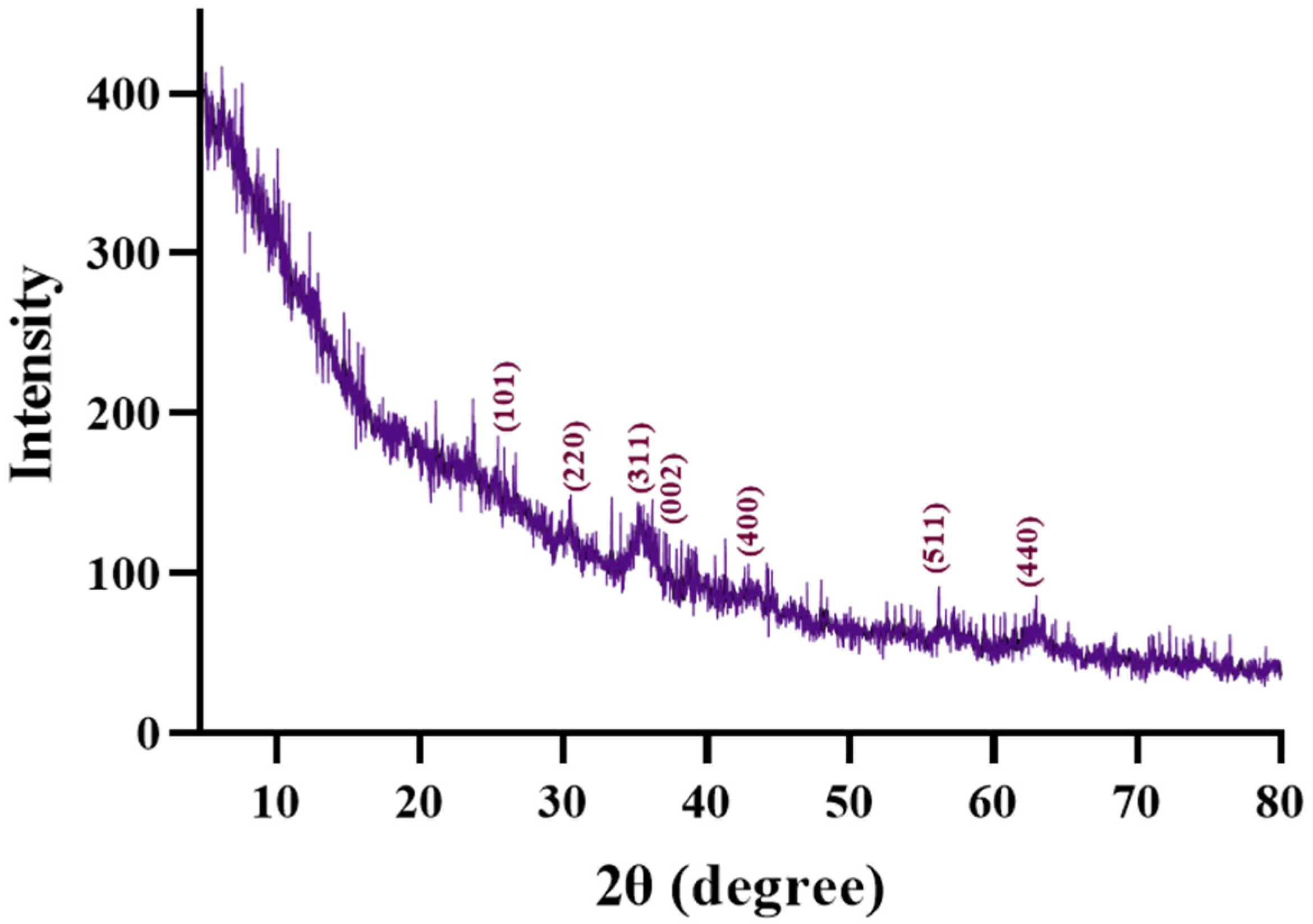
Figure 1 represents the diffractogram of the AG-Ti@Fe3O4-SA aerogel, which shows distinct diffraction peaks for both silica and iron oxide. In the ~20–30° interval, a specific large halo specific to amorphous silica can be observed. Also, the XRD analysis confirms the successful integration of Fe3O4 and titanium in the aerogel matrix. Diffuse reflections associated with the spinel phase of Fe3O4 (ASTM 01-075-160) identified at 2theta angles of ~30°, ~35°, ~43°, ~54°, ~57°, and ~63° correspond to the (220), (311), (400), (422), (511), (440) planes, indicating the formation of well-dispersed nanoparticles in the aerogel matrix. The intensity associated with titanium at 2theta angles of ~25° and ~37° is weak, partially overlapped by the amorphous background, suggesting that it is well integrated into the aerogel.
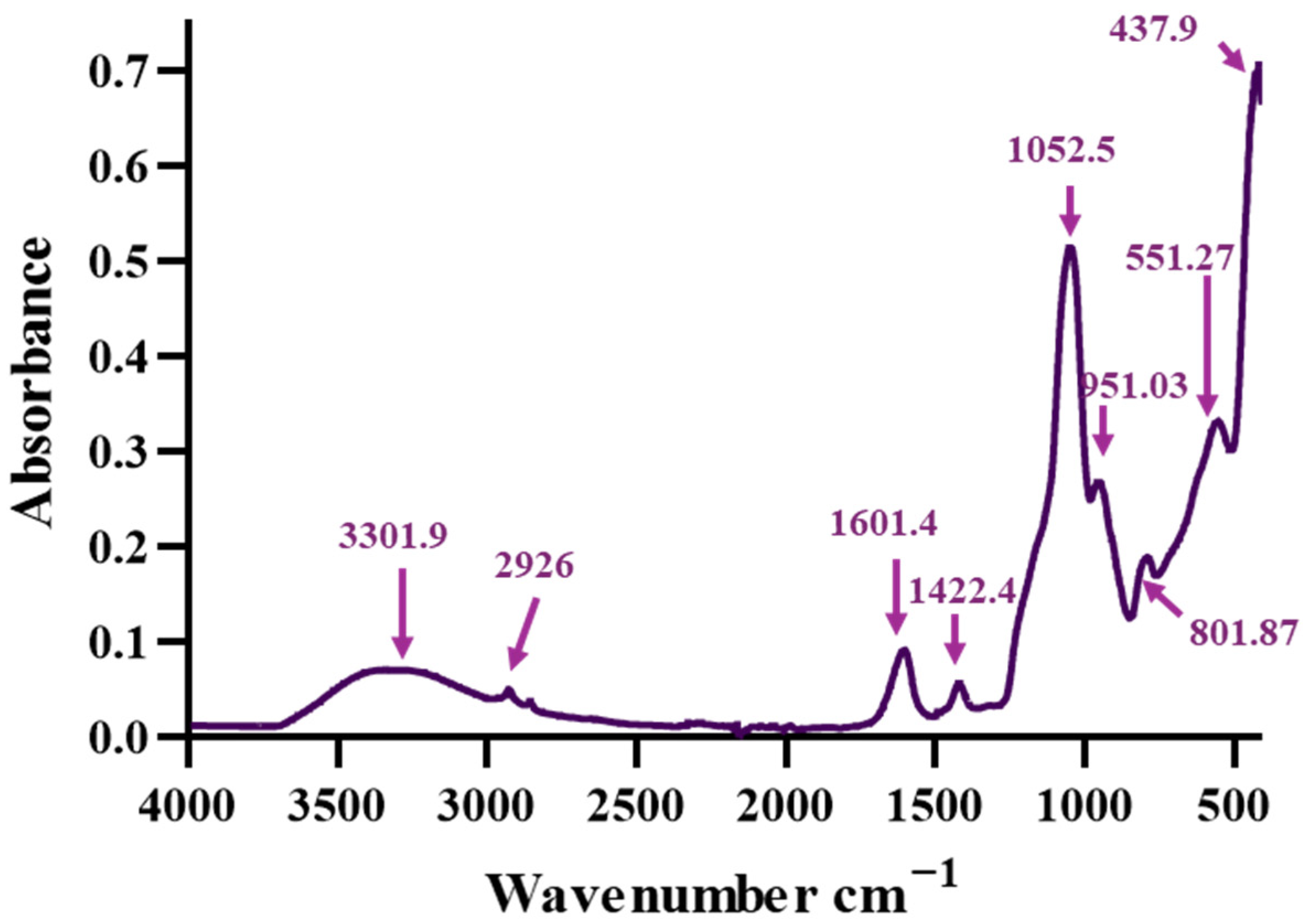
The FT-IR spectrum of the composite aerogel AG-Ti@Fe3O4-SA obtained through the microfluidic platform is presented in Figure 2. The value around 3301 cm−1 is attributed to O–H stretching vibrations from silanol (Si–OH) groups, alginate, and to the salicylic acid used in the functionalization of the Fe3O4 nanoparticles [35,36,37,38]. The peaks at 2926, 1601.4, and 1422.4 cm−1, associated with CH2 asymmetric stretching, C=O stretching, and COO groups, respectively, are present due to both alginate (used in the aerogel matrix) and salicylic acid from the surface of incorporated Fe3O4 nanoparticles [36,37,38]. The bands observed at ~1052, ~801, and ~437 cm−1 are characteristic of the Si–O–Si stretching mode, confirming the formation of the silica aerogel matrix. Moreover, the signal at ~951 cm−1 is associated with Si–OH or Si–O–Ti, suggesting titanium bonding to the silica network and good dispersion [39]. The peak visible at ~437 cm−1 can also be associated with Ti–O [40]. The signal around 551 cm−1 is characteristic of Fe–O vibrations in magnetite, confirming the presence of the Fe3O4 phase in the composite [41].
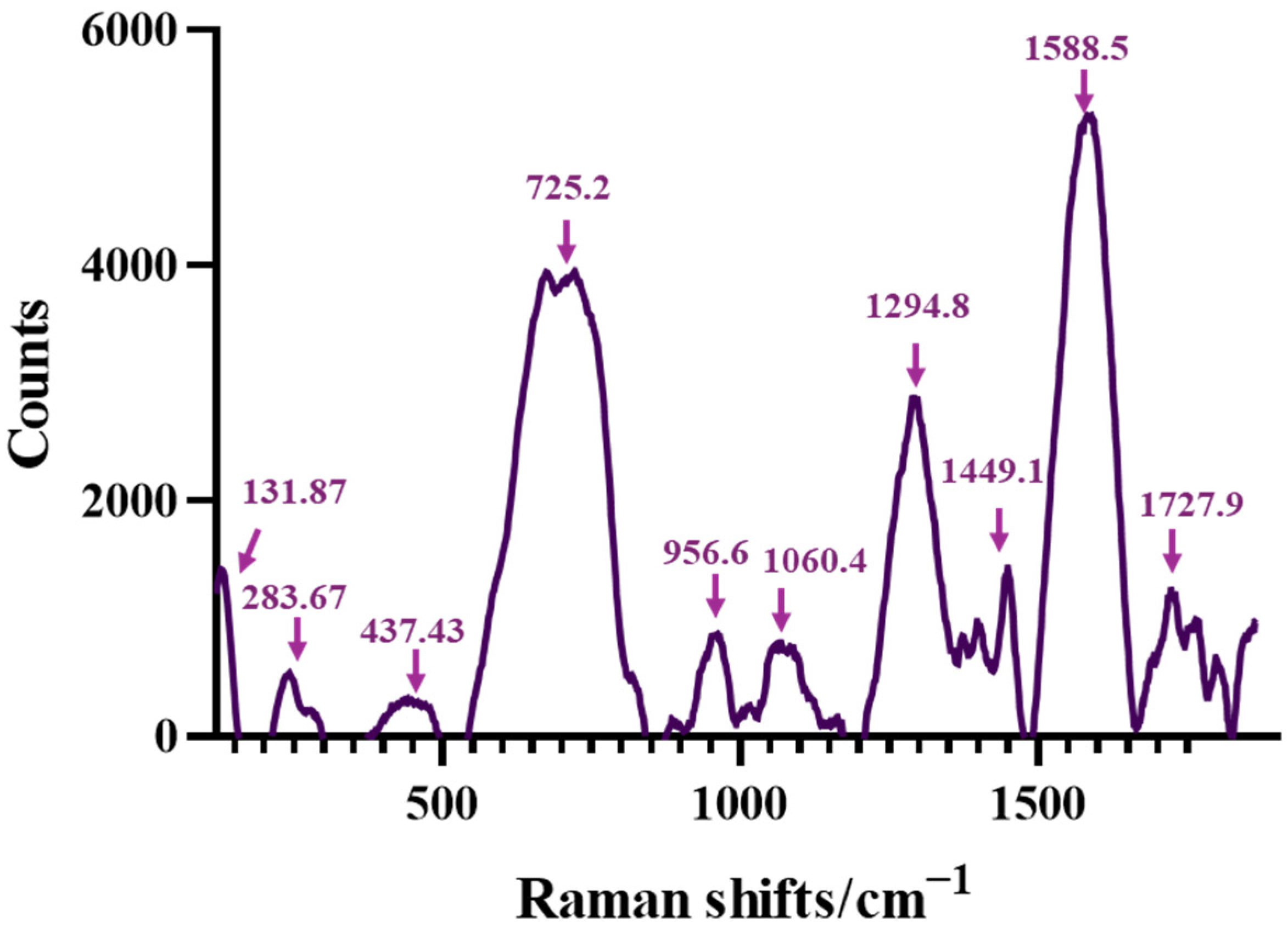
The RAMAN spectrum of AG-Ti@Fe3O4-SA is shown in Figure 3, and the analysis was performed to provide additional information on the composite aerogel’s key functional groups. Thus, in the spectrum, distinct bands are observed at ~283.7, 437.4, 725.2, 956.6, 1060.4, 1294.8, 1449.1, 1588.5, and 1727.9 cm−1. The intense bands observed at ~1588 cm−1 can be attributed to the stretching band of the aromatic ring from salicylic acid or to the alginate’s asymmetric COO, while ~1449.1 cm−1 band is associated with the C=C stretching of the benzene ring, and the ~1727.9 cm−1 stretching band corresponds to C=O vibrations of the carboxylic acid group of the salicylic acid [42,43]. The band around 1060.4 cm−1 is typical of the C–O vibrations of polysaccharides (alginate) [43]. The signal observed at ~437,4 cm−1 is characteristic of Si–O–Si deformation modes of the silica lattice [44,45]. The band observed at ~956.6 cm−1 is associated with Si–OH vibrations and/or Si–O–Ti bonds, the region around 960–980 cm−1 being associated with these bonds in previous works [45,46]. In the RAMAN spectrum presented below, a pronounced band at ~667.8 cm−1 is also observed, which is characteristic of the A1g mode of magnetite (Fe3O4), considered to be the fingerprint of the inverse spinel structure of the magnetite and attributed to the symmetric stretching vibration of Fe–O bonds [47,48]. The presence of this band confirms the formation and maintenance of the unaltered magnetite phase within the composite material. Moreover, the literature reported that prominent bands at ~300, ~500, and ~660 cm−1 are also characteristic of magnetite [49]. The slight shift in the typical values of the bulk Fe3O4 material suggests that the Fe3O4 nanoparticles have been integrated into the aerogel matrix.
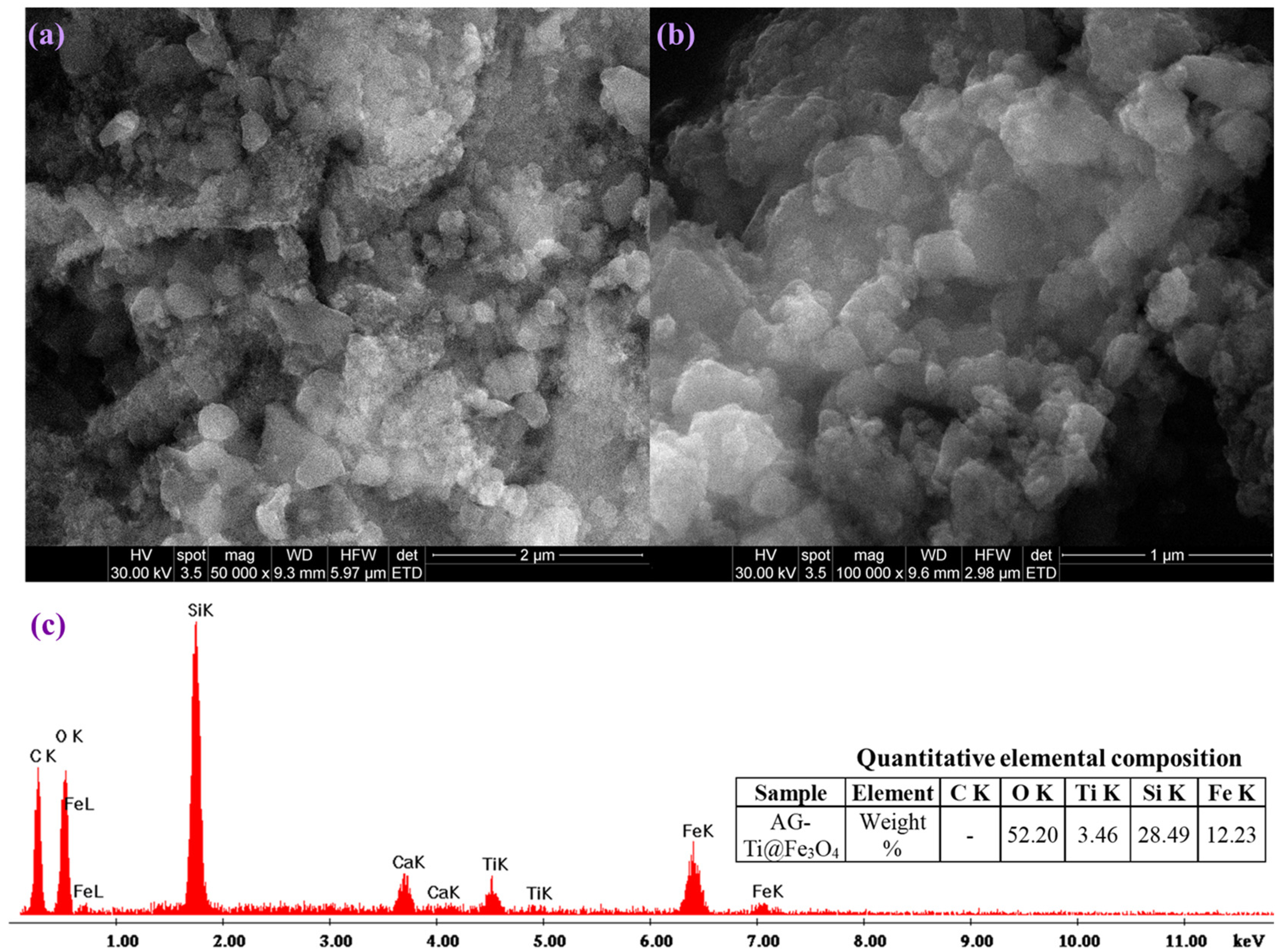
SEM micrographs for the AG-Ti@Fe3O4-SA composite aerogel are shown in Figure 4. The material presents a sponge-like morphology composed of submicron aggregates of nanometric primary particles. Furthermore, the aerogel exhibits a porous structure with locally denser areas, associated with Fe3O4 nanoparticle loading, suggesting successful incorporation and partial agglomeration within the aerogel matrix. In addition, the EDS results confirm the material’s elemental composition, revealing the presence of aerogel’s specific elements, including carbon (C), silicon (Si), oxygen (O), iron (Fe), and titanium (Ti).
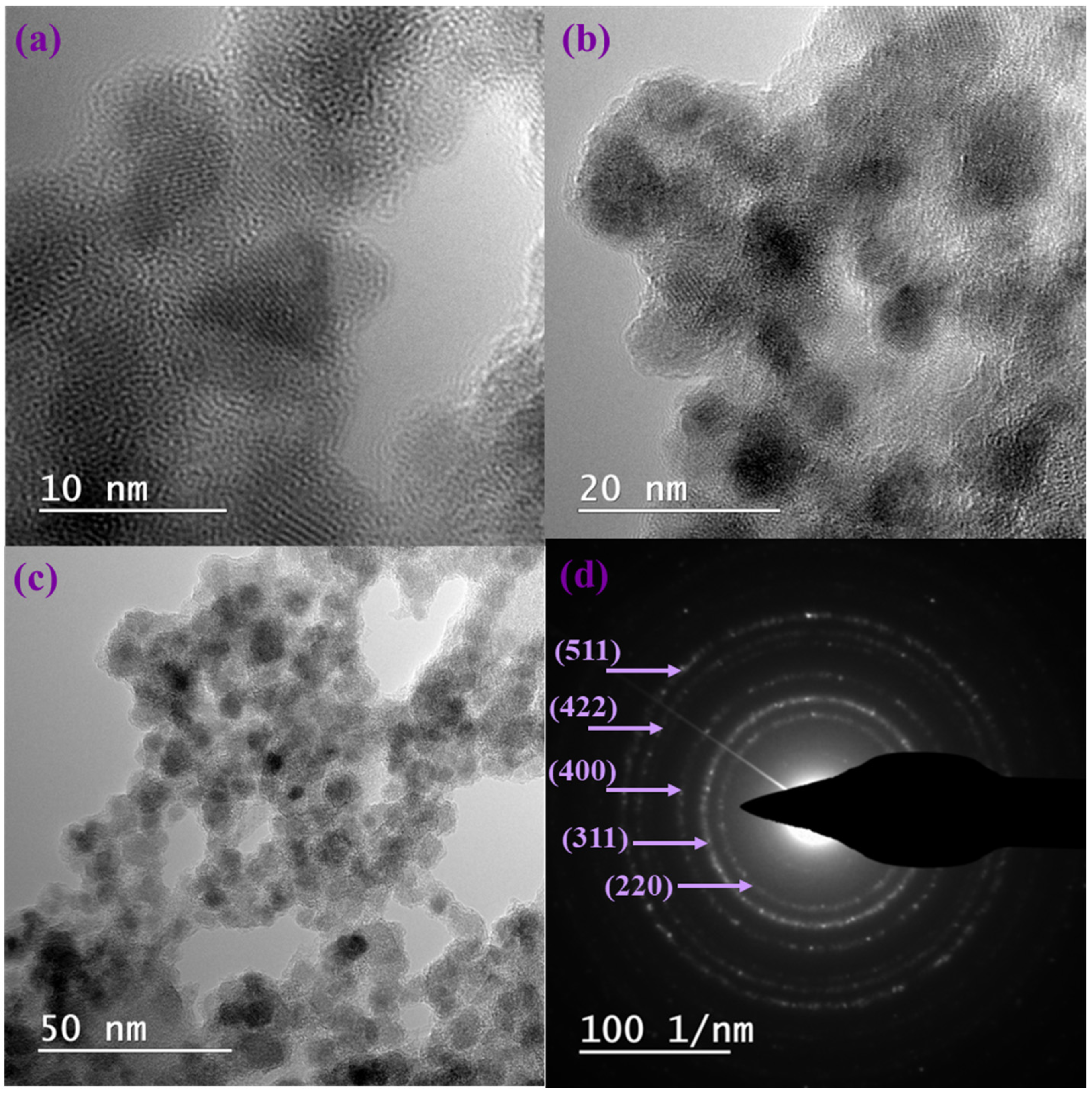
Figure 5 presents TEM micrographs of the composite aerogel AG-Ti@Fe3O4-SA, which reveal the distribution of small quasi-spherical Fe3O4 nanoparicles. Dark regions correspond to Fe3O4 nanoparticles, which remain well-embedded and uniformly distributed within the aerogel matrix (indicated by the lighter backgrounds). Moreover, the high-resolution TEM (HR-TEM) image (Figure 5c) shows well-defined lattice fringes, indicating the high crystallinity of the Fe3O4 nanoparticles. The SAED pattern (Figure 5d) shows distinct concentric rings characteristic of the cubic spinel structure of Fe3O4, indicating the polycrystalline nature and phase purity of the nanoparticles. Thus, the rings correspond to the (220), (311), (400), (422), and (511) planes of magnetite, confirming the XRD results.
Table 1 summarizes the results of the DLS analysis of the aerogel composite AG-Ti@Fe3O4-SA. The measurements yield a zeta potential of approximately −12 mV, suggesting limited colloidal stability in aqueous media. On the other hand, their large hydrodynamic radius and increased polydispersity confirm the tendency toward micro-sized agglomeration, characteristic of silica-based aerogels containing Fe3O4, which are associated with magnetic interactions between nanoparticles and the intrinsic porous network. Therefore, the DLS results reflect the hydrodynamic behavior of aerogel aggregates in the liquid phase and are not directly comparable to the primary particle sizes observed in SEM and TEM analysis.
In regard to water treatment, the relatively low zeta potential of the AG-Ti@Fe3O4-SA aerogel is not necessarily detrimental. In this context, for the proposed application, these adsorbent materials used in water treatment processes can be recovered after the adsorption step due to the integration of Fe3O4-SA nanoparticles. An increased colloidal stability could complicate solid–liquid separation. In AG-Ti@Fe3O4-SA, the incorporation of Fe3O4 nanoparticles can facilitate magnetic recovery of the aerogel aggregates, thereby improving separation from treated water. However, evaluating the long-term stability of the AG-Ti@Fe3O4-SA aerogel in terms of usage cycles, as well as its regeneration efficiency, represents a direction for future research to fully assess its potential for practical reuse.
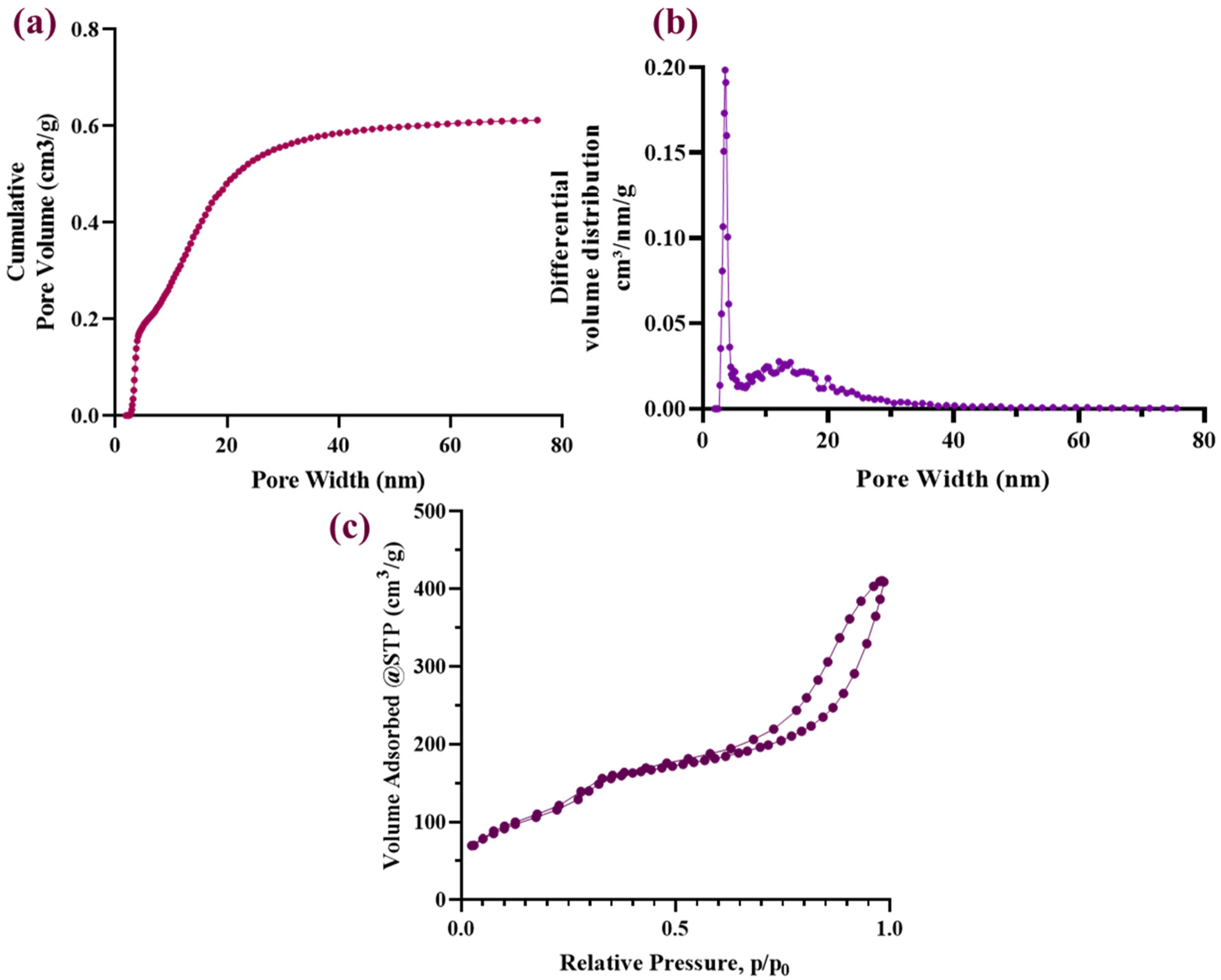
For further characterization of AG-Ti@Fe3O4-SA aerogel in terms of its porosity, Brunauer–Emmett–Teller analysis (BET) (Figure 6) was performed. The results suggest that the AG-Ti@Fe3O4-SA aerogel pore volume curve (Figure 6a) demonstrated a rapid increase in the cumulative pore volume, ranging between 10 and 15 nm, suggesting that the pore volume is associated with mesopores. Then, the curve gradually approaches a plateau, indicating that most of the pore volume is associated with small mesopores. The total pore volume is ~0.6 cm3/g, as shown in Table 2. The pore size distribution (Figure 6b) presents a dominant and sharp peak at 3–4 nm, confirming the fact that AG-Ti@Fe3O4-SA aerogel is predominantly characterized by small mesopores, but also, to some extent, by larger mesopores (5–20 nm) in lower proportions. These findings confirm the formation of the porous network in the aerogel. Moreover, the aerogel’s porous structure can facilitate the adsorption of small molecules. In contrast, the material can potentially limit the diffusion of bulkier species due to steric constraints within the pore network. The N2 adsorption–desorption isotherm (Figure 6c) showed that the AG-Ti@Fe3O4-SA aerogel presents a typical type IV profile with a well-defined hysteresis loop. This profile is characteristic of mesoporous materials, confirming that AG-Ti@Fe3O4-SA aerogel presents interconnected mesopores. These features are associated with its specific surface area (~436 m2/g) (Table 2) and the pore size distribution centred in the mesopore range.

2.2. Decontamination Performance

HR-MS FT-ICR analysis was performed to provide quantitative data on the decontamination performance of AG-Ti@Fe3O4-SA, as shown in Table 3. The adsorption tests were performed as screening-level experiments under fixed conditions and at low pesticide concentrations (ppb), which are representative of real environmental conditions in contaminated water sources. In this context, the analysis demonstrated that the composite aerogel AG-Ti@Fe3O4-SA selectively removed the tested pesticides. The performance ranges from 16% to 100%. The best decontamination performance was obtained with chlorpropham (100%), followed by triazophos (98%), fenson (85%), fenthion (77%), and chlorthal-dimethyl (75%). Cypermethrin and fenpropathrin showed lower removal capacities (<20%). These results suggest that the selectivity of the obtained material is governed by a combination of molecular size, hydrophobicity, and specific surface chemistry interactions. However, the calculated adsorption capacities (mg/g) are relatively low and should not be directly compared with values reported in optimized adsorption studies conducted at higher concentrations.
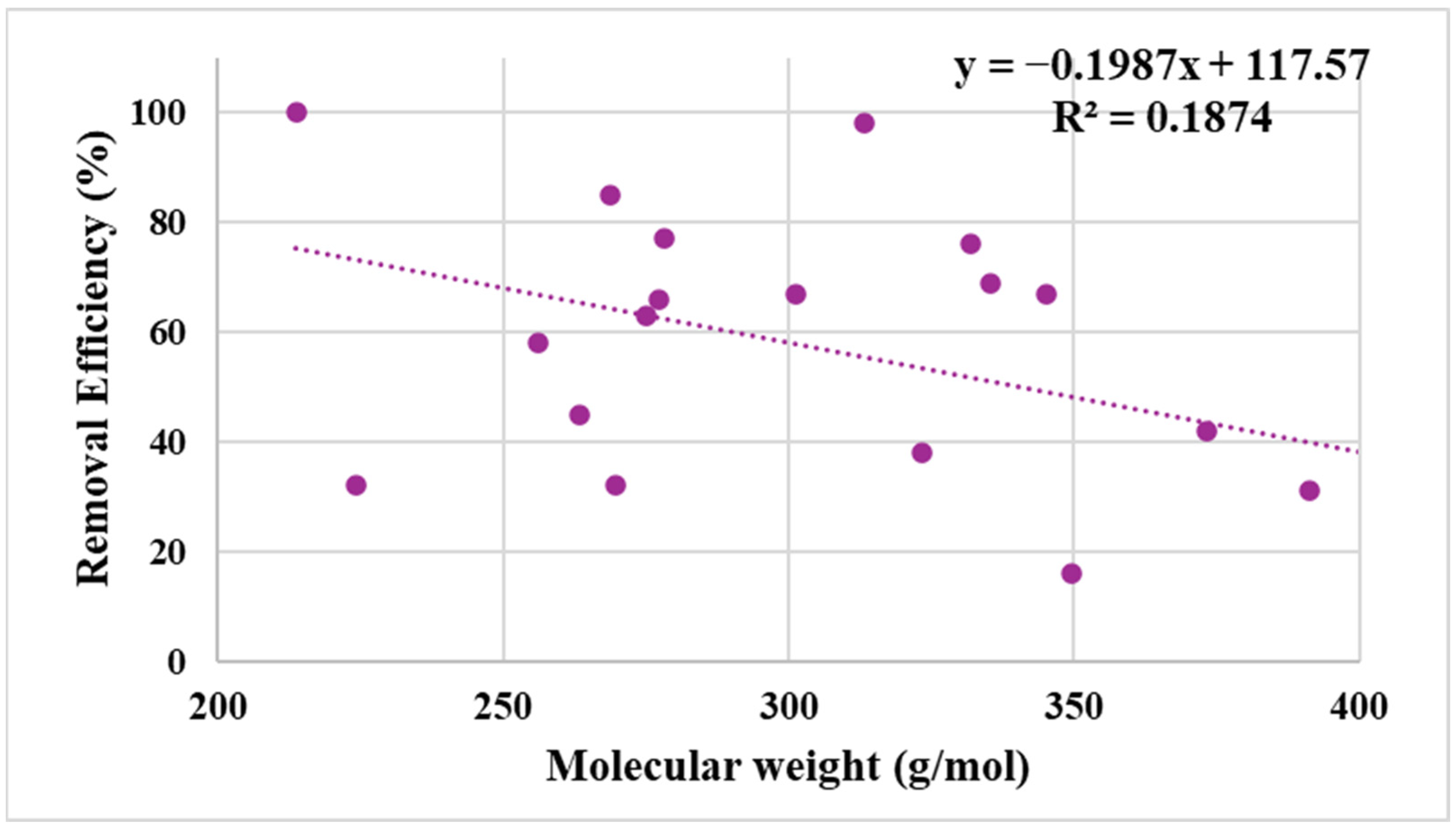
Moreover, Figure 7 explores the influence of the molecular properties of the pesticides used in this study on the adsorption behavior and the removal efficiency of AG-Ti@Fe3O4-SA. This analysis confirms the results provided in Table 2. Pesticides with larger and bulkier molecules tend to exhibit lower removal efficiencies. This performance can be explained by the steric limitations and reduced diffusion rates within the porous aerogel network. In contrast, smaller molecules generally showed higher adsorption efficiencies, suggesting easier access to internal adsorption sites within the aerogel structure. However, the correlation is not strictly linear, indicating that adsorption is governed by multiple factors, including molecular size, hydrophobicity, and specific interactions between pesticide functional groups and the aerogel surface.
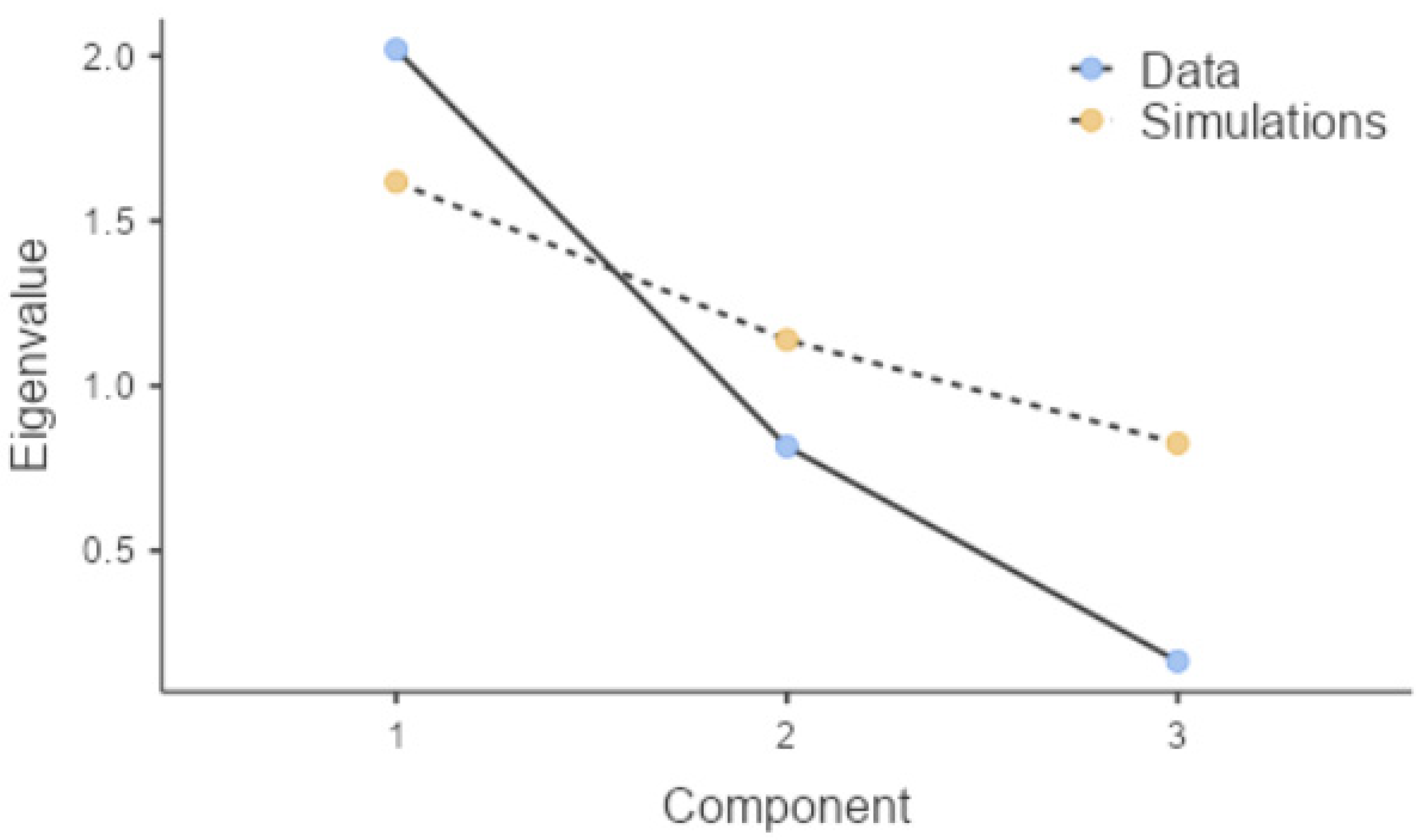
The observation is further confirmed by the principal component analysis (PCA) results (Figure 8). For this analysis, standardized variables such as LogP, molecular weight, and removal efficiency were used. In this context, PCA revealed that the molecular weight and LogP of the pesticides are associated with the primary component (PC1), a statistically significant association. In contrast, the second component (PC2) exhibits additional variability not explained by the same parameters, suggesting specific molecular features and interactions. The third component (PC3) accounts for a small proportion of the variance and is not relevant for further interpretation. PC1 reflects the combined effect of molecular size and hydrophobicity; PC2 likely represents more subtle differences in molecular structure and specific interactions with the adsorbent surface; and PC3 contributes only marginally to the total variance and is not chemically meaningful. Together, these results confirm that the adsorption process is governed by multiple interacting factors rather than a single molecular descriptor.
In the context of water depollution, the adsorptive properties of aerogels are driven by synergistic multi-interaction mechanisms, including chemisorption, hydrogen bonding, electrostatic interactions, π-π stacking, van der Waals forces, and hydrophobic interactions [51,52]. For the proposed aerogel, the silica–alginate framework provides abundant oxygen-containing functionalities (Si–OH, –COO, –OH) that interact with organic molecules via hydrogen bonding and dipole–dipole interactions, as reported in the literature for bulk and silica–alginate composite materials [53,54,55]. Moreover, the incorporation of titanium into the silica network modifies the surface chemistry and leads to the formation of Si–O–Ti bonds, which can improve surface polarity and adsorption affinity, potentially favoring electrostatic interactions and hydrogen bonding, thereby enhancing interactions with electron-donor functional groups [56,57,58]. Fe3O4 nanoparticles can enhance electron transfer and electrostatic interactions with aromatic dyes and pesticides, and their functionalization with salicylic acid confers good dispersability and long-term stability [52,59]. Additionally, salicylic acid can provide phenolic and carboxyl groups that serve as active donor sites capable of forming hydrogen bonds and coordination interactions with target species [60].
Nevertheless, while the use of TiO2 has not been studied in relation to the adsorption of pollutants on its surface, but rather for its photocatalytic properties, adsorption on its surface represents an important step in enabling its photocatalytic properties [61].
In this context, the adsorption of pesticide molecules onto the TiO2 surface is a prerequisite for subsequent photocatalytic reactions. In any case, exploring the photocatalytic properties of the AG-Ti@Fe3O4-SA aerogel is a future research direction that may improve its efficiency in applications such as water decontamination from pesticides. In this regard, our FT-IR and RAMAN analyses provide insights regarding the possible presence of titanium oxides. Thus, doping the aerogel with titanium can promote an adsorption mechanism that was reported in the literature. Studies indicate that TiO2 possesses a large number of active sites associated with surface defects and water molecules that can occupy vacant oxygen sites that form –OH groups adsorbed on the surface, thereby improving hydrophilicity and facilitating adsorption, thereby enhancing the interaction between the TiO2 surface and the adsorbed pesticide molecules, being a key factor for the efficiency of photocatalytic degradation [62,63].
Moreover, despite the fact that DLS analysis indicates a tendency for relatively large aggregates to form in aqueous suspension, this phenomenon cannot necessarily be associated with a significant reduction in the accessible adsorption surface area of the aerogel. In porous aerogel systems, adsorption occurs primarily within the internal pore network rather than on the external surface. Thus, although aggregates form, the interconnected porosity of aerogels remains accessible to small pesticide molecules. However, these findings cannot entirely rule out the possibility that aggregation may impose diffusion limitations, particularly for bulky pesticides with high hydrophobicity. This detail may partially explain the lower decontamination efficiencies observed for compounds such as cypermethrin and fenpropathrin. Furthermore, the relatively high removal efficiencies observed for smaller, polar pesticides in decontamination performance tests at a contact time of 30 min may suggest that mass-transfer limitations are not the determining factor under these test conditions. Instead, for bulky pesticides with increased hydrophobicity, diffusion limitations within the porous network may reduce decontamination capacity.
AG-Ti@Fe3O4-SA exhibits competitive and selective decontamination efficiency ranging from 16 to 100%, and also has evident limitations for other pesticides, as shown in Table 4. Comparing these results with our previous studies suggests that the decontamination performance of the aerogels depends on the molecular structure of the pesticides.
Furthermore, as previously mentioned, the studied AG-Ti@Fe3O4-SA aerogel exhibits a selective profile, showing a stronger affinity for certain organophosphorus pesticides, rather than the uniformly high removal efficiency observed in our previously obtained materials. This may be attributed to the presence of titanium in the aerogel’s composition. Thus, some studies have reported that, in adsorption experiments, the hydroxyl groups on the TiO2 surface interacted with the P=O groups in organophosphorus pesticides. According to the research, this interaction led to molecular adsorption, without the immediate chemical decomposition of the organophosphorus compound [67]. Moreover, the capacity of TiO2 to adsorb organophosphorus pesticides can be attributed to Lewis acid sites, which promote the donation of electron density from the oxygen atoms of the phosphate group to surface titanium atoms. This interaction weakens the P–O ester bond within the molecule and may facilitate its cleavage during hydrolysis [68].
For organic pesticides, such as paraoxon-ethyl, propyzamide, EPN, and pyrazophos, the efficiency of AG-Ti@Fe3O4-SA in their decontamination falls within the ranges reported in our previous study about magnesium magnetic silica-based aerogel. This result indicates comparable performance and confirms the dominant roles of coordination interactions and adsorption within the mesoporous network. A significant result for triazophos is observed with AG-Ti@Fe3O4-SA, exceeding the reported range in some previous studies, which can be attributed to the superior affinity arising from the contribution of Ti sites and the synergy with Fe3O4 nanoparticles. In contrast, for strongly hydrophobic and bulky pesticides such as cypermethrin and fenpropathrin, it is suggested that, in the AG-Ti@Fe3O4-SA system, they fall at the lower end of previously reported ranges, which can be attributed to diffusion limitations and a reduced contribution from hydrophobic interactions. As shown in Table 3, both systems exhibit strong affinities for additional pesticides, suggesting multimodal adsorption behavior. AG-Ti@Fe3O4-SA shows more pronounced selectivity, with notable efficacy for organophosphorus pesticides, compared to the aerogel from the previous study, which shows a more generalist adsorptive behavior.
Compared with the previously reported magnetic silica aerogel [65], the herein reported AG-Ti@Fe3O4-SA aerogel shows high efficiency for certain compounds, achieving complete or near-complete elimination of chlorpropham and triazophos, and reduced performance against other hydrophobic pesticides. This indicates that its overall performance is less robust than that of our previously reported magnetic aerogel. The magnetic silica-based aerogel exhibits uniform adsorptive properties, with efficiency ranging from 34.8% to 93.7% for the tested pesticide. These data suggest that the material obtained exhibits a much broader affinity and more balanced adsorption mechanisms than those of AG-Ti@Fe3O4-SA aerogel.
Also, comparing AG-Ti@Fe3O4-SA with the Mg/Fe-LDH–silica–Fe3O4 material [66], it can also be observed that AG-Ti@Fe3O4-SA has a selective character, but much more variable than Mg/Fe-LDH–silica–Fe3O4. Thus, Mg/Fe-LDH–silica–Fe3O4 exhibited high and relatively uniform efficiencies, ranging from approximately 73.7% to 100% for the tested pesticide mixture. Compared to AG-Ti@Fe3O4-SA aerogel, Mg/Fe-LDH–silica–Fe3O4 pesticide adsorption efficiency exceeded the 80% threshold, and complete elimination (100%) was achieved for Chlorpropham. Thus, for AG-Ti@Fe3O4-SA, the efficiencies are more dispersed and depend on the type of pesticide. Excellent performance is observed for some molecules, such as Chlorpropham (100%) and Triazophos (98%), comparable to those of Mg/Fe-LDH–silica–Fe3O4. At the same time, the affinity of AG-Ti@Fe3O4-SA aerogel for organophosphorus compounds such as fenitrothion (66%) and fenthion (77%) is more pronounced, with moderate efficiency. It is also confirmed that the AG-Ti@Fe3O4-SA aerogel exhibits limited adsorption of more hydrophobic and bulky pesticides (e.g., cypermethrin 18%, fenpropathrin 16%, permethrin 31%), underscoring the need for further optimization to effectively remove these pesticides from aqueous samples.
Overall, these findings suggest that the dominant mechanism for AG-Ti@Fe3O4-SA depends on pore accessibility, as well as on π-π interactions and hydrogen bonds. Thus, the material favors polar and organophosphorus pesticides, which contain heteroatoms (O, N, S) that can form hydrogen bonds, dipole–dipole interactions, or weak coordination. In contrast, bulky, strongly hydrophobic pesticides are adsorbed more weakly, probably due to diffusion limitations within the pores and unfavorable surface interactions. The incorporation of titanium creates sites that facilitate interactions with electron-donating groups in pesticides, such as P=O, C=O, or heteroatoms, thereby explaining the affinity for polar and organophosphorus compounds. Furthermore, the functionalization of Fe3O4 nanoparticles with salicylic acid can enhance the material’s selectivity through π-π interactions and additional hydrogen-bonding interactions.

2.3. Biological Assays

For the in vitro investigation, a concentration of 5 μg/mL of the composite aerogel was selected, as it could represent an environmentally relevant exposure level after applications in water purification strategies, as small residual amounts may remain in treated water and potentially interact with human tissues. Such exposure could occur through direct skin contact during handling or, less frequently, through accidental ingestion or occupational scenarios. Therefore, the use of human keratinocytes is helpful for assessing cutaneous exposure, and kidney-derived cells simulate systemic effects, given the kidney’s essential role in filtering and eliminating circulating xenobiotics. In this way, the chosen concentration of 5 μg/mL could provide a balanced experimental condition, appropriate for evaluating both environmental relevance and potential toxicological implications.
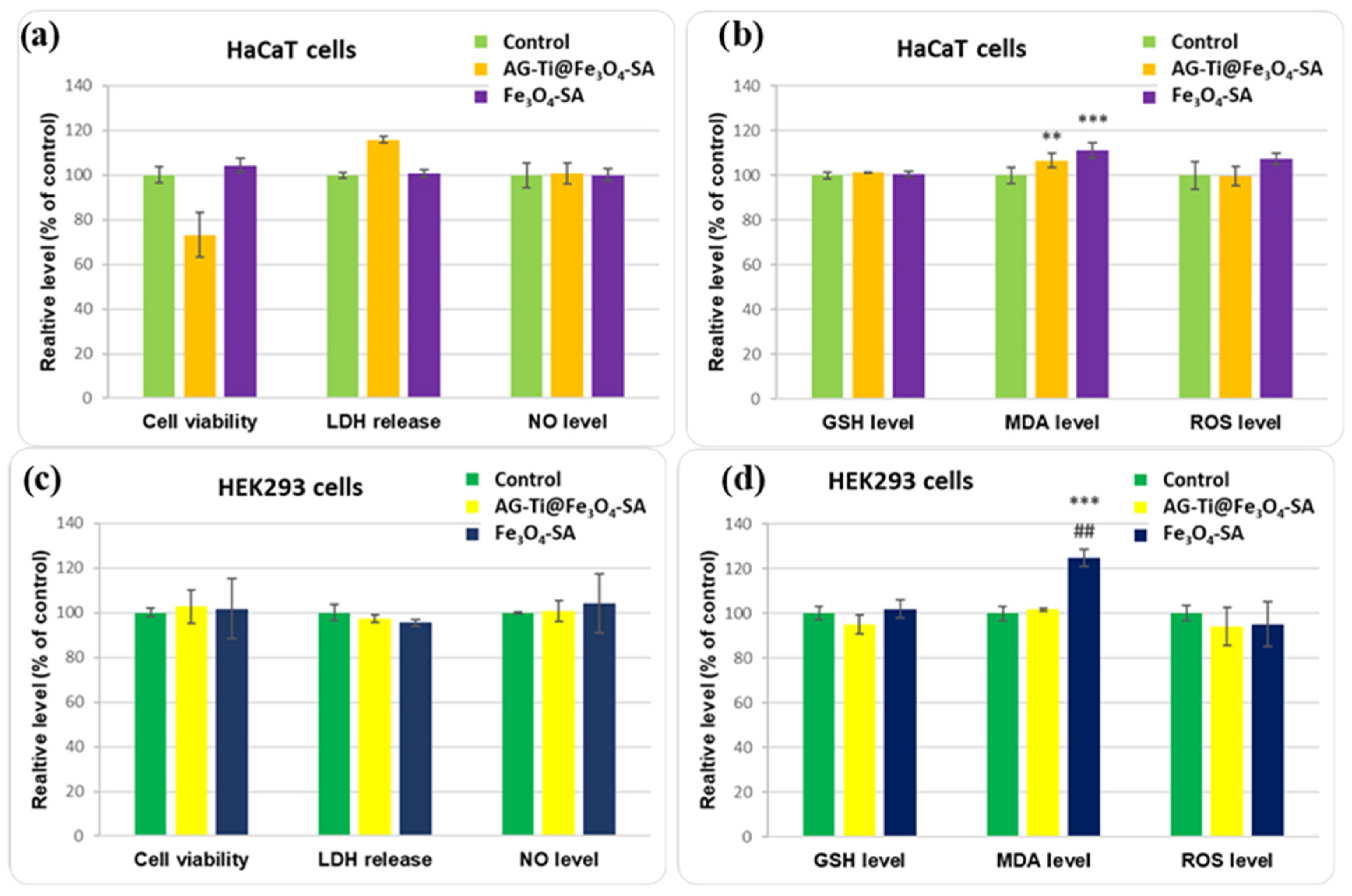
A comprehensive assessment of biocompatibility and oxidative stress in HaCaT (Figure 9a,b) and HEK293 (Figure 9c,d) cells after 48 h exposure to AG–Ti@Fe3O4–SA composite aerogel and Fe3O4–SA nanoparticles is depicted in Figure 6. Regarding the biocompatibility of HaCaT cells (Figure 9a), viability was reduced by 26% after incubation with AG–Ti@Fe3O4–SA compared to the control, whereas lactate dehydrogenase (LDH) release was 15% higher than the control, suggesting mild membrane damage. These results indicate a moderate cytotoxic response in keratinocytes under the tested conditions. Importantly, NO production did not appear substantially altered, indicating the absence of a pronounced inflammatory response. However, the Fe3O4–SA nanoparticles did not affect the keratinocytes’ viability. Furthermore, oxidative stress markers (Figure 9b) show a significant increase in MDA levels following exposure to the composite aerogel or Fe3O4–SA nanoparticles compared to control cells, indicating a certain degree of lipid peroxidation induced during the 48 h. ROS levels were slightly elevated only for Fe3O4–SA nanoparticles, while GSH levels remained relatively close to control values for both types of samples, suggesting that the antioxidant defense system was largely preserved.
In HEK293 cells (Figure 9c), cell viability was close to control values for both samples, with no significant change in LDH release. NO levels were slightly increased for Fe3O4–SA, but without a clear indication of inflammatory activation. The measurement of oxidative stress parameters (Figure 9d) revealed no changes compared to control for composite aerogel, but showed a more pronounced increase in MDA levels after incubation with Fe3O4–SA, suggesting enhanced lipid peroxidation in this cell line. Regarding GSH levels and ROS production, only slight variations were observed, which did not exceed control values. These findings indicate that oxidative imbalance is primarily reflected in lipid peroxidation rather than in global ROS accumulation.
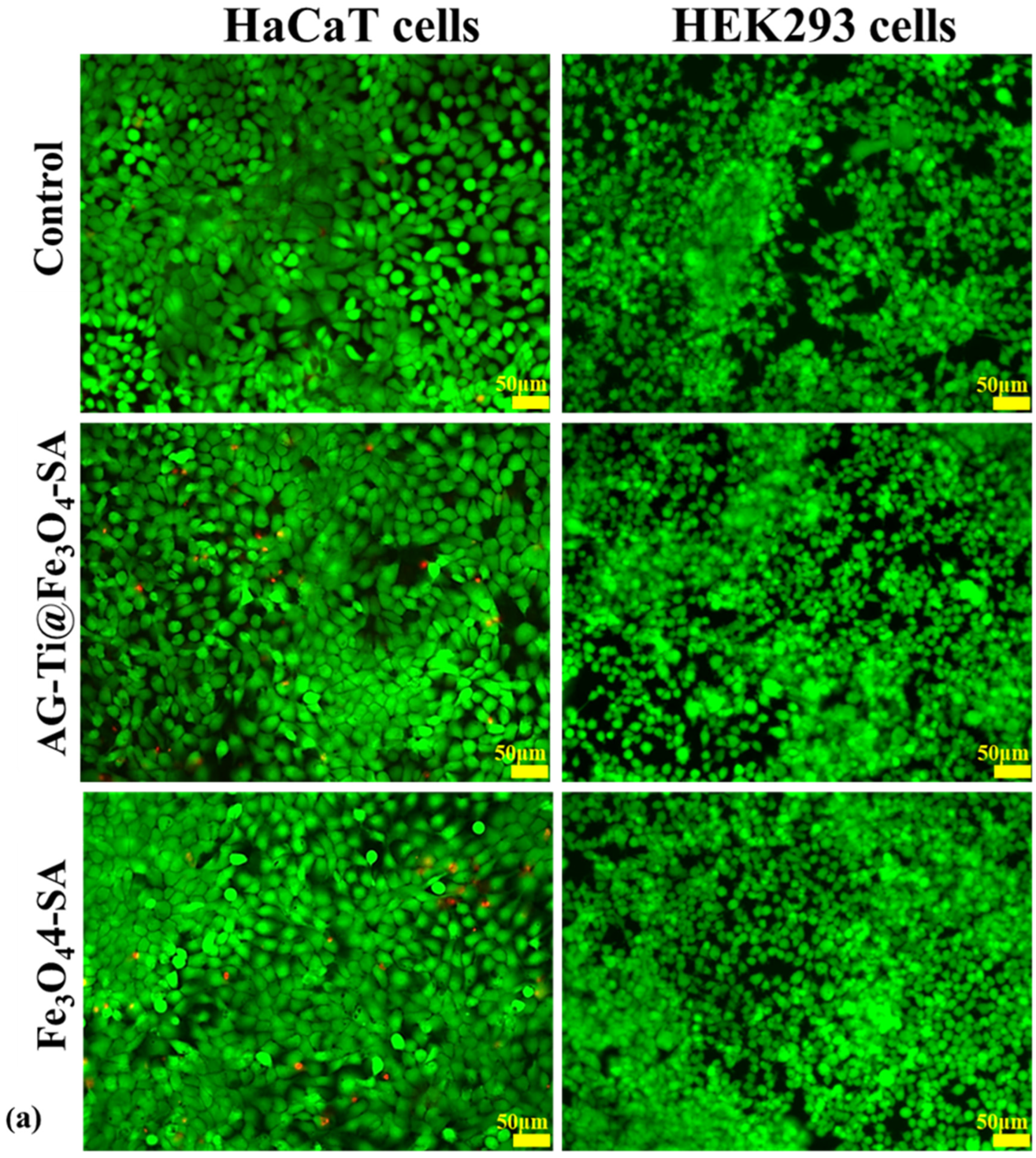
The fluorescence microscopy images in Figure 10a illustrate the viability and morphology of HaCaT and HEK293 cells after 48 h exposure to AG–Ti@Fe3O4–SA and Fe3O4–SA samples, compared to control cells. In all experimental conditions, a high proportion of metabolically active cells and only sporadic non-viable cells were visible, suggesting limited membrane damage, except for the exposure of human keratinocytes to AG–Ti@Fe3O4–SA, where more dead cells were noticed, labeled in red with propidium iodide, supporting the quantitative data (MTT and LDH assays).
Importantly, no major differences in cell morphology were observed between exposed and control wells in either cell line. HaCaT cells maintained their typical cobblestone-like epithelial morphology, while HEK293 cells preserved their characteristic polygonal/rounded appearance and confluence.
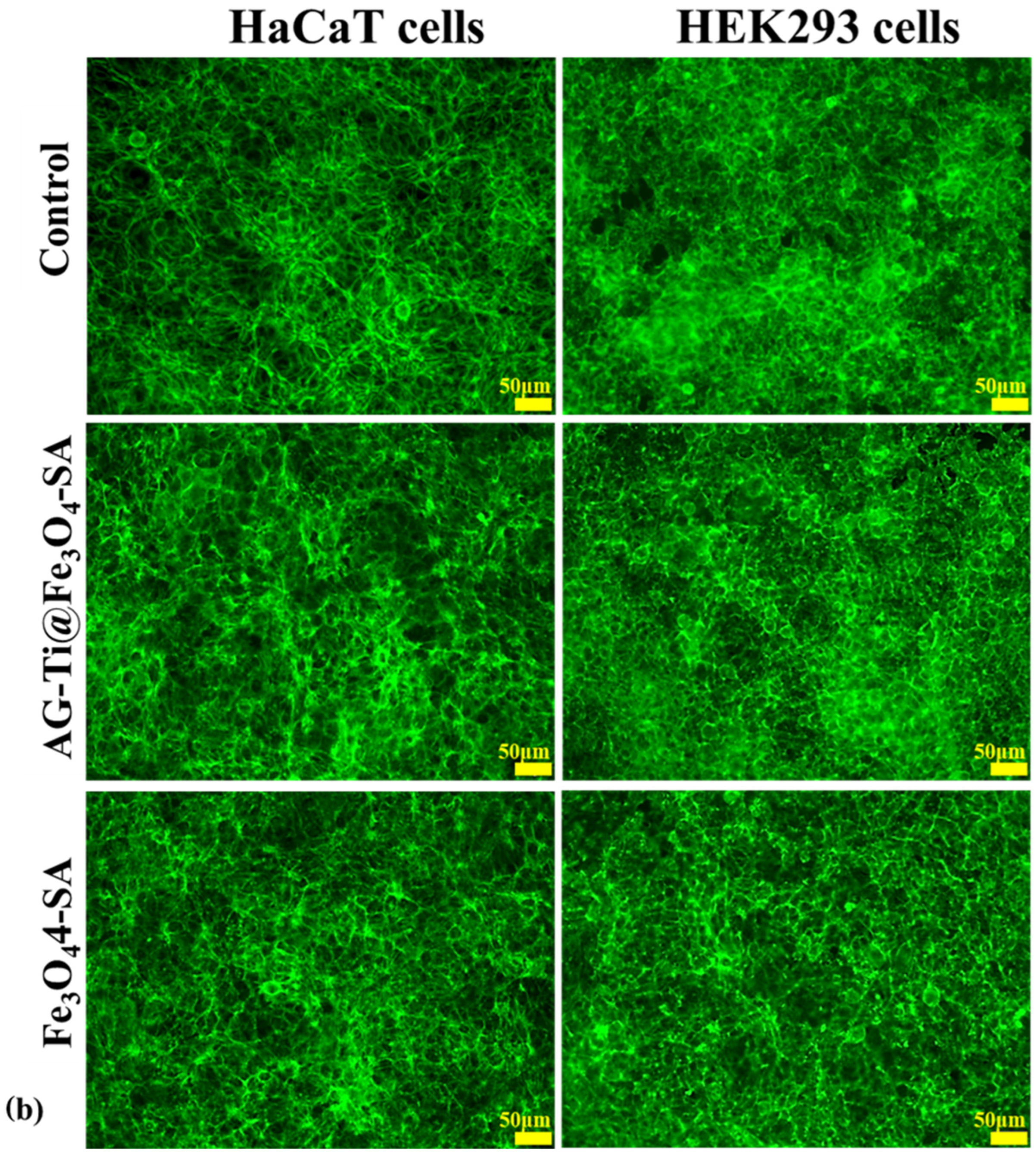
Figure 10b presents the organization of the actin cytoskeleton in HaCaT and HEK293 cells after 48 h of treatment. In both cell lines, F-actin filaments appeared well distributed and organized, forming a continuous cytoskeletal network comparable to that of control cells. No evident signs of cytoskeletal disruption, actin condensation, fragmentation, or loss of structural integrity were observed in the treated groups. Cell shape and spreading remained preserved, and there was no indication of cytoskeletal collapse or stress fiber disorganization, which are commonly associated with cytotoxic or pro-apoptotic effects.
Taken together, these findings further support a good in vitro biocompatibility profile of the composite aerogel under the tested conditions.
Overall, the biological assays (Figure 9 and Figure 10) indicate a cell-type-dependent biological response, characterized by a moderate reduction in viability in HaCaT keratinocytes but good tolerance in HEK293 cells. These biological responses can be attributed to the aerogel’s chemical composition. The mild viability reduction and slightly increased LDH observed in HaCaT cells may be associated with the presence of titanium in the aerogel composition, while Fe3O4–SA nanoparticles showed minimal impact on cell survival. In contrast, both AG-Ti@Fe3O4-SA and Fe3O4–SA nanoparticles maintained viability close to control levels in HEK293, demonstrating good tolerance in this cell line. Moreover, stable ROS and GSH levels suggest that the AG-Ti@Fe3O4-SA aerogel matrix limits titanium’s intrinsic oxidative potential. These findings are consistent with reports in the literature supporting the low-to-moderate intrinsic toxicity of silica-based aerogels [52,69] and the low toxicity of titanium and its oxides (TiO2) [70]. In addition, according to ISO 10993-5 [71] guidelines for in vitro cytotoxicity testing, the HaCaT cell viability remained above 70% of control levels, which is commonly considered the threshold for non-cytotoxic responses. Considering the preserved cell morphology, cytoskeletal organization, and antioxidant defense parameters, the observed reduction in keratinocyte viability suggests a moderate, localized cellular response rather than extensive cytotoxicity.
Despite our demonstration of the biocompatibility of the AG-Ti@Fe3O4-SA aerogel, which supports its applicability in water depollution and environmental remediation, the toxicity and environmental impact of aerogel-based materials remain major limiting factors for their real-world applications. In this context, further in-depth studies are necessary to ensure their safe use and eventual large-scale deployment.

3. Conclusions

In this work, a novel titanium-functionalized magnetic silica aerogel (AG-Ti@Fe3O4-SA) was successfully synthesized via microfluidics. The physico-chemical characterization strategies confirmed the formation of a porous structure, with uniform incorporation of Fe3O4 nanoparticles and effective titanium functionalization within the silica–alginate matrix. The removal of pesticides was demonstrated using HR-MS FT-ICR, indicating the material’s competitive and selective pesticide-removal performance, with high affinity for chlorpropham and triazophos and limited adsorption of hydrophobic pesticides. Biological assays demonstrated an overall favorable in vitro biocompatibility of the material, at environmentally relevant exposure levels, with moderate effects observed in HaCaT cells and good tolerance in HEK293 cells. These findings support the potential applicability of the developed aerogel for water decontamination.

4. Materials and Methods

4.1. Aerogel Synthesis

The AG-Ti@Fe3O4-SA aerogel composite was synthesized using the following precursors: sodium trisilicate, alginic acid sodium salt from brown algae, cetyltrimethylammonium bromide (CTAB), ammonium chloride, ethanol, and titanium butoxide (Sigma Aldrich Merck, Darmstadt, Germany), sodium hydroxide (Lach-Ner, Tavarni, Czech Republic).
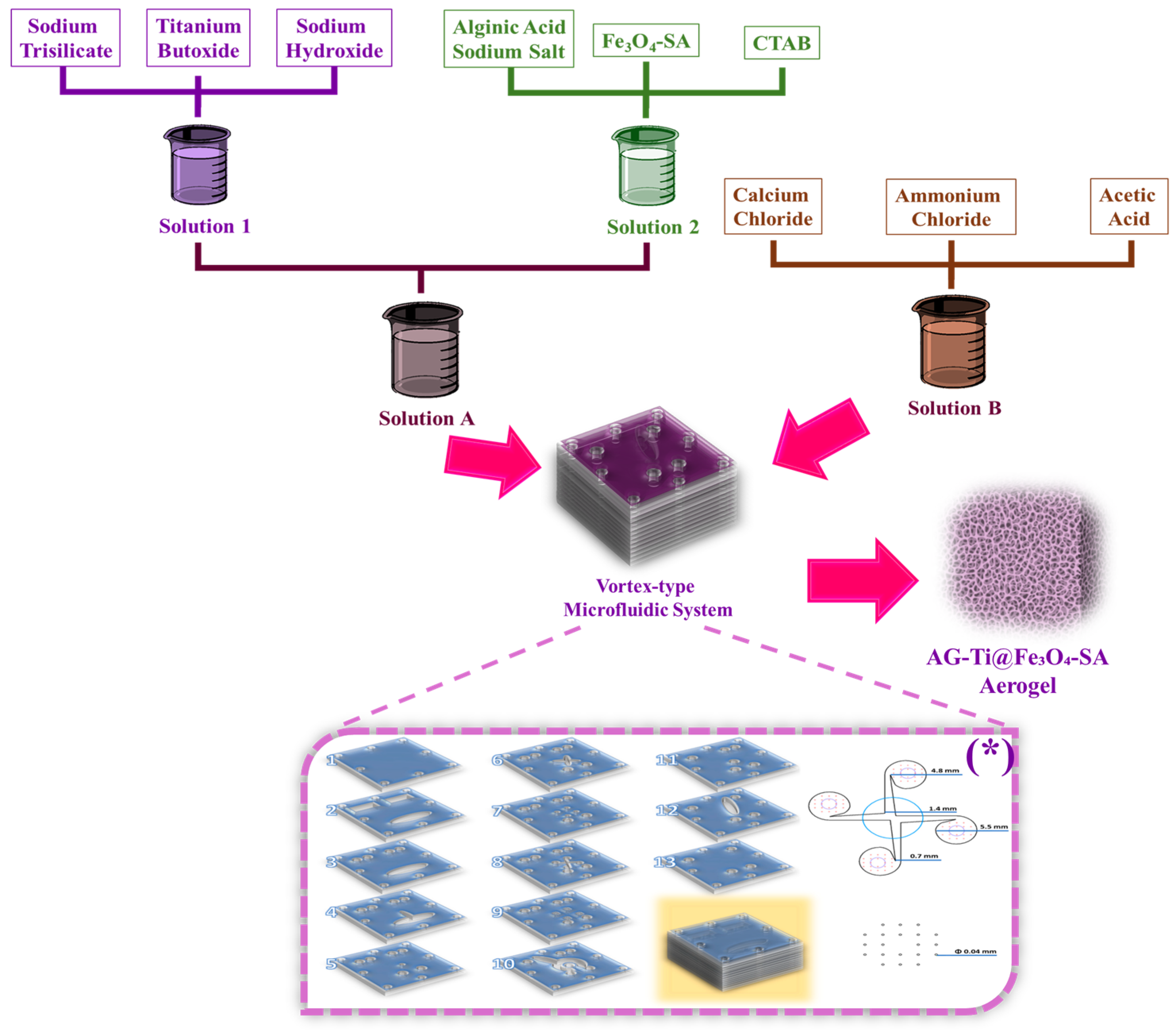
Aerogel synthesis involves four solutions (Figure 11), as follows: Solution 1 was obtained by dissolving sodium trisilicate (60 g), NaOH (3.5 g), and titanium butoxide (0.5 mL) in 1000 mL ultrapure water; Solution 2 was prepared by dissolving alginic acid sodium salt (0.1 g) and CTAB (0.5 g) in 300 mL ultrapure water, followed by the addition of a suspension of Fe3O4-SA nanoparticles (50 mL); Solution A was formed by mixing 150 mL of Solution 1 with 150 mL of Solution 2; Solution B was prepared by dissolving CaCl2 (20 g) and NH4Cl (2 g) in 400 mL of ultrapure water, then adding acetic acid (10 mL). The aerogel and the incorporated Fe3O4-SA nanoparticles were obtained using a microfluidic platform, in which an osmotic pump (PSP 220 Pump, Model No. CAR6003, Water Quality Association, Lisle, IL, USA) with a 90 mL/s flow rate was used to inject the two solutions into the vortex-type microfluidic device, as described in our previous studies [65,72]. The obtained aerogel was aged for 24 h, centrifuged at 4500 rpm for 5 min, washed three times with ultrapure water and three times with ethanol, and finally freeze-dried. Throughout all the experimental steps, ultrapure water was used, and all precursors were used as received.

4.2. Aerogel Characterization

4.2.1. X-Ray Diffraction (XRD)

Phase composition and crystallinity were determined by using the PANalytical Empyrean diffractometer (PANalytical, Almelo, The Netherlands), equipped with Cu Kα radiation (λ = 1.5406 Å) operated at 45 kV and 40 mA. The diffraction patterns were recorded over 2θ = 5–80° at ω = 0.5°.

4.2.2. Scanning Electron Microscopy (SEM) and Energy Dispersive Spectroscopy (EDS)

The aerogel microstructural features were examined using an Inspect F50 SEM (Thermo Fisher–FEI, Eindhoven, The Netherlands). Thus, the powder was mounted on a carbon tape and introduced into the analysis chamber. Images were acquired with secondary electrons at an accelerating voltage of 30 keV and a spot size of 3.5. Elemental composition was determined using the EDS module coupled to the SEM.

4.2.3. Fourier-Transform Infrared Spectroscopy (FT-IR)

Functional groups present in the AG-Ti@Fe3O4-SA powder sample were identified using a Thermo iN10-MX FTIR spectrometer (Waltham, MA, USA) equipped with a ZnSe crystal. Spectra’s scan was recorded in the 4000–400 cm−1 range with 4 cm−1 resolution.

4.2.4. RAMAN Spectroscopy

RAMAN spectroscopy was performed on a Renishaw inVia Raman microscope (Wotton-under-Edge, UK) using a 532 nm laser at 50% laser intensity to identify the key functional groups of the AG-Ti@Fe3O4-SA sample. The measurements were collected over 200–1900 cm−1, with spatial resolutions of 0.25–4 μm and 40 accumulations per sample.

4.2.5. Dynamic Light Scattering (DLS)

The zeta potential and hydrodynamic diameter were measured by dynamic light scattering using a DelsaMax Pro-type device (Beckman Coulter, Brea, CA, USA; 532 nm laser). Prior to analysis, the composite powder was dispersed in ultrapure water and sonicated for 10 min at room temperature.

4.2.6. Brunauer–Emmett–Teller Analysis (BET)

The specific surface area of the AG-Ti@Fe3O4-SA aerogel was determined by BET analysis. For this purpose, a NOVA 800 gas sorption analyzer (Anton Paar QuantaTec, Inc., Boyton Beach, FL, USA) was used. Before measurements were taken, the aerogel sample was degassed at 180 °C for 4 h. Nitrogen adsorption–desorption isotherms were recorded at 77 K over a relative pressure range of p/p0 = 0.005–1.0. To obtain data related to the specific surface area, it was calculated using the BET equation, the total pore volume from the volume of gas adsorbed at p/p0 ≈ 1, and the pore size distribution and mesopore volume were estimated using the BJH model.

4.2.7. High-Resolution Mass Spectrometry (HR-MS)

HR-MS analysis was performed using a Fourier transform ion cyclotron resonance (FT-ICR) spectrometer (SolariX-XR, Bruker Daltonics, Bremen, Germany) equipped with a 15 T magnet. To test the performance of AG-Ti@Fe3O4-SA, fortified water samples containing a known pesticide mixture were treated with a known mass of aerogel for 30 min. The residual solution was analyzed by direct infusion ESI at a flow rate of 310 µL h−1. Operating conditions included N2 nebulizer gas at 1.5 L min−1, dry gas at 2 L min−1 and 210 °C, and a source voltage of 4300 V. Spectra were recorded in the 92–1500 amu range. Adsorption efficiency was assessed by comparing relative signal intensity changes before and after treatment, using fortified standards rather than external calibration curves. Adsorption tests were designed as screening-level evaluations under fixed conditions at low pesticide concentrations.

4.2.8. Biological Assays

The experimental procedures applied in this study are described in detail in Tudorache et al. [66]. Briefly, the potential cytotoxicity of the titanium-functionalized magnetic silica aerogels was evaluated in vitro using two human cell lines: HEK293 (human embryonic kidney cells) and HaCaT (immortalized human keratinocytes). Cells were cultured in DMEM supplemented with 10% fetal bovine serum under standard conditions (37 °C, 5% CO2). After trypsinization, they were seeded at a density of 1 × 10⁴ cells/cm2 in 25 cm2 flasks or 96-well plates and allowed to adhere overnight.
The HEK293 human embryonic kidney cell line was obtained from the American Type Culture Collection (ATCC, cat. no. CRL-1573). The HaCaT human keratinocyte cell line was purchased from Cell Lines Service (CLS, Germany, cat. no. 300493).
Cells were exposed for 48 h to 5 µg/mL of the composite aerogel suspensions prepared in culture medium and sterilized by UV irradiation. Morphological changes were examined under inverted microscopy, and multiple assays were performed to assess biocompatibility and to compare with untreated cells, which served as controls.
Cell viability was determined by the MTT assay (absorbance at 595 nm), nitric oxide production by the Griess reaction (550 nm), and membrane integrity by LDH release (490 nm). Intracellular reactive oxygen species (ROS) were quantified using DCFDA fluorescence (485/515 nm).
Live/dead staining (calcein-AM/ethidium homodimer-1) was used for fluorescence-based viability assessment, while cytoskeletal organization was evaluated by FITC–phalloidin staining of F-actin.
For biochemical analyses, cells were collected after exposure, lysed by sonication, and protein concentration was determined by the Bradford method. Lipid peroxidation was assessed by measuring MDA levels, and GSH content was quantified using the 5,5′-dithiobis(2-nitrobenzoic acid) (DTNB) method.
All experiments were performed in triplicate, and the results were expressed relative to controls. Statistical significance was evaluated using Student’s t-test, considering p < 0.05 as significant.

Author Contributions

Conceptualization, A.M.G.; Data curation, A.-G.N., D.-I.T., A.-C.B., M.S.S., D.E.M., T.H. and A.M.G.; Formal analysis, E.-T.M., A.-G.N., D.-I.T., A.-C.B., B.P., I.C.V., M.S.S., D.E.M., T.H. and A.M.G.; Investigation, E.-T.M., A.-G.N., D.-I.T., A.-C.B., B.P., I.C.V., M.S.S., B.-Ș.V., T.H. and A.M.G.; Methodology, A.M.G.; Validation, M.S.S., D.E.M. and T.H.; Writing—original draft, E.-T.M., A.-G.N., D.-I.T., A.-C.B., B.P., I.C.V., M.S.S., T.H. and A.M.G.; Writing—review & editing, A.-G.N., D.E.M., T.H. and A.M.G. All authors have read and agreed to the published version of the manuscript.

Funding

The authors acknowledge the financial support from the European Union (NextGenerationEU) through PNRR.C9-I8: Aerogel-based magnetic nanocomposites for water decontamination (CF 231/29 November 2022). The content of this material does not necessarily represent the official position of the European Union or of the Government of Romania.

Institutional Review Board Statement

Not applicable.

Informed Consent Statement

Not applicable.

Data Availability Statement

The original contributions presented in this study are included in the article. Further inquiries can be directed to the corresponding author.

Acknowledgments

The HR-MS FT-ICR analyses were possible due to the European Regional Development Fund through the Competitiveness Operational Program 2014-2020, Priority Axis 1, Project No. P_36_611, MySMIS code 107066, INOVABIOMED.

Conflicts of Interest

The authors declare no conflicts of interest. Author Bogdan Purcăreanu was employed by the company BIOTEHNOS SA. The remaining authors declare that the research was conducted in the absence of any commercial or financial relationships that could be construed as a potential conflict of interest.

References

  1. Fn, C.; Malik, M.F. Factors Affecting Water Pollution: A Review. J. Ecosyst. Ecography 2017, 7, 225–231. [Google Scholar] [CrossRef]
  2. Babuji, P.; Thirumalaisamy, S.; Duraisamy, K.; Periyasamy, G. Human Health Risks due to Exposure to Water Pollution: A Review. Water 2023, 15, 2532. [Google Scholar] [CrossRef]
  3. Münzel, T.; Hahad, O.; Lelieveld, J.; Aschner, M.; Nieuwenhuijsen, M.J.; Landrigan, P.J.; Daiber, A. Soil and water pollution and cardiovascular disease. Nat. Rev. Cardiol. 2025, 22, 71–89. [Google Scholar] [CrossRef] [PubMed]
  4. Halder, J.; Islam, N. Water Pollution and its Impact on the Human Health. J. Environ. Hum. 2015, 2, 36–46. [Google Scholar] [CrossRef]
  5. Moheman, A.; Bhawani, S.A.; Tariq, A. Chapter 7—Aerogels for waterborne pollutants purification. In Advances in Aerogel Composites for Environmental Remediation; Khan, A.A.P., Ansari, M.O., Khan, A., Asiri, A.M., Eds.; Elsevier: Amsterdam, The Netherlands, 2021; pp. 109–124. [Google Scholar]
  6. Zamora-Ledezma, C.; Negrete-Bolagay, D.; Figueroa, F.; Zamora-Ledezma, E.; Ni, M.; Alexis, F.; Guerrero, V.H. Heavy metal water pollution: A fresh look about hazards, novel and conventional remediation methods. Environ. Technol. Innov. 2021, 22, 101504. [Google Scholar] [CrossRef]
  7. Lin, L.; Yang, H.; Xu, X. Effects of Water Pollution on Human Health and Disease Heterogeneity: A Review. Front. Environ. Sci. 2022, 10, 880246. [Google Scholar] [CrossRef]
  8. Rad, S.M.; Ray, A.K.; Barghi, S. Water Pollution and Agriculture Pesticide. Clean Technol. 2022, 4, 1088–1102. [Google Scholar] [CrossRef]
  9. Ogwu, M.C.; Pamela, B.O.; Dare, A.F.; Ovuru, K.F.; Iyiola, A.O. Traditional and Conventional Water Treatment Methods: A Sustainable Approach. In Water Crises and Sustainable Management in the Global South; Izah, S.C., Ogwu, M.C., Loukas, A., Hamidifar, H., Eds.; Springer Nature: Singapore, 2024; pp. 461–486. [Google Scholar]
  10. Nishu; Kumar, S. Smart and innovative nanotechnology applications for water purification. Hybrid Adv. 2023, 3, 100044. [Google Scholar] [CrossRef]
  11. Franco, P.; Cardea, S.; Tabernero, A.; De Marco, I. Porous Aerogels and Adsorption of Pollutants from Water and Air: A Review. Molecules 2021, 26, 4440. [Google Scholar] [CrossRef]
  12. Ganesamoorthy, R.; Vadivel, V.K.; Kumar, R.; Kushwaha, O.S.; Mamane, H. Aerogels for water treatment: A review. J. Clean. Prod. 2021, 329, 129713. [Google Scholar] [CrossRef]
  13. Garg, S.; Singh, S.; Shehata, N.; Sharma, H.; Samuel, J.; Khan, N.A.; Ramamurthy, P.C.; Singh, J.; Mubashir, M.; Bokhari, A.; et al. Aerogels in wastewater treatment: A review. J. Taiwan Inst. Chem. Eng. 2025, 166, 105299. [Google Scholar] [CrossRef]
  14. Segneanu, A.-E.; Herea, D.-D.; Buema, G.; Bradu, I.A.; Cepan, M.; Grozescu, I. Advanced Aerogels for Water Remediation: Unraveling Their Potential in Fats, Oils, and Grease Sorption—A Comprehensive Review. Gels 2025, 11, 268. [Google Scholar] [CrossRef]
  15. Meti, P.; Mahadik, D.B.; Lee, K.-Y.; Wang, Q.; Kanamori, K.; Gong, Y.-D.; Park, H.-H. Overview of organic–inorganic hybrid silica aerogels: Progress and perspectives. Mater. Des. 2022, 222, 111091. [Google Scholar] [CrossRef]
  16. Tai, M.H.; Kumar, P.S. Harnessing the power of silica aerogels for applications in energy and water sustainability. J. Mater. Chem. A 2024, 12, 18879–18900. [Google Scholar] [CrossRef]
  17. Abedpour, H.; Moghaddas, J.S.; Borhani, M.N.; Borhani, T.N. Separation of toxic contaminants from water by silica aerogel-based adsorbents: A comprehensive review. J. Water Process Eng. 2023, 53, 103676. [Google Scholar] [CrossRef]
  18. Sert Çok, S.; Koç, F.; Len, A.; Almásy, L.; Dudás, Z. Silica aerogels modified with vinyl, epoxide, methacrylate moieties for the removal of ciprofloxacin by adsorption from water. Sep. Purif. Technol. 2025, 354, 129112. [Google Scholar] [CrossRef]
  19. Nayak, A.; Chaudhary, P.; Bhushan, B.; Ghai, K.; Singh, S.; Sillanpää, M. Removal of emergent pollutants: A review on recent updates and future perspectives on polysaccharide-based composites vis-à-vis traditional adsorbents. Int. J. Biol. Macromol. 2024, 258, 129092. [Google Scholar] [CrossRef]
  20. El-Said, W.A.; El-Khouly, M.E.; Ali, M.H.; Rashad, R.T.; Elshehy, E.A.; Al-Bogami, A.S. Synthesis of mesoporous silica-polymer composite for the chloridazon pesticide removal from aqueous media. J. Environ. Chem. Eng. 2018, 6, 2214–2221. [Google Scholar] [CrossRef]
  21. Fallah, Z.; Zare, E.N.; Ghomi, M.; Ahmadijokani, F.; Amini, M.; Tajbakhsh, M.; Arjmand, M.; Sharma, G.; Ali, H.; Ahmad, A.; et al. Toxicity and remediation of pharmaceuticals and pesticides using metal oxides and carbon nanomaterials. Chemosphere 2021, 275, 130055. [Google Scholar] [CrossRef]
  22. El-Sheikh, A.H.; Sweileh, J.A.; Al-Degs, Y.S.; Insisi, A.A.; Al-Rabady, N. Critical evaluation and comparison of enrichment efficiency of multi-walled carbon nanotubes, C18 silica and activated carbon towards some pesticides from environmental waters. Talanta 2008, 74, 1675–1680. [Google Scholar] [CrossRef]
  23. Roostaie, A.; Mohammadiazar, S.; Bargozin, H.; Ehteshami, S. A Modified Nanoporous Silica Aerogel as a New Sorbent for Needle Trap Extraction of Chlorobenzenes from Water Samples. Chromatographia 2018, 81, 649–655. [Google Scholar] [CrossRef]
  24. Feng, T.; Ye, X.; Zhao, Y.; Zhao, Z.; Hou, S.; Liang, N.; Zhao, L. Magnetic silica aerogels with high efficiency for selective adsorption of pyrethroid insecticides in juices and tea beverages. New J. Chem. 2019, 43, 5159–5166. [Google Scholar] [CrossRef]
  25. Ye, Y.; Yin, D.; Wang, B.; Zhang, Q. Synthesis of Three-Dimensional Fe3O4/Graphene Aerogels for the Removal of Arsenic Ions from Water. J. Nanomater. 2015, 2015, 864864. [Google Scholar] [CrossRef]
  26. Vellora Thekkae Padil, V.; Rouha, M.; Cerník, M. Hydrocolloid-stabilized magnetite for efficient removal of radioactive phosphates. BioMed Res. Int. 2014, 2014, 504760. [Google Scholar] [CrossRef]
  27. Andualem, T.L.; Tesema, E.A.; Reddy Prasad, D.M. Fabrication and characterization of a magnetite water hyacinth nanocomposite for effective Cr(VI) remediation. Sci. Rep. 2025, 15, 27091. [Google Scholar] [CrossRef]
  28. Jain, R. Magnetite–graphene nanocomposites to treat contaminated water: A review. Appl. Water Sci. 2025, 15, 223. [Google Scholar] [CrossRef]
  29. Yao, F.; Zhu, P.; Chen, J.; Li, S.; Sun, B.; Li, Y.; Zou, M.; Qi, X.; Liang, P.; Chen, Q. Synthesis of nanoparticles via microfluidic devices and integrated applications. Microchim. Acta 2023, 190, 256. [Google Scholar] [CrossRef]
  30. James, M.; Revia, R.A.; Stephen, Z.; Zhang, M. Microfluidic Synthesis of Iron Oxide Nanoparticles. Nanomaterials 2020, 10, 2113. [Google Scholar] [CrossRef]
  31. Zhao, X.; Bian, F.; Sun, L.; Cai, L.; Li, L.; Zhao, Y. Microfluidic Generation of Nanomaterials for Biomedical Applications. Small 2020, 16, 1901943. [Google Scholar] [CrossRef]
  32. Huang, Y.; Liu, C.; Feng, Q.; Sun, J. Microfluidic synthesis of nanomaterials for biomedical applications. Nanoscale Horiz. 2023, 8, 1610–1627. [Google Scholar] [CrossRef]
  33. Wu, X.; Chen, A.; Yu, X.; Tian, Z.; Li, H.; Jiang, Y.; Xu, J. Microfluidic Synthesis of Multifunctional Micro-/Nanomaterials from Process Intensification: Structural Engineering to High Electrochemical Energy Storage. ACS Nano 2024, 18, 20957–20979. [Google Scholar] [CrossRef]
  34. Roy, S.; Kumar, R.; Acooli, A.; Roy, S.; Chatterjee, A.; Chattaraj, S.; Nayak, J.; Jeon, B.-H.; Basu, A.; Banerjee, S.; et al. Transforming Nanomaterial Synthesis through Advanced Microfluidic Approaches: A Review on Accessing Unrestricted Possibilities. J. Compos. Sci. 2024, 8, 386. [Google Scholar] [CrossRef]
  35. Aminullah; Rohaeti, E.; Yuliarto, B.; Irzaman. Reduction of silicon dioxide from bamboo leaves and its analysis using energy dispersive X-ray and fourier transform-infrared. IOP Conf. Ser. Earth Environ. Sci. 2018, 209, 012048. [Google Scholar] [CrossRef]
  36. Unal, B.; Durmus, Z.; Kavas, H.; Baykal, A.; Toprak, M.S. Synthesis, conductivity and dielectric characterization of salicylic acid–Fe3O4 nanocomposite. Mater. Chem. Phys. 2010, 123, 184–190. [Google Scholar] [CrossRef]
  37. Moacă, E.-A.; Mihali, C.-V.; Macaşoi, I.-G.; Racoviceanu, R.; Şoica, C.; Dehelean, C.-A.; Păcurariu, C.; Florescu, S. Fe3O4@C Matrix with Tailorable Adsorption Capacities for Paracetamol and Acetylsalicylic Acid: Synthesis, Characterization, and Kinetic Modeling. Molecules 2019, 24, 1727. [Google Scholar] [CrossRef]
  38. Pereira, R.; Tojeira, A.; Vaz, D.C.; Mendes, A.; Bártolo, P. Preparation and Characterization of Films Based on Alginate and Aloe Vera. Int. J. Polym. Anal. Charact. 2011, 16, 449–464. [Google Scholar] [CrossRef]
  39. Huang, C.; Bai, H.; Huang, Y.; Liu, S.; Yen, S.; Tseng, Y. Synthesis of Neutral SiO2/TiO2 Hydrosol and Its Application as Antireflective Self-Cleaning Thin Film. Int. J. Photoenergy 2012, 2012, 620764. [Google Scholar] [CrossRef]
  40. Chougala, L.S.; Yatnatti, M.S.; Linganagoudar, R.K.; Kamble, R.R.; Kadadevarmath, J.S. A Simple Approach on Synthesis of TiO2 Nanoparticles and its Application in dye Sensitized Solar Cells. J. Nano-Electron. Phys. 2017, 9, 04005-1–04005-6. [Google Scholar] [CrossRef]
  41. Guey, F.; Smiri, M.; Chemingui, H.; Dekhil, A.B.; Elarbaoui, S.; Hafiane, A. Remove of Humic Acid From Water Using Magnetite Nanoparticles. Eur. J. Adv. Chem. Res. 2020, 1. [Google Scholar] [CrossRef]
  42. Eksi-Kocak, H.; Ilbasmis Tamer, S.; Yilmaz, S.; Eryilmaz, M.; Boyaci, I.H.; Tamer, U. Quantification and spatial distribution of salicylic acid in film tablets using FT-Raman mapping with multivariate curve resolution. Asian J. Pharm. Sci. 2018, 13, 155–162. [Google Scholar] [CrossRef]
  43. Campos-Vallette, M.M.; Chandía, N.P.; Clavijo, E.; Leal, D.; Matsuhiro, B.; Osorio-Román, I.O.; Torres, S. Characterization of sodium alginate and its block fractions by surface-enhanced Raman spectroscopy. J. Raman Spectrosc. 2010, 41, 758–763. [Google Scholar] [CrossRef]
  44. Matsui, K.; Satoh, H.; Kyoto, M. Raman Spectra of Silica Gel Prepared from Triethoxysilane and Tetraethoxysilane by the Sol-Gel Method. J. Ceram. Soc. Jpn. 1998, 106, 528–530. [Google Scholar] [CrossRef]
  45. Tejedor, J.; Guerrero, V.H.; Vizuete, K.; Debut, A. Environmentally friendly synthesis of silicon dioxide nanoparticles and their application for the removal of emerging contaminants in aqueous media. J. Phys. Conf. Ser. 2022, 2238, 012005. [Google Scholar] [CrossRef]
  46. Scarano, D.; Zecchina, A.; Bordiga, S.; Geobaldo, F.; Spoto, G.; Petrini, G.; Leofanti, G.; Padovan, M.; Tozzola, G. Fourier-transform infrared and Raman spectra of pure and Al-, B-, Ti- and Fe-substituted silicalites: Stretching-mode region. J. Chem. Soc. Faraday Trans. 1993, 89, 4123–4130. [Google Scholar] [CrossRef]
  47. Shebanova, O.N.; Lazor, P. Raman study of magnetite (Fe3O4): Laser-induced thermal effects and oxidation. J. Raman Spectrosc. 2003, 34, 845–852. [Google Scholar] [CrossRef]
  48. Legodi, M.A.; de Waal, D. The preparation of magnetite, goethite, hematite and maghemite of pigment quality from mill scale iron waste. Dye. Pigment. 2007, 74, 161–168. [Google Scholar] [CrossRef]
  49. de Faria, D.L.A.; Venâncio Silva, S.; de Oliveira, M.T. Raman microspectroscopy of some iron oxides and oxyhydroxides. J. Raman Spectrosc. 1997, 28, 873–878. [Google Scholar] [CrossRef]
  50. T.j.p. Jamovi, Version 2.7; Jamovi: Sydney, Australia, 2025.
  51. Taleb, M.A.; Kumar, R.; Abdelbaky, N.F.; Barakat, M.A. Nanostructured aerogels for adsorptive removal of pharmaceutical pollutants from wastewater: A review on synthesis and application. J. Environ. Chem. Eng. 2024, 12, 114538. [Google Scholar] [CrossRef]
  52. Moldoveanu, E.-T.; Niculescu, A.-G.; Florea, D.A.; Hadibarata, T.; Grumezescu, A.-M.; Mihaiescu, D.-E. Bridging Material Innovation and Environmental Safety: Aerogel-Based Magnetic Nanocomposites as Emerging Platforms for Water Decontamination. Toxics 2026, 14, 115. [Google Scholar] [CrossRef]
  53. Zeb, S.; Ali, N.; Ali, Z.; Bilal, M.; Adalat, B.; Hussain, S.; Gul, S.; Ali, F.; Ahmad, R.; khan, S.; et al. Silica-based nanomaterials as designer adsorbents to mitigate emerging organic contaminants from water matrices. J. Water Process Eng. 2020, 38, 101675. [Google Scholar] [CrossRef]
  54. Parida, S.K.; Dash, S.; Patel, S.; Mishra, B.K. Adsorption of organic molecules on silica surface. Adv. Colloid Interface Sci. 2006, 121, 77–110. [Google Scholar] [CrossRef]
  55. Duan, J.; Liu, S.; Xu, X.; Zhang, Y.; Dong, Z.; Nie, Z.; Liu, R.; Ren, X.; Wang, B. Alginate aerogel with high adsorption performance for copper ions. Colloids Surf. A Physicochem. Eng. Asp. 2025, 719, 137054. [Google Scholar] [CrossRef]
  56. Fang, Y.T.; Liu, T.; Zhang, Z.C.; Gao, X.N. Silica gel adsorbents doped with Al, Ti, and Co ions improved adsorption capacity, thermal stability and aging resistance. Renew. Energy 2014, 63, 755–761. [Google Scholar] [CrossRef]
  57. Sarvalkar, P.D.; Vadanagekar, A.S.; Karvekar, O.S.; Kumbhar, P.D.; Terdale, S.S.; Thounaojam, A.S.; Kolekar, S.S.; Vhatkar, R.S.; Patil, P.S.; Sharma, K.K.K. Thermodynamics of Azo Dye Adsorption on a Newly Synthesized Titania-Doped Silica Aerogel by Cogelation: A Comparative Investigation with Silica Aerogels and Activated Charcoal. ACS Omega 2023, 8, 13285–13299. [Google Scholar] [CrossRef]
  58. Taha, M.A.I.; Badawy, M.E.I.; Abdel-Razik, R.K.; Abo-El-Saad, M.M. Functionalized titanium-silane nanoparticles (Ti–Si-NPs) for enhanced pesticide removal: Adsorption mechanisms, optimization, and toxicological assessment. J. Indian Chem. Soc. 2025, 102, 102171. [Google Scholar] [CrossRef]
  59. Moldoveanu, E.-T.; Niculescu, A.-G.; Tudorache, D.-I.; Moroșan, A.; Bîrcă, A.-C.; Vasile, B.-Ș.; Hudita, A.; Mihaiescu, D.-E.; Hadibarata, T.; Grumezescu, A.-M. New 3D Spiral Microfluidic Platform Tested for Fe3O4@SA Nanoparticle Synthesis. Molecules 2025, 30, 2896. [Google Scholar] [CrossRef] [PubMed]
  60. Abdolmohammad-Zadeh, H.; Salimi, A. A magnetic adsorbent based on salicylic acid-immobilized magnetite nano-particles for pre-concentration of Cd(II) ions. Front. Chem. Sci. Eng. 2021, 15, 450–459. [Google Scholar] [CrossRef]
  61. Affam, A.C.; Chaudhuri, M. Degradation of pesticides chlorpyrifos, cypermethrin and chlorothalonil in aqueous solution by TiO2 photocatalysis. J. Environ. Manag. 2013, 130, 160–165. [Google Scholar] [CrossRef]
  62. Esfandian, H.; Mirzaei, S.; Chari, A.S.; Ghadi, R.A.; Moqadam, I.H. Photocatalytic degradation of chlorpyrifos pesticide in aqueous solution using Cu-doped TiO2/GO photocatalysis vicinity of UV and visible light. Mater. Sci. Eng. B 2024, 305, 117385. [Google Scholar] [CrossRef]
  63. Zeshan, M.; Bhatti, I.A.; Mohsin, M.; Iqbal, M.; Amjed, N.; Nisar, J.; AlMasoud, N.; Alomar, T.S. Remediation of pesticides using TiO2 based photocatalytic strategies: A review. Chemosphere 2022, 300, 134525. [Google Scholar] [CrossRef]
  64. Tudorache, D.-I.; Bîrcă, A.-C.; Burdușel, A.C.; Niculescu, A.-G.; Moldoveanu, E.-T.; Voinea, I.C.; Stan, M.S.; Trușcă, R.; Purcăreanu, B.; Hadibarata, T.; et al. Optimized Microfluidic Synthesis of Magnesium Magnetic Silica-Based Aerogels for Pesticide Removal and Antimicrobial Water Treatment. Int. J. Mol. Sci. 2026, 27, 1456. [Google Scholar] [CrossRef]
  65. Tudorache, D.-I.; Niculescu, A.-G.; Bîrcă, A.-C.; Florea, D.A.; Rădulescu, M.; Vasile, B.-Ș.; Trușcă, R.; Mihaiescu, D.-E.; Hadibarata, T.; Grumezescu, A.-M. Microfluidic Synthesis of Magnetic Silica Aerogels for Efficient Pesticide Removal from Water. Gels 2025, 11, 463. [Google Scholar] [CrossRef]
  66. Tudorache, D.-I.; Niculescu, A.-G.; Bîrcă, A.-C.; Moroșan, A.; Burdușel, A.C.; Trușcă, R.; Voinea, I.C.; Stan, M.S.; Mihaiescu, D.E.; Hadibarata, T.; et al. Microfluidic Synthesis and Decontamination Evaluation of a Mg/Fe-LDH–Silica Hybrid Composite for Advanced Water Treatment. Int. J. Mol. Sci. 2026, 27, 1965. [Google Scholar] [CrossRef]
  67. Biapo, U.; Keller, V.; Bazin, P.; Cottineau, T. Investigation of interactions between organophosphorus compounds and TiO2 modified microcantilevers for molecule detection in air. Mater. Adv. 2022, 3, 3600–3609. [Google Scholar] [CrossRef]
  68. Li, T.; Ju, Y.; Du, T.; Jiang, C.; Zhang, T.; Chen, W. Anatase TiO2 nanomaterials are much more effective in enhancing hydrolysis of organophosphorus compounds than their rutile counterparts. Environ. Sci. Nano 2024, 11, 2447–2456. [Google Scholar] [CrossRef]
  69. Vareda, J.P.; García-González, C.A.; Valente, A.J.M.; Simón-Vázquez, R.; Stipetic, M.; Durães, L. Insights on toxicity, safe handling and disposal of silica aerogels and amorphous nanoparticles. Environ. Sci. Nano 2021, 8, 1177–1195. [Google Scholar] [CrossRef]
  70. Karthikeyan Thirunavukkarasu, G.; Bacova, J.; Monfort, O.; Dworniczek, E.; Paluch, E.; Bilal Hanif, M.; Rauf, S.; Motlochova, M.; Capek, J.; Hensel, K.; et al. Critical comparison of aerogel TiO2 and P25 nanopowders: Cytotoxic properties, photocatalytic activity and photoinduced antimicrobial/antibiofilm performance. Appl. Surf. Sci. 2022, 579, 152145. [Google Scholar] [CrossRef]
  71. ISO 10993–5; 2009 Biological Evaluation of Medical Devices—Part 5: Tests for In Vitro Cytotoxicity. International Organization for Standardization: Geneva, Switzerland, 2009; Volume 34.
  72. Niculescu, A.-G.; Munteanu, O.M.; Bîrcă, A.C.; Moroșan, A.; Purcăreanu, B.; Vasile, B.Ș.; Istrati, D.; Mihaiescu, D.E.; Hadibarata, T.; Grumezescu, A.M. New 3D Vortex Microfluidic System Tested for Magnetic Core-Shell Fe3O4-SA Nanoparticle Synthesis. Nanomaterials 2024, 14, 902. [Google Scholar] [CrossRef] [PubMed]
  73. Mercan, D.-A.; Niculescu, A.-G.; Bîrcă, A.C.; Cristea, D.-E.; Moroșan, A.; Tudorache, D.-I.; Purcăreanu, B.; Vasile, B.Ș.; Radu, D.; Grigoroscuta, M.A.; et al. Vortex-Mixing Microfluidic Fabrication of Micafungin-Loaded Magnetite–Salicylic Acid–Silica Nanocomposite with Sustained-Release Capacity. Materials 2024, 17, 5816. [Google Scholar] [CrossRef] [PubMed]
Figure 1. XRD diffractogram of composite aerogel AG-Ti@Fe3O4-SA.
Gels 12 00309 g001
Figure 2. FT-IR spectrum of composite aerogel AG-Ti@Fe3O4-SA.
Gels 12 00309 g002
Figure 3. RAMAN spectra for composite aerogel AG-Ti@Fe3O4-SA.
Gels 12 00309 g003
Figure 4. SEM micrographs at (a) 50,000×, (b) 100,000×, and (c) EDS results of composite aerogel AG-Ti@Fe3O4-SA.
Gels 12 00309 g004
Figure 5. (a,b) TEM micrographs, (c) HR-TEM images, and (d) SAED pattern of AG-Ti@Fe3O4-SA.
Gels 12 00309 g005
Figure 6. Nitrogen adsorption–desorption characterization of the AG-Ti@Fe3O4-SA aerogel: (a) cumulative pore volume, (b) pore size distribution, (c) adsorption–desorption isotherm.
Gels 12 00309 g006
Figure 7. Relationship between molecular weight and removal efficiency of pesticides by AG-Ti@Fe3O4-SA aerogel.
Gels 12 00309 g007
Figure 8. Principal component analysis representation of the relationship between molecular descriptors (LogP and molecular weight) and removal efficiency. Created with Jamovi Software Version 2.7.24.0 [50].
Gels 12 00309 g008
Figure 9. Comprehensive evaluation of the biological effects induced by the AG-Ti@Fe3O4-SA composite aerogel and Fe3O4-SA nanoparticles in HaCaT (a,b) and HEK293 (c,d) cells after 48 h of exposure. Biocompatibility was assessed by measuring cell viability (MTT assay), LDH release, and nitric oxide (NO) production, while oxidative stress was evaluated by quantifying reduced glutathione (GSH), malondialdehyde (MDA), and intracellular reactive oxygen species (ROS). The results are expressed as mean ± standard deviation of three independent experiments and presented relative to controls. Statistical significance is indicated as ** p < 0.01 and *** p < 0.001 vs. control, and ## p < 0.01 vs. Fe3O4-SA nanoparticles.
Gels 12 00309 g009
Figure 10. Representative fluorescence images of HaCaT and HEK293 cells after 48 h incubation with the AG-Ti@Fe3O4-SA composite aerogel and Fe3O4-SA nanoparticles: (a) Live/dead staining was performed using calcein-AM (green fluorescence showing viable cells) and ethidium homodimer-1 (red fluorescence showing non-viable cells). (b) The actin cytoskeleton was visualized by FITC–phalloidin staining (green fluorescence), which highlighted F-actin. Scale bar: 50 µm for all images.
Gels 12 00309 g010aGels 12 00309 g010b
Figure 11. Schematic representation of AG-Ti@Fe3O4-SA aerogel synthesis through a vortex-type microfluidic system. The image noted with (*) is reprinted from an open-access source [73].
Gels 12 00309 g011
Table 1. DLS results of aerogel composite AG-Ti@Fe3O4-SA.
Zeta Potential (mV)St. Dev.Hydrodynamic
Radius (nm)
St Dev.Polydispersity (nm)St. Dev.
−12.360.891965.93139.751122.1379.81
Table 2. Pore characteristics of AG-Ti@Fe3O4-SA aerogel.
Surface (m2/g)Pore Volume cm3/gPore Diameter (nm)
435.870.56545.1886
Table 3. Decontamination performance of AG-Ti@Fe3O4-SA for various pesticides.
PesticideMolecular FormulaInitial Concentration (ppb)Final Concentration (ppb)Efficiency
(%)
Adsorption Capacity (mg/g)
AlachlorC14H20ClNO20.98940.677320.00031
Chlorthal-dimethylC10H6Cl4O41.0110.241760.00077
ChlorprophamC10H12ClNO20.99250.0001000.00099
CypermethrinC22H19Cl2NO35.00514.123180.00088
EPNC14H14NO4PS1.02060.628380.00039
FenitrothionC9H12NO5PS1.00950.342660.00067
FenpropathrinC22H23NO31.02480.864160.00016
FensonC12H9ClO3S0.99760.146850.00085
FenthionC10H15O3PS21.26640.291770.00098
MevinphosC7H13O6P2.00581.372320.00063
Paraoxon-ethylC10H14NO6P0.98040.361630.00062
Parathion-methylC8H10NO5P2.00111.091450.00091
PermethrinC21H20Cl2O34.99823.465310.00153
PropyzamideC12H11Cl2NO0.99310.419580.00057
ProthiofosC11H15Cl2O2PS21.00590.333670.00067
PyrazophosC14H20N3O5PS1.00520.586420.00042
Tolclofos-methylC9H11Cl2O3PS0.99070.329670.00066
TriazophosC12H16N3O3PS0.99480.022980.00097
TrifluralinC13H16F3N3O40.98930.633690.00069
Table 4. Reported efficiency ranges for pesticides.
Efficiency (%)Magnesium Magnetic Silica-Based Aerogel Efficiency Ranges from Study [64]Magnetic Silica Aerogel Efficiency [65]Mg/Fe-LDH–Silica Hybrid Composite Efficiency [66]This Study
Pesticides
Alachlor32–98--32
Bromopropylate0–80---
Chlorthal-dimethyl-63.399176
Chlorpropham-48.93100100
Cypermethrin16–67--18
EPN0–79--38
Fenitrothion-37.6879.466
Fenpropathrin25–84--16
Fensulfothion28–70---
Fenson-78.9494.0485
Fenthion-60.1287.477
Mevinphos-57.1275.3232
Paraoxon-ethyl15–81--63
Parathion-methyl---45
Permethrin---31
Phosalone46–80---
Phosmet3–93---
Propyzamide34–8134.8482.6858
Pyrazophos0–82--42
Prothiofos-48.4889.3667
Tolclofos-methyl-57.2186.6867
Tebufenpyrad31–74---
Triazophos7–7993.6798.6098
Trifluralin-45.6273.7269
Disclaimer/Publisher’s Note: The statements, opinions and data contained in all publications are solely those of the individual author(s) and contributor(s) and not of MDPI and/or the editor(s). MDPI and/or the editor(s) disclaim responsibility for any injury to people or property resulting from any ideas, methods, instructions or products referred to in the content.