
Study on a Thermally Crosslinking Clay-Free Weak Gel Water-Based Drilling Fluid

 , , ,
, , ,
Abstract
1. Introduction
2. Results and Discussion
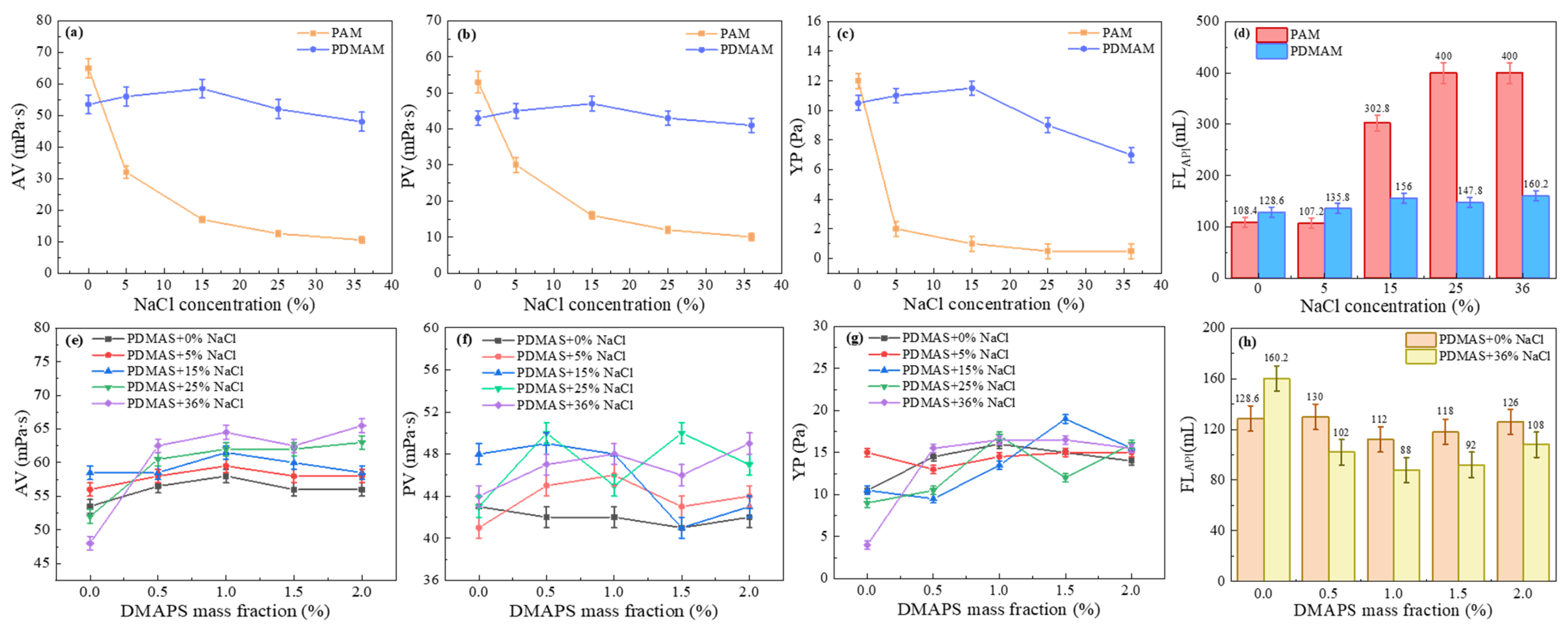
2.1. Effect of DMAM and DMAPS on the Salt Resistance of Polymers
2.2. Effect of AM Mass Fraction on the Properties of the Crosslinked System
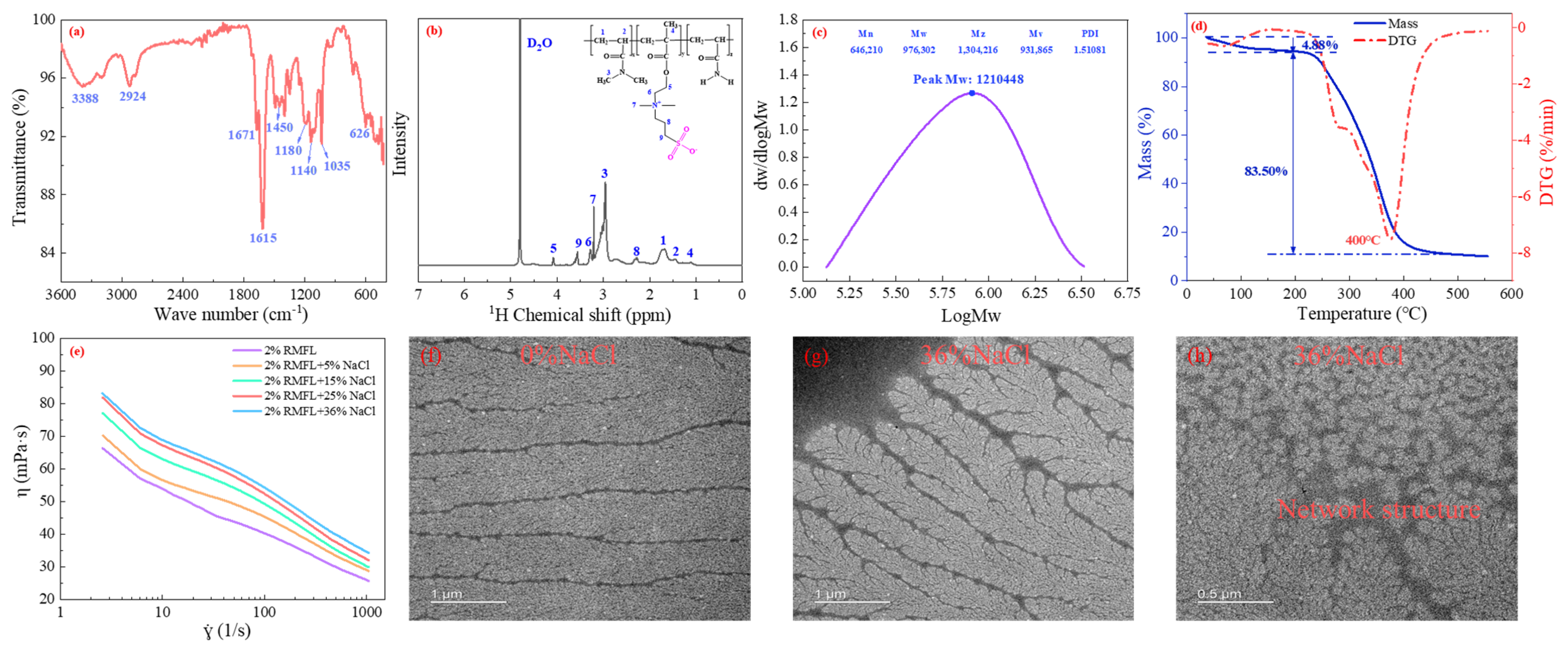
2.3. Preparation and Characterization of RMFL
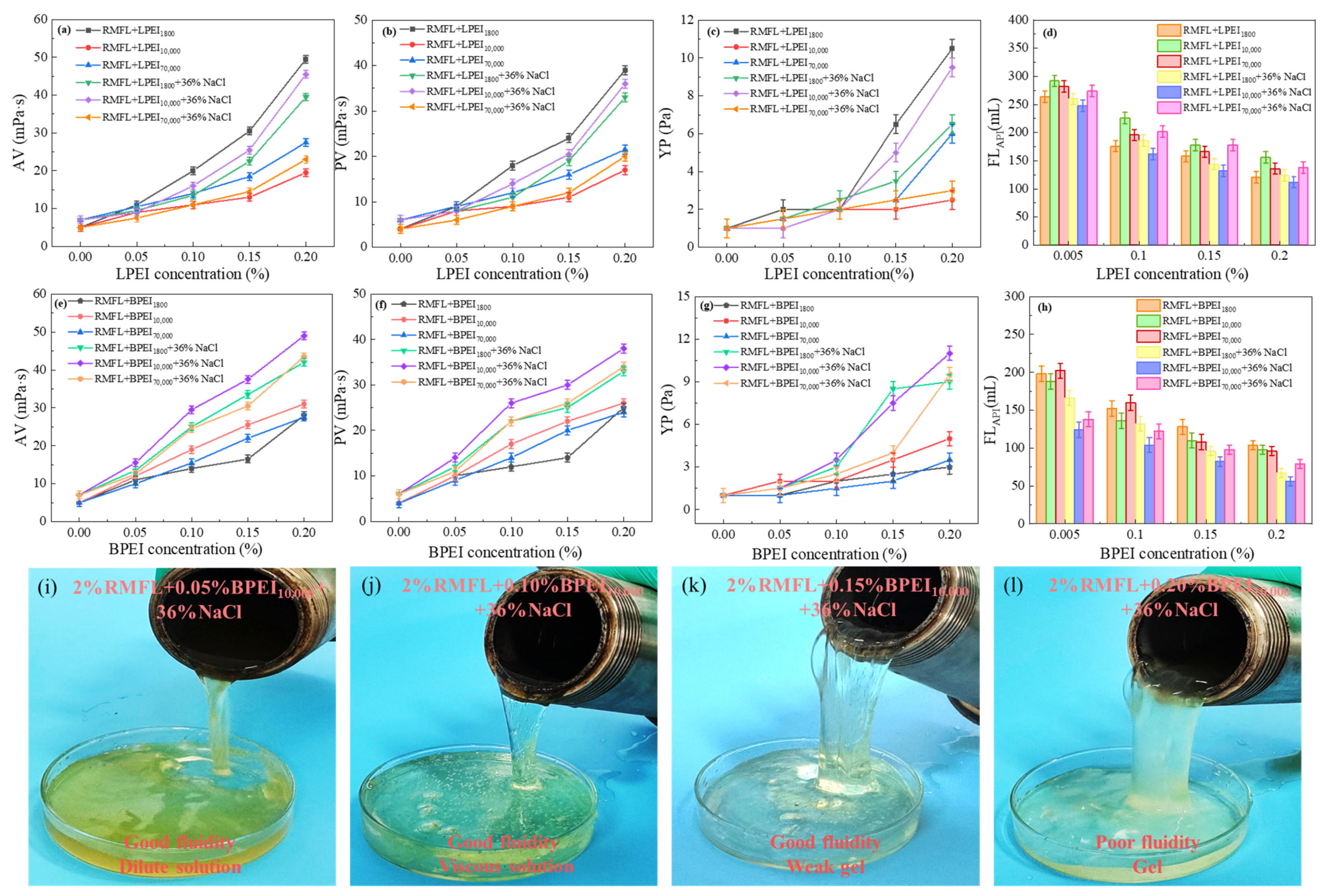
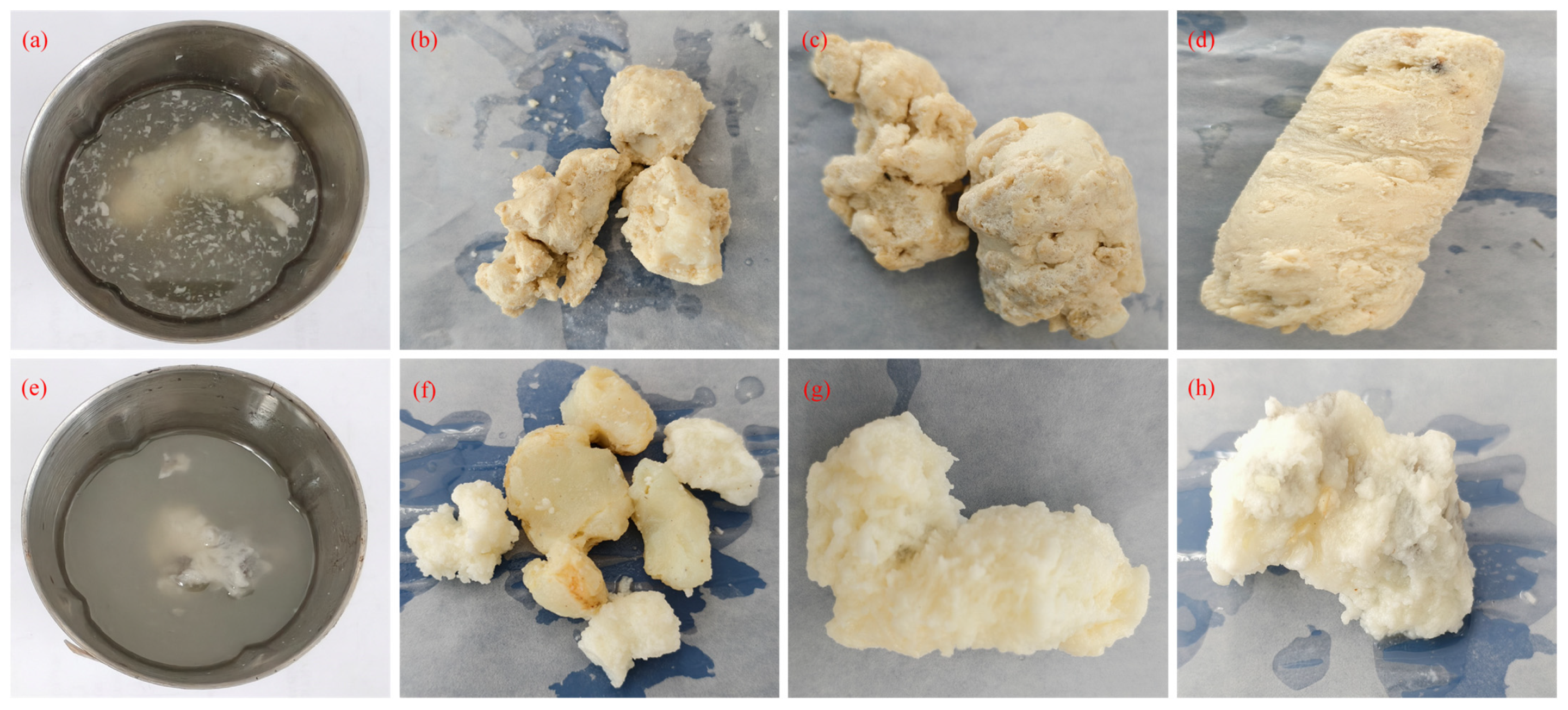
2.4. Effect of Polyethyleneimine on the Performance of RMFL
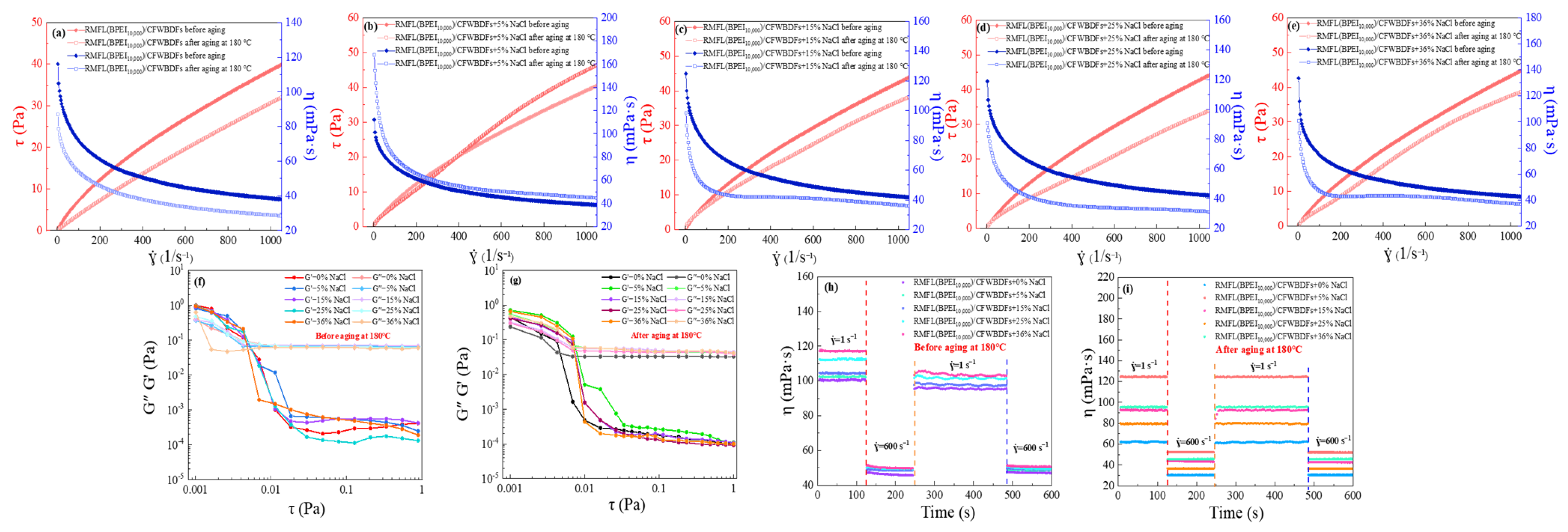
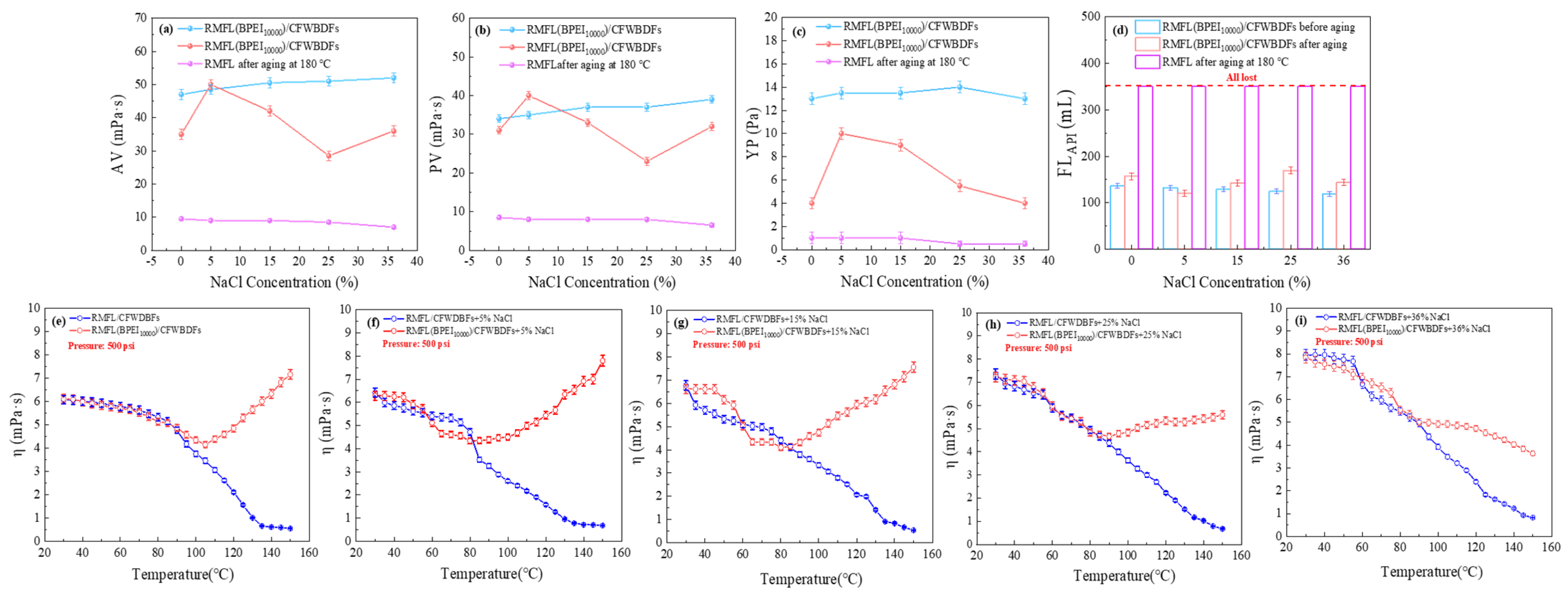
2.5. Rheological Properties Evaluation of RMFL(BPEI10,000)/CFWBDFs
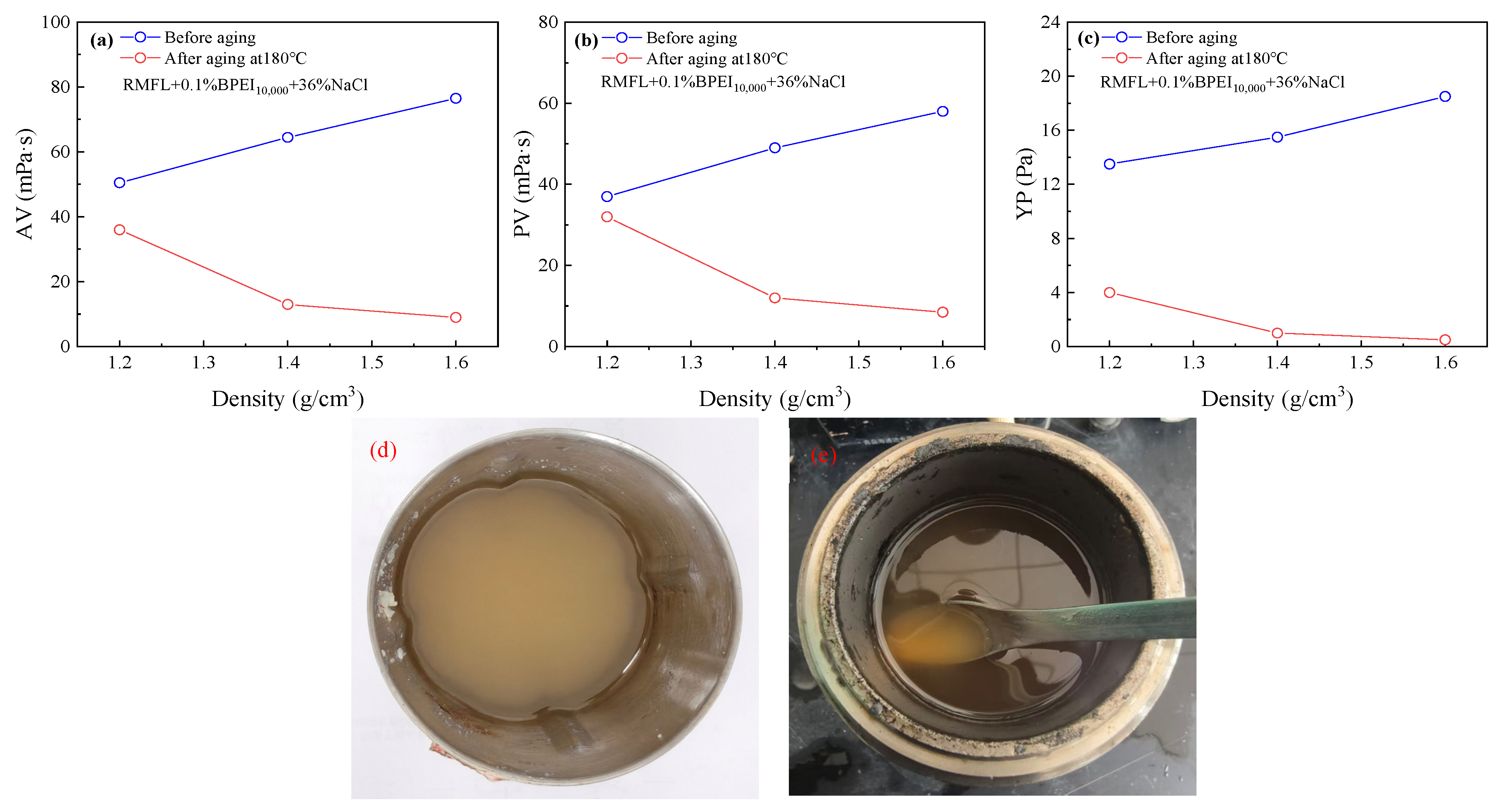
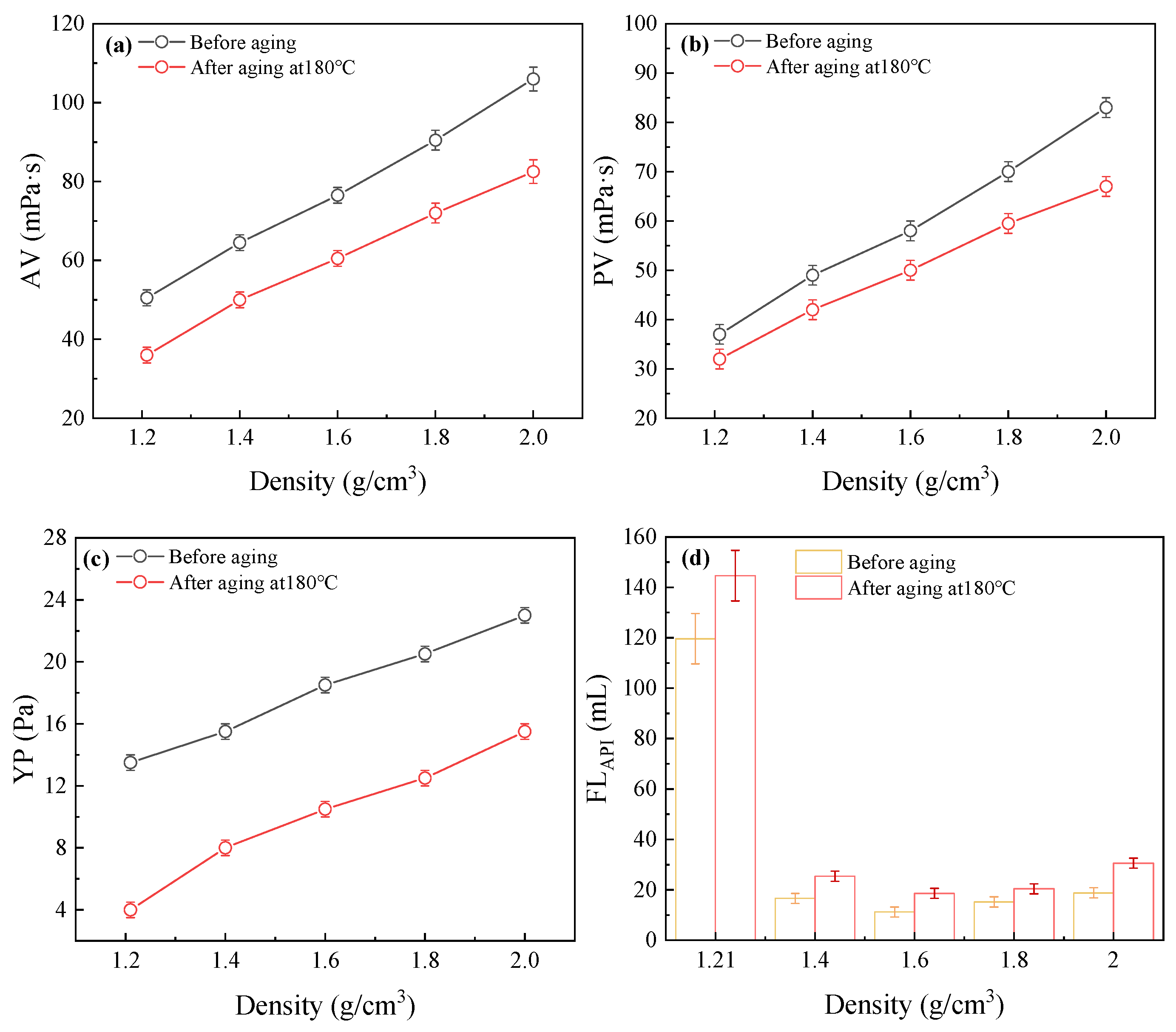
2.6. Evaluation of RMFL(BPEI10,000)/CFWBDFs Under High-Density Conditions
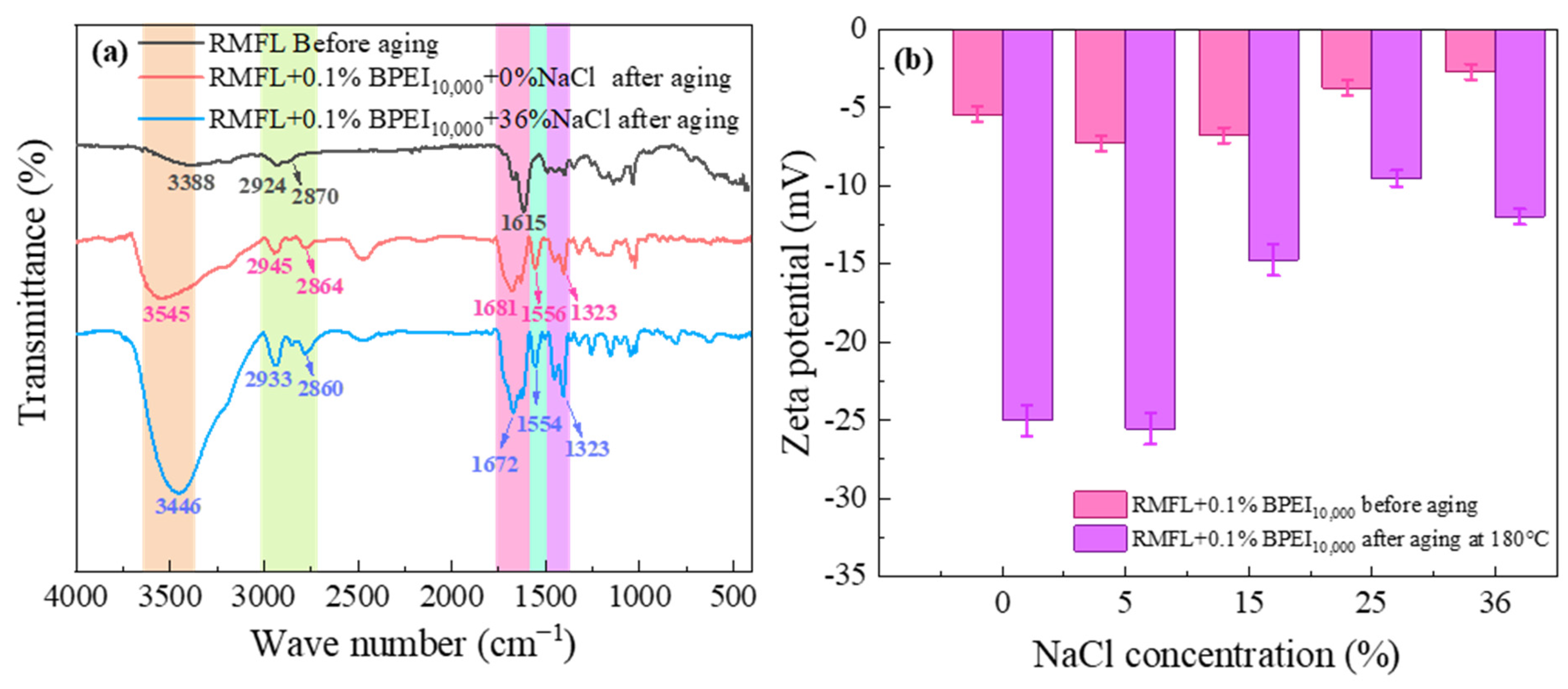
2.7. Mechanism Exploration
3. Conclusions
- (1)
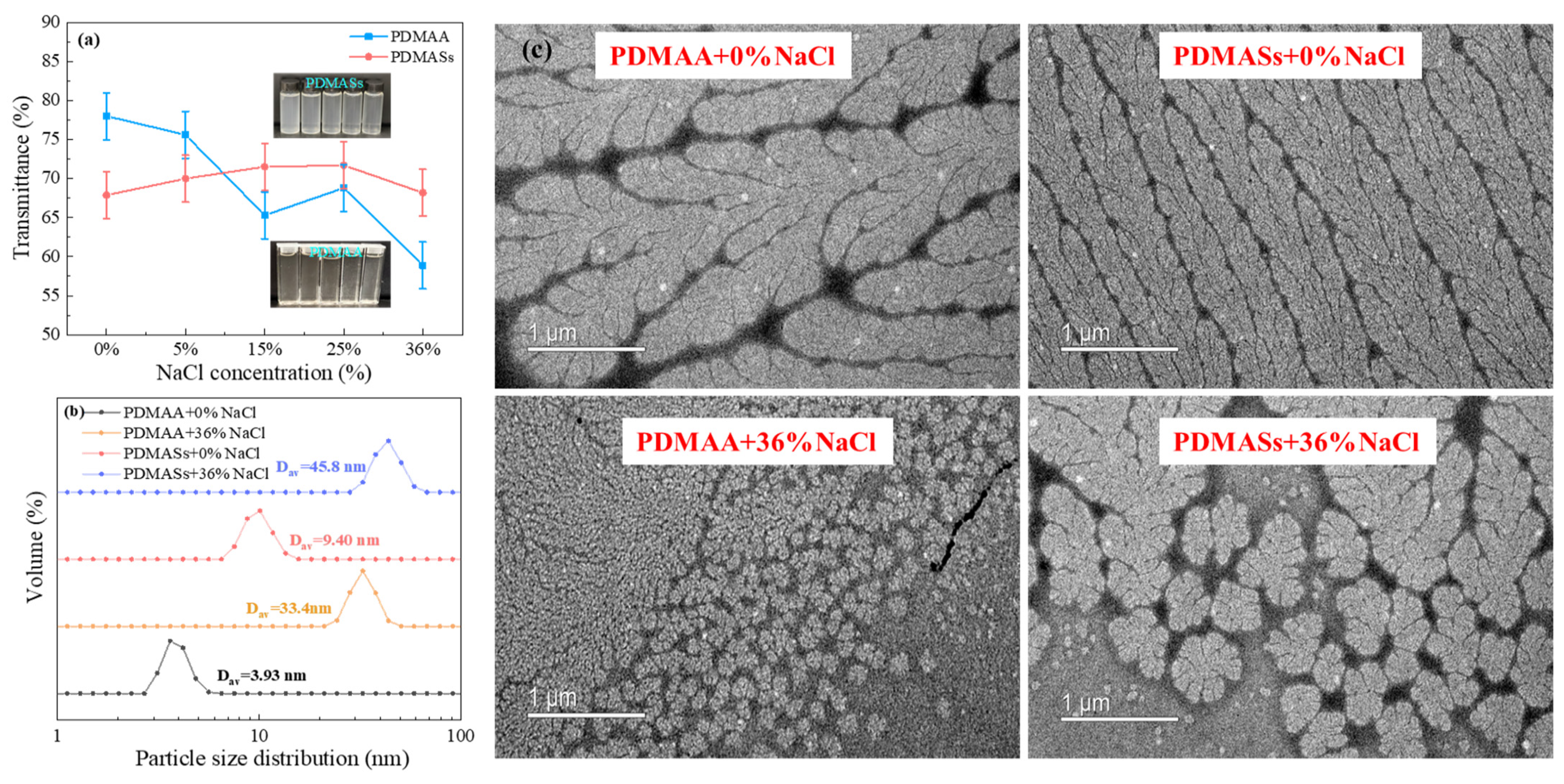
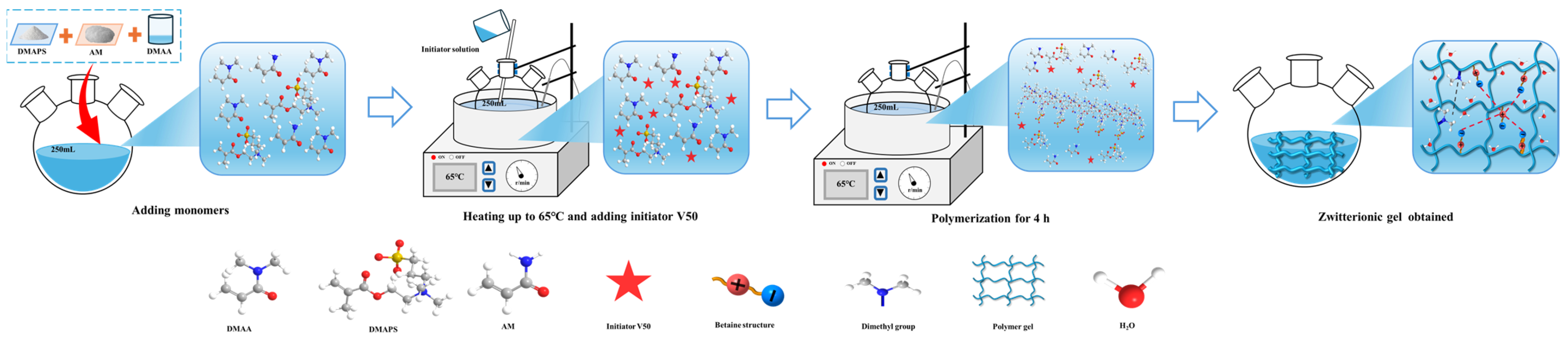
- Incorporating DMAA as the polymer backbone could endow rigidity and weak hydrophobic association properties to the polymers, and introducing DMAPS into the polymer side chains endowed the polymer with an anti-polyelectrolyte effect. The combination of DMAM and DMAPS could enhance the salt resistance of polymers.
- (2)
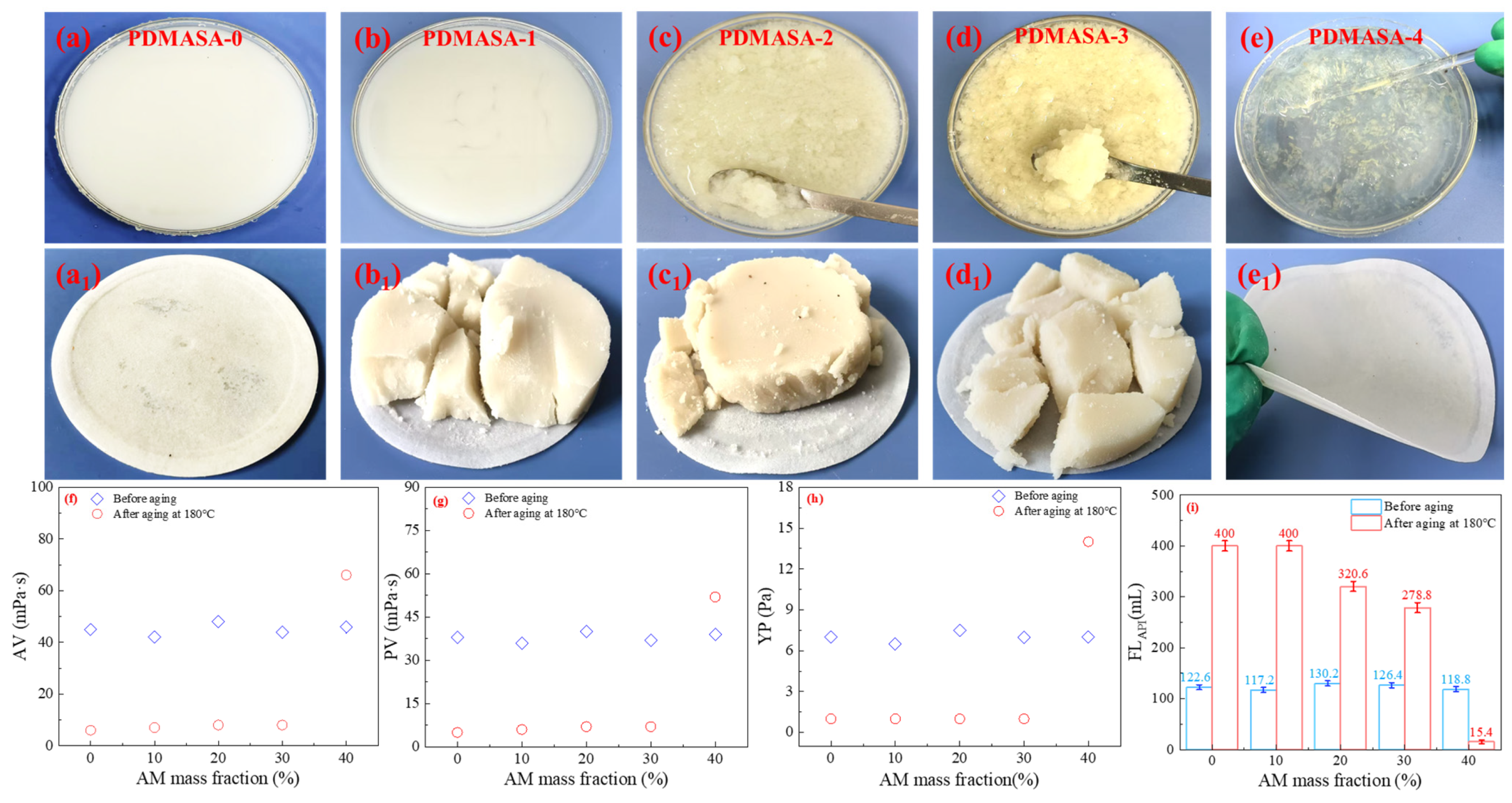
- Even though excessive crosslinking resulted in gel formation at an AM mass fraction of 40%, it was approaching the expected outcome.
- (3)
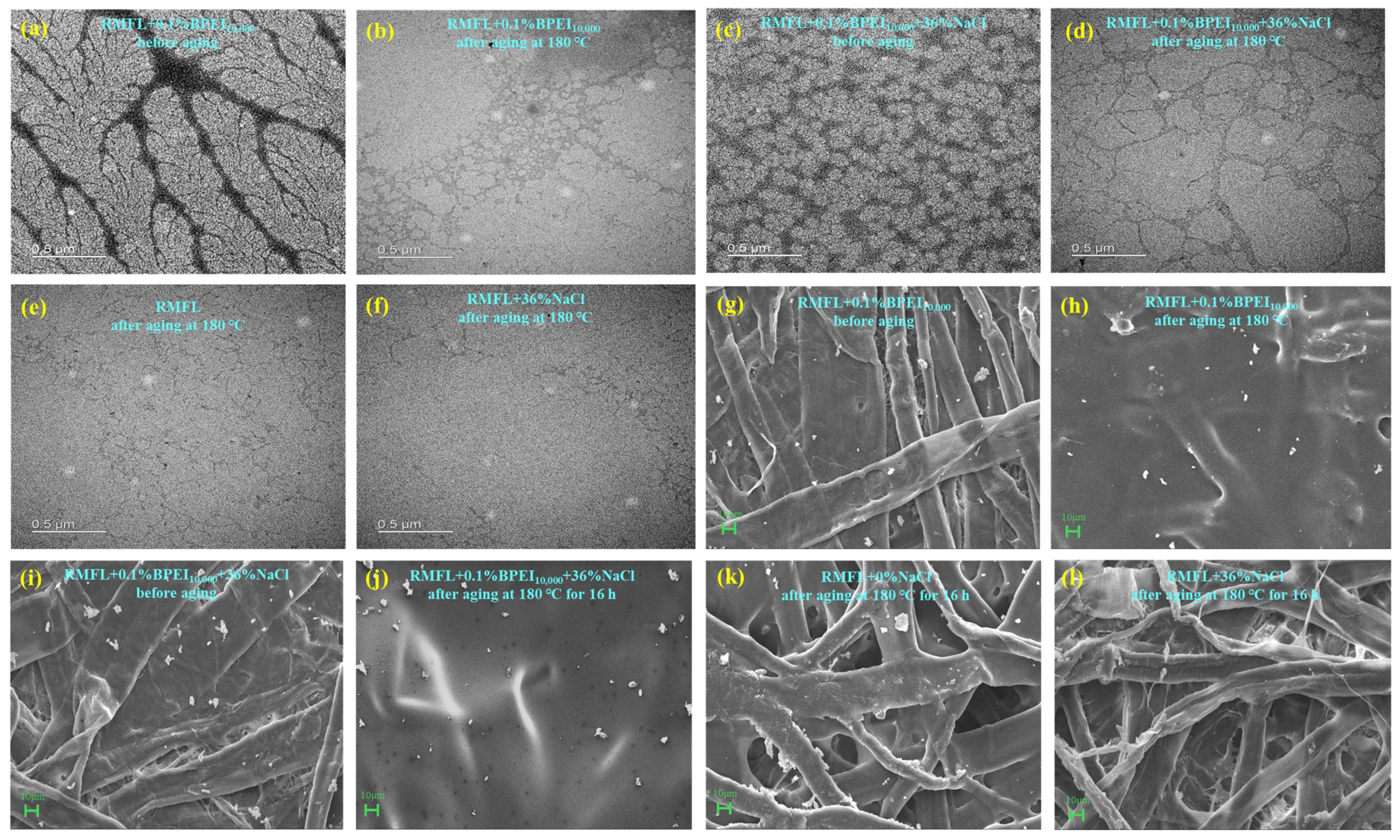
- The polymers without amide groups failed to crosslink with LPEI1800 under high-temperature and high-salinity conditions. Branched polyethyleneimine exhibited a superior crosslinking effect with RMFL compared to linear polyethyleneimine. BPEI10,000 demonstrated the most effective crosslinking performance. Under 180 °C and 36% NaCl conditions, when the BPEI10,000 concentration was 0.1% (M/V) and the RMFL concentration was 2%, the RMFL/BPEI10,000 system achieved the highest AV, PV, and YP and the lowest filtration loss.
- (4)
- Under 180 °C and different NaCl conditions, the RMFL(BPEI10,000)/CFWBDFs exhibited appropriate shear thinning, viscoelasticity, and thixotropy properties. In particular, the viscosity of the RMFL(BPEI10,000)/CFWBDFs could be enhanced under high-temperature, high-pressure, and high-salinity conditions.
- (5)
- A crosslinking polymer with a three-dimensional network could be formed by RMFL crosslinking with BPEI10,000, which improved the rheological properties of CFWBDFs.
- (6)
- By synthesizing salt-tolerant polymers and selecting suitable crosslinking agents, the rheological properties of clay-free water-based drilling fluids can be regulated under high-temperature and high-salinity conditions.
- (1)
- The crosslinking between RMFL and BPEI10,000 in this study is not easy to control.
- (2)
- The RMFL/BPEI10,000 system was not suitable for Ca2+- or Mg2+-based CFWBDFs, as these ions readily react with BPEI10,000.
- (3)
- The proposed approach places high demands on drilling fluid formulation, requiring that the crosslinker and polymer exhibit high selectivity and do not react with other additives.
- (4)
- Future research should focus not only on developing high-temperature and salt-resistant polymers but also on designing crosslinkers that are compatible with the polymers, exhibit controllable crosslinking, and have good compatibility with other drilling fluid additives. Although this approach is challenging, it remains an effective strategy to improve the overall performance of drilling fluids.
- (5)
- Additionally, the lubricity, inhibition, contamination resistance, and HPHT filtration of drilling fluids should be studied to ensure their suitability for deep wells.
4. Materials and Methods
4.1. Materials
4.2. Methods
4.2.1. Preparation of Polymers
4.2.2. Preparation of Drilling Fluids
4.2.3. Characterization of Polymers
4.2.4. Evaluation of Clay-Free Water-Based Drilling Fluids
4.2.5. Mechanism Analysis
Author Contributions
Funding
Institutional Review Board Statement
Informed Consent Statement
Data Availability Statement
Acknowledgments
Conflicts of Interest
References
- Huang, X.; Sun, J.; Lyu, K.; Dong, X.; Liu, F.; Gao, C. A high-temperature resistant and high-density polymeric saturated brine-based drilling fluid. Pet. Explor. Dev. 2023, 50, 1215–1224. [Google Scholar] [CrossRef]
- Gao, S.D.; Lin, D.; Li, A.; Deng, L.D.; Dong, A.J.; Zhang, J.H. A zwitterionic polymer filtrate reducer with enhanced anti-polyelectrolyte effect for high-temperature and high-salinity conditions. Chem. Eng. J. 2025, 508, 161087. [Google Scholar] [CrossRef]
- Patel, A.D.; Indulkar, S.; Chavan, V.; Maddheshiya, P.; Asrani, M.; Thakur, S.; Singh, A.K.; Gupta, V. Clay Free Invert Emulsion Drilling Fluid System-An Innovative Rheology Modifier Which Provides Flat Rheology for Deep Water Drilling and Viscosifier for Clay Free System. In Proceedings of the Abu Dhabi International Petroleum Exhibition & Conference, Abu Dhabi, United Arab Emirates, 12–15 November 2018; Volume 49, p. 1. [Google Scholar] [CrossRef]
- Ali, I.; Ahmad, M.; Bakhsh, A.; Shaikh, A. Evaluation of filtration characteristics of bentonite-free water-based mud utilizing carboxymethylated tapioca starch. Pet. Sci. Technol. 2024, 43, 3574–3591. [Google Scholar] [CrossRef]
- Li, F.; Wang, Z.; Tian, Y.; Zhang, J. Environment Friendly Water-Based Drilling Fluid Using Natural Vegetable Gum. Asian J. Chem. 2013, 25, 3651–3654. [Google Scholar] [CrossRef]
- Liu, J. Experimental study of environmental-friendly modified cellulose as rheology modifier in clay-free water-based drilling fluids. Fresenius Environ. Bull. 2020, 29, 3118–3125. [Google Scholar]
- Kamal, M.S.; Sultan, A.S.; Al-Mubaiyedh, U.A.; Hussein, I.A. Review on polymer flooding: Rheology, adsorption, stability, and field applications of various polymer systems. Polym. Rev. 2015, 55, 491–530. [Google Scholar] [CrossRef]
- Rabiee, N.; Rabiee, M. Molecular engineering of non-covalent interactions for controlled nanomaterial assembly: Chemical principles and materials design. Coord. Chem. Rev. 2025, 545, 217005. [Google Scholar] [CrossRef]
- Davoodi, S.; Al-Shargabi, M.; Wood, D.A.; Rukavishnikov, V.S.; Minaev, K.M. Synthetic polymers: A review of applications in drilling fluids. Pet. Sci. 2024, 21, 475–518. [Google Scholar] [CrossRef]
- Zhang, X.; Jiang, G.; Xuan, Y.; Wang, L.; Huang, X. Associating Copolymer Acrylamide/Diallyldimethylammonium Chloride/Butyl Acrylate/2-Acrylamido-2-methylpropanesulfonic Acid as a Tackifier in Clay-Free and Water-Based Drilling Fluids. Energy Fuels 2017, 31, 4655–4662. [Google Scholar] [CrossRef]
- Wang, J.; Sun, J.; Huang, X.; Lv, K.; Dong, X.; Geng, Y.; Xie, S. A salt-responsive amphoteric viscosifier for high-density solid-free completion fluids with high temperature resistance, strong solubility, and high viscosity enhancement. Geoenergy Sci. Eng. 2024, 243, 213303. [Google Scholar] [CrossRef]
- Xie, B.Q.; Ting, L.; Zhang, Y.; Liu, C. Rheological properties of bentonite-free water-based drilling fluids with novel polymer viscosifier. J. Pet. Sci. Eng. 2018, 164, 302–310. [Google Scholar] [CrossRef]
- Chen, T.Q.; Chen, M.J.; Fu, C.Y. Effect of molecular weight on inhibition performance of modified polyethyleneimine as polymer corrosion inhibitor for carbon steel in neutral medium. J. Appl. Polym. Sci. 2022, 139, 51922. [Google Scholar] [CrossRef]
- Adewunmi, A.A.; Ismail, S.; Sultan, A.S. Crosslinked Polyacrylamide Composite Hydrogels Impregnated with Fly Ash: Synthesis, Characterization and Their Application as Fractures Sealant for High Water Producing Zones in Oil and Gas Wells. J. Polym. Environ. 2024, 26, 3294–3306. [Google Scholar] [CrossRef]
- Bai, B.J.; Zhou, J.; Yin, M.F. A comprehensive review of polyacrylamide polymer gels for conformance control. Pet. Explor. Dev. 2015, 42, 525–532. [Google Scholar] [CrossRef]
- Pandey, V.S.; Verma, S.K.; Yadav, M.; Behari, K. Guar gum-g-N,N′-dimethylacrylamide: Synthesis, characterization and applications. Carbohydr. Polym. 2014, 99, 284–290. [Google Scholar] [CrossRef]
- Tripathy, J.; Mishra, D.K.; Yadav, M.; Behari, K. Synthesis, characterization and applications of graft copolymer (chitosan-g-N,N-dimethylacrylamide). Carbohydr. Polym. 2010, 79, 40–46. [Google Scholar] [CrossRef]
- Weng, L.; Gouldstone, A.; Wu, Y.; Chen, W. Mechanically strong double network photocrosslinked hydrogels from N,N-dimethylacrylamide and glycidyl methacrylated hyaluronan. Biomaterials 2008, 29, 2153–2163. [Google Scholar] [CrossRef]
- Liu, X.; Wen, Y.; Qu, J.; Geng, X.; Chen, B.; Wei, B.; Wu, B.; Yang, S.; Zhang, H.; Ni, Y. Improving salt tolerance and thermal stability of cellulose nanofibrils by grafting modification. Carbohydr. Polym. 2019, 211, 257–265. [Google Scholar] [CrossRef]
- Hu, H.; Hu, Y.; Weng, X. Study on filter cake removal fluid of EZFLOW weak gel drilling fluid. Gels 2025, 11, 347. [Google Scholar] [CrossRef]
- Algi, M.P.; Okay, O. Highly stretchable self-healing poly(N,N-dimethylacrylamide) hydrogels. Eur. Polym. J. 2014, 59, 113–121. [Google Scholar] [CrossRef]
- Sun, J.; Zhang, X.; Lv, K.; Liu, J.; Xiu, Z.; Wang, Z.; Huang, X.; Bai, Y.; Wang, J.; Jin, J. Synthesis of hydrophobic associative polymers to improve the rheological and filtration performance of drilling fluids under high temperature and high salinity conditions. J. Pet. Sci. Eng. 2022, 209, 109808. [Google Scholar] [CrossRef]
- Kudaibergenov, S.; Jaeger, W.; Laschewsky, A. Polymeric betaines: Synthesis, characterization, and application. In Supramolecular Polymers Polymeric Betains Oligomers; Springer: Berlin/Heidelberg, Germany, 2006; pp. 157–224. [Google Scholar]
- Wang, K.; Wen, J.; Zhang, S.; Yang, L.; Yang, H.; Yu, X.; Zhang, H. Magnetic polyacrylamide-based gel with tunable structure and properties and its significance in conformance control of oil reservoirs. Colloids Surf. A Physicochem. Eng. Asp. 2024, 702, 135093. [Google Scholar] [CrossRef]
- França da Câmara, P.C.; Cavalcante de Morais, S.; do Nascimento Marques, N.; Alves de Souza, E.; da Silva Gasparotto, L.H.; de Carvalho Balaban, R. Polyacrylamide and polyethylenimine mixed hydrogels tailored with crude glycerol for conformance fluids: Gelation performance and thermal stability. Fuel 2023, 354, 129376. [Google Scholar] [CrossRef]
- Zhao, J.Z.; Jia, H.; Pu, W.F.; Liao, R. Influences of Fracture Aperture on the Water-Shutoff Performance of Polyethyleneimine Cross-Linking Partially Hydrolyzed Polyacrylamide Gels in Hydraulic Fractured Reservoirs. Energy Fuels 2011, 25, 2616–2624. [Google Scholar] [CrossRef]
- Guo, H.; Ge, J.; Zhao, S.; Xu, Y.; Zhou, D.; Tao, Z. Performance evaluation of high-strength polyethyleneimine gels and syneresis mechanism under high-temperature and high-salinity conditions. SPE J. 2022, 27, 3630–3642. [Google Scholar] [CrossRef]
- Luo, Y.; Lin, L.; Guo, Y.; Luo, P.; Xiong, G.; Li, Z.; Ao, H. Study on high-temperature degradation of acrylamide-based polymer ZP1 in aqueous solution. Polym. Degrad. Stab. 2023, 217, 110533. [Google Scholar] [CrossRef]
- Zhang, T.F.; Sun, J.S.; Liu, J.P.; Lv, K.H.; Sun, Y.W.; Xu, Z.; Huang, N.; Yan, H. High-temperature and high-salinity resistance hydrophobic association zwitterionic filtrate loss reducer for water-based drilling fluids. Pet. Sci. 2025, 22, 2851–2867. [Google Scholar] [CrossRef]
- Li, J.; Sun, J.; Lv, K.; Ji, Y.; Liu, J.; Huang, X.; Bai, Y.; Wang, J.; Jin, J.; Shi, S. Temperature- and salt-resistant micro-crosslinked polyampholyte gel as fluid-loss additive for water-based drilling fluids. Gels 2022, 8, 289. [Google Scholar] [CrossRef]
- Luo, Y.; Lin, L.; Yu, W.; Li, X.; Gu, H. Synthesis and Evaluation of Betaine Copolymer Filtrate Reducer for Drilling Mud. Clays Clay Miner. 2022, 70, 252–269. [Google Scholar] [CrossRef]
- Sepehri, S.; Soleyman, R.; Varamesh, A.; Valizadeh, M.; Nasiri, A. Effect of synthetic water-soluble polymers on the properties of the heavy water-based drilling fluid at high pressure-high temperature (HPHT) conditions. J. Pet. Sci. Eng. 2018, 166, 850–856. [Google Scholar] [CrossRef]
- Lei, T.; Wang, Y.; Zhang, H.; Cao, J.; Xiao, C.; Ding, M.; Chen, W.; Chen, M.; Zhang, Z. Preparation and performance evaluation of a branched functional polymer for heavy oil recovery. J. Mol. Liq. 2022, 363, 119808. [Google Scholar] [CrossRef]
- Baruah, U.; Manna, U. The synthesis of a chemically reactive and polymeric luminescent gel. Chem. Sci. 2021, 12, 2097–2107. [Google Scholar] [CrossRef] [PubMed]
- Davoodi, S.; Ahmad Ramazani, S.A.; Soleimanian, A.; Fellah Jahromi, A. Application of a novel acrylamide copolymer containing highly hydrophobic comonomer as filtration control and rheology modifier additive in water-based drilling mud. J. Pet. Sci. Eng. 2019, 180, 747–755. [Google Scholar] [CrossRef]
- Yang, J.; Wang, R.; Sun, J.; Qu, Y.; Ren, H.; Zhao, Z.; Wang, P.; Li, Y.; Liu, L. Comb polymer/layered double hydroxide (LDH) composite as an ultrahigh temperature filtration reducer for water-based drilling fluids. Appl. Surf. Sci. 2024, 645, 158884. [Google Scholar] [CrossRef]
- Yang, J.; Wang, R.; Sun, J.; Wang, J.; Liu, L.; Qu, Y.; Wang, P.; Ren, H.; Gao, S.; Yang, Z. Nanolaponite/Comb Polymer Composite as a Rheological Modifier for Water-Based Drilling Fluids. ACS Appl. Nano Mater. 2023, 6, 13453–13465. [Google Scholar] [CrossRef]
- Luo, Y.; Lin, L.; Luo, P.; Guo, Y.; Xie, S.; Wang, M.; Xiong, G.; Gu, H. Polymer nanocomposite ADA@SM as a high-temperature filtrate reducer for water-based drilling fluids and its filtration loss mechanism. Colloids Surf. A Physicochem. Eng. Asp. 2023, 672, 131701. [Google Scholar] [CrossRef]
- Fritsch, D.; Merten, P.; Heinrich, K.; Lazar, M.; Priske, M. High performance organic solvent nanofiltration membranes: Development and thorough testing of thin film composite membranes made of polymers of intrinsic microporosity (PIMs). J. Membr. Sci. 2012, 401–402, 222–231. [Google Scholar] [CrossRef]
- Li, J.; Ji, Y.-X.; Ni, X.-X.; Lv, K.-H.; Huang, X.-B.; Sun, J.-S. A micro-crosslinked amphoteric hydrophobic association copolymer as high temperature- and salt-resistance fluid loss reducer for water-based drilling fluids. Pet. Sci. 2024, 21, 1980–1991. [Google Scholar] [CrossRef]
- Liu, J.P.; Zhang, T.F.; Sun, Y.W.; Lin, D.; Feng, X.; Wang, F. Insights into the high temperature-induced failure mechanism of bentonite in drilling fluid. Chem. Eng. J. 2022, 445, 136680. [Google Scholar] [CrossRef]






| Additive | Application | Raw Materials | Performance | Shortcomings |
|---|---|---|---|---|
| BioDrill FM400 [4] | Filtration reducer | BioDrill FM400 provided by Borregaard, Sarpsborg, Norway | Temperature resistant to 150 °C The PV, YP, and GS of the drilling fluid are significantly improved. Filtration loss and filter cake thickness are reduced by 63% and 42%, respectively. | Natural and natural-modified materials are easily degradable and have insufficient temperature resistance. |
| Tara gum [5] | Rheology modifier | Tara gum | Temperature resistant to 140 °C | |
| HMHEC [6] | Rheology modifier and filtration reducer | Cellulose and hydrophobic monomer | Temperature resistant to 150 °C EC50 was 60,000 mg/L, the BOD5/COD was 18.21% | |
| CMTS [4] | Rheology modifier | Native tapioca starch, monochloroacetic acid | Temperature resistant to 126 °C | |
| SBASC [9] | Filtration reducer | AM and ST | Resistant to temperatures up to 121 °C 25.0% NaCl and 5.7% KCl | Synthetic polymers have insufficient temperature resistance. Usually, below 180 °C, salt tolerance has not reached saturation. |
| SSZN [10] | Rheology modifier | AM, AMPS, DMDAAC, BA | Temperature resistant to 150 °C Salt tolerance up to 15%NaCl | |
| FPOD [11] | Rheology modifier | DMAA, DMDAAC, SBMA | Temperature resistant to 150 °C, CaBr2 to saturated | |
| SDKP [12] | Rheology modifier | AMPS, NVCL, DVB | Temperature resistance up to 160 °C and salt resistance up to 15% NaCl |
| Additive | Application | Raw Materials | Performance | Novelty |
|---|---|---|---|---|
| RMFL and BPEI10,000 | Rheology modifier | DMAA, SBMA, AM and BPEI10,000 | Temperature resistant to 180 °C Salt tolerance up to 36% NaCl | 1. RMFL had a betaine structure and exhibited an anti-polyelectrolyte effect. 2. RMFL contained crosslinking sites, which were capable of crosslinking with BPEI10,000 at high temperatures, preventing thermal degradation of RMFL. 3. The combination of RMFL and BPEI10,000 could effectively regulate the rheological properties of drilling fluid under high-temperature, high-salinity conditions. |
| Rheology Model | Condition | NaCl Concentration (%) | ||||
|---|---|---|---|---|---|---|
| 0% NaCl | 5% NaCl | 15% NaCl | 25% NaCl | 36% NaCl | ||
| Herschel-Bulkley model | Before aging | R2 = 0.9932 | R2 = 0.9937 | R2 = 0.9938 | R2 = 0.9946 | R2 = 0.9950 |
| After aging at 180 °C | R2 = 0.9996 | R2 = 0.9976 | R2 = 0.9955 | R2 = 0.9995 | R2 = 0.9965 | |
Disclaimer/Publisher’s Note: The statements, opinions and data contained in all publications are solely those of the individual author(s) and contributor(s) and not of MDPI and/or the editor(s). MDPI and/or the editor(s) disclaim responsibility for any injury to people or property resulting from any ideas, methods, instructions or products referred to in the content. |
© 2026 by the authors. Licensee MDPI, Basel, Switzerland. This article is an open access article distributed under the terms and conditions of the Creative Commons Attribution (CC BY) license.
Share and Cite
Zhang, T.; Sun, J.; Lv, K.; Liu, J.; Nie, L.; Zheng, Y.; Sun, Y.; Huang, N.; Hou, D.; Yan, H.; et al. Study on a Thermally Crosslinking Clay-Free Weak Gel Water-Based Drilling Fluid. Gels 2026, 12, 280. https://doi.org/10.3390/gels12040280
Zhang T, Sun J, Lv K, Liu J, Nie L, Zheng Y, Sun Y, Huang N, Hou D, Yan H, et al. Study on a Thermally Crosslinking Clay-Free Weak Gel Water-Based Drilling Fluid. Gels. 2026; 12(4):280. https://doi.org/10.3390/gels12040280
Chicago/Turabian StyleZhang, Taifeng, Jinsheng Sun, Kaihe Lv, Jingping Liu, Lei Nie, Yufan Zheng, Yuanwei Sun, Ning Huang, Delin Hou, Han Yan, and et al. 2026. "Study on a Thermally Crosslinking Clay-Free Weak Gel Water-Based Drilling Fluid" Gels 12, no. 4: 280. https://doi.org/10.3390/gels12040280
APA StyleZhang, T., Sun, J., Lv, K., Liu, J., Nie, L., Zheng, Y., Sun, Y., Huang, N., Hou, D., Yan, H., & Li, Y. (2026). Study on a Thermally Crosslinking Clay-Free Weak Gel Water-Based Drilling Fluid. Gels, 12(4), 280. https://doi.org/10.3390/gels12040280