
Next-Generation Hydrogels Integrating Natural Antioxidants and Microbiome Modulators for Improved Cancer Management

 , , and
Abstract
1. Introduction
2. Natural Antioxidants in Cancer Therapy
2.1. Key Natural Antioxidants with Anticancer Properties
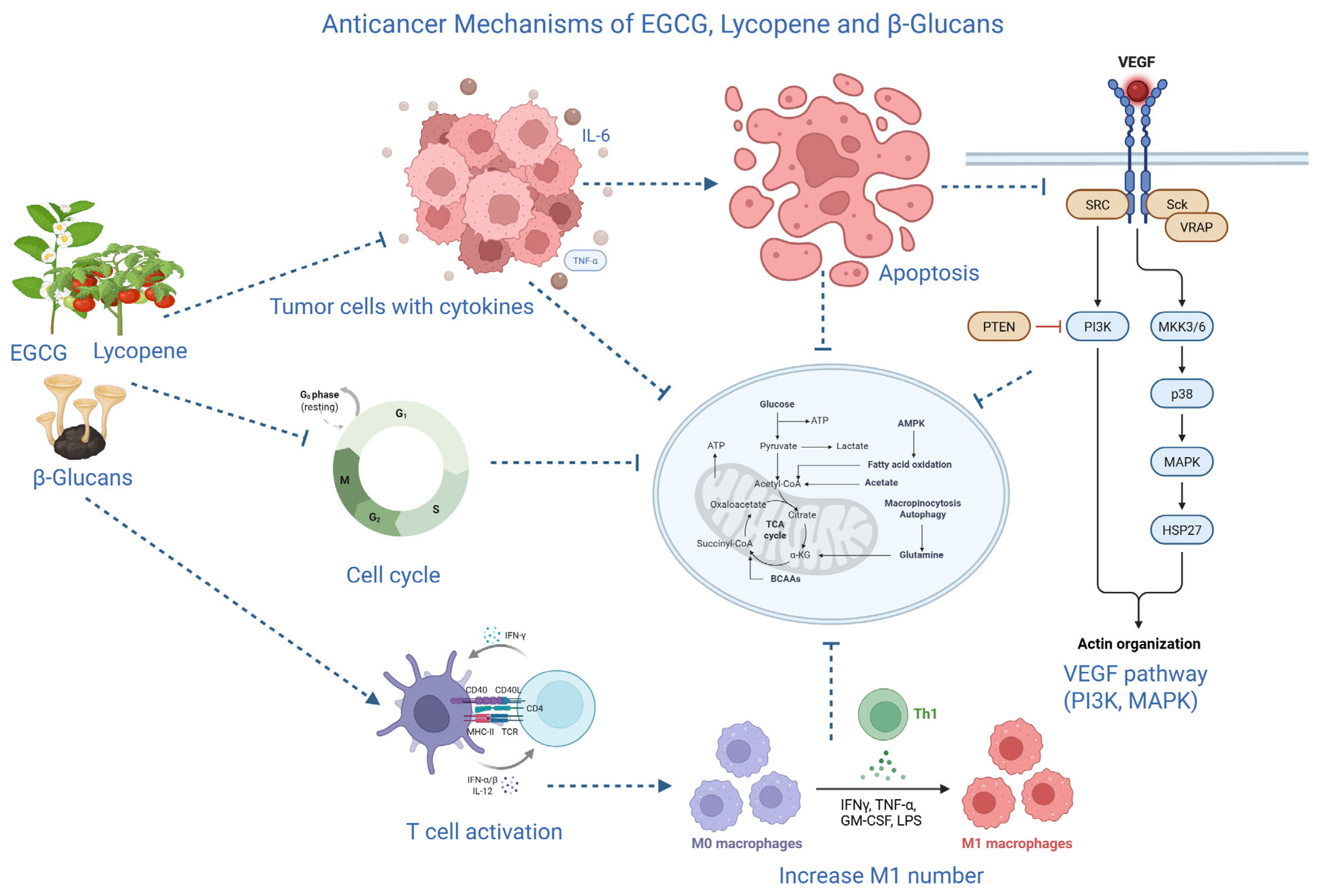
2.2. Mechanisms of Action and Therapeutic Potential (Catechins and Flavonoids, Epigallocatechin-3-Gallate (EGCG), Carotenoid Lycopene and Antioxidant Polysaccharide β-Glucans)
2.3. Challenges in Clinical Application
2.4. Comparison with Conventional Systemic Delivery Strategies
3. Microbiome Modulators in Oncology
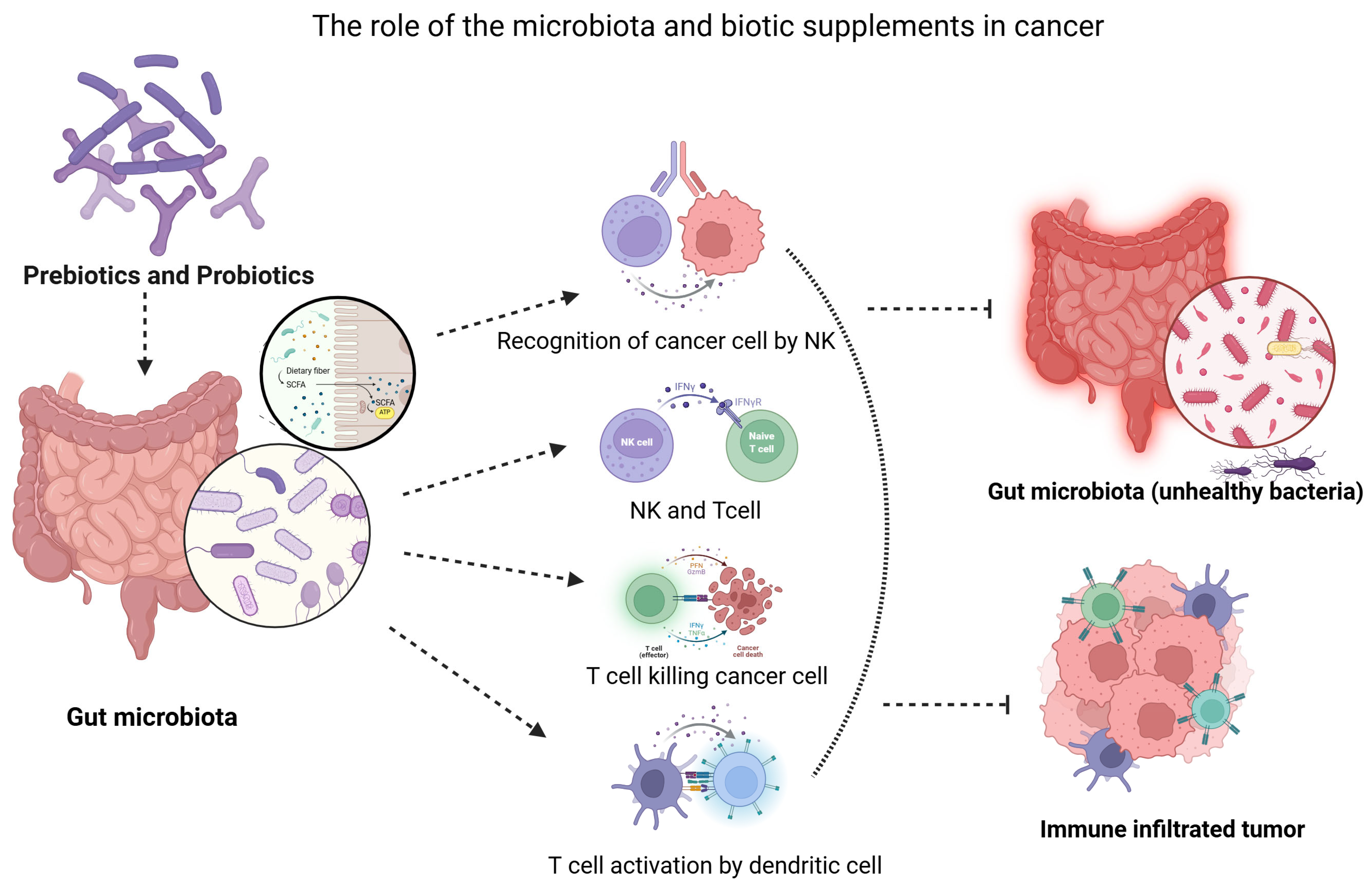
3.1. Probiotics, Prebiotics, and Synbiotics: Definitions and Roles
3.2. Impact on Cancer Development and Treatment Response
3.3. Clinical Relevance and Current Research
3.4. Hydrogel-Based Antioxidant Delivery Enhances Microbiome-Mediated Therapeutic Effects
3.5. Advantages of the Combined Antioxidant–Microbiome Modulation Strategy
4. Hydrogel Platforms for Drug Delivery
4.1. Types and Properties of Hydrogels
4.2. Synthesis and Functionalization Methods
4.3. Advantages for Targeted Cancer Therapy
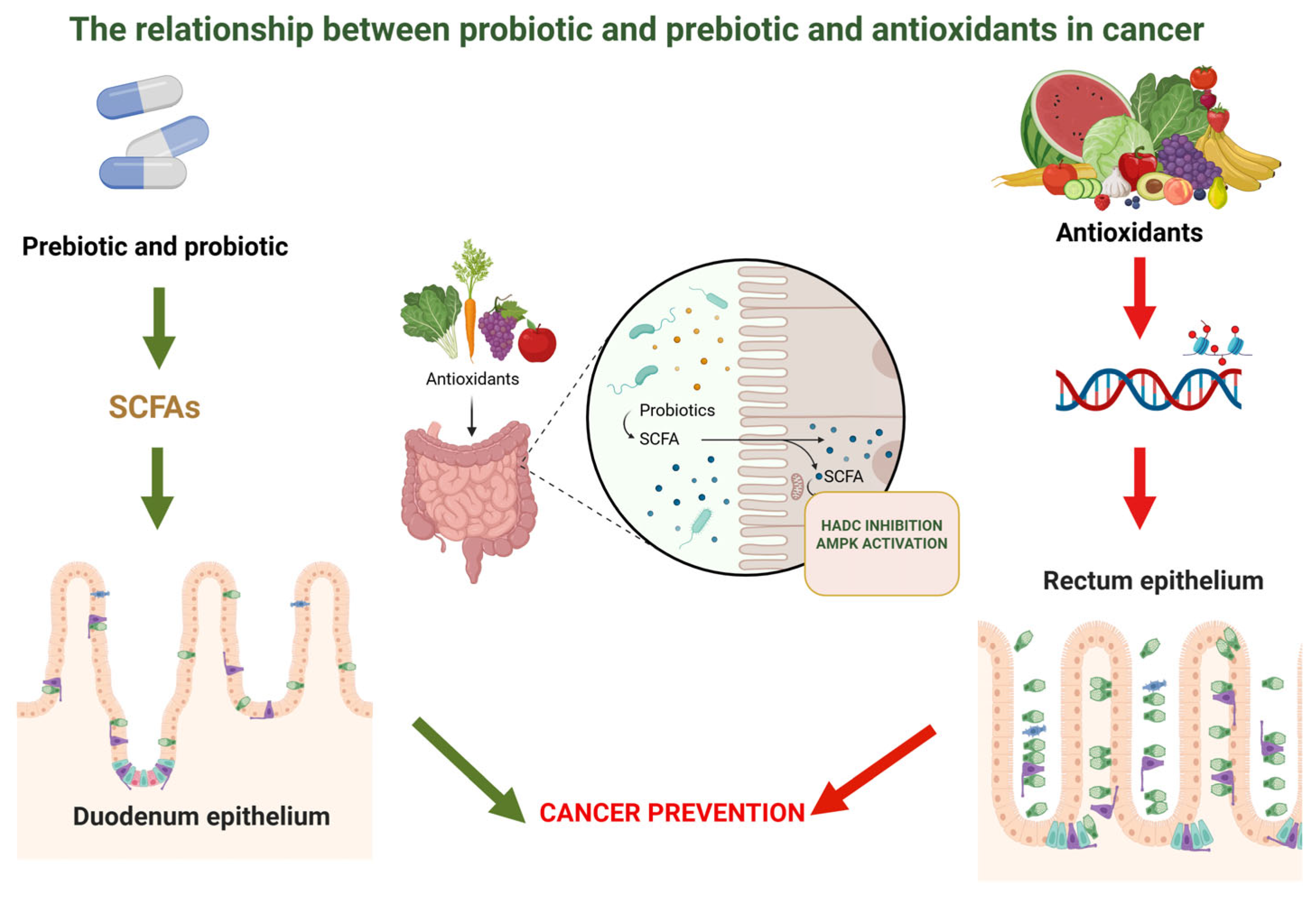
4.4. The Relationship Between Probiotics and Antioxidants in Cancer with Emphasis on Signaling Pathways in the Digestive Tract
5. Incorporation of Natural Antioxidants into Hydrogels
5.1. Techniques for Embedding Antioxidants
5.2. Stability, Release Kinetics, and Bioactivity Maintenance
5.3. Examples from Recent Studies
6. Encapsulation of Microbiome Modulators in Hydrogels
6.1. Strategies for Probiotic and Prebiotic Encapsulation
6.2. Encapsulation Feasibility
6.3. Stability Within Hydrogel Matrices
6.4. Protection and Controlled Release Considerations in Hydrogel Encapsulation of Probiotics, Prebiotics, and Synbiotics
6.4.1. Comparative Suitability for Hydrogel Incorporation (Natural Antioxidants, Prebiotics, Probiotics, and Combined Systems in Cancer Therapy)
6.4.2. Critical Comparison of Injectable, Implantable, and Oral Gel-Based Systems in Microbiome-Targeted Cancer Therapy
6.5. Preclinical and Clinical Evidence on Hydrogel Encapsulation of Probiotics, Prebiotics, and Synbiotics
6.6. Synergistic Integration of Natural Antioxidants and Microbiome Modulators in Hydrogel Platforms
6.7. Translational, Regulatory, and Manufacturing Challenges
7. Future Perspectives and Conclusions
Author Contributions
Funding
Institutional Review Board Statement
Informed Consent Statement
Data Availability Statement
Conflicts of Interest
Abbreviations
| AAc | Acrylic acid |
| ABTS | 2,2′-azinobis (3-ethylbenzothiazoline-6-sulfonic acid) |
| Bax/Bcl-2 | Bcl-2-associated X protein/B-cell lymphoma 2 |
| BRMs | Biological response modifiers |
| CA125 | Cancer antigen 125 |
| Caspase-3 | Cysteine-aspartic acid protease 3 |
| Caspase-9 | Cysteine-aspartic acid protease 9 |
| CD4+ | Cluster of differentiation 4 (helper T cells) |
| CD8+ | Cluster of differentiation 8 (cytotoxic T cells) |
| CDK | Cyclin-dependent kinase |
| CR3 | Complement receptor 3 |
| CR3-DCC | Complement-dependent cellular cytotoxicity |
| CRC | Colorectal cancer |
| Cx43 | Connexin 43 |
| DCs | Dendritic cells |
| Dectin-1 | Dendritic cell-associated C-type lectin-1 |
| DIABLO | Direct IAP-binding protein with low pI |
| DNA | Deoxyribonucleic acid |
| DNMT1 | DNA methyltransferase 1 |
| DPPH | 2,2-diphenyl-1-picrylhydrazyl |
| EC | Epicatechin |
| ECM | Extracellular matrix |
| ECS | Endothelial cells |
| EGC | Epigallocatechin |
| EGCG | Epigallocatechin-3-gallate |
| EMT | Epithelial–mesenchymal transition |
| ERK1/2 | Extracellular signal-regulated kinases 1 and 2 |
| FAO | Food and Agriculture Organization |
| FMT | Fecal microbiota transplantation |
| FRAP | Ferric reducing antioxidant power |
| GelMA | Gelatin methacryloyl |
| GelMA-CPBA | Gelatin methacryloyl functionalized with 3-(carboxyphenyl)boronic acid |
| GJC | Gap junctional intercellular communication |
| GO | Graphene oxide |
| HA | Hyaluronic acid |
| HA-SH | Thiolated hyaluronic acid |
| HIF-1α | Hypoxia-inducible factor-1α |
| HO-1 | Heme oxygenase-1 |
| HPLC | High-performance liquid chromatography |
| iC3b | Inactive complement component 3b |
| IGF-1 | Insulin-like growth factor 1 |
| IL-6 | Interleukin-6 |
| IL-12 | Interleukin-12 |
| IPNs | Interpenetrating polymer networks |
| ISAPP | International Scientific Association of Probiotics and Prebiotics |
| ISX | Intestine-specific homeobox |
| IκBα | Inhibitor of kappa B alpha |
| JNK | c-Jun N-terminal kinase |
| LNPs | Lipid nanoparticles |
| M1 | Macrophage phenotype (antitumoral) |
| MAPK | Mitogen-activated protein kinase |
| MDA | Malondialdehyde |
| MMP-2/MMP-9 | Matrix metalloproteinases 2 and 9 |
| mTOR | Mammalian target of rapamycin |
| NF-κB | Nuclear factor-kappa B |
| NK | Natural killer cells |
| NO | Nitric oxide |
| NOX4 | NADPH oxidase 4 |
| NP | Nanoparticle |
| Nrf2 | Nuclear factor erythroid 2–related factor 2 |
| ORAC | Oxygen radical absorbance capacity |
| p21Cip1/Waf1 | Cyclin-dependent kinase inhibitor 1A |
| p27KIP1 | Cyclin-dependent kinase inhibitor 1B |
| PAA | Poly (acrylic acid) |
| PAAm | Poly (acrylamide) |
| PBS | Phosphate-buffered saline |
| PDE | Partial differential equation |
| PD-L1 | Programmed death-ligand 1 |
| PEG | Poly (ethylene glycol) |
| PEO | Poly (ethylene oxide) |
| P-gp | P-glycoprotein |
| PheLigNPs | Phenolated lignin nanoparticles |
| PHEMA | Poly (2-hydroxyethyl methacrylate) |
| PI3K | Phosphatidylinositol 3-kinase |
| PRRs | Pattern recognition receptors |
| PVA | Poly (vinyl alcohol) |
| ROS | Reactive oxygen species |
| SCXN | Xylan-based capecitabine complex |
| SIRT1 | Sirtuin 1 |
| Smac | Second mitochondria-derived activator of caspases |
| SNPs | Single nucleotide polymorphisms |
| SR-B1 | Scavenger receptor class B type 1 |
| Syk | Spleen tyrosine kinase |
| TA | Tannic acid |
| TAFs | Tumor-associated fibroblasts |
| TLA | Three-letter acronym |
| TLR-2 | Toll-like receptor 2 |
| TME | Tumor microenvironment |
| TNF-α | Tumor necrosis factor-alpha |
| Tregs | Regulatory T cells |
| UV | Ultraviolet |
| VEGF | Vascular endothelial growth factor |
| VI | 1-Vinylimidazole |
| WHO | World Health Organization |
References
- Liu, B.; Zhou, H.; Tan, L.; Siu, K.T.H.; Guan, X.Y. Exploring treatment options in cancer: Tumor treatment strategies. Signal Transduct. Target. Ther. 2024, 9, 175. [Google Scholar] [CrossRef] [PubMed]
- De Visser, K.E.; Joyce, J.A. The evolving tumor microenvironment: From cancer initiation to metastatic outgrowth. Cancer Cell 2023, 41, 374–403. [Google Scholar] [CrossRef]
- Munteanu, C.; Prifti, E.; Surd, A.; Mârza, S.M. Tailoring Therapy: Hydrogels as Tunable Platforms for Regenerative Medicine and Cancer Intervention. Gels 2025, 11, 679. [Google Scholar] [CrossRef]
- Di Carlo, E.; Sorrentino, C. Oxidative stress and age-related tumors. Antioxidants 2024, 13, 1109. [Google Scholar] [CrossRef]
- Nakamura, H.; Takada, K. Reactive oxygen species in cancer: Current findings and future directions. Cancer Sci. 2021, 112, 3945–3952. [Google Scholar] [CrossRef]
- Uti, D.E.; Atangwho, I.J.; Alum, E.U.; Ntaobeten, E.; Obeten, U.N.; Bawa, I.; Agada, S.A.; Ukam, C.I.O.; Egbung, G.E. Antioxidants in cancer therapy mitigating lipid peroxidation without compromising treatment through nanotechnology. Discov. Nano 2025, 20, 70. [Google Scholar] [CrossRef] [PubMed]
- Bouyahya, A.; Bakrim, S.; Aboulaghras, S.; El Kadri, K.; Aanniz, T.; Khalid, A.; Abdalla, A.N.; Abdallah, A.A.; Ardianto, C.; Ming, L.C.; et al. Bioactive compounds from nature: Antioxidants targeting cellular transformation in response to epigenetic perturbations induced by oxidative stress. Biomed. Pharmacother. 2024, 174, 116432. [Google Scholar] [CrossRef]
- Manzari-Tavakoli, A.; Babajani, A.; Tavakoli, M.M.; Safaeinejad, F.; Jafari, A. Integrating natural compounds and nanoparticle-based drug delivery systems: A novel strategy for enhanced efficacy and selectivity in cancer therapy. Cancer Med. 2024, 13, e7010. [Google Scholar] [CrossRef]
- Xie, M.; Li, X.; Lau, H.C.H.; Yu, J. The gut microbiota in cancer immunity and immunotherapy. Cell. Mol. Immunol. 2025, 22, 1012–1031. [Google Scholar] [CrossRef] [PubMed]
- Eiman, L.; Moazzam, K.; Anjum, S.; Kausar, H.; Sharif, E.A.M.; Ibrahim, W.N. Gut dysbiosis in cancer immunotherapy: Microbiota-mediated resistance and emerging treatments. Front. Immunol. 2025, 16, 1575452. [Google Scholar] [CrossRef]
- Garavaglia, B.; Vallino, L.; Ferraresi, A.; Visciglia, A.; Amoruso, A.; Pane, M.; Munteanu, C.; Isidoro, C. The Anti-Inflammatory, Immunomodulatory, and Pro-Autophagy Activities of Probiotics for Colorectal Cancer Prevention and Treatment: A Narrative Review. Biomedicines 2025, 13, 1554. [Google Scholar] [CrossRef]
- Munteanu, C.; Turti, S.; Marza, S.M. Unraveling the Gut–Skin Axis: The Role of Microbiota in Skin Health and Disease. Cosmetics 2025, 12, 167. [Google Scholar] [CrossRef]
- Munteanu, C.; Schwartz, B. Interactions between Dietary Antioxidants, Dietary Fiber and the Gut Microbiome: Their Putative Role in Inflammation and Cancer. Int. J. Mol. Sci. 2024, 25, 8250. [Google Scholar] [CrossRef]
- Cho, Y.S.; Han, K.; Xu, J.; Moon, J.J. Novel strategies for modulating the gut microbiome for cancer therapy. Adv. Drug Deliv. Rev. 2024, 210, 115332. [Google Scholar] [CrossRef] [PubMed]
- Liu, Y.; Wu, G.; Feng, L.; Li, J.; Xia, Y.; Guo, W.; Zhao, K. Harnessing Antioxidants in Cancer Therapy: Opportunities, Challenges, and Future Directions. Antioxidants 2025, 14, 674. [Google Scholar] [CrossRef] [PubMed]
- Muchtaridi, M.; Az-Zahra, F.; Wongso, H.; Setyawati, L.U.; Novitasari, D.; Ikram, E.H.K. Molecular Mechanism of Natural Food Antioxidants to Regulate ROS in Treating Cancer: A Review. Antioxidants 2024, 13, 207. [Google Scholar] [CrossRef] [PubMed]
- Marino, P.; Pepe, G.; Basilicata, M.G.; Vestuto, V.; Marzocco, S.; Autore, G.; Procino, A.; Gomez-Monterrey, I.M.; Manfra, M.; Campiglia, P. Potential Role of Natural Antioxidant Products in Oncological Diseases. Antioxidants 2023, 12, 704. [Google Scholar] [CrossRef]
- Lin, S.-R.; Chang, C.-H.; Tsai, M.-J.; Cheng, H.; Chiu, J.-H.; Hung, S.-W.; Weng, C.-F. Natural compounds as potential adjuvants to cancer therapy: Preclinical evidence. Br. J. Pharmacol. 2020, 177, 1409–1423. [Google Scholar] [CrossRef]
- Kiran, N.S.; Kadeppagari, R.-K.; Hejazi, V.; Gorgani, N.E. Advancing β-Glucan-Based Immunomodulation and Nanotherapeutic Strategies for Cancer Biotherapy. Cancer Biother. Radiopharm. 2024, 1–22. [Google Scholar] [CrossRef]
- Wong, C.N.; Lee, S.Y.; Tan, J.H.; Rahim, N.F.A.; Ng, S.F. EGCG as a therapeutic agent: A systematic review of recent advances and challenges in nanocarrier strategies. J. Zhejiang Univ. Sci. B 2025, 26, 633–656. [Google Scholar] [CrossRef]
- Alam, M.A.U.; Khatun, M.; Alam, M.A.U. Recent Trend of Nanotechnology Applications to Improve Bio-accessibility of Lycopene by Nanocarrier: A Review. arXiv 2023, arXiv:2301.10397. [Google Scholar] [CrossRef]
- Capasso, L.; Rossi, M.; Bianchi, A.; Colombo, E.; Ferrari, G. Epigallocatechin gallate (EGCG): Pharmacological properties, biological activities and therapeutic potential. Molecules 2025, 30, 654. [Google Scholar] [CrossRef]
- Guo, W.; Huang, D.; Li, S. Lycopene alleviates oxidative stress-induced cell injury in human vascular endothelial cells by encouraging the SIRT1/Nrf2/HO-1 pathway. Clin. Exp. Hypertens. 2023, 45, 2205051. [Google Scholar] [CrossRef]
- McBeth, A.; Miller, G.; Thompson, R.; Sterling, K. Balancing oxidative stress: How the gut microbiome supports redox homeostasis and mitochondrial health. J. Restor. Med. 2025, 15, 4–19. [Google Scholar] [CrossRef]
- Singh, A.; Kaur, P.; Kumar, M.; Shafi, S.; Upadhyay, P.K.; Tiwari, A.; Tiwari, V.; Ranga, N.K.; Thirunavukkarasu, V.; Kumari, S.; et al. The role of phytochemicals in modulating the gut microbiota: Implications for health and disease. Med. Microecol. 2025, 24, 100125. [Google Scholar] [CrossRef]
- Du, G.J.; Zhang, Z.; Wen, X.D.; Mehendale, C.; Wang, C.Z.; Yuan, C.S. Epigallocatechin Gallate (EGCG) is the most effective cancer chemopreventive polyphenol in green tea. Nutrients 2012, 4, 1679–1691. [Google Scholar] [CrossRef] [PubMed]
- Wong, C.N.; Liew, K.B.; Lim, Y.M.; Chew, Y.-L.; Chua, A.-L.; Yang, S.-B.; Lee, S.-K. Development and Characterization of EGCG-Loaded TPGS/Poloxamer 407 Micelles with Evaluation of In Vitro Drug Release and In Vivo Pharmacokinetics and Tolerability Observations Following Oral Administration. Pharmaceutics 2025, 17, 1441. [Google Scholar] [CrossRef] [PubMed]
- Garcia, J.P.D.; Hsieh, M.-F.; Doma, B.T., Jr.; Peruelo, D.C.; Chen, I.-H.; Lee, H.-M. Synthesis of Gelatin-γ-Polyglutamic Acid-Based Hydrogel for the In Vitro Controlled Release of Epigallocatechin Gallate (EGCG) from Camellia sinensis. Polymers 2014, 6, 39–58. [Google Scholar] [CrossRef]
- Wei, R.; Wirkus, J.; Yang, Z.; Machuca, J.; Esparza, Y.; Mackenzie, G.G. EGCG sensitizes chemotherapeutic-induced cytotoxicity by targeting the ERK pathway in multiple cancer cell lines. Arch. Biochem. Biophys. 2020, 692, 108546. [Google Scholar] [CrossRef] [PubMed]
- Zhang, N.; Ren, Y.; Xu, Y. From laboratory to clinic: Opportunities and challenges of functional food active ingredients in cancer therapy. Front. Nutr. 2025, 12, 1627949. [Google Scholar] [CrossRef]
- Gao, W.; Wang, Z.; Li, Y.; Wang, J.; Xu, J. Preparation of NIR-Responsive Gold Nanocages as Efficient Carrier for Controlling Release of EGCG in Anticancer Application. Front. Chem. 2022, 10, 865231. [Google Scholar] [CrossRef]
- Changizi, V.; Azariasl, S.; Motevaseli, E.; Jafari Nodooshan, S. Assessment synergistic effects of integrated therapy with epigallocatechin-3-gallate (EGCG) & arsenic trioxide and irradiation on breast cancer cell line. Iran. J. Public Health 2020, 49, 1555–1563. [Google Scholar] [CrossRef]
- Holzapfel, N.P.; Holzapfel, B.M.; Champ, S.; Feldthusen, J.; Clements, J.; Loessner, D. Lycopene reduces ovarian tumor growth and intraperitoneal metastatic load. Am. J. Cancer Res. 2017, 7, 1322–1336. [Google Scholar]
- Song, X.; Luo, Y.; Ma, L.; Hu, X.; Simal-Gandara, J.; Wang, L.S.; Bajpai, V.K.; Xiao, J.; Chen, F. Recent trends and advances in the epidemiology, synergism, and delivery system of lycopene as an anti-cancer agent. Semin. Cancer Biol. 2021, 73, 331–346. [Google Scholar] [CrossRef] [PubMed]
- Aktepe, O.H.; Karaduman, B.; Uzunlar, A.K.; Kilicarslan, A. Lycopene sensitizes the cervical cancer cells to cisplatin via targeting nuclear factor-kappa B (NF- B) pathway. Turk. J. Med. Sci. 2021, 51, 368–374. [Google Scholar] [CrossRef]
- Chan, G.C.; Chan, W.K.; Sze, D.M. The effects of β-glucan on human immune and cancer cells. J. Hematol. Oncol. 2009, 2, 25. [Google Scholar] [CrossRef]
- Xu, C.; Wang, S.; Li, X.; Chen, H.; Zhang, L. β-Glucans obtained from fungus for wound healing: A review. Carbohydr. Polym. 2024, 327, 121662. [Google Scholar] [CrossRef] [PubMed]
- Kaur, R.; Sharma, M.; Ji, D.; Xu, M.; Agyei, D. Structural Features, Modification, and Functionalities of Beta-Glucan. Fibers 2020, 8, 1. [Google Scholar] [CrossRef]
- Vuscan, P.; Jentho, E.; van den Blink, Q.; Greco, S.H.; Greco, S.; Ruzas, C.; Domínguez-Andrés, J.; Netea, M.G. Potent induction of trained immunity by Saccharomyces cerevisiae β-glucans. Front. Immunol. 2024, 15, 1362705. [Google Scholar] [CrossRef]
- Qi, C.; Cai, Y.; Gunn, L.; Ding, C.; Li, B.; Kloecker, G.; Sun, K.; Yan, J. Differential pathways regulating innate and adaptive antitumor immune responses by particulate and soluble yeast-derived β-glucans. Blood 2011, 117, 6825–6836. [Google Scholar] [CrossRef]
- Talib, W.H.; Awajan, D.; Hamed, R.A.; Azzam, A.O.; Mahmod, A.I.; AL-Yasari, I.H. Combination Anticancer Therapies Using Selected Phytochemicals. Molecules 2022, 27, 5452. [Google Scholar] [CrossRef]
- Li, D.; Gao, Y.; Zheng, J.; Chen, J.; Liu, S. The roles of epigallocatechin gallate in the tumor microenvironment, metabolic reprogramming, and immunotherapy. Front. Immunol. 2024, 15, 1331641. [Google Scholar] [CrossRef]
- Noorbakhsh Varnosfaderani, S.M.; Hashemi, M.; Mohammadi, A.; Ghasemi, S.; Heidarnejad, S. Potential promising anticancer applications of β-glucans: A review. Biosci. Rep. 2024, 44, BSR20231686. [Google Scholar] [CrossRef] [PubMed]
- Oh, J.-W.; Muthu, M.; Pushparaj, S.S.C.; Gopal, J. Anticancer Therapeutic Effects of Green Tea Catechins (GTCs) When Integrated with Antioxidant Natural Components. Molecules 2023, 28, 2151. [Google Scholar] [CrossRef]
- Talib, W.H.; Awajan, D.; Alqudah, A.; Alsawwaf, R.; Althunibat, R.; Abu AlRoos, M.; Al Safadi, A.; Abu Asab, S.; Hadi, R.W.; Al Kury, L.T. Targeting Cancer Hallmarks with Epigallocatechin Gallate (EGCG): Mechanistic Basis and Therapeutic Targets. Molecules 2024, 29, 1373. [Google Scholar] [CrossRef]
- Min, K.J.; Kwon, T.K. Anticancer effects and molecular mechanisms of epigallocatechin-3-gallate. Integr. Med. Res. 2014, 3, 16–24. [Google Scholar] [CrossRef]
- Shankar, S.; Suthakar, G.; Srivastava, R.K. Epigallocatechin-3-gallate inhibits cell cycle and induces apoptosis in pancreatic cancer. Front. Biosci. 2007, 12, 5039–5051. [Google Scholar] [CrossRef] [PubMed]
- Andreu-Fernández, V.; Almeida Toledano, L.; Pizarro, N.; Navarro-Tapia, E.; Gómez-Roig, M.D.; de la Torre, R.; García-Algar, O. Bioavailability of Epigallocatechin Gallate Administered With Different Nutritional Strategies in Healthy Volunteers. Antioxidants 2020, 9, 440. [Google Scholar] [CrossRef]
- Kciuk, M.; Alam, M.; Ali, N.; Rashid, S.; Głowacka, P.; Sundaraj, R.; Celik, I.; Yahya, E.B.; Dubey, A.; Zerroug, E.; et al. Epigallocatechin-3-Gallate Therapeutic Potential in Cancer: Mechanism of Action and Clinical Implications. Molecules 2023, 28, 5246. [Google Scholar] [CrossRef] [PubMed]
- Joo, S.Y.; Song, Y.A.; Park, Y.L.; Myung, E.; Cho, S.B.; Lee, W.S.; Kim, N.; Park, J.K.; Kim, H.S.; Rew, J.S. Epigallocatechin-3-gallate inhibits LPS-induced NF-κB and MAPK signaling pathways in bone marrow-derived macrophages. Gut Liver 2012, 6, 188–196. [Google Scholar] [CrossRef] [PubMed]
- Heber, D.; Lu, Q.Y. Overview of mechanisms of action of lycopene. Exp. Biol. Med. 2002, 227, 920–923. [Google Scholar] [CrossRef]
- Pirayesh Islamian, J.; Mehrali, H. Lycopene as a carotenoid provides radioprotectant and antioxidant effects by quenching radiation-induced free radical singlet oxygen: An overview. Cell J. 2015, 16, 386–391. [Google Scholar] [CrossRef]
- Maaz, M.; Ahmed, S.; Khan, M.A.; Rehman, A.; Murtaza, G. A Comprehensive Review on the Molecular Mechanism of Lycopene in Cancer Therapy. Food Sci. Nutr. 2025, 13, e70608. [Google Scholar] [CrossRef] [PubMed]
- Livny, O.; Kaplan, I.; Reifen, R.; Polak-Charcon, S.; Madar, Z.; Schwartz, B. Lycopene inhibits proliferation and enhances gap-junction communication of KB-1 human oral tumor cells. J. Nutr. 2002, 132, 3754–3759. [Google Scholar] [CrossRef]
- Aust, O.A.A.N.; Ale-Agha, N.; Zhang, L.; Wollersen, H.; Sies, H.; Stahl, W. Lycopene oxidation product enhances gap junctional communication. Food Chem. Toxicol. 2003, 41, 1399–1407. [Google Scholar] [CrossRef]
- Vannucci, L.; Krizan, J.; Sima, P.; Kasl, J.; Asutosh, K.; Mshana, R.K.; Zidek, V.; Pelakova, Z.; Sipos, M.; Prokesova, L. Immunostimulatory properties and antitumor activities of glucans (Review). Int. J. Oncol. 2013, 43, 357–364. [Google Scholar] [CrossRef]
- Murphy, E.J.; Rezoagli, E.; Major, I.; Rowan, N.J.; Laffey, J.G. β-Glucan Metabolic and Immunomodulatory Properties and Potential for Clinical Application. J. Fungi 2020, 6, 356. [Google Scholar] [CrossRef]
- Batbayar, S.; Lee, D.H.; Kim, H.W. Immunomodulation of Fungal β-Glucan in Host Defense Signaling by Dectin-1. Biomol. Ther. 2012, 20, 433–445. [Google Scholar] [CrossRef] [PubMed]
- Caseiro, C.; Dias, J.N.R.; de Andrade Fontes, C.M.G.; Bule, P. From Cancer Therapy to Winemaking: The Molecular Structure and Applications of β-Glucans and β-1, 3-Glucanases. Int. J. Mol. Sci. 2022, 23, 3156. [Google Scholar] [CrossRef]
- Han, B.; Baruah, K.; Cox, E.; Vanrompay, D.; Bossier, P. Structure-functional activity relationship of β-glucans from the perspective of immunomodulation: A mini-review. Front. Immunol. 2020, 11, 658. [Google Scholar] [CrossRef] [PubMed]
- Novak, M.; Vetvicka, V. β-Glucans, History, and the Present: Immunomodulatory Aspects and Mechanisms of Action. J. Immunotoxicol. 2008, 5, 47–57. [Google Scholar] [CrossRef]
- Hermans, L.; De Pelsmaeker, S.; Denaeghel, S.; Cox, E.; Favoreel, H.W.; Devriendt, B. β-glucan-induced IL-10 secretion by monocytes triggers porcine NK cell cytotoxicity. Front. Immunol. 2021, 12, 634402. [Google Scholar] [CrossRef] [PubMed]
- Zhang, N.; Zhang, C.; Liu, J.; Fan, C.; Yin, J.; Wu, T. An oral hydrogel carrier for delivering resveratrol into intestine-specific target released with high encapsulation efficiency and loading capacity based on structure-selected alginate and pectin. Food Funct. 2022, 13, 12051–12066. [Google Scholar] [CrossRef] [PubMed]
- Ru, F.; Velmurugan, R.; Li, C.; Mu, Y.; Tian, H.; Zhou, L.; Cao, X. Bioengineered injectable HAMA/GelMA hydrogel encapsulating exosomes loaded lycopene mitigates deoxynivalenol-induced testicular injury via apoptotic pathway modulation. J. Biol. Eng. 2025, 19, 86. [Google Scholar] [CrossRef]
- Baek, N.; Kim, Y.; Duncan, S.; Leitch, K.; O’Keefe, S. (−)-Epigallocatechin Gallate Stability in Ready-To-Drink (RTD) Green Tea Infusions in TiO2 and Oleic-Acid-Modified TiO2 Polylactic Acid Film Packaging Stored under Fluorescent Light during Refrigerated Storage at 4 °C. Foods 2021, 10, 723. [Google Scholar] [CrossRef]
- Thomas, S.; Rezoagli, E.; Abidin, I.Z.; Major, I.; Murray, P.; Murphy, E.J. β-Glucans from Yeast—Immunomodulators from Novel Waste Resources. Appl. Sci. 2022, 12, 5208. [Google Scholar] [CrossRef]
- Markowska, A.; Antoszczak, M.; Markowska, J.; Huczyński, A. Role of Epigallocatechin Gallate in Selected Malignant Neoplasms in Women. Nutrients 2025, 17, 212. [Google Scholar] [CrossRef]
- Secretan, P.-H.; Thirion, O.; Sadou Yayé, H.; Damy, T.; Astier, A.; Paul, M.; Do, B. Simple Approach to Enhance Green Tea Epigallocatechin Gallate Stability in Aqueous Solutions and Bioavailability: Experimental and Theoretical Characterizations. Pharmaceuticals 2021, 14, 1242. [Google Scholar] [CrossRef] [PubMed]
- Pan, J.; Wang, Y.; Chen, Y.; Zhang, C.; Deng, H.; Lu, J.; Chen, W. Emerging strategies against accelerated blood clearance phenomenon of nanocarrier drug delivery systems. J. Nanobiotechnol. 2025, 23, 138. [Google Scholar] [CrossRef]
- Arballo, J.; Amengual, J.; Erdman, J.W., Jr. Lycopene: A Critical Review of Digestion, Absorption, Metabolism, and Excretion. Antioxidants 2021, 10, 342. [Google Scholar] [CrossRef]
- Shafe, M.O.; Gumede, N.M.; Nyakudya, T.T.; Chivandi, E. Lycopene: A Potent Antioxidant with Multiple Health Benefits. J. Nutr. Metab. 2024, 1, 6252426. [Google Scholar] [CrossRef]
- Noman, A.M.; Sultan, M.T.; Mazhar, A.; Baig, I.; Javaid, J.; Hussain, M. Anticancer Molecular Mechanisms of Epigallocatechin Gallate: An Updated Review on Clinical Trials. Food Sci. Nutr. 2025, 13, e70735. [Google Scholar] [CrossRef] [PubMed]
- Böhm, V.; Bitsch, R. Intestinal absorption of lycopene from different matrices and interactions to other carotenoids, the lipid status, and the antioxidant capacity of human plasma. Eur. J. Nutr. 1999, 38, 118–125. [Google Scholar] [CrossRef]
- Viña, I.; Robles, A.; Viña, J.R. Association Between Lycopene and Metabolic Disease Risk and Mortality: Systematic Review and Meta-Analysis. Life 2025, 15, 944. [Google Scholar] [CrossRef]
- Faisal, W.; O’Driscoll, C.M.; Griffin, B.T. Bioavailability of lycopene in the rat: The role of intestinal lymphatic transport. J. Pharm. Pharmacol. 2010, 62, 323–331. [Google Scholar] [CrossRef] [PubMed]
- Kulawik, A.; Cielecka-Piontek, J.; Czerny, B.; Kamiński, A.; Zalewski, P. The Relationship Between Lycopene and Metabolic Diseases. Nutrients 2024, 16, 3708. [Google Scholar] [CrossRef] [PubMed]
- Zheng, Z.; Tang, W.; Lu, W.; Mu, X.; Liu, Y.; Pan, X.; Wang, K.; Zhang, Y. Metabolism and Biodegradation of β-Glucan in vivo. Front. Vet. Sci. 2022, 9, 889586. [Google Scholar] [CrossRef] [PubMed]
- Vetvicka, V.; Vannucci, L.; Sima, P.; Richter, J. Beta Glucan: Supplement or Drug? From Laboratory to Clinical Trials. Molecules 2019, 24, 1251. [Google Scholar] [CrossRef]
- Wang, M.; Bai, Y.; Pei, J.; Li, D.; Pu, X.; Zhu, W.; Xia, L.; Qi, C.; Jiang, H.; Ning, Y. β-Glucan Combined With PD-1/PD-L1 Checkpoint Blockade for Immunotherapy in Patients With Advanced Cancer. Front. Pharmacol. 2022, 13, 887457. [Google Scholar] [CrossRef]
- Tang, H.; Zeng, L.; Wang, J.; Zhang, X.; Ruan, Q.; Wang, J.; Cui, S.; Yang, D. Reversal of 5-fluorouracil resistance by EGCG is mediate by inactivation of TFAP2A/VEGF signaling pathway and down-regulation of MDR-1 and P-gp expression in gastric cancer. Oncotarget 2017, 8, 82842–82853. [Google Scholar] [CrossRef] [PubMed]
- Ramsridhar, S.; Veeraraghavan, V.P.; Adtani, P.N.; Francis, A.P.; Rajkumar, C.; Balasubramanian, M.; Kalaivanan, D. Therapeutic potential of green tea’s epigallocatechin-3-gallate in oral cancer: A comprehensive systematic review of cellular and molecular pathways. Discov. Oncol. 2025, 16, 2142. [Google Scholar] [CrossRef]
- Stefanache, A.; Lungu, I.I.; Anton, N.; Damir, D.; Gutu, C.; Olaru, I.; Plesea Condratovici, A.; Duceac, M.; Constantin, M.; Calin, G.; et al. Chitosan Nanoparticle-Based Drug Delivery Systems: Advances, Challenges, and Future Perspectives. Polymers 2025, 17, 1453. [Google Scholar] [CrossRef] [PubMed]
- Tegegne, B.A.; Abebaw, D.; Teffera, Z.H.; Fenta, A.; Belew, H.; Belayneh, M.; Jemal, M.; Getinet, M.; Baylie, T.; Tamene, F.B.; et al. Microbial Therapeutics in Cancer: Translating Probiotics, Prebiotics, Synbiotics, and Postbiotics from Mechanistic Insights to Clinical Applications: A Topical Review. FASEB J. 2025, 39, e71146. [Google Scholar] [CrossRef]
- Valencia, S.; Zuluaga, M.; Florian Pérez, M.C.; Montoya-Quintero, K.F.; Candamil-Cortés, M.S.; Robledo, S. Human Gut Microbiome: A Connecting Organ Between Nutrition, Metabolism, and Health. Int. J. Mol. Sci. 2025, 26, 4112. [Google Scholar] [CrossRef]
- Mârza, S.M.; Munteanu, C.; Papuc, I.; Radu, L.; Purdoiu, R.C. The Role of Probiotics in Enhancing Animal Health: Mechanisms, Benefits, and Applications in Livestock and Companion Animals. Animals 2025, 15, 2986. [Google Scholar] [CrossRef] [PubMed]
- Wu, H.-J.; Wu, E. The role of gut microbiota in immune homeostasis and autoimmunity. Gut Microbes 2012, 3, 4–14. [Google Scholar] [CrossRef] [PubMed]
- Asseri, A.H.; Bakhsh, T.; Abuzahrah, S.S.; Ali, S.; Rather, I.A. The gut dysbiosis-cancer axis: Illuminating novel insights and implications for clinical practice. Front. Pharmacol. 2023, 14, 1208044. [Google Scholar] [CrossRef] [PubMed]
- Chandrasekaran, P.; Weiskirchen, S.; Weiskirchen, R. Effects of Probiotics on Gut Microbiota: An Overview. Int. J. Mol. Sci. 2024, 25, 6022. [Google Scholar] [CrossRef]
- Anee, I.J.; Alam, S.; Begum, R.A.; Shahjahan, R.M.; Khandaker, A.M. The role of probiotics on animal health and nutrition. J. Basic Appl. Zool. 2021, 82, 52. [Google Scholar] [CrossRef]
- Yoo, S.; Jung, S.-C.; Kwak, K.; Kim, J.-S. The Role of Prebiotics in Modulating Gut Microbiota: Implications for Human Health. Int. J. Mol. Sci. 2024, 25, 4834. [Google Scholar] [CrossRef]
- O’Bryan, C.A.; Pak, D.; Crandall, P.G.; Lee, S.O.; Ricke, S.C. The role of prebiotics and probiotics in human health. J. Probiotics Health 2013, 1, 108. [Google Scholar] [CrossRef]
- Basnet, J.; Eissa, M.A.; Yanes Cardozo, L.L.; Romero, D.G.; Rezq, S. Impact of Probiotics and Prebiotics on Gut Microbiome and Hormonal Regulation. Gastrointest. Disord. 2024, 6, 801–815. [Google Scholar] [CrossRef]
- Pandey, K.; Naik, S.; Vakil, B. Probiotics, prebiotics and synbiotics—A review. J. Food Sci. Technol. 2015, 52, 7577–7587. [Google Scholar] [CrossRef] [PubMed]
- Manigandan, T.; Mangaiyarkarasi, S.P.; Hemalatha, R.; Hemalatha, V.T.; Murali, N.P. Probiotics, prebiotics and synbiotics-a review. Biomed. Pharmacol. J. 2012, 5, 295. [Google Scholar] [CrossRef]
- Scott, A.J.; Merrifield, C.A.; Younes, J.A.; Pekelharing, E.P. Pre-, pro-and synbiotics in cancer prevention and treatment—A review of basic and clinical research. Ecancermedicalscience 2018, 12, 869. [Google Scholar] [CrossRef]
- Smolinska, S.; Popescu, F.-D.; Zemelka-Wiacek, M. A Review of the Influence of Prebiotics, Probiotics, Synbiotics, and Postbiotics on the Human Gut Microbiome and Intestinal Integrity. J. Clin. Med. 2025, 14, 3673. [Google Scholar] [CrossRef]
- Moreira, M.M.; Carriço, M.; Capelas, M.L.; Pimenta, N.; Santos, T.; Ganhão-Arranhado, S.; Mäkitie, A.; Ravasco, P. The impact of pre-, pro-and synbiotics supplementation in colorectal cancer treatment: A systematic review. Front. Oncol. 2024, 14, 1395966. [Google Scholar] [CrossRef]
- Christina, B.; Poongkuzhali, S.; Muninathan, N.; Bhaskaran, K.; Suresh, A. The mechanisms and therapeutic potential of the microbiome-immune interface in cancer. Discov. Biotechnol. 2025, 2, 25. [Google Scholar] [CrossRef]
- Ahmad, M.F.; Ahmad, F.A.; Alsayegh, A.A.; Zeyaullah, M.; Babalghith, A.O.; Faidah, H.; Ahmed, F.; Khanam, A.; Mozaffar, B.; Kambal, N.; et al. Probiotics and Cancer: Mechanistic Insights and Organ-Specific Impact. Biomolecules 2025, 15, 879. [Google Scholar] [CrossRef]
- Belloni, S.; Arrigoni, C.; Magon, A.; Giacon, C.; Ceruso, M.H.; Arcidiacono, M.A.; Conte, G.; Caruso, R. Symptomatologic outcomes of gut microbiota modifiers (probiotics, prebiotics and synbiotics) in cancer care: A scoping review of randomized controlled trials. Crit. Rev. Oncol. Hematol. 2025, 212, 104779. [Google Scholar] [CrossRef] [PubMed]
- Quan, Y.; Shao, H.; Wang, N.; Gao, Z.; Jin, M. Microenvironment-sensitive hydrogels as promising drug delivery systems for co-encapsulating microbial homeostasis probiotics and anti-inflammatory drugs to treat periodontitis. Mater. Today Bio 2025, 32, 101711. [Google Scholar] [CrossRef]
- Lei, W.; Zhou, K.; Lei, Y.; Li, Q.; Zhu, H. Gut microbiota shapes cancer immunotherapy responses. Npj Biofilms Microbiomes 2025, 11, 143. [Google Scholar] [CrossRef]
- Liu, Y.; Li, X.; Chen, Y.; Yao, Q.; Zhou, J.; Wang, X.; Meng, Q.; Ji, J.; Yu, Z.; Chen, X. Fecal microbiota transplantation: Application scenarios, efficacy prediction, and factors impacting donor-recipient interplay. Front. Microbiol. 2025, 16, 1556827. [Google Scholar] [CrossRef] [PubMed]
- Baruch, E.N.; Youngster, I.; Ben-Betzalel, G.; Ortenberg, R.; Lahat, A.; Katz, L. Fecal microbiota transplant promotes response in immunotherapy-refractory melanoma patients. Science 2021, 371, 602–609. [Google Scholar] [CrossRef]
- Zalila-Kolsi, I.; Dhieb, D.; Osman, H.A.; Mekideche, H. The Gut Microbiota and Colorectal Cancer: Understanding the Link and Exploring Therapeutic Interventions. Biology 2025, 14, 251. [Google Scholar] [CrossRef]
- Fratila, T.D.; Ismaiel, A.; Dumitrascu, D.L. Microbiome modulation in the prevention and management of colorectal cancer: A systematic review of clinical interventions. Med. Pharm. Rep. 2022, 96, 131–145. [Google Scholar] [CrossRef]
- Incognito, D.; Ciappina, G.; Gelsomino, C.; Picone, A.; Consolo, P.; Scano, A.; Franchina, T.; Maurea, N.; Quagliariello, V.; Berretta, S.; et al. Fusobacterium Nucleatum in Colorectal Cancer: Relationship Among Immune Modulation, Potential Biomarkers and Therapeutic Implications. Int. J. Mol. Sci. 2025, 26, 9710. [Google Scholar] [CrossRef]
- Wang, N.; Zhang, L.; Leng, X.X.; Xie, Y.L.; Kang, Z.R.; Zhao, L.C.; Song, L.H.; Zhou, C.B.; Fang, J.Y. Fusobacterium nucleatum induces chemoresistance in colorectal cancer by inhibiting pyroptosis via the Hippo pathway. Gut Microbes 2024, 16, 2333790. [Google Scholar] [CrossRef] [PubMed]
- Kim, K.; Lee, M.; Shin, Y.; Lee, Y.; Kim, T.J. Optimizing Cancer Treatment Through Gut Microbiome Modulation. Cancers 2025, 17, 1252. [Google Scholar] [CrossRef] [PubMed]
- Ding, H.; Zhang, C.; Yu, L.; Tian, F.; Chen, W.; Zhai, Q. Probiotic or synbiotic interventions and chemotherapy-associated diarrhea in cancer patients: A meta-analysis of randomized trials. J. Future Foods, 2026; in press. [Google Scholar] [CrossRef]
- Rowaiye, A.B.; Ibeanu, G.C.; Bur, D.; Nnadi, S.; Mgbeke, O.E.; Morikwe, U. Gut microbiota alteration—Cancer relationships and synbiotic roles in cancer therapies. Microbe 2024, 4, 100096. [Google Scholar] [CrossRef]
- Tafla, T.; Balasubramanian, A.; Iyer, J.K. Exploring the Potential of Biotics in Cancer Prevention and Treatment—Mechanisms, Experimental, and Clinical Insights. Onco 2025, 5, 41. [Google Scholar] [CrossRef]
- Yao, Y.; Zhu, Y.; Chen, K.; Chen, J.; Li, Y.; Li, D.; Wei, P. Microbiota in cancer: Current understandings and future perspectives. Signal Transduct. Target. Ther. 2026, 11, 39. [Google Scholar] [CrossRef]
- Lu, X.; Fan, M.; Ma, Y.; Feng, Y.; Pan, L. Redox-sensitive hydrogel based on hyaluronic acid with selenocystamine cross-linking for the delivery of Limosilactobacillus reuteri in a DSS-induced colitis mouse model. Int. J. Biol. Macromol. 2024, 276, 133855. [Google Scholar] [CrossRef]
- Kunst, C.; Schmid, S.; Michalski, M.; Tümen, D.; Buttenschön, J.; Müller, M.; Gülow, K. The influence of gut microbiota on oxidative stress and the immune system. Biomedicines 2023, 11, 1388. [Google Scholar] [CrossRef] [PubMed]
- Han, H.; Ji, D.; Yang, S.; Pang, B.; Chen, X.; Zhu, J.; Cao, W.; Song, T. Strong, antioxidant, and biodegradable gelatin methacryloyl composite hydrogel for oxidative stress protection in Schwann cells. Front. Bioeng. Biotechnol. 2025, 13, 1586380. [Google Scholar] [CrossRef]
- Jiménez-Gastelum, G.R.; Cruz-Mendívil, A.; López-Vargas, J.E.; Osuna-García, J.A.; Valdez-Salazar, S.S.; López-Noreña, S.S.; Ramos-Payán, R.; González-García, G.; Santos-Ballardo, D.U. Hydrogels modulating the microbiome: Therapies for tissue regeneration with infection control. Gels 2025, 11, 584. [Google Scholar] [CrossRef] [PubMed]
- Zeng, L.; Qian, Y.; Cui, X.; Zhao, J.; Ning, Z.; Cha, J.; Wang, K.; Ge, C.; Jia, J.; Dou, T.; et al. Immunomodulatory role of gut microbial metabolites: Mechanistic insights and therapeutic frontiers. Front. Microbiol. 2025, 16, 1675065. [Google Scholar] [CrossRef] [PubMed]
- Herrera-Quintana, L.; Iturbe-Sanz, P.; Olivares-Arancibia, J.; Vázquez-Lorente, H.; Plaza-Diaz, J. Interplay of Microbiome, Oxidative Stress and Inflammation in Health and Disease. Antioxidants 2026, 15, 222. [Google Scholar] [CrossRef]
- Davodabadi, F.; Sargazi, S.; Baino, F. Recent advances in hydrogel-based drug delivery systems for enhanced cancer therapy: A review. Mater. Today Commun. 2025, 48, 113615. [Google Scholar] [CrossRef]
- Zhang, X.; Lian, R.; Fan, B.; Meng, L.; Zhang, P.; Zhang, Y.; Sun, W. ROS/enzyme dual-responsive drug delivery system for targeted colorectal cancer therapy: Synergistic chemotherapy, anti-inflammatory, and gut microbiota modulation. Pharmaceutics 2025, 17, 940. [Google Scholar] [CrossRef]
- Liang, X.; Weng, J.; You, Z.; Wang, Y.; Wen, J.; Xia, Z.; Huang, S.; Luo, P.; Cheng, Q. Oxidative stress in cancer: From tumor and microenvironment remodeling to therapeutic frontiers. Mol. Cancer 2025, 24, 219. [Google Scholar] [CrossRef]
- Feng, T.; Paul, B.; Chen, W. Synergistic effects of co-delivery bioactive compounds using polymeric-based nanoparticles for biological activities: Recent trends. Food Qual. Saf. 2025, 10, fyaf061. [Google Scholar] [CrossRef]
- Wei, Z.; Gao, G.; He, Q.; Kwok, L.Y.; Sun, Z. The gut-tumor connection: The role of microbiota in cancer progression and treatment strategies. J. Adv. Res. 2025, in press. [Google Scholar] [CrossRef]
- Manful, C.F.; Fordjour, E.; Subramaniam, D.; Sey, A.A.; Abbey, L.; Thomas, R. Antioxidants and reactive oxygen species: Shaping human health and disease outcomes. Int. J. Mol. Sci. 2025, 26, 7520. [Google Scholar] [CrossRef]
- Gonçalves, B.; Vilela, A.; Aires, A.; Oliveira, I.; Gonçalves, C.; Pinto, T.; Cosme, F. Probiotic and Bioactive Compounds in Foods: From Antioxidant Properties to Gut Microbiota Modulation. Molecules 2026, 31, 345. [Google Scholar] [CrossRef] [PubMed]
- Dash, U.C.; Nayak, V.; Navani, H.S.; Samal, R.R.; Agrawal, P.; Singh, A.K.; Majhi, S.; Mogare, D.G.; Duttaroy, A.K.; Jena, A.B. Understanding the molecular bridges between the drugs and immune cell. Pharmacol. Ther. 2025, 267, 108805. [Google Scholar] [CrossRef] [PubMed]
- Altanam, S.Y.; Darwish, N.; Bakillah, A. Exploring the Interplay of antioxidants, inflammation, and oxidative stress: Mechanisms, therapeutic potential, and clinical implications. Diseases 2025, 13, 309. [Google Scholar] [CrossRef]
- Dreiss, C.A. Hydrogel design strategies for drug delivery. Curr. Opin. Colloid Interface Sci. 2020, 48, 1–17. [Google Scholar] [CrossRef]
- Wei, W.; Zhang, Q.; Zhou, W.; Liu, Z.; Wang, Y.; Alakpa, E.V.; Ouyang, H.; Liu, H. Immunomodulatory application of engineered hydrogels in regenerative medicine. Appl. Mater. Today 2019, 14, 126–136. [Google Scholar] [CrossRef]
- Singh, A.K.; Peppas, N.A. Hydrogels and Scaffolds for Immunomodulation. Adv. Mater. 2014, 26, 6530–6541. [Google Scholar] [CrossRef] [PubMed]
- Rezaei, Z.; Yilmaz-Aykut, D.; Tourk, F.M.; Bassous, N.; Barroso-Zuppa, M.; Shawl, A.I.; Ashraf, S.S.; Avci, H.; Hassan, S. Immunomodulating Hydrogels as Stealth Platform for Drug Delivery Applications. Pharmaceutics 2022, 14, 2244. [Google Scholar] [CrossRef] [PubMed]
- Rezakhani, L.; Gharibshahian, M.; Salehi, M.; Zamani, S.; Abpeikar, Z.; Ghaderzadeh, O.; Alizadeh, M.; Masoudi, A.; Rezaei, N.; Cheraghali, D. Recent advances in hydrogels applications for tissue engineering and clinical trials. Regen. Ther. 2024, 26, 635–645. [Google Scholar] [CrossRef]
- Mushtaq, F.; Raza, Z.A.; Batool, S.R.; Zahid, M.; Onder, O.C.; Rafique, A.; Nazeer, M.A. Preparation, properties, and applications of gelatin-based hydrogels (GHs) in the environmental, technological, and biomedical sectors. Int. J. Biol. Macromol. 2022, 218, 601–633. [Google Scholar] [CrossRef]
- Bashir, S.; Hina, M.; Iqbal, J.; Rajpar, A.H.; Mujtaba, M.A.; Alghamdi, N.A.; Wageh, S.; Ramesh, K.; Ramesh, S. Fundamental Concepts of Hydrogels: Synthesis, Properties, and Their Applications. Polymers 2020, 12, 2702. [Google Scholar] [CrossRef]
- Wanniarachchi, P.C.; Paranagama, I.T.; Idangodage, P.A.; Nallaperuma, B.; Samarasinghe, T.T.; Jayathilake, C. Natural polymer-based hydrogels: Types, functionality, food applications, environmental significance and future perspectives: An updated review. Food Biomacromol. 2025, 2, 84–105. [Google Scholar] [CrossRef]
- González-Díaz, E.C.; Varghese, S. Hydrogels as Extracellular Matrix Analogs. Gels 2016, 2, 20. [Google Scholar] [CrossRef]
- Nanda, D.; Behera, D.; Pattnaik, S.S.; Behera, A.K. Advances in natural polymer-based hydrogels: Synthesis, applications, and future directions in biomedical and environmental fields. Discover Polym. 2025, 2, 6. [Google Scholar] [CrossRef]
- Catoira, M.C.; Fusaro, L.; Di Francesco, D.; Ramella, M.; Boccafoschi, F. Overview of natural hydrogels for regenerative medicine applications. J. Mater. Sci. Mater. Med. 2019, 30, 115. [Google Scholar] [CrossRef]
- Reddy, M.S.B.; Ponnamma, D.; Choudhary, R.; Sadasivuni, K.K. A Comparative Review of Natural and Synthetic Bi-opolymer Composite Scaffolds. Polymers 2021, 13, 1105. [Google Scholar] [CrossRef]
- Madduma-Bandarage, U.S.K.; Madihally, S.V. Synthetic hydrogels: Synthesis, novel trends, and applications. J. Appl. Polym. Sci. 2021, 138, 50376. [Google Scholar] [CrossRef]
- Vigata, M.; Meinert, C.; Hutmacher, D.W.; Bock, N. Hydrogels as Drug Delivery Systems: A Review of Current Characterization and Evaluation Techniques. Pharmaceutics 2020, 12, 1188. [Google Scholar] [CrossRef]
- Gyles, D.A.; Castro, I.C.; Silva, J.O.C.; Ribeiro-Costa, R.M. A review of the designs and prominent biomedical advances of natural and synthetic hydrogel formulations. Eur. Polym. J. 2017, 88, 373–392. [Google Scholar] [CrossRef]
- Rajawasam, C.W.H.; Dodo, O.J.; Weerasinghe, M.A.S.N.; Raji, I.O.; Wanasinghe, S.V.; Konkolewicz, D.; De Alwis Wa-tuthanthrige, N. Educational series: Characterizing crosslinked polymer networks. Polym. Chem. 2024, 15, 219–247. [Google Scholar] [CrossRef]
- Yang, D. Recent Advances in Hydrogels. Chem. Mater. 2022, 34, 1987–1989. [Google Scholar] [CrossRef]
- Gomez-Florit, M.; Pardo, A.; Domingues, R.M.A.; Reis, R.L.; Gomes, M.E. Natural-Based Hydrogels for Tissue Engineering Applications. Molecules 2020, 25, 5927. [Google Scholar] [CrossRef]
- Cao, H.; Duan, L.; Zhang, Y.; Cao, J.; Zhang, K. Current hydrogel advances in physicochemical and biological response-driven biomedical application diversity. Signal Transduct. Target. Ther. 2021, 6, 426. [Google Scholar] [CrossRef]
- Xue, L.; Zhang, J.; Ding, J.; Li, G. Self-Healing Hydrogels: Mechanisms and Biomedical Applications. MedComm 2025, 6, e70181. [Google Scholar] [CrossRef]
- Khare, S.; Gupta, S.; Singh, S.K.; Verma, A.; Kumar, S. Recent advancement and applications of green hydrogels: Revolutionizing biomedicine and environmental sustainability. Results Chem. 2025, 9, 102857. [Google Scholar] [CrossRef]
- Chen, X.; Li, Y.; Zhang, Z.; Wang, H. Hydrogels for Cancer Immunotherapy: Strategies From Construction to Application. MedComm 2026, 7, e70615. [Google Scholar] [CrossRef]
- Xiao, R.; Yuan, H.; Liu, Z.; Zhang, X. Emerging novel hydrogels application in oral and gastrointestinal diseases: Design wet adhesive strategy towards possible mechanisms. Sci. Technol. Adv. Mater. 2025, 26, 2556646. [Google Scholar] [CrossRef]
- Onaciu, A.; Munteanu, R.; Moldovan, A.I.; Moldovan, C.S.; Berindan-Neagoe, I. Hydrogels Based Drug Delivery Synthesis, Characterization and Administration. Pharmaceutics 2019, 11, 432. [Google Scholar] [CrossRef]
- Wei, L.; Huang, J. Recent Progress in Hydrogel Synthesis and Biomedical Applications. Gels 2025, 11, 506. [Google Scholar] [CrossRef]
- Yang, J.; Chen, Y.; Zhao, L.; Zhang, J.; Luo, H. Constructions and Properties of Physically Cross-Linked Hydrogels Based on Natural Polymers. Polym. Rev. 2023, 63, 574–612. [Google Scholar] [CrossRef]
- Priya, A.S.; Premanand, R.; Ragupathi, I.; Bhaviripudi, V.R.; Aepuru, R.; Kannan, K.; Shanmugaraj, K. Comprehensive Review of Hydrogel Synthesis, Characterization, and Emerging Applications. J. Compos. Sci. 2024, 8, 457. [Google Scholar] [CrossRef]
- Liu, B.; Chen, K. Advances in Hydrogel-Based Drug Delivery Systems. Gels 2024, 10, 262. [Google Scholar] [CrossRef] [PubMed]
- Badali, E.; Hosseini, M.; Mohajer, M.; Hassanzadeh, S.; Saghati, S.; Hilborn, J.; Khanmohammadi, M. Enzymatic Crosslinked Hydrogels for Biomedical Application. Polym. Sci. Ser. A 2021, 63, S1–S22. [Google Scholar] [CrossRef]
- Shi, Z.; Hu, Y.; Li, X. Polymer mechanochemistry in drug delivery: From controlled release to precise activation. J. Control. Release 2024, 365, 259–273. [Google Scholar] [CrossRef] [PubMed]
- Soares, F.A.; Besenius, P. Mechanophoric hydrogels: When mechanical stress produces useful responses. Org. Chem. Front. 2025, 12, 3107–3128. [Google Scholar] [CrossRef]
- Li, Z.; Ranaweera, C.D.; Lin, K.; Huang, Y.; Molley, T.G.; Qin, L.; Kruzic, J.J.; Kilia, K.A. Multi-step functionalization of hydrogels through mechano-and photo-responsive linkages. Mater. Horiz. 2025, 12, 3084–3090. [Google Scholar] [CrossRef]
- Waheed, I.; Ali, A.; Tabassum, H.; Khatoon, N.; Lai, W.F.; Zhou, X. Lipid-based nanoparticles as drug delivery carriers for cancer therapy. Front. Oncol. 2024, 14, 1296091. [Google Scholar] [CrossRef] [PubMed]
- Xiao, X.; Teng, F.; Shi, C.; Chen, J.; Wu, S.; Wang, B. Polymeric nanoparticles-Promising carriers for cancer therapy. Front. Bioeng. Biotechnol. 2022, 10, 1024143. [Google Scholar] [CrossRef]
- Fan, Y.; Han, Q.; Li, H.; Cai, X.; Dyett, B.; Qiao, R.; Drummond, C.J.; Thang, S.H.; Zhai, J. Recent Developments in Nanoparticle-Hydrogel Hybrid Materials for Controlled Release. Adv. Sci. 2025, 12, 07209. [Google Scholar] [CrossRef]
- Eltaib, L. Polymeric Nanoparticles in Targeted Drug Delivery: Unveiling the Impact of Polymer Characterization and Fabrication. Polymers 2025, 17, 833. [Google Scholar] [CrossRef]
- Zafar, A.; Khatoon, S.; Khan, M.J.; Abu, J.; Naeem, A. Advancements and limitations in traditional anti-cancer therapies: A comprehensive review of surgery, chemotherapy, radiation therapy, and hormonal therapy. Discov. Oncol. 2025, 16, 607. [Google Scholar] [CrossRef] [PubMed]
- Li, X.; Xu, X.; Xu, M.; Geng, Z.; Ji, P.; Liu, Y. Hydrogel systems for targeted cancer therapy. Front. Bioeng. Biotechnol. 2023, 11, 1140436. [Google Scholar] [CrossRef] [PubMed]
- Stone, H.B.; Coleman, C.N.; Anscher, M.S.; McBride, W.H. Effects of radiation on normal tissue: Consequences and mechanisms. Lancet Oncol. 2003, 4, 529–536. [Google Scholar] [CrossRef]
- Calderon Moreno, J.M.; Chelu, M.; Popa, M. Biocompatible Stimuli-Sensitive Natural Hydrogels: Recent Advances in Biomedical Applications. Gels 2025, 11, 993. [Google Scholar] [CrossRef] [PubMed]
- Newman, P.L.; Osteil, P.; Anderson, T.A.; Sun, J.Q.; Kempe, D.; Biro, M.; Shin, J.W.; Tam, P.P.L.; Zreiqat, H. Chemomechanically voxelated niches for programmable histogenesis. Adv. Sci. 2021, 1–24. [Google Scholar] [CrossRef]
- Tan, B.; Huang, L.; Wu, Y.; Liao, J. Advances and trends of hydrogel therapy platform in localized tumor treatment: A review. J. Biomed. Mater. Res. Part A 2021, 109, 404–425. [Google Scholar] [CrossRef]
- Tanga, S.; Aucamp, M.; Ramburrun, P. Injectable Thermoresponsive Hydrogels for Cancer Therapy: Challenges and Prospects. Gels 2023, 9, 418. [Google Scholar] [CrossRef]
- Shu, Y.; Li, B.; Ma, H.; Liu, J.; Cheng, Y.Y.; Li, X.; Liu, T.; Yang, C.; Ma, X.; Song, K. Three-dimensional breast cancer tumor models based on natural hydrogels: A review. J. Zhejiang Univ. Sci. B 2024, 25, 736–755. [Google Scholar] [CrossRef]
- Lu, X.; Tan, X.; Kim, E.J.; Jin, X.; Donovan, M.L.; Cruz, J.L.G.; Xiong, Z.; de Los Reyes Becerra Perez, M.R.B.; Gong, J.; Monkman, J.; et al. Cell-cell interactions as predictive and prognostic markers for drug responses in cancer. Genome Med. 2025, 17, 117. [Google Scholar] [CrossRef]
- Pierantoni, L.; Brancato, V.; Costa, J.B.; Kundu, S.C.; Reis, R.L.; Silva-Correia, J.; Oliveira, J.M. Synergistic Effect of Co-Culturing Breast Cancer Cells and Fibroblasts in the Formation of Tumoroid Clusters and Design of In Vitro 3D Models for the Testing of Anticancer Agents. Adv. Biol. 2023, 7, 2200141. [Google Scholar] [CrossRef]
- Moghimi, N.; Hosseini, S.A.; Dalan, A.B.; Mohammadrezaei, D.; Goldman, A.; Kohandel, M. Controlled tumor heterogeneity in a co-culture system by 3D bio-printed tumor-on-chip model. Sci. Rep. 2023, 13, 13648. [Google Scholar] [CrossRef]
- Lee, K.K.; Go, K.; Lee, E.; Kim, H.; Kim, S.; Kim, J.-H.; Chae, M.S.; Jeong, J.-O. Multifunctional Hydrogels for Advanced Cancer Treatment: Diagnostic Imaging and Therapeutic Modalities. Gels 2025, 11, 426. [Google Scholar] [CrossRef]
- Seyyedi, Z.; Kashani, H.H.; Parchebafi, A.; Ghayoumi, R.; Lari, M.M.H.; Hosseini, E.S. Integrating probiotics and microbiome-derived metabolites into cancer therapy: Mechanistic insights, multi-omics strategies, and clinical potential. Curr. Res. Biotechnol. 2025, 10, 100340. [Google Scholar] [CrossRef]
- Karagiannis, D.; Rampias, T. HDAC Inhibitors: Dissecting Mechanisms of Action to Counter Tumor Heterogeneity. Cancers 2021, 13, 3575. [Google Scholar] [CrossRef]
- Yin, T.; Zhang, X.; Xiong, Y.; Li, B.; Guo, D.; Sha, Z.; Lin, X.; Wu, H. Exploring gut microbial metabolites as key players in inhibition of cancer progression: Mechanisms and therapeutic implications. Microbiol. Res. 2024, 288, 127871. [Google Scholar] [CrossRef] [PubMed]
- Ferris, M.M.; Subitoni Antonio, L.; Al-Sadi, R. Probiotics and the intestinal tight junction barrier function. Front. Cell Dev. Biol. 2025, 13, 1671152. [Google Scholar] [CrossRef] [PubMed]
- Liu, S.; Liu, J.; Wang, Y.; Deng, F.; Deng, Z. Oxidative stress: Signaling pathways, biological functions, and disease. MedComm 2025, 6, 70268. [Google Scholar] [CrossRef]
- Markowiak-Kopeć, P.; Śliżewska, K. The Effect of Probiotics on the Production of Short-Chain Fatty Acids by Human Intestinal Microbiome. Nutrients 2020, 12, 1107. [Google Scholar] [CrossRef]
- Caliman-Sturdza, O.A.; Vaz, J.A.; Lupaescu, A.V.; Lobiuc, A.; Bran, C.; Gheorghita, R.E. Antioxidant and Anti-Inflammatory Activities of Probiotic Strains. Int. J. Mol. Sci. 2026, 27, 1079. [Google Scholar] [CrossRef] [PubMed]
- Cao, C.; Yue, S.; Lu A’ Liang, C. Host-gut microbiota metabolic interactions and their role in precision diagnosis and treatment of gastrointestinal cancers. Pharmacol. Res. 2024, 207, 107321. [Google Scholar] [CrossRef]
- Zhao, L.; Zhou, Y.; Zhang, J.; Liang, H.; Chen, X.; Tan, H. Natural polymer-based hydrogels: From polymer to biomedical applications. Pharmaceutics 2023, 15, 2514. [Google Scholar] [CrossRef]
- Hu, M.; Yang, J.; Xu, J. Structural and biological investigation of chitosan/hyaluronic acid with silanized-hydroxypropyl methylcellulose as an injectable reinforced interpenetrating network hydrogel for cartilage tissue engineering. Drug Deliv. 2021, 28, 607–619. [Google Scholar] [CrossRef]
- Taokaew, S.; Kaewkong, W.; Kriangkrai, W. Recent Development of Functional Chitosan-Based Hydrogels for Pharmaceutical and Biomedical Applications. Gels 2023, 9, 277. [Google Scholar] [CrossRef] [PubMed]
- Fu, Y.; Ge, Y.; Yi, S.; Peng, Q.; Jiang, H.; Zhou, J. A review of synergistic strategies in cancer therapy: Resveratrol-loaded hydrogels for targeted and multimodal treatment. Discov. Oncol. 2025, 16, 1382. [Google Scholar] [CrossRef]
- Conte, R.; De Luca, I.; Valentino, A.; Cerruti, P.; Pedram, P.; Cabrera-Barjas, G.; Moeini, A.; Calarco, A. Hyaluronic Acid Hydrogel Containing Resveratrol-Loaded Chitosan Nanoparticles as an Adjuvant in Atopic Dermatitis Treatment. J. Funct. Biomater. 2023, 14, 82. [Google Scholar] [CrossRef] [PubMed]
- Andrade, F.; Roca-Melendres, M.M.; Durán-Lara, E.F.; Rafael, D.; Schwartz, S., Jr. Stimuli-Responsive Hydrogels for Cancer Treatment: The Role of pH, Light, Ionic Strength and Magnetic Field. Cancers 2021, 13, 1164. [Google Scholar] [CrossRef] [PubMed]
- Thomas, R.G.; Surendran, S.P.; Jeong, Y.Y. Tumor Microenvironment-Stimuli Responsive Nanoparticles for Anticancer Therapy. Front. Mol. Biosci. 2020, 7, 610533. [Google Scholar] [CrossRef] [PubMed]
- Turabee, M.H.; Jeong, T.H.; Ramalingam, P.; Kang, J.H.; Ko, Y.T. N,N,N-trimethyl chitosan embedded in situ Pluronic F127 hydrogel for the treatment of brain tumor. Carbohydr. Polym. 2019, 203, 302–309. [Google Scholar] [CrossRef] [PubMed]
- An, Z.; Zhang, L.; Liu, Y.; Zhao, H.; Zhang, Y.; Cao, Y.; Zhang, Y.; Pei, R. Injectable thioketal-containing hydrogel dressing accelerates skin wound healing with the incorporation of reactive oxygen species scavenging and growth factor release. Biomater. Sci. 2022, 10, 100–113. [Google Scholar] [CrossRef]
- Chen, C.; Yang, H.; Yang, X.; Ma, Q. Tannic acid: A crosslinker leading to versatile functional polymeric networks: A review. RSC Adv. 2022, 12, 7689–7711. [Google Scholar] [CrossRef]
- Xue, S.; Tan, W.; Mao, S.; Pan, H.; Ye, X.; Donlao, N.; Tian, J. Polyphenol-based functional materials: Structural insights, composite strategies, and biomedical applications. Adv. Sci. 2025, 12, 08924. [Google Scholar] [CrossRef]
- Andersen, A.; Chen, Y.; Birkedal, H. Bioinspired Metal–Polyphenol Materials: Self-Healing and Beyond. Biomimetics 2019, 4, 30. [Google Scholar] [CrossRef]
- Muir, V.G.; Burdick, J.A. Chemically Modified Biopolymers for the Formation of Biomedical Hydrogels. Chem. Rev. 2021, 121, 10908–10949. [Google Scholar] [CrossRef]
- Roberts, J.J.; Naudiyal, P.; Lim, K.S.; Poole-Warren, L.A.; Martens, P.J. A comparative study of enzyme initiators for crosslinking phenol-functionalized hydrogels for cell encapsulation. Biomater. Res. 2016, 20, 30. [Google Scholar] [CrossRef]
- Xie, H.; Luo, X.; Gao, Y.; Huang, M.; Ren, G.; Zhou, R.; Sun, Y.; Ye, H.; Lei, Q.; Fang, W.; et al. Co-encapsulation of Lactobacillus plantarum and EGCG: A promising strategy to increase the stability and lipid-lowering activity. Food Hydrocoll. 2024, 151, 109768. [Google Scholar] [CrossRef]
- Mehta, C.H.; Narayan, R.; Acharya, S.; Nayak, U.Y. Design and development of surface modified epigallocatechin 3-gallate NanoCubogel for localized delivery to oral submucous fibrosis therapy. J. Drug Deliv. Sci. Technol. 2021, 66, 102911. [Google Scholar] [CrossRef]
- Jain, S.; Winuprasith, T.; Suphantharika, M. Encapsulation of lycopene in emulsions and hydrogel beads using dual modified rice starch: Characterization, stability analysis and release behaviour during in-vitro digestion. Food Hydrocoll. 2020, 104, 105730. [Google Scholar] [CrossRef]
- Geng, X.; Zhao, N.; Song, X.; Wu, J.; Zhu, Q.; Wu, T.; Chen, H.; Zhang, M. Fabrication and Characterization of Konjac Glucomannan/Oat β-Glucan Composite Hydrogel: Microstructure, Physicochemical Properties and Gelation Mechanism Studies. Molecules 2022, 27, 8494. [Google Scholar] [CrossRef]
- Li, L.; Wang, Y.; Huang, Z.; Xu, Z.; Cao, R.; Li, J.; Wu, B.; Lu, G.R.; Zhu, H. An additive-free multifunctional β-glucan-peptide hydrogel participates in the whole process of bacterial-infected wound healing. J. Control. Release 2023, 362, 577–590. [Google Scholar] [CrossRef]
- Xiao, J. Recent advances on the stability of dietary polyphenols. eFood 2022, 3, 21. [Google Scholar] [CrossRef]
- Liu, L.; Ma, W.; Wang, J.; Wang, X.; Li, S. Recent Progress in Polyphenol-Based Hydrogels for Wound Treatment and Monitoring. Biosensors 2025, 15, 657. [Google Scholar] [CrossRef]
- Cao, H.; Yi, L.; Zhong, J.; Högger, P.; Wang, M.; Prieto, M.A.; Simal-Gandara, J.; Xiao, J. Investigation of new products and reaction kinetics for myricetin in DMEM via an in situ UPLC–MS–MS analysis. Food Front. 2020, 1, 243–252. [Google Scholar] [CrossRef]
- Cao, H.; Saroglu, O.; Karadag, A.; Diaconeasa, Z.; Zoccatelli, G.; Conte-Junior, C.A.; Gonzalez-Aguilar, G.A.; Ou, J.; Bai, W.; Zamarioli, C.M.; et al. Available technologies on improving the stability of polyphenols in food processing. Food Front. 2021, 2, 109–139. [Google Scholar] [CrossRef]
- Maňásková-Postlerová, P.; Cozlová, N.; Dorosh, A.; Šulc, M.; Guyonnet, B.; Jonáková, V. Acrosin inhibitor detection along the boar epididymis. Int. J. Biol. Macromol. 2016, 82, 733–739. [Google Scholar] [CrossRef] [PubMed]
- Scomoroscenco, C.; Teodorescu, M.; Burlacu, S.G.; Gîfu, I.C.; Mihaescu, C.I.; Petcu, C.; Raducan, A.; Oancea, P.; Cinteza, L.O. Synergistic Antioxidant Activity and Enhanced Stability of Curcumin Encapsulated in Vegetal Oil-Based Microemulsion and Gel Microemulsions. Antioxidants 2022, 11, 854. [Google Scholar] [CrossRef]
- Sheth, S.; Barnard, E.; Hyatt, B.; Rathinam, M.; Zustiak, S.P. Predicting Drug Release From Degradable Hydrogels Using Fluorescence Correlation Spectroscopy and Mathematical Modeling. Front. Bioeng. Biotechnol. 2019, 7, 410. [Google Scholar] [CrossRef]
- Gasner, P.; Babusca, D.; Vleoanga, A.; Dorohoi, D.O. Korsmeyer–Peppas Model for Diacetylaminoazotoluene (Dimazon) Release from PVA Foils: A Spectral Study. Symmetry 2025, 17, 1739. [Google Scholar] [CrossRef]
- Li, J.; Mooney, D.J. Designing hydrogels for controlled drug delivery. Nat. Rev. Mater. 2016, 1, 16071. [Google Scholar] [CrossRef]
- Briggs, F.; Browne, D.; Asuri, P. Role of Polymer Concentration and Crosslinking Density on Release Rates of Small Molecule Drugs. Int. J. Mol. Sci. 2022, 23, 4118. [Google Scholar] [CrossRef] [PubMed]
- Mortensen, N.; Toews, P.; Bates, J. Crosslinking-Dependent Drug Kinetics in Hydrogels for Ophthalmic Delivery. Polymers 2022, 14, 248. [Google Scholar] [CrossRef]
- Rashid, N.; Khalid, S.H.; Ullah Khan, I.; Chauhdary, Z.; Mahmood, H.; Saleem, A.; Umair, M.; Asghar, S. Curcumin-Loaded Bioactive Polymer Composite Film of PVA/Gelatin/Tannic Acid Downregulates the Pro-inflammatory Cytokines to Expedite Healing of Full-Thickness Wounds. ACS Omega 2023, 8, 7575–7586. [Google Scholar] [CrossRef]
- Thaipong, K.; Boonprakob, U.; Crosby, K.; Cisneros-Zevallos, L.; Byrne, D.H. Comparison of ABTS, DPPH, FRAP, and ORAC assays for estimating antioxidant activity from guava fruit extracts. J. Food Compos. Anal. 2006, 19, 669–675. [Google Scholar] [CrossRef]
- Yermeydan Peker, M.; Koç, O.K.; Uzer, A.; Apak, R. Folin–Ciocalteu Reagent-Loaded Acrylamide-Based Hydrogel Sensor for Antioxidant Capacity Measurement with the Molybdenum Green Method. ACS Appl. Polym. Mater. 2024, 6, 1864–1877. [Google Scholar] [CrossRef]
- Iftime, M.M.; Ailiesei, G.L.; Ailincai, D. Tuning Antioxidant Function through Dynamic Design of Chitosan-Based Hydrogels. Gels 2024, 10, 655. [Google Scholar] [CrossRef] [PubMed]
- Zhao, R.; Zhao, C.; Wan, Y.; Majid, M.; Abbas, S.Q.; Wang, Y. In vitro and in vivo evaluation of alginate hydrogel-based wound dressing loaded with green chemistry cerium oxide nanoparticles. Front. Chem. 2023, 11, 1298808. [Google Scholar] [CrossRef]
- Popov, A.L.; Khohlov, N.V.; Popova, N.R.; Andreeva, V.V.; Kamenskikh, K.A.; Ermakov, A.M.; Ivanov, V.K. Composite Cerium Oxide Nanoparticles—Containing Polysaccharide Hydrogel as Effective Agent for Burn Wound Healing. Key Eng. Mater. 2021, 899, 493–505. [Google Scholar] [CrossRef]
- Baldea, I.; Grosu, I.G.; Ghafury, S.; Golat, C.; Doubali, D.; Vestemean, A.-M.; Cedorge, A.N.; Florian, I.; Yiannoulatos, M.; Wajahat, M.M.; et al. Biological Models for Evaluating Hydrogel-Based Formulations in Wound Healing. Gels 2025, 11, 705. [Google Scholar] [CrossRef]
- Zhao, C.C.; Zhu, L.; Wu, Z.; Yang, R.; Xu, N.; Liang, L. Resveratrol-loaded peptide-hydrogels inhibit scar formation in wound healing through suppressing inflammation. Regen. Biomater. 2020, 7, 99–107. [Google Scholar] [CrossRef]
- Espinoza-Acosta, J.L.; Torres-Chávez, P.I.; Ramírez-Wong, B.; López-Saiz, C.M.; Montaño-Leyva, B. Antioxidant, antimicrobial, and antimutagenic properties of technical lignins and their applications. BioResources 2016, 11, 5452–5481. [Google Scholar] [CrossRef]
- Morena, A.G.; Pérez-Rafael, S.; Tzanov, T. Lignin-Based Nanoparticles as Both Structural and Active Elements in Self-Assembling and Self-Healing Multifunctional Hydrogels for Chronic Wound Management. Pharmaceutics 2022, 14, 2658. [Google Scholar] [CrossRef] [PubMed]
- Morena, A.G.; Tzanov, T. Antibacterial lignin-based nanoparticles and their use in composite materials. Nanoscale Adv. 2022, 4, 4447–4469. [Google Scholar] [CrossRef] [PubMed]
- Diao, Z.; Li, L.; Zhou, H.; Yang, L. Tannic acid and silicate-functionalized polyvinyl alcohol-hyaluronic acid hydrogel for infected diabetic wound healing. Regen. Biomater. 2024, 11, rbae053. [Google Scholar] [CrossRef]
- Liu, Y.; Zhu, M.; Ou, J.; Li, K.; Ju, X.; Tian, Y.; Niu, Z. Multi-responsive sodium hyaluronate/tannic acid hydrogels with ROS scavenging ability promote the healing of diabetic wounds. Int. J. Biol. Macromol. 2024, 278, 134896. [Google Scholar] [CrossRef] [PubMed]
- Pan, W.; Qi, X.; Xiang, Y.; You, S.; Cai, E.; Gao, T.; Tong, X.; Hu, R.; Shen, J.; Deng, H. Facile formation of injectable quaternized chitosan/tannic acid hydrogels with antibacterial and ROS scavenging capabilities for diabetic wound healing. Int. J. Biol. Macromol. 2022, 195, 190–197. [Google Scholar] [CrossRef] [PubMed]
- Chen, F.; Qin, J.; Wu, P.; Gao, W.; Sun, G. Glucose-responsive antioxidant hydrogel accelerates diabetic wound healing. Adv. Healthc. Mater. 2023, 12, 2300074. [Google Scholar] [CrossRef]
- Salunke, M.R.; Kala, K.; Mandlik, D.S.; Ganeshpurkar, A.; Kulkarni, R.; Shinde, V. Lycopene potentiates wound healing in streptozotocin-induced diabetic rats. J. Diabetes Metab. Disord. 2024, 23, 1359–1370. [Google Scholar] [CrossRef]
- Zhang, C.; Cheng, Z.; Zhou, Y.; Yu, Z.; Mai, H.; Xu, C.; Zhang, H.; Wang, J. The novel hyaluronic acid granular hydrogel attenuates osteoarthritis progression by inhibiting the TLR-2/NF-κB signaling pathway through suppressing cellular senescence. Bioeng. Transl. Med. 2023, 8, 10475. [Google Scholar] [CrossRef]
- He, F.; Wu, H.; He, B.; Han, Z.; Chen, J.; Huang, L. Antioxidant hydrogels for the treatment of osteoarthritis: Mechanisms and recent advances. Front. Pharmacol. 2024, 15, 1488036. [Google Scholar] [CrossRef]
- Bhattacharya, S.; Baidya, S. Viability Preservation of Probiotic Bacteria Encapsulated in Pectin-Reinforced pH-Responsive Composite Alginate Hydrogel Matrix as the Synbiotic Delivery System. Probiotics Antimicrob. Proteins 2025, 1–15. [Google Scholar] [CrossRef]
- Jan, T.; Negi, R.; Hilal, A.; Kaur, S.; Kour, D.; Khan, S.S.; Shreaz, S.; Chauhan, P.; Yadav, N.; Rustagi, S.; et al. Microencapsulation Techniques for Probiotic Formulations: Current Scenario and Future Perspective. J. Food Qual. 2025, 2025, 6738124. [Google Scholar] [CrossRef]
- Davani-Davari, D.; Negahdaripour, M.; Karimzadeh, I.; Seifan, M.; Mohkam, M.; Masoumi, S.J.; Berenjian, A.; Ghasemi, Y. Prebiotics: Definition, Types, Sources, Mechanisms, and Clinical Applications. Foods 2019, 8, 92. [Google Scholar] [CrossRef]
- Cong, Y.; Zhang, L.; Li, Y.; Ren, N.; Zhang, M.; Shi, Z.; Lin, L.; Yang, G.; Shen, C.; Wei, Q. Recent advances in the development of bioactive hydrogel-based dressings for enhanced wound healing. Mater. Today Adv. 2025, 28, 100672. [Google Scholar] [CrossRef]
- Agriopoulou, S.; Smaoui, S.; Chaari, M.; Varzakas, T.; Can Karaca, A.; Jafari, S.M. Encapsulation of probiotics within double/multiple layer beads/carriers: A concise review. Molecules 2024, 29, 2431. [Google Scholar] [CrossRef]
- Bogdanova, L.R.; Zelenikhin, P.V.; Makarova, A.O.; Zueva, O.S.; Salnikov, V.V.; Zuev, Y.F.; Ilinskaya, O.N. Alginate-based hydrogel as delivery system for therapeutic bacterial RNase. Polymers 2022, 14, 2461. [Google Scholar] [CrossRef]
- Salamat, Q.; Moradi, R.; Nadizadeh, Z.; Kavehpour, P.; Soylak, M.; Asimov, A.; Rahman, M.Z.; Kovářík, T.; Babuška, V.; Deshmukh, K. Chitosan based smart injectable hydrogels for biomedical applications: A comprehensive review. Bioact. Mater. 2026, 55, 703–753. [Google Scholar] [CrossRef] [PubMed]
- Yu, J. Personalized Delivery of Probiotics and Prebiotics via 3D Food Printing. Metabolites 2025, 15, 744. [Google Scholar] [CrossRef] [PubMed]
- Uyanga, K.A.; Onyeukwu, E.J.; Han, J. Advancing Wearable Technologies with Hydrogels: Innovations and Future Perspectives. Gels 2025, 11, 988. [Google Scholar] [CrossRef] [PubMed]
- Yuan, Y.; Wei, X.; Mao, Y.; Zheng, Y.; He, N.; Guo, Y.; Wu, M.; Dumpler, J.; Li, B.; Chen, X.; et al. Innovative Food Processing Technologies Promoting Efficient Utilization of Nutrients in Staple Food Crops. Engineering 2025, 50, 229–244. [Google Scholar] [CrossRef]
- Minelgaitė, V.; Jeznienė, S.; Šipailienė, A. Advances in food-grade hydrogel encapsulation of probiotics with next-generation prebiotics for targeted synbiotic delivery. Food Hydrocoll. Health 2025, 8, 100251. [Google Scholar] [CrossRef]
- Chen, A.; Gong, Y.; Wu, S.; Du, Y.; Liu, Z.; Jiang, Y.; Li, J.; Miao, Y.B. Navigating a challenging path: Precision disease treatment with tailored oral nano-armor-probiotics. J. Nanobiotechnol. 2025, 23, 72. [Google Scholar] [CrossRef] [PubMed]
- Yang, S.; Wei, S.; Wu, Y.; Fang, Y.; Deng, Z.; Xu, J.; Zhang, H. Encapsulation techniques, action mechanisms, and evaluation models of probiotics: Recent advances and future prospects. Food Front. 2024, 5, 1212–1239. [Google Scholar] [CrossRef]
- Sin, P.Y.; Tan, S.H.; Farida Asras, M.F.; Lee, C.M.; Lee, T.C.; Karim, M.R.; Ma, N.L. Exploring dual-coating strategies for probiotic microencapsulation using polysaccharide and protein systems. Discov. Food 2025, 5, 235. [Google Scholar] [CrossRef]
- Agriopoulou, S.; Tarapoulouzi, M.; Varzakas, T.; Jafari, S.M. Application of encapsulation strategies for probiotics: From individual loading to co-encapsulation. Microorganisms 2023, 11, 2896. [Google Scholar] [CrossRef]
- Sieders, M.; Candry, P.; El Aidy, S. Hydrogel-based experimental models of the gastrointestinal tract. Microbiome 2025, 13, 233. [Google Scholar] [CrossRef] [PubMed]
- Bhuyan, M.M.; Jeong, J.-H. Preparation of Hydrogel by Crosslinking and Multi-Dimensional Applications. Gels 2025, 11, 896. [Google Scholar] [CrossRef]
- Cheng, J.; Li, X.; Ke, T.; Gong, J.; Jiang, T.; Chen, L. Advances in polysaccharide-based probiotic delivery systems: A review. Carbohydr. Polym. Technol. Appl. 2025, 9, 100804. [Google Scholar] [CrossRef]
- Pramanik, S.; Venkatraman, S.; Vaidyanathan, V.K. Development of engineered probiotics with tailored functional properties and their application in food science. Food Sci. Biotechnol. 2023, 32, 453–470. [Google Scholar] [CrossRef]
- Shanuke, D.; Ranasinghage, N.B.D.P.; Illippangama, A.U.; Kulathunga, J.; Bandara, M.D. Co-Encapsulation of Probiotics and Prebiotics: Techniques and Applications in Food Fortification. Food Sci. Nutr. 2025, 13, e70426. [Google Scholar] [CrossRef]
- Patroklou, G.; Triantafyllopoulou, E.; Goula, P.E.; Karali, V.; Chountoulesi, M.; Valsami, G.; Pispas, S.; Pippa, N. pH-Responsive Hydrogels: Recent Advances in Pharmaceutical Applications. Polymers 2025, 17, 1451. [Google Scholar] [CrossRef]
- Hitch, T.C.; Hall, L.J.; Walsh, S.K.; Leventhal, G.E.; Slack, E.; de Wouters, T.; Walter, J.; Clavel, T. Microbiome-based interventions to modulate gut ecology and the immune system. Mucosal Immunol. 2022, 15, 1095–1113. [Google Scholar] [CrossRef] [PubMed]
- Encinas-Basurto, D.; Ruiz, V.H.; Schnellmann, R.G.; Mansour, H.M. Evaluation of Carboxymethyl Chitosan–Genipin Hydrogels as Reservoir Systems for Suramin Delivery in Epithelial Tissues. Gels 2025, 11, 312. [Google Scholar] [CrossRef]
- Lee, J.H.; Reischl, S.; Walter, R.L.; Vieregge, V.; Weber, M.C.; Xu, R.; Chen, H.; Cira, K.; Kasajima, A.; Friess, H.; et al. Orally delivered biodegradable targeted inflammation resolving pectin-coated nanoparticles induce anastomotic healing post intestinal surgery. Sci. Rep. 2024, 14, 29253. [Google Scholar] [CrossRef]
- Liu, M.; Jin, J.; Zhong, X.; Liu, L.; Tang, C.; Cai, L. Polysaccharide hydrogels for skin wound healing. Heliyon 2024, 10, e35014. [Google Scholar] [CrossRef] [PubMed]
- Khattak, S.; Ullah, I.; Yousaf, M.T.; Ullah, S.; Yousaf, H.; Li, Y.; Jin, H.; Shen, J.; Xu, H.T. Advancements in hydrogels: A comprehensive review of natural, synthetic, and hybrid innovations for wound healing. Int. J. Biol. Macromol. 2025, 327, 147270. [Google Scholar] [CrossRef] [PubMed]
- Satchanska, G.; Davidova, S.; Petrov, P.D. Natural and Synthetic Polymers for Biomedical and Environmental Applications. Polymers 2024, 16, 1159. [Google Scholar] [CrossRef] [PubMed]
- Chang, H.; Wei, H.; Qi, Y.; Ding, S.; Li, H.; Si, S. Advances in hybrid hydrogel design for biomedical applications: Innovations in drug delivery and tissue engineering for gynecological cancers. Cell Biol. Toxicol. 2025, 41, 115. [Google Scholar] [CrossRef]
- Razzak, M.A.; Kim, H.; Haque, M.A.; Jang, M.J.; Song, S.; Talari, A.; Chittepu, L.D.; Ku, S. The Prebiotic and Techno-Functional Potential of Microbial Exopolysaccharides for Human Health and Food Systems. Compr. Rev. Food Sci. Food Saf. 2026, 25, 70406. [Google Scholar] [CrossRef]
- Amin, M.R.; Biswas, A.P.; Tasnim, M.; Islam, M.N.; Azam, M.S. Probiotics and their applications in functional foods: A health perspective. Appl. Food Res. 2025, 5, 101193. [Google Scholar] [CrossRef]
- Segneanu, A.-E.; Bejenaru, L.E.; Bejenaru, C.; Blendea, A.; Mogoşanu, G.D.; Biţă, A.; Boia, E.R. Advancements in Hydrogels: A Comprehensive Review of Natural and Synthetic Innovations for Biomedical Applications. Polymers 2025, 17, 2026. [Google Scholar] [CrossRef] [PubMed]
- Yu, S.; Sun, H.; Li, Y.; Wei, S.; Xu, J.; Liu, J. Hydrogels as promising platforms for engineered living bacteria-mediated therapeutic systems. Mater. Today Bio 2022, 16, 100435. [Google Scholar] [CrossRef] [PubMed]
- Liu, W.; Li, Y.; Wu, P.; Guo, X.; Xu, Y.; Jin, L.; Zhao, D. The intratumoral microbiota: A new horizon in cancer immunology. Front. Cell. Infect. Microbiol. 2024, 14, 1409464. [Google Scholar] [CrossRef]
- Xie, Q.; Yan, C.; Yang, Z.; Xu, X.; Li, Y.; Zhao, P.; Bian, L. Fluidic microgel assemblies with enhanced oral delivery of biologics alleviate colonic inflammation in murine and canine models. Sci. Adv. 2025, 11, eadv6994. [Google Scholar] [CrossRef]
- Jiang, C.; Liu, H.; Zhang, Y. Oral hydrogels that balance microbiome for tumor treatment. Research 2024, 7, 0494. [Google Scholar] [CrossRef]
- Huang, X.; Guo, H.; Wang, L.; Shao, Z. Engineered microorganism-based delivery systems for targeted cancer therapy: A narrative review. Biomater. Transl. 2022, 3, 201–212. [Google Scholar] [CrossRef] [PubMed]
- McQuade, J.L.; Daniel, C.R.; Helmink, B.A.; Wargo, J.A. Modulating the microbiome to improve therapeutic response in cancer. Lancet Oncol. 2019, 20, e77–e91. [Google Scholar] [CrossRef]
- Rodella, G.; Preat, V.; Gallez, B.; Malfanti, A. Design strategies for hyaluronic acid-based drug delivery systems in cancer immunotherapy. J. Control. Release 2025, 383, 113784. [Google Scholar] [CrossRef]
- Gulliver, E.L.; Young, R.B.; Chonwerawong, M.; D’Adamo, G.L.; Thomason, T.; Widdop, J.T.; Rutten, E.L.; Rossetto Marcelino, V.; Bryant, R.V.; Costello, S.P.; et al. Review article: The future of microbiome-based therapeutics. Aliment. Pharmacol. Ther. 2022, 56, 192–208. [Google Scholar] [CrossRef] [PubMed]
- Nezamdoost-Sani, N.; Khaledabad, M.A.; Amiri, S.; Khaneghah, A.M. Alginate and derivatives hydrogels in encapsulation of probiotic bacteria: An updated review. Food Biosci. 2023, 52, 102433. [Google Scholar] [CrossRef]
- Bhutto, R.A.; Mahar, H.; Khanal, S.; Wang, M.; Iqbal, S.; Fan, Y.; Yi, J. Recent trends in co-encapsulation of probiotics with prebiotics and their applications in the food industry. Trends Food Sci. Technol. 2025, 156, 104829. [Google Scholar] [CrossRef]
- Zheng, S.; Sun, D.W.; Zhu, Z. Intelligent hydrogels: Food detection, preservation and delivery driven by material-derived intelligence. Trends Food Sci. Technol. 2025, 165, 105247. [Google Scholar] [CrossRef]
- Cortés, M.; Olate, P.; Rodriguez, R.; Diaz, R.; Martínez, A.; Hernández, G.; Sepulveda, N.; Paz, E.A.; Quiñones, J. Human Microbiome as an Immunoregulatory Axis: Mechanisms, Dysbiosis, and Therapeutic Modulation. Microorganisms 2025, 13, 2147. [Google Scholar] [CrossRef] [PubMed]
- Truong, T.T.; Singh, A.A.; Tak, S.; Na, S.; Choi, J.L.; Oh, J.; Mondal, S. Plant-Derived Antioxidants as Modulators of Redox Signaling and Epigenetic Reprogramming in Cancer. Cells 2025, 14, 1948. [Google Scholar] [CrossRef]
- Munteanu, C.; Berindean, I.; Mihai, M.; Pop, B.; Popa, M.; Muntean, L.; Petrescu, O.; Ona, A. E, K, B5, B6, and B9 vitamins and their specific immunological effects evaluated by flow cytometry. Front. Med. 2023, 9, 1089476. [Google Scholar] [CrossRef]
- Lu, P.; Ruan, D.; Huang, M.; Tian, M.; Zhu, K.; Gan, Z.; Xiao, Z. Harnessing the potential of hydrogels for advanced therapeutic applications: Current achievements and future directions. Signal Transduct. Target. Ther. 2024, 9, 166. [Google Scholar] [CrossRef]
- Yasmin, R.; Afzaal, M.; Khan, K.N.; Rana, A.S.; Nazar, M.F.; Abid, M.; Sumrra, S.H. Dextran-based stimuli-responsive hydrogels for smart dressings in wound healing. J. Mater. Sci. Mater. Med. 2026, 37, 19. [Google Scholar] [CrossRef] [PubMed]
- Tini, S.; Baima, J.; Pigni, S.; Antoniotti, V.; Caputo, M.; De Palma, E.; Cerbone, L.; Grosso, F.; La Vecchia, M.; Bona, E.; et al. The Microbiota–Diet–Immunity Axis in Cancer Care: From Prevention to Treatment Modulation and Survivorship. Nutrients 2025, 17, 2898. [Google Scholar] [CrossRef]
- Aboelella, N.S.; Brandle, C.; Kim, T.; Ding, Z.-C.; Zhou, G. Oxidative Stress in the Tumor Microenvironment and Its Relevance to Cancer Immunotherapy. Cancers 2021, 13, 986. [Google Scholar] [CrossRef]
- Etter, E.L.; Thormann, S.; Venkatraman, S.; Potluru, S.S.; Nguyen, J. Hydrogel platforms for engineered live biotherapeutics: Materials, microbial integration and clinical potential. RSC Pharm. 2026, 1–26. [Google Scholar] [CrossRef] [PubMed]
- Singh, H.; Balusamy, S.R.; Sukweenadhi, J.; Saravanan, M.; Aruchamy, M.; Mijakovic, I.; Singh, P. Smart hybrid nanomaterials for chronic infections: Microbiome-responsive and sustainable therapeutic platforms. J. Nanobiotechnol. 2025, 23, 698. [Google Scholar] [CrossRef] [PubMed]
- Ho, T.-C.; Chang, C.-C.; Chan, H.-P.; Chung, T.-W.; Shu, C.-W.; Chuang, K.-P.; Duh, T.-H.; Yang, M.-H.; Tyan, Y.-C. Hydrogels: Properties and Applications in Biomedicine. Molecules 2022, 27, 2902. [Google Scholar] [CrossRef] [PubMed]



| Natural Antioxidant | Main Source | Primary Anticancer Mechanism | Specific Characteristics/Effects | References |
|---|---|---|---|---|
| Epigallocatechin-3-gallate (EGCG) | Green tea (Camellia sinensis) | ROS modulation, inhibition of signaling pathways (MAPK, PI3K/Akt/mTOR, NF-κB), apoptosis induction | Flavan-3-ol polyphenol with galloyl group; inhibits growth of cancer cells (colon, pancreatic, lung); modulates tumor microenvironment (inhibits VEGF, PD-L1) | [19,20,21,22,23,24,25,26,27,28,29,30,31,32,33,34] |
| Lycopene | Tomatoes (Solanum lycopersicum) | Potent antioxidant, redox homeostasis regulation, inflammation suppression, apoptosis induction | Lipophilic tetraterpene; inhibits proliferation of prostate, breast, and ovarian cancers; sensitizes HeLa cells to cisplatin | [21,35,36,37] |
| β-Glucans | Fungi (Poria cocos, Saccharomyces), cereals (oats, barley) | Activation of innate and adaptive immunity, tumor microenvironment modulation | Structural polysaccharides recognized by PRRs (Dectin-1, CR3, TLR-2); enhance cytokine release, phagocytosis, cytotoxic T-cell activation | [38,39,40,41,42,43] |
| Parameter | Hydrogels | Nanoparticles | Liposomes | Polymeric Carriers |
|---|---|---|---|---|
| Structural organization | 3D crosslinked hydrophilic polymer networks | Solid colloidal systems (10–200 nm), polymeric or inorganic | Phospholipid bilayer vesicles | Biodegradable synthetic/natural polymers (e.g., PLGA, PEG) |
| Primary administration strategy | Local or site-specific | Systemic (passive/active targeting) | Systemic | Systemic |
| Protection against pH degradation (EGCG) | High [20,69] | High [20,69] | Moderate–High [20,69] | High [20,69] |
| Improvement of membrane permeability | Limited (local diffusion) | High (endocytosis-mediated uptake) [20,69] | Moderate [20,69] | Moderate–High [20,69] |
| Ability to bypass P-gp efflux | Indirect | Yes [20,48,68,69] | Partial [20,69] | Yes (formulation-dependent) [20,69] |
| Suitability for lipophilic compounds (lycopene) | Limited [70,71] | Very Good [70,71] | Excellent [70,71] | Very Good [70,71] |
| Elimination of dietary-fat dependence (lycopene) | Yes [70,73,74] | Yes [70,73,74] | Yes [70,73,74] | Yes [70,73,74] |
| Controlled/sustained release | Excellent | Good | Moderate | Excellent |
| Tumor microenvironment targeting | Local implantation possible | EPR effect; ligand functionalization [67,72] | Surface-modifiable | Ligand-functionalizable |
| Co-delivery capability | Excellent [67] | Good [67] | Moderate | Good [67] |
| Systemic circulation stability | Low (mainly local use) | High [67,72] | Moderate | High |
| Clinical development status | Emerging | Preclinical–clinical [67,72] | Clinically established platform | Clinically established polymers |
| Main limitations | Limited systemic distribution | Potential nanotoxicity | Drug leakage; stability issues | Complex synthesis; cost |
| Topic | Description | References |
|---|---|---|
| Gut Microbiome and Cancer | Influences cancer development and treatment outcomes via inflammation, immune modulation, metabolic activity, and genotoxic effects. | [83,84,85,86,87] |
| Gut Microbiota Composition | The human gastrointestinal tract hosts diverse microbes (~1010 to 1012 per gram in colon) crucial for health maintenance. | [84,85] |
| Probiotics | Live microorganisms that confer health benefits when administered in adequate amounts; proven safe and effective in multiple conditions including cancer prevention. | [90,92,95,96] |
| Probiotic Mechanisms | Suppress harmful microbes, modify gut microbiota composition, stimulate immune responses, and produce metabolites (bacteriocins, amines, H2O2) that regulate apoptosis, proliferation, inflammation, and differentiation. | [11,88,89] |
| Prebiotics | Non-digestible, selectively fermented short-chain carbohydrates (e.g., fructooligosaccharides, galactooligosaccharides) promoting growth/activity of beneficial bacteria and improving gut physiology. | [90,91,97,98] |
| Dietary Sources of Prebiotics | Naturally present in asparagus, garlic, chicory, onion, wheat, banana, barley, tomato, rye, soy, milk, peas, beans, seaweeds, microalgae, etc. | [97,98] |
| Synbiotics | Combination of probiotics and prebiotics designed to improve probiotic survival and implantation, stimulate beneficial bacteria, and modulate gut metabolism and integrity. | [92,93,94] |
| Antioxidant/Component | Incorporation Method | Hydrogel Properties and Benefits | Specific Examples and Effects | References |
|---|---|---|---|---|
| Catechins, Flavonoids, Carotenoids, Polysaccharides | Physical entrapment or chemical conjugation | Physical entrapment preserves bioactivity via non-covalent interactions; chemical conjugation improves stability and retention but requires careful design | Enables control over loading efficiency, stability, release kinetics, and therapeutic effect | [192,193,194] |
| Base Polymers (N-carboxyethyl chitosan vs. Hyaluronic acid) | Polymer selection impacts gel strength and release | N-carboxyethyl chitosan hydrogels show stronger polymer interactions, enhancing gel strength, prolonging antioxidant retention, and slowing release | Example: Resveratrol release can be tailored by adjusting hydrogel structure | [192,193,194] |
| Stimuli-responsive Hydrogels | Environment-triggered release (pH, temperature, ROS) | pH-responsive hydrogels target acidic tumor microenvironments; temperature-responsive hydrogels (e.g., Pluronic F127 + chitosan) allow localized in situ gelation | ROS-sensitive hydrogels exploit oxidative stress for controlled release; polyphenols act as physical crosslinkers and metal–phenolic coordinators provide self-healing properties | [195,196,197,198,199,200,201,202,203] |
| Chemical Crosslinking | Covalent bonding via enzyme crosslinking, free-radical polymerization, click chemistry | Ensures permanent antioxidant integration with enhanced structural stability | [204,205] | |
| EGCG | Incorporated in mucoadhesive NanoCubogels and co-encapsulation with probiotics | Improves stability, bioavailability, prolonged local release, enhanced permeation | Alginate-whey protein isolate hydrogels protect both EGCG and probiotics during storage and GI transit | [206,207] |
| Lycopene | Encapsulation in alginate hydrogel beads | Overcomes hydrophobicity and instability, improves storage stability and controlled release | Enhances bioaccessibility compared to non-encapsulated forms | [207,208] |
| β-Glucans | Used as hydrogel matrix or crosslinked with peptides | Enhances gel strength, water retention, thermal stability; shows multifunctional wound healing, antioxidative and anti-inflammatory properties | Oat β-glucan in konjac glucomannan hydrogels; oxidized β-glucan crosslinked with antimicrobial peptides | [209,210] |
Disclaimer/Publisher’s Note: The statements, opinions and data contained in all publications are solely those of the individual author(s) and contributor(s) and not of MDPI and/or the editor(s). MDPI and/or the editor(s) disclaim responsibility for any injury to people or property resulting from any ideas, methods, instructions or products referred to in the content. |
© 2026 by the authors. Licensee MDPI, Basel, Switzerland. This article is an open access article distributed under the terms and conditions of the Creative Commons Attribution (CC BY) license.
Share and Cite
Munteanu, C.; Prifti, E.; Achim, L.; Silaghi, C.N.; Mârza, S.M. Next-Generation Hydrogels Integrating Natural Antioxidants and Microbiome Modulators for Improved Cancer Management. Gels 2026, 12, 249. https://doi.org/10.3390/gels12030249
Munteanu C, Prifti E, Achim L, Silaghi CN, Mârza SM. Next-Generation Hydrogels Integrating Natural Antioxidants and Microbiome Modulators for Improved Cancer Management. Gels. 2026; 12(3):249. https://doi.org/10.3390/gels12030249
Chicago/Turabian StyleMunteanu, Camelia, Eftimia Prifti, Larisa Achim, Ciprian Nicolae Silaghi, and Sorin Marian Mârza. 2026. "Next-Generation Hydrogels Integrating Natural Antioxidants and Microbiome Modulators for Improved Cancer Management" Gels 12, no. 3: 249. https://doi.org/10.3390/gels12030249
APA StyleMunteanu, C., Prifti, E., Achim, L., Silaghi, C. N., & Mârza, S. M. (2026). Next-Generation Hydrogels Integrating Natural Antioxidants and Microbiome Modulators for Improved Cancer Management. Gels, 12(3), 249. https://doi.org/10.3390/gels12030249