4.3. Synthesis Procedure
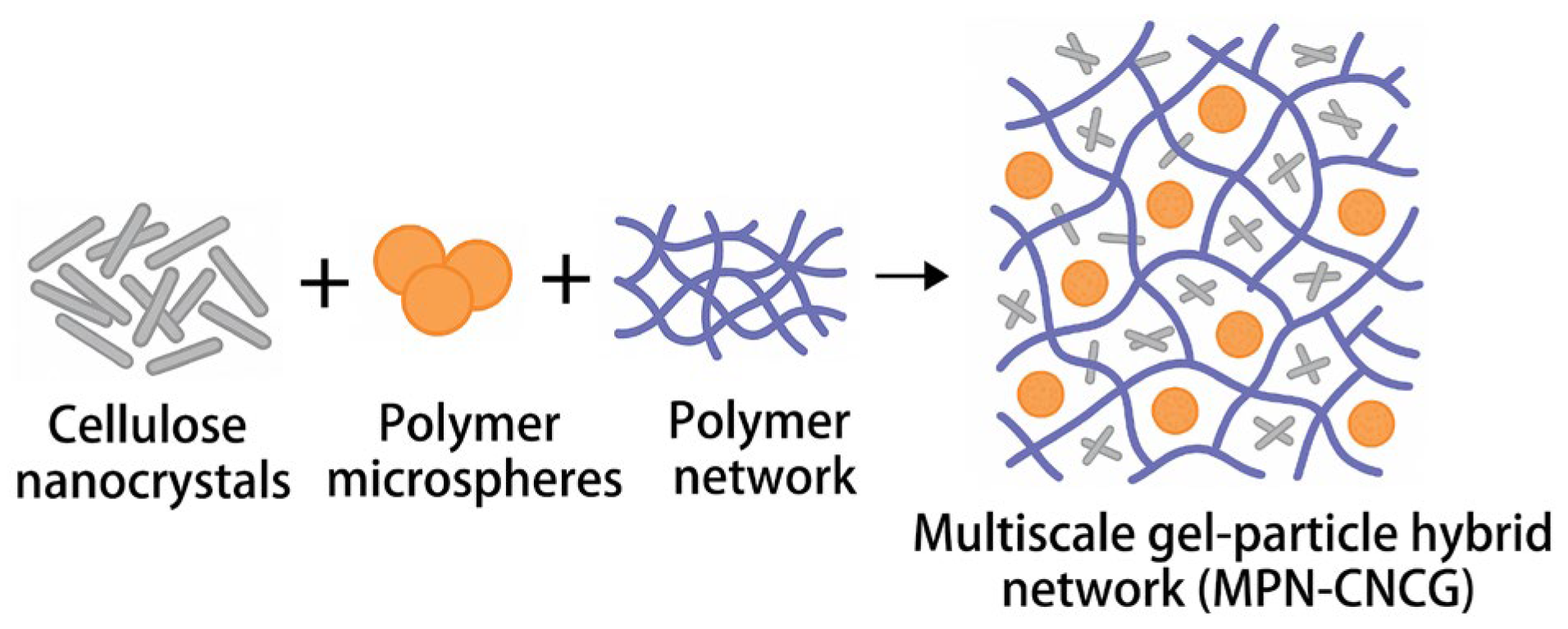
To construct the multiscale gel–particle cooperative nested system, an in situ free-radical crosslinking strategy was adopted, in which nanoscale reinforcing units and microscale nested particles were synchronously incorporated during gel network formation to achieve cooperative multiscale structuring. A schematic illustration of the synthesis procedure is shown in
Figure 12.
Specifically, 200.0 mL of deionized water was added into a 500 mL glass beaker and pre-stirred at 30 °C and 300 rpm for 5 min using a magnetic stirrer. Subsequently, acrylamide (AAm, 1.80 g), 2-acrylamido-2-methylpropane sulfonic acid (AMPS, 0.90 g), and methacryloyloxyethyl trimethyl ammonium chloride (DMC, 0.30 g) were added sequentially, maintaining the total monomer concentration at 1.5 wt%. Then, N,N′-methylenebisacrylamide (MBAA, 0.045 g, corresponding to 1.5 wt% of the total monomer mass) was introduced as the crosslinker, and the solution was stirred for an additional 10 min to ensure complete dissolution.
Cellulose nanocrystals (CNC, average particle size 80–120 nm, 0.20 g) were separately dispersed in 20 mL of deionized water and ultrasonicated at 120 W for 15 min to obtain a stable suspension. The CNC suspension was added dropwise to the monomer solution within 5 min under continuous stirring at 300 rpm and further mixed for 20 min, allowing CNC to be uniformly dispersed as nanoscale reinforcing nodes.
Pre-synthesized crosslinked polymer microspheres (average diameter 30–80 μm, in the swollen state, 1.50 g) were then introduced to achieve a mass fraction of approximately 0.7 wt%, and the mixture was stirred at 150 rpm for 10 min to ensure homogeneous distribution, thereby forming potential microscale nested units.
An ammonium persulfate (APS)–sodium bisulfite (NaHSO3) redox initiator system was employed, with APS and NaHSO3 each added at 0.10 g, corresponding to a total initiator dosage of approximately 3.3 wt% relative to the monomer mass. Immediately after initiator addition, the reaction mixture was transferred into a sealed reactor and polymerized at 45 °C in a thermostatic water bath for 2 h. During this process, zwitterionic polymer chains underwent in situ free-radical crosslinking in the presence of CNC and microspheres, progressively forming a three-dimensional gel network containing nanoscale reinforcing nodes and microscale nested structures.
After gelation, the pH of the system was adjusted to 7.2–7.5, followed by aging at room temperature for 12 h to complete network rearrangement and structural stabilization. The obtained gel was then gently extruded through a 200-mesh nylon sieve to remove free water and stored in sealed containers for subsequent use. The final product was a multiscale gel–particle cooperative nested material (MPN-CNCG), consisting of a chemically crosslinked gel network as the continuous phase with synergistically embedded cellulose nanocrystals and polymer microspheres.
4.4. Methods
4.4.1. SEM Imaging
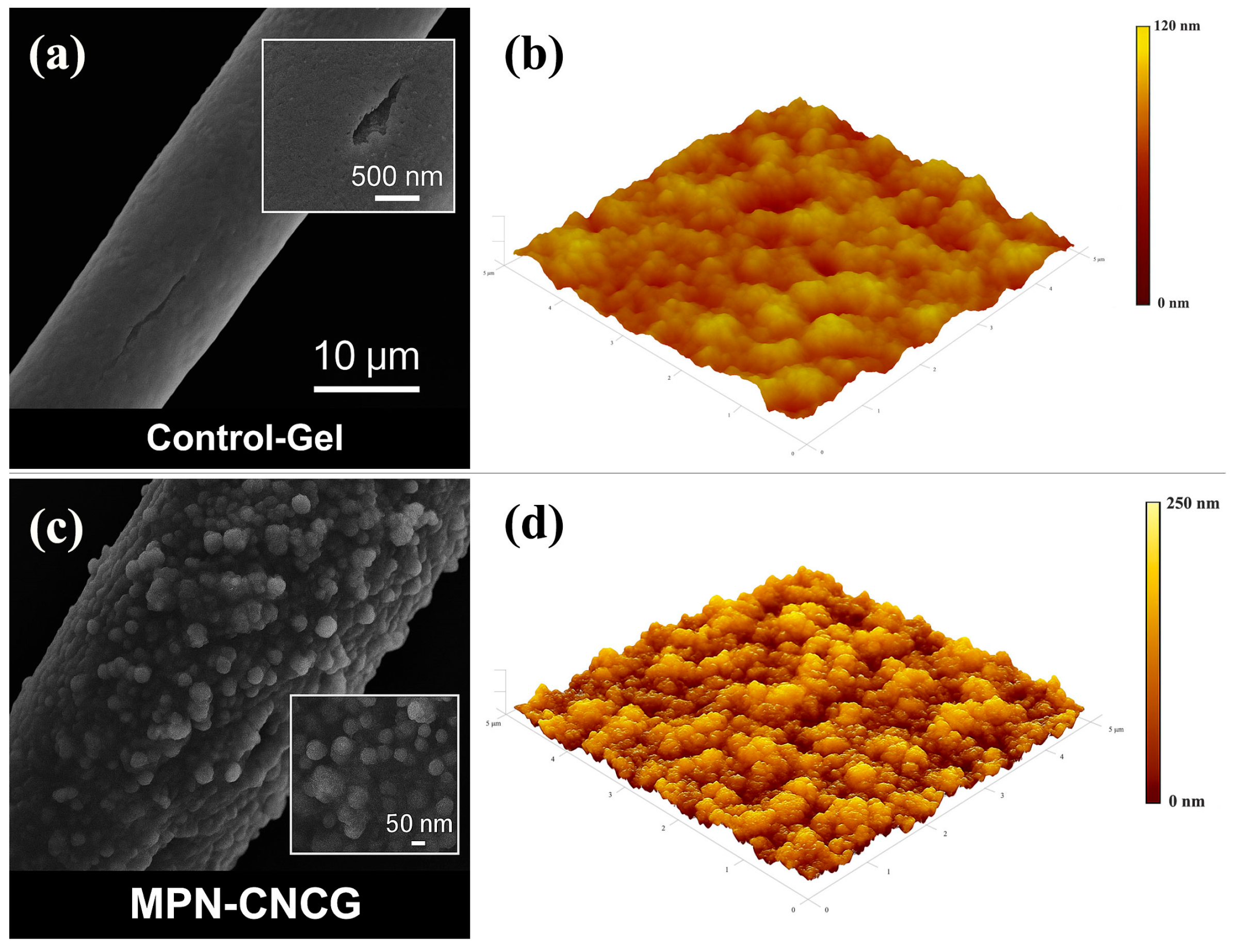
The samples were freeze-dried at −50 °C and sputter-coated with gold prior to observation. Scanning electron microscopy (SEM) was performed using a KYKY-EM6900 scanning electron microscope (Beijing Zhongke Instrument Co., Ltd., Beijing, China) at an accelerating voltage of 5 kV to acquire micro to nanoscale images of pore-wall morphologies. The SEM images were used to characterize the fibrous skeleton structure, particle attachment features, and differences in pore-wall compactness.
4.4.2. AFM Mapping
Atomic force microscopy (AFM) measurements were conducted using a Dimension Icon atomic force microscope (Bruker Nano Surfaces Division, Beijing, China) in tapping mode to obtain two-dimensional and three-dimensional surface height maps. The scanning area was mainly set to 5 × 5 μm2. The root-mean-square roughness (RMS) and height distribution range were calculated from the height profiles to quantitatively compare the nanoscale surface texture of different systems.
4.4.3. μCT Scanning and Reconstruction
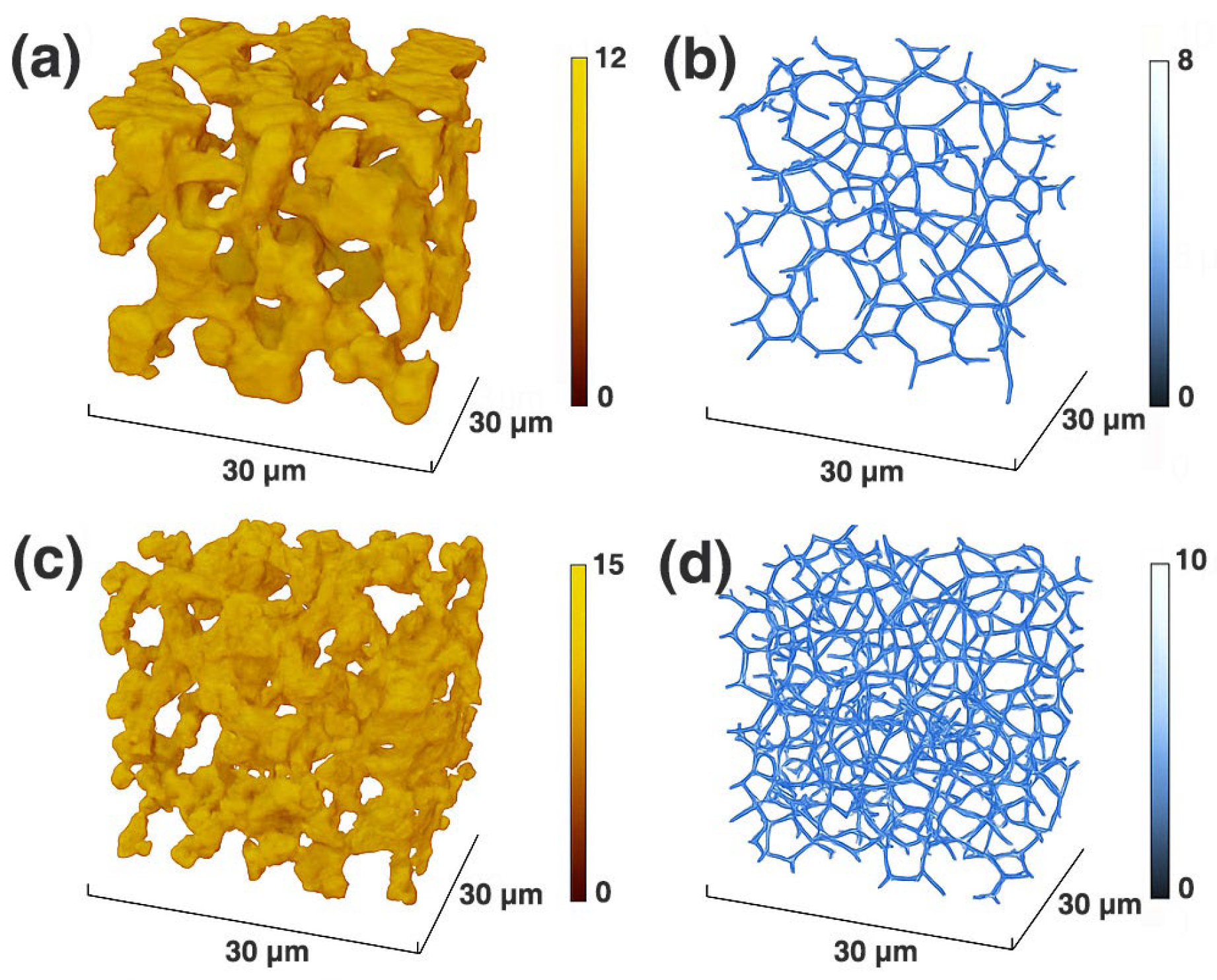
The internal structure of the gels was scanned using a microfocus X-ray micro-computed tomography (μCT) system (nanoVoxel-2000, Tianjin Sanying Precision Instruments Co., Ltd., Tianjin, China). The scanning voltage and current were set to 80 kV and 80 μA, respectively, with an exposure time of 500 ms per projection. A full 360° rotation was performed with an angular step of 0.5°, and the acquired projections were reconstructed using a filtered back-projection algorithm.
The voxel resolution was set to 2 μm·voxel−1, and a representative cubic volume of 30 × 30 × 30 μm3 was selected for three-dimensional reconstruction and quantitative analysis. To ensure statistical reliability, at least three independent sub-volumes were analyzed for each sample.
Pore structures were segmented using grayscale thresholding after noise reduction and beam-hardening correction. The segmented volumes were further processed by skeletonization to extract pore–throat network centerlines. Structural parameters—including average pore volume, pore volume fraction, pore–throat size distribution, node density, average connectivity path length, and connectivity ratio—were statistically derived from the reconstructed volumes using dedicated image analysis software.
4.4.4. Contact Angle Measurement
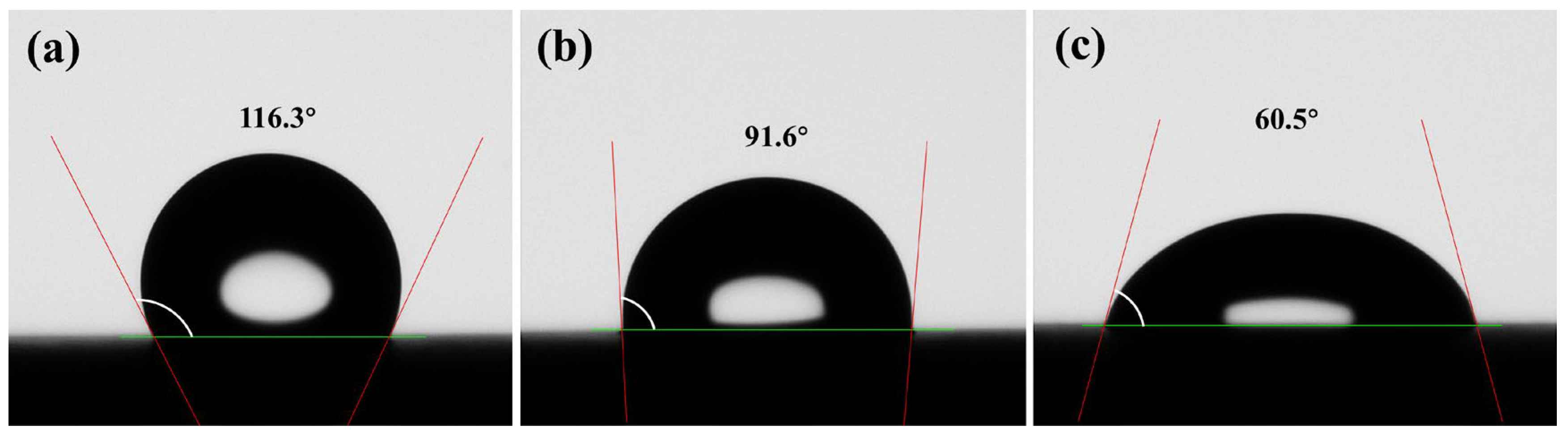
Reservoir rock samples were cut into substrates of 10 mm × 10 mm × 3 mm and dried at 60 °C for 12 h. The substrates were treated as bare rock, Control-Gel-treated rock, and MPN-CNCG-treated rock. For treatment, the rock samples were immersed in 0.10 wt% solutions for 2 h, rinsed with deionized water, and dried. Static contact angles were measured at 25 °C using a JC2000D contact-angle goniometer (Shanghai Zhongchen Digital Technology Equipment Co., Ltd., Shanghai, China) by depositing 3 μL water droplets and fitting the profiles using the Young–Laplace method. Each sample was measured five times, and the average value was reported.
4.4.5. Spinning Drop Tensiometry
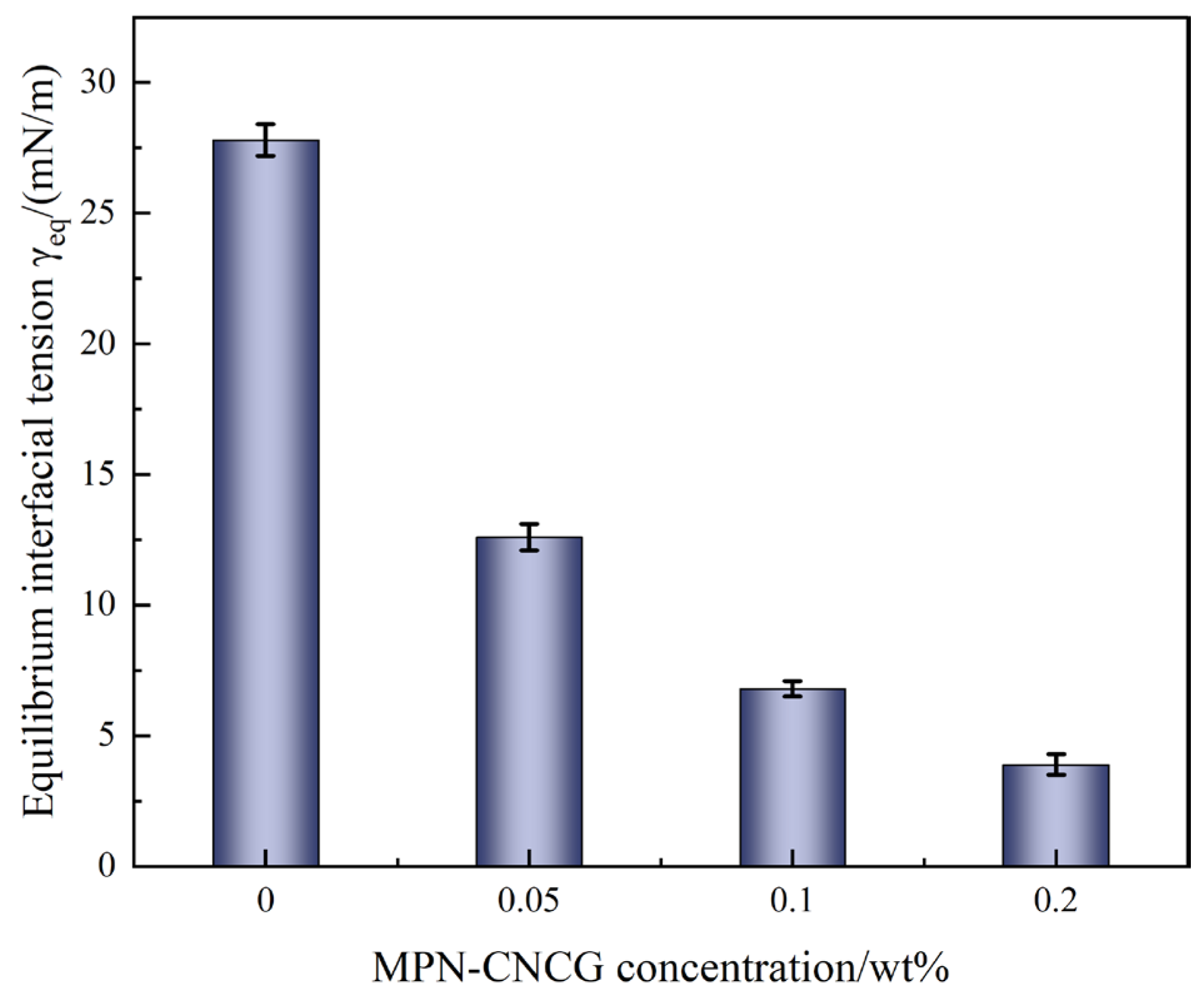
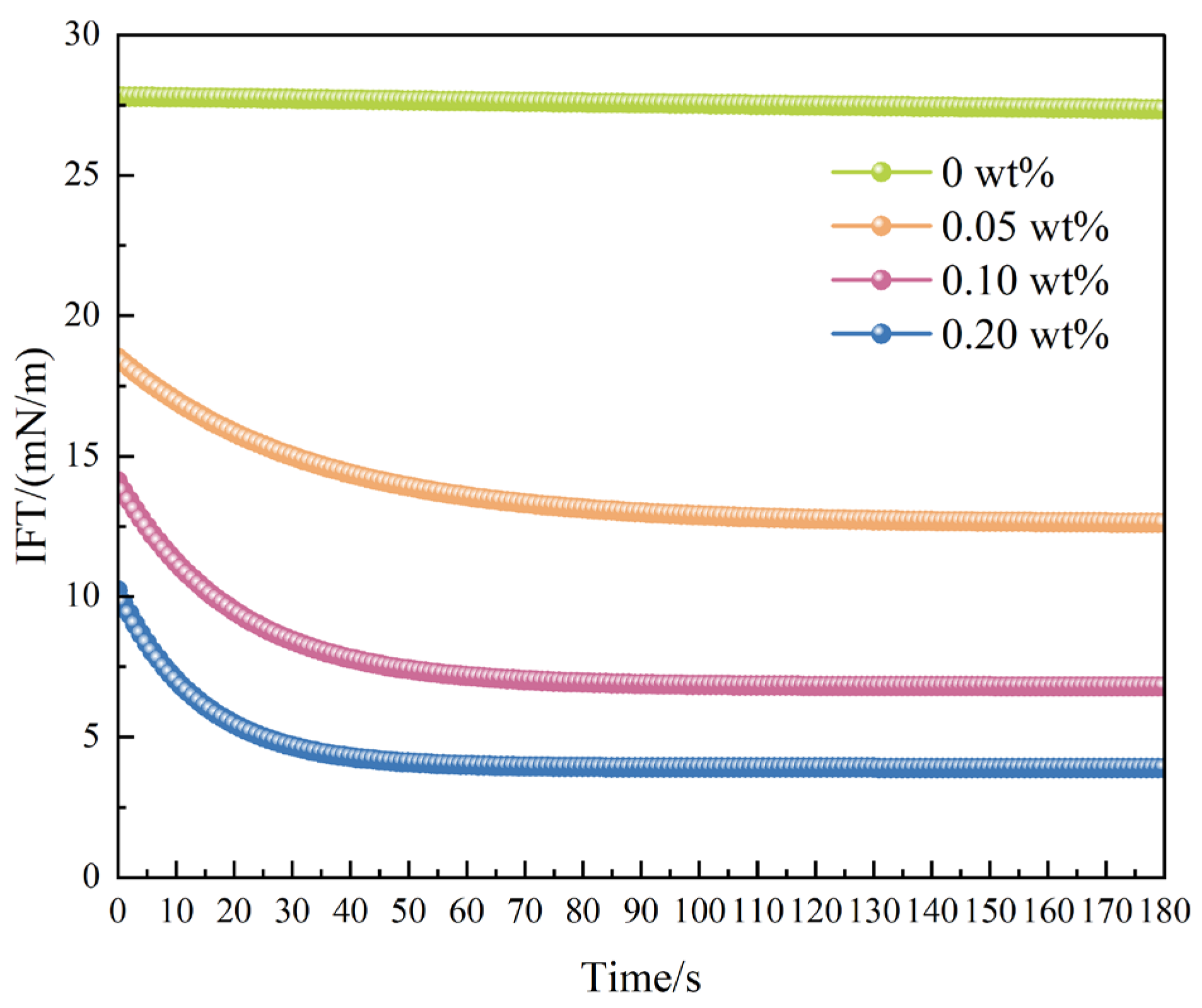
Oil–simulated formation water interfacial tension (IFT) was measured using a TX500C spinning-drop interfacial tensiometer (Beijing Haiyida Technology Co., Ltd., Beijing, China) at different MPN-CNCG concentrations (0, 0.05, 0.10, and 0.20 wt%). The experiments were conducted at 25 °C with a rotational speed of 4000 rpm. IFT–time curves were continuously recorded over 0–180 s, and equilibrium IFT values were obtained. Each condition was tested in triplicate, and the average value was used.
4.4.6. Zeta Potential Measurement
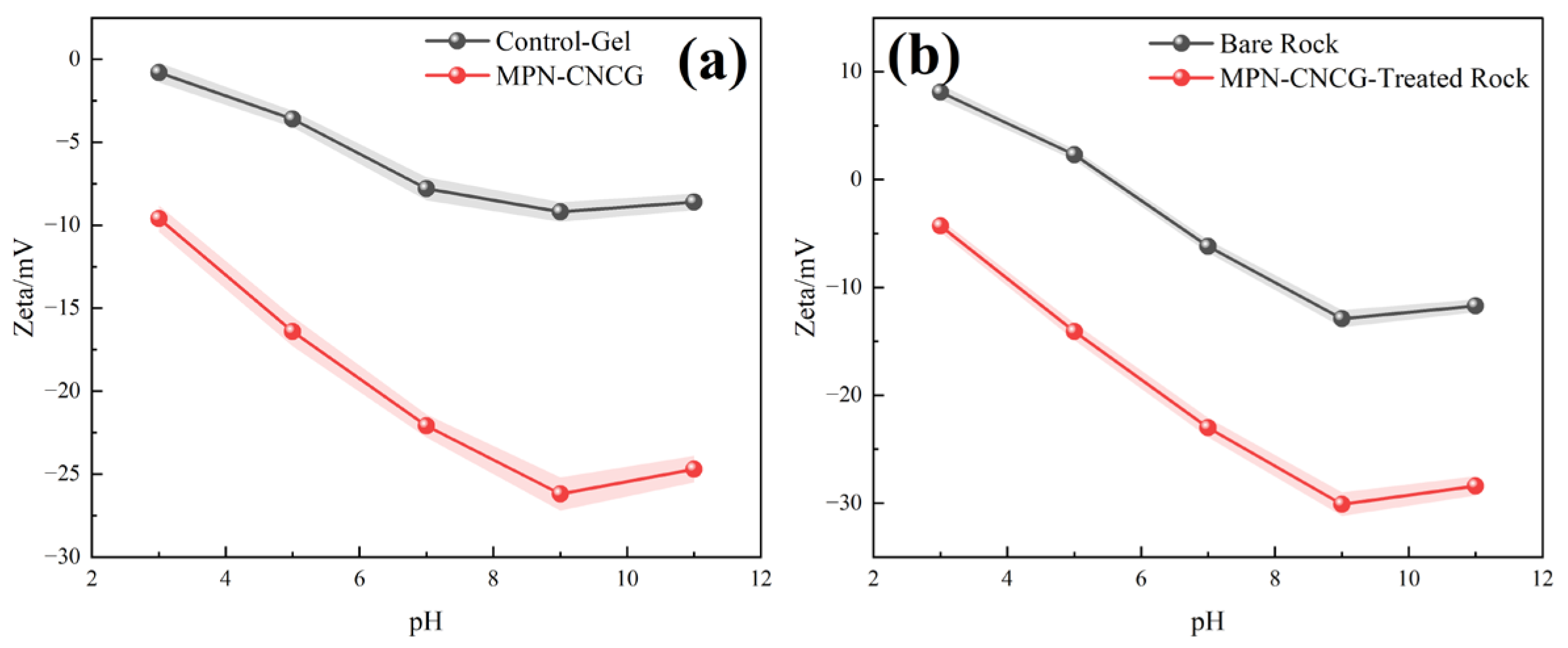
Zeta potentials of both gel dispersions and rock surface systems were measured using a Zetasizer Nano ZS zeta potential analyzer (Malvern Panalytical Instruments Co., Ltd., Shanghai, China) as a function of pH. For gel dispersions, Control-Gel and MPN-CNCG were prepared at 0.05 wt% in 1 mmol∙L−1 NaCl as the background electrolyte to control ionic strength. The pH was adjusted to 3, 5, 7, 9, and 11 using HCl or NaOH, and measurements were performed after equilibration at room temperature. For the rock surface system, rock powders with particle sizes < 45 μm were used to prepare suspensions. For the treated group, the rock powders were first contacted with MPN-CNCG solutions under shaking for 12 h, followed by centrifugation, washing, and redispersion in the background electrolyte solution. Zeta potentials were determined by electrophoretic light scattering. Each pH condition was measured independently three times, and the results are reported as mean ± standard deviation (SD).
4.4.7. Core Flooding
Core flooding experiments were performed using a high-pressure core flooding system (HTHP-IV, Jiangsu Hai’an Petroleum Scientific Instrument Co., Ltd., Nantong, China). Cylindrical tight sandstone cores with comparable petrophysical properties were selected to minimize heterogeneity effects. The cores had a diameter of 2.5 cm and a length of 5.0 cm. Prior to experiments, core porosity and gas permeability (0.05–5.0 mD) were measured, and only cores within a narrow permeability deviation range were used for comparative tests.
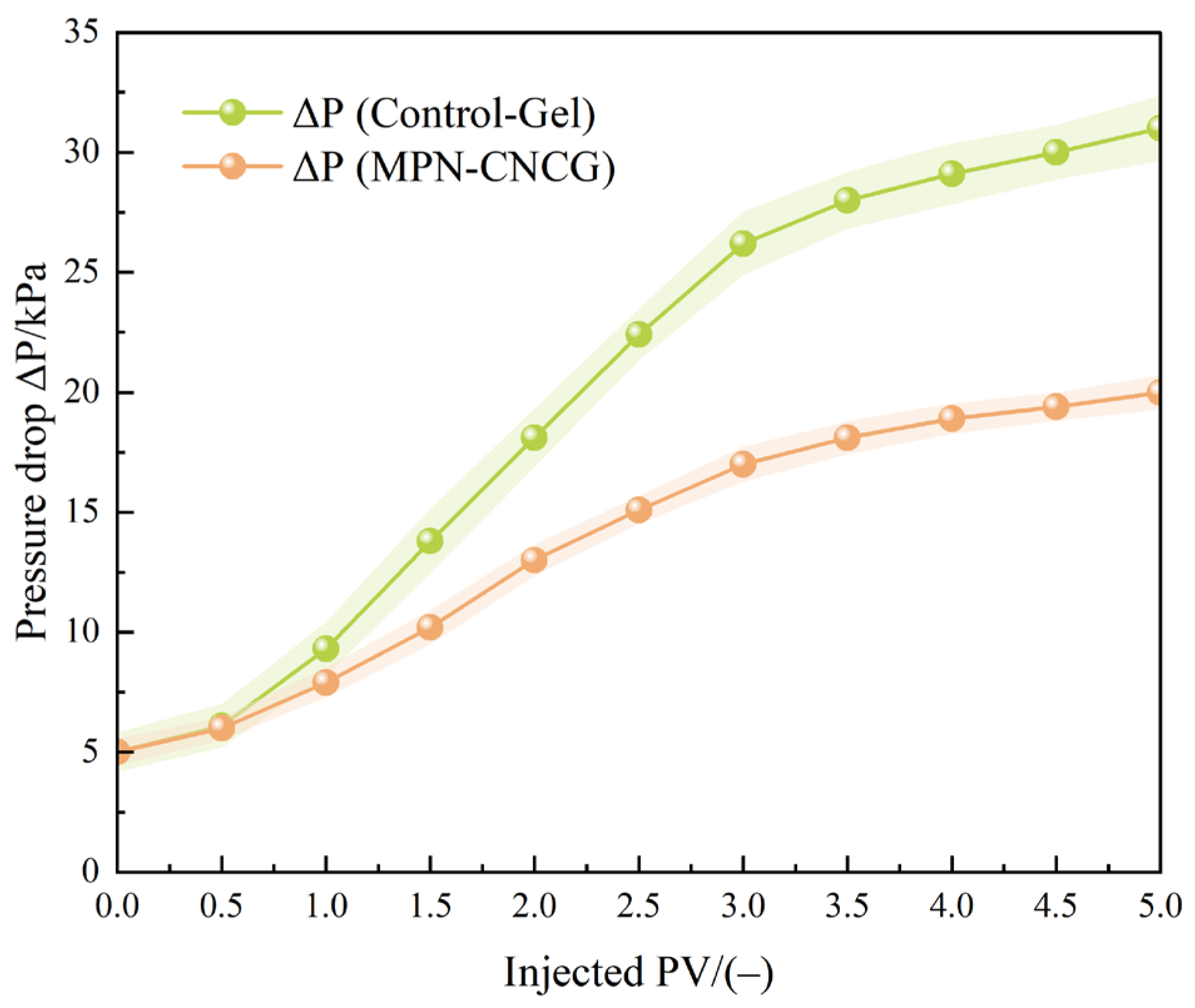
Each core was mounted in a stainless-steel core holder and subjected to a constant confining pressure of 10 MPa to ensure radial sealing and simulate subsurface stress conditions. All experiments were conducted at 25 ± 1 °C. A constant injection flow rate of 0.5 mL·min−1 was applied throughout the flooding process unless otherwise specified. Pressure transducers installed at the inlet and outlet continuously recorded the pressure differential (ΔP, kPa) across the core with real-time data acquisition.
Injection volumes were normalized by pore volume (PV), where PV represents the effective pore volume of the core calculated from porosity and bulk volume.
The flooding procedure consisted of three sequential stages:
- (i)
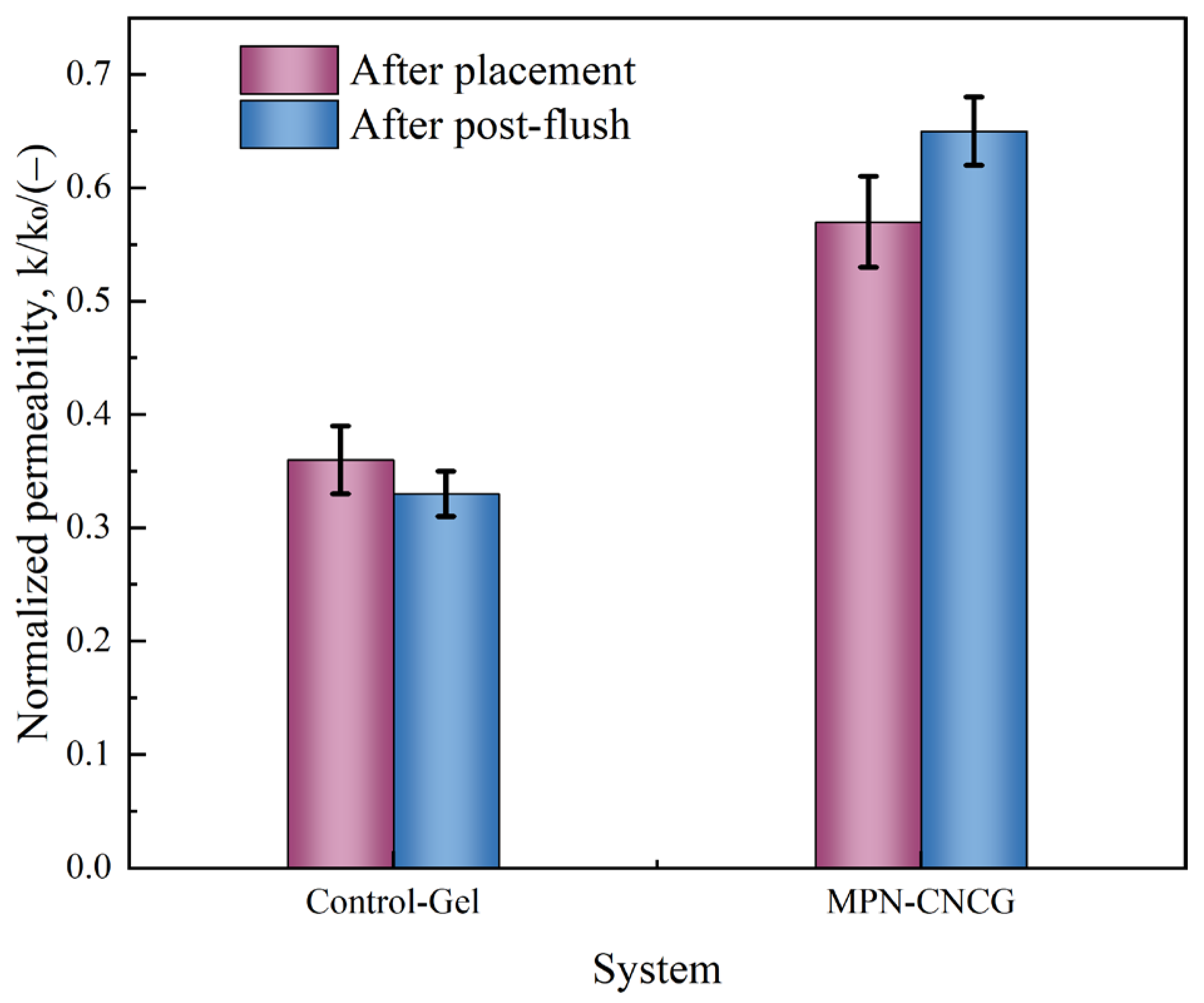
Baseline water flooding: Simulated formation water was injected until a stable pressure differential was achieved, establishing the initial steady-state permeability (k0).
- (ii)
System injection: Control-Gel or MPN-CNCG was injected at the same flow rate, and the ΔP–PV response was continuously monitored to evaluate resistance buildup and spatial distribution behavior.
- (iii)
Post-flush stage: Simulated formation water was reinjected to observe pressure evolution and permeability recovery behavior.
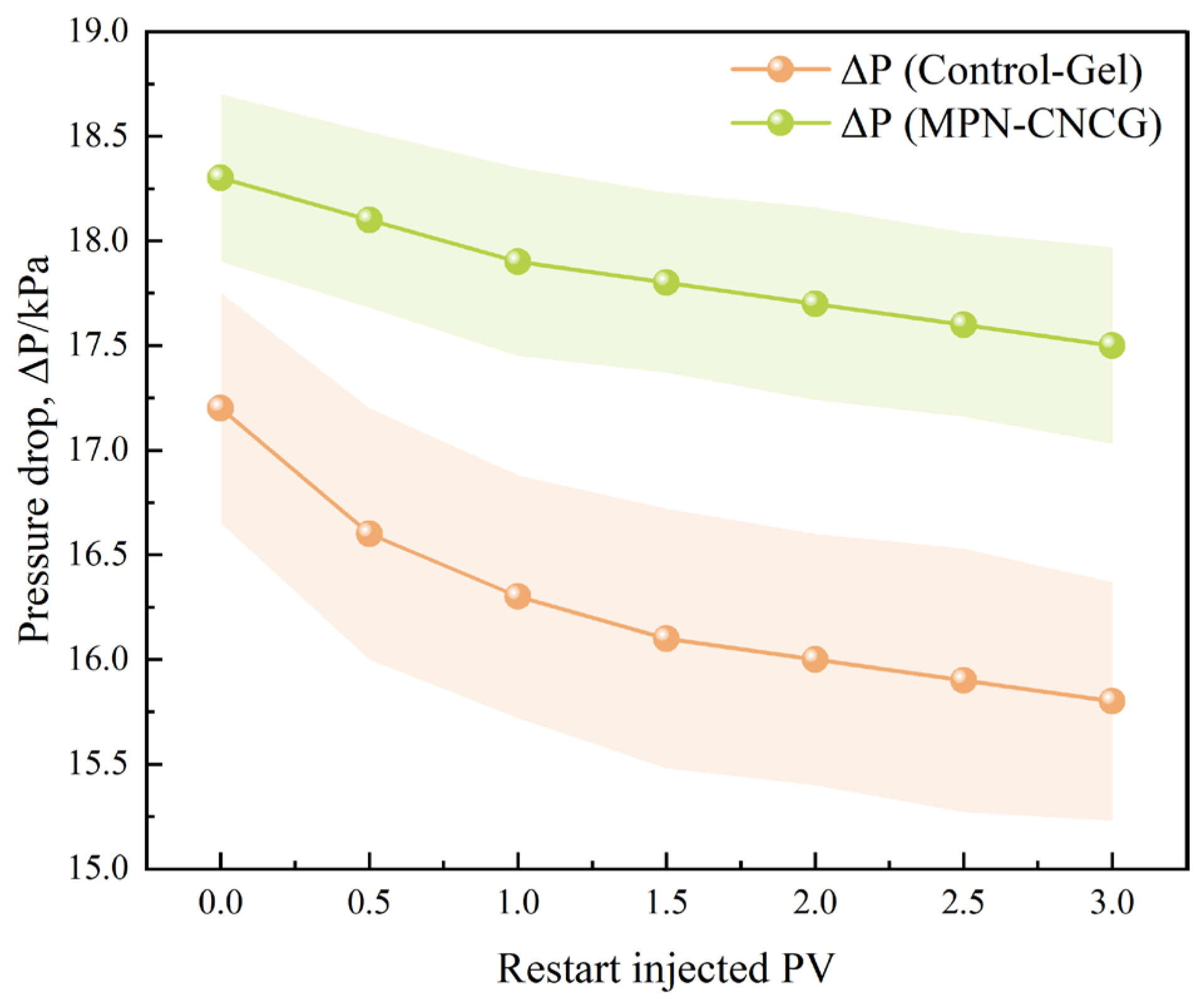
To assess configurational stability, injection was stopped after steady-state resistance was established during system placement. After a static period of 30 min, water flooding was restarted under the same flow conditions to record pressure recovery and retention behavior during the re-flooding stage.
Each experimental condition was repeated at least three times, and freshly prepared systems were used for each test. The reported values represent averaged results.
4.4.8. Steady-State Permeability
Core permeability was determined using the steady-state method based on Darcy’s law:
where
k is the permeability (m
2),
Q is the volumetric flow rate (m
3·s
−1),
μ is the dynamic viscosity of the injected fluid (Pa·s),
L is the core length (m),
A is the cross-sectional area of the core (m
2), Δ
P is the measured pressure differential across the core (Pa).
During baseline water flooding, the initial steady-state permeability k0 was calculated once ΔP stabilized. After system injection and subsequent post-flushing, permeability values (k) were recalculated under identical flow conditions.
To eliminate geometric influence, the normalized permeability k/k0 was used to characterize the relative change in seepage capacity at different flooding stages.
4.4.9. Oil Recovery Calculation
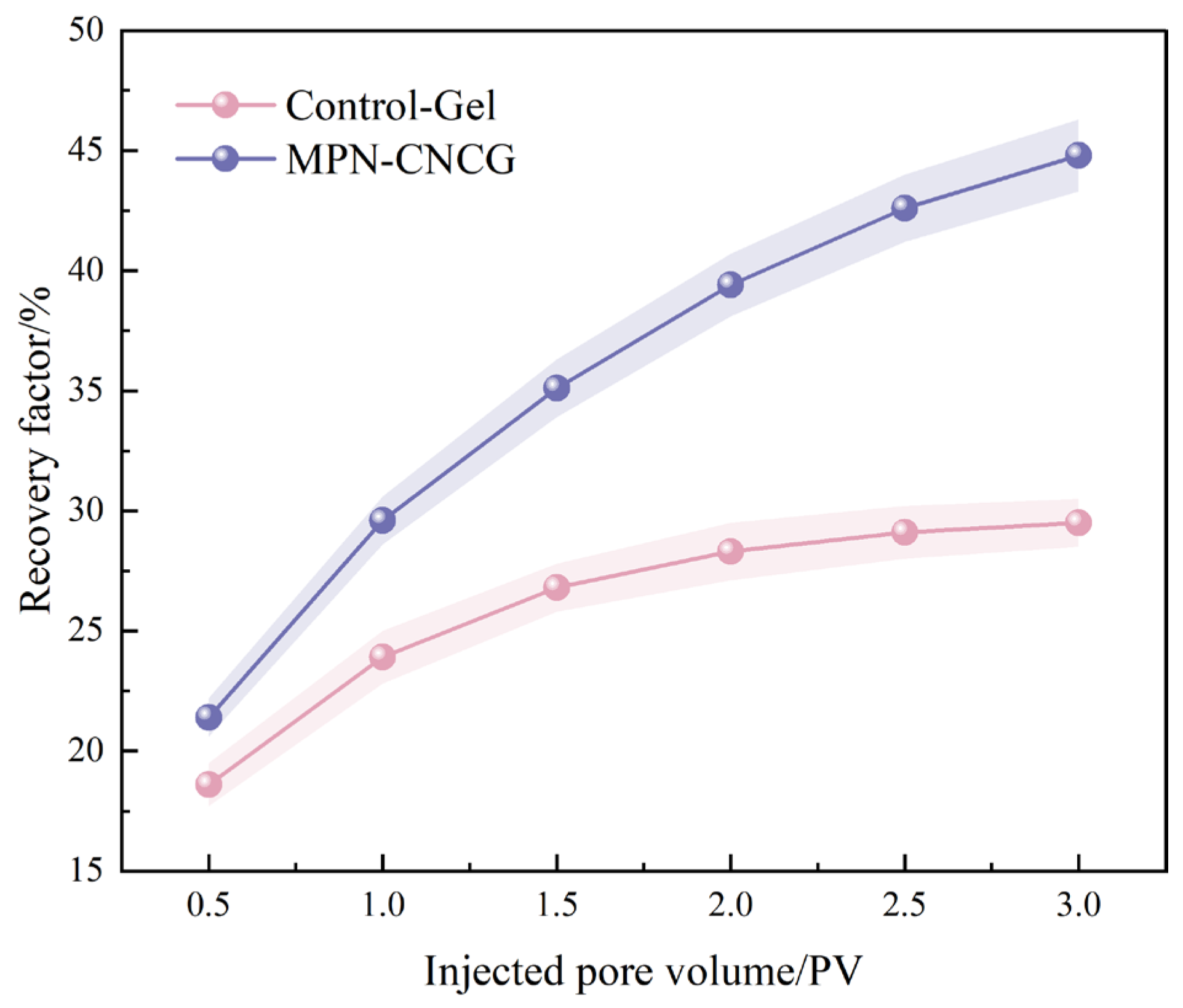
After completion of the core flooding experiments for both the multiscale gel–particle system and the control system, the fluids produced from each stage were collected and allowed to separate into oil and water phases. The cumulative oil production (Np) was determined gravimetrically after phase separation.
The recovery factor (RF) was calculated as the ratio of cumulative oil production to the original oil in place (OOIP). The OOIP was determined based on the measured pore volume (PV) of the core and the initial oil saturation established prior to flooding.
Before flooding, the pore volume of each core was measured during vacuum saturation with simulated formation water. The cores were then saturated with crude oil under controlled pressure conditions to establish the initial oil saturation (S
oi). S
oi was calculated from the ratio of saturated oil volume to total pore volume. After flooding, the residual oil saturation S
or was calculated using a material balance method. The oil displacement efficiency
Em was calculated according to Equation (2).
Here, Soi is the initial oil saturation and Sor is the residual oil saturation after displacement. The recovery factor quantifies macroscopic oil production, while the oil displacement efficiency describes the microscopic reduction in residual oil saturation. All experiments were performed under the same core physical properties and flooding conditions, and each experiment was conducted in triplicate with the reported values representing the averages.