


Scoping Review of the Biomedical Investigations of Cellulose Nanocrystal-Based Hydrogels: A Critical Analysis of Current Evidence, Research Gaps and Future Perspectives
 , , , , and
Abstract
1. Introduction
2. Results and Discussion
2.1. Tissue Engineering Applications
2.2. Wound Healing and Repair
2.3. Medical Implants
2.4. Drug Delivery Applications
3. Conclusions
4. Methodology
4.1. Protocol
4.2. Research Strategy
4.3. Eligibility Criteria
- Primary research study design.
- Open access and/or open archive availability of the full-text article.
- Language is English (or translated into English).
- Publication type is a journal article.
- Healthcare or biomedicine application/s are proposed in the study.
- Hydrogels incorporated with cellulose nanocrystals or nanocellulose, or cellulose nanowhiskers.
- Utilisation of in vitro (cell lines) and/or in vivo (animal) biomedical models and/or human clinical trials to test the CNC-incorporated hydrogel prototypes.
- Studies using appropriate controls for CNC-based hydrogels (i.e., hydrogels with CNC compared with hydrogels without CNC).
- Not following a primary research study design.
- Investigation of only bacterial nanocellulose- or cellulose nanofiber-based hydrogels.
- Hydrogels were not tested using in vitro or in vivo biomedical models or in a human clinical trial.
- No healthcare or biomedicine application proposed.
- Lack of appropriate controls for CNC-based hydrogels (e.g., comparison of hydrogels based on various CNC concentrations instead of comparing against a hydrogel without CNC).
4.4. Study Selection, Data Extraction, and Analysis
Supplementary Materials
Author Contributions
Funding
Institutional Review Board Statement
Informed Consent Statement
Data Availability Statement
Acknowledgments
Conflicts of Interest
References
- Seneviratne, D.M.; Raphael, B.; Whiteside, E.J.; Windus, L.C.E.; Kauter, K.; Dearnaley, J.D.W.; Annamalai, P.K.; Ward, R.; Song, P.; Burey, P. A low-cost, antimicrobial aloe-alginate hydrogel film containing Australian First Nations remedy ‘lemon myrtle oil’ (Backhousia citriodora)—Potential for incorporation into wound dressings. Heliyon 2024, 10, e37516. [Google Scholar] [CrossRef]
- Omidian, H.; Mfoafo, K. Three-dimensional printing strategies for enhanced hydrogel applications. Gels 2024, 10, 220. [Google Scholar] [CrossRef] [PubMed]
- Clegg, J.R.; Adebowale, K.; Zhao, Z.; Mitragotri, S. Hydrogels in the clinic: An update. Bioeng. Transl. Med. 2024, 9, e10680. [Google Scholar] [CrossRef] [PubMed]
- Amin, K.N.M.; Hosseinmardi, A.; Martin, D.J.; Annamalai, P.K. A mixed acid methodology to produce thermally stable cellulose nanocrystal at high yield using phosphoric acid. J. Bioresour. Bioprod. 2022, 7, 99–108. [Google Scholar] [CrossRef]
- Endes, C.; Camarero-Espinosa, S.; Mueller, S.; Foster, E.J.; Petri-Fink, A.; Rothen-Rutishauser, B.; Weder, C.; Clift, M.J.D. A critical review of the current knowledge regarding the biological impact of nanocellulose. J. Nanobiotechnol. 2016, 14, 78. [Google Scholar] [CrossRef]
- Motloung, M.T.; Magagula, S.I.; Kaleni, A.; Sikhosana, T.S.; Lebelo, K.; Mochane, M.J. Recent advances on chemically functionalized cellulose-based materials for arsenic removal in wastewater: A review. Water 2023, 15, 793. [Google Scholar] [CrossRef]
- Aghajani, M.; Garshasbi, H.R.; Naghib, S.M.; Mozafari, M.R. 3D printing of hydrogel polysaccharides for biomedical applications: A review. Biomedicines 2025, 13, 731. [Google Scholar] [CrossRef]
- Liu, J.; Li, P.; Wang, W.; Bai, L.; Chen, H.; Yang, L.; Yin, K.; Yang, H.; Wei, D. Functionalized cellulose nanocrystals construct self-healing nanocomposite hydrogel-based sweat sensors for glucose detection. Ind. Crops Prod. 2024, 216, 118728. [Google Scholar] [CrossRef]
- Ma, N.; Cheung, D.Y.; Butcher, J.T. Incorporating nanocrystalline cellulose into a multifunctional hydrogel for heart valve tissue engineering applications. J. Biomed. Mater. Res. Part A 2022, 110, 76–91. [Google Scholar] [CrossRef]
- Ossowicz-Rupniewska, P.; Rakoczy, R.; Nowak, A.; Konopacki, M.; Klebeko, J.; Świątek, E.; Janus, E.; Duchnik, W.; Wenelska, K.; Kucharski, Ł.; et al. Transdermal delivery systems for ibuprofen and ibuprofen modified with amino acids alkyl esters based on bacterial cellulose. Int. J. Mol. Sci. 2021, 22, 6252. [Google Scholar] [CrossRef]
- González, K.; Guaresti, O.; Palomares, T.; Alonso-Varona, A.; Eceiza, A.; Gabilondo, N. The role of cellulose nanocrystals in biocompatible starch-based clicked nanocomposite hydrogels. Int. J. Biol. Macromol. 2020, 143, 265–272. [Google Scholar] [CrossRef]
- Jorfi, M.; Foster, E.J. Recent advances in nanocellulose for biomedical applications. J. Appl. Polym. Sci. 2015, 132, 41719. [Google Scholar] [CrossRef]
- Seneviratne, D.M.; Whiteside, E.J.; Windus, L.C.E.; Burey, P.; Ward, R.; Annamalai, P.K. Emerging biomedical applications of sustainable cellulose nanocrystal-incorporated hydrogels: A scoping review. Gels 2025, 11, 740. [Google Scholar] [CrossRef] [PubMed]
- Ong, X.-R.; Chen, A.X.; Li, N.; Yang, Y.Y.; Luo, H.-K. Nanocellulose: Recent advances toward biomedical applications. Small Sci. 2023, 3, 2200076. [Google Scholar] [CrossRef] [PubMed]
- Shou, Y.; Teo, X.Y.; Wu, K.Z.; Bai, B.; Kumar, A.R.K.; Low, J.; Le, Z.; Tay, A. Dynamic stimulations with bioengineered extracellular matrix-mimicking hydrogels for mechano cell reprogramming and therapy. Adv. Sci. 2023, 10, 2300670. [Google Scholar] [CrossRef]
- Epstein, J.; Sanderson, I.R.; MacDonald, T.T. Curcumin as a therapeutic agent: The evidence from in vitro, animal and human studies. Br. J. Nutr. 2010, 103, 1545–1557. [Google Scholar] [CrossRef]
- Page, M.J.; McKenzie, J.E.; Bossuyt, P.M.; Boutron, I.; Hoffmann, T.C.; Mulrow, C.D.; Shamseer, L.; Tetzlaff, J.M.; Akl, E.A.; Brennan, S.E.; et al. The PRISMA 2020 statement: An updated guideline for reporting systematic reviews. Br. Med. J. 2021, 372, n71. [Google Scholar] [CrossRef]
- Maturavongsadit, P.; Narayanan, L.K.; Chansoria, P.; Shirwaiker, R.; Benhabbour, S.R. Cell-laden nanocellulose/chitosan-based bioinks for 3D bioprinting and enhanced osteogenic cell differentiation. ACS Appl. Bio. Mater. 2021, 4, 2342–2353. [Google Scholar] [CrossRef]
- King, J.L.; Shrivastava, R.; Shah, P.D.; Maturavongsadit, P.; Benhabbour, S.R. Injectable pH and thermo-responsive hydrogel scaffold with enhanced osteogenic differentiation of preosteoblasts for bone regeneration. Pharmaceutics 2023, 15, 2270. [Google Scholar] [CrossRef]
- Wu, T.; Liu, H.; Wang, H.; Bu, Y.; Liu, J.; Chen, X.; Yan, H.; Lin, Q. Fabrication of alginate/sericin/cellulose nanocrystals interpenetrating network composite hydrogels with enhanced physicochemical properties and biological activity. J. Appl. Polym. Sci. 2024, 141, e55052. [Google Scholar] [CrossRef]
- Fan, Y.; Yue, Z.; Lucarelli, E.; Wallace, G.G. Hybrid printing using cellulose nanocrystals reinforced GelMA/HAMA hydrogels for improved structural integration. Adv. Healthc. Mater. 2020, 9, 2001410. [Google Scholar] [CrossRef] [PubMed]
- Read, S.A.; Go, C.S.; Ferreira, M.J.S.; Ligorio, C.; Kimber, S.J.; Dumanli, A.G.; Domingos, M.A.N. Nanocrystalline cellulose as a versatile engineering material for extrusion-based bioprinting. Pharmaceutics 2023, 15, 2432. [Google Scholar] [CrossRef] [PubMed]
- Ferrante, M.; Álvarez, V.A.; Narain, R.; Ounkaew, A.; González, J.S. Enhancing the properties of chitosan–pectin hydrogels with cellulose nanowhiskers for potential applications in wound dressings. Macromol. Chem. Phys. 2024, 225, 2400088. [Google Scholar] [CrossRef]
- Oskarsdotter, K.; Nordgård, C.T.; Apelgren, P.; Säljö, K.; Solbu, A.A.; Eliasson, E.; Sämfors, S.; Sætrang, H.E.M.; Asdahl, L.C.; Thompson, E.M.; et al. Injectable in situ crosslinking hydrogel for autologous fat grafting. Gels 2023, 9, 813. [Google Scholar] [CrossRef]
- Chu, T.; Li, Q.; Dai, C.; Li, X.; Kong, X.; Fan, Y.; Yin, H.; Ge, J. A novel nanocellulose-gelatin-AS-IV external stent resists EndMT by activating autophagy to prevent restenosis of grafts. Bioact. Mater. 2023, 22, 466–481. [Google Scholar] [CrossRef]
- Wan Ishak, W.H.; Rosli, N.A.; Ahmad, I.; Ramli, S.; Mohd Amin, M.C.I. Drug delivery and in vitro biocompatibility studies of gelatin-nanocellulose smart hydrogels cross-linked with gamma radiation. J. Mater. Res. Technol. 2021, 15, 7145–7157. [Google Scholar] [CrossRef]
- King, J.L.; Maturavongsadit, P.; Hingtgen, S.D.; Benhabbour, S.R. Injectable pH thermo-responsive hydrogel scaffold for tumoricidal neural stem cell therapy for glioblastoma multiforme. Pharmaceutics 2022, 14, 2243. [Google Scholar] [CrossRef]
- You, J.; Cao, J.; Zhao, Y.; Zhang, L.; Zhou, J.; Chen, Y. Improved mechanical properties and sustained release behavior of cationic cellulose nanocrystals reinforced cationic cellulose injectable hydrogels. Biomacromolecules 2016, 17, 2839–2848. [Google Scholar] [CrossRef]
- Chen, T.; Yao, T.; Peng, H.; Whittaker, A.K.; Li, Y.; Zhu, S.; Wang, Z. An injectable hydrogel for simultaneous photothermal therapy and photodynamic therapy with ultrahigh efficiency based on carbon dots and modified cellulose nanocrystals. Adv. Funct. Mater. 2021, 31, 2106079. [Google Scholar] [CrossRef]
- Nasseri, R.; Bouzari, N.; Huang, J.; Golzar, H.; Jankhani, S.; Tang, X.S.; Mekonnen, T.H.; Aghakhani, A.; Shahsavan, H. Programmable nanocomposites of cellulose nanocrystals and zwitterionic hydrogels for soft robotics. Nat. Commun. 2023, 14, 6108. [Google Scholar] [CrossRef]
- Ansari, S.; Ito, K.; Hofmann, S. Alkaline phosphatase activity of serum affects osteogenic differentiation cultures. ACS Omega 2022, 7, 12724–12733. [Google Scholar] [CrossRef]
- ISO 10993-1:2025; Biological Evaluation of Medical Devices Part 1: Evaluation and Testing Within a Risk Management Process. International Organization for Standardization (ISO): Geneva, Switzerland, 2025.




| Reference | CNC Characterisation | Hydrogel Formulation | Physicochemical Properties/Characterisation | Biological Endpoints | Sterility, Endotoxin and Others |
|---|---|---|---|---|---|
| [18] | 0–1.5% w/v CNC concentration; characterisation not reported | 3% w/v chitosan and CNC bioink with β-glycerophosphate (BGP) and hydroxyethyl cellulose (HEC) as gelling agents | Logarithmic shear rate sweep, dynamic frequency sweep, and dynamic time sweep indicating increased viscosity; degree of swelling | Scanning electron microscopy (SEM); live/dead assay and Quant-iT PicoGreen dsDNA assay indicating no effect on cell viability or proliferation on pre-osteoblast cartilage-like cells (MC3T3-E1 cells); alkaline phosphatase (ALP) activity indicating promoted osteogenesis onset; von Kossa indicating increased calcium mineralisation; haematoxylin and eosin (H&E) staining | - |
| [19] | 0 and 1.5% w/w CNC concentration; characterisation not reported | 2% w/v chitosan and CNC thermogelling hydrogel with BGP and HEC as gelling agents | Logarithmic sweep; dynamic frequency sweep; dynamic time sweep | Laser scanning confocal microscopy; live/dead assay indicating increased proliferation and survival of pre-osteoblast cartilage-like cells (MC3T3-E1 cells); Quant-iT PicoGreen dsDNA assay; ALP activity indicating increased osteogenic differentiation; H&E staining, von Kossa | - |
| [20] | 0.3% w/v CNC concentration; characterisation not reported | Sodium alginate, 0.3% w/v CNC and sericin interpenetrating network hydrogel with hydroxyapatite and D-glucono-δ-lactone as crosslinking agents | Swelling and degradability behaviour indicating reduced biodegradation; X-ray diffraction (XRD) analysis; thermal gravimetric analysis (TGA); compressive strength | Cell counting kit-8 (CCK-8) assay indicating support of pre-osteoblast cartilage-like cell survival and proliferation (MC3T3-E1 cells); ALP activity indicating biomineralisation capacity | - |
| [21] | 1–15% w/v CNC concentration; XRD for CNC crystallinity index | 10% w/v gelatin with methacrylic anhydride (MA) (GelMA), 2% w/v hyaluronic acid methacrylate (HAMA) and CNC hydrogel with lithium phenyl2,4,6-trimethylbenzoylphosphinate (LAP) and 400 nm UV light as crosslinking agents | Swelling behaviour; 1H-NMR spectroscopy; XRD; temperature sweep; cyclic compressions; scanning transmission electron microscope (STEM) and SEM | Optical and laser scanning confocal microscopy; live/dead assay indicating increased chondrogenic cell proliferation (ATDC5 cells) | Sterilisation of CNCs under UV light for 40 min before use |
| [22] | 1% and 2% w/v CNC concentration; dynamic light scattering for CNC particle size measurements | 1% w/v alginate and CNC hydrogel | Flow, frequency, amplitude, and time sweeps | SEM indicating maintenance of cell morphology; live/dead assay indicating increased chondrocyte viability (TC28a2 cells) | Autoclaving at 121 °C and 1.4 bar |
| [23] | Cellulose nanowhiskers present; Method A: 10 mg/mL CNW; Method B: 0–30% CNW; XRD for CNC crystallinity index; atomic force microscopy for CNW length and width measurements | Chitosan, pectin and CNW hydrogel | TGA; gel fraction test; water vapour permeability | Agar disc diffusion method indicating increased antibacterial activity against Staphylococcus aureus and Escherichia coli at 10% and 20% CNCs; resazurin cell viability assay indicating increased dermal fibroblast cells in the 10% CNC hydrogel | - |
| [24] | 1.82% w/v enzymatically pretreated tunicate nanocellulose (ETC) | 0.82% w/v alginate and ETC hydrogel | Time-resolved shear oscillation test; amplitude sweep test; compression test; macroscopic assessment of adipocyte distribution and retention | H&E staining indicating improved shape-preservation and even distribution of adipocytes; image analysis of graft histology sections using ImageJ software (version 1.53t; National Institutes of Health, Bethesda, MD, USA) indicating improved cell survival | - |
| [25] | 0–10% nanocellulose concentration relative to the solid content of gelatin | Nanocellulose and nanocellulose extravascular stent with astragaloside IV (AS-IV) drug loading | Expansion analysis; TGA | SEM; live/dead assay indicating good human umbilical vein endothelial cell proliferation; immunohistochemistry analysis for CD206, CD68, and iNOS indicating good in vitro biocompatibility with local tissue; H&E staining; Masson staining, flow cytometry analysis; enzyme-linked immunosorbent assay (ELISA); RT-qPCR; immunohistochemistry, drug release rate indicating controlled drug release; colour Doppler ultrasonography; Western blotting; in vivo degradation indicating controlled biodegradation | - |
| [9] | 0.2–2% TEMPO-modified nanocrystalline cellulose (mNCC) | 7% methacrylated gelatin (MeGel) with mNCC (mNG) hydrogel | 1H-NMR spectroscopy; dynamic mechanical thermal analysis (DMTA) indicating increased stiffness | Live/dead assay; cell spreading and metabolism indicating increased adipose-derived mesenchymal stem cell migration and metabolic activity; MTT cell proliferation assay; quantitative PCR; Quant-iT PicoGreen dsDNA assay; dimethylmethylene blue assay indicating increased glycosaminoglycan deposition, alcian blue stain; alizarin red staining; 4-(dimethylamino)benzaldehyde (DMAB) indicating decreased hydroxyproline content; myofibroblastic activation; chondrogenic and osteogenic differentiation indicating inhibited osteogenic differentiation of adipose-derived mesenchymal stem cells | UV sterilisation of all materials for at least one hour before use |
| [26] | 0–10% CNC | Gelatin and CNC hydrogel with gamma-radiation crosslinking at 25 °C at a dose of 30 kGy | XRD for crystallinity measurement, rheological analysis; swelling degree; TGA | Agar diffusion method indicating good biocompatibility with slight toxicity towards fibroblast cells (L929 cells); riboflavin drug loading and release analysis indicating inverse proportionality between CNC content and drug loading and release properties | Agar diffusion assay for in vitro cytotoxicity assessment using 0.01% neutral red staining |
| [11] | 2.5% and 5% wt CNC | Gelatinised starch with furfuryl isocyanate (S-FI) and CNC with water-soluble PEG-based tetramaleimide (TTMI) crosslinking | Frequency sweep test; swelling ratio | In vitro chloramphenicol drug release analysis indicating increased drug loading ability and controlled drug release; SEM; in vitro cell viability and proliferation using MTT assay indicating increased fibroblast viability (L929 cells) | - |
| [27] | 0.5% w/w CNC | 2% w/v chitosan and CNC thermogelling hydrogel with BGP and HEC as gelling agents | Dynamic sweep test; gelation kinetics indicating improved gelation kinetics; in vitro mass loss and degradation analysis indicating prolonged hydrogel degradation | SEM, live/dead assay indicating no significant difference in cell viability; in vitro therapeutic protein (TRAIL) release measured using an ELISA indicating controlled release of TRAIL; in vitro cell kill ability measured using CellTiter-Glo cell viability luminescent assay | - |
| [28] | 0–2.5% wt CNC | 2.5% wt quaternised cellulose and CNC hydrogel with BGP as gelling agent | Dynamic sweep test; in vitro degradation measured via mass loss method indicating a slow degradation rate | Transmission electron microscopy (TEM) indicating the gradual decrease in initially triggered inflammatory responses, in vitro doxorubicin drug release indicating controlled drug release; MTT cell viability assay | In vivo biocompatibility via H&E staining |
| [29] | 0–250 µg/mL aldehyde-modified CNC (CCHO); rod-like shape CNCs with a length and diameter of 127 ± 47 nm and 4.2 ± 1.9 nm, respectively | Nanocarbon dots and CCHO hydrogel | Frequency sweep test; photothermal and photodynamic performance using infrared thermal imaging | TEM; atomic force microscopy (AFM); UV-vis spectroscopy, photoluminescence spectroscopy; X-ray photoelectron spectroscopy (XPS); electron spin resonance (ESR) spectroscopy; SEM; CCK-8 assay indicating high biosafety and negligible cytotoxicity towards B16F10 melanoma cells and HeLa cervical cancer cells; live/dead assay; H&E staining; terminal deoxynucleotidyl transferase-mediated nick-end labelling (TUNEL) staining; immunofluorescence staining of Ki-67 | Haematological assessment |
| [30] | 10% wt CNC; modified as magnetic CNC (MCNC); morphology characterisation using TEM, CNC nanoparticle alignment using SEM | 3:1 ratio of 3-dimethyl (methacryloyloxyethyl) ammonium propanesulfonate (DMAPS, 95%): Methacrylic acid (MAA, 99%) and CNC/MCNC with N,N′-methylenebis(acrylamide) (BIS, 99%) as crosslinking agent and 2-hydroxy-2-methylpropiophenone as initiator | Strain sweep and dynamic frequency sweep tests; tensile testing indicating CNC as a nano-reinforcer; XRD; degradation analysis indicating controlled biodegradation | Live/dead assay and fluorescence microscopy for measuring cell proliferation indicating increased cell viability and proliferation; potential soft robotic application demonstration | UV radiation for two hours |
| Reference | Biomedical Model | Assay/Experiment | Aim of the Assay | Proposed Application(s) | Tested CNC Concentrations | Role of CNC |
|---|---|---|---|---|---|---|
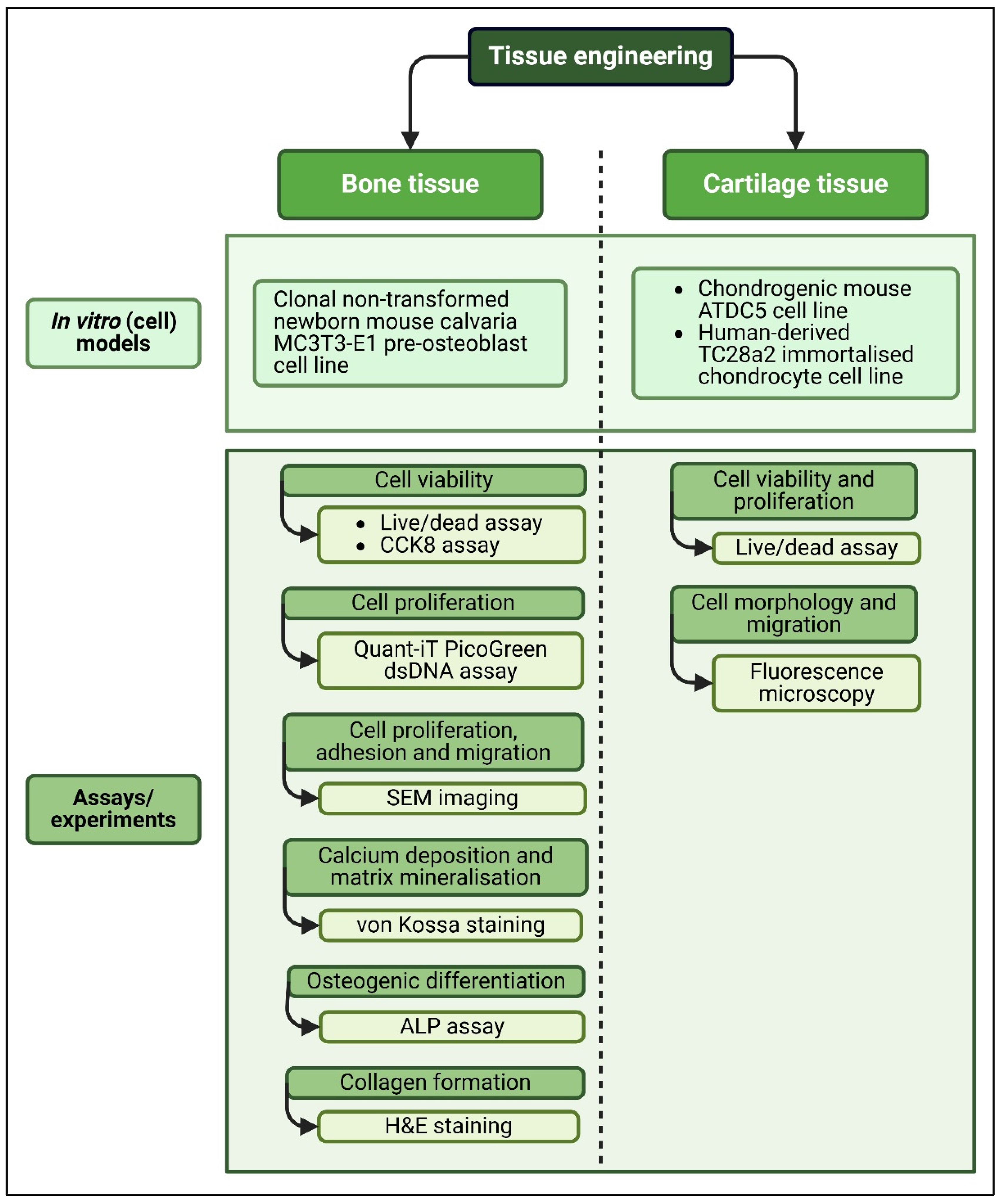
| [18] | Clonal non-transformed newborn mouse calvaria MC3T3-E1 pre-osteoblast cell line | Live/dead assay using calcein AM/ethidium homodimer staining and laser scanning confocal microscopy | Biocompatibility assessed as cell viability at 24 h | Bone tissue engineering | 0, 0.5, 1.5% w/v | High ALP activity with a quicker onset of osteogenesis at high CNC concentrations; greater mineral deposition within the scaffold; increased osteogenic markers; extensive extracellular matrix formation; promotion of osteogenic differentiation with accelerated early alkaline phosphatase activity; calcium mineralisation and collagen formation in the extracellular matrix. |
| Quant-iT PicoGreen dsDNA assay | Cell proliferation at 3 and 7 days | |||||
| ALP assay | Early stages of osteogenic differentiation (bone formation) | |||||
| von Kossa staining | Calcium deposition and matrix mineralisation (bone formation) | |||||
| haematoxylin and eosin (H&E) staining | Extent of collagen formation in the ECM | |||||
| [19] | Clonal non-transformed newborn mouse calvaria MC3T3-E1 pre-osteoblast cell line | Live/dead assay using calcein AM/ethidium homodimer staining and laser scanning confocal microscopy | Biocompatibility assessed as cell viability at 24 h | 0, 1.5% w/v | Enhanced preosteoblast proliferation and sustained growth; elevated ALP activity indicating increased early osteogenesis; increased collagen production and calcium deposition; supported cell survival and differentiation, as well as matrix maturation and mineralisation. | |
| Quant-iT PicoGreen dsDNA assay | Cell proliferation at 7, 14 and 21 days | |||||
| ALP assay | Early stages of osteogenic differentiation (bone formation) | |||||
| von Kossa staining | Calcium deposition and matrix mineralisation at 7, 14 and 21 days (bone formation) | |||||
| haematoxylin and eosin (H&E) staining | Extent of collagen formation in the ECM at 7, 14 and 21 days | |||||
| [20] | Clonal non-transformed newborn mouse calvaria MC3T3-E1 pre-osteoblast cell line | SEM imaging | Cell proliferation, adhesion and migration on the CNC-hydrogel at 2 days of culture | 0.3% w/v | Enhanced molecular interactions; increased compressive strength; improved mechanical properties with stronger interface interactions between CNCs and fibre network structure; induce a filling effect; regulate swelling properties and expansion of hydrogels; develop larger apatite particle thickness on the surface; boost biomineralisation capability. | |
| CCK8 assay | Biocompatibility was assessed as cell viability and cell number changes (proliferation) at 2 and 7 days of culture on the CNC-hydrogel | |||||
| ALP assay | Osteogenic differentiation at 7 days | |||||
| [21] | Chondrogenic mouse ATDC5 cell line | Live/dead assay using calcein AM/propidium iodide staining and laser scanning confocal microscopy | Biocompatibility assessed as cell viability and change in cell numbers (proliferation) at 1, 4 and 7 days | Cartilage tissue engineering | 1, 5, 10, 15% w/v | Increase the sol–gel transition temperature; reinforce the intermolecular interactions within polymer networks; enhance compressive modulus; regulate the swelling ratio and polymer network density; develop a high roughness morphology. |
| [22] | Human-derived TC28a2 immortalised chondrocyte cell line | Live/dead assay using calcein AM/ethidium homodimer staining and fluorescence microscopy | Biocompatibility assessed as cell viability at 24 h | 1, 2% w/v | Promoted matrix entanglement; increased storage modulus; strong shear-thinning properties; reduced cell sedimentation within the polymer matrix; increased cell viability. | |
| Fluorescence microscopy | Cell morphology and cell migration on CNC-hydrogel at 1 and 7 days |
| Reference | Biomedical Model | Assay/Experiment | Aim of the Assay | Proposed Application | Tested CNC Concentrations | Role of CNC |
|---|---|---|---|---|---|---|
| [23] | Human dermal fibroblast primary cell line (HDFa) | Disc diffusion method | Antimicrobial activity after 24 h | Wound dressing (skin tissue engineering) | Method A: 1 mg/mL Method B: 4, 10, 20, 30% | To increase mechanical reinforcement; increase thermal stability; increase porosity; increase net water vapour transmission rate; weak/no cytotoxicity |
| Resazurin assay | Biocompatibility was assessed as cell viability over 7 days |
| Reference | In Vitro Model | In Vivo Model | Experiment/Assay | Aim of the Investigation | Role of CNC-Based Hydrogel | Tested CNC Concentrations | Role of CNC |
|---|---|---|---|---|---|---|---|
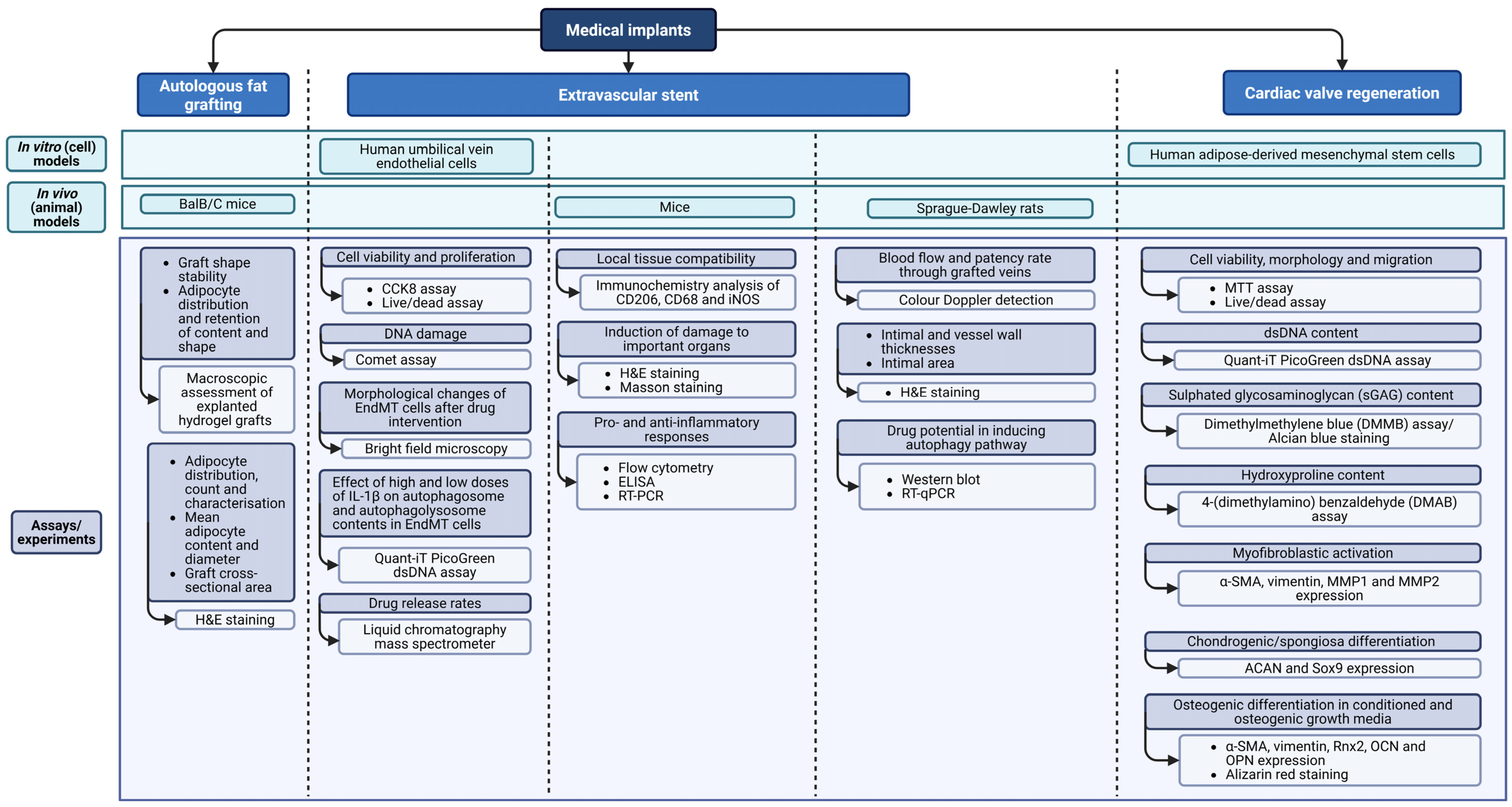
| [24] | - | Balb/C mouse model | Macroscopic assessment of explanted hydrogel grafts after 30 days | Shape stability of grafts; shape and content of adipocyte retention; adipocyte distribution | Autologous fat grafting | 1.82% w/v | To assist in shape and volume retention in grafts, resulting in the retention of more adipocytes |
| haematoxylin and eosin (H&E) staining of core sections of explanted grafts | Qualitative assessment of adipocyte distribution, count and characterisation; mean adipocyte content and diameter; graft cross-sectional area | ||||||
| [25] | HUVEC secondary endothelial cell line | - | Liquid chromatography mass spectrometry was conducted on PBS from the solution in which the astragaloside-IV-incorporated CNC–hydrogel stent was incubated in and on serum collected from blood samples obtained after the stent implantation | Chinese herbal anti-inflammatory medicine with autophagy induction potential, Astragaloside-IV; release rates at 1, 3, 5, 10, 20 and 30 days | Prevention of re-stenosis of the coronary stent (via inhibition of endothelial–mesenchymal transition | 0, 5, 10% | Inhibited the expansion of the grafted vein; slowed in vivo degradation rate; similar macrophage levels to the control group, which indicates biocompatibility |
| Comet assay | Biocompatibility assessed by measuring any DNA damage induced by the CNC hydrogel stent at 6, 12, 18 and 24 h | ||||||
| CCK8 assay | Cell viability and cell number changes (proliferation) at 24, 48 and 72 h | ||||||
| Live/dead assay using fluorescent dyes and fluorescence microscopy | |||||||
| Transmission electron microscopy | Effect of high and low doses of IL-1β on autophagosome and autophagolysosomal contents in EndMT cells | ||||||
| Bright field microscopy | Morphological changes in EndMT cells after AS-IV intervention | ||||||
| - | Mice | Immunohistochemistry analysis of local tissue for CD206, CD68, and iNOS | Local tissue compatibility of stents | ||||
| haematoxylin and eosin (H&E) staining and Masson staining of the kidney, heart, liver, spleen and lung | Damage to important organs induced by stents | ||||||
| Flow cytometry of blood and spleen for lymphocytes, CD45, CD3, CD45R, CD11B+ F4/80+ and CD11B+ after 3 and 7 days | Pro- and anti-inflammatory gene expression responses induced by stents | ||||||
| ELISA for IL-1B, IL-2, IL-6, IL-4, IL-10, IL-13 of blood samples after 3 and 7 days | |||||||
| RT-PCR of spleen samples for IL-1B, IL-2, IL-6, IL-4, IL-10 and IL-3 after 3 and 7 days | |||||||
| Sprague-Dawley rats | Colour Doppler detection | Blood flow through the grafted vein and its patency rate | |||||
| haematoxylin and eosin (H&E) staining after 4 weeks | Intimal thickness; vessel wall thickness; intimal area | ||||||
| Western blotting for α-SMA, CD31, vimentin, slug, snail, twist, slug, LC3II, p62, beclin 1, AMPK, p-AMPK, mTOR, p-mTOR on vein grafts | Potential of AS-IV to inhibit the EndMT process through the autophagy pathway | ||||||
| RT-qPCR of IL-1β, IL-2, IL-6, IL-4, IL-10, and IL-13 on spleen tissue | |||||||
| RT-qPCR of IL1β, TGF-β, CD31, α-SMA, slug, snail 1, twist, vimentin, beclin1, LC3II, p62, AMPK, and mTOR on a section of vein graft | |||||||
| [9] | Human adipose-derived mesenchymal stem cell line | - | MTT assay | Biocompatibility is assessed as cell viability, morphology and migration | Cardiac valve regeneration | 0.2, 0.4, 0.8, 1.5, 2.0% | To increase cell spreading and metabolic activity over time; increase cell differentiation; increase strain energy, transition strain, elastic modulus, and initial strain modulus; inhibit osteogenic differentiation |
| Live/dead assay using calcein AM/ethidium homodimer staining and confocal microscopy | |||||||
| Quant-iT PicoGreen dsDNA assay; dimethyl methylene blue (DMMB) assay/Alcian blue staining; 4-(dimethylamino)benzaldehyde (DMAB) assay | ECM deposition via measuring dsDNA, sulphated glycosaminoglycans (sGAGs) and hydroxyproline contents, respectively | ||||||
| α-SMA, vimentin, MMP1 and MMP2 expression | Myofibroblastic activation | ||||||
| ACAN and Sox9 expression | Chondrogenic/spongiosa differentiation (cardiac valve regeneration) | ||||||
| α-SMA, vimentin, Rnx2, OCN and OPN expression | Osteogenic potential in osteogenic growth media conditions | ||||||
| Alizarin red staining | Osteogenic differentiation in growth and osteogenic growth media |
| Reference | In Vitro Model | In Vivo Model | Experiment/Assay | Aim of the Investigation | Role of CNC-Based Hydrogel | Tested CNC Concentrations | Role of CNC |
|---|---|---|---|---|---|---|---|
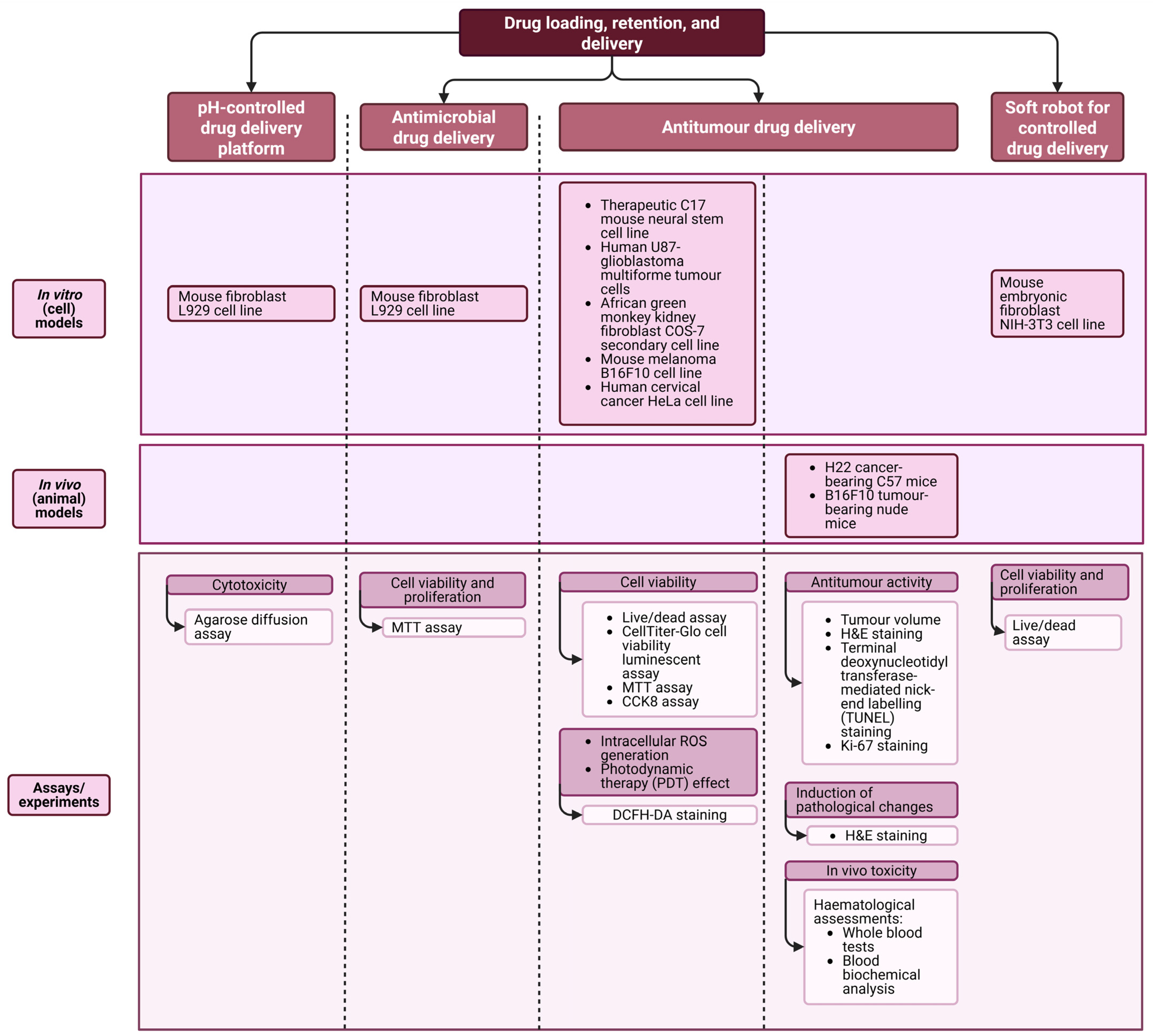
| [26] | Mouse fibroblast L929 secondary cell line | - | Agarose diffusion assay | Cytotoxicity based on cell layer changes and/or zone of cell inhibition | Platform for controlled small intestine-related drug delivery of riboflavin | 0, 4, 8, 10% | Good biocompatibility with slight toxicity; inverse proportionality between CNC content and drug loading and release |
| [11] | Mouse fibroblast L929 secondary cell line | - | MTT assay | Biocompatibility is assessed by cell viability and proliferation | Antimicrobial drug, chloramphenicol delivery | 2.5, 5 wt% | Improved cell viability and drug loading; controlled drug release |
| [27] | Therapeutic C17 mouse neural stem cells (iNSCs) | - | Live/dead assay using calcein AM/ethidium homodimer staining and laser scanning confocal microscopy | Biocompatibility assessed as stem cell viability on 1, 7, 14 and 30 days | Antitumour drug, tumour necrosis factor-α (TNF-α)-related apoptosis-inducing ligand (TRAIL) proapoptotic protein, delivery | 0.5% w/w | Maintenance of cell viability; slow hydrogel degradation rate; reinforcing agent; improve gelation kinetics; assist sustained release of cells from hydrogels; controlled drug release |
| Human U87 glioblastoma multiforme tumour cells | CellTiter-Glo® cell viability luminescent assay | Tumour cell killing ability was assessed as tumour cell viability at 24 and 72 h | |||||
| [28] | African green monkey kidney fibroblast COS-7 secondary cell line | - | MTT assay | Biocompatibility assessed as cell viability at 24 h | Antitumour drug, doxorubicin, delivery | 0, 1, 1.5, 2.5 wt% | Gradually diminished the initially triggered inflammatory responses; no evidence of necrosis, haemorrhaging, oedema or muscle damage; improved dimensional stability; slow degradation rate; controlled drug release |
| - | C57 mice with subcutaneous injections of H22 cancer cells into the left forelimb armpit | Tumour volume; haematoxylin and eosin (H&E) staining of tumour, heart, liver and spleen | Antitumour activity of hydrogel | ||||
| [29] | Mouse melanoma B16F10 primary cell line and human cervical cancer HeLa primary cell line | - | CCK8 assay; live/dead assay using calcein AM/propidium iodide staining and fluorescence microscopy | Tumour cell killing ability is assessed as tumour cell viability | Antitumour drug delivery platform using nanocarbon dots | 1.5 wt% | High biosafety and negligible cytotoxicity; tumour-killing ability through simultaneous photothermal therapy and photodynamic therapy |
| 2,7-dichlorodihydro-fluorescien diacetate (DCFH-DA) staining as a radical oxygen species (ROS) indicator and confocal laser scanning microscopy | Intracellular ROS generation; photodynamic therapy (PDT) effect | ||||||
| - | B16F10 tumour-bearing nude mice | haematoxylin and eosin (H&E) staining of heart, lung, liver, kidney and spleen | Pathological changes induced by hydrogels | ||||
| Haematological assessments: whole blood tests and blood biochemical analysis | In vivo toxicity of hydrogels | ||||||
| Haematoxylin and eosin (H&E), terminal deoxynucleotidyl transferase-mediated nick-end labelling (TUNEL), and Ki-67 staining of tumour slices | Antitumour performance of hydrogels | ||||||
| [30] | Mouse embryonic fibroblast NIH-3T3 secondary cells | - | Live/dead assay using calcein AM/ethidium homodimer staining and confocal microscopy | Cell viability and proliferation on 1, 3 and 5 days | Soft robot in controlled biomolecule delivery | 10 wt% | Magnetic navigation of the soft robot using superparamagnetic behaviour |
Disclaimer/Publisher’s Note: The statements, opinions and data contained in all publications are solely those of the individual author(s) and contributor(s) and not of MDPI and/or the editor(s). MDPI and/or the editor(s) disclaim responsibility for any injury to people or property resulting from any ideas, methods, instructions or products referred to in the content. |
© 2026 by the authors. Licensee MDPI, Basel, Switzerland. This article is an open access article distributed under the terms and conditions of the Creative Commons Attribution (CC BY) license.
Share and Cite
Seneviratne, D.M.; Whiteside, E.J.; Windus, L.C.E.; Burey, P.; Ward, R.; Annamalai, P.K. Scoping Review of the Biomedical Investigations of Cellulose Nanocrystal-Based Hydrogels: A Critical Analysis of Current Evidence, Research Gaps and Future Perspectives. Gels 2026, 12, 207. https://doi.org/10.3390/gels12030207
Seneviratne DM, Whiteside EJ, Windus LCE, Burey P, Ward R, Annamalai PK. Scoping Review of the Biomedical Investigations of Cellulose Nanocrystal-Based Hydrogels: A Critical Analysis of Current Evidence, Research Gaps and Future Perspectives. Gels. 2026; 12(3):207. https://doi.org/10.3390/gels12030207
Chicago/Turabian StyleSeneviratne, Dinuki M., Eliza J. Whiteside, Louisa C. E. Windus, Paulomi (Polly) Burey, Raelene Ward, and Pratheep K. Annamalai. 2026. "Scoping Review of the Biomedical Investigations of Cellulose Nanocrystal-Based Hydrogels: A Critical Analysis of Current Evidence, Research Gaps and Future Perspectives" Gels 12, no. 3: 207. https://doi.org/10.3390/gels12030207
APA StyleSeneviratne, D. M., Whiteside, E. J., Windus, L. C. E., Burey, P., Ward, R., & Annamalai, P. K. (2026). Scoping Review of the Biomedical Investigations of Cellulose Nanocrystal-Based Hydrogels: A Critical Analysis of Current Evidence, Research Gaps and Future Perspectives. Gels, 12(3), 207. https://doi.org/10.3390/gels12030207