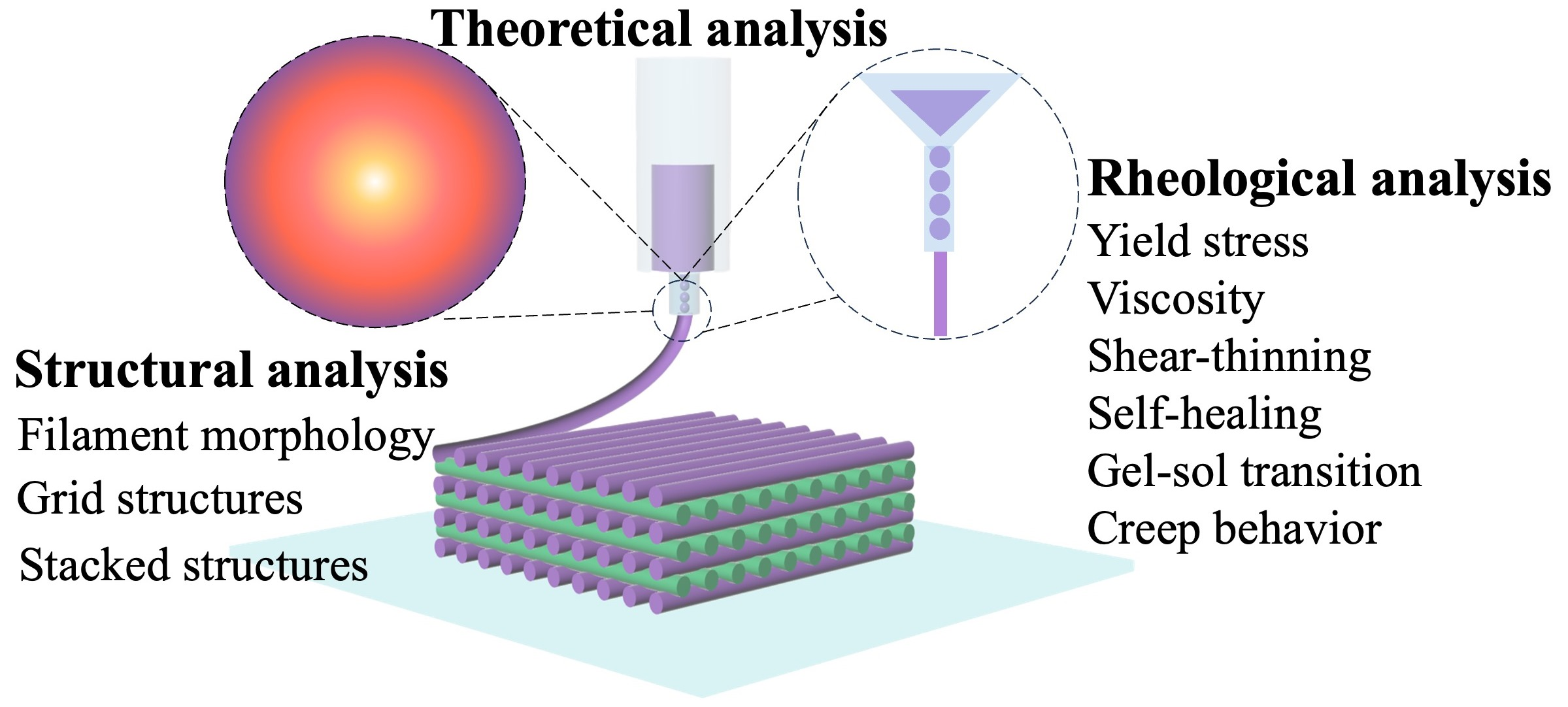

Quantitative Assessment of Hydrogel Printability in Extrusion Bioprinting


Abstract
1. Introduction
2. Quantitative Evaluation of Rheological Properties of Hydrogels
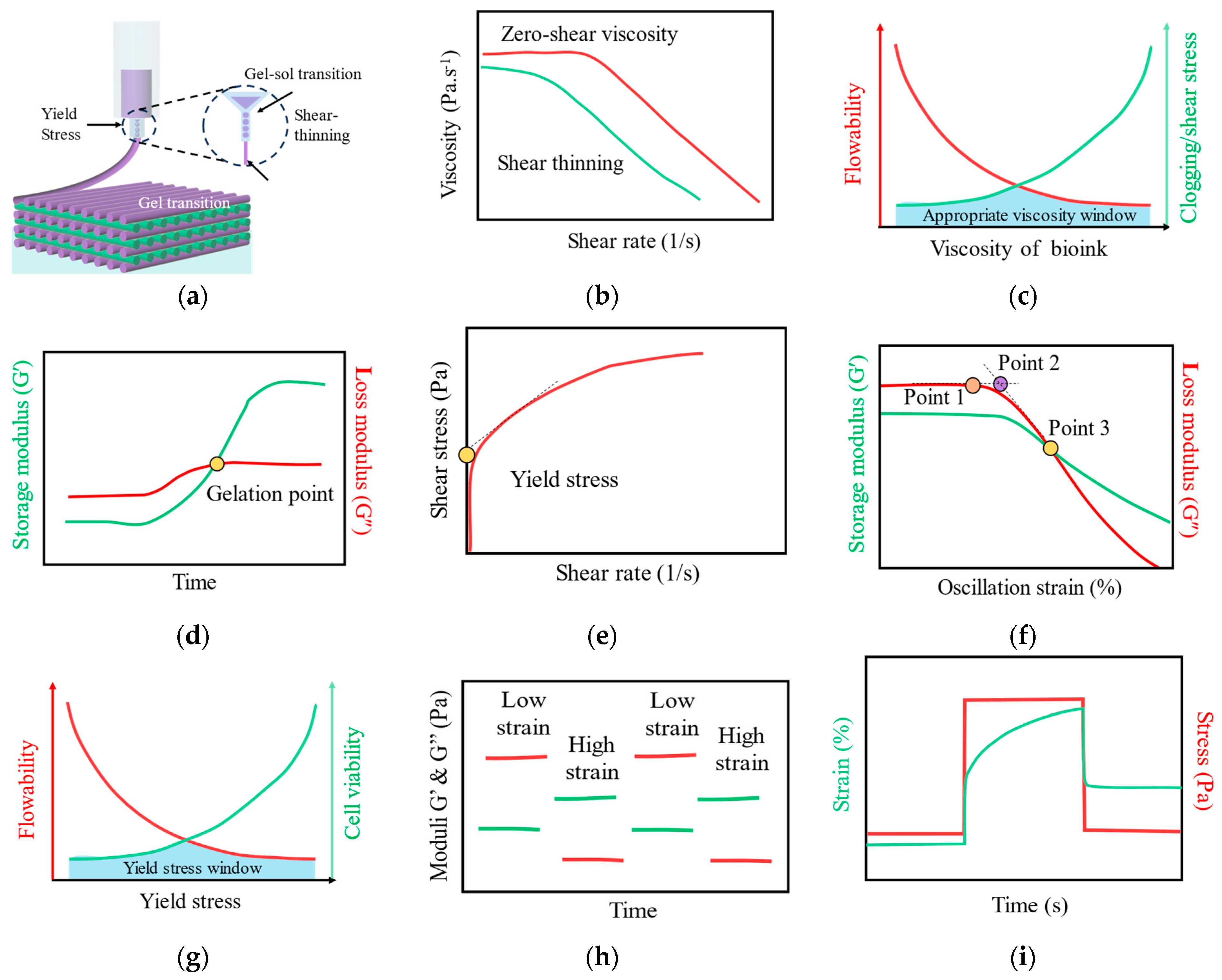
2.1. Viscosity and Shear-Thinning Behavior
2.2. Liquid-Solid Transition and Gelation Kinetics
2.3. Yield Stress
2.4. Reversible Gel-Sol Transition and Self-Healing Properties
2.5. Creep Behavior
3. Structural Analysis of Hydrogel 3D Printability
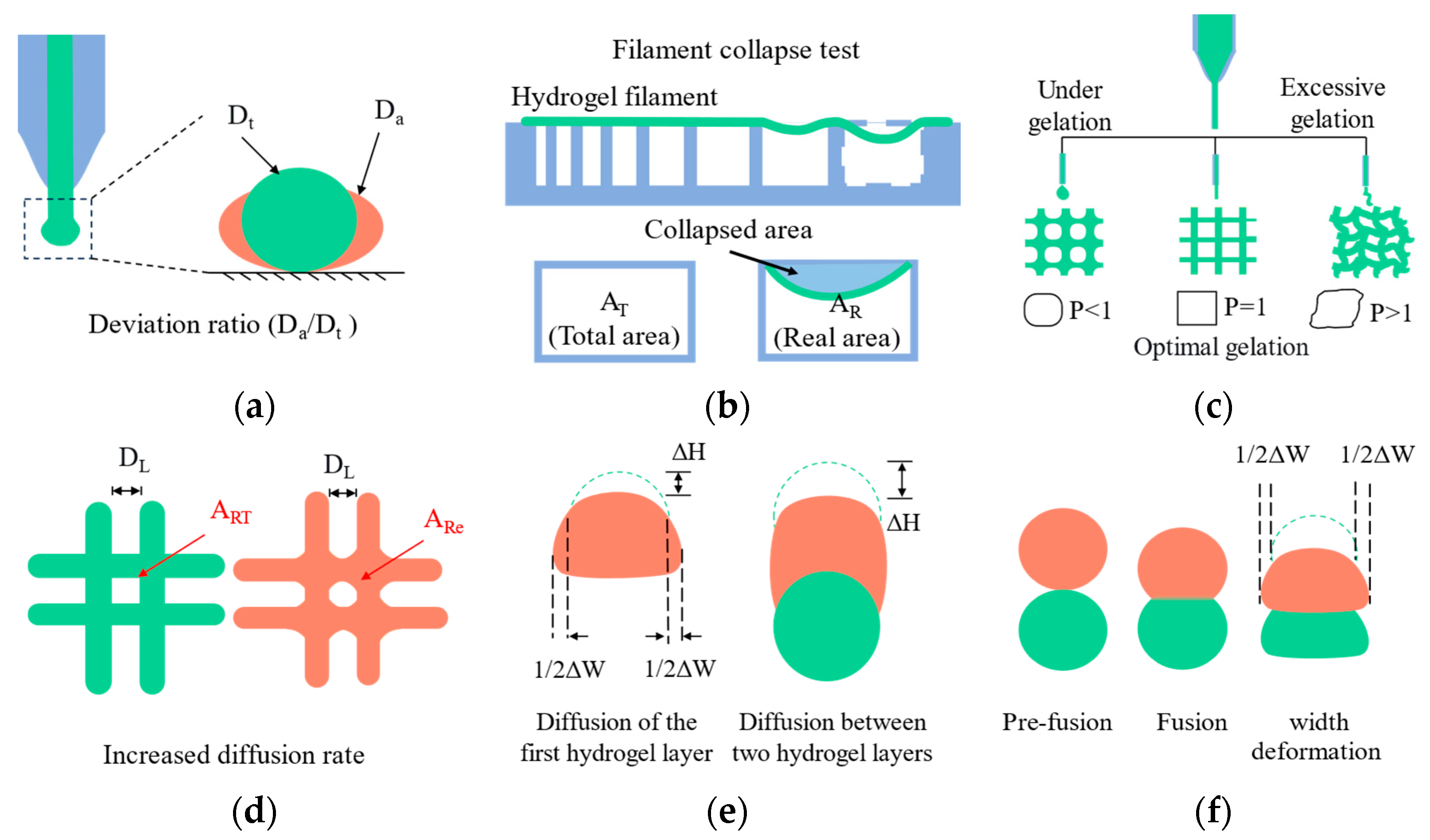
3.1. Filament Morphological Uniformity and Dimensional Fidelity
3.2. Grid Structure Regularity and Printing Accuracy Assessment
3.3. Stability Analysis of Multi-Layer Stacked Structures
4. Modeling and Prediction of Rheological Parameters and Printing Processes
4.1. Empirical Models for Pressure-Modulus Relationships in Extrusion
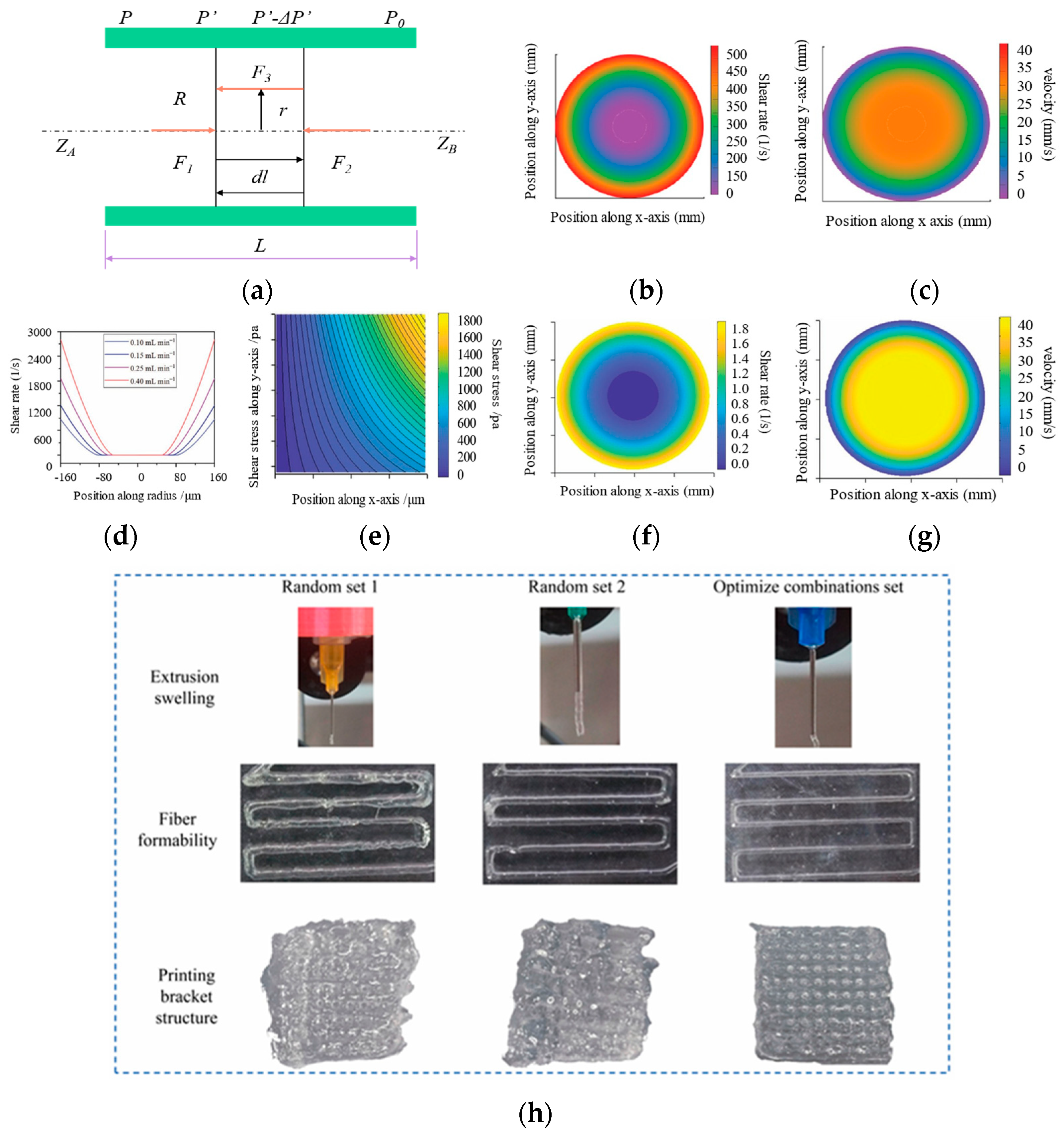
4.2. Theoretical Analysis of Shear Stress and Shear Rate Distribution Within Nozzles
4.3. Rheological Models for Extrusion Behavior Analysis
5. Comprehensive Evaluation Framework and Future Perspectives
6. In Summary
Author Contributions
Funding
Institutional Review Board Statement
Informed Consent Statement
Data Availability Statement
Acknowledgments
Conflicts of Interest
References
- Pardo, A.; Gomez-Florit, M.; Davidson, M.D.; Ozturk-Oncel, M.O.; Domingues, R.M.A.; Burdick, J.A.; Gomes, M.E. Hierarchical Design of Tissue-Mimetic Fibrillar Hydrogel Scaffolds. Adv. Healthc. Mater. 2024, 13, e2303167. [Google Scholar] [CrossRef]
- Lloyd, E.C.; Dhakal, S.; Amini, S.; Alhasan, R.; Fratzl, P.; Tree, D.R.; Morozova, S.; Hickey, R.J. Porous hierarchically ordered hydrogels demonstrating structurally dependent mechanical properties. Nat. Commun. 2025, 16, 3792. [Google Scholar] [CrossRef]
- Xiang, G.; Yin, B.; Shiroud Heidari, B.; Youssef, G.; Gosecka, M.; Gosecki, M.; Torres, F.G.; Wong, S.H.D.; Dodda, J.M. Programmable Hydrogels: Frontiers in Dynamic Closed-Loop Systems, Biomimetic Synergy, and Clinical Translation. Adv. Sci. 2025, 12, e12037. [Google Scholar] [CrossRef]
- You, P.; Sun, H.; Chen, H.; Li, C.; Mao, Y.; Zhang, T.; Yang, H.; Dong, H. Composite bioink incorporating cell-laden liver decellularized extracellular matrix for bioprinting of scaffolds for bone tissue engineering. Biomater. Adv. 2024, 165, 214017. [Google Scholar] [CrossRef] [PubMed]
- Luo, Y.; Xu, R.; Hu, Z.; Ni, R.; Zhu, T.; Zhang, H.; Zhu, Y. Gel-Based Suspension Medium Used in 3D Bioprinting for Constructing Tissue/Organ Analogs. Gels 2024, 10, 644. [Google Scholar] [CrossRef] [PubMed]
- Lameirinhas, N.S.; Carvalho, J.P.F.; Teixeira, M.C.; Luís, J.L.; Esmail, A.; Pinto, R.J.B.; Oliveira, H.; Freitas, F.; Oliveira, J.M.; Vilela, C.; et al. Nanocomposite hydrogel-based bioinks composed of a fucose-rich polysaccharide and nanocellulose fibers for 3D-bioprinting applications. Bioprinting 2025, 45, e00382. [Google Scholar] [CrossRef]
- Manzoli, S.; Merotto, E.; Piccoli, M.; Gobbo, P.; Todros, S.; Pavan, P.G. An Overview of 3D Bioprinting Impact on Cell Viability: From Damage Assessment to Protection Solutions. J. Funct. Biomater. 2025, 16, 436. [Google Scholar] [CrossRef]
- Chirianni, F.; Vairo, G.; Marino, M. Influence of extruder geometry and bio-ink type in extrusion-based bioprinting via an in silico design tool. Meccanica 2024, 59, 1285–1299. [Google Scholar] [CrossRef]
- Ng, W.L.; Shkolnikov, V. Jetting-based bioprinting: Process, dispense physics, and applications. Bio-Des. Manuf. 2024, 7, 771–799. [Google Scholar] [CrossRef]
- Lombardi, L.; Scalzone, A.; Ausilio, C.; Gentile, P.; Tammaro, D. Optimizing nozzle design in extrusion-based 3D bioprinting to minimize mechanical stress and enhance cell viability. Int. J. Bioprint. 2025, 11, 315–327. [Google Scholar] [CrossRef]
- Navaneethan, B.; Amoli, M.S.; Yang, Y.C.; Rezapourdamanab, S.; Tseng, C.Y.; Singh, Y.; Guo, C.L.; Serpooshan, V.; Chou, C.F. Scalable Biofabrication of Functional 3D Scaffolds via Synergy of Autopilot Single-Jet Electrospun 3D PCL Fiber Scaffolds and Cell-Laden Hydrogels. ACS Appl. Mater. Interfaces 2025, 17, 47878–47893. [Google Scholar] [CrossRef] [PubMed]
- Murenu, N.; Faber, J.; Soufivand, A.A.; Buss, M.; Schaefer, N.; Budday, S. Cell Behavior and Complex Mechanical Properties of 3D Printed Cell-Laden Alginate-Gelatin Macroporous Mesostructures. Macromol. Biosci. 2025, 25, e00204. [Google Scholar] [CrossRef] [PubMed]
- Reza Barbaz-Isfahani, A.S.; Jamali, M.; Khademi, A.; Iranmanesh, F.; Iranmanesh, P.; Khandan, A.; Sheikhbahaei, E. Advanced Bioprinting Methodologies: A Quantitative Analysis and Exploration of Innovative Techniques for Tissue Engineering. Nanomed. Res. J. 2025, 10, 95–113. [Google Scholar] [CrossRef]
- De Villiers, M.; Kotze, A.F.; du Plessis, L.H. Pneumatic extrusion bioprinting-based high throughput fabrication of a melanoma 3D cell culture model for anti-cancer drug screening. Biomed. Mater. 2024, 19, 055034. [Google Scholar] [CrossRef]
- Shin, J.; Tabatabaei Rezaei, N.; Choi, S.; Li, Z.; Kim, D.H.; Kim, K. Photocrosslinkable Kidney Decellularized Extracellular Matrix-Based Bioink for 3D Bioprinting. Adv. Healthc. Mater. 2025, 14, e2501616. [Google Scholar] [CrossRef]
- Mierke, C.T. Bioprinting of Cells, Organoids and Organs-on-a-Chip Together with Hydrogels Improves Structural and Mechanical Cues. Cells 2024, 13, 1638. [Google Scholar] [CrossRef]
- Ahmadi Soufivand, A.; Lee, S.J.; Jungst, T.; Budday, S. Challenges and perspectives in using finite element modeling to advance 3D bioprinting. Prog. Biomed. Eng. 2025, 7, 032004. [Google Scholar] [CrossRef]
- Yao, Y.; Gao, Q.; Yu, K.; Qi, L.; Lin, Z.; Xu, J.; Li, Y.; Zhang, P.; Zhu, M.; Lu, L. Study on the formation mechanism of viscoplastic line deposition for predicting filament width. Mater. Des. 2025, 249, 113550. [Google Scholar] [CrossRef]
- Skelton, M.L.; Gentry, J.L.; Astrab, L.R.; Goedert, J.A.; Earl, E.B.; Pham, E.L.; Bhat, T.; Caliari, S.R. Modular Multiwell Viscoelastic Hydrogel Platform for Two- and Three-Dimensional Cell Culture Applications. ACS Biomater. Sci. Eng. 2024, 10, 3280–3292. [Google Scholar] [CrossRef]
- Nieva-Esteve, G.; Agulló, N.; Grande-Molina, M.; Adell, N.; Tarrado, X.; Calvo-Duarte, L.; Valls-Esteve, A.; Krauel, L.; Fenollosa-Artés, F.; Bartes, R.T.; et al. Developing tuneable viscoelastic silicone gel-based inks for precise 3D printing of clinical phantoms. Mater. Adv. 2024, 5, 3706–3720. [Google Scholar] [CrossRef]
- Zhang, H.; Luo, Y.; Li, G.; Hu, Z.; Xu, R.; Zhu, T.; Cao, X.; Yao, Y.; Jian, W.; Chen, J.; et al. Micelle-facilitated gelation kinetics and viscoelasticity of dynamic hyaluronan hydrogels for bioprinting of mimetic constructs and tissue repair. Compos. Part B Eng. 2025, 294, 112151. [Google Scholar] [CrossRef]
- Zhang, H.; Cong, Y.; Osi, A.R.; Zhou, Y.; Huang, F.; Zaccaria, R.P.; Chen, J.; Wang, R.; Fu, J. Direct 3D Printed Biomimetic Scaffolds Based on Hydrogel Microparticles for Cell Spheroid Growth. Adv. Funct. Mater. 2020, 30, 1910573. [Google Scholar] [CrossRef]
- Fragal, E.H.; Poirier, A.; Bleses, D.; Faria Guimarães Silva, Y.; Baccile, N.; Rharbi, Y. Microbial biosurfactant hydrogels with tunable rheology for precision 3D printing of soft scaffolds. Soft Matter 2025, 21, 4476–4487. [Google Scholar] [CrossRef]
- Xin, H.; Seigneur, A.; Bernardin, A.; Virk, S.S.; Virk, A.S.; Calderon Vaca, M.; Amin, S. Effect of Entrapped and Free Calcium Hydroxyapatite Particles on Rheological Properties of Hyaluronic Acid–Calcium Hydroxyapatite Composite Hydrogels. ACS Omega 2025, 10, 48242–48256. [Google Scholar] [CrossRef]
- Li, N.; Bassett, D.C.; Zhang, Z.J. Microfibrillated cellulose (MFC)-composite formulations for 3D bioprinting with excellent printability, mechanical strength, and biological functionality. Chem. Eng. J. 2025, 524, 169037. [Google Scholar] [CrossRef]
- Mondal, G.; Chowdhury, S.R.; Paul, P.; Basu, B. Dual Crosslinkable Gelatin Glycidyl Methacrylate-based Hydrogel: Key Insights to Biophysical Properties and Applicability Towards 3D Printing. Regen. Eng. Transl. Med. 2025, 11, 977–998. [Google Scholar] [CrossRef]
- Weng, H.; Decarli, M.C.; He, L.; Chen, W.; van Rijt, S.; Bernaerts, K.V.; Moroni, L. Mechanical Reinforced and Self-healing Hydrogels: Bioprinted Biomimetic Methacrylated Collagen Peptide-Xanthan Gum Constructs for Ligament Regeneration. Adv. Healthc. Mater. 2025, 14, e2502341. [Google Scholar] [CrossRef]
- Geevarghese, R.; Zur-Pinska, J.; Parisi, D.; Wlodarczyk-Biegun, M.K. A comprehensive protocol for hydrogel-based bioink design: Balancing printability, stability, and biocompatibility. J. Mater. Chem. B 2025, 13, 13750–13768. [Google Scholar] [CrossRef]
- Du, L.; Xiao, Y.Y.; Jiang, Z.C.; Xu, H.; Zeng, H.; Li, H. A high temperature-resistant, strong, and self-healing double-network hydrogel for profile control in oil recovery. J. Colloid Interface Sci. 2025, 679, 490–502. [Google Scholar] [CrossRef] [PubMed]
- Wang, D.; Zeng, J.; Zhu, H.; Liu, S.; Jia, L.; Liu, W.; Wang, Q.; Wang, S.; Liu, W.; Zhou, J.; et al. Extrusion bioprinting of elastin-containing bioactive double-network tough hydrogels for complex elastic tissue regeneration. Aggregate 2024, 5, e477. [Google Scholar] [CrossRef]
- Usala, E.; Gonzalez, Z.; Campillo, N.; Baena, J.; Ferrari, B.; Rodríguez, A.; Espinosa, E. Impact of steam sterilization on the rheological characteristics, printability, and bioactivity of nanocellulose/alginate hydrogels for 3D bioprinting. Carbohydr. Polym. Technol. Appl. 2025, 11, 100970. [Google Scholar] [CrossRef]
- Peleg-Evron, O.; Hen, N.; Davidovich-Pinhas, M.; Levenberg, S.; Bianco-Peled, H. Design and Characterization of Yeast Protein–Polysaccharide Bioink Blends for 3D Printing. Polysaccharides 2025, 6, 101. [Google Scholar] [CrossRef]
- Nie, X.; Tang, Y.; Wu, T.; Zhao, X.; Xu, Z.; Yang, R.; Sun, Y.; Wu, B.; Han, Q.; Hui, J.; et al. 3D printing sequentially strengthening high-strength natural polymer hydrogel bilayer scaffold for cornea regeneration. Regen. Biomater. 2024, 11, rbae012. [Google Scholar] [CrossRef]
- Hernandez-Sosa, A.; Ramirez-Jimenez, R.A.; Rojo, L.; Boulmedais, F.; Aguilar, M.R.; Criado-Gonzalez, M.; Hernandez, R. Optimization of the Rheological Properties of Self-Assembled Tripeptide/Alginate/Cellulose Hydrogels for 3D Printing. Polymers 2022, 14, 2229. [Google Scholar] [CrossRef]
- Field, E.H.; Ratcliffe, J.; Johnson, C.J.; Binger, K.J.; Reynolds, N.P. Self-healing, 3D printed bioinks from self-assembled peptide and alginate hybrid hydrogels. Biomater. Adv. 2025, 169, 214145. [Google Scholar] [CrossRef]
- Deo, K.A.; Murali, A.; Tronolone, J.J.; Mandrona, C.; Lee, H.P.; Rajput, S.; Hargett, S.E.; Selahi, A.; Sun, Y.; Alge, D.L.; et al. Granular Biphasic Colloidal Hydrogels for 3D Bioprinting. Adv. Healthc. Mater. 2024, 13, 2303810. [Google Scholar] [CrossRef] [PubMed]
- Dey, M.K.; Devireddy, R.V. Rheological Characterization and Printability of Sodium Alginate–Gelatin Hydrogel for 3D Cultures and Bioprinting. Biomimetics 2025, 10, 28. [Google Scholar] [CrossRef] [PubMed]
- Bono, F.; Strässle Zuniga, S.H.; Amstad, E. 3D Printable κ-Carrageenan-Based Granular Hydrogels. Adv. Funct. Mater. 2024, 35, 202413368. [Google Scholar] [CrossRef]
- Yu, Y.; Zhao, Y.; Zou, Y.; Lu, C.; Li, N.; Shi, Z.; Li, X.; Lai, X. Ultra-sensitive pH responsive hydrogels with injectable and self-healing performance for controlled drug delivery. Int. J. Pharm. X 2025, 9, 100334. [Google Scholar] [CrossRef] [PubMed]
- Ma, Y.; Tang, Y.; Fan, J.; Sun, T.; Qiu, X.; Wei, L.; Zhang, X. A pH-responsive dual-network biopolysaccharide hydrogel with enhanced self-healing and controlled drug release properties. RSC Adv. 2024, 14, 38353–38363. [Google Scholar] [CrossRef]
- Rijns, L.; Duijs, H.; Lafleur, R.P.M.; Cardinaels, R.; Palmans, A.R.A.; Dankers, P.Y.W.; Su, L. Molecularly Engineered Supramolecular Thermoresponsive Hydrogels with Tunable Mechanical and Dynamic Properties. Biomacromolecules 2024, 25, 4686–4696. [Google Scholar] [CrossRef]
- Sadeghzade, S.; Cao, J.; Yang, R.; Li, Y.; Li, Y.; Zhang, D.; Liu, J.; Yu, Z.; Fang, L.; Yuan, H. Highly stretchable alginate/methylcellulose hydrogels for 3D bio-printing: Photopolymerization approach enhancing structural integrity. Giant 2024, 18, 100280. [Google Scholar] [CrossRef]
- Gunter, E.; Popeyko, O.; Vityazev, F.; Popov, S. Effect of Callus Cell Immobilization on the Textural and Rheological Properties, Loading, and Releasing of Grape Seed Extract from Pectin Hydrogels. Gels 2024, 10, 273. [Google Scholar] [CrossRef] [PubMed]
- Cavallo, A.; Radaelli, G.; Al Kayal, T.; Mero, A.; Mezzetta, A.; Guazzelli, L.; Soldani, G.; Losi, P. Optimization of Gelatin and Crosslinker Concentrations in a Gelatin/Alginate-Based Bioink with Potential Applications in a Simplified Skin Model. Molecules 2025, 30, 649. [Google Scholar] [CrossRef]
- Kitana, W.; Levario-Diaz, V.; Cavalcanti-Adam, E.A.; Ionov, L. Biofabrication of Composite Bioink-Nanofiber Constructs: Effect of Rheological Properties of Bioinks on 3D (Bio)Printing and Cells Interaction with Aligned Touch Spun Nanofibers. Adv. Healthc. Mater. 2024, 13, e2303343. [Google Scholar] [CrossRef]
- Palacin-Garcia, R.; Goni, L.; Rio, T.G. Exploring the Rheological Properties of 3D Bioprinted Alginate-Based Hydrogels for Tissue Engineering. Biomimetics 2025, 10, 491. [Google Scholar] [CrossRef]
- Rony, F.K.; Appiah, J.; Alawbali, A.; Clay, D.; Ilias, S.; Azad, M.A. Evaluating Swellable Cross-Linked Biopolymer Impact on Ink Rheology and Mechanical Properties of Drug-Contained 3D-Printed Thin Film. Pharmaceutics 2025, 17, 183. [Google Scholar] [CrossRef]
- Tavakoli, S.; Krishnan, N.; Mokhtari, H.; Oommen, O.P.; Varghese, O.P. Fine-tuning Dynamic Cross–linking for Enhanced 3D Bioprinting of Hyaluronic Acid Hydrogels. Adv. Funct. Mater. 2023, 34, 2307040. [Google Scholar] [CrossRef]
- Nam, S.; Lou, J.; Lee, S.; Kartenbender, J.M.; Mooney, D.J. Dynamic injectable tissue adhesives with strong adhesion and rapid self-healing for regeneration of large muscle injury. Biomaterials 2024, 309, 122597. [Google Scholar] [CrossRef]
- Huang, Y.; Kang, H.; Wang, Y.; Liu, K.; Wei, W.; Dai, H. One Stone Three Birds: Silver Sulfadiazine Modulates the Stability and Dynamics of Hydrogels for Infected Wound Healing. Adv. Healthc. Mater. 2024, 13, 2400242. [Google Scholar] [CrossRef] [PubMed]
- Yang, M.; Zhao, H.; Yu, Y.; Liu, J.; Li, C.; Guan, F.; Yao, M. Green synthesis-inspired antibacterial, antioxidant and adhesive hydrogels with ultra-fast gelation and hemostasis for promoting infected skin wound healing. Acta Biomater. 2024, 184, 156–170. [Google Scholar] [CrossRef] [PubMed]
- Lou, J.; Liu, F.; Lindsay, C.D.; Chaudhuri, O.; Heilshorn, S.C.; Xia, Y. Dynamic Hyaluronan Hydrogels with Temporally Modulated High Injectability and Stability Using a Biocompatible Catalyst. Adv. Mater. 2018, 30, e1705215. [Google Scholar] [CrossRef]
- Pan, H.; Qu, Y.; Wang, F.; Zhao, S.; Chen, G. Horseradish peroxidase-catalyzed crosslinking injectable hydrogel for bone repair and regeneration. Colloid Interface Sci. Commun. 2025, 66, 100828. [Google Scholar] [CrossRef]
- Jin, X.; Wei, C.; Li, K.; Yin, P.; Wu, C.; Zhang, W. Polyphenol-mediated hyaluronic acid/tannic acid hydrogel with short gelation time and high adhesion strength for accelerating wound healing. Carbohydr. Polym. 2024, 342, 122372. [Google Scholar] [CrossRef]
- Kim, H.S.; Li, C.J.; Park, S.M.; Kim, K.W.; Mo, J.H.; Jin, G.Z.; Lee, H.H.; Kim, H.W.; Shin, U.S.; Lee, J.H. Development of an Injectable Biphasic Hyaluronic Acid-Based Hydrogel with Stress Relaxation Properties for Cartilage Regeneration. Adv. Healthc. Mater. 2024, 13, 2400043. [Google Scholar] [CrossRef] [PubMed]
- Nerger, B.A.; Kashyap, K.; Deveney, B.T.; Lou, J.; Hanan, B.F.; Liu, Q.; Khalil, A.; Lungjangwa, T.; Cheriyan, M.; Gupta, A.; et al. Tuning porosity of macroporous hydrogels enables rapid rates of stress relaxation and promotes cell expansion and migration. Proc. Natl. Acad. Sci. USA 2024, 121, e2410806121. [Google Scholar] [CrossRef]
- Zhang, Z.; He, C.; Rong, Y.; Ren, H.; Wang, T.; Zou, Z.; Chen, X. A fast and versatile cross-linking strategy via o-phthalaldehyde condensation for mechanically strengthened and functional hydrogels. Natl. Sci. Rev. 2021, 8, nwaa128. [Google Scholar] [CrossRef]
- Yasar, M.; Oktay, B.; Gurkan, A.C.; Apohan, N.K. Self-healing and cell adhesion properties of dynamic and photo-crosslinking PEG-based dual networks soft hydrogels. J. Polym. Sci. 2024, 62, 4228–4239. [Google Scholar] [CrossRef]
- Zhou, F.; Hong, Y.; Liang, R.; Zhang, X.; Liao, Y.; Jiang, D.; Zhang, J.; Sheng, Z.; Xie, C.; Peng, Z.; et al. Rapid printing of bio-inspired 3D tissue constructs for skin regeneration. Biomaterials 2020, 258, 120287. [Google Scholar] [CrossRef]
- Zhang, W.; Shi, K.; Yang, J.; Li, W.; Yu, Y.; Mi, Y.; Yao, T.; Ma, P.; Fan, D. 3D printing of recombinant collagen/chitosan methacrylate/nanoclay hydrogels loaded with Kartogenin nanoparticles for cartilage regeneration. Regen. Biomater. 2024, 11, rbae097. [Google Scholar] [CrossRef]
- Koivisto, J.T.; Gering, C.; Karvinen, J.; Maria Cherian, R.; Belay, B.; Hyttinen, J.; Aalto-Setala, K.; Kellomaki, M.; Parraga, J. Mechanically Biomimetic Gelatin-Gellan Gum Hydrogels for 3D Culture of Beating Human Cardiomyocytes. ACS Appl. Mater. Interfaces 2019, 11, 20589–20602. [Google Scholar] [CrossRef]
- Bhusari, S.; Hoffmann, M.; Herbeck-Engel, P.; Sankaran, S.; Wilhelm, M.; Del Campo, A. Rheological behavior of Pluronic/Pluronic diacrylate hydrogels used for bacteria encapsulation in engineered living materials. Soft Matter 2024, 20, 1320–1332. [Google Scholar] [CrossRef]
- Braccini, S.; Chen, C.B.; Lucejko, J.J.; Barsotti, F.; Ferrario, C.; Chen, G.Q.; Puppi, D. Additive manufacturing of wet-spun chitosan/hyaluronic acid scaffolds for biomedical applications. Carbohydr. Polym. 2024, 329, 121788. [Google Scholar] [CrossRef]
- Zhou, Q.; Chng, C.-P.; Zhao, Y.; Wang, Y.; Xu, H.; Huo, Y.; Huang, C. Ethanol-induced gelation enables direct three-dimensional printing of sodium alginate hydrogel. Mater. Des. 2024, 239, 112746. [Google Scholar] [CrossRef]
- Panyamao, P.; Charumanee, S.; Ruangsuriya, J.; Saenjum, C. Coffee parchment-derived nanocellulose as reinforcing agent in hydrogel inks for extrusion-based 3D printing of biphasic osteochondral scaffolds. Carbohydr. Polym. Technol. Appl. 2025, 10, 100752. [Google Scholar] [CrossRef]
- Song, Y.E.; Eckman, N.; Sen, S.; Jons, C.K.; Saouaf, O.M.; Appel, E.A. Highly Extensible Physically Crosslinked Hydrogels for High-Speed 3D Bioprinting. Adv. Healthc. Mater. 2025, 14, 2404988. [Google Scholar] [CrossRef] [PubMed]
- Al-Farhan, W.; Abusara, O.H.; Abu-Sini, M.; Hikmat, S.; Tarawneh, O.; Al-Kouz, S.; Hamed, R. Development, Characterization, and Biological Evaluation of a Self-Healing Hydrogel Patch Loaded with Ciprofloxacin for Wound Dressings. Polymers 2025, 17, 2686. [Google Scholar] [CrossRef]
- Li, J.; Yin, F.; Wang, J.; Du, H.; Xu, F.; Meskers, S.; Li, Y.; Wijker, S.; Peng, Y.; Bellan, R.; et al. Self-Regulating Hydrogel with Reversible Optical Activity in Its Gel-to-Gel Transformation. J. Am. Chem. Soc. 2025, 147, 17361–17371. [Google Scholar] [CrossRef]
- Caiado Decarli, M.; Ferreira, H.P.; Sobreiro-Almeida, R.; Teixeira, F.C.; Correia, T.R.; Babilotte, J.; Olijve, J.; Custodio, C.A.; Goncalves, I.C.; Mota, C.; et al. Embedding Bioprinting of Low Viscous, Photopolymerizable Blood-Based Bioinks in a Crystal Self-Healing Transparent Supporting Bath. Small Methods 2025, 9, e2400857. [Google Scholar] [CrossRef]
- Amorim, P.A.; Agten, H.; Vermeulen, M.; Van Vlierberghe, S.; Geris, L.; Bloemen, V. Novel GelMA/GelMA-AEMA Hydrogel Blend with Enhanced Printability as a Carrier for iPSC-Derived Chondrocytes In Vitro. Gels 2025, 11, 698. [Google Scholar] [CrossRef]
- Zhao, W.; Zhang, Y.; Zhao, X.; Sheng, W.; Ma, S.; Zhou, F. Mechanically Robust Lubricating Hydrogels Beyond the Natural Cartilage as Compliant Artificial Joint Coating. Adv. Sci. 2024, 11, e2401000. [Google Scholar] [CrossRef]
- Chai, W.; An, Y.; Wang, X.; Yang, Z.; Wei, Q. Optimization of SA-Gel Hydrogel Printing Parameters for Extrusion-Based 3D Bioprinting. Gels 2025, 11, 552. [Google Scholar] [CrossRef]
- Rodriguez-Rego, J.M.; Mendoza-Cerezo, L.; Macias-Garcia, A.; Mendoza-Cerezo, L.; Carrasco-Amador, J.P.; Marcos-Romero, A.C. Methodology for characterizing the printability of hydrogels. Int. J. Bioprint. 2023, 9, 667. [Google Scholar] [CrossRef] [PubMed]
- He, Y.; Yang, F.; Zhao, H.; Gao, Q.; Xia, B.; Fu, J. Research on the printability of hydrogels in 3D bioprinting. Sci. Rep. 2016, 6, 29977. [Google Scholar] [CrossRef]
- Trifan, A.; Liciu, E.; Nedelcu, A.S.; Dragomir, M.; Cristea, D.D.; Mateescu, C.S.; Nitulescu, D.A.; Cirstea, C.A.; Banciu, A.; Toader, G.; et al. Effect of Phosphate Phase Incorporation on 3D-Printed Hydrogel Scaffolds: Towards Customizable Bone Graft Materials. Gels 2025, 11, 665. [Google Scholar] [CrossRef]
- Ouyang, L.; Yao, R.; Zhao, Y.; Sun, W. Effect of bioink properties on printability and cell viability for 3D bioplotting of embryonic stem cells. Biofabrication 2016, 8, 035020. [Google Scholar] [CrossRef]
- Dong, L.; Fan, Z.; Fang, B.; Zhao, X.; Yao, H.; Cai, G.; Yang, S.; Zhang, G.; Cheng, X.; Feng, Y.; et al. Oriented cellulose hydrogel: Directed tissue regeneration for reducing corneal leukoplakia and managing fungal corneal ulcers. Bioact. Mater. 2024, 41, 15–29. [Google Scholar] [CrossRef]
- Lin, Z.; Hong, Y.; Jiang, T.; Yang, Y.; Gao, Y.; Xie, H.; Luo, Z. Fabrication and characterization of a multifunctional alginate–gelatin–fibrinogen hydrogel for potential muscle tissue reconfiguration in vitro. J. Mater. Chem. B 2025, 13, 9824–9837. [Google Scholar] [CrossRef] [PubMed]
- Yu, J.; Yao, D.; Wang, L.; Xu, M. Machine Learning in Predicting and Optimizing Polymer Printability for 3D Bioprinting. Polymers 2025, 17, 1873. [Google Scholar] [CrossRef] [PubMed]
- Silva Robazzi, J.V.; Derman, I.D.; Gupta, D.; Haugh, L.; Singh, Y.P.; Pal, V.; Yilmaz, Y.O.; Liu, S.; Dias, A.L.; Andrade Flauzino, R.; et al. The Synergy of Artificial Intelligence and 3D Bioprinting: Unlocking New Frontiers in Precision and Tissue Fabrication. Adv. Funct. Mater. 2025, 36, e09530. [Google Scholar] [CrossRef]
- Amirfattahi, S.; Freeman, C.J.; Honaryar, H.; Ghazali, H.S.; Kim, K.; Niroobakhsh, Z. Extrusion-Based Printing of Nanostructured Fatty Acid Gels Incorporated in Hydrogels. J. Appl. Polym. Sci. 2025, 142, 57328. [Google Scholar] [CrossRef]
- Jiang, Y.; Cai, Y.; Zhang, W.; Yin, Z.; Hu, C.; Tong, T.; Lu, P.; Zhang, S.; Neculai, D.; Tuan, R.S.; et al. Human Cartilage-Derived Progenitor Cells from Committed Chondrocytes for Efficient Cartilage Repair and Regeneration. Stem Cells Transl. Med. 2016, 5, 733–744. [Google Scholar] [CrossRef]
- Chimene, D.; Peak, C.W.; Gentry, J.L.; Carrow, J.K.; Cross, L.M.; Mondragon, E.; Cardoso, G.B.; Kaunas, R.; Gaharwar, A.K. Nanoengineered Ionic-Covalent Entanglement (NICE) Bioinks for 3D Bioprinting. ACS Appl. Mater. Interfaces 2018, 10, 9957–9968. [Google Scholar] [CrossRef]
- Elango, J.; Zamora-Ledezma, C. Rheological, Structural, and Biological Trade-Offs in Bioink Design for 3D Bioprinting. Gels 2025, 11, 659. [Google Scholar] [CrossRef]
- Ullah, M.W.; Ul-Islam, M.; Shehzad, A.; Manan, S.; Islam, S.U.; Fatima, A.; Al-Saidi, A.K.; Nokab, M.E.H.E.; Sanchez, J.Q.; Sebakhy, K.O. From Bioinks to Functional Tissues and Organs: Advances, Challenges, and the Promise of 3D Bioprinting. Macromol. Mater. Eng. 2025, 310, e00251. [Google Scholar] [CrossRef]
- Ollier, R.C.; Webber, M.J. Mechanoresponsive Hydrogels Emerging from Dynamic and Non-Covalent Interactions. Adv. Mater. 2025, 37, e2507397. [Google Scholar] [CrossRef] [PubMed]
- Han, H.; Kim, M.; Yong, U.; Jo, Y.; Choi, Y.M.; Kim, H.J.; Hwang, D.G.; Kang, D.; Jang, J. Tissue-specific gelatin bioink as a rheology modifier for high printability and adjustable tissue properties. Biomater. Sci. 2024, 12, 2599–2613. [Google Scholar] [CrossRef]
- Zhou, X.; Wu, S.; Liu, P.; Wang, L.; Xie, F. Hybrid bioink of methyacrylated starch with minimal methacrylated chitosan enables high-precision 3D printing for complex tissue scaffolds. Carbohydr. Polym. 2025, 367, 124023. [Google Scholar] [CrossRef] [PubMed]
- Barreiro Carpio, M.; Gonzalez Martinez, E.; Dabaghi, M.; Ungureanu, J.; Arizpe Tafoya, A.V.; Gonzalez Martinez, D.A.; Hirota, J.A.; Moran-Mirabal, J.M. High-Fidelity Extrusion Bioprinting of Low-Printability Polymers Using Carbopol as a Rheology Modifier. ACS Appl. Mater. Interfaces 2023, 15, 54234–54248. [Google Scholar] [CrossRef] [PubMed]
- Irvine, S.A.; Venkatraman, S.S. Bioprinting and Differentiation of Stem Cells. Molecules 2016, 21, 1188. [Google Scholar] [CrossRef]
- Pereira, I.; Lopez-Martinez, M.J.; Villasante, A.; Introna, C.; Tornero, D.; Canals, J.M.; Samitier, J. Hyaluronic acid-based bioink improves the differentiation and network formation of neural progenitor cells. Front. Bioeng. Biotechnol. 2023, 11, 1110547. [Google Scholar] [CrossRef]
- Galliger, Z.; Vogt, C.D.; Helms, H.R.; Panoskaltsis-Mortari, A. Extracellular Matrix Microparticles Improve GelMA Bioink Resolution for 3D Bioprinting at Ambient Temperature. Macromol. Mater. Eng. 2022, 307, 2200196. [Google Scholar] [CrossRef]
- Tumbic, J.; Ferrarese, E.; Martinez, R.; Ackleson, T.; Delgado, D.; Highley, C.B. Particle-based hydrogel inks and support matrices for biofabricating structural complexity, soluble gradients, and cell-lined channels in fully granular bioprinted systems. Biofabrication 2025, 17, adfe97. [Google Scholar] [CrossRef]
- Sobreiro-Almeida, R.; Santos, S.C.; Decarli, M.C.; Costa, M.; Correia, T.R.; Babilotte, J.; Custodio, C.A.; Moroni, L.; Mano, J.F. Leveraging Blood Components for 3D Printing Applications Through Programmable Ink Engineering Approaches. Adv. Sci. 2024, 11, e2406569. [Google Scholar] [CrossRef]
- Picado-Tejero, D.; Mendoza-Cerezo, L.; Rodriguez-Rego, J.M.; Macias-Garcia, A.; Marcos-Romero, A.C. 3D Bioprinted Natural Hydrogels: Rheological Characterization, Cytotoxicity, and Printability Assessment of a Polysaccharide-Based Bioink. ACS Omega 2026, 11, 3115–3131. [Google Scholar] [CrossRef]
- Schwab, A.; Levato, R.; D’Este, M.; Piluso, S.; Eglin, D.; Malda, J. Printability and Shape Fidelity of Bioinks in 3D Bioprinting. Chem. Rev. 2020, 120, 11028–11055. [Google Scholar] [CrossRef]
- Rijns, L.; Baker, M.B.; Dankers, P.Y.W. Using Chemistry to Recreate the Complexity of the Extracellular Matrix: Guidelines for Supramolecular Hydrogel-Cell Interactions. J. Am. Chem. Soc. 2024, 146, 17539–17558. [Google Scholar] [CrossRef]
- Cardellini, A.; Caruso, C.; Rijns, L.; Dankers, P.Y.W.; Pavan, G.M.; Perego, C. Monomer exchange dynamics in ureido-pyrimidinone supramolecular polymers via molecular simulations. J. Mater. Chem. B 2025, 13, 14326–14337. [Google Scholar] [CrossRef] [PubMed]
- Li, W.; Wen, Y.; Wang, K.; Ding, Z.; Wang, L.; Chen, Q.; Xie, L.; Xu, H.; Zhao, H. Developing a machine learning model for accurate nucleoside hydrogels prediction based on descriptors. Nat. Commun. 2024, 15, 2603. [Google Scholar] [CrossRef] [PubMed]
- Sarah, R.; Schimmelpfennig, K.; Rohauer, R.; Lewis, C.L.; Limon, S.M.; Habib, A. Characterization and Machine Learning-Driven Property Prediction of a Novel Hybrid Hydrogel Bioink Considering Extrusion-Based 3D Bioprinting. Gels 2025, 11, 45. [Google Scholar] [CrossRef] [PubMed]
- Sun, J.; Yao, K.; An, J.; Jing, L.; Huang, K.; Huang, D. Machine learning and 3D bioprinting. Int. J. Bioprint. 2023, 9, 717. [Google Scholar] [CrossRef]
- Shin, J.; Lee, Y.; Li, Z.; Hu, J.; Park, S.S.; Kim, K. Optimized 3D Bioprinting Technology Based on Machine Learning: A Review of Recent Trends and Advances. Micromachines 2022, 13, 363. [Google Scholar] [CrossRef]
- Bercea, M. Rheology as a Tool for Fine-Tuning the Properties of Printable Bioinspired Gels. Molecules 2023, 28, 2766. [Google Scholar] [CrossRef]
- Dai, Y.; Wang, P.; Mishra, A.; You, K.; Zong, Y.; Lu, W.F.; Chow, E.K.; Preshaw, P.M.; Huang, D.; Chew, J.R.J.; et al. 3D Bioprinting and Artificial Intelligence-Assisted Biofabrication of Personalized Oral Soft Tissue Constructs. Adv. Healthc. Mater. 2025, 14, e2402727. [Google Scholar] [CrossRef]
- Sobczak, M.; Kasinski, A.; Kedra, K.; Frankowski, J.; Kurzatkowska, M.; Watrakiewicz, K.; Mulas, K.; Strzelecka, K.; Chodkowski, M.; Krzyzowska, M.; et al. Preparation and Characterization of New pH-Sensitive Polyurethane Hydrogels as Anti-Cancer Drug Delivery Systems for 5-Fluorouracyl and Fluorodeoxyuridine. Int. J. Mol. Sci. 2025, 26, 10258. [Google Scholar] [CrossRef] [PubMed]
- Bordbar-Khiabani, A.; Gasik, M. Smart Hydrogels for Advanced Drug Delivery Systems. Int. J. Mol. Sci. 2022, 23, 3665. [Google Scholar] [CrossRef]
- Zhang, Y.; Wu, B.M. Current Advances in Stimuli-Responsive Hydrogels as Smart Drug Delivery Carriers. Gels 2023, 9, 838. [Google Scholar] [CrossRef] [PubMed]
- Yamala, A.; Pandit, R.; Kanaparthi, R.K.; Katti, P.; Vallabhapurapu, S.; Pujala, R.K. Physically crosslinked poly(methacrylic acid-co-acrylamide)/gelatin–chitosan (poly-MAGC) interpenetrating polymer network hydrogels for drug delivery and antibacterial activity. Mater. Adv. 2025, 6, 9391–9406. [Google Scholar] [CrossRef]
- Petit, N.; Gomes, A.; Chang, Y.J.; Da Silva, J.; Leal, E.C.; Carvalho, E.; Gomes, P.; Browne, S. Development of a bioactive hyaluronic acid hydrogel functionalised with antimicrobial peptides for the treatment of chronic wounds. Biomater. Sci. 2025, 13, 3561–3575. [Google Scholar] [CrossRef]
- Pelayo-Punzano, G.; Cuesta, R.; Calvino, J.J.; Dominguez-Vera, J.M.; Lopez-Haro, M.; de Vicente, J.; Galvez, N. Integrating Deep Learning and Real-Time Imaging to Visualize In Situ Self-Assembly of Self-Healing Interpenetrating Polymer Networks Formed by Protein and Polysaccharide Fibers. ACS Appl. Mater. Interfaces 2025, 17, 46771–46785. [Google Scholar] [CrossRef] [PubMed]
- Yang, K.R.; Cheng, Q.P.; Hsu, S.H. A Biocompatible and Self-Healable 3D-Printed Bidirectional Hydrogel Actuator with Needle Injectability. ACS Appl. Mater. Interfaces 2025, 17, 58709–58724. [Google Scholar] [CrossRef] [PubMed]
- Vaziri, A.; Maia, R.; Zhang, P.; Agresti, L.; Sjollema, J.; Shahbazi, M.A.; Santos, H.A. Granular Hydrogels as Modular Biomaterials: From Structural Design to Biological Responses. Adv. Healthc. Mater. 2025, 15, e02462. [Google Scholar] [CrossRef] [PubMed]



| Materials | Viscosity | Yield Stain/Stress | Self-Healing | Creep | Ref |
|---|---|---|---|---|---|
| Pre-crosslinked hydrogel microparticle inks: chitosan methacrylate/polyvinyl alcohol | 778–23,522 Pa·s | 5% | Recovery from 10 Pa to 250 Pa | 0.35% deformation | [22] |
| Monounsaturated glucolipid G-C18:1 | 10–105 Pa·s | 5.6–210 Pa | Recovery from 10 Pa to 2000 Pa | N/A | [23] |
| hyaluronic acid, calcium hydroxyapatite | 50 Pa·s | 15.85% | 100% | 0% | [24] |
| Microfibrillated cellulose, gelatin methacryloyl, sodium alginate | 7.7–7967 Pa·s | 491 ± 9 Pa | 92% | N/A | [25] |
| Gelatin Glycidyl Methacrylate, Sodium alginate, cellulose | 1000–10,000 Pa·s | 1% | Recovery from 10 Pa to 250 Pa | Structure stable at temperatures < 26 °C | [26] |
| Methacrylated collagen peptide, xanthan gum | 1000–10,000 Pa·s | 111% | Rapid, reversible self-healing ability | N/A | [27] |
| Nanofibrillated cellulose, Fucose-rich polysaccharide | 1491.7 ± 41.5 Pa·s | 102.9 ± 5.9 Pa | 99.8 ± 3.0% | N/A | [6] |
| Gelatin Methacrylate, Alginate, carboxymethyl cellulose | 4.6 Pa·s | 132 ± 25 Pa | 100% | N/A | [28] |
| Polyacrylamide, N,N’-Methylenebisacrylamide, konjac glucomannan | Exhibits shear-thinning behavior | 0.285 MPa | Recovery from 1800 Pa to 18,000 Pa | N/A | [29] |
| GelMA, HA-NB, Elastin | 47,770.1 mPa·s | 19.85 kPa | N/A | GHE hydrogel exhibits complete shape recovery | [30] |
| Alginate, nanocellulose | 10,000–20,000 Pa·s | 20–50 Pa | 80% | N/A | [31] |
| Yeast protein, alginate, xanthan gum | 1,481,684 ± 8091 mPa·s | 15.4 ± 0.5% | 85 ± 6% | N/A | [32] |
| Gelatin, Sodium alginate, carbohydrazide | 12–1000 Pa·s | 242.1 kPa | 60.8% | N/A | [33] |
| Fmoc-FFY, MCC, alginate | 600 Pa·s | 45% | 100% | N/A | [34] |
| Fmoc-FF, Sodium Alginate | 80–80,000 Pa·s | 39.173 ± 13.637 Pa | Excellent self-healing ability | N/A. | [35] |
| PEG, GelMA, Fibrinogen, Nanosilicates | 0.1–500 Pa·s | 112 Pa | 80%. | N/A | [36] |
| Sodium Alginate, Gelatin | 485–2460 Pa·s | 4688.56 Pa | N/A | N/A | [37] |
| κ-carrageenan | 5–10,000 Pa·s | 20% | Excellent self-healing ability | N/A | [38] |
| PVA, FBA | 275–510 Pa·s | N/A | 93.9% | N/A | [39] |
| CS, DFPEG, SA, | Exhibits shear-thinning behavior | 5% | 100% | N/A | [40] |
| Assessment Parameters | Quantitative Analysis | Quantitative Range |
|---|---|---|
| Line regularity | 0 < R ≤ 0.1 | |
| 0.1 < R ≤ 0.5 | ||
| 0.5 < R ≤ 0.9 | ||
| 0.9 < R ≤ 1.0 | ||
| Horizontal line spreading | D ≥ 0.5 | |
| 0.3 < D ≤ 0.5 | ||
| 0.1 < D ≤ 0.3 | ||
| 0 ≤ D ≤ 0.1 | ||
| Vertical line merging | 0.3 < F ≤ 0.5 | |
| 0.1 < F ≤ 0.3 | ||
| 0 ≤ F ≤ 0.1 | ||
| Mesh regularity | P < 0.9 | |
| P > 1.1 | ||
| 0.9 ≤ P ≤ 1.1 | ||
| Mesh line spreading | φ ≥ 0.5 | |
| 0.3 < φ ≤ 0.5 | ||
| 0.1 < φ ≤ 0.3 | ||
| 0 ≤ φ ≤ 0.1 |
Disclaimer/Publisher’s Note: The statements, opinions and data contained in all publications are solely those of the individual author(s) and contributor(s) and not of MDPI and/or the editor(s). MDPI and/or the editor(s) disclaim responsibility for any injury to people or property resulting from any ideas, methods, instructions or products referred to in the content. |
© 2026 by the authors. Licensee MDPI, Basel, Switzerland. This article is an open access article distributed under the terms and conditions of the Creative Commons Attribution (CC BY) license.
Share and Cite
Yu, S.; Luo, Y.; Chen, S.; Fan, J.; Zhang, H. Quantitative Assessment of Hydrogel Printability in Extrusion Bioprinting. Gels 2026, 12, 189. https://doi.org/10.3390/gels12030189
Yu S, Luo Y, Chen S, Fan J, Zhang H. Quantitative Assessment of Hydrogel Printability in Extrusion Bioprinting. Gels. 2026; 12(3):189. https://doi.org/10.3390/gels12030189
Chicago/Turabian StyleYu, Shengkai, Yang Luo, Shang Chen, Jiashuo Fan, and Hua Zhang. 2026. "Quantitative Assessment of Hydrogel Printability in Extrusion Bioprinting" Gels 12, no. 3: 189. https://doi.org/10.3390/gels12030189
APA StyleYu, S., Luo, Y., Chen, S., Fan, J., & Zhang, H. (2026). Quantitative Assessment of Hydrogel Printability in Extrusion Bioprinting. Gels, 12(3), 189. https://doi.org/10.3390/gels12030189