2.1. Performance Testing of Guar Gum Fracturing Fluid Systems Prepared Directly with Untreated Flowback Fluid
Base fluids of guar gum fracturing fluid were prepared directly using untreated and preliminary preprocessing flowback fluids, and the apparent viscosities were measured (
Table 1). For guar gum base fluids, except for Block 1, whether the flowback fluid was pretreated had a relatively small impact on the apparent viscosity of the base fluid. However, when using untreated flowback fluid to prepare the fracturing fluid, incomplete dissolution and precipitation phenomena were observed. It could be explained that certain components in the flowback fluid significantly affected the solubility and stability of guar gum, particularly the high salinity and metal ions in the flowback fluid. These factors might reduce the solubility of the fracturing fluid, thereby affecting its rheological performance and stability.
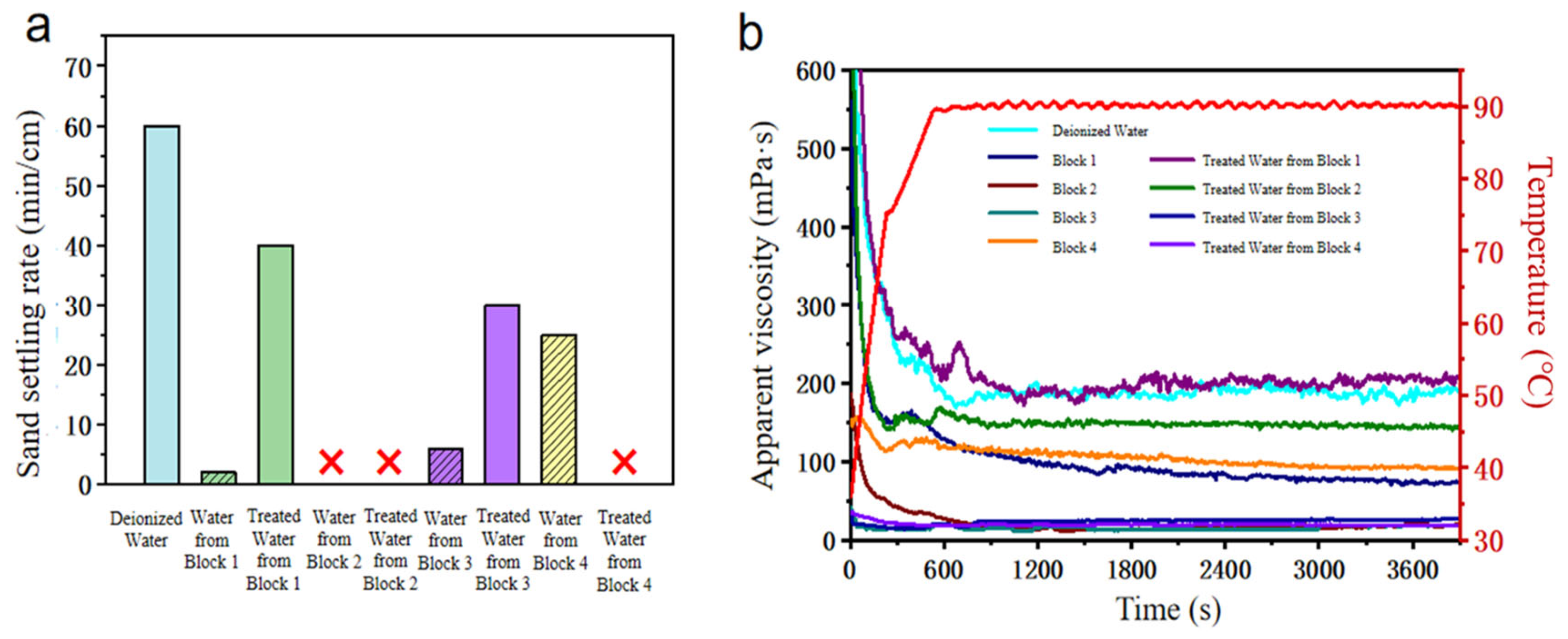
The sand-carrying performance, temperature resistance, and shear resistance of fracturing fluids prepared directly from flowback fluids of four blocks were further analyzed in
Figure 1a. Due to the high salinity of the flowback fluids, guar gum failed to form crosslinking effectively, leading to a significant reduction in sand-carrying performance for fracturing fluids prepared with untreated flowback fluid. Specifically, under conditions of 90 °C and shearing at 170 s
−1 for 1 h, the guar gum fracturing fluid prepared with deionized water maintained an apparent viscosity above 200 mPa·s. Whereas fracturing fluids prepared with flowback fluid showed that multiple systems could not form stable gels. After shearing for 1 h, their viscosities were all below 20 mPa·s (
Figure 1b). The high salinity and metal ions in the flowback fluid inhibited the crosslinking of the guar gum system, leading to a significant decline in the rheological performance under high-temperature conditions.
This phenomenon was mainly attributed to the high salinity of the flowback fluid. Inorganic salt components inhibited effective inter-chain crosslinking of guar gum molecules, leading to a significant decrease in polymer chain solubility and structural stability. Compared to fracturing fluid prepared with deionized water, fracturing fluid prepared directly from flowback fluid showed obvious deterioration in both sand-carrying performance and temperature/shear resistance. Especially under high-temperature shearing conditions, the apparent viscosity of the flowback fluid-prepared system decreased significantly, making it difficult to meet the performance requirements for proppant suspension and transport within the formation. The fracture support effectiveness would be weakened, and fracture closure might occur. It was evident that regardless of whether the flowback fluid undergoes preliminary treatments like flocculation and sedimentation, the performance of the fracturing fluid system formed by compounding it with guar gum could not meet the practical needs of field operations, limiting the potential for practical application in fracturing fluid recycling.
2.2. Inhibitory Mechanisms of Key Flowback Fluid Components on Fracturing Fluid Performance
The high content of inorganic salt components in flowback fluid was one of the main factors limiting fracturing fluid recycling. According to data in
Table 2, the main cations in fracturing flowback fluid were metal cations, with iron (Fe
3+) and boron (B
3+) ion content being low. Anions mainly included chloride (Cl
−), sulfate (SO
42−), and bicarbonate (HCO
3−). In the preparation of guar gum fracturing fluid, sodium carbonate was typically used to adjust the pH value. HCO
3− converted to CO
32− under alkaline conditions. Since the concentration of CO
32− in the flowback fluid was low, the influence of HCO
3− on guar gum fracturing fluid performance could be neglected.
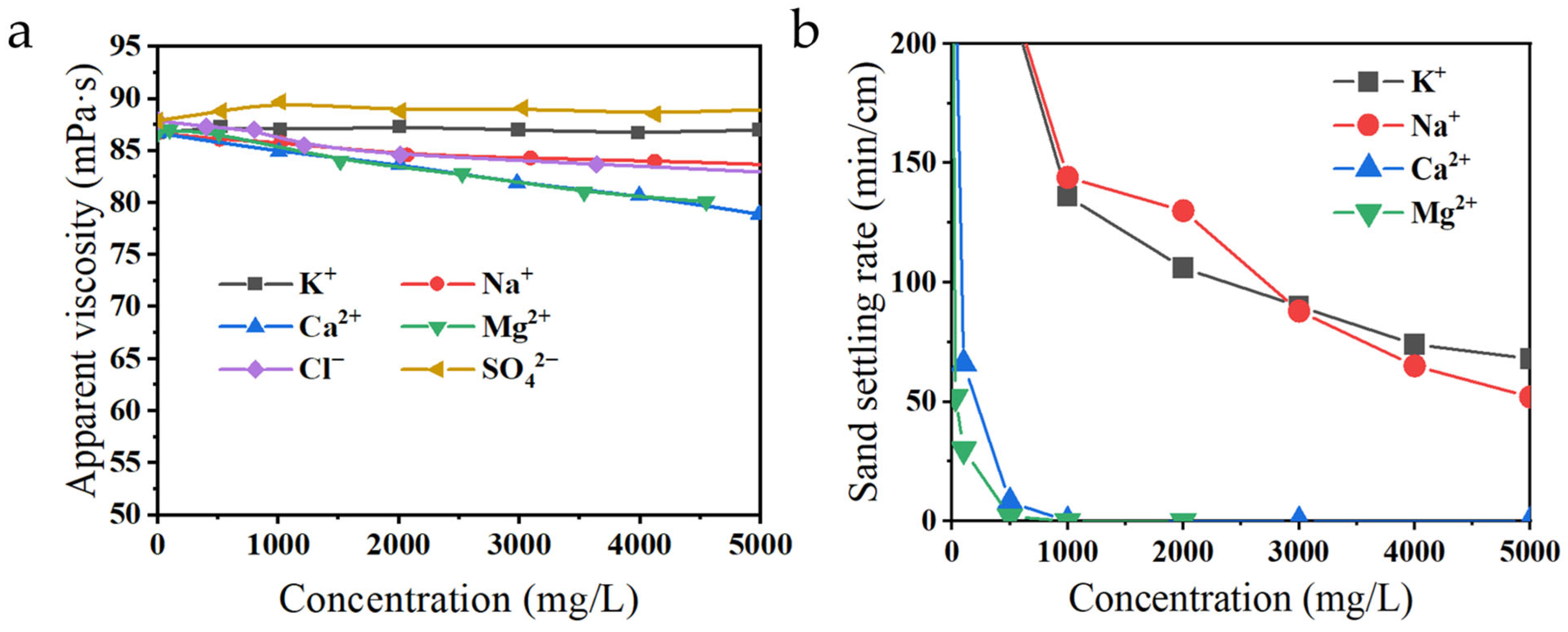
As shown in
Figure 2a, the apparent viscosity of guar gum fracturing fluid changed with the increase in ion concentration. When chloride (Cl
−) and sulfate (SO
42−) ion concentrations increased to 5000 mg/L, the change in fracturing fluid apparent viscosity was relatively small. It could be explained that guar gum, as a polysaccharide macromolecule, did not carry a positive charge on its polymer chain, and its six-membered ring repeating units possessed high rigidity and steric hindrance, limiting their interaction with anions. However, when the carboxyl groups in guar gum coordinated with metal cations in the flowback fluid, the originally extended polymer chains curled, leading to a decrease in the hydrodynamic volume of polymer, thereby reducing the solution viscosity. Consequently, as the metal cation concentration increased, the apparent viscosity of the fracturing fluid decreased significantly.
Figure 2b indicates that increasing cation concentration significantly reduced the sand-carrying capacity of the fracturing fluid, with Ca
2+ and Mg
2+ having a particularly pronounced effect. Polymer dissolution in water was an endothermic process. When water molecules form hydrated bonds with polymer chains, interactions within and between polymer molecules must be overcome. According to Collins’ law of matching water, in aqueous solutions containing metal cations, water molecules tended to bind more strongly to highly hydrated metal cations [
22]. Furthermore, the negatively charged parts of water molecules might engage in ion-dipole interactions with cations. Since water was a strong competitive solvent, metal cations could weaken intermolecular interactions between polymers. The presence of metal cations caused many water molecules to detach from polymer chains, inhibiting effective hydration of the polymer chains and preventing their full extension, which directly affected the supporting capacity for quartz sand.
Additionally, since commonly used polymers in fracturing fluids typically contain anionic carboxyl groups, metal ions bind to these carboxyl groups through electrostatic interactions, forming localized crosslinked structures. This process induced curling of the polymer chains and reduced the hydrodynamic volume, thereby weakening the thickening performance. Owing to the high concentration of inorganic salts and multivalent metal ions in flowback fluid, fracturing fluids prepared directly from such sources failed to meet the operational requirements of hydraulic fracturing.
Combining
Figure 2a,b, and Hofmeister series analysis, it could be concluded that the influence of metal cations on fracturing fluid performance was dominated by Mg
2+ and Ca
2+, whose effects were similar to each other and far exceeded those of Na
+ and K
+ [
23]. Ca
2+ and Mg
2+ in flowback fluid had similar effects, while Na
+ and K
+ had similar effects. Since the content of Mg
2+ and K
+ in the flowback fluid was relatively low, subsequent research would primarily focus on the influence mechanisms of Ca
2+ and Na
+ to improve the performance of fracturing fluids prepared from flowback fluid.
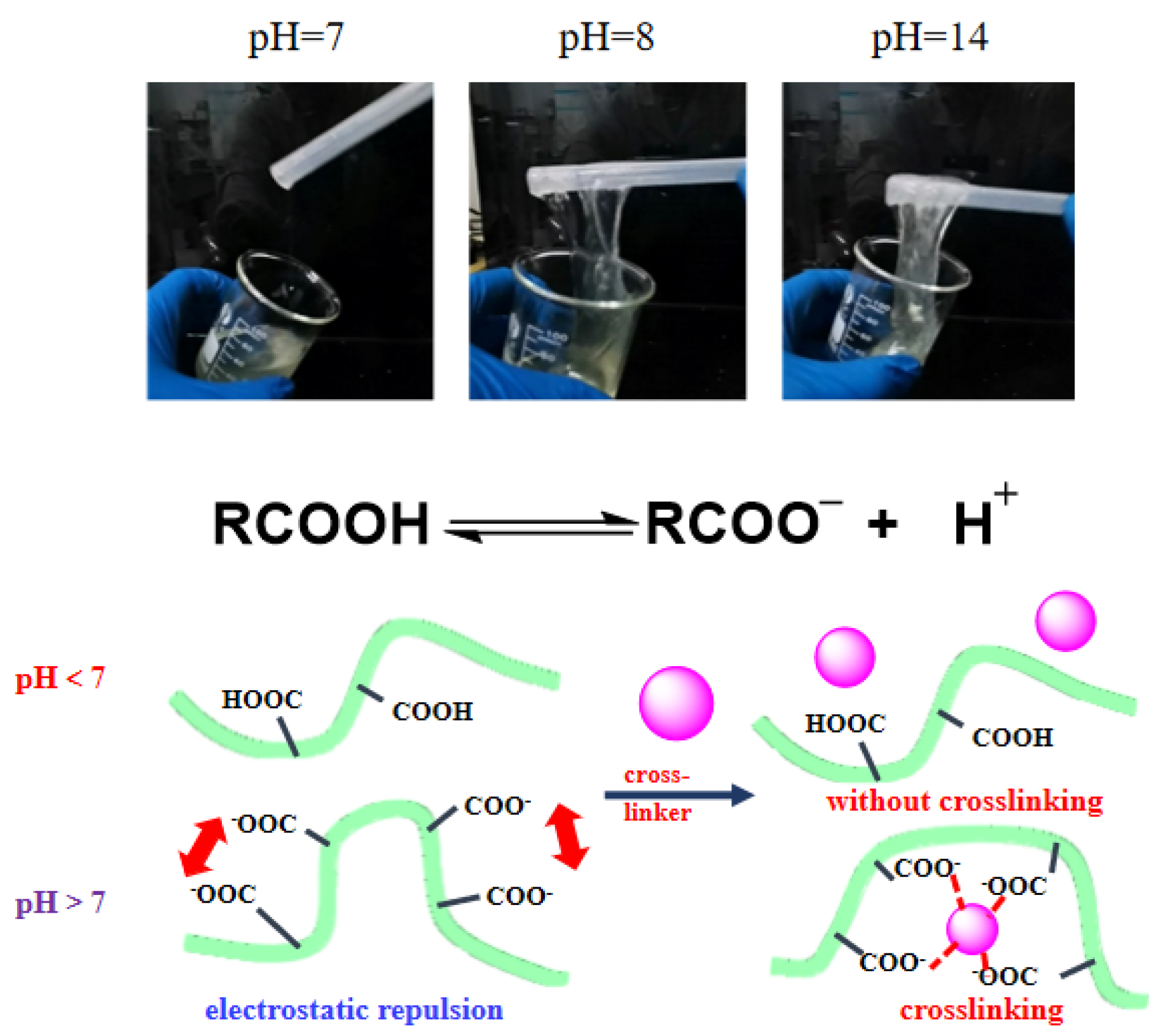
Combining the results from
Table 3 and
Figure 3, under acidic conditions, guar gum fracturing fluid could not form crosslinks, while under alkaline conditions, guar gum could form viscoelastic gels, which were crucial for fracturing fluid use. When preparing guar gum fracturing fluid, alkali should be added to adjust the pH value to promote crosslinking. Therefore, the weak alkalinity of flowback fluid had little effect on the pH and crosslinking of guar gum-based fluid, indicating that the pH of flowback fluid was not a major constraining factor for constructing flowback fluid recycling systems.
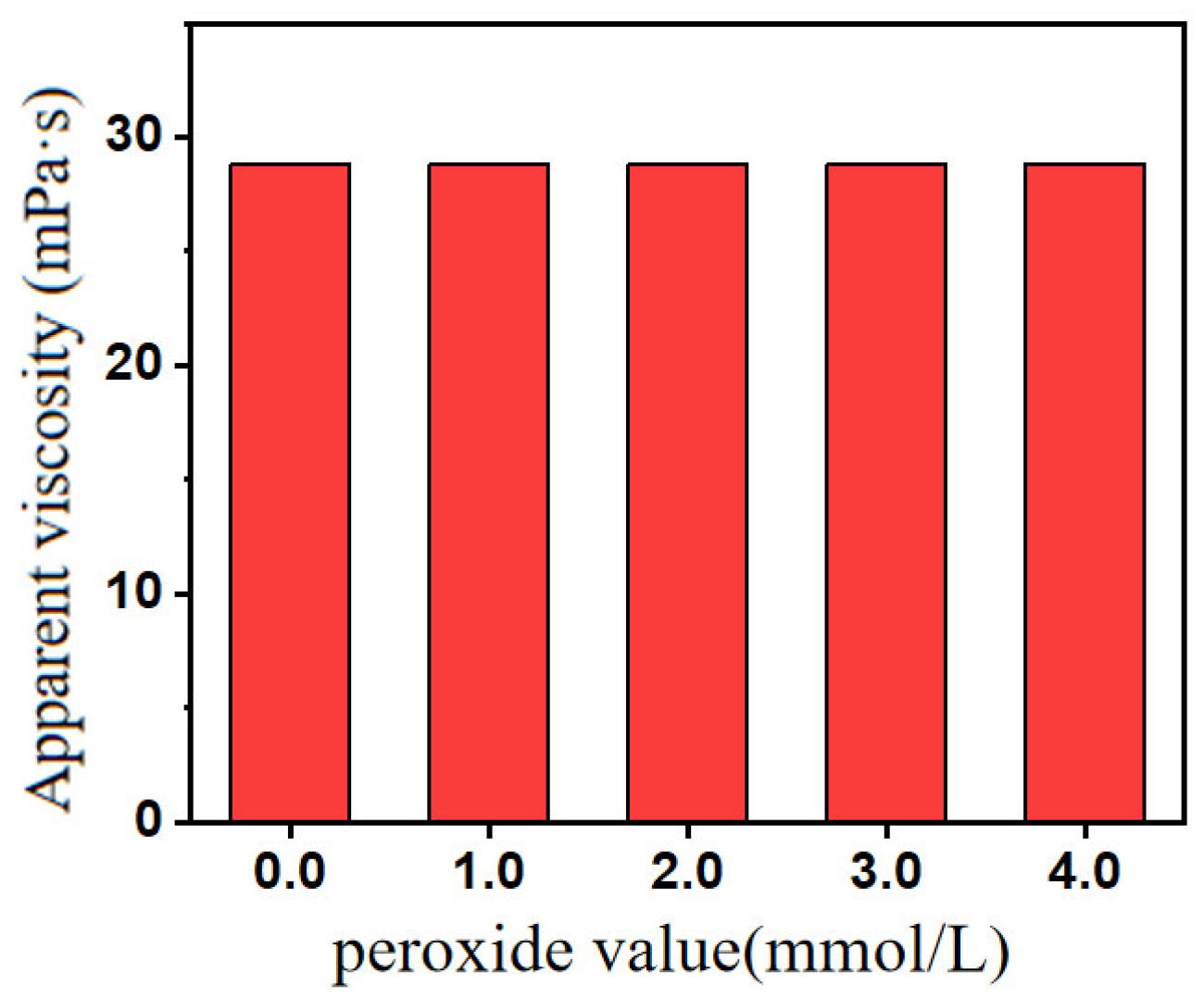
Peroxides (such as potassium persulfate, ammonium persulfate, and so on) were common initiators that could initiate monomer polymerization to form high molecular weight polymers.
Figure 4 showed that within the peroxide concentration range of 0 to 4.0 mmol/L, the apparent viscosity of the polymer base fluid for fracturing showed almost no significant change. The degradation of polymers by peroxides occurred when polymer chains absorbed oxygen under high-temperature conditions or were oxidized by peroxides to form peroxide bonds. Due to the instability, peroxide bonds easily decompose, releasing highly oxidative hydroxyl radicals and unstable oxygen radicals. These oxygen radicals continued to attack the polymer backbone, causing polymer chain scission, breaking down into smaller polymer fragments, and eventually degrading into small molecules [
24]. However, within the concentration range presented in fracturing flowback fluid, peroxides had almost no significant impact on the performance of the fracturing fluid system.
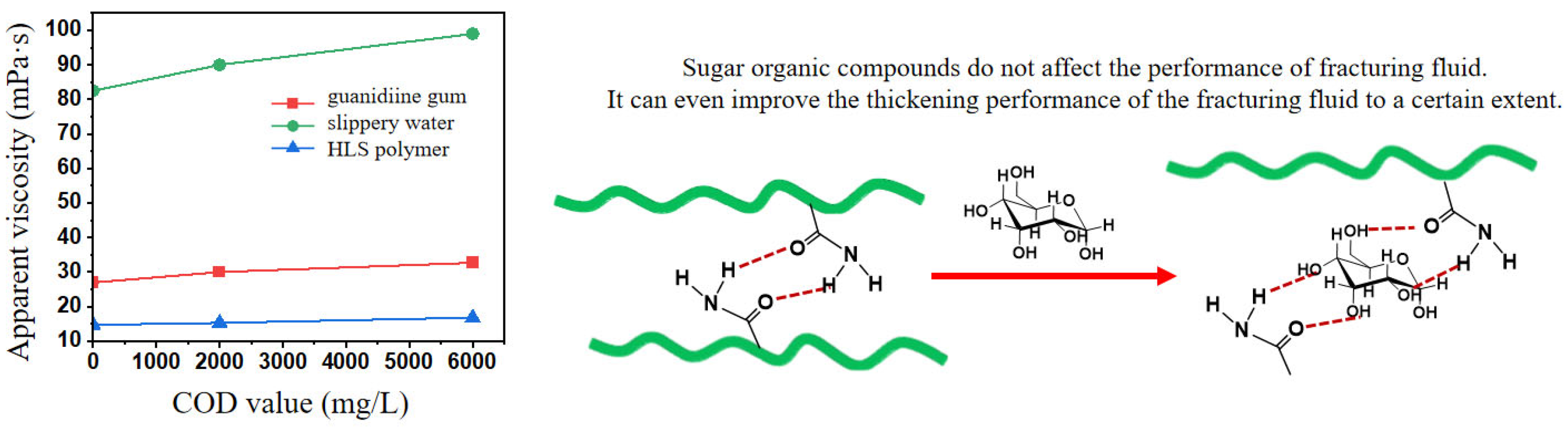
The COD value represented the concentration of reducing substances in water, reflecting the degree of organic pollution. As shown in
Figure 5, water samples with higher COD values did not significantly affect fracturing fluid performance. However, when water contained hydroxyl-rich sugar compounds like glucose, the apparent viscosity of the fracturing fluid base fluid increased. The most likely explanation was that hydroxyl groups in glucose formed hydrogen bond interactions with polymer chains, thereby strengthening the hydrogen bond network between polymers and subsequently increasing fracturing fluid viscosity [
25].
Under the multiple influences of inorganic salts, high-valent metal ions, peroxides, pH, and COD value, the high concentrations of Ca2+ and Na+ in flowback fluid were the core factors causing fracturing fluid performance degradation. Therefore, targeted regulation and design for these key ions were crucial. Although metal ion chelating and shielding agents were widely used to improve fracturing fluid performance in high-salinity environments, the effectiveness of using chelating agents to shield calcium ions was very limited. Adding metal chelating agents was an effective way to improve solubility and thickening performance; however, the sand-carrying performance of the fracturing fluid could not be restored completely under the influence of high-valent metal ions. As this approach did not significantly enhance fracturing fluid performance, the effectiveness of flowback fluid recycling was greatly limited. Therefore, further optimizing the shielding effect on metal ions in flowback fluid and enhancing the polymer’s own hydration capability has become a necessary choice for improving the recycling efficiency of fracturing flowback fluid in tight reservoirs.
2.3. Interfacial Regulation Mechanism Based on Molecular Design of Salt-Resistance Polymers
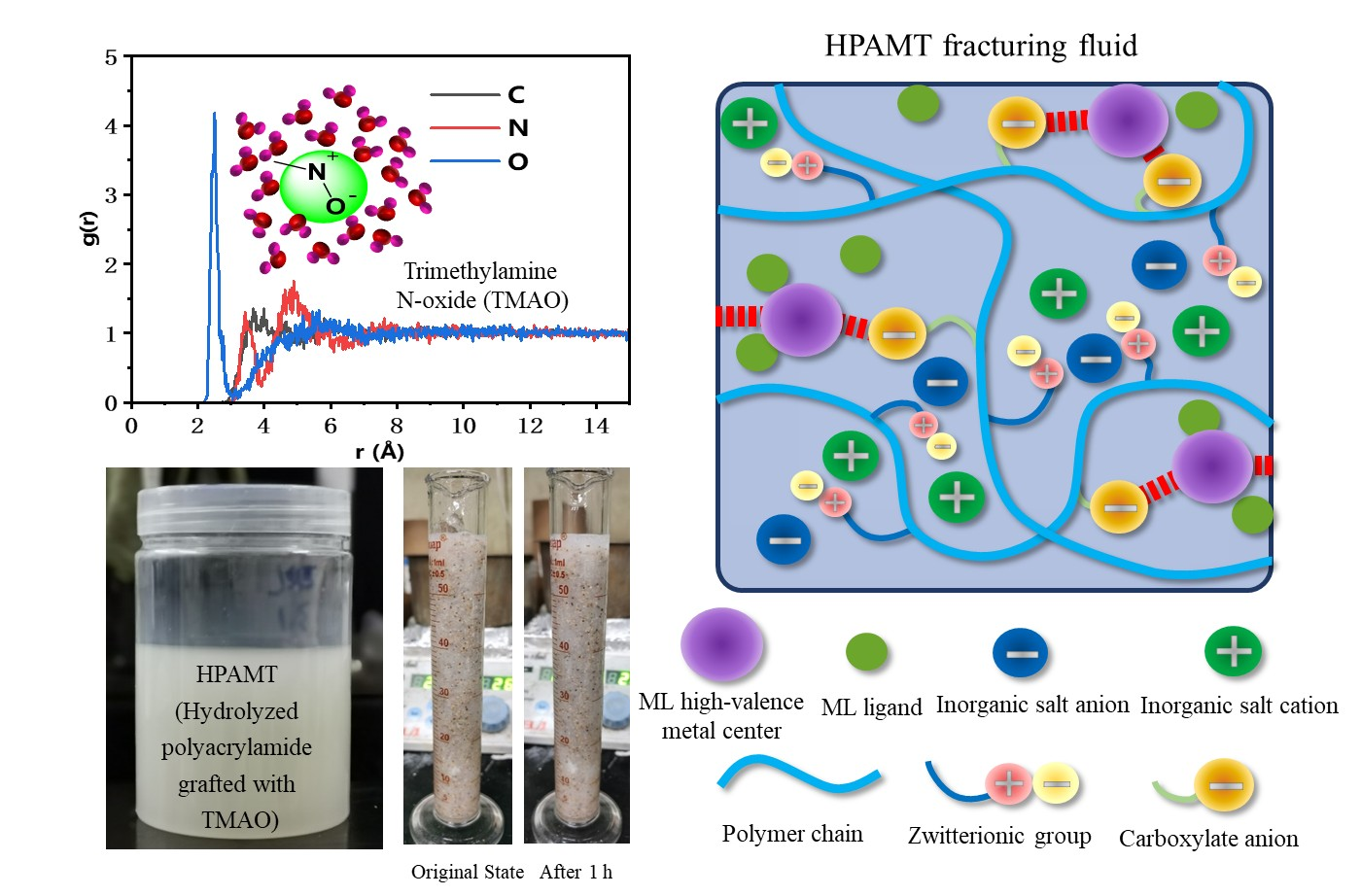
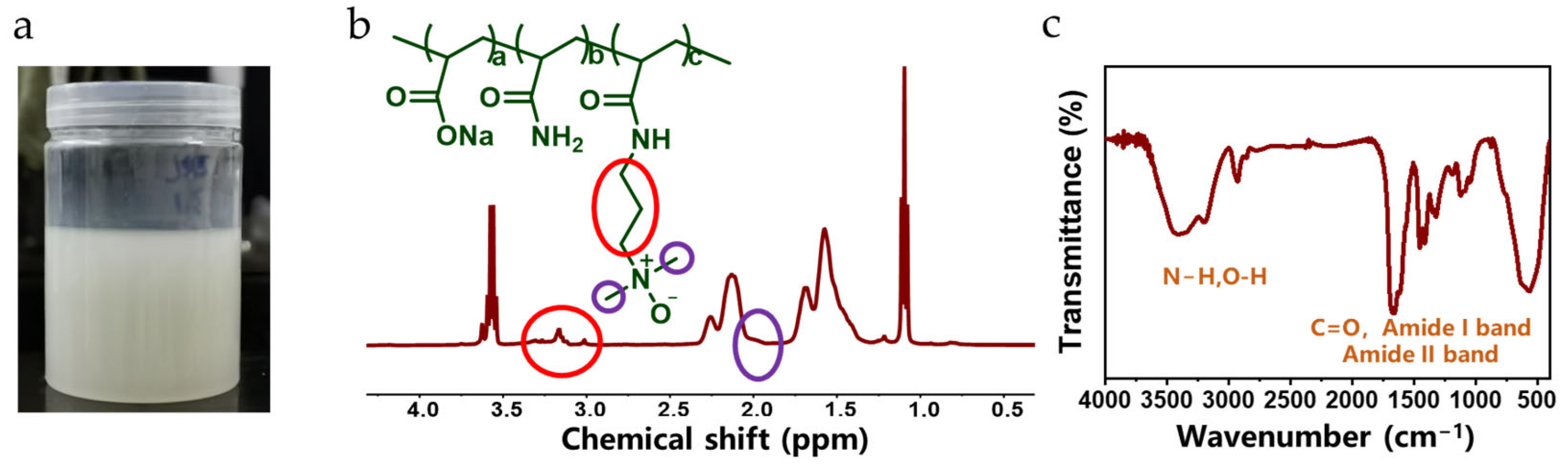
The hydration performance of polymers was enhanced by introducing strongly hydrating functional groups onto the polymer chains to counteract the inhibition of fracturing fluid performance by high-valent metal ions. Specifically, by introducing the TMAO group, a novel salt-resistant polymer, HPAMT, was successfully synthesized, as shown in
Figure 6a.
Figure 6b showed the
1H NMR spectrum of HPAMT. Chemical shifts δ = 1.36–1.77 and δ = 2.03–2.34 corresponded to proton peaks of the -CH
2- and -CH- groups on the HPAMT backbone. δ = 3.01 and δ = 3.17 corresponded to proton peaks of the -CH
2-CH
2-CH
2- group in the TMAO monomer. δ = 1.98 corresponded to proton peaks of the two -CH
3 groups attached to the nitrogen atom in the TMAO monomer.
Figure 6c showed the FTIR spectrum of HPAMT. The broad absorption band observed at 3300–3500 cm
−1 is assigned to the stretching vibrations of -OH and -NH
2 groups. The prominent peak at 1660 cm
−1 is attributed to the C=O stretching vibration (Amide I band) of the acrylamide units. The peaks at 2920 cm
−1 and 1460 cm
−1 are assigned to the C–H stretching and –CH
2– bending vibrations of the polymer backbone, respectively. Additionally, the characteristic absorption band at 1038 cm
−1 is definitively assigned to the N–O stretching vibration of the trimethylamine N-oxide (TMAO) motif, confirming the successful chemical incorporation of the zwitterionic structure into the HPAMT chain. Experimental results showed that characteristic absorption peaks in the NMR and FTIR spectra were consistent with the structure of HPAMT, and relevant absorption peaks of the TMAO functional group were clearly identified in the spectra, confirming the successful synthesis of HPAMT polymer.
In the zwitterionic structure of TMAO, positive and negative charges were connected by chemical bonds, rendering the molecule overall electrically neutral but exhibiting strong polarity in local regions [
26]. This structure endowed TMAO groups with strong hydration ability, effectively binding water molecules and forming a stable hydration layer. Additionally, TMAO groups could repel other contaminants, thereby enhancing interactions between polymer chains and water molecules. While maintaining electrical neutrality, the local polarity of TMAO groups significantly improved the hydration performance of polymer chains and enhanced the competitive ability for water molecules against metal ions, consequently improving polymer stability and performance in high-salinity solutions.
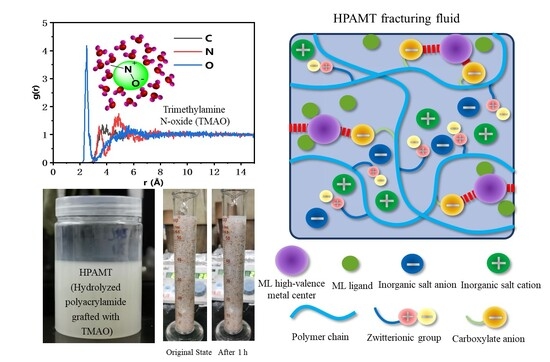
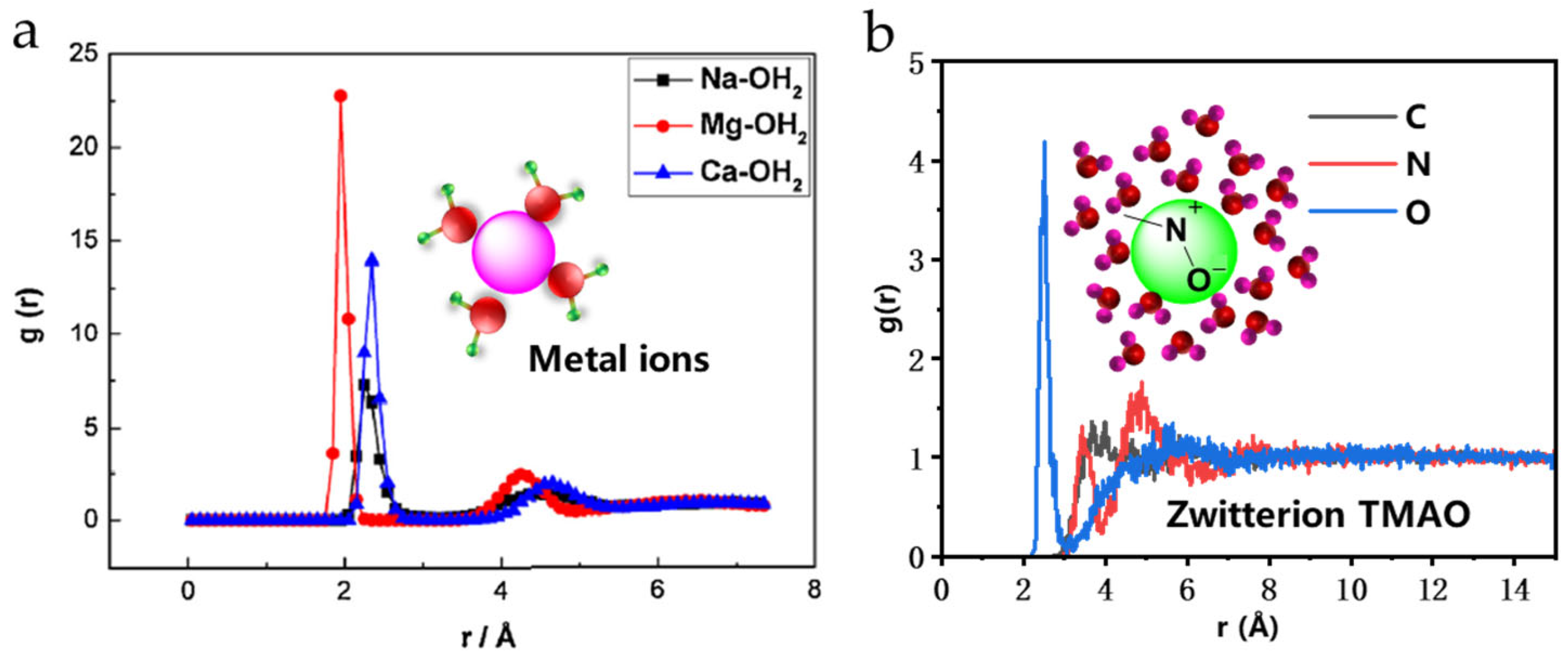
As shown in
Figure 7 and
Table 4, the radial distribution functions between metal ions, TMAO zwitterions, and water molecules in aqueous solution were calculated from molecular dynamics simulations. Simulation results showed that the first hydration shell of TMAO could bind 22.2 water molecules, far exceeding the 2 to 4 water molecules bound by metal ions. Furthermore, TMAO functional groups formed a hydration layer approximately 0.25 nm thick on the polymer chain surface, significantly shielding the adverse effects of metal ions in flowback fluid on fracturing fluid performance, thereby improving polymer stability and hydration performance in high-salinity environments.
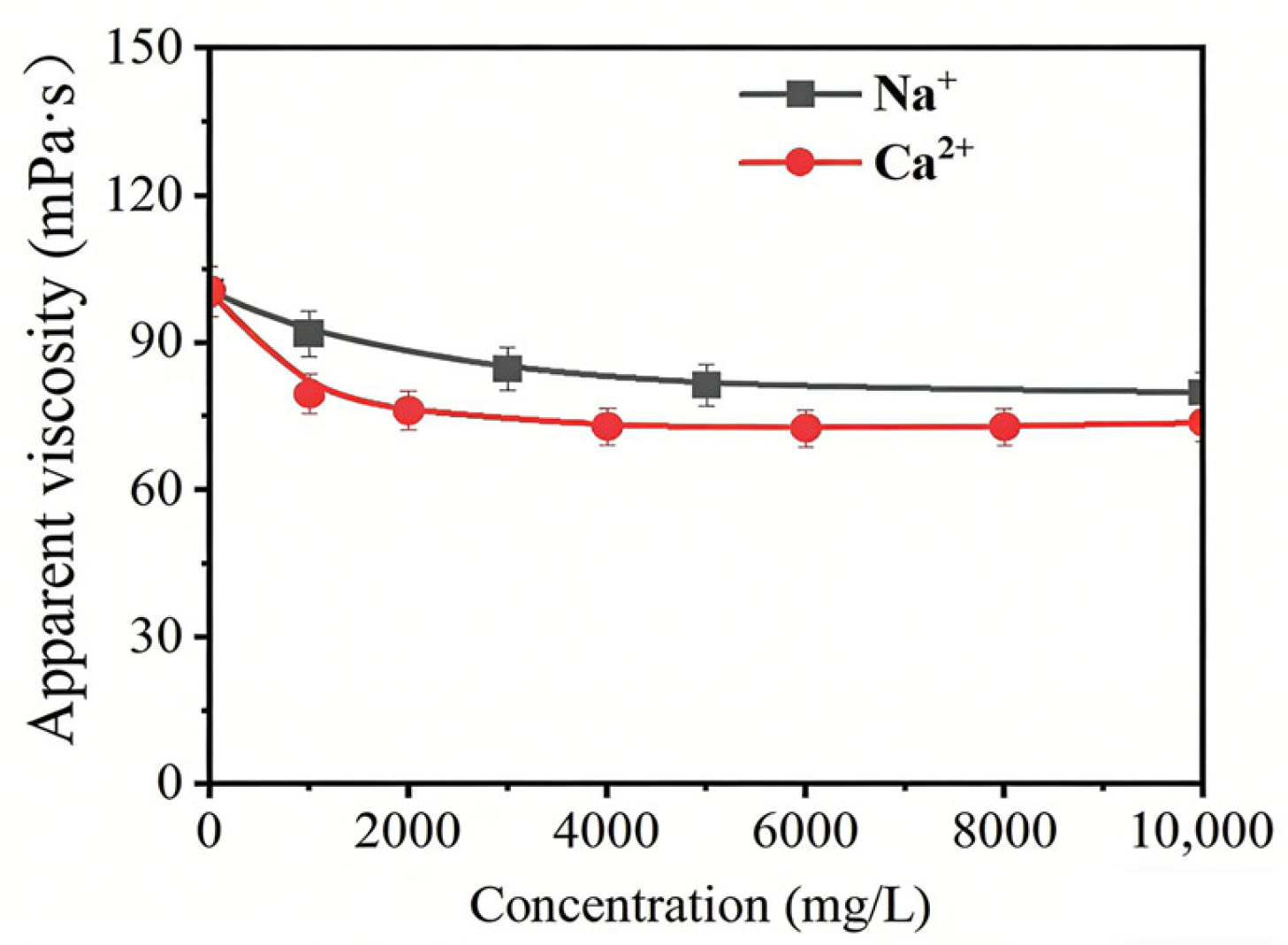
Then, the salinity resistance testing of HPAMT was conducted. Introducing the strongly hydrating structure of the TMAO group into the polymer chain not only significantly enhanced the hydration performance of the polymer but also effectively reduced competition from metal ions for polymer-bound water molecules, thereby improving the solubility and thickening performance of the polymer in high-salinity solutions. Consequently, the synthesized HPAMT exhibited excellent salinity resistance. Under conditions where Na
+ and Ca
2+ concentrations were gradually increased to 10,000 mg/L, the base fluid viscosity retention of 0.3% HPAMT consistently exceeded 70%, as shown in
Figure 8.
The structural origin of the enhanced salt tolerance observed for HPAMT was examined by considering multiple factors. The observed performance gains stemmed from a synergistic combination of the specific TMAO motif and the hybrid zwitterionic–anionic nature of the polymer. Among these, the TMAO motif was identified as the primary contributor to salt tolerance through its unique hydration capacity. Molecular dynamics simulations demonstrated that each TMAO group bound up to 22.2 water molecules and formed a dense hydration layer approximately 0.25 nm thick on the polymer chain surface (
Figure 7,
Table 4). This robust hydration layer effectively shielded the polymer backbone from ion-induced dehydration and chain collapse. The critical role of such hydration protection was underscored by the performance of conventional guar gum systems, which suffered severe viscosity loss and failed to form stable gels in high-salinity flowback fluids containing elevated Ca
2+ and Na
+ concentrations (as shown in
Figure 1 and
Table 1). In contrast, HPAMT retained more than 70% of its initial viscosity under comparable saline conditions (
Figure 8), directly demonstrating the effectiveness of the TMAO-mediated hydration shield. The hybrid zwitterionic–anionic nature of HPAMT played an essential complementary role. The incorporation of anionic carboxyl groups alongside the zwitterionic TMAO moieties enabled efficient coordination with crosslinkers to form a three-dimensional network, providing the structural integrity necessary for subsequent gel formation. Consequently, the TMAO motif dominated salt tolerance through its hydration shield, while the hybrid architecture ensured crosslinking capability. These features established the in situ molecular interface regulation that underpinned the direct recyclability of untreated flowback fluid.
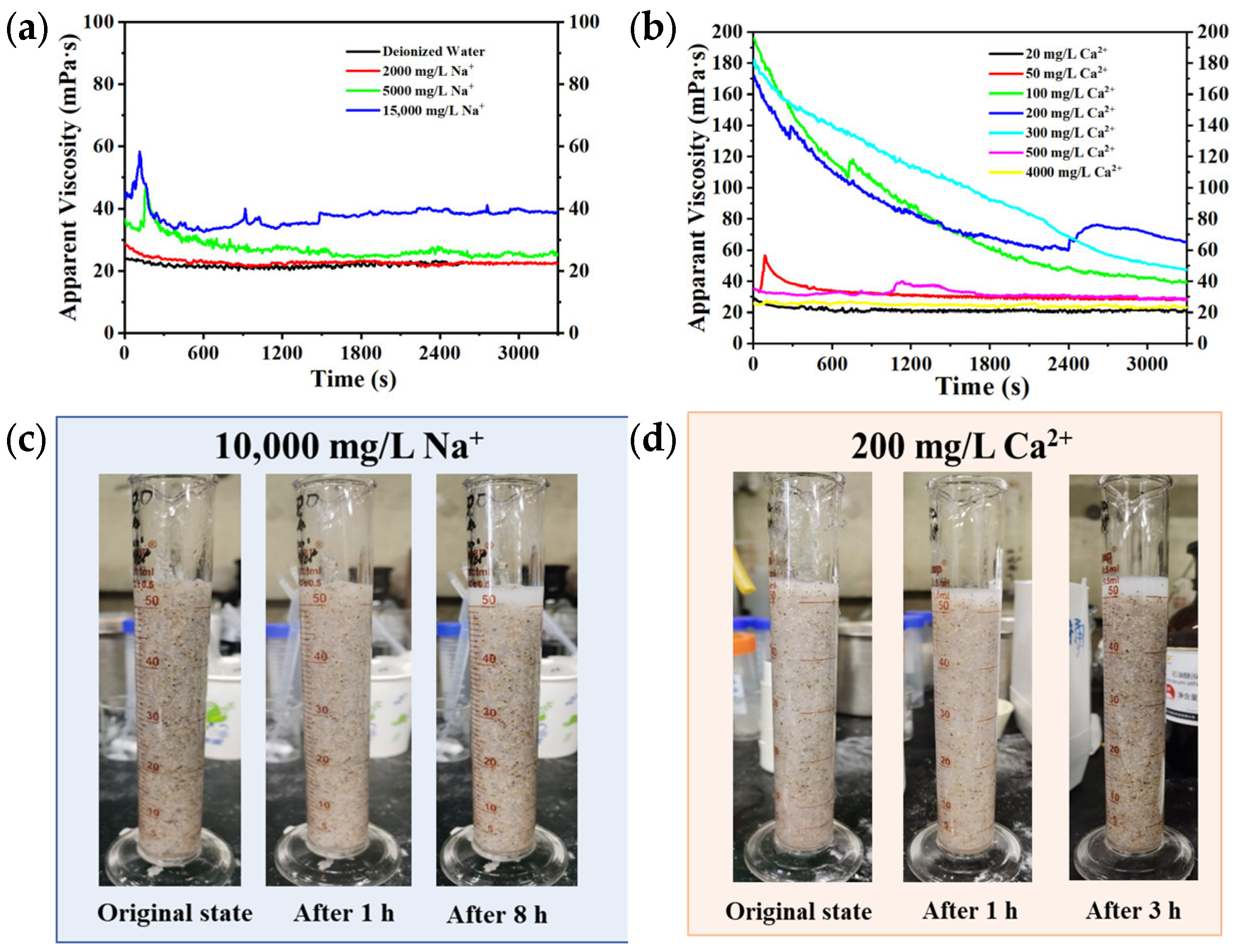
The strong polar dipole structure of the TMAO functional group promoted dipole–dipole interactions within and between polymer chains, thereby affecting polymer chain conformation. With increasing inorganic salt concentration, the strength, temperature resistance, and shear resistance of the HPAMT polymer gel significantly enhanced (as shown in
Figure 9a,b). Furthermore, after shearing at 90 °C and 170 s
−1 for 1 h, the HPAMT fracturing fluid still exhibited good static sand-carrying performance when cooled back to room temperature (
Figure 9c). These results indicated that the crosslinking of HPAMT fracturing was relatively uniform, and the formed gel performed well in terms of proppant dispersion and sand-carrying performance. Consequently, the significant enhancement of polymer fracturing fluid salinity resistance and shear resistance by the TMAO zwitterionic group could be demonstrated.
The performance of HPAMT was further contextualized by comparison with representative zwitterionic polymers reported in the literature, as shown in
Tables S1 and S2. Conventional sulfobetaine-based polymers, including PSBMA, exhibited the anti-polyelectrolyte effect; however, their coil expansion typically saturated at high ionic strength. These polymers remained vulnerable to divalent cations that disrupted hydration and induced chain collapse [
27]. In contrast, HPAMT retained more than 70% of its initial viscosity in flowback fluid containing up to 10,000 mg/L Ca
2+. At this concentration, many conventional zwitterionic or anionic polymers suffered from precipitation. This resilience was attributed to the exceptionally strong hydration layer formed by TMAO, as demonstrated in previous studies.
A hydrophobically modified zwitterionic polymer designated HPC-5 was developed for ultra-deep well fracturing applications (
Table S1). This polymer withstood high salinity (up to 10 × 10
4 ppm NaCl and CaCl
2) and elevated temperature (160 °C) [
28]. Under the milder testing conditions employed in the present work, with the temperature of 90 °C, HPAMT exhibited comparable viscosity retention and shear stability when prepared directly with untreated flowback fluid. This finding highlighted its suitability for tight reservoir applications. Another system, the rigid-backbone zwitterionic copolymaleimide ZI-PEMA, displayed continuous coil expansion in salt solutions and enhanced divalent salt solubility [
29]. Its behavior, however, was examined only in model brine solutions. In contrast, HPAMT was validated in real, untreated flowback fluid containing organic residues and multiple ionic species. Therefore, HPAMT represented a practical solution that combined the molecular-level hydration protection of TMAO with engineering feasibility for direct flowback recycling.
Typically, charged polymers exhibited polyelectrolyte behavior in aqueous solutions. As the inorganic salt concentration increased, the hydrodynamic volume of the polymer decreased. However, HPAMT, as a zwitterionic polymer, exhibited behavior different from traditional charged polymers. With the introduction of inorganic salts, the polymer coil size actually increased. This anti-polyelectrolyte effect was closely related to dipole–dipole pairing interactions between zwitterionic groups. Similar anti-polyelectrolyte behavior, characterized by chain expansion with increasing salt concentration, has been reported in various zwitterionic polymer systems, including copolymaleimides, imidazole-functionalized polymers for high-temperature drilling fluids, and ampholytic terpolymers [
30,
31]. Before introducing external inorganic salts, dipole–dipole pairing within the polymer chain caused chain contraction. The introduction of inorganic salt ions disrupted the pairing between zwitterionic groups on the polymer chain through electrostatic interactions. This disruption promoted chain extension, increased the hydrodynamic volume, and established an efficient ion shielding mechanism.
2.4. Engineering Compatibility Verification of the HPAMT-Enabled Untreated Flowback Fluid Recycling System
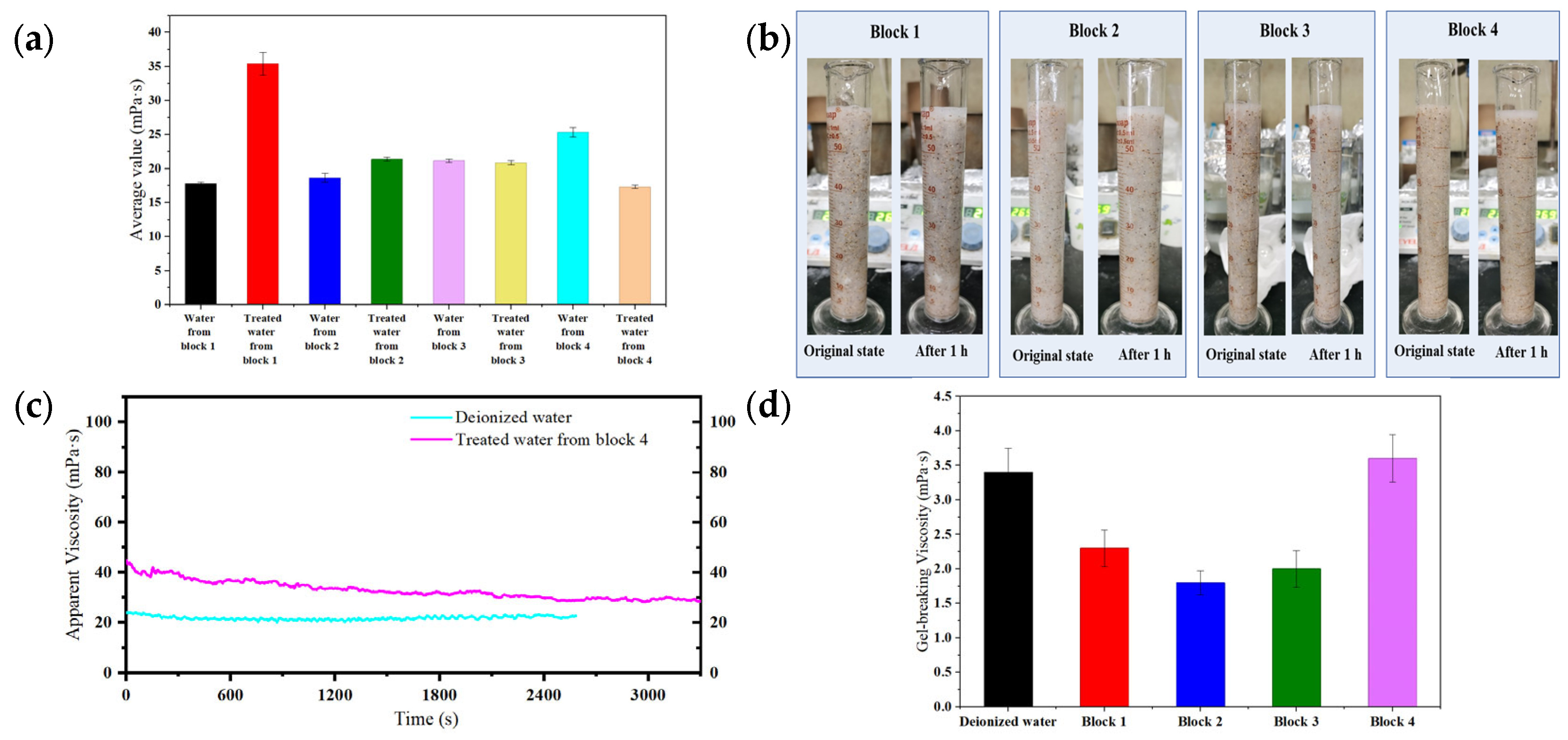
Performances of HPAMT fracturing fluid prepared with untreated flowback fluid were tested. As shown in
Figure 10a, the base fluid apparent viscosity of HPAMT in flowback fluids from each block was higher than 15 mPa·s, meeting the application requirements for fracturing fluids in tight oil reservoirs. Meanwhile, HPAMT dissolved rapidly within 5 min when prepared with flowback fluid, with no flocculation or precipitation observed, indicating good compatibility between HPAMT and flowback fluid. It was worth noting that untreated flowback fluid contained a certain concentration of suspended solids. These particles were considered to contribute to the internal structural strength of the gel, particularly enhancing the low-shear viscosity through particle-polymer interactions. The zwitterionic motifs in HPAMT may have further stabilized these interfaces, ensuring that the presence of solids did not lead to detrimental phase separation. This observation supported the feasibility of the pretreatment-free recycling strategy.
Figure 10b showed the sand-carrying performance of HPAMT fracturing fluids prepared directly from untreated flowback fluids of each block. Results showed that fracturing fluids prepared with flowback fluid possessed excellent static sand-carrying performance, with static sand-carrying times all exceeding 1.0 h/cm. The experimental data were compared with the theoretical Stokes’ settling model to further understand the proppant suspension mechanism. For 20/40 mesh proppant, the calculated theoretical settling velocity in a 200 mPa·s Newtonian fluid was significantly faster than the experimental observations. This deviation indicated that the HPAMT gel provided structural support beyond simple viscous drag, likely due to the elastic network formed by the zwitterionic TMAO side groups, which effectively resisted proppant sedimentation under static conditions.
The temperature resistance, shear resistance, and broken gel viscosity of HPAMT fracturing fluid prepared with untreated flowback fluid are shown in
Figure 10c,d. The HPAMT fracturing fluid exhibited excellent temperature resistance and shear resistance. During the heating stage from 25 °C to 90 °C, the viscosity curves were smooth without abrupt changes, mainly attributed to the effective inhibition by the TMAO hydration layer of polymer chain dehydration-induced coiling under high-temperature conditions. The smooth viscosity profile of HPAMT gel fracturing fluid under continuous shear indirectly reflected a high degree of structural integrity, preventing local stress concentration and premature network failure. The viscosity reduction observed at 90 °C was interpreted as a synergistic result of multiple factors. Thermal dissociation of coordination bonds between HPAMT and the crosslinker occurred, where increased thermal energy shifted the dynamic equilibrium toward a dissociated state. The enhanced molecular mobility of the polymer chains led to a reduction in entanglement density through reptation dynamics. Additionally, an intrinsic decrease in zero-shear viscosity (η
0) followed an Arrhenius-type relationship with temperature. Notably, the TMAO motifs established a robust “hydration atmosphere” that acted as a thermal buffer, stabilizing the polymer backbone and delaying the catastrophic breakdown of these physical and chemical networks. As a result, the HPAMT fracturing fluid retained more than 90% of its initial viscosity after 60 min of shear at 90 °C, outperforming conventional fracturing fluid systems that lacked. For fracturing fluids prepared with untreated flowback fluids, after shearing for 1 h, the broken gel viscosity consistently remained below 5 mPa·s. The electrically neutral nature of the TMAO group effectively reduced adsorption within the formation, indicating that the low viscosity characteristic of HPAMT was beneficial to mitigate damage caused by liquid phase retention. Simultaneously, the electrically neutral design inhibited clay swelling, significantly reducing the comprehensive permeability damage rate. As shown in
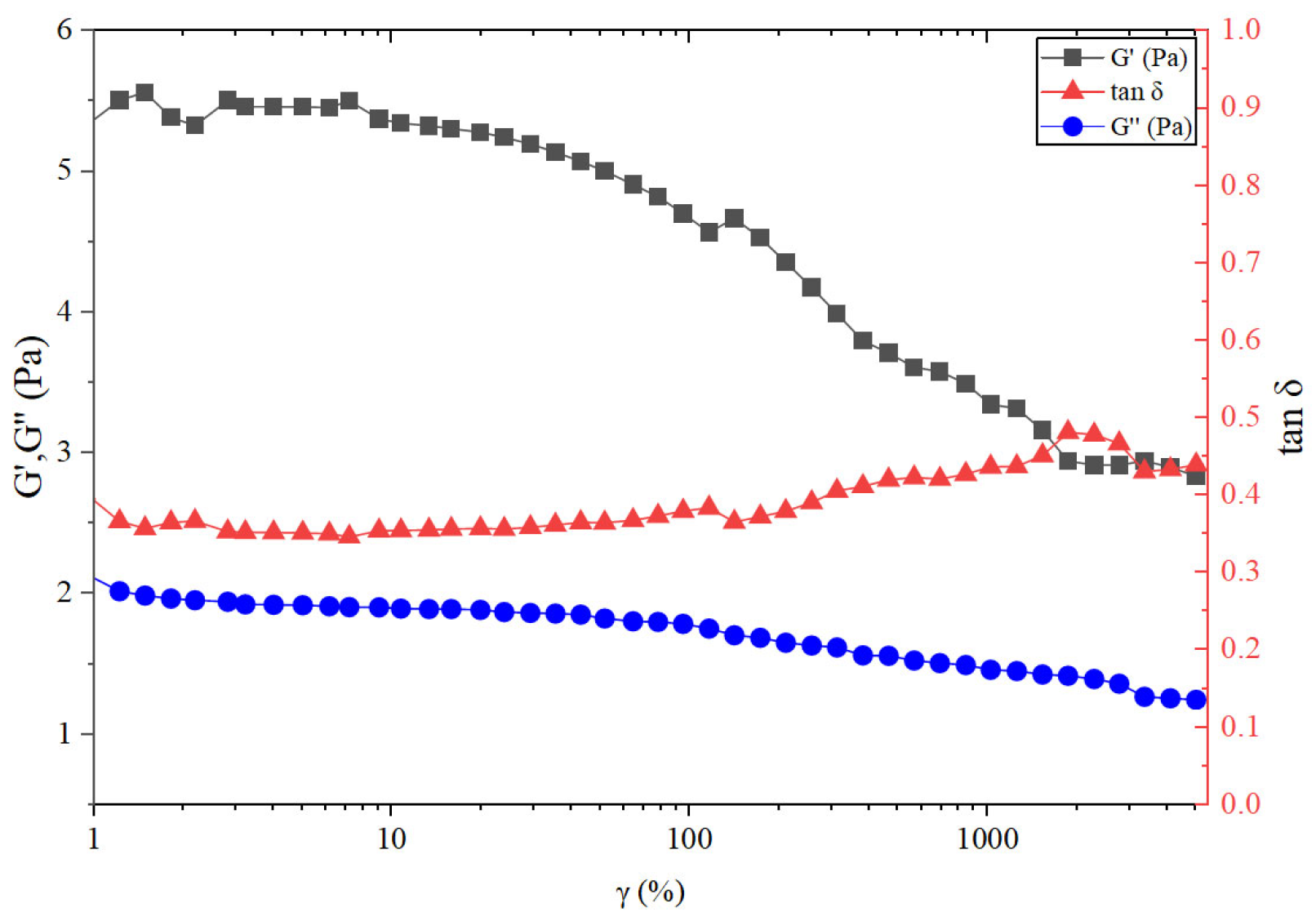
Figure 11, the elastic modulus G′ of the HPAMT consistently exceeded the viscous modulus G″, with tan
δ values below 0.5. This behavior confirmed the formation of a stable, elastic-dominated gel network. Moreover, the relatively low frequency dependence of G′ indicated a homogeneous crosslinking structure without significant relaxation processes. This provided direct experimental evidence for the uniform gel network previously inferred from the smooth viscosity plateau in
Figure 10c.
HPAMT demonstrated broad compatibility with various untreated flowback fluids. The base fluid viscosities were greater than 10 mPa·s in all cases, and they could directly form gels without pre-treatment. The HPMT fracturing fluid exhibited static sand-carrying time exceeding 60 min/cm, thereby overcoming the conventional reliance of fracturing flowback fluid recycling on intensive pretreatment. Economic evaluation indicated that the direct reuse scheme of HPAMT eliminated steps like flocculation, filtration, and desalination, compressing treatment costs to 30% of traditional processes. Taking single-well consumption of 5000 m3 of flowback fluid as an example, Pre-treatment-free recycling of flowback fluid could save approximately 1.2 million RMB in freshwater procurement and wastewater treatment costs. This estimate was based on current field practices in the Daqing Oilfield, where the reuse of flowback fluid eliminated the need for advanced treatment and discharge, saving 210 RMB per cubic meter, reduced storage-related expenses by 20 RMB per cubic meter, and substituted freshwater typically used for fracturing fluid preparation, saving an additional 10 RMB per cubic meter. These combined savings amounted to 240 RMB per cubic meter of flowback fluid reused. While these figures reflected local conditions at the time of analysis, actual savings may vary depending on site-specific factors and regulatory requirements. The results demonstrated significant economic benefits alongside good environmental performance and engineering feasibility.
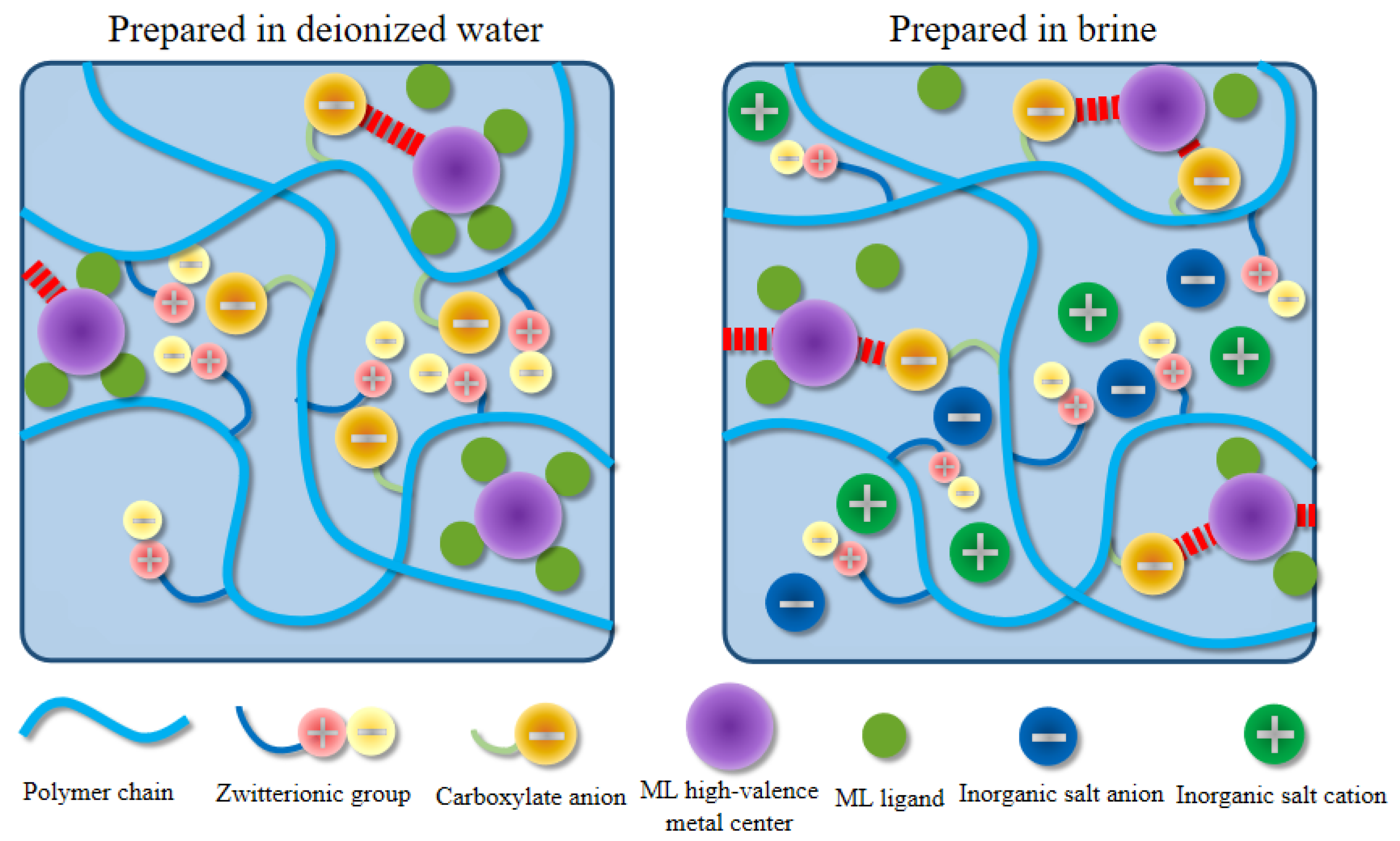
By introducing zwitterionic functional side groups onto the polymer chain, HPAMT gel exhibited properties different from conventional zwitterionic polymers. Dipole–dipole pairing between TMAO groups formed interactions within and between polymer chains. However, unlike pure zwitterionic polymers, the polymer chain of HPAMT also contained anionic carboxyl groups, imparting additional net charge to the polymer chain [
32,
33]. Under application conditions of weakly alkaline, the anionic carboxyl groups carried a negative charge, which might disrupt the dipole–dipole pairing between TMAO zwitterions, instead forming interactions between carboxylate anions and the zwitterions. Nevertheless, due to factors like the steric hindrance of the carboxylate anions, segments of the polymer chain containing zwitterionic side groups could still form dipole–dipole pairs, causing a certain degree of conformational coiling in the polymer chain. This curling effect could influence the strength of the crosslinking network between carboxylate anions and the crosslinking agent. The structural recovery of the HPAMT gel was critical for its performance in tight reservoirs. Given that the crosslinking was based on reversible coordination and dipole–dipole interactions, the HPAMT system exhibited significant thixotropic characteristics. Upon cessation of high-shear pumping, the dissociated polymer segments could rapidly reorganize into a three-dimensional viscoelastic network. This rapid structural recovery was indirectly evidenced by the sustained sand-carrying capacity observed after long-term shear (
Figure 9c), ensuring that the proppant remained uniformly distributed within the hydraulic fractures.
When external inorganic salts or high-valent metal ions were present, the inorganic salts replaced the role of carboxylate anions in disrupting the dipole–dipole pairing of zwitterionic groups. Simultaneously, influenced by the anti-polyelectrolyte effect, partially coiled polymer chains extended. The encapsulated carboxylate anions were exposed, and the crosslinking between carboxylate anions and the coordination crosslinker was better.
Figure 12 illustrates the excellent performance of the developed HPAMT polymer in terms of salinity resistance and shear resistance, along with the good compatibility with flowback fluid.




 ,
,