

Silica- and Titanium-poly(ethylene glycol) Hydrogels—Novel Matrices for Bacterial Cell Immobilization
 , , , , , and
Abstract
1. Introduction
2. Results and Discussion
2.1. Structural and Functional Characteristics of Si-PEG and Ti-PEG Hydrogels
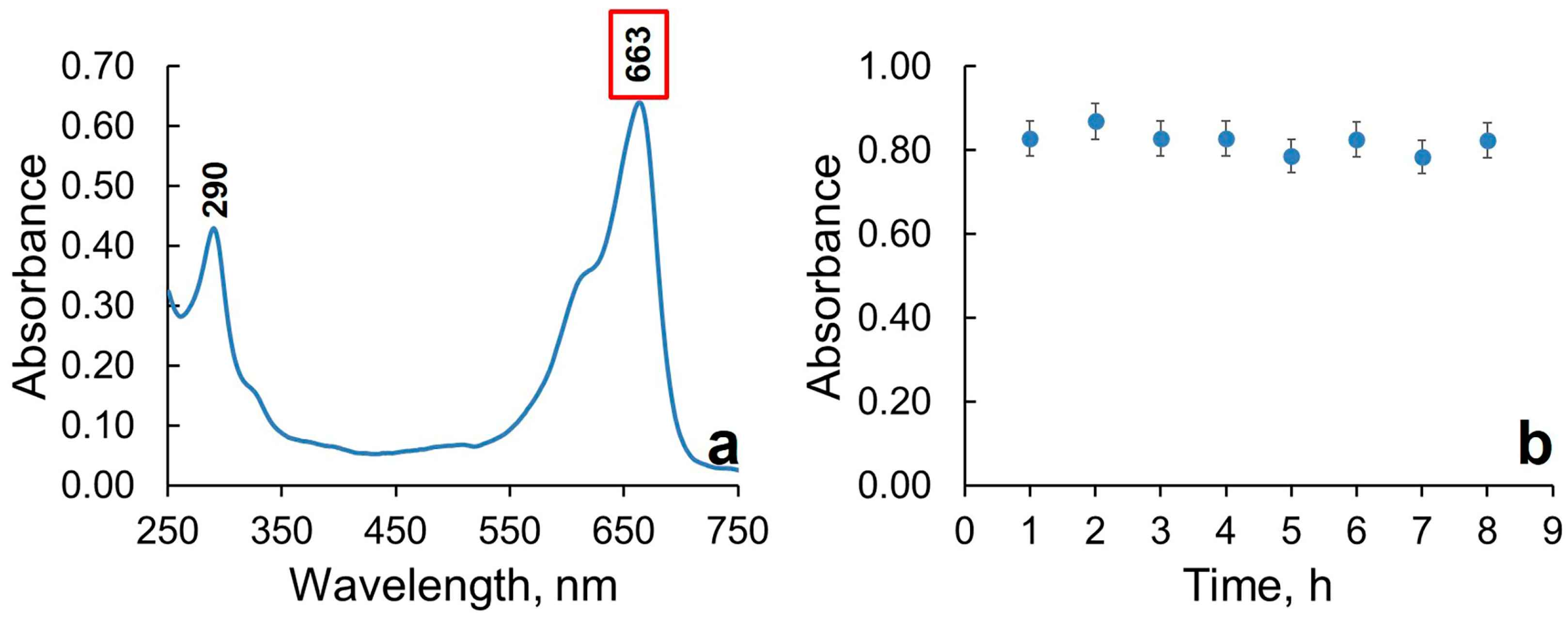
2.2. Photoactivity of Ti-PEG-Based Hydrogel Toward to Methylene Blue
2.3. Evaluation of the Efficacy of Bacterial Immobilization in Si-PEG- and Ti-PEG-Based Hydrogels
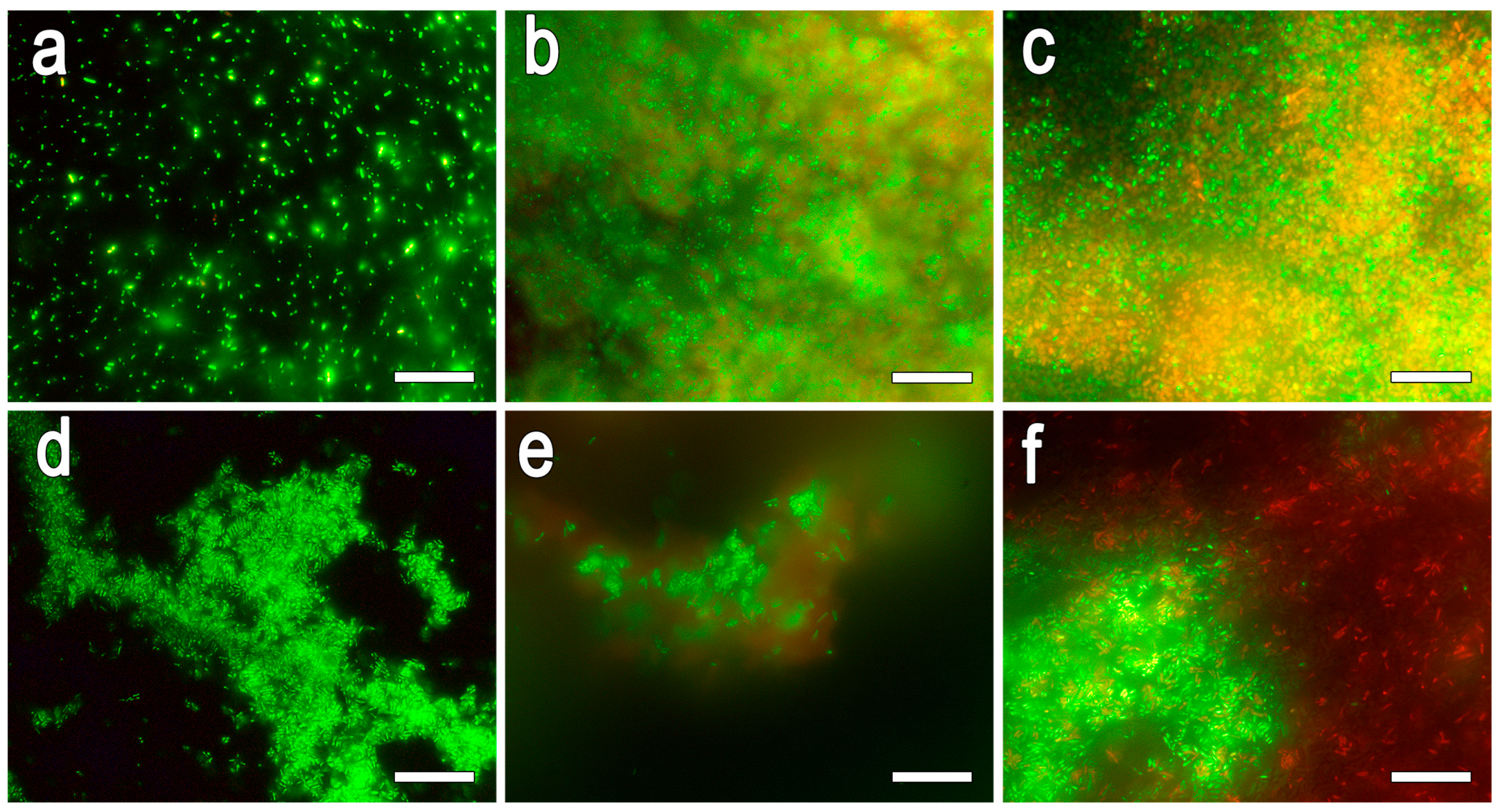
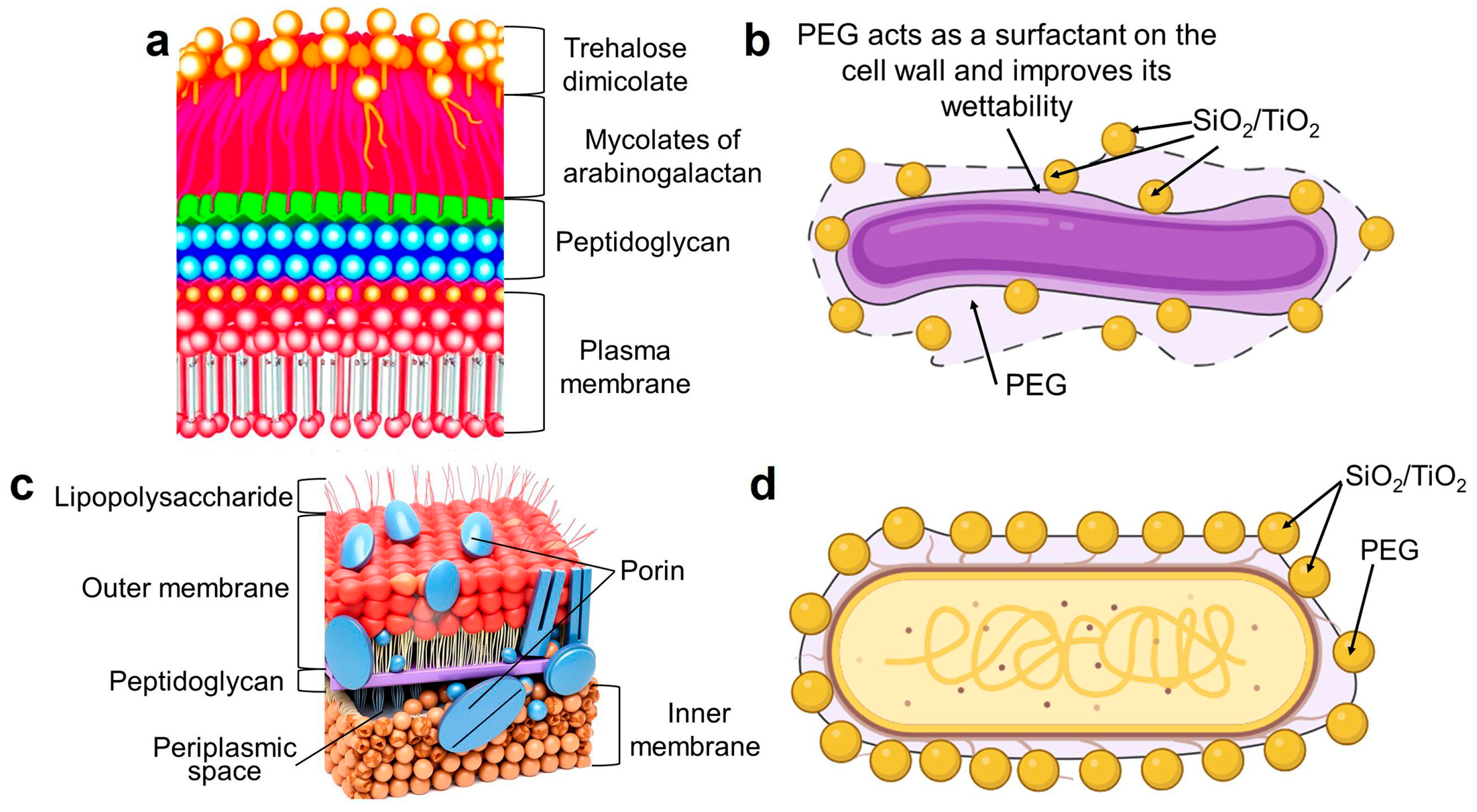
2.4. Studies on the Antimicrobial Properties of Hydrogels and Their Components
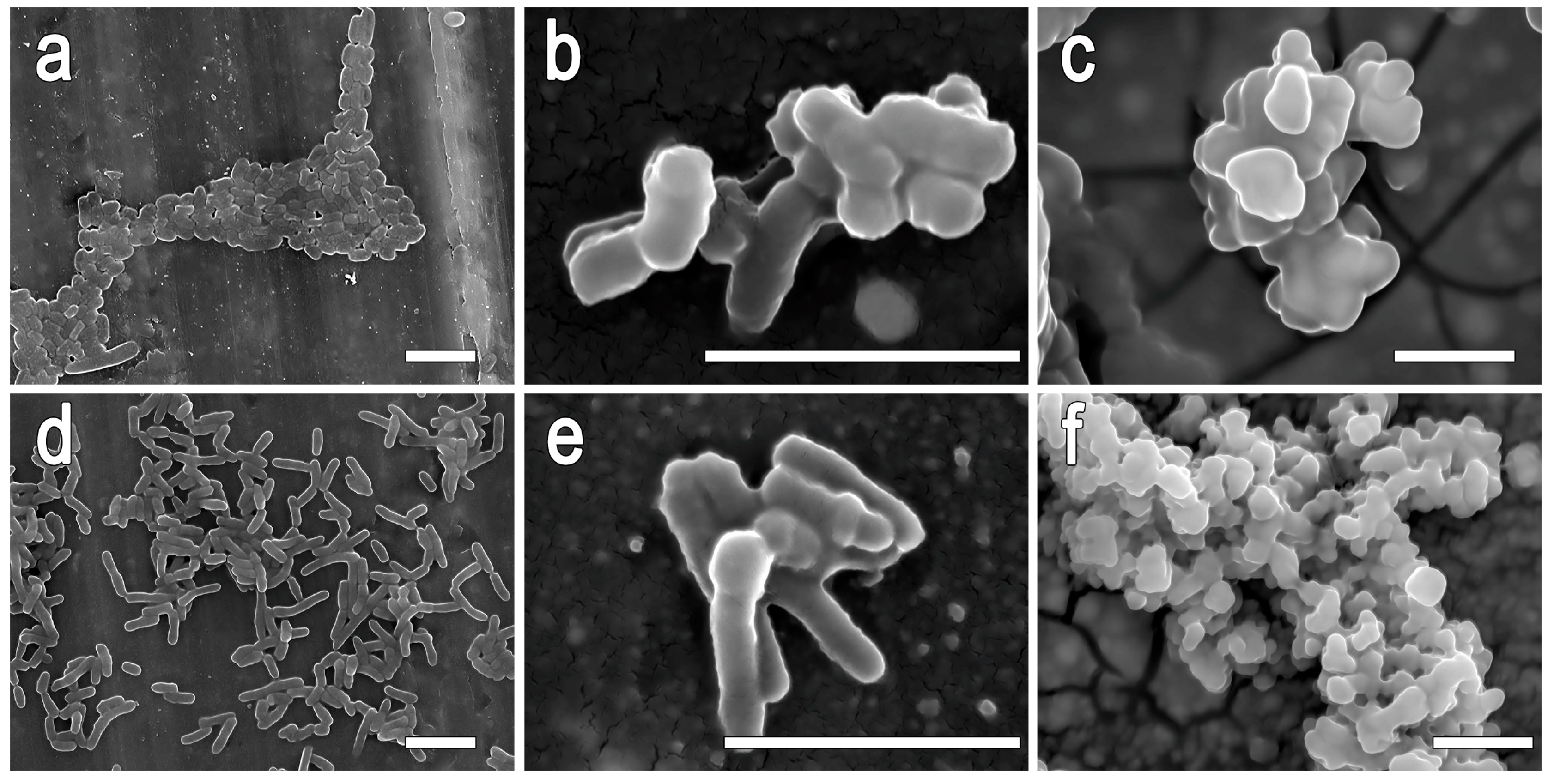
2.5. Investigation of the Morphology of Biohybrid Materials—Immobilized Bacteria in Hydrogels
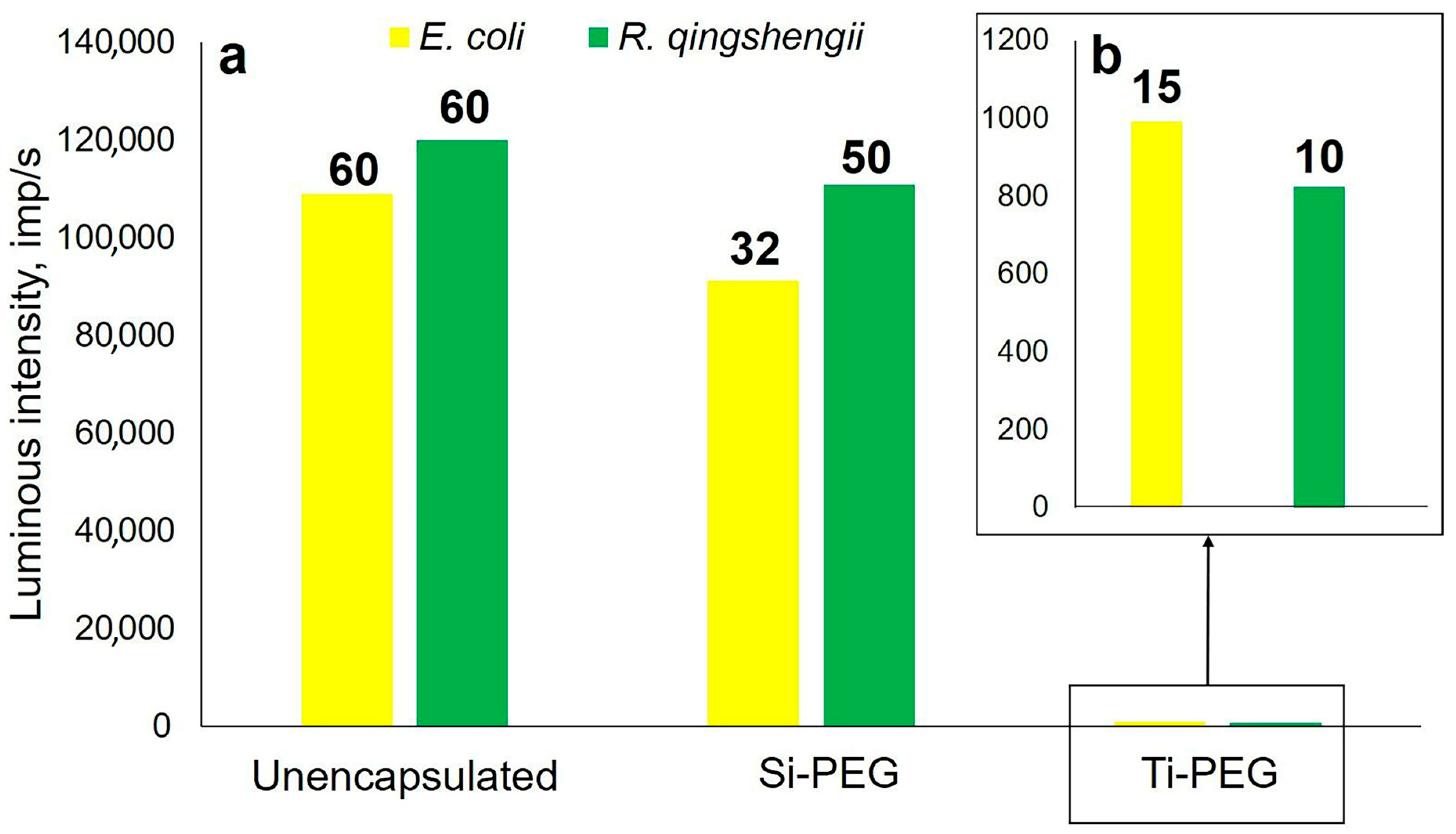
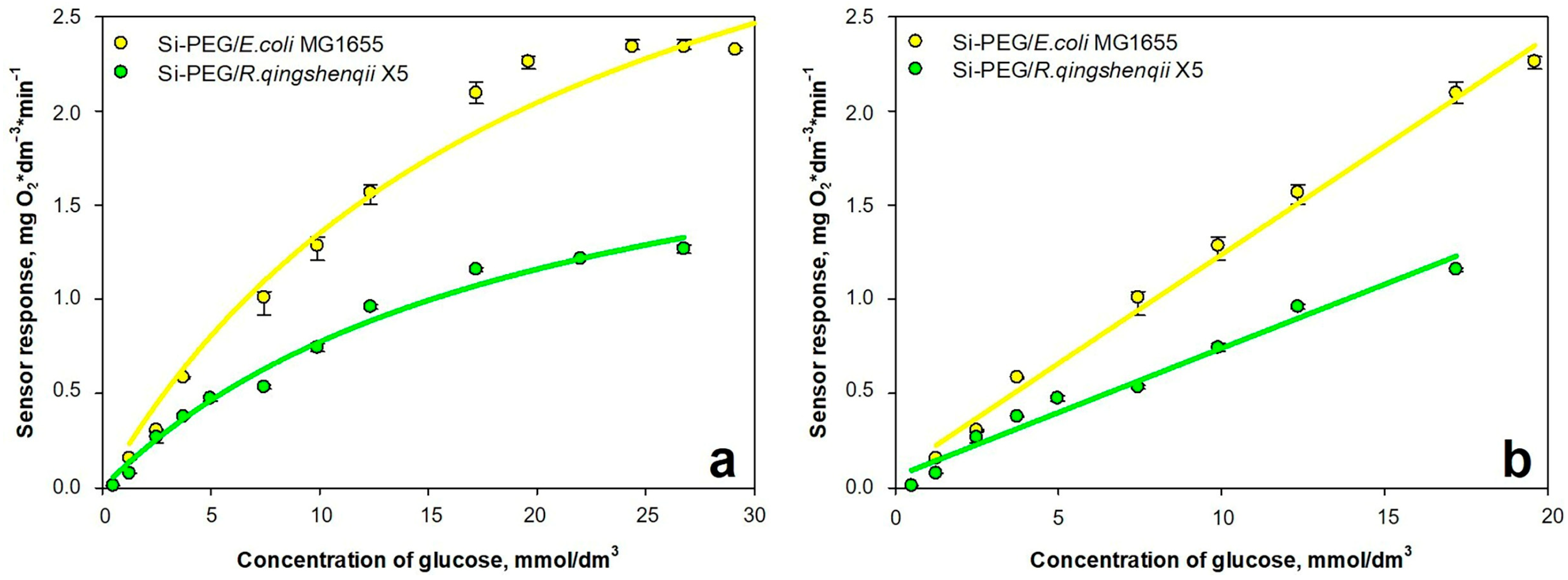
2.6. Catalytic Activity of Encapsulated Bacteria in Hydrogels
3. Conclusions
4. Materials and Methods
4.1. Cell Cultivation
4.2. Synthesis Hydrogels and Biohybrid Materials Based on Silicon and Titanium Polyolate Compounds
4.3. Vibrational Spectroscopy and Thermogravimetric Analysis of Hydrogels
4.4. Photocatalytic Activity of the Ti-PEG-Based Hydrogel
4.5. Effectiveness of Bacterial Encapsulation
4.6. Evaluation of the Viability of Encapsulated Bacteria
4.6.1. Diffusion in Agar Method
4.6.2. Fluorescence Microscopy
4.7. Surface Morphology of the Biohybrid Materials—Immobilized Microorganisms in Si- and Ti-Polyolate-Based Hydrogels
4.8. Catalytic Activity of Immobilized Bacteria
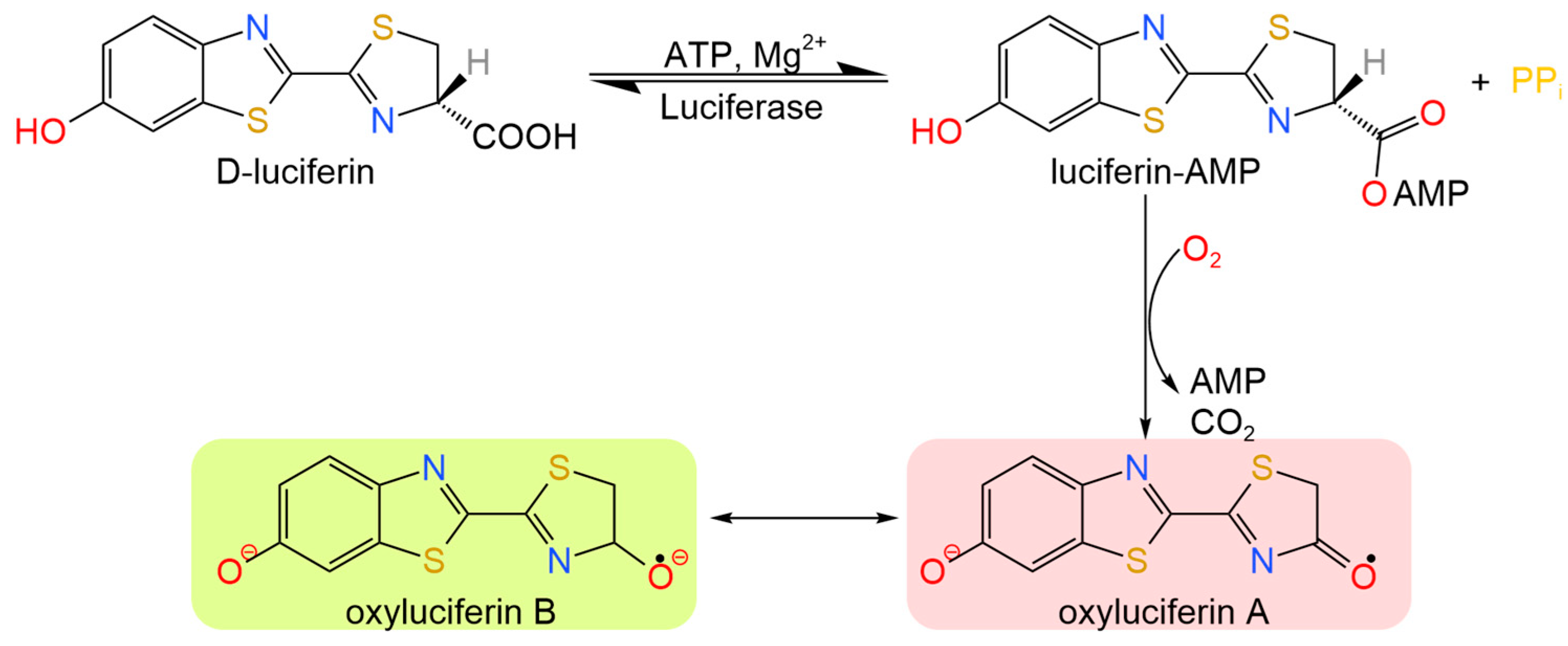
4.8.1. Bioluminescent Method for Determination of Intracellular ATP
4.8.2. Biosensor Approach
Author Contributions
Funding
Institutional Review Board Statement
Informed Consent Statement
Data Availability Statement
Acknowledgments
Conflicts of Interest
Abbreviations
| Si-PEG | Silica-polyethylene glycol |
| Ti-PEG | Titanium-polyethylene glycol |
| PEG | Polyethylene glycol |
| PVA | Polyvinyl alcohol |
| ORMOSIL | Organically modified silica |
| TEOS | Tetraethylorthosilicate |
| TG | Thermogram |
| DTG | Differential thermogram |
| MB | Methylene blue |
| TMOS | Tetramethylorthosilicate |
| TBOT | Tetrabutoxytitanium |
| ATP | Adenosine triphosphate |
References
- Colin, C.; Akpo, E.; Perrin, A.; Cornu, D.; Cambedouzou, J. Encapsulation in Alginates Hydrogels and Controlled Release: An Overview. Molecules 2024, 29, 2515. [Google Scholar] [CrossRef]
- Li, Y.; Feng, C.; Li, J.; Mu, Y.; Liu, Y.; Kong, M.; Cheng, X.; Chen, X. Construction of Multilayer Alginate Hydrogel Beads for Oral Delivery of Probiotics Cells. Int. J. Biol. Macromol. 2017, 105, 924–930. [Google Scholar] [CrossRef]
- Corona-Escalera, A.F.; Tinajero-Díaz, E.; García-Reyes, R.A.; Luna-Bárcenas, G.; Seyfoddin, A.; Padilla-de La Rosa, J.D.; González-Ávila, M.; García-Carvajal, Z.Y. Enzymatic Crosslinked Hydrogels of Gelatin and Poly (Vinyl Alcohol) Loaded with Probiotic Bacteria as Oral Delivery System. Pharmaceutics 2022, 14, 2759. [Google Scholar] [CrossRef]
- Sakkos, J.K.; Mutlu, B.R.; Wackett, L.P.; Aksan, A. Adsorption and Biodegradation of Aromatic Chemicals by Bacteria Encapsulated in a Hydrophobic Silica Gel. ACS Appl. Mater. Interfaces 2017, 9, 26848–26858. [Google Scholar] [CrossRef]
- Berillo, D.; Malika, T.; Baimakhanova, B.B.; Sadanov, A.K.; Berezin, V.E.; Trenozhnikova, L.P.; Baimakhanova, G.B.; Amangeldi, A.A.; Kerimzhanova, B. An Overview of Microorganisms Immobilized in a Gel Structure for the Production of Precursors, Antibiotics, and Valuable Products. Gels 2024, 10, 646. [Google Scholar] [CrossRef]
- Bouabidi, Z.B.; El-Naas, M.H.; Zhang, Z. Immobilization of Microbial Cells for the Biotreatment of Wastewater: A Review. Environ. Chem. Lett. 2019, 17, 241–257. [Google Scholar] [CrossRef]
- Foudazi, R.; Zowada, R.; Manas-Zloczower, I.; Feke, D.L. Porous Hydrogels: Present Challenges and Future Opportunities. Langmuir 2023, 39, 2092–2111. [Google Scholar] [CrossRef]
- Ungureanu, C.; Răileanu, S.; Zgârian, R.; Tihan, G.; Burnei, C. State-of-the-Art Advances and Current Applications of Gel-Based Membranes. Gels 2024, 10, 39. [Google Scholar] [CrossRef]
- Rex, A.; Dos Santos, J.H.Z. The Use of Sol–Gel Processes in the Development of Supported Catalysts. J. Sol-Gel Sci. Technol. 2023, 105, 30–49. [Google Scholar] [CrossRef]
- Bah, M.G.; Bilal, H.M.; Wang, J. Fabrication and Application of Complex Microcapsules: A Review. Soft Matter 2020, 16, 570–590. [Google Scholar] [CrossRef]
- Green, L.J.; Bhatia, N.D.; Toledano, O.; Erlich, M.; Spizuoco, A.; Goodyear, B.C.; York, J.P.; Jakus, J. Silica-Based Microencapsulation Used in Topical Dermatologic Applications. Arch. Dermatol. Res. 2023, 315, 2787–2793. [Google Scholar] [CrossRef] [PubMed]
- Shchipunov, Y. Biomimetic Sol–Gel Chemistry to Tailor Structure, Properties, and Functionality of Bionanocomposites by Biopolymers and Cells. Materials 2023, 17, 224. [Google Scholar] [CrossRef]
- Kamanina, O.A.; Saverina, E.A.; Rybochkin, P.V.; Arlyapov, V.A.; Vereshchagin, A.N.; Ananikov, V.P. Preparation of Hybrid Sol-Gel Materials Based on Living Cells of Microorganisms and Their Application in Nanotechnology. Nanomaterials 2022, 12, 1086. [Google Scholar] [CrossRef]
- Shkryl, Y.N.; Semiletova, I.V.; Nepomnyaschiy, A.V.; Kovalchuk, S.N.; Veremeichik, G.N.; Avramenko, T.V.; Bulgakov, V.P.; Shchipunov, Y.A.; Voznesenskiy, S.S.; Kozhemyako, V.B. Biomimetic Synthesis of Nanosized Silica Structures on a Substrate with Silicatein. Russ. J. Bioorg. Chem. 2018, 44, 469–471. [Google Scholar] [CrossRef]
- Ashfaq, A.; Jacob, J.; Bano, N.; Nabi, M.A.U.; Ali, A.; Ahmad, W.; Mahmood, K.; Arshad, M.I.; Ikram, S.; Rehman, U.; et al. A Two Step Technique to Remove the Secondary Phases in CZTS Thin Films Grown by Sol-Gel Method. Ceram. Int. 2019, 45, 10876–10881. [Google Scholar] [CrossRef]
- Avnir, D.; Coradin, T.; Lev, O.; Livage, J. Recent Bio-Applications of Sol-Gel Materials. J. Mater. Chem. 2006, 16, 1013–1030. [Google Scholar] [CrossRef]
- Homburg, S.V.; Patel, A.V. Silica Hydrogels as Entrapment Material for Microalgae. Polymers 2022, 14, 1391. [Google Scholar] [CrossRef]
- Lavrova, D.G.; Zvonarev, A.N.; Alferov, V.A.; Khonina, T.G.; Shadrina, E.V.; Alferov, S.V.; Ponamoreva, O.N. Biocompatible Silica-Polyethylene Glycol-Based Composites for Immobilization of Microbial Cells by Sol-Gel Synthesis. Polymers 2023, 15, 458. [Google Scholar] [CrossRef]
- Hernández-González, A.C.; Téllez-Jurado, L.; Rodríguez-Lorenzob, L.M. Synthesis of In-Situ Silica-Alginate Hybrid Hydrogels by a Sol-Gel Route. Carbohydr. Polym. 2020, 250, 116877. [Google Scholar] [CrossRef]
- Kuncova, G.; Podrazky, O.; Ripp, S.; Trögl, J.; Sayler, G.S.; Demnerova, K.; Vankova, R. Monitoring of the Viability of Cells Immobilized by Sol-Gel Process. J. Sol-Gel Sci. Technol. 2004, 31, 335–342. [Google Scholar] [CrossRef]
- Bressler, E.; Pines, O.; Goldberg, I.; Braun, S. Conversion of Fumaric Acid to L-Malic by Sol-Gel Immobilized Saccharomyces cerevisiae in a Supported Liquid Membrane Bioreactor. Biotechnol. Prog. 2002, 18, 445–450. [Google Scholar] [CrossRef]
- Balla, A.; Silini, A.; Cherif-Silini, H.; Chenari Bouket, A.; Alenezi, F.N.; Belbahri, L. Recent Advances in Encapsulation Techniques of Plant Growth-Promoting Microorganisms and Their Prospects in the Sustainable Agriculture. Appl. Sci. 2022, 12, 9020. [Google Scholar] [CrossRef]
- Saberi-Riseh, R.; Moradi-Pour, M.; Mohammadinejad, R.; Thakur, V.K. Biopolymers for Biological Control of Plant Pathogens: Advances in Microencapsulation of Beneficial Microorganisms. Polymers 2021, 13, 1938. [Google Scholar] [CrossRef]
- Lavrova, D.G.; Kamanina, O.A.; Machulin, A.V.; Suzina, N.E.; Alferov, V.A.; Ponamoreva, O.N. Effect of Polyethylene Glycol Additives on Structure, Stability, and Biocatalytic Activity of Ormosil Sol-Gel Encapsulated Yeast Cells. J. Sol-Gel Sci. Technol. 2018, 88, 1–5. [Google Scholar] [CrossRef]
- Kamanina, O.; Arlyapov, V.; Rybochkin, P.; Lavrova, D.; Podsevalova, E.; Ponamoreva, O. Application of Organosilicate Matrix Based on Methyltriethoxysilane, PVA and Bacteria Paracoccus Yeei to Create a Highly Sensitive BOD. 3 Biotech 2021, 11, 331. [Google Scholar] [CrossRef] [PubMed]
- Jiang, Z.-T.; Zuo, Y.-M. Synthesis of Porous Titania Microspheres for HPLC Packings by Polymerization-Induced Colloid Aggregation (PICA). Anal. Chem. 2001, 73, 686–688. [Google Scholar] [CrossRef]
- Matsuda, H.; Nakamura, H.; Nakajima, T. New Ceramic Titania: Selective Adsorbent for Organic Phosphates. Anal. Sci. 1990, 6, 911–912. [Google Scholar] [CrossRef]
- Ikeguchi, Y.; Nakamura, H. Selective Enrichment of Phospholipids by Titania. Anal. Sci. 2000, 16, 541–543. [Google Scholar] [CrossRef]
- Harper, J.C.; Lopez, D.M.; Larkin, E.C.; Economides, M.K.; McIntyre, S.K.; Alam, T.M.; Tartis, M.S.; Werner-Washburne, M.; Brinker, C.J.; Brozik, S.M.; et al. Encapsulation of S. cerevisiae in Poly(Glycerol) Silicate Derived Matrices: Effect of Matrix Additives and Cell Metabolic Phase on Long-Term Viability and Rate of Gene Expression. Chem. Mater. 2011, 23, 2555–2564. [Google Scholar] [CrossRef]
- Lai, W.-C.; Huang, P.-H. Self-Assembly Behaviors of Dibenzylidene Sorbitol Hybrid Organogels with Inorganic Silica. Soft Matter 2017, 13, 3107–3115. [Google Scholar] [CrossRef]
- Wei, Y.; Zhu, J.; Gan, Y.; Cheng, G. Titanium Glycolate-Derived TiO2 Nanomaterials: Synthesis and Applications. Adv. Powder Technol. 2018, 29, 2289–2311. [Google Scholar] [CrossRef]
- Popova, M.I.; Kobeleva, T.A.; Sichko, A.I. Spectrophotometric Analysis of Carvedilol in a Medication Based on Aquacomplex of Titanium Glycerosolvate. Aspir. Vestn. Povolzhiya 2022, 22, 67–72. [Google Scholar] [CrossRef]
- Ivanenko, M.V.; Khonina, T.G.; Chupakhin, O.N.; Larionov, L.P.; Sakhautdinova, R.R.; Safronov, A.P. Synthesis of Pharmacologically Active Hydrogels Based on Combined Silicon and Titanium Polyolates. Russ. Chem. Bull. 2012, 61, 2163–2171. [Google Scholar] [CrossRef]
- Ivanenko, M.V.; Nikitina, E.Y.; Khonina, T.G.; Shadrina, E.V.; Novoselova, M.E.; Kuznetsov, D.K.; Karabanalov, M.S. Features of Formation and Structure of Silicon–Polysaccharide-Containing Polyolate Hydrogels Obtained by the Method of Biomimetic Mineralization. J. Sol-Gel Sci. Technol. 2019, 92, 376–385. [Google Scholar] [CrossRef]
- Xie, Z.; Henderson, E.J.; Dag, Ö.; Wang, W.; Lofgreen, J.E.; Kübel, C.; Scherer, T.; Brodersen, P.M.; Gu, Z.-Z.; Ozin, G.A. Periodic Mesoporous Hydridosilica—Synthesis of an “Impossible” Material and Its Thermal Transformation into Brightly Photoluminescent Periodic Mesoporous Nanocrystal Silicon-Silica Composite. J. Am. Chem. Soc. 2011, 133, 5094–5102. [Google Scholar] [CrossRef]
- Dodoo-Arhin, D.; Buabeng, F.P.; Mwabora, J.M.; Amaniampong, P.N.; Agbe, H.; Nyankson, E.; Obada, D.O.; Asiedu, N.Y. The Effect of Titanium Dioxide Synthesis Technique and Its Photocatalytic Degradation of Organic Dye Pollutants. Heliyon 2018, 4, e00681. [Google Scholar] [CrossRef]
- Tichapondwa, S.M.; Newman, J.P.; Kubheka, O. Effect of TiO2 Phase on the Photocatalytic Degradation of Methylene Blue Dye. Phys. Chem. Earth Parts A/B/C 2020, 118–119, 102900. [Google Scholar] [CrossRef]
- Wiśniewski, M.; Roszek, K. Underestimated Properties of Nanosized Amorphous Titanium Dioxide. Int. J. Mol. Sci. 2022, 23, 2460. [Google Scholar] [CrossRef]
- Kazemi, F.; Mohamadnia, Z.; Kaboudin, B.; Karimi, Z. Photodegradation of Methylene Blue with a Titanium Dioxide/Polyacrylamide Photocatalyst under Sunlight. J. Appl. Polym. Sci. 2016, 133, app.43386. [Google Scholar] [CrossRef]
- Ibrahim, H.M.M. Photocatalytic Degradation of Methylene Blue and Inactivation of Pathogenic Bacteria Using Silver Nanoparticles Modified Titanium Dioxide Thin Films. World J. Microbiol. Biotechnol. 2015, 31, 1049–1060. [Google Scholar] [CrossRef]
- Yuangpho, N.; Trinh, D.T.T.; Channei, D.; Khanitchaidecha, W.; Nakaruk, A. The Influence of Experimental Conditions on Photocatalytic Degradation of Methylene Blue Using Titanium Dioxide Particle. J. Aust. Ceram. Soc. 2018, 54, 557–564. [Google Scholar] [CrossRef]
- Retamoso, C.; Escalona, N.; González, M.; Barrientos, L.; Allende-González, P.; Stancovich, S.; Serpell, R.; Fierro, J.L.G.; Lopez, M. Effect of Particle Size on the Photocatalytic Activity of Modified Rutile Sand (TiO2) for the Discoloration of Methylene Blue in Water. J. Photochem. Photobiol. A Chem. 2019, 378, 136–141. [Google Scholar] [CrossRef]
- Khonina, T.G.; Safronov, A.P.; Ivanenko, M.V.; Shadrina, E.V.; Chupakhin, O.N. Features of Silicon- and Titanium-Polyethylene Glycol Precursors in Sol-Gel Synthesis of New Hydrogels. J. Mater. Chem. B 2015, 3, 5490–5500. [Google Scholar] [CrossRef]
- Croxen, M.A.; Finlay, B.B. Molecular Mechanisms of Escherichia coli Pathogenicity. Nat. Rev. Microbiol. 2010, 8, 26–38. [Google Scholar] [CrossRef]
- Blount, Z.D. The Unexhausted Potential of E. coli. eLife 2015, 4, e05826. [Google Scholar] [CrossRef]
- Pacwa-Płociniczak, M.; Czapla, J.; Płociniczak, T.; Piotrowska-Seget, Z. The Effect of Bioaugmentation of Petroleum-Contaminated Soil with Rhodococcus erythropolis Strains on Removal of Petroleum from Soil. Ecotoxicol. Environ. Saf. 2019, 169, 615–622. [Google Scholar] [CrossRef]
- Kitagawa, W.; Tamura, T. Three Types of Antibiotics Produced from Rhodococcus erythropolis Strains. Microbes Environ. 2008, 23, 167–171. [Google Scholar] [CrossRef] [PubMed]
- Afordoanyi, D.M.; Akosah, Y.A.; Shnakhova, L.; Saparmyradov, K.; Diabankana, R.G.C.; Validov, S. Biotechnological Key Genes of the Rhodococcus erythropolis MGMM8 Genome: Genes for Bioremediation, Antibiotics, Plant Protection, and Growth Stimulation. Microorganisms 2023, 12, 88. [Google Scholar] [CrossRef] [PubMed]
- Hu, X.; Qiao, Y.; Chen, L.-Q.; Du, J.-F.; Fu, Y.-Y.; Wu, S.; Huang, L. Enhancement of Solubilization and Biodegradation of Petroleum by Biosurfactant from Rhodococcus erythropolis HX-2. Geomicrobiol. J. 2020, 37, 159–169. [Google Scholar] [CrossRef]
- Ammendolia, M.G.; De Berardis, B. Nanoparticle Impact on the Bacterial Adaptation: Focus on Nano-Titania. Nanomaterials 2022, 12, 3616. [Google Scholar] [CrossRef]
- Wickham, J.R.; Rice, C.V. Solid-State NMR Studies of Bacterial Lipoteichoic Acid Adsorption on Different Surfaces. Solid State Nucl. Magn. Reson. 2008, 34, 154–161. [Google Scholar] [CrossRef]
- Khater, M.S.; Kulkarni, G.R.; Khater, S.S.; Gholap, H.; Patil, R. Study to Elucidate Effect of Titanium Dioxide Nanoparticles on Bacterial Membrane Potential and Membrane Permeability. Mater. Res. Express 2020, 7, 035005. [Google Scholar] [CrossRef]
- Ismail, A.S.; Sreedharan, D.K.; Ng, Z.J.; Tan, J.S. Microencapsulation of Lactobacillus Cells Utilizing the β-Glucan-Rich Cell Wall of Saccharomyces cerevisiae for Enhanced Stability and Efficacy. Int. J. Biol. Macromol. 2025, 311, 143971. [Google Scholar] [CrossRef]
- Rohman, S.; Kaewtatip, K.; Kantachote, D.; Tantirungkij, M. Encapsulation of Rhodopseudomonas palustris KTSSR54 Using Beads from Alginate/Starch Blends. J. Appl. Polym. Sci. 2021, 138, 50084. [Google Scholar] [CrossRef]
- Beula Isabel, J.; Balamurugan, A.; Renuka Devi, P.; Periyasamy, S. Chitosan-Encapsulated Microbial Biofertilizer: A breakthrough for Enhanced Tomato Crop Productivity. Int. J. Biol. Macromol. 2024, 260, 129462. [Google Scholar] [CrossRef] [PubMed]
- Ribeiro, L.L.S.M.; Araújo, G.P.; De Oliveira Ribeiro, K.; Torres, I.M.S.; De Martinis, E.C.P.; Marreto, R.N.; Alves, V.F. Use of Encapsulated Lactic Acid Bacteria as Bioprotective Cultures in Fresh Brazilian Cheese. Braz. J. Microbiol. 2021, 52, 2247–2256. [Google Scholar] [CrossRef] [PubMed]
- Sun, X.-K.; Gong, Y.; Shang, D.-D.; Liu, B.-T.; Du, Z.-J.; Chen, G.-J. Degradation of Alginate by a Newly Isolated Marine Bacterium Agarivorans sp. B2Z047. Mar. Drugs 2022, 20, 254. [Google Scholar] [CrossRef]
- Xu, F.; Cha, Q.-Q.; Zhang, Y.-Z.; Chen, X.-L. Degradation and Utilization of Alginate by Marine Pseudoalteromonas: A Review. Appl. Environ. Microbiol. 2021, 87, e00368-21. [Google Scholar] [CrossRef] [PubMed]
- Confederat, L.G.; Tuchilus, C.G.; Dragan, M.; Sha’at, M.; Dragostin, O.M. Preparation and Antimicrobial Activity of Chitosan and Its Derivatives: A Concise Review. Molecules 2021, 26, 3694. [Google Scholar] [CrossRef]
- Ortiz, C.; Jackson, E.; Betancor, L. Immobilization and Stabilization of Enzymes Using Biomimetic Silicification Reactions. J. Sol-Gel Sci. Technol. 2022, 102, 86–95. [Google Scholar] [CrossRef]
- Chen, Y.; Xia, S. Determination of the Stability of Plasma ATP In Vitro. Am. J. Blood Res. 2021, 11, 96–99. [Google Scholar] [PubMed]
- Dsouza, C.; Moussa, M.S.; Mikolajewicz, N.; Komarova, S.V. Extracellular ATP and Its Derivatives Provide Spatiotemporal Guidance for Bone Adaptation to Wide Spectrum of Physical Forces. Bone Rep. 2022, 17, 101608. [Google Scholar] [CrossRef]
- Pagnout, C.; Jomini, S.; Dadhwal, M.; Caillet, C.; Thomas, F.; Bauda, P. Role of Electrostatic Interactions in the Toxicity of Titanium Dioxide Nanoparticles Toward Escherichia coli. Colloids Surf. B Biointerfaces 2012, 92, 315–321. [Google Scholar] [CrossRef] [PubMed]
- Lavrova, D.G.; Kamanina, O.A.; Alferov, V.A.; Rybochkin, P.V.; Machulin, A.V.; Sidorov, A.I.; Ponamoreva, O.N. Impact of Hydrophilic Polymers in Organosilica Matrices on Structure, Stability, and Biocatalytic Activity of Immobilized Methylotrophic Yeast Used as Biofilter Bed. Enzym. Microb. Technol. 2021, 150, 109879. [Google Scholar] [CrossRef]
- Hilbe, J.M. Review of SigmaPlot 9.0. Am. Stat. 2005, 59, 111–112. [Google Scholar] [CrossRef]



| Microorganisms | Control, CFU/mL | Si-PEG, CFU/mL | EE (Si-PEG), % | Ti-PEG, CFU/ml | EE (Ti-PEG), % |
|---|---|---|---|---|---|
| E coli MG1655 | (1.0 ± 0.1) × 1010 | (2 ± 1) × 107 | 72 | (3 ± 1) × 105 | 54 |
| R. qingshengii X5 | (3 ± 1) × 109 | (2 ± 1) × 107 | 77 | (4 ± 2) × 104 | 50 |
| Bacteria | Matrices | EE, % | Ref. |
|---|---|---|---|
| E coli MG1655 | Si-PEG-based hydrogel | 72 | This work |
| Ti-PEG-based hydrogel | 54 | ||
| R. qingshengii X5 | Si-PEG-based hydrogel | 77 | This work |
| Ti-PEG-based hydrogel | 50 | ||
| L. brevis C23 | S. cerevisiae cell wall | 90 | [53] |
| Sodium alginate | 74 | ||
| L. plantarum K014 | S. cerevisiae cell wall | 83 | |
| Sodium alginate | 69 | ||
| R. palustris KTSSR54 | Sodium alginate | 51 | [54] |
| 2% Sodium alginate + 4% Starch | 71 | ||
| P. fluorescens | 3% Chitosan | 67 | [55] |
| L. bulgaricus | Carrageenan-alginate (extrusion) | 34–43 | [56] |
| Components | Lysis Zones, mm | |
|---|---|---|
| E. coli MG1655 | R. qingshengii X5 | |
| NaCl | ― | ― |
| NaF | ― | ― |
| Precursor Si-PEG | ― | ― |
| Hydrogel based on Si-PEG | ― | ― |
| Precursor Ti-PEG | 10 ± 1 | 8 ± 1 |
| Hydrogel based on Ti-PEG | 8.5 ± 0.3 | 7.0 ± 0.1 |
| Parameter | Si-PEG/E. coli MG1655 | Si-PEG/R. qingshengii X5 |
|---|---|---|
| The range of detectable concentration, mmol/dm3 | 1–21 | 1–20 |
| Sensitivity coefficient, mgO2 × min−1 × mmol−1 | 0.116 ± 0.002 | 0.068 ± 0.002 |
| Relative standard deviation, % | 13 | 4 |
| Long-term stability, days | 9 | 8 |
Disclaimer/Publisher’s Note: The statements, opinions and data contained in all publications are solely those of the individual author(s) and contributor(s) and not of MDPI and/or the editor(s). MDPI and/or the editor(s) disclaim responsibility for any injury to people or property resulting from any ideas, methods, instructions or products referred to in the content. |
© 2025 by the authors. Licensee MDPI, Basel, Switzerland. This article is an open access article distributed under the terms and conditions of the Creative Commons Attribution (CC BY) license (https://creativecommons.org/licenses/by/4.0/).
Share and Cite
Filippova, E.; Zvonarev, A.; Terentyev, V.; Farofonova, V.; Frolova, V.; Khonina, T.; Alferov, S.; Lavrova, D. Silica- and Titanium-poly(ethylene glycol) Hydrogels—Novel Matrices for Bacterial Cell Immobilization. Gels 2025, 11, 934. https://doi.org/10.3390/gels11110934
Filippova E, Zvonarev A, Terentyev V, Farofonova V, Frolova V, Khonina T, Alferov S, Lavrova D. Silica- and Titanium-poly(ethylene glycol) Hydrogels—Novel Matrices for Bacterial Cell Immobilization. Gels. 2025; 11(11):934. https://doi.org/10.3390/gels11110934
Chicago/Turabian StyleFilippova, Ekaterina, Anton Zvonarev, Vasily Terentyev, Vasilina Farofonova, Valeriya Frolova, Tat’yana Khonina, Sergey Alferov, and Daria Lavrova. 2025. "Silica- and Titanium-poly(ethylene glycol) Hydrogels—Novel Matrices for Bacterial Cell Immobilization" Gels 11, no. 11: 934. https://doi.org/10.3390/gels11110934
APA StyleFilippova, E., Zvonarev, A., Terentyev, V., Farofonova, V., Frolova, V., Khonina, T., Alferov, S., & Lavrova, D. (2025). Silica- and Titanium-poly(ethylene glycol) Hydrogels—Novel Matrices for Bacterial Cell Immobilization. Gels, 11(11), 934. https://doi.org/10.3390/gels11110934