
Self-Healing Fire Prevention and Extinguishing Hydrogel Derived from Carboxymethyl Cellulose-Modified Amphiphilic Copolymers


Abstract
1. Introduction
2. Results and Discussion
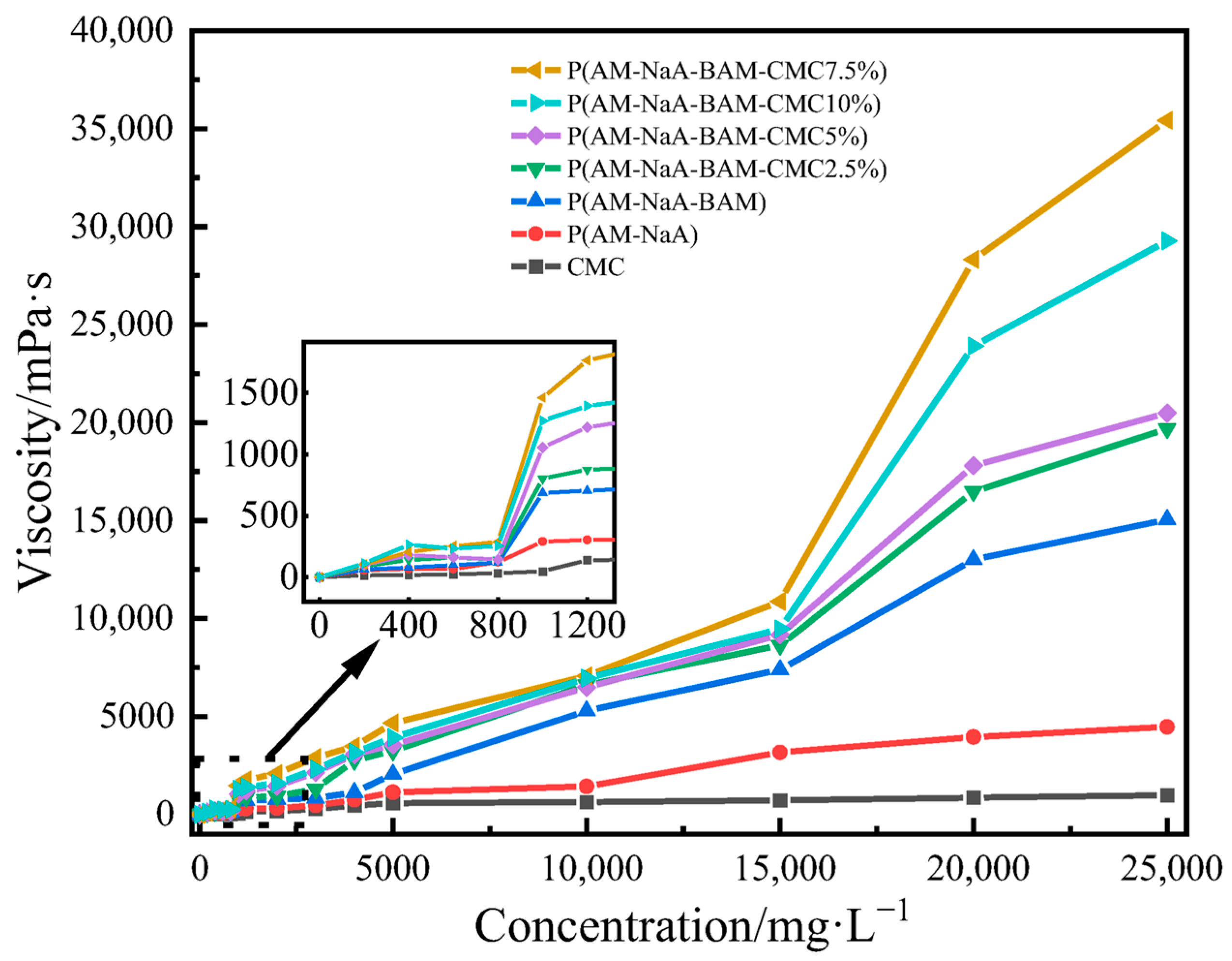
2.1. Viscosity-Enhancing Properties of Different Copolymers
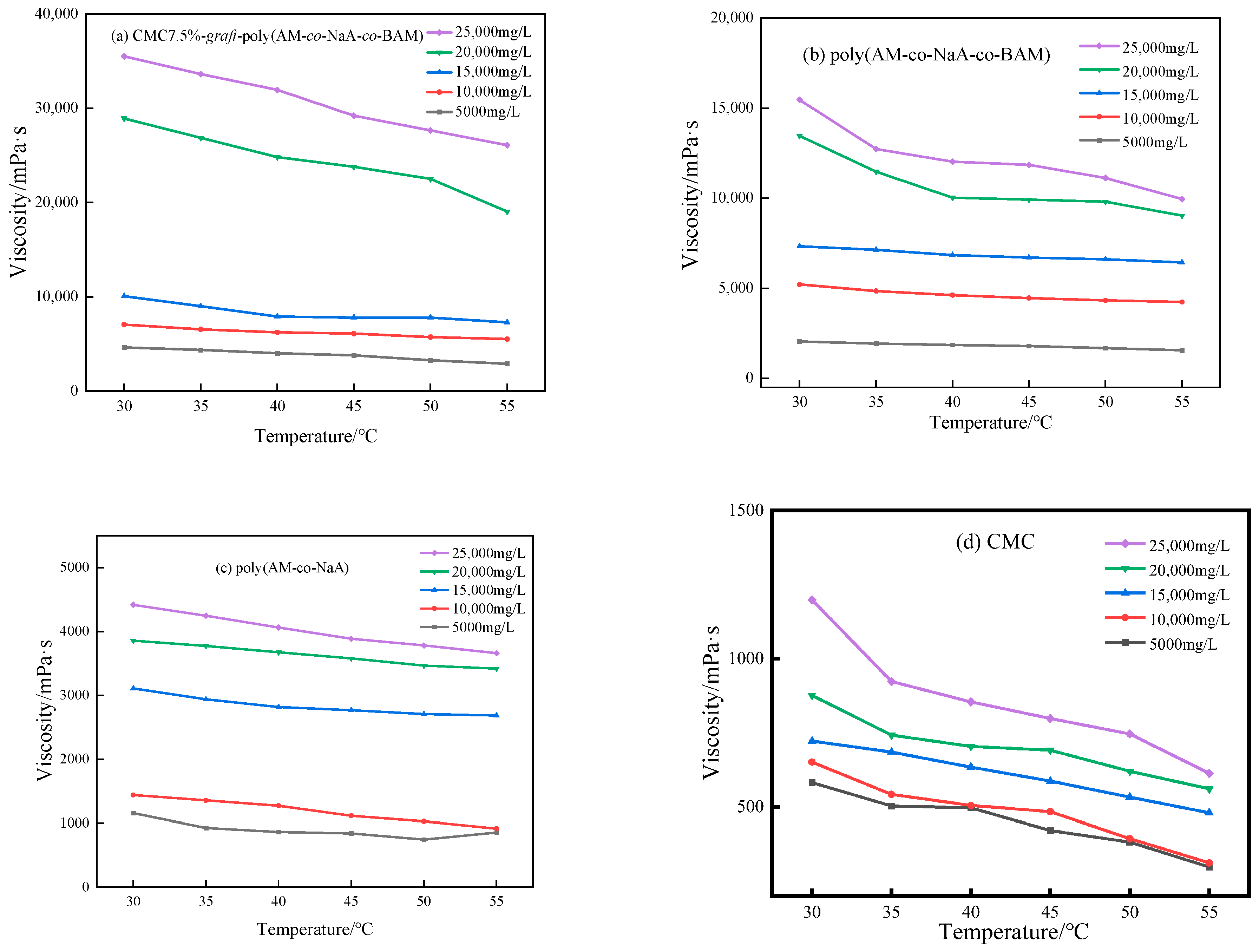
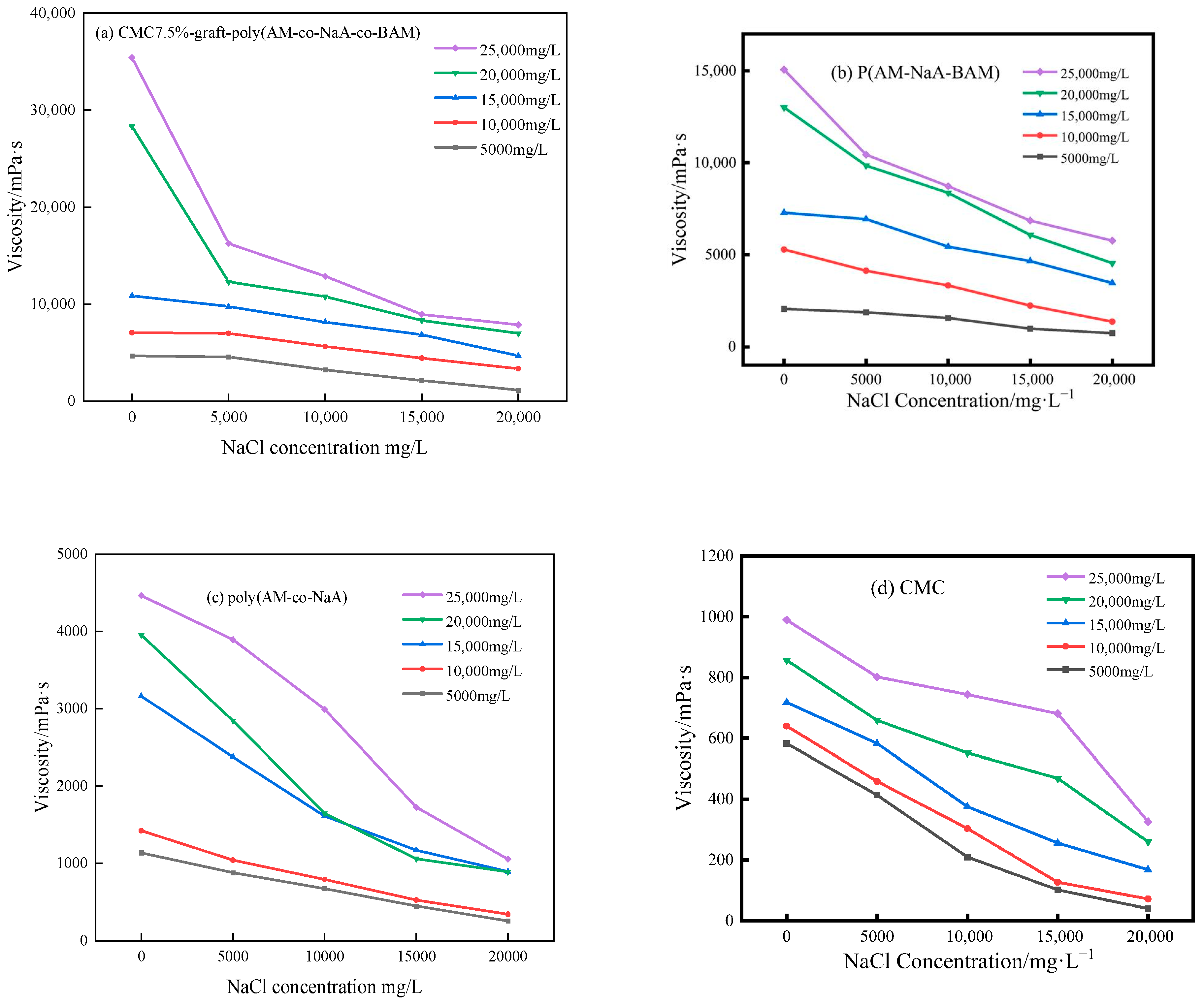
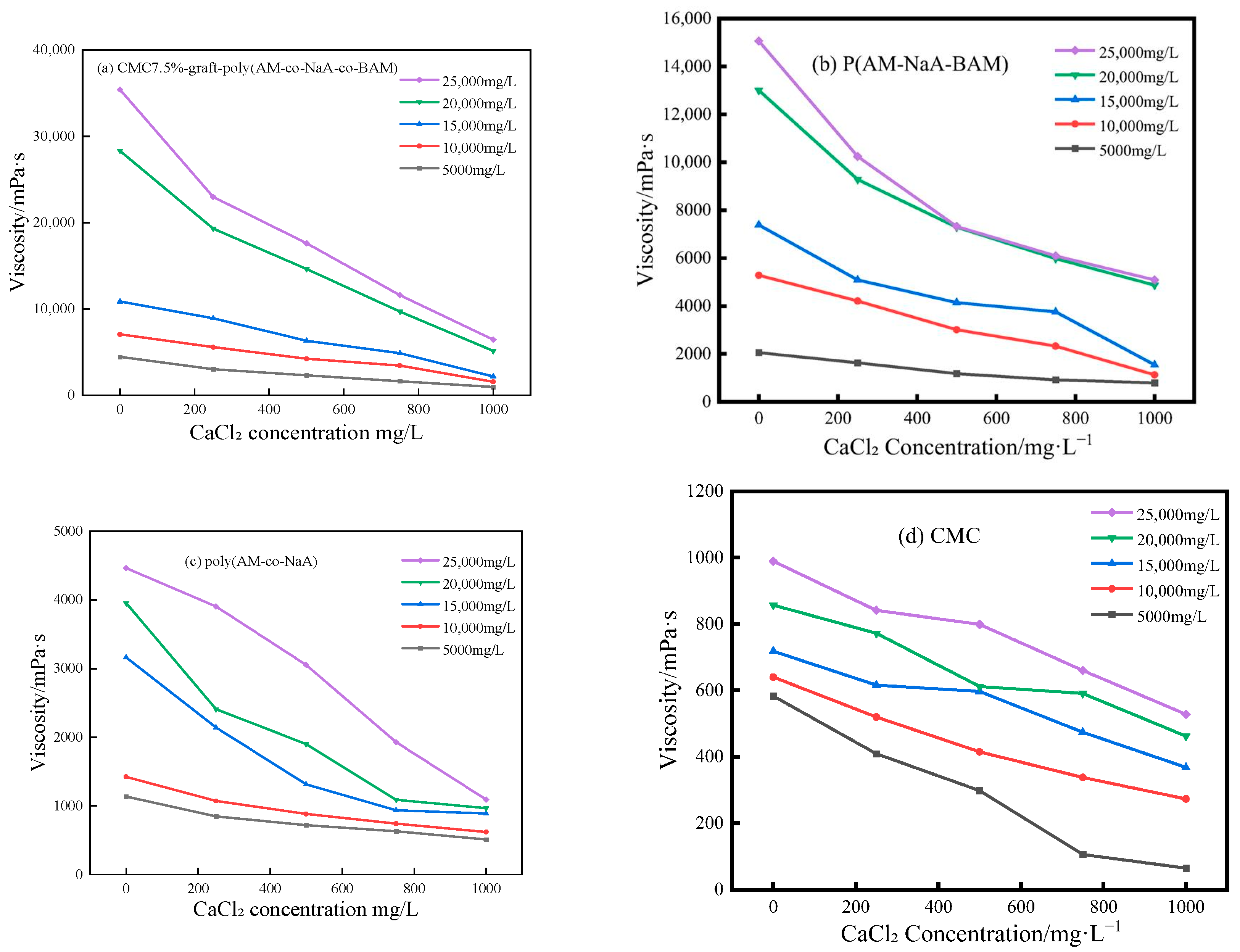
2.2. Thermal and Salt Resistance Performance of Different Copolymers
2.3. Copolymers Characterization
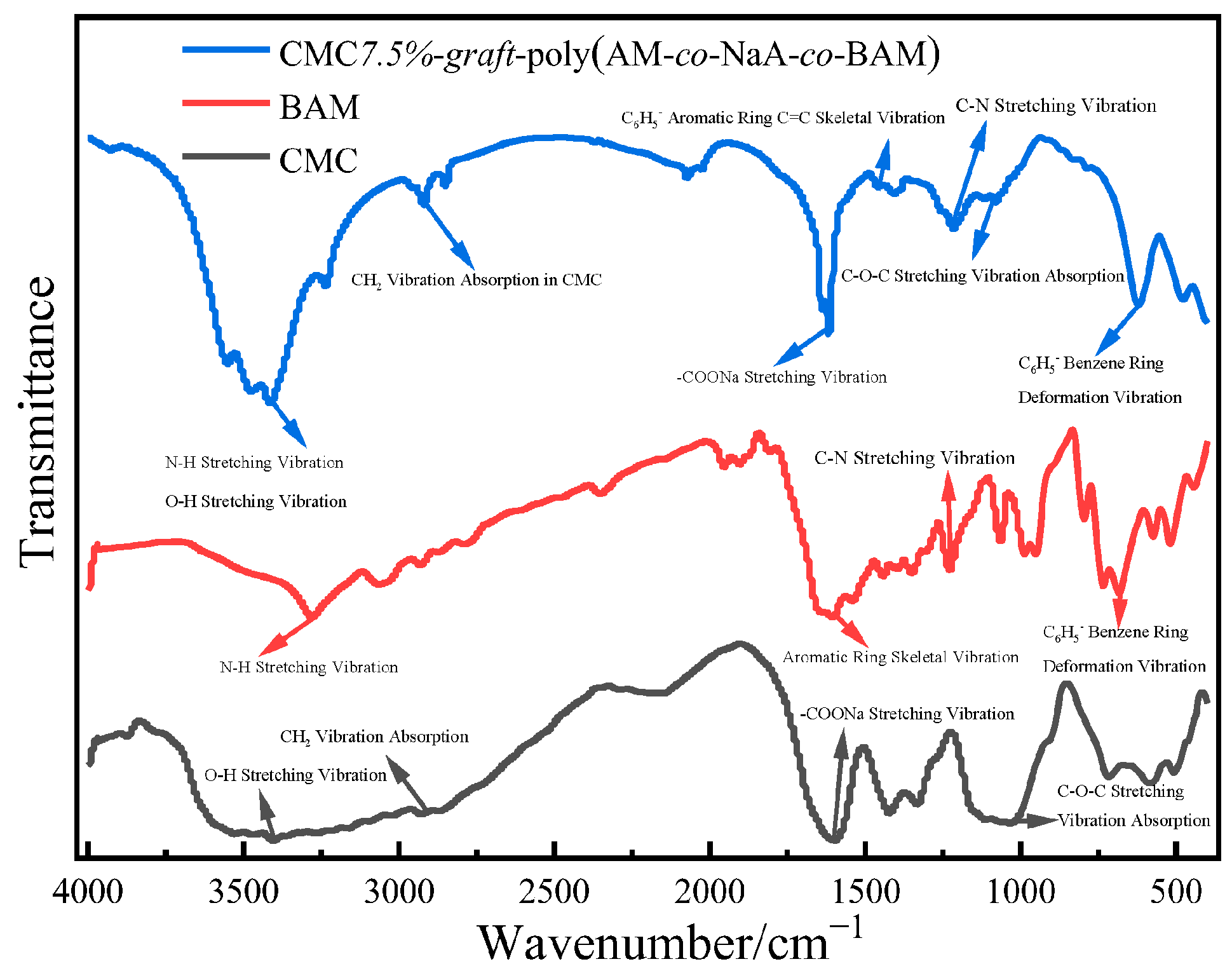
2.3.1. Infrared Spectroscopic Analysis
2.3.2. Relative Molecular Mass Analysis
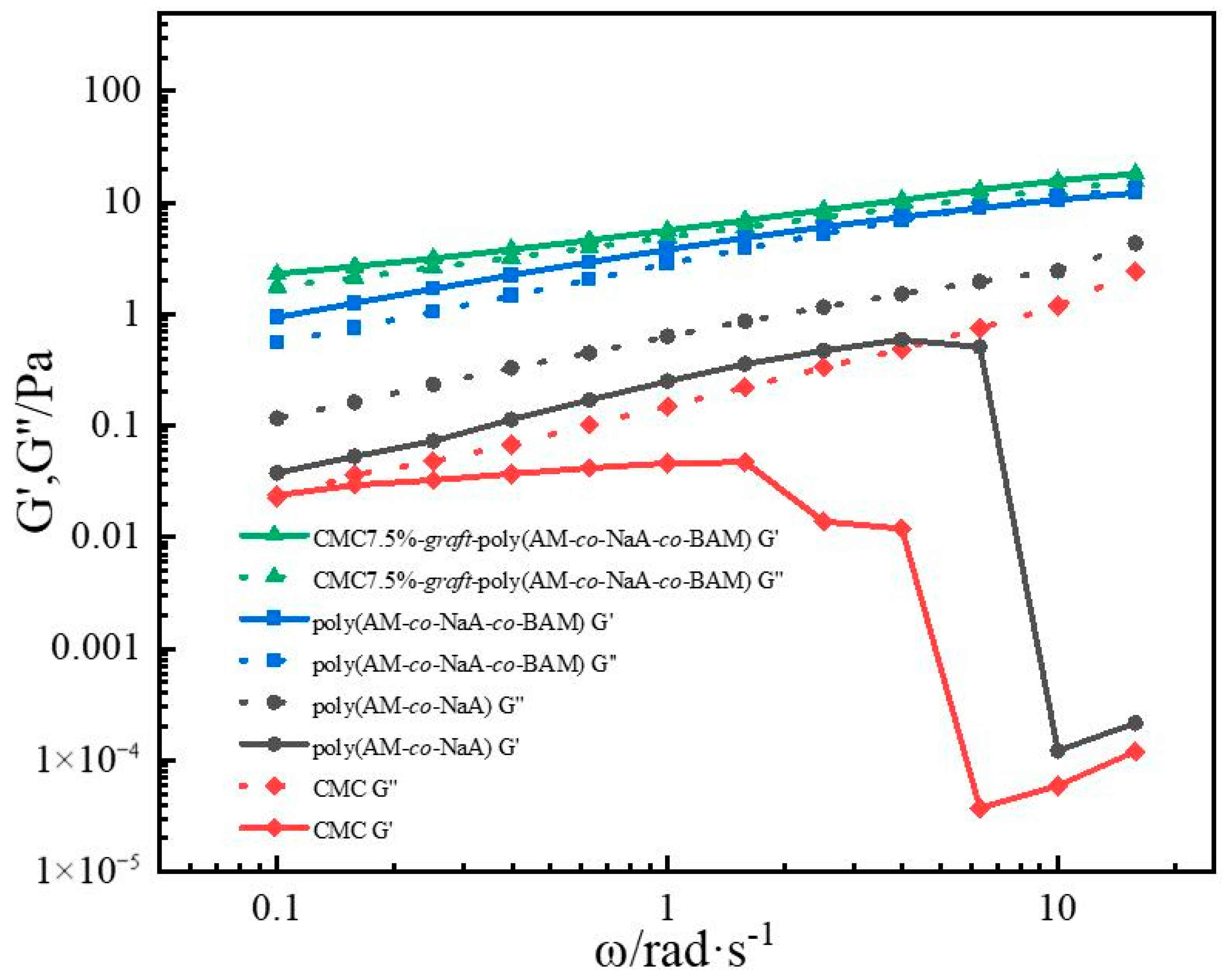
2.4. Viscoelastic Test of Copolymers
2.4.1. Viscoelasticity Measurements
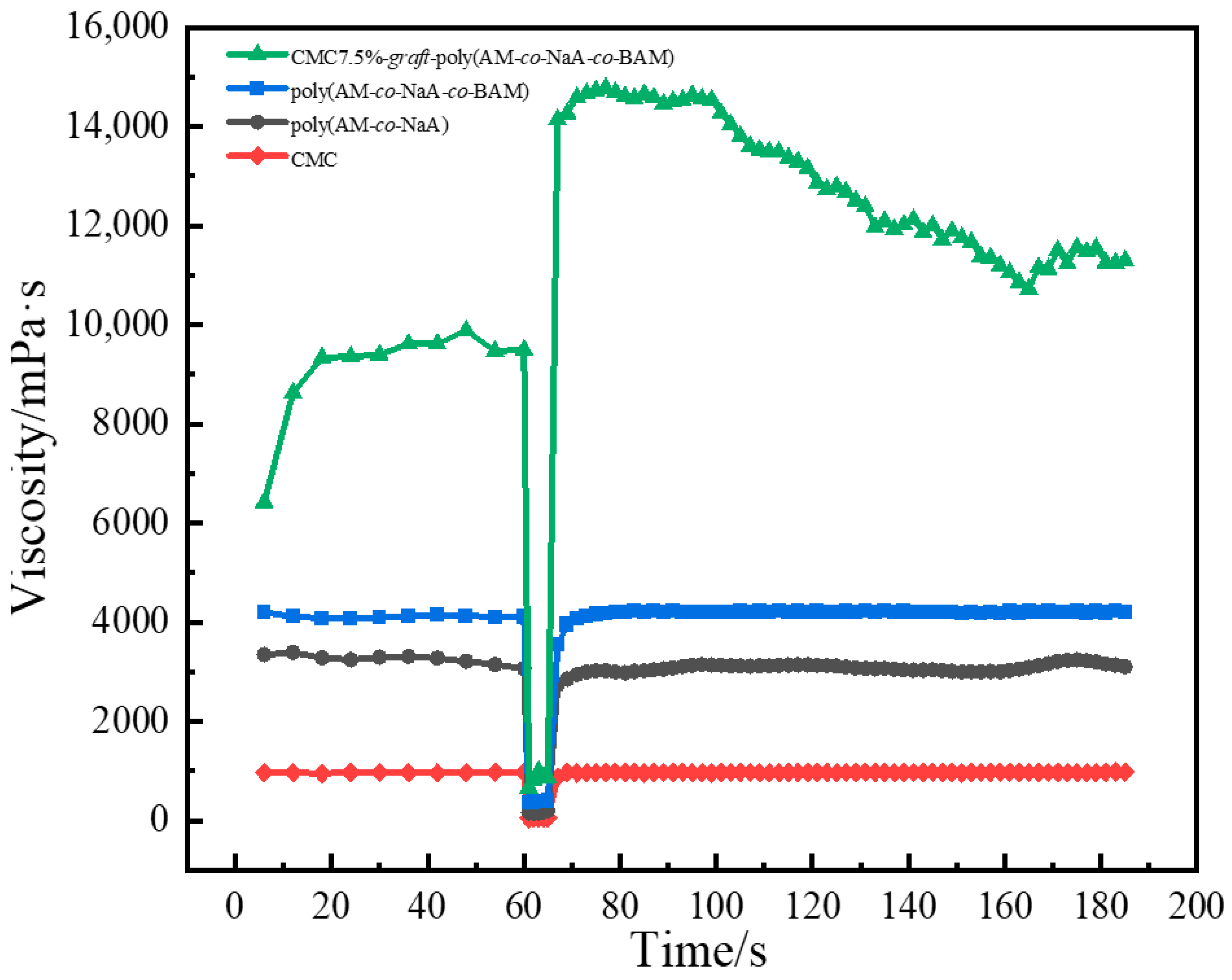
2.4.2. Thixotropy Measurement Results
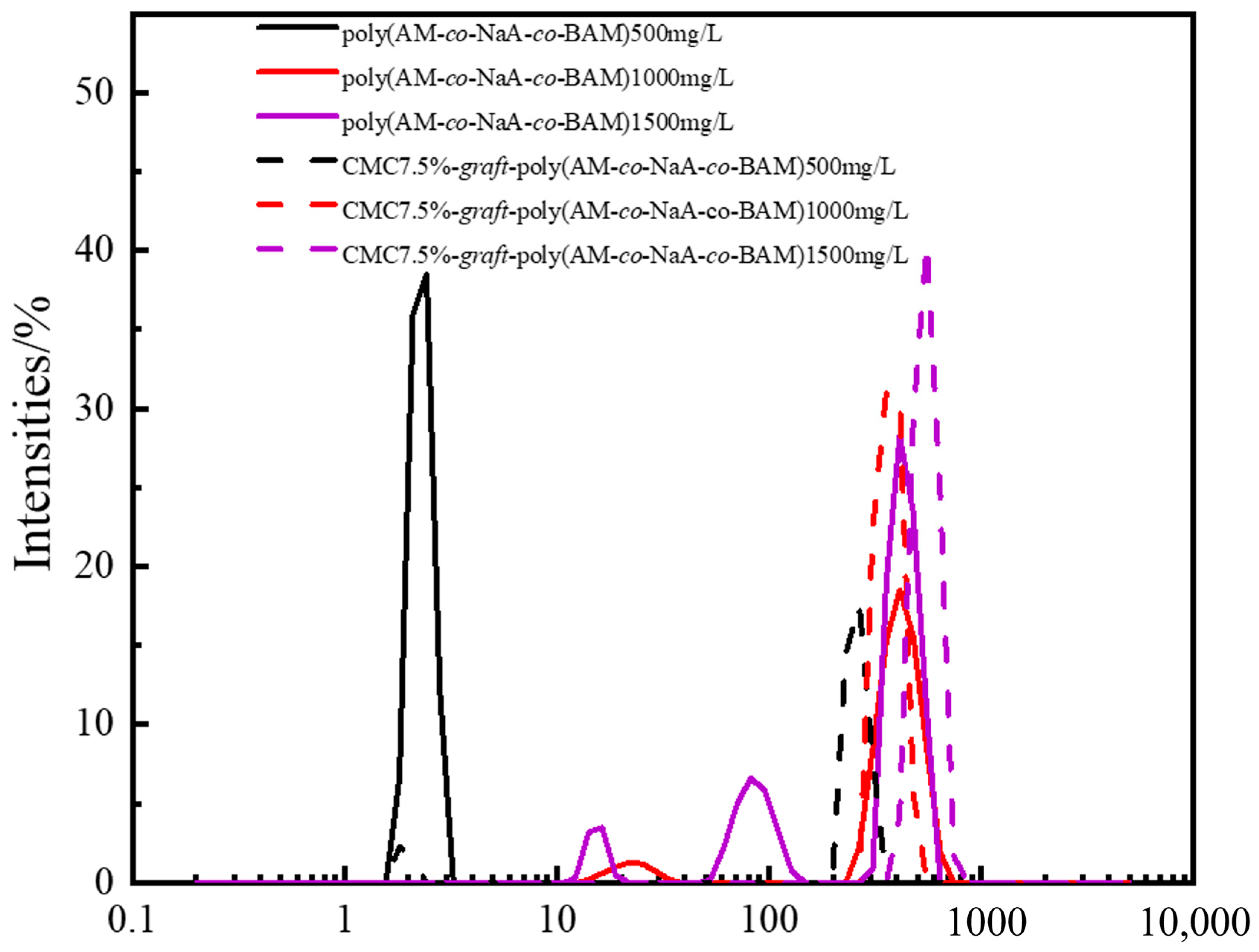
2.5. Particle Diameter Analysis of Copolymer Solutions
2.6. Analysis of Hydrogel Adhesion Properties
2.7. High Temperature Test Analysis
2.8. Rheological Test of Hydrogels
2.8.1. The Shear Resistance Hydrogels
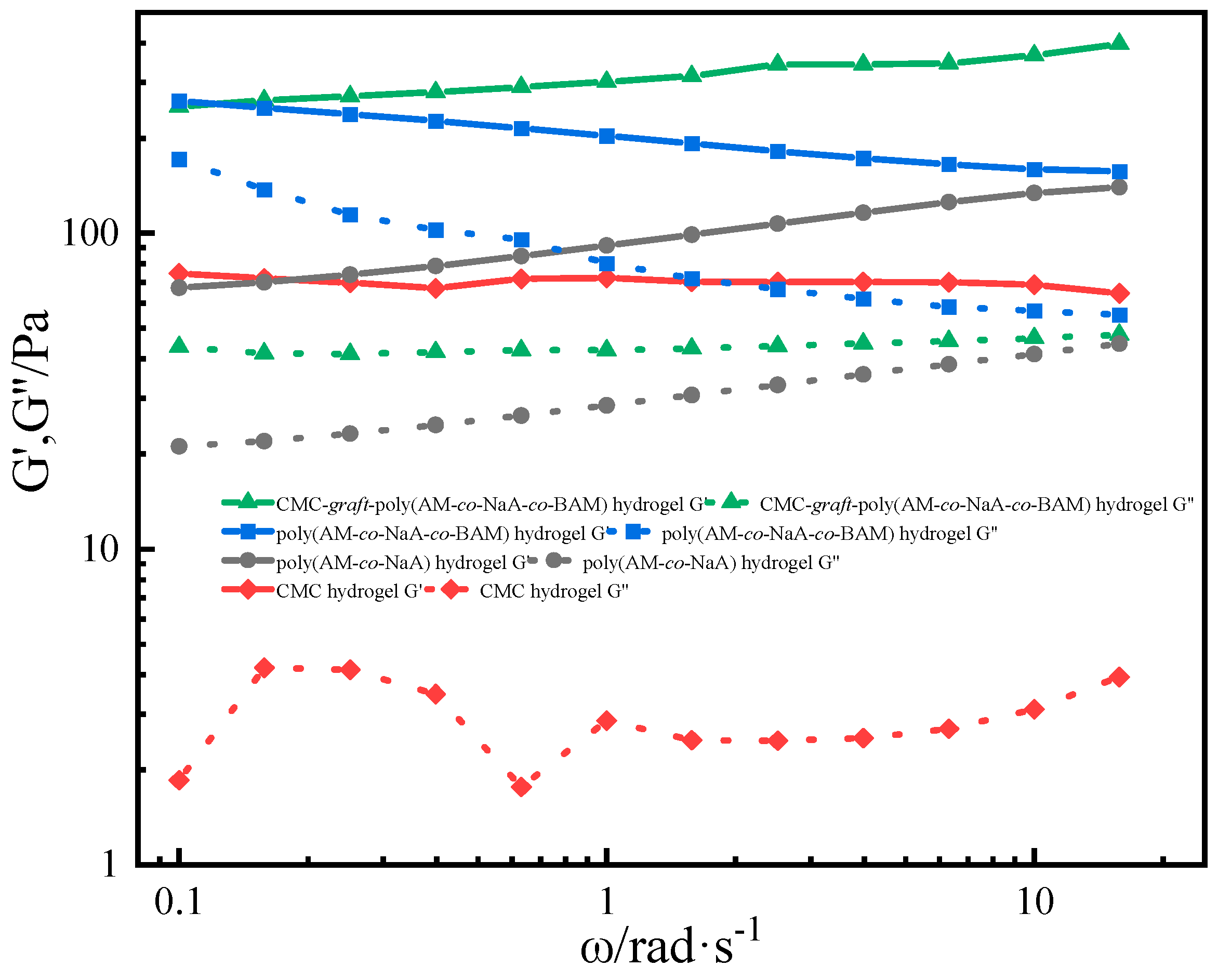
2.8.2. Viscoelasticity Test of Hydrogels
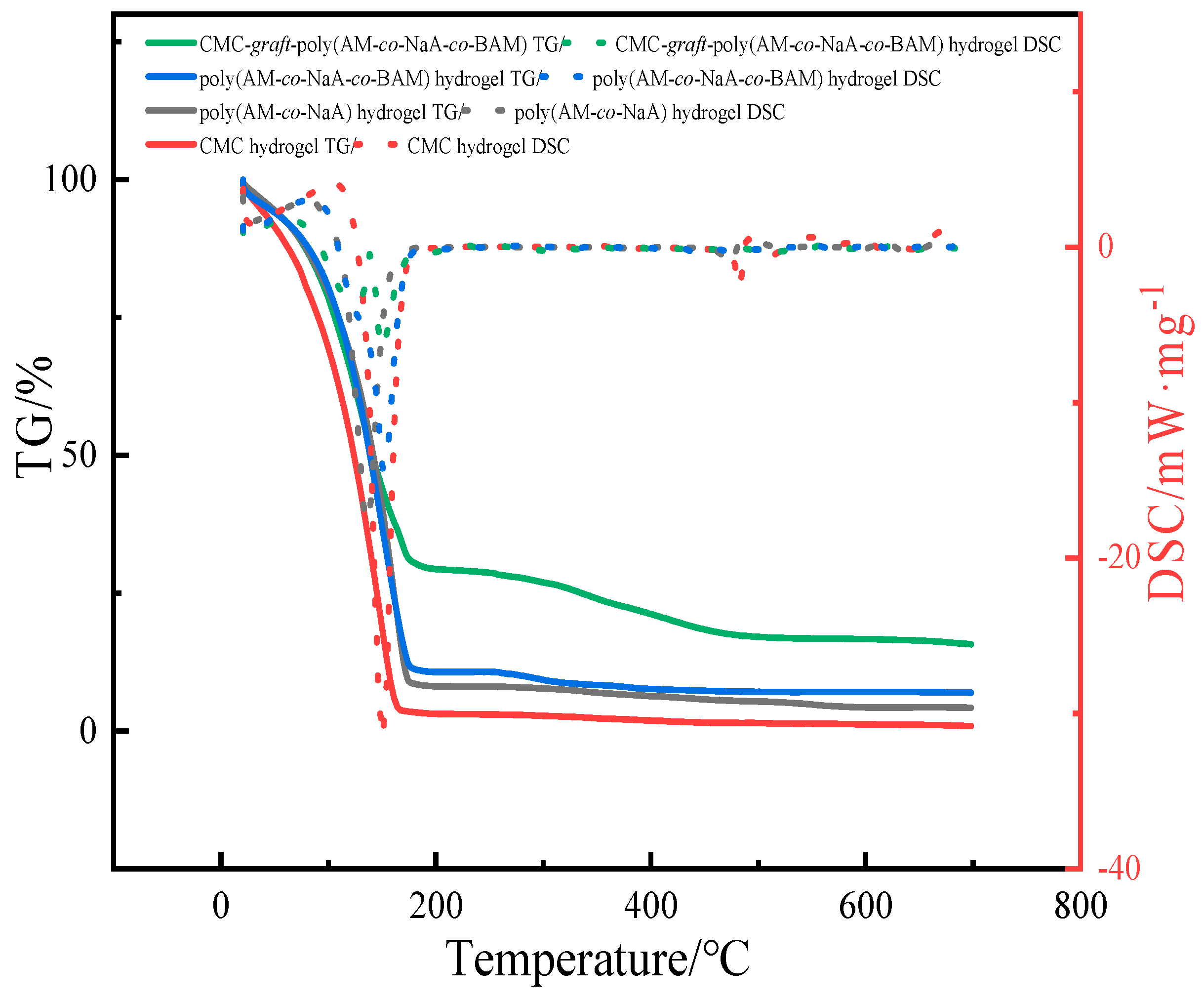
2.9. Simultaneous Thermal Analyzer (STA) Analysis of Hydrogels
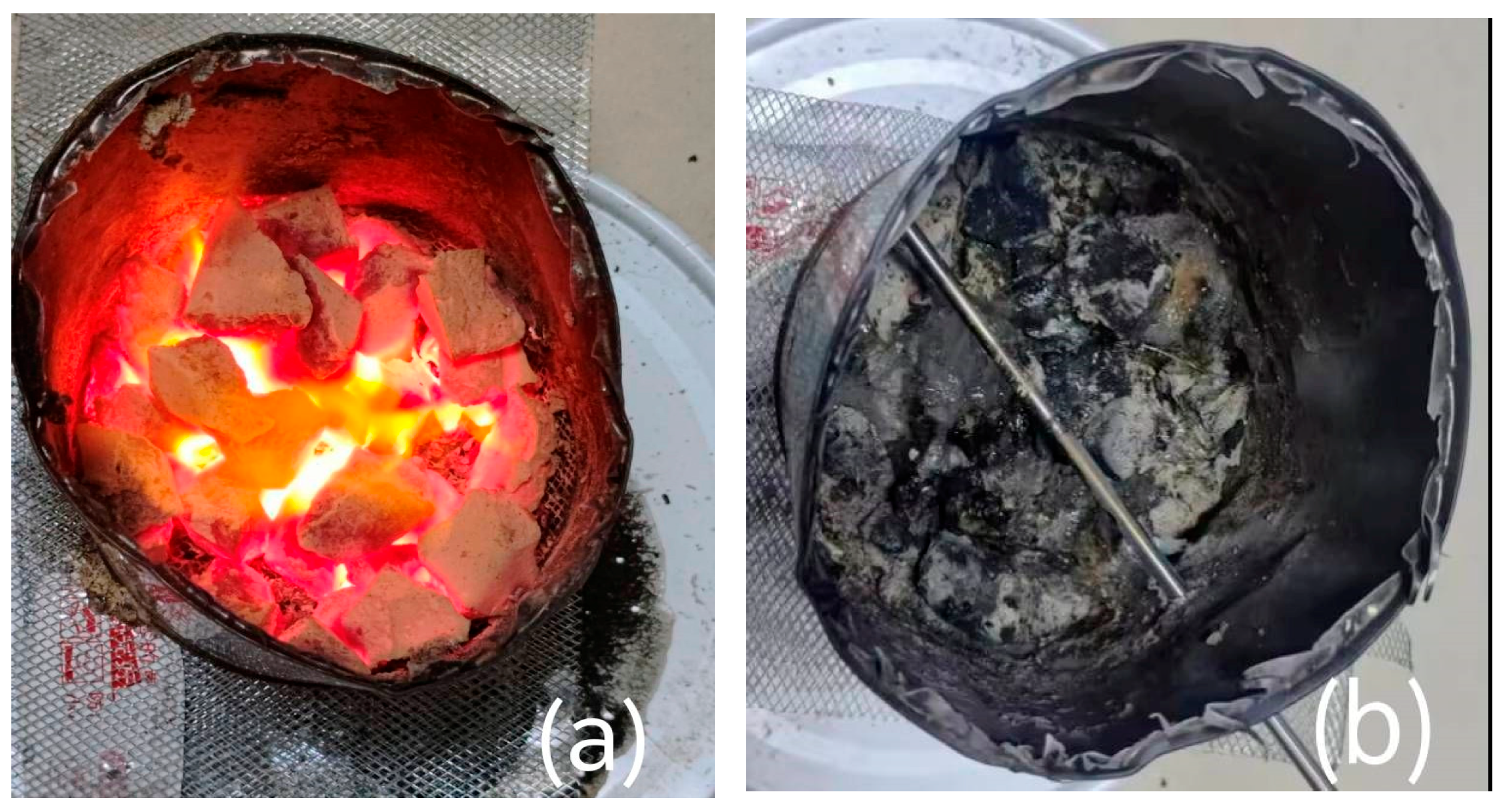
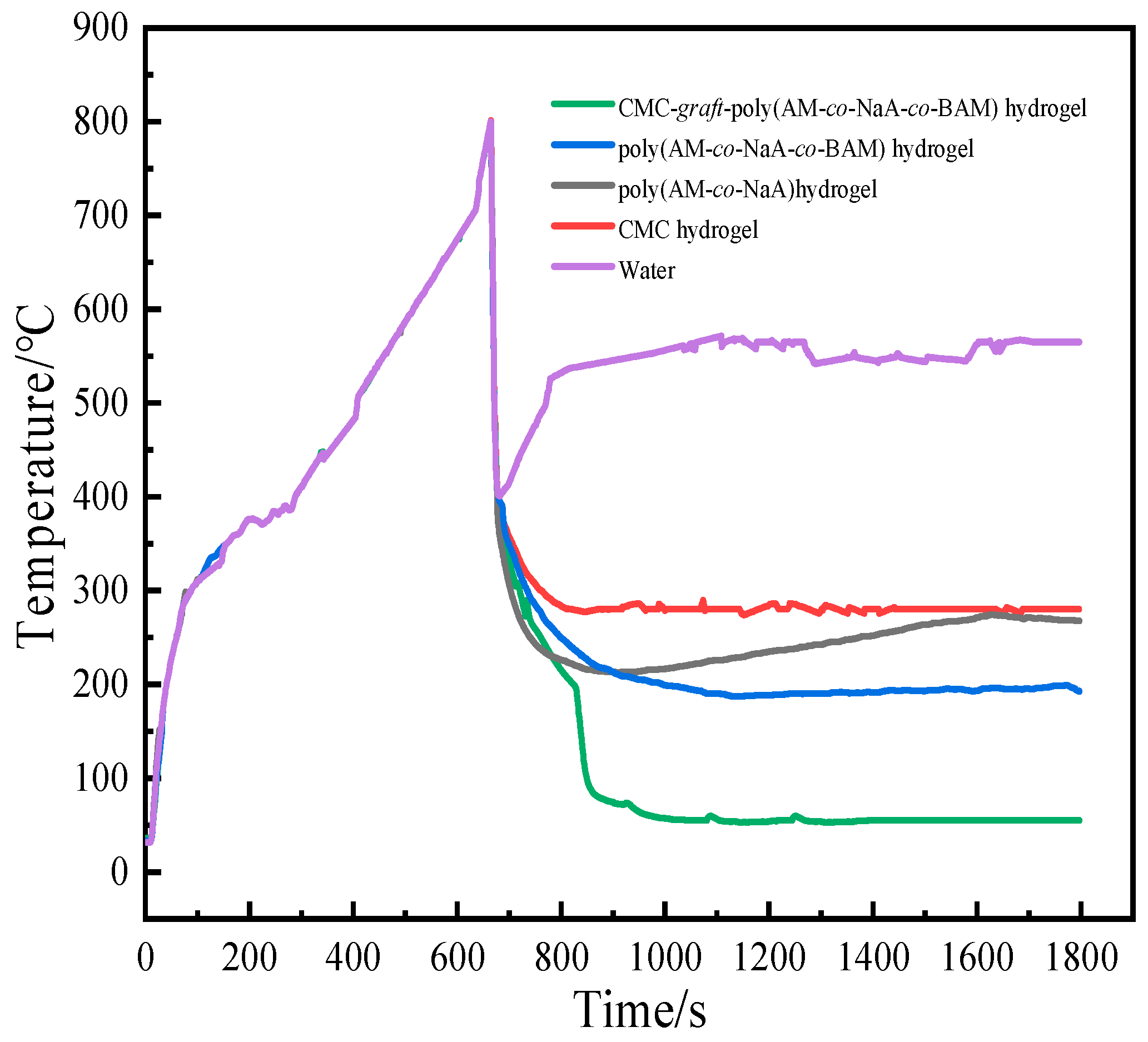
2.10. Analysis of Fire Prevention and Extinguishing Test
3. Conclusions
- (1)
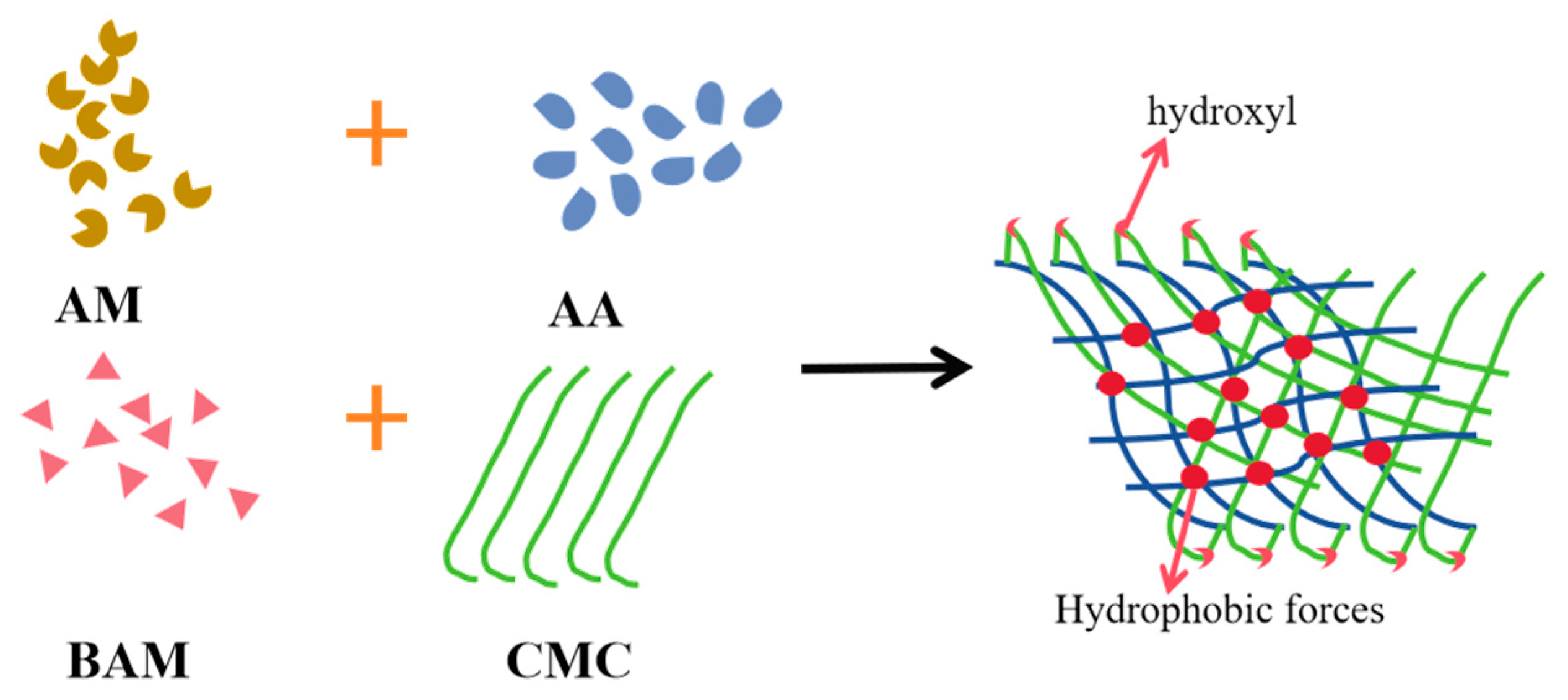
- The carboxymethyl cellulose-modified amphiphilic polymer CMC-graft-poly(AM-co-NaA-co-BAM) was synthesized and the successful grafting of sodium carboxymethyl cellulose (CMC) with the hydrophobic monomer (N-benzylacrylamide) and the hydrophobic modification of partially hydrolyzed polyacrylamide were confirmed by infrared spectroscopy and relative molecular mass analysis, which enabled the formation of larger aggregates even at low polymer concentrations; meanwhile, the presence of abundant hydroxyl groups on the polymer chains, combined with the introduction of hydrophobic monomers leading to the formation of hydrophobic microdomains, resulted in strong intramolecular and intermolecular associative capabilities, thereby endowing the carboxymethyl cellulose-modified amphiphilic polymer with superior performance in temperature resistance, salinity tolerance, viscoelasticity, and thixotropy compared to the control group.
- (2)
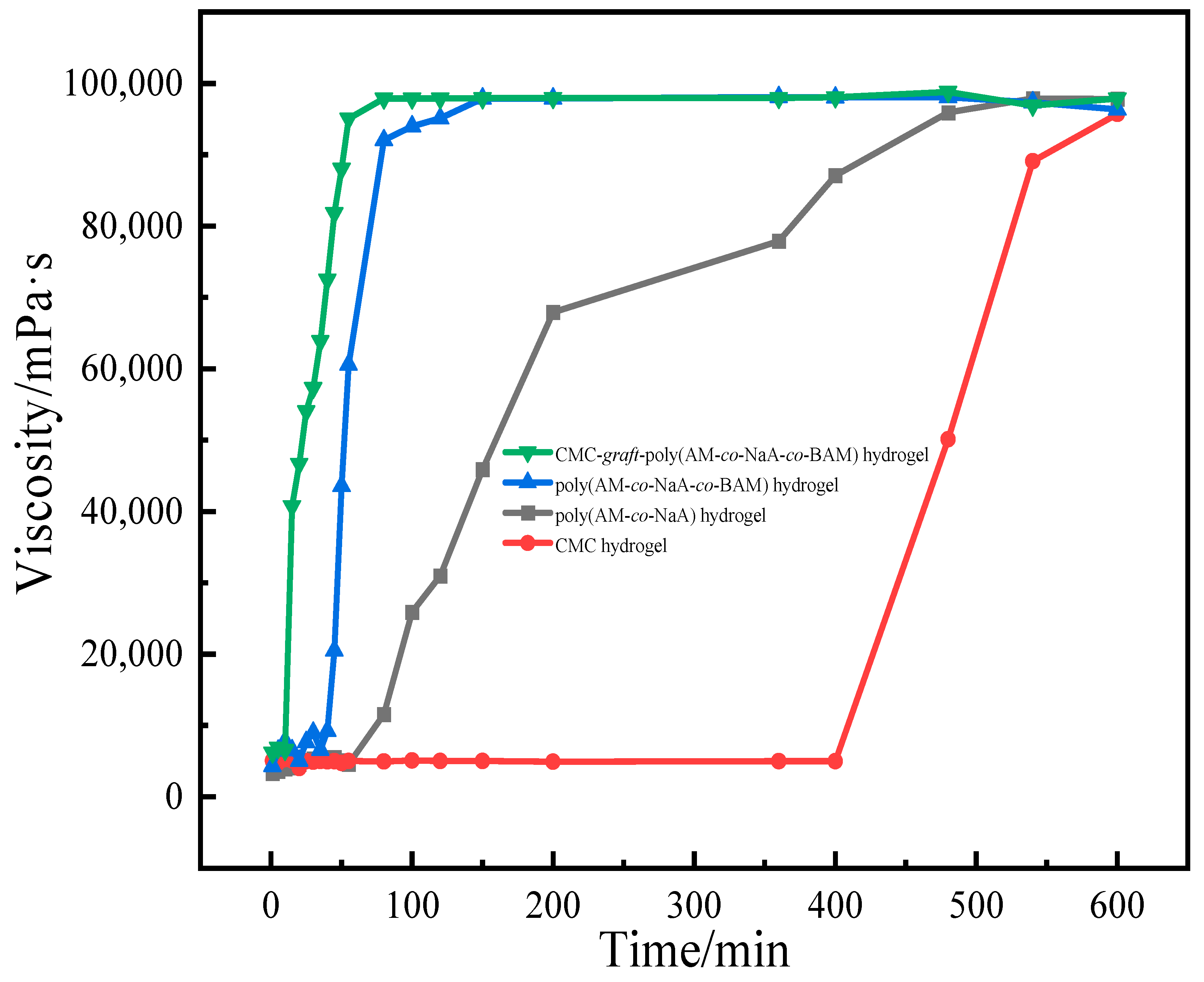
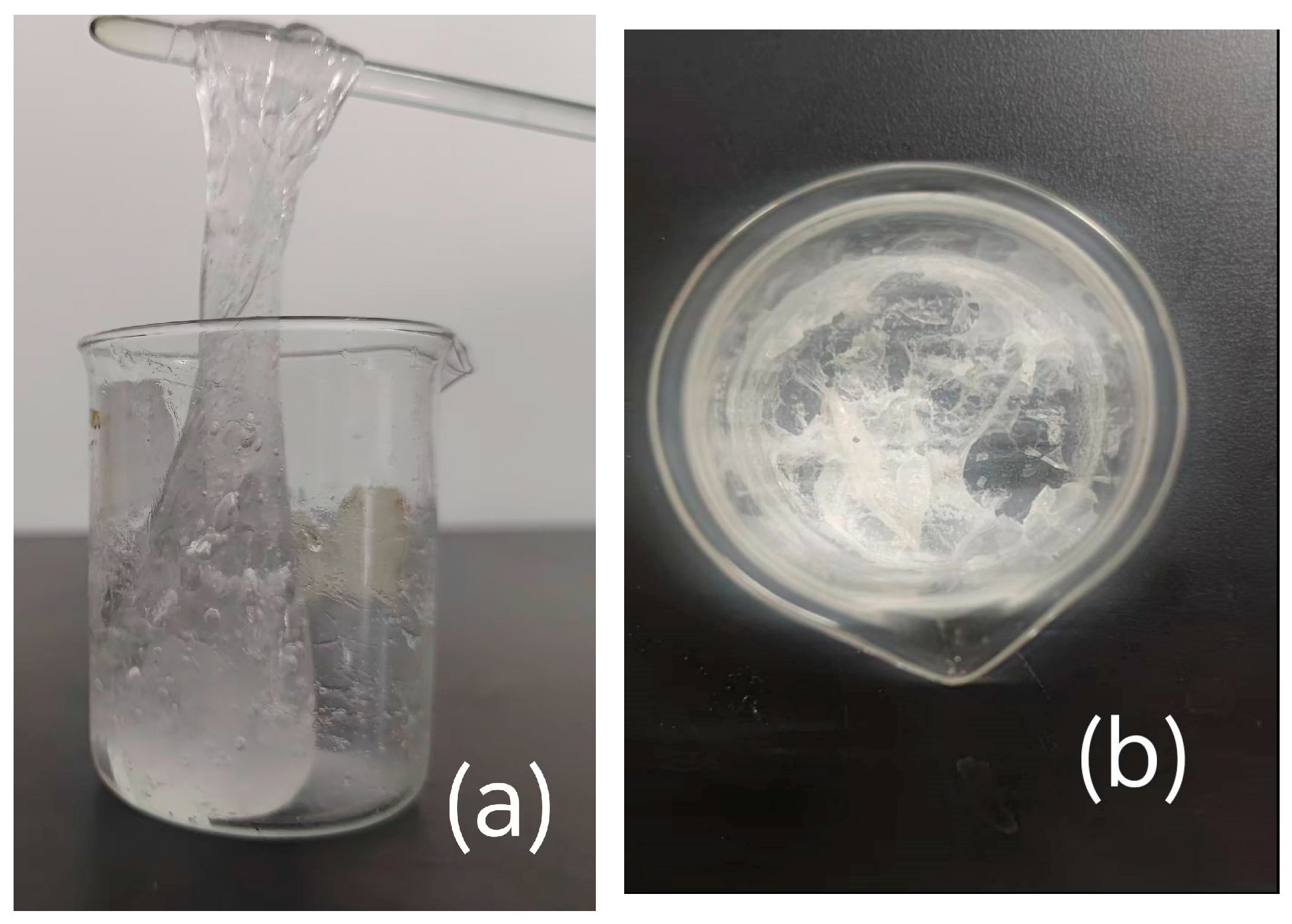
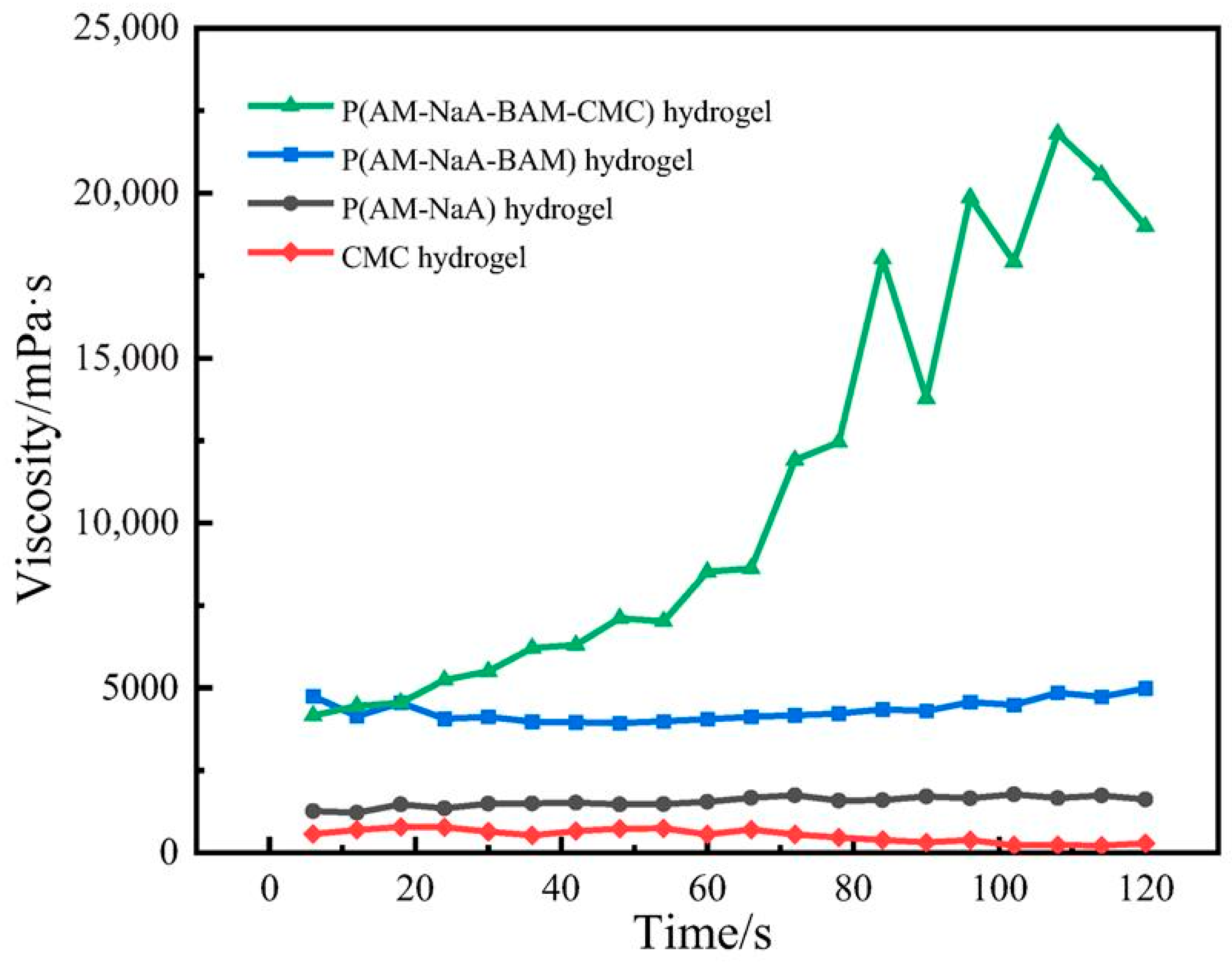
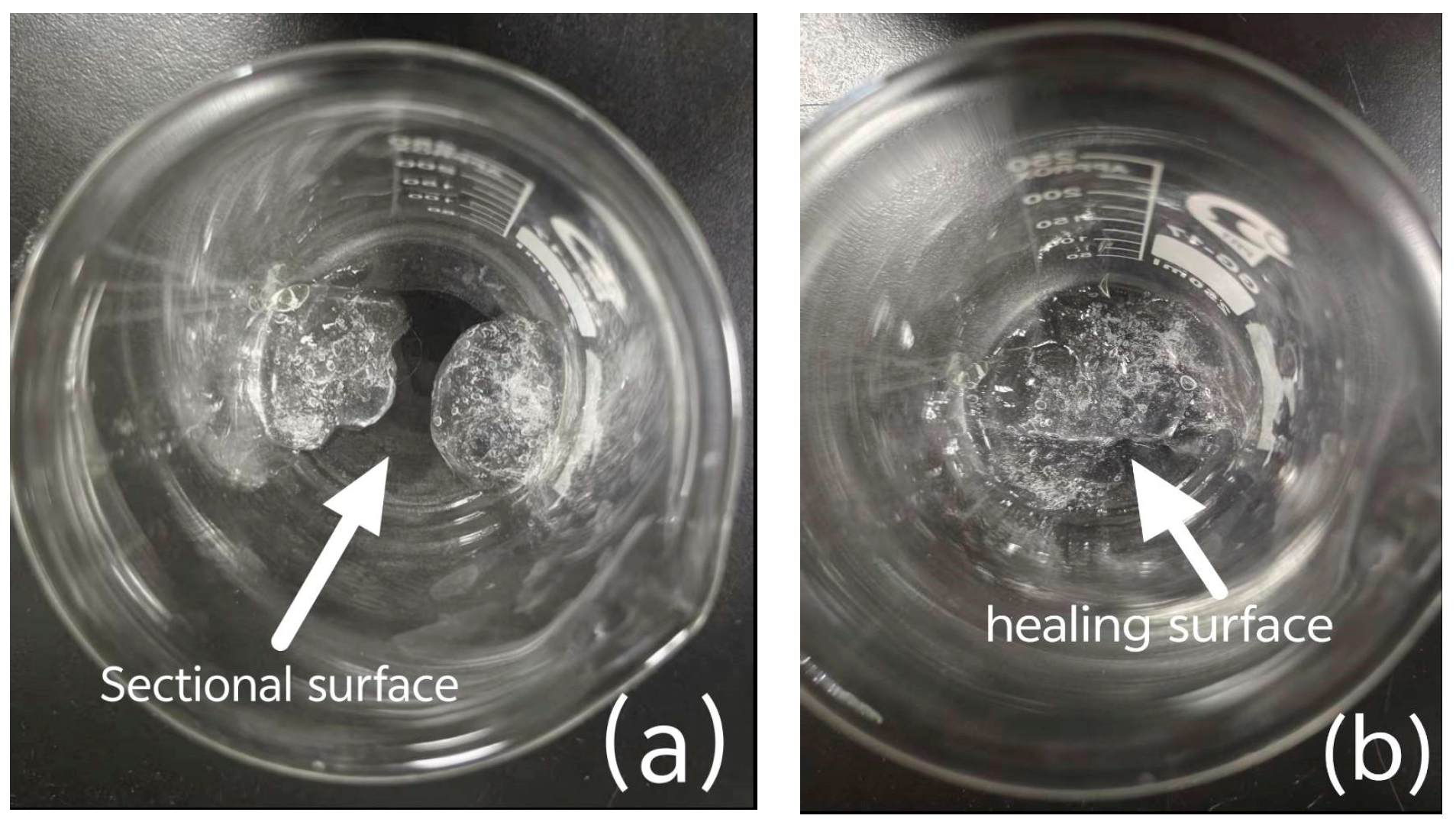
- Following polymer modification, abundant cross-linking sites were introduced, leading to accelerated gelation and improved mechanical strength. The hydrophobic microdomains, formed via aggregation of hydrophobic groups, acted as physical cross-linking points that interconnected polymer chains into a three-dimensional network. This structure effectively dispersed and dissipated mechanical energy, significantly enhancing the hydrogel’s elastic modulus. Moreover, the dynamic and reversible nature of hydrophobic interactions enabled spontaneous reassociation and reformation of physical cross-links upon fracture surface contact, resulting in autonomous self-healing. The CMC-graft-poly(AM-co-NaA-co-BAM)/AlCit hydrogel exhibited superior water retention and stability compared to the other three hydrogels. Fire suppression tests further demonstrated that incorporating carboxymethyl cellulose-modified amphiphilic polymer hydrogel significantly reduced ignition source temperature and prevented coal re-ignition.
4. Materials and Methods
4.1. Materials
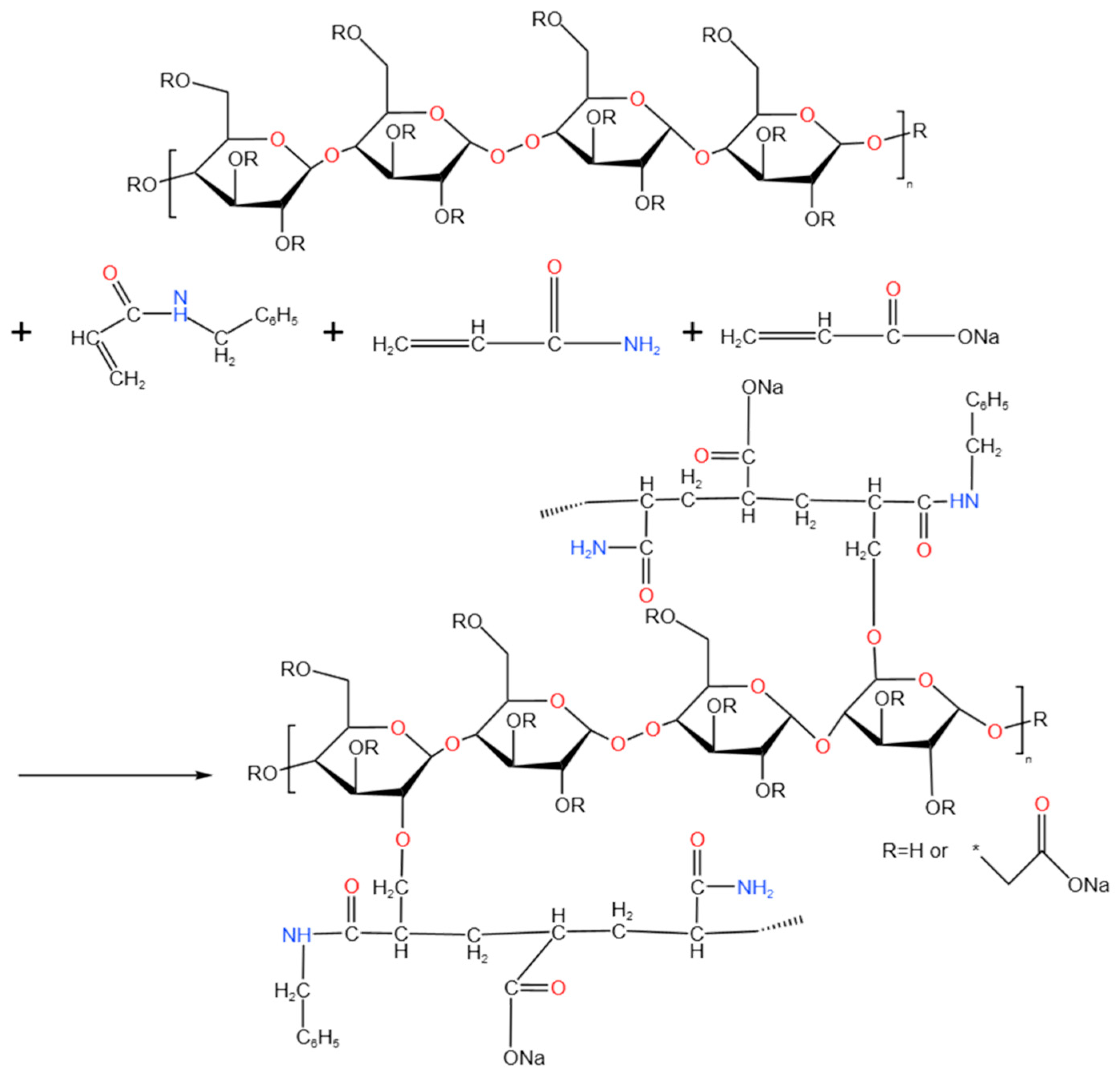
4.2. Synthesis of Cellulose-Modified Amphiphilic Copolymers
4.3. Viscosity Measurement of Copolymer Solutions
4.4. Polymer Characterization
4.4.1. FT-IR Spectroscopy
4.4.2. Molecular Weight Determination
4.5. Rheological Measurements of Copolymers
4.6. Copolymer Particle Size Distribution Test
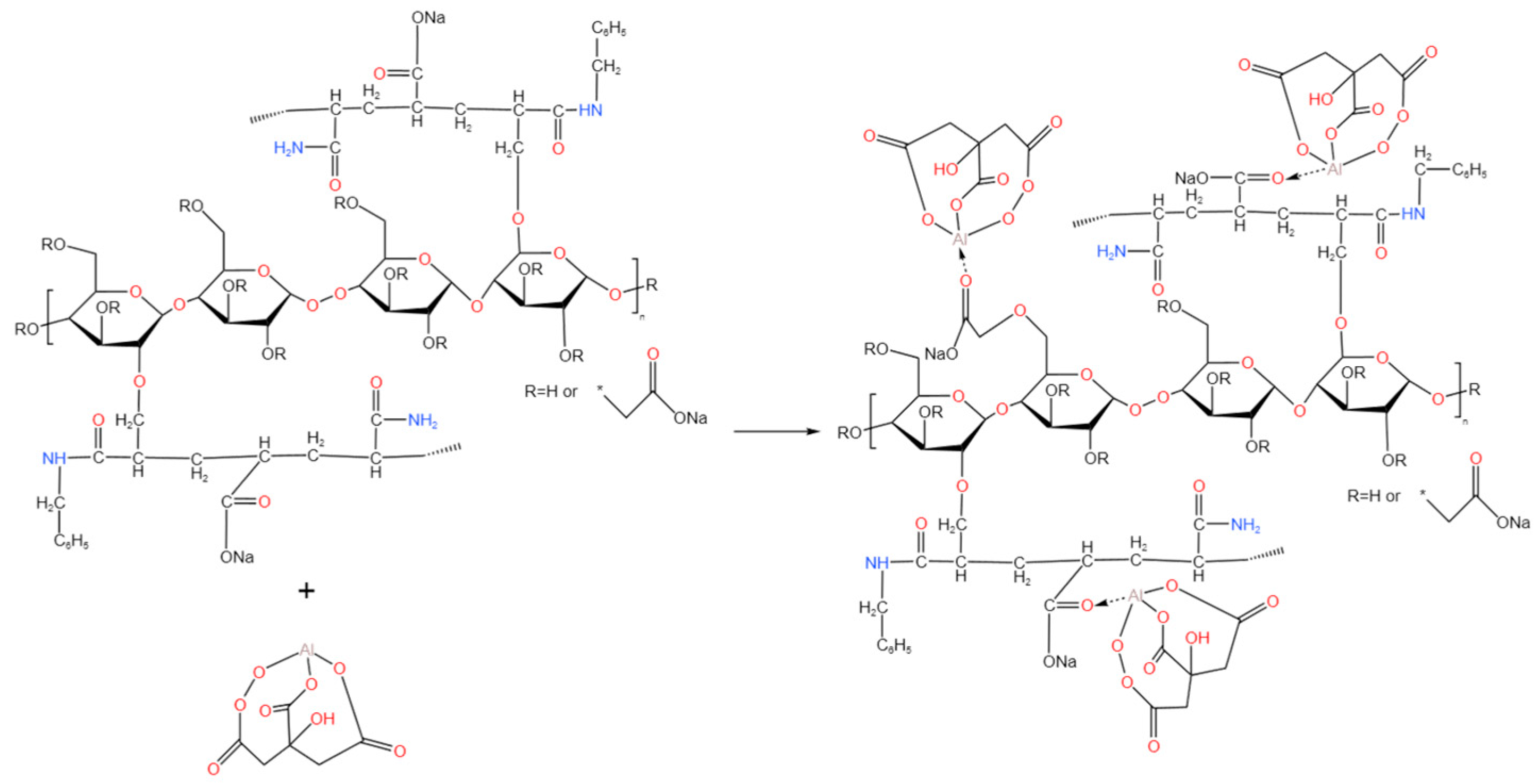
4.7. Synthesis and Performance of Hydrogels
4.8. Water Loss Behavior at Elevated Temperature (180 °C)
4.9. Rheological Measurements of Hydrogels
4.9.1. Shear Resistance Testing of Hydrogels
4.9.2. Viscoelasticity Testing of Hydrogels
4.10. Simultaneous Thermal Analysis
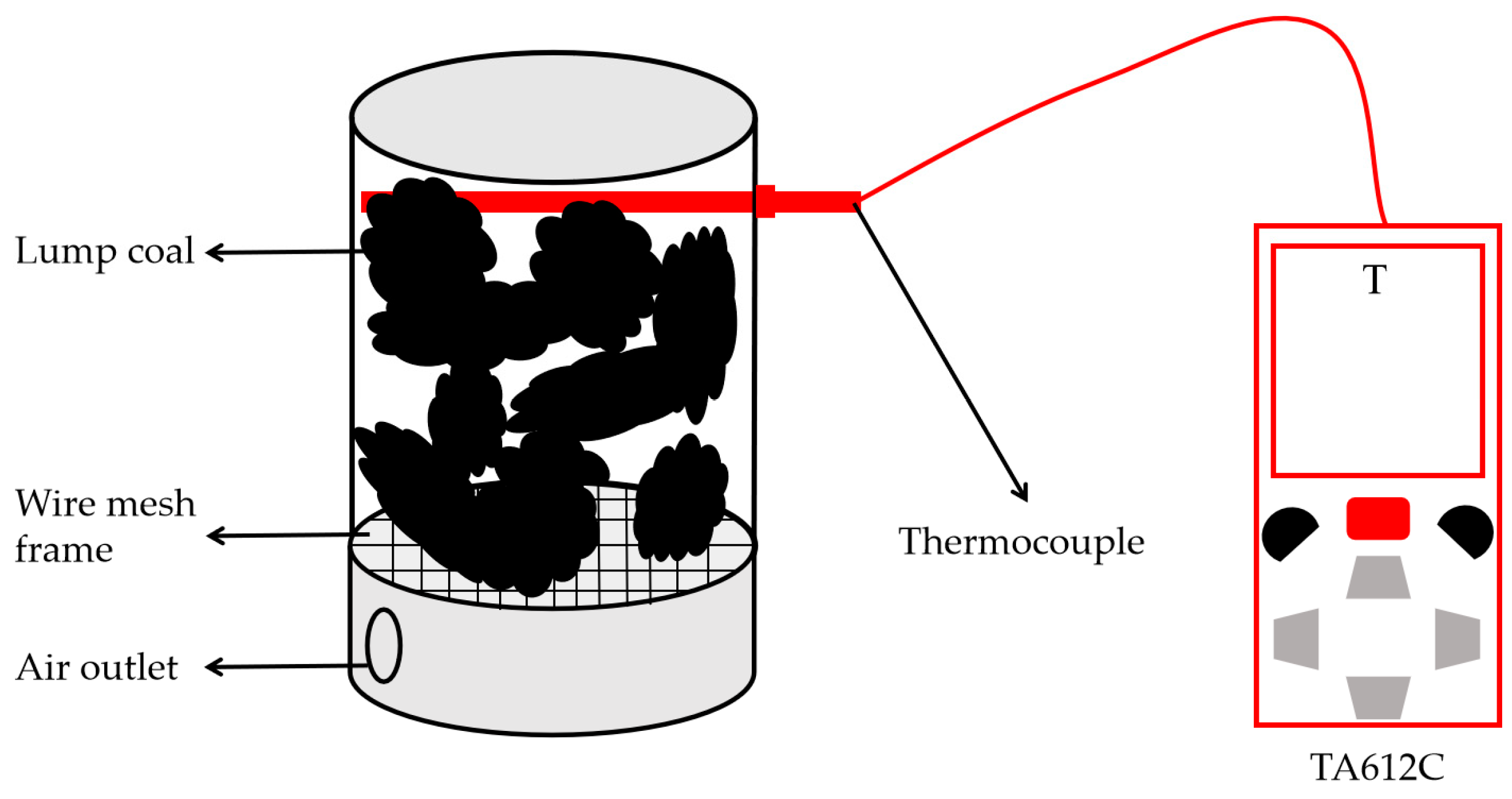
4.11. Fire-Extinguishing Experiments
Author Contributions
Funding
Data Availability Statement
Conflicts of Interest
References
- Huang, W.-G.; Zhang, S.-W.; Lu, X.; Wu, S.-L.; Huang, J. Residual Coal Distribution in China and Adaptability Evaluation of Its Resource Conditions to Underground Coal Gasification. Sustain. Energy Technol. Assess. 2022, 49, 101654. [Google Scholar] [CrossRef]
- Liu, B.-C.; Wen, H.; Mi, W.-S.; Fan, S.-X.; Xu, Y.; Li, R.-J.; Chen, Y.; Han, L.-T. Inhibition of Coal Spontaneous Combustion During Dynamic Mining in Adjacent Gob with Narrow Coal Pillars. Combust. Sci. Technol. 2025, 2, 442679. [Google Scholar] [CrossRef]
- Liang, Y.-T.; Yang, Y.-L.; Guo, S.-D.; Tian, F.-C.; Wang, S.-F. Combustion Mechanism and Control Approaches of Underground Coal Fires: A Review. Int. J. Coal Sci. Technol. 2023, 10, 24. [Google Scholar] [CrossRef]
- Tang, L.; Wang, G.; Wang, E.-M.; Li, X.-M.; Cheng, Q. The Fire Inhibition Characteristics of Composite Inert Gas and Its Application Potential Analysis. Energy Sources A 2021, 1, 940387. [Google Scholar] [CrossRef]
- Hu, X.-Q.; Kraaijeveld, A. Experimental and Numerical Investigation of Extinguishing Effectiveness of Inert-Gas Agents in a Leaky Enclosure. Energies 2022, 15, 4323. [Google Scholar] [CrossRef]
- Ma, Z.-J.; Qin, B.-T.; Shi, Q.-L.; Zhu, T.-G.; Chen, X.-M.; Liu, H. The Location Analysis and Efficient Control of Hidden Coal Spontaneous Combustion Disaster in Coal Mine Goaf: A Case Study. Process Saf. Environ. Prot. 2024, 184, 66–78. [Google Scholar] [CrossRef]
- Qi, L.-M.; Yu, L.-J.; Zhou, Q.; Lyu, Y.-Y.; Wang, Y.-Z.; Liu, Y.-M.; Fan, W.; Meng, J.-G.; Zhi, C. High-Efficiency Flame Retardant, Heat Insulating, and Sound Absorbing Three-Phase Laminated Composite Based on Spacer Fabric/Polyurethane/Silica Aerogel. Text. Res. J. 2025, 175, 297359. [Google Scholar] [CrossRef]
- Chen, J.; Jia, B.-S.; Fu, S.-Q.; Wen, Y.; Liang, Y.-T.; Tian, F.-C. Novel PFA-Based Inorganic Three-Phase Foam for Inhibiting Coal Spontaneous Combustion. ACS Omega 2023, 8, 24615–24623. [Google Scholar] [CrossRef]
- Zhang, L.-L.; Kuai, D.-L.; Wang, G.-N.; Li, S.-L. Preparation of a Fluorine-Free Foam for the Prevention and Control of Spontaneous Combustion of Coal and Its Flame-Retardant Properties. Process Saf. Environ. Prot. 2025, 196, 106886. [Google Scholar] [CrossRef]
- Liu, P.-J.; Mu, H.-W.; Du, J.-F.; Dong, X.-W.; Sun, J.-F.; Zhang, Y.-L. Study on the Influence of Inhibitors on the Characteristics of Coal Oxygen Composite Reactions. RSC Adv. 2025, 15, 10200–10214. [Google Scholar] [CrossRef]
- Guo, S.-L.; Geng, W.-L.; Yuan, S.-J.; Xu, X.-X.; Zhang, S.-W.; Ren, Q.-G.; Liu, C.-L. Experimental Study on the Effect of Thermosensitive Controlled-Release Inhibitor on Coal Spontaneous Combustion. Case Stud. Constr. Mater. 2025, 68, 105955. [Google Scholar] [CrossRef]
- Xue, D.; Hu, X.-M.; Cheng, W.-M.; Wu, M.-Y.; Shao, Z.; Li, Y.-S.; Zhao, Y.-Y.; Zhang, K. Carbon Dioxide Sealing-Based Inhibition of Coal Spontaneous Combustion: A Temperature-Sensitive Micro-Encapsulated Fire-Retardant Foamed Gel. Fuel 2020, 266, 117036. [Google Scholar] [CrossRef]
- Yu, R.-X.; Huang, Z.; Fu, M.-M.; Wang, G.-W.; Li, W.; Zeng, M.-Y.; Li, J.-Y.; Wang, H.-S.; Zhang, Y.-H.; Song, D.-H.; et al. Study of the Preparation and Inhibition Mechanism of a Nanocomposite Gel Foam for Inhibiting the Spontaneous Combustion of Coal. Combust. Sci. Technol. 2025, 2, 464758. [Google Scholar] [CrossRef]
- Li, G.-E.; Wang, Q.-B.; Liu, G.-Q.; Yao, M.-T.; Wang, Y.; Li, Y.-Y.; Lin, K.-W.; Liu, X.-M. Hydrogel Extinguishants. Nanomaterials 2024, 14, 1128. [Google Scholar] [CrossRef]
- Luo, Y.; Xia, S.-H.; Niu, B.; Zhang, Y.-Y.; Long, D.-H. Preparation and High Temperature Inorganic Transformation of Flexible Silicone Aerogels. Muki Mater. 2022, 37, 1281–1288. [Google Scholar] [CrossRef]
- Guo, Y.-T.; Hang, J.-Z.; Wang, Y.; Li, Y.-Y.; Sun, X.-Y.; Shi, L.-Y. Preparation and Properties of Nano-Aluminium Sol Hybrid Silicone Refractory Flame Retardant Coating. Xiyou Jinshu Cailiao Yu Gongcheng 2023, 52, 160–166. [Google Scholar]
- Zhou, Z.-H.; Zhou, X.-R.; Xu, H.-P.; Song, Y.-J.; Li, B.; Liu, M. Recently Process in the Preparation, Properties, and Applications of Cyclosiloxane-Containing Polymers. Polymer 2024, 299, 126956. [Google Scholar] [CrossRef]
- Ma, L.; Fan, X.-L.; Wei, G.-M.; Sheng, Y.-J.; Liu, S.-M.; Liu, X.-X. Preparation and Characterization of Antioxidant Gel Foam for Preventing Coal Spontaneous Combustion. Fuel 2023, 338, 127270. [Google Scholar] [CrossRef]
- Popov, S.; Paderin, N.; Chistiakova, E.; Ptashkin, D.; Vityazev, F.; Markov, P.-A.; Erokhin, K.-S. Effect of Chitosan on Rheological, Mechanical, and Adhesive Properties of Pectin-Calcium Gel. Mar. Drugs 2023, 21, 375. [Google Scholar] [CrossRef] [PubMed]
- Zeng, L.-P.; Fu, Y.-M.; Cui, H.-Y.; Zhao, Y.-L.; Liu, Y.; Lin, X.-X.; Chao, T.; Guo, H. Strong, Smart, and Slippery Organo-Gels by Network Glassification. Adv. Funct. Mater. 2024, 34, 07397. [Google Scholar] [CrossRef]
- Segneanu, A.-E.; Bejenaru, L.-E.; Bejenaru, C.; Blendea, A.; Mogosanu, G.-D.; Bita, A.; Boia, E.-R. Advancements in Hydrogels: A Comprehensive Review of Natural and Synthetic Innovations for Biomedical Applications. Polymers 2025, 17, 2026. [Google Scholar] [CrossRef]
- Nabipour, H.; Shi, H.; Wang, X.; Hu, X.-M.; Song, L.; Hu, Y. Flame Retardant Cellulose-Based Hybrid Hydrogels for Firefighting and Fire Prevention. Fire Prev. 2022, 58, 2077–2091. [Google Scholar] [CrossRef]
- Zhou, G.; Li, S.-L.; Meng, Q.-Z.; Tian, F.-C.; Sun, L.-L. Synthesis and Performance of a New Temperature-Sensitive and Super-Absorbent Fire Prevention Hydrogel Based on Ultrasonic Method. Colloids Surf. A 2022, 640, 128399. [Google Scholar] [CrossRef]
- Tian, Y.-Q.; Zhou, C.-S.; Zhang, Y.-L.; Wang, J.-F.; Chen, P.-Y.; Zhou, Y. Preparation of fully physically crosslinked double-network gel and its fire prevention mechanism. Colloid Surf. A 2024, 702, 135182. [Google Scholar] [CrossRef]
- El-Din, H.; El-Naggar, A.; Fadle, F. Characterization and Drug Release Kinetics of Polyacrylamide/Sodium Alginate Blend Hydrogels Synthesized by Gamma Irradiation. Polym. Bull. 2024, 81, 6149–6171. [Google Scholar]
- Gong, X.-H.; Luo, Y.; Zhang, C.-Q.; Xie, J.-T.; Wang, Y. Carboxymethyl Chitosan-Based Tough Hydrogels with Low Mechanical Hysteresis and High Conductivity as Multifunctional Sensors. Biochem. Eng. J. 2025, 510, 161610. [Google Scholar] [CrossRef]
- Chen, G.-Q.; Huang, J.-R.; Gu, J.-F.; Peng, S.-J.; Xiang, X.-T.; Chen, K.; Yang, X.-X.; Guan, L.-H.; Jiang, X.-C.; Hou, L.-X. Highly Tough Supramolecular Double Network Hydrogel Electrolytes for an Artificial Flexible and Low-Temperature Tolerant Sensor. J. Mater. Chem. 2020, 8, 6776–6784. [Google Scholar] [CrossRef]
- Gao, Y.-N.; Zhao, Y.-Z.; Wang, T. Preparation and Characterization of Chitosan/Hydroxypropyl Methylcellulose Temperature-Sensitive Hydrogel Containing Inorganic Salts for Forest Fire Suppression. Gels 2024, 10, 390. [Google Scholar] [CrossRef] [PubMed]
- Sun, N.; Zhu, J.-X.; Li, Y.-Z.; Hu, F.-F.; Dong, J.-G.; Shen, S.-J.; Xu, X.-H.; Cao, X.-M.; Zhou, Z.; Wong, H.-M.; et al. A Multifunctional Semi-Interpenetrating Polymer Network Hydrogel Dressing for Wound Healing. Colloids Surf. B 2025, 251, 114616. [Google Scholar] [CrossRef] [PubMed]
- Zhu, Y.; Zhang, H.-J.; Tan, Q.-W.; Wu, Y.-F.; Du, M.-T.; Hadjichristidis, N.; Jiang, Y.; Zhang, D.-H. Strong and Ultra-Tough Hydrogel with Hierarchical Cross-Linking Network Architecture Constructed by a Hyperbranched Topological Structure. Macromolecules 2025, 13, 6512–6523. [Google Scholar] [CrossRef]
- Yi, S.-R.; Lv, X.; Zhang, X.-K.; Chen, J.-Z.; Fang, D.; Jia, H.-W.; Ma, Y.-M.; Xu, W.; Yang, X.-N. Multifunctional Composite Hydrogels Based on Hydroxypropyl Cellulose for Catalytic Degradation of Organic Pollutants and High-Performance Wearable Sensors. Int. J. Biol. Macromol. 2025, 307, 141689. [Google Scholar] [CrossRef] [PubMed]
- Wu, Z.-D.; Shang, C.-A.; Zeng, Q.; Liu, H.-F.; He, F.-R.; Feng, Y.-H.; Luo, H.-B.; Li, J.-C. Photo-Electrically Responsive Dual-Network Alginate-Based Composite Hydrogels for the Controlled Release of Plant Essential Nutrients. Int. J. Biol. Macromol. 2025, 305, 141161. [Google Scholar] [CrossRef]
- Bai, T.; He, X.-W.; Yan, J.; Lu, J.-Q.; Yao, H.; Wang, D.; Cheng, W.-L.; Han, G.-P. Anisotropic Bamboo-Polypyrrole-Polyacrylamide Composite Hydrogels for High-Performance Integrated Rigid Supercapacitors. Biochem. Eng. J. 2025, 508, 161064. [Google Scholar] [CrossRef]
- Kunwar, P.; Andrada, B.-L.; Poudel, A.; Xiong, Z.; Aryal, U.; Geffert, Z.-J.; Poudel, S.; Fougnier, D.; Gitsov, I.; Soman, P. Printing Double-Network Tough Hydrogels Using Temperature-Controlled Projection Stereolithography (TOPS). ACS Appl. Mater. Interfaces 2023, 25, 30780–30792. [Google Scholar] [CrossRef]
- Li, N.; Kang, G.-W.; Liu, H.; Li, M.-N.; Qiu, W.-W.; Wang, Q.; Liu, L.; Yu, J.-Y.; Li, B.; Li, F.-X.; et al. Hybrid Nanoparticles Based on Novel Schiff Base for Durable Flame Retardant and Antibacterial Properties. Compos. Part B 2022, 238, 109905. [Google Scholar] [CrossRef]
- Li, N.; Kang, G.-W.; Liu, H.; Li, M.-N.; Qiu, W.-W.; Wang, Q.; Liu, L.; Wang, X.-L.; Yu, J.-Y.; Li, F.-X.; et al. Fabrication of Eco-Friendly and Efficient Flame Retardant Modified Cellulose with Antibacterial Property. J. Colloid. Interface Sci. 2022, 618, 462–474. [Google Scholar] [CrossRef]
- Han, C.-L.; Cao, M.-M.; Yu, J.; Wang, S.-T.; Zhou, X.-L.; Chen, Y.-H.; Yang, F. Carboxymethyl Cellulose-Based Composite Polymer Hydrogels Cross-Linked with Epichlorohydrin and Application for Cu(II) Removal. ACS Appl. Polym. Mater. 2024, 2, C02084. [Google Scholar] [CrossRef]
- Rumon, M.-M.-H. Advances in cellulose-based hydrogels: Tunable swelling dynamics and their versatile real-time applications. RSC Adv. 2025, 15, 11688–11729. [Google Scholar] [CrossRef]
- Getya, D.; Lucas, A.; Gitsov, I. Composite Hydrogels Based on Poly(Ethylene Glycol) and Cellulose Macromonomers as Fortified Materials for Environmental Cleanup and Clean Water Safeguarding. Int. J. Mol. Sci. 2023, 24, 7558. [Google Scholar] [CrossRef]
- Pakdel, P.-M.; Sayyar, Z.; Peighambardoust, S.-J. Remediation of Basic Dyes Using Cloisite 30B Embedded Carboxymethyl Cellulose Grafted Acrylic Acid and Itaconic Acid Nanocomposite Hydrogela. Polym. Bull. 2024, 81, 13803–13824. [Google Scholar] [CrossRef]
- Omer, A.-M.; Tamer, T.-M.; Hassan, M.-E.; Khalifa, R.-E.; Abd El-Monaem, E.-M.; Eltaweil, A.-S.; Eldin, M.-S.-M. Fabrication of Grafted Carboxymethyl Cellulose Superabsorbent Hydrogel for Water Retention and Sustained Release of Ethephon in Sandy Soil. Arab. J. Sci. Eng. 2023, 48, 561–572. [Google Scholar] [CrossRef]
- Cao, Z.-X.; Yuan, Z.-X.; Wu, R.; Wu, H.-T.; Jin, B.-Q.; Zheng, J.; Wu, J.-R. Tough and Resilient Hydrogels Enabled by a Multifunctional Initiating and Cross-Linking Agent. Gels 2021, 7, 177. [Google Scholar] [CrossRef] [PubMed]
- Jiang, L.-H.; Han, Y.-H.; Xu, J.; Wang, T. Preparation and Study of Cellulose-Based ZnO NPs@HEC/C-β-CD/Menthol Hydrogel as Wound Dressing. Biochem. Eng. 2022, 184, 108488. [Google Scholar] [CrossRef]
- Wang, J.-H.; Zhou, Y.-Y.; Zhao, Y.-F.; Zhang, Z.-Z. Fire Prevention and Extinguishing Characteristics of Al3+-CS/PAM-MBA Composite Dual-Network Gel. Gels 2025, 11, 148. [Google Scholar] [CrossRef]
- Inphonlek, S.; Ruksakulpiwat, C.; Ruksakulpiwat, Y. The Effect of Silver Nanoparticles/Titanium Dioxide in Poly(Acrylic Acid-Co-Acrylamide)-Modified, Deproteinized, Natural Rubber Composites on Dye Removal. Polymers 2023, 16, 92. [Google Scholar] [CrossRef]
- Zhou, L.; Liu, Z.; Dai, G.-L.; Qin, R.-X. Self-Healing Gels Based on Bimetallic Ion Cross-Linking for Mining Fire Prevention and Extinguishing. Combust. Sci. Technol. 2024, 196, 5375–5398. [Google Scholar] [CrossRef]
- Jiang, C.-Y.; Sakinejad, P.; Xu, R.-Y.; Tang, Y.-C. Modulation of rheological behaviors of hydrophobically modified polyacrylamide based on micellar kinetics. Colloid Polym. Sci. 2020, 9, 1149–1157. [Google Scholar] [CrossRef]
- Shen, J.-J.; Liu, D.-X.; Bauyrzhan, S.; Xu, D.-R.; Liu, T.-J.; Yang, H.-B.; Kang, W.-L. Effect of β-Cyclodextrin on the Viscosity of Amphiphilic Polymers and the Determination of Molecular Weight. Oilfield Chem. 2024, 1, 131–137. [Google Scholar]
- GB/T 12005.1-1989; Determination of Limiting Viscosity Number of Polyacrylamide. National Bureau of Technical Supervision: Beijing, China, 1990.
- Takano, S.; Ono, R.; Sakurai, K. A surprisingly narrow particle size distribution for polyacrylic acid nanospheres produced by precipitation polymerization and revealed by small-angle X-ray scattering. Polym. J. 2023, 12, 1387–1391. [Google Scholar] [CrossRef]
- Xu, B.; Zhang, J.; Hu, X.-M. The Delayed Crosslinking Amphiphilic Polymer Gel System Based on Multiple Emulsion for in-Depth Profile Control. J. Dispers. Sci. Technol. 2017, 9, 1242–1246. [Google Scholar] [CrossRef]
- Xu, B.; Zhang, H.-M.; Bian, H. Delayed Crosslinking Amphiphilic Polymer Gel System with Adjustable Gelation Time Based on Competitive Inclusion Method. Polymers 2019, 11, 381. [Google Scholar] [CrossRef] [PubMed]
- Dai, S.; Tam, K.-C.; Jenkins, R.-D. Microstructure of Dilute Hydrophobically Modified Alkali Soluble Emulsion in Aqueous Salt Solution. Macromolecules 2000, 33, 404–411. [Google Scholar] [CrossRef]
- Islam, M.-F.; Bassett, D.-R.; Lau, W.; Ou-Yang, H.-D.; Jenkins, R.-D. Single Chain Characterization of Hydrophobically Modified Polyelectrolytes Using Cyclodextrin/Hydrophobe Complexes. Macromolecules 2000, 33, 2480–2485. [Google Scholar] [CrossRef]







| Copolymers | ηr | [η] (mL/g) | Mv (g/mol) | M |
|---|---|---|---|---|
| CMC2.5%-graft-poly(AM-co-NaA-co-BAM) | 1.33 | 598.40 | 2959.64 | 2.37 × 10⁶ |
| CMC5%-graft-poly(AM-co-NaA-co-BAM) | 1.31 | 555.81 | 2698.66 | 2.16 × 10⁶ |
| CMC7.5%-graft-poly(AM-co-NaA-co-BAM) | 1.38 | 672.20 | 3422.73 | 2.75 × 10⁶ |
| CMC10%-graft-poly(AM-co-NaA-co-BAM) | 1.29 | 544.20 | 2628.44 | 2.11 × 10⁶ |
| Sample | CMC-graft-poly(AM-co-NaA-co-BAM) Hydrogel | poly(AM-co-NaA-co-BAM) Hydrogel | poly(AM-co-NaA) Hydrogel | CMC Hydrogel | Water |
|---|---|---|---|---|---|
| Complete dehydration time/min | 105.80∽107.00 | 88.50∽91.50 | 82.80∽84.30 | 70.20∽71.90 | 48.70∽50.30 |
| Ratio to water evaporation time | 2.15 ± 0.04 | 1.81 ± 0.07 | 1.68 ± 0.04 | 1.43 ± 0.04 | 1.00 |
| Samples | Feed Ratio of Reactants (wt%) | Initiator Ratio * (wt%) | Total Mass (g) | Yield (%) | |||
|---|---|---|---|---|---|---|---|
| AM | NaA | BAM | CMC | ||||
| CMC7.5%-graft-poly(AM-co-NaA-co-BAM)1 | 62.28 | 35.85 | 1.87 | 7.50 | 0.75 | 20.00 | 82.62 |
| CMC7.5%-graft-poly(AM-co-NaA-co-BAM)2 | 62.28 | 35.85 | 1.87 | 7.50 | 0.75 | 20.00 | 81.41 |
| CMC7.5%-graft-poly(AM-co-NaA-co-BAM)3 | 62.28 | 35.85 | 1.87 | 7.50 | 0.75 | 20.00 | 82.20 |
| poly(AM-co-NaA-co-BAM)1 | 62.28 | 35.85 | 1.87 | 0.00 | 0.75 | 20.00 | 87.64 |
| poly(AM-co-NaA-co-BAM)2 | 62.28 | 35.85 | 1.87 | 0.00 | 0.75 | 20.00 | 89.45 |
| poly(AM-co-NaA-co-BAM)3 | 62.28 | 35.85 | 1.87 | 0.00 | 0.75 | 20.00 | 86.26 |
| poly(AM-co-NaA)1 | 62.28 | 35.85 | 1.87 | 0.00 | 0.75 | 20.00 | 91.13 |
| poly(AM-co-NaA)2 | 62.28 | 35.85 | 1.87 | 0.00 | 0.75 | 20.00 | 90.44 |
| poly(AM-co-NaA)3 | 62.28 | 35.85 | 1.87 | 0.00 | 0.75 | 20.00 | 90.18 |
Disclaimer/Publisher’s Note: The statements, opinions and data contained in all publications are solely those of the individual author(s) and contributor(s) and not of MDPI and/or the editor(s). MDPI and/or the editor(s) disclaim responsibility for any injury to people or property resulting from any ideas, methods, instructions or products referred to in the content. |
© 2025 by the authors. Licensee MDPI, Basel, Switzerland. This article is an open access article distributed under the terms and conditions of the Creative Commons Attribution (CC BY) license (https://creativecommons.org/licenses/by/4.0/).
Share and Cite
Ge, L.; Xu, B. Self-Healing Fire Prevention and Extinguishing Hydrogel Derived from Carboxymethyl Cellulose-Modified Amphiphilic Copolymers. Gels 2025, 11, 901. https://doi.org/10.3390/gels11110901
Ge L, Xu B. Self-Healing Fire Prevention and Extinguishing Hydrogel Derived from Carboxymethyl Cellulose-Modified Amphiphilic Copolymers. Gels. 2025; 11(11):901. https://doi.org/10.3390/gels11110901
Chicago/Turabian StyleGe, Lingyu, and Bin Xu. 2025. "Self-Healing Fire Prevention and Extinguishing Hydrogel Derived from Carboxymethyl Cellulose-Modified Amphiphilic Copolymers" Gels 11, no. 11: 901. https://doi.org/10.3390/gels11110901
APA StyleGe, L., & Xu, B. (2025). Self-Healing Fire Prevention and Extinguishing Hydrogel Derived from Carboxymethyl Cellulose-Modified Amphiphilic Copolymers. Gels, 11(11), 901. https://doi.org/10.3390/gels11110901