
Ras1-Independent High Iron-Mediated Hyphal Formation in Candida albicans


Abstract
1. Introduction
2. Materials and Methods
2.1. Fungal Strains, Media, and Culture Conditions
2.2. Assessment of Hyphal Development
2.3. Scanning Electron Microscopy (SEM) of C. albicans Cells
2.4. C. albicans Growth Profile
2.5. C. elegans Infection Assay
2.6. cAMP Measurement
2.7. Transcriptomic Analysis
2.8. Real Time Quantitative PCR
2.9. Generation of Bcy1-Overexpressing Δ/Δras1 Strain
2.10. Statistical Analysis
3. Results
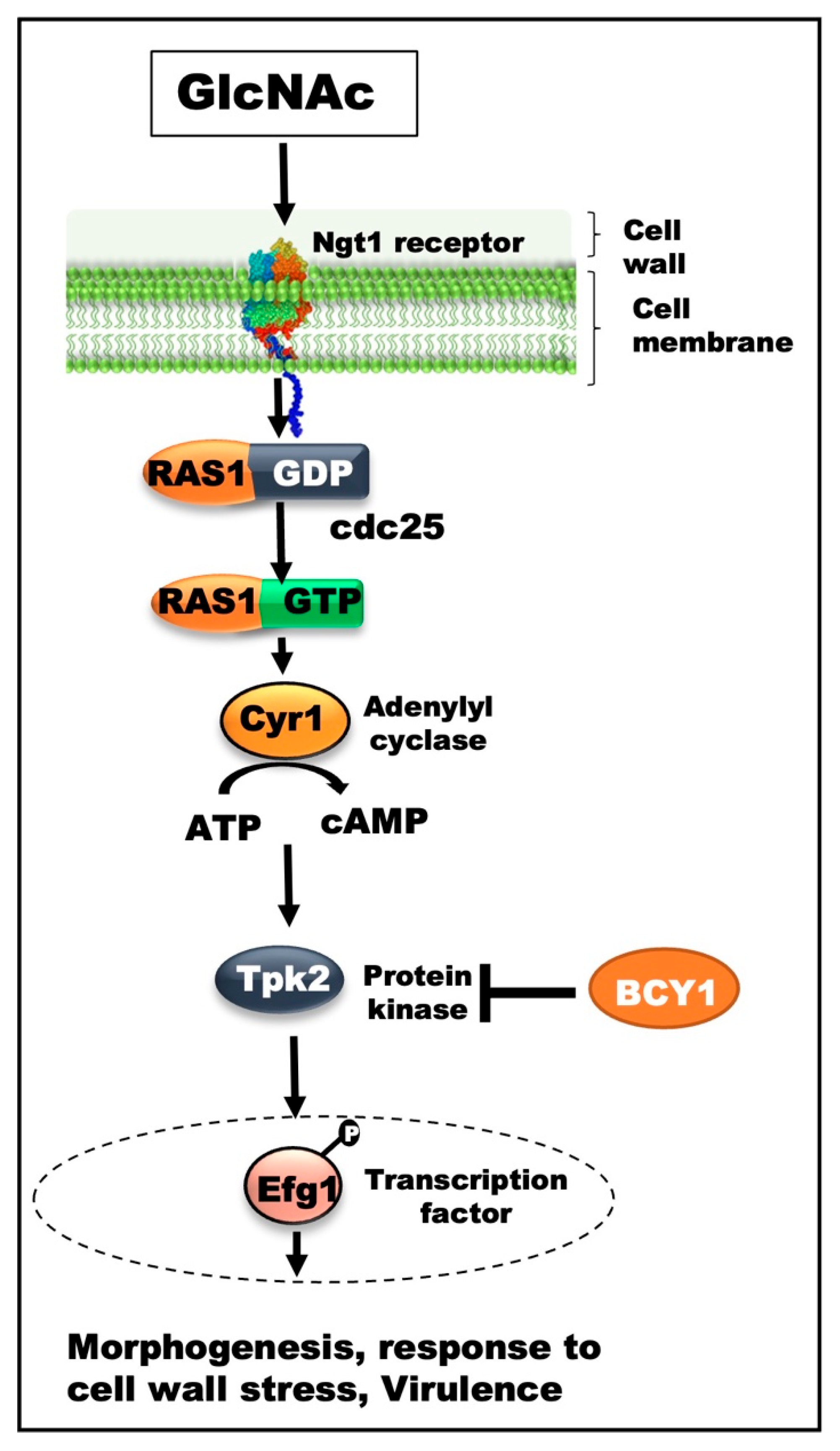
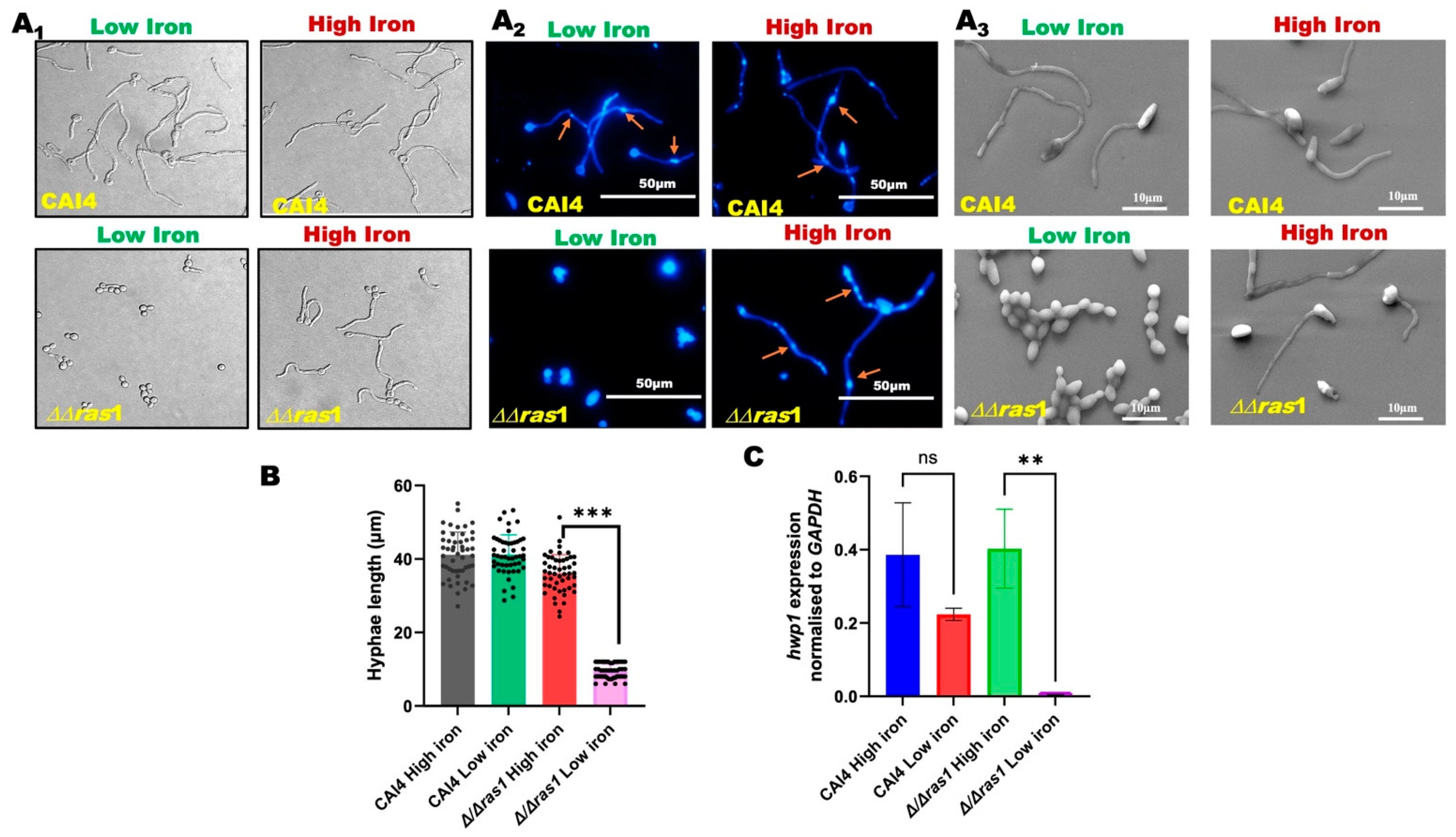
3.1. C. albicans Δ/Δras1 Cells Formed GlcNAc-Induced Hyphae Under High Iron
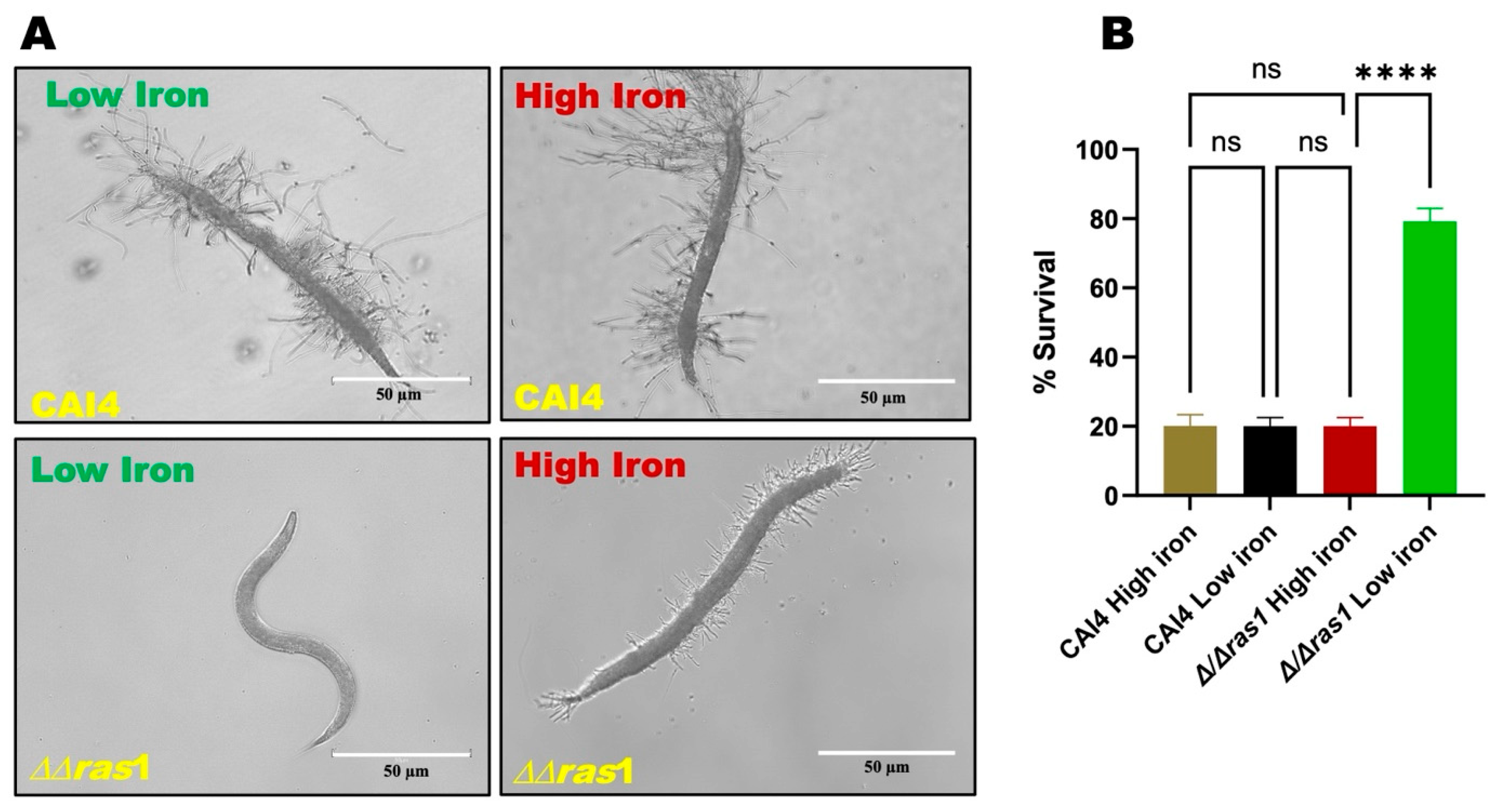
3.2. Δ/ΔRas1 Cells Form Hyphae in a High-Iron Host
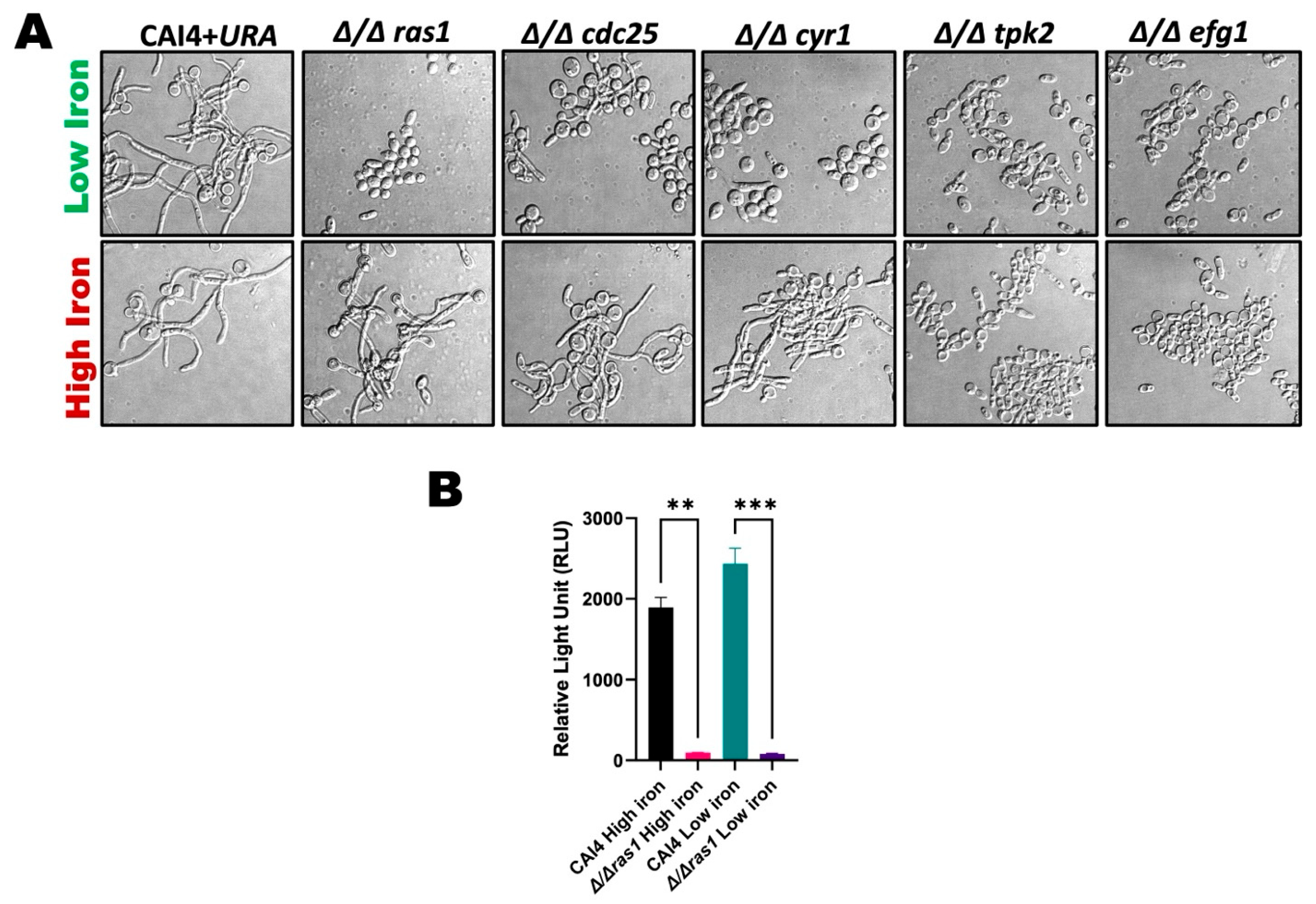
3.3. Iron-Dependent Hyphal Formation in Δ/Δras1 Is Independent of cAMP Signaling While Requiring Efg1 and Tpk2
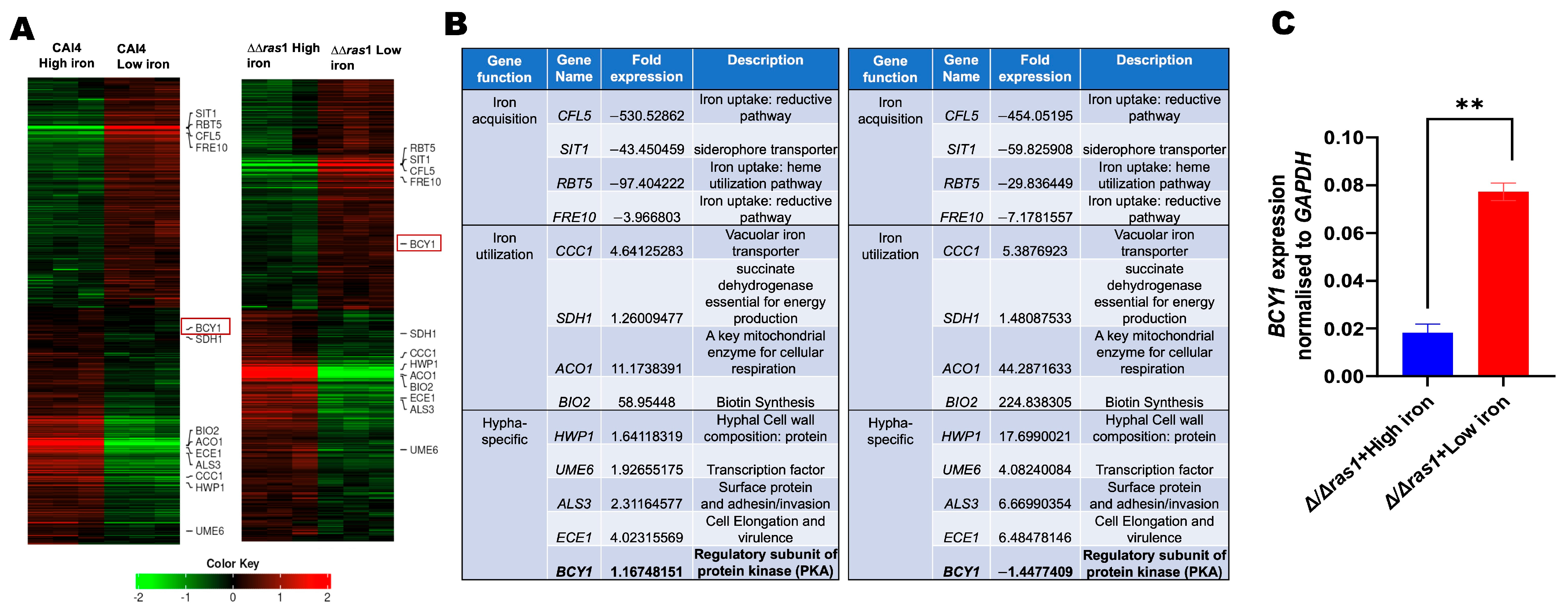
3.4. Unique Iron-Responsive Reduction in BCY1 Gene Expression Under High Iron in Δ/Δras1 Cells
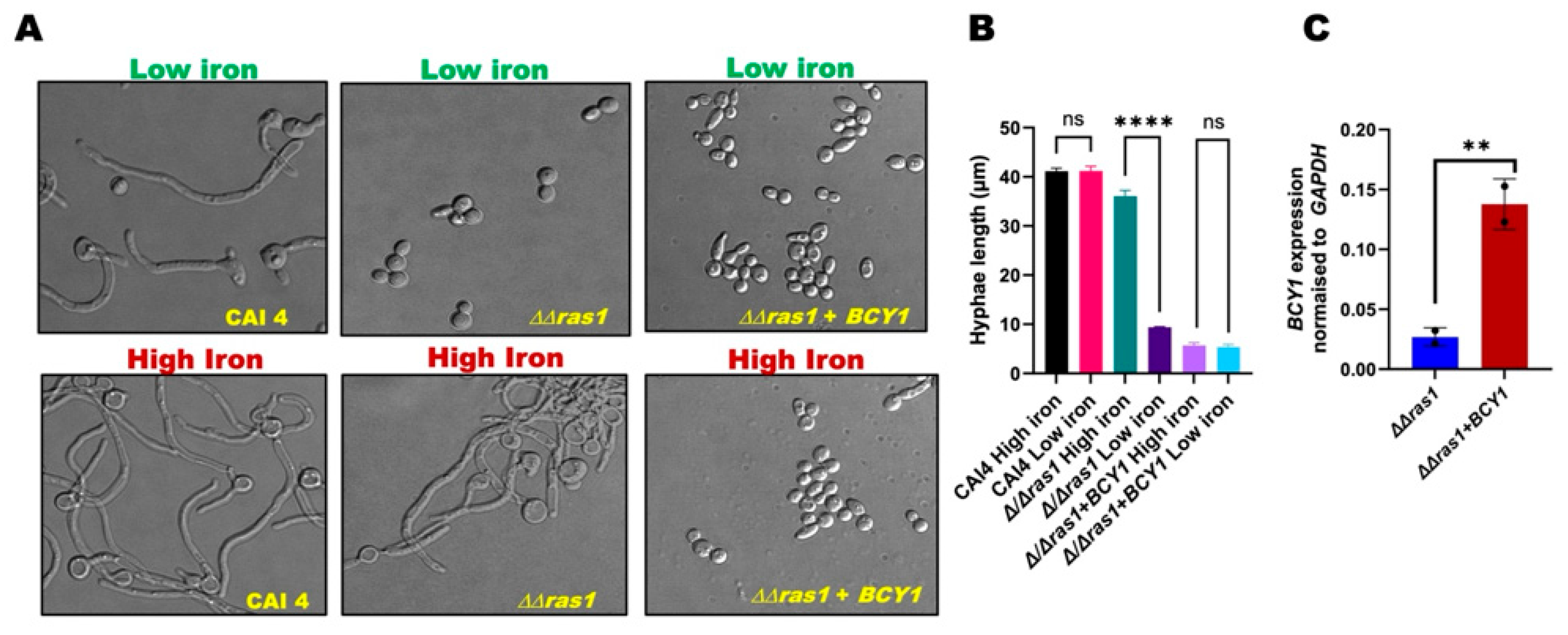
3.5. BCY1 Overexpression Blocks Iron-Dependent Hyphal Formation in Δ/Δras1 Cells
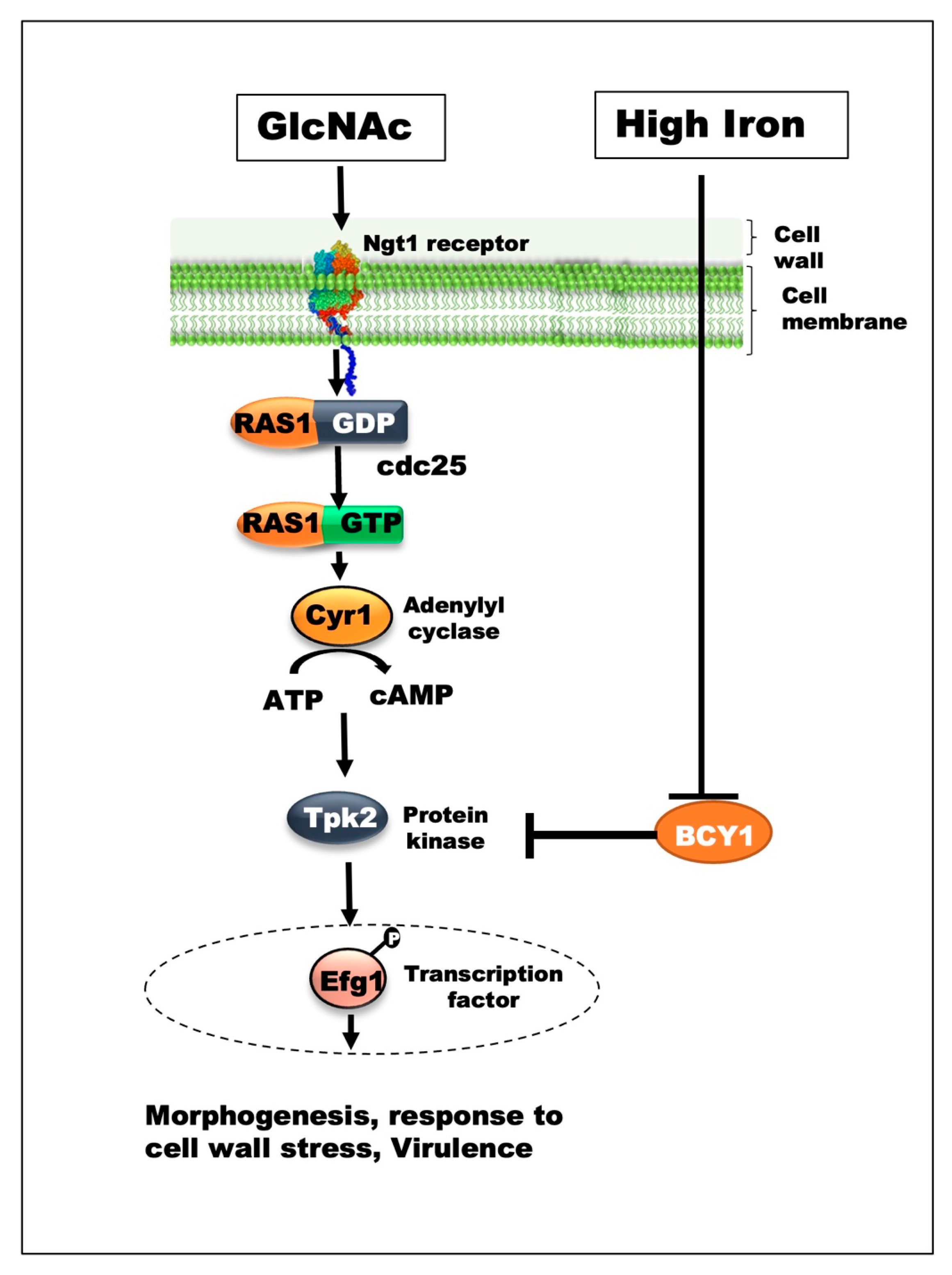
4. Discussion
Supplementary Materials
Author Contributions
Funding
Informed Consent Statement
Data Availability Statement
Acknowledgments
Conflicts of Interest
References
- Calderone, R.A.; Fonzi, W.A. Virulence factors of Candida albicans. Trends Microbiol. 2001, 9, 327–335. [Google Scholar] [CrossRef] [Scilit] [PubMed]
- Mayer, F.L.; Wilson, D.; Hube, B. Candida albicans pathogenicity mechanisms. Virulence 2013, 4, 119–128. [Google Scholar] [CrossRef] [Scilit] [PubMed]
- Sudbery, P.E. Growth of Candida albicans hyphae. Nat. Rev. Microbiol. 2011, 9, 737–748. [Google Scholar] [CrossRef] [Scilit] [PubMed]
- Hanumantha Rao, K.; Paul, S.; Ghosh, S. N-acetylglucosamine Signaling: Transcriptional Dynamics of a Novel Sugar Sensing Cascade in a Model Pathogenic Yeast, Candida albicans. J. Fungi 2021, 7, 65. [Google Scholar] [CrossRef] [Scilit]
- Duval, C.; Macabiou, C.; Garcia, C.; Lesuisse, E.; Camadro, J.M.; Auchère, F. The adaptive response to iron involves changes in energetic strategies in the pathogen Candida albicans. Microbiologyopen 2020, 9, e970. [Google Scholar] [PubMed]
- Naseem, S.; Gunasekera, A.; Araya, E.; Konopka, J.B. N-acetylglucosamine (GlcNAc) induction of hyphal morphogenesis and transcriptional responses in Candida albicans are not dependent on its metabolism. J. Biol. Chem. 2011, 286, 28671–28680. [Google Scholar] [CrossRef] [Scilit] [PubMed]
- Yang, D.; Zhang, M.; Su, C.; Dong, B.; Lu, Y. Candida albicans exploits N-acetylglucosamine as a gut signal to establish the balance between commensalism and pathogenesis. Nat. Commun. 2023, 14, 3796. [Google Scholar] [CrossRef] [Scilit] [PubMed]
- Du, H.; Ennis, C.L.; Hernday, A.D.; Nobile, C.J.; Huang, G. N-Acetylglucosamine (GlcNAc) Sensing, Utilization, and Functions in Candida albicans. J. Fungi 2020, 6, 129. [Google Scholar] [CrossRef] [Scilit]
- Bockmühl, D.P.; Ernst, J.F. A potential phosphorylation site for an A-type kinase in the Efg1 regulator protein contributes to hyphal morphogenesis of Candida albicans. Genetics 2001, 157, 1523–1530. [Google Scholar] [CrossRef] [Scilit] [PubMed]
- Biswas, S.; Van Dijck, P.; Datta, A. Environmental sensing and signal transduction pathways regulating morphopathogenic determinants of Candida albicans. Microbiol. Mol. Biol. Rev. 2007, 71, 348–376. [Google Scholar] [CrossRef] [Scilit] [PubMed]
- Feng, Q.; Summers, E.; Guo, B.; Fink, G. Ras signaling is required for serum-induced hyphal differentiation in Candida albicans. J. Bacteriol. 1999, 181, 6339–6346. [Google Scholar] [CrossRef] [Scilit] [PubMed]
- Bockmühl, D.P.; Krishnamurthy, S.; Gerads, M.; Sonneborn, A.; Ernst, J.F. Distinct and redundant roles of the two protein kinase A isoforms Tpk1p and Tpk2p in morphogenesis and growth of Candida albicans. Mol. Microbiol. 2001, 42, 1243–1257. [Google Scholar] [CrossRef] [Scilit] [PubMed]
- Ding, X.; Cao, C.; Zheng, Q.; Huang, G. The Regulatory Subunit of Protein Kinase A (Bcy1) in Candida albicans Plays Critical Roles in Filamentation and White-Opaque Switching but Is Not Essential for Cell Growth. Front. Microbiol. 2016, 7, 2127. [Google Scholar] [PubMed]
- Glazier, V.E. EFG1, Everyone’s Favorite Gene in Candida albicans: A Comprehensive Literature Review. Front. Cell. Infect. Microbiol. 2022, 12, 855229. [Google Scholar] [CrossRef] [Scilit] [PubMed]
- Xie, J.L.; Grahl, N.; Sless, T.; Leach, M.D.; Kim, S.H.; Hogan, D.A.; Robbins, N.; Cowen, L.E. Signaling through Lrg1, Rho1 and Pkc1 Governs Candida albicans Morphogenesis in Response to Diverse Cues. PLoS Genet. 2016, 12, e1006405. [Google Scholar] [CrossRef] [Scilit] [PubMed]
- Hood, M.I.; Skaar, E.P. Nutritional immunity: Transition metals at the pathogen-host interface. Nat. Rev. Microbiol. 2012, 10, 525–537. [Google Scholar] [CrossRef] [Scilit] [PubMed]
- Weinberg, E.D. Iron availability and infection. Biochim. Biophys. Acta Mol. Basis Dis. 2009, 1790, 600–605. [Google Scholar] [CrossRef] [Scilit]
- Chen, C.; Pande, K.; French, S.D.; Tuch, B.B.; Noble, S.M. An iron homeostasis regulatory circuit with reciprocal roles in Candida albicans commensalism and pathogenesis. Cell Host Microbe 2011, 10, 118–135. [Google Scholar] [CrossRef] [Scilit] [PubMed]
- Chakravarti, A.; Camp, K.; McNabb, D.S.; Pinto, I. The Iron-Dependent Regulation of the Candida albicans Oxidative Stress Response by the CCAAT-Binding Factor. PLoS ONE 2017, 12, e0170649. [Google Scholar] [CrossRef] [Scilit] [PubMed]
- Sharma, R.; Gibb, A.A.; Barnts, K.; Elrod, J.W.; Puri, S. Alternative oxidase promotes high iron tolerance in Candida albicans. Microbiol. Spectr. 2023, 11, e0215723. [Google Scholar] [CrossRef] [Scilit] [PubMed]
- Tripathi, A.; Nahar, A.; Sharma, R.; Kanaskie, T.; Al-Hebshi, N.; Puri, S. High iron-mediated increased oral fungal burden, oral-to-gut transmission, and changes to pathogenicity of Candida albicans in oropharyngeal candidiasis. J. Oral Microbiol. 2022, 14, 2044110. [Google Scholar] [CrossRef] [Scilit] [PubMed]
- Luo, G.; Wang, T.; Zhang, J.; Zhang, P.; Lu, Y. Candida albicans requires iron to sustain hyphal growth. Biochem. Biophys. Res. Commun. 2021, 561, 106–112. [Google Scholar] [CrossRef] [Scilit] [PubMed]
- Puri, S.; Lai, W.K.; Rizzo, J.M.; Buck, M.J.; Edgerton, M. Iron-responsive chromatin remodelling and MAPK signalling enhance adhesion in Candida albicans. Mol. Microbiol. 2014, 93, 291–305. [Google Scholar] [CrossRef] [Scilit] [PubMed]
- Tripathi, A.; Liverani, E.; Tsygankov, A.Y.; Puri, S. Iron alters the cell wall composition and intracellular lactate to affect Candida albicans susceptibility to antifungals and host immune response. J. Biol. Chem. 2020, 295, 10032–10044. [Google Scholar] [CrossRef] [Scilit] [PubMed]
- Fonzi, W.A.; Irwin, M.Y. Isogenic strain construction and gene mapping in Candida albicans. Genetics 1993, 134, 717–728. [Google Scholar] [CrossRef] [Scilit] [PubMed]
- Grahl, N.; Demers, E.G.; Lindsay, A.K.; Harty, C.E.; Willger, S.D.; Piispanen, A.E.; Hogan, D.A. Mitochondrial Activity and Cyr1 Are Key Regulators of Ras1 Activation of C. albicans Virulence Pathways. PLoS Pathog. 2015, 11, e1005133. [Google Scholar] [CrossRef] [Scilit] [PubMed]
- Kumar, R.; Maulik, M.; Pathirana, R.U.; Cullen, P.J.; Edgerton, M. Sho1p Connects Glycolysis to Ras1-cAMP Signaling and Is Required for Microcolony Formation in Candida albicans. mSphere 2020, 5, 1110–1128. [Google Scholar] [CrossRef] [Scilit]
- Lindsay, A.K.; Deveau, A.; Piispanen, A.E.; Hogan, D.A. Farnesol and cyclic AMP signaling effects on the hypha-to-yeast transition in Candida albicans. Eukaryot. Cell 2012, 11, 1219–1225. [Google Scholar] [CrossRef] [Scilit] [PubMed]
- Piispanen, A.E.; Grahl, N.; Hollomon, J.M.; Hogan, D.A. Regulated proteolysis of Candida albicans Ras1 is involved in morphogenesis and quorum sensing regulation. Mol. Microbiol. 2013, 89, 166–178. [Google Scholar] [CrossRef] [Scilit] [PubMed]
- Staniszewska, M.; Bondaryk, M.; Swoboda-Kopec, E.; Siennicka, K.; Sygitowicz, G.; Kurzatkowski, W. Candida albicans morphologies revealed by scanning electron microscopy analysis. Braz. J. Microbiol. 2013, 44, 813–821. [Google Scholar] [CrossRef] [Scilit] [PubMed]
- Stiernagle, T. Maintenance of C. elegans. In WormBook; WormBook Consortium: Pasadena, CA, USA, 2006; pp. 1–11. [Google Scholar] [CrossRef] [Scilit] [PubMed]
- Ge, S.X.; Son, E.W.; Yao, R. iDEP: An integrated web application for differential expression and pathway analysis of RNA-Seq data. BMC Bioinf. 2018, 19, 534. [Google Scholar] [CrossRef] [Scilit]
- Park, Y.N.; Morschhäuser, J. Tetracycline-inducible gene expression and gene deletion in Candida albicans. Eukaryot. Cell 2005, 4, 1328–1342. [Google Scholar] [CrossRef] [Scilit] [PubMed]
- Sudbery, P.; Gow, N.; Berman, J. The distinct morphogenic states of Candida albicans. Trends Microbiol. 2004, 12, 317–324. [Google Scholar] [CrossRef] [Scilit] [PubMed]
- Valentini, S.; Cabreiro, F.; Ackerman, D.; Alam, M.M.; Kunze, M.B.; Kay, C.W.; Gems, D. Manipulation of in vivo iron levels can alter resistance to oxidative stress without affecting ageing in the nematode C. elegans. Mech. Ageing Dev. 2012, 133, 282–290. [Google Scholar] [CrossRef] [Scilit] [PubMed]
- Cassola, A.; Parrot, M.; Silberstein, S.; Magee, B.B.; Passeron, S.; Giasson, L.; Cantore, M.L. Candida albicans lacking the gene encoding the regulatory subunit of protein kinase A displays a defect in hyphal formation and an altered localization of the catalytic subunit. Eukaryot. Cell 2004, 3, 190–199. [Google Scholar] [CrossRef] [Scilit] [PubMed]
- Kadosh, D. Regulatory mechanisms controlling morphology and pathogenesis in Candida albicans. Curr. Opin. Microbiol. 2019, 52, 27–34. [Google Scholar] [CrossRef] [Scilit] [PubMed]
- Hogan, D.A.; Sundstrom, P. The Ras/cAMP/PKA signaling pathway and virulence in Candida albicans. Future Microbiol. 2009, 4, 1263–1270. [Google Scholar] [CrossRef] [Scilit] [PubMed]
- Pentland, D.R.; Piper-Brown, E.; Mühlschlegel, F.A.; Gourlay, C.W. Ras signalling in pathogenic yeasts. Microb. Cell 2017, 5, 63–73. [Google Scholar] [PubMed]
- Huang, G. Regulation of phenotypic transitions in the fungal pathogen Candida albicans. Virulence 2012, 3, 251–261. [Google Scholar] [CrossRef] [Scilit] [PubMed]
- Inglis, D.O.; Sherlock, G. Ras signaling gets fine-tuned: Regulation of multiple pathogenic traits of Candida albicans. Eukaryot. Cell 2013, 12, 1316–1325. [Google Scholar] [CrossRef] [Scilit] [PubMed]
- Potrykus, J.; Stead, D.; Maccallum, D.M.; Urgast, D.S.; Raab, A.; van Rooijen, N.; Feldmann, J.; Brown, A.J. Fungal iron availability during deep seated candidiasis is defined by a complex interplay involving systemic and local events. PLoS Pathog. 2013, 9, e1003676. [Google Scholar] [CrossRef] [Scilit] [PubMed]
- Almeida, R.S.; Wilson, D.; Hube, B. Candida albicans iron acquisition within the host. FEMS Yeast Res. 2009, 9, 1000–1012. [Google Scholar] [CrossRef] [Scilit] [PubMed]
- Solis, N.V.; Wakade, R.S.; Filler, S.G.; Krysan, D.J. Candida albicans Oropharyngeal Infection Is an Exception to Iron-Based Nutritional Immunity. mBio 2023, 14, e0009523. [Google Scholar] [CrossRef] [Scilit] [PubMed]
- Sethi, S.C.; Bharati, M.; Kumar, Y.; Yadav, U.; Saini, H.; Alam, P.; Komath, S.S. The ER-Resident Ras Inhibitor 1 (Eri1) of Candida albicans Inhibits Hyphal Morphogenesis via the Ras-Independent cAMP-PKA Pathway. ACS Infect. Dis. 2024, 10, 3528–3543. [Google Scholar] [CrossRef] [Scilit] [PubMed]
- Parrino, S.M.; Si, H.; Naseem, S.; Groudan, K.; Gardin, J.; Konopka, J.B. cAMP-independent signal pathways stimulate hyphal morphogenesis in Candida albicans. Mol. Microbiol. 2017, 103, 764–779. [Google Scholar] [PubMed]
- Pan, X.; Heitman, J. Cyclic AMP-dependent protein kinase regulates pseudohyphal differentiation in Saccharomyces cerevisiae. Mol. Cell. Biol. 1999, 19, 4874–4887. [Google Scholar] [CrossRef] [Scilit] [PubMed]
- Min, K.; Jannace, T.F.; Si, H.; Veeramah, K.R.; Haley, J.D.; Konopka, J.B. Integrative multi-omics profiling reveals cAMP-independent mechanisms regulating hyphal morphogenesis in Candida albicans. PLoS Pathog. 2021, 17, e1009861. [Google Scholar] [CrossRef] [Scilit] [PubMed]



| Strain | Genotype | Reference |
|---|---|---|
| CAI4 | Δura3::imm434/URA3 | [25] |
| Δ/Δcdc25 | Δura3::λimm434/ura3::λimm434arg4::hisG/arg4::hisG his1::hisG/his1::hisG Δcdc25::HIS1/cdc25::ARG4 | [26] |
| Δ/Δras1 | Δura3::λimm434/Δura3::λimm434 Δras1::hisG/ras1::hisG::URA3 | [27] |
| Δ/Δcyr1 | Δura3::λimm434/Δura3::λimm434 Δcyr1::hisG::Δcyr1::hisG | [28] |
| Δ/Δtpk1 | Δura3::λimm434/Δura3::λimm434/his1::hisG/his1::hisG arg4::hisG/arg4::hisG tpk1::ARG4/tpk1::URA3 | [27] |
| Δ/Δtpk2 | Δura3::λimm434/Δura3::λimm434/his1::hisG/his1::hisG arg4::hisG/arg4::hisG tpk2::ARG4/tpk2::URA3 | [27] |
| Δ/Δefg1 | Δura3::λimm434/Δura3::λimm434/efg1::hisG/efg1::hisA-hisG-ura3::λimm434/ura3::λimm434 efg1::hisG | [27] |
| Δ/Δras1 + BCY1 | Δura3::λimm434/Δura3::λimm434 Δras1::hisG/ras1::hisG::URA3 ADH1/adh1::Ptet-BCY1-6xHis | In this study |
| Primers | Sequence | Reference |
|---|---|---|
| Forward BCY1 | CGTCGGTCGACATGTCTAATCCTCAACAGCAATTC | This study |
| Reverse BCY1 | AGCCTAGATCTTTAGTGATGGTGATGGTGATGATGACCAGCAGTTGGGTCTTGA | This study |
| Forward RT- BCY1 | TCCAGTAGCGAAGGGTCATC | This study |
| Reverse RT- BCY1 | TTCGACGGAATGTCAAACGG | This study |
| Forward RT- HWP1 | ATCAGCTCCTGCCACTGAAC | This study |
| Reverse RT- HWP1 | TGGCAGATGGTTGCATGAGT | This study |
| Forward RT- GAPDH | GGGTTCAAGCTACTCATCTATC | This study |
| Reverse RT- GAPDH | CTGGTGGAGTAACCGTATTC | This study |
Disclaimer/Publisher’s Note: The statements, opinions and data contained in all publications are solely those of the individual author(s) and contributor(s) and not of MDPI and/or the editor(s). MDPI and/or the editor(s) disclaim responsibility for any injury to people or property resulting from any ideas, methods, instructions or products referred to in the content. |
© 2026 by the authors. Licensee MDPI, Basel, Switzerland. This article is an open access article distributed under the terms and conditions of the Creative Commons Attribution (CC BY) license.
Share and Cite
Parashar, D.; Sharma, R.; Puri, S. Ras1-Independent High Iron-Mediated Hyphal Formation in Candida albicans. J. Fungi 2026, 12, 459. https://doi.org/10.3390/jof12070459
Parashar D, Sharma R, Puri S. Ras1-Independent High Iron-Mediated Hyphal Formation in Candida albicans. Journal of Fungi. 2026; 12(7):459. https://doi.org/10.3390/jof12070459
Chicago/Turabian StyleParashar, Deepak, Rishabh Sharma, and Sumant Puri. 2026. "Ras1-Independent High Iron-Mediated Hyphal Formation in Candida albicans" Journal of Fungi 12, no. 7: 459. https://doi.org/10.3390/jof12070459
APA StyleParashar, D., Sharma, R., & Puri, S. (2026). Ras1-Independent High Iron-Mediated Hyphal Formation in Candida albicans. Journal of Fungi, 12(7), 459. https://doi.org/10.3390/jof12070459