
Article

The Vacuolar Morphogenesis Protein Vam6-Like Protein Vlp1 Is Required for Pathogenicity of Cryptococcus neoformans
1
College of Animal Science and Technology, Southwest University, Chongqing 400715, China
2
State Key Laboratory of Silkworm Genome Biology, Southwest University, Chongqing 400715, China
3
Medical Research Institute, Southwest University, Chongqing 400715, China
*
Author to whom correspondence should be addressed.
J. Fungi 2021, 7(6), 418; https://doi.org/10.3390/jof7060418
Submission received: 27 April 2021 / Revised: 25 May 2021 / Accepted: 25 May 2021 / Published: 27 May 2021
(This article belongs to the Special Issue Fungal Pathogens and Human Health)

Abstract

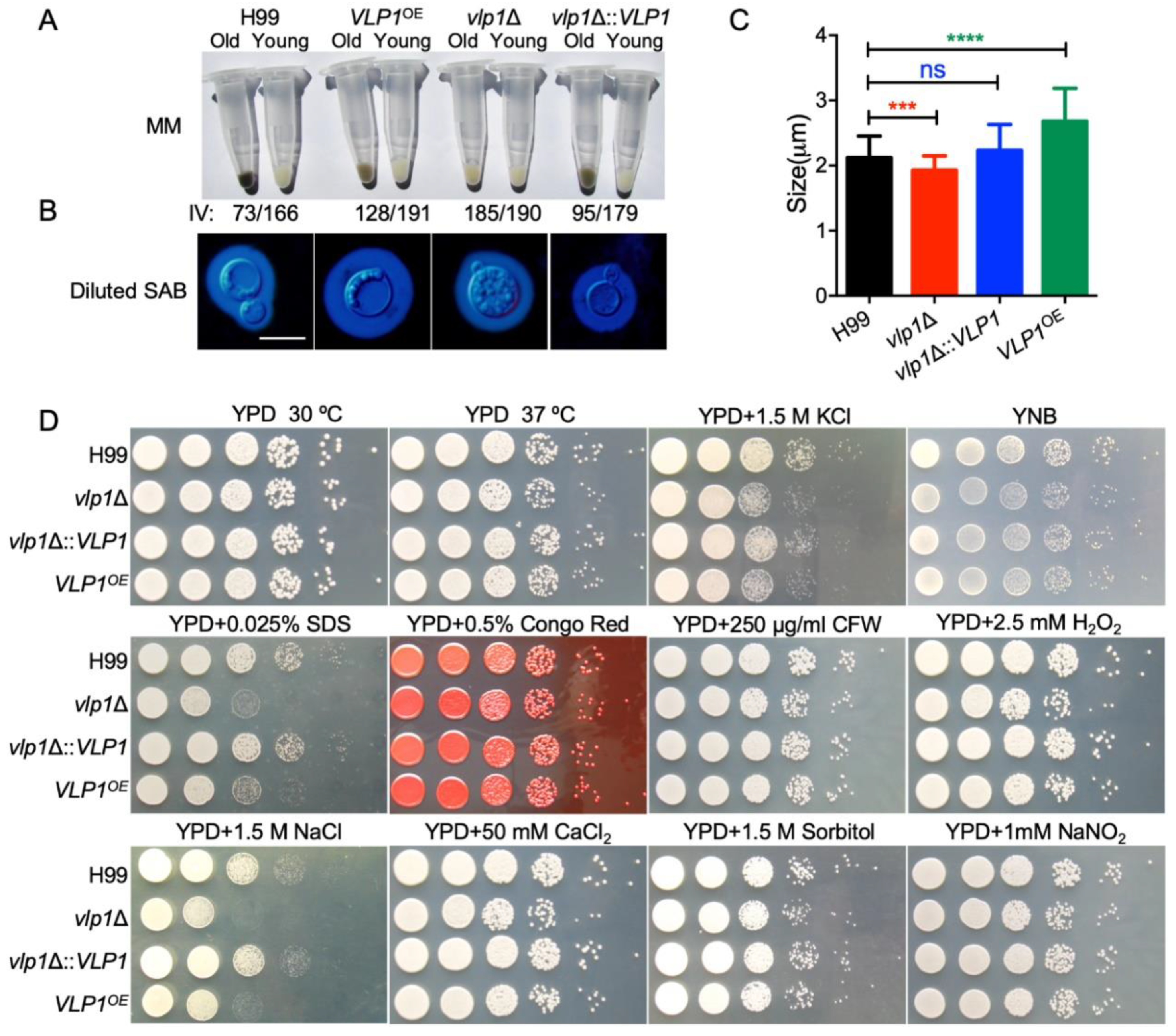
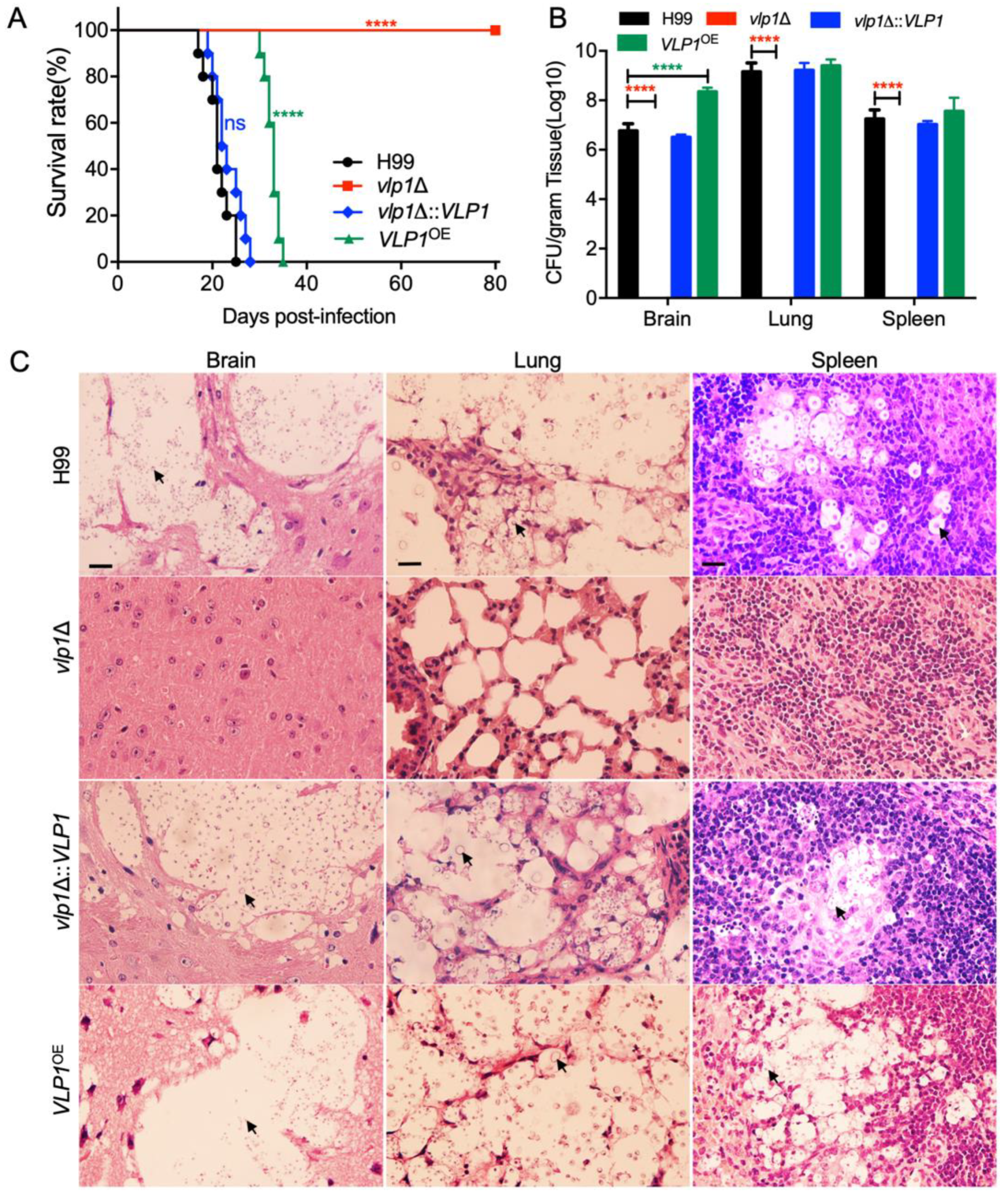
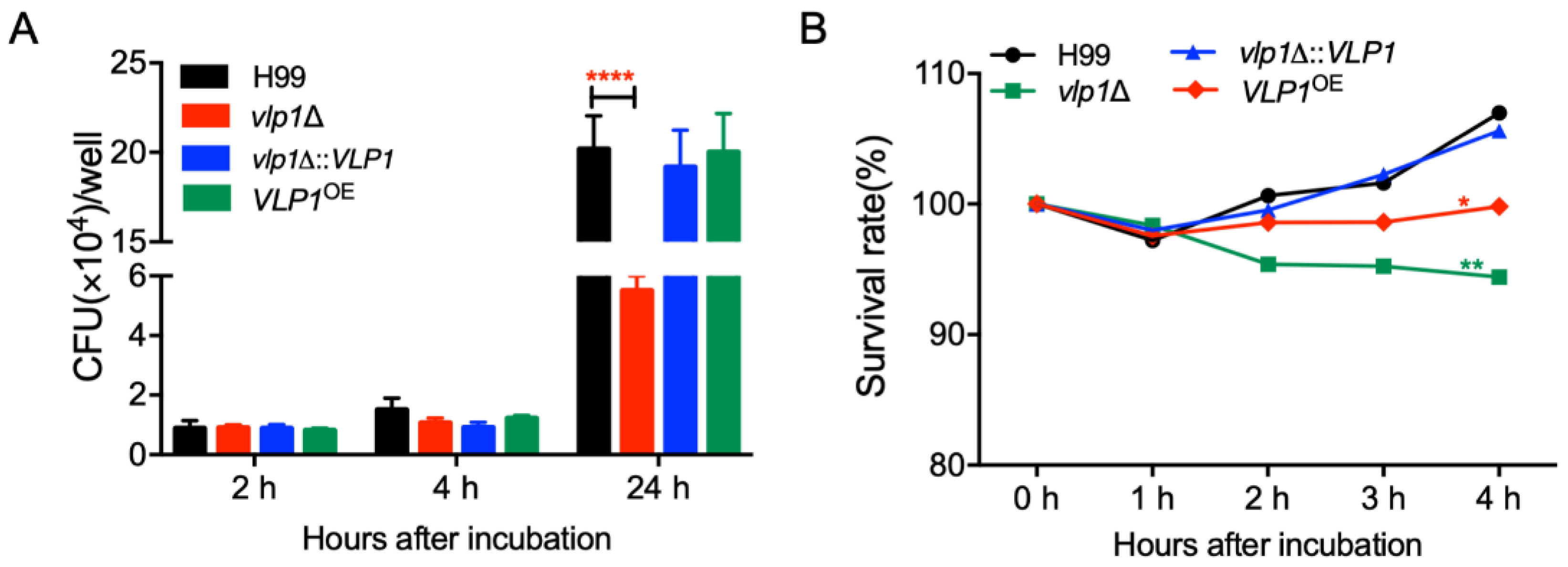
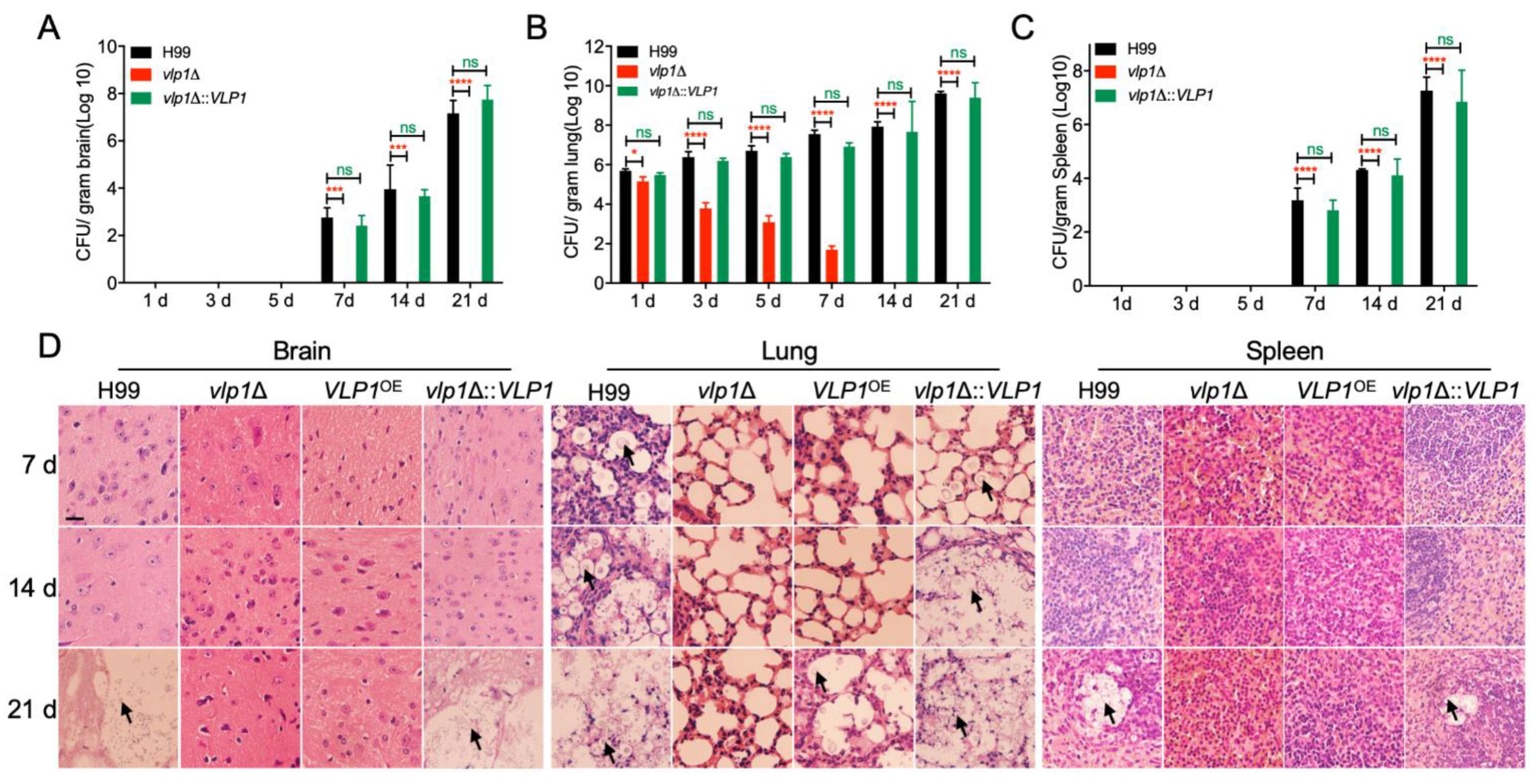
Cryptococcus neoformans is an encapsulated yeast pathogen that infects immunocompromised patients to cause fungal meningitis, resulting in hundreds of thousands of deaths each year. F-box protein Fbp1, the key component of the E3 ubiquitin ligase, plays a critical role in fungal development and virulence in fungal pathogens. In this study, we identified a potential substrate of Fbp1, the vacuolar morphogenesis protein Vam6-like protein Vlp1, and evaluated its role in virulence in C. neoformans. Deletion or overexpression of the VLP1 gene results in abnormal capsule formation and melanin production of C. neoformans. Stress tolerance assay showed that the vlp1Δ mutant was sensitive to SDS and NaCl but not to CFW or Congo red, indicating that Vlp1 might regulate the cell membrane integrity in C. neoformans. Fungal virulence assay showed that Vlp1 was essential for the pathogenicity of C. neoformans, as vlp1Δ mutants are avirulent in the mouse systematic infection model of cryptococcosis. The progression of fungal infection revealed that the vlp1Δ mutants were gradually eliminated from the lungs of the mice after infection. Moreover, the vlp1Δ mutants showed a proliferation defect inside macrophages and a viability defect in the host complement system, which likely contributes to the virulence attenuation of the vlp1Δ mutants. In summary, our results revealed that the vacuolar morphogenesis protein Vam6-like protein Vlp1 is essential for the pathogenicity of C. neoformans.
Keywords: Cryptococcus neoformans; vacuolar morphogenesis protein; Vlp1; virulence; macrophage Cryptococcus neoformans; vacuolar morphogenesis protein; Vlp1; virulence; macrophage