Trichoderma-Enabled Crop Resilience Under Abiotic Stress: From Field Delivery to Systems-Level Stress Reprogramming



Abstract
1. Introduction
2. Literature Search and Evidence-Synthesis Approach
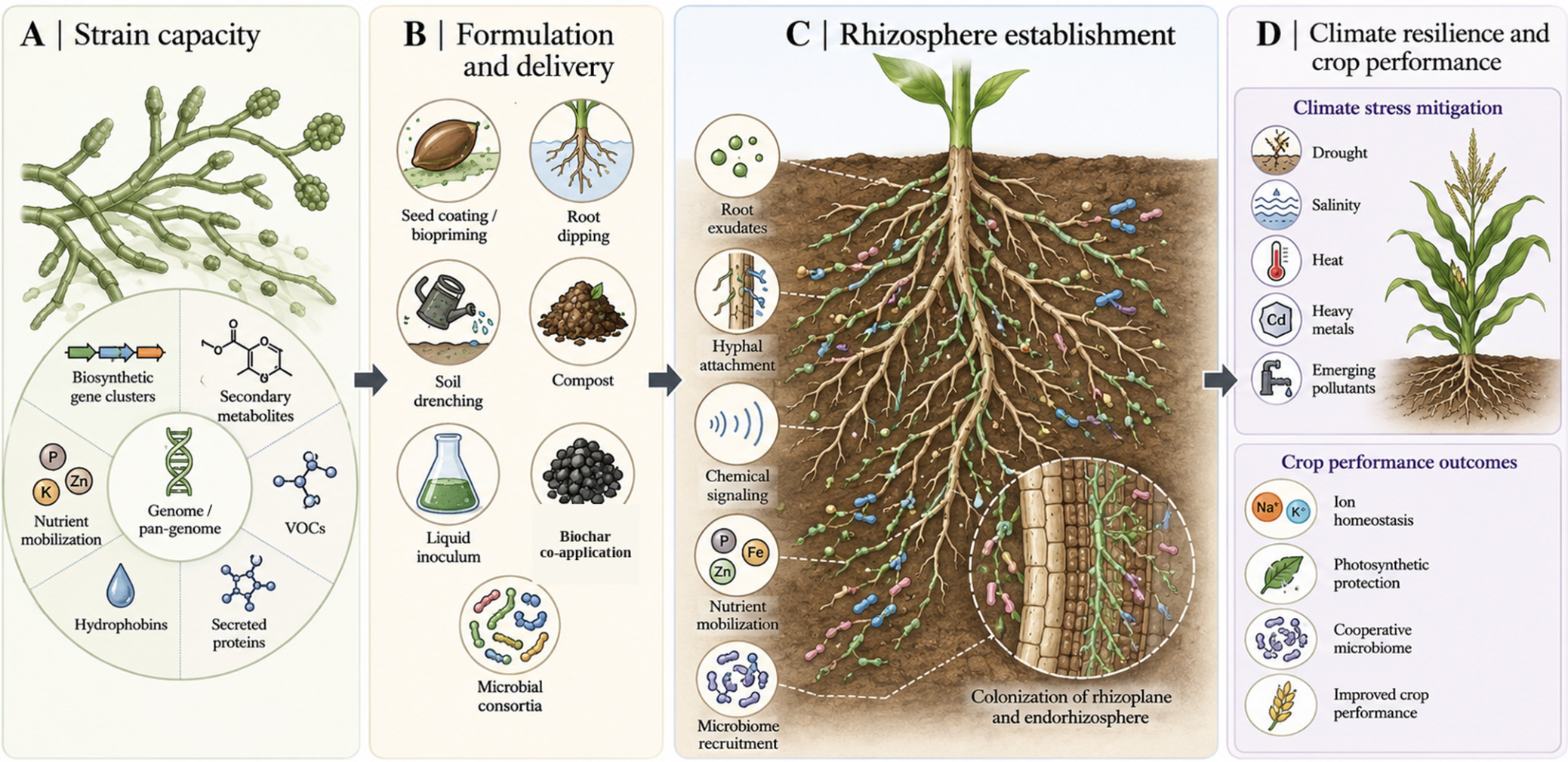
3. The Trichoderma Platform: Genetic Capacity, Metabolic Signals, and Field Delivery
3.1. Pan-Genome Architecture and Strain-Level Functional Capacity
3.2. Secondary Metabolites as Plant-Regulating Signals
3.3. Secreted Enzymes, Hydrophobins, and Nutrient-Mobilizing Traits
3.4. Formulation and Delivery as Determinants of Field Expression
3.5. Microbial Consortia and Compatibility with the Resident Microbiome
4. The Trichoderma-Plant Interface: Colonization, Signaling, and Rhizosphere Establishment
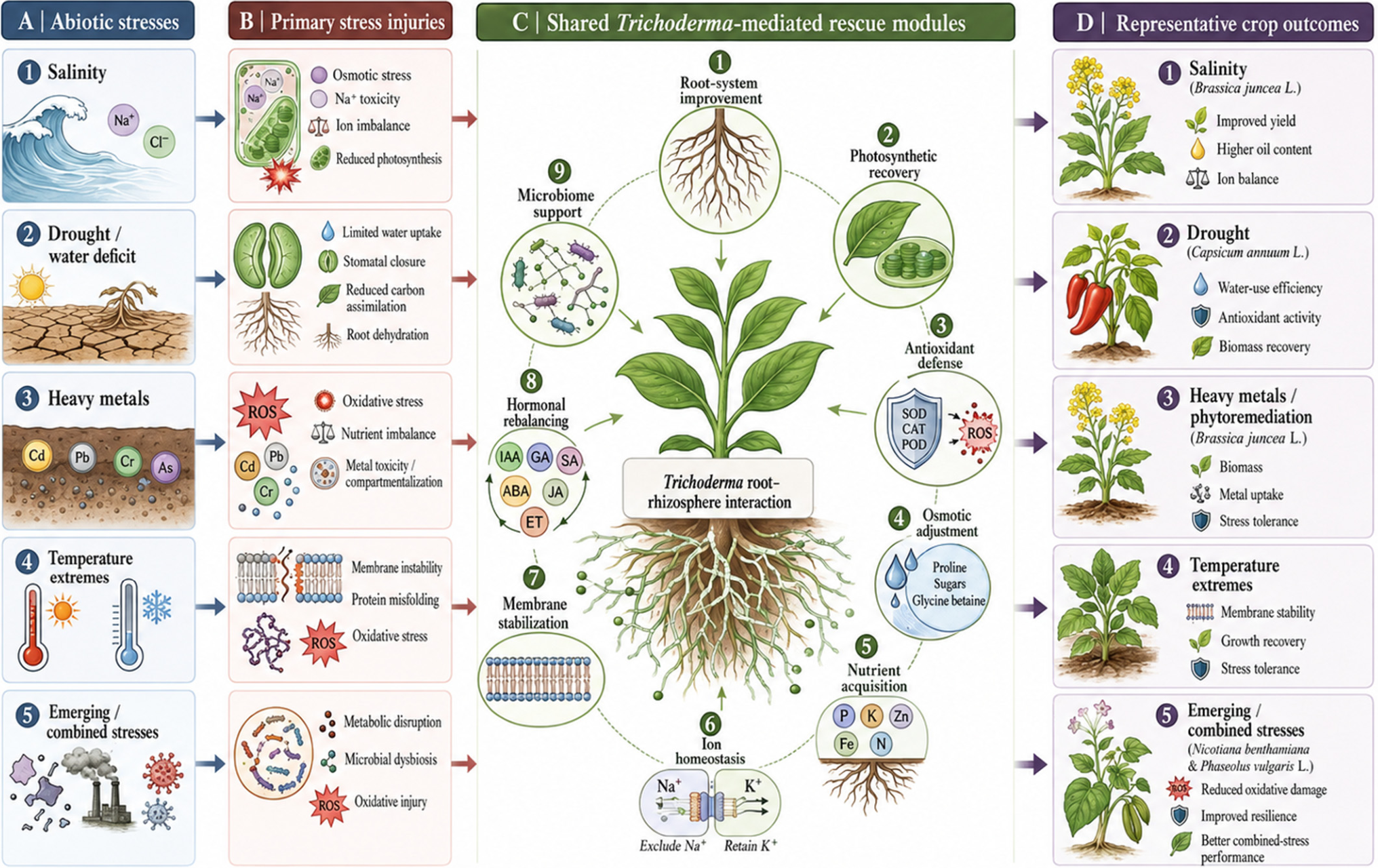
5. Abiotic Stress Mitigation by Trichoderma
5.1. Salinity Stress
5.2. Drought and Water Deficit
5.3. Heavy-Metal Stress and Phytoremediation
5.4. Temperature Stress
5.5. Emerging, Nutrient-Related, and Combined Stresses
6. Physiological and Biochemical Reprogramming of Stressed Crops
6.1. Photosynthetic Recovery and Carbon Assimilation
6.2. Antioxidant Defense and Redox Buffering
6.3. Osmotic Adjustment and Compatible Solutes
6.4. Nutrient Uptake and Ion Homeostasis
6.5. Membrane Stability and Injury Limitation
6.6. Hormonal Regulation and Stress-Growth Trade-Offs
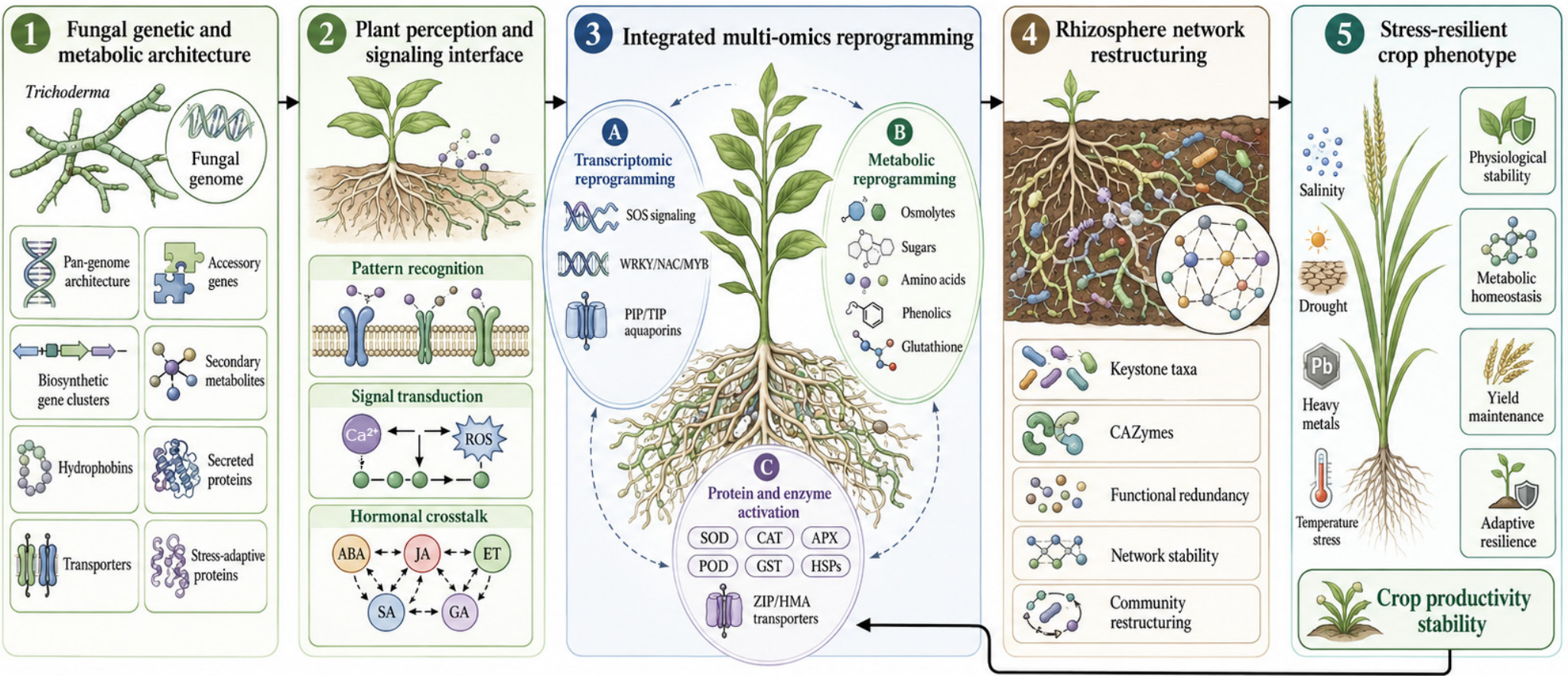
7. Molecular and Omics Mechanisms
7.1. Stress-Responsive Gene Networks: From Markers to Modules
7.2. Transcriptomic Reprogramming Under Abiotic and Emerging Stresses
7.3. Metabolomics: Chemical Evidence for Stress Reprogramming
7.4. Proteomic and Enzyme-Level Adaptations in Host and Fungus
7.5. Experimentally Tested Trichoderma Genes and Proteins: Functional Evidence and Experimental Boundaries
7.6. Amplicon Sequencing, Microbiome Associations, and Network Inference
7.7. Pan-Genome-Guided Strain Selection for Climate-Resilient Bioformulations
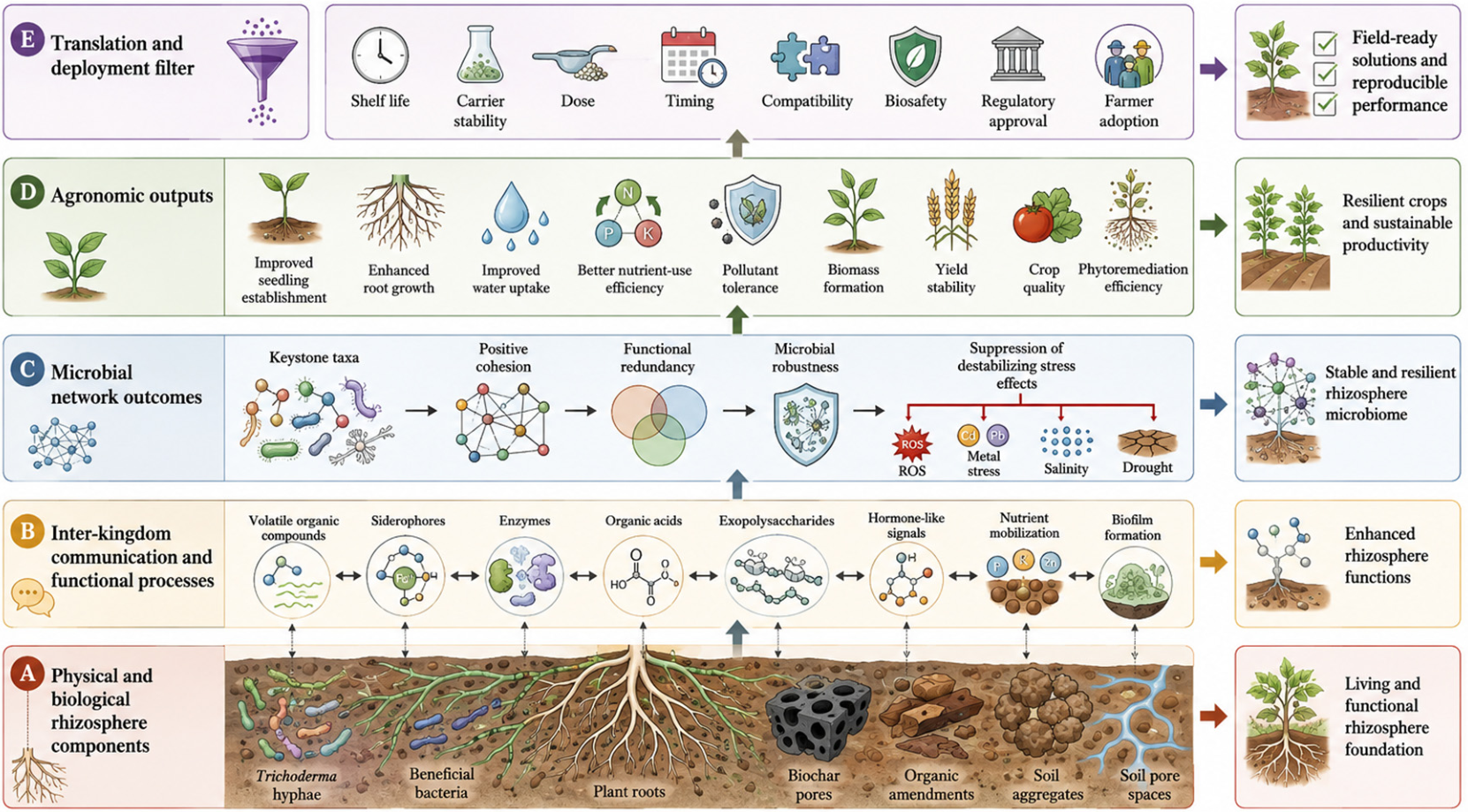
8. Rhizosphere Engineering and Microbial Consortia
8.1. Inter-Kingdom Communication at the Fungal-Bacterial Interface
8.2. Synergistic Partners: Bacillus, Pseudomonas, Rhizobia, and Plant-Growth-Promoting Bacteria
8.3. Biochar as a Soil Amendment, Microbial Habitat, and Candidate Carrier Material
8.4. Microbial Co-Occurrence Networks, Candidate Hub Taxa, and Functional Hypotheses
8.5. Risks, Context Dependence, and Design Principles
9. Translating Mechanisms into Crop Productivity
9.1. Early Establishment, Seedling Vigor, and Root-System Architecture
9.2. Vegetative Growth, Biomass Accumulation, and Canopy Function
9.3. Harvest Outcomes, Crop Quality, and Nutrient-Use Efficiency
9.4. The Pot-to-Field Performance Filter
9.5. Commercial Deployment: Formulation, Dose, Timing, and Farmer Adoption
9.6. Biosafety, Persistence, and Responsible Productivity Claims
10. Challenges, Research Gaps, and Future Prospects
10.1. From Broad Claims to Strain-Crop-Stress Specificity
10.2. Long-Term and Multi-Location Field Validation
10.3. Standardization of Formulation, Dose, and Timing
10.4. Realistic Combined-Stress Systems and Recovery Phases
10.5. Predictive Omics, Synthetic Consortia, Biochar Co-Application, and Carrier Development
10.6. Biosafety, Ecological Persistence, Regulation, and Farmer Economics
10.7. Perspective: Towards Precision Microbial Resilience Technologies
11. Conclusions
Author Contributions
Funding
Data Availability Statement
Acknowledgments
Conflicts of Interest
Abbreviations
References
- Kopecká, R.; Kameniarová, M.; Černý, M.; Brzobohatý, B.; Novák, J. Abiotic Stress in Crop Production. Int. J. Mol. Sci. 2023, 24, 6603. [Google Scholar] [CrossRef] [PubMed]
- Jeyasri, R.; Muthuramalingam, P.; Satish, L.; Pandian, S.K.; Chen, J.T.; Ahmar, S.; Wang, X.; Mora-Poblete, F.; Ramesh, M. An Overview of Abiotic Stress in Cereal Crops: Negative Impacts, Regulation, Biotechnology and Integrated Omics. Plants 2021, 10, 1472. [Google Scholar] [CrossRef] [PubMed]
- Zandalinas, S.I.; Fritschi, F.B.; Mittler, R. Global Warming, Climate Change, and Environmental Pollution: Recipe for a Multifactorial Stress Combination Disaster. Trends Plant Sci. 2021, 26, 588–599. [Google Scholar] [CrossRef] [PubMed]
- Munns, R.; Tester, M. Mechanisms of Salinity Tolerance. Annu. Rev. Plant Biol. 2008, 59, 651–681. [Google Scholar] [CrossRef] [PubMed]
- Wang, F.; Sun, X.; Wang, K.; Long, B.; Li, F.; Xie, D. Physiological and Multi-Omics Insights into Trichoderma harzianum Alleviating Aged Microplastic Stress in Nicotiana benthamiana. Int. J. Mol. Sci. 2025, 26, 11667. [Google Scholar] [CrossRef] [PubMed]
- Farooq, M.; Wahid, A.; Kobayashi, N.; Fujita, D.; Basra, S.M.A. Plant drought stress: Effects, mechanisms and management. Agron. Sustain. Dev. 2009, 29, 185–212. [Google Scholar] [CrossRef]
- Gill, S.S.; Tuteja, N. Reactive oxygen species and antioxidant machinery in abiotic stress tolerance in crop plants. Plant Physiol. Biochem. 2010, 48, 909–930. [Google Scholar] [CrossRef] [PubMed]
- Hasanuzzaman, M.; Nahar, K.; Fujita, M. Plant Response to Salt Stress and Role of Exogenous Protectants to Mitigate Salt-Induced Damages. In Ecophysiology and Responses of Plants Under Salt Stress; Springer: New York, NY, USA, 2013. [Google Scholar] [CrossRef]
- Wahid, A.; Gelani, S.; Ashraf, M.; Foolad, M. Heat tolerance in plants: An overview. Environ. Exp. Bot. 2007, 61, 199–223. [Google Scholar] [CrossRef]
- Haider, F.U.; Liqun, C.; Coulter, J.A.; Cheema, S.A.; Wu, J.; Zhang, R.; Wenjun, M.; Farooq, M. Cadmium toxicity in plants: Impacts and remediation strategies. Ecotoxicol. Environ. Saf. 2021, 211, 111887. [Google Scholar] [CrossRef] [PubMed]
- Sánchez-Bermúdez, M.; Del Pozo, J.C.; Pernas, M. Effects of Combined Abiotic Stresses Related to Climate Change on Root Growth in Crops. Front. Plant Sci. 2022, 13, 918537. [Google Scholar] [CrossRef]
- Tardieu, F. Any trait or trait-related allele can confer drought tolerance: Just design the right drought scenario. J. Exp. Bot. 2012, 63, 25–31. [Google Scholar] [CrossRef] [PubMed]
- Mickelbart, M.V.; Hasegawa, P.M.; Bailey-Serres, J. Genetic mechanisms of abiotic stress tolerance that translate to crop yield stability. Nat. Rev. Genet. 2015, 16, 237–251. [Google Scholar] [CrossRef] [PubMed]
- Seleiman, M.F.; Al-Suhaibani, N.; Ali, N.; Akmal, M.; Alotaibi, M.; Refay, Y.; Dindaroglu, T.; Abdul-Wajid, H.H.; Battaglia, M.L. Drought Stress Impacts on Plants and Different Approaches to Alleviate Its Adverse Effects. Plants 2021, 10, 259. [Google Scholar] [CrossRef] [PubMed]
- Kopittke, P.M.; Menzies, N.W.; Wang, P.; McKenna, B.A.; Lombi, E. Soil and the intensification of agriculture for global food security. Environ. Int. 2019, 132, 105078. [Google Scholar] [CrossRef] [PubMed]
- Godoy, F.; Olivos-Hernández, K.; Stange, C.; Handford, M. Abiotic Stress in Crop Species: Improving Tolerance by Applying Plant Metabolites. Plants 2021, 10, 186. [Google Scholar] [CrossRef] [PubMed]
- Yao, S.; Zhou, B.; Yu, P.; Bi, Y.; Ren, P.; Duan, M.; Chen, X. Synergistic regulation of Cd stress tolerance in Brassica juncea: Metabolic reprogramming and nutrient-Cd co-transport under Trichoderma harzianum and polyaspartic acid. Environ. Chem. Ecotoxicol. 2025, 7, 1386–1400. [Google Scholar] [CrossRef]
- Contreras-Cornejo, H.A.; Schmoll, M.; Esquivel-Ayala, B.A.; González-Esquivel, C.E.; Rocha-Ramírez, V.; Larsen, J. Mechanisms for plant growth promotion activated by Trichoderma in natural and managed terrestrial ecosystems. Microbiol. Res. 2024, 281, 127621. [Google Scholar] [CrossRef] [PubMed]
- Boorboori, M.R.; Zhang, H. The Mechanisms of Trichoderma Species to Reduce Drought and Salinity Stress in Plants. Phyton-Int. J. Exp. Bot. 2023, 92, 2261–2281. [Google Scholar] [CrossRef]
- Geng, Y.; Chen, S.; Lv, P.; Li, Y.; Li, J.; Jiang, F.; Wu, Z.; Shen, Q.; Zhou, R. Positive Role of Trichoderma harzianum in Increasing Plant Tolerance to Abiotic Stresses: A Review. Antioxidants 2025, 14, 807. [Google Scholar] [CrossRef] [PubMed]
- Woo, S.L.; Hermosa, R.; Lorito, M.; Monte, E. Trichoderma: A multipurpose, plant-beneficial microorganism for eco-sustainable agriculture. Nat. Rev. Microbiol. 2023, 21, 312–326. [Google Scholar] [CrossRef] [PubMed]
- Yakhin, O.I.; Lubyanov, A.A.; Yakhin, I.A.; Brown, P.H. Biostimulants in Plant Science: A Global Perspective. Front. Plant Sci. 2017, 7, 2049. [Google Scholar] [CrossRef] [PubMed]
- Harman, G.E. Multifunctional fungal plant symbionts: New tools to enhance plant growth and productivity. New Phytol. 2011, 189, 647–649. [Google Scholar] [CrossRef] [PubMed]
- Harman, G.E.; Howell, C.R.; Viterbo, A.; Chet, I.; Lorito, M. Trichoderma species—Opportunistic, avirulent plant symbionts. Nat. Rev. Microbiol. 2004, 2, 43–56. [Google Scholar] [CrossRef] [PubMed]
- Saha, K.C.; Uddin, M.K.; Shaha, P.K.; Hossain Chowdhury, M.A.; Hassan, L.; Saha, B.K. Application of Trichoderma harzianum enhances salt tolerance and yield of Indian mustard through increasing antioxidant enzyme activity. Heliyon 2025, 11, e41114. [Google Scholar] [CrossRef] [PubMed]
- Mastouri, F.; Björkman, T.; Harman, G.E. Trichoderma harzianum enhances antioxidant defense of tomato seedlings and resistance to water deficit. Mol. Plant-Microbe Interact. 2012, 25, 1264–1271. [Google Scholar] [CrossRef] [PubMed]
- Yao, S.; Zhou, B.; Duan, M.; Yu, P.; Bi, Y.; Ren, P.; Chen, X. Synergistic effects of Trichoderma harzianum and polyaspartic acid enhance cadmium phytoremediation via core microbiota and network stability in Brassica juncea. Environ. Chem. Ecotoxicol. 2025, 7, 1227–1241. [Google Scholar] [CrossRef]
- Kredics, L.; Büchner, R.; Balázs, D.; Allaga, H.; Kedves, O.; Racić, G.; Varga, A.; Nagy, V.D.; Vágvölgyi, C.; Sipos, G. Recent advances in the use of Trichoderma-containing multicomponent microbial inoculants for pathogen control and plant growth promotion. World J. Microbiol. Biotechnol. 2024, 40, 162. [Google Scholar] [CrossRef] [PubMed]
- Bejarano, A.; Puopolo, G. Bioformulation of Microbial Biocontrol Agents for a Sustainable Agriculture. In How Research Can Stimulate the Development of Commercial Biological Control Against Plant Diseases; Springer: Cham, Switzerland, 2020. [Google Scholar] [CrossRef]
- Teixidó, N.; Segarra, G.; Casals, C.; Usall, J.; Torres, R. Formulations to Improve Biocontrol Products Shelf-Life and/or Ecosystem Adaptation. In How Research Can Stimulate the Development of Commercial Biological Control Against Plant Diseases; Springer: Cham, Switzerland, 2020. [Google Scholar] [CrossRef]
- Mukherjee, P.K.; Horwitz, B.A.; Herrera-Estrella, A.; Schmoll, M.; Kenerley, C.M. Trichoderma research in the genome era. Annu. Rev. Phytopathol. 2013, 51, 105–129. [Google Scholar] [CrossRef] [PubMed]
- Mondal, A.; Parvez, S.S.; Bera, D.; Alam, M.; Banik, A. Trichoderma in multitrophic plant-microbe interactions: A pan-genome guided roadmap for resilient physiology and sustainable bio-economy. Plant Physiol. Biochem. 2026, 232, 111193. [Google Scholar] [CrossRef] [PubMed]
- Khan, R.A.; Najeeb, S.; Hussain, S.; Xie, B.; Li, Y. Bioactive Secondary Metabolites from Trichoderma spp. Against Phytopathogenic Fungi. Microorganisms 2020, 8, 817. [Google Scholar] [CrossRef] [PubMed]
- Vinale, F.; Sivasithamparam, K.; Ghisalberti, E.L.; Woo, S.L.; Nigro, M.; Marra, R.; Lombardi, N.; Pascale, A.; Ruocco, M.; Lanzuise, S.; et al. Trichoderma secondary metabolites active on plants and fungal pathogens. Open Mycol. J. 2014, 8, 127–139. [Google Scholar] [CrossRef]
- Guo, Y.; Jud, W.; Ghirardo, A.; Antritter, F.; Benz, J.P.; Schnitzler, J.P.; Rosenkranz, M. Sniffing fungi-phenotyping of volatile chemical diversity in Trichoderma species. New Phytol. 2020, 227, 244–259. [Google Scholar] [CrossRef] [PubMed]
- Garnica-Vergara, A.; Barrera-Ortiz, S.; Muñoz-Parra, E.; Raya-González, J.; Méndez-Bravo, A.; Macías-Rodríguez, L.; Ruiz-Herrera, L.F.; López-Bucio, J. The volatile 6-pentyl-2H-pyran-2-one from Trichoderma atroviride regulates Arabidopsis thaliana root morphogenesis via auxin signaling and ETHYLENE INSENSITIVE 2 functioning. New Phytol. 2016, 209, 1496–1512. [Google Scholar] [CrossRef] [PubMed]
- Przylucka, A.; Akcapinar, G.B.; Chenthamara, K.; Cai, F.; Grujic, M.; Karpenko, J.; Livoi, M.; Shen, Q.; Kubicek, C.P.; Druzhinina, I.S. HFB7-A novel orphan hydrophobin of the Harzianum and Virens clades of Trichoderma, is involved in response to biotic and abiotic stresses. Fungal Genet. Biol. 2017, 102, 63–76. [Google Scholar] [CrossRef] [PubMed]
- Viterbo, A.; Chet, I. TasHyd1, a new hydrophobin gene from the biocontrol agent Trichoderma asperellum, is involved in plant root colonization. Mol. Plant Pathol. 2006, 7, 249–258. [Google Scholar] [CrossRef] [PubMed]
- Altomare, C.; Norvell, W.A.; Bjorkman, T.; Harman, G.E. Solubilization of phosphates and micronutrients by the plant-growth-promoting and biocontrol fungus Trichoderma harzianum Rifai 1295-22. Appl. Environ. Microbiol. 1999, 65, 2926–2933. [Google Scholar] [CrossRef] [PubMed]
- Poveda, J.; Eugui, D. Combined use of Trichoderma and beneficial bacteria (mainly Bacillus and Pseudomonas): Development of microbial synergistic bio-inoculants in sustainable agriculture. Biol. Control 2022, 176, 105100. [Google Scholar] [CrossRef]
- Mohd Din, A.R.J.; Mohamad Azam, Z.; Othman, N.Z.; Yong, J.W. Trichoderma-bacterial network: A balance inter-kingdom interaction for agricultural relevance. Microbe 2025, 7, 100360. [Google Scholar] [CrossRef]
- He, C.; Liu, C.; Liu, H.; Wang, W.; Hou, J.; Li, X. Dual inoculation of dark septate endophytes and Trichoderma viride drives plant performance and rhizosphere microbiome adaptations of Astragalus mongholicus to drought. Environ. Microbiol. 2022, 24, 324–340. [Google Scholar] [CrossRef] [PubMed]
- Yedidia, I.; Benhamou, N.; Chet, I. Induction of defense responses in cucumber plants (Cucumis sativus L.) BY Biocontrol Agent Trichoderma harzianum. Appl. Environ. Microbiol. 1999, 65, 1061–1070. [Google Scholar] [CrossRef] [PubMed]
- Hung, R.; Lee, S.; Bennett, J.W. Arabidopsis thaliana as a model system for testing the effect of Trichoderma volatile organic compounds. Fungal Ecol. 2013, 6, 19–26. [Google Scholar] [CrossRef]
- Contreras-Cornejo, H.A.; Macías-Rodríguez, L.; Cortés-Penagos, C.; López-Bucio, J. Trichoderma virens, a Plant Beneficial Fungus, Enhances Biomass Production and Promotes Lateral Root Growth through an Auxin-Dependent Mechanism in Arabidopsis. Plant Physiol. 2009, 149, 1579–1592. [Google Scholar] [CrossRef] [PubMed]
- Gravel, V.; Antoun, H.; Tweddell, R.J. Growth stimulation and fruit yield improvement of greenhouse tomato plants by inoculation with Pseudomonas putida or Trichoderma atroviride: Possible role of indole acetic acid (IAA). Soil Biol. Biochem. 2007, 39, 1968–1977. [Google Scholar] [CrossRef]
- Viterbo, A.; Landau, U.; Kim, S.; Chernin, L.; Chet, I. Characterization of ACC deaminase from the biocontrol and plant growth-promoting agent Trichoderma asperellum T203. FEMS Microbiol. Lett. 2010, 305, 42–48. [Google Scholar] [CrossRef] [PubMed]
- Velmourougane, K.; Prasanna, R.; Singh, S.; Chawla, G.; Kumar, A.; Saxena, A.K. Modulating rhizosphere colonisation, plant growth, soil nutrient availability and plant defense enzyme activity through Trichoderma viride-Azotobacter chroococcum biofilm inoculation in chickpea. Plant Soil 2017, 421, 157–174. [Google Scholar] [CrossRef]
- Guzmán-Guzmán, P.; Etesami, H.; Santoyo, G. Trichoderma: A multifunctional agent in plant health and microbiome interactions. BMC Microbiol. 2025, 25, 434. [Google Scholar] [CrossRef] [PubMed]
- Berendsen, R.L.; Pieterse, C.M.J.; Bakker, P.A.H.M. The rhizosphere microbiome and plant health. Trends Plant Sci. 2012, 17, 478–486. [Google Scholar] [CrossRef] [PubMed]
- Cai, F.; Chen, W.; Wei, Z.; Pang, G.; Li, R.; Ran, W.; Shen, Q. Colonization of Trichoderma harzianum strain SQR-T037 on tomato roots and its relationship to plant growth, nutrient availability and soil microflora. Plant Soil 2015, 388, 337–350. [Google Scholar] [CrossRef]
- Hermosa, R.; Viterbo, A.; Chet, I.; Monte, E. Plant-beneficial effects of Trichoderma and of its genes. Microbiology 2012, 158, 17–25. [Google Scholar] [CrossRef] [PubMed]
- Brotman, Y.; Landau, U.; Cuadros-Inostroza, Á.; Tohge, T.; Fernie, A.R.; Chet, I.; Viterbo, A.; Willmitzer, L. Trichoderma-plant root colonization: Escaping early plant defense responses and activation of the antioxidant machinery for saline stress tolerance. PLoS Pathog. 2013, 9, e1003221. [Google Scholar] [CrossRef] [PubMed]
- Shoresh, M.; Harman, G.E.; Mastouri, F. Induced systemic resistance and plant responses to fungal biocontrol agents. Annu. Rev. Phytopathol. 2010, 48, 21–43. [Google Scholar] [CrossRef] [PubMed]
- Gandhi, A.; Reichelt, M.; Goyal, D.; Vadassery, J.; Oelmüller, R. Trichoderma harzianum Protects the Arabidopsis Salt Overly Sensitive 1 Mutant Against Salt Stress. J. Plant Growth Regul. 2025, 44, 7019–7039. [Google Scholar] [CrossRef]
- Zhao, M.; Wang, P.; Liu, X.; Jin, L. The Effects of Trichoderma harzianum Inoculation on the Growth, Nutrient Absorption, and Expressions of Stress-Responsive Genes of Citrus Under Salt Stress. Horticulturae 2026, 12, 233. [Google Scholar] [CrossRef]
- Abdelrhim, A.S.; Hemeda, N.F.; Mwaheb, M.A.; Omar, M.O.; Dawood, M.F. The role of Trichoderma koningii and Trichoderma harzianum in mitigating the combined stresses motivated by Sclerotinia sclerotiorum and salinity in common bean (Phaseolus vulgaris). Plant Stress 2024, 11, 100370. [Google Scholar] [CrossRef]
- Ahmad, P.; Hashem, A.; Abd-Allah, E.F.; Alqarawi, A.A.; John, R.; Egamberdieva, D.; Gucel, S. Role of Trichoderma harzianum in mitigating NaCl stress in Indian mustard (Brassica juncea L.) through the antioxidative defense system. Front. Plant Sci. 2015, 6, 868. [Google Scholar] [CrossRef] [PubMed]
- Metwally, R.A.; Soliman, S.A. Alleviation of the adverse effects of NaCl stress on tomato seedlings (Solanum lycopersicum L.) by Trichoderma viride through the antioxidative defense system. Bot. Stud. 2023, 64, 4. [Google Scholar] [CrossRef] [PubMed]
- Bashyal, B.M.; Parmar, P.; Zaidi, N.W.; Aggarwal, R. Molecular Programming of Drought-Challenged Trichoderma harzianum-Bioprimed Rice (Oryza sativa L.). Front. Microbiol. 2021, 12, 655165. [Google Scholar] [CrossRef] [PubMed]
- Vieira, P.M.; Santos, M.P.; Andrade, C.M.; Souza-Neto, O.A.; Ulhoa, C.J.; Aragão, F.J.L. Overexpression of an aquaglyceroporin gene from Trichoderma harzianum improves water-use efficiency and drought tolerance in Nicotiana tabacum. Plant Physiol. Biochem. 2017, 121, 38–47. [Google Scholar] [CrossRef] [PubMed]
- Estévez-Geffriaud, V.; Vicente, R.; Vergara-Díaz, O.; Reinaldo, J.J.N.; Trillas, M.I. Application of Trichoderma asperellum T34 on maize (Zea mays) seeds protects against drought stress. Planta 2020, 252, 8. [Google Scholar] [CrossRef] [PubMed]
- Scudeletti, D.; Crusciol, C.A.; Bossolani, J.W.; Moretti, L.G.; Momesso, L.; Servaz Tubaña, B.; De Castro, S.G.; De Oliveira, E.F.; Hungria, M. Trichoderma asperellum Inoculation as a Tool for Attenuating Drought Stress in Sugarcane. Front. Plant Sci. 2021, 12, 645542. [Google Scholar] [CrossRef] [PubMed]
- Csótó, A.; Tóth, G.; Riczu, P.; Zabiák, A.; Tarjányi, V.; Fekete, E.; Karaffa, L.; Sándor, E. Foliar Spraying with Endophytic Trichoderma Biostimulant Increases Drought Resilience of Maize and Sunflower. Agriculture 2024, 14, 2360. [Google Scholar] [CrossRef]
- Mona, S.A.; Hashem, A.; Abd-Allah, E.F.; Alqarawi, A.A.; Soliman, D.W.K.; Wirth, S.; Egamberdieva, D. Increased resistance of drought by Trichoderma harzianum fungal treatment correlates with increased secondary metabolites and proline content. J. Integr. Agric. 2017, 16, 1751–1757. [Google Scholar] [CrossRef]
- Racić, G.; Vukelić, I.; Prokić, L.; Ćurčić, N.; Zorić, M.; Jovanović, L.; Panković, D. The influence of Trichoderma brevicompactum treatment and drought on physiological parameters, abscisic acid content and signalling pathway marker gene expression in leaves and roots of tomato. Ann. Appl. Biol. 2018, 173, 213–221. [Google Scholar] [CrossRef]
- Kipçak Bitik, S.; Ete Aydemir, Ö.; Kocaman, A.; Turan, M.; Özkutlu, F. Physiological and biochemical ameliorative effects of biochar, Trichoderma harzianum, and combined applications in Capsicum annuum L. under water stress. Plant Growth Regul. 2026, 106, 3. [Google Scholar] [CrossRef]
- Ahmed, H.A.; Kasem, L.M.; Attaby, H.S.; Khalil, N.M.; El Amir, D.A.; Diab, M.R.; El-Baghdady, M.M.; Radwan, K.H.; Ibrahim, A.E. Molecular and genetic adaptations of heat-treated Trichoderma harzianum for enhanced stress resilience and biocontrol efficiency. Ann. Microbiol. 2025, 75, 12. [Google Scholar] [CrossRef]
- Sofy, M.; Mohamed, H.; Dawood, M.; Abu-Elsaoud, A.; Soliman, M. Integrated usage of Trichoderma harzianum and biochar to ameliorate salt stress on spinach plants. Arch. Agron. Soil Sci. 2022, 68, 2005–2026. [Google Scholar] [CrossRef]
- Harman, G.E.; Doni, F.; Khadka, R.B.; Uphoff, N. Endophytic strains of Trichoderma increase plants’ photosynthetic capability. J. Appl. Microbiol. 2021, 130, 529–546. [Google Scholar] [CrossRef] [PubMed]
- Rawal, R.; Scheerens, J.C.; Fenstemaker, S.M.; Francis, D.M.; Miller, S.A.; Benitez, M.S. Novel Trichoderma Isolates Alleviate Water Deficit Stress in Susceptible Tomato Genotypes. Front. Plant Sci. 2022, 13, 869090. [Google Scholar] [CrossRef] [PubMed]
- Martínez-Medina, A.; Del Mar Alguacil, M.; Pascual, J.A.; Van Wees, S.C. Phytohormone Profiles Induced by Trichoderma Isolates Correspond with Their Biocontrol and Plant Growth-Promoting Activity on Melon Plants. J. Chem. Ecol. 2014, 40, 804–815. [Google Scholar] [CrossRef] [PubMed]
- Zhang, S.; Xu, B.; Gan, Y. Seed Treatment with Trichoderma longibrachiatum T6 Promotes Wheat Seedling Growth under NaCl Stress Through Activating the Enzymatic and Nonenzymatic Antioxidant Defense Systems. Int. J. Mol. Sci. 2019, 20, 3729. [Google Scholar] [CrossRef] [PubMed]
- Gupta, S.V.; Smith, P.M.; Natera, S.H.; Roessner, U. Biochemical Changes in Two Barley Genotypes Inoculated With a Beneficial Fungus Trichoderma harzianum Rifai T-22 Grown in Saline Soil. Front. Plant Sci. 2022, 13, 908853. [Google Scholar] [CrossRef] [PubMed]
- Brotman, Y.; Briff, E.; Viterbo, A.; Chet, I. Role of Swollenin, an Expansin-Like Protein from Trichoderma, in Plant Root Colonization. Plant Physiol. 2008, 147, 779–789. [Google Scholar] [CrossRef] [PubMed]
- Djonović, S.; Vargas, W.A.; Kolomiets, M.V.; Horndeski, M.; Wiest, A.; Kenerley, C.M. A Proteinaceous Elicitor Sm1 from the Beneficial Fungus Trichoderma virens Is Required for Induced Systemic Resistance in Maize. Plant Physiol. 2007, 145, 875–889. [Google Scholar] [CrossRef] [PubMed]
- Poveda, J.; Hermosa, R.; Monte, E.; Nicolás, C. The Trichoderma harzianum Kelch Protein ThKEL1 Plays a Key Role in Root Colonization and the Induction of Systemic Defense in Brassicaceae Plants. Front. Plant Sci. 2019, 10, 1478. [Google Scholar] [CrossRef] [PubMed]
- Druzhinina, I.S.; Chenthamara, K.; Zhang, J.; Atanasova, L.; Yang, D.; Miao, Y.; Rahimi, M.J.; Grujic, M.; Cai, F.; Pourmehdi, S.; et al. Massive lateral transfer of genes encoding plant cell wall-degrading enzymes to the mycoparasitic fungus Trichoderma from its plant-associated hosts. PLoS Genet. 2018, 14, e1007322. [Google Scholar] [CrossRef] [PubMed]
- Trivedi, P.; Leach, J.E.; Tringe, S.G.; Sa, T.; Singh, B.K. Plant-microbiome interactions: From community assembly to plant health. Nat. Rev. Microbiol. 2020, 18, 607–621. [Google Scholar] [CrossRef] [PubMed]
- Glick, B.R. Plant Growth-Promoting Bacteria: Mechanisms and Applications. Scientifica 2012, 2012, 963401. [Google Scholar] [CrossRef] [PubMed]
- Lehmann, J.; Rillig, M.C.; Thies, J.; Masiello, C.A.; Hockaday, W.C.; Crowley, D. Biochar effects on soil biota—A review. Soil Biol. Biochem. 2011, 43, 1812–1836. [Google Scholar] [CrossRef]
- Sohi, S.P.; Krull, E.; Lopez-Capel, E.; Bol, R. A review of biochar and its use and function in soil. Adv. Agron. 2010, 105, 47–82. [Google Scholar] [CrossRef]
- Banerjee, S.; Schlaeppi, K.; van der Heijden, M.G.A. Keystone taxa as drivers of microbiome structure and functioning. Nat. Rev. Microbiol. 2018, 16, 567–576. [Google Scholar] [CrossRef] [PubMed]
- Herren, C.M.; McMahon, K.D. Cohesion: A method for quantifying the connectivity of microbial communities. ISME J. 2017, 11, 2426–2438. [Google Scholar] [CrossRef] [PubMed]
- O’Callaghan, M. Microbial inoculation of seed for improved crop performance: Issues and opportunities. Appl. Microbiol. Biotechnol. 2016, 100, 5729–5746. [Google Scholar] [CrossRef] [PubMed]
- Bashan, Y.; de-Bashan, L.E.; Prabhu, S.R.; Hernandez, J.-P. Advances in plant growth-promoting bacterial inoculant technology: Formulations and practical perspectives (1998–2013). Plant Soil 2014, 378, 1–33. [Google Scholar] [CrossRef]
- Trabelsi, D.; Mhamdi, R. Microbial inoculants and their impact on soil microbial communities: A review. BioMed Res. Int. 2013, 2013, 863240. [Google Scholar] [CrossRef] [PubMed]
- Toju, H.; Peay, K.G.; Yamamichi, M.; Narisawa, K.; Hiruma, K.; Naito, K.; Fukuda, S.; Ushio, M.; Nakaoka, S.; Onoda, Y.; et al. Core microbiomes for sustainable agroecosystems. Nat. Plants 2018, 4, 247–257. [Google Scholar] [CrossRef] [PubMed]
- Backer, R.; Rokem, J.S.; Ilangumaran, G.; Lamont, J.; Praslickova, D.; Ricci, E.; Subramanian, S.; Smith, D.L. Plant Growth-Promoting Rhizobacteria: Context, Mechanisms of Action, and Roadmap to Commercialization of Biostimulants for Sustainable Agriculture. Front. Plant Sci. 2018, 9, 1473. [Google Scholar] [CrossRef] [PubMed]
- Sundh, I.; Goettel, M.S. Regulating biocontrol agents: A historical perspective and a critical examination comparing microbial and macrobial agents. BioControl 2013, 58, 575–593. [Google Scholar] [CrossRef]
- Compant, S.; Samad, A.; Faist, H.; Sessitsch, A. A review on the plant microbiome: Ecology, functions, and emerging trends in microbial application. J. Adv. Res. 2019, 19, 29–37. [Google Scholar] [CrossRef] [PubMed]
- Finkel, O.M.; Castrillo, G.; Herrera Paredes, S.; Salas González, I.; Dangl, J.L. Understanding and exploiting plant beneficial microbes. Curr. Opin. Plant Biol. 2017, 38, 155–163. [Google Scholar] [CrossRef] [PubMed]
- Busby, P.E.; Soman, C.; Wagner, M.R.; Friesen, M.L.; Kremer, J.; Bennett, A.; Morsy, M.; Eisen, J.A.; Leach, J.E.; Dangl, J.L. Research priorities for harnessing plant microbiomes in sustainable agriculture. PLoS Biol. 2017, 15, e2001793. [Google Scholar] [CrossRef] [PubMed]
- Kumar, S.; Sindhu, S.S.; Kumar, R. Biofertilizers: An ecofriendly technology for nutrient recycling and environmental sustainability. Curr. Res. Microb. Sci. 2022, 3, 100094. [Google Scholar] [CrossRef] [PubMed]
- Du Jardin, P. Plant biostimulants: Definition, concept, main categories and regulation. Sci. Hortic. 2015, 196, 3–14. [Google Scholar] [CrossRef]
- Malusa, F.; Vassilev, N. A contribution to set a legal framework for biofertilisers. Appl. Microbiol. Biotechnol. 2014, 98, 6599–6607. [Google Scholar] [CrossRef] [PubMed]
- Mitter, E.K.; Tosi, M.; Obregón, D.; Dunfield, K.E.; Germida, J.J. Rethinking Crop Nutrition in Times of Modern Microbiology: Innovative Biofertilizer Technologies. Front. Sustain. Food Syst. 2021, 5, 606815. [Google Scholar] [CrossRef]



| Functional Layer | Evidence Base | Contribution to Abiotic Stress Resilience | Ref. |
|---|---|---|---|
| Pan-genome architecture | An open pan-genome across 25 agriculturally and industrially relevant Trichoderma strains, including 4960 shared core genes and variable accessory and strain-specific gene complements. | Provides the genetic basis for strain-specific adaptation, rhizosphere fitness, secondary metabolism, root interaction and selection of stress-resilient inoculants. | [32] |
| Biosynthetic gene clusters and secondary metabolism | Diverse biosynthetic gene clusters (BGCs), including non-ribosomal peptide synthetase (NRPS), polyketide synthase (PKS), terpene, peptaibol and hybrid metabolite systems. | Generate chemical mediators involved in microbial competition, plant signaling, defense priming, root modulation and stress-response activation. | [31,32,33,34] |
| Volatile organic compounds and 6-PP | Trichoderma volatile organic compounds (VOCs) show broad chemical diversity; 6-pentyl-2H-pyran-2-one (6-PP) from T. atroviride regulates Arabidopsis thaliana root morphogenesis through auxin and ethylene signaling. | Promote early root-system remodeling and stress preparedness, even before extensive physical colonization is established. | [35,36] |
| Secreted enzymes and small secreted proteins | Genome-era analyses show enrichment of cell-wall-degrading enzymes and small secreted proteins involved in fungal interaction, mycoparasitism and host communication. | Support nutrient turnover, rhizosphere remodeling, microbial competition, elicitation of plant responses and functional persistence in the root zone. | [31,33] |
| Hydrophobins and surface-interface proteins | HFB7 is induced by biotic and abiotic stresses in Harzianum and Virens clades, whereas TasHyd1 from T. asperellum contributes to plant root colonization. | Link fungal attachment, surface adhesion, interface formation and environmental persistence with stable plant association under stress. | [37,38] |
| Nutrient mobilization capacity | T. harzianum Rifai 1295-22 solubilizes phosphates and micronutrients, indicating direct involvement in mineral mobilization. | Improves nutrient availability and uptake under drought, salinity and metal-stressed soils, where nutrient diffusion and root acquisition are restricted. | [39] |
| Bioformulation and carrier systems | Shelf life, propagule viability, carrier quality and ecosystem adaptation determine the transition from laboratory efficacy to field performance. | Controls whether genetic and metabolic traits remain functional after storage, transport, soil application and exposure to environmental stress. | [29,30] |
| Microbial consortia | Trichoderma can be combined with beneficial bacteria such as Bacillus and Pseudomonas, although compatibility and formulation stability are decisive. | Expands functional capacity through complementary nutrient cycling, biofilm formation, pathogen suppression and stress buffering, but requires careful strain compatibility testing. | [28,40,41] |
| Stress Domain | Crop or System | Stress Injury and Context | Trichoderma Intervention | Measured Response or Output | Mechanistic Interpretation | Refs. |
|---|---|---|---|---|---|---|
| Salinity | Indian mustard (Brassica juncea L.) | Natural saline soil reduced chlorophyll, nutrient uptake and yield while increasing ROS and MDA. | T. harzianum compost or suspension. | Compost increased seed yield by ~23%; oil content increased by 19–23.4%; Na+/K+ ratio in Tori-7 declined from 2.14 to ~0.92 under the strongest compost treatment. | Improved ionic balance, antioxidant activity, chlorophyll retention and nutrient assimilation. | [25] |
| Salinity | Indian mustard (Brassica juncea L.) | NaCl stress reduced growth and disturbed mineral balance. | T. harzianum inoculation. | Improved uptake of essential elements and antioxidant defense under NaCl stress. | Antioxidant activation and nutrient stabilization under salt stress. | [58] |
| Salinity | Arabidopsis thaliana sos1 mutant | 150 mM NaCl; the sos1 background is hypersensitive to Na+ stress. | T. harzianum root association. | Fresh weight, chlorophyll fluorescence, photosynthetic pigments and ROS-scavenging transcripts increased; proline, alanine, sucrose and glucose accumulated; Na+ accumulation was restricted. | Compensation of salt sensitivity through osmolytes, redox regulation and Na+ restriction. | [55] |
| Salinity | Citrus rootstock | Salt stress inhibited seedling growth and induced nutrient imbalance. | T. harzianum inoculation. | Plant height, stem diameter, leaf number, biomass, photosynthetic rate, stomatal conductance and chlorophyll increased; Na decreased; SOS, PIP and TIP genes were up-regulated. | Enhanced Na+ efflux, water transport, photosynthesis and nutrient uptake. | [56] |
| Combined salinity–biotic stress | Common bean (Phaseolus vulgaris L.) | Salinity plus Sclerotinia sclerotiorum reduced germination to 47.5–50.0% and increased damping-off to 50.0–52.5%. | T. harzianum and T. koningii. | T. harzianum increased germination to 96.0–97.0% and reduced damping-off to 10.8–14.5%; oxidative and membrane-damage markers declined. | Integrated control of ion toxicity, oxidative stress and pathogen-associated damage. | [57] |
| Drought | Rice (Oryza sativa L.) | Water deficit impairs germination, seedling growth and molecular stress programming. | T. harzianum biopriming. | Drought-challenged bioprimed rice showed altered molecular programming associated with improved drought response. | Early microbial priming can precondition later water-deficit responses. | [60] |
| Drought | Tobacco (Nicotiana tabacum L.) | Drought limits water-use efficiency and turgor maintenance. | Aquaglyceroporin gene from T. harzianum. | Overexpression improved water-use efficiency and drought tolerance. | Fungal water-channel traits can contribute to plant water-use physiology. | [61] |
| Drought | Maize (Zea mays L.) | Drought reduces crop development and nutrient acquisition. | T. asperellum T34 seed application. | T34-treated seeds maintained fungal populations and protected maize against drought stress. | Seed-applied fungal establishment supports drought tolerance through sustained root-zone activity. | [62] |
| Drought | Sugarcane (Saccharum officinarum L.) | Drought reduces photosynthesis, stomatal conductance and water-use efficiency. | T. asperellum inoculation. | Improved crop nutrition, chlorophyll/carotenoid content, photosynthetic rate, stomatal conductance, water-use efficiency, SOD/POD activity, proline and sugar partitioning. | Coupled photosynthetic recovery with antioxidant and osmotic adjustment. | [63] |
| Drought + co-application | Pepper (Capsicum annuum L.) | Water deficit reduced nutrient uptake and increased H2O2 and MDA. | Separate biochar soil amendment plus independently applied T. harzianum suspension; not a carrier. | At 50% irrigation: CAT, POD and SOD > 40%; H2O2 ~25% lower; MDA ~49.4 vs. 16.8 mg g−1 fresh weight. | Discordant redox response. Pot co-application evidence does not demonstrate carrier-mediated protection or field performance. | [67] |
| Heavy metal/phytoremediation | Indian mustard (Brassica juncea L.) under Cd stress | Cd damages roots, chloroplasts and membranes while limiting biomass and nutrient acquisition. | T. harzianum + polyaspartic acid. | Photosynthetic parameters increased; root volume +30.65%; biomass +42.38%; total Cd accumulation +79.11%; leaf Cd +71.12%. | Growth restoration and nutrient-Cd co-transport increased tolerance and removal capacity. | [17] |
| Heavy metal/detoxification | Indian mustard (Brassica juncea L.) under Cd stress | Cd induces oxidative damage and requires compartmentalization. | T. harzianum + polyaspartic acid. | Cd localized mainly in cell wall and vacuolar/soluble fractions; GSH increased 23.62% in leaves and 32.12% in roots; 3525 root metabolites were detected. | Antioxidant protection, GSH-linked detoxification and metabolic reprogramming support Cd tolerance. | [17] |
| Heavy metal/rhizosphere associations | Indian mustard (Brassica juncea L.) under Cd stress | Cd remediation assessed with soil chemistry, 16S rRNA/ITS amplicons and co-occurrence analysis. | T. harzianum + polyaspartic acid. | Cd removal increased 21.71–38.27%; community composition/topology and core or high-connectivity taxa shifted; ZIP and TC.HME transporters increased. | Statistical associations only; no demonstrated causal network repair, keystone function or ecological stability. | [27] |
| Temperature/fungal adaptation | T. harzianum; no crop-level experiment | Heat can reduce inoculant viability and biocontrol performance. | Heat-treated, recovered T. harzianum strains. | Enhanced fungal post-stress growth; 50–58% polymorphism; HSP bands at ~120 and 131 kDa. | Fungal adaptation only; crop heat protection, yield benefit and field performance remain untested. | [68] |
| Emerging pollutants | Tobacco relative (Nicotiana benthamiana) | Aged PBAT microplastics inhibited growth, increased ROS/MDA and disrupted metabolic homeostasis. | T. harzianum T4. | ROS/MDA decreased; SOD/POD increased; biomass improved; Bacteroidota and Myxococcota increased; tetA5/MDR genes decreased; CAZymes increased. | Plant stress-response activation plus microbiome and functional-gene recovery. | [5] |
| Salinity + co-application | Spinach (Spinacia oleracea L.) | Salinity reduces water uptake, mineral balance and redox stability. | Separate biochar soil amendment plus independently applied T. harzianum. | Reported amelioration of salt stress through improved physiological and biochemical status. | Co-application was associated with improved plant status; the study does not demonstrate biochar-mediated fungal carrying or persistence. | [69] |
| Mechanistic Axis | Primary Stress Injury | Trichoderma-Regulated Markers | Representative Quantitative Evidence and Interpretation | Refs. |
|---|---|---|---|---|
| Photosynthetic recovery | Chlorophyll loss; reduced gas exchange, fluorescence and carbon assimilation | Chlorophyll, carotenoids, stomatal conductance, net photosynthesis, photosystem protection | Indian mustard: chlorophyll and oil content increased under salinity and compost delivery increased seed yield by 23%. Cd-stressed Brassica showed chlorophyll +37.10–91.98%, carotenoids +34.78–72.37% and biomass +42.38%, indicating that photosynthetic protection is directly linked with growth recovery. | [17,25,70] |
| Redox buffering | ROS burst, H2O2 accumulation and oxidative injury | SOD, CAT, POD, APX, GR, GSH, AsA, phenolics, flavonoids | Pepper under 50% irrigation: biochar-T. harzianum co-application increased CAT, POD and SOD by >40% and reduced H2O2 by ~25%, but MDA increased substantially (~49.4 vs. 16.8 mg g−1 fresh weight). Cd-stressed Brassica showed leaf CAT +158.89%, SOD +50.82% and POD +6.71%. | [17,25,67,73] |
| Osmotic adjustment | Cell dehydration, reduced turgor and protein instability | Proline, sucrose, glucose, alanine, soluble sugars, amino acids, soluble proteins | Arabidopsis sos1 mutants accumulated proline, alanine, sucrose and glucose after T. harzianum inoculation. Pepper co-application increased proline and sucrose, but the independently applied biochar and fungal suspension should not be described as a carrier formulation. | [55,67] |
| Nutrient acquisition | Restricted nutrient diffusion and uptake under drought, salinity or metal stress | N, P, S, K, Ca, Mg, Zn, Cu; phosphate and micronutrient mobilization | Indian mustard showed improved N, P, S, Ca, Mg and K uptake under salinity; citrus seedlings showed higher N, P, Ca, Mg, Zn and Cu and lower Na under salt stress. | [25,39,56] |
| Ion homeostasis | Na+ and Cl− toxicity; low K+ retention; disrupted Na+/K+ ratio | Na+ exclusion, K+ retention, Na+/K+ balance, Ca2+ signaling | Indian mustard showed lower Na uptake and a lower Na+/K+ ratio, while Trichoderma-treated Arabidopsis sos1 plants restricted Na+ accumulation and improved salt-stress performance. | [25,55,56] |
| Metal detoxification and phytoremediation | Cd-, Pb-, As- or Cr-induced ROS, nutrient disorder and organelle injury | GSH, phytochelatin precursors, cell-wall binding, vacuolar sequestration, nutrient-metal co-transport | Cd-stressed Brassica showed biomass +42.38%, leaf Cd +71.12% and preferential Cd localization in cell wall and vacuolar/soluble fractions, supporting tolerance and phytoremediation. | [17] |
| Membrane stability | Lipid peroxidation, electrolyte leakage, MDA accumulation | MDA, H2O2, electrolyte leakage, osmolytes and antioxidant pools; markers must be interpreted jointly | Several studies reported lower MDA/H2O2, but Kipçak Bitik et al. [67] reported lower H2O2 together with substantially higher MDA. It therefore supports partial redox regulation, not generalized reduction in lipid peroxidation. | [17,25,26,67] |
| Hormonal balance | Stress-induced growth arrest or maladaptive defense activation | IAA, GA, ABA, SA, JA, ET | Pepper co-application produced large IAA, GA, ABA, SA and JA shifts in a controlled pot study. These data do not establish a biochar-based fungal carrier or field-level hormonal recovery. | [67,72] |
| Genotype and strain dependence | Variable responses across crop genotypes and fungal isolates | Colonization rate, biomarker magnitude, stress-response specificity | Tomato water-deficit studies show isolate- and genotype-dependent drought relief; barley salt studies indicate genotype-specific biochemical pathways after T. harzianum T-22 inoculation. | [71,74] |
| Gene or Protein | Experimental Test and System | Principal Plant-Associated Finding | Evidence Category and Boundary |
|---|---|---|---|
| Swollenin (swo1) | T. asperellum overexpression and silencing; CBD-deletion construct; synthetic 36-mer CBD peptide in cucumber | Early root colonization depended on swollenin; the CBD-derived peptide elicited local defense and protection. | Fungal genetics plus peptide assay; the active peptide was not the secretion signal [75]. |
| TasHyd1 | T. asperellum deletion, overexpression and restoration strains in cucumber | Required for efficient spore attachment and root colonization. | Direct fungal mutant and complementation evidence [38]. |
| SM1 | T. virens deletion and overexpression during maize interaction | SM1 loss reduced, and overexpression enhanced, induced systemic protection. | Direct fungal-gene manipulation with inoculation [76]. |
| ThKEL1 | T. harzianum silenced transformants plus heterologous expression in Arabidopsis and rapeseed | Linked to Brassicaceae root colonization, JA-associated systemic defense and transgenic stress phenotypes. | Mixed fungal-mutant and transgenic-plant evidence; not equivalent to routine inoculation [77]. |
| Aquaglyceroporin | Heterologous expression of a T. harzianum gene in Nicotiana tabacum | Improved water-use efficiency and drought tolerance. | Transgenic plant proof-of-concept, not direct fungal inoculation [61]. |
Disclaimer/Publisher’s Note: The statements, opinions and data contained in all publications are solely those of the individual author(s) and contributor(s) and not of MDPI and/or the editor(s). MDPI and/or the editor(s) disclaim responsibility for any injury to people or property resulting from any ideas, methods, instructions or products referred to in the content. |
© 2026 by the authors. Licensee MDPI, Basel, Switzerland. This article is an open access article distributed under the terms and conditions of the Creative Commons Attribution (CC BY) license.
Share and Cite
Su, X.; Qin, F.; Huang, C.; Haider, F.U.; Chen, L. Trichoderma-Enabled Crop Resilience Under Abiotic Stress: From Field Delivery to Systems-Level Stress Reprogramming. J. Fungi 2026, 12, 578. https://doi.org/10.3390/jof12080578
Su X, Qin F, Huang C, Haider FU, Chen L. Trichoderma-Enabled Crop Resilience Under Abiotic Stress: From Field Delivery to Systems-Level Stress Reprogramming. Journal of Fungi. 2026; 12(8):578. https://doi.org/10.3390/jof12080578
Chicago/Turabian StyleSu, Xueping, Fangzhao Qin, Cheng Huang, Fasih Ullah Haider, and Leiru Chen. 2026. "Trichoderma-Enabled Crop Resilience Under Abiotic Stress: From Field Delivery to Systems-Level Stress Reprogramming" Journal of Fungi 12, no. 8: 578. https://doi.org/10.3390/jof12080578
APA StyleSu, X., Qin, F., Huang, C., Haider, F. U., & Chen, L. (2026). Trichoderma-Enabled Crop Resilience Under Abiotic Stress: From Field Delivery to Systems-Level Stress Reprogramming. Journal of Fungi, 12(8), 578. https://doi.org/10.3390/jof12080578