
Untapped Mycobiota: A Scoping Review of Endophytic Fungi in Medicinal Plants from Malaysia


Abstract
1. Introduction
2. Materials and Methods
2.1. Literature Search Strategy
2.2. Study Selection Criteria
2.3. Data Extraction and Synthesis
3. Results
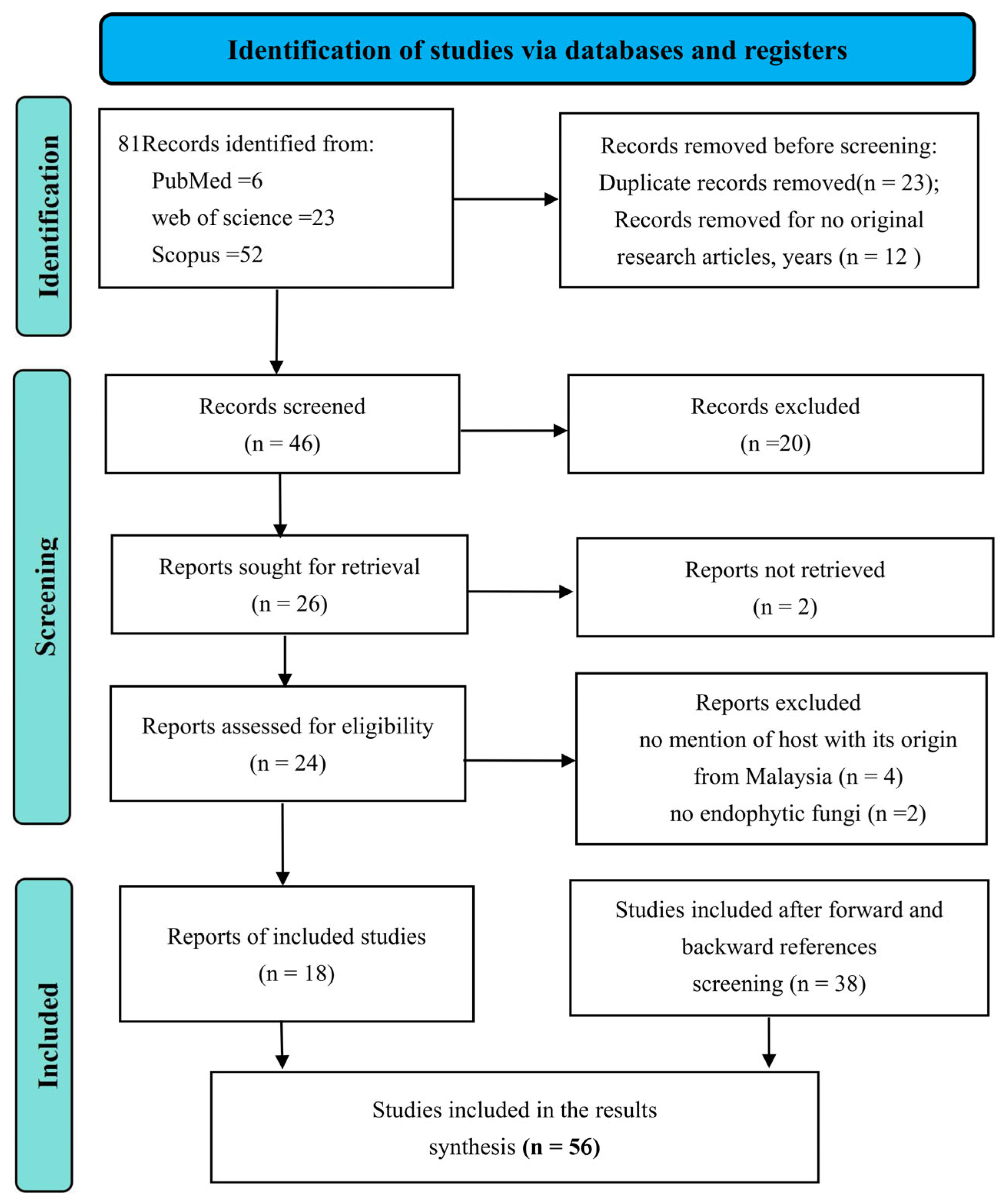
3.1. Identification of Studies via Databases and Registers
3.2. Research Focus and Host-Endophyte Landscape
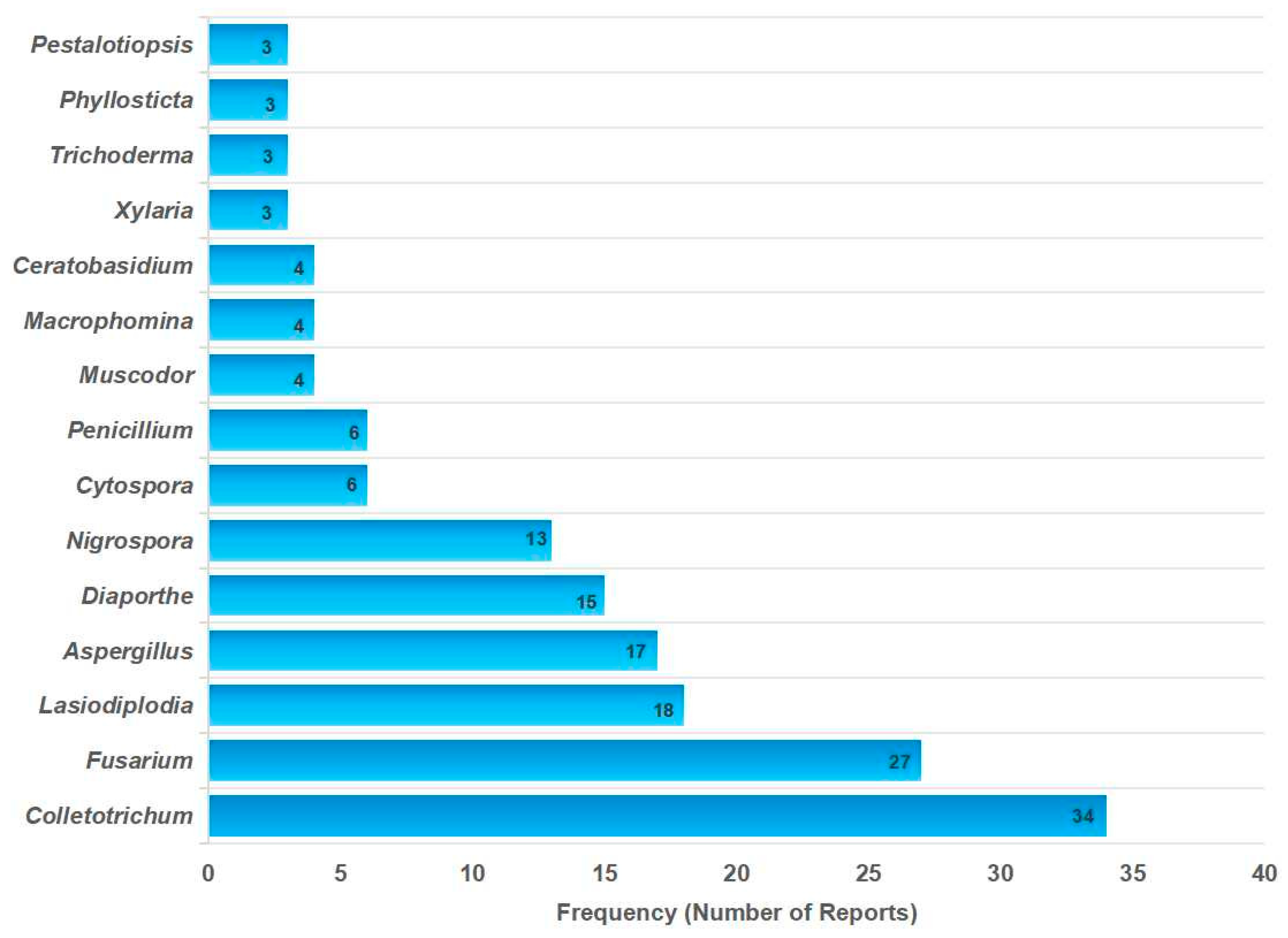
3.3. Taxonomic Composition and Diversity Patterns of Endophytic Fungi
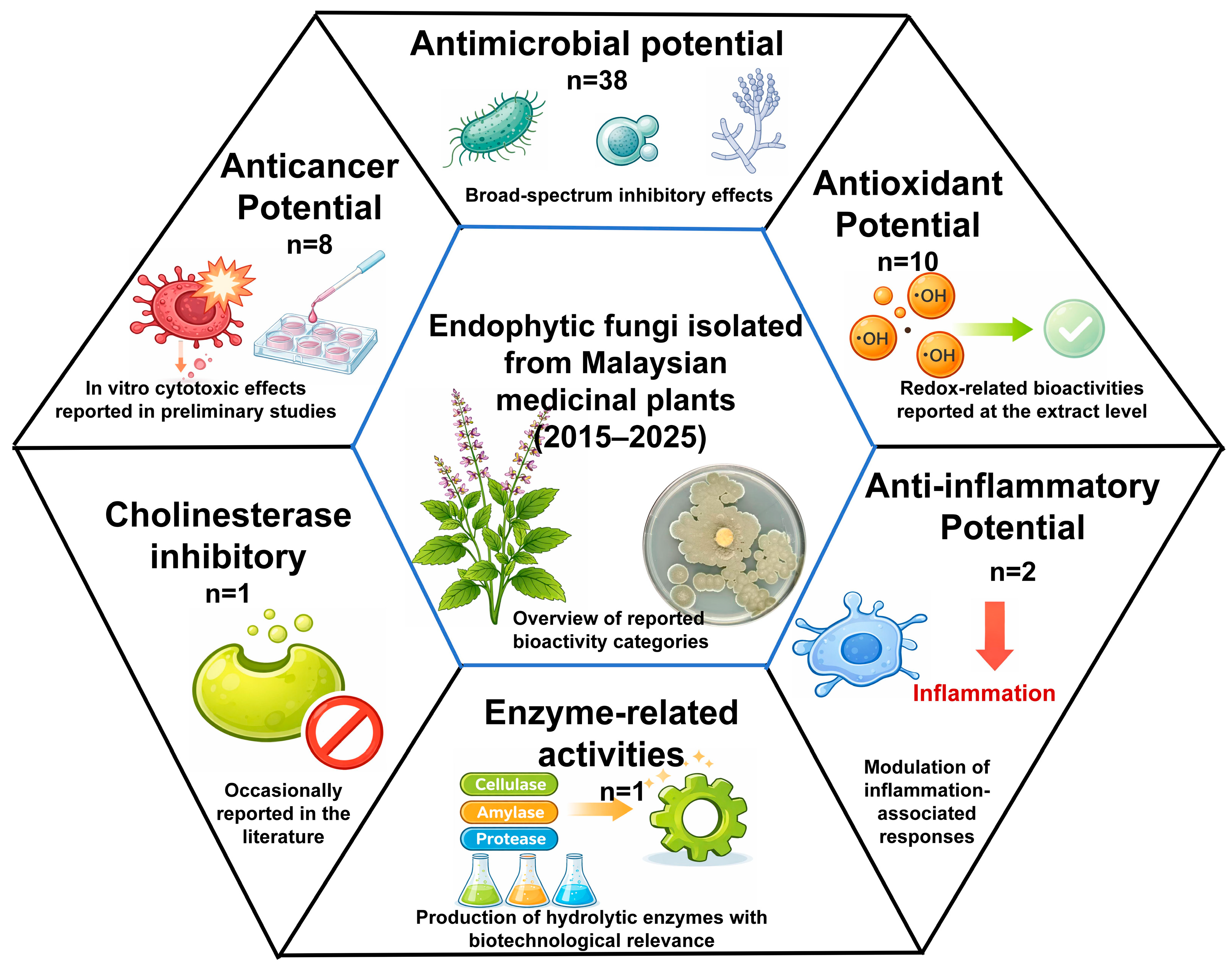
3.4. Bioactivities of Endophytic Fungi Associated with Malaysian Medicinal Plants
3.4.1. Antimicrobial Potential of Endophytic Fungi
3.4.2. Antioxidant Potential of Endophytic Fungi
3.4.3. Anticancer Potential of Endophytic Fungi
3.4.4. Other Bioactivities of Endophytic Fungi
3.5. Secondary Metabolites
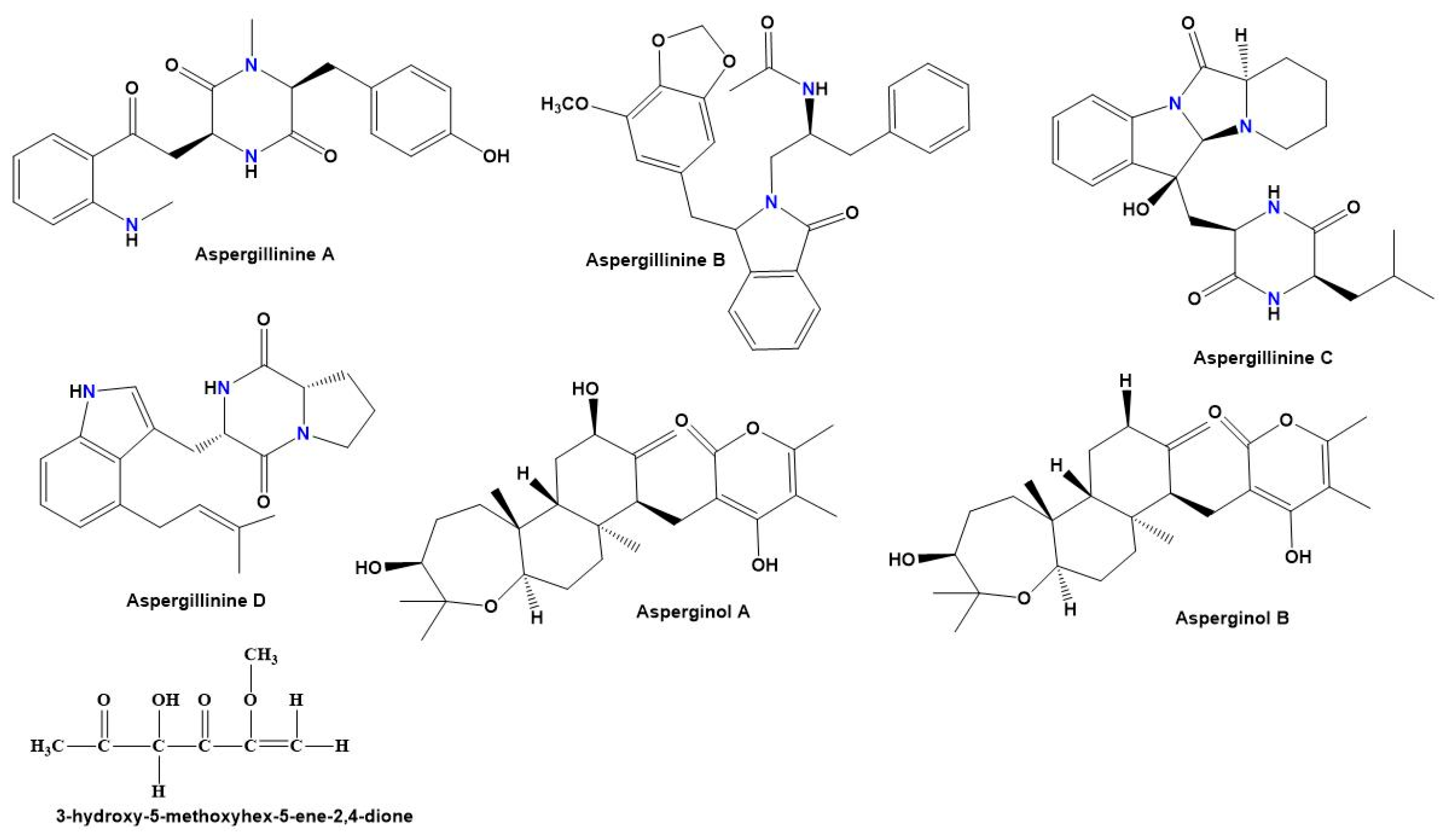
3.5.1. Alkaloids
3.5.2. Terpenoids
3.5.3. Flavonoids and Phenolic Compounds
3.5.4. Polyketides and Non-Canonical Metabolites
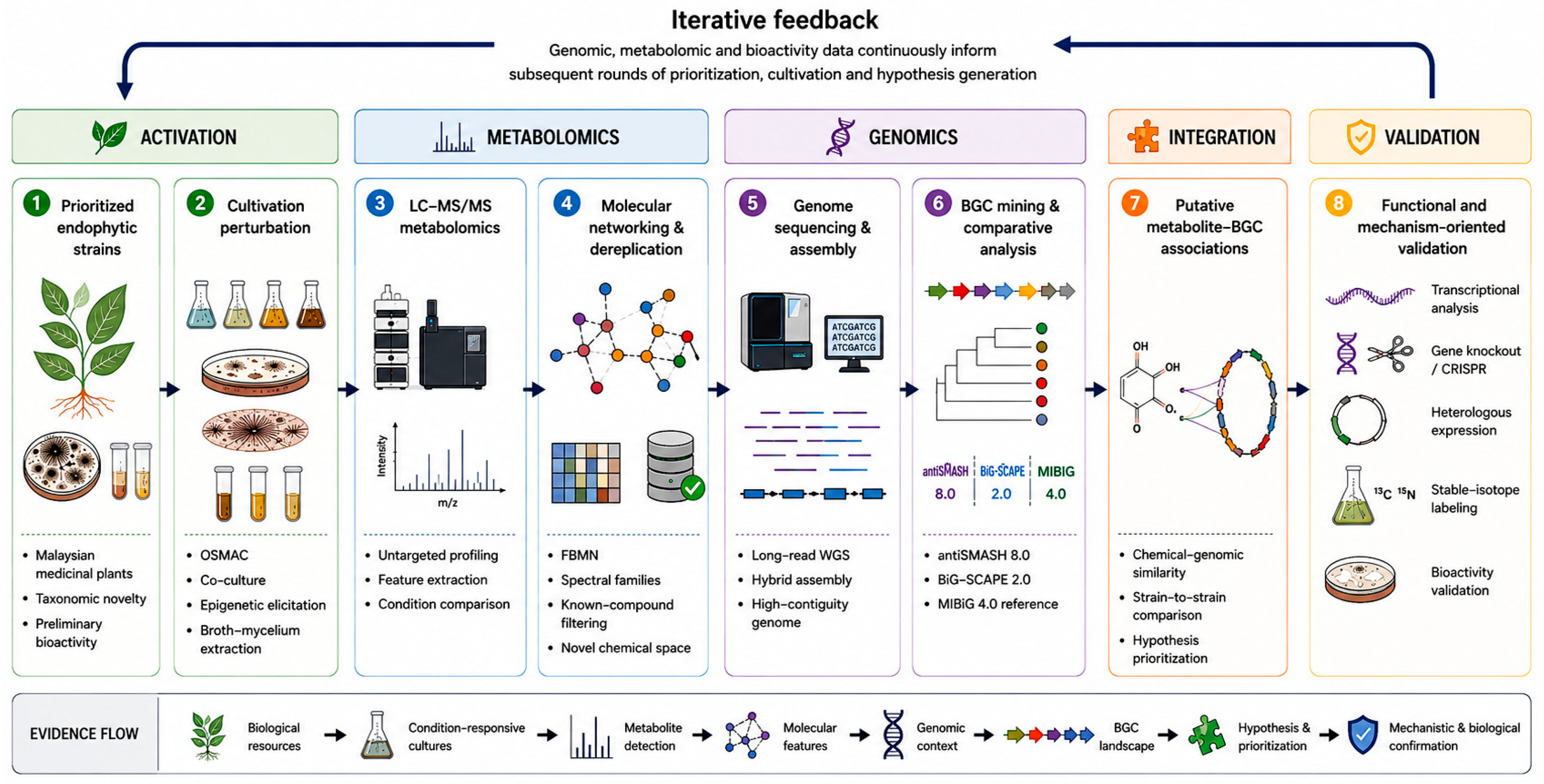
4. From Descriptive Bioprospecting to an Actionable Genotype-to-Phenotype Discovery Workflow
5. Conclusions
Supplementary Materials
Author Contributions
Funding
Institutional Review Board Statement
Informed Consent Statement
Data Availability Statement
Conflicts of Interest
Abbreviations
| AChE | Acetylcholinesterase |
| AEAC | Ascorbic Acid Equivalent Antioxidant Capacity |
| BuChE | Butyrylcholinesterase |
| CD40 | Cluster of Differentiation 40 |
| CSE | Crude Secondary Extract |
| DCM | Dichloromethane |
| DFT | Density Functional Theory |
| DFS | Rosmarinic Acid-Supplemented Dark Fermentation System |
| DPPH | 2,2-Diphenyl-1-picrylhydrazyl |
| EC50 | Half Maximal Effective Concentration |
| FCA | Ferric Chelating Activity |
| FRAP | Ferric Reducing Antioxidant Power |
| GC-MS | Gas Chromatography–Mass Spectrometry |
| HT-29 | Human Colorectal Adenocarcinoma Cell Line |
| IC50 | Half Maximal Inhibitory Concentration |
| IFN-γ | Interferon-gamma |
| IL-6 | Interleukin-6 |
| IL-10 | Interleukin-10 |
| IL-12p70 | Interleukin-12p70 |
| L-NAME | Nω-Nitro-L-arginine Methyl Ester |
| LC-MS | Liquid Chromatography–Mass Spectrometry |
| MBC | Minimum Bactericidal Concentration |
| MCP-1 | Monocyte Chemoattractant Protein-1 |
| MFC | Minimum Fungicidal Concentration |
| MIC | Minimum Inhibitory Concentration |
| MLC | Minimum Lethal Concentration |
| MRSA | Methicillin-Resistant Staphylococcus aureus |
| MYC | Minimum Yeasticidal Concentration |
| NO | Nitric Oxide |
| PCA | Principal Component Analysis |
| PDA | Potato Dextrose Agar |
| PSI | Phosphate Solubilization Index |
| RSA | Radical Scavenging Activity |
| SEM | Scanning Electron Microscopy |
| TEM | Transmission Electron Microscopy |
| TFC | Total Flavonoid Content |
| TLC | Thin Layer Chromatography |
| TNF-α | Tumor Necrosis Factor-alpha |
| TPC | Total Phenolic Content |
| VCD | Vibrational Circular Dichroism |
| ZOI | Zone of Inhibition |
References
- Wei, W.; Khan, B.; Dai, Q.; Lin, J.; Kang, L.; Rajput, N.A.; Yan, W.; Liu, G. Potential of Secondary Metabolites of Diaporthe Species Associated with Terrestrial and Marine Origins. J. Fungi 2023, 9, 453. [Google Scholar] [CrossRef]
- Jia, M.; Chen, L.; Xin, H.L.; Zheng, C.J.; Rahman, K.; Han, T.; Qin, L.P. A Friendly Relationship between Endophytic Fungi and Medicinal Plants: A Systematic Review. Front. Microbiol. 2016, 7, 906. [Google Scholar] [CrossRef] [PubMed]
- Jha, P.; Kaur, T.; Chhabra, I.; Panja, A.; Paul, S.; Kumar, V.; Malik, T. Endophytic fungi: Hidden treasure chest of antimicrobial metabolites interrelationship of endophytes and metabolites. Front. Microbiol. 2023, 14, 1227830. [Google Scholar] [CrossRef] [PubMed]
- Chandra, H.; Yadav, A.; Prasad, R.; Kalra, S.J.S.; Singh, A.; Bhardwaj, N.; Gupta, K.K. Fungal endophytes from medicinal plants acting as natural therapeutic reservoir. Microbe 2024, 3, 100073. [Google Scholar] [CrossRef]
- Oita, S.; Ibáñez, A.; Lutzoni, F.; Miadlikowska, J.; Geml, J.; Lewis, L.A.; Hom, E.F.; Carbone, I.; U’Ren, J.M.; Arnold, A.E. Climate and seasonality drive the richness and composition of tropical fungal endophytes at a landscape scale. Commun. Biol. 2021, 4, 313. [Google Scholar] [CrossRef] [PubMed]
- Hazalin, N.A.M.N.; Ramasamy, K.; Lim, S.S.M.; Wahab, I.A.; Cole, A.L.J.; Abdul Majeed, A.B. Cytotoxic and antibacterial activities of endophytic fungi isolated from plants at the National Park, Pahang, Malaysia. BMC Complement. Altern. Med. 2009, 9, 46. [Google Scholar] [CrossRef] [PubMed]
- Gazaem, M.A.H.; Ismail, N.H.; Sadiran, S.H.; Abd Mutalib, N.; Alsayadi, M.M.S.; Alkhudhayri, D.A.; Syed Mohamad, S.A. Secondary metabolites of endophytic fungi from Malaysian local herbs as potential antimicrobial and anticancer agents. J. Med. Pharm. Chem. Res. 2025, 7, 1435–1452. [Google Scholar]
- Tricco, A.C.; Lillie, E.; Zarin, W.; O’Brien, K.K.; Colquhoun, H.; Levac, D.; Moher, D.; Peters, M.D.J.; Horsley, T.; Weeks, L.; et al. PRISMA Extension for Scoping Reviews (PRISMA-ScR): Checklist and Explanation. Ann. Intern. Med. 2018, 169, 467–473. [Google Scholar] [CrossRef] [PubMed]
- Munn, Z.; Peters, M.D.J.; Stern, C.; Tufanaru, C.; McArthur, A.; Aromataris, E. Systematic review or scoping review? Guidance for authors when choosing between a systematic or scoping review approach. BMC Med. Res. Methodol. 2018, 18, 143. [Google Scholar] [CrossRef] [PubMed]
- Page, M.J.; Moher, D.; Bossuyt, P.M.; Boutron, I.; Hoffmann, T.C.; Mulrow, C.D.; Shamseer, L.; Tetzlaff, J.M.; Akl, E.A.; Brennan, S.E.; et al. PRISMA 2020 explanation and elaboration: Updated guidance and exemplars for reporting systematic reviews. BMJ 2021, 372, n160. [Google Scholar] [CrossRef] [PubMed]
- Mat Jalil, M.; Ibrahim, D. Volatile Bioactive Compounds from Lasiodiplodia pseudotheobromae IBRL OS-64, an Endophytic Fungus Residing in the Leaf of Ocimum sanctum. Hayati J. Biosci. 2022, 29, 570–585. [Google Scholar] [CrossRef]
- Muazzam, K.; Darah, I. The evaluation of antibacterial activity of fungal endophyte Ceratobasidium ramicola IBRLCM127 colonizing in rhizomes of medicinal plant, Curcuma mangga Valeton & Zijp. In IOP Conference Series: Earth and Environmental Science; IOP Publishing: Bristol, UK, 2020; Volume 596, p. 012083. [Google Scholar]
- Yap, L.S.; Lee, W.L.; Ting, A.S.Y. Optimization of L-asparaginase production from endophytic Fusarium proliferatum using OFAT and RSM and its cytotoxic evaluation. J. Microbiol. Methods 2021, 191, 106358. [Google Scholar] [CrossRef] [PubMed]
- Taher, M.A.; Tan, W.N.; Chear, N.J.; Leong, C.R.; Rashid, S.A.; Tong, W.Y. Metabolites characterisation of endophytic Phyllosticta fallopiae L67 isolated from Aloe vera with antimicrobial activity on diabetic wound microorganisms. Nat. Prod. Res. 2023, 37, 1674–1679. [Google Scholar] [PubMed]
- Zanudin, N.A.M.; Hasan, N.; Mansor, P. Identification and characterization of endophytic fungi from Garcinia atroviridis for potential antagonistic against phytopathogenic Colletotrichum gloeosporioides. Malays. Appl. Biol. 2023, 52, 97–106. [Google Scholar] [CrossRef]
- Abdul Rahman, K.A.M.; Abdul Rahim, M.S.A.; Zarkasi, K.Z.; Ibrahim, D. Enhancement of Anti-MRSA Potential Produced by an Endophytic Fungus Ceratobasidium Ramicola IBRLCM127 via Submerged Fermentation System. Malays. J. Med. Health Sci. 2023, 19, 66–74. [Google Scholar] [CrossRef]
- Ayob, F.W.; Simarani, K. Endophytic filamentous fungi from a Catharanthus roseus: Identification and its hydrolytic enzymes. Saudi Pharm. J. 2016, 24, 273–278. [Google Scholar] [CrossRef] [PubMed]
- Yenn, T.W.; Ring, L.C.; Nee, T.W.; Khairuddean, M.; Zakaria, L.; Ibrahim, D. Endophytic Diaporthe sp. ED2 produces a novel anti-candidal ketone derivative. J. Microbiol. Biotechnol. 2017, 27, 1065–1070. [Google Scholar] [CrossRef]
- Taufiq, M.M.J.; Darah, I. Effects of Cultural Conditions in Enhancing the Production of Anti-MRSA Activity of Lasiodiplodia pseudotheobromae IBRL OS-64, an Endophytic Fungus Isolated from Leaf of Ocimum sanctum L. in Submerged Fermentation System. J. Pure Appl. Microbiol. 2019, 13, 2517–2531. [Google Scholar] [CrossRef]
- Mohd Zainudin, N.A.I.; Zaini, N.; Nizam, N.; Abidin, D.; Nazri, N. Diversity of endophytic fungi associated with fruits and leaves of Tamarindus indica L. based on its ribosomal DNA sequences. Biotropia 2021, 28, 221–230. [Google Scholar] [CrossRef]
- Rahman, K.A.M.A.; Ibrahim, D. Ceratobasidium ramicola IBRLCM127, an endophytic fungus isolated from Curcuma mangga Valeton & Zijp with strong anti-candidal activity. J. Appl. Pharm. Sci. 2019, 9, 86–92. [Google Scholar] [CrossRef]
- Taufiq, M.M.J.; Darah, I. Biological Activity of Lasiodiplodia pseudotheobromae IBRL OS-64 Extracts, an Endophytic Fungus Isolated from Medicinal Herb, Ocimum sanctum Against Foodborne Diarrhea-Caused Bacteria. Pharmacogn. J. 2020, 12, 897–904. [Google Scholar] [CrossRef]
- Mat Jalil, M.; Yahya, M.F.Z.R.; Zakaria, N.A.; Ibrahim, D. Antifungal activity of endophytic fungi associated with Ocimum sanctum. J. Teknol. 2024, 86, 149–158. [Google Scholar] [CrossRef]
- Mat Jalil, M.; Ibrahim, D. Antibacterial activity of an endophytic fungus Lasiodiplodia pseudotheobromae IBRL OS-64 residing in leaves of a medicinal herb, Ocimum sanctum Linn. J. Appl. Biol. Biotechnol. 2019, 7, 35–41. [Google Scholar] [CrossRef]
- Taufiq, M.J.M.; Darah, I. Anti-yeast activity of endophytic fungi isolated from medicinal herb Ocimum sanctum with emphasis on Candida albicans. Res. J. Biotechnol. 2022, 17, 1–12. [Google Scholar]
- Yenn, T.; Ang, S.N.; Zakaria, L.; Ibrahim, D.; Leong, C.R. Anti-MRSA Activity of Penicillium minioluteum ED24. J. Chem. Pharm. Sci. 2015, 8, 646–650. [Google Scholar]
- Muazzam, K.; Ibrahim, D. Anti-MRSA activity of ethyl acetate crude extract from endophytic fungus Ceratobasidium ramicola IBRLCM127 isolated from rhizome of Curcuma mangga Valeton & Zijp. In IOP Conference Series: Earth and Environmental Science; IOP Publishing: Bristol, UK, 2021; Volume 756, p. 012040. [Google Scholar]
- Ibrahim, D.; Hong, L.S. Anti-candidal activity of Aspergillus flavus IBRL-C8, an endophytic fungus isolated from Cassia siamea Lamk leaf. J. Appl. Pharm. Sci. 2018, 8, 83–87. [Google Scholar]
- Harun, A.; Vidyadaran, S.; Lim, S.M.; Cole, A.L.; Ramasamy, K. Malaysian endophytic fungal extracts-induced anti-inflammation in Lipopolysaccharide-activated BV-2 microglia is associated with attenuation of NO production and, IL-6 and TNF-α expression. BMC Complement. Altern. Med. 2015, 15, 166. [Google Scholar] [CrossRef] [PubMed]
- Jalil, M.T.M.; Zakaria, N.A.; Yahya, M.F.Z.R.; Mohamad, S.A.S.; Ibrahim, D. Assessment of Biological Activity, Total Phenolic Content, and Cytotoxicity of Ethyl Acetate Extracts from an Endophytic Fungus, Lasiodiplodia pseudotheobromae IBRL OS-64. Hayati J. Biosci. 2025, 32, 445–458. [Google Scholar]
- Mokhtar, N.; Ibrahim, D.; Zulfakar, S.; Zakaria, L.; Zarkasi, K. Antibiofilm activity of Nigrospora sphaerica CL-OP30 endophytic extract against Streptococcus mutans—The causative agent of dental caries. Malays. J. Microbiol. 2023, 19, 322. [Google Scholar]
- Nagarajan, K.; Ibrahim, B.; Bawadikji, A.A.; Khaw, K.Y.; Tong, W.Y.; Leong, C.R.; Ramanathan, S.; Tan, W.N. Characterization of Metabolites in an Endophytic Fungus Diaporthe fraxini via NMR-based Metabolomics and Cholinesterase Inhibitory Activity. Appl. Biochem. Microbiol. 2023, 59, 316–322. [Google Scholar] [CrossRef]
- Alkhdhairawi, A.; Loo, J.; Abd Mutalib, N.; Abd Latip, N.; Manshoor, N.; Bakar, H.; Nagojappa, N.; Weber, J.-F. Diketopiperazine and isoindolinone alkaloids from the endophytic fungus Aspergillus sp. HAB10R12. Phytochemistry 2023, 211, 113685. [Google Scholar] [CrossRef] [PubMed]
- Yap, L.S.; Leng, L.W.; Ting, A.S.Y. Bioprocessing and purification of extracellular L-asparaginase produced by endophytic Colletotrichum gloeosporioides and its anticancer activity. Prep. Biochem. Biotechnol. 2023, 53, 653–671. [Google Scholar] [PubMed]
- Chua, R.W.; Song, K.P.; Ting, A. Antioxidant and L-asparaginase activities of culturable endophytic fungi from ornamental Dendrobium orchids. Lett. Appl. Microbiol. 2023, 77, ovad096. [Google Scholar] [CrossRef]
- Gan, P.; Lim, Y.; Ting, A. Inducing antioxidant and antimicrobial activities in endophytic and endolichenic fungi by the use of light spectra treatments. Arch. Microbiol. 2023, 205, 304. [Google Scholar] [CrossRef] [PubMed]
- Chua, R.W.; Song, K.P.; Ting, A.S.Y. Comparative analysis of antimicrobial compounds from endophytic Buergenerula spartinae from orchid. Arch. Microbiol. 2023, 116, 1057–1072. [Google Scholar] [CrossRef]
- Azuddin, N.F.; Mohd, M.H.; Nik Rosely, N.F.; Mansor, A.; Zakaria, L. Evaluation of the pathogenicity of endophytic fungi isolated from spines of rattan (Calamus castaneus) against other plant hosts. J. Appl. Microbiol. 2022, 133, 3228–3238. [Google Scholar] [CrossRef] [PubMed]
- Jalil, M.T.M.; Zakaria, N.A.; Suhaimi, N.S.M.; Ibrahim, D. Crude extracts of an endophytic fungus attenuate the growth of pathogenic bacteria in aquaculture. Iran. J. Microbiol. 2022, 14, 383–394. [Google Scholar] [CrossRef] [PubMed]
- Jamal, H.A.A.; Husaini, A.; Sing, N.N.; Roslan, H.A.; Zulkharnain, A.; Akinkunmi, W.A. Characterization of bioactive compounds produced by endophytic fungi isolated from Gynura procumbens (Sambung Nyawa). Braz. J. Microbiol. 2022, 53, 2343. [Google Scholar] [CrossRef] [PubMed]
- Tan, W.N.; Nagarajan, K.; Lim, V.; Azizi, J.; Khaw, K.Y.; Tong, W.Y.; Leong, C.R.; Chear, N.J. Metabolomics Analysis and Antioxidant Potential of Endophytic Diaporthe fraxini ED2 Grown in Different Culture Media. J. Fungi 2022, 8, 519. [Google Scholar] [CrossRef]
- Mat Jalil, M.; Zakaria, N.A.; Ibrahim, D. Effect of Culture Medium Incorporated with Ocimum sanctum Extract in Enhancing Anti-MRSA activity of Endophytic Fungus, Lasiodiplodia pseudotheobromae. J. Pure Appl. Microbiol. 2021, 15, 1398–1408. [Google Scholar] [CrossRef]
- Mat Jalil, M.; Ibrahim, D. Muscodor sp. IBRL OS-94, A Promising Endophytic Fungus of Ocimum sanctum with Antimicrobial Activity. Pharm. Sci. 2021, 27, 268–280. [Google Scholar]
- Radiastuti, N.; Susilowati, D.N.; Nurhasni; Rustanti, L.P.; Tambunan, I.R. Potential of endophytic fungi deriving from Asiatic pennyworth to produce antioxidants. Indones. J. Agric. Sci. 2021, 22, 58–65. [Google Scholar] [CrossRef]
- Zanudin, N.A.M.; Hasan, N.A.; Noruddin, N.F.N.; Ahmad Wakid, S.; Hasbullah, N.I. Preliminary screening of endophytic fungi from capsicum annuum l. For biocontrol activity against colletotrichum gloeosporoioides. Malays. J. Biochem. Mol. Biol. 2021, 24, 175–184. [Google Scholar]
- Rosli, N.M.; Ashari, K.; Azmi, N.S.A. Isolation and preliminary screening of endophytic fungi from Ficus carica for biocontrol and phosphate solubilization. Environ. Ecosyst. Sci. 2020, 4, 77–84. [Google Scholar] [CrossRef]
- Al-Khdhairawi, A.A.Q.; Low, Y.Y.; Manshoor, N.; Arya, A.; Jelecki, M.; Alshawsh, M.A.; Kamran, S.; Suliman, R.S.; Low, A.; Shivanagere Nagojappa, N.B.; et al. Asperginols A and B, Diterpene Pyrones, from an Aspergillus sp. and the Structure Revision of Previously Reported Analogues. J. Nat. Prod. 2020, 83, 3564–3570. [Google Scholar] [CrossRef] [PubMed]
- Jalil, M.T.M.; Ibrahim, D.; Suhaimi, N.S.M. Time-kill study and morphological changes of Proteus mirabilis cells exposed to ethyl acetate crude extract of Lasiodiplodia pseudotheobromae IBRL OS-64. Malays. J. Microbiol. 2020, 16, 219–228. [Google Scholar] [CrossRef]
- Taufiq, M.M.J.; Darah, I. Anti-candidal activity of ethyl acetate crude extract of endophytic fungus, Lasiodiplodia pseudotheobromae IBRL OS-64 against Candida albicans. Int. J. Pharm. Res. 2020, 12, 257–265. [Google Scholar] [CrossRef]
- Mat Jalil, M.; Ibrahim, D. Antibacterial and Antibiofilm Activities of Crude Extract of Lasiodiplodia pseudotheobromae IBRL OS-64 against Foodborne Bacterium, Yersinia enterocolitica. J. Pharm. Res. Int. 2020, 32, 87–102. [Google Scholar] [CrossRef]
- Taufiq, M.M.J.; Darah, I. Effect of ethyl acetate crude extract of Lasiodiplodia pseudotheobromae IBRL OS-64 against oral cavity bacteria with emphasis on Streptococcus mutans. Int. J. Pharm. Sci. Res. 2019, 9, 78–85. [Google Scholar] [CrossRef]
- Hasan, N.A.; Zaini, M. Isolation and identification of Endophytic Fungi of Pandanus sp. and Alpinia sp. from Reserve Forest UiTM Negeri Sembilan. J. Acad. 2019, 7, 124–129. [Google Scholar]
- Ayob, F.W.; Simarani, K. Antioxidants and Phytochemical Analysis of Endophytic Fungi Isolated from a Medicinal Plant Catharanthus roseus. Borneo J. Sci. Technol. 2019, 1, 62–68. [Google Scholar]
- Hasan, N.A.; Mohd Sudin, N.I.N. Diversity and Antifungal activity of endophytic fungi associated with Melastoma malabathricum L. J. Appl. Biol. Sci. 2019, 13, 154–159. [Google Scholar]
- Hamzah, T.N.T.; Lee, S.Y.; Hidayat, A.; Terhem, R.; Faridah-Hanum, I.; Mohamed, R. Diversity and Characterization of Endophytic Fungi Isolated from the Tropical Mangrove Species, Rhizophora mucronata, and Identification of Potential Antagonists Against the Soil-Borne Fungus, Fusarium solani. Front. Microbiol. 2018, 9, 1707. [Google Scholar] [CrossRef] [PubMed]
- Mat Jalil, M.; Ibrahim, D. Anti-MRSA of the ethyl acetate crude extract from Lasiodiplodia pseudotheobromae IBRL OS-64, an endophytic fungus isolated from leaf of Ocimum sanctum Linn. Int. J. Pharm. Pharm. Sci. 2018, 10, 50. [Google Scholar] [CrossRef]
- Leong, C.R.; Rashid, S.A.; Ang, S.N.; Tan, W.N.; Tong, W.Y.; Ibrahim, D. Antimicrobial activity of Aspergillus sp. IBRL MP15 CCL, an endophytic fungus isolated from Swietenia macrophylla leaf against human pathogens. Malays. J. Microbiol. 2018, 14, 49–54. [Google Scholar] [CrossRef]
- Ayob, F.W.; Simarani, K.; Zainal Abidin, N.; Mohamad, J. First report on a novel Nigrospora sphaerica isolated from Catharanthus roseus plant with anticarcinogenic properties. Microb. Biotechnol. 2017, 10, 926–932. [Google Scholar] [CrossRef] [PubMed]
- Jinfeng, E.C.; Mohamad Rafi, M.I.; Chai Hoon, K.; Kok Lian, H.; Yoke Kqueen, C. Analysis of chemical constituents, antimicrobial and anticancer activities of dichloromethane extracts of Sordariomycetes sp. endophytic fungi isolated from Strobilanthes crispus. World J. Microbiol. Biotechnol. 2017, 33, 5. [Google Scholar] [CrossRef] [PubMed]
- Yenn, T.; Ibrahim, D.; Lee, K.C.; Ab Rashid, S.; Leong, C.R.; Wen Nee, T.; Noor, M. Antimicrobial efficacy of endophytic Penicillium purpurogenum ED76 against clinical pathogens and its possible mode of action. Korean J. Microbiol. 2017, 53, 193–199. [Google Scholar]
- Ibrahim, D.; Yenn, T.; Zakaria, L.; Lim, S.-H. Effect of the Extract of Endophytic fungus, Nigrospora sphaerica CL-OP 30, Against the Growth of Methicillin- Resistant Staphylococcus aureus (MRSA) and Klebsiella pneumonia cells. Trop. J. Pharm. Res. 2015, 14, 2091. [Google Scholar] [CrossRef]
- Eliya, A.; Talip, N.; Ibrahim, N. Anatomy of symbiotic fungal endophytes in Psilotum nudum (L.) p. Beauv. Malays. Appl. Biol. 2015, 44, 11–18. [Google Scholar]
- Woei, I.C.; Ibrahim, D.; Daud, S.A.; Salikin, N.H.; Yenn, T.W.; Ab Rashid, S. Antimicrobial activities of the ethyl acetate extract of endophytic Nigrospora sphaerica CL-CP30 against foodborne pathogens. Malays. J. Microbiol. 2024, 20, 560. [Google Scholar]
- Chua, R.W.; Song, K.P.; Ting, A.S.Y. Antioxidant properties and L-asparaginase activities of endophytic fungi from Cymbidium orchids. Folia Microbiol. 2024, 69, 713–722. [Google Scholar]
- Chow, Y.; Ting, A.S.Y. Endophytic l-asparaginase-producing fungi from plants associated with anticancer properties. J. Adv. Res. 2015, 6, 869–876. [Google Scholar] [CrossRef] [PubMed]
- Radiastuti, N.; Bahalwan, H.; Susilowati, D. Phylogenetic study of endophytic fungi associated with Centella asiatica from Bengkulu and Malaysian accessions based on the ITS rDNA sequence. Biodiversitas 2019, 20, 1248–1258. [Google Scholar] [CrossRef]
- Ibrahim, D.; Lee, C.C.; Sheh-Hong, L. Antimicrobial activity of endophytic fungi isolated from Swietenia macrophylla leaves. Nat. Prod. Commun. 2014, 9, 247–250. [Google Scholar] [CrossRef] [PubMed]
- Tong, W.Y.; Darah, I.; Latiffah, Z. Antimicrobial activities of endophytic fungal isolates from medicinal herb Orthosiphon stamineus Benth. J. Med. Plants Res. 2011, 5, 831–836. [Google Scholar]
- Santiago, C.; Sun, L.; Munro, M.H.; Santhanam, J. Polyketide and benzopyran compounds of an endophytic fungus isolated from Cinnamomum mollissimum: Biological activity and structure. Asian Pac. J. Trop. Biomed. 2014, 4, 627–632. [Google Scholar] [CrossRef] [PubMed]
- Ab Rahman, M.H.; Jusoh, Y.M.M.; Hashim, Z. Total Phenolic, Total Flavonoid and Antioxidant Activity of Capsicum annuum Seed and Pericarp Extracts. J. Bioprocess. Biomass Technol. 2024, 3, 107–111. [Google Scholar] [CrossRef]
- Caesar, L.K.; Butun, F.A.; Robey, M.T.; Ayon, N.J.; Gupta, R.; Dainko, D.; Bok, J.W.; Nickles, G.; Stankey, R.J.; Johnson, D.; et al. Correlative metabologenomics of 110 fungi reveals metabolite–gene cluster pairs. Nat. Chem. Biol. 2023, 19, 846–854. [Google Scholar] [CrossRef] [PubMed]
- Nothias, L.-F.; Petras, D.; Schmid, R.; Dührkop, K.; Rainer, J.; Sarvepalli, A.; Protsyuk, I.; Ernst, M.; Tsugawa, H.; Fleischauer, M.; et al. Feature-based molecular networking in the GNPS analysis environment. Nat. Methods 2020, 17, 905–908. [Google Scholar] [CrossRef] [PubMed]
- Draisma, A.; Loureiro, C.; Louwen, N.L.L.; Kautsar, S.A.; Navarro-Muñoz, J.C.; Doering, D.T.; Mouncey, N.J.; Medema, M.H. BiG-SCAPE 2.0 and BiG-SLiCE 2.0: Scalable, accurate and interactive sequence clustering of metabolic gene clusters. Nat. Commun. 2026, 17, 2000. [Google Scholar] [CrossRef] [PubMed]
- McCaughey, C.S.; van Santen, J.A.; van der Hooft, J.J.J.; Medema, M.H.; Linington, R.G. An isotopic labeling approach linking natural products with biosynthetic gene clusters. Nat. Chem. Biol. 2022, 18, 295–304. [Google Scholar] [PubMed]



| Databases | Keywords Combination |
|---|---|
| PubMed | (“endophytic fungi” OR “endophyte” OR “endophytic mycobiota”) AND (“medicinal plant” OR “ethnomedicinal plant” OR “medicinal herb” OR “therapeutic plant”) AND (“Malaysia”) |
| Web of Science | (TS = (“endophytic fungi” OR “endophyte” OR “endophytic mycobiota”)) AND (TS = (“medicinal plant” OR “ethnomedicinal plant” OR “medicinal herb” OR “therapeutic plant”)) AND (CU = (“Malaysia”)) |
| Scopus | (TITLE-ABS-KEY (“endophytic fungi” OR “endophyte” OR “endophytic mycobionts”) AND TITLE-ABS-KEY (“medicinal plant” OR “ethnomedicinal plant” OR “medicinal herb” OR “therapeutic plant”) AND AFFILCOUNTRY (“Malaysia”)) |
| No. | Medicinal Plant | Endophytic Fungi | Reported Bioactivity | Key Findings | Bioactive Compounds | Ref. |
|---|---|---|---|---|---|---|
| 1 | Ocimum sanctum | Lasiodiplodia pseudotheobromae IBRL OS-64 | Antibacterial | The ethyl acetate extract and its bioactive fraction exhibited broad-spectrum antibacterial activity against both Gram-positive and Gram-negative bacteria, including MRSA. | 1,2-Benzenedicarboxylic acid, mono(2-ethylhexyl)ester | [11] |
| 2 | Curcuma mangga Valeton & Zijp | Ceratobasidium ramicola IBRLCM127 | Antibacterial | C. ramicola IBRLCM exhibited prominent antibacterial activity against Gram-positive and Gram-negative bacteria. | Not reported | [12] |
| 3 | Cymbopogon citratus | Fusarium proliferatum (isolate CCH) | Enzyme production; Cytotoxic | The optimum condition for L-asparaginase production was determined to be glucose, L-asparagine, with around 5 days of incubation at 25 ± 2 °C, 120 rpm. This optimization increased enzyme yield from 16.75 ± 0.76 IU/mL to 22.42 ± 0.20 IU/mL. The crude enzyme exhibited notable cytotoxic activity against the leukemic Jurkat E6 cell line in a dose-dependent manner. | L-asparaginase | [13] |
| 4 | Aloe vera | Phyllosticta fallopiae L67 | Antimicrobial; Antibiofilm | DCM extract showed significant antimicrobial activity. MIC and MLC ranged from 78.13 to 5000 mg/mL. The extract showed bactericidal effects, inhibited more than 82% of biofilm formation, and displayed dose-dependent toxicity in a zebrafish model. Bioassay-guided fractionation identified an active fraction (C6) with broad antimicrobial efficacy. | Kushenol I, kushenol M, kuwanon A, moracin C, ophiopogonanone B, 4′-methylpinosylvin and flavokawain A | [14] |
| 5 | Garcinia atroviridis | Nigrospora sphaerica Lasiodiplodia theobromae Bjerkandera adusta Colletotrichum sp. Pestalotiopsis neglecta | Antifungal; Biocontrol | A total of 111 endophytic fungi were isolated from G. atroviridis tissues, with 8 genera identified. Thirty-six isolates showed strong antagonistic activity, mainly through competition, mycoparasitism, and antibiosis, suggesting potential biocontrol mechanisms. | Not reported | [15] |
| 6 | Curcuma mangga Valeton & Zijp | Ceratobasidium ramicola IBRLCM127 | Antibacterial (Anti-MRSA) | Submerged fermentation significantly enhanced the anti-MRSA activity of C. ramicola IBRLCM127. Under optimized culture conditions (host plant extract supplementation, dark incubation, 25 °C, two mycelial plugs, 120 rpm), the maximal anti-MRSA activity reached 42.50 ± 0.1 U/mL, representing an 11.72% increase compared with non-optimized conditions, while shortening the incubation period from 16 to 12 days. | Not reported | [16] |
| 7 | Catharanthus roseus (white and purple varieties) | Colletotrichum sp. Macrophomina phaseolina Nigrospora sphaerica Fusarium solani | Enzyme production | Five filamentous endophytic fungal strains isolated from leaves and roots exhibited extracellular hydrolytic enzyme activities. All strains produced cellulase; Colletotrichum sp. and F. solani produced amylase; only F. solani produced protease, supporting their role in host tissue colonisation and symbiotic interaction. | Not reported | [17] |
| 8 | Orthosiphon stamineus Benth | Diaporthe sp. ED2 | Antifungal (anti-candidal) | A novel compound (HMD) was isolated with antifungal activity against C. albicans, showing a clear inhibition zone (14.7 ± 0.8 mm), low MIC (3.1 µg/mL), and fungicidal MFC (12.5 µg/mL), with activity comparable to voriconazole. | 3-Hydroxy-5-methoxyhex-5-ene-2,4-dione | [18] |
| 9 | Ocimum sanctum Linn | Lasiodiplodia pseudotheobromae IBRL OS-64 | Antibacterial (Anti-MRSA) | Optimized conditions significantly enhanced anti-MRSA activity from 21.22 to 50.00 U/mL, with a modest increase in fungal biomass. Notably, the increase in antibacterial activity was not strictly correlated with fungal growth. | Not reported | [19] |
| 10 | Tamarindus indica L. | 31 species from 15 genera | Not evaluated | A total of 69 fungal isolates were identified, representing 31 species from 15 genera, with high diversity (Shannon–Wiener Index H’ = 3.083). Colletotrichum and Diaporthe were dominant, including commonly isolated endophytes and latent pathogens. | Not reported | [20] |
| 11 | Curcuma mangga Valeton & Zijp | Ceratobasidium ramicola IBRLCM127 | Antifungal (anti-candidal) | The ethyl acetate extract demonstrated notable anti-Candida activity, with a 15.3 ± 0.6 mm inhibition zone and MIC/MYC values of 2.5 mg/mL. A concentration-dependent yeasticidal effect was observed in the time–kill assay. SEM and TEM analyses revealed severe cellular damage after 36 h of treatment at 2× MIC. In contrast, the methanolic extract showed no antifungal activity. | Not reported | [21] |
| 12 | Ocimum sanctum Linn | Lasiodiplodia pseudotheobromae IBRL OS-64 | Antibacterial | The ethyl acetate extract showed strong antibacterial activity (zones: 14.2–26.0 mm), with MICs of 62.5–500 µg/mL and MBCs of 125–2000 µg/mL (bactericidal). Gram-positive bacteria were more sensitive. SEM revealed membrane collapse, crumpling, and cavities in treated cells. | Not reported | [22] |
| 13 | Ocimum sanctum Linn | Colletotrichum sp. IBRL OS-27, Colletotrichum sp. IBRL OS-39, Lasiodiplodia sp. IBRL OS-64 Aspergillus sp. IBRL OS-65, Aspergillus sp. IBRL OS-82, Muscodor sp. IBRL OS-94, and OS-98 | Antifungal | Muscodor OS-94/98 showed volatile antifungal activity (≤53.6%); Colletotrichum OS-39 up to 62.5%. Dichloromethane extracts were fungicidal (MFC/MIC ≤ 4) against C. albicans/C. utilis, fungistatic on others. SEM revealed membrane damage and cell shrinkage. | Not reported | [23] |
| 14 | Ocimum sanctum Linn | Lasiodiplodia pseudotheobromae IBRL OS-64 | Antibacterial (including anti-MRSA) | Ethyl acetate extract showed strong antibacterial activity (zones: 20.0–31.3 mm Gram-positive; 10.3–20.1 mm Gram-negative), with lower MIC/MBC than methanol extract. Gram-positive bacteria were more susceptible. SEM showed cell wall rupture and cytoplasmic leakage in MRSA and P. aeruginosa. Both extracts were bactericidal (MBC/MIC ≤ 4). | Not reported | [24] |
| 15 | Ocimum sanctum Linn | Lasiodiplodia pseudotheobromae IBRL OS-64 Muscodor sp. IBRL OS-94 | Anti-yeast (anti-Candida) | Both extracts, especially ethyl acetate, showed strong anti-yeast activity against C. albicans (most sensitive); C. neoformans was resistant. MIC/MYC of Muscodor sp. extract: 250–500/1000–4000 µg/mL (yeasticidal). SEM/TEM showed shrinkage and cytoplasmic leakage. Time–kill assay confirmed dose-dependent yeast-static to yeasticidal effects. | Not reported | [25] |
| 16 | Orthosiphon stamineus Benth | Penicillium minioluteum ED24 | Antibacterial (anti-MRSA) | Disc diffusion showed 18.7 ± 0.5 mm inhibition (comparable to chloramphenicol). MIC/MLC: 31.25/125 µg/mL (bactericidal, MLC/MIC ≤ 4). Time–kill: 99.9% bacterial reduction. Brine shrimp assay: LC50 = 1.48 mg/mL (acute), 1.13 mg/mL (chronic), indicating non-toxicity (LC50 > 1.0 mg/mL). | Not reported | [26] |
| 17 | Curcuma mangga Valeton & Zijp | Ceratobasidium ramicola IBRLCM127 | Antibacterial (anti-MRSA) | MIC/MBC = 500 µg/mL (bactericidal). At 2× MIC, MRSA was completely killed within 44 h (time- and dose-dependent). SEM showed progressive damage: cavities (12 h), clumping (24 h), and full lysis (36–48 h). First report of C. ramicola with anti-MRSA activity. | Not reported | [27] |
| 18 | Cassia siamea Lamk | Aspergillus flavus IBRL-C8 | Antibacterial (anti-MRSA) | Ethyl acetate extract showed strong anti-Candida activity (28.3 ± 2.4 mm); methanol inactive. MIC/MYC = 1.00/4.00 mg/mL (fungicidal). Yeastostatic at ½ MIC, yeasticidal at MIC/2MIC. SEM/TEM revealed invaginations, cavitation, membrane disruption, and cytoplasmic disorganization in C. albicans after 36 h at MIC. | Not reported | [28] |
| 19 | Cinnamomum porrectum | 5 fungal isolates (Cytospora rhizophorae) | Anti-inflammatory (neuroinflammation) | At 0.1 mg/mL, all five extracts significantly suppressed NO production (57–74%) without cytotoxicity; 1.0 mg/mL reduced cell viability. IL-6 and TNF-α were markedly reduced (up to 87–89%) in LPS-stimulated cells. No significant effects on IL-10, IL-12p70, IFN-γ, or MCP-1. CD40 expression was unaffected in stimulated microglia. | Not reported | [29] |
| 20 | Ocimum sanctum L. | Lasiodiplodia pseudotheobromae IBRL OS-64 | Antioxidant; antibacterial; cytotoxicity | Fraction F5 showed stronger antioxidant activity (EC50 = 208.1 µg/mL) than crude (441.6 µg/mL), though both were weaker than quercetin. Phenolic content was low. MICs: 62.5–250 µg/mL (Gram-positive), 250–500 µg/mL (Gram-negative); MBCs: 125–2000 µg/mL. Fraction was non-toxic; crude showed mild chronic toxicity. | Not reported | [30] |
| 21 | Swietenia macrophylla (Mahogany) | Nigrospora sphaerica CL-OP30 | Antibacterial; antibiofilm | N. sphaerica CL-OP30 extract inhibited S. mutans biofilm formation by 88.81% at 10 mg/mL. Microscopy showed matrix disintegration and cell deformation. The extract interfered with adherence via non-bactericidal action, likely by targeting exopolysaccharide synthesis. | Not reported | [31] |
| 22 | Orthosiphon stamineus (Misai Kucing) | Diaporthe fraxini | Cholinesterase inhibitory activity | Rosmarinic acid-supplemented media altered metabolite profiles. The extract (E-RA) showed enhanced AChE and BuChE inhibition. Key metabolites included kynurenic acid, caffeic acid, and gallic acid. PCA and clustering clearly separated treatment groups. | Kynurenic acid, caffeic acid, gallic acid, chlorogenic acid, cinnamic acid, 3-hydroxyanthranilic acid, melatonin | [32] |
| 23 | Garcinia scortechinii | Aspergillus sp. HAB10R12 | No significant cytotoxicity | Four new alkaloids (aspergillinine A–D) and four known diterpene pyrones were isolated. Aspergillinine A featured N-methyl kynurenine; B had a novel isoindolinone core. All compounds showed no significant cytotoxicity (IC50 > 30 μM). | Not reported | [33] |
| 24 | Oldenlandia diffusa | Colletotrichum gloeosporioides (strain OD3) | Enzyme production; anticancer activity | Optimized conditions yielded purified L-asparaginase (255.02 IU/mg, 6.12-fold, 34.63% recovery). Enzymes are likely to be tetrameric. Greater cytotoxicity on Jurkat cells (IC50: 46.36 mg/mL) than H103 (125.56 mg/mL). | L-asparaginase | [34] |
| 25 | Dendrobium spp. | Fusarium fujikuroi Fusarium proliferatum Fusarium oxysporum Fusarium verticillioides Trichoderma asperellum Daldinia eschscholtzii Nigrospora pyriformis | Antioxidant activity; L-asparaginase production | A total of 89.7% of isolates produced L-asparaginase. F. fujikuroi (D1) had highest antioxidant activity; D. eschscholtzii (D14) showed highest enzyme activity. Some strains had dual antioxidant and enzymatic properties. | Not reported | [35] |
| 26 | Pereskia bleo Murraya koenigii Oldenlandia diffusa Cymbopogon citratus | Pseudopestalotiopsis theae Fusarium solani Xylaria venustula F. proliferatum Colletotrichum boninense C. gloeosporioides C. siamense | Antioxidant activity; antimicrobial activity; anti-candidal activity | Crude extracts from cultures exposed to green and red light exhibited stronger antibacterial activity (ZOI up to 38.30 ± 2.90 mm; MIC as low as 0.0196 mg/mL) and improved anti-Candida albicans activity in selected isolates, compared with white light and dark controls. | Not reported | [36] |
| 27 | Cymbidium spp. | Buergenerula spartinae | Antibacterial activity | Fractions 2 and 4 exhibited potent antibacterial activity against Staphylococcus aureus and Bacillus cereus, with MIC values as low as 0.078 mg/mL and 0.313 mg/mL, respectively. LC-MS profiling indicated that antibacterial activity was associated with specific fractions rather than crude extracts, | Kaempferol 3-p-coumarat; 6-methoxy naphthaleneacetic acid; kanzonol N; 3-butylidene-7-hydroxyphthalide; benoxinate; pyropheophorbide A; (−)-ormosanine; levofuraltadone; 3-α(S)-strictosidine; 5′-hydroxystreptomycin; hinokitiol glucoside; N-undecylbenzenesulfonic acid | [37] |
| 28 | Calamus castaneus | Colletotrichum boninense C. fructicola C. cliviae Diaporthe hongkongensis D. arengae Neopestalotiopsis saprophytica N. formicarum Fusarium solani F. oxysporum | Pathogenicity/virulence assessment | Ten endophytic fungi isolated from rattan spines exhibited varying degrees of virulence against leaves of C. castaneus, bertam (Eugeissona sp.), oil palm (Elaeis guineensis), mango (Mangifera indica), and fruits of chilli, tomato, and banana. Most isolates caused moderate to very high disease severity on wounded tissues, while reduced virulence was observed on unwounded tissues. | Not reported | [38] |
| 29 | Ocimum sanctum | Lasiodiplodia pseudotheobromae IBRL OS-64 | Antibacterial activity | Ethyl acetate extract was more active than methanol, most effective against Exiguobacterium profundum (MIC/MBC: 125 µg/mL). SEM showed cell wall damage. Low toxicity (LC50 > 1000 µg/mL). | Not reported | [39] |
| 30 | Gynura procumbens | Diaporthe hongkongensis Phomopsis sp. Colletotrichum truncatum Mycoleptodiscus indicus Diaporthe longicolla, Macrophomina phaseolina Beltraniella portoricensis C. asianum C. brevisporum, Fusarium incarnatum C. gloeosporioides Pestalotiopsis sp. | Antibacterial activity; antioxidant activity | Extracts inhibited S. aureus, P. aeruginosa, MRSA, E. coli, S. typhi with MIC and MBC = 5000 µg/mL. Ethyl acetate extract of M. phaseolina SN6 showed DPPH inhibition of 86.6%, IC50 = 104.25 ± 18.51 µg/mL, and FRAP = 239.9 mg Fe(II)/g; methanolic extract of M. indicus SN4 showed highest scavenging (50.0%) and FRAP = 44.7 mg Fe(II)/g. TPC/TFC: highest ethyl acetate TPC from C. gloeosporioides SN11 (87.0 mg GAE/g); highest ethyl acetate TFC from M. phaseolina SN6 (122.8 mg QCE/g); highest methanolic TPC/TFC from M. indicus SN4 (35.0 mg GAE/g; 60.4 mg QCE/g). | Isoelemicin, eucalyptol, terpinen-4-ol, oleic acid, β-pinene | [40] |
| 31 | Orthosiphon stamineus (Java tea) | Diaporthe fraxini ED2 | Antioxidant activity | DFS (RA-supplemented) enhanced TPC, TFC, and antioxidant activity (DPPH IC50 = 7.11 µg/mL). Metabolomics revealed 15 key bioactive compounds with antioxidant, antimicrobial, and neuroactive properties. | Hexamethylquercetagetin; thioquinolactobactin; vermopyrone; aculeatin A; toxicol B; 3-acetyl-4-hydroxy-6-methyl-2H-pyran-2-one; 5-acetyl-2-hydroxybenzaldehyde; anticapsin | [41] |
| 32 | Ocimum sanctum | Lasiodiplodia pseudotheobromae IBRL OS-64 | Antibacterial activity (anti-MRSA) | Incorporation of Ocimum sanctum extract significantly enhanced the anti-MRSA activity of the endophytic fungus, as demonstrated by increased inhibition zone, lower MIC/MBC values, and stronger bactericidal effects. | Not reported | [42] |
| 33 | Ocimum sanctum | Muscodor sp. IBRL OS-94 | antimicrobial activity | Extracellular extract exhibited stronger antimicrobial activity than intracellular extract. Effective against Gram-positive and selected Gram-negative bacteria, as well as yeasts and some fungi. SEM showed severe damage to microbial cell walls and membranes. Extract demonstrated both bactericidal and fungistatic effects depending on the organism. | Not reported | [43] |
| 34 | Centella asiatica | Aspergillus austroafricanus MB1 Aspergillus oryzae MM13 | Antioxidant activity | All isolates showed antioxidant activity; A. oryzae MM13 (IC50 = 10.29 ppm) and A. austroafricanus MB1 (IC50 = 12.08 ppm) were most potent; GC-MS identified flavonoids, fatty acids, and carboxylic acids; Malaysian isolates yielded more antioxidant spots on TLC. | 2,3-Dihydro-3,5-dihydroxy-6-methyl-4H-pyran-4-one | [44] |
| 35 | Capsicum annuum L. | Trichoderma reesei Hypoxylon sp. Aspergillus awamori Aulographum hederae Bipolaris sorokiniana Patellaria atrata Aspergillus novofumigatus | Antifungal/biocontrol activity | A total of 14 fungal morphotypes were identified, 11 confirmed by sequencing (Ascomycota); Hypoxylon sp. (F2) and T. reesei (F4) showed strong antagonistic activity (87.21% and 76.26% inhibition, respectively); Potential candidates for biocontrol application. | Not reported | [45] |
| 36 | Ficus carica | 11 unidentified endophytic fungal isolates | Biocontrol activity | Isolates S2-1 and R3-4 exhibited the strongest antagonistic activity against Ganoderma boninense, Magnaporthe oryzae, and Fusarium verticillioides, with percentage inhibition of radial growth (PIRG) values exceeding 20–30%, mediated via competition and antibiosis mechanisms. In addition, several isolates displayed phosphate-solubilizing ability on Pikovskaya’s medium, with isolate S2-4 showing the highest phosphate solubilization index (PSI = 3.02 ± 0.05), | Not reported | [46] |
| 37 | Garcinia scortechinii | Aspergillus sp. HAB10R12 | Cytotoxic activity | Two new compounds (asperginols A and B) identified; Four known analogues (asperginols C–F) structurally revised; Compounds showed unusual 7/6/6 tricyclic diterpene core with trans–syn–trans configuration; VCD and DFT clarified side-chain configurations; Compound 6 exhibited moderate cytotoxicity against HT-29 cells (IC50 = 7.6 μM). | Asperginol F | [47] |
| 38 | Ocimum sanctum Linn. | Lasiodiplodia pseudotheobromae IBRL OS-64 | Antibacterial activity | Moderate inhibition zone (12.0 ± 0.4 mm); MIC was 250 µg/mL while MBC was 500 µg/mL; SEM revealed pits and lysis of cells. | Not reported | [48] |
| 39 | Ocimum sanctum Linn. | Lasiodiplodia pseudotheobromae IBRL OS-64 | Anti-candidal activity | The MIC was 1 mg/mL while MYC was 2 mg/mL; Dose-dependent time–kill; SEM/TEM showed structural damage to C. albicans. | Not reported | [49] |
| 40 | Ocimum sanctum Linn. | Lasiodiplodia pseudotheobromae IBRL OS-64 | Antibacterial and antibiofilm activities | The ethyl acetate extract showed the highest inhibition zone (20.3 mm), with MIC and MBC values of 125 and 250 µg/mL, respectively. Biofilm inhibition was 69.12% for initial and 58.70% for pre-formed biofilms, indicating strong antibacterial and antibiofilm activities against Y. enterocolitica. | Not reported | [50] |
| 41 | Ocimum sanctum Linn. | Lasiodiplodia pseudotheobromae IBRL OS-64 | antibacterial activity | The fungal crude extracts demonstrated favourable antibacterial activity toward both test bacteria and produced an inhibition zone ranging from 16.0 to 21.2 mm. The MIC and MBC values of the fungal crude extract toward S. mutans and S. agalactiae were determined and the results showed that the MIC and MBC values were in the range of 125–500 μg/mL and 125–1000 μg/mL, respectively. The time–kill study suggested that the ethyl acetate crude extract possessed bactericidal effect in a concentration- and time-dependent manner. | Not reported | [51] |
| 42 | Pandanus sp., Alpinia sp. | Colletotrichum sp. (P1), Lentinus sp. (A1), Zygomycota sp. (P2) | Not evaluated | Three endophytic fungi were successfully isolated. Pandanus sp. exhibited a higher colonization frequency (16.7%) compared to Alpinia sp. (8.3%), suggesting greater fungal diversity or endophytic association in Pandanus sp. | Not reported | [52] |
| 43 | Catharanthus roseus | Nigrospora sphaerica Macrophomina phaseolina Fusarium solani Colletotrichum gloeosporioides | Antioxidant activity | Nigrospora sphaerica (CSE) demonstrated the highest TPC, TFC, and FRAP values, although its DPPH and FCA scavenging activities remained low, indicating limited free radical neutralization capacity. | Not reported | [53] |
| 44 | Melastoma malabathricum L. | Ascomycota & Zygomycota | Antifungal activity | Isolate SSM1 exhibited the highest antifungal inhibition (57.89%). Leaves showed the greatest colonization frequency (38.9%), highlighting them as a key source of diverse and potentially bioactive endophytes. | Not reported | [54] |
| 45 | Rhizophora mucronata | Pestalotiopsis, Alternaria, Cladosporium, Fusarium lateritium, Nigrospora oryzae, Phoma sp., Xylaria sp. | Antagonistic activity; antibacterial activity; antioxidant activity | Xylaria sp. demonstrated over 90% antioxidant activity. Several fungal isolates exhibited antagonistic activity against F. solani, suggesting their potential as biocontrol agents in mangrove and agricultural ecosystems. | Not reported | [55] |
| 46 | Ocimum sanctum Linn. | Lasiodiplodia pseudotheobromae IBRL OS-64 | Antibacterial activity (anti-MRSA) | The extract showed a bactericidal effect with MBC/MIC ratio of 2. The most effective killing was observed at 2× MIC within 36 h. SEM analysis confirmed membrane disruption in MRSA cells. | Not reported | [56] |
| 47 | Swietenia macrophylla | Aspergillus sp. IBRL MP15 CCL | Antimicrobial activity (antibacterial and anti-yeast) | The extract demonstrated broad-spectrum antimicrobial activity with MIC values ranging from 250 to 4000 µg/mL. Strongest effects were observed against S. faecalis and C. utilis, indicating its potential as a bioactive agent. | Not reported | [57] |
| 48 | Catharanthus roseus | Nigrospora sphaerica | Anticancer/cytotoxic activity | The endophyte produced higher levels of vinblastine than the host plant. It exhibited stronger cytotoxicity and completed the production cycle within one month, compared to one year in C. roseus, suggesting significant biotechnological potential. | Vinblastine | [58] |
| 49 | Strobilanthes crispus | Sordariomycetes sp. (PDA)BL3 and (PDA)BL5 | Antimicrobial activity; anticancer activity | (PDA)BL3 showed antimicrobial activity; (PDA)BL5 was cytotoxic to five cancer cell lines; GC-MS detected Pyrrolo[1,2-a] pyrazine-1,4-dione. | Pyrrolo[1,2-a]pyrazine-1,4-dione, hexahydro-3-(2-methylpropyl) | [59] |
| 50 | Swietenia macrophylla | Penicillium purpurogenum ED76 | Antimicrobial activity (against bacteria and yeasts) | Broad-spectrum antimicrobial activity (Gram-positive/negative, yeasts); MIC range: 125–1000 µg/mL; MLC range: 1000–4000 µg/mL; SEM revealed S. aureus cell wall invagination and lysis; Major compound: stigmasterol (45.30%) | Stigmasterol | [60] |
| 51 | Swietenia macrophylla | Nigrospora sphaerica CL-OP30 | Antibacterial activity | 2× MIC extract killed 99.9% of cells; SEM/TEM revealed cell membrane disruption. | Not reported | [61] |
| 52 | Psilotum nudum | Aspergillus niger, A. terreus Bipolaris sp., Coccidioides immitis, Paracoccidioides brasiliensis, Verticillium sp. A. flavus, Scedosporium apiospermum | Not evaluated | Rhizoid had highest colonization; Aspergillus spp. dominant; hyphal coils visible. | Not reported | [62] |
| 53 | Swietenia macrophylla King | Nigrospora sphaerica CL-CP30 | Antibacterial activity (foodborne pathogens) | Strong antibacterial activity against Gram-positive bacteria (B. cereus, B. subtilis, B. spizizenii, and S. aureus); No inhibition against Gram-negative bacteria or yeast; MIC for S. aureus = 93.75 µg/mL; MBC = 750 µg/mL; SEM revealed cell wall shrinkage, rupture, and surface roughening. | Not reported | [63] |
| 54 | Cymbidium sp. | Fusarium fujikuroi, F. incarnatum, F. proliferatum, F. oxysporum Lasiodiplodia theobromae, Nigrospora oryzae, Buergenerula spartinae | Antioxidant activity; L-asparaginase production | All 30 isolates showed antioxidant activity (45.28–76.4% RSA). L. theobromae had the strongest antioxidant effect (IC50 = 5.75 mg/mL; AEAC = 12.17 mg/g). 16 isolates (53.33%) were positive for L-asparaginase activity. B. spartinae showed the highest L-asparaginase activity (1.736 unit/mL). | Not reported | [64] |
| 55 | Pereskia bleo Murraya koenigii Oldenlandia diffusa Cymbopogon citratus | Colletotrichum, Fusarium, Penicillium, Phoma, and unidentified Ascomycota and Dothideomycetes | Enzyme activity | 355 endophytes were isolated; 203 from Pereskia bleo; 25 morphotypes were L-asparaginase producers; highest activity from Oldenlandia diffusa isolate (ODL4 = 0.025 μM mL−1 min−1); Endophytes belonged to Colletotrichum, Fusarium, Penicillium, Phoma, Ascomycota, and Dothideomycetes. | Not reported | [65] |
| 56 | Centella asiatica | 23 fungi endophytic | Not reported | A total of 145 endophytic fungal isolates were obtained from stolons, leaves, roots, and petioles. These were grouped into 23 morphotaxa (Malaysia). Phylogenetic analysis identified various species, predominantly from the genera Fusarium, Aspergillus, Colletotrichum, and Phoma. Fusarium (Nectriaceae) was the most dominant genus. Most isolates belonged to Ascomycota and Basidiomycota. | Not reported | [66] |
Disclaimer/Publisher’s Note: The statements, opinions and data contained in all publications are solely those of the individual author(s) and contributor(s) and not of MDPI and/or the editor(s). MDPI and/or the editor(s) disclaim responsibility for any injury to people or property resulting from any ideas, methods, instructions or products referred to in the content. |
© 2026 by the authors. Licensee MDPI, Basel, Switzerland. This article is an open access article distributed under the terms and conditions of the Creative Commons Attribution (CC BY) license.
Share and Cite
Yang, L.; Phan, C.W.; Tan, Y.S.; Sathiya Seelan, J.S. Untapped Mycobiota: A Scoping Review of Endophytic Fungi in Medicinal Plants from Malaysia. J. Fungi 2026, 12, 494. https://doi.org/10.3390/jof12070494
Yang L, Phan CW, Tan YS, Sathiya Seelan JS. Untapped Mycobiota: A Scoping Review of Endophytic Fungi in Medicinal Plants from Malaysia. Journal of Fungi. 2026; 12(7):494. https://doi.org/10.3390/jof12070494
Chicago/Turabian StyleYang, Ling, Chia Wei Phan, Yee Shin Tan, and Jaya Seelan Sathiya Seelan. 2026. "Untapped Mycobiota: A Scoping Review of Endophytic Fungi in Medicinal Plants from Malaysia" Journal of Fungi 12, no. 7: 494. https://doi.org/10.3390/jof12070494
APA StyleYang, L., Phan, C. W., Tan, Y. S., & Sathiya Seelan, J. S. (2026). Untapped Mycobiota: A Scoping Review of Endophytic Fungi in Medicinal Plants from Malaysia. Journal of Fungi, 12(7), 494. https://doi.org/10.3390/jof12070494