1. Introduction
Cotton Verticillium wilt (VW), caused by the soil-borne pathogen
Verticillium dahliae, is one of the most destructive diseases affecting cotton production worldwide, leading to significant yield losses and deterioration of fiber quality. The pathogen can persist in soil for long periods as microsclerotia, invade host roots, colonize the xylem, and ultimately induce systemic wilting and plant death [
1]. While research on traditional virulence factors, such as cell wall-degrading enzymes and effectors, is well advanced, recent studies indicate that epigenetic regulation plays a crucial role in the pathogen’s adaptation to the host environment and in manipulating plant immunity [
2]. Epigenetic regulation, including DNA methylation and histone modifications, modulates gene expression without altering the DNA sequence [
3,
4]. In fungal pathogens, these reversible modifications enable rapid transcriptional reprogramming in response to host environmental cues, thereby influencing developmental transitions, stress adaptation, and virulence [
2].
Among these diverse epigenetic mechanisms, protein methylation, particularly arginine methylation catalyzed by protein arginine methyltransferases (PRMTs), constitutes a critical and conserved regulatory layer in eukaryotes [
5]. PRMTs catalyze the transfer of methyl groups to arginine residues, generating mono- or dimethylated derivatives that can profoundly alter protein function, stability, and interaction networks [
6]. PRMT family members are classified into different subfamilies based on their catalytic activities and substrate specificities. These enzymes share a conserved methyltransferase domain responsible for catalysis, while their N-terminal and C-terminal regions confer substrate recognition and functional specificity [
7,
8,
9]. Beyond histone methylation, PRMTs modify a wide array of non-histone substrates involved in RNA splicing and signal transduction, thereby playing pivotal roles in diverse biological processes across eukaryotes [
10].
In plant pathogenic fungi, the functions of PRMTs are gradually being elucidated, pointing to their potential importance in pathogenicity. In
Magnaporthe oryzae, PRMT family members, including MoHMT1, have been shown to regulate conidiation, appressorium formation, and infectious growth [
11]. In
Penicillium expansum, PeRmtC directly affects development and pathogenicity by regulating key genes involved in conidiation and secondary metabolism [
12]. Furthermore, in the human pathogen
Candida albicans, arginine methylation participates in morphological switching and virulence regulation [
13]. This cross-species evidence suggests a conserved theme in which arginine methylation acts as a key epigenetic switch regulating fungal development and pathogenicity. In the oomycete pathogen
Phytophthora capsici, deletion of the type I PRMT gene
PcPRMT3 significantly affected mycelial growth, asexual spore development, pathogenicity, and stress responses, with transcriptome analyses indicating disruption of multiple biological pathways and increased susceptibility to oxidative stress [
14]. However, despite this progress, the specific roles and regulatory networks of arginine methyltransferases in
V. dahliae remain largely unexplored, presenting a significant gap in understanding the epigenetic underpinnings of its virulence. To date, only a single study by Wu et al. has provided preliminary insights, demonstrating that the protein arginine methyltransferase
VdPRMT1 is involved in regulating vegetative growth and conidiation in
V. dahliae and that deletion of
VdPRMT1 results in a significant reduction in pathogenicity on cotton [
15]. However, the functions and regulatory mechanisms of other PRMT family members in this fungus remain entirely unknown. Therefore, systematically elucidating the specific roles and regulatory networks of arginine methyltransferases in
V. dahliae is of great scientific significance for understanding the epigenetic basis of pathogenicity in this destructive pathogen.
Building upon the emerging understanding of epigenetic regulation in fungal pathogens, particularly the conserved role of arginine methylation, we next consider how such regulatory mechanisms may integrate with the physiological adaptability of the pathogen—a key determinant of successful infection. The pathogenicity of
V. dahliae is closely associated with its ability to adapt to environmental stresses and its reproductive strategies. Research indicates that the pathogen’s efficiency in carbon source utilization, tolerance to cell wall stresses (e.g., Congo Red, calcofluor white), oxidative stress (e.g., H
2O
2), and high salinity directly affect its colonization and reproductive success [
16,
17,
18,
19]. For example, the mating-type genes
VdMAT1-1-1 and
VdMAT1-2-1 have been shown to regulate carbon source utilization, stress tolerance, and conidial production [
20]. The 24 kDa subunit of mitochondrial complex I simultaneously influences mycelial growth, microsclerotia development, stress tolerance, and virulence [
21]. Moreover, deletion of carbon catabolite repression (CCR)-related genes
VdCreA and
VdCreC leads to slow growth, decreased sporulation, and reduced virulence, highlighting the direct link between carbon metabolism and pathogenicity [
22]. Collectively, these studies demonstrate that the physiological adaptability of the pathogen is fundamental to successful infection.
Transcriptomic analyses of fungal pathogens have revealed that infection extensively affects host metabolic pathways. Among these, protein processing in the endoplasmic reticulum (ER) is frequently targeted by fungal pathogens, with unfolded protein response (UPR) signaling and N-glycosylation-related ER proteins essential for host penetration, colonization, and effector secretion in diverse pathogens such as
Magnaporthe oryzae and
Colletotrichum graminicola [
23]. Purine metabolism plays a fundamental role in fungal growth and pathogenicity, as blockade of this pathway inhibits penetration structure formation and invasive growth in
Magnaporthe oryzae and
Fusarium graminearum, rendering it essential for plant infection [
24]. Glycerolipid metabolism, which provides precursors for defense signaling molecules, also influences virulence—disruption of glycerolipid homeostasis in
Candida albicans limits hyphal induction and reduces virulence [
25], whereas in
Setosphaeria turcica, lipid metabolism contributes to glycerol accumulation in appressoria [
26]. The convergence of these three metabolic pathways highlights how pathogens modulate host primary metabolism to create a favorable microenvironment for colonization. Investigating whether
VdPRMT4 influences these interconnected pathways may provide insights into its potential role in fungal pathogenicity.
Against this background, this study employed an integrated approach combining bioinformatics, expression analysis, host-induced gene silencing (HIGS), gene knockout and complementation, phenotypic analysis under multiple stresses, and comparative transcriptomics to systematically elucidate the function of VdPRMT4 in V. dahliae. The research identified VdPRMT4 as a potential virulence determinant; its deletion did not affect basal hyphal growth but significantly altered the pathogen’s adaptability for sporulation under stress conditions and severely attenuated its pathogenicity on cotton. Comparative transcriptome analysis of PDA-grown cultures showed that deletion of VdPRMT4 led to significant alterations in the expression of genes in several pathways within V. dahliae, including protein processing in the endoplasmic reticulum, purine metabolism, and glycerolipid metabolism. This study provides the first systematic demonstration that VdPRMT4 functions as a novel epigenetic regulator in V. dahliae, offering new insights into the pathogenic mechanisms of fungal pathogens and the development of novel control strategies.
2. Materials and Methods
2.1. Plant and Fungal Materials and Growth Conditions
The upland cotton (Gossypium hirsutum) cultivar ‘Zhongmian 49’ was used in this study. Seeds were surface-sterilized with 75% (v/v) ethanol for 30 s, rinsed thoroughly with sterile water, and sown in a mixed substrate of vermiculite and nutrient soil (1:2, v/v). Seedlings were grown in a controlled growth chamber at 25 °C, 70% of relative humidity, and under a 16-h light/8-h dark photoperiod. The highly virulent defoliating pathotype strain Vd991 of V. dahliae was kindly provided by the Laboratory of Crop Functional Genomics and Molecular Improvement, College of Life Sciences, Xinjiang Agricultural University. For routine culture and inoculum preparation, the fungus was grown on potato dextrose agar (PDA) at 25 °C in the dark. To prepare spore suspensions for inoculation, mycelial plugs were transferred to complete liquid medium and incubated at 25 °C with shaking at 200 rpm for 5 days. The culture was filtered through four layers of sterile cheesecloth to remove mycelia. Conidia in the filtrate were counted using a hemocytometer and adjusted to a final concentration of 1 × 10⁷ colony-forming units (CFU/mL) with sterile water.
2.2. Cloning and Bioinformatic Analysis of VdPRMT4
Specific primers for amplifying the
VdPRMT4 gene were designed based on its annotated sequence in the
V. dahliae genome database using Primer Premier 5 software (Premier Biosoft, San Francisco, CA, USA). The target fragment was amplified from cDNA using a high-fidelity DNA polymerase, verified by agarose gel electrophoresis, purified with the Gel Extraction Kit (Tiangen, Beijing, China), and cloned into the pEASY-Blunt Zero vector for sequencing. The molecular weight and isoelectric point of the predicted protein were analyzed using the ExPASy ProtParam tool (
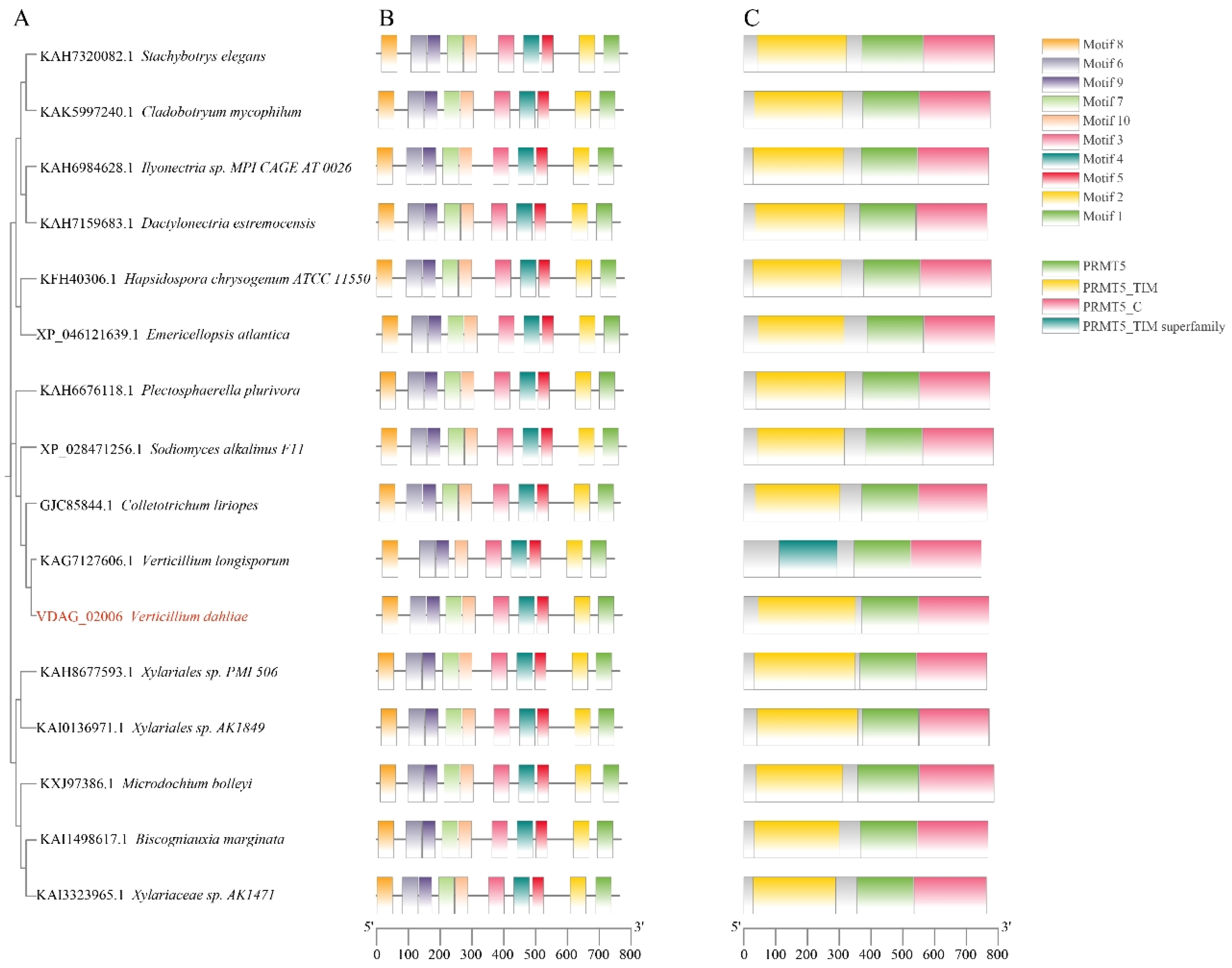
https://swissmodel.expasy.org/) (accessed on 1 February 2025). Homologous protein sequences of PRMTs from different species were retrieved from the NCBI database. A phylogenetic tree was constructed using the neighbor-joining method in MEGA11 software (Sudhir Kumar, Philadelphia, PA, USA). Conserved motifs were analyzed using the MEME online tool (
https://meme-suite.org/meme/) (accessed on 1 August 2025). Multiple sequence alignment was performed and visualized using ESPript 3.0 (
https://espript.ibcp.fr/ESPript/ESPript/) (accessed on 1 February 2025), and protein domains were predicted using the SMART online tool (
https://smart.embl.de/smart/change_mode.cgi) (accessed on 1 February 2025).
2.3. Gene Expression Pattern Analysis
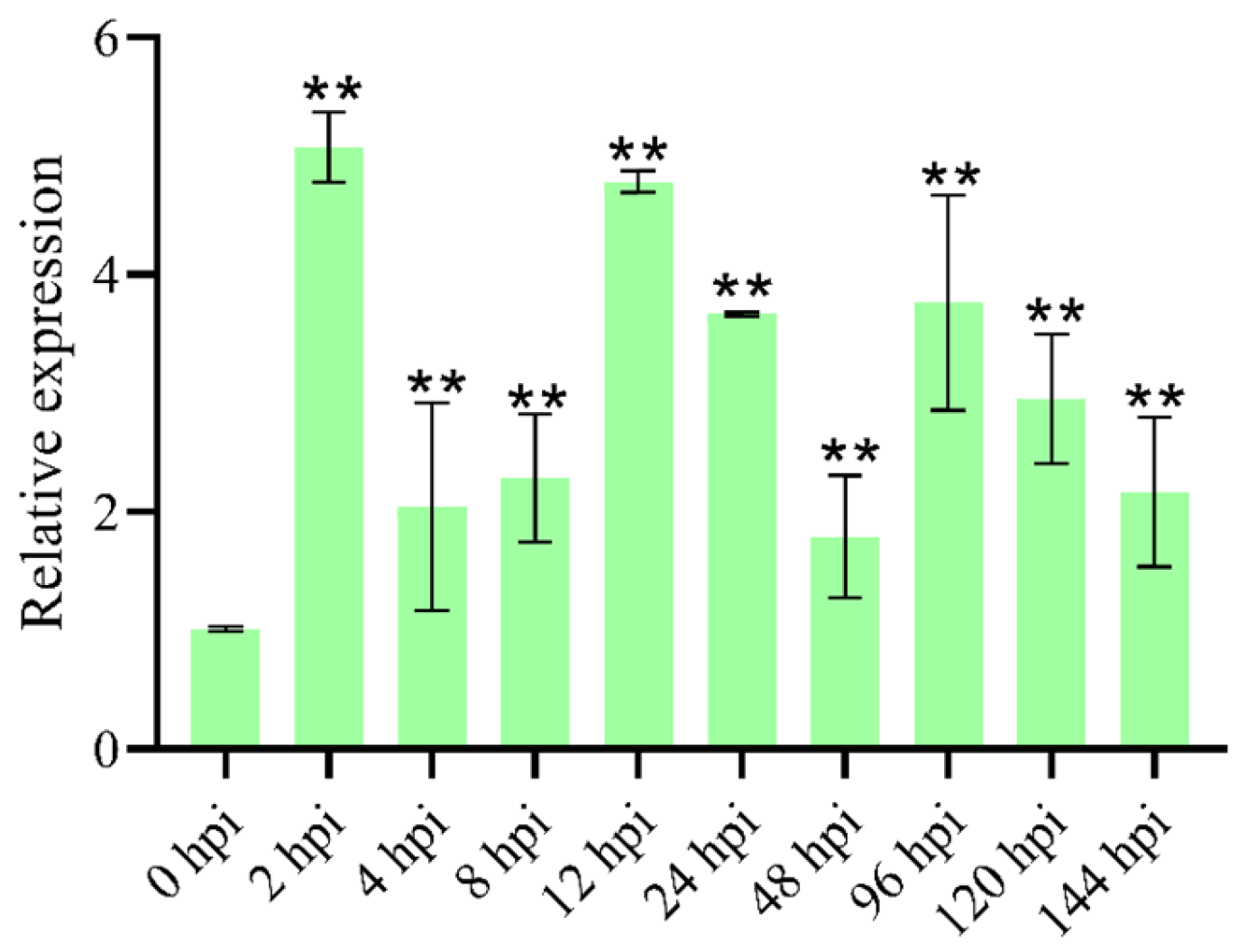
To determine whether VdPRMT4 is involved in infection of cotton by V. dahliae, we examined its expression in the fungus at different time points (0, 2, 4, 8, 12, 24, 48, 96, 120, and 144 h post-inoculation, hpi) using qRT-PCR. Total RNA was extracted from inoculated cotton root tissues using the RNAprep Pure Plant Kit (Tiangen, Beijing, China). First-strand cDNA was synthesized from 1 µg of total RNA using the HiScript IV All-in-One Ultra RT SuperMix (Vazyme, Nanjing, China) for qRT-PCR. qRT-PCR was performed using ChamQ Universal SYBR qPCR Master Mix (Vazyme, Nanjing, China) on an ABI 7500 Fast Real-Time PCR System (Applied Biosystems, Foster City, CA, USA). The reaction program was as follows: 95 °C for 30 s, followed by 40 cycles of 95 °C for 10 s and 60 °C for 30 s, ending with a melt curve analysis. Three biological replicates and three technical replicates were included for each sample. The relative expression level was calculated using the 2−ΔΔCt method, with the V. dahliae actin gene (VDAG_02600) serving as the internal reference.
2.4. HIGS Vector Construction and Inoculation
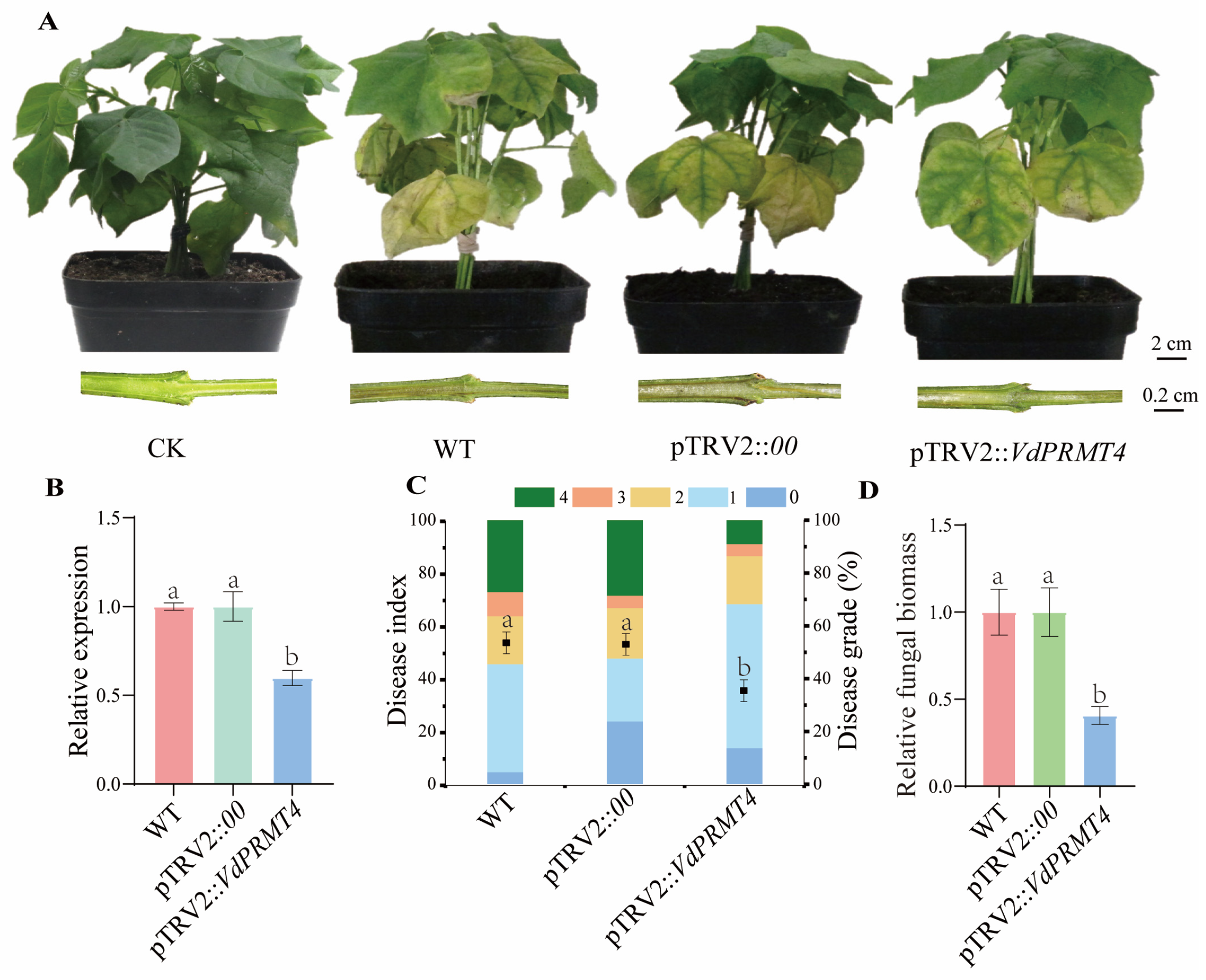
To construct the host-induced gene silencing (HIGS) vector, a specific fragment of approximately 300 bp of the VdPRMT4 gene was amplified by PCR using the corresponding sequence as template. The fragment was digested and ligated into the multiple cloning site of the pTRV2 vector to generate the recombinant plasmid pTRV2:VdPRMT4. The GhCLA1 served as a positive control, and the empty pTRV2 vector was used as a negative control. All plasmids were separately introduced into Agrobacterium tumefaciens strain GV3101 competent cells using the heat shock method. Positive single colonies were cultured in LB liquid medium containing 50 µg/mL kanamycin and 50 µg/mL rifampicin until the OD600 reached 0.6–0.8. Bacterial cells were collected by centrifugation and resuspended in infiltration buffer to an OD600 of 1.0. For agroinfiltration, equal volumes of the pTRV1 culture and each pTRV2 recombinant culture were mixed and injected into the fully expanded cotyledons of cotton seedlings. Inoculated plants were kept in darkness under high humidity for 24 h before being returned to normal growth conditions. Approximately 10–14 days later, when the positive control plants (pTRV2::GhCLA1) showed an obvious albino phenotype, the HIGS system was considered successfully established. Uniformly grown plants were then selected and inoculated with the prepared Vd991 spore suspension using the root wounding and dipping method.
2.5. Generation of VdPRMT4 Knockout Mutants
The knockout mutant was generated using Agrobacterium tumefaciens-mediated transformation (ATMT). Briefly, approximately 1 kb upstream and downstream flanking sequences of the VdPRMT4 gene, along with a hygromycin B phosphotransferase cassette, were amplified from the wild-type (WT) V. dahliae strain Vd991. These fragments were fused by overlap extension PCR to assemble the knockout construct, which was then cloned into the binary vector pGKO, yielding pGKO-ΔVdPRMT4. This plasmid was introduced into A. tumefaciens strain EHA105.
For fungal transformation, conidia of Vd991 were co-cultivated with the A. tumefaciens suspension on IM solid medium overlaid with a filter membrane. After 48 h of co-cultivation at 25 °C in darkness, the membrane was transferred to PDA selection medium containing carbenicillin, cefotaxime, hygromycin B, and 5-fluorouracil to inhibit A. tumefaciens growth and select for transformants. Resistant colonies were purified through multiple rounds of subculture on selective PDA plates. Putative knockout mutants were verified by PCR using primers flanking the target site and primers internal to the hygromycin resistance gene. Two independent knockout mutants, designated ΔVdPRMT4-1 and ΔVdPRMT4-2, were obtained and used for subsequent analyses.
2.6. Complementation of VdPRMT4 Knockout Mutants
Complementation strains were generated to confirm that the observed phenotypes were due to the loss of VdPRMT4. The full-length coding sequence (without the stop codon) of VdPRMT4 was amplified from the WT strain and cloned into the binary vector pMC-GFP-G418, which carries a C-terminal GFP tag and a geneticin resistance marker, resulting in pMC-VdPRMT4-GFP.
The complementation vector was introduced into A. tumefaciens EHA105 and subsequently used to transform conidia of the ΔVdPRMT4-1 and ΔVdPRMT4-2 mutants via ATMT, following a similar co-cultivation and selection procedure as described above. Selection was performed on PDA medium supplemented with cefotaxime, ampicillin, and G418. Resistant colonies were purified and verified by PCR for the presence of the complemented gene. Expression of the VdPRMT4-GFP fusion protein was confirmed by observing GFP fluorescence under a fluorescence microscope. One complemented strain from each mutant background, designated ΔVdPRMT4-1-C and ΔVdPRMT4-2-C, was obtained for further study.
2.7. Phenotypic Analysis Under Different Carbon Sources and Stress Conditions
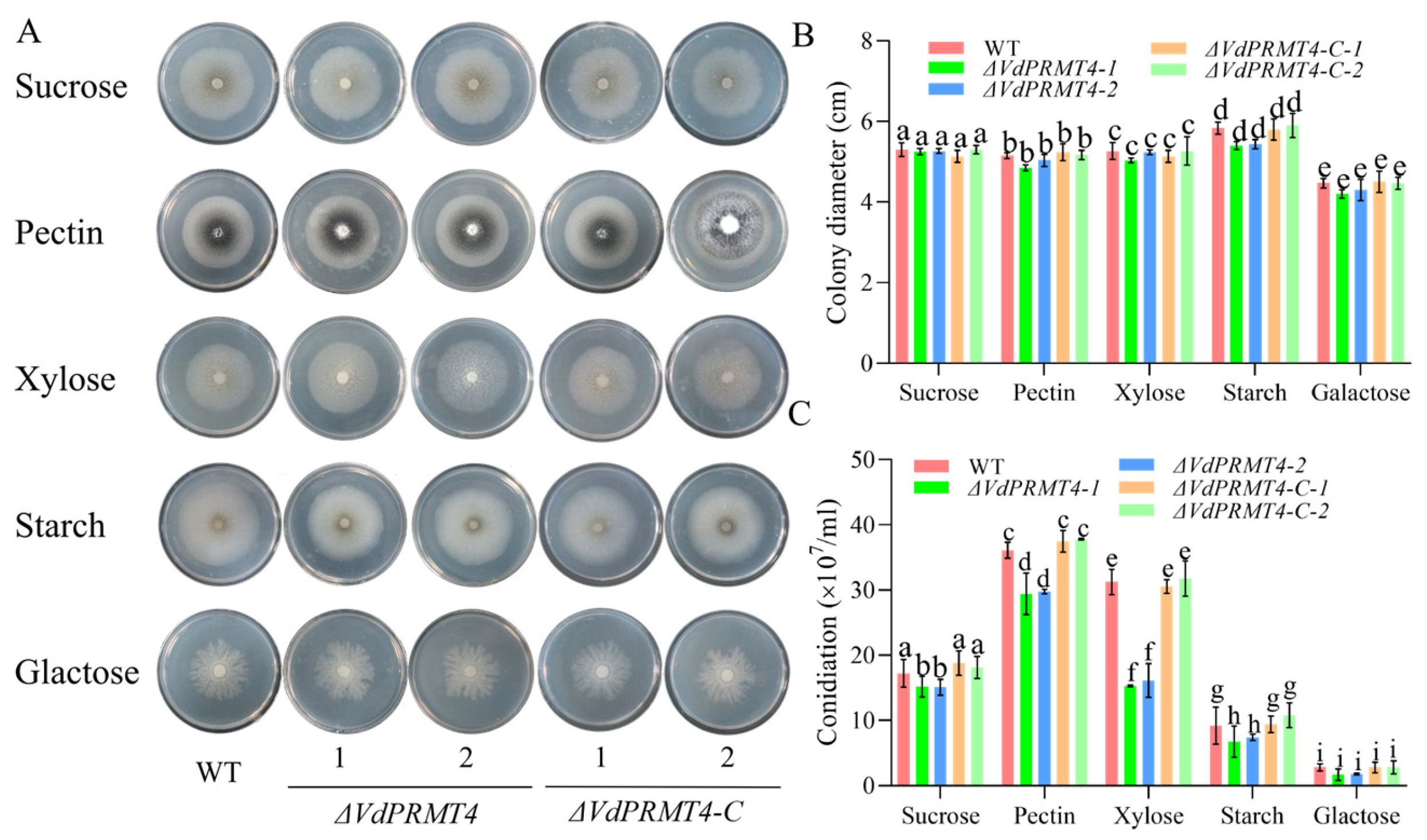
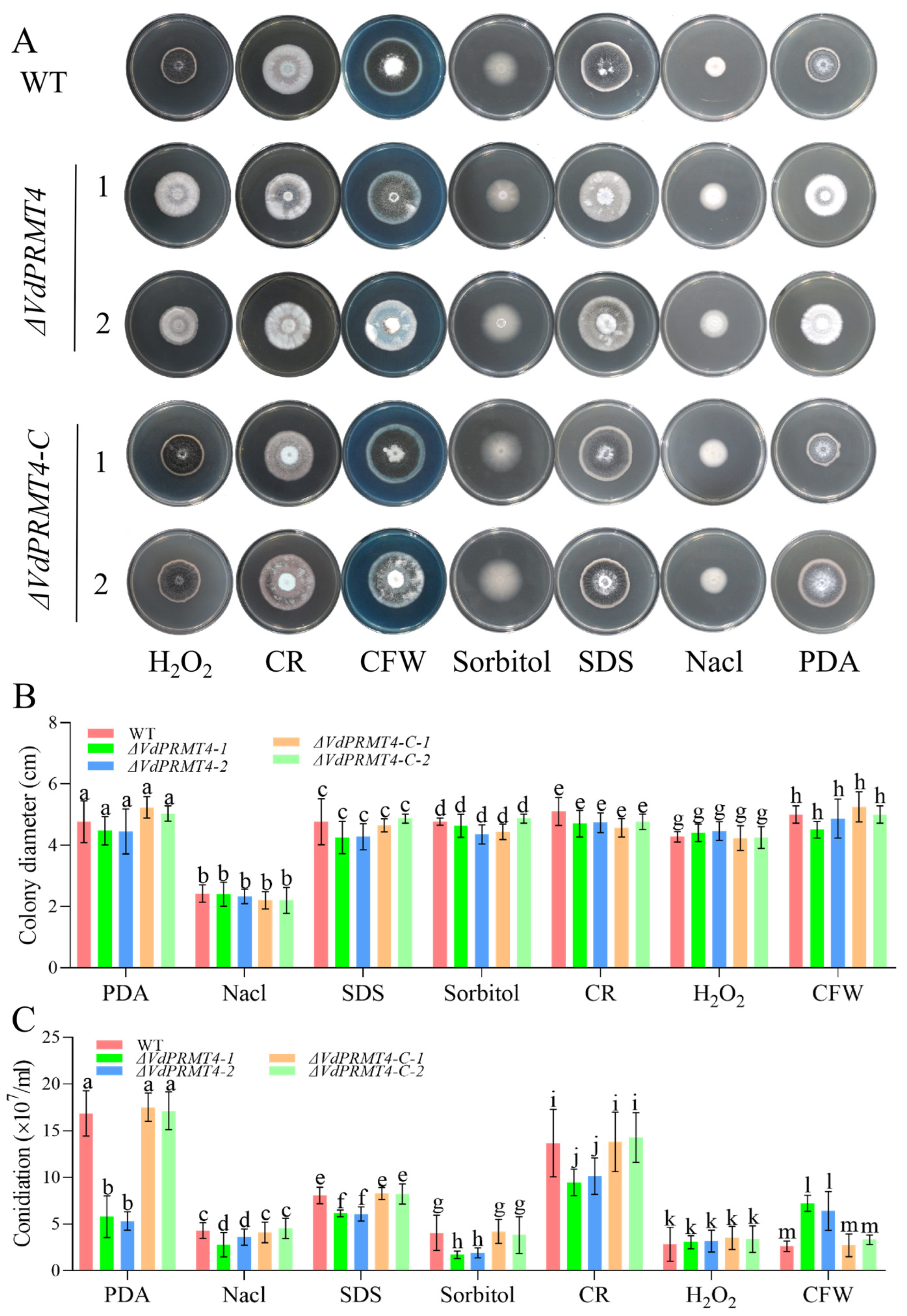
To assess carbon source utilization and stress tolerance, mycelial plugs of the WT, knockout mutant, and complemented strains were point-inoculated onto different solid media. Carbon source utilization tests were performed using basal medium supplemented with pectin (1%, w/v), galactose (1%, w/v), starch (1.4%, w/v), xylose (1%, w/v), or sucrose (3%, w/v) as the sole carbon source. Stress tolerance tests were conducted on PDA amended with the following agents: Congo Red (7.5%, w/v), calcofluor white (3%, w/v), SDS (0.01%, w/v), NaCl (4.095%, w/v), sorbitol (18.271%, w/v), or H2O2 (0.051%, w/v). All plates were incubated upside down at 25 °C in darkness for 14 days. Colony diameters were measured every two days, and the final average was calculated. After incubation, 2 mL of sterile water was added to each plate, and spores were gently scraped off, filtered through cheesecloth, and counted using a hemocytometer.
2.8. Pathogenicity Assay and Disease Evaluation
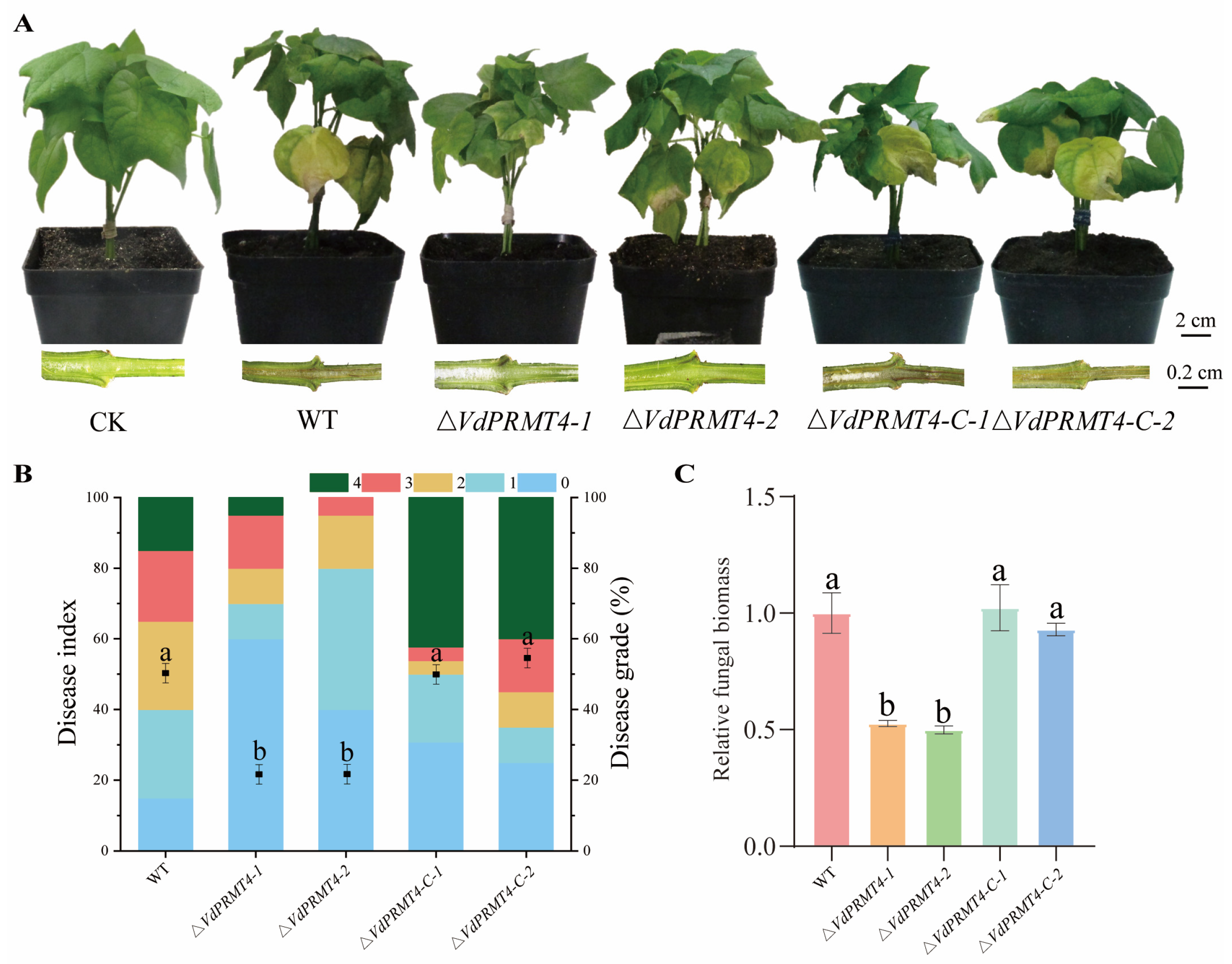
Pathogenicity was assessed using the root wounding and dipping method. Cotton seedlings at the two-true-leaf stage were carefully uprooted, their roots washed, and then wounded with sterile scissors before being immersed in a spore suspension (1 × 10
7 CFU/mL) of each strain for 5 min. Seedlings immersed in sterile water served as the mock control. Inoculated plants were transplanted back into the substrate and maintained under standard growth conditions. At 14 days post-inoculation (dpi), disease severity was evaluated based on leaf wilting and yellowing symptoms according to the Chinese National Standard GB/T 22101.5-2009 [
27]. A 0–4 grading scale was used: 0, no symptoms; 1, 1–25% of leaves affected; 2, 26–50%; 3, 51–75%; 4, 76–100% or plant death. The disease index was calculated using the following formula: DI = [Σ (disease grade × number of plants at that grade)/(total number of plants investigated × highest disease grade)] × 100. Simultaneously, root tissues were collected. Total DNA was extracted using a Plant Genomic DNA Kit, and the relative fungal biomass within the host was estimated by qRT-PCR, quantifying the copy number ratio of the pathogen rDNA gene (NR_126124.1) to the cotton reference gene
GhUBQ7 (LOC107912293).
2.9. Transcriptome Sequencing and Bioinformatics Analysis
The WT
Vd991 and the
ΔVdPRMT4 mutant were cultured on PDA medium at 26 °C in the dark for 14 days, and samples were collected with three biological replicates per treatment. Samples were flash-frozen in liquid nitrogen and stored at −80 °C. Paired-end sequencing was performed on an Illumina NovaSeq 6000 platform. Raw sequencing reads were quality-filtered using Trimmomatic software (version 0.39) to remove low-quality reads and adapter sequences. High-quality clean reads were aligned to the
V. dahliae (
https://www.ncbi.nlm.nih.gov/datasets/genome/GCF_000150675.1, accessed on 19 May 2025) reference genome using HISAT2. Transcript assembly and gene expression quantification were performed using StringTie. Differential expression analysis was conducted using the DESeq2 R package (version 1.42.0), with genes having an absolute |log
2FoldChange| > 1 and an adjusted
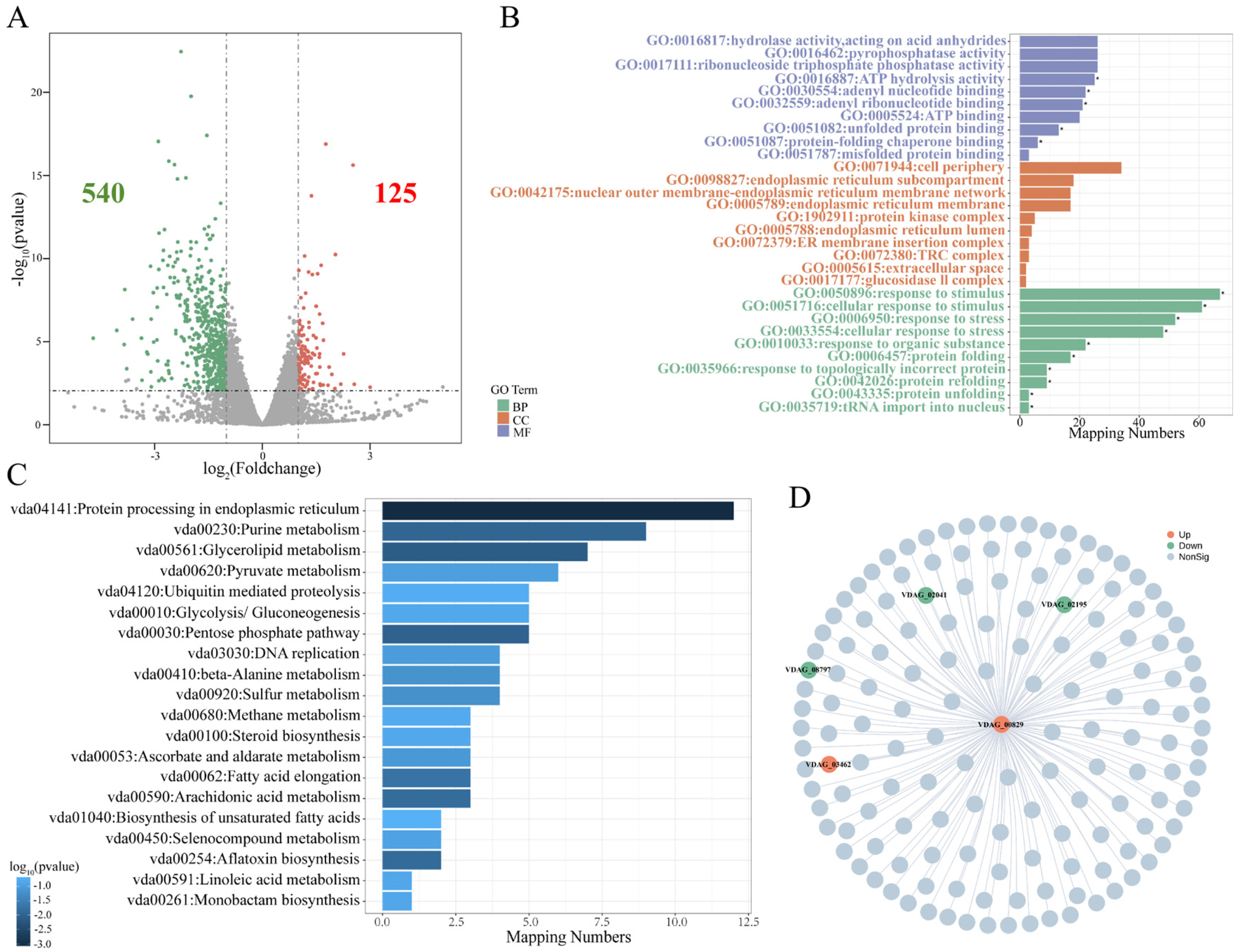
p-value < 0.05 considered differentially expressed. Gene Ontology (GO) and Kyoto Encyclopedia of Genes and Genomes (KEGG) pathway enrichment analyses of the differentially expressed genes (DEGs) were performed using the ClusterProfiler R package (version 4.12.6). A protein–protein interaction (PPI) network was predicted using the STRING database (version 12.0;
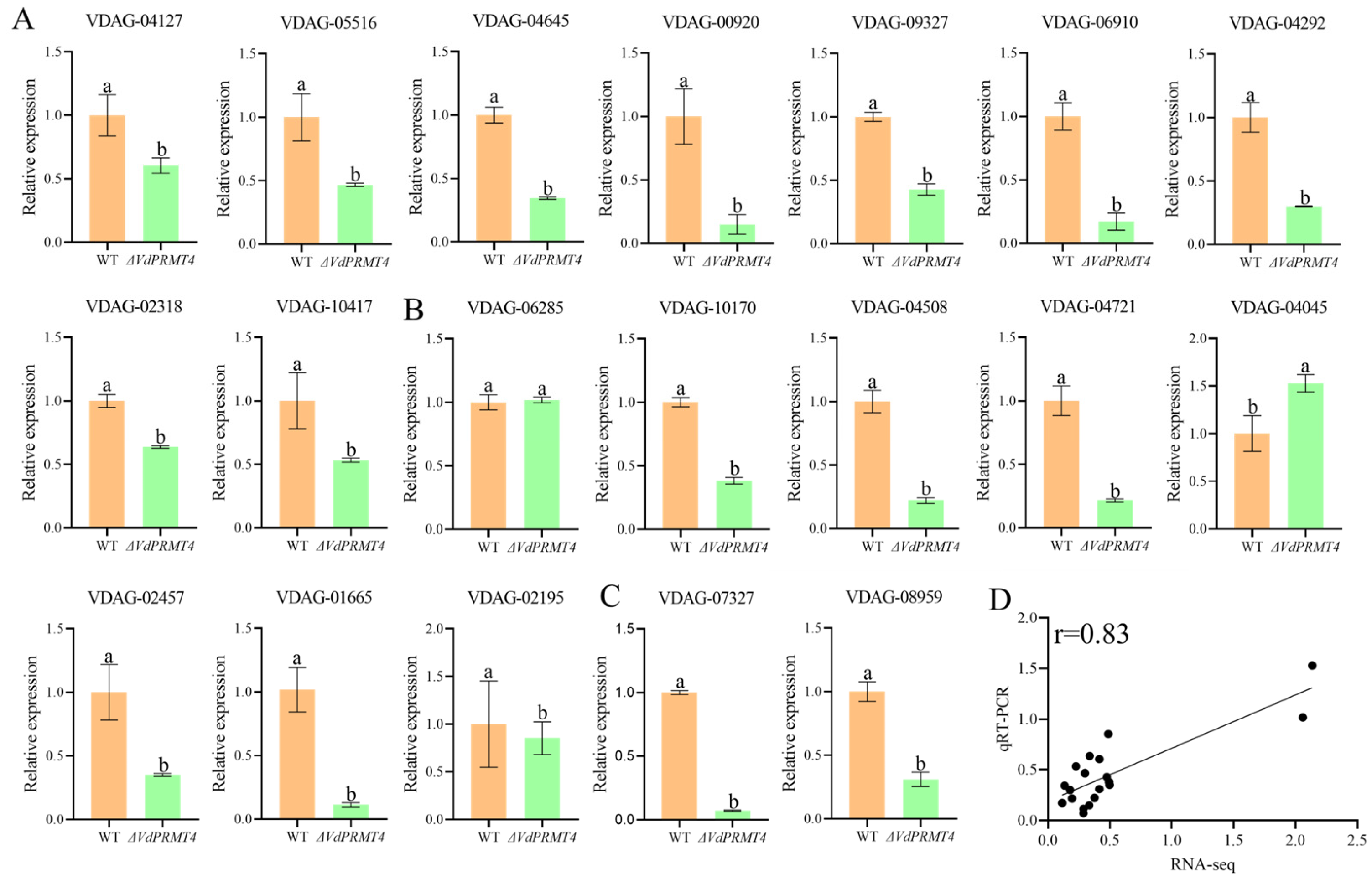
https://string-db.org) with a combined score threshold of >0.4 to identify high-confidence interactions among the proteins encoded by the DEGs. The resulting interaction data were imported into Cytoscape (version 3.9.1) for network visualization and analysis. To validate the reliability of the transcriptome sequencing results, 19 DEGs selected based on KEGG pathway analysis were verified using qRT-PCR.
2.10. Data Analysis
All phenotypic experiments and qRT-PCR validation experiments included at least three independent biological replicates. Data are presented as mean ± standard deviation (SD). Statistical analysis and graphing were performed using GraphPad Prism 8.0 software. Comparisons between two groups were analyzed using Student’s t-test. Comparisons among multiple groups were analyzed using one-way analysis of variance (ANOVA) followed by Tukey’s post hoc test. Differences were considered statistically significant at p < 0.05.
4. Discussion
The pathogenic complexity of cotton VW, caused by
V. dahliae, extends far beyond traditional virulence factors. This study identifies the protein arginine methyltransferase gene
VdPRMT4 as a key regulator of fungal pathogenicity. The expression level of
VdPRMT4 was rapidly upregulated during the early stage of
V dahliae infection in cotton, and both HIGS-mediated silencing and targeted gene knockout of
VdPRMT4 significantly attenuated disease symptoms and reduced fungal biomass in planta, demonstrating its essential role in virulence. The critical function of PRMTs in fungal pathogenicity has been increasingly recognized across different species. In
Fusarium graminearum, deletion of the PRMT homolog AMT1 significantly reduced pathogenicity on wheat heads [
28]. In
Magnaporthe oryzae, PRMT family members, including
MoPRMT4,
MoPRMT5, and
MoHMT1, regulate conidiation, appressorium formation, and infectious growth [
29,
30]. In
Ustilago maydis and
Sporisorium reilianum, double deletion of PRMT1 and PRMT4 resulted in avirulent, non-mating strains, highlighting the essential role of arginine methylation in fungal pathogenesis [
31]. In
V. dahliae itself, the PRMT family member
VdPRMT1 has been reported to affect vegetative growth, sporulation, and pathogenicity on cotton [
15]. The loss of
VdPRMT4 severely impaired
V. dahliae pathogenicity on cotton without affecting basal hyphal growth, consistent with these reports and confirming that arginine methyltransferases are conserved regulators required for full fungal virulence.
Phenotypic analysis of the
ΔVdPRMT4 mutant under diverse nutrient and stress conditions revealed that
VdPRMT4 specifically regulates sporulation adaptability. Although VdPRMT4 deletion did not affect radial growth on various carbon sources (pectin, galactose, starch, xylose, or sucrose), it significantly reduced spore production on all tested carbon sources except galactose, with the most pronounced reduction on xylose. Similarly, under abiotic stresses including cell wall perturbants (Congo Red, calcofluor white), membrane stress (SDS), high salt (NaCl), and oxidative stress (H
2O
2), the mutant exhibited normal hyphal growth but altered sporulation capacity—generally reduced, yet intriguingly increased on CFW-containing medium. Genetic complementation fully restored WT phenotypes, confirming that these defects are specifically attributable to loss of
VdPRMT4. These findings align with reported roles of PRMTs in other fungi. In
Neurospora crassa, PRMTs interact with the NDR kinase COT1 to regulate hyphal differentiation under stress conditions [
32]. In
Magnaporthe oryzae, PRMT family members are differentially expressed across developmental stages and are essential for conidiation and stress responses [
29,
30]. In
Sporisorium reilianum, deletion of PRMT genes affected mating, growth, and virulence due to down-regulation of cell wall-related genes [
31]. In
V. dahliae, deletion of
VdPRMT1 resulted in similar defects in growth and sporulation under various stress conditions [
15]. Collectively, these observations suggest that
VdPRMT4 enables
V. dahliae to fine-tune reproductive strategies in response to environmental cues, thereby maintaining adaptive advantages during host infection.
To elucidate the molecular basis of
VdPRMT4-mediated pathogenicity, we performed a comparative transcriptome analysis between the WT strain and the
ΔVdPRMT4 mutant. KEGG enrichment analysis revealed that the differentially expressed genes in the
ΔVdPRMT4 mutant were significantly enriched in three key metabolic pathways of
V. dahliae itself: protein processing in the endoplasmic reticulum (ER), purine metabolism, and glycerolipid metabolism. These pathways are not randomly perturbed but rather represent interconnected cellular processes essential for fungal growth and adaptation. The enrichment of ER protein processing genes suggests that
VdPRMT4 may regulate protein folding, modification, and quality control within the fungal secretory pathway. These processes are essential for the proper maturation and secretion of virulence-related proteins, such as cell wall-degrading enzymes and effectors, which are critical for fungal infection [
33]. The enrichment of purine metabolism genes indicates that
VdPRMT4 may be involved in regulating fungal energy homeostasis and nucleotide biosynthesis. Purine nucleotides (e.g., ATP, GTP) are fundamental for DNA replication, RNA transcription, and energy supply during fungal growth, sporulation, and host colonization [
24,
34]. The enrichment of glycerolipid metabolism genes is particularly significant, as glycerolipids are major structural components of fungal cell membranes and also serve as storage lipids. Proper regulation of glycerolipid metabolism is critical for membrane integrity, spore formation, and stress adaptation in fungal pathogens [
35]. The altered expression of these genes upon
VdPRMT4 deletion suggests that this methyltransferase may contribute to fungal pathogenicity by modulating these core metabolic pathways in
V. dahliae, thereby affecting its growth, development, and infection capacity.
The convergence of these three metabolic pathways points to a coordinated regulatory strategy orchestrated by
VdPRMT4. How does a fungal methyltransferase achieve such broad effects on fungal metabolism? One possible explanation lies in the regulation of effector gene expression. PRMTs are known epigenetic regulators that control the expression of genes involved in diverse cellular processes, including pathogenesis. In
Sporisorium reilianum, deletion of
PRMT1 and
PRMT4 led to altered expression of effector genes and complete loss of virulence [
30]. In
Ustilago maydis, transcriptome analysis revealed that epigenetic regulators control the expression of putative effector genes during axenic growth [
31]. In
Magnaporthe oryzae, PRMT family members are differentially expressed during infection and regulate genes required for appressorium formation and invasive growth [
29,
30]. By analogy,
VdPRMT4 may function as a potential epigenetic regulator that influences the expression of a suite of
V. dahliae effectors. These effectors, in turn, might target host cellular processes to create a favorable microenvironment for fungal colonization. This multilayered strategy, in which a single epigenetic regulator could control multiple effectors, may represent one possible pathogenic mechanism. The observation that
VdPRMT4 deletion alone leads to significant attenuation of pathogenicity suggests that this gene may play an important role in the pathogenic program.
In conclusion, this study suggests that the arginine methyltransferase VdPRMT4 may integrate environmental signals to regulate sporulation adaptability under stress and is essential for full pathogenicity of V. dahliae on cotton. Transcriptome analysis suggests that VdPRMT4 influences key metabolic pathways of V. dahliae, including protein processing in the endoplasmic reticulum, purine metabolism, and glycerolipid metabolism, potentially through effects on the expression of fungal effector genes. These findings provide additional insights into arginine methyltransferase functions in fungal-plant interactions and suggest VdPRMT4 as a potential target for developing novel strategies to control VW.





 ,
,