
Effects of Different Initial pH Conditions on the Antioxidant Capacity and Lipidomic Profiles of Samsoniella hepialid



Abstract
1. Introduction
2. Materials and Methods
2.1. Fungal Strain and Cultivation Conditions
2.2. Determination of Antioxidant Capacity
2.3. Lipidomic Analysis
2.3.1. Chemicals and Reagents
2.3.2. Sample Preparation and Lipid Extraction
2.3.3. Chromatographic and Mass Spectrometry Conditions
- (1)
- Column: Thermo Accucore™ C30 column (2.6 μm, 2.1 mm × 100 mm i.d., Thermo Fisher Scientific, Waltham, MA, USA);
- (2)
- Mobile phases: phase A, acetonitrile/water (60:40, v/v) containing 0.1% formic acid and 10 mmol/L ammonium formate; phase B, acetonitrile/isopropanol (10:90, v/v) containing 0.1% formic acid and 10 mmol/L ammonium formate;
- (3)
- Gradient elution program: 0 min, A/B = 80:20 (v/v); 2 min, 70:30 (v/v); 4 min, 40:60 (v/v); 9 min, 15:85 (v/v); 14 min, 10:90 (v/v); 15.5 min, 5:95 (v/v); 17.3 min, 5:95 (v/v); 17.5 min, 80:20 (v/v); and 20 min, 80:20 (v/v);
- (4)
- Flow rate: 0.35 mL/min; column temperature: 45 °C; injection volume: 2 μL.
2.3.4. Lipid Identification and Quantification
2.4. Data Preprocessing and Statistical Analysis
3. Results
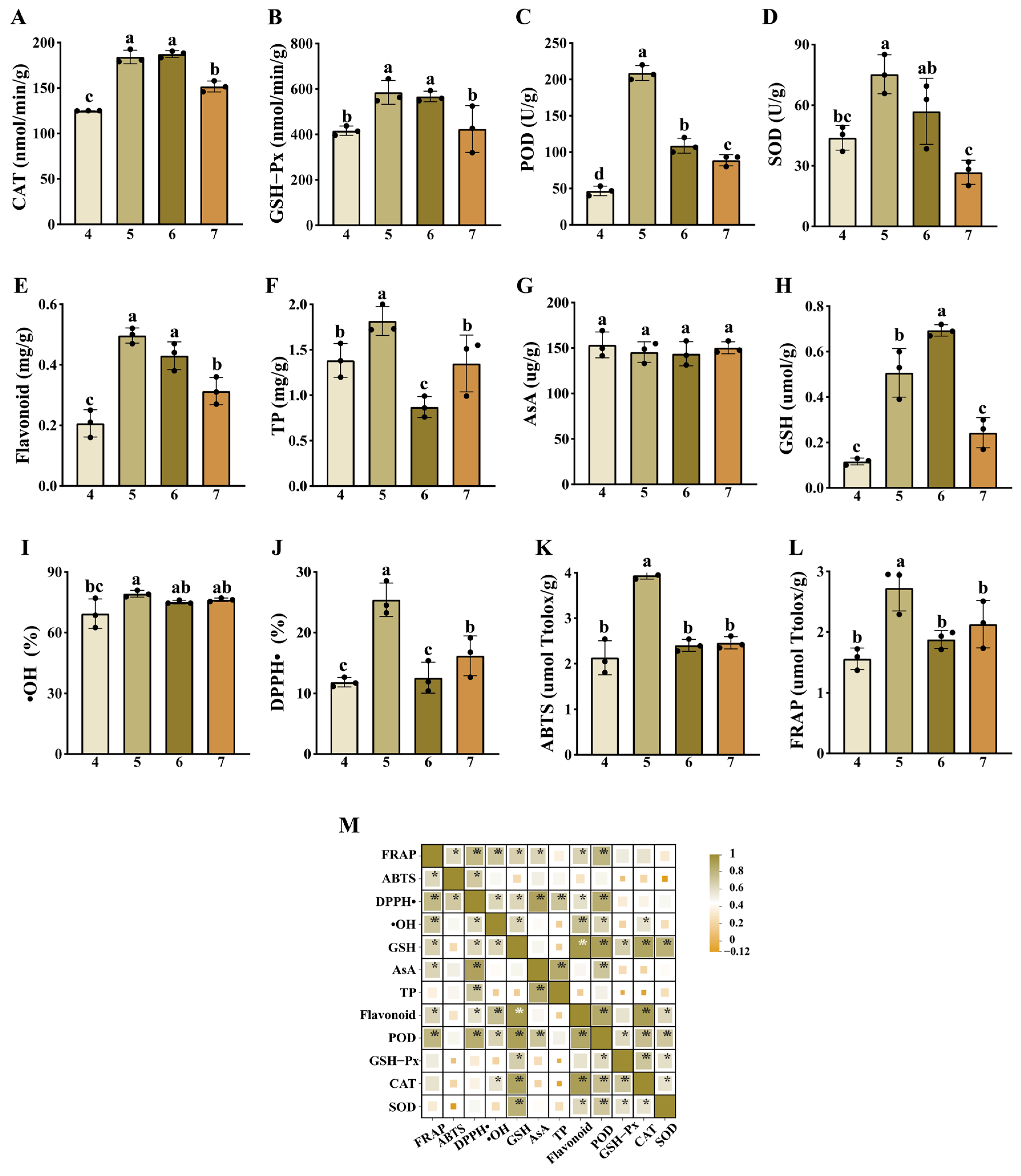
3.1. Antioxidant Activity
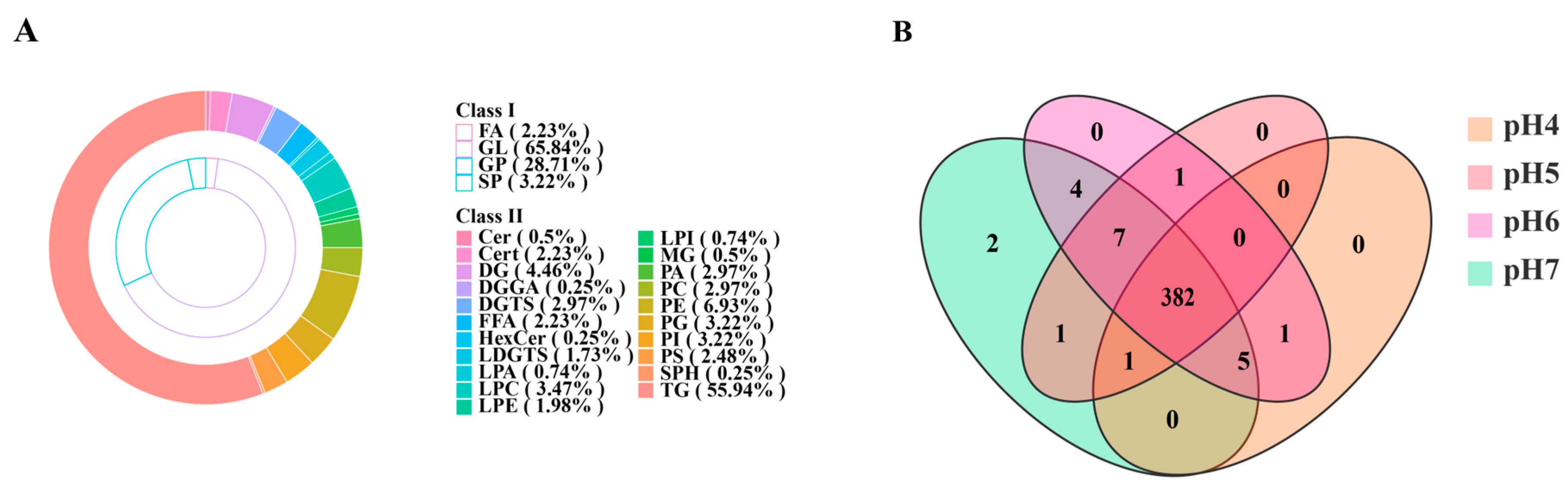
3.2. Compositional Profiling of the S. hepiali Lipidome Under Different pH Conditions
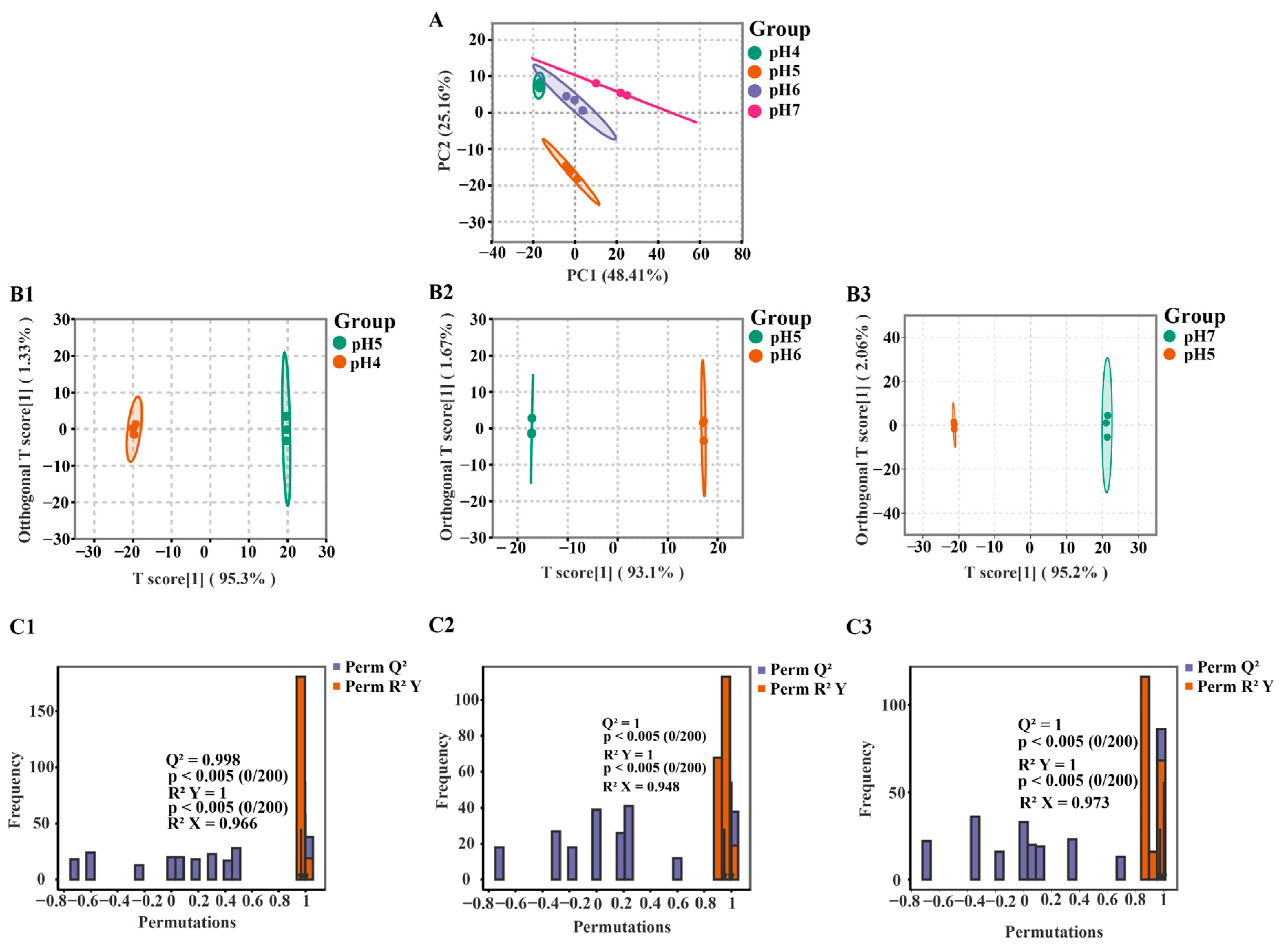
3.3. Multivariate Statistical Analysis of the Lipidomic Profiles
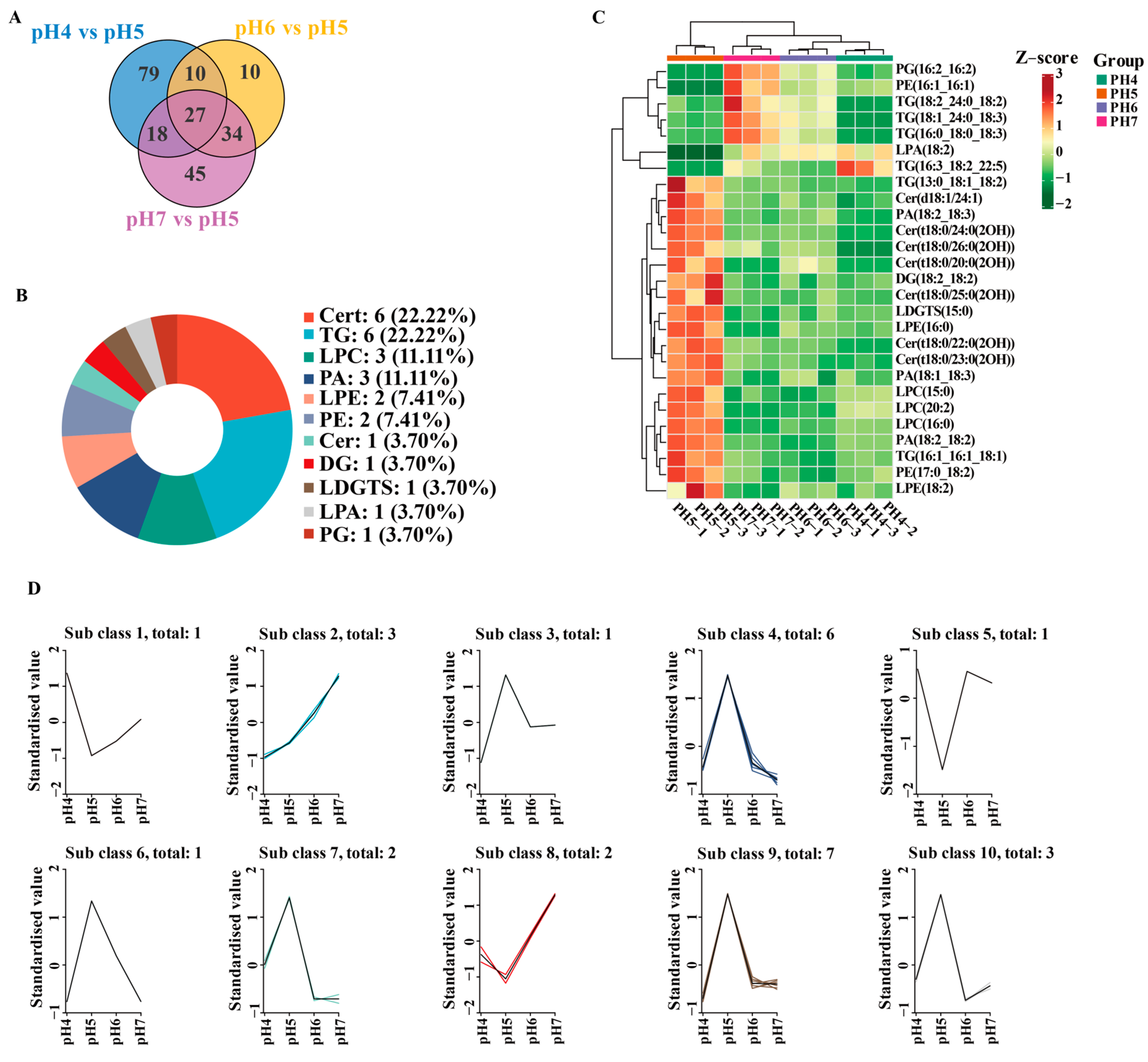
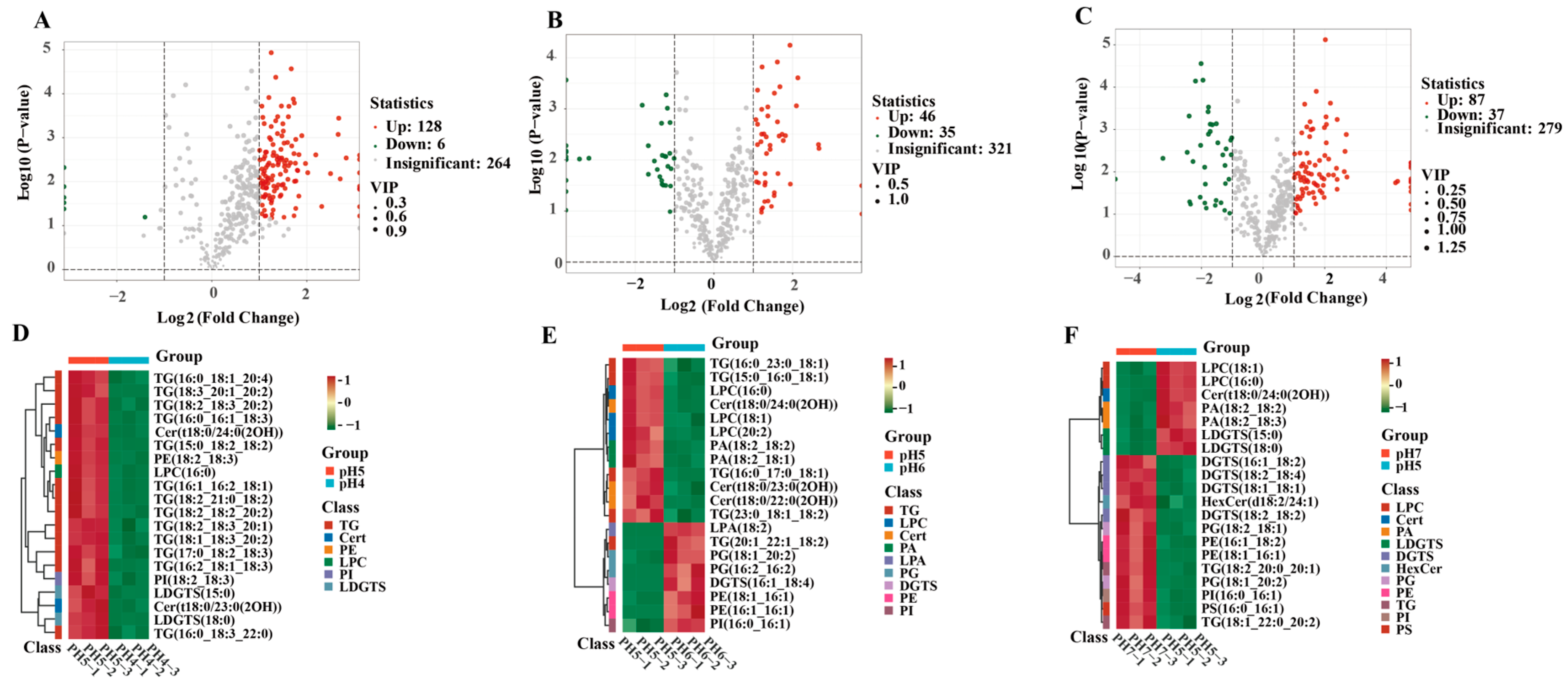
3.4. Screening and Trend Analysis of Differentially Accumulated Lipids (DALs)
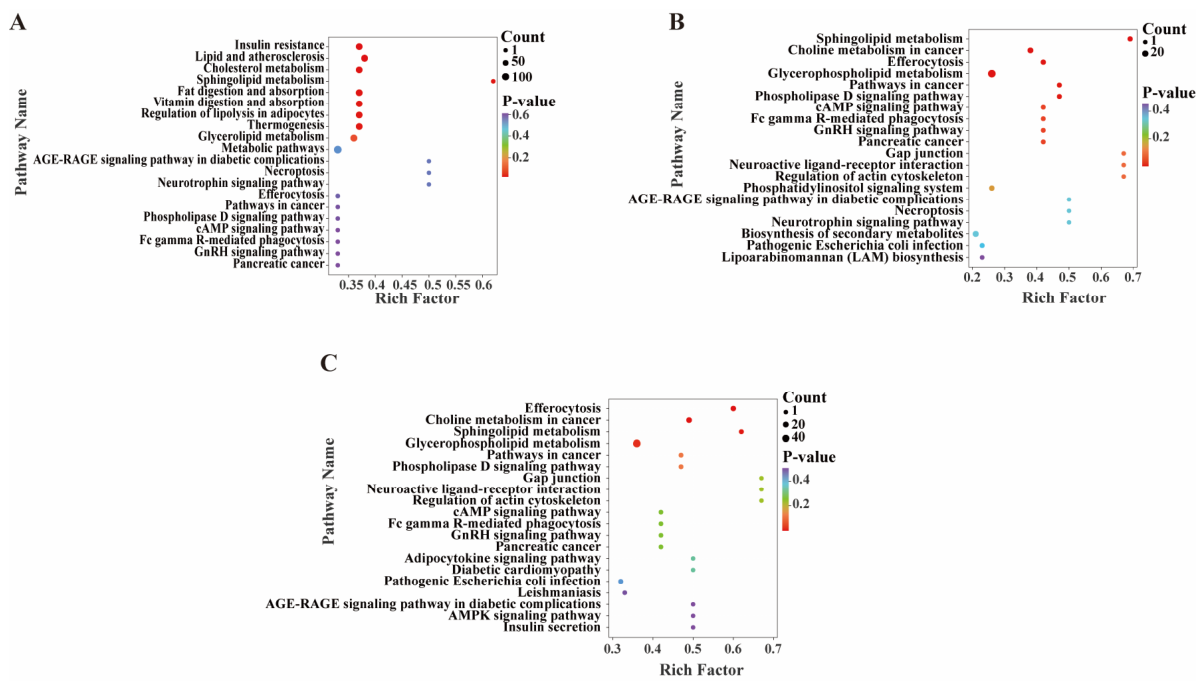
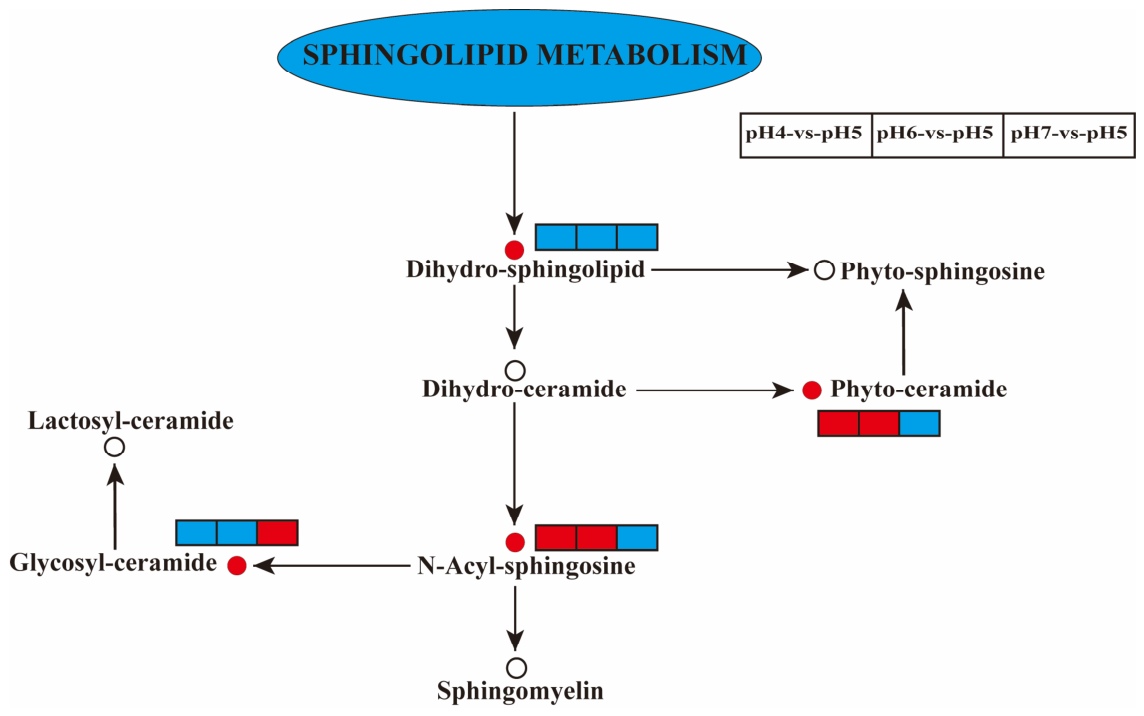
3.5. KEGG Pathway Enrichment Analysis of Differentially Accumulated Lipids
4. Discussion
5. Conclusions
Supplementary Materials
Author Contributions
Funding
Institutional Review Board Statement
Informed Consent Statement
Data Availability Statement
Conflicts of Interest
Abbreviations
| ABTS | 2,2′-azinobis(3-ethylbenzothiazoline-6-sulfonic acid) |
| AsA | Ascorbic acid |
| CAT | Catalase |
| CER | Ceramides |
| CERT | Phytoceramides |
| DALs | Differentially accumulated lipids |
| DG | Diglycerides |
| DPPH• | 2,2-diphenyl-1-picrylhydrazyl radical |
| FRAP | Ferric reducing antioxidant power |
| GSH | Glutathione |
| GSH-Px | Glutathione peroxidase |
| HCA | Hierarchical Cluster Analysis |
| KEGG | Kyoto Encyclopedia of Genes and Genomes |
| LPC | Lysophosphatidylcholines |
| LPE | Lysophosphatidylethanolamines |
| MTBE | Methyl tert-butyl ether |
| O. sinensis | Ophiocordyceps sinensis |
| OPLS-DA | Orthogonal Partial Least Squares Discriminant Analysis |
| PA | Phosphatidic acids |
| PCA | Principal Component Analysis |
| PC | Phosphatidylcholines |
| PE | Phosphatidylethanolamines |
| PG | Phosphatidylglycerols |
| PI | Phosphatidylinositols |
| POD | Peroxidase |
| ROS | Reactive oxygen species |
| S. hepiali | Samsoniella hepiali |
| S1P | sphingosine-1-phosphate |
| SOD | Superoxide dismutase |
| TG | Triglycerides |
| TP | Total phenolics |
| UPLC-MS/MS | Ultra-performance liquid chromatography-tandem mass spectrometry |
| VIP | Variable Importance in Projection |
| •OH | Hydroxyl radicals |
References
- Zhang, N.; Chen, H.X.; Zhang, Y.; Xing, L.S.; Li, S.Q.; Wang, X.M.; Sun, Z. Chemical composition and antioxidant properties of five edible Hymenomycetes mushrooms. Int. J. Food Sci. Tech. 2015, 50, 465–471. [Google Scholar]
- Bentharavithana, J.; Islam, T.; Xu, B.J. Medicinal Mushrooms in Colon Cancer Therapy: Mechanisms of Action of Bioactive Compounds and Therapeutic Potential. Int. J. Mol. Sci. 2025, 26, 5304. [Google Scholar] [CrossRef]
- Chen, P.Y.; Yong, Y.Y.; Gu, Y.F.; Wang, Z.L.; Zhang, S.Z.; Lu, L. Comparison of Antioxidant and Antiproliferation Activities of Polysaccharides from Eight Species of Medicinal Mushrooms. Int. J. Med. Mushrooms 2015, 17, 287–295. [Google Scholar] [CrossRef]
- Jia, L.-F.; Chen, P.; Qu, G.-D.; Sun, N.; Guo, T.; Zhong, H.-Y.; Duan, Y.-H.; Sun, J.-H.; Sun, J.-B. A comprehensive review of the sedative-hypnotic mechanisms of edible fungi. Food Med. Homol. 2025, 2, 9420049. [Google Scholar] [CrossRef]
- Szelenberger, R.; Wieckowska, M. Fungal Polysaccharides as Modulators of Molecular Pathways in Liver Health. Molecules 2025, 30, 4384. [Google Scholar] [CrossRef] [PubMed]
- Vamanu, E.; Lakicevic, M.; Dedovic, N.; Dumitru, G.; Badea, I.G.; Gatea, F.; Dinu, L.D. Evaluating the Efficacy of an Extract for UV Defense and Mitigation of Oxidative Stress, Transitioning from Biomass to Bioprotection. Agronomy 2024, 14, 2306. [Google Scholar] [CrossRef]
- Wei, Y.Q.; Zhang, L.; Wang, J.N.; Wang, W.W.; Niyati, N.; Guo, Y.L.; Wang, X.F. Chinese caterpillar fungus (Ophiocordyceps sinensis) in China: Current distribution, trading, and futures under climate change and overexploitation. Sci. Total Environ. 2021, 755, 142548. [Google Scholar] [CrossRef] [PubMed]
- Shrestha, U.B.; Bawa, K.S. Impact of Climate Change on Potential Distribution of Chinese Caterpillar Fungus (Ophiocordyceps sinensis) in Nepal Himalaya. PLoS ONE 2014, 9, e106405. [Google Scholar] [CrossRef]
- Hopping, K.A.; Chignell, S.M.; Lambin, E.F. The demise of caterpillar fungus in the Himalayan region due to climate change and overharvesting. Proc. Natl. Acad. Sci. USA 2018, 115, 11489–11494. [Google Scholar] [CrossRef]
- Shrestha, U.B.; Bawa, K.S. Trade, harvest, and conservation of caterpillar fungus (Ophiocordyceps sinensis) in the Himalayas. Biol. Conserv. 2013, 159, 514–520. [Google Scholar] [CrossRef]
- Rao, Z.C.; Cao, L.; Wu, H.; Qiu, X.H.; Liu, G.Q.; Han, R.C. Comparative Transcriptome Analysis of Thitarodes Armoricanus in Response to the Entomopathogenic Fungi Paecilomyces hepiali and Ophiocordyceps sinensis. Insects 2020, 11, 4. [Google Scholar] [CrossRef] [PubMed]
- Dan, A.K.; Hu, Y.J.; Chen, R.Y.; Lin, X.Y.; Tian, Y.Q.; Wang, S.Y. Advances in research on chemical constituents and pharmacological effects of Paecilomyces hepiali. Food Sci. Hum. Wellness 2021, 10, 401–407. [Google Scholar] [CrossRef]
- He, M.; Tang, C.Y.; Wang, T.; Xiao, M.J.; Li, Y.L.; Li, X.Z. Analysis of Metabolic Profiles and Antioxidant Activity of Chinese Cordyceps, Ophiocordyceps sinensis, and Paecilomyces hepiali Based on Untargeted Metabolomics. Biology 2024, 13, 683. [Google Scholar] [CrossRef]
- Guan, T.Y.; Li, S.S.; Guan, Q.J.; Shi, J.S.; Lu, Z.M.; Xu, Z.H.; Geng, Y. Spore Powder of Paecilomyces hepiali Shapes Gut Microbiota to Relieve Exercise-Induced Fatigue in Mice. Nutrients 2022, 14, 2973. [Google Scholar] [CrossRef]
- Liu, K.B.; Wang, F.; Liu, G.J.; Dong, C.H. Effect of Environmental Conditions on Synnema Formation and Nucleoside Production in Cicada Flower, Isaria cicadae (Ascomycetes). Int. J. Med. Mushrooms 2019, 21, 59–69. [Google Scholar] [CrossRef]
- Park, H.J. Influence of Culture Conditions on Bioactive Compounds in Cordyceps militaris: A Comprehensive Review. Foods 2025, 14, 3408. [Google Scholar] [CrossRef]
- Ismaiel, M.M.S.; El-Ayouty, Y.M.; Piercey-Normore, M. Role of pH on antioxidants production by Spirulina (Arthrospira) platensis. Braz. J. Microbiol. 2016, 47, 298–304. [Google Scholar] [PubMed]
- Liu, Y.T.; Li, Y.W.; Zhang, H.L.; Li, C.; Zhang, Z.Q.; Liu, A.P.; Chen, H.; Hu, B.; Luo, Q.Y.; Lin, B.K.; et al. Polysaccharides from Cordyceps militaris cultured at different pH: Sugar composition and antioxidant activity. Int. J. Biol. Macromol. 2020, 162, 349–358. [Google Scholar] [PubMed]
- Dowhan, W. Molecular genetic approaches to defining lipid function. J. Lipid Res. 2009, 50, S305–S310. [Google Scholar] [CrossRef]
- Simons, K. Cell membranes: A subjective perspective. BBA-Biomembranes 2016, 1858, 2569–2572. [Google Scholar]
- Santos, A.L.; Preta, G. Lipids in the cell: Organisation regulates function. Cell Mol. Life Sci. 2018, 75, 1909–1927. [Google Scholar]
- Al’myasheva, N.R.; Sharipova, D.A.; Barkov, A.V.; Karakhanov, E.A.; Kulikov, A.B.; Maksimov, A.L.; Vinokurov, V.A. Lipids of Basidial Fungi as Feedstock for Biodiesel Fuel Production. Chem. Technol. Fuels Oils 2015, 51, 411–421. [Google Scholar] [CrossRef]
- Bondarenko, S.A.; Ianutsevich, E.A.; Danilova, O.A.; Grum-Grzhimaylo, A.A.; Kotlova, E.R.; Kamzolkina, O.V.; Bilanenko, E.N.; Tereshina, V.M. Membrane lipids and soluble sugars dynamics of the alkaliphilic fungus Sodiomyces tronii in response to ambient pH. Extremophiles 2017, 21, 743–754. [Google Scholar] [CrossRef] [PubMed]
- Ianutsevich, E.A.; Danilova, O.A.; Grum-Grzhimaylo, O.A.; Tereshina, V.M. The Role of Osmolytes and Membrane Lipids in the Adaptation of Acidophilic Fungi. Microorganisms 2023, 11, 1733. [Google Scholar] [CrossRef]
- Zuellig, T.; Trötzmüller, M.; Koefeler, H.C. Lipidomics from sample preparation to data analysis: A primer. Anal. Bioanal. Chem. 2020, 412, 2191–2209. [Google Scholar] [CrossRef]
- Kim, J.H.; Kim, S.R.; Kim, S.K.; Kang, H.W. Effects of pH changes on blood physiology, antioxidant responses and Ig M of juvenile olive flounder, Paralichthys olivaceus. Aquac. Rep. 2021, 21, 100790. [Google Scholar] [CrossRef]
- Rosales-López, C.; Arce-Torres, F.; Monge-Artavia, M.; Rojas-Chaves, M. Evaluation of the Use of Elicitors for the Production of Antioxidant Compounds in Liquid Cultures of Ganoderma curtisii from Costa Rica. Molecules 2022, 27, 4265. [Google Scholar] [CrossRef]
- Gusman, J.K.; Lin, C.Y.; Shih, Y.C. The optimum submerged culture condition of the culinary-medicinal white jelly mushroom (Tremellomycetes) and its antioxidant properties. Int. J. Med. Mushrooms 2014, 16, 293–302. [Google Scholar] [CrossRef]
- Liu, X.Y.; Xu, G.W. Recent advances in using mass spectrometry for mitochondrial metabolomics and lipidomics—A review. Anal. Chim. Acta 2018, 1037, 3–12. [Google Scholar] [CrossRef] [PubMed]
- Han, X.L.; Gross, R.W. Shotgun lipidomics: Electrospray ionization mass spectrometric analysis and quantitation of cellular lipidomes directly from crude extracts of biological samples. Mass. Spectrom. Rev. 2005, 24, 367–412. [Google Scholar] [CrossRef] [PubMed]
- Wenk, M.R. The emerging field of lipidomics. Nat. Rev. Drug Discov. 2005, 4, 594–610. [Google Scholar] [CrossRef]
- Wang, R.X.; Li, B.W.; Lam, S.M.; Shui, G.H. Integration of lipidomics and metabolomics for in-depth understanding of cellular mechanism and disease progression. J. Genet. Genom. 2020, 47, 69–83. [Google Scholar] [CrossRef]
- Fahy, E.; Subramaniam, S.; Brown, H.A.; Glass, C.K.; Merrill, A., Jr.; Murphy, R.C.; Raetz, C.R.H.; Russell, D.W.; Seyama, Y.; Shaw, W.; et al. A comprehensive classification system for lipids. Eur. J. Lipid Sci. Tech. 2005, 107, 337–364. [Google Scholar] [CrossRef]
- Fahy, E.; Subramaniam, S.; Murphy, R.C.; Nishijima, M.; Raetz, C.R.H.; Shimizu, T.; Spener, F.; van Meer, G.; Wakelam, M.J.O.; Dennis, E.A. Update of the LIPID MAPS comprehensive classification system for lipids. J. Lipid Res. 2009, 50, S9–S14. [Google Scholar] [CrossRef]
- Aguilera-Méndez, A.; Alvarez-Delgado, C.; Hernández-Godinez, D.; Fernandez-Mejia, C. Hepatic Diseases Related to Triglyceride Metabolism. Mini-Rev. Med. Chem. 2013, 13, 1691–1699. [Google Scholar] [CrossRef]
- Yen, C.L.E.; Stone, S.J.; Koliwad, S.; Harris, C.; Farese, R.V. DGAT enzymes and triacylglycerol biosynthesis. J. Lipid Res. 2008, 49, 2283–2301. [Google Scholar] [CrossRef] [PubMed]
- Walther, T.C.; Farese, R.V. The life of lipid droplets. BBA-Mol. Cell Biol. Lipids 2009, 1791, 459–466. [Google Scholar] [CrossRef]
- Xiao, M.J.; Wang, T.; Tang, C.Y.; He, M.; Li, Y.L.; Li, X.Z. Evaluation of Lipid Changes During the Drying Process of Cordyceps sinensis by Ultra Performance Liquid Chromatography-Tandem Mass Spectrometry (UPLC-MS/MS)-Based Lipidomics Technique. J. Fungi 2024, 10, 855. [Google Scholar] [CrossRef]
- Dickson, R.C.; Sumanasekera, C.; Lester, R.L. Functions and metabolism of sphingolipids in Saccharomyces cerevisiae. Prog. Lipid Res. 2006, 45, 447–465. [Google Scholar] [CrossRef] [PubMed]
- Tani, M. Structure-Function Relationship of Complex Sphingolipids in Yeast. Trends Glycosci. Glycotechnol. 2016, 28, E109–E116. [Google Scholar] [CrossRef]
- Sasaki, H.; Arai, H.; Cocco, M.J.; White, S.H. pH Dependence of Sphingosine Aggregation. Biophys. J. 2009, 96, 2727–2733. [Google Scholar] [CrossRef] [PubMed]
- Sweeney, E.A.; Igarashi, Y. Increases in Ceramide Levels in Normal Human Mesangial Cells Subjected to Different Cellular Stresses Result from Changes in Distinct Enzyme Activities and Can Influence Cellular Responses to Other Stimuli. J. Biochem. 1999, 125, 737–745. [Google Scholar] [CrossRef]
- Sun, W.; Jin, J.F.; Xu, R.J.; Hu, W.; Szulc, Z.M.; Bielawski, J.; Obeid, L.M.; Mao, C.G. Substrate Specificity, Membrane Topology, and Activity Regulation of Human Alkaline Ceramidase 2 (ACER2). J. Biol. Chem. 2010, 285, 8995–9007. [Google Scholar] [CrossRef] [PubMed]
- Ueda, N. A Rheostat of Ceramide and Sphingosine-1-Phosphate as a Determinant of Oxidative Stress-Mediated Kidney Injury. Int. J. Mol. Sci. 2022, 23, 4010. [Google Scholar]
- Kajiwara, K.; Muneoka, T.; Watanabe, Y.; Karashima, T.; Kitagaki, H.; Funato, K. Perturbation of sphingolipid metabolism induces endoplasmic reticulum stress-mediated mitochondrial apoptosis in budding yeast. Mol. Microbiol. 2012, 86, 1246–1261. [Google Scholar]
- Niles, B.J.; Joslin, A.C.; Fresques, T.; Powers, T. TOR Complex 2-Ypk1 Signaling Maintains Sphingolipid Homeostasis by Sensing and Regulating ROS Accumulation. Cell Rep. 2014, 6, 541–552. [Google Scholar] [CrossRef] [PubMed]



| Measured Indicators | Full Name | Catalog Number |
|---|---|---|
| CAT | Catalase (CAT) assay kit | CAT-2-Y |
| GPX-Px | glutathione peroxidase (enzymatic method) assay kit | GPX-2-W |
| POD | peroxidase (POD) assay kit | GPX-2-W |
| SOD | superoxide dismutase (SOD) assay kit | SOD-2-Y |
| TP | total phenolics (TP) assay kit | TP-2-G |
| flavonoids | Plant flavonoid assay kit | LHT-2-G |
| AsA | reduced ascorbic acid (AsA) content assay kit | ASA-2-W |
| GSH | reduced glutathione (GSH) assay kit | GSH-2-W |
| total antioxidant capacity (ABTS) | total antioxidant capacity (ABTS) assay kit | ABTS-2-D |
| total antioxidant capacity (FRAP) | total antioxidant capacity (FRAP) assay kit | FRAP-2-G |
| the scavenging rates of •OH | hydroxyl radical scavenging capacity assay kit | QZQ-2-G |
| the scavenging rates of DPPH• | total antioxidant capacity (DPPH method) assay kit | DPPH-1-D |
Disclaimer/Publisher’s Note: The statements, opinions and data contained in all publications are solely those of the individual author(s) and contributor(s) and not of MDPI and/or the editor(s). MDPI and/or the editor(s) disclaim responsibility for any injury to people or property resulting from any ideas, methods, instructions or products referred to in the content. |
© 2026 by the authors. Licensee MDPI, Basel, Switzerland. This article is an open access article distributed under the terms and conditions of the Creative Commons Attribution (CC BY) license.
Share and Cite
Tong, Y.; Tang, C.; Jia, B.; Tang, H.; Yan, J.; Li, Y.; Li, X. Effects of Different Initial pH Conditions on the Antioxidant Capacity and Lipidomic Profiles of Samsoniella hepialid. J. Fungi 2026, 12, 367. https://doi.org/10.3390/jof12050367
Tong Y, Tang C, Jia B, Tang H, Yan J, Li Y, Li X. Effects of Different Initial pH Conditions on the Antioxidant Capacity and Lipidomic Profiles of Samsoniella hepialid. Journal of Fungi. 2026; 12(5):367. https://doi.org/10.3390/jof12050367
Chicago/Turabian StyleTong, Yan, Chuyu Tang, Bing Jia, Haoxu Tang, Jinxuan Yan, Yuling Li, and Xiuzhang Li. 2026. "Effects of Different Initial pH Conditions on the Antioxidant Capacity and Lipidomic Profiles of Samsoniella hepialid" Journal of Fungi 12, no. 5: 367. https://doi.org/10.3390/jof12050367
APA StyleTong, Y., Tang, C., Jia, B., Tang, H., Yan, J., Li, Y., & Li, X. (2026). Effects of Different Initial pH Conditions on the Antioxidant Capacity and Lipidomic Profiles of Samsoniella hepialid. Journal of Fungi, 12(5), 367. https://doi.org/10.3390/jof12050367