Article

Pomegranate Dieback in Italy: New Insights into the Etiology of the Disease

1
Dipartimento di Territorio e Sistemi Agro-Forestali (TESAF), Università degli Studi di Padova, Viale dell’Università 16, 35020 Legnaro, Italy
2
Dipartimento di Agronomia, Animali, Alimenti, Risorse Naturali e Ambiente (DAFNAE), Università degli Studi di Padova, Viale dell’Università 16, 35020 Legnaro, Italy
3
Dipartimento di Scienze del Suolo della Pianta e degli Alimenti—Università degli Studi di Bari Aldo Moro, via Amendola 126/A, 70126 Bari, Italy
*
Authors to whom correspondence should be addressed.
J. Fungi 2026, 12(2), 125; https://doi.org/10.3390/jof12020125
Submission received: 7 December 2025 / Revised: 5 January 2026 / Accepted: 13 January 2026 / Published: 10 February 2026
(This article belongs to the Special Issue Plant Fungal Pathogenesis 2025)

Abstract

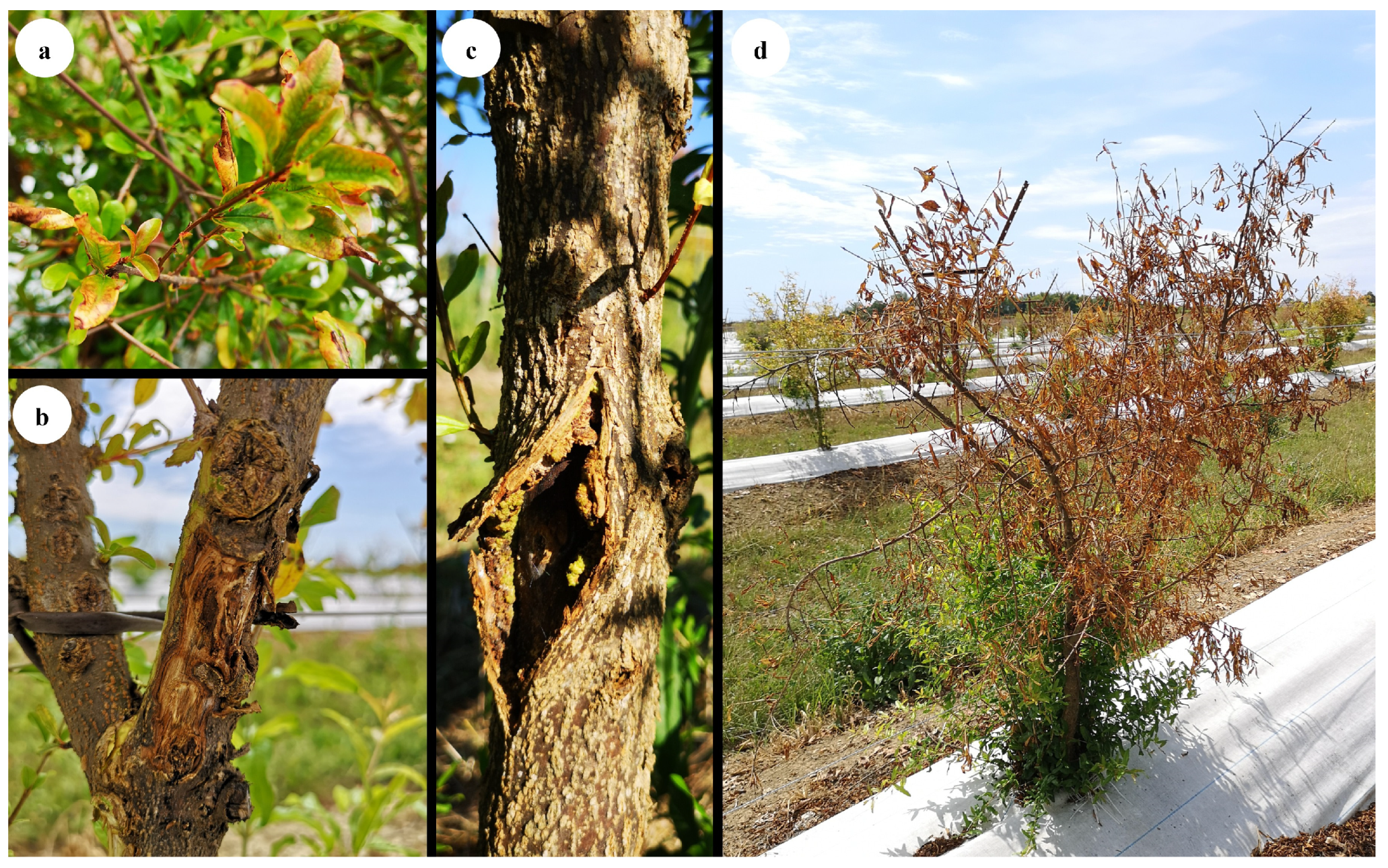
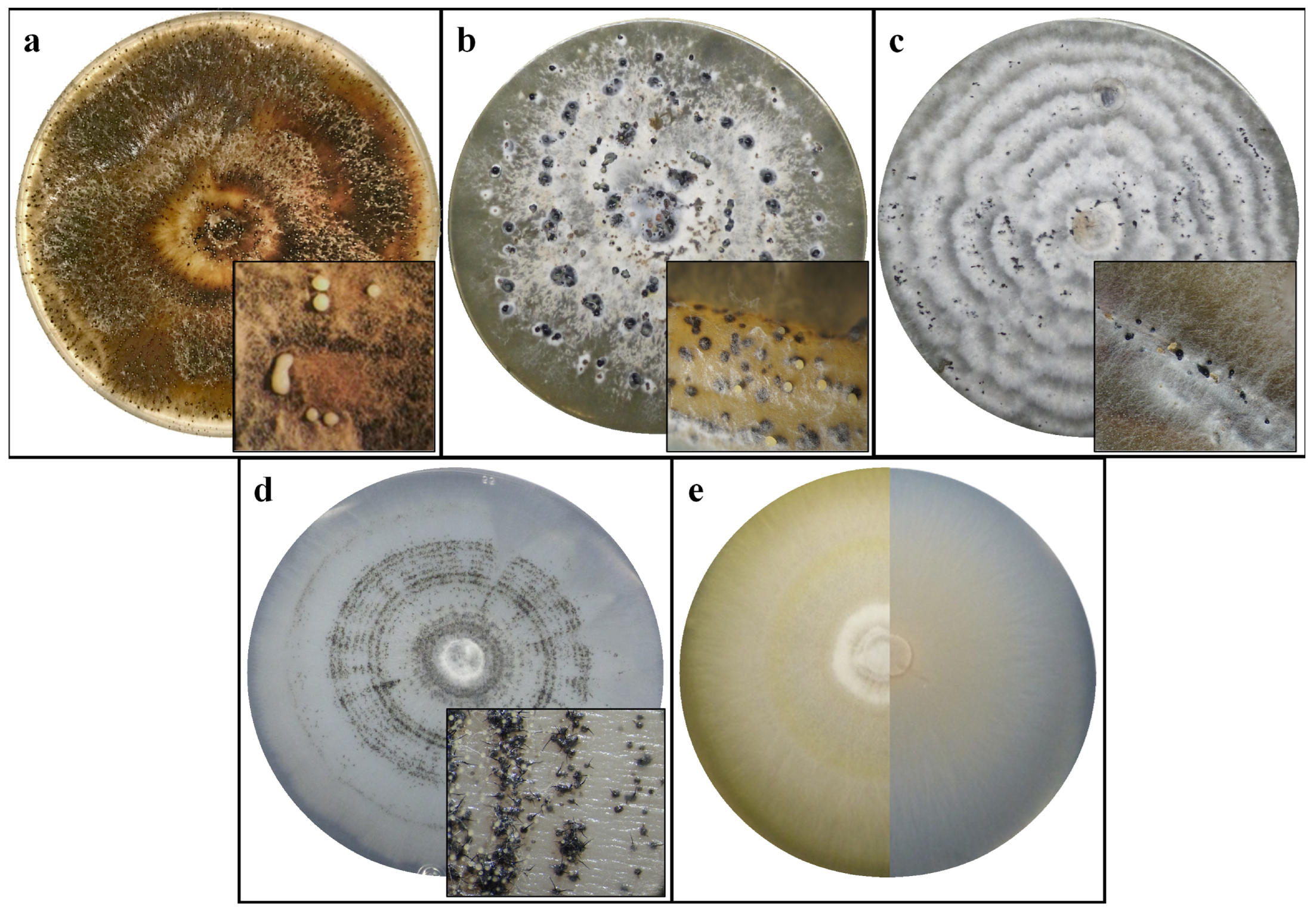
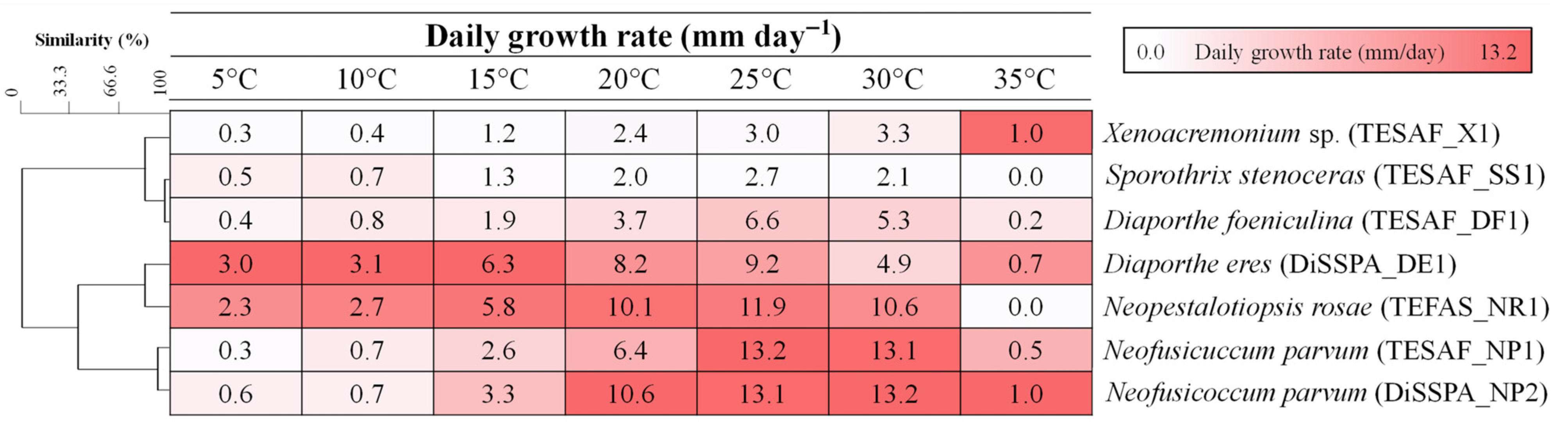
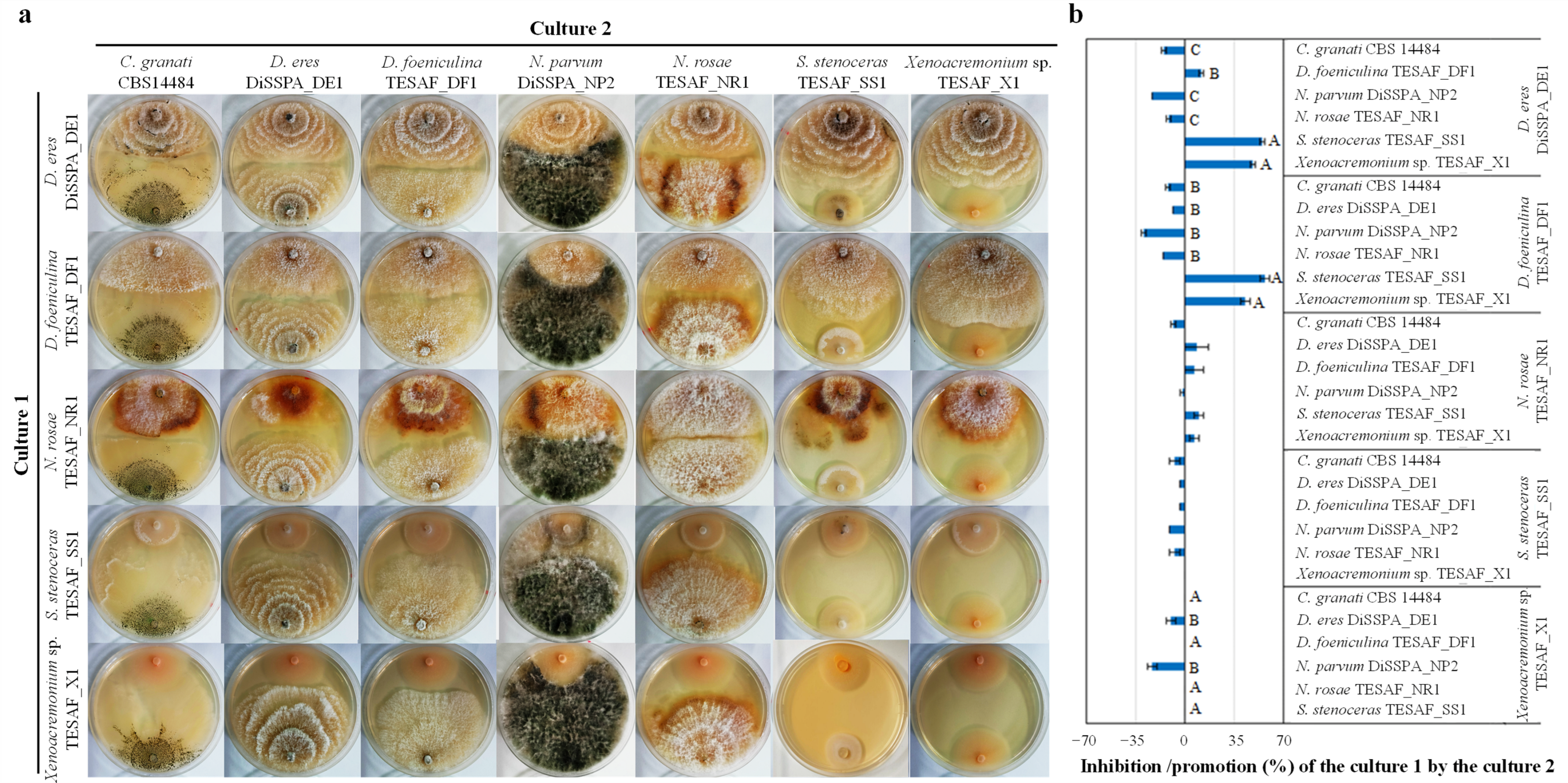
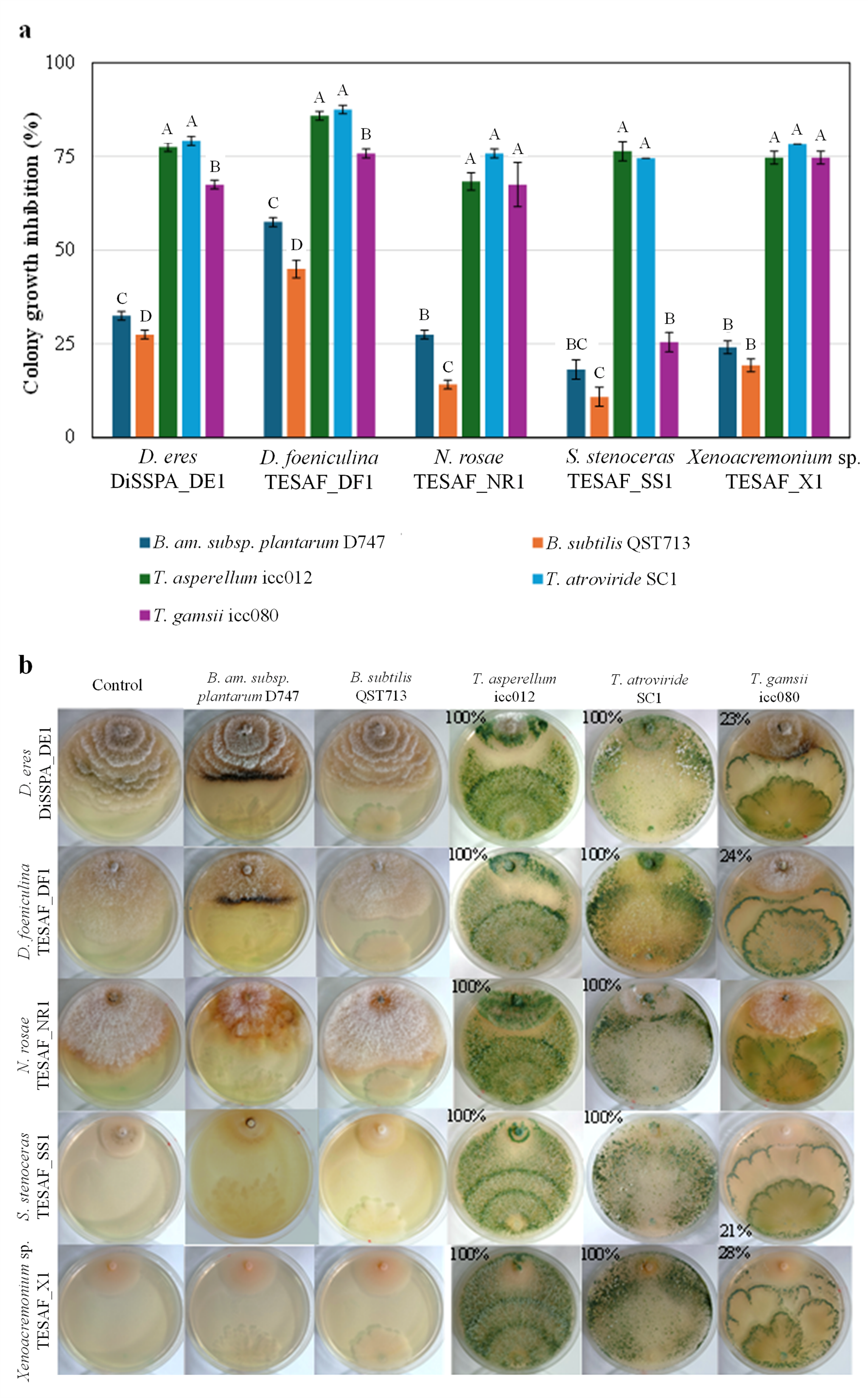
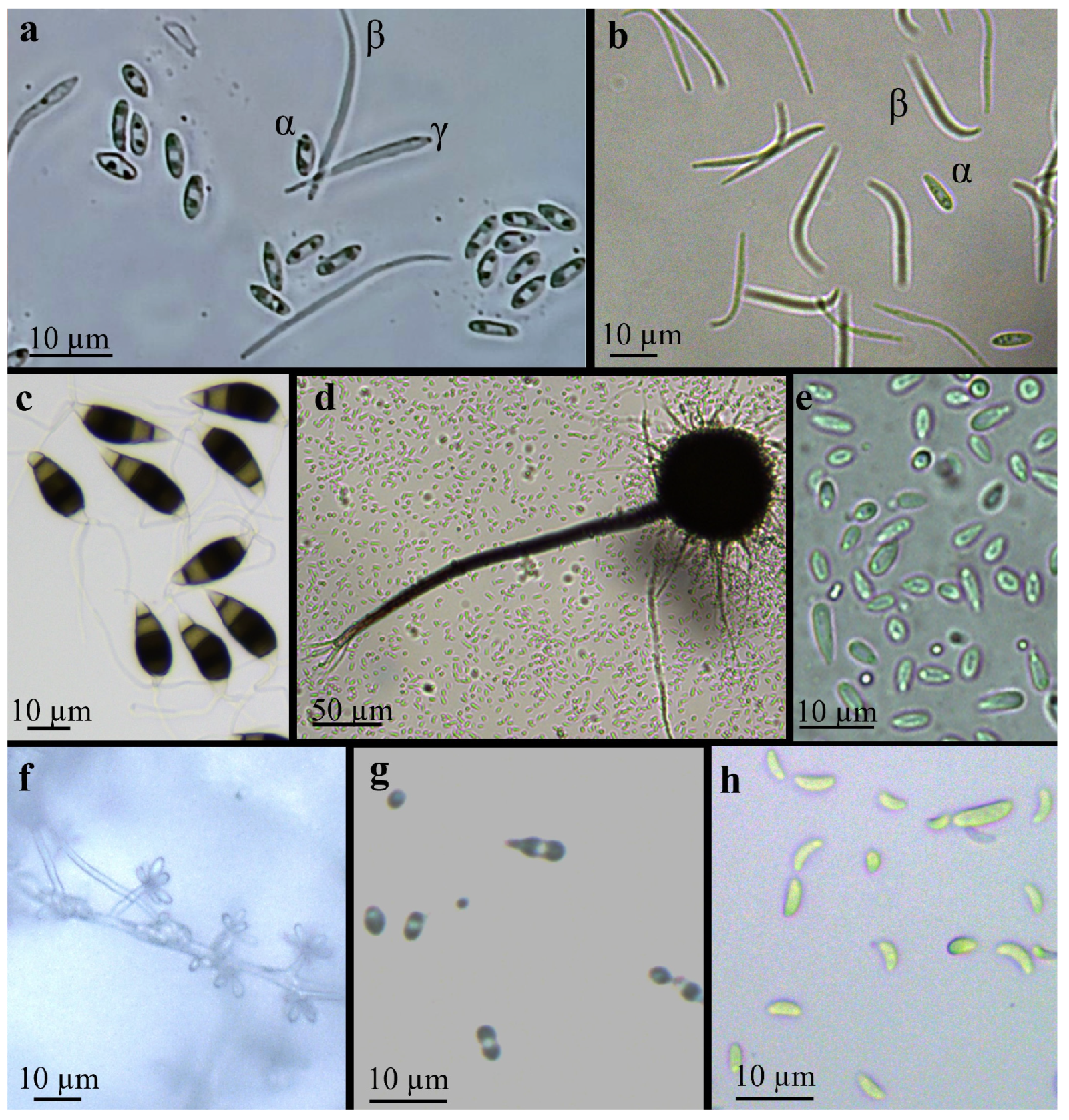
Pomegranate dieback is a disease whose etiology remains only partially understood. In this study, surveys were carried out in orchards located in the Apulia, Basilicata, and Veneto regions from 2016 to 2020 with the objective to identify pathogens involved in pomegranate dieback. Six fungal species were isolated from symptomatic trees and identified through morphological and molecular analyses. In addition to the known pomegranate pathogens Neofusicoccum parvum, Diaporthe eres and D. foeniculina, new fungal species, including Neopestalotiopsis rosae, Sporothrix stenoceras, and one belonging to the Xenoacremonium genus, were identified. This study represents the first report of their association with pomegranate plants exhibiting dieback symptoms. When artificially inoculated on pomegranate trees, these fungi caused wood browning, proving their pathogenicity. All fungal species exhibited optimal growth in the temperature range 25–30 °C, although D. eres and N. roseae showed a good adaptability in the range 5–10 °C. Since some of the identified pathogens were isolated from the same trees, cross-pairing assays were conducted, revealing that these fungi can coexist within the same ecological niche while maintaining their viability. Given the need for sustainable management options against these co-occurring pathogens, biological control strategies were evaluated. In vitro experiments demonstrated that both Bacillus and Trichoderma biological control agents (BCAs) inhibit the investigated pomegranate pathogens, highlighting their potential inclusion in integrated management strategies targeting these newly identified fungal pathogens.
Keywords: biocontrol agents; dieback; field survey; molecular identification; pathogenicity; phylogenetic analysis; wood canker biocontrol agents; dieback; field survey; molecular identification; pathogenicity; phylogenetic analysis; wood canker