Article

Wheat SWI3B Subunit of SWI/SNF Chromatin Remodeling Complex Governs Powdery Mildew Susceptibility by Suppressing Salicylic Acid Biosynthesis


College of Life Sciences, Qingdao University, Qingdao 266071, China
*
Author to whom correspondence should be addressed.
J. Fungi 2026, 12(1), 68; https://doi.org/10.3390/jof12010068
Submission received: 31 October 2025 / Revised: 13 January 2026 / Accepted: 13 January 2026 / Published: 14 January 2026
(This article belongs to the Special Issue Plant Fungal Pathogenesis 2025)

Abstract

The fungal pathogen Blumeria graminis forma specialis tritici (B.g. tritici) infects bread wheat (Triticum aestivum L.) to cause wheat powdery mildew disease. Elucidating the molecular mechanism underlying wheat susceptibility to the pathogenic fungus B.g. tritici could facilitate wheat genetic improvement. In this study, we identified the wheat TaSWI3B gene as a novel Susceptibility gene positively regulating wheat susceptibility to B.g. tritici. The TaSWI3B gene encodes the SWI3B subunit of the SWI/SNF chromatin remodeling complex. The overexpression of the TaSWI3B gene enhances wheat powdery mildew susceptibility, whereas TaSWI3B silencing results in attenuated wheat powdery mildew susceptibility. Importantly, we found that TaSWI3B could be enriched at the promoter regions of the salicylic acid (SA) biosynthesis activator gene TaSARD1, facilitating nucleosome occupancy and thereby suppressing TaSARD1 transcription and inhibiting SA biosynthesis. Silencing of TaSARD1 and TaICS1 encoding a key enzyme in SA biosynthesis could attenuate the SA biosynthesis and powdery mildew resistance potentiated by knockdown of TaSWI3B expression. Collectively, these results suggest that the SWI3B subunit of the wheat SWI/SNF chromatin remodeling complex negatively regulates SA biosynthesis by suppressing TaSARD1 transcription at the epigenetic level and thus facilitates wheat powdery mildew susceptibility.

1. Introduction

As one of the most important wheat diseases, powdery mildew disease negatively affects both grain yield and quality [1,2,3]. The causal agent of wheat powdery mildew disease, Blumeria graminis forma specialis tritici (B.g. tritici), is the obligate biotrophic fungal pathogen [1,2,3]. B.g. tritici infection mainly relies on its air-borne conidia and could occur on any of the wheat aerial organs like the leaf blade, leaf sheath, stem, and even spike [1,2,3]. Upon landing on the wheat epidermal surface, B.g. tritici conidia germinate to form the germ tube, then penetrate the plant cell wall to generate the feeding structure haustorium, and finally develop into a microcolony to disperse more conidia for further infection [1,2,3]. Elucidating the molecular mechanism underlying the compatible wheat–B.g. tritici interaction could facilitate wheat genetic improvement for powdery mildew resistance [1,2,3].
In Eukaryotes, approximately 147 base pairs of DNA are wrapped around a histone octamer and packaged into the nucleosome [4]. The chromatin remodeling complex could utilize the ATP hydrolysis energy to move or alter the histone octomer, thereby changing the nucleosomal composition and occupancy to affect gene transcription [5,6]. As a highly conserved chromatin remodeling complex, SWI/SNF (SWItch/Sucrose Non-Fermentable) is composed of SNF2-type ATPases BRAHMA (BRM) or SPLAYED (SYD), as well as other core subunits like SWI3B and SWI3C [7,8]. The Arabidopsis AtSWI3B subunit of the SWI/SNF chromatin remodeling complex was reported to regulate various processes in plant development and environmental adaptation [9,10]. For instance, AtSWI3B associates with the protein phosphatase type 2C HYPERSENSITIVE TO ABA1 (HAB1) to regulate Abscisic acid (ABA) signaling [9]. In addition, AtSWI3B could interact with the histone deacetylase HDA6 to maintain transposon silencing [10]. However, whether and how SWI3B regulates plant–microbe interaction, especially the compatible wheat–B.g. tritici interaction, remains to be disclosed.
In this study, we characterized the function of wheat SWI3B in the compatible wheat–B.g. tritici interaction. Our results revealed that TaSWI3B maintains repressive chromatin state at the SA biosynthesis activator gene TaSARD1 and negatively regulates wheat SA biosynthesis, thereby positively regulating the wheat powdery mildew susceptibility. Genetically manipulating the novel susceptibility gene TaSWI3B could contribute to wheat breeding against powdery mildew disease.

2. Materials and Methods

2.1. Plant and Fungal Materials

The B.g. tritici-susceptible wheat cultivar Yannong 999 and the virulent B.g. tritici genotype isolate E09 were employed for the analysis of the compatible wheat–B.g. tritici interaction in this study. Wheat seedlings were grown in climate chambers under a 16 h light/8 h dark with 20 °C/18 °C day/night cycle. The B.g. tritici isolate E09 was maintained on the leaves of Yannong 999 seedlings under a 20 °C day/18 °C night cycle.

2.2. Reverse Transcription Quantitative Polymerase Chain Reaction (RT-qPCR) and Nuclear Run-On Assays

The newly grown wheat leaves (n = 5, randomly chosen) with virus symptoms about two weeks post BSMV infection were harvested for the RT-qPCR and nuclear run-on assays. For the RT-qPCR assay, the total RNA was extracted from the wheat leaves using TRizol solution and treated with RNase-free DNase I to remove potential DNA contamination. The first-strand cDNA was synthesized using 1 μg of the total RNA and used as a template to detect the expression of the indicated wheat gene in the in the RT-qPCR. The RT-qPCR assay was performed using the ABI step-one real-time PCR system with the GoTaq qPCR Master Mix. The expression of TaEF1 was set as the internal control, and the expression levels of TaSWI3B, TaSARD1, TaICS1, TaPR1, or TaPR2 were measured by qPCR using the qPCR Master Mix (Invitrogen, Carlsbad, CA, USA) under the following programs: 95 °C for 3 min, 40 cycles at 95 °C for 20 s, 56 °C for 30 s, and 72 °C for 15 s, followed by 72 °C for 1 min. For the nuclear run-on assay, wheat cell nuclei were isolated and mixed with reaction buffer (25 mM biotin-16-UTP and 0.75 mM of ATP, CTP, and GTP) for the transcription reaction. After RNA extraction, the nascent RNA was enriched by streptavidin magnetic beads and subjected to the RT-qPCR assay. In the RT-qPCR and nuclear run-on assays, TaSWI3B is analyzed using the primers 5′TCCACTGCCGGTACCCTCAAGA3′/5′AACCTCTTGACGAGGGTGTTG3′.

2.3. BSMV-Mediated Gene Silencing

For the BSMV-VIGS assay, fragments of TaSWI3B were amplified using the primers 5′AAGGAAGTTTAATTAACTCATGGTGATAATAGG3′/5′AACCACCACCACCGTACGATTTACTCAAAGAGGCATC3′ and cloned into the pCa-γbLIC vector through the ligation-independent cloning technique to create construct BSMV-TaSWI3B as described by Yuan et al. [11]. The BSMV-TaSARD1 and BSMV-TaICS1 constructs were derived from previous studies [12]. The BSMV-VIGS assay was conducted as previously described [11], and leaves of BSMV-γ (BSMV-VIGS empty vector)-infected wheat plants were included as the negative control.

2.4. Single-Cell Transient Gene Overexpression Assay

For the single-cell transient gene overexpression assay, coding regions of TaSWI3B-6A, TaSWI3B-6B, and TaSWI3B-6D were amplified using primers 5′GGGGACAAGTTTGTACAAAAAAGCAGGCTTC ATGGCCACACCGCCGGCTCC3′/5′GGGGACCACTTTGTACAAGAAAGCTGGGTCTTAACTCATGGTGATAATAG3′, 5′GGGGACAAGTTTGTACAAAAAAGCAGGCTTCATGGCCACACCGCCGGCTCC3′/5′GGGGACCACTTTGTACAAGAAAGCTGGGTCTTAACTCATGGTGATAATAG3′, 5′GGGGACAAGTTTGTACAAAAAAGCAGGCTTCATGGCCACACCGCCGGCTCC3′/5′GGGGACCACTTTGTACAAGAAAGCTGGGTCTTAACTCATGGTGATAATAG3′, and PCR products were cloned into the pIPKb001 to create the pIPKb001-TaSWI3B-6A (for OE-TaSWI3B-6A), pIPKb001-TaSWI3B-6B (for OE-TaSWI3B-6B), and pIPKb001-TaSWI3B-6D (for OE-TaSWI3B-6D) constructs using the GATEWAY cloning technology (Invitrogen). The single-cell transient gene overexpression assay was performed as previously described [12,13,14].

2.5. B.g. tritici Microcolony Index Analysis

For the B.g. tritici microcolony formation analysis, newly grown upper leaves with virus symptoms were collected and subjected to inoculation with the B.g. tritici strain E09 conidia. About 72 h post B.g. tritici inoculation, leaf samples were fixed in ethanol–acetic acid solution (1:1, v/v) and kept in the destaining solution (lactic acid–glycerol–water, 1:1:1, v/v/v). Thereafter, B.g. tritici-infected leaves were stained with 0.1% (w/v) Coomassie brilliant blue R250 to visualize the fungal epiphytic structure under microscopy. About 1000 B.g. tritici–wheat interaction sites (randomly chosen) were analyzed in one experiment. The B.g. tritici conidial microcolony index was described as the percentage of the germinated B.g. tritici conidia with a microcolony.

2.6. B.g. tritici Haustorium Index Analysis

For the B.g. tritici haustorium formation analysis, the inoculation of B.g. tritici conidia spores was performed at least 16 h post bombardment. The leaf segments were stained for GUS activity 48 h post B.g. tritici spore inoculation and kept in the destaining solution. Before mounting for microscopy, the B.g. tritici-infected wheat leaves were stained with Coomassie blue to visualize the fungal epiphytic structure. About 50 B.g. tritici-infected wheat epidermal cells (randomly chosen) were analyzed in one experiment. The haustorium index was expressed as a percentage of GUS-staining cells with haustoria in the total GUS-staining cells attacked by germinated B.g. tritici conidia.

2.7. SA Measurement

Newly grown wheat leaves (n = 5) with virus symptoms about two weeks post BSMV infection were randomly collected and ground with liquid nitrogen into powder and then homogenized in 70% ethanol (v/v) containing the internal standard ortho-anisic acid. After centrifugation, the supernatant was collected and the pellet was homogenized with 90% v/v methanol. After centrifugation, both supernatants were pooled and evaporated under vacuum; 5% trichloroacetic acid was added to the remaining aqueous solution. After centrifugation, the supernatant was collected and mixed with ethyl acetate/cyclohexane. After centrifugation, the upper organic phase was collected. For SA quantification, organic phases were resuspended in HPLC starting solvent (methanol 40%, water 60%, acetic acid 1%) and analyzed by a reverse-phase HPLC column. The free SA amount was calculated in ng mg−1 fresh weight (FW) with reference to the amount of internal standard.

2.8. ChIP Assay and Nucleosomal Occupancy Analysis

The ChIP assay analyzing the enrichment of the TaSWI3B-HA protein at the TaSARD1 gene promoter regions was conducted as previously described [12,13,14,15]. Briefly, α-HA antibodies (Santa Cruz Biotechnology, Dallas, TX, USA, sc-805) were employed for immunoprecipitation. DNA recovery after chromatin immunoprecipitation was quantified as the percentage of input. A nucleosome occupancy micrococcal nuclease (MNase) assay, analyzing chromatin assembly structure at TaSARD1 promoter regions, was conducted as previously described. Briefly, wheat leaves were first cross-linked and then subjected to nuclear isolation and MNase digestion. Genomic DNA was then recovered and underwent qPCR analysis. Nuclei without MNase digestion treatment were employed as the input control. Primer sequences for qPCR analyzing the TaSARD1 promoter were derived from previous studies.

2.9. Statistical Analysis

For the statistical analysis of gene transcription rates, transcript accumulation, SA measurement, nucleosomal occupancy at gene promoter regions, B.g. tritici microcolony formation, and B.g. tritici haustorium formation, three technical replicates per assay were analyzed using Student’s t-test, and the value represents the mean ± standard deviation. These assays were repeated in three independent biological replicates using dependently prepared samples with similar results.

3. Results

3.1. Homology-Based Identification of Wheat TaSWI3B Genes

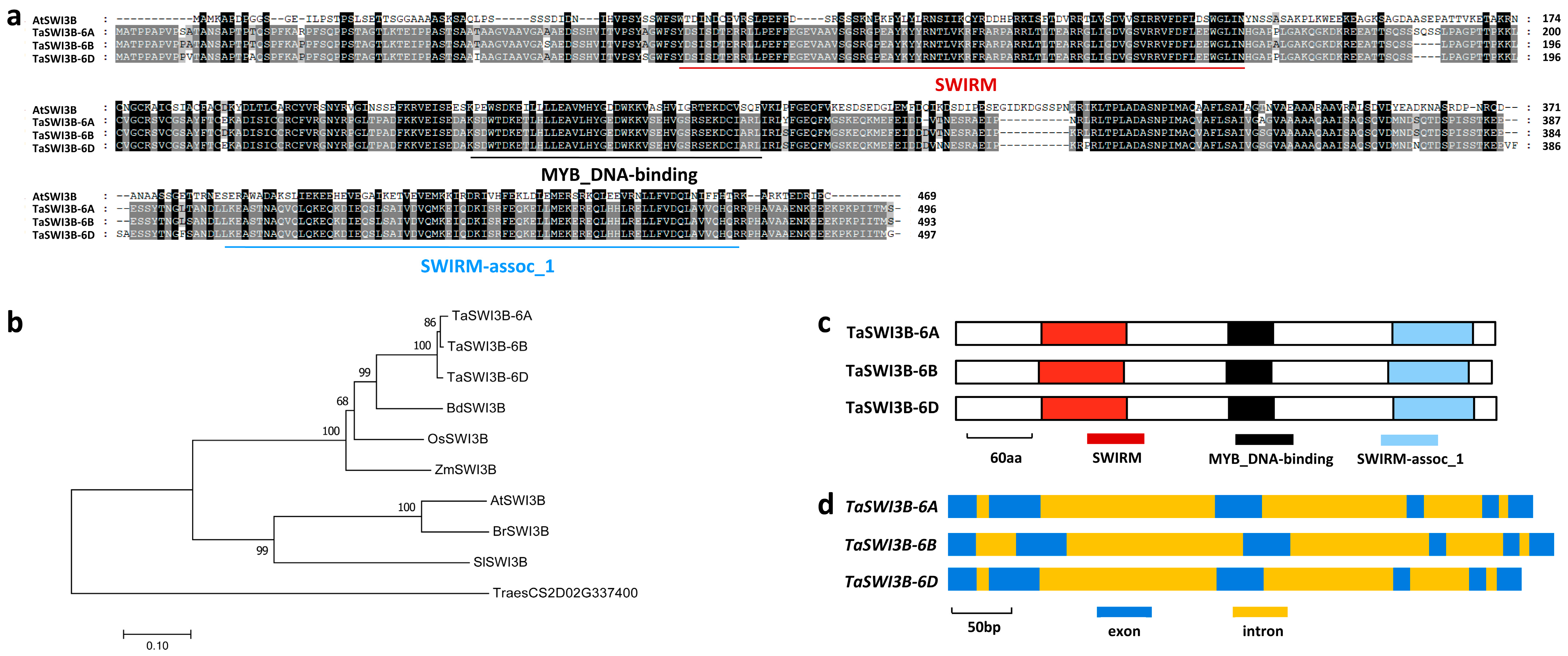
In this study, we aimed to explore the putative regulation of the SWI3B subunit of the wheat SWI/SNF chromatin remodeling complex on the compatible wheat–B.g. tritici interaction. To this end, we first employed the amino acid sequence of Arabidopsis AtSWI3B (At2g33610) as a query to search the genome of hexaploid bread (Triticum aestivum L., AABBDD). TaSWI3B-6A (TraesCS6A02G167800), TaSWI3B-6B (TraesCS6B02G195400), and TaSWI3B-6D (TraesCS6D02G156700), separately located on wheat chromosomes 6A, 6B, and 6D, were identified as wheat homologs of AtSWI3B. These predicted TaSWI3B-6A, TaSWI3B-6B, and TaSWI3B-6D proteins shared more than 39% identity with Arabidopsis AtSWI3B (Figure 1a). As shown in the Supplementary Figure S1, SWI3B proteins from bread wheat, Triticum urartu, Aegilops tauschii, Brachypodium distachyon, barley, maize, and rice shared high similarity. Phylogenetic analysis further validated that wheat TaSWI3B-6A, TaSWI3B-6B, and TaSWI3B-6D proteins are wheat close homologs of Arabidopsis AtSWI3B, mustard BrSWI3B, tomato SlSWI3B, Brachypodium BdSWI3B, maize ZmSWI3B, and rice OsSWI3B (Figure 1b). As shown in Figure 1c, SWIRM, MYB_DNA-binding, and SWIRM-assoc_1 domains were identified from the N-terminal, middle, and C-terminal parts of all TaSWI3B proteins, respectively. The coding regions of TaSWI3B-6A, TaSWI3B-6B, and TaSWI3B-6D genomic sequences all contained six exons and five introns (Figure 1d).

3.2. Functional Characterization of TaSWI3B Gene in the Regulation of Compatible Wheat–B.g. tritici Interaction

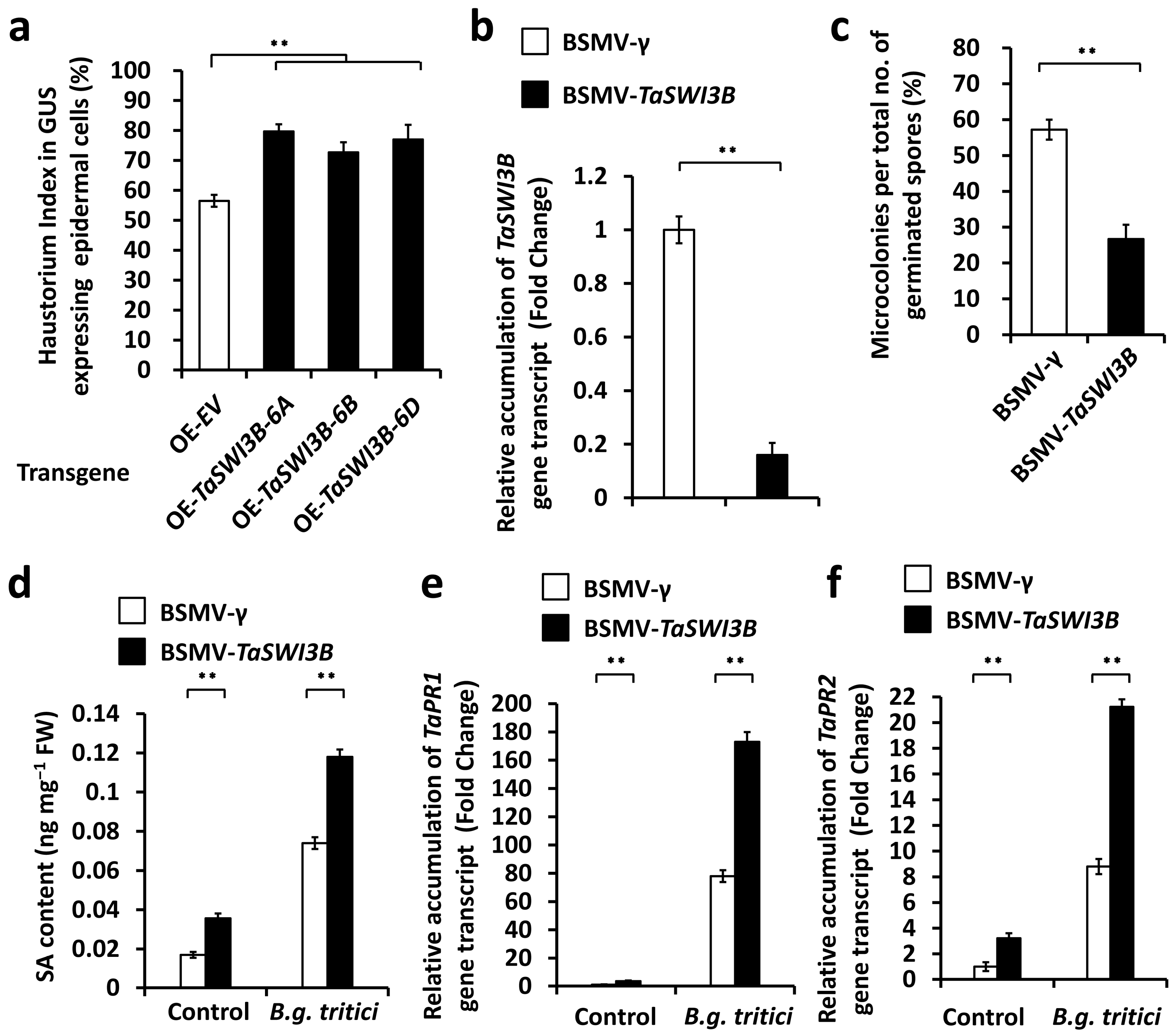
To characterize the function of TaSWI3B genes in the regulation of the compatible wheat–B.g. tritici interaction, we first employed transient gene expression assays to overexpress these TaSWI3B-6A, TaSWI3B-6B, and TaSWI3B-6D genes in the wheat leaf epidermal cells. Then, we inoculated on these bombarded wheat leaves with B.g. tritici conidia and statistically analyzed the formation of B.g. tritici haustoria. As shown in Figure 2a, the B.g. tritici haustorium index (HI%) increased from about 56.5% for the empty vector (OE-EV) control to above 72.6% on wheat cells overexpressing the TaSWI3B-6A, TaSWI3B-6B, or TaSWI3B-6D gene. Thereafter, we employed barley stripe mosaic virus (BSMV)-induced gene silencing (BSMV-VIGS) to silence all endogenous TaSWI3B genes in the wheat leaves. A fragment proximal to the 3′ end shared by the allelic TaSWI3B-6A, TaSWI3B-6B, and TaSWI3B-6D genes was chosen for the BSMV-VIGS, and another fragment proximal to the 5′ end conserved among the allelic TaSWI3B-6A, TaSWI3B-6B, and TaSWI3B-6D genes was chosen for the reverse transcription quantitative polymerase chain reaction (RT-qPCR) analysis (Supplementary Figure S2). As shown in Supplementary Figure S3, accumulation levels of the TaHDA9 gene in wheat leaves significantly increased upon infection with the virulent B.g. tritici pathogen. A reverse transcription quantitative polymerase chain reaction (RT-qPCR) assay was performed to confirm efficient silencing of the TaSWI3B. As shown in Figure 2b, the accumulation level of TaSWI3B gene transcripts decreased significantly in wheat leaves silencing the TaSWI3B gene. To ensure the silencing specificity of TaSWI3B genes by BSMV-VIGS, we searched the whole genome of allohexaploid bread wheat using the fragments chosen for TaSWI3B silencing by the BSMV-VIGS method. As shown in Supplementary Figure S4, there is no putative off-target gene of BSMV-TaSWI3B. B.g. tritici conidia were inoculated on these BSMV-VIGS wheat leaves, and the formation of B.g. tritici microcolony was statistically analyzed. As shown in Figure 2c, the B.g. tritici microcolony index (MI%) decreased from 58.2% for the control plants (BSMV-γ) to 37.7% for TaSWI3B-silenced (BSMV-TaSWI3Bas) plants. These HI% and MI% data suggest that the TaSWI3B gene negatively regulates wheat powdery mildew resistance and positively contributes to B.g. tritici post-penetration events like haustorial development and microcolony formation.
It is well known that phytohormone salicylic acid (SA) plays important roles in wheat post-penetration resistance against powdery mildew disease [12,13,14,15,16,17]. To analyze the potential regulation of TaSWI3B genes on SA accumulation, we first conducted a BSMV-VIGS assay to silence all endogenous TaSWI3B genes in the wheat leaves, inoculated these BSMV-VIGS wheat leaves with B.g. tritici conidia, and performed High-Performance Liquid Chromatography (HPLC) to analyze the SA accumulation. As shown in Figure 2d, the SA accumulation level significantly increased in the TaSWI3B-silenced wheat leaves, compared with that of BSMV-γ control plants, indicating that TaSWI3B negatively regulates the SA accumulation in bread wheat. Consistent with this, accumulation levels of SA signaling marker gene TaPR1 and TaPR2 transcripts were remarkably enhanced by silencing of TaSWI3B (Figure 2e,f). These results suggested that the TaSWI3B subunit of the wheat SWI/SNF chromatin remodeling complex negatively regulates SA biosynthesis and contributes to the wheat susceptibility to the fungal pathogen B.g. tritici.

3.3. Epigenetic and Transcriptional Regulation of SA Biosynthesis Activator Gene TaSARD1 by TaSWI3B

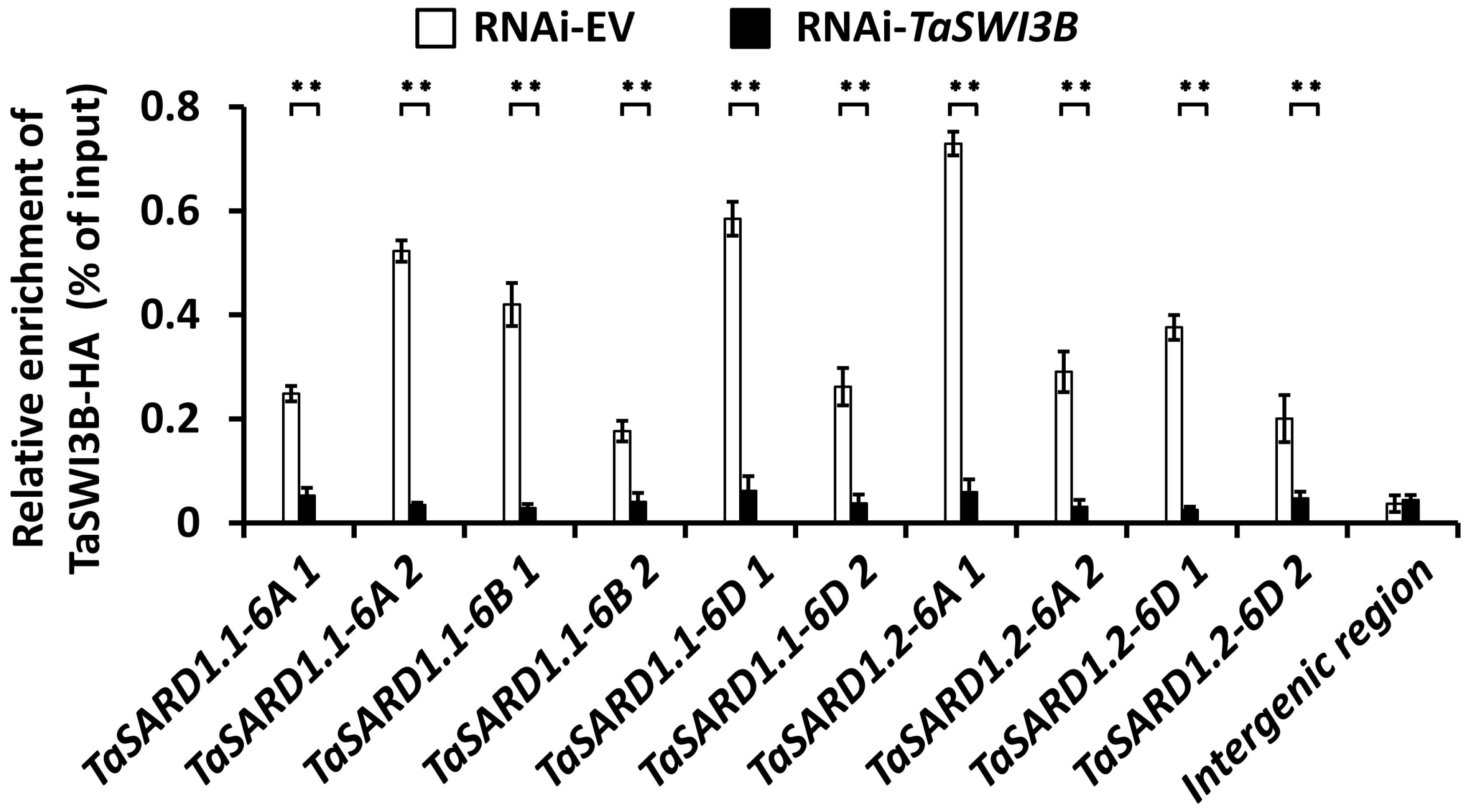
It was recently reported that the SA biosynthesis activator gene TaSARD1 plays a key role in wheat powdery mildew resistance, and TaSARD1 gene transcription is tightly regulated at chromatin levels [12,13,14,15]. We ask whether the TaSWI3B subunit of the wheat SWI/SNF chromatin remodeling complex could be enriched at the TaSARD1 promoters. To this end, we first transfected the wheat protoplast with TaSWI3B-HA constructs and performed a ChIP assay to characterize the distribution of TaSWI3B-HA at TaSARD1 promoters (Figure 3). TaSARD1 promoter regions, previously demonstrated to be regulated by epigenetic events like histone acetylation and chromatin assembly, were chosen for the ChIP analysis. As shown in Figure 3, these TaSARD1 promoter regions were found to be enriched in DNA samples immunoprecipitated with the antibody specifically against TaSWI3B-HA, directly indicating that the TaSWI3B subunit of the wheat SWI/SNF chromatin remodeling complex is enriched at promoter regions of the TaSARD1 genes.
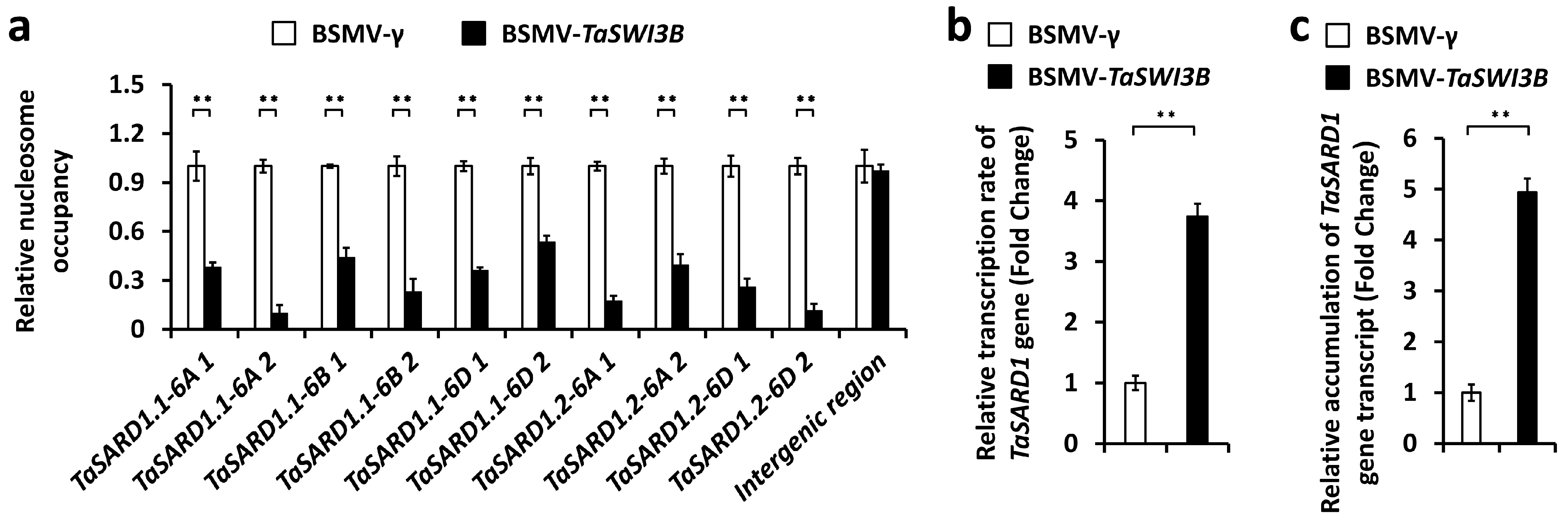
To examine whether the TaSWI3B subunit of the wheat SWI/SNF chromatin remodeling complex affects chromatin structure at TaSARD1 promoter regions, we performed the micrococcal nuclease (MNase) assay. By enzymatic cleavage of linker DNA connecting nucleosomes, MNase assays could implicate nucleosome occupancy. As shown in Figure 4a, silencing of the TaSWI3B gene resulted in significantly reduced nucleosome occupancy at TaSARD1 promoters. Nuclear run-on and qRT-PCR assays demonstrated that silencing of the TaSWI3B gene led to a significantly increased transcription rate and transcript accumulation of the TaSARD1 gene (Figure 4b,c). These results suggested that the TaSWI3B subunit of the wheat SWI/SNF chromatin remodeling complex suppresses TaSARD1 gene transcription, probably via maintaining a repressive chromatin state at the TaSARD1 gene.

3.4. Functional Analysis of TaSARD1-TaICS1-SA Circuit in the Regulation of TaSWI3B-Governed Wheat–B.g. tritici Interaction

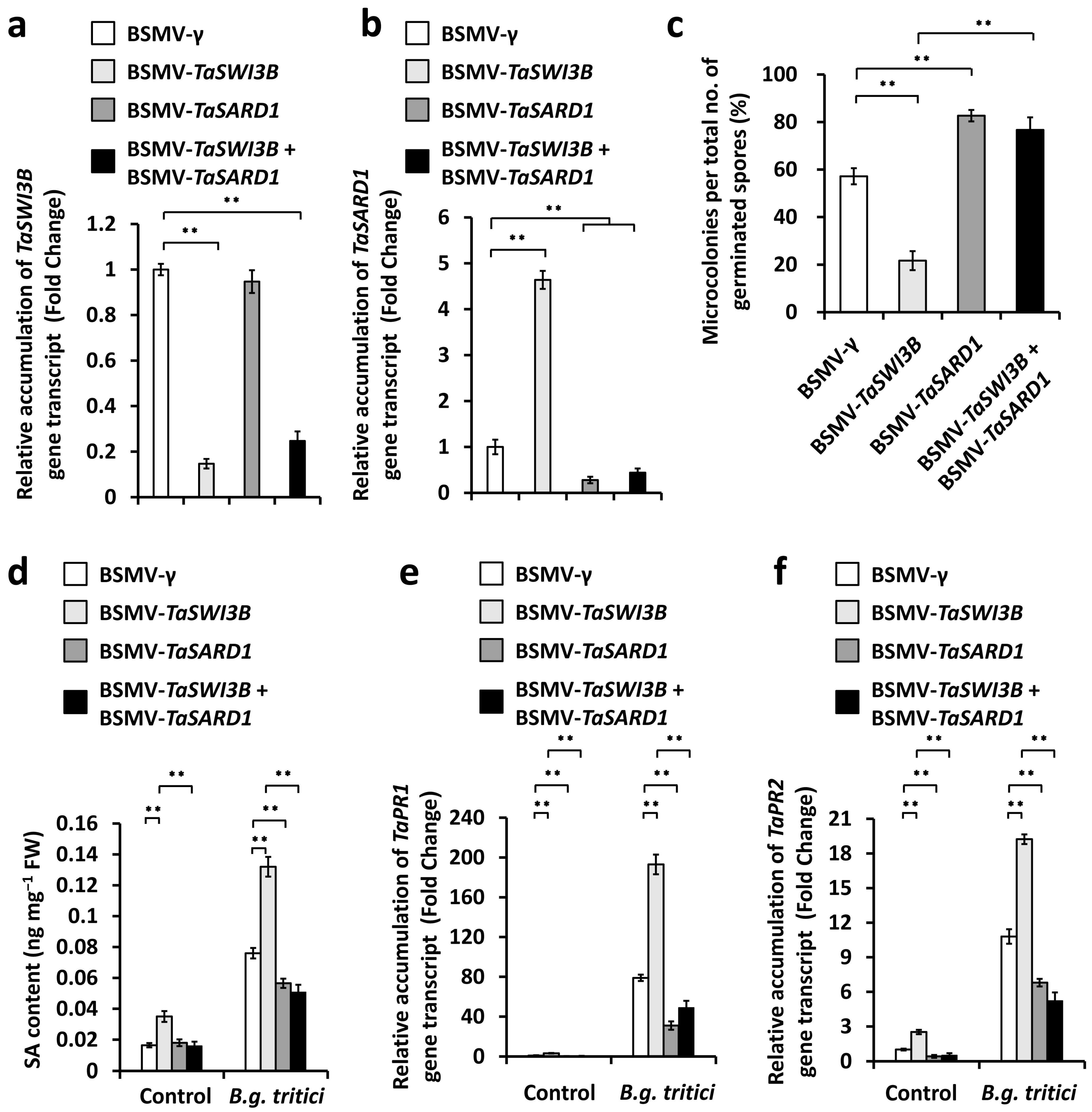
We ask whether the characterized TaSARD1-activated SA biosynthesis contributes to wheat powdery mildew resistance suppressed by the TaSWI3B subunit of the wheat SWI/SNF chromatin remodeling complex. To examine this hypothesis, we conducted the BSMV-VIGS assay to simultaneously silence TaSWI3B and TaSARD1 genes in the wheat leaves, inoculated these BSMV-VIGS wheat leaves with B.g. tritici conidia, and statistically analyzed the formation of a B.g. tritici microcolony. As shown in Figure 5a,b, accumulation levels of TaSWI3B or TaSARD1 gene transcript decreased remarkably in wheat leaves co-silencing TaSWI3B and TaSARD1 genes, compared with the BSMV-γ control. The B.g. tritici MI% increased to above 77.7% in wheat leaves co-silencing TaSWI3B and TaSARD1 genes, compared with 57.5% for the BSMV-γ control plants (Figure 5c). The SA accumulation level significantly decreased in wheat leaves co-silencing TaSWI3B and TaSARD1 genes, compared with the BSMV-γ control plants (Figure 5d). Consistent with this, simultaneous silencing of TaSWI3B and TaSARD1 genes resulted in a significant reduction in accumulation levels of TaPR1 and TaPR2 transcripts, compared with the BSMV-γ control (Figure 5e,f). These data collectively suggested that the TaSWI3B subunit of the wheat SWI/SNF chromatin remodeling complex negatively regulated SA biosynthesis, probably via epigenetic suppression of the TaSARD1 gene, thereby contributing to wheat susceptibility to the B.g. tritici pathogen.
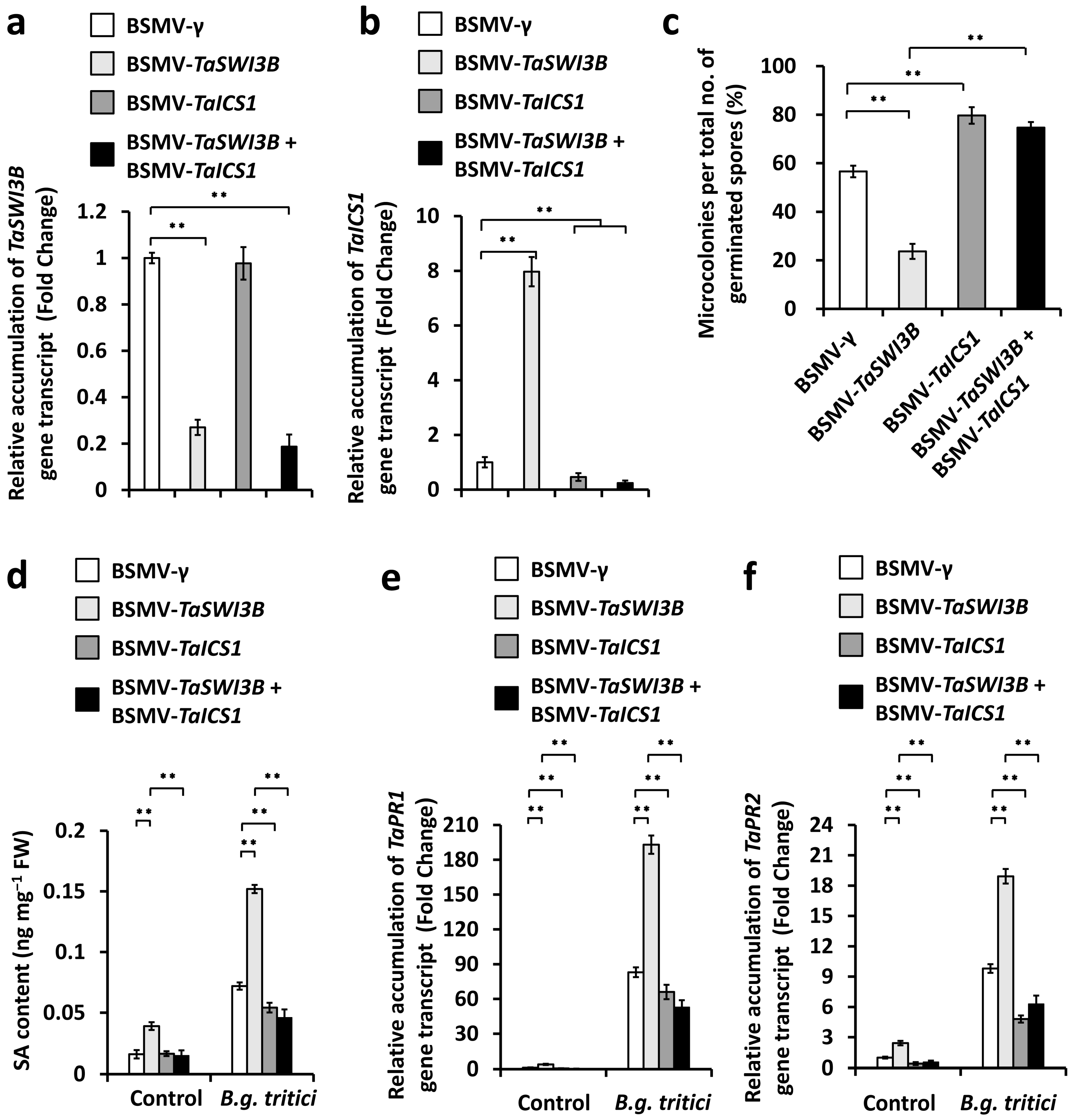
TaICS1 (isochorismate synthase 1) was identified as a core component of wheat SA biosynthetic machinery [12,13,14,15]. We ask whether the characterized TaICS1-mediated SA biosynthesis contributes to wheat powdery mildew resistance suppressed by the TaSWI3B subunit of the wheat SWI/SNF chromatin remodeling complex. To examine this hypothesis, we conducted a BSMV-VIGS assay to simultaneously silence TaSWI3B and TaICS1 genes in the wheat leaves, inoculated these BSMV-VIGS wheat leaves with B.g. tritici conidia, and statistically analyzed the formation of a B.g. tritici microcolony. As shown in Figure 6a,b, accumulation levels of TaSWI3B or TaICS1 gene transcripts decreased remarkably in wheat leaves co-silencing TaSWI3B and TaICS1 genes, compared with the BSMV-γ control. The B.g. tritici MI% increased to above 74.8% in wheat leaves co-silencing the TaSWI3B and TaICS1 genes, compared with 56.6% for the BSMV-γ control plants (Figure 6c). The SA accumulation level significantly decreased in wheat leaves with the co-silencing of TaSWI3B and TaICS1 genes, compared with the BSMV-γ control plants (Figure 6d). Consistent with this, simultaneous silencing of TaSWI3B and TaICS1 genes resulted in a significant reduction in accumulation levels of TaPR1 and TaPR2 transcripts, compared with the BSMV-γ control (Figure 6e,f). These results collectively implicated that the TaSWI3B subunit of the wheat SWI/SNF chromatin remodeling complex negatively regulates SA biosynthesis mediated by the TaSARD1-TaICS1 module and thus facilitates powdery mildew susceptibility.

4. Discussion

4.1. S Gene TaSWI3B Facilitates Wheat Powdery Mildew Susceptibility

In this study, TaSWI3B-6A, TaSWI3B-6B, and TaSWI3B-6D, separately located on wheat chromosomes 6A, 6B, and 6D, were identified as AtSWI3B homologs in hexaploidy bread (Triticum aestivum L., AABBDD). Transient overexpression of TaSWI3B-6A, TaSWI3B-6B, and TaSWI3B-6D in wheat epidermal cells resulted in increased B.g. tritici HI%, whereas silencing of TaSWI3B caused decreased B.g. tritici MI%, indicating that the TaSWI3B subunit of the wheat SWI/SNF chromatin remodeling complex negatively regulates powdery mildew resistance and facilitates haustorial development and microcolony formation of the B.g. tritici pathogen. Multiple epigenetic regulators have been demonstrated to finetune the compatible wheat–B.g. tritici interaction. For instance, wheat DNA methyltrasferase TaMET1 suppresses SA biosynthesis to negatively regulate wheat powdery mildew resistance, while wheat histone acetyltransferase TaHAG1 activates the SA signaling regulator gene TaPAD4 and positively contributes to powdery mildew resistance [15,18]. Wheat chromatin assembly factor-1 (CAF-1) suppresses the TaSARD1 and wax biosynthesis gene TaECR to control powdery mildew susceptibility [12]. Herein, we demonstrated that TaSWI3B expression is induced by B.g. tritici infection. In contrast, expression of TaSWP73 encoding another component of the wheat SWI/SNF chromatin remodeling complex did not respond to B.g. tritici infection [13].

4.2. TaSWI3B Negatively Regulates SA Biosynthesis

Plant hormone SA plays a key role in wheat powdery mildew resistance, and TaSARD1 was previously identified as an activator of SA biosynthesis [12,13,14,15,16,17,18]. In this study, we demonstrated that the TaSWI3B subunit of the wheat SWI/SNF chromatin remodeling complex is enriched at promoter regions of the TaSARD1 genes and suppresses TaSARD1 gene transcription via maintaining a repressive chromatin state at the TaSARD1 gene. Consistent with this, SA overaccumulation and defense-marker gene activation were observed in the TaSWI3B-silenced wheat plants. Interestingly, silencing of TaSARD1 and the SA biosynthesis gene TaICS1 could attenuate the SA biosynthesis and powdery mildew resistance potentiated by the knockdown of TaSWI3B expression. This study allows us to propose a model of how the SWI3B subunit of SWI/SNF chromatin remodeling complex positively regulates wheat susceptibility to the B.g. tritici pathogen. In this model, the wheat SWI3B subunit of the SWI/SNF chromatin remodeling complex is enriched at the TaSARD1 gene to enhance nucleosomal occupancy and suppress TaSARD1 gene transcription. Consequently, SA biosynthesis mediated by the TaSARD1-TaICS1 module is maintained at a low level, resulting in relatively high susceptibility to the B.g. tritici pathogen. In the absence of the wheat SWI3B subunit of the SWI/SNF chromatin remodeling complex, nucleosomal occupancy at the TaSARD1 gene is decreased and TaSARD1 gene transcription is activated. As a result, SA biosynthesis mediated by the TaSARD1-TaICS1 module is stimulated, leading to compromised susceptibility to the B.g. tritici pathogen. Wheat chromatin assembly factor CAF-1 was previously identified as an epigenetic suppressor of SA biosynthesis [12]. Therefore, it is intriguing to examine the potential interplay between TaSWI3B and CAF-1 in the epigenetic regulation of SA biosynthesis.

4.3. Potential Exploitation of TaSWI3B in Wheat Resistance Breeding

Previous studies have identified a plethora of susceptibility (S) genes that facilitate wheat compatibility with adapted pathogens [19,20,21]. These S genes could regulate various processes in wheat–pathogen interaction, including pathogen penetration, plant defense, and even pathogen sustenance [19,20,21]. For instance, wheat S genes TaFAS1, TaFAS2, TaMSI1, TaMET1, TaSWP73, and TaSWI3D suppress wheat defense response against B.g. tritici [12,13,14,15]. In contrast, wheat S genes TaAMT2;3a and TaSTP3/6/13, respectively, encode ammonium and sugar transporter to facilitate the nutrient uptake and sustenance of the wheat stripe rust pathogen [22,23,24,25,26,27]. In this study, we demonstrated that the S gene TaSWI3B negatively regulates the biosynthesis of defense hormone SA, thereby contributing to the compatible wheat–B.g. tritici interaction.
As discussed by prior reviews, genetic manipulation of S genes by genome editing and TILLING techniques could confer to wheat durable and broad-spectrum disease resistance [28,29,30,31,32,33]. For instance, genome editing of S genes TaWRKY19 and TaPsIPK1 using CRISPR (clustered regularly interspaced short palindromic repeats)-Cas9 (CRISPR-associated 9) systems confers to wheat resistance against wheat stripe rust disease [34,35]. Similarly, editing of wheat S genes TaMLO and TaEDR1 by CRISPR-Cas9 and transcription activator-like effector nucleases (TALENs) conferred wheat resistance against B.g. tritici [36,37]. Knockout of the S gene TaSWI3B by CRISPR-Cas9 and TILLING techniques represents a promising direction in wheat breeding against powdery mildew disease.

5. Conclusions

In this study, we explored the potential regulation of the SWI3B subunit of the SWI/SNF chromatin remodeling complex in the compatible wheat–B.g. tritici interaction. We revealed that the TaSWI3B subunit of the wheat SWI/SNF chromatin remodeling complex maintains epigenetic suppression of the SA biosynthesis activator gene TaSARD1 and negatively regulates SA biosynthesis, thereby facilitating wheat susceptibility to the B.g. tritici pathogen. Therefore, the TaSWI3B gene was identified as a novel S gene suppressing wheat post-penetration resistance against powdery mildew. Characterizing the potential pleiotropic effects of TaSWI3B gene on other wheat agronomic traits might contribute to its exploitation in wheat powdery mildew resistance breeding. In addition, the TaWI3B subunit of the SWI/SNF chromatin remodeling complex was identified as a novel regulator of wheat SA biosynthesis and powdery mildew resistance. Characterizing potential regulation of the integral SWI/SNF chromatin remodeling complex on the compatible wheat–B.g. tritici interaction might provide more insights into the epigenetic regulation of SA biosynthesis and plant–fungal pathogen interaction in future study.

Supplementary Materials

The following supporting information can be downloaded at https://www.mdpi.com/article/10.3390/jof12010068/s1. Supplementary Figure S1. Protein sequence alignments of SWI3B from bread wheat (Ta), Triticum urartu (Tu), Aegilops tauschii (At), Brachypodium distachyon (Bd), barley (Hv), maize (Zm), and rice (Os). Supplementary Figure S2. Alignment of nucleotide sequences at the coding regions of allelic TaSWI3B-6A, TaSWI3B-6B, and TaSWI3B-6D genes. Supplementary Figure S3. RT-qPCR analysis of TaSWI3B expression levels in wheat leaves under B.g. tritici infection. Supplementary Figure S4. Whole-genome searching of allohexaploid bread wheat using the fragments chosen for TaSWI3B silencing by the BSMV-VIGS method in this study. Supplementary Figure S5. Powdery mildew microcolony formation on wheat plants infected with BSMV-γ and BSMV-TaSWI3B. Bar, 150 μm.

Author Contributions

Conceptualization, W.C., Y.F., M.Z., W.Z., P.Z. and C.C.; methodology, W.C., Y.F., M.Z., W.Z. and P.Z.; validation, W.C., Y.F., M.Z., W.Z. and P.Z.; investigation, W.C., Y.F., M.Z., W.Z. and P.Z.; resources, C.C.; data curation, W.C. and Y.F.; writing—original draft preparation, W.C., Y.F., M.Z., W.Z. and P.Z.; writing—review and editing, C.C.; visualization, W.C., Y.F., M.Z., W.Z., P.Z. and C.C.; supervision, C.C.; project administration, C.C.; funding acquisition, C.C. All authors have read and agreed to the published version of the manuscript.

Funding

This research was funded by Shandong Provincial Natural Science Foundation, grant number ZR2022MC008 and ZR2017BC109; Qingdao Science and Technology Bureau Fund, grant number 17-1-1-50-jch; and the Qingdao University Fund, grant number DC1900005385.

Institutional Review Board Statement

Not applicable.

Informed Consent Statement

Not applicable.

Data Availability Statement

The original contributions presented in this study are included in the article/Supplementary Materials. Further inquiries can be directed to the corresponding author.

Conflicts of Interest

The authors declare no conflicts of interest.

Abbreviations

The following abbreviations are used in this manuscript:
SWI3SWITCH subunit 3
SARD1SAR Deficient 1
ICS1Isochorismate synthase 1
B.g. triticiBlumeria graminis forma specialis tritici
SASalicylic acid
SWI/SNFSWItch/Sucrose Non-Fermentable
RT-qPCRReverse transcription quantitative polymerase chain reaction
ChIPChromatin immunoprecipitation
MNaseMicrococcal nuclease

References

  1. Savary, S.; Willocquet, L.; Pethybridge, S.J.; Esker, P.; McRoberts, N.; Nelson, A. The global burden of pathogens and pests on major food crops. Nat. Ecol. Evol. 2019, 3, 430–439. [Google Scholar] [CrossRef]
  2. Kusch, S.; Qian, J.; Loos, A.; Kümmel, F.; Spanu, P.D.; Panstruga, R. Long-term and rapid evolution in powdery mildew fungi. Mol. Ecol. 2023, 33, e16909. [Google Scholar] [CrossRef] [PubMed]
  3. Mapuranga, J.; Chang, J.; Yang, W. Combating powdery mildew: Advances in molecular interactions between Blumeria graminis f. sp. tritici and wheat. Front. Plant Sci. 2022, 13, 1102908. [Google Scholar] [CrossRef] [PubMed]
  4. Li, B.; Carey, M.; Workman, J.L. The role of chromatin during transcription. Cell 2007, 128, 707–719. [Google Scholar] [CrossRef]
  5. Vignali, M.; Hassan, A.H.; Neely, K.E.; Workman, J.L. ATP dependent chromatin-remodeling complexes. Mol. Cell. Biol. 2000, 20, 1899–1910. [Google Scholar] [CrossRef]
  6. Hargreaves, D.C.; Crabtree, G.R. ATP-dependent chromatin remodelling: Genetics, genomics and mechanisms. Cell Res. 2011, 21, 396–420. [Google Scholar] [CrossRef]
  7. Wagner, D.; Meyerowitz, E.M. SPLAYED, a novel SWI/SNF ATPase homolog, controls reproductive development in Arabidopsis. Curr. Biol. 2002, 12, 85–94. [Google Scholar] [CrossRef]
  8. Farrona, S.; Hurtado, L.; Bowman, J.L.; Reyes, J.C. The Arabidopsis thaliana SNF2 homolog AtBRM controls shoot development and flowering. Development 2004, 131, 4965–4975. [Google Scholar] [CrossRef] [PubMed]
  9. Saez, A.; Rodrigues, A.; Santiago, J.; Rubio, S.; Rodriguez, P.L. HAB1-SWI3B interaction reveals a link between abscisic acid signaling and putative SWI/SNF chromatin-remodeling complexes in Arabidopsis. Plant Cell 2008, 20, 2972–2988. [Google Scholar] [CrossRef]
  10. Yang, J.; Yuan, L.; Yen, M.R.; Zheng, F.; Ji, R.; Peng, T.; Gu, D.; Yang, S.; Cui, Y.; Chen, P.Y.; et al. SWI3B and HDA6 interact and are required for transposon silencing in Arabidopsis. Plant J. 2020, 102, 809–822. [Google Scholar] [CrossRef]
  11. Yuan, C.; Li, C.; Yan, L.; Jackson, A.O.; Liu, Z.; Han, C.; Yu, J.; Li, D. A high throughput barley stripe mosaic virus vector for virus induced gene silencing in monocots and dicots. PLoS ONE 2011, 6, e26468. [Google Scholar] [CrossRef] [PubMed]
  12. Liu, L.; Yang, Z.; Wang, X.; Chen, W.; Fu, Y.; Zhi, P.; Chang, C. Wheat chromatin assembly factor-1 negatively regulates the biosynthesis of cuticular wax and salicylic acid to fine-tune powdery mildew susceptibility. J. Agric. Food Chem. 2025, 73, 21786–21802. [Google Scholar] [CrossRef]
  13. Fu, Y.; Yang, Z.; Liu, J.; Wang, X.; Li, H.; Zhi, P.; Chang, C. Wheat chromatin remodeling protein TaSWP73 contributes to compatible wheat-powdery mildew interaction. Int. J. Mol. Sci. 2025, 26, 2590. [Google Scholar] [CrossRef]
  14. Fu, Y.; Chen, W.; Zhang, M.; Wang, X.; Chang, C. Chromatin remodeler TaSWI3D controls wheat susceptibility to pathogenic fungus Blumeria graminis forma specialis tritici. Microorganisms 2025, 13, 2779. [Google Scholar] [CrossRef]
  15. Ge, P.; Chen, W.; Liu, J.; Wang, X.; Chang, C. Wheat DNA methyltransferase TaMET1 negatively regulates salicylic acid biosynthesis to facilitate powdery mildew susceptibility. J. Fungi 2025, 11, 876. [Google Scholar] [CrossRef]
  16. Tian, H.; Xu, L.; Li, X.; Zhang, Y. Salicylic acid: The roles in plant immunity and crosstalk with other hormones. J. Integr. Plant Biol. 2025, 67, 773–785. [Google Scholar] [CrossRef]
  17. Zhang, Y.Z.; Man, J.; Xu, D.; Wen, L.; Li, Y.H.; Deng, M.; Jiang, Q.T.; Xu, Q.; Chen, G.Y.; Wei, Y.M. Investigating the mechanisms of isochorismate synthase: An approach to improve salicylic acid synthesis and increase resistance to Fusarium head blight in wheat. Crop J. 2024, 12, 1054–1063. [Google Scholar] [CrossRef]
  18. Song, N.; Lin, J.; Liu, X.; Liu, Z.; Liu, D.; Chu, W.; Li, J.; Chen, Y.; Chang, S.; Yang, Q.; et al. Histone acetyltransferase TaHAG1 interacts with TaPLATZ5 to activate TaPAD4 expression and positively contributes to powdery mildew resistance in wheat. New Phytol. 2022, 236, 590–607. [Google Scholar] [CrossRef]
  19. Zaidi, S.S.; Mukhtar, M.S.; Mansoor, S. Editing: Targeting susceptibility genes for plant disease resistance. Trends Biotechnol. 2018, 36, 898–906. [Google Scholar] [CrossRef] [PubMed]
  20. van Schie, C.C.; Takken, F.L. Susceptibility genes 101: How to be a good host. Annu. Rev. Phytopathol. 2014, 52, 551–581. [Google Scholar] [CrossRef] [PubMed]
  21. Koseoglou, E.; van der Wolf, J.M.; Visser, R.; Bai, Y. Susceptibility reversed: Modified plant susceptibility genes for resistance to bacteria. Trends Plant Sci. 2022, 27, 69–79. [Google Scholar] [CrossRef]
  22. Jiang, J.; Zhao, J.; Duan, W.; Tian, S.; Wang, X.; Zhuang, H.; Fu, J.; Kang, Z. TaAMT2;3a, a wheat AMT2-type ammonium transporter, facilitates the infection of stripe rust fungus on wheat. BMC Plant Biol. 2019, 19, 239. [Google Scholar] [CrossRef]
  23. Moore, J.W.; Herrera-Foessel, S.; Lan, C.; Schnippenkoetter, W.; Ayliffe, M.; Huerta-Espino, J.; Lillemo, M.; Viccars, L.; Milne, R.; Periyannan, S.; et al. A recently evolved hexose transporter variant confers resistance to multiple pathogens in wheat. Nat. Genet. 2015, 47, 1494–1498. [Google Scholar] [CrossRef]
  24. Huai, B.; Yang, Q.; Qian, Y.; Qian, W.; Kang, Z.; Liu, J. ABA-induced sugar transporter TaSTP6 promotes wheat susceptibility to stripe rust. Plant Physiol. 2019, 181, 1328–1343. [Google Scholar] [CrossRef]
  25. Huai, B.; Yang, Q.; Wei, X.; Pan, Q.; Kang, Z.; Liu, J. TaSTP13 contributes to wheat susceptibility to stripe rust possibly by increasing cytoplasmic hexose concentration. BMC Plant Biol. 2020, 20, 49. [Google Scholar] [CrossRef]
  26. Huai, B.; Yuan, P.; Ma, X.; Zhang, X.; Jiang, L.; Zheng, P.; Yao, M.; Chen, Z.; Chen, L.; Shen, Q.; et al. Sugar transporter TaSTP3 activation by TaWRKY19/61/82 enhances stripe rust susceptibility in wheat. New Phytol. 2022, 236, 266–282. [Google Scholar] [CrossRef] [PubMed]
  27. McCallum, C.M.; Comai, L.; Greene, E.A.; Henikoff, S. Targeting induced local lesions IN genomes (TILLING) for plant functional genomics. Plant Physiol. 2000, 123, 439–442. [Google Scholar] [CrossRef]
  28. Kurowska, M.; Daszkowska-Golec, A.; Gruszka, D.; Marzec, M.; Szurman, M.; Szarejko, I.; Maluszynski, M. TILLING: A shortcut in functional genomics. J. Appl. Genet. 2011, 52, 371–390. [Google Scholar] [CrossRef] [PubMed]
  29. Chen, L.; Hao, L.; Parry, M.A.; Phillips, A.L.; Hu, Y.G. Progress in TILLING as a tool for functional genomics and improvement of crops. J. Integr. Plant Biol. 2014, 56, 425–443. [Google Scholar] [CrossRef] [PubMed]
  30. Yin, K.; Qiu, J.L. Genome editing for plant disease resistance: Applications and perspectives. Philos. Trans. R. Soc. Lond. B Biol. Sci. 2019, 374, 20180322. [Google Scholar] [CrossRef]
  31. Zhu, H.; Li, C.; Gao, C. Applications of CRISPR-Cas in agriculture and plant biotechnology. Nat. Rev. Mol. Cell Biol. 2020, 21, 661–677. [Google Scholar]
  32. Schenke, D.; Cai, D. Applications of CRISPR/Cas to improve crop disease resistance: Beyond inactivation of susceptibility factors. iScience 2020, 23, 101478. [Google Scholar] [CrossRef]
  33. Wang, N.; Tang, C.; Fan, X.; He, M.; Gan, P.; Zhang, S.; Hu, Z.; Wang, X.; Yan, T.; Shu, W.; et al. Inactivation of a wheat protein kinase gene confers broad-spectrum resistance to rust fungi. Cell 2022, 185, 2961–2974.e19. [Google Scholar] [CrossRef]
  34. Wang, N.; Fan, X.; He, M.; Hu, Z.; Tang, C.; Zhang, S.; Lin, D.; Gan, P.; Wang, J.; Huang, X.; et al. Transcriptional repression of TaNOX10 by TaWRKY19 compromises ROS generation and enhances wheat susceptibility to stripe rust. Plant Cell 2022, 34, 1784–1803. [Google Scholar] [CrossRef] [PubMed]
  35. Wang, Y.; Cheng, X.; Shan, Q.; Zhang, Y.; Liu, J.; Gao, C.; Qiu, J.L. Simultaneous editing of three homoeoalleles in hexaploid bread wheat confers heritable resistance to powdery mildew. Nat. Biotechnol. 2014, 32, 947–951. [Google Scholar] [CrossRef]
  36. Li, S.; Lin, D.; Zhang, Y.; Deng, M.; Chen, Y.; Lv, B.; Li, B.; Lei, Y.; Wang, Y.; Zhao, L.; et al. Genome-edited powdery mildew resistance in wheat without growth penalties. Nature 2022, 602, 455–460. [Google Scholar] [CrossRef] [PubMed]
  37. Zhang, Y.; Bai, Y.; Wu, G.; Zou, S.; Chen, Y.; Gao, C.; Tang, D. Simultaneous modification of three homoeologs of TaEDR1 by genome editing enhances powdery mildew resistance in wheat. Plant J. 2017, 91, 714–724. [Google Scholar] [CrossRef] [PubMed]
Figure 1. Identification of wheat TaSWI3B based on homology with Arabidopsis AtSWI3B. (a) Protein sequence alignments of Arabidopsis AtSWI3B, wheat TaSWI3B-6A, TaSWI3B-6B, and TaSWI3B-6D. (b) Phylogenetic relationships of the SWI3B proteins from Arabidopsis (At), mustard (Br), tomato (Sl), Brachypodium (Bd), maize (Zm), rice (Os), and wheat (Ta). (c) Domain arrangement of wheat TaSWI3B-6A, TaSWI3B-6B, and TaSWI3B-6D proteins. (d) Genomic sequence structure of wheat TaSWI3B-6A, TaSWI3B-6B, and TaSWI3B-6D genes.
Jof 12 00068 g001
Figure 2. Functional characterization of the TaSWI3B gene in the regulation of compatible wheat–B.g. tritici interaction. (a) Analysis of B.g. tritici haustorium index in wheat epidermal cells overexpressing TaSWI3B. (b) RT-qPCR analysis of TaSWI3B gene expression levels in the wheat leaves silencing TaSWI3B. (c) Analysis of B.g. tritici microcolony index on wheat leaves silencing TaSWI3B. (d) Measurement of SA accumulation in the wheat leaves silencing TaSWI3B. RT-qPCR analysis of TaPR1 (e) and TaPR2 (f) gene expression levels in the wheat leaves silencing TaSWI3B. For (bf), the leaves of BSMV-γ (BSMV-VIGS empty vector)-infected wheat plants were included as the negative control. For (af), three technical replicates per treatment were statistically analyzed, and data are presented as the mean ± SE (Student’s t-test; ** p < 0.01), and these assays were repeated in three independent biological replicates with similar results.
Jof 12 00068 g002
Figure 3. Analysis of TaSWI3B enrichment at TaSARD1 promoters. ChIP-qPCR analysis of TaSWI3B-HA enrichment at TaSARD1 promoter regions in the wheat cells. Three technical replicates per treatment were statistically analyzed, and data are presented as the mean ± SE (Student’s t-test; ** p < 0.01), and these assays were repeated in three independent biological replicates with similar results.
Jof 12 00068 g003
Figure 4. Characterization of nucleosomal occupancy and gene transcription at TaSARD1 loci in TaSWI3B-silenced wheat leaves. (a) MNase analysis of nucleosome occupancy at TaSARD1 promoters in the wheat leaves silencing TaSWI3B. The nucleosome occupancy levels in wheat leaves infected with the BSMV-γ empty vector (negative control) were set to 1.0. Transcription rates (b) and expression levels (c) of the TaSARD1 gene in the wheat leaves silencing TaSWI3B were measured by nuclear run-on and qRT-PCR assays, respectively. Leaves of BSMV-γ (BSMV-VIGS empty vector) infected wheat plants were included as the negative control. For a, b, and c, three technical replicates per treatment were statistically analyzed, and data are presented as the mean ± SE (Student’s t-test; ** p < 0.01), and these assays were repeated in three independent biological replicates with similar results.
Jof 12 00068 g004
Figure 5. Characterization of the genetic interplay of TaSWI3B and TaSARD1 in the regulation of compatible wheat–B.g. tritici interaction. RT-qPCR analysis of TaSWI3B (a) and TaSARD1 (b) expression levels in the wheat leaves silencing TaSWI3B, TaSARD1, or co-silencing TaSWI3B and TaSARD1. (c) Analysis of B.g. tritici microcolony index on wheat leaves silencing TaSWI3B, TaSARD1, or co-silencing TaSWI3B and TaSARD1. (d) Measurement of SA accumulation in the wheat leaves silencing TaSWI3B, TaSARD1, or co-silencing TaSWI3B and TaSARD1. RT-qPCR analysis of TaPR1 (e) and TaPR2 (f) gene expression levels in the wheat leaves silencing TaSWI3B, TaSARD1, or co-silencing TaSWI3B and TaSARD1. For (af), leaves of BSMV-γ (BSMV-VIGS empty vector)-infected wheat plants were included as the negative control, and three technical replicates per treatment were statistically analyzed, and data are presented as the mean ± SE (Student’s t-test; ** p < 0.01). These assays were repeated in three independent biological replicates with similar results.
Jof 12 00068 g005
Figure 6. Characterization of the genetic interplay of TaSWI3B and TaICS1 in the regulation of compatible wheat–B.g. tritici interaction. RT-PCR analysis of TaSWI3B (a) and TaICS1 (b) expression levels in the wheat leaves silencing TaSWI3B, TaICS1, or co-silencing TaSWI3B and TaICS1. (c) Analysis of B.g. tritici microcolony index on wheat leaves silencing TaSWI3B, TaICS1, or co-silencing TaSWI3B and TaICS1. (d) Measurement of SA accumulation in the wheat leaves silencing TaSWI3B, TaICS1, or co-silencing TaSWI3B and TaICS1. RT-qPCR analysis of TaPR1 (e) and TaPR2 (f) gene expression levels in the wheat leaves wheat leaves silencing TaSWI3B, TaICS1, or co-silencing TaSWI3B and TaICS1. For (af), leaves of BSMV-γ (BSMV-VIGS empty vector)-infected wheat plants were included as the negative control, and three technical replicates per treatment were statistically analyzed, and data are presented as the mean ± SE (Student’s t-test; ** p < 0.01). These assays were repeated in three independent biological replicates with similar results.
Jof 12 00068 g006
Disclaimer/Publisher’s Note: The statements, opinions and data contained in all publications are solely those of the individual author(s) and contributor(s) and not of MDPI and/or the editor(s). MDPI and/or the editor(s) disclaim responsibility for any injury to people or property resulting from any ideas, methods, instructions or products referred to in the content.