3.2. Taxonomy
The 67 strains studied were classified into 16 species, including 4 novel species and 12 known species. Detailed morphological descriptions are provided below for all the species studied in culture. Exceptions were made for the 9 known species
C.
fioriniae,
C.
fructicola,
C.
godetiae,
C.
karsti,
C.
nymphaeae,
C.
orchidearum,
C.
plurivorum,
C.
sojae, and
C.
spaethianum as they have already been described in great detail in the studies by Sui et al. [
2], Zhang et al. [
7], de Silva et al. [
22], Damm et al. [
38] and Damm et al. [
10], and Damm et al. [
39].
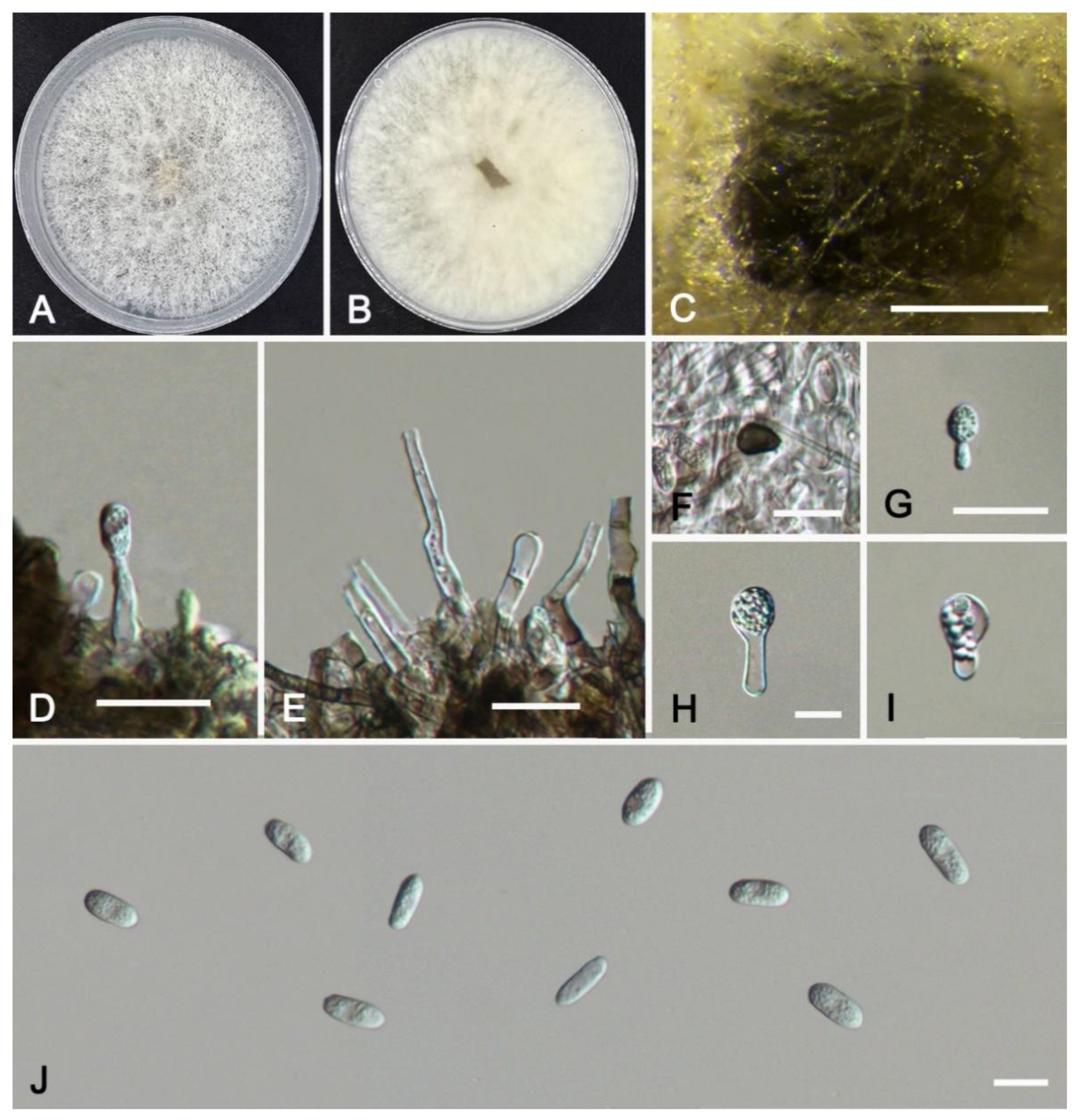
Colletotrichum aquilariae W.S. Zhang & X.L. Fan, sp. nov. (
Figure 8).
MycoBank: MB859290
Etymology: Named after the host genus of the collected sample, Aquilaria.
Holotype: HMAS 353996
Description: Sexual morph not observed. Asexual morph: Sporulating on PDA. Conidiomata scattered or gregarious, acervular, semi-immersed to immersed, hyaline or dark brown, unbranched, septate. Conidiophores usually reduced to conidiogenous cells, unbranched. Conidiogenous cells hyaline or dark brown, straight or curved, cylindrical or ampulliform, smooth-walled, 8.5–19.5(–47.0) × 1.5–3.1 μm (av. = 12.5 × 2.2 μm, n = 50). Conidia hyaline, cylindrical, aseptate, smooth-walled, no oil droplets, 10.5–12.5 × 3.5–4.8 μm (av. = 11.2 × 4.1 μm, n = 50), L/W ratio = 2.7. Appressoria elliptical to sub-elliptical, hyaline to dark brown, single, 4.5–10.8 × 2.7–8.5 μm (av. = 5.9 × 4.2 μm, n = 20). Setae not observed.
Culture characteristics: Colonies on PDA white, spreading, with the center of colonies having abundant white flocculent aerial mycelium and even margin, reaching a diameter of 60 mm after 8 d at 25 °C.
Typus: CHINA, Guangdong Province, Dongguan City, Xingtang Xinghua Road, collected from diseased leaves of Aquilaria sinensis, 113°44′40″ E, 22°57′33″ N, 7 December 2023, Xinlei Fan (holotype HMAS 353996; ex-holotype culture CFCC 72436); ibid. (living culture CFCC 72437).
Notes:
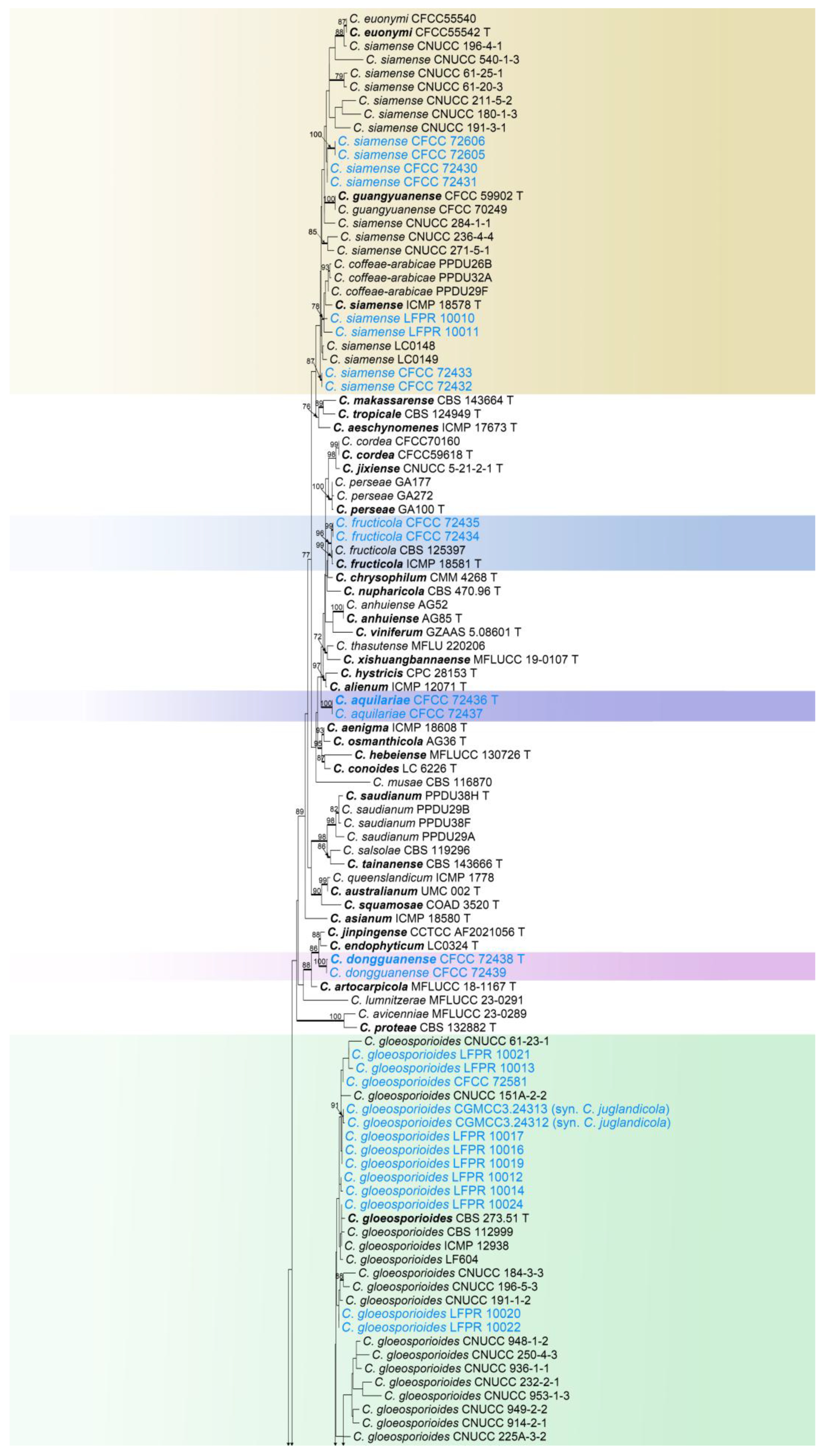
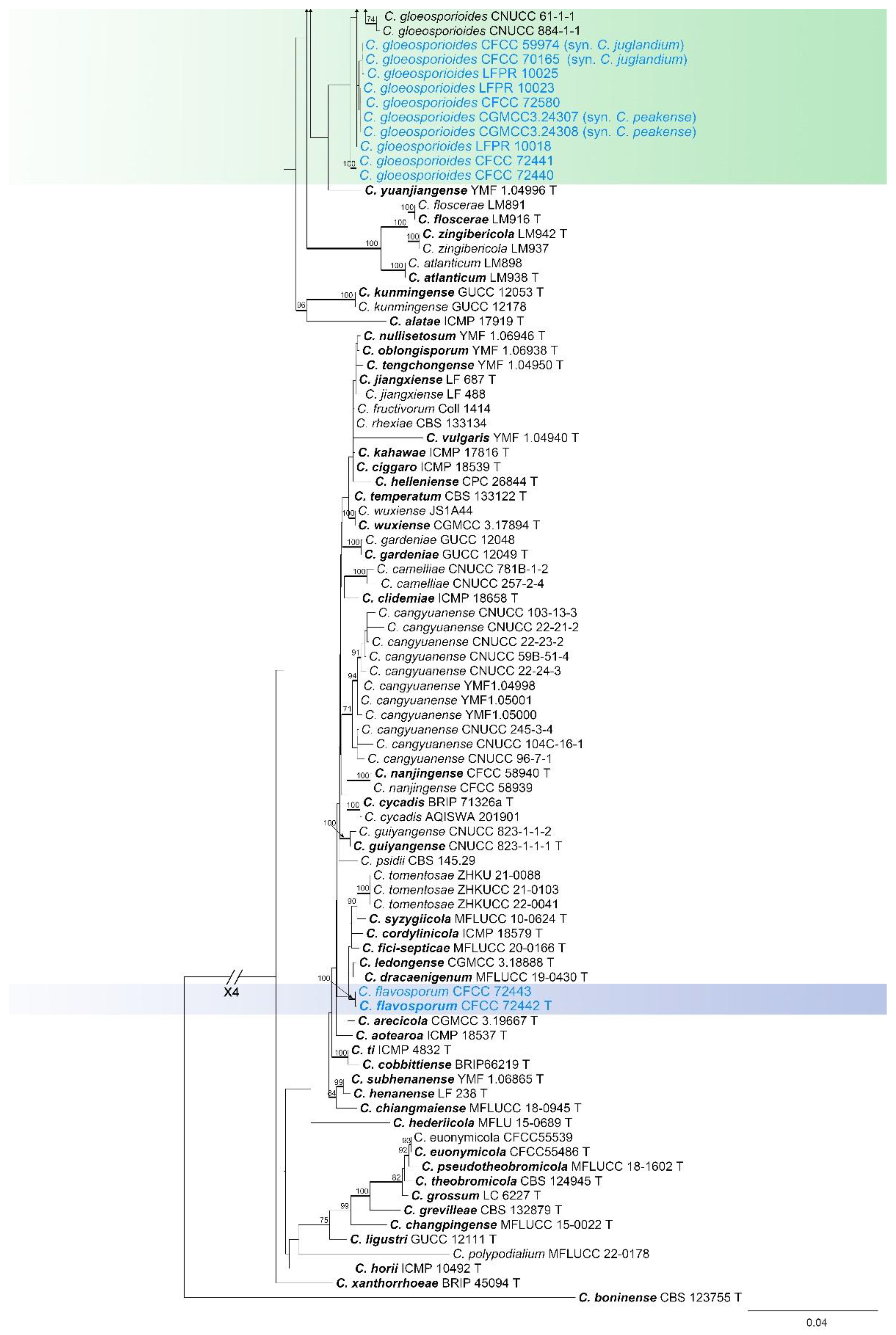
Colletotrichum aquilariae is revealed in the multi-gene phylogram as a distinct clade with full support (BI/ML = 1.00/100) (
Figure 5).
Colletotrichum aquilariae forms a group close to
C.
alienum and
C.
hystricis, but it differs from
C.
alienum in the nucleotide sequence by 6 bp in the ITS, 4 bp in
gapdh, 6 bp in
act, 4 bp in
tub2, and 5 bp in
cal. It can also differ from
C.
hystricis in the nucleotide sequence by 7 bp in the ITS, 6 bp in
gapdh, and 10 bp in
act. Morphologically, the conidia of
C.
aquilariae are smaller than those of
C.
alienum (10.5–12.5 × 3.5–4.8 vs. 15.5–17.5 × 5–5.5 µm) and
C.
hystricis (10.5–12.5 × 3.3–4.8 vs. 13–15 × 4–5.5 µm).
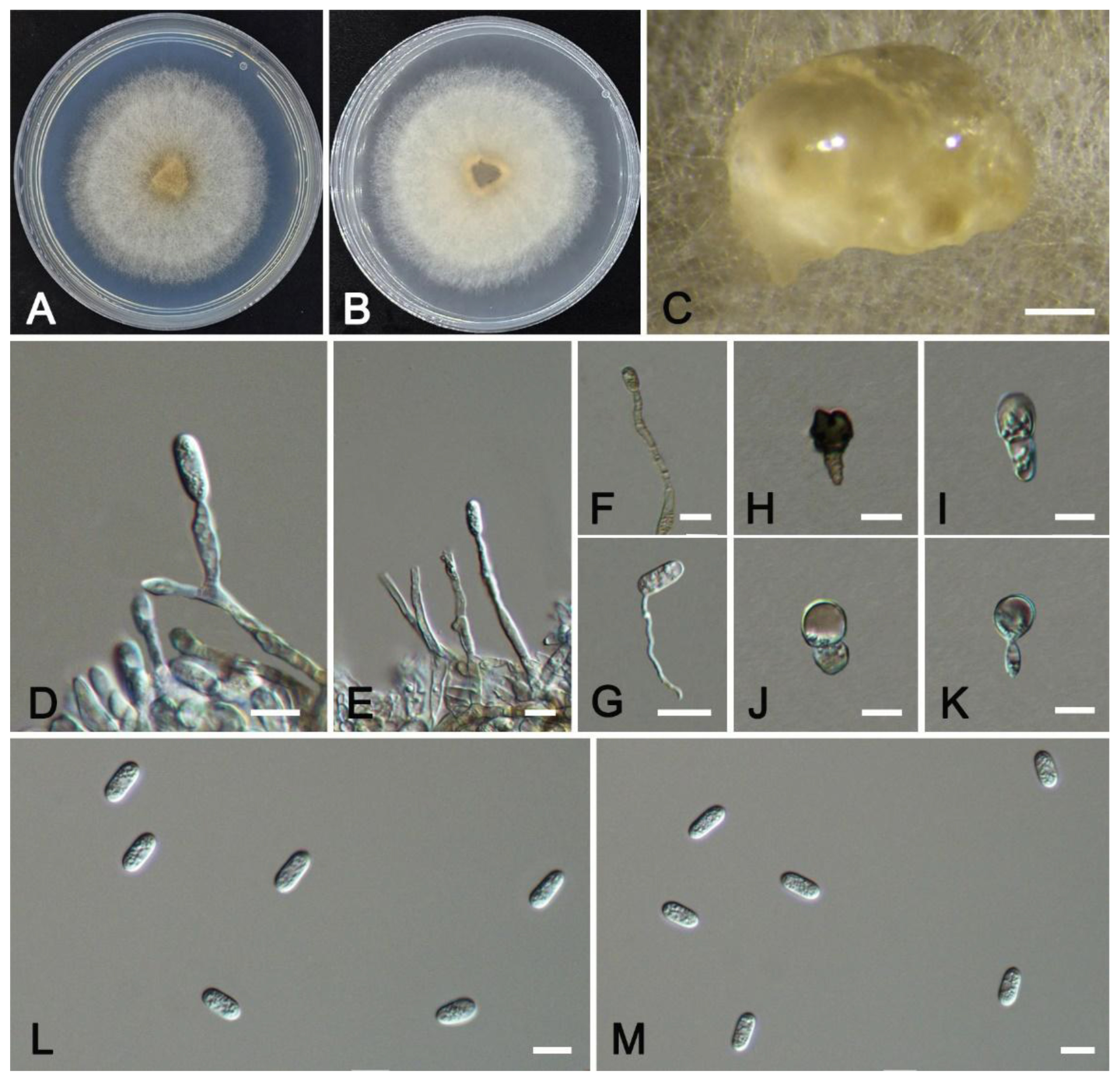
Colletotrichum boninense Moriwaki, Toy. Sato & Tsukib., Mycoscience 44 (1): 48. 2003. (
Figure 9).
Description: See Damm et al. [
10].
Material examined: CHINA, Guizhou Province, Guiyang City, Aha Lake National Wetland Park, collected from diseased leaves of Hedera nepalensis, 106°36′59″ E, 26°33′55″ N, 27 June 2024, Weishan Zhang (HMAS 353991, living culture CFCC 72426); ibid. (living culture CFCC 72427); CHINA, Guizhou Province, Bijie City, Dafang County, collected from diseased leaves of Coriaria napalensis, 19 June 2024, 105°26′33″ E, 27°12′41″ N, Xinlei Fan (HMAS 353992, living culture CFCC 72424); ibid. (living culture CFCC 72425); CHINA, Guizhou Province, Bijie City, Dafang County, collected from diseased leaves of Fatsia japonica, 19 June 2024, 105°26′33″ E, 27°12′41″ N, Xinlei Fan (HMAS 353993, living culture CFCC 72422); ibid. (living culture CFCC 72423).
Culture characteristics: After culturing in the dark at 25 °C for 10 days, the colonies on PDA can reach 90 mm, white in color, with abundant flocculent aerial mycelium on the surface, spreading in appearance, and even margin. Conidial masses are produced after 15 days.
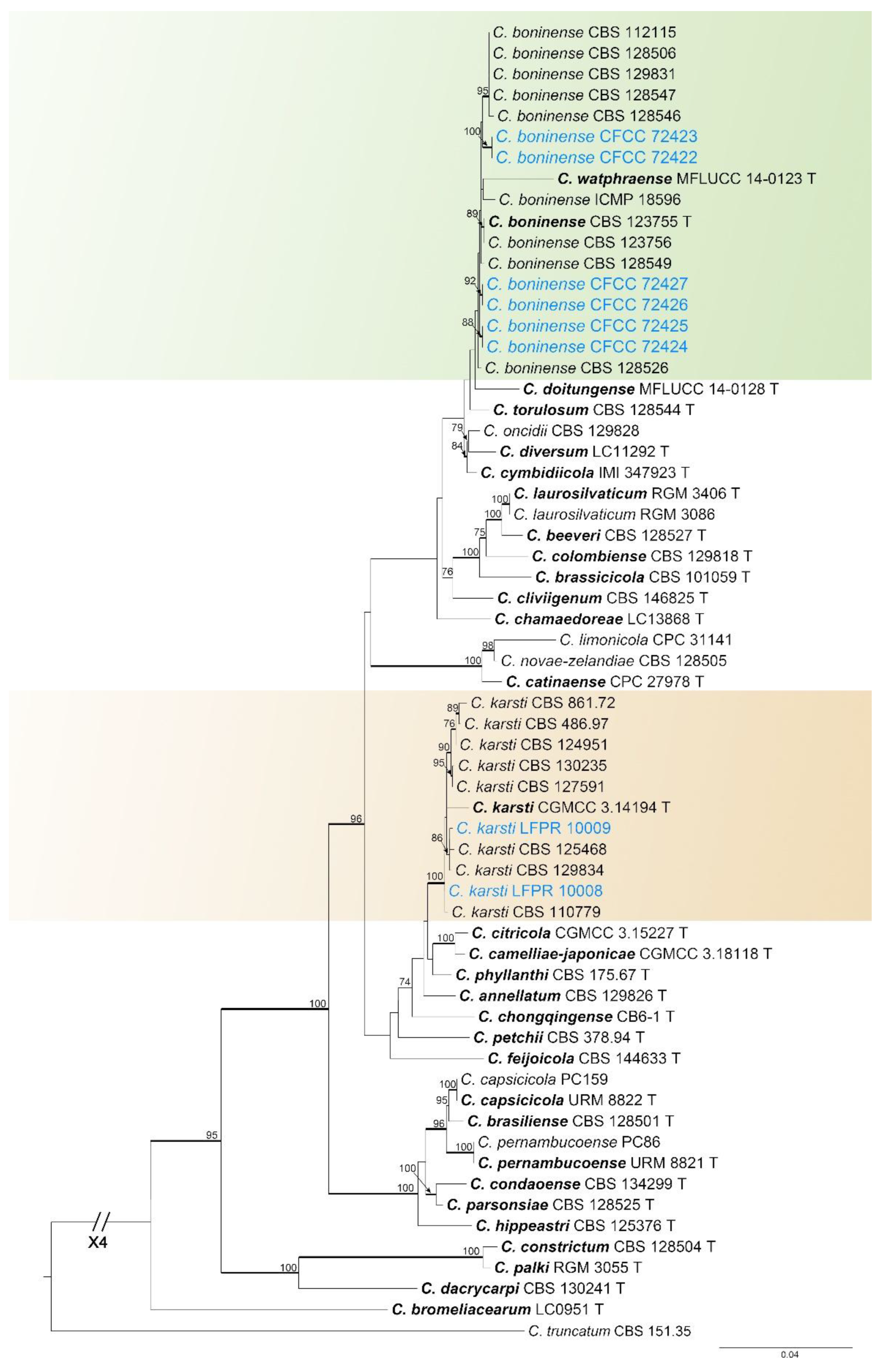
Notes: In the phylogenetic tree, the six isolates from this study clustered with
C.
boninense (
Figure 3). Therefore, the six isolates were identified as
C.
boninense (
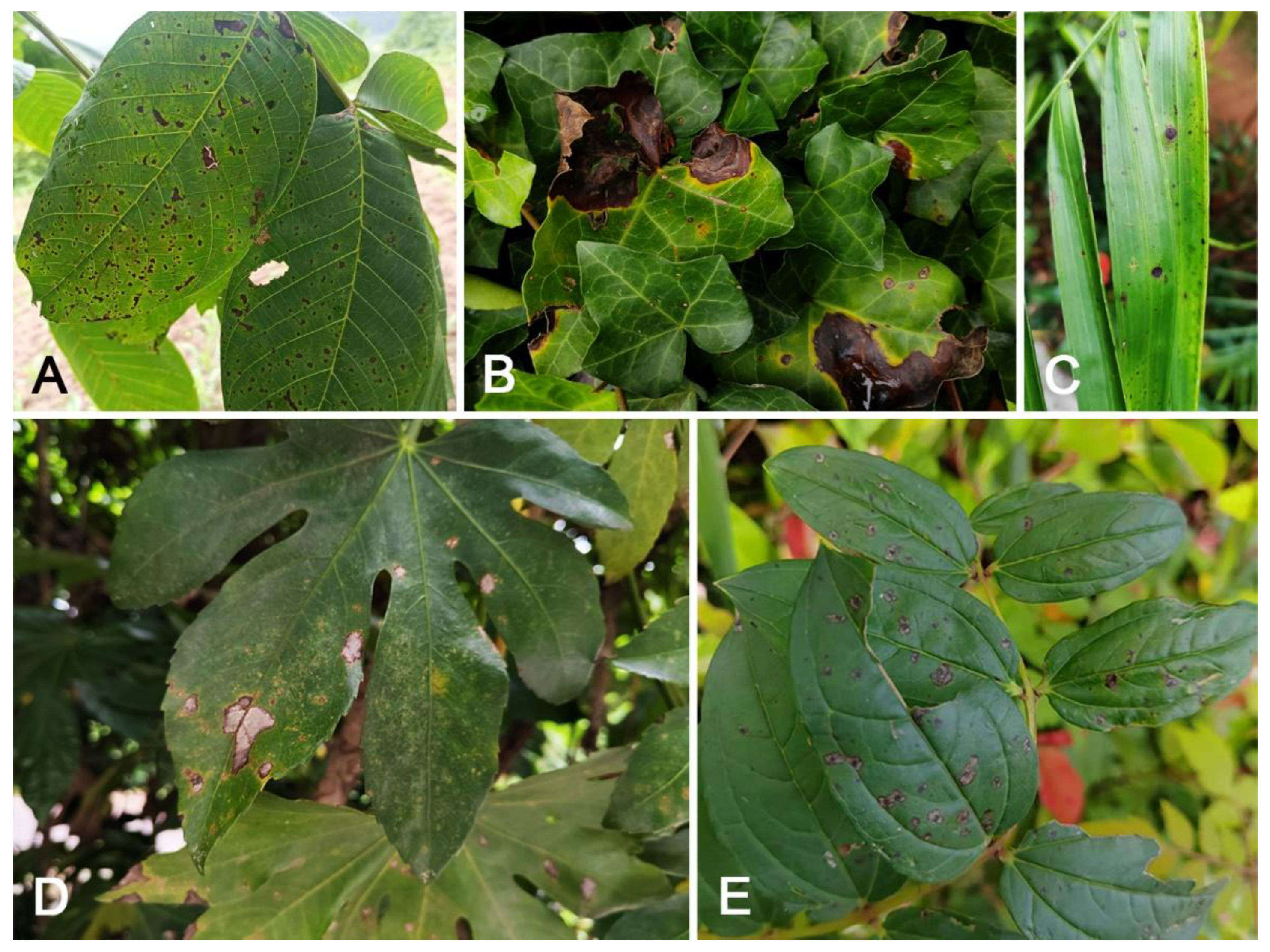
Figure 2), representing one new host from China.
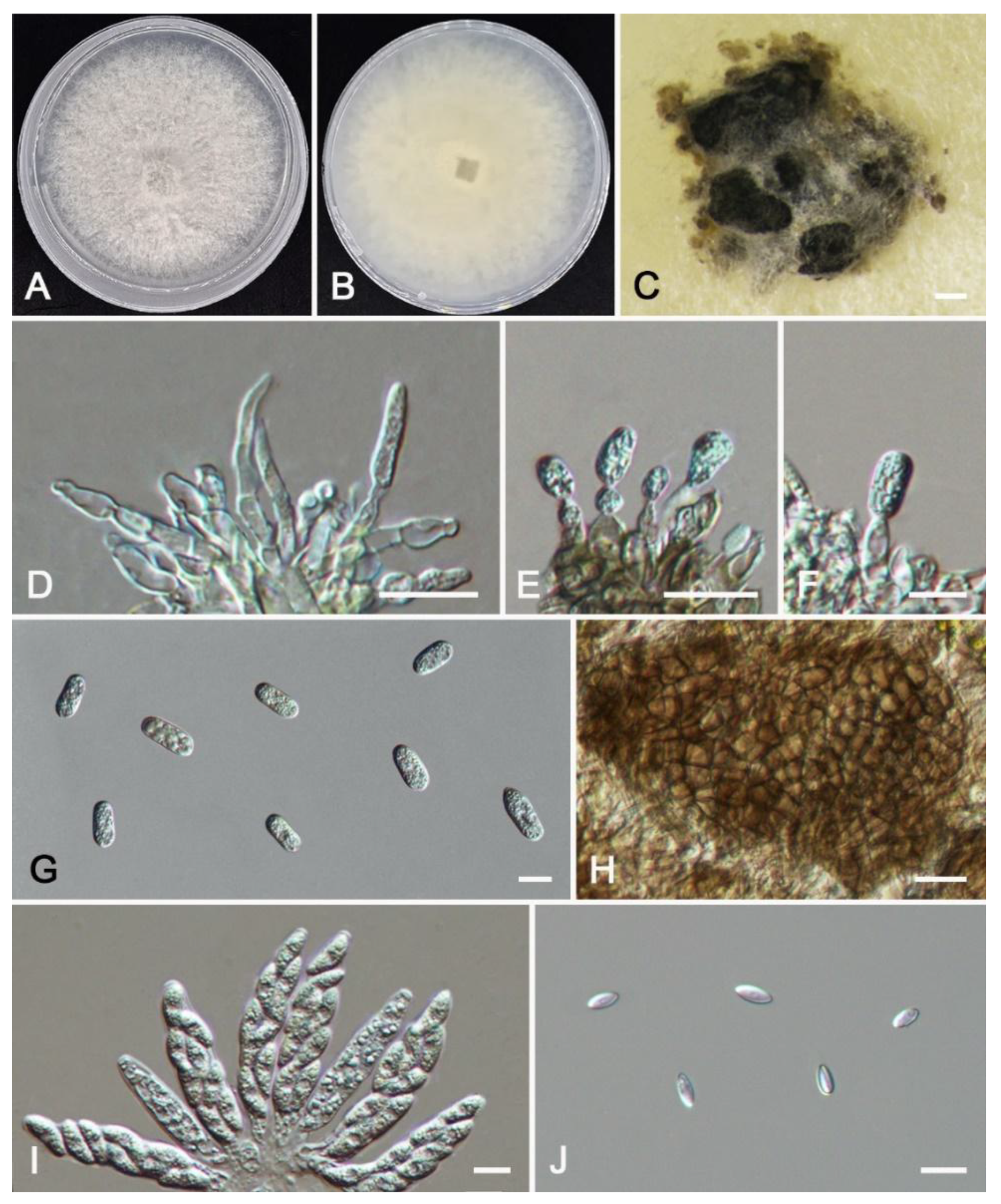
Colletotrichum crataegi W.S. Zhang & X.L. Fan, sp. nov. (
Figure 10).
MycoBank: MB859293
Etymology: Named after the host genus of the type specimen, Crataegus.
Holotype: HMAS 353994
Description: Sexual morph not observed. Asexual morph: Sporulating on PDA. Conidiomata hyaline to light brown, oil droplets, acervulus, septate, unbranched, irregular. Conidiophores usually reduced to conidiogenous cells, unbranched. Conidiogenous cells (25.0–)29.0–46.5 × 2.5–5.7 μm (av. = 36.1 × 3.9 μm, n = 30), irregular, hyaline or light brown, smooth-walled, oil droplets. Conidia 9.5–13.5 × 3.0–3.8 μm (av. = 11.5 × 3.4 μm, n = 50), L/W ratio = 3.3, fusiform, hyaline, smooth-walled, contents granular. Appressoria circular to elliptical, light brown to dark brown, smooth-walled, 7.6–12.1 × 6.2–9.5(–11.2) μm (av. = 10.1 × 8.3 μm, n = 30). Setae not observed.
Culture characteristics: Colonies on PDA white, with even margin and abundant flocculent aerial mycelium, reaching 60 mm in diameter after 8 d at 25 °C. Black conidial masses are formed on the medium after 15 days.
Typus: CHINA, Beijing City, Mentougou District, Xiaolongmen Forest Farm, collected from diseased leaves of Crataegus pinnatifida, 22 August 2024, 115°25′00″ E, 39°48′34″ N, Xinlei Fan (holotype HMAS 353994; ex-holotype culture CFCC 72428); ibid. (living ex-paratype culture CFCC 72429).
Notes:
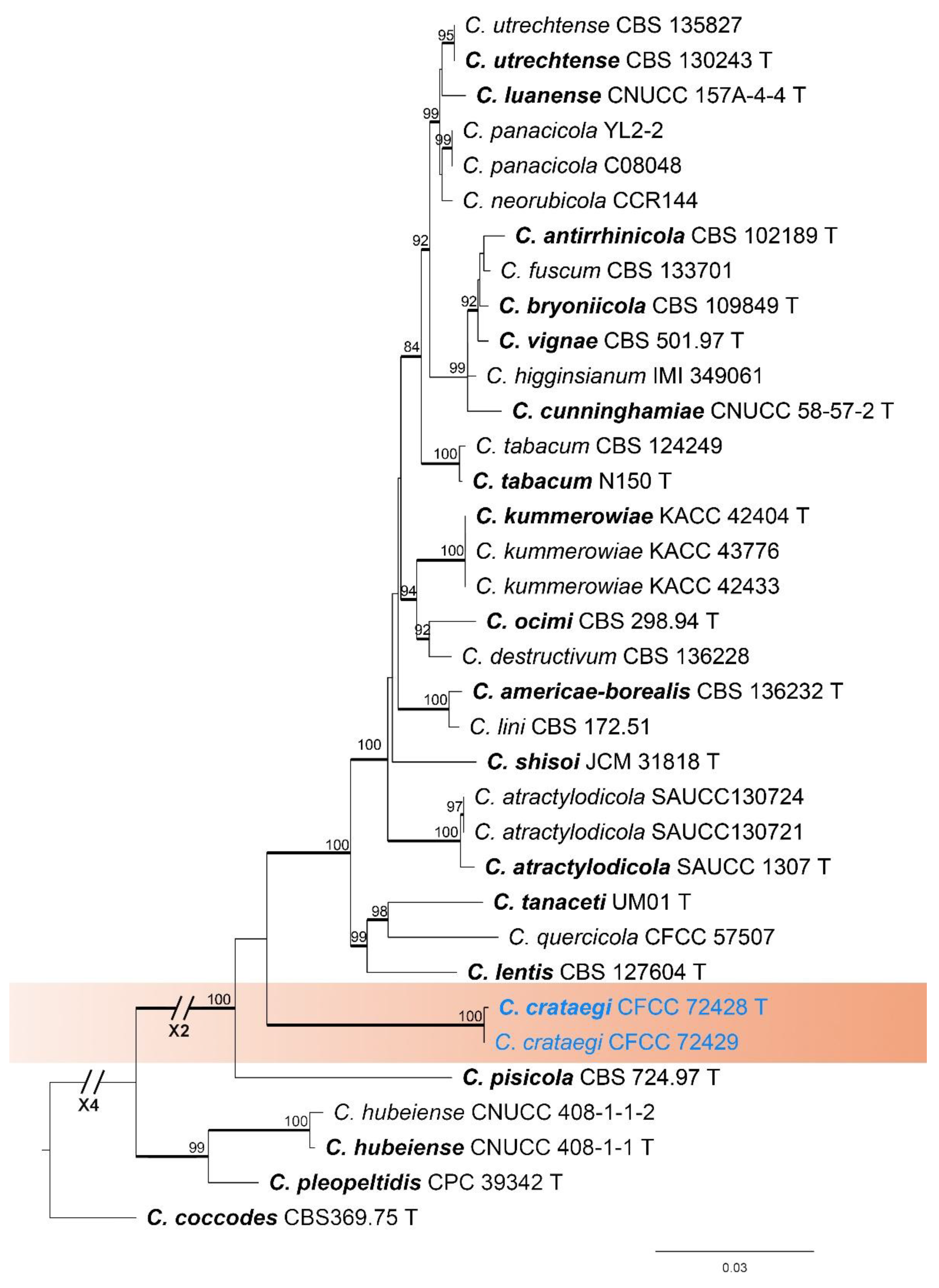
Colletotrichum crataegi was associated with anthracnose of
Crataegus pinnatifida. It clusters in a sister phylogenetic clade with
C.
lentis (BI/ML = 1.00/100) (
Figure 4). However, the conidiogenous cells of
C.
crataegi are longer than those of
C.
lentis (29.0–46.4 vs. 9–28 µm). The conidia of
C.
crataegi are shorter than those of
C.
lentis (9.5–13.5 vs. 16–20 µm). The appressoria of
C.
crataegi are larger (7.6–12.1 × 6.2–9.5 vs. 5.5–7.5 × 4.5–6 µm). In addition, it differs from
C.
lentis in the nucleotide sequence by 9 bp in the ITS, 32 bp in
gapdh, 14 bp in
chs-1, 21 bp in
act, 46 bp in
tub2, and 34 bp in
his3.
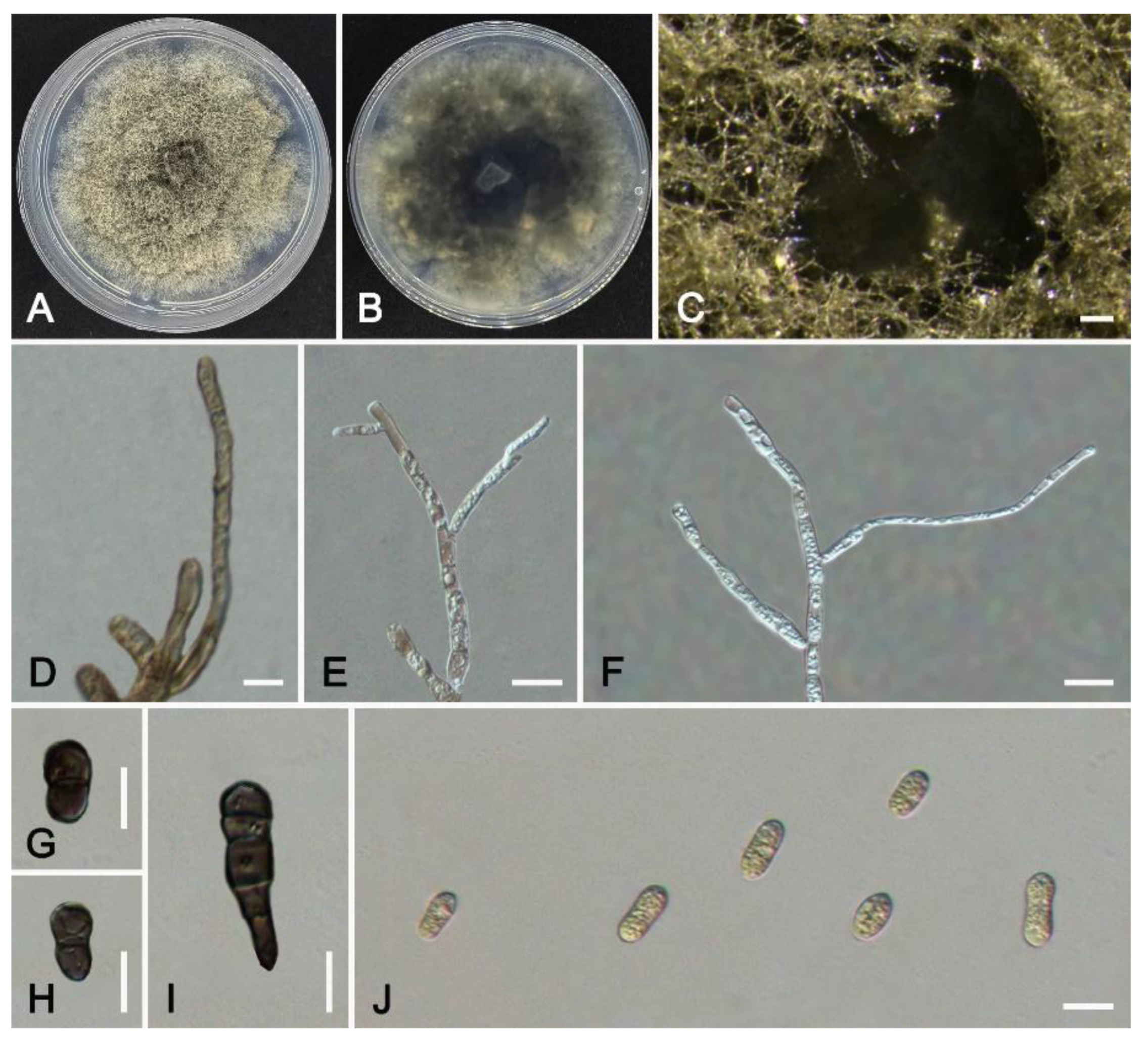
Colletotrichum dongguanense W.S. Zhang & X.L. Fan, sp. nov. (
Figure 11).
MycoBank: MB859294
Etymology: Named after the collection location of the type specimen, Dongguan.
Holotype: HMAS 353998
Description: Sexual morph not observed. Asexual morph: Sporulating on PDA. Conidiomata and setae not observed. Conidiophores not developed. Conidiogenous cells formed from mycelium directly, branched. Conidia hyaline or pale brown, cylindrical or sub-cylindrical, aseptate, smooth-walled, no oil droplets, contents granular, 11.5–13.9(–16.2) × 4.5–6.5 μm (av. = 13.0 × 5.5 μm, n = 50), L/W ratio = 2.4. Appressoria single, both ends rounded or one end slightly pointed, medium to dark brown, 12.9–15.5(–23.9) × 5.8–7.7 μm (av. = 14.5 × 6.7 μm, n = 30).
Culture characteristics: Colonies on PDA 60 mm diam in 10 d, irregular margins, brown, with dense aerial mycelium, reverse black in the center, brown towards the margin. Black conidial masses are formed on the medium after 30 days.
Typus: CHINA, Guangdong Province, Dongguan City, Xingtang Xinghua Road, collected from diseased leaves of Bauhinia purpurea, 113°44′51″ E, 22°58′12″ N, 22 November 2023, Xinlei Fan (holotype HMAS 353998; ex-holotype culture CFCC 72438); ibid. (living culture CFCC 72439).
Notes:
Colletotrichum dongguanense was associated with anthracnose of
Bauhinia purpurea. Phylogenetically,
C.
dongguanense is sister to
C.
endophyticum and
C.
jinpingense (
Figure 5).
Colletotrichum dongguanense differs from
C.
endophyticum in the nucleotide sequence by 7 bp in
gapdh, 2 bp in
chs-1, 2 bp in
act, and 3 bp in
tub2. It also differs from
C.
jinpingense in nucleotide sequence by 4 bp in
gapdh, 4 bp in
chs-1, 3 bp in
act, 4 bp in
tub2, and 4 bp in
cal. The mycelial color of
C.
endophyticum and
C.
jinpingense is gray on PDA medium, but
C.
dongguanense is brown. The conidial length of
C.
dongguanense is shorter than that of
C.
jinpingense (11.5–13.9 vs. 13.9–18.5 μm). The appressoria formed by
C.
dongguanense are regularly shaped, but those formed by
C.
endophyticum and
C.
jinpingense are irregularly shaped. Moreover, the appressoria of
C.
dongguanense are longer than those of
C.
endophyticum (12.9–15.5 vs. 8–12 μm).
Colletotrichum fioriniae (Marcelino & Gouli) Pennycook., Mycotaxon 132 (1): 150. 2017.
Description: See Zhang et al. [
7].
Material examined: CHINA, Shaanxi Province, Ankang City, Hanbin District, Zigou Town, Erlang Village, collected from diseased leaves of Juglans regia, 108°57′32″ E, 32°55′24″ N, 14 May 2024, Lu Lin & Xinlei Fan (living culture CFCC 72578 and CFCC 72579); CHINA, Guizhou Province, Bijie City, Dafang County, Jinhai Lake Wetland Park, collected from diseased leaves of Ulmus parvifolia, 105°26′30″ E, 27°12′45″ N, 19 June 2024 Xinlei Fan (living culture LFPR 10003 and LFPR 10005); CHINA, Fujian Province, Fuzhou City, Jinan District, Fengchi Baiyun Cave Scenic Area, collected from diseased leaves of Laurus nobilis, 119°17′27″ E, 26°6′9″ N, 19 August 2024 Xinlei Fan (living culture LFPR 10004).
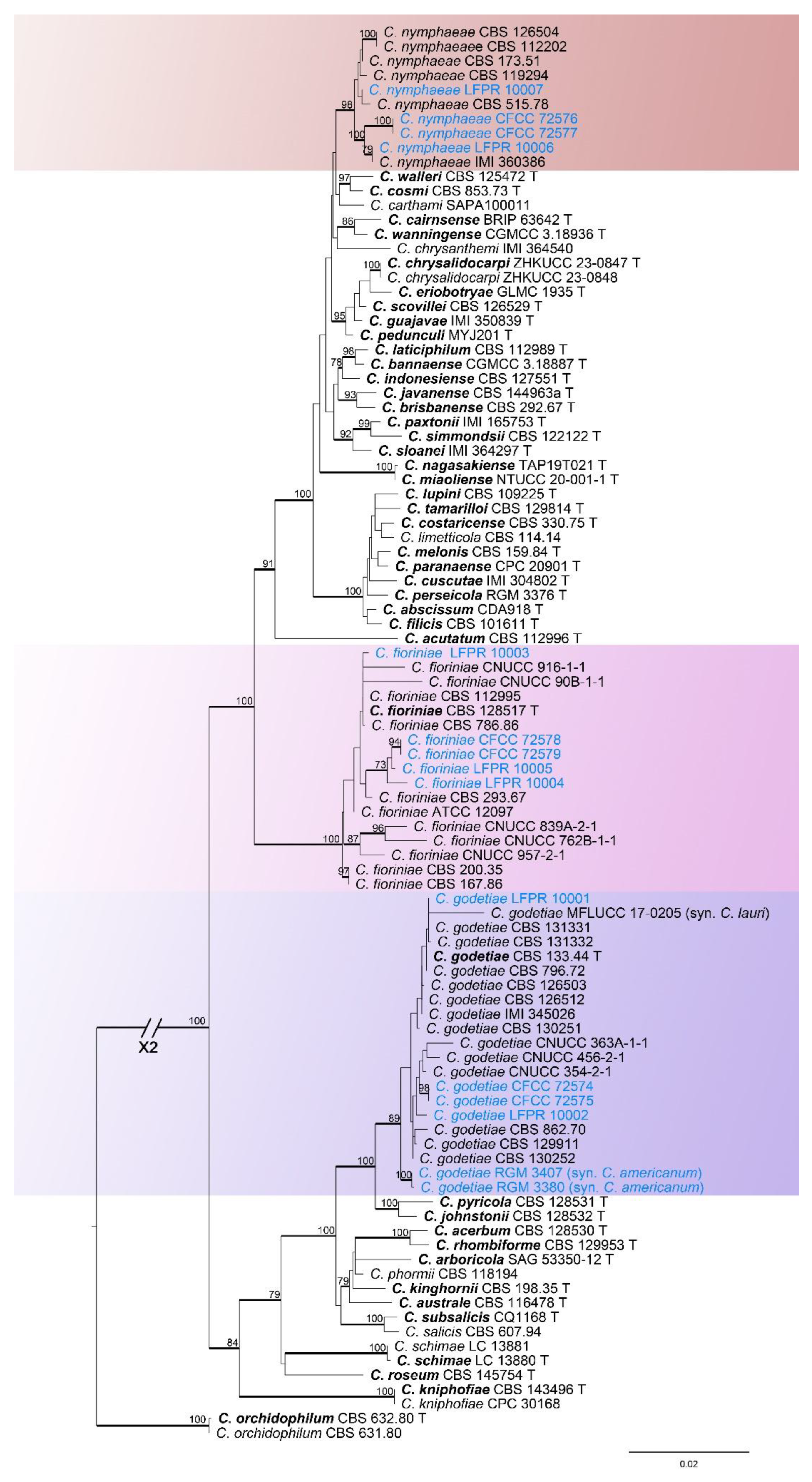
Notes: In the phylogenetic tree, the five isolates from this study clustered with
C.
fioriniae (BI/ML = 1.00/100) (
Figure 2). Therefore, the five isolates were identified as
C.
fioriniae (
Figure 2), representing three new hosts from China.
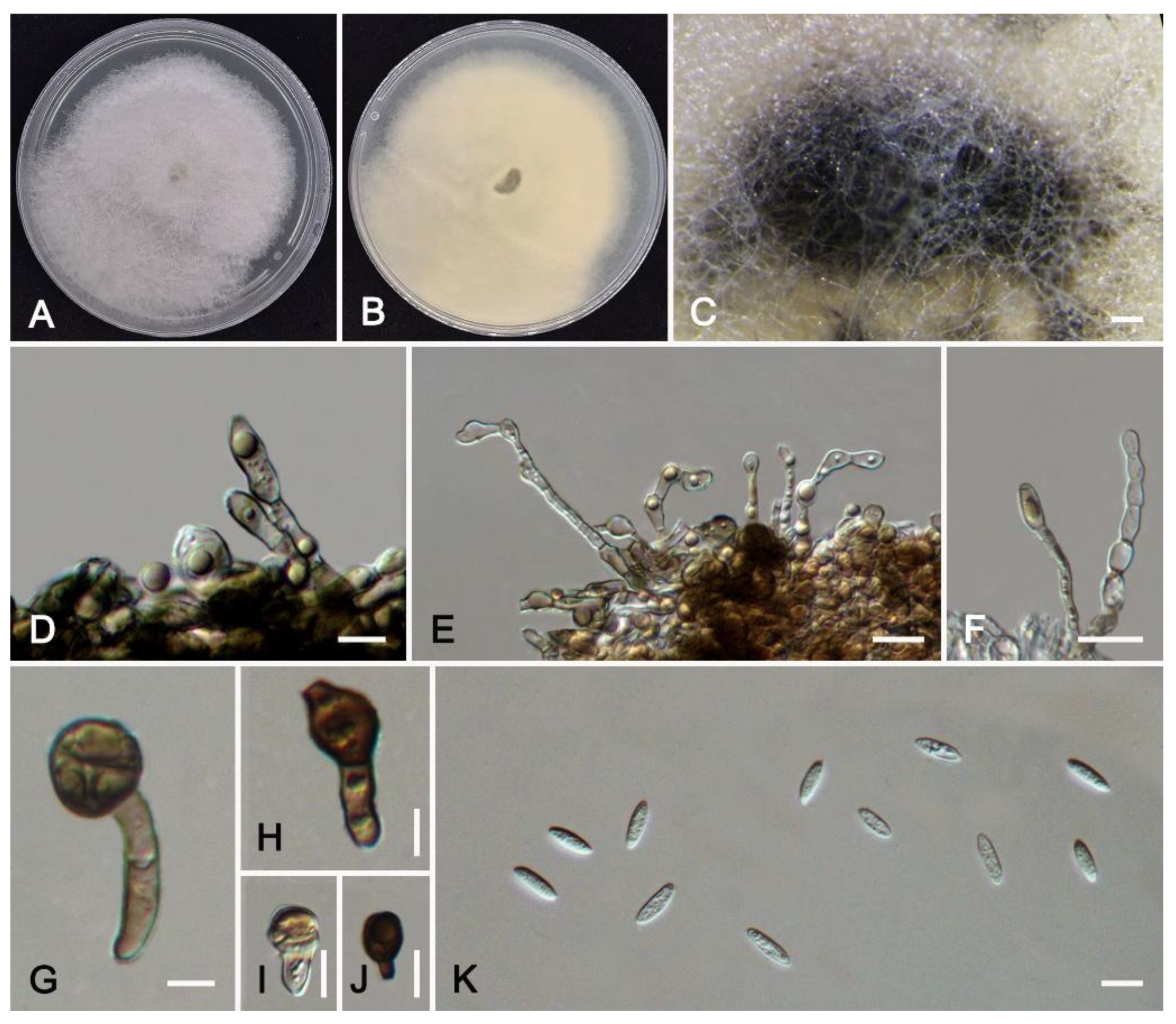
Colletotrichum flavosporum W.S. Zhang & X.L. Fan, sp. nov. (
Figure 12).
MycoBank: MB859297
Etymology: Named after the rare characteristic of this new species, flavosporum.
Holotype: HMAS 353997
Description: Sexual morph not observed. Asexual morph: Sporulating on PDA. Conidiomata scattered or gregarious, semi-immersed to immersed, hyaline. Conidiophores usually reduced to conidiogenous cells, branched. Conidiogenous cells hyaline or pale brown, straight or curved, cylindrical or ampulliform, smooth-walled, 19.2–22.8(–33.5) × 2.1–4.3 μm (av. = 21.1 × 3.4 μm, n = 50). Conidia cylindrical or sub-cylindrical, hyaline, contents granular, aseptate, smooth-walled, no oil droplets, 10.5–11.9 × 4.5–5.4 μm (av. = 11.2 × 5.0 μm, n = 50), L/W ratio = 2.2. Appressoria single, circular to irregular, hyaline or dark brown, (13.8–)17.1–20.5 × 7.5–10.5 μm (av. = 18.7 × 9.1 μm, n = 30). Setae not observed.
Culture characteristics: Colonies on PDA reach a diameter of 50 mm after 7 d at 25 °C, with regular margins, white in color, flat, and featuring dense aerial mycelium that exhibits a spreading growth habit.
Typus: CHINA, Guangdong Province, Dongguan City, Xingtang Xinghua Road, collected from diseased leaves of Bougainvillea glabra, 113°44′53″ E, 22°57′38″ N, 19 December 2024, Xinlei Fan (holotype HMAS 353997; ex-holotype culture CFCC 72442); ibid. (living culture CFCC 72443).
Notes:
Colletotrichum flavosporum was associated with anthracnose of
Bougainvillea glabra. Phylogenetically,
C.
flavosporum is closely related to
C.
dracaenigenum (
Figure 5), but it differs from
C.
dracaenigenum in nucleotide sequence by 6 bp in ITS and 8 bp in
gapdh. Morphologically,
C.
flavosporum produces branched conidiophores. The conidiogenous cells of
C.
flavosporum are longer than those of
C.
dracaenigenum (19.2–22.8 vs. 13–15 μm). The appressoria of
C.
flavosporum are larger than those of
C.
dracaenigenum (17.1–20.5 × 7.5–10.5 vs. 5–12 × 4–7 μm).
Colletotrichum fructicola Prihast. et al., Fungal Diversity 39: 158. 2009.
Description: See de Silva et al. [
22].
Material examined: CHINA, Beijing City, Shunyi District, County Road 408, collected from diseased leaves of Juglans regia, 116°39′17″ E, 40°7′49″ N, 10 October 2024, Xinlei Fan (living culture CFCC 72434 and CFCC 72435).
Notes: In this study, the two strains clustered with
C.
fructicola in a subclade, with 94% ML value and 1.00 BI value (
Figure 5). The ITS,
chs-1,
act,
tub2, and
cal genes of the two strains were identical to those of
C.
fructicola, with only a 2 bp difference in
gapdh (309/311, 99.4%), and they were morphologically similar. Therefore, we identified them as
C.
fructicola.
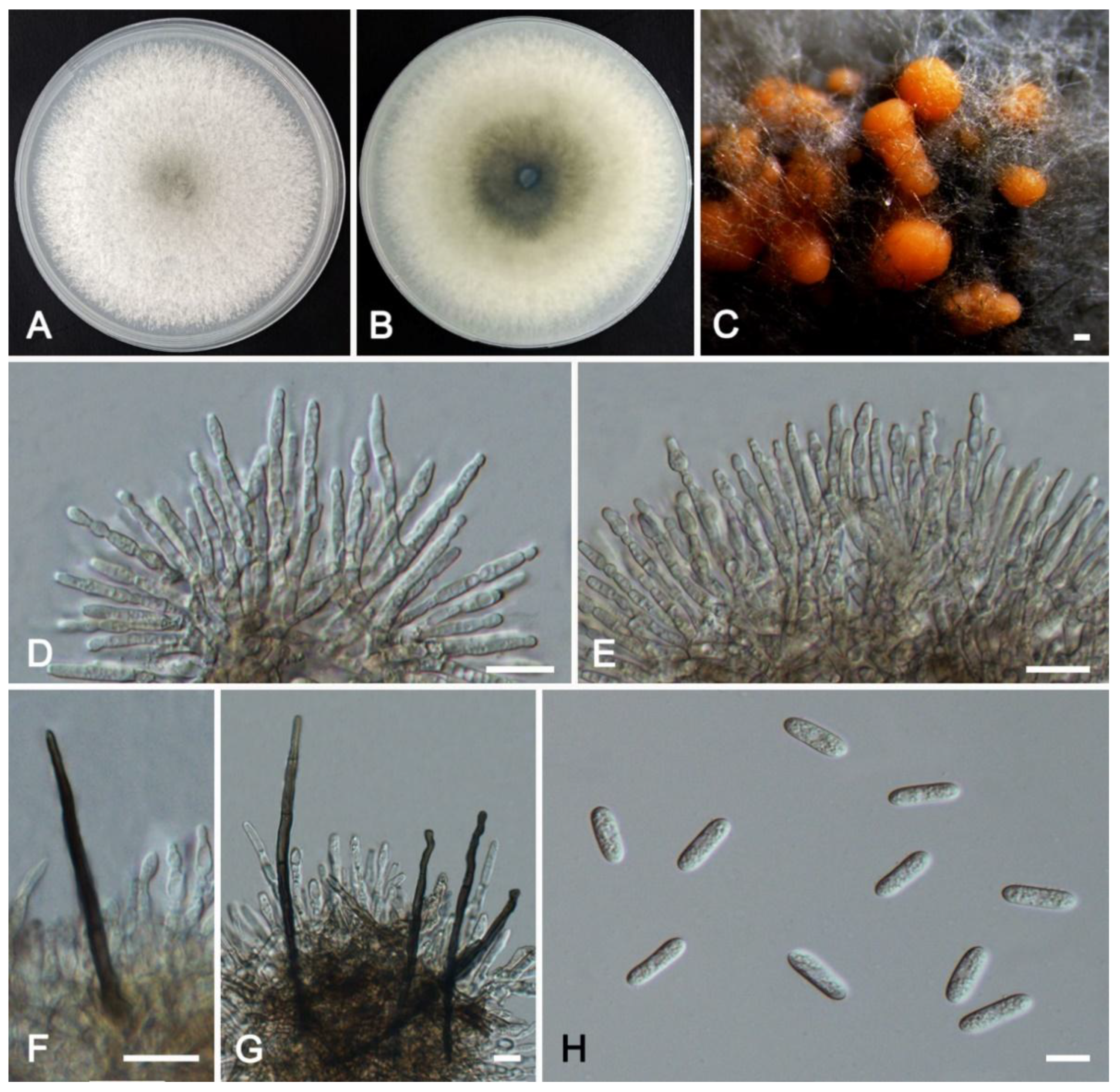
Colletotrichum gloeosporioides (Penz.) Penz. & Sacc., Atti del Reale Istituto Veneto di Scienze, Lettere ed Arti, 6, 2 (5): 670. 1884. (
Figure 13).
New proposed synonyms.
Colletotrichum peakense L. Zhang et al. Mycokeys 99: 141 (2023).
Colletotrichum juglandicola L. Zhang et al. Mycokeys 99: 139 (2023).
Colletotrichum juglandium Y.X. Li et al. Mycokeys 108: 158 (2024).
Description: Sexual morph not observed. Asexual morph: Sporulating on PDA. Conidiomata scattered or gregarious, semi-immersed, hyaline. Conidiophores usually reduced to conidiogenous cells, unbranched, aseptate. Conidiogenous cells hyaline, straight, cylindrical, smooth-walled, 23.5–33.5 × 1.7–2.8 μm (av. = 27.3 × 2.2 μm, n = 50). Conidia cylindrical, hyaline, contents granular, smooth-walled, no oil droplets, 14.9–17.5 × 4.0–5.2 μm (av. = 16.1 × 4.6 μm, n = 50), L/W ratio = 3.4. Setae medium to dark brown, single, circular to irregular, 3–4-septate, 36–43 μm. Appressoria not observed.
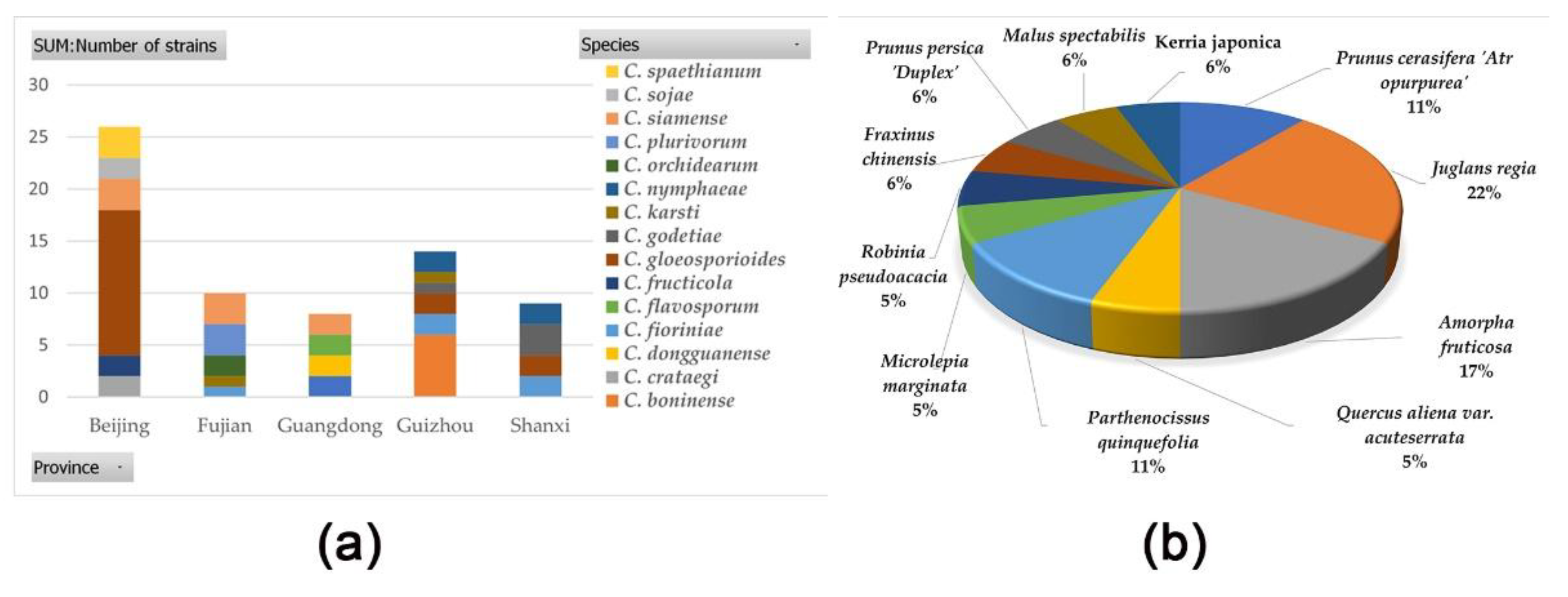
Material examined: CHINA, Beijing City, Shunyi District, County Road 408, collected from diseased leaves of Juglans regia, 116°39′15″ E, 40°7′52″ N, 10 July 2024, Xinlei Fan (living culture CFCC 72580). ibid. 11 October 2024, Xinlei Fan (living culture CFCC 72581). ibid. 116°39′15″ E, 40°7′49″ N, 10 July 2024, Xinlei Fan (living culture LFPR 10014); CHINA, Beijing City, Mentougou District, Xiaolongmen Forest Farm, collected from diseased leaves of Juglans regia, 115°25′13″ E, 39°48′45″ N, 22 August 2024, Xinlei Fan (living culture LFPR 10025). CHINA, Beijing City, Haidian District, Cuihu National Urban Wetland Park, collected from diseased leaves of Prunus cerasifera ‘Atropurpurea’, 116°39′17″ E, 40°7′49″ N, 18 July 2024, Weishan Zhang (living culture CFCC 72440 and CFCC 72441). ibid. collected from diseased leaves of Robinia pseudoacacia, 116°10′45″ E, 40°6′10″ N, 18 July 2024, Weishan Zhang (living culture LFPR 10019); ibid. collected from diseased leaves of Fraxinus chinensis, 116°10′58″ E, 40°6′10″ N, 18 July 2024, Weishan Zhang (living culture LFPR 10020); ibid. collected from diseased leaves of Prunus persica ‘Duplex’, 116°11′21″ E, 40°6′18″ N, 13 October 2024, Weishan Zhang (living culture LFPR 10022); ibid. collected from diseased leaves of Malus spectabilis, 116°11′15″ E, 40°6′19″ N, 13 October 2024, Weishan Zhang (living culture LFPR 10023); ibid. collected from diseased leaves of Kerria japonica, 116°11′17″ E, 40°6′21″ N, 13 October 2024, Weishan Zhang (living culture LFPR 10024); ibid. collected from diseased leaves of Amorpha fruticosa, 116°11′6″ E, 40°6′9″ N, 18 July 2024, Weishan Zhang (living culture LFPR 10012); ibid. 116°11′9″ E, 40°6′9″ N, 18 July 2024, Weishan Zhang (living culture LFPR 10013); ibid. 116°11′15″ E, 40°6′20″ N, 18 July 2024, Weishan Zhang (living culture LFPR 10021). CHINA, Guizhou Province, Guiyang City, Qianling Mountain Park, collected from diseased leaves of Quercus aliena, 106°41′44″ E, 26°35′27″ N, 19 June 2024, Xinlei Fan (living culture LFPR 10015); ibid. Aha Lake National Wetland Park, collected from diseased leaves of Parthenocissus quinquefolia, 106°36′59″ E, 26°33′57″ N, 27 June 2024, Xinlei Fan (living culture LFPR 10016); CHINA, Shanxi Province, Ankang City, Hanbin District, Zigou Town, Erlang Village, collected from diseased leaves of Parthenocissus tricuspidata, 108°57′52″ E, 32°55′40″ N, 13 June 2024, Xinlei Fan (living culture LFPR 10017); ibid. collected from diseased leaves of Microlepia marginata, 108°57′50″ E, 32°55′41″ N, 13 June 2024 Xinlei Fan (living culture LFPR 10018).
Notes: Phylogenetically, the four strains are closely related to
C. gloeosporioides,
C. juglandium,
C. juglandicola, and
C. peakense. (BI/ML = 1.00/100) (
Figure 5). Strains CFCC 72580 and CFCC 72581 had no base differences in the ITS,
gapdh,
chs-1,
act,
tub2, and
cal when compared with
C. gloeosporioides and
C. peakense. Strains CFCC 72440 and CFCC 72441 had base differences in
gapdh (10 bp) compared with
C. gloeosporioides. The isolates in this study had base differences with
C. juglandicola (ITS: 1 bp;
chs-1: 1 bp;
tub2: 1 bp). Our strains had base differences in
gapdh (3 bp) compared with
C. juglandium. Our strains were morphologically similar to
C. gloeosporioides. Therefore, we identified all four strains as
C. gloeosporioides. In addition, based on the phylogenetic tree and the lack of sequence variation, we regarded
C. juglandium,
C. juglandicola, and
C. peakense as synonyms of
C. gloeosporioides. A detailed explanation for the taxonomic treatment of this section is provided in the discussion.
Colletotrichum godetiae Neerg., Friesia 4 (1–2): 72. 1950.
New proposed synonyms.
Colletotrichum americanum M. Zapata et al. Mycological Progress 23: 28. 2024.
Description: See Damm et al. [
9].
Material examined: CHINA, Shanxi Province, Ankang City, Hanbin District, Cigou Town, Er Lang Village, collected from diseased leaves of Juglans regia, 108°57′57″ E, 32°55′42″ N, 14 June 2024, Xinlei Fan (living culture CFCC 72574 and CFCC 72575). ibid. 108°57′52″ E, 32°55′40″ N, 14 June 2024, Xinlei Fan (living culture LFPR 10001). CHINA, Guizhou Province, Bijie City, Dafang County, Jinhai Lake Wetland Park, collected from diseased leaves of Calystegia hederacea, 105°26′31″ E, 27°12′44″ N, 19 June 2024 Weishan Zhang (living culture LFPR 10002).
Notes: In the phylogenetic tree, the two strains in this study formed a closely related clade with
C. americanum and
C. godetiae (BI/ML = 0.99/95) (
Figure 2). Our two strains had base differences with
C. godetiae (ITS: 1 bp;
gapdh: 1 bp). However, our isolates had no base differences in other gene fragments with
C. godetiae. Therefore, we identified the two strains in this study as
C. godetiae.
C. americanum (RGM 3380T and RGM 3407) and
C. godetiae CBS 862.70 had no base differences and morphologically similar. Based on this, we regarded
C. americanum as a synonym of
C. godetiae. A detailed explanation for the taxonomic treatment of this section is provided in the discussion.
Colletotrichum karsti Y.L. Yang, Z.Y. Liu, K.D. Hyde & L. Cai, Cryptogonia Mycologia 32 (3): 241. 2011.
Description: See Zhang et al. [
7].
Material examined: CHINA, Fujian Province, Fuzhou City, Jinan District, National Wetland Park, collected from diseased leaves of Acer rubrum, 119°19′25″ E, 26°5′6″ N, 20 August 2024, Weishan Zhang (living culture LFPR 10008). CHINA, Guizhou Province, Guiyang City, Aha Lake National Wetland Park, collected from diseased leaves of Parthenocissus quinquefolia, 106°36′53″ E, 26°33′52″ N, 27 June 2024, Weishan Zhang (living culture LFPR 10009).
Notes: In the phylogenetic tree, the two strains in this study clustered with
C.
karsti (BI/ML = 1.00/100) (
Figure 3). Therefore, these two isolates were identified as
C. karsti (
Figure 3).
Colletotrichum nymphaeae (Pass.) Aa., Netherlands Journal of Plant Pathology 84 (3): 110. 1978.
Description: See Damm et al. [
9].
Material examined: CHINA, Shanxi Province, Ankang City, Hanbin District, Cigou Town, Er Lang Village, collected from diseased leaves of Juglans regia, 108°57′21″ E, 32°55′18″ N, 14 May 2024, Xinlei Fan (living culture CFCC 72576 and CFCC 72577). CHINA, Guizhou Province, Bijie City, Dafang County, Jinhai Lake Wetland Park, collected from diseased leaves of Senecio scandens, 105°26′37″ E, 27°12′45″ N, 19 June 2024 Weishan Zhang (living culture LFPR 10007). CHINA, Guizhou Province, Guiyang City, Aha Lake National Wetland Park, collected from diseased leaves of Fatsia japonica, 106°36′51″ E, 26°33′59″ N, 27 June 2024, Weishan Zhang (living culture LFPR 10006).
Notes: In the phylogenetic tree, our two isolates (CFCC 72576 and CFCC 72577) clustered with
C.
nymphaeae (BI/ML = 1.00/98) (
Figure 2). Therefore, these two isolates were identified as
C.
nymphaeae (
Figure 2), representing a new host from China.
Colletotrichum orchidearum Allesch., Rabenh. Krypt.-Fl., Edn 2 (Leipzig) 1 (7): 563. 1903.
Description: See Damm et al. [
38].
Material examined: CHINA, Fujian Province, Fuzhou City, Jinan District, National Wetland Park, collected from diseased leaves of Anthurium andraeanum, 119°19′25″ E, 26°5′6″ N, 20 August 2024, Weishan Zhang (living culture LFPR 10029); ibid. 119°19′21″ E, 26°5′9″ N, 20 August 2024, Weishan Zhang (living culture LFPR 10030).
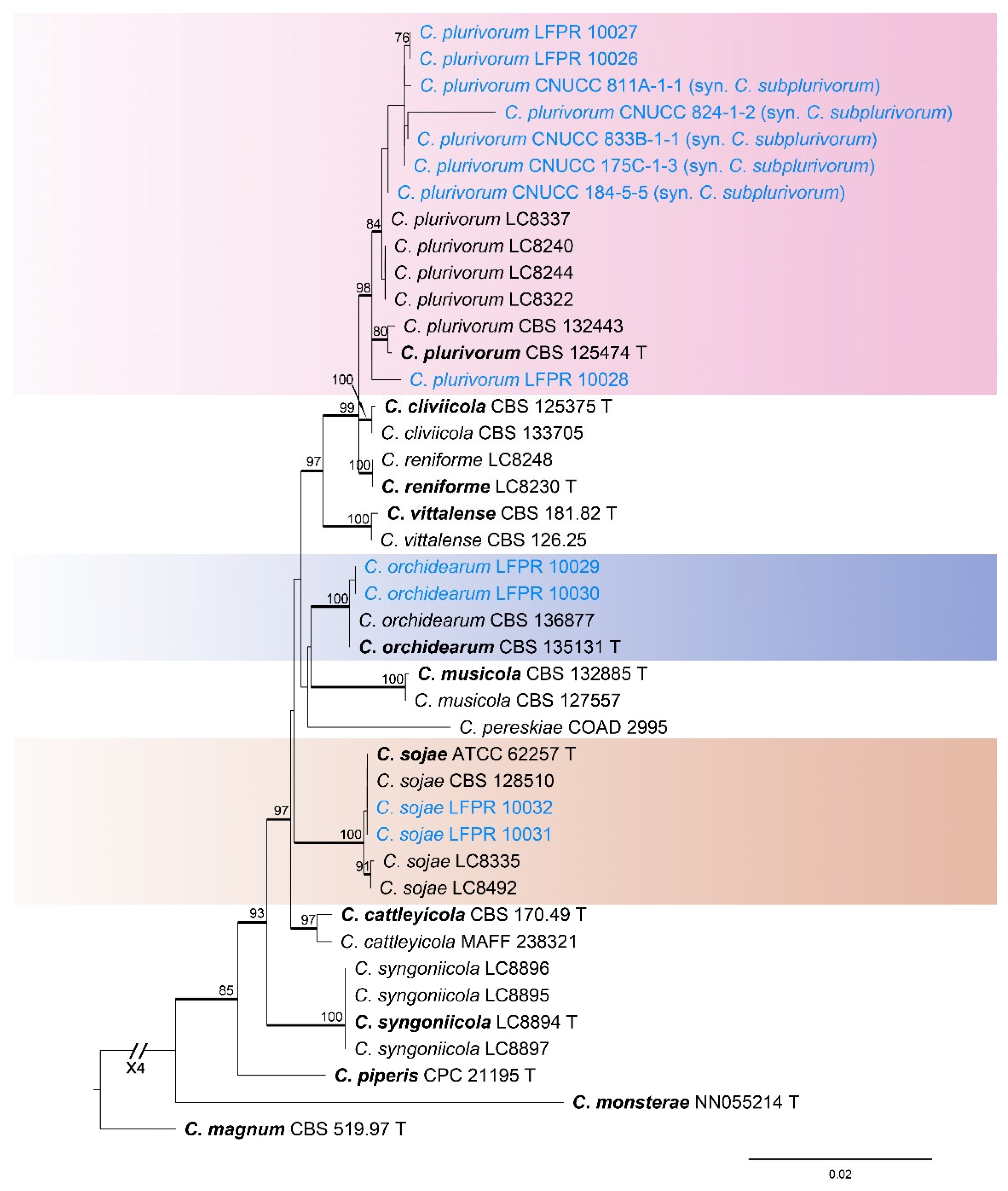
Notes: In the phylogenetic tree, our two isolates (LFPR 10029 and LFPR 10030) clustered with
C.
orchidearum (BI/ML = 1.00/100) (
Figure 6). Therefore, these two isolates were identified as
C.
orchidearum (
Figure 6), representing a novel geographic record for China.
Colletotrichum plurivorum U. Damm., Alizadeh & T. Sato., Studies in Mycology 92: 31. 2018.
New proposed synonyms. Colletotrichum subplurivorum Sui et al. Mycosphere 15 (1): 4569–4743. 2024.
Description: See Zhang et al. [
7].
Material examined: CHINA, Fujian Province, Fuzhou City, Jinan District, National Wetland Park, collected from diseased leaves of Nandina domestica, 119°19′27″ E, 26°5′6″ N, 20 August 2024, Weishan Zhang (living culture LFPR 10026); ibid. collected from diseased leaves of Spathiphyllum, 119°19′25″ E, 26°5′8″ N, 20 August 2024, Weishan Zhang (living culture LFPR 10027); ibid. collected from diseased leaves of Megaskepasma erythrochlamys, 119°19′22″ E, 26°5′6″ N, 20 August 2024, Weishan Zhang (living culture LFPR 10028).
Notes: In the phylogenetic tree, the three strains in this study formed a closely related clade with
C.
plurivorum and
C.
subplurivorum (BI/ML = 1.00/98) (
Figure 6). Our strain (LFPR 10028) had base differences with
C.
plurivorum (LC8337) (ITS: 1 bp;
tub2: 5 bp). However, our isolates had no base differences in other gene fragments with
C.
plurivorum (LC8337). Therefore, we identified the three strains in this study as
C.
plurivorum.
C.
subplurivorum (CNUCC 833B-1-1 T) had base differences with
C.
plurivorum (LC8337) (ITS: 5 bp;
gapdh:1 bp;
tub2: 1 bp). Based on the lack of sequence variation, we regarded
C.
subplurivorum as a synonym of
C.
plurivorum.
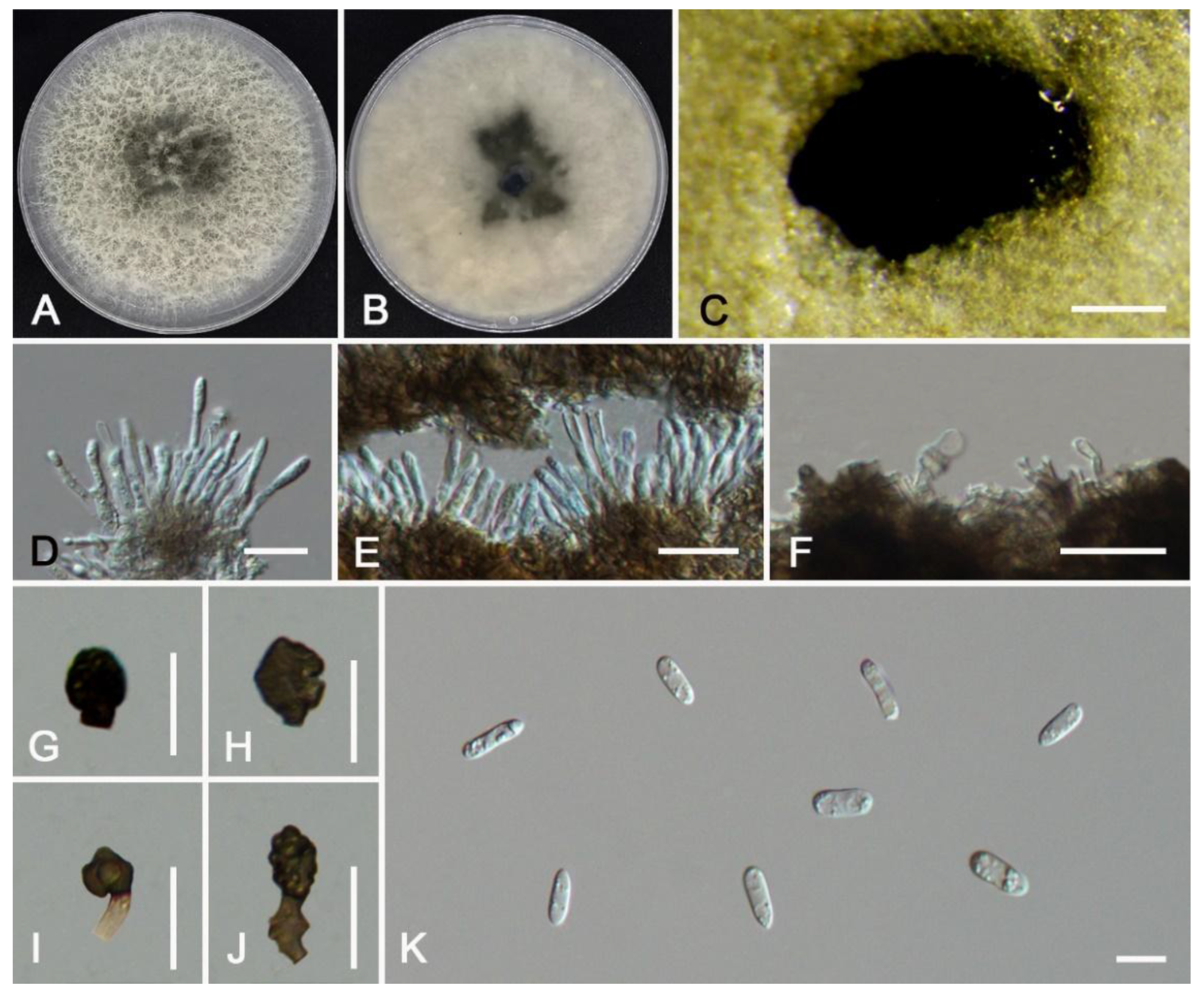
Colletotrichum siamense Prihast., L. Cai & K.D. Hyde., Fungal Diversity 39: 98. 2009. (
Figure 14).
Description: See Zhang et al. [
7].
Material examined: CHINA, Fujian Province, Fuzhou City, Jinan District, National Wetland Park, collected from diseased leaves of Nandina domestica, 119°19′27″ E, 26°5′9″ N, 20 August 2024, Weishan Zhang (living culture LFPR 10011); CHINA, Beijing City, Haidian District, Cuihu National Urban Wetland Park, collected from diseased leaves of Broussonetia papyrifera, 116°11′60″ E, 40°5′24″ N, 13 October 2024, Weishan Zhang (living culture LFPR 10010). CHINA, Guangdong Province, Dongguan City, Xingtang Xinghua Road, collected from diseased leaves of Lagerstroemia speciosa, 113°44′38″ E, 22°59′33″ N, 14 November 2023, Xinlei Fan (HMAS 353995; living culture CFCC 72442); ibid. (living culture CFCC 72443). CHINA, Beijing City, Fengtai District, Lotus Pool Park, collected from diseased branch of Euonymus japonicus, 2 July 2024, 116°18′49″ E, 39°53′27″ N, Xinlei Fan (BJFC-S2404; living culture CFCC 72605); ibid. (BJFC-S2405; living culture CFCC 72606). CHINA, Fujian Province, Fuzhou City, Jinan District, National Wetland Park, collected from diseased leaves of Chamaedorea pinnatifrons, 20 August 2024, 119°19′25″ E, 26°5′6″ N, Weishan Zhang (HMAS 353999; living culture CFCC 72430); ibid. (living culture CFCC 72431).
Notes: In the phylogenetic tree, the eight strains in this study clustered with
C.
siamense (
Figure 5). The eight strains exhibit morphological similarity to
C. siamense. Therefore, these eight isolates were identified as
C.
siamense.
Colletotrichum sojae Damm., & Alizadeh., Studies in Mycology, 92: 35. 2018.
Description: See Sui et al. [
2].
Material examined: CHINA, Beijing City, Haidian District, Cuihu National Urban Wetland Park, collected from diseased leaves of Lonicera maackii, 116°11′59″ E, 40°5′26″ N, 13 October 2024, Weishan Zhang (living culture LFPR 10029); ibid. 116°11′60″ E, 40°5′26″ N, 13 October 2024, Weishan Zhang (living culture LFPR 10030).
Notes: In the phylogenetic tree, the two strains in this study clustered with
C.
sojae (BI/ML = 1.00/100) (
Figure 6). Therefore, these two isolates were identified as
C.
sojae.
Colletotrichum spaethianum (Allesch.) Damm., P.F. Cannon & Crous, Fungal Diversity. 39: 74. 2009.
Description: See Damm et al. [
39].
Material examined: CHINA, Beijing City, Haidian District, Cuihu National Urban Wetland Park, collected from diseased leaves of Hosta plantaginea, 116°11′51″ E, 40°6′5″ N, 18 July 2024, Weishan Zhang (living culture LFPR 10033); ibid. collected from diseased leaves of Malus pumila, 116°11′50″ E, 40°6′5″ N, 18 July 2024, Weishan Zhang (living culture LFPR 10034); ibid. 116°11′50″ E, 40°6′6″ N, 18 July 2024, Weishan Zhang (living culture LFPR 10035).
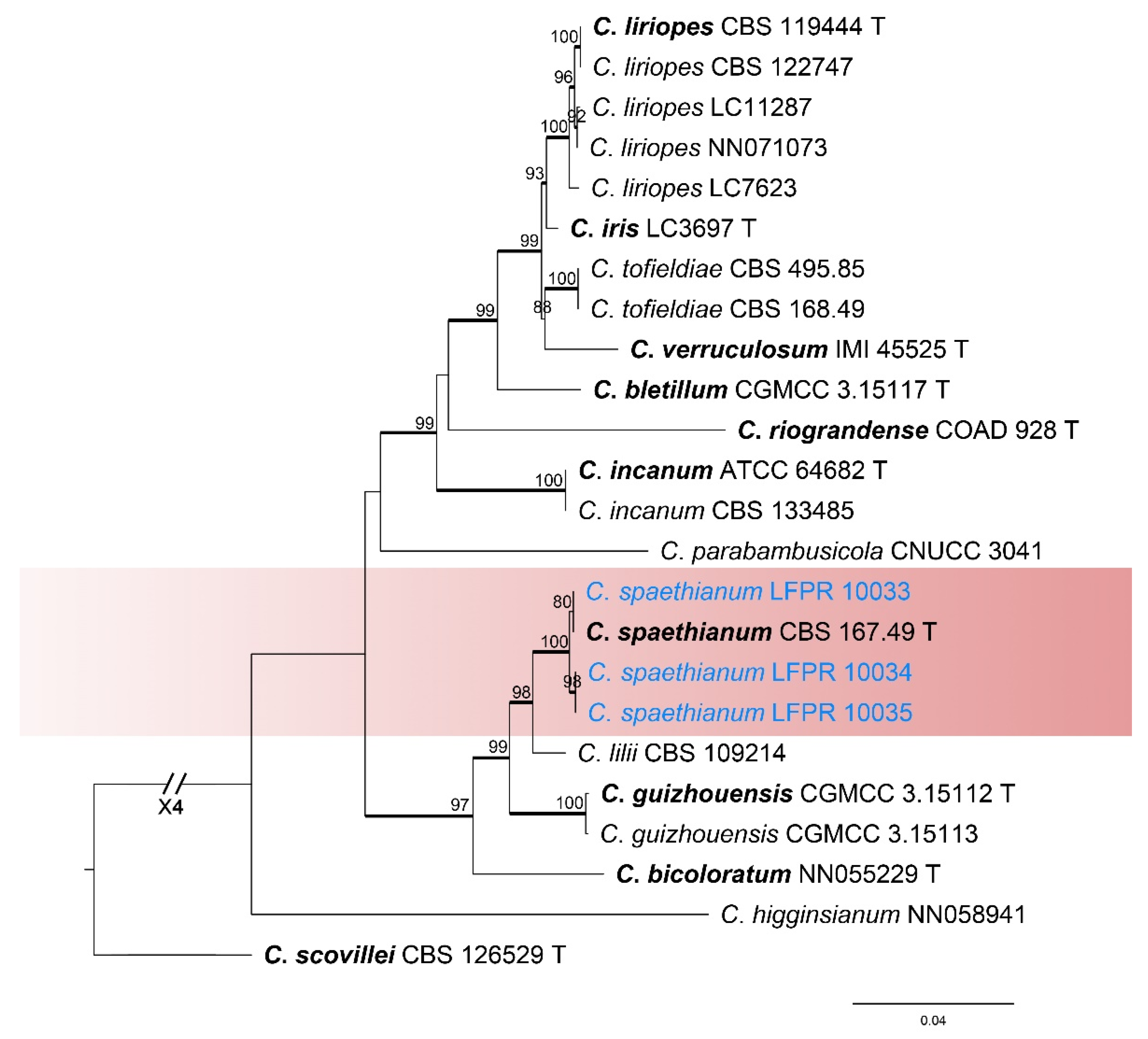
Notes: In the phylogenetic tree, the three strains in this study clustered with
C.
spaethianum (BI/ML = 1.00/100) (
Figure 7). Therefore, these three isolates were identified as
C.
spaethianum.