Case Report

A Case of Canine Polyglandular Deficiency Syndrome with Diabetes Mellitus and Hypoadrenocorticism


1
Earth Animal Hospital, 4-3-43 Hokushin-cho, Kitami, Hokkaido 090-0052, Japan
2
Bihoro Animal Hospital, 51-8 Aoyamakita, Bihoro, Hokkaido 092-0066, Japan
3
Faculty of Veterinary Medicine, Okayama University of Science, 1-3 Ikoinooka, Imabari, Ehime 794-8555, Japan
*
Author to whom correspondence should be addressed.
Vet. Sci. 2021, 8(3), 43; https://doi.org/10.3390/vetsci8030043
Submission received: 13 January 2021 / Revised: 1 March 2021 / Accepted: 5 March 2021 / Published: 7 March 2021

Abstract

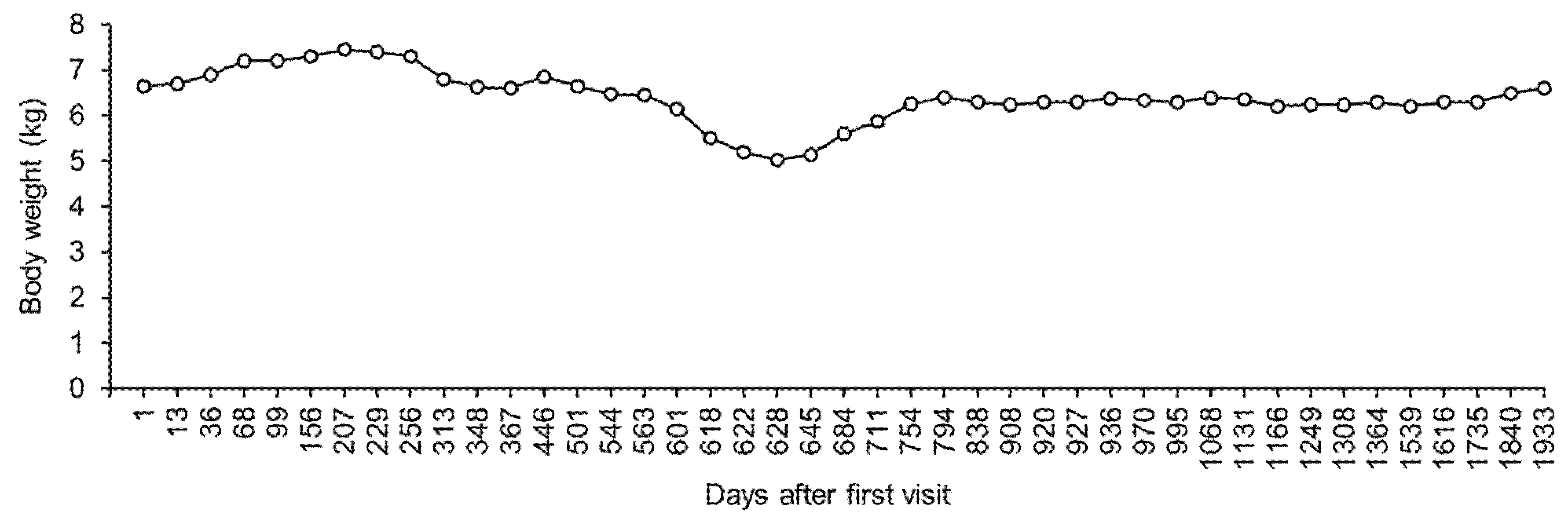
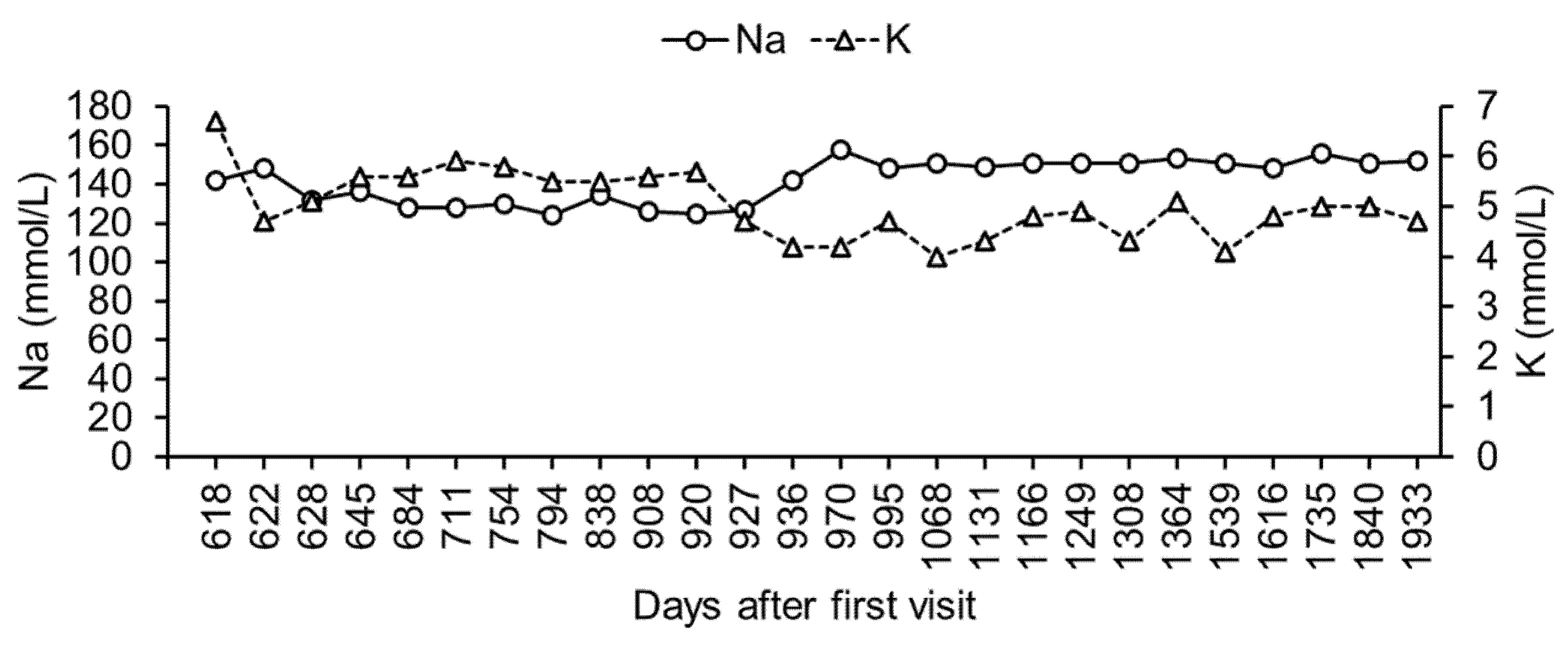
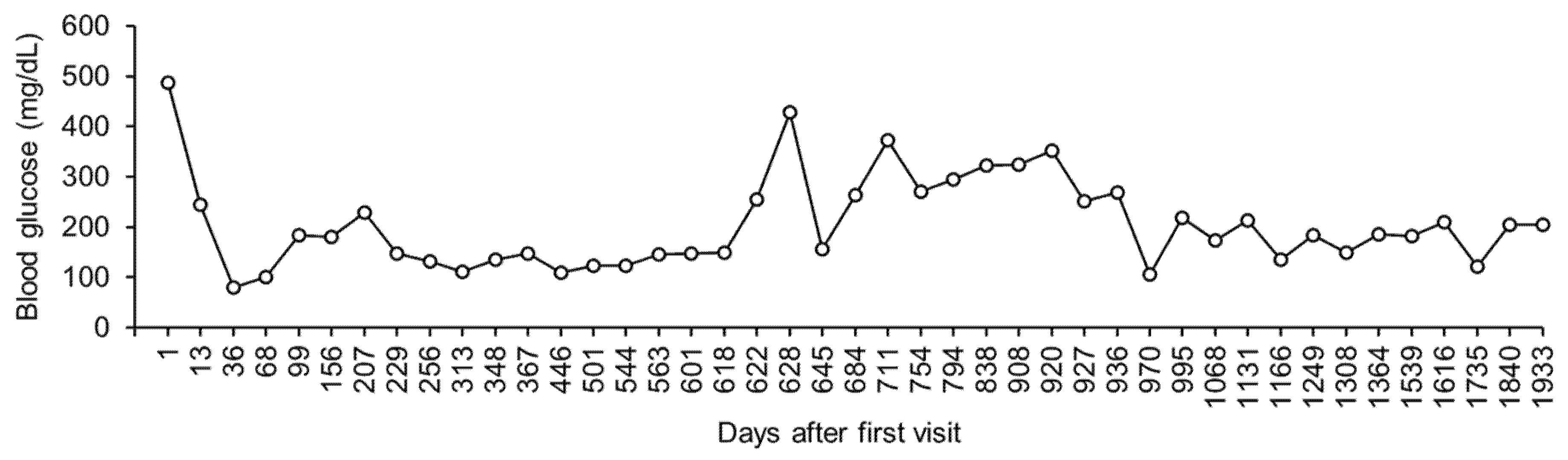
This report describes the first clinical case, to our knowledge, of a dog with polyglandular deficiency syndrome with diabetes mellitus and hypoadrenocorticism. A six-year-old female Cavalier King Charles Spaniel presented with a history of lethargy and appetite loss. The dog was diagnosed with diabetic ketoacidosis based on hyperglycemia and renal glucose and ketone body loss. The dog’s condition improved on intensive treatment of diabetes mellitus; daily subcutaneous insulin detemir injection maintained an appropriate blood glucose level over half a year. However, the dog’s body weight gradually decreased from day 207, and on day 501, it presented with a decreased appetite; the precise cause could not be determined. Based on mild hyponatremia and hyperkalemia, hypoadrenocorticism was suggested; the diagnosis was made using an adrenocorticotropic hormone stimulation test. Daily fludrocortisone with low-dose prednisolone oral administration resulted in poor recovery of the blood chemistry abnormalities; however, monthly desoxycorticosterone pivalate (DOCP) subcutaneous injection with daily low-dose prednisolone oral administration helped in the significant recovery of the abnormalities. Therefore, clinicians should consider the possibility of coexistence of hypoadrenocorticism in dogs with diabetes mellitus presenting with undifferentiated weight loss. Additionally, DOCP (not fludrocortisone) may be useful in treating dogs with diabetes mellitus complicated with hypoadrenocorticism.
Keywords: fludrocortisone; dog; polyglandular deficiency syndrome; diabetes mellitus; hypoadrenocorticism; desoxycorticosterone pivalate fludrocortisone; dog; polyglandular deficiency syndrome; diabetes mellitus; hypoadrenocorticism; desoxycorticosterone pivalate