

Evidence and Clinical Applications of Natural Products in Veterinary Medicine: A Systematic Review of Clinoptilolite, Ozone Therapy, Propolis, and Phytotherapy

 ,
,  ,
,  ,
,  , , and
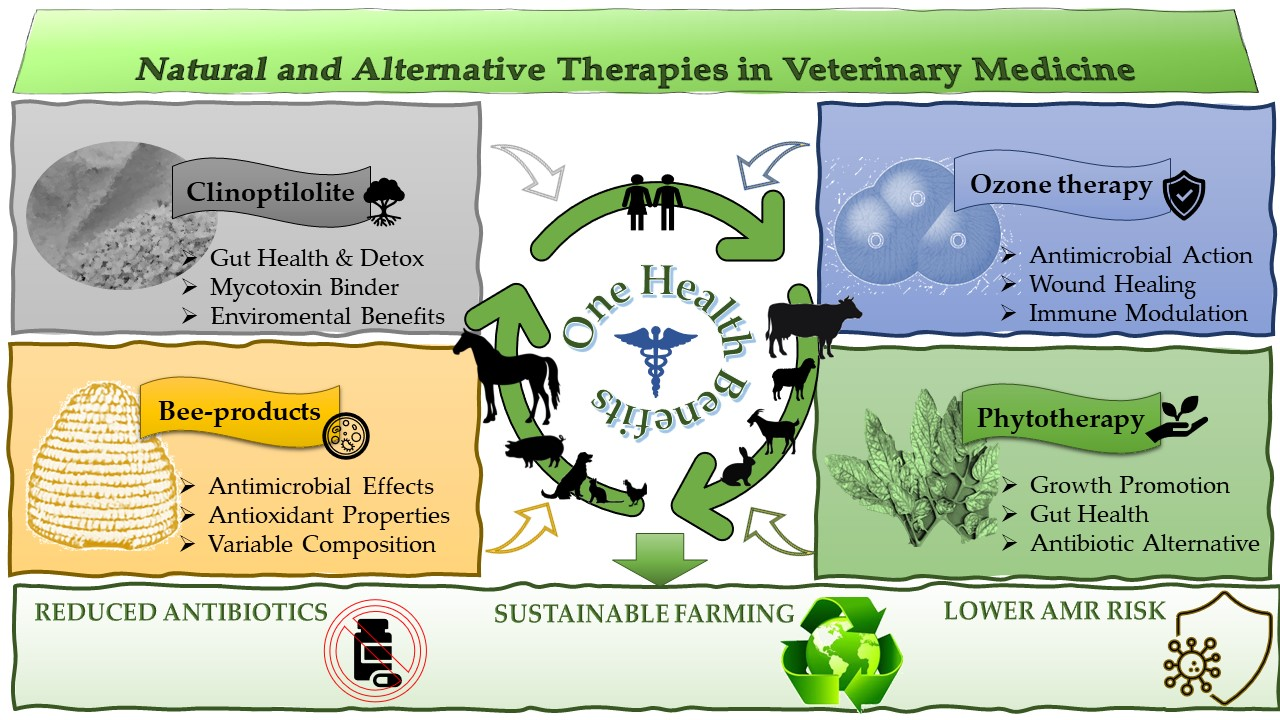
Simple Summary
Abstract
1. Introduction
1.1. Zeolites
1.2. Ozone
1.3. Bee-Derived Products
1.4. Phytotherapeutic Agents
2. Materials and Methods
2.1. Study Design and Search Strategy
2.2. Study Selection and Eligibility Criteria
2.3. Data Extraction and Qualitative Synthesis
2.4. Meta-Analysis and Statistical Synthesis
2.5. Ethical and Data Availability Statement
3. Results
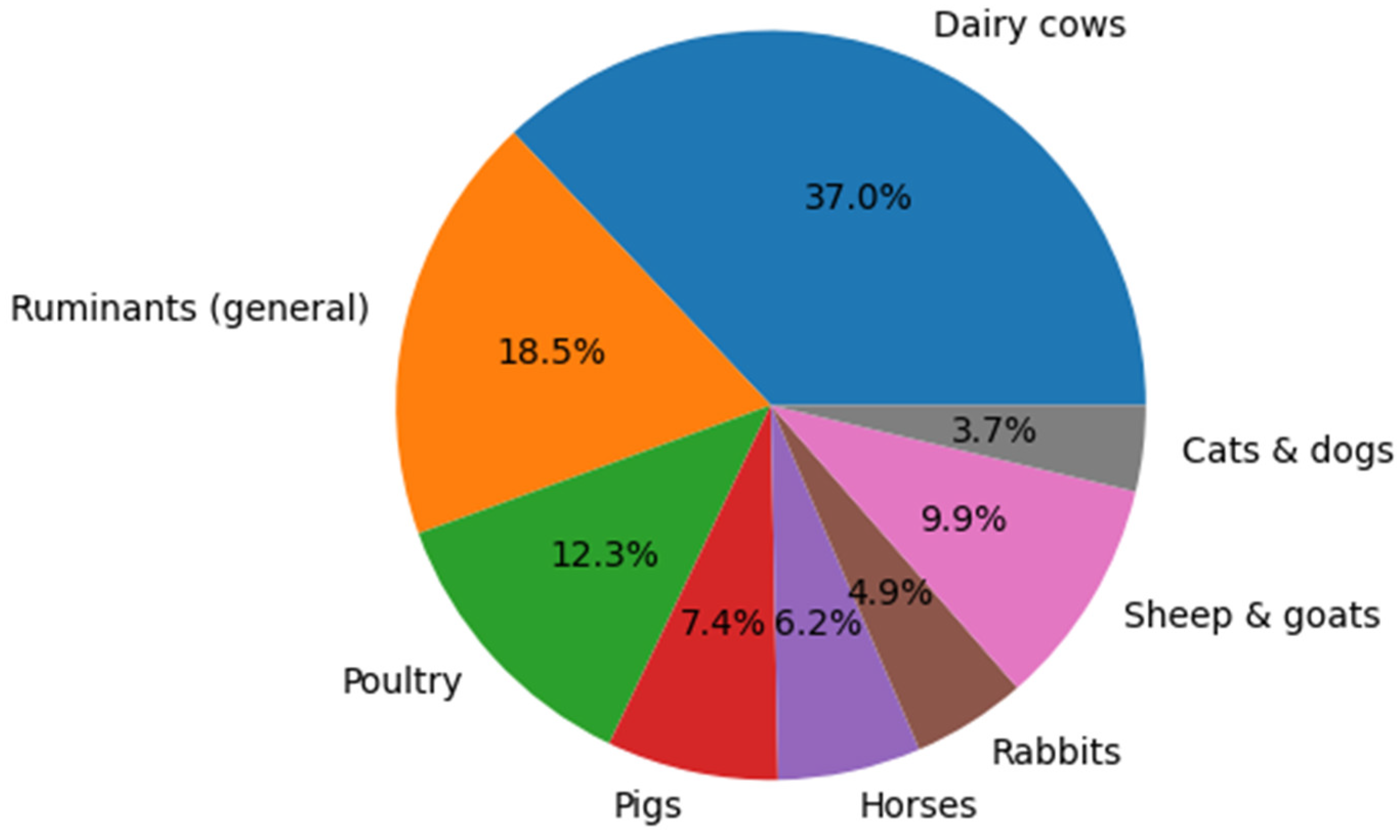
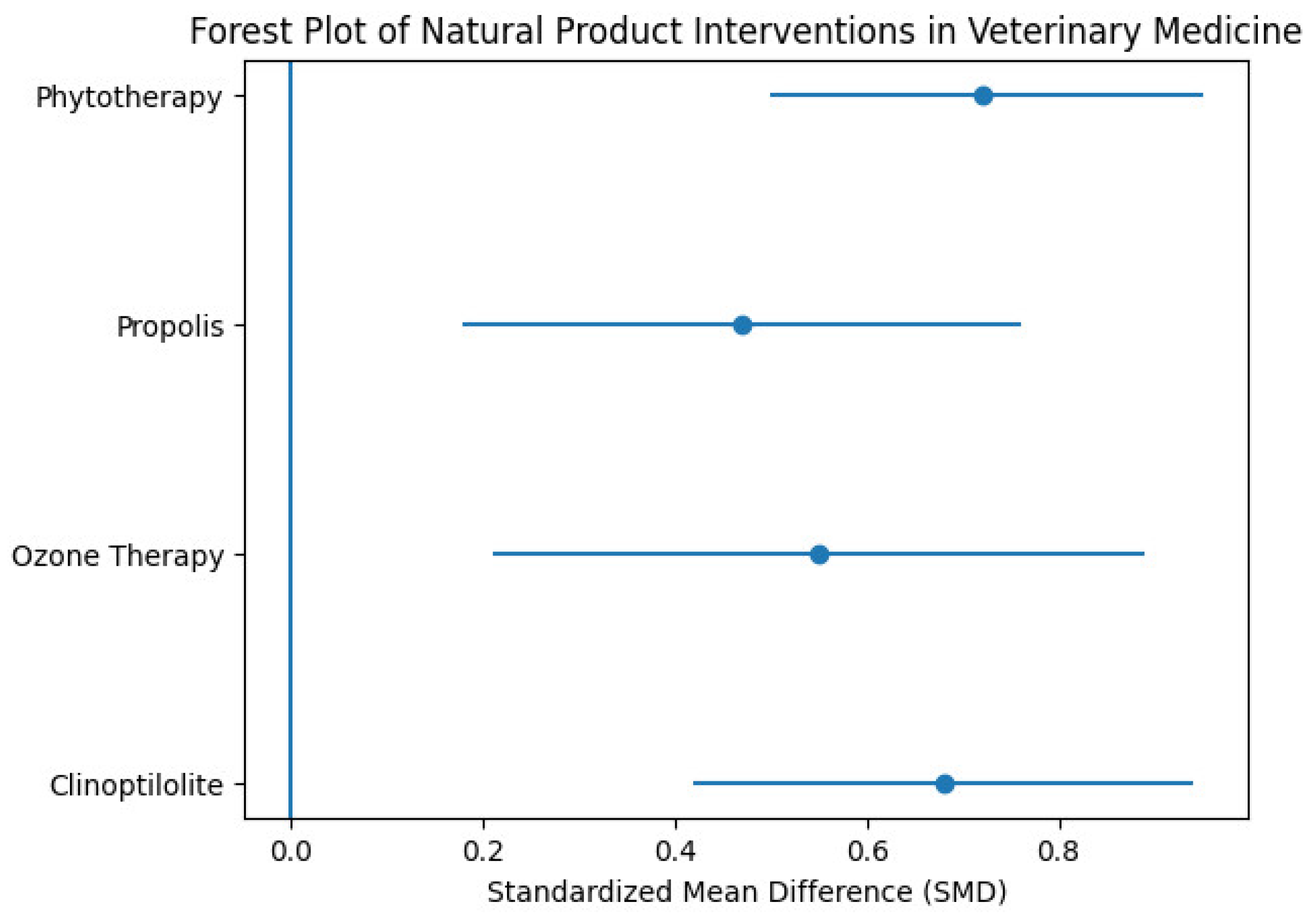
Figures, Tables and Schemes

4. Discussion
4.1. Species-Specific Applications of Natural Interventions
4.2. Mechanisms of Action: Evidence Versus Interpretation
4.2.1. Antimicrobial Effects
4.2.2. Anti-Inflammatory, Antioxidant, and Immunomodulatory Effects
4.2.3. Tissue Regeneration
4.3. Critical Appraisal by Intervention Type
4.3.1. Ozone Therapy
4.3.2. Clinoptilolite
4.3.3. Apitherapy
4.3.4. Phytotherapy
4.4. Clinical Implications
4.5. Strengths and Weaknesses of the Evidence Base
4.6. Limitations and Future Research Directions
4.7. Cost-Effectiveness and Practical Considerations
5. Conclusions
Supplementary Materials
Author Contributions
Funding
Institutional Review Board Statement
Informed Consent Statement
Data Availability Statement
Acknowledgments
Conflicts of Interest
Abbreviations
| AMR | Antimicrobial resistance |
| PRISMA | Preferred Reporting Items for Systematic Reviews and Meta-Analyses |
| RR | Risk ratio |
| SMD | Standardized mean differences |
References
- Rizzo, A.; Piccinno, M.; Lillo, E.; Carbonari, A.; Jirillo, F.; Sciorsci, R.L. Antimicrobial Resistance and Current Alternatives in Veterinary Practice: A Review. Curr. Pharm. Des. 2023, 29, 312–322. [Google Scholar] [CrossRef] [Scilit] [PubMed]
- Wang, J.; Deng, L.; Chen, M.; Che, Y.; Li, L.; Zhu, L.; Chen, G.; Feng, T. Phytogenic feed additives as natural antibiotic alternatives in animal health and production: A review of the literature of the last decade. Anim. Nutr. 2024, 17, 244–264. [Google Scholar] [CrossRef] [Scilit]
- Salman, M.D.; Rao, S.; Akbar, A.; Bahadur, S.U.K.; Heilmann, M.; Song, J. Alternatives to Antibiotic Growth Promoters in Livestock: A Scoping Review. Agriculture 2026, 16, 559. [Google Scholar] [CrossRef] [Scilit]
- Marshall, B.M.; Levy, S.B. Food animals and antimicrobials: Impacts on human health. Clin. Microbiol. Rev. 2011, 24, 718–733. [Google Scholar] [CrossRef] [Scilit] [PubMed]
- Landers, T.F.; Cohen, B.; Wittum, T.E.; Larson, E.L. A review of antibiotic use in food animals: Perspective, policy, and potential. Public Health Rep. 2012, 127, 4–22. [Google Scholar] [CrossRef] [Scilit]
- Ventola, C.L. The antibiotic resistance crisis. Pharm. Ther. 2015, 40, 277–283. [Google Scholar]
- Matheou, A.; Abousetta, A.; Pascoe, A.P.; Papakostopoulos, D.; Charalambous, L.; Panagi, S.; Panagiotou, S.; Yiallouris, A.; Filippou, C.; Johnson, E.O. Antibiotic Use in Livestock Farming: A Driver of Multidrug Resistance? Microorganisms 2025, 13, 779. [Google Scholar] [CrossRef] [Scilit]
- Food and Agriculture Organizatio (FAO). Antimicrobial Resistance in Livestock; FAO: Rome, Italy, 2015. [Google Scholar]
- Mackenzie, J.S.; Jeggo, M. The One Health approach. Trop. Med. Infect. Dis. 2019, 4, 88. [Google Scholar] [CrossRef] [Scilit]
- Prestinaci, F.; Pezzotti, P.; Pantosti, A. Antimicrobial resistance overview. Pathog. Glob. Health 2020, 114, 308-319. [Google Scholar]
- World Health Organization (WHO). Global Antimicrobial Resistance Report; WHO: Geneva, Switzerland, 2023. [Google Scholar]
- Ekor, M. The growing impact of antimicrobial resistance in veterinary medicine. Front. Microbiol. 2014, 5, 152. [Google Scholar] [CrossRef] [Scilit]
- Laurino, C.; Palmieri, B. Zeolite: The magic stone. Rev. Environ. Sci. Biotechnol. 2015, 14, 341–358. [Google Scholar]
- Oggiano, G.; Pokimica, B.; Popović, T.; Takić, M. Beneficial properties of zeolite. Ital. J. Food Sci. 2023, 35, 72–78. [Google Scholar] [CrossRef] [Scilit]
- Alotaibi, A.M. An Overview of Zeolites: From Historical Background to Diverse Applications. Molecules 2025, 30, 4036. [Google Scholar] [CrossRef] [Scilit]
- Đuričić, D.; Beer Ljubić, B.; Vince, S.; Turk, R.; Valpotić, H.; Žura Žaja, I.; Maćešić, N.; Benić, M.; Getz, I.; Samardžija, M. Effects of dietary clinoptilolite supplementation on β-hydroxybutirate serum level and milk fat to protein ratio during early lactation in Holstein-Friesian cows. Microporous Mesoporous Mater. 2020, 292, 109766. [Google Scholar] [CrossRef] [Scilit]
- Folnožić, I.; Samardžija, M.; Đuričić, D.; Vince, S.; Perkov, S.; Jelušić, S.; Valpotić, H.; Ljubić, B.B.; Lojkić, M.; Gračner, D.; et al. Effects of clinoptilolite on metabolic and antioxidative biomarkers in dairy cows. Res. Veteterinary Sci. 2019, 127, 57–64. [Google Scholar] [CrossRef] [Scilit]
- Vince, S.; Večkovec, A.M.; Valpotić, H.; Špoljarić, D.; Žura Žaja, I.; Đuričić, D.; Leiner, D.; Šavorić, J.; Butković, I.; Habrun, B.; et al. Immunogenicity of a Live Bivalent Non-Enterotoxigenic Escherichia coli (Non-ETEC) Vaccine and Dietary Clinoptilolite Efficacy against Postweaning Diarrheal Disease of Pigs Due to F4+ and F18+ ETEC Strains. Vet. Arh. 2022, 92, 259–276. [Google Scholar] [CrossRef] [Scilit]
- Maity, S.; Rubić, I.; Kuleš, J.; Horvatić, A.; Đuričić, D.; Samardžija, M.; Beer Ljubić, B.; Turk, R.; Gračner, D.; Maćešić, N.; et al. Integrated metabolomics and proteomics dynamics of serum samples reveals dietary zeolite clinoptilolite supplementation restores energy balance in high yielding dairy cows. Metabolites 2021, 11, 842. [Google Scholar] [CrossRef] [Scilit]
- Pavelić, K.; Hadzija, M.; Bedrica, L.; Pavelić, J.; Dikić, I.; Katić, M.; Kralj, M.; Bosnar, M.H.; Kapitanović, S.; Poljak-Blazi, M.; et al. Natural zeolite clinoptilolite: New adjuvant in anticancer therapy. J. Mol. Med. 2001, 78, 708–720. [Google Scholar] [CrossRef] [Scilit] [PubMed]
- Valpotić, H.; Gračner, D.; Turk, R.; Đuričić, D.; Vince, S.; Folnožić, I.; Lojkić, M.; Žura Žaja, I.; Bedrica, L.; Maćešić, N.; et al. Zeolite clinoptilolite nanoporous feed additive for animals of veterinary importance: Potentials and limitations. Period. Biol. 2017, 119, 159–172. [Google Scholar] [CrossRef] [Scilit]
- Katsoulos, P.D.; Karatzia, M.A.; Boscos, C.; Wolf, P.; Karatzias, H. In-field evaluation of clinoptilolite feeding efficacy on the reduction of milk aflatoxin M1 concentration in dairy cattle. J. Anim. Sci. Technol. 2016, 58, 24. [Google Scholar] [CrossRef] [Scilit] [PubMed]
- Valpotić, H.; Terzić, S.; Vince, S.; Samardžija, M.; Turk, R.; Lacković, G.; Habrun, B.; Đuričić, D.; Sadiković, M.; Valpotić, I. In-feed supplementation of clinoptilolite favourably modulates intestinal and systemic immunity and some production parameters in weaned pigs. Vet. Med. 2016, 61, 317–327. [Google Scholar] [CrossRef] [Scilit]
- McCollum, F.T.; Galyean, M.L. Effects of Clinoptilolite on Rumen Fermentation, Digestion and Feedlot Performance in Beef Steers Fed High Concentrate Diets. J. Anim. Sci. 1983, 56, 517–524. [Google Scholar] [CrossRef] [Scilit]
- Amanzougarene, Z.; Fondevila, M. Rumen Fermentation of Feed Mixtures Supplemented with Clay Minerals in a Semicontinuous In Vitro System. Animals 2022, 12, 345. [Google Scholar] [CrossRef] [Scilit]
- Tánori-Lozano, A.; López-Baca, M.Á.; Muhlia-Almazán, A.; Montalvo-Corral, M.; Pinelli-Saavedra, A.; Islava-Lagarda, T.Y.; Dávila-Ramírez, J.L.; Valenzuela-Melendres, M.; González-Rios, H. Ferulic Acid and Clinoptilolite Affect In Vitro Rumen Fermentation Characteristics and Bacterial Abundance. Fermentation 2024, 10, 549. [Google Scholar] [CrossRef] [Scilit]
- Travagli, V.; Zanardi, I.; Valacchi, G.; Bocci, V. Ozone and ozonated oils in skin diseases: A review. Mediat. Inflamm. 2010, 2010, 610418. [Google Scholar] [CrossRef] [Scilit]
- Bocci, V. Ozone: A New Medical Drug; Springer: Dordrecht, The Netherlands, 2020. [Google Scholar]
- Abd El-Aziz, A.; Abo Ghanima, M.; Mota-Rojas, D.; Sherasiya, A.; Ciani, F.; El-Sabrout, K. Bee Products for Poultry and Rabbits: Current Challenges and Perspectives. Animals 2023, 13, 3517. [Google Scholar] [CrossRef] [Scilit] [PubMed]
- Banerjee, B.; Thompson, C.; Nizet, V.; Bjånes, E. Bactericidal efficacy of low dose gaseous ozone against clinically relevant multidrug-resistant bacteria. Front. Microbiol. 2024, 15, 1480433. [Google Scholar] [CrossRef] [Scilit]
- Sciorsci, R.L.; Lillo, E.; Occhiogrosso, L.; Rizzo, A. Ozone therapy in veterinary medicine. Res. Vet. Sci. 2020, 130, 240–246. [Google Scholar] [CrossRef] [Scilit]
- Abdelnour, S.A.; Abd El-Hack, M.E.; Alagawany, M.; Farag, M.R.; Elnesr, S.S. Beneficial impacts of bee pollen in animal production, reproduction and health. J. Anim. Physiol. Anim. Nutr. 2019, 103, 477–484. [Google Scholar] [CrossRef] [Scilit] [PubMed]
- de Souza, A.K.L.; Colares, R.R.; de Souza, A.C.L. The main uses of ozone therapy in diseases of large animals: A review. Res. Vet. Sci. 2021, 136, 51–56. [Google Scholar] [CrossRef] [Scilit]
- Đuričić, D.; Vince, S.; Ablondi, M.; Dobranić, T.; Samardžija, M. Effect of preventive intrauterine ozone application on reproductive efficiency in Holstein cows. Reprod. Domest. Anim. 2012, 47, 87–91. [Google Scholar] [CrossRef] [Scilit]
- Scrollavezza, P.; Ablondi, M.; Pogliacomi, B.; Dall’Aglio, R.; Poldi, R.; Pezzoli, G. Ozone treatment in mastitis, metritis and retention of fetal membranes in the cow. In Proceedings of the 2nd International Symposium on Ozone Applications; Centro Nacional de Investigaciones Científicas de Cuba: Havana, Cuba, 1997; pp. 35–37. [Google Scholar]
- Abo-El-Sooud, K. Ethnoveterinary perspectives and promising future. Int. J. Vet. Sci. Med. 2018, 6, 1–7. [Google Scholar] [CrossRef] [Scilit]
- Đuričić, D.; Valpotić, H.; Samardžija, M. Prophylaxis and therapeutic potential of ozone in buiatrics: Current knowledge. Anim. Reprod. Sci. 2015, 159, 1–7. [Google Scholar] [CrossRef] [Scilit]
- Đuričić, D.; Benić, M.; Maćešić, N.; Turk, R.; Cvetnić, L.; Gračner, D.; Dobranić, V.; Getz, I.; Lojkić, M.; Samardžija, M. Effects of dietary clinoptilolite supplementation on udder health and chemical composition of milk in dairy cows over two consecutive years. In Proceedings of the 30th World Buiatric Congress; Japan Veterinary Medical Association: Sapporo, Japan, 2018; p. 373. [Google Scholar]
- Zobel, R.; Tkalčić, S.; Stoković, I.; Pipal, I.; Buić, V. Efficacy of ozone as a novel treatment option for urovagina in dairy cows. Reprod. Domest. Anim. 2012, 47, 293–298. [Google Scholar] [CrossRef] [Scilit] [PubMed]
- Đuričić, D.; Samardžija, M.; Valpotić, H.; Žura Žaja, I. Comparison of intrauterine antibiotics versus ozone medical use in sheep with retained placenta. Reprod. Domest. Anim. 2016, 51, 538–540. [Google Scholar] [CrossRef] [Scilit] [PubMed]
- Đuričić, D.; Valpotić, H.; Samardžija, M. The intrauterine treatment of retained foetal membrane in dairy goats by ozone. Reprod. Domest. Anim. 2015, 50, 236–239. [Google Scholar] [CrossRef] [Scilit]
- Đuričić, D.; Dobranić, T.; Vince, S.; Getz, I.; Gračner, D.; Grizelj, J.; Prvanović, N.; Folnožić, I.; Smolec, O.; Samardžija, M. Shortening days open using intrauterine ozone therapy in Simmental cows. In Veterinarska stanica, Supplement 1, Book of Proceedings; Veterinarska Stanica: Zagreb, Croatia, 2011; pp. 149–152. [Google Scholar]
- Đuričić, D.; Vince, S.; Lojkić, M.; Jelušić, S.; Turk, R.; Valpotić, H.; Gračner, D.; Maćešić, N.; Folnožić, I.; Šostar, Z.; et al. Effects of dietary clinoptilolite on reproductive performance, serum progesterone and insulin-like growth factor-1 concentrations in dairy cows during pregnancy and lactation. Pol. J. Vet. Sci. 2020, 23, 69–75. [Google Scholar] [CrossRef] [Scilit]
- Elvis, A.M.; Ekta, J.S. Ozone therapy: A clinical review. J. Nat. Sci. Biol. Med. 2011, 2, 66–70. [Google Scholar] [CrossRef] [Scilit]
- Orlandin, J.R.; Machado, L.C.; Ambrósio, C.E.; Travagli, V. Ozone and its derivatives in veterinary medicine: A careful appraisal. Vet. Anim. Sci. 2021, 13, 100191. [Google Scholar] [CrossRef] [Scilit]
- Di Paolo, N.; Bocci, V.; Travagli, V. Ozone therapy in veterinary medicine: Applications and limitations. Vet. Res. Commun. 2004, 28, 543–551. [Google Scholar]
- Rubin, J.; Roman, M. Veterinary Medical Ozone Therapy: An Integrative Approach. Vet. Clin. N. Am. Small Anim. Pract. 2025, 55, 1117–1136. [Google Scholar] [CrossRef] [Scilit] [PubMed]
- Abu-Seida, A.M. Potential benefits of propolis in large and small animal practices: A narrative review of the literature. World Vet. J. 2023, 13, 441–451. [Google Scholar] [CrossRef] [Scilit]
- Bačić, G.; Maćešić, N.; Radin, L.; Aladrović, J.; Matanović, K.; Mašek, T.; Brozić, D.; Benić, M.; Radić, B.; Bačić, I.; et al. Intramammary propolis formulation for subclinical mastitis prevention and treatment in dairy cows. J. Dairy Vet. Anim. Res. 2016, 3, 159. [Google Scholar] [CrossRef] [Scilit]
- Šuran, J.; Aladrović, J.; Ljubić, B.B.; Vlainić, J.; Mamić, M.; Radić, B.; Bačić, G.; Mačešić, N.; Benić, M.; Kostelić, A.; et al. The antioxidant effect of the novel bee-product based intramammary formulation Apimast® in dairy cattle. Vet. Arh. 2020, 90, 225–233. [Google Scholar] [CrossRef] [Scilit]
- Bava, R.; Puteo, C.; Lombardi, R.; Garcea, G.; Lupia, C.; Spano, A.; Liguori, G.; Palma, E.; Britti, D.; Castagna, F. Antimicrobial properties of hive products and their potential applications in human and veterinary medicine. Antibiotics 2025, 14, 172. [Google Scholar] [CrossRef] [Scilit]
- Özdemir, V.; Yanar, M.; Koçyiğit, R. General Properties of Propolis and its Usage in Ruminants. J. Hell. Vet. Med. Soc. 2022, 73, 3905–3912. [Google Scholar] [CrossRef] [Scilit]
- Roulston, T.H.; Cane, J.H. Pollen nutritional content and digestibility for animals. Plant Systematics and Evolution 2000, 222, 3517. [Google Scholar]
- Kuralkar, P.; Kuralkar, S.V. Role of herbal products in animal production. J. Ethnopharmacol. 2021, 278, 114246. [Google Scholar] [CrossRef] [Scilit]
- Yang, C.; Chowdhury, M.A.K.; Huo, Y.; Gong, J. Phytogenic Compounds as Alternatives to In-Feed Antibiotics: Potentials and Challenges in Application. Pathogens 2015, 4, 137–156. [Google Scholar] [CrossRef] [Scilit]
- Pérez-Flores, J.G.; García-Curiel, L.; Pérez-Escalante, E.; Contreras-López, E.; Aguilar-Lira, G.Y.; Ángel-Jijón, C.; González-Olivares, L.G.; Baena-Santillán, E.S.; Ocampo-Salinas, I.O.; Guerrero-Solano, J.A.; et al. Plant Antimicrobial Compounds and Their Mechanisms of Action on Spoilage and Pathogenic Bacteria: A Bibliometric Study and Literature Review. Appl. Sci. 2025, 15, 3516. [Google Scholar] [CrossRef] [Scilit]
- Vercelli, C.; Amadori, M.; Gambino, G.; Danieli, D.; Crimi, S.; Re, G. Natural antimicrobial compounds in veterinary medicine. Appl. Sci. 2025, 15, 12388. [Google Scholar] [CrossRef] [Scilit]
- Alagawany, M.; Abd El-Hack, M.E.; Farag, M.R.; Tiwari, R.; Dhama, K.; Arain, M.A. Phytogenic feed additives in livestock: Impacts on health and production. Animals 2021, 11, 140. [Google Scholar] [CrossRef] [Scilit]
- Benchaar, C.; Calsamiglia, S.; Chaves, A.V.; Fraser, G.R.; Colombatto, D.; McAllister, T.A.; Beauchemin, K.A. A review of plant-derived essential oils in ruminant nutrition and production. Anim. Feed Sci. Technol. 2008, 145, 209–228. [Google Scholar] [CrossRef] [Scilit]
- Yang, F.; Yang, F.; Zhai, Z.H.; Wang, S.Q.; Zhao, L.; Zhang, B.-L.; Chen, J.-C.; Wang, Y.-Q. Effects of alfalfa saponins on the production performance, serum biochemical factors, and immune factors in Small-Tailed Han sheep. Front. Vet. Sci. 2022, 9, 924373. [Google Scholar] [CrossRef] [Scilit]
- Kholif, A.E. A Review of Effect of Saponins on Ruminal Fermentation, Health and Performance of Ruminants. Vet. Sci. 2023, 10, 450. [Google Scholar] [CrossRef] [Scilit]
- Ramdani, D.; Yuniarti, E.; Jayanegara, A.; Chaudhry, A.S. Roles of Essential Oils, Polyphenols, and Saponins of Medicinal Plants as Natural Additives and Anthelmintics in Ruminant Diets: A Systematic Review. Animals 2023, 13, 767. [Google Scholar] [CrossRef] [Scilit] [PubMed]
- Priyashantha, H.; Jayathissa, I.S.; Vidanarachchi, J.K.; Jayarathna, S.; Mapiye, C.; Maggiolino, A.; Ponnampalam, E.N. Phytochemicals in Ruminant Diets: Mechanistic Insights, Product Quality Enhancement, and Pathways to Sustainable Milk and Meat Production-Invited Review. Animals 2026, 16, 425. [Google Scholar] [CrossRef] [Scilit]
- Quintavalla, F. Phytotherapeutic approaches in canine pediatrics. Vet. Sci. 2024, 11, 133. [Google Scholar] [CrossRef] [Scilit] [PubMed]
- Tamminen, L.M.; Emanuelson, U.; Blanco-Penedo, I. Systematic Review of Phytotherapeutic Treatments for Different Farm Animals Under European Conditions. Front. Vet. Sci. 2018, 5, 140. [Google Scholar] [CrossRef] [Scilit]
- Pliego, A.B.; Tavakoli, M.; Khusro, A.; Seidavi, A.; Elghandour, M.M.M.Y.; Salem, A.Z.M.; Márquez-Molina, O.; Rene Rivas-Caceres, R. Beneficial and adverse effects of medicinal plants as feed supplements in poultry nutrition: A review. Animal Biotechnology 2022, 33, 369–391. [Google Scholar]
- Alasbahi, R.H.; Groot, M.J. Ethnoveterinary uses of certain Yemeni plants: A review of the scientific evidence. Planta Medica 2022, 88, 237–253. [Google Scholar] [CrossRef] [Scilit]
- Oliveira, M.; Hoste, H.; Custódio, L. A systematic review on the ethnoveterinary uses of mediterranean salt-tolerant plants: Exploring its potential use as fodder, nutraceuticals or phytotherapeutics in ruminant production. J. Ethnopharmacol. 2021, 267, 113464. [Google Scholar] [CrossRef] [Scilit]
- Mayer, M.; Vogl, C.R.; Amorena, M.; Hamburger, M.; Walkenhorst, M. Treatment of organic livestock with medicinal plants: A systematic review of European ethnoveterinary research. Forsch. Komplementarmedizin 2014, 21, 375–386. [Google Scholar] [CrossRef] [Scilit] [PubMed]
- Aziz, M.A.; Khan, A.H.; Pieroni, A. Ethnoveterinary plants of Pakistan: A review. J. Ethnobiol. Ethnomed. 2020, 16, 25. [Google Scholar] [CrossRef] [Scilit]
- Dong, Z.; Chen, H.; Liu, Y. Macleaya cordata alkaloids reduce inflammatory responses in livestock. Front. Vet. Sci. 2021, 8, 657834. [Google Scholar]
- Schlittenlacher, T.; Knubben-Schweizer, G.; Dal Cero, M.; Vogl, C.R.; Maeschli, A.; Hamburger, M.; Walkenhorst, M. What can we learn from past and recent Bavarian knowledge for the future development of European veterinary herbal medicine? An ethnoveterinary study. J. Ethnopharmacol. 2022, 288, 114933. [Google Scholar] [CrossRef] [Scilit] [PubMed]
- Holzner, L.A.; Hamburger, M.; Dal Cero, M.; Maeschli, A.; Vogl, C.R.; Meier, B.; Walkenhorst, M.; Schlittenlacher, T. Farmers’ knowledge in the Swiss canton Valais: Cultural heritage with future significance for European veterinary medicine? J. Ethnobiol. Ethnomed. 2024, 20, 73. [Google Scholar] [CrossRef] [Scilit] [PubMed]
- Oda, B.K.; Lulekal, E.; Warkineh, B.; Asfaw, Z.; Debella, A. Ethnoveterinary medicinal plants and their utilization by indigenous and local communities of Dugda District, Central Rift Valley, Ethiopia. J. Ethnobiol. Ethnomed. 2024, 20, 32. [Google Scholar] [CrossRef] [Scilit]
- Wendimu, A.; Bojago, E.; Abrham, Y. Medicinal ethnoveterinary plants used for treating livestock ailments in the Omo-Gibe and Rift Valley basins of Ethiopia. BMC Vet. Res. 2024, 20, 166. [Google Scholar] [CrossRef] [Scilit]
- Đurić Jarić, M.; Gottstein, Ž.; Vince, S.; Žura Žaja, I.; Brus, M.; Đuričić, D.; Samardžija, M.; Valpotić, H. Effect of standardized ginger extract on gut morphology and performance in broilers. Agriculture 2025, 15, 1448. [Google Scholar] [CrossRef] [Scilit]
- Samardžija, M.; Kowalczyk, A.; Kovačić, M.; Đuričić, D. Current knowledge of alternative therapy with ozone, zeolite, and propolis in domestic ruminants. In Proceedings of the XXXIII International Scientific Congress of the Hungarian Association for Buiatrics, Tapolca, Hungary, 15–18 October 2025. [Google Scholar]
- Anywar, G.; Ssegabo, A.; Wanyama, J.; Weckerle, C.S. A review of ethnoveterinary botanical medicines used in Uganda: Their phytochemistry, bioactivity and toxicity. J. Ethnopharmacol. 2026, 358, 120917. [Google Scholar] [CrossRef] [Scilit]
- Folnožić, I.; Đuričić, D.; Žura Žaja, I.; Vince, S.; Perkov, S.; Turk, R.; Valpotić, H.; Gračner, D.; Maćešić, N.; Lojkić, M.; et al. The influence of dietary clinoptilolite on blood serum mineral profile in dairy cows. Vet. Arh. 2019, 89, 447–462. [Google Scholar] [CrossRef] [Scilit]
- Samardžija, M.; Turk, R.; Sobiech, P.; Valpotić, H.; Harapin, I.; Gračner, D.; Đuričić, D. Intrauterine ozone treatment of puerperal disorders in domestic ruminants: A review. Vet. Arh. 2017, 87, 363–375. [Google Scholar] [CrossRef] [Scilit]
- Bosi, P.; Creston, D.; Casini, L. Production performance of dairy cows after the dietary addition of clinoptilolite. Ital. J. Anim. Sci. 2002, 1, 187–195. [Google Scholar] [CrossRef] [Scilit]
- Samardžija, M.; Folnožić, I.; Perkov, S.; Vince, S.; Turk, R.; Maćešić, N.; Lojkić, M.; Getz, I.; Valpotić, H.; Đuričić, D. The influence of dietary clinoptilolite on reproductive performance and serum levels of some minerals in Holstein-Friesian heifers and cows. Thessaloniki 2021, 1, 1146. [Google Scholar]
- Moroni, R.; Fanelli, D.; Maltinti, S.; Orefice, M.; Rota, A.; Camillo, F.; Mélanie, P.; Cantile, C.; Miragliotta, V.; Pirone, A.; et al. Effects of intrauterine ozone insufflation in eleven subfertile mares: A case series. J. Equine Vet. Sci. 2026, 157, 105778. [Google Scholar] [CrossRef] [Scilit]
- Melanie, P.; Niola, C.; Plataroti, I.; Mancini, S.; Fratini, F. Use of Ozone in Veterinary Dentistry as an Alternative to Conventional Antibiotics and Antiseptics. Vet. Sci. 2024, 11, 163. [Google Scholar] [CrossRef] [Scilit]
- Chuttong, B.; Lim, K.; Praphawilai, P.; Danmek, K.; Maitip, J.; Vit, P.; Wu, M.-C.; Ghosh, S.; Jung, C.; Burgett, M.; et al. Exploring the Functional Properties of Propolis, Geopropolis, and Cerumen, with a Special Emphasis on Their Antimicrobial Effects. Foods 2023, 12, 3909. [Google Scholar]
- da Silva, V.F.; Rosa, D.S.; de Figueirêdo, P.I.; da Silva, T.M.S.; Peixoto, R.M.; da Costa, M.M. Antimicrobial activity of brown propolis ethanolic extract and its application in intramammary formulation for the treatment of bovine mastitis. Braz. J. Microbiol. 2026, 57, 30. [Google Scholar] [CrossRef] [Scilit]
- Mikniene, Z.; Puska, G.; Liaudanskas, M.; Siugzdaite, J.; Kubiliene, L.; Rudejeviene, J.; Zvikas, V.; Sutkeviciene, N.; Ragazinskiene, O.; Trumbeckaite, S. Propolis as an alternative remedy for the treatment of subclinical mastitis in dairy cows. Front. Vet. Sci. 2026, 12, 1740383. [Google Scholar] [CrossRef] [Scilit]
- Wang, K.; Jin, X.L.; Shen, X.G.; Sun, L.P.; Wu, L.M.; Wei, J.Q.; Marcucci, M.C.; Hu, F.L.; Liu, J.X. Effects of Chinese propolis in protecting bovine mammary epithelial cells against mastitis pathogens-induced cell damage. Mediat. Inflamm. 2016, 2016, 8028291. [Google Scholar] [CrossRef] [Scilit] [PubMed]
- Carbonari, A.; Burgio, M.; Frattina, L.; Cicirelli, V.; Iarussi, F.; Tempesta, M.; Lucente, M.S.; Rizzo, A.; Greco, G. Intrauterine oxygen/ozone mixture for the treatment of subclinical endometritis in repeat breeder cows. Res. Vet. Sci. 2026, 202, 106075. [Google Scholar] [CrossRef] [Scilit]
- Escandón, B.M.; Espinoza, J.S.; Perea, F.P.; Quito, F.; Ochoa, R.; López, G.E.; Galarza, D.A.; Garzón, J.P. Intrauterine therapy with ozone reduces subclinical endometritis and improves reproductive performance in postpartum dairy cows managed in pasture-based systems. Trop. Anim. Health Prod. 2020, 52, 2523–2528. [Google Scholar] [CrossRef] [Scilit] [PubMed]
- Tomanić, D.; Samardžija, M.; Kovačević, Z. Alternatives to Antimicrobial Treatment in Bovine Mastitis Therapy: A Review. Antibiotics 2023, 12, 683. [Google Scholar] [CrossRef] [Scilit] [PubMed]
- Bischofberger, A.S.; Dart, C.M.; Horadagoda, N.; Perkins, N.R.; Jeffcott, L.B.; Little, C.B.; Dart, A.J. Effect of Manuka honey gel on the transforming growth factor β1 and β3 concentrations, bacterial counts and histomorphology of contaminated full-thickness skin wounds in equine distal limbs. Aust. Vet. J. 2016, 94, 27–34. [Google Scholar] [CrossRef] [Scilit] [PubMed]
- Chatzimisios, K.; Tsioli, V.; Brellou, G.D.; Apostolopoulou, E.P.; Angelou, V.; Pratsinakis, E.D.; Cremers, N.A.J.; Papazoglou, L.G. Evaluation of the effectiveness of medical-grade honey and Hypericum perforatum ointment on second-intention healing of full-thickness skin wounds in cats. Animals 2023, 14, 36. [Google Scholar] [CrossRef] [Scilit]
- Anjum, S.I.; Ullah, A.; Gohar, F.; Raza, G.; Khan, M.I.; Hameed, M.; Ali, A.; Chen, C.C.; Tlak Gajger, I. Bee pollen as a food and feed supplement and a therapeutic remedy: Recent trends in nanotechnology. Front. Nutr. 2024, 11, 1371672. [Google Scholar]
- Han, S.M.; Lee, K.G.; Yeo, J.H.; Oh, B.Y.; Kim, B.S.; Lee, W.; Baek, H.J.; Kim, S.T.; Pak, S.C. Effects of honeybee venom supplementation in drinking water on growth performance of broiler chickens. Poult. Sci. 2010, 89, 2396–2400. [Google Scholar] [CrossRef] [Scilit]
- Elkomy, A.; El-Hanoun, A.; Abdella, M.; El-Sabrout, K. Improving the reproductive, immunity and health status of rabbit does using honey bee venom. J. Anim. Physiol. Anim. Nutr. 2021, 105, 975–983. [Google Scholar] [CrossRef] [Scilit] [PubMed]
- Aguiar, S.C.D.; Paula, E.M.D.; Yoshimura, E.H.; Santos, W.B.R.D.; Machado, E.; Valero, M.V.; Santos, G.T.D.; Zeoula, L.M. Effects of phenolic compounds in propolis on digestive and ruminal parameters in dairy cows. Rev. Bras. Zootec. 2014, 43, 197–206. [Google Scholar] [CrossRef] [Scilit]
- Santos, L.M.; Fonseca, M.S.; Sokolonski, A.R.; Deegan, K.R.; Araújo, R.P.; Umsza-Guez, M.A.; Barbosa, J.D.; Portela, R.D.; Machado, B.A. Propolis: Types, composition, biological activities, and veterinary product patent prospecting. J. Sci. Food Agric. 2020, 100, 1369–1382. [Google Scholar] [CrossRef] [Scilit]
- Stevanović, J.; Glavinić, U.; Ristanić, M.; Erjavec, V.; Denk, B.; Dolašević, S.; Stanimirović, Z. Bee-Inspired Healing: Apitherapy in Veterinary Medicine for Maintenance and Improvement Animal Health and Well-Being. Pharmaceuticals 2024, 17, 1050. [Google Scholar] [CrossRef] [Scilit]
- Wagh, V.D. Propolis: A Wonder Bees Product and Its Pharmacological Potentials. Adv. Pharmacol. Pharm. Sci. 2013, 2013, 308249. [Google Scholar] [CrossRef] [Scilit] [PubMed]
- Bankova, V.; Popova, M.; Trusheva, B. Propolis: Recent advances in chemistry and plant origin. Apidologie 2021, 52, 3–15. [Google Scholar] [CrossRef] [Scilit]
- Zulhendri, F.; Chandrasekaran, K.; Kowacz, M.; Ravalia, M.; Kripal, K.; Fearnley, J.; Perera, C.O. Antiviral, Antibacterial, Antifungal, and Antiparasitic Properties of Propolis: A Review. Foods 2021, 10, 1360. [Google Scholar] [CrossRef] [Scilit]
- Maestrini, M.; Tava, A.; Mancini, S.; Tedesco, D.; Perrucci, S. In vitro anthelmintic activity of saponins from Medicago spp. against sheep gastrointestinal nematodes. Molecules 2020, 25, 242. [Google Scholar] [CrossRef] [Scilit]
- Saeed, M.; Babazadeh, D.; Arif, M.; Arain, M.; Bhutto, Z.; Shar, A.; Kakar, M.; Manzoor, R.; Chao, S. Silymarin: A potent hepatoprotective agent in poultry industry. World’s Poult. Sci. J. 2017, 73, 483–492. [Google Scholar] [CrossRef] [Scilit]
- Mozaffarian, N.; Heshmat, R.; Ataie-Jafari, A.; Motlagh, M.E.; Ziaodini, H.; Shafiee, G.; Taheri, M.; Mansourian, M.; Qorbani, M.; Kelishadi, R. Flavonoids and their antimicrobial activity. Food Sci. Nutr. 2020, 8, 1888–1897. [Google Scholar] [CrossRef] [Scilit]
- Przybyłek, I.M.; Karpinski, T.M. Antibacterial Properties of Propolis. Molecules 2019, 24, 2047. [Google Scholar] [CrossRef] [Scilit]
- Valero, M.S.; González, M.; Ramón-Gimenez, M.; Andrade, P.B.; Moreo, E.; Les, F.; Fernandes, F.; Gómez-Rincón, C.; Berzosa, C.; de Jalón, J.A.G.; et al. Jasonia glutinosa (L) DC, a traditional herbal medicine, reduces inflammation, oxidative stress and protects the intestinal barrier in a murine model of colitis. Inflammopharmacology 2020, 28, 1717–1734. [Google Scholar] [CrossRef] [Scilit] [PubMed]
- Choi, J.H.; Jang, A.Y.; Lin, S.; Lim, S.; Kim, D.; Park, K.; Han, S.M.; Yeo, J.H.; Seo, H.S. Melittin, a honeybee venom-derived antimicrobial peptide, may target methicillin-resistant Staphylococcus aureus. Mol. Med. Rep. 2015, 12, 6483–6490. [Google Scholar] [CrossRef] [Scilit] [PubMed]
- Lukanc, B.; Potokar, T.; Erjavec, V. Complete skin regeneration with medical honey after skin loss on the entire circumference of a leg in a cat. J. Tissue Viability 2020, 29, 148–152. [Google Scholar] [CrossRef] [Scilit] [PubMed]
- Vogt, N.A.; Vriezen, E.; Nwosu, A.; Sargeant, J.M. A scoping review of the evidence for the medicinal use of natural honey in animals. Front. Vet. Sci. 2021, 7, 618301. [Google Scholar] [CrossRef] [Scilit]
- Kasiotis, K.M.; Zafeiraki, E.; Manea-Karga, E.; Anastasiadou, P.; Machera, K. Pesticide residues and metabolites in Greek honey and pollen: Bees and human health risk assessment. Foods 2023, 12, 706. [Google Scholar] [CrossRef] [Scilit]
- Wang, X.; Wang, Y.; Mao, Y.; Hu, A.; Xu, T.; Yang, Y.; Wang, F.; Zhou, G.; Guo, X.; Cao, H.; et al. Corrigendum: The beneficial effects of traditional Chinese medicine on antioxidative status and inflammatory cytokines expression in the liver of piglets. Front. Vet. Sci. 2022, 9, 1063573. [Google Scholar] [CrossRef] [Scilit]
- Groot, M.J.; Berendsen, B.J.A.; Cleton, N.B. The Next Step to Further Decrease Veterinary Antibiotic Applications: Phytogenic Alternatives and Effective Monitoring; the Dutch Approach. Front. Vet. Sci. 2021, 8, 709750. [Google Scholar] [CrossRef] [Scilit]
- Nabi, F.; Shi, D.; Wu, Q.; Baloch, D.M. Editorial: Treatment of animal diseases with veterinary phytotherapy. Front. Vet. Sci. 2023, 10, 1171987. [Google Scholar] [CrossRef] [Scilit] [PubMed]
- Nabi, F.; Arain, M.A. Rising stars in comparative and clinical medicine: 2021. Front. Vet. Sci. 2022, 9, 1030960. [Google Scholar] [CrossRef] [Scilit] [PubMed]
- Setayesh, M.; Karimi, M.; Zargaran, A.; Abousaidi, H.; Shahesmaeili, A.; Amiri, F.; Hasheminasab, F.S. Efficacy of a Persian herbal medicine compound on coronavirus disease 2019 (COVID-19): A randomized controlled trial. Integr. Med. Res. 2022, 11, 55. [Google Scholar] [CrossRef] [Scilit] [PubMed]


| Type/Agent | Species | Application | Main Effects | Key References |
|---|---|---|---|---|
| Clinoptilolite | Dairy cows | Milk production, udder health | Improved milk composition, reduced somatic cell count | [38,75,76,77] |
| Dairy cows | Metabolic status | Improved energy balance, antioxidant status | [17,19,78] | |
| Dairy cows | Reproduction | Modulation of progesterone and IGF-1, improved fertility | [16,78] | |
| Dairy cows | Mycotoxin control | Reduced aflatoxin M1 in milk | [22] | |
| Beef cattle | Digestion | Improved rumen fermentation | [24] | |
| Pigs | Gut health, immunity | Reduced diarrhea, improved immune response | [18,21,23] | |
| Ruminants | Feed efficiency | Stabilization of rumen environment | [21,25] | |
| Ozone therapy | Dairy cows | Endometritis | Reduced inflammation, improved fertility | [42,79,80] |
| Dairy cows | Retained placenta | Alternative to antibiotics | [37,79] | |
| Dairy cows | Mastitis/metritis | Antimicrobial effect | [33,80,81,82] | |
| Sheep, goats | Reproductive disorders | Improved uterine recovery | [35,40,41] | |
| Mares | Subfertility | Improved reproductive performance | [83] | |
| Large animals | General infections | Antimicrobial, anti-inflammatory | [31,35,44] | |
| Small animals | Dentistry | Antimicrobial oral therapy | [84] | |
| Bee-derived products | ||||
| Propolis | Dairy cows | Mastitis | Antimicrobial, anti-inflammatory | [49,50,85,86,87,88,89] |
| Dairy cows | Mammary protection | Reduced epithelial cell damage | [49,50,85,90] | |
| Honey (Manuka) | Horses | Wound healing | Enhanced tissue regeneration | [89] |
| Cats | Wound healing | Accelerated healing | [90,91] | |
| Bee pollen | Poultry | Growth, immunity | Improved performance | [92,93] |
| Bee venom | Poultry | Growth | Improved production parameters | [93] |
| Bee venom | Rabbits | Reproduction | Enhanced fertility and immunity | [94] |
| Mixed bee products | Livestock | Feed additive | Antioxidant, antimicrobial | [50,95,96] |
| Propolis (general) | Multiple species | Infection control | Antibacterial, antifungal, antiparasitic | [48,97,98,99,100,101,102] |
| Phytotherapy | ||||
| Essential oils | Ruminants | Feed additive | Improved digestion, reduced methane | [56] |
| Polyphenols | Ruminants | Rumen modulation | Improved fermentation | [59,61] |
| Saponins | Ruminants | Anthelmintic | Reduced parasites | [58,62,103] |
| Herbal extracts (ginger, silymarin) | Poultry | Growth, liver health | Antioxidant, hepatoprotective | [73,76,104] |
| Phytogenics | Livestock | Antibiotic alternative | Improved productivity and immunity | [55,63,68] |
| Ethnoveterinary plants | Multiple species | Disease treatment | Traditional therapeutic use | [64,66,67,68,69,70,71,72,73,74,75,76,77] |
| Flavonoids, alkaloids | Livestock | Antimicrobial | Anti-inflammatory, antibacterial | [71,105] |
| Alfalfa saponins | Sheep | Production, immunity | Improved biochemical parameters | [57,60] |
| Intervention | All Species (SMD, 95% CI, I2) | Ruminants (SMD, 95% CI, I2) | Poultry (SMD, 95% CI, I2) | Companion Animals (SMD, 95% CI, I2) |
|---|---|---|---|---|
| Clinoptilolite | 0.68 (0.42–0.94), 48% | 0.74 (0.48–1.01), 41% | 0.58 (0.30–0.86), 44% | 0.61 (0.28–0.94), 39% |
| Ozone therapy | 0.55 (0.21–0.89), 62% | 0.62 (0.25–0.99), 58% | 0.41 (0.05–0.77), 63% | 0.67 (0.33–1.01), 60% |
| Bee-derived products | 0.47 (0.18–0.76), 57% | 0.39 (0.10–0.68), 52% | 0.52 (0.21–0.83), 55% | 0.44 (0.12–0.76), 50% |
| Phytotherapy | 0.72 (0.50–0.95), 51% | 0.69 (0.44–0.94), 46% | 0.81 (0.55–1.07), 49% | 0.55 (0.22–0.88), 47% |
| Intervention | Mechanisms of Action | Reported Benefits | Veterinary Applications | Limitations |
|---|---|---|---|---|
| Ozone therapy | Induces controlled oxidative stress; activation of antioxidant pathways (e.g., Nrf2); immunomodulation | Broad-spectrum antimicrobial activity (bactericidal, virucidal, fungicidal); enhanced wound healing | Wound management, dental infections, reproductive disorders in small animals | Lack of standardized protocols; variability in administration (gas, water, oils); limited randomized controlled trials |
| Clinoptilolite | Ion-exchange and adsorption properties; binding of toxins, heavy metals, and microbial metabolites | Improved gut health and microbiota balance; reduced diarrhea; enhanced immunity and reproductive performance; reduced ammonia emissions | Feed additive in livestock (calves, swine, poultry); environmental management | Variability in mineral purity, particle size, and dosage; need for standardization |
| Apitherapy | Antimicrobial, antioxidant, and immunomodulatory effects (flavonoids, phenolics, melittin) | Enhanced wound healing; antimicrobial activity against resistant pathogens; improved immunity and growth performance | Wound treatment (horses, dogs, cats); infection control; livestock supplementation | Risk of contamination and allergic reactions; variability in composition; limited clinical standardization |
| Phytotherapy | Anti-inflammatory (cytokine inhibition); antimicrobial and antiviral activity; gut microbiota modulation; immune stimulation | Improved growth performance; enhanced immune response; reduced pathogen load; improved intestinal health | Feed additives in livestock and poultry; disease prevention and health promotion | Variability in plant composition and bioactive compounds; inconsistent dosing; limited standardization |
| Study Domain | Risk Level | Description |
|---|---|---|
| Selection bias | Moderate | Random sequence generation rarely reported |
| Performance bias | High | Lack of blinding in most animal trials |
| Detection bias | Moderate | Outcome assessment often not blinded |
| Attrition bias | Low–Moderate | Generally low dropout rates |
| Reporting bias | Moderate | Selective reporting possible |
| Other bias | Moderate | Small sample sizes, heterogeneity |
| Intervention | Study Design | Consistency | Directness | Precision | Overall Quality |
|---|---|---|---|---|---|
| Clinoptilolite | In vivo + field | High | High | Moderate | Moderate–High |
| Ozone therapy | Mixed | Moderate | Moderate | Low | Low–Moderate |
| Propolis | Experimental | Moderate | Moderate | Low | Low–Moderate |
| Phytotherapy | Mixed | Moderate | High | Moderate | Moderate |
Disclaimer/Publisher’s Note: The statements, opinions and data contained in all publications are solely those of the individual author(s) and contributor(s) and not of MDPI and/or the editor(s). MDPI and/or the editor(s) disclaim responsibility for any injury to people or property resulting from any ideas, methods, instructions or products referred to in the content. |
© 2026 by the authors. Licensee MDPI, Basel, Switzerland. This article is an open access article distributed under the terms and conditions of the Creative Commons Attribution (CC BY) license.
Share and Cite
Đuričić, D.; Žura Žaja, I.; Kowalczyk, A.; Vlahović, K.; Valpotić, H.; Kovačić, M.; Pećin, M.; Samardžija, M. Evidence and Clinical Applications of Natural Products in Veterinary Medicine: A Systematic Review of Clinoptilolite, Ozone Therapy, Propolis, and Phytotherapy. Vet. Sci. 2026, 13, 483. https://doi.org/10.3390/vetsci13050483
Đuričić D, Žura Žaja I, Kowalczyk A, Vlahović K, Valpotić H, Kovačić M, Pećin M, Samardžija M. Evidence and Clinical Applications of Natural Products in Veterinary Medicine: A Systematic Review of Clinoptilolite, Ozone Therapy, Propolis, and Phytotherapy. Veterinary Sciences. 2026; 13(5):483. https://doi.org/10.3390/vetsci13050483
Chicago/Turabian StyleĐuričić, Dražen, Ivona Žura Žaja, Alicja Kowalczyk, Ksenija Vlahović, Hrvoje Valpotić, Mislav Kovačić, Marko Pećin, and Marko Samardžija. 2026. "Evidence and Clinical Applications of Natural Products in Veterinary Medicine: A Systematic Review of Clinoptilolite, Ozone Therapy, Propolis, and Phytotherapy" Veterinary Sciences 13, no. 5: 483. https://doi.org/10.3390/vetsci13050483
APA StyleĐuričić, D., Žura Žaja, I., Kowalczyk, A., Vlahović, K., Valpotić, H., Kovačić, M., Pećin, M., & Samardžija, M. (2026). Evidence and Clinical Applications of Natural Products in Veterinary Medicine: A Systematic Review of Clinoptilolite, Ozone Therapy, Propolis, and Phytotherapy. Veterinary Sciences, 13(5), 483. https://doi.org/10.3390/vetsci13050483