


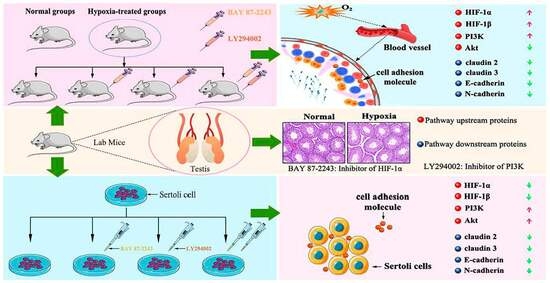
The HIF-Mediated PI3K-AKT Signaling Pathway Is a Key Signaling Pathway Triggering Testicular Spermatogenic Disorders in Yaks with Cryptorchidism

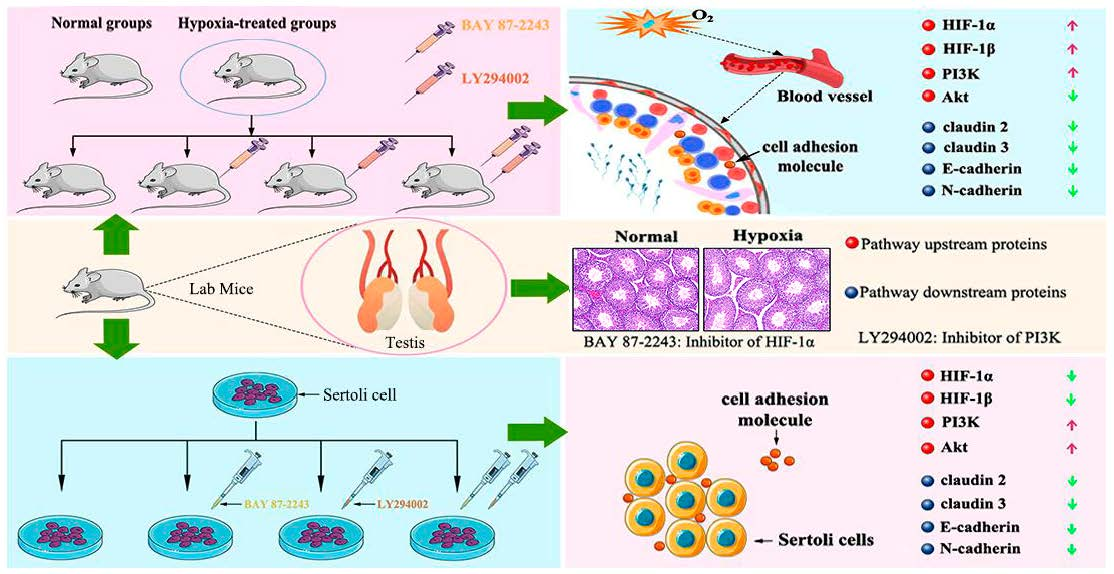
Simple Summary
Abstract
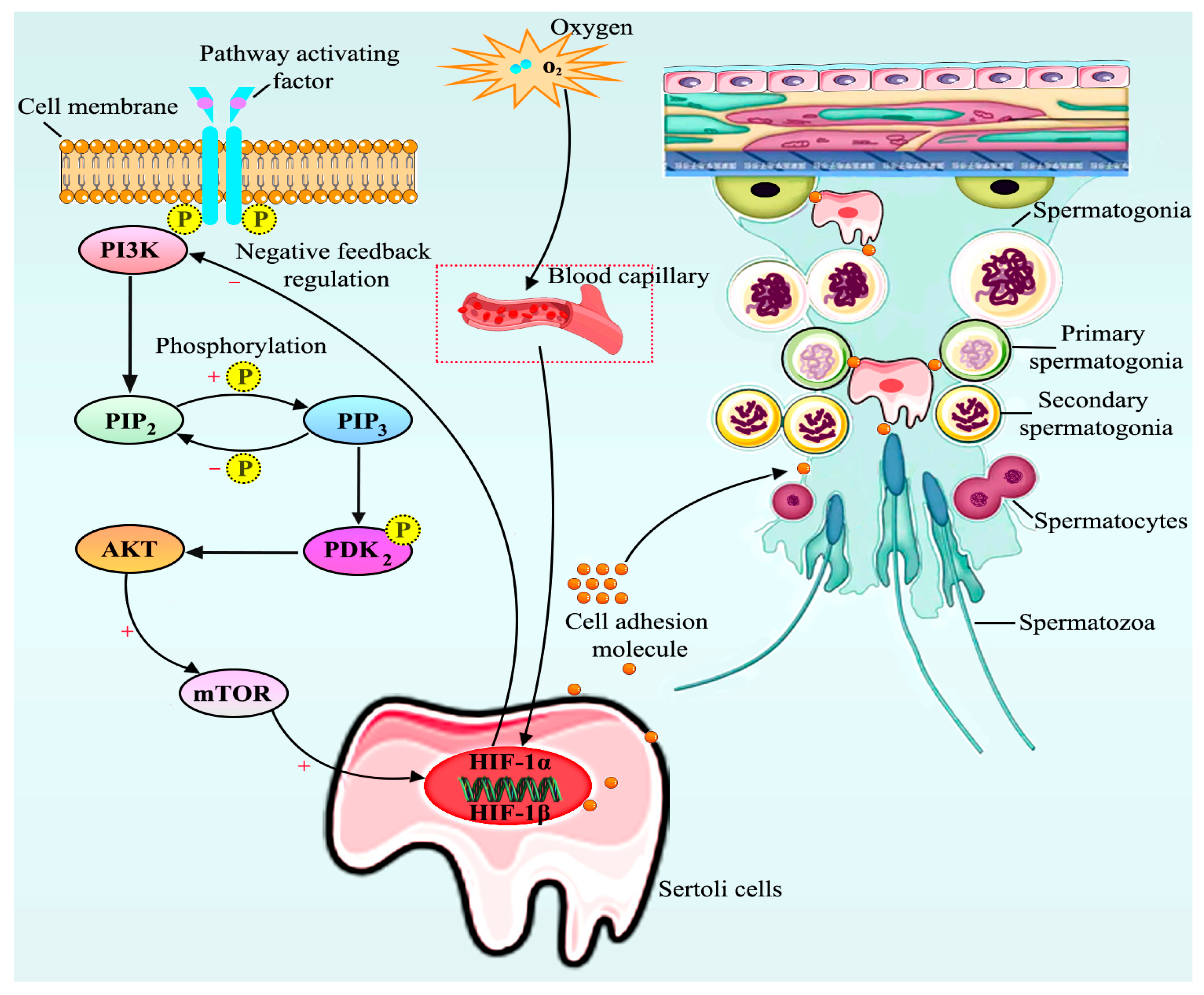
1. Introduction
2. Materials and Methods
2.1. Animals and Ethics
2.2. RNA Extraction and Transcriptomics
2.3. Enzyme-Linked Immunosorbent Assay (ELISA)
2.4. Immunofluorescence and Immunohistochemistry

| Antibody Name | Manufacturer | Product Code | Dilution Ratio |
|---|---|---|---|
| HIF-1α | Affinity Biosciences, USA | BF8002 | WB:1:400 IF/IH:1:500 |
| HIF-1β | Affinity Biosciences, USA | DF6154 | WB:1:400 IF/IH:1:500 |
| PI3K | Affinity Biosciences, USA | AF6241 | WB:1:400 IF/IH:1:500 |
| AKT | Affinity Biosciences, USA | AF6261 | WB:1:400 IF/IH:1:500 |
| Claudin 2 | Beijing Bioss Biotechnology Co., Ltd. | bs-23849R | WB:1:400 IF/IH:1:500 |
| Claudin 3 | Beijing Bioss Biotechnology Co., Ltd. | bs-2788R | WB:1:400 IF/IH:1:500 |
| E-cadherin | Beijing Bioss Biotechnology Co., Ltd. | bs-10009R | WB:1:400 IF/IH:1:500 |
| N-cadherin | Beijing Bioss Biotechnology Co., Ltd. | bsm-34125M | WB:1:400 IF/IH:1:500 |
| SHBG | Abcam, Britain | ab126617 | IF:1:500 |
| SOX9 | Abcam, Britain | ab185966 | IF:1:500 |
| β-actin | Beijing Bioss Biotechnology Co., Ltd. | bs-0061R | WB:1:800 |
2.5. Cell Culture and Treatment
2.6. Total RNA Extraction and qPCR
2.7. Total Protein Extraction and Western Blot
2.8. Data Processing
3. Results
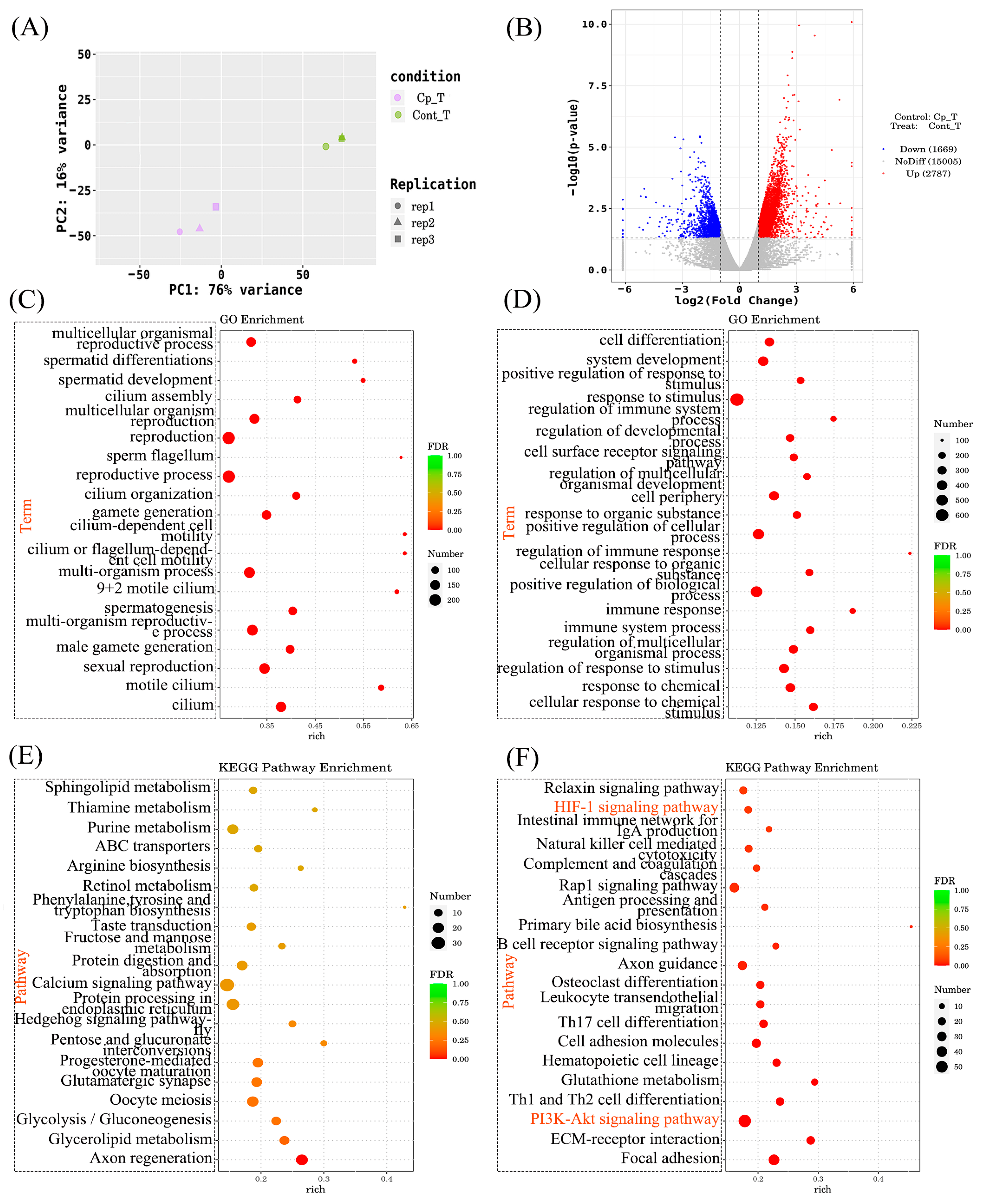
3.1. DEG Enrichment Analysis
3.2. Expression of Key Proteins in the PI3K-AKT/HIF-1α Signaling Pathway in Yak Testes
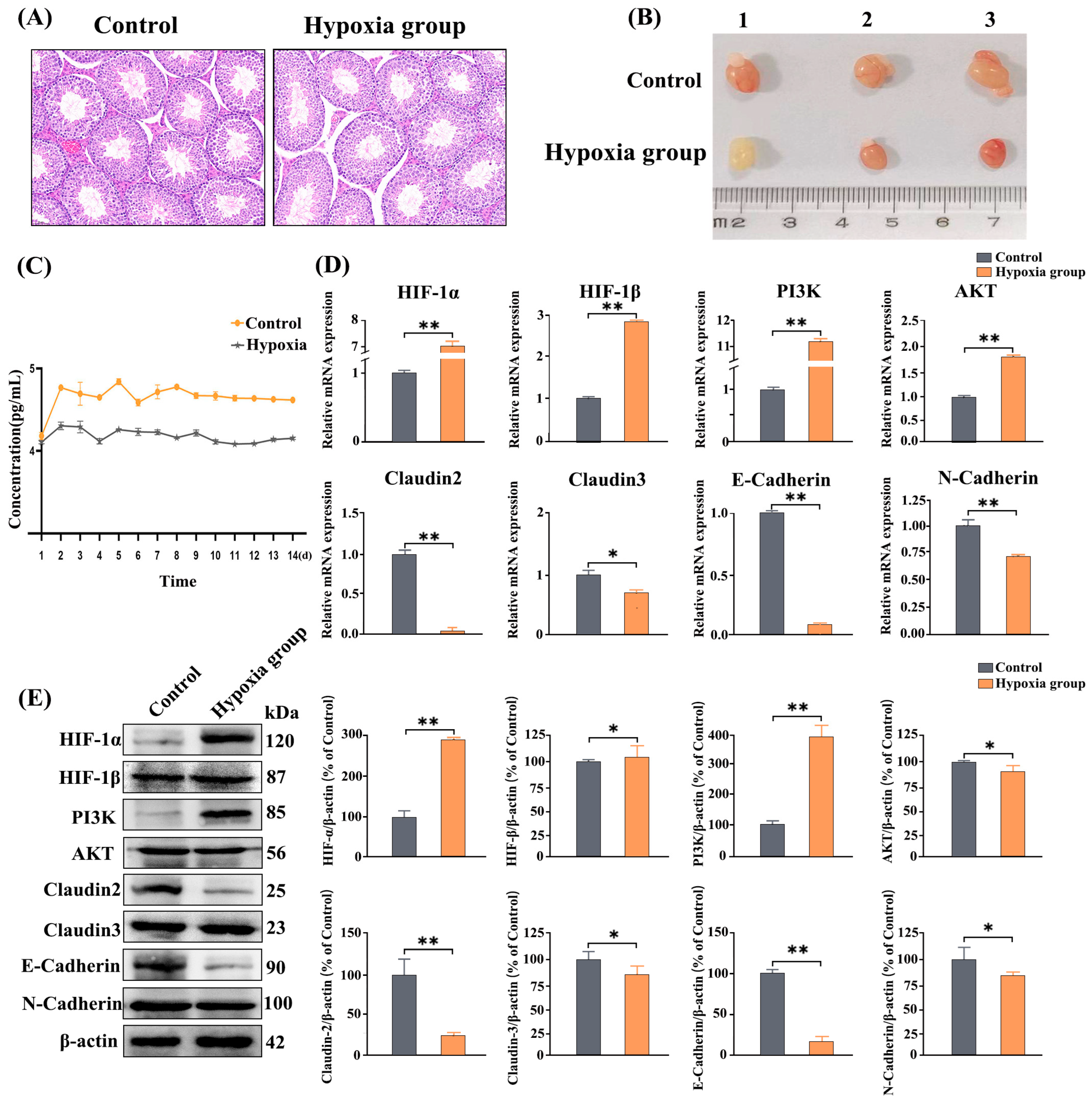
3.3. Histological Changes in Mouse Testes After Hypoxia Treatment
3.4. Determination of the HIF-1α Protein Content in the Blood of Mice
3.5. The Expression of Hypoxia Pathway-Associated Genes and Proteins
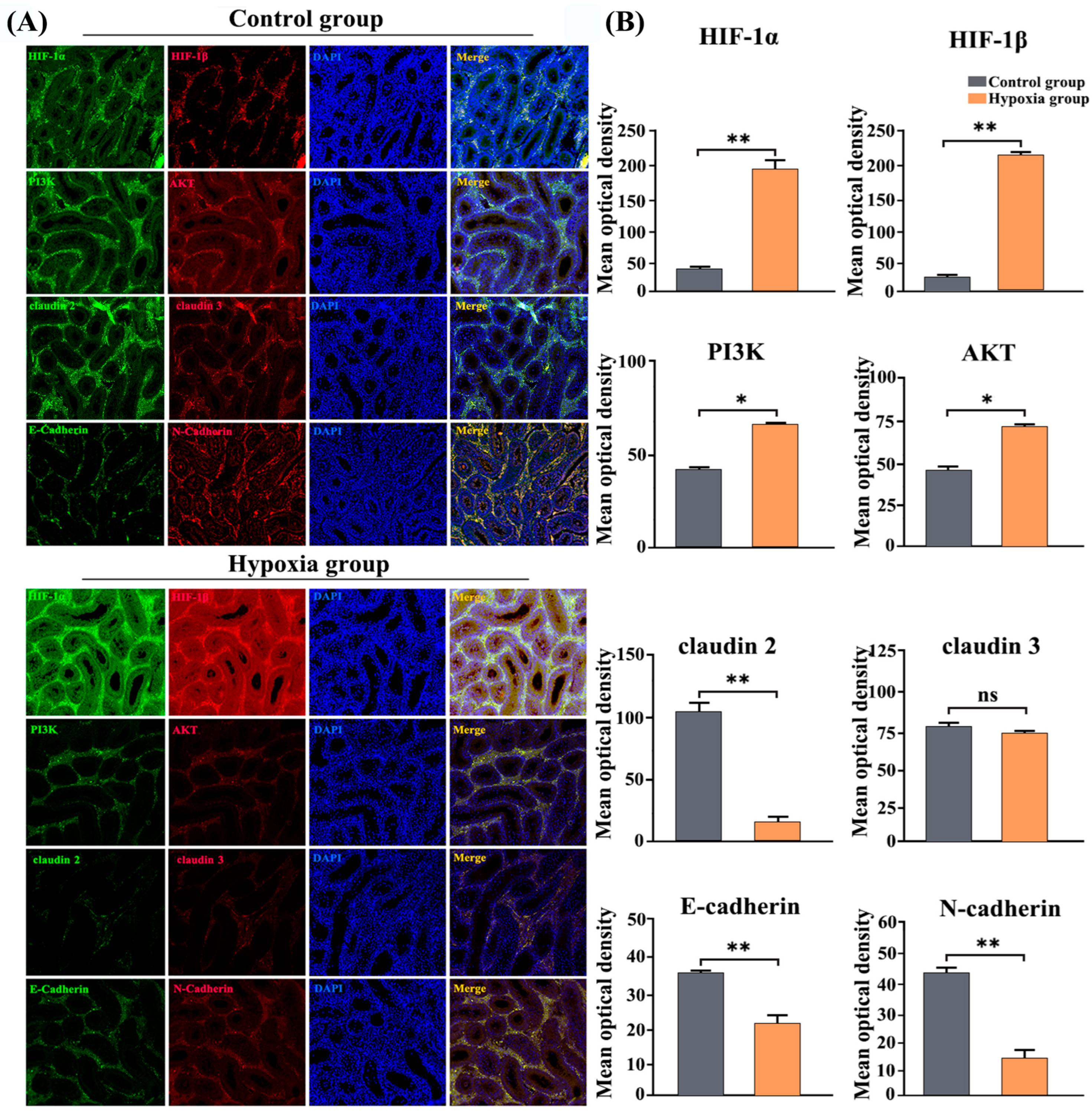
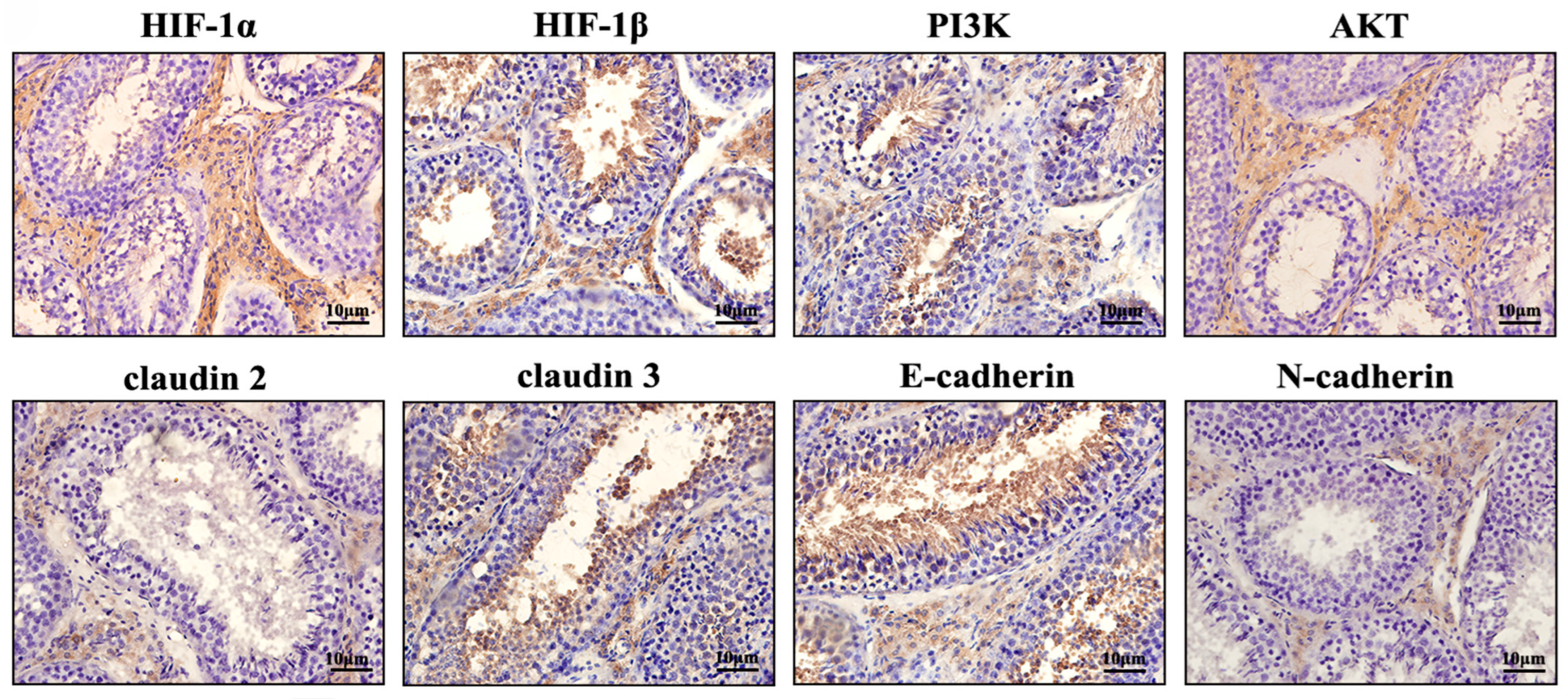
3.6. Immunofluorescence Analysis of Key Proteins in PI3K-AKT/HIF-1α Signaling Pathway in Mouse Testes
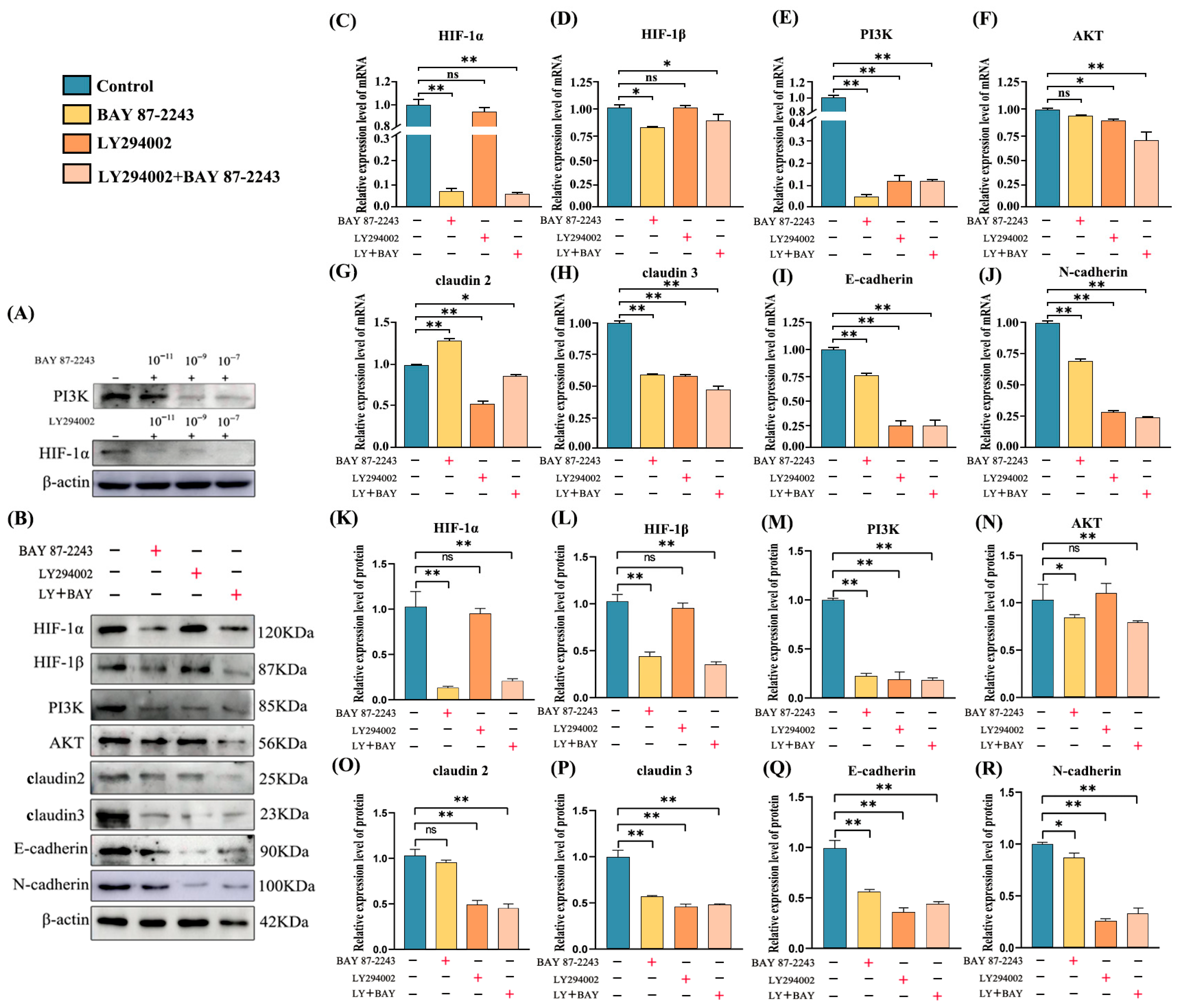
3.7. The Effect of Inhibition of Key Proteins in the PI3K-AKT/HIF-1α Signaling Pathway on the Expression of Testicular Adhesion Molecules

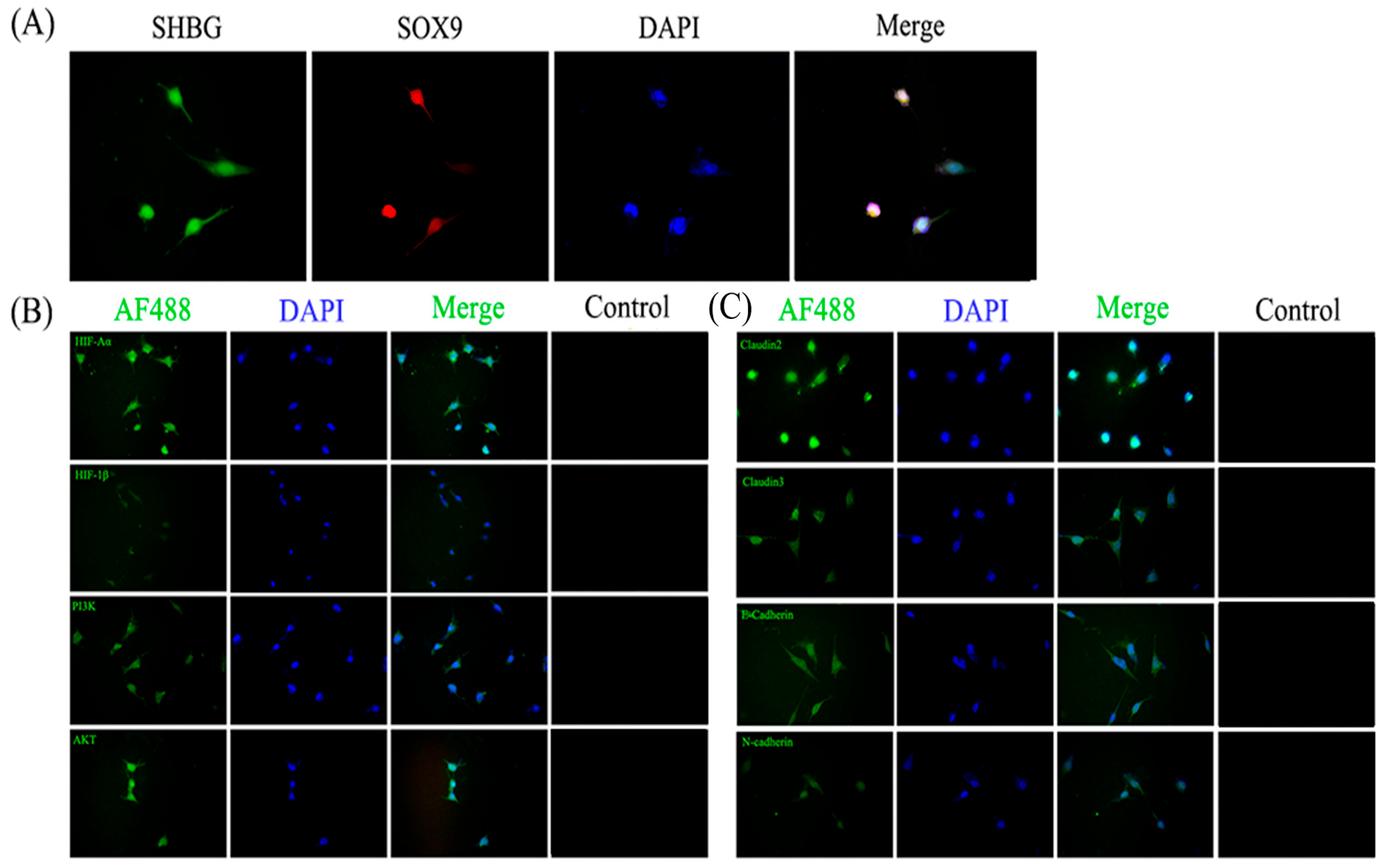
3.8. Culture and Identification of Mouse Sertoli Cells In Vitro
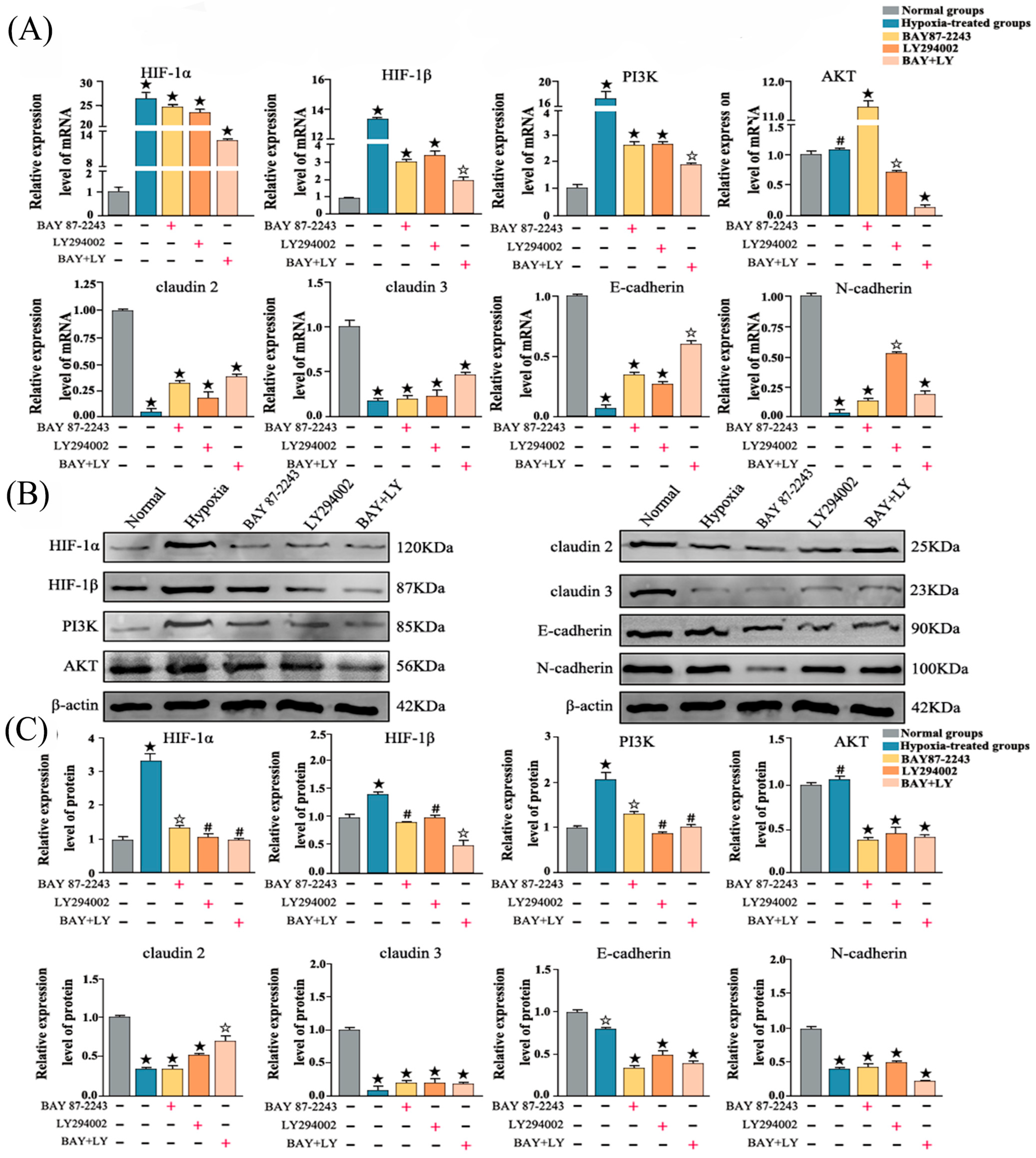
3.9. The Expression of HIF-1α/PI3K-AKT Signaling Pathway-Associated Proteins Among Mouse Sertoli Cells
3.10. The Effect of the Inhibition of Key Proteins in the PI3K-AKT/HIF-1α Signaling Pathway on Sertoli Cell Adhesion
4. Discussion
5. Conclusions
Supplementary Materials
Author Contributions
Funding
Institutional Review Board Statement
Informed Consent Statement
Data Availability Statement
Acknowledgments
Conflicts of Interest
Abbreviations
| HIF-1α | Hypoxia-inducible factor |
| PI3K | Phosphatidylinositol 3-kinase |
| AKT | Protein kinase B |
| DEGs | Differentially expressed genes |
| CC | Cellular component |
| MF | Molecular function |
| BP | Biological process |
| GSEA | Gene Set Enrichment Analysis |
| GO | Gene ontology |
| KEGG | Kyoto Encyclopedia of Genes and Genomes |
| GSEA | Genome enrichment analysis |
| EMT | Epithelial–mesenchymal transition |
References
- Akiyama, S.K. Integrins in Cell Adhesion and Signaling. Hum. Cell 1996, 9, 181–186. [Google Scholar]
- Khalili, A.A.; Ahmad, M.R. A Review of Cell Adhesion Studies for Biomedical and Biological Applications. Int. J. Mol. Sci. 2015, 16, 18149–18184. [Google Scholar] [CrossRef] [Scilit]
- Samanta, D.; Almo, S.C. Nectin Family of Cell-Adhesion Molecules: Structural and Molecular Aspects of Function and Specificity. Cell. Mol. Life Sci. 2015, 72, 645–658. [Google Scholar] [CrossRef] [Scilit]
- Takeichi, M. The Cadherins: Cell-Cell Adhesion Molecules Controlling Animal Morphogenesis. Development 1988, 102, 639–655. [Google Scholar] [CrossRef] [Scilit] [PubMed]
- Maître, J.-L.; Heisenberg, C.-P. Three Functions of Cadherins in Cell Adhesion. Curr. Biol. 2013, 23, R626–R633. [Google Scholar] [CrossRef] [Scilit] [PubMed]
- Díaz, M.E.; González, L.; Miquet, J.G.; Martínez, C.S.; Sotelo, A.I.; Bartke, A.; Turyn, D. Growth Hormone Modulation of EGF-Induced PI3K-Akt Pathway in Mice Liver. Cell. Signal. 2012, 24, 514–523. [Google Scholar] [CrossRef] [Scilit]
- Sharma, A.; Mehan, S. Targeting PI3K-AKT/mTOR Signaling in the Prevention of Autism. Neurochem. Int. 2021, 147, 105067. [Google Scholar] [CrossRef] [Scilit]
- Shu, X.; Zhan, P.-P.; Sun, L.-X.; Yu, L.; Liu, J.; Sun, L.-C.; Yang, Z.-H.; Ran, Y.-L.; Sun, Y.-M. BCAT1 Activates PI3K/AKT/mTOR Pathway and Contributes to the Angiogenesis and Tumorigenicity of Gastric Cancer. Front. Cell Dev. Biol. 2021, 9, 659260. [Google Scholar] [CrossRef] [Scilit] [PubMed]
- Dou, R.; Qian, J.; Wu, W.; Zhang, Y.; Yuan, Y.; Guo, M.; Wei, R.; Yang, S.; Jurczyszyn, A.; Janz, S.; et al. Suppression of Steroid 5α-Reductase Type I Promotes Cellular Apoptosis and Autophagy via PI3K/Akt/mTOR Pathway in Multiple Myeloma. Cell Death Dis. 2021, 12, 206. [Google Scholar] [CrossRef] [Scilit]
- Wei, S.; Han, C.; He, F.; Song, Q.; Kang, B.; Liu, H.; Li, L.; Xu, H.; Zeng, X. Inhibition of PI3K-Akt-mTOR Signal Pathway Dismissed the Stimulation of Glucose on Goose Liver Cell Growth. J. Anim. Physiol. Anim. Nutr. 2017, 101, e133–e143. [Google Scholar] [CrossRef] [Scilit]
- Lee, S.-H.; Jee, J.-G.; Bae, J.-S.; Liu, K.-H.; Lee, Y.M. A Group of Novel HIF-1α Inhibitors, Glyceollins, Blocks HIF-1α Synthesis and Decreases Its Stability via Inhibition of the PI3K/AKT/mTOR Pathway and Hsp90 Binding. J. Cell. Physiol. 2015, 230, 853–862. [Google Scholar] [CrossRef] [Scilit] [PubMed]
- Liang, C.; Yin, S.; Yang, Z.; Wang, Y.; Hu, J.; Gao, G. HIF-1α Regulates the Proliferation and Differentiation of Mouse Cranial Base Sphenoid-Occipital Synchondrosis Chondrocytes via PI3K/Akt Signaling. Sci. Rep. 2025, 15, 31240. [Google Scholar] [CrossRef] [Scilit] [PubMed]
- Kilic-Eren, M.; Boylu, T.; Tabor, V. Targeting PI3K/Akt Represses Hypoxia Inducible Factor-1α Activation and Sensitizes Rhabdomyosarcoma and Ewing’s Sarcoma Cells for Apoptosis. Cancer Cell Int. 2013, 13, 36. [Google Scholar] [CrossRef] [Scilit]
- Wang, Z.; Jiang, L.; Wang, J.; Chai, Z.; Xiong, W. Morphine Promotes Angiogenesis by Activating PI3K/Akt/HIF-1α Pathway and Upregulating VEGF in Hepatocellular Carcinoma. J. Gastrointest. Oncol. 2021, 12, 1761–1772. [Google Scholar] [CrossRef] [Scilit]
- Ren, H.; Liu, M.; Jihu, Y.; Zeng, H.; Yao, C.; Yan, H. Hypoxia Activates the PI3K/AKT/HIF-1α Pathway to Promote the Anti-Inflammatory Effect of Adipose Mesenchymal Stem Cells. Acta Histochem. 2023, 125, 152042. [Google Scholar] [CrossRef] [Scilit]
- Liu, X.; Liu, L.; Chen, K.; Sun, L.; Li, W.; Zhang, S. Huaier Shows Anti-Cancer Activities by Inhibition of Cell Growth, Migration and Energy Metabolism in Lung Cancer through PI3K/AKT/HIF-1α Pathway. J. Cell. Mol. Med. 2021, 25, 2228–2237. [Google Scholar] [CrossRef] [Scilit]
- Wan, R.; Zhao, Z.; Zhao, M.; Hu, K.; Zhai, J.; Yu, H.; Wei, Q. Characteristics of Pulmonary Microvascular Structure in Postnatal Yaks. Sci. Rep. 2021, 11, 18265. [Google Scholar] [CrossRef] [Scilit]
- Prakash, B.S.; Sarkar, M.; Mondal, M. An Update on Reproduction in Yak and Mithun. Reprod. Domest. Anim. 2008, 43, 217–223. [Google Scholar] [CrossRef] [Scilit]
- Bay, K.; Andersson, A.-M. Human Testicular Insulin-like Factor 3: In Relation to Development, Reproductive Hormones and Andrological Disorders. Int. J. Androl. 2011, 34, 97–109. [Google Scholar] [CrossRef] [Scilit] [PubMed]
- Yang, D.; Yuan, L.; Zeng, J.; Qi, Y.; Ma, L.; Li, H.; Lv, J.; Chen, Y. Comparative Proteomic and Transcriptomic Analysis of Testicular Tissue of Yaks with or without Cryptorchidism. Theriogenology 2025, 239, 117376. [Google Scholar] [CrossRef] [Scilit]
- Foote, R.H. Factors Influencing the Quantity and Quality of Semen Harvested from Bulls, Rams, Boars and Stallions. J. Anim. Sci. 1978, 47, 1–11. [Google Scholar] [PubMed]
- Zhang, Z.; Yao, L.; Yang, J.; Wang, Z.; Du, G. PI3K/Akt and HIF-1 Signaling Pathway in Hypoxia-ischemia (Review). Mol. Med. Rep. 2018, 18, 3547–3554. [Google Scholar] [CrossRef] [Scilit]
- Helbig, L.; Koi, L.; Brüchner, K.; Gurtner, K.; Hess-Stumpp, H.; Unterschemmann, K.; Baumann, M.; Zips, D.; Yaromina, A. BAY 87-2243, a Novel Inhibitor of Hypoxia-Induced Gene Activation, Improves Local Tumor Control after Fractionated Irradiation in a Schedule-Dependent Manner in Head and Neck Human Xenografts. Radiat. Oncol. 2014, 9, 207. [Google Scholar] [CrossRef] [Scilit] [PubMed]
- Md Mokhtar, A.H.; Malik, I.A.; Abd Aziz, N.A.A.; Almabhouh, F.A.; Durairajanayagam, D.; Singh, H.J. LY294002, a PI3K Pathway Inhibitor, Prevents Leptin-Induced Adverse Effects on Spermatozoa in Sprague-Dawley Rats. Andrologia 2019, 51, e13196. [Google Scholar] [CrossRef] [Scilit] [PubMed]
- Teng, J.; Li, Y.; Zhao, Y.; Zhang, Y.; Chen, D.; Liu, J.; Cui, M.; Ji, X. Integrated Analysis of Proteome and Transcriptome Revealed Changes in Multiple Signaling Pathways Involved in Immunity in the Northern Snakehead (Channa argus) during Nocardia Seriolae Infection. Front. Cell. Infect. Microbiol. 2024, 14, 1482901. [Google Scholar] [CrossRef] [Scilit]
- Teng, J.; Zhao, Y.; Li, Y.B.; Xue, L.Y.; Zhai, Y.X.; Liu, J.R.; Wang, H.; Ji, X.S. LECT2 Mediates Antibacterial Immune Response Induced by Nocardia Seriolae Infection in the Northern Snakehead. Fish. Shellfish Immunol. 2024, 151, 109708. [Google Scholar] [CrossRef] [Scilit]
- Duan, H.; Yang, S.; Yang, S.; Zeng, J.; Yan, Z.; Zhang, L.; Ma, X.; Dong, W.; Zhang, Y.; Zhao, X.; et al. The Mechanism of Curcumin to Protect Mouse Ovaries from Oxidative Damage by Regulating AMPK/mTOR Mediated Autophagy. Phytomedicine 2024, 128, 155468. [Google Scholar] [CrossRef] [Scilit]
- Ren, Q.; Wang, X.; Gao, Q.; Wang, G.; Chen, X.; Liu, C.; Gao, S.; Li, Y. Glycerol Monolaurate to Ameliorate Efficacy of Inactivated Pseudorabies Vaccine. Front. Vet. Sci. 2022, 9, 891157. [Google Scholar] [CrossRef] [Scilit]
- Stegen, S.; Laperre, K.; Eelen, G.; Rinaldi, G.; Fraisl, P.; Torrekens, S.; Van Looveren, R.; Loopmans, S.; Bultynck, G.; Vinckier, S.; et al. HIF-1α Metabolically Controls Collagen Synthesis and Modification in Chondrocytes. Nature 2019, 565, 511–515. [Google Scholar] [CrossRef] [Scilit]
- Wang, Y.; Li, Z.; Zhang, H.; Jin, H.; Sun, L.; Dong, H.; Xu, M.; Zhao, P.; Zhang, B.; Wang, J.; et al. HIF-1α and HIF-2α Correlate with Migration and Invasion in Gastric Cancer. Cancer Biol. Ther. 2010, 10, 376–382. [Google Scholar] [CrossRef] [Scilit]
- Huang, H.; He, J.; Johnson, D.; Wei, Y.; Liu, Y.; Wang, S.; Lutty, G.A.; Duh, E.J.; Semba, R.D. Deletion of Placental Growth Factor Prevents Diabetic Retinopathy and Is Associated with Akt Activation and HIF1α-VEGF Pathway Inhibition. Diabetes 2015, 64, 200–212. [Google Scholar] [CrossRef] [Scilit] [PubMed]
- Kamiuchi, K.; Hasegawa, G.; Obayashi, H.; Kitamura, A.; Ishii, M.; Yano, M.; Kanatsuna, T.; Yoshikawa, T.; Nakamura, N. Intercellular Adhesion Molecule-1 (ICAM-1) Polymorphism Is Associated with Diabetic Retinopathy in Type 2 Diabetes Mellitus. Diabet. Med. 2002, 19, 371–376. [Google Scholar] [CrossRef] [Scilit]
- Teng, F.; Hu, F.; Zhang, M. MicroRNA-125a-5p Modulates the Proliferation and Apoptosis of TM4 Sertoli Cells by Targeting RAB3D and Regulating the PI3K/AKT Signaling Pathway. Mol. Hum. Reprod. 2021, 27, gaab049. [Google Scholar] [CrossRef] [Scilit]
- Chen, K.-Q.; Wei, B.-H.; Hao, S.-L.; Yang, W.-X. The PI3K/AKT Signaling Pathway: How Does It Regulate Development of Sertoli Cells and Spermatogenic Cells? Histol. Histopathol. 2022, 37, 621–636. [Google Scholar] [CrossRef] [Scilit]
- Yang, D.; Yuan, L.; Qi, Y.; Li, H.; Ren, Q.; Li, Y. Transcriptomics and Proteomics Association Analysis Demystify the Molecular Mechanisms Underlying Epididymal Sperm Maturation Disorders in Yaks with Cryptorchidism. J. Anim. Sci. 2025, 103, skaf397. [Google Scholar] [CrossRef] [Scilit]
- Zhao, Y.-S.; Liu, D.-X.; Tan, F.-Q.; Yang, W.-X. KIF2A Upregulates PI3K/AKT Signaling through Polo-like Kinase 1 (PLK1) to Affect the Proliferation and Apoptosis Levels of Eriocheir Sinensis Spermatogenic Cells. Biology 2024, 13, 149. [Google Scholar] [CrossRef] [Scilit]
- Meroni, S.B.; Galardo, M.N.; Rindone, G.; Gorga, A.; Riera, M.F.; Cigorraga, S.B. Molecular Mechanisms and Signaling Pathways Involved in Sertoli Cell Proliferation. Front. Endocrinol. 2019, 10, 224. [Google Scholar] [CrossRef] [Scilit] [PubMed]
- Liu, H.; Shi, M.; Li, X.; Lu, W.; Zhang, M.; Zhang, T.; Wu, Y.; Zhang, Z.; Cui, Q.; Yang, S.; et al. Adipose Mesenchymal Stromal Cell-Derived Exosomes Prevent Testicular Torsion Injury via Activating PI3K/AKT and MAPK/ERK1/2 Pathways. Oxidative Med. Cell. Longev. 2022, 2022, 8065771. [Google Scholar] [CrossRef] [Scilit]
- Yang, T.; Yang, W.-X. The Dynamics and Regulation of Microfilament during Spermatogenesis. Gene 2020, 744, 144635. [Google Scholar] [CrossRef] [Scilit]
- Zhao, W.; Liu, J.; Wang, D.; Wang, Y.; Zhang, F.; Jin, G.; Yuan, C.; Wang, X.; Qin, Q. Effect of Silencing HIF-1α Gene on Testicle Spermatogenesis Function in Varicocele Rats. Cell Tissue Res. 2019, 378, 543–554. [Google Scholar] [CrossRef] [Scilit] [PubMed]
- Alvarez-Tejado, M.; Alfranca, A.; Aragonés, J.; Vara, A.; Landázuri, M.O.; del Peso, L. Lack of Evidence for the Involvement of the Phosphoinositide 3-Kinase/Akt Pathway in the Activation of Hypoxia-Inducible Factors by Low Oxygen Tension. J. Biol. Chem. 2002, 277, 13508–13517. [Google Scholar] [CrossRef] [Scilit]
- Zhang, T.; Zhu, X.; Wu, H.; Jiang, K.; Zhao, G.; Shaukat, A.; Deng, G.; Qiu, C. Targeting the ROS/PI3K/AKT/HIF-1α/HK2 Axis of Breast Cancer Cells: Combined Administration of Polydatin and 2-Deoxy-d-Glucose. J. Cell. Mol. Med. 2019, 23, 3711–3723. [Google Scholar] [CrossRef] [Scilit]
- Raja, R.; Kale, S.; Thorat, D.; Soundararajan, G.; Lohite, K.; Mane, A.; Karnik, S.; Kundu, G.C. Hypoxia-Driven Osteopontin Contributes to Breast Tumor Growth through Modulation of HIF1α-Mediated VEGF-Dependent Angiogenesis. Oncogene 2014, 33, 2053–2064. [Google Scholar] [CrossRef] [Scilit]
- Arjmandi, A.; Liu, K.; Dorovini-Zis, K. Dendritic Cell Adhesion to Cerebral Endothelium: Role of Endothelial Cell Adhesion Molecules and Their Ligands. J. Neuropathol. Exp. Neurol. 2009, 68, 300–313. [Google Scholar] [CrossRef] [Scilit] [PubMed]
- Mruk, D.D. Emergent Roles for Intercellular Adhesion Molecule-1 in the Restructuring of the Blood-Testis Barrier during Spermatogenesis in the Mammal. Histol. Histopathol. 2016, 31, 159–166. [Google Scholar] [CrossRef] [Scilit]
- Couldwell, W.T.; de Tribolet, N.; Antel, J.P.; Gauthier, T.; Kuppner, M.C. Adhesion Molecules and Malignant Gliomas: Implications for Tumorigenesis. J. Neurosurg. 1992, 76, 782–791. [Google Scholar] [CrossRef] [Scilit]
- Moh, M.C.; Shen, S. The Roles of Cell Adhesion Molecules in Tumor Suppression and Cell Migration: A New Paradox. Cell Adh. Migr. 2009, 3, 334–336. [Google Scholar] [CrossRef] [Scilit] [PubMed]
- Coyne, C.B.; Gambling, T.M.; Boucher, R.C.; Carson, J.L.; Johnson, L.G. Role of Claudin Interactions in Airway Tight Junctional Permeability. Am. J. Physiol. Lung Cell. Mol. Physiol. 2003, 285, L1166–L1178. [Google Scholar] [CrossRef] [Scilit]
- Furuse, M.; Nakatsu, D.; Hempstock, W.; Sugioka, S.; Ishizuka, N.; Furuse, K.; Sugawara, T.; Fukazawa, Y.; Hayashi, H. Reconstitution of Functional Tight Junctions with Individual Claudin Subtypes in Epithelial Cells. Cell Struct. Funct. 2023, 48, 1–17. [Google Scholar] [CrossRef] [Scilit]
- Morita, K.; Furuse, M.; Fujimoto, K.; Tsukita, S. Claudin Multigene Family Encoding Four-Transmembrane Domain Protein Components of Tight Junction Strands. Proc. Natl. Acad. Sci. USA 1999, 96, 511–516. [Google Scholar] [CrossRef] [Scilit] [PubMed]
- Jhun, H.; Lee, W.-Y.; Park, J.-K.; Hwang, S.-G.; Park, H.-J. Transcriptomic Analysis of Testicular Gene Expression in a Dog Model of Experimentally Induced Cryptorchidism. Cells 2022, 11, 2476. [Google Scholar] [CrossRef] [Scilit]
- Mruk, D.D.; Cheng, C.Y. The Mammalian Blood-Testis Barrier: Its Biology and Regulation. Endocr. Rev. 2015, 36, 564–591. [Google Scholar] [CrossRef] [Scilit] [PubMed]
- Cheng, C.Y.; Mruk, D.D. The Blood-Testis Barrier and Its Implications for Male Contraception. Pharmacol. Rev. 2012, 64, 16–64. [Google Scholar] [CrossRef] [Scilit]
- Pelz, L.; Purfürst, B.; Rathjen, F.G. The Cell Adhesion Molecule BT-IgSF Is Essential for a Functional Blood-Testis Barrier and Male Fertility in Mice. J. Biol. Chem. 2017, 292, 21490–21503. [Google Scholar] [CrossRef] [Scilit]
- Gliki, G.; Ebnet, K.; Aurrand-Lions, M.; Imhof, B.A.; Adams, R.H. Spermatid Differentiation Requires the Assembly of a Cell Polarity Complex Downstream of Junctional Adhesion Molecule-C. Nature 2004, 431, 320–324. [Google Scholar] [CrossRef] [Scilit] [PubMed]
- Xiao, X.; Han, Y.; Li, Q.; Zheng, D.; Cheng, C.Y.; Ni, Y. Exploring the Evolving Function of Soluble Intercellular Adhesion Molecule-1 in Junction Dynamics during Spermatogenesis. Front. Endocrinol. 2023, 14, 1281812. [Google Scholar] [CrossRef] [Scilit]
- Yan, H.H.N.; Mruk, D.D.; Lee, W.M.; Cheng, C.Y. Cross-Talk between Tight and Anchoring Junctions-Lesson from the Testis. Adv. Exp. Med. Biol. 2008, 636, 234–254. [Google Scholar] [CrossRef] [Scilit]
- Mruk, D.D.; Cheng, C.Y. Desmosomes in the Testis: Moving into an Unchartered Territory. Spermatogenesis 2011, 1, 47–51. [Google Scholar] [CrossRef] [Scilit] [PubMed]
- Fougner, S.L.; Lekva, T.; Borota, O.C.; Hald, J.K.; Bollerslev, J.; Berg, J.P. The Expression of E-Cadherin in Somatotroph Pituitary Adenomas Is Related to Tumor Size, Invasiveness, and Somatostatin Analog Response. J. Clin. Endocrinol. Metab. 2010, 95, 2334–2342. [Google Scholar] [CrossRef] [Scilit]
- Kolijn, K.; Verhoef, E.I.; van Leenders, G.J.L.H. Morphological and Immunohistochemical Identification of Epithelial-to-Mesenchymal Transition in Clinical Prostate Cancer. Oncotarget 2015, 6, 24488–24498. [Google Scholar] [CrossRef] [Scilit]
- Orsulic, S.; Kemler, R. Expression of Eph Receptors and Ephrins Is Differentially Regulated by E-Cadherin. J. Cell Sci. 2000, 113, 1793–1802. [Google Scholar] [CrossRef] [Scilit] [PubMed]




| Gene Name | Sequences (5′ → 3′) | Product Length (bp) | Tm | Accession No. |
|---|---|---|---|---|
| PI3K | F:ACCATTACAAAGAAAGCCGGAC | 180 | 58 °C | NM_174201.2 |
| R:GGGGCAGTGCTGGTGG | ||||
| Akt | F:GAGTCCTACCCCTGAATCTGC | 198 | 59 °C | NW_005394100.1 |
| R:GCCAGGTTTTAATATATTCCCCTCG | ||||
| HIF-1α | F:GACAGAGCCGGCGTTTAGG | 130 | 60 °C | NW_005393209.1 |
| R:CGACGTTCAGAACTCATCCTATT | ||||
| HIF-1β | F:CAGCCATCTTTCATTGGGATG | 124 | 59 °C | DQ838047.1 |
| R:TGGTACCCCCTGACAGGAC | ||||
| Claudin 2 | F:CTCCGTGAGTATCTGGTCGTTT | 103 | 58 °C | NW_005396868.1 |
| R:CAGTGTCTCTGGCAAGCTGA | ||||
| Claudin 3 | F:TGAGGTGGTTCTCCGAAACG | 117 | 60 °C | NW_005393406.1 |
| R:GCAGCCTTCAGGTTCTCGAT | ||||
| E-cadherin | F:ATGTCCTGGGCAGAGTGAGA | 127 | 60 °C | XM_005896515.2 |
| R:TGGAGCTTTAGATGCCGCTT | ||||
| N-cadherin | F:GGCCTTGCTTCAGGCGT | 111 | 59 °C | NM_031333.2 |
| R:TGTCCTTCGTGCACATCCTT | ||||
| β-actin | F:GAGCGCAAGTACTCTGTGTG | 159 | 59 °C | NM_007393.5 |
| R:GGTGTAAAACGCAGCTCAGTAA |
Disclaimer/Publisher’s Note: The statements, opinions and data contained in all publications are solely those of the individual author(s) and contributor(s) and not of MDPI and/or the editor(s). MDPI and/or the editor(s) disclaim responsibility for any injury to people or property resulting from any ideas, methods, instructions or products referred to in the content. |
© 2026 by the authors. Licensee MDPI, Basel, Switzerland. This article is an open access article distributed under the terms and conditions of the Creative Commons Attribution (CC BY) license.
Share and Cite
Yang, D.; Yuan, L.; Sun, H.; Wang, J.; Wang, Y.; Li, Y. The HIF-Mediated PI3K-AKT Signaling Pathway Is a Key Signaling Pathway Triggering Testicular Spermatogenic Disorders in Yaks with Cryptorchidism. Vet. Sci. 2026, 13, 468. https://doi.org/10.3390/vetsci13050468
Yang D, Yuan L, Sun H, Wang J, Wang Y, Li Y. The HIF-Mediated PI3K-AKT Signaling Pathway Is a Key Signaling Pathway Triggering Testicular Spermatogenic Disorders in Yaks with Cryptorchidism. Veterinary Sciences. 2026; 13(5):468. https://doi.org/10.3390/vetsci13050468
Chicago/Turabian StyleYang, Dapeng, Ligang Yuan, Haojun Sun, Jiman Wang, Yao Wang, and Yubao Li. 2026. "The HIF-Mediated PI3K-AKT Signaling Pathway Is a Key Signaling Pathway Triggering Testicular Spermatogenic Disorders in Yaks with Cryptorchidism" Veterinary Sciences 13, no. 5: 468. https://doi.org/10.3390/vetsci13050468
APA StyleYang, D., Yuan, L., Sun, H., Wang, J., Wang, Y., & Li, Y. (2026). The HIF-Mediated PI3K-AKT Signaling Pathway Is a Key Signaling Pathway Triggering Testicular Spermatogenic Disorders in Yaks with Cryptorchidism. Veterinary Sciences, 13(5), 468. https://doi.org/10.3390/vetsci13050468