Development and Validation of a High-Resolution Melting (HRM) Method for Differentiating Ovis and Equi Biovars of Corynebacterium pseudotuberculosis

 ,
,  and
and
Simple Summary
Abstract
1. Introduction
2. Materials and Methods
2.1. Bacterial (Viral) Strains and Clinical Samples
2.2. Main Reagents and Consumables
2.3. Cloning of Target Genes
2.3.1. Conventional PCR Primer Design
2.3.2. PCR Amplification of the Target Sequence
2.3.3. Sequence Alignment Analysis
2.4. Establishment of HRM Detection Method
2.4.1. Primer Design for HRM
2.4.2. Reaction Condition Optimization
2.4.3. Establishment of the Standard Curve
2.4.4. Specificity Test
2.4.5. Sensitivity Test
2.4.6. Repeatability Test
2.5. Clinical Sample Detection
3. Results and Analysis
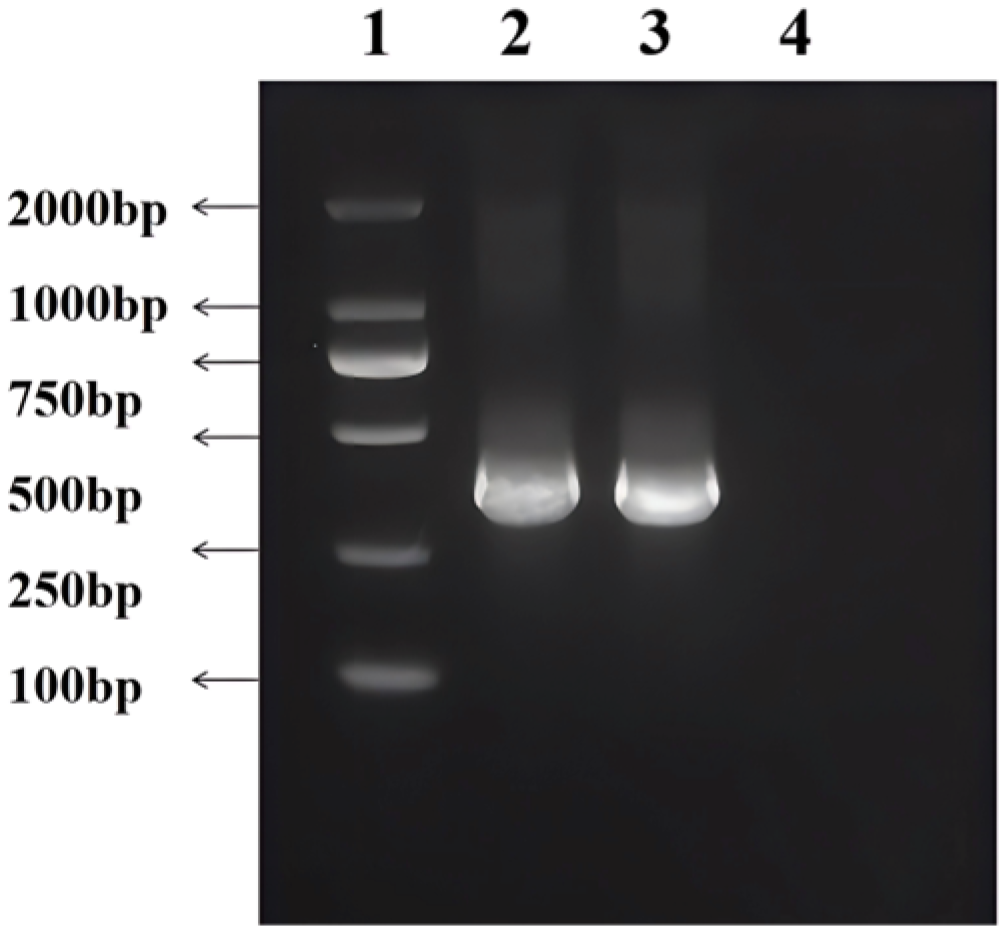
3.1. Amplification Results of the Target Gene
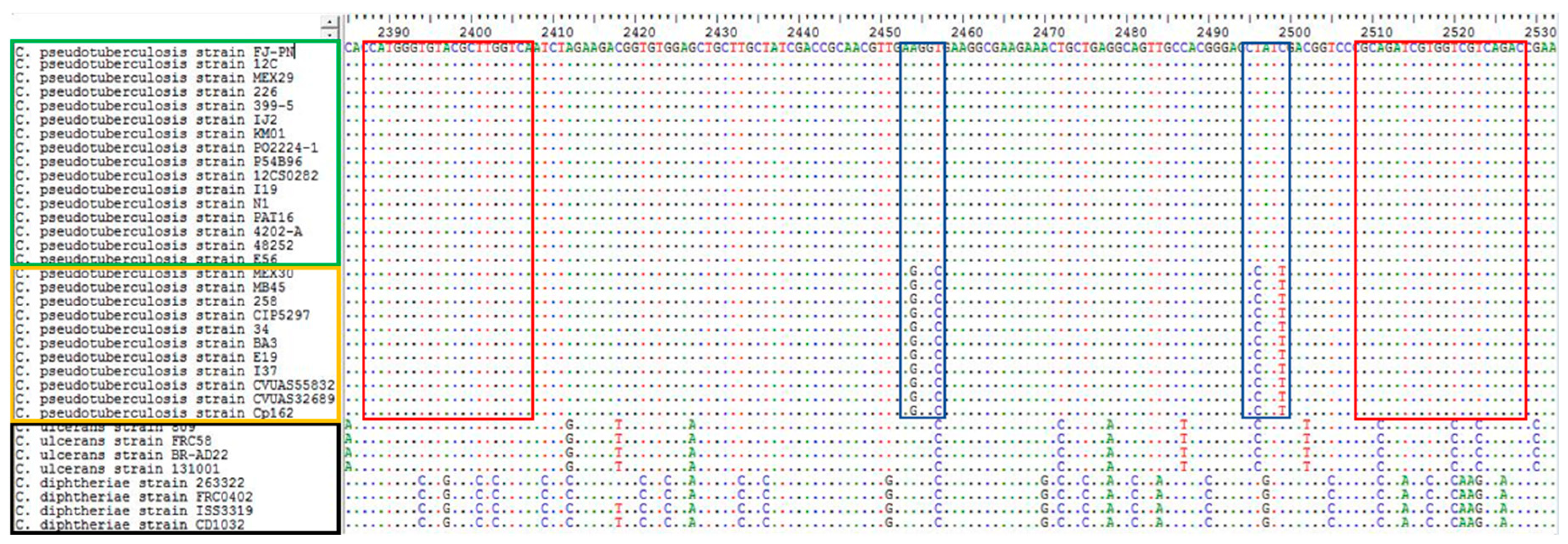
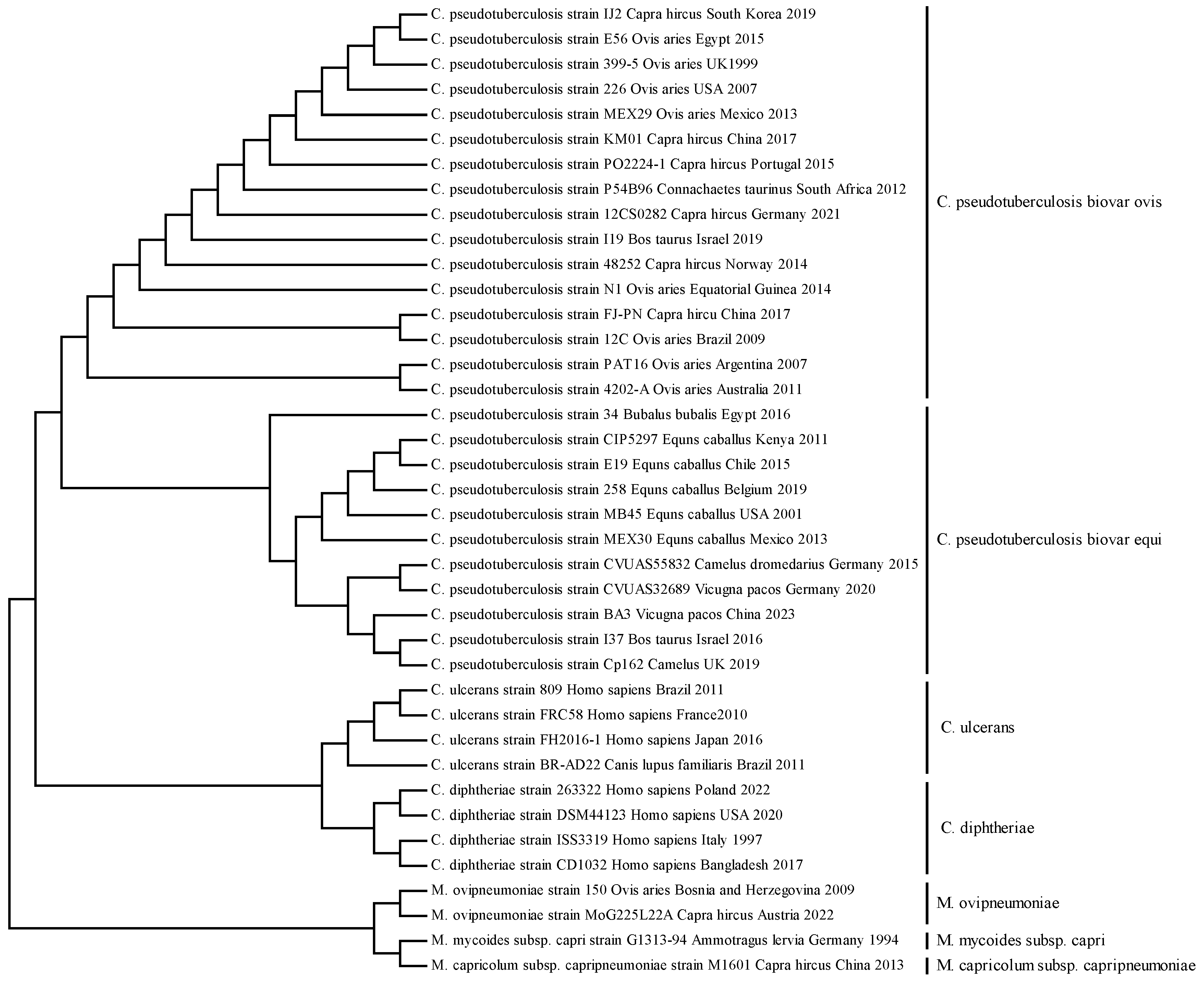
3.2. Nucleotide Homology Comparison of the gyrA Gene
3.3. Optimization of HRM Reaction Conditions
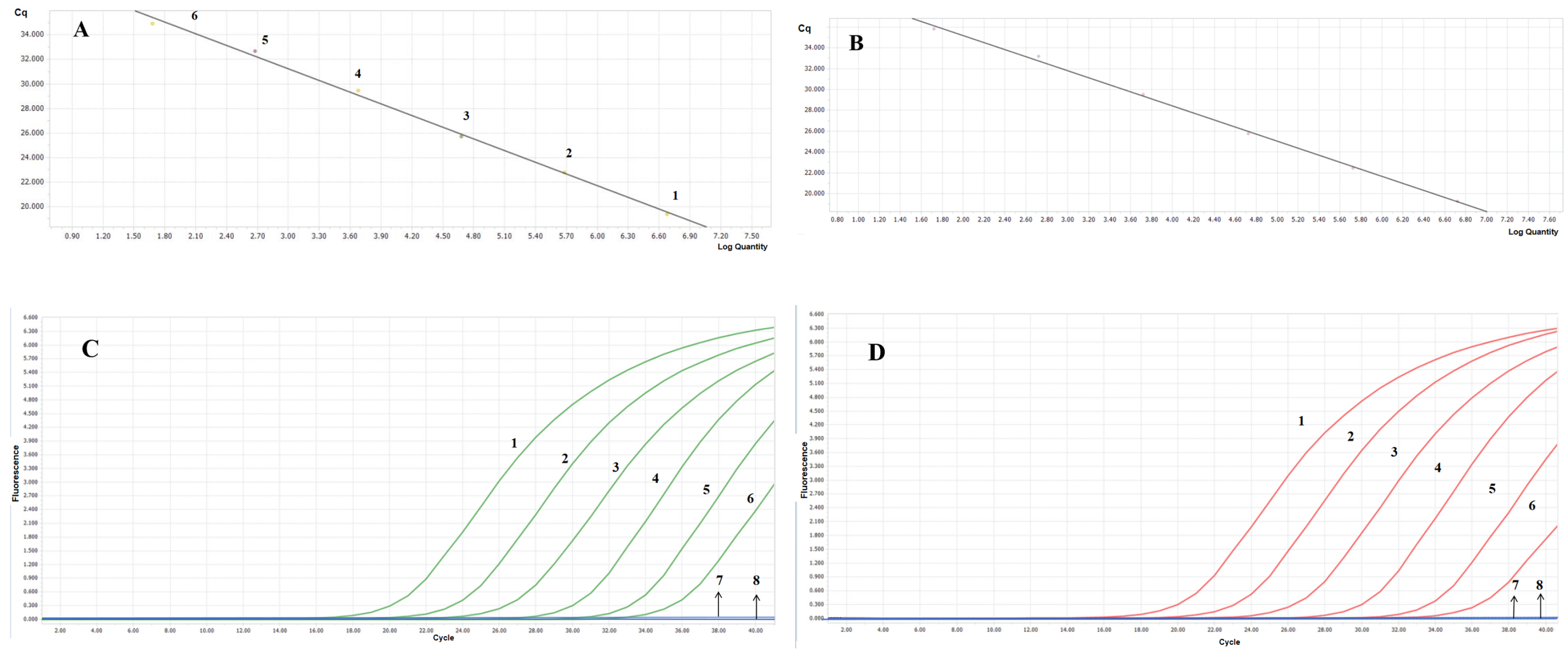
3.4. Establishment of Standard Curve and Amplification Efficiency Analysis
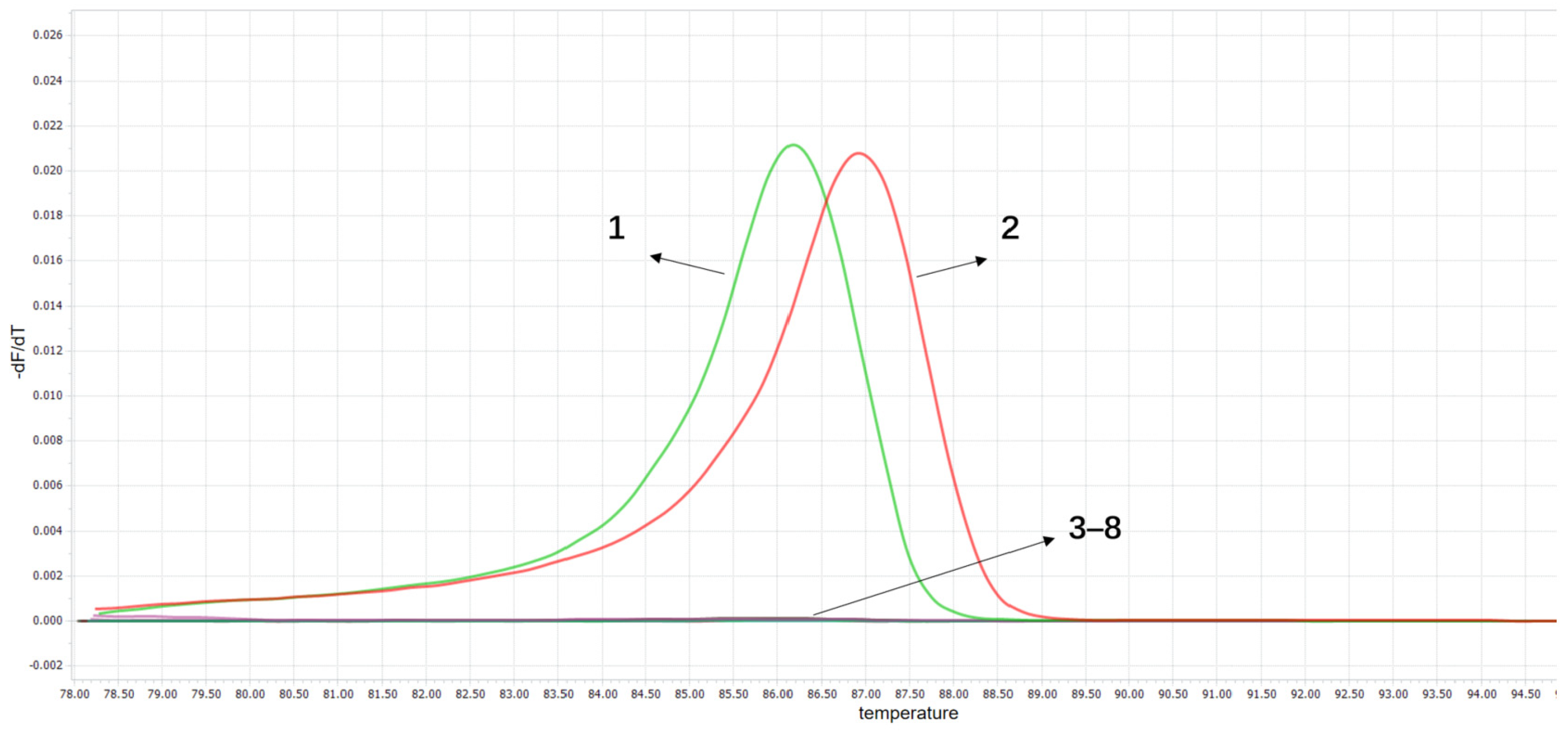
3.5. Specificity Validation
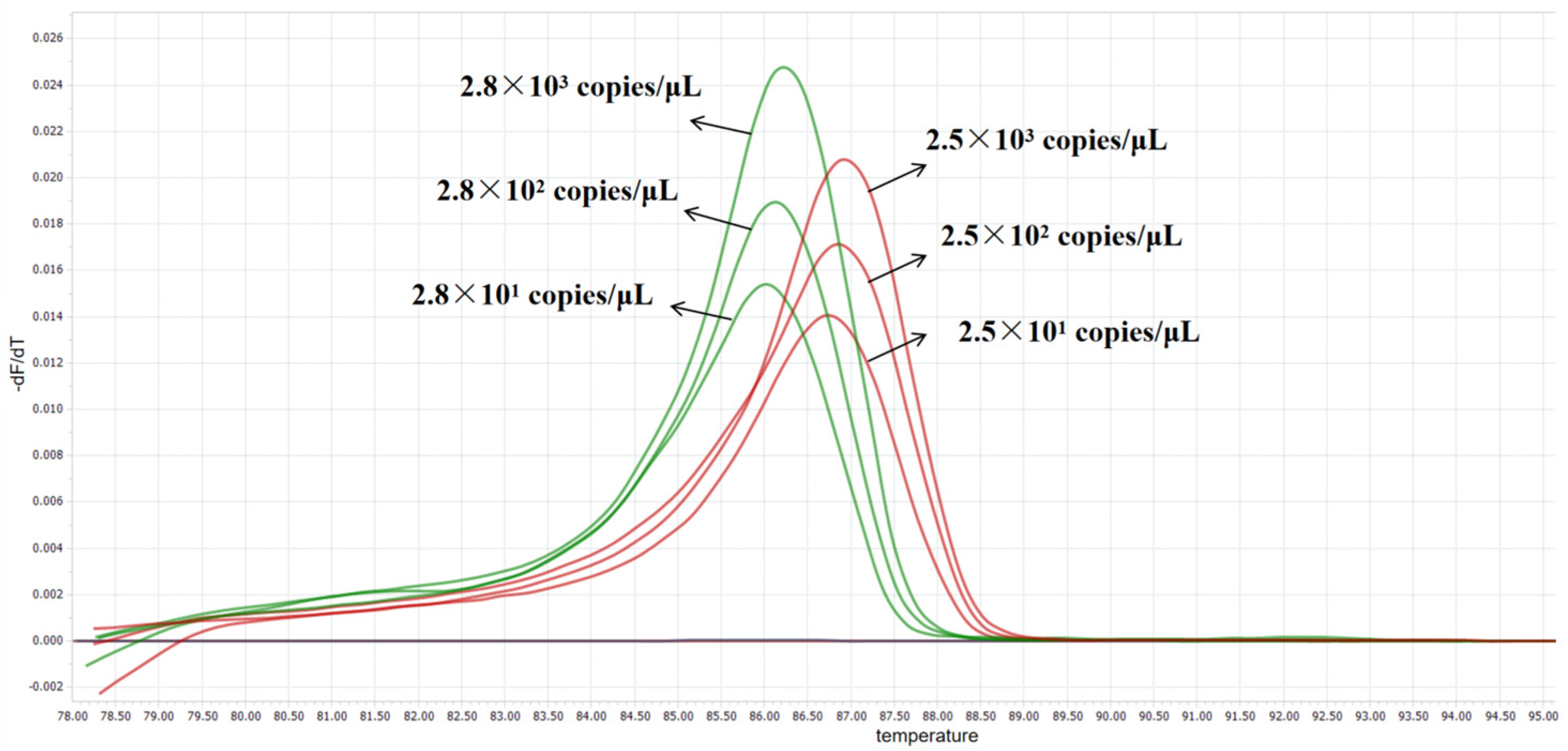
3.6. Sensitivity Validation
3.7. Repeatability Validation
3.8. Clinical Sample Testing
4. Discussion
5. Conclusions
Supplementary Materials
Author Contributions
Funding
Institutional Review Board Statement
Informed Consent Statement
Data Availability Statement
Acknowledgments
Conflicts of Interest
References
- Pratt, S.M.; Spier, S.J.; Vaughan, B.; Withcomb, M.B.; Uerling, M.R.; Wilson, W.D. Respiratory Disease Caused by Corynebacterium pseudotuberculosis. Clin. Tech. Equine Pract. 2006, 5, 239–246. [Google Scholar] [CrossRef]
- Rafael, A.; Baraúna Ramos, R.T.J.; Veras, A.A.O.; Pinheiro, K.C.; Benevides, L.J.; Viana, M.V.C.; Guimarães, L.C.; Edman, J.M.; Spier, S.J.; Azevedo, V.; et al. Assessing the Genotypic Differences between Strains of Corynebacterium pseudotuberculosis biovar equi through Comparative Genomics. PLoS ONE 2017, 12, e0170676. [Google Scholar]
- Hiller, E.; Hörz, V.; Sting, R. Corynebacterium pseudotuberculosis: Whole genome sequencing reveals unforeseen and relevant genetic diversity in this pathogen. PLoS ONE 2024, 19, e0309282. [Google Scholar] [CrossRef]
- Morales, N.; Aldridge, D.; Bahamonde, A.; Cerda, J.; Araya, C.; Muñoz, R.; Saldías, M.E.; Lecocq, C.; Fresno, M.; Abalos, P.; et al. Corynebacterium pseudotuberculosis Infection in Patagonian Huemul (Hippocamelus bisulcus). J. Wildl. Dis. 2017, 53, 621–624. [Google Scholar] [CrossRef]
- Liu, L.D.T. An infected hydrogel buckle with Corynebacterium pseudotuberculosis. Br. J. Ophthalmol. 2005, 89, 245–256. [Google Scholar] [CrossRef] [PubMed][Green Version]
- de Souza Lima, E.; de Oliveira Filho, R.B.; Malta, K.C.; Pires, I.C.; Rosa, D.S.; Chideroli, R.T.; Aburjaile, F.F.; de Jesus Sousa, T.; Ramos, R.T.J.; Góes-Neto, A.; et al. First case report of Corynebacterium pseudotuberculosis biovar equi in semiarid region of Brazil. Braz. J. Microbiol. 2025, 56, 2251–2256. [Google Scholar] [CrossRef] [PubMed]
- Bartolomé, J.; Roca, M.J.; Marcote, E.; Moreno, R. Corynebacterium pseudotuberculosis adenitis in a shepherd. Med. Clínica 1995, 104, 699–701. [Google Scholar]
- Mohan, P.; Vathsala, M.; Jayaprakasan, V. Comparative characterization of Corynebacterium pseudotuberculosis from goats in Kerala, India and reference strain. Small Rumin. Res. 2008, 74, 226–230. [Google Scholar] [CrossRef]
- Vicentini, L.P.P.; Barral, T.D.; Beltrame, M.A.V.; Soares, L.F.S.; Portela, R.W.; Fux, B. Risk Factors and Seroprevalence of Infection by Corynebacterium pseudotuberculosis in Goats from Espírito Santo State, Southeastern Brazil. Microbiol. Res. 2025, 16, 185. [Google Scholar] [CrossRef]
- Jung, B.Y.; Lee, S.H.; Kim, H.Y.; Byun, J.-W.; Shin, D.-H.; Kim, D.; Kwak, D. Serology and clinical relevance of Corynebacterium pseudotuberculosis in native Korean goats (Capra hircus coreanae). Trop. Anim. Health Prod. 2015, 47, 657–661. [Google Scholar] [CrossRef]
- Schlicher, J.; Schmitt, S.; Stevens, M.J.A.; Stephan, R.; Ghielmetti, G. Molecular Characterization of Corynebacterium pseudotuberculosis Isolated over a 15-Year Period in Switzerland. Vet. Sci. 2021, 8, 151. [Google Scholar]
- Li, H.; Yang, H.; Zhou, Z.; Li, X.; Yi, W.; Xu, Y.; Wang, Z.; Hu, S. Isolation, antibiotic resistance, virulence traits and phylogenetic analysis of Corynebacterium pseudotuberculosis from goats in southwestern China. Small Rumin. Res. 2018, 168, 69–75. [Google Scholar] [CrossRef]
- Haas, D.J.; Dorneles, E.M.S.; Spier, S.J.; Carroll, S.P.; Edman, J.; Azevedo, V.A.; Heinemann, M.B.; Lage, A.P. Molecular epidemiology of Corynebacterium pseudotuberculosis isolated from horses in California. Infect. Genet. Evol. 2017, 49, 186–194. [Google Scholar] [CrossRef]
- Araújo, C.L.A.; Dias, L.M.; Veras, A.A.O.; Alves, J.T.C.; Cavalcante, A.L.Q.; Dowson, C.G.; Azevedo, V.; Ramos, R.T.J.; Silva, A.; Carneiro, A.R. Whole-Genome Sequence of Corynebacterium pseudotuberculosis 262 Biovar equi Isolated from Cow Milk. Genome Announc. 2016, 4, e00176-16. [Google Scholar] [CrossRef]
- Muñoz-Bucio, A.V.; Cortés-Pérez, Y.A.; Arellano-Reynoso, B.; Hernández-Gil, M.; Hernández-Castro, R.; Díaz-Aparicio, E. Identification of Corynebacterium pseudotuberculosis isolated from muscular abscesses in two horses: First report in Mexico. Equine Vet. Educ. 2016, 29, 431–435. [Google Scholar] [CrossRef]
- Khanamir, R.A.; Issa, N.A.; Abdulrahman, R.F. First study on molecular epidemiology of caseous lymphadenitis in slaughtered sheep and goats in Duhok Province, Iraq. Open Vet. J. 2023, 13, 588–598. [Google Scholar] [CrossRef]
- Dorella, F.A.; Pacheco, L.G.C.; Oliveira, S.C.; Miyoshi, A.; Azevedo, V. Corynebacterium pseudotuberculosis: Microbiology, biochemical properties, pathogenesis and molecular studies of virulence. Vet. Res. 2006, 37, 201–218. [Google Scholar] [CrossRef] [PubMed]
- Batey, R.G.; Speed, C.M.; Kobes, C.J. Prevalence and distribution of caseous lymphadenitis in feral goats. Aust. Vet. J. 1986, 63, 33–36. [Google Scholar] [CrossRef]
- Pinho, R.B.D.; Silva, M.T.D.O.; Bezerra, F.S.B.; Borsuk, S. Vaccines for caseous lymphadenitis: Up-to-date and forward-looking strategies. Appl. Microbiol. Biotechnol. 2021, 105, 2287–2296. [Google Scholar] [CrossRef] [PubMed]
- Santos, R.G.D.; Seyffert, N.; Dorneles, E.M.S.; Aguiar, E.R.G.R.; Ramos, C.P.; Haas, D.J.; Assis, G.B.N.; Portela, R.D.; Goes-Neto, A.; Pacheco, L.G.C.; et al. Exploring the MALDI Biotyper for the Identification of Corynebacterium pseudotuberculosis biovar Ovis and Equi. J. Am. Soc. Mass Spectrom. 2022, 33, 2055–2062. [Google Scholar] [CrossRef] [PubMed]
- Almeida, S.; Dorneles, E.M.S.; Diniz, C.; Abreu, V.; Sousa, C.; Alves, J.; Carneiro, A.; Bagano, P.; Spier, S.; Barh, D.; et al. Quadruplex PCR assay for identification of Corynebacterium pseudotuberculosis differentiating biovar Ovis and Equi. BMC Vet. Res. 2017, 13, 290. [Google Scholar] [CrossRef]
- Pavan, M.; Robles, C.; Cairó, F.M.; Marcellino, R.; Pettinari, M. Identification of Corynebacterium pseudotuberculosis from sheep by PCR-restriction analysis using the RNA polymerase β-subunit gene (RpoB). Res. Vet. Sci. 2012, 92, 202–206. [Google Scholar] [CrossRef]
- Erali, M.; Wittwer, C.T. High resolution melting analysis for gene scanning. Methods 2010, 50, 250–261. [Google Scholar] [CrossRef]
- Wittwer, C.T. High-Resolution Genotyping by Amplicon Melting Analysis Using LCGreen. Clin. Chem. 2003, 49, 853–860. [Google Scholar] [CrossRef]
- Lévesque, S.; Michaud, S.; Arbeit, R.D.; Frost, E.H. High-Resolution Melting System to Perform Multilocus Sequence Typing of Campylobacter jejuni. PLoS ONE 2011, 6, e16167. [Google Scholar] [CrossRef][Green Version]
- Alghizzawi, D.; Ababneh, M.M.; Al-Zghoul, M.B. Differentiation of Avian Orthoavulavirus-1, Genotype VII, and it’s Sub-Genotypes by High Resolution Melting (HRM) assay. Pak. Vet. J. 2024, 44, 41. [Google Scholar]
- Bernal-Martínez, L.; Gil, H.; Rivero-Menéndez, O.; Gago, S.; Cuenca-Estrella, M.; Mellado, E.; Alastruey-Izquierdo, A. Development and Validation of a High-Resolution Melting Assay To Detect Azole Resistance in Aspergillus fumigatus. Antimicrob. Agents Chemother. 2017, 61, e01083. [Google Scholar] [CrossRef]
- Hanieh, M.R.; Hamed, M.; Maryam, N.; Haghighi, A.; Asadzadeh Aghdaei, H.; Zali, M.R. Development and evaluation of high-resolution melting curve analysis for rapid detection and subtyping of Blastocystis and comparison the results with sequencing. Parasitol. Res. 2019, 118, 3469–3478. [Google Scholar] [CrossRef] [PubMed]
- Carvalho, D.M.; de Sá, P.H.; Castro, T.L.; Carvalho, R.D.; Pinto, A.; Gil, D.J.; Bagano, P.; Bastos, B.; Costa, L.F.; Meyer, R.; et al. Reference genes for RT-qPCR studies in Corynebacterium pseudotuberculosis identified through analysis of RNA-seq data. Antonie Van Leeuwenhoek 2014, 106, 605–614. [Google Scholar] [CrossRef]
- Huang, L.L.; Lin, Y.S.; Jiang, J.X.; Zhang, J.P.; You, W.; Xiao, Y.J.; Hu, Q.L. Isolation Identification Antibiotics Resistance of Corynebacterium pseudotuberculosis from Goats Fujian. J. Agric. Sci. 2019, 34, 925–932. (In Chinese) [Google Scholar]
- Spier, S.J.; Leutenegger, C.M.; Carroll, S.P.; Loye, J.E.; Pusterla, J.B.; Carpenter, T.E.; Mihalyi, J.E.; Madigan, J.E. Use of a real-time polymerase chain reaction-based fluorogenic 5′ nuclease assay to evaluate insect vectors of Corynebacterium pseudotuberculosis infections in horses. Am. J. Vet. Res. 2004, 65, 829. [Google Scholar] [CrossRef] [PubMed]
- Oliveira, A.; Teixeira, P.; Azevedo, M.; Jamal, S.B.; Tiwari, S.; Almeida, S.; Silva, A.; Barh, D.; Dorneles, E.M.; Haas, D.J.; et al. Corynebacterium pseudotuberculosis may be under anagenesis and biovar Equi forms biovar Ovis: A phylogenic inference from sequence and structural analysis. BMC Microbiol. 2016, 16, 100. [Google Scholar] [CrossRef]
- Stefańska, I.; Rzewuska, M.; Binek, M. Evaluation of three methods for DNA fingerprinting of Corynebacterium pseudotuberculosis strains isolated from goats in Poland. Pol. J. Microbiol. 2008, 57, 105–112. [Google Scholar]
- Peel, M.M.; Palmer, G.G.; Stacpoole, A.M.; Kerr, T.G. Human Lymphadenitis Due to Corynebacterium pseudotuberculosis: Report of Ten Cases from Australia and Review. Clin. Infect. Dis. 1997, 24, 185–191. [Google Scholar] [CrossRef]
- Gundry, C.N.; Vandersteen, J.G.; Reed, G.H.; Pryor, R.J.; Chen, J.; Wittwer, C.T. Amplicon melting analysis with labeled primers: A closed-tube method for differentiating homozygotes and heterozygotes. Clin. Chem. 2003, 49, 396–406. [Google Scholar] [CrossRef] [PubMed]
- Dhami, M.K.; Kumarasinghe, L. A HRM Real-Time PCR Assay for Rapid and Specific Identification of the Emerging Pest Spotted-Wing Drosophila (Drosophila suzukii). PLoS ONE 2014, 9, e98934. [Google Scholar] [CrossRef]
- Liu, Y.; Štefanič, P.; Miao, Y.; Xue, Y.; Xun, W.; Zhang, N.; Shen, Q.; Zhang, R.; Xu, Z.; Mandic-Mulec, I. Housekeeping gene gyrA, a potential molecular marker for Bacillus ecology study. AMB Express 2022, 12, 133. [Google Scholar] [CrossRef] [PubMed]
- Borshchevskaya, L.N.; Kalinina, A.N.; Sineokii, S.P. Design of a PCR test based on the gyrA gene sequence for the identification of closely related species of the Bacillus subtilis group. Appl. Biochem. Microbiol. 2013, 49, 646–655. [Google Scholar] [CrossRef]
- Sánchez-Céspedes, J.; Sáez-López, E.; Frimodt-Møller, N.; Vila, J.; Soto, S.M. Effects of a Mutation in the gyrA Gene on the Virulence of Uropathogenic Escherichia coli. Antimicrob. Agents Chemother. 2015, 59, 4662–4668. [Google Scholar] [CrossRef]
- Hamidian, M.; Tajbakhsh, M.; Tohidpour, A.; Rahbar, M.; Zali, M.R.; Walther-Rasmussen, J. Detection of novel gyrA mutations in nalidixic Acid-resistant isolates of Salmonella enterica from patients with Diarrhoea. Int. J. Antimicrob. Agents 2011, 37, 360–364. [Google Scholar] [CrossRef]
- Carattoli, A.; Dionisi, A.M.; Luzzi, I. Use of a Light Cycler gyrA mutation assay for identification of ciprofloxacin-resistant Campylobacter Coli. FEMS Microbiol. Lett. 2002, 214, 87–93. [Google Scholar] [CrossRef][Green Version]
- Ramos, J.N.; Araújo, M.R.B.; Baio, P.V.P.; Sant’aNna, L.O.; Veras, J.F.C.; Vieira, É.M.D.; Sousa, M.Â.B.; Camargo, C.H.; Sacchi, C.T.; Campos, K.R.; et al. Molecular characterization and phylogenetic analysis of the first Corynebacterium rouxii strains isolated in Brazil: A recent member of Corynebacterium diphtheriae complex. BMC Genom. Data 2023, 24, 65. [Google Scholar] [CrossRef]
- Ilhan, Z. Detection of Corynebacterium pseudotuberculosis from sheep lymph nodes by PCR. Rev. Méd. Vét. 2013, 164, 60–66. [Google Scholar]
- Mukamolova, G.V.; Turapov, O.A.; Kazarian, K.; Telkov, M.; Kaprelyants, A.S.; Kell, D.B.; Young, M. The rpf gene of Micrococcus luteus encodes an essential secreted growth factor. Mol. Microbiol. 2002, 46, 611–621. [Google Scholar] [CrossRef] [PubMed]
- Pépin, M.; Pittet, J.C.; Olivier, M.; Gohin, I. Cellular composition of Corynebacterium pseudotuberculosis pyogranulomas in sheep. J. Leukoc. Biol. 1994, 56, 666–670. [Google Scholar] [CrossRef] [PubMed]
- Ruiz, H.; Ferrer, L.M.; Ramos, J.J.; Baselga, C.; Alzuguren, O.; Tejedor, M.T.; de Miguel, R.; Lacasta, D. The Relevance of Caseous Lymphadenitis as a Cause of Culling in Adult Sheep. Animals 2020, 10, 1962. [Google Scholar] [CrossRef] [PubMed]
- Williamson, L.H. Caseous Lymphadenitis in Small Ruminants. Vet. Clin. N. Am. Food Anim. Pract. 2001, 17, 359–371. [Google Scholar] [CrossRef]



| Concentration of Plasmid Standards (Copies/μL) | Intra-Assay | Inter-Assay | Intra-Assay | Inter-Assay | ||||
|---|---|---|---|---|---|---|---|---|
| Tm1 X ± SD | CV/% | Tm1 X ± SD | CV/% | Tm2 X ± SD | CV/% | Tm2 X ± SD | CV/% | |
| N1/N2 × 106 | 86.16 ± 0.011 | 0.013 | 86.15 ± 0.028 | 0.024 | 86.92 ± 0.015 | 0.017 | 86.92 ± 0.021 | 0.024 |
| N1/N2 × 104 | 86.16 ± 0.017 | 0.24 | 86.15 ± 0.03 | 0.034 | 86.92 ± 0.02 | 0.01 | 86.91 ± 0.027 | 0.03 |
| N1/N2 × 102 | 86.15 ± 0.02 | 0.023 | 86.16 ± 0.04 | 0.046 | 86.90 ± 0.02 | 0.023 | 86.91 ± 0.038 | 0.044 |
| Nasal Swab | |||
|---|---|---|---|
| Detection Method | Positive Number | Negative Number | Positivity Rate |
| HRM | 26 | 107 | 19.5% |
| Taqman-qPCR | 26 | 107 | 19.5% |
Disclaimer/Publisher’s Note: The statements, opinions and data contained in all publications are solely those of the individual author(s) and contributor(s) and not of MDPI and/or the editor(s). MDPI and/or the editor(s) disclaim responsibility for any injury to people or property resulting from any ideas, methods, instructions or products referred to in the content. |
© 2026 by the authors. Licensee MDPI, Basel, Switzerland. This article is an open access article distributed under the terms and conditions of the Creative Commons Attribution (CC BY) license.
Share and Cite
Zhang, J.; Zhang, D.; Jiang, J.; Lin, Y.; Wan, C.; Che, Y. Development and Validation of a High-Resolution Melting (HRM) Method for Differentiating Ovis and Equi Biovars of Corynebacterium pseudotuberculosis. Vet. Sci. 2026, 13, 372. https://doi.org/10.3390/vetsci13040372
Zhang J, Zhang D, Jiang J, Lin Y, Wan C, Che Y. Development and Validation of a High-Resolution Melting (HRM) Method for Differentiating Ovis and Equi Biovars of Corynebacterium pseudotuberculosis. Veterinary Sciences. 2026; 13(4):372. https://doi.org/10.3390/vetsci13040372
Chicago/Turabian StyleZhang, Jingpeng, Dingding Zhang, Jinxiu Jiang, Yusheng Lin, Chunhe Wan, and Yongliang Che. 2026. "Development and Validation of a High-Resolution Melting (HRM) Method for Differentiating Ovis and Equi Biovars of Corynebacterium pseudotuberculosis" Veterinary Sciences 13, no. 4: 372. https://doi.org/10.3390/vetsci13040372
APA StyleZhang, J., Zhang, D., Jiang, J., Lin, Y., Wan, C., & Che, Y. (2026). Development and Validation of a High-Resolution Melting (HRM) Method for Differentiating Ovis and Equi Biovars of Corynebacterium pseudotuberculosis. Veterinary Sciences, 13(4), 372. https://doi.org/10.3390/vetsci13040372